
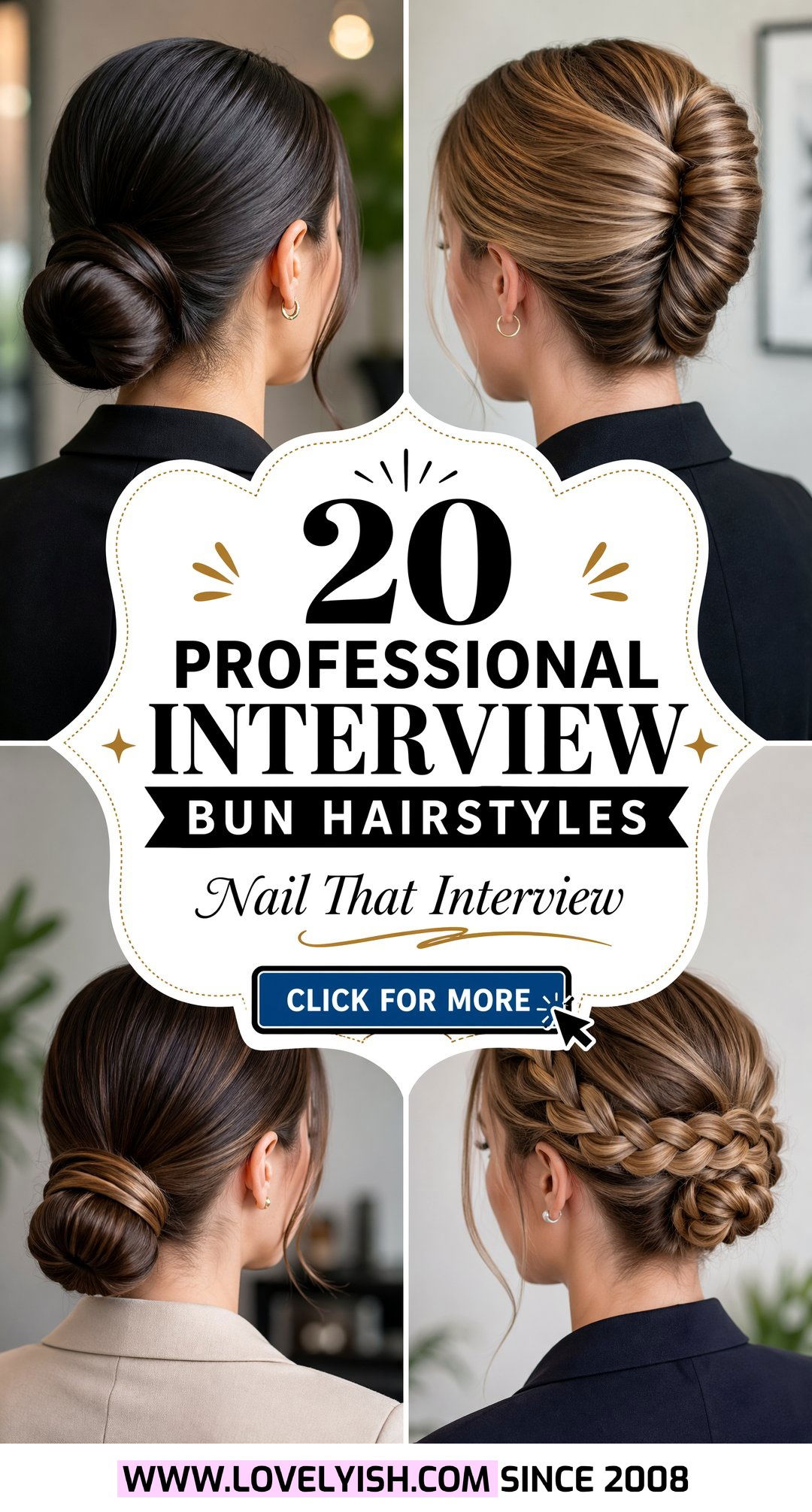
Walking into an interview with the right bun can make you feel calm, polished, and ready to focus on your answers instead of your hair. A good interview bun should look neat from every angle, stay put through a full day, and match the dress code of the company you’re visiting. Think of it as part of your quiet confidence: not flashy or distracting, but clearly intentional and professional. Most experts agree that low to mid-height buns, smooth finishes, and minimal accessories are the safest choices for formal settings. At the same time, you can still show a bit of your personality through subtle texture, a soft side part, or a small braid worked into the bun. The key is to keep your face open, your hair away from your eyes, and your overall look clean and refined so the interviewer remembers your skills, not your flyaways.
1. Classic Low Nape Bun For Interviews
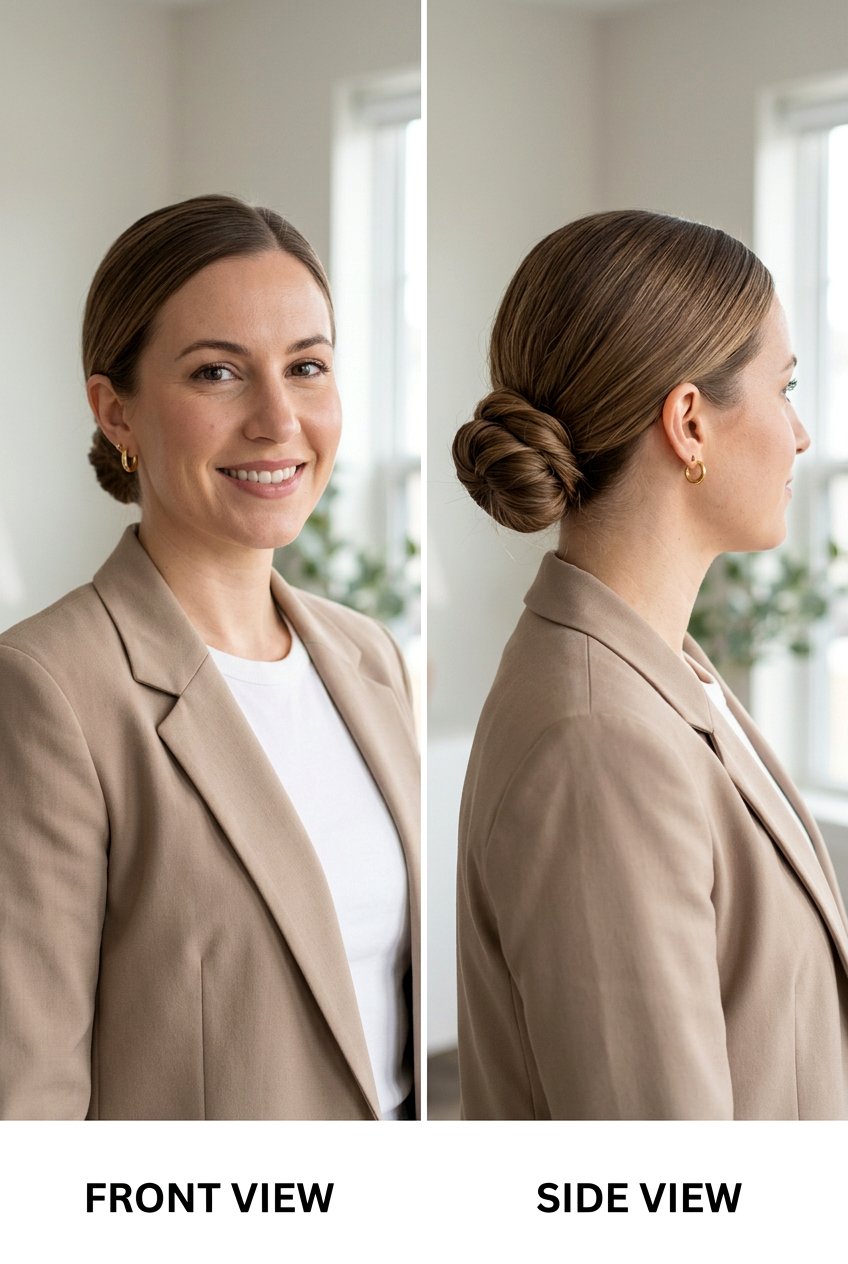
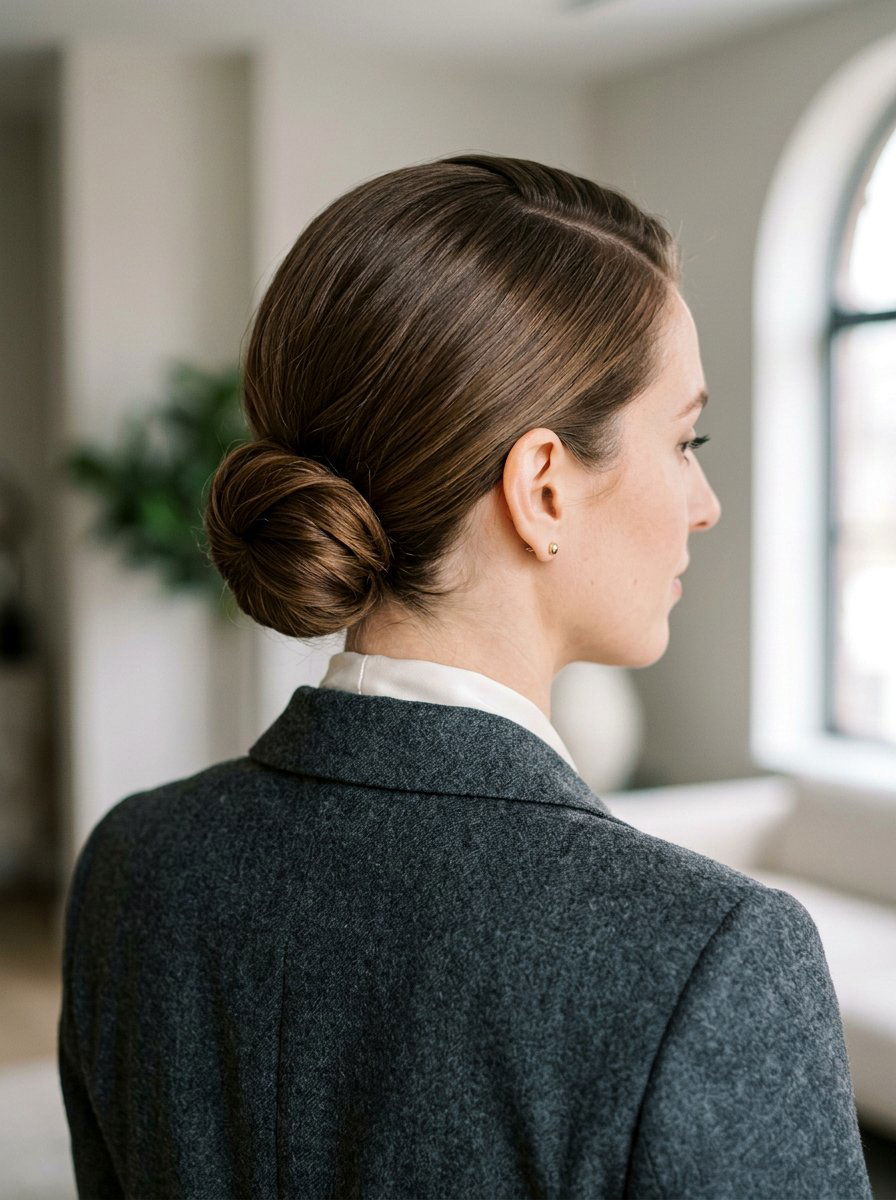
A classic low bun that sits right at the nape of your neck is one of the most trusted interview choices because it looks clean without feeling severe. Start with brushed, smooth hair and create a straight or slightly side part, depending on what flatters your face most. Gather your hair into a low ponytail, making sure the sides are tight and sleek, then twist the length and wrap it around the base into a compact coil. Secure it with bobby pins close to your hair color so they blend in and don’t distract. A small amount of smoothing serum or light hairspray helps tame frizz around the hairline while still letting your hair look natural. This bun works well with most outfits, from a blazer to a simple blouse, and it keeps your collar area tidy so your neckline and face stay in focus the entire time.
2. Sleek Middle Part Bun For Corporate Interviews
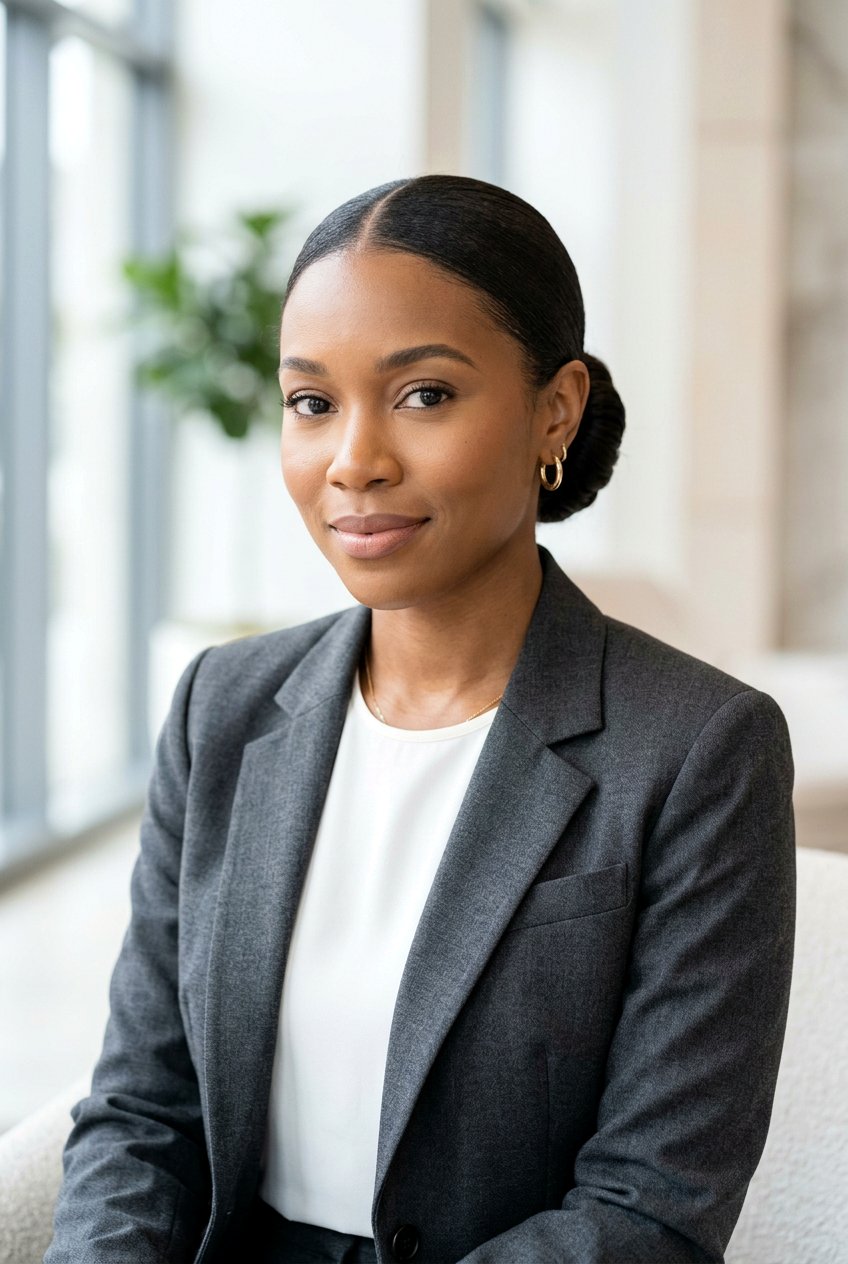
When you want a very polished and modern look for a corporate or formal office, a sleek middle part bun is a strong option. Start by creating a clean, straight center part using a fine-tooth comb so each side mirrors the other. Apply a smoothing cream or gel from roots to mid-lengths, then brush your hair back into a low or mid-level ponytail so there are no bumps. Twist the ponytail tightly to form a small, neat bun and secure it with pins arranged around the base to keep it flat against your head. The middle part frames your features evenly and works especially well with tailored blazers and sharp collars. As a final step, lightly spray a toothbrush or small brush with hairspray and run it along the hairline to catch baby hairs without making the style look stiff or crunchy.
3. Side Part Low Bun For Soft Professional Look
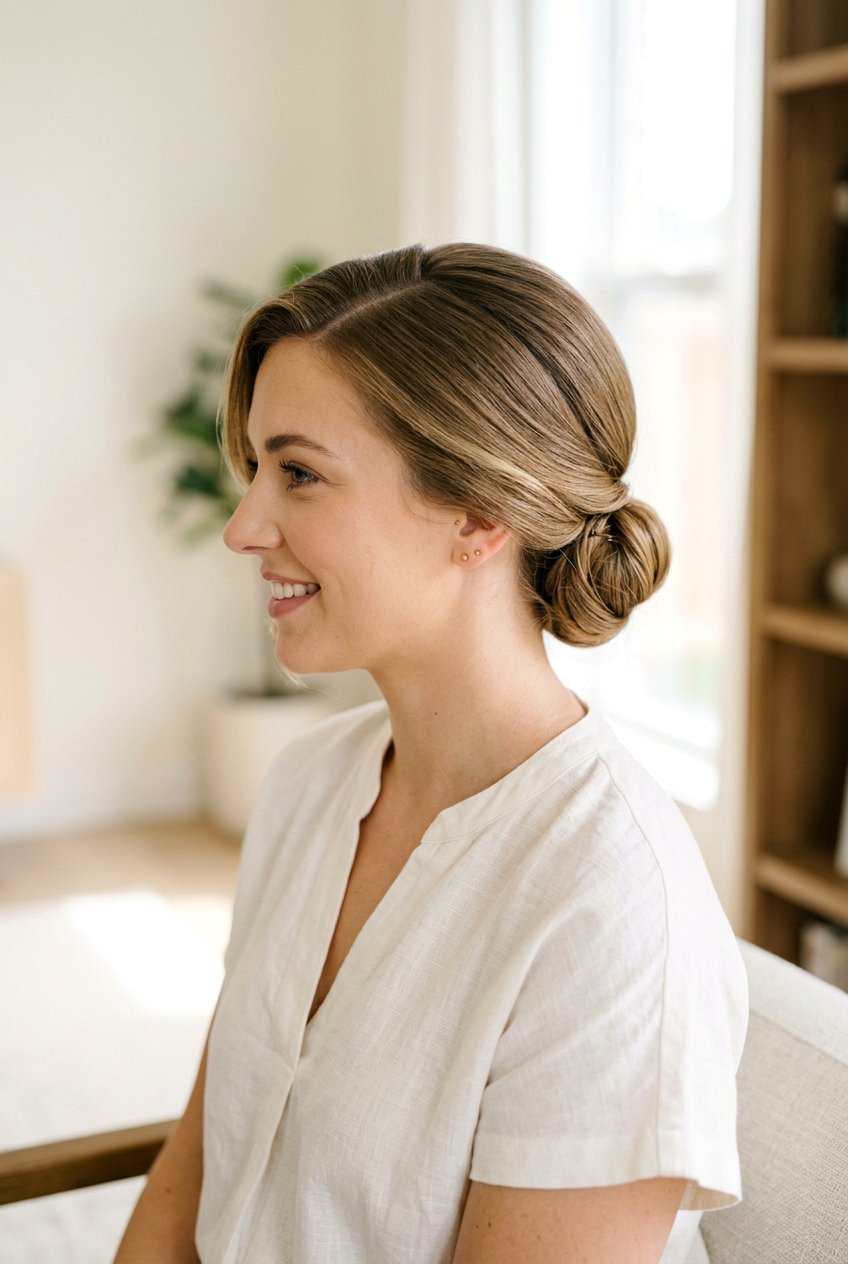
If a center part feels too strict on you, a side part low bun offers the same professionalism with a softer, more approachable vibe. Create a deep or gentle side part based on what looks balanced with your features, then smooth your hair diagonally back toward the opposite side at the nape. Secure a low ponytail slightly off-center and twist it into a bun, letting it sit just under the ear line for a subtle, elegant detail. This placement helps add a bit of interest without appearing dramatic or trendy. Use a light-hold product so your hair stays flat and sleek but still has a bit of movement. This bun pairs nicely with simple earrings and an open neckline because it draws the eye toward one side of your face, which can be great for video or in-person interviews where you want to look warm yet composed.
4. Chignon Bun For Interview
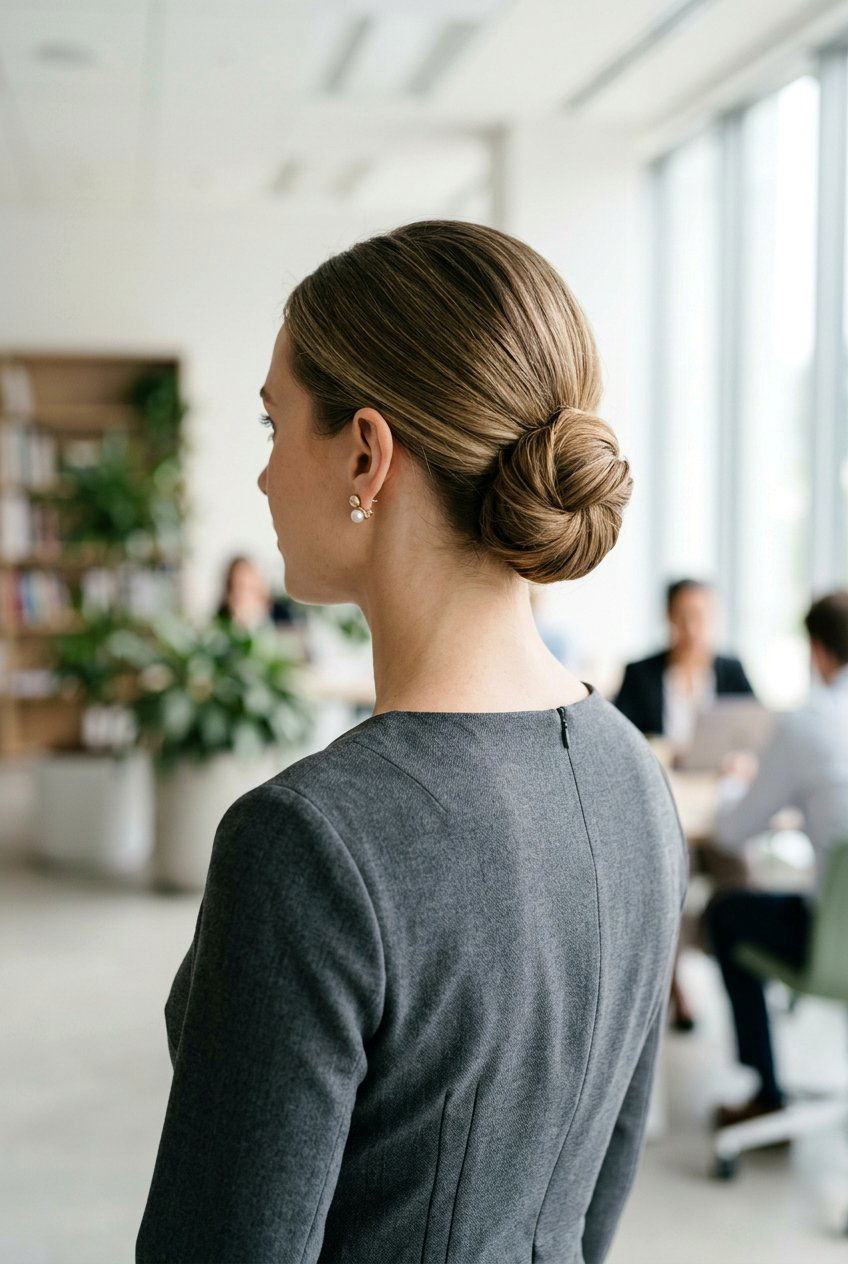
A chignon bun is a slightly more refined version of a low bun, where the hair is folded or tucked rather than simply twisted. To create it, gather your hair at the nape and secure a low ponytail, then roll the length upward toward the base instead of wrapping it around. Tuck the ends inside the roll and pin them horizontally, creating a smooth, oval-shaped bun that sits snugly against your head. This shape looks elegant from the side and is perfect if your interview is at a traditional firm or you’re wearing a structured dress or suit. To avoid making it too formal, skip heavy teasing and keep the volume controlled and clean. A touch of shine serum on the outer layer gives the chignon a healthy, polished finish that reads professional rather than glamorous, making it a great option for panel or executive interviews.
5. French Twist Bun For Job Interview
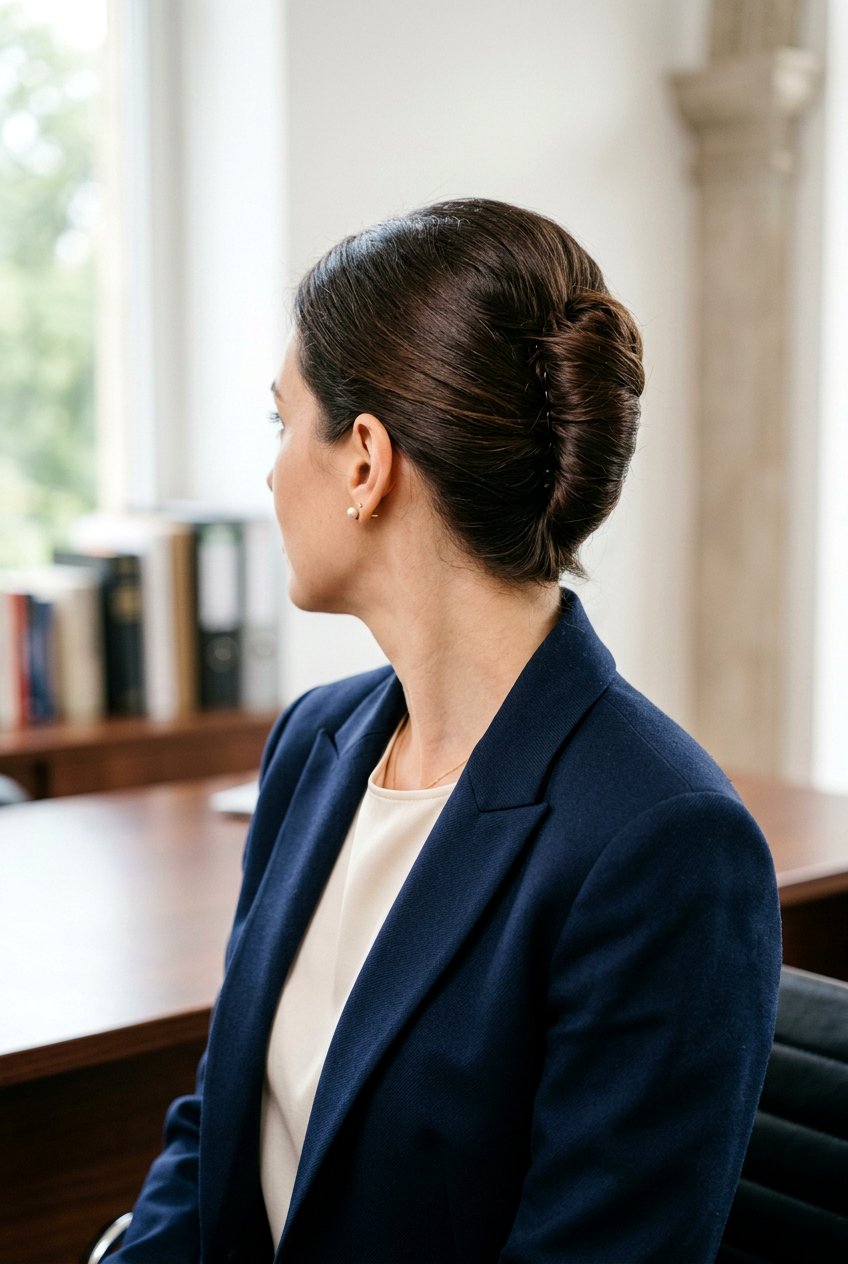
The French twist bun is ideal when you want a polished updo that feels classic but not overly complicated. Start by gathering your hair at the nape as if you’re about to make a low ponytail, then pull it slightly to one side. Twist the length upward toward the crown, rolling it into itself so the hair forms a vertical roll down the back of your head. Tuck the ends into the twist and secure it with pins placed along the seam, then smooth the top and sides for a clean finish. The twist naturally creates height at the back, which can be flattering for longer faces or more formal outfits. It works well in conservative fields, but you can keep it soft by leaving a tiny bit of volume at the crown instead of slicking everything completely flat.
6. Braided Low Bun For Interview
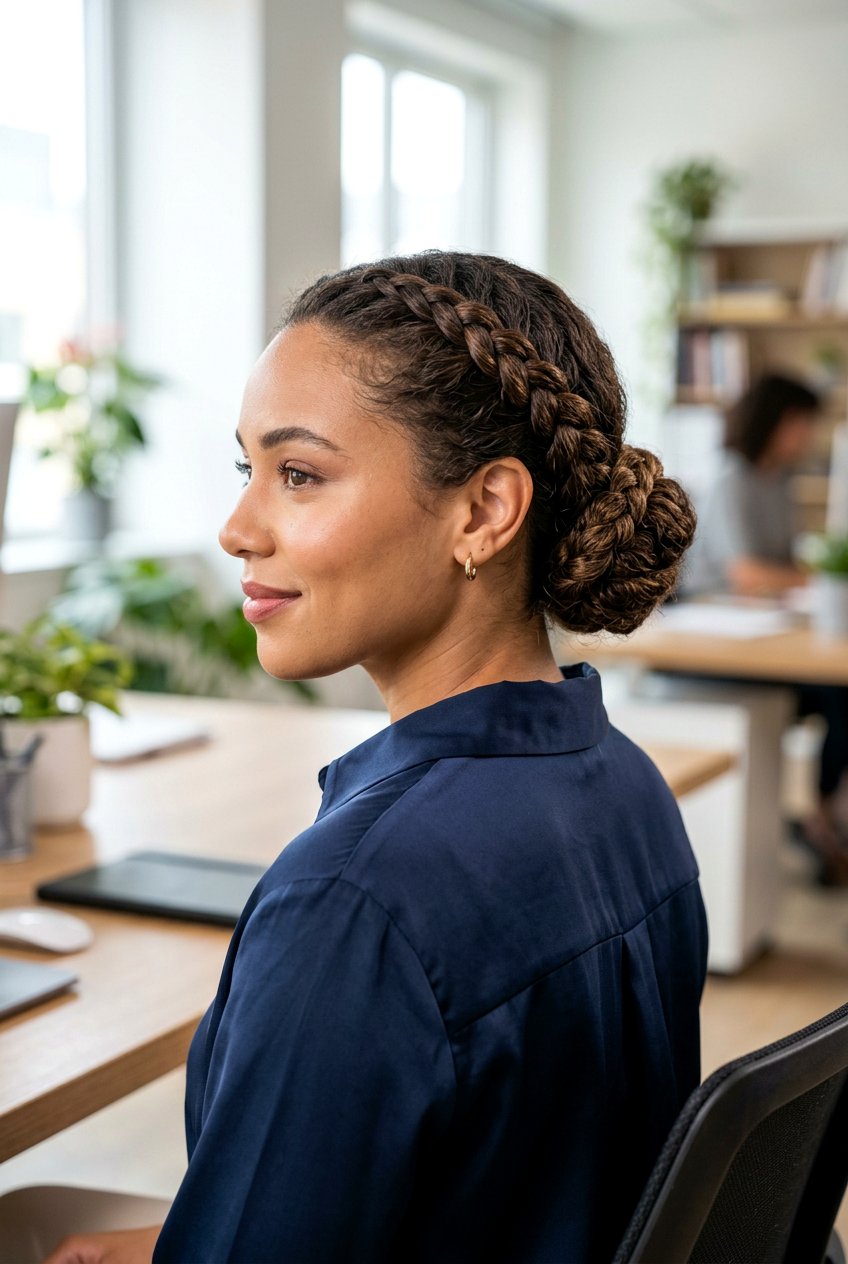
A braided low bun is a smart way to add subtle interest without sacrificing a professional finish. Begin with a low ponytail at the nape, then braid the entire ponytail into a simple three-strand braid and secure the end with a small elastic. Wrap the braid around the base of the ponytail to form a bun, making sure each coil sits neatly on top of the last so the pattern shows clearly. Pin everything securely and smooth any bumps on the scalp with a brush and light hairspray. This style looks especially nice on medium to long hair and can help keep layered cuts tucked in more securely. The braid detail gives texture that shows in photos or video interviews, but because it’s contained in a bun, it still reads clean, focused, and appropriate for most office environments.
7. Twisted Rope Bun For Interviews
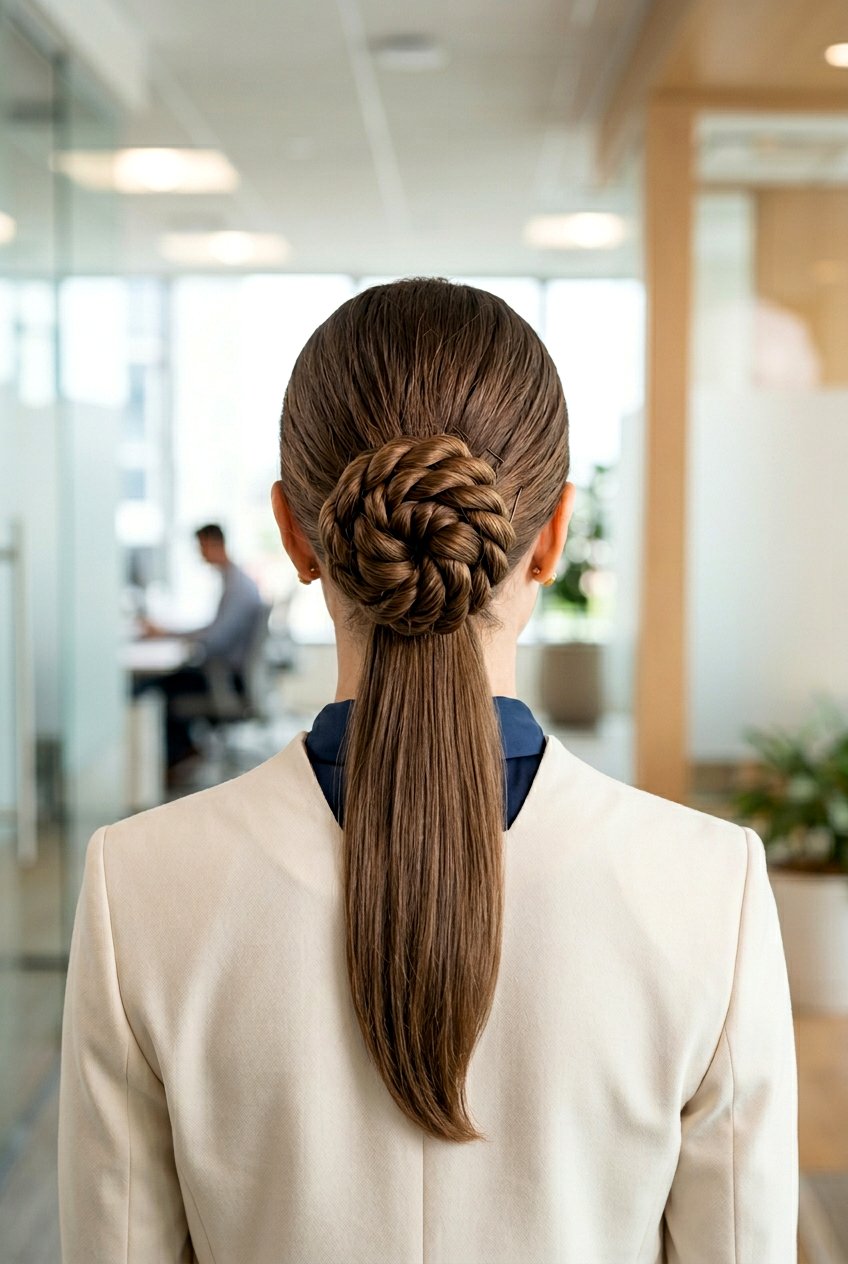
For a quick but refined updo, the twisted rope bun is a great choice that feels modern and simple. Gather your hair into a low or mid-height ponytail and divide the ponytail into two equal sections. Twist each section tightly in the same direction, then twist them around each other in the opposite direction to create a rope effect that holds together. Wrap this rope around the base of the ponytail to form a bun and pin it firmly so the twist pattern stays visible. The rope texture adds subtle detail and helps keep fine or slippery hair from unraveling during the day. Paired with a crisp shirt or sweater, this bun gives off a tidy, efficient impression without looking severe, which is ideal if you’re interviewing in a business casual or creative-but-professional environment.
8. Low Bun With Face-Framing Pieces

A low bun with soft face-framing pieces works well when you want to soften strong features or feel more like yourself in a formal setting. Start by sectioning out a few thin strands around your hairline before pulling the rest back into a low ponytail. Twist and secure the ponytail into a bun at the nape, keeping the main shape tight and neat. Then lightly curl or smooth the front pieces so they gently skim your cheeks or jawline without covering your eyes. Use a minimal amount of styling product on these pieces so they stay separated but not greasy or stringy. This style strikes a balance between polished and relaxed, which can be especially reassuring if you’re nervous and don’t want your hair to feel too slicked back or unfamiliar during a long interview day.
9. High Crown Bun For Interview
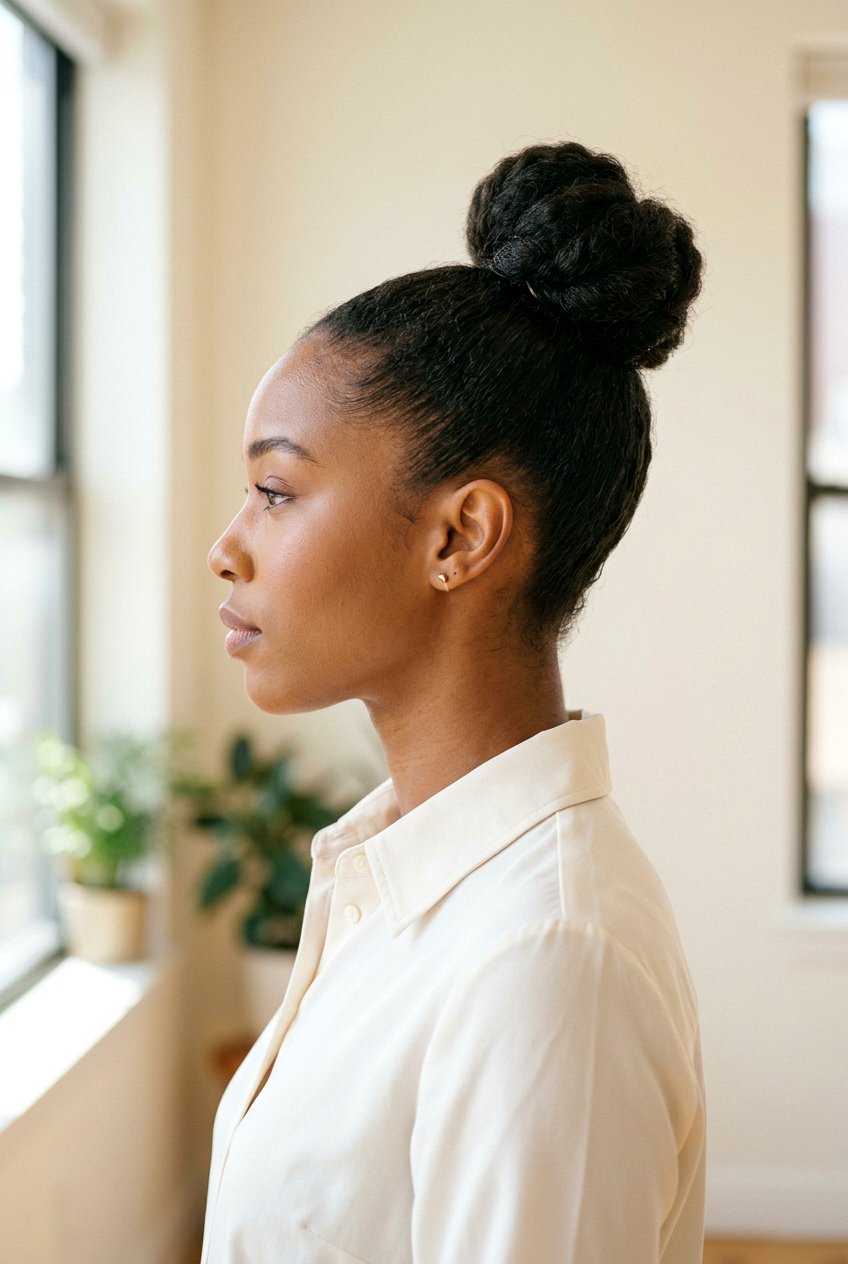
A high crown bun can still be interview-appropriate when it’s sleek, compact, and not overly voluminous. Instead of placing it right on the top of your head like a trendy top knot, aim for the upper back of the crown so it’s visible but not extreme. Brush your hair upward, smoothing the sides and back, and tie a secure ponytail. Twist the length into a tight coil and wrap it around the base, pinning it flat so the bun doesn’t stick out dramatically. This placement adds a bit of height and can visually lengthen the neck, which looks nice with structured blouses or blazers. Keep accessories minimal and avoid big, messy textures to ensure the bun feels professional rather than casual, especially in more traditional office settings.
10. Donut Bun For Job Interview
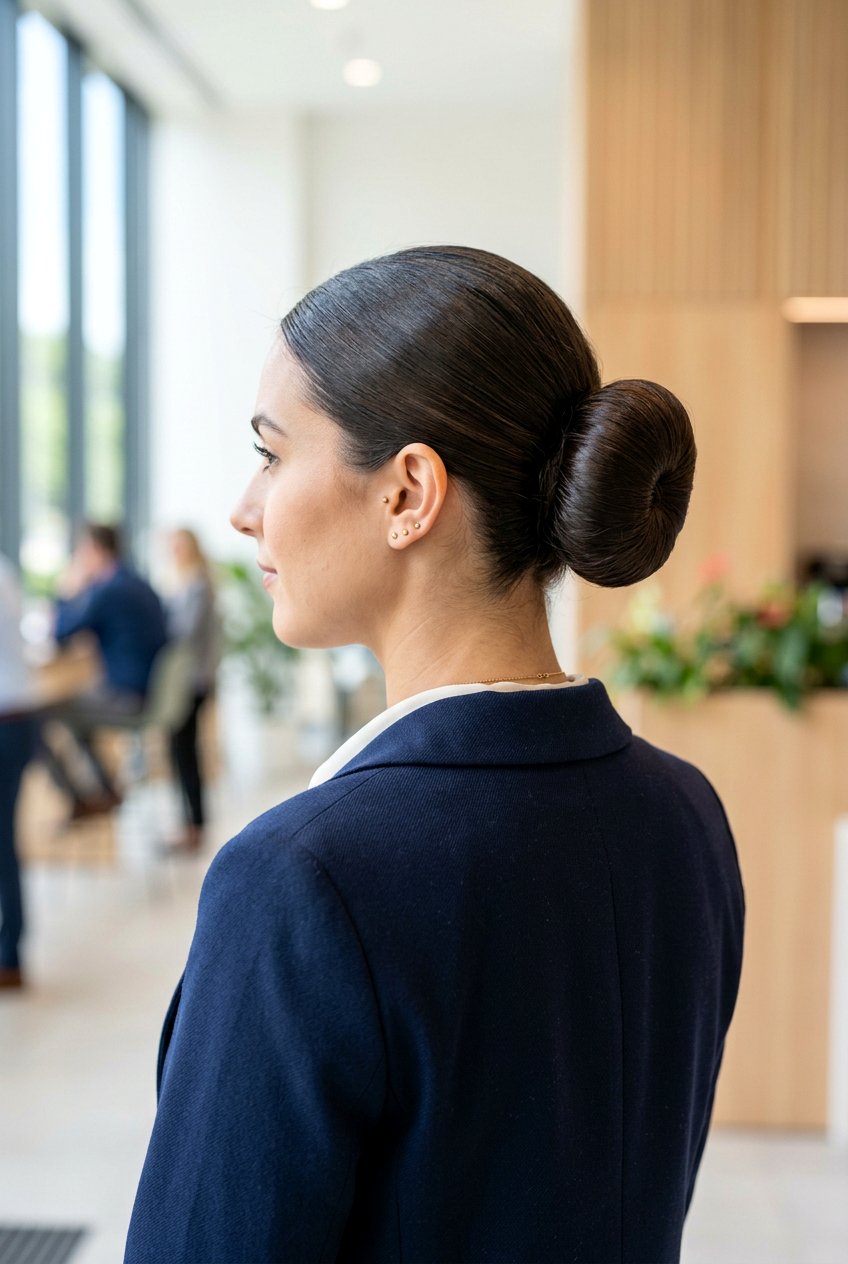
A donut bun, made with a foam bun maker, is perfect when you want a full, round shape that still looks neat and controlled. Gather your hair into a ponytail where you want the bun to sit, usually at the mid-back of the head or low at the nape. Slide the donut over the ponytail up to the base, spread your hair evenly around it, and secure with another elastic over the donut. Wrap and tuck the remaining ends around the base and pin them in place so no foam shows through. This gives you a perfectly smooth circle that looks intentionally styled, even if your hair is fine or layered. For interviews, keep the finish sleek and avoid decorating the bun with bows or oversized clips so the look stays professional and understated.
11. Low Bun With Small Side Braid
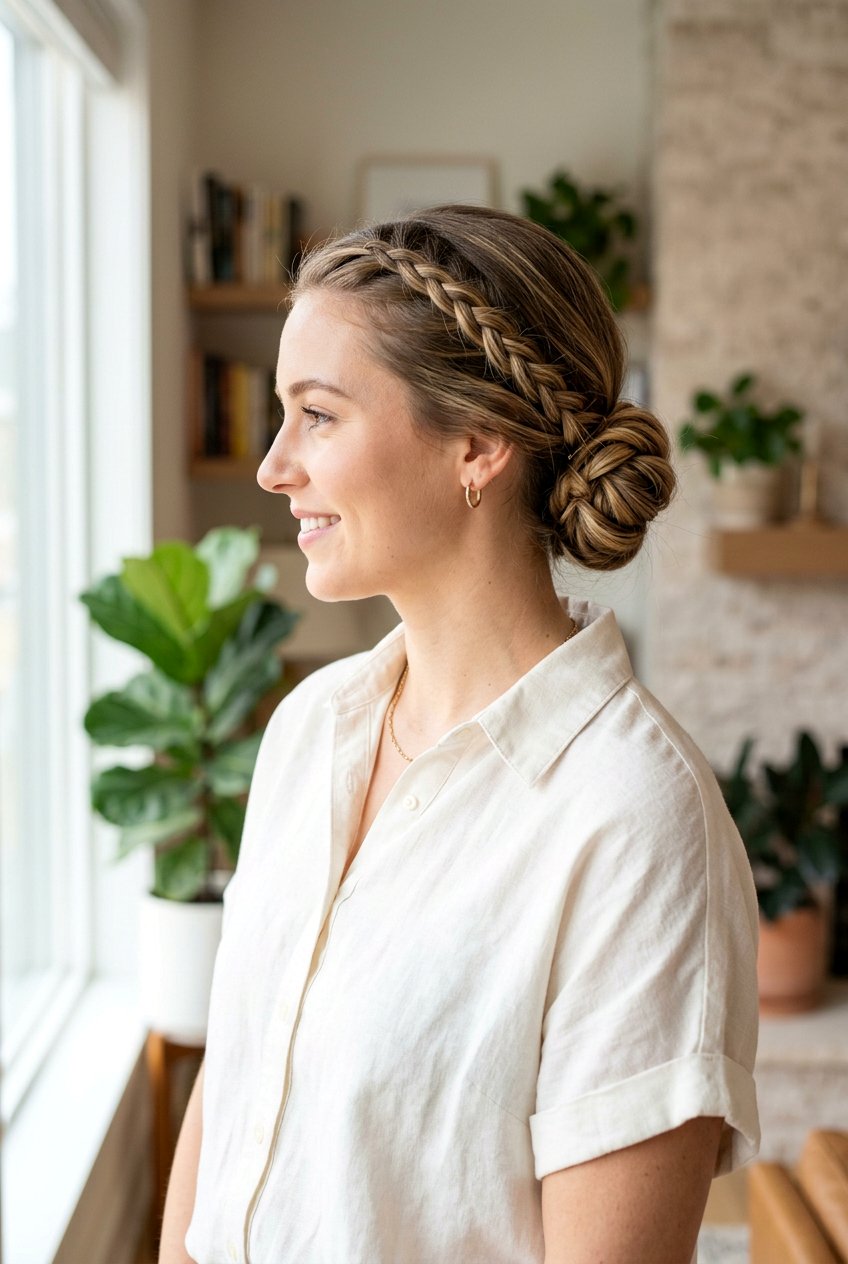
A low bun with a small side braid adds a bit of personality while staying interview-ready. Part your hair slightly to one side, then take a small section from the front along the part and braid it toward the ear using a simple three-strand braid. Secure the braid and gather all of your hair, including the braid, into a low ponytail at the nape. Twist the ponytail into a bun and pin it, allowing the braided section to sit on top or wrap partly around the bun. The braid draws attention to your face in a soft, detailed way without relying on bold color or accessories. This can work well for creative industries where a little extra detail is welcome as long as the overall shape stays sleek and controlled.

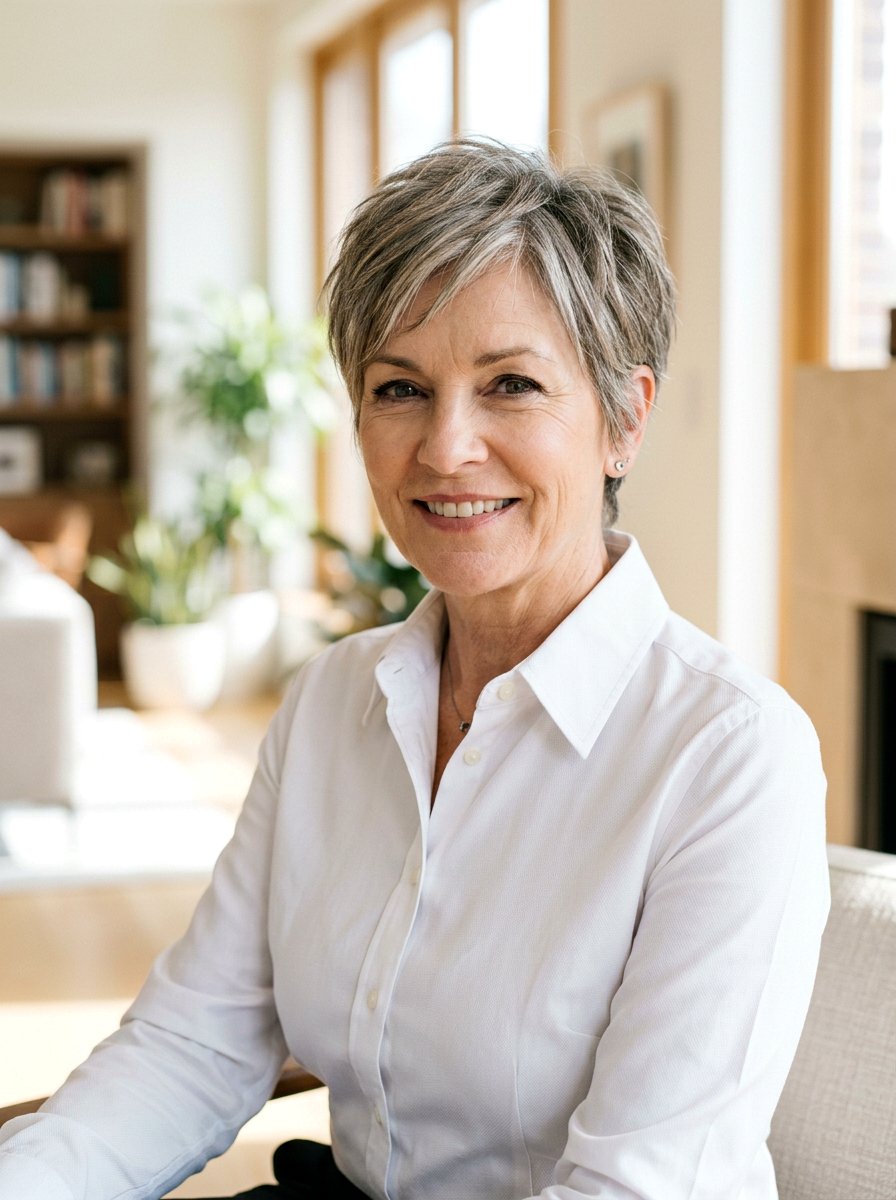
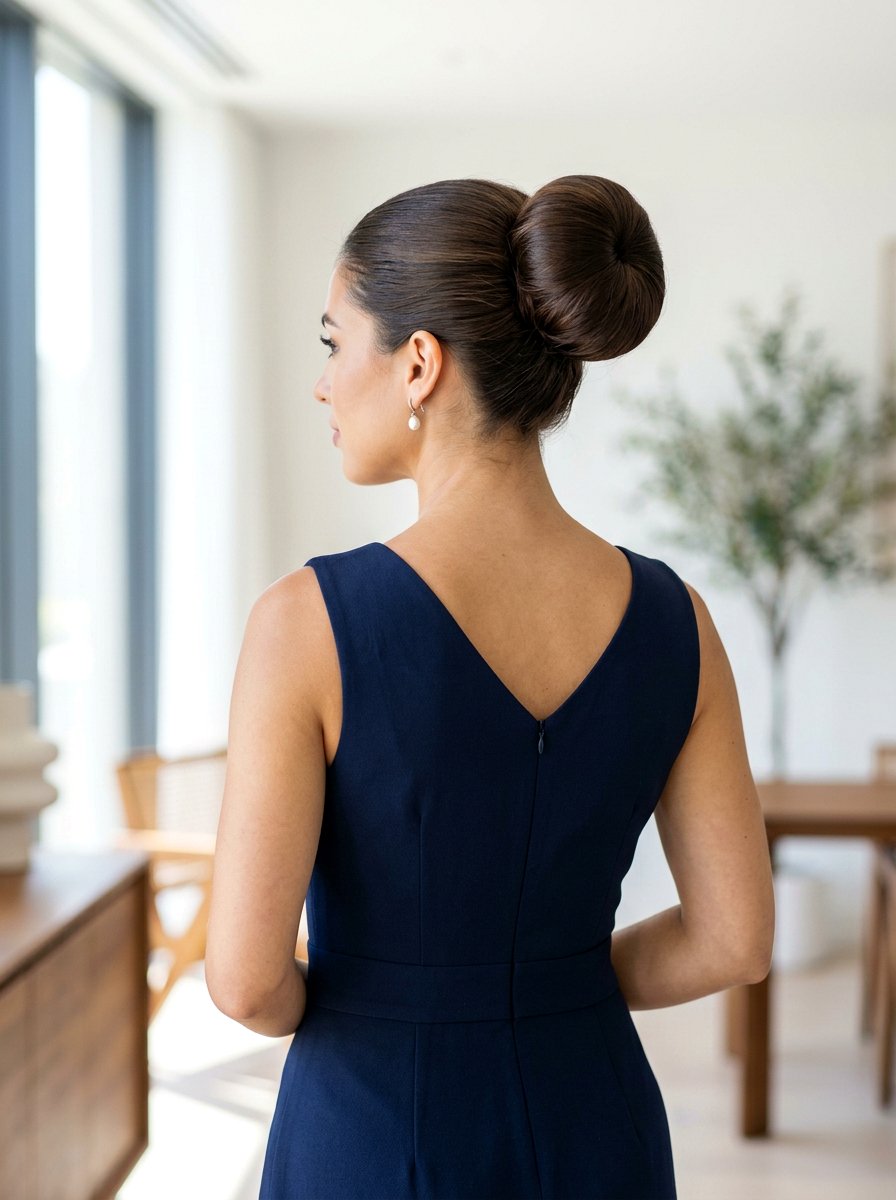
12. Low Bun For Curly Hair Interview
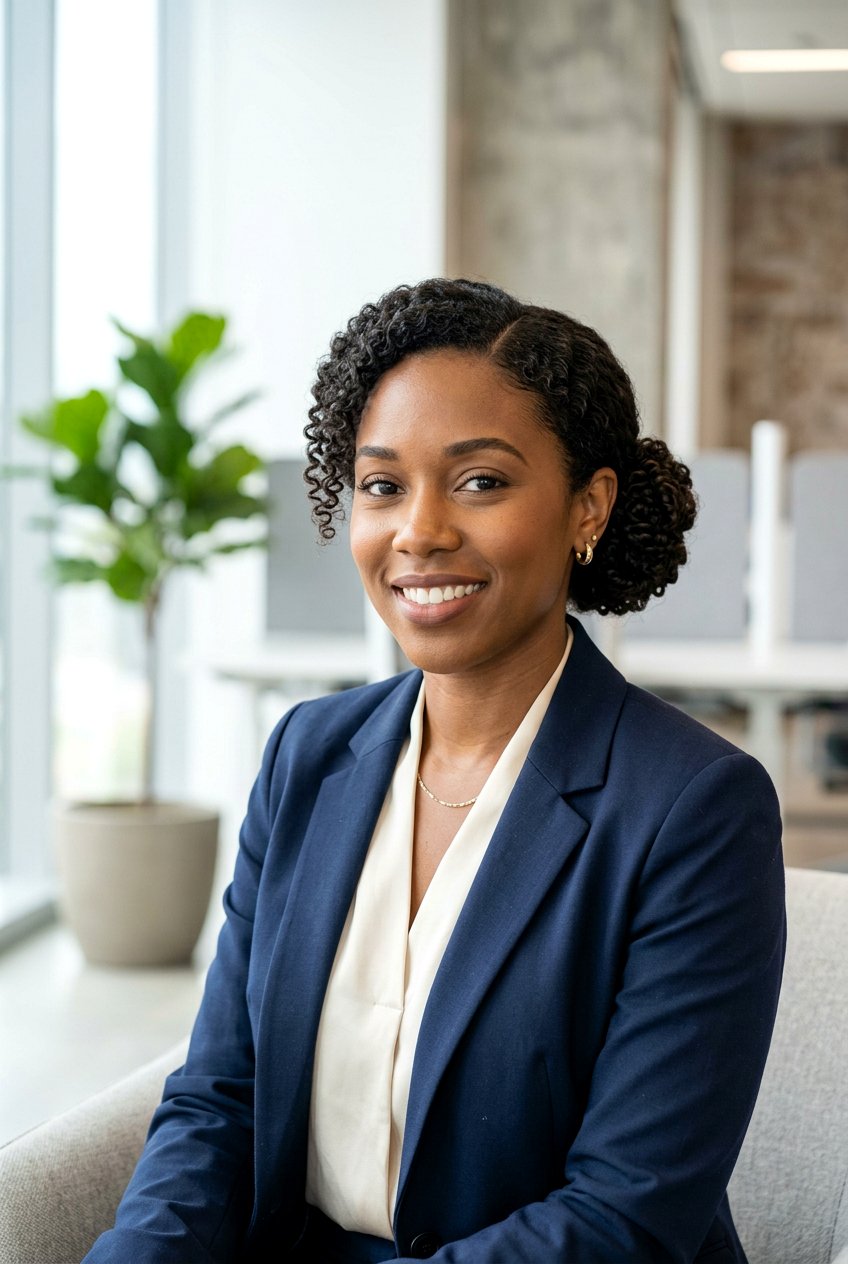
For naturally curly hair, a low bun can look professional while still honoring your texture instead of hiding it. Start with moisturized curls and apply a light gel or cream around the roots to encourage smoothness at the scalp. Gently gather your hair into a low ponytail at the nape, being careful not to break the curl pattern too much in the lengths. Twist or fold the ponytail into a bun, letting some curl definition show in the bun itself. Secure it with pins and use your hands, not a harsh brush, to smooth the top so your curls don’t frizz. This approach keeps your natural texture visible while making sure your hair stays out of your face and looks intentional, which is great for interviews where you want to appear polished but authentic.
13. Sleek Bun For Natural Hair Interview
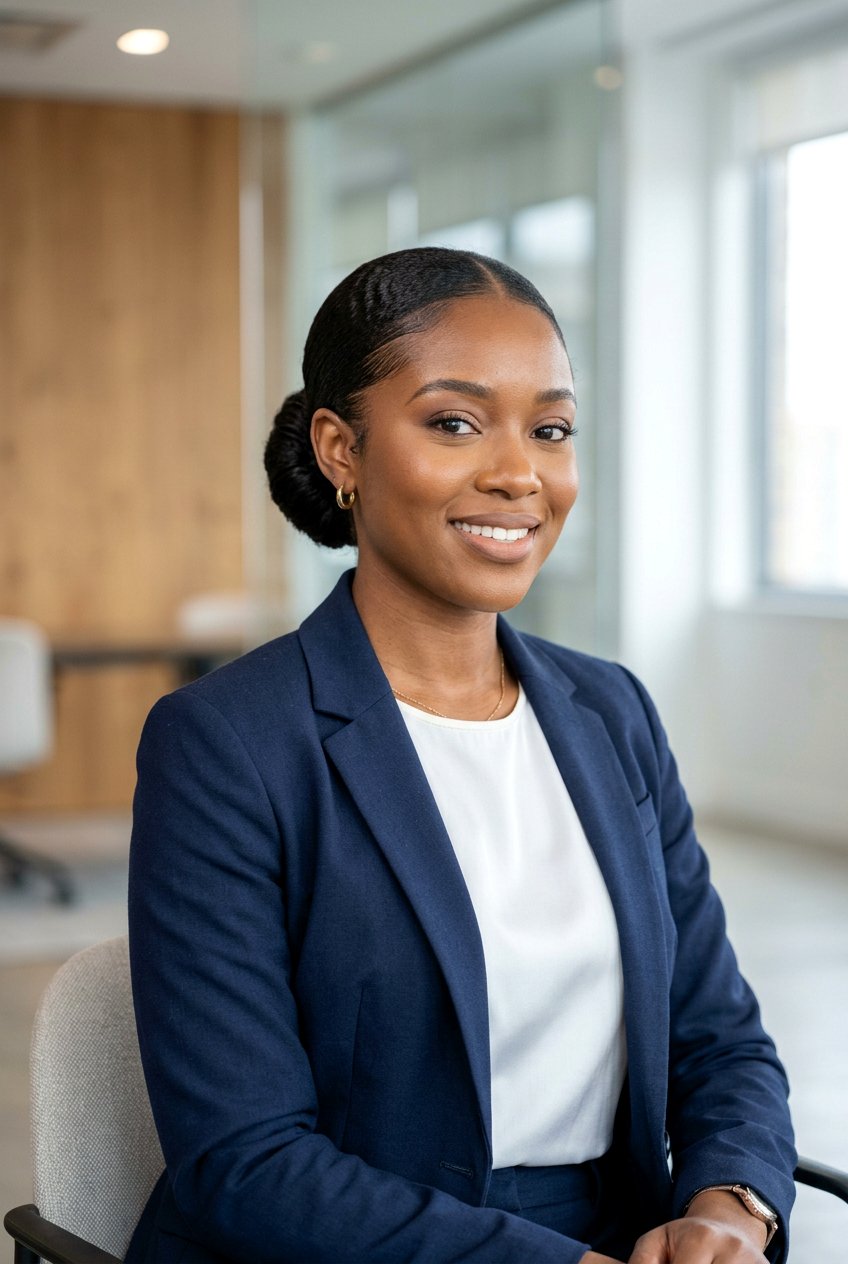
A sleek bun on natural hair looks powerful, neat, and very professional for interviews in almost any industry. Begin on stretched hair from a blowout or banding method, or smooth your curls back using water and a good holding gel. Brush your hair toward a low or mid-level ponytail, working in sections so the surface is smooth but not painfully tight. Secure the ponytail and either tuck the ends into a compact bun or wrap added hair around if you need extra length. Focus on clean edges and a frizz-free finish around the hairline, using edge control sparingly to maintain a soft, not overly rigid look. This bun pairs well with tailored outfits and simple jewelry, and it communicates that you’re put together and ready without drawing attention away from your expressions or your answers.
14. Half Up Bun For Interview

A half up bun can work for certain interviews, especially in creative or relaxed business casual environments, when done neatly and proportionally. Separate the top half of your hair from just above the ears, making sure the part line is even on both sides. Gather this top section into a small ponytail at the crown or slightly lower, then twist it into a compact bun. Keep the bun modest in size so it doesn’t overpower your profile and make sure the loose bottom section is smooth, brushed, or softly waved. This style gives you the feel of hair down while keeping your face open and the top section controlled, which can be useful if you tend to push your hair back when nervous. Avoid messy texture and keep the finish polished so it reads intentional rather than casual weekend hair.
15. Tight Ballet Bun For Job Interview
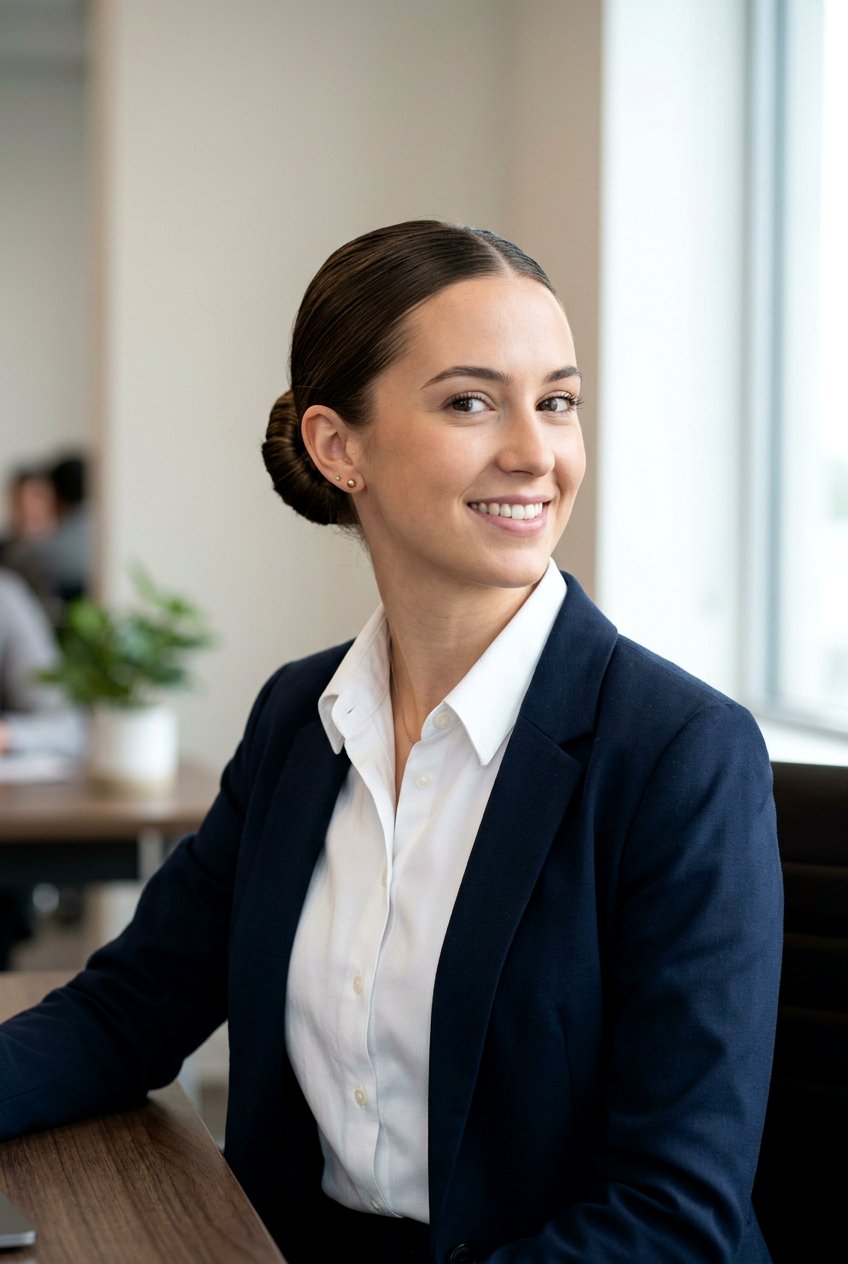
A tight ballet bun is a minimalist, highly controlled look that works well if you prefer very tidy hair with no loose strands. Comb your hair thoroughly and apply a smoothing product from roots to ends. Pull it straight back into a low or mid-height ponytail, making sure there are no gaps or bumps in the hair. Twist the ponytail tightly and wrap it flat around the band, securing with several bobby pins placed close to the scalp. The result should be a smooth, compact bun that hugs your head, almost like a dancer’s rehearsal style. While this look is extremely neat, balance it with softer makeup or a gentle neckline so it doesn’t feel too severe, and make sure you’re comfortable with the tightness for the duration of your interview day.
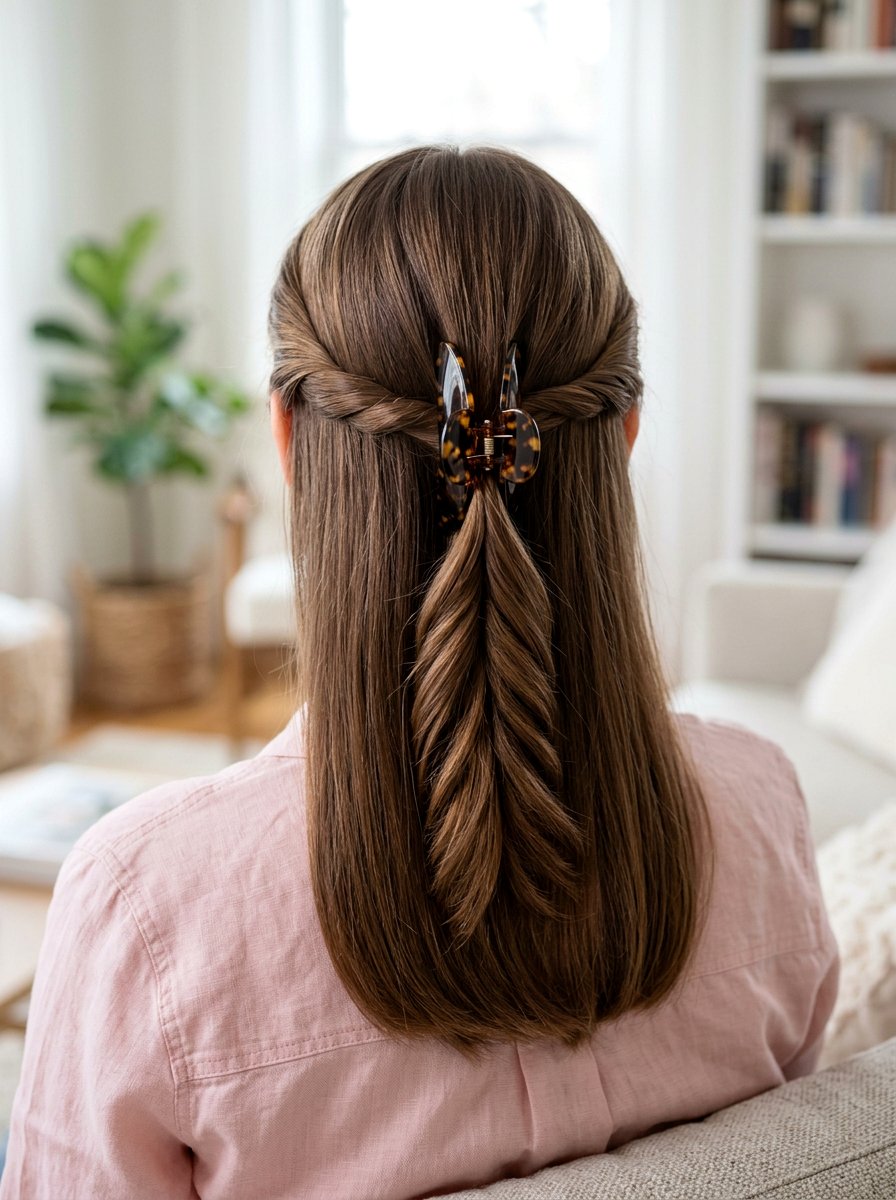
16. Low Bun With Volume At Crown
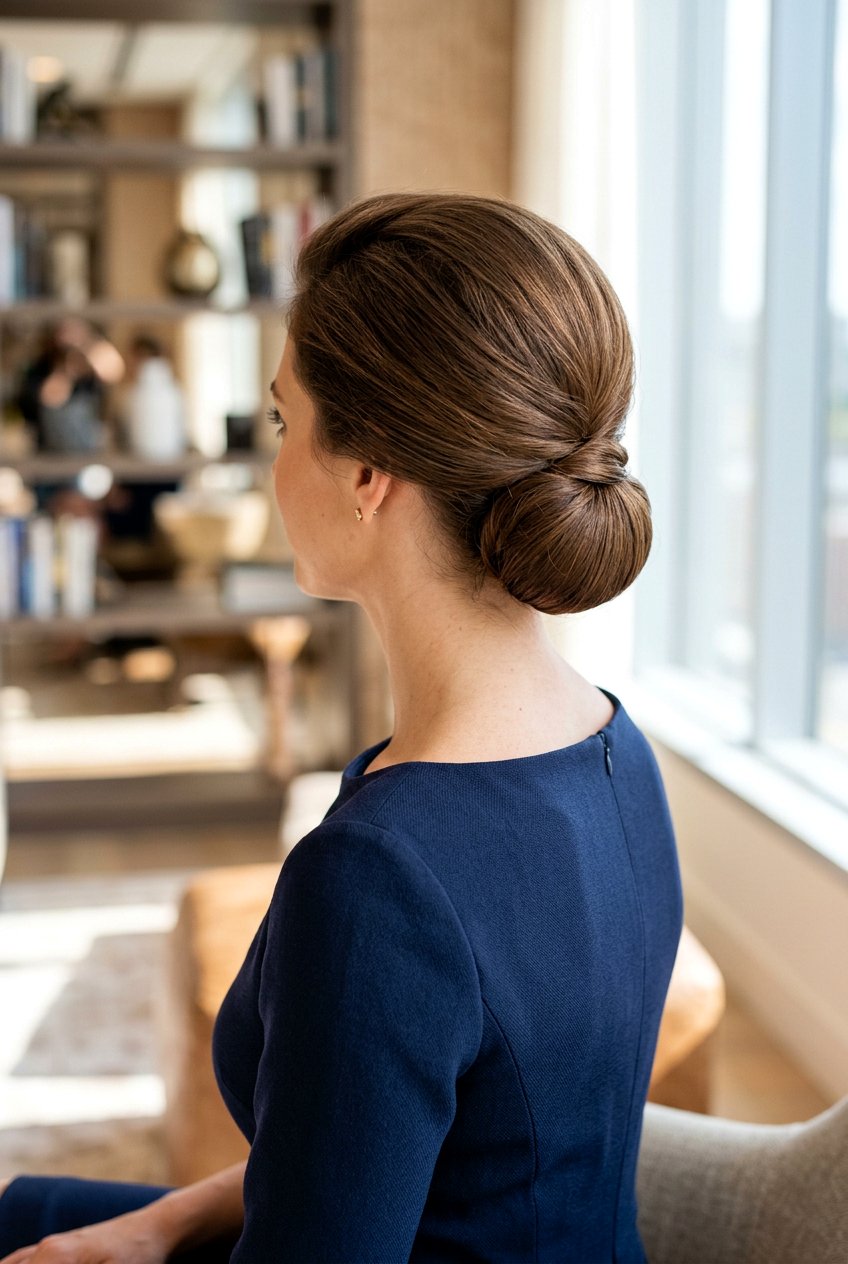
A low bun with volume at the crown combines structure with a bit of gentle lift, which can be flattering for round or shorter face shapes. Start by sectioning off the top of your hair from temples to crown and lightly backcombing it for subtle height. Smooth the surface of this top section with a brush while keeping the volume underneath intact, then gather all your hair into a low ponytail. Twist the ponytail into a bun at the nape and pin it securely. The added crown volume prevents the style from looking too flat in profile, especially in photos or video calls. Just keep the teasing light so it doesn’t veer into dated territory, and finish with a soft-hold spray to lock in shape without stiffness.
17. Low Bun With Bangs For Interview
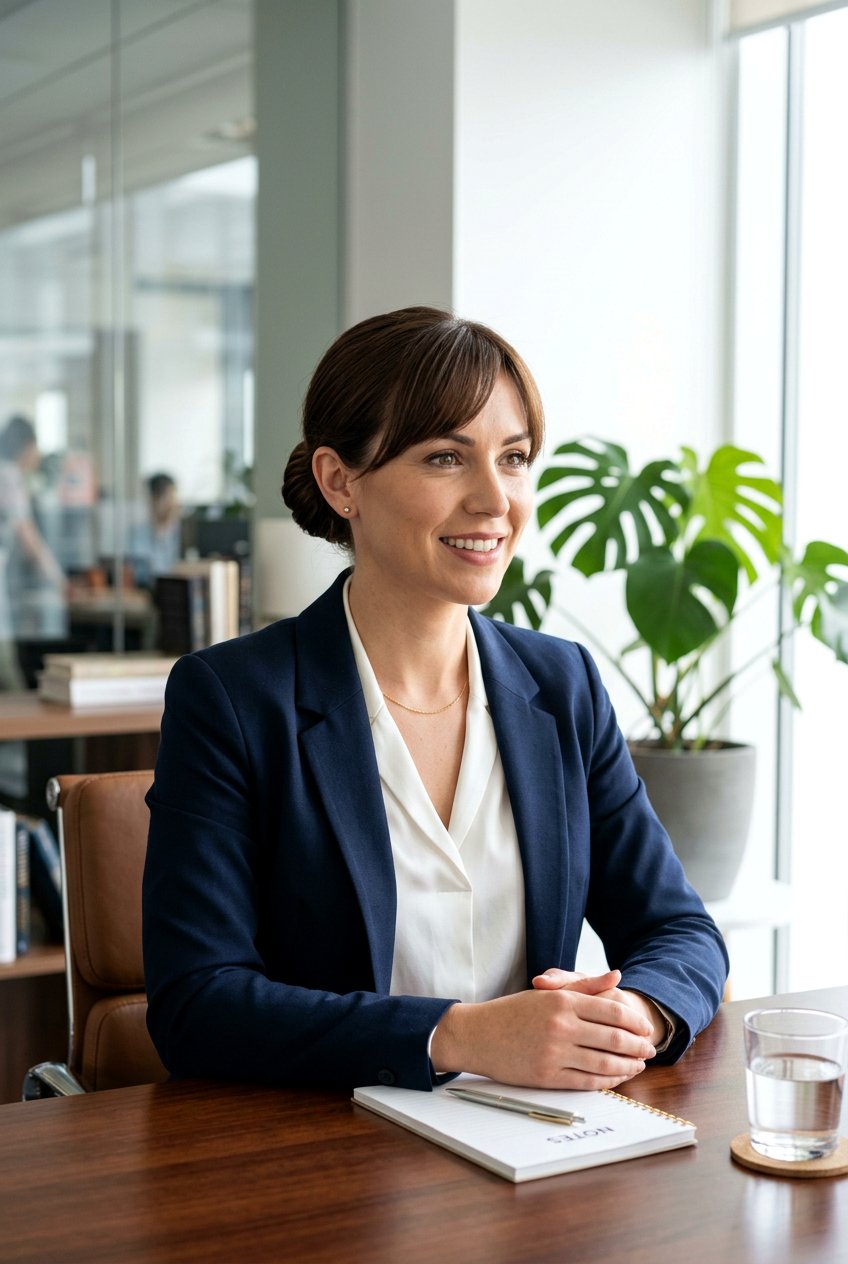
A low bun paired with bangs lets you keep your signature fringe while still presenting a neat, professional appearance. Style your bangs first, either straight, softly curved, or slightly side-swept, depending on your cut. Then brush the rest of your hair back into a low ponytail, making sure the transition from bangs to sides is smooth and seamless. Twist the ponytail into a tidy bun and secure with pins, keeping the shape close to the head. Check that your bangs are trimmed to a length that doesn’t require constant pushing or adjusting, since that can be distracting during an interview. This combination works well if bangs are part of your everyday look and you feel most confident with them, as long as the bun itself is polished and the fringe is controlled.
18. Low Bun For Short To Medium Hair

Short to medium hair can still form a clean interview bun with a few adjustments and lots of pins. Start by gathering as much hair as possible into a low ponytail at the nape; some shorter layers may need to be pinned separately along the sides and back. Once the ponytail is secured, twist the length into a small bun, tucking the ends under and pinning them down firmly. For layers that escape, use discreet bobby pins to guide them into the bun or smooth them along the head for a sleek effect. A little styling cream helps keep short ends from sticking out without making hair look greasy. This style shows you can keep a shorter cut under control and still present a refined look, even if your hair doesn’t naturally reach a full-sized bun on its own.
19. Messy Low Bun For Business Casual Interview
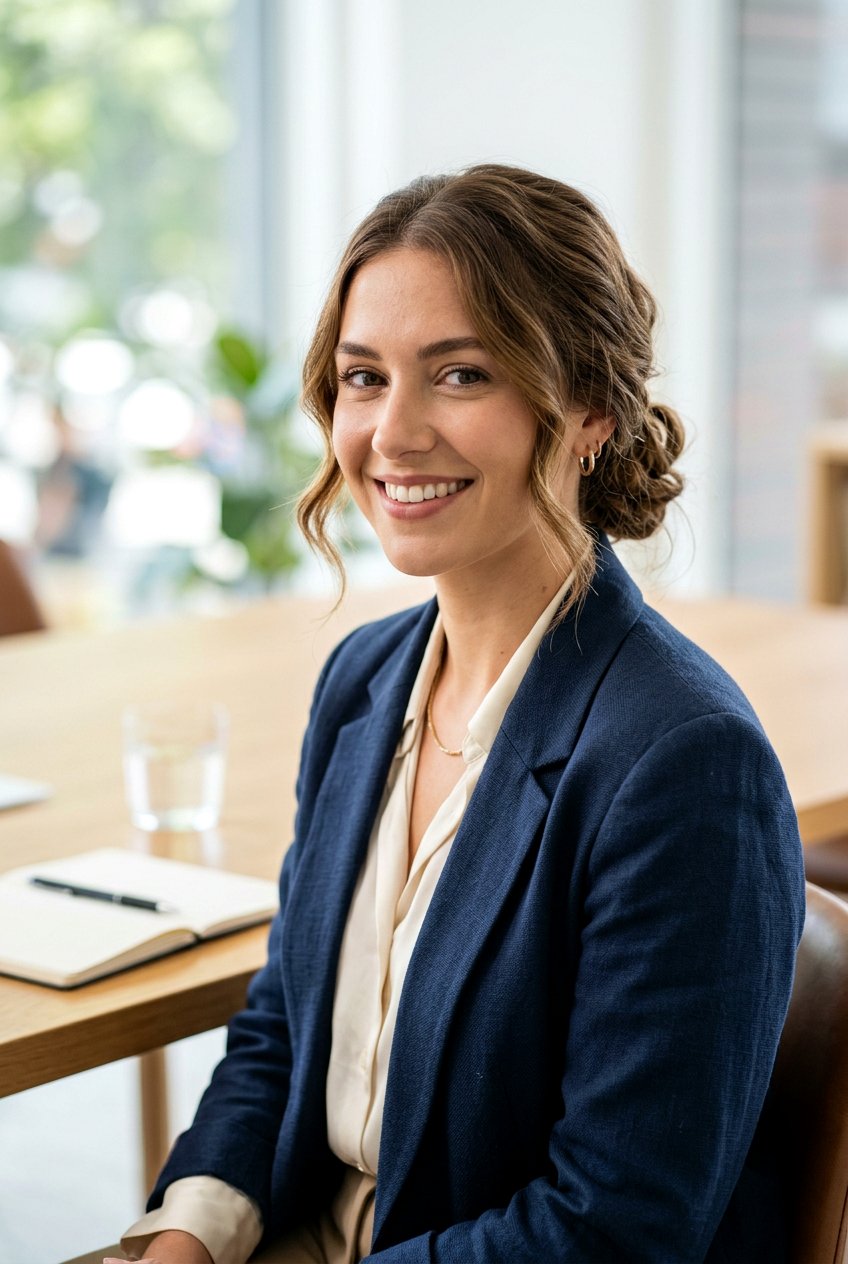
A messy low bun can be appropriate in business casual or creative settings as long as the “messy” part is deliberate and controlled. Begin with hair that has some natural wave or light curl, or add texture with a curling iron or texturizing spray. Gather your hair loosely into a low ponytail and twist it only partially before wrapping it into a bun, allowing a bit of volume and soft texture to show. Pull a few tiny strands around the bun or near the nape to keep it relaxed, but avoid big, loose pieces that could seem unkempt. Smooth the top and sides so they look intentional, and use a flexible-hold spray to maintain the shape. This approach gives off a relaxed, approachable vibe while still looking professional enough for less formal interview environments.
20. Low Bun For Video Interview
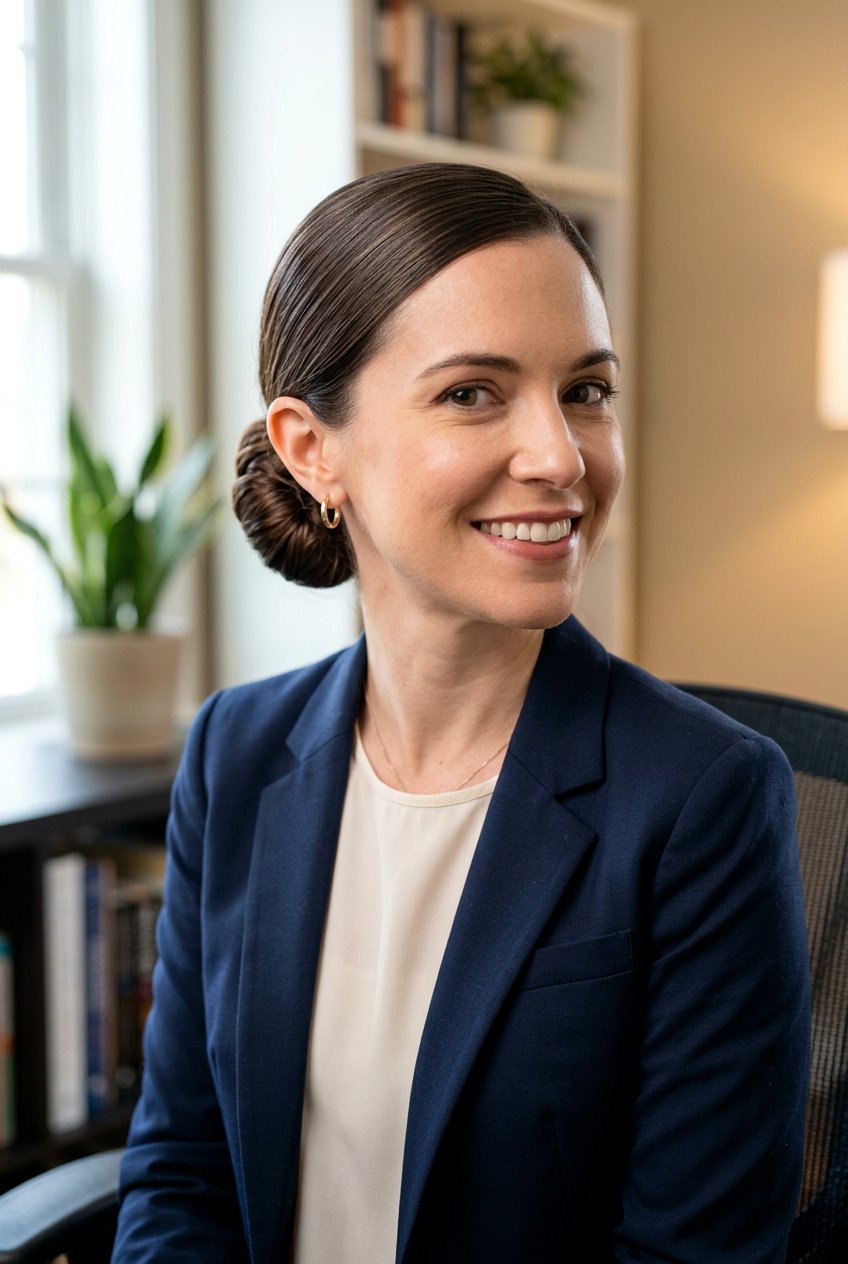
A low bun for a video interview needs to look good straight on and from a slightly higher camera angle, which means the front and sides matter most. Create a clean part that flatters your face and smooth the hair around your hairline so there are no distracting flyaways catching the light. Gather your hair into a low bun at the nape, keeping the shape compact so it doesn’t disappear out of frame or create odd shadows behind your neck. Make sure the bun sits low enough that your head and shoulders still look balanced in the webcam window. Avoid overly shiny products that can reflect light harshly on camera, choosing soft, natural-looking shine instead. This simple, tidy bun lets the interviewer focus on your expressions and eye contact while still clearly showing that you’ve made an effort with your grooming.
Conclusion:
Choosing the right interview bun hairstyle is really about finding that balance between polish, comfort, and your personal sense of self. You want a look that stays secure through handshakes, presentations, and long conversations without needing constant fixes. Low buns, chignons, and sleek variations around the nape or crown tend to be the safest options because they keep your face clear and pair well with most professional outfits. Subtle details like a small braid, gentle volume at the crown, or soft face-framing pieces let you express your style while still keeping things focused and neat. Whether your hair is straight, curly, short, or natural, there’s a bun variation that can help you walk into the room feeling prepared and confident. Once you’ve chosen your favorite, practice it ahead of time so on interview day, your hair is one thing you never have to worry about.
You'll Like These Styles:




Leave a Reply