
Searching for the right way to style your tresses for a high-stakes meeting can feel overwhelming, but a simple hairstyle for interview with long hair is often the most effective choice. When you walk into a professional setting, your hair should complement your attire without becoming a distraction. Long hair offers incredible versatility, allowing you to transition from a sleek, authoritative look to a soft, approachable aesthetic with just a few pins or a hair tie. In 2026, the trend has shifted toward “quiet luxury” in hair, emphasizing healthy shine and intentional placement over complicated intricate braiding. By choosing a polished and manageable style, you demonstrate attention to detail and a high level of personal grooming.
1. Sleek Low Ponytail
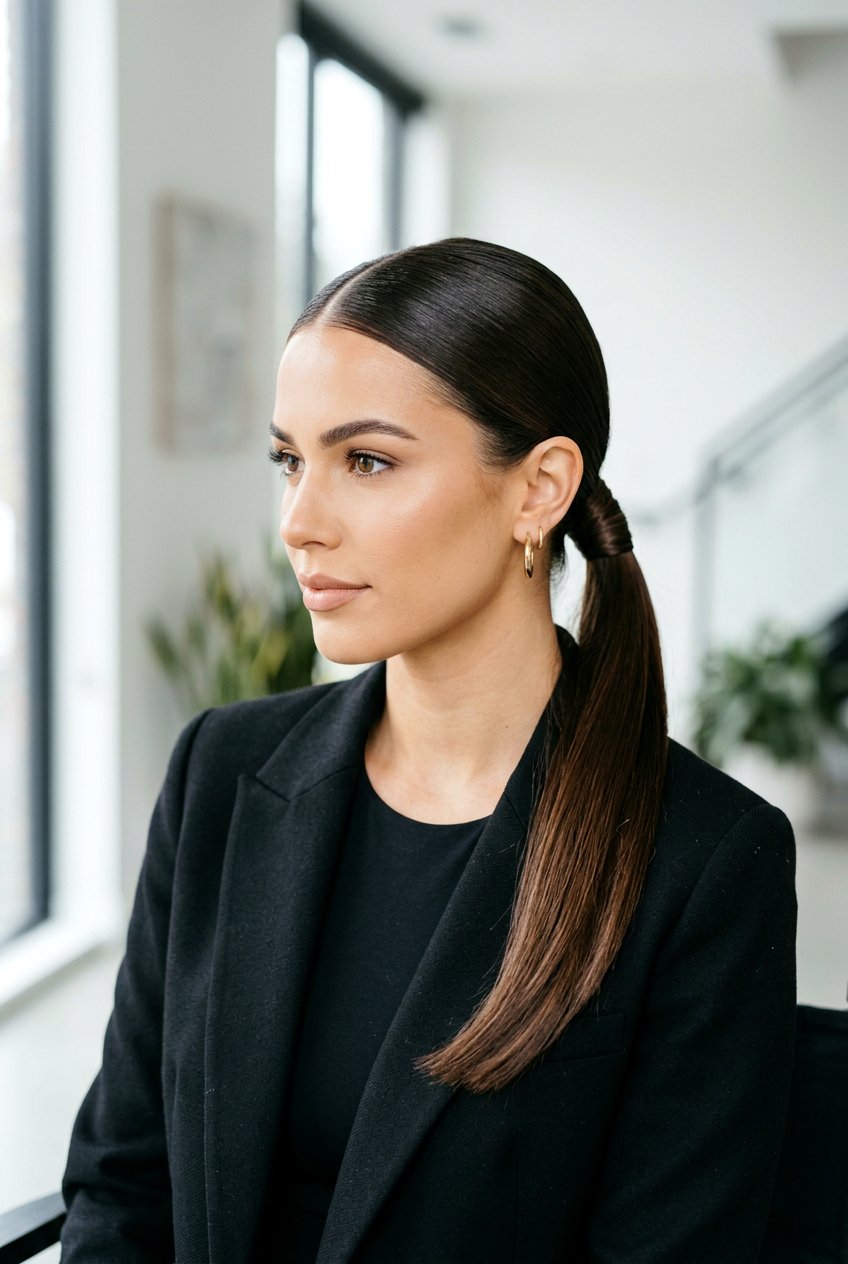
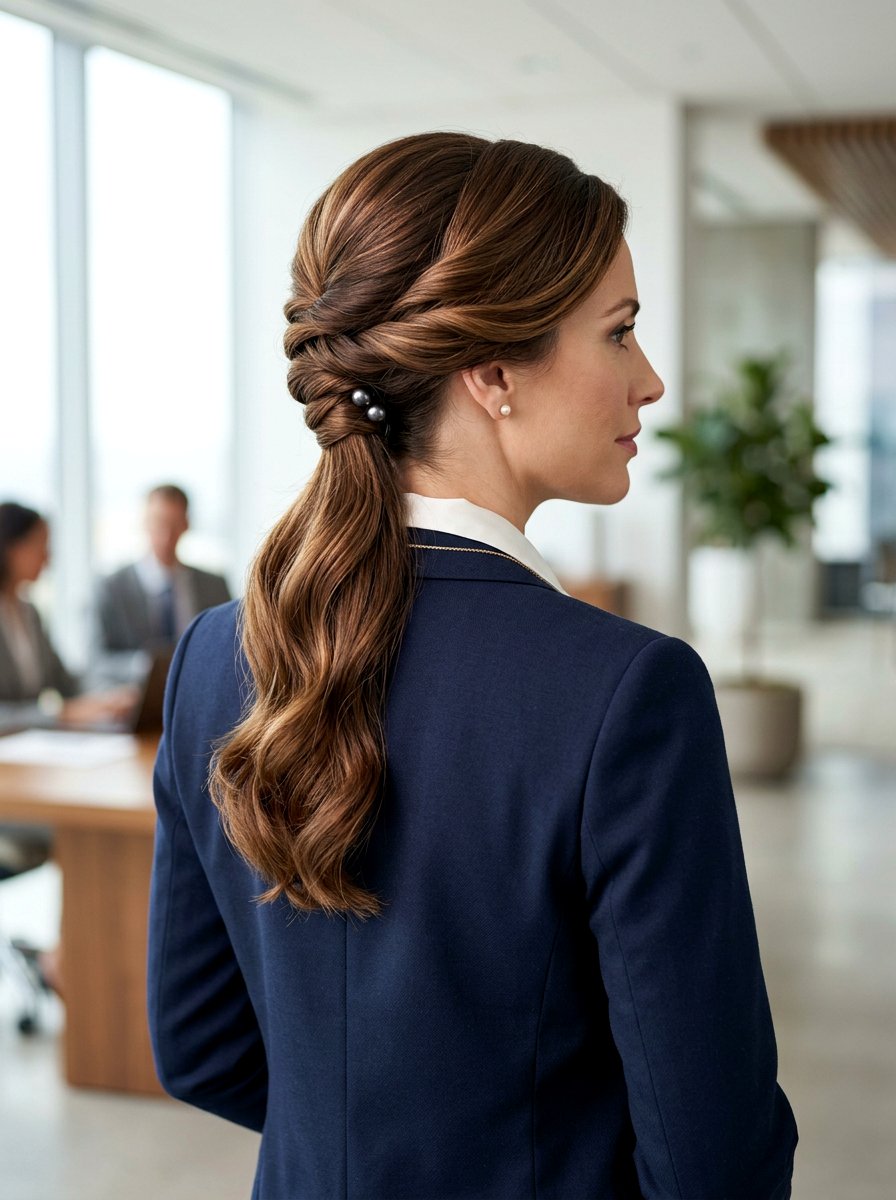
A sleek low ponytail is perhaps the most reliable and sophisticated choice for any corporate or creative job interview. This look works by pulling the hair back away from the face, which ensures that your facial expressions and eye contact remain the focal point of the conversation. To achieve this, use a fine-tooth comb to create a precise center or side part, then gather the hair at the nape of the neck. Securing it with a bungee elastic helps maintain tension without creating unsightly bumps. For a high-end finish, wrap a small strand of hair around the base to hide the hair tie. This clean silhouette radiates confidence and suggests that you are organized and ready to work.
2. Polished Half Updo
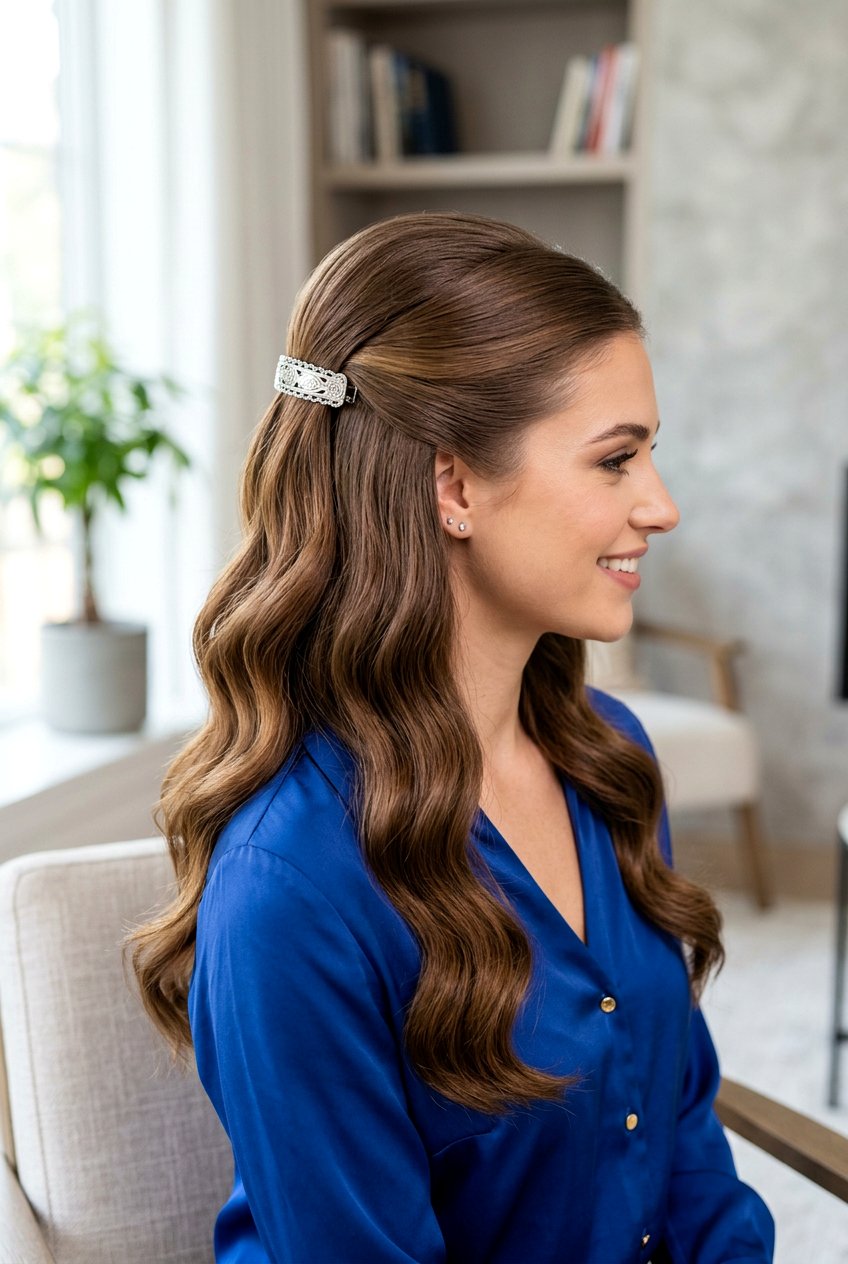
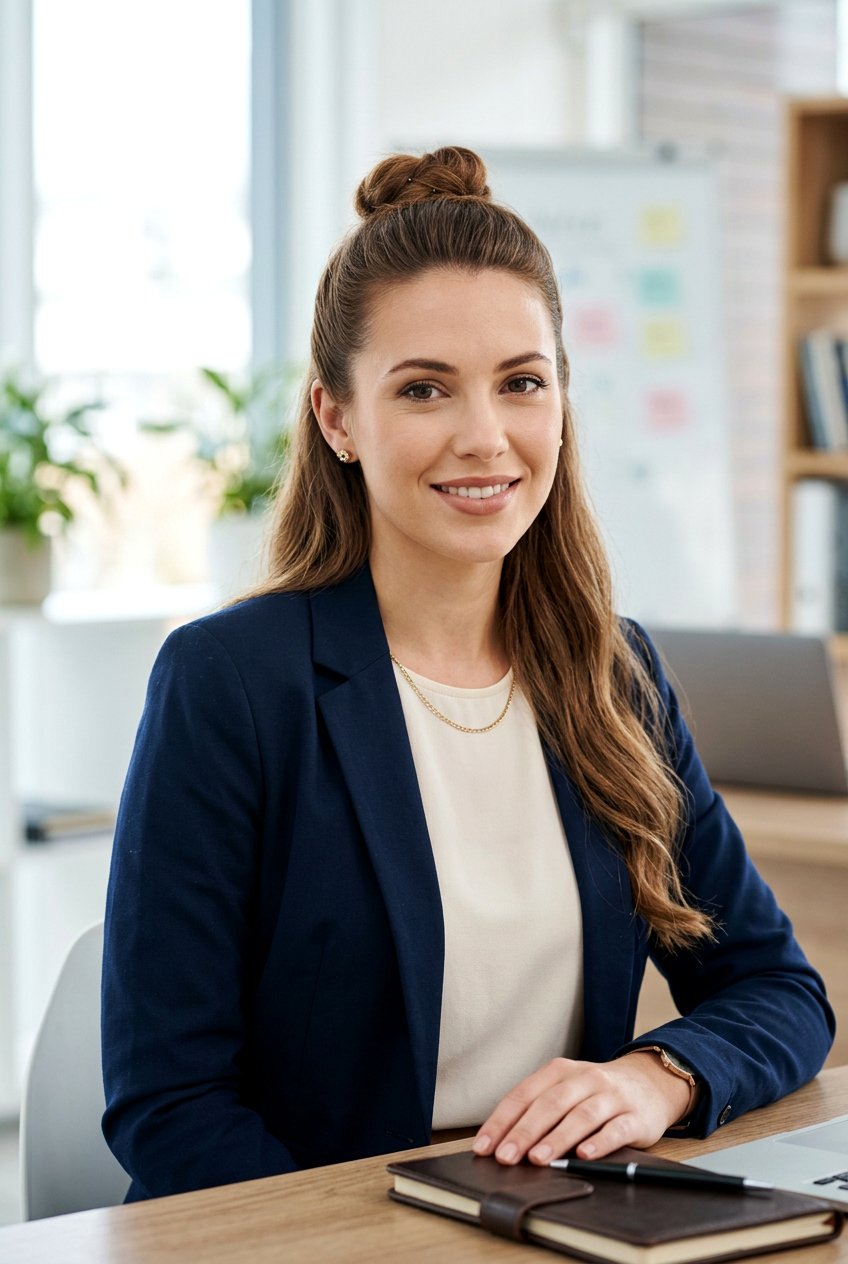
If you prefer to keep some length visible while maintaining a professional boundary, a polished half updo is an excellent middle ground. This style keeps the front sections of your hair from falling into your eyes when you lean forward to look at a resume or portfolio. You can create this by taking the top third of your hair and securing it at the crown with a subtle barrette or a small, clear elastic. For the remaining hair that hangs down, ensure it is smooth and frizz-free by applying a light-reflecting serum. This style offers a friendly and approachable vibe while still looking remarkably put-together and intentional for a formal business meeting.
3. Classic Low Bun
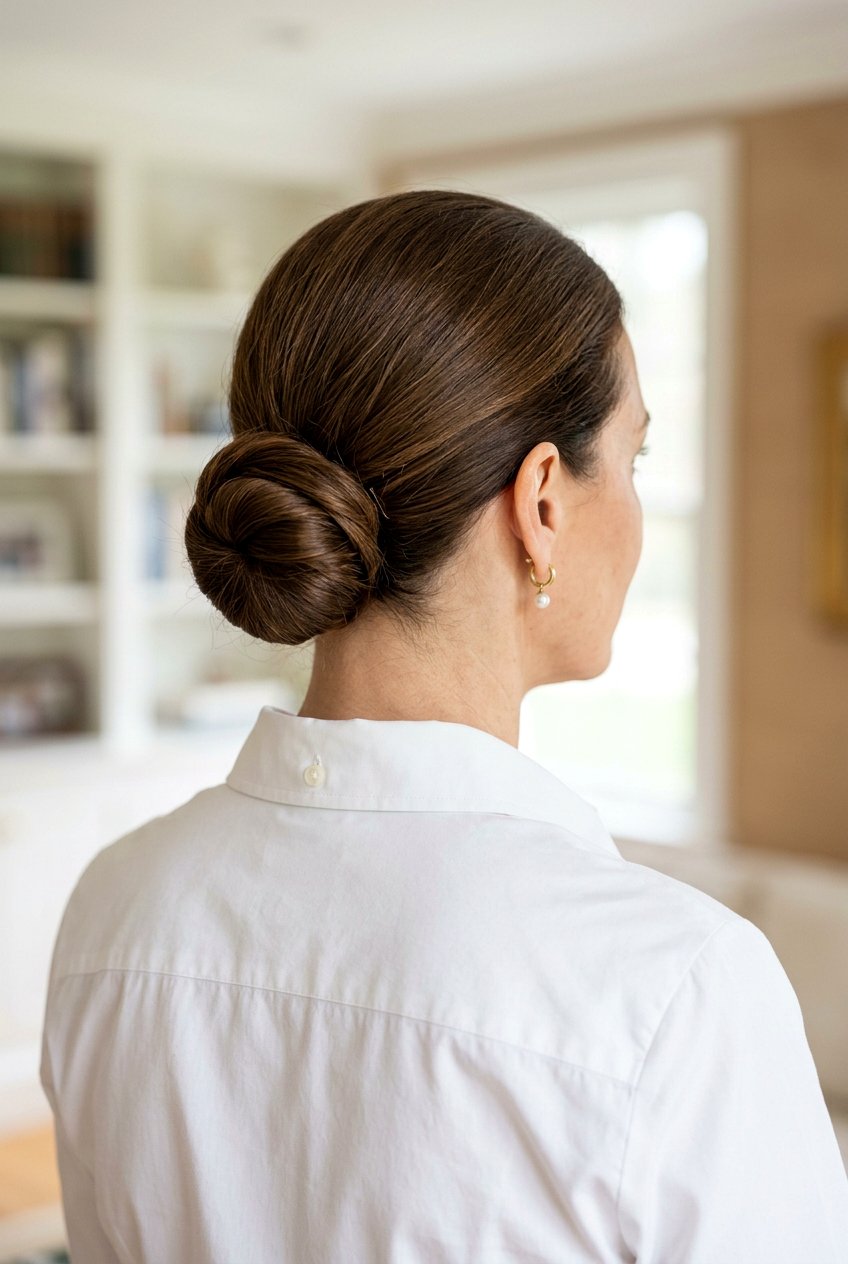
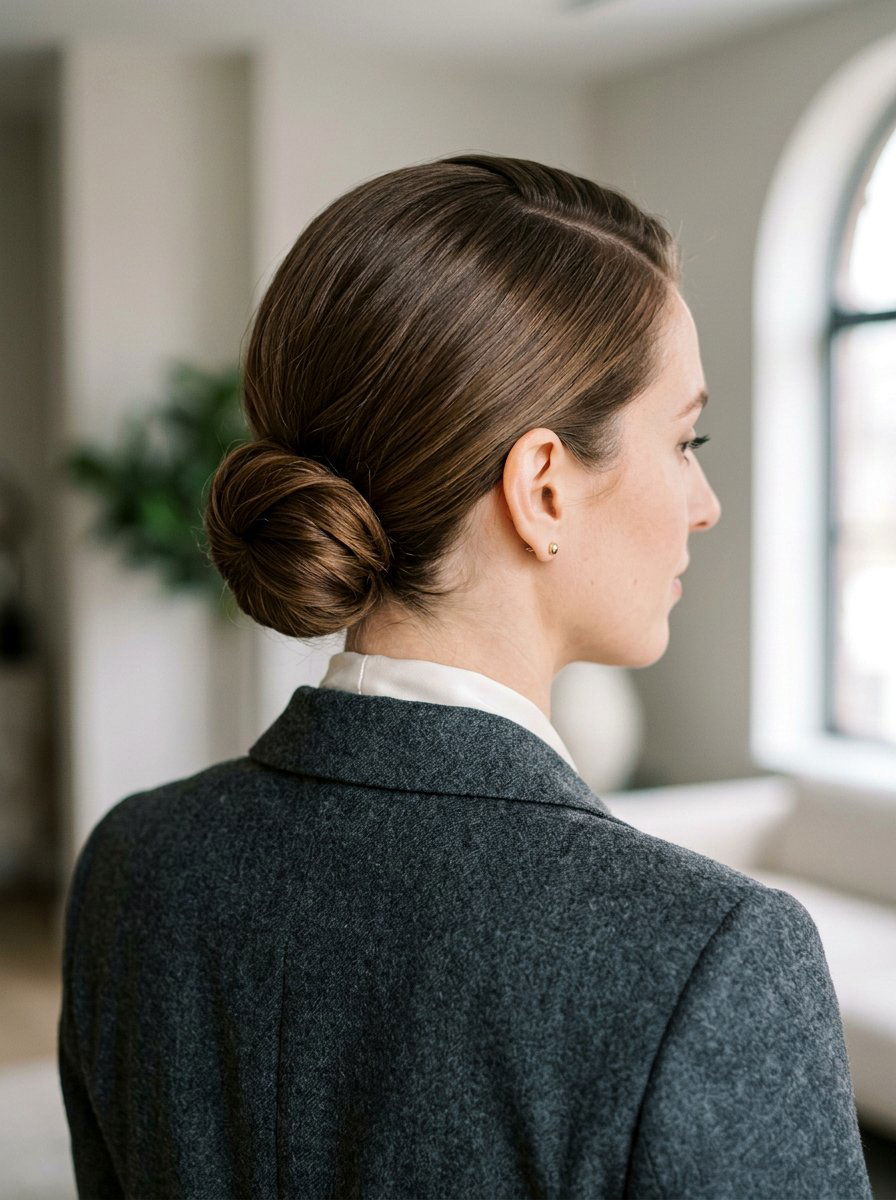
The classic low bun remains a staple in professional grooming because it is entirely fuss-free and stays secure for hours. Start by forming a low ponytail at the base of your skull and then twist the length of the hair into a neat coil. Use several U-shaped hairpins to anchor the bun against your head, ensuring there are no loose ends sticking out. This “ballerina-inspired” softness is currently trending as part of the 2026 aesthetic, where the bun is tucked neatly but not pulled so tight that it looks severe. It is an ideal choice for humid days or long commute times, as it prevents wind and weather from ruining your look.
4. Smooth Side Part
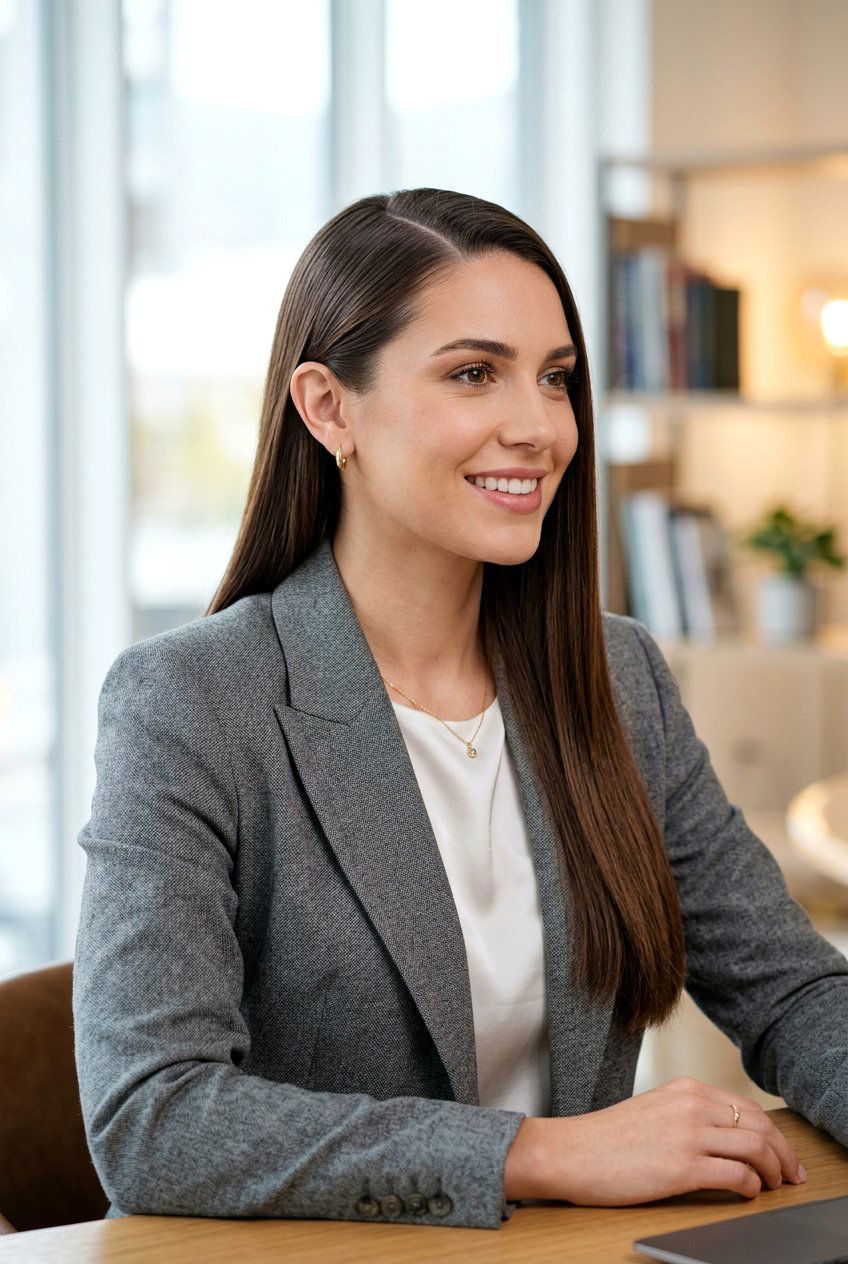
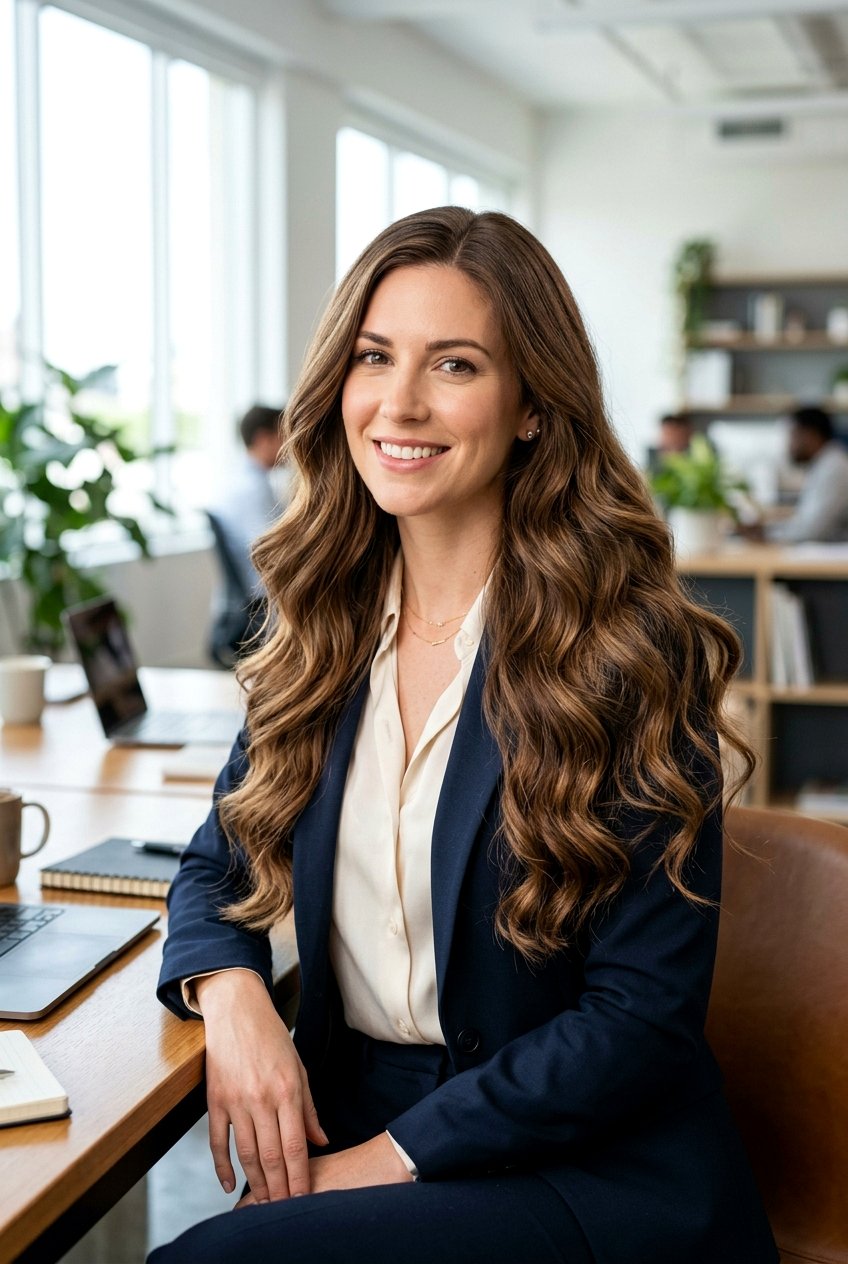
Sometimes the most effective simple hairstyle for interview with long hair is simply wearing it down with a very deliberate smooth side part. A deep side part can add instant volume to the roots and creates a structured frame for the face that feels more formal than a standard middle part. To make this look interview-ready, tuck the side with less hair behind your ear and use a small amount of flexible-hold hairspray to keep it in place. The hair should be blown out straight or styled into very soft, uniform waves to ensure it looks groomed rather than “just rolled out of bed.” This style highlights healthy hair texture beautifully.
5. Modern French Twist
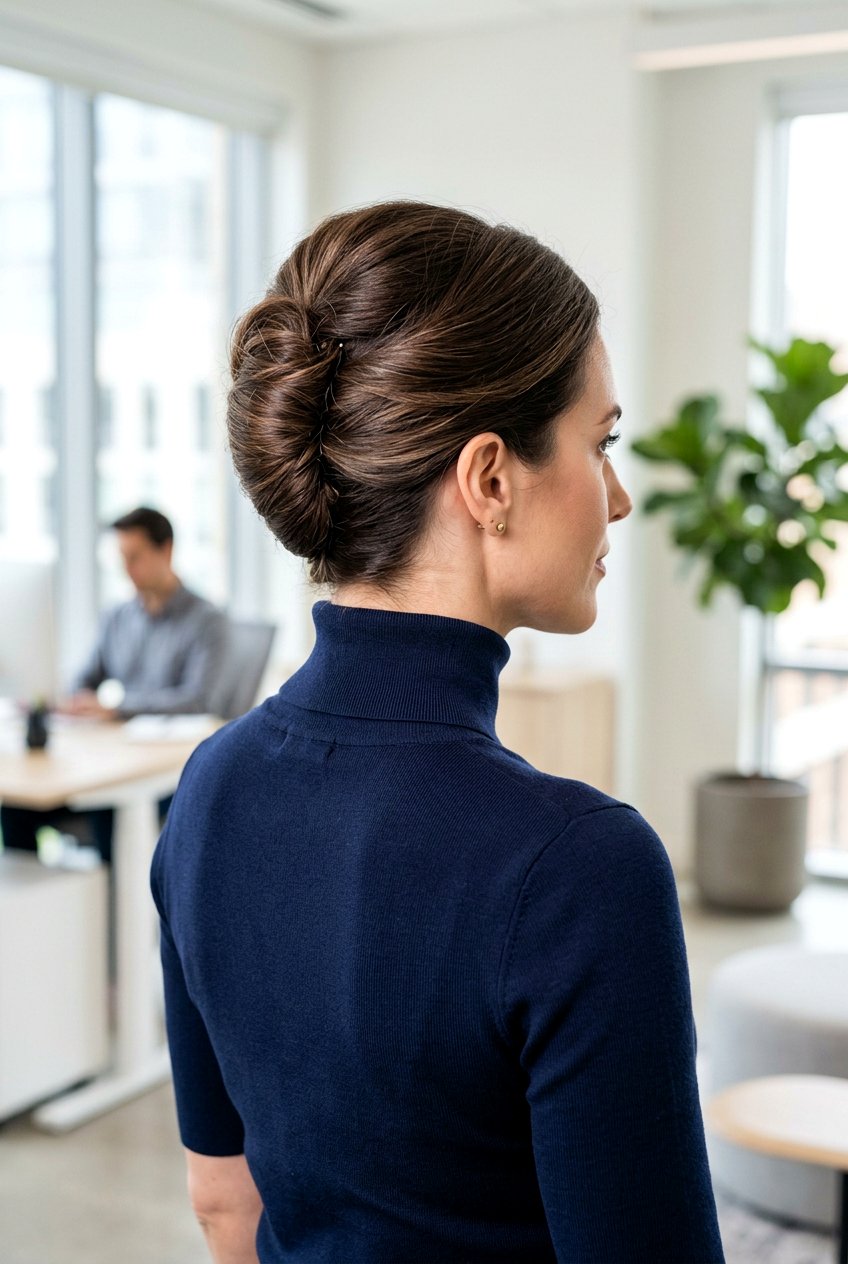
The modern French twist has seen a massive resurgence in 2026 as the ultimate “power” hairstyle for women in leadership roles. Unlike the stiff, sprayed versions of the past, the contemporary version is slightly softer but still maintains its iconic vertical silhouette. To style this, sweep all your hair to one side and secure the back with a row of vertical bobby pins. Fold the hair back over the pins and tuck the ends into the resulting pocket, pinning as you go. This upward sweep elongates the neck and pairs perfectly with a collared blazer or a high-necked professional blouse, giving you an air of undeniable sophistication and expertise.
6. Twisted Low Knot
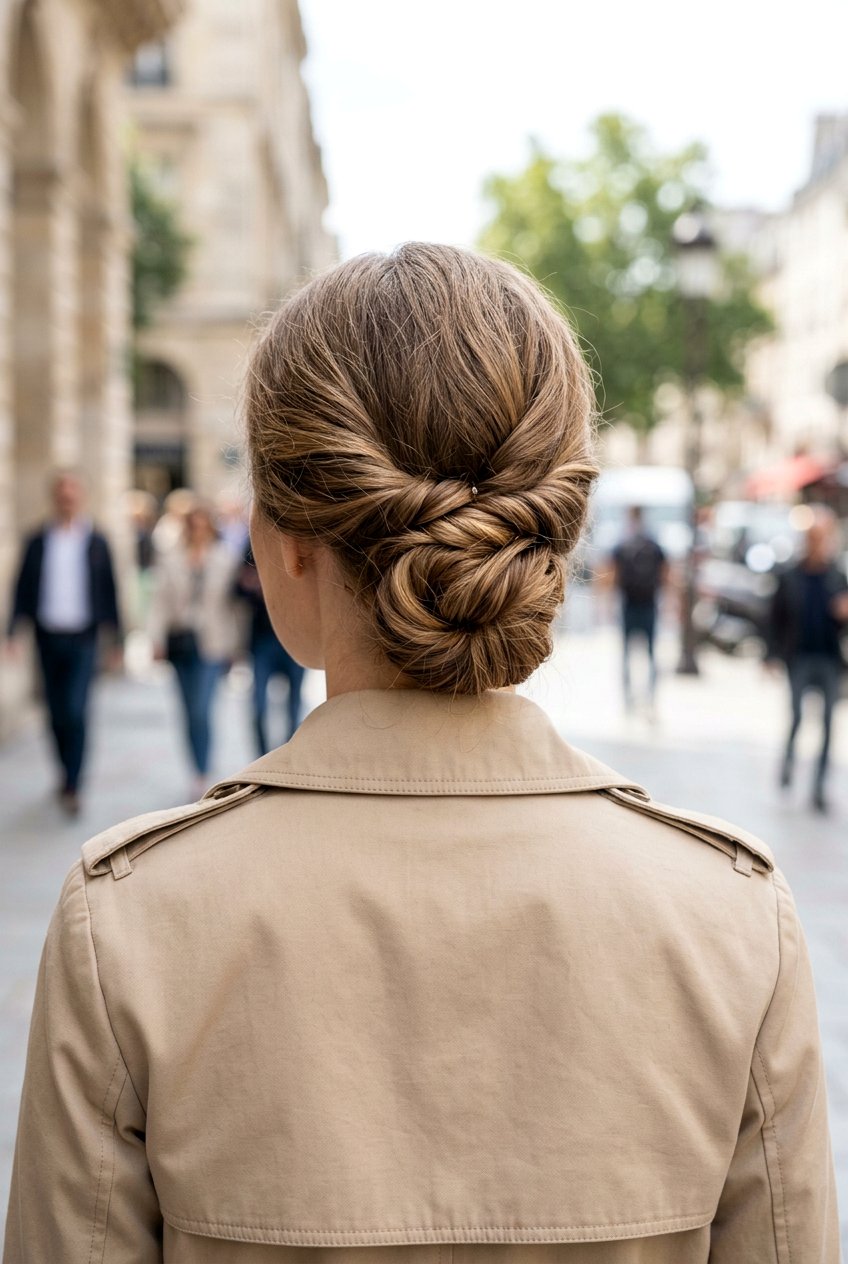
For those who want a variation of the bun that feels a bit more contemporary, the twisted low knot is a fantastic option. Divide your low ponytail into two even sections and twist them around each other like a rope before coiling them into a flat circle at the nape. This technique adds a decorative element to the hair without requiring any complex braiding skills or accessories. It creates a compact, sturdy shape that is unlikely to move even if you are running between different interview rooms. This look is particularly effective for thick long hair that might feel too heavy or bulky in a traditional round bun.
7. Secured Side Sweep
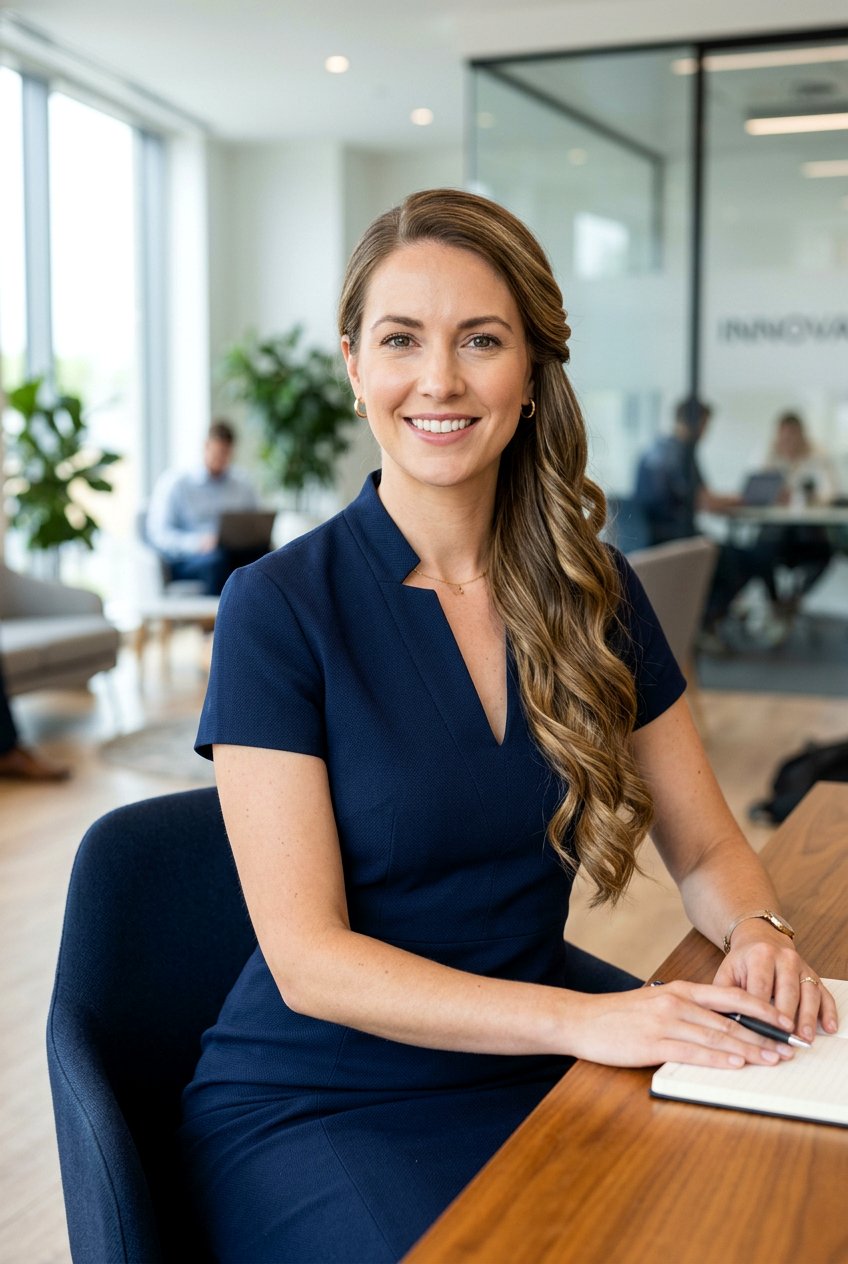
A secured side sweep is a stylish yet professional way to manage long hair while adding a touch of personality to your interview look. Gather your hair over one shoulder and use a few hidden bobby pins at the back of the neck to keep the hair from sliding back over the other shoulder. This asymmetrical look is flattering for most face shapes and provides a modern, chic alternative to standard updos. Make sure the lengths are well-brushed and the ends are trimmed, as this style draws significant attention to the health of your hair. It conveys a sense of creativity and poise that works well in less rigid industries.
8. Triple Twisted Half Up
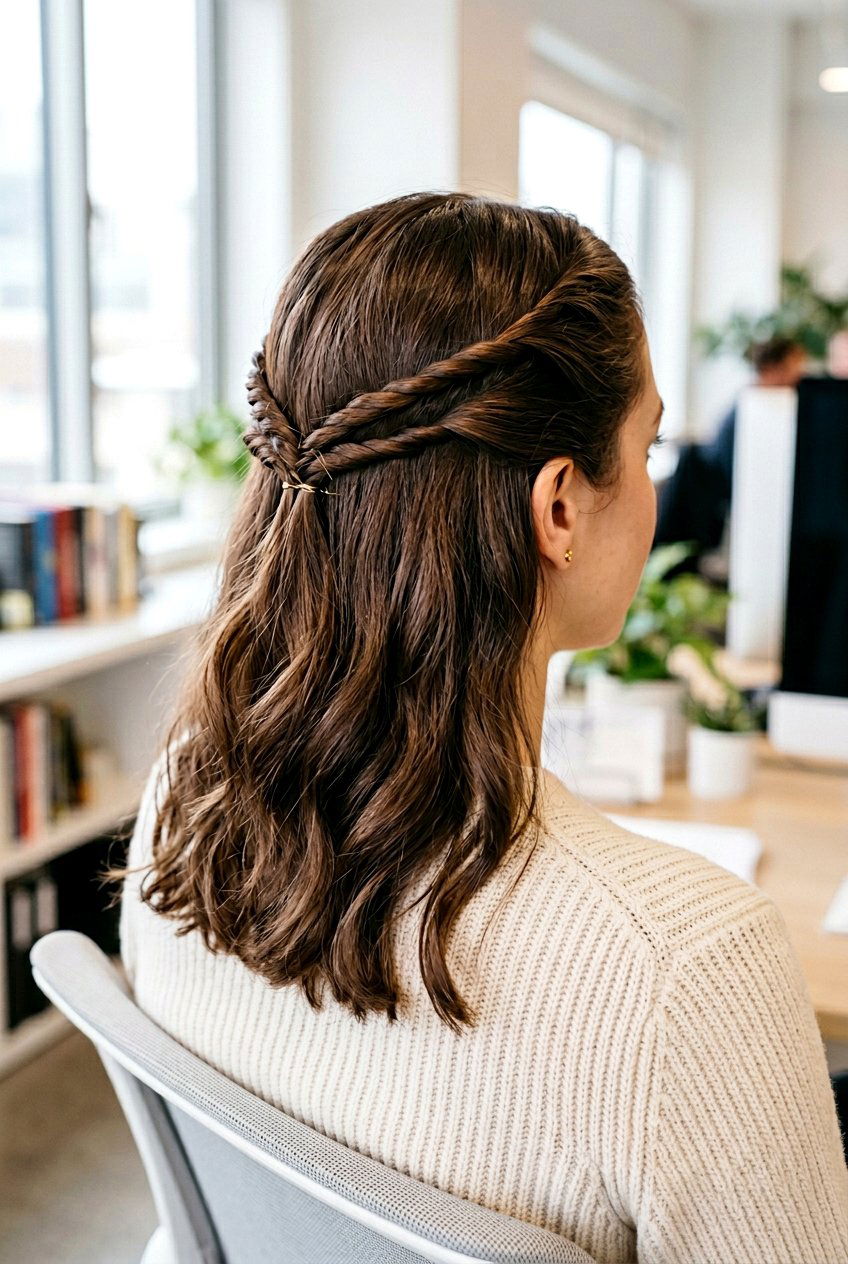
Adding a bit of structure to a standard half-up look can be achieved through a triple twisted half up style. Instead of pulling all the top hair back at once, take three small sections from each side of the temples and twist them toward the center back. Secure each pair of twists with a small pin or a single clear elastic. This creates a beautiful, ribbed texture at the back of the head that looks much more complicated than it actually is. It is a wonderful way to manage layers that might otherwise slip out of a ponytail, ensuring your hair stays perfectly in place throughout your entire professional presentation.
9. Pinned Back Temples
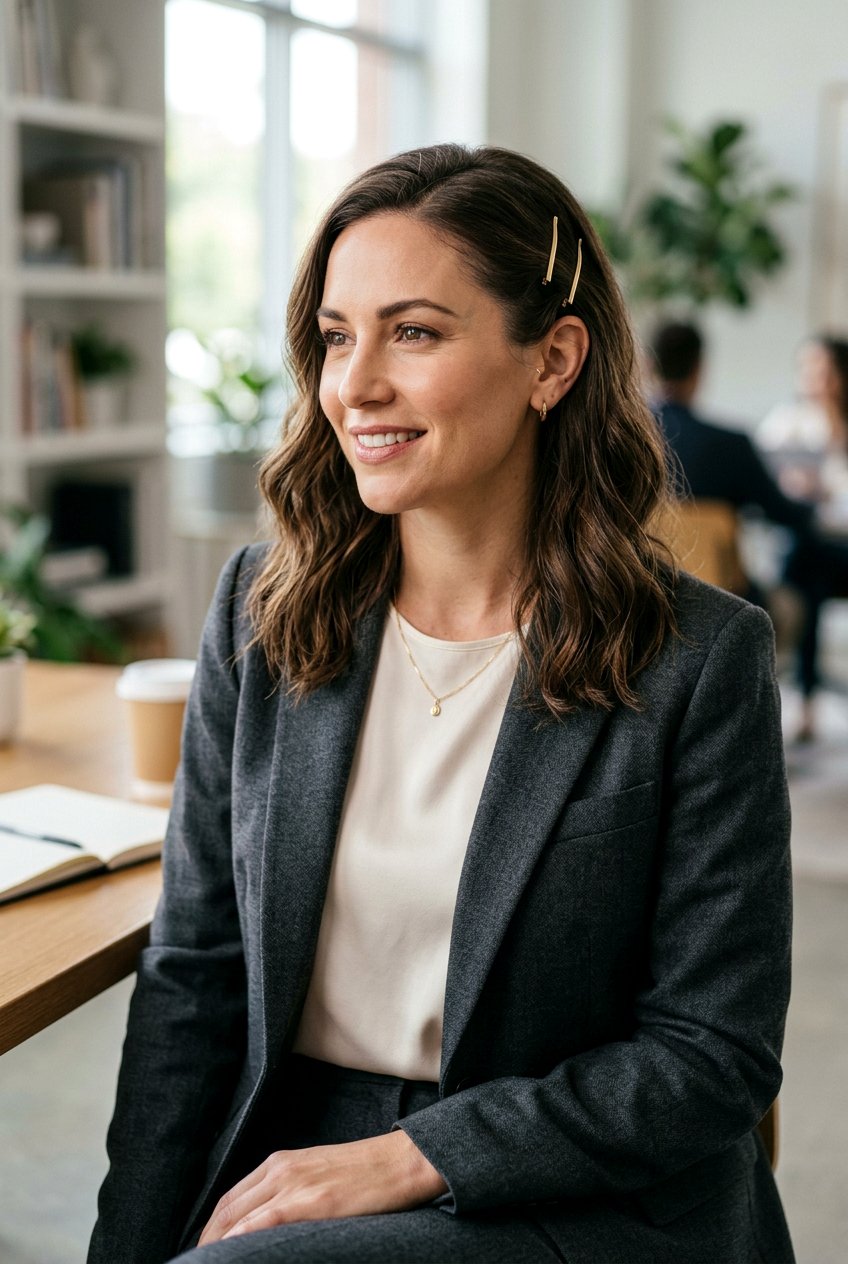
If you are looking for the absolute simplest way to style your long hair, the pinned back temples method is your best friend. Simply take two small sections of hair from the very front of your hairline and pin them back just above each ear using decorative but professional clips. This keeps the hair completely out of your face, allowing the interviewer to see your expressions clearly while letting the rest of your long hair flow naturally. It is a “no-nonsense” approach that takes less than two minutes to execute. Choosing metallic or tortoiseshell pins adds a subtle touch of elegance that complements professional jewelry like stud earrings.
10. Low Profile Chignon
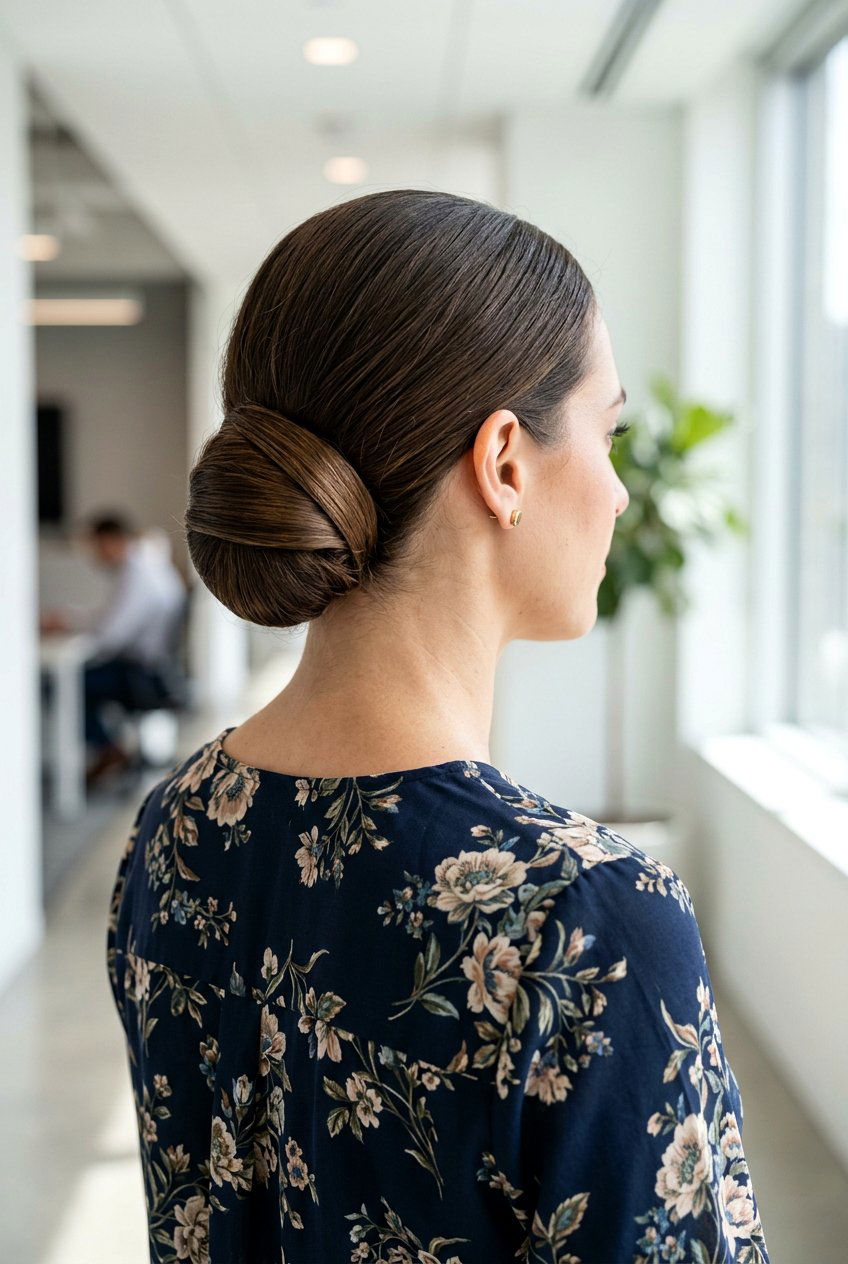
The low profile chignon is a slightly wider, flatter version of the bun that sits very low on the neck. It is often described as the “cool girl” version of the professional updo because it looks effortless yet feels incredibly refined. To get the look, loop your ponytail through the elastic but don’t pull it all the way through on the last wrap, then wrap the remaining “tail” around the loop. This creates a soft, horizontal shape that looks great from every angle, including during a profile view. It is an excellent choice for individuals with fine long hair, as the looping technique helps create the illusion of more hair volume.
11. Hidden Crown Braid
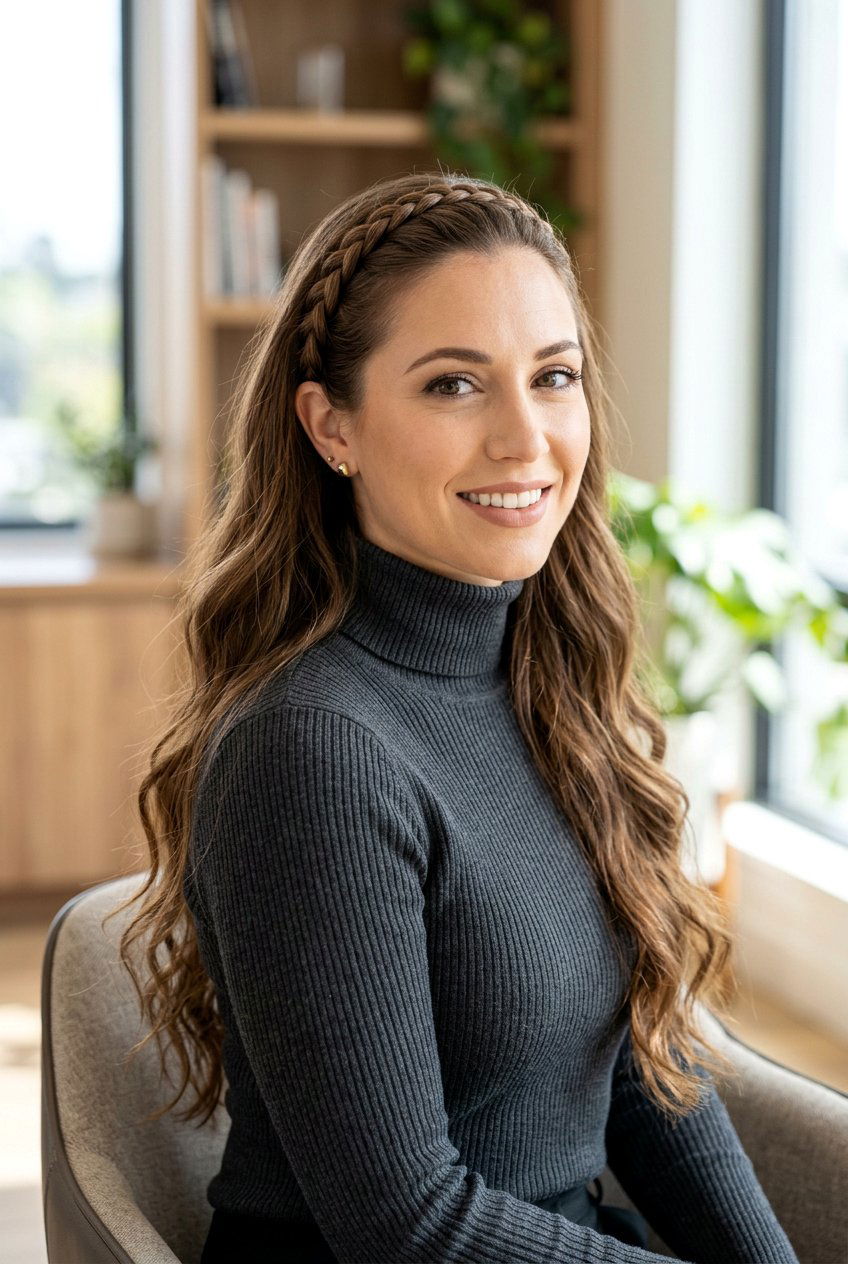
A hidden crown braid involves taking a small section of hair from behind one ear, braiding it thinly, and pinning it across the top of the head like a headband. This works best when the rest of the hair is left down and smooth. The braid acts as a natural anchor to keep the rest of your hair from falling forward into your face. It is a subtle, feminine detail that shows you have put effort into your appearance without being overly flashy. This style is particularly useful for controlling flyaways at the top of the head, which can sometimes be highlighted by harsh office fluorescent lighting.
12. Tucked Hair Headband

Using a soft, professional headband and tucking the ends of your long hair into the back of it can create a faux-bob effect or a rolled updo. This is a very quick “hack” for long hair that needs to look shorter or more contained for a conservative workplace. Place a thin, elasticated headband over the top of your hair, then starting from the front, tuck sections of hair up and under the band until everything is gathered. This creates a beautiful, rolled texture at the base of the head. It is a secure, comfortable style that feels very stable, allowing you to focus entirely on your interview answers rather than your hair.
13. Minimalist Hair Slide
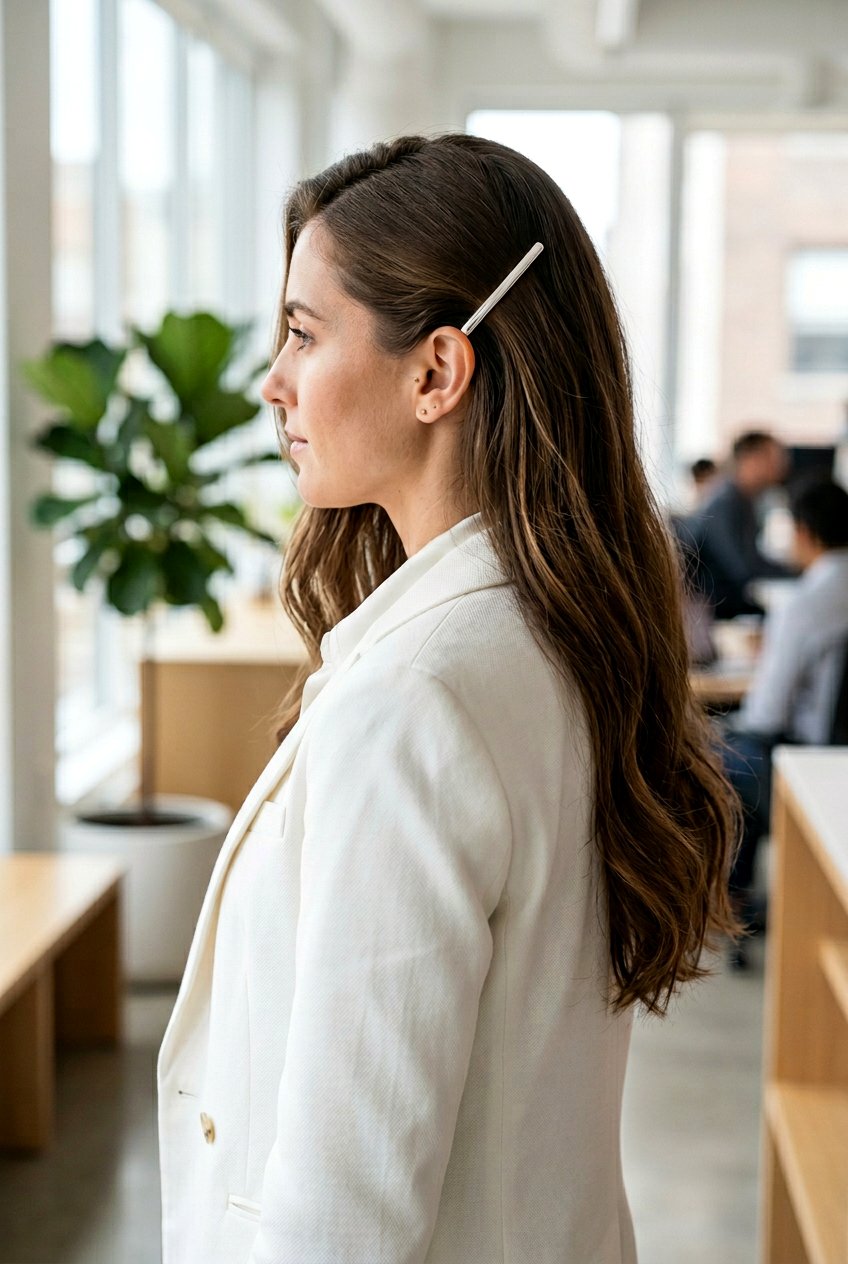
A minimalist hair slide can transform a basic “down” hairstyle into something that looks curated and intentional. By gathering just a small portion of hair from one side and securing it with a high-quality metal slide, you create a point of interest that breaks up the mass of long hair. This keeps one side of your face completely clear and open, which is great for building rapport and appearing trustworthy. The key to this look is the quality of the accessory; avoid plastic clips and instead opt for brushed gold, silver, or matte black finishes that match your overall professional aesthetic and outfit.
14. Folded Low Ponytail
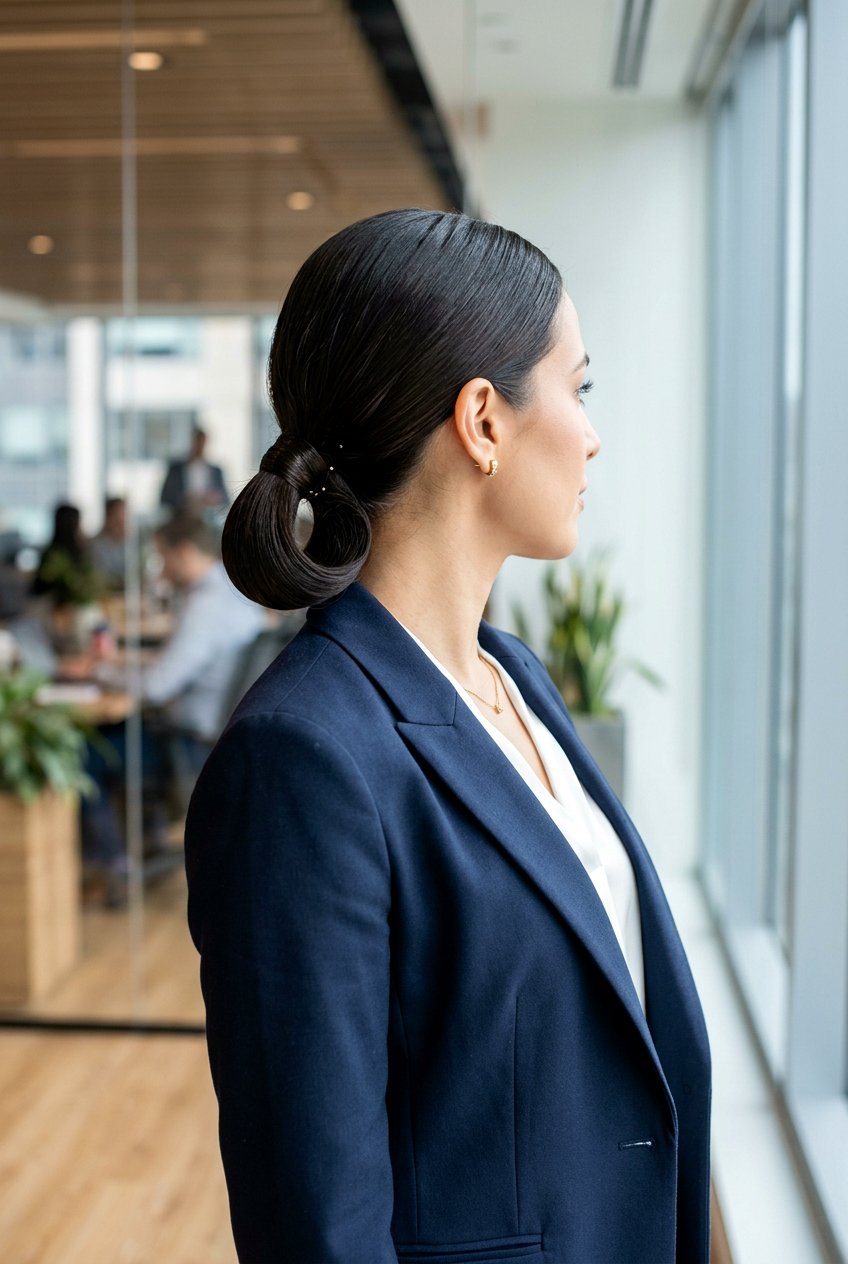
The folded low ponytail is a modern twist on the standard pony that looks very architectural and high-fashion. Secure your hair in a low ponytail, then fold the length of the hair upwards and secure it again at the base, letting the ends point downwards or tucking them in. This creates a “loop” of hair that looks very clean and structured. It is a fantastic choice if your long hair is particularly thick or heavy, as it keeps the weight of the hair closer to your head. This style communicates that you are forward-thinking and pay attention to contemporary professional trends while still maintaining a classic sense of decorum.
15. Smooth Center Part
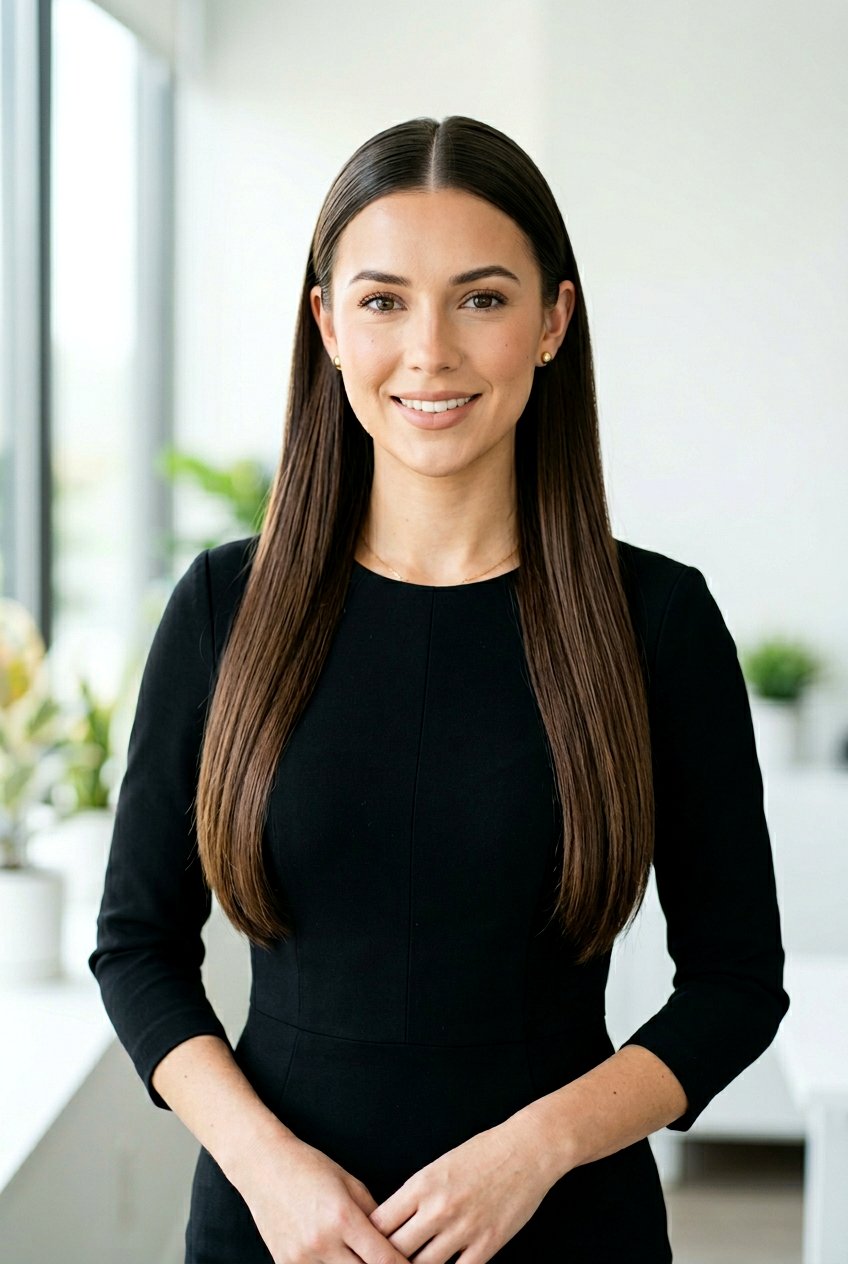
A smooth center part is a timeless classic that emphasizes symmetry and balance. For a long hair interview look, use a flat iron to ensure the hair is perfectly straight from the roots to the mid-lengths. This “liquid hair” trend is very popular in 2026 and represents a high level of grooming and health. To prevent the hair from looking too casual, tuck both sides behind your ears to keep your face visible. This is a very powerful look that works exceptionally well for high-level corporate interviews where a “no-frills,” direct, and highly polished appearance is expected to match a sharp power suit or dress.
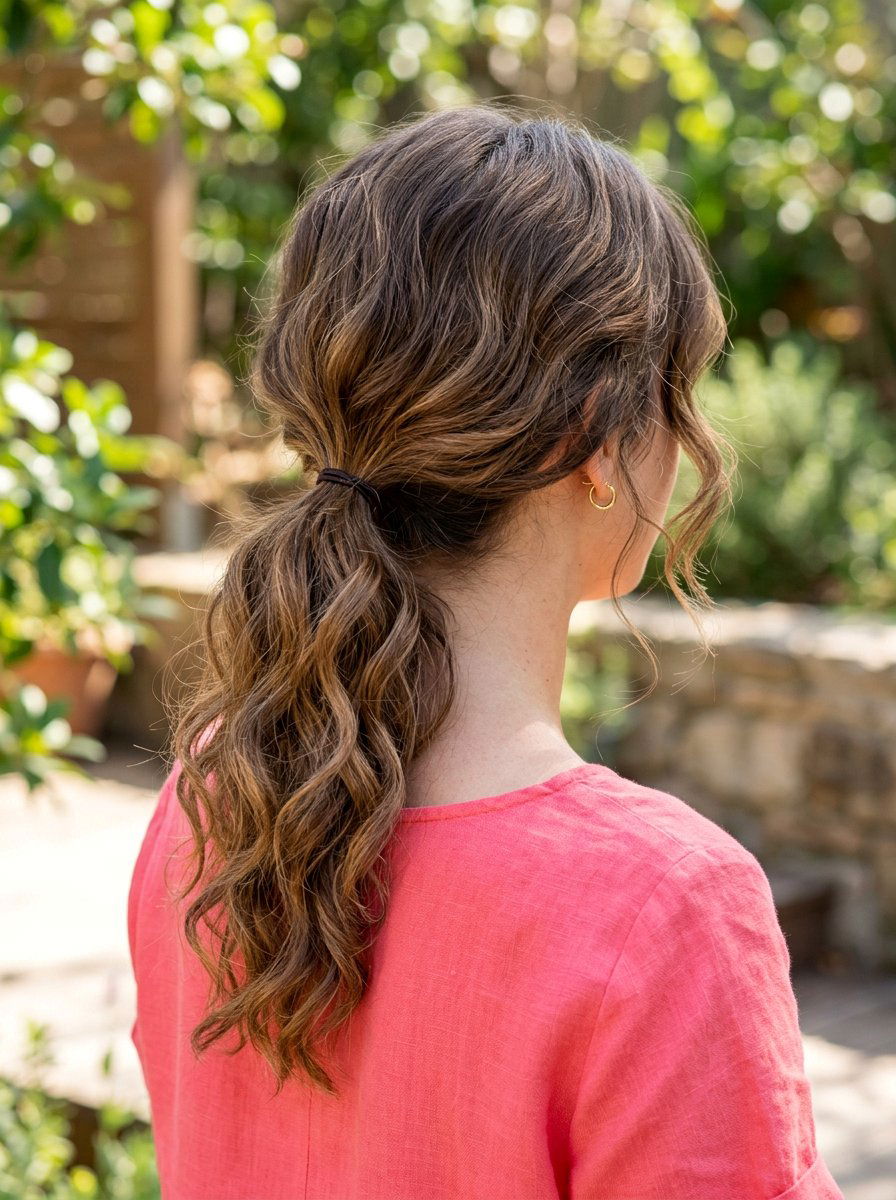
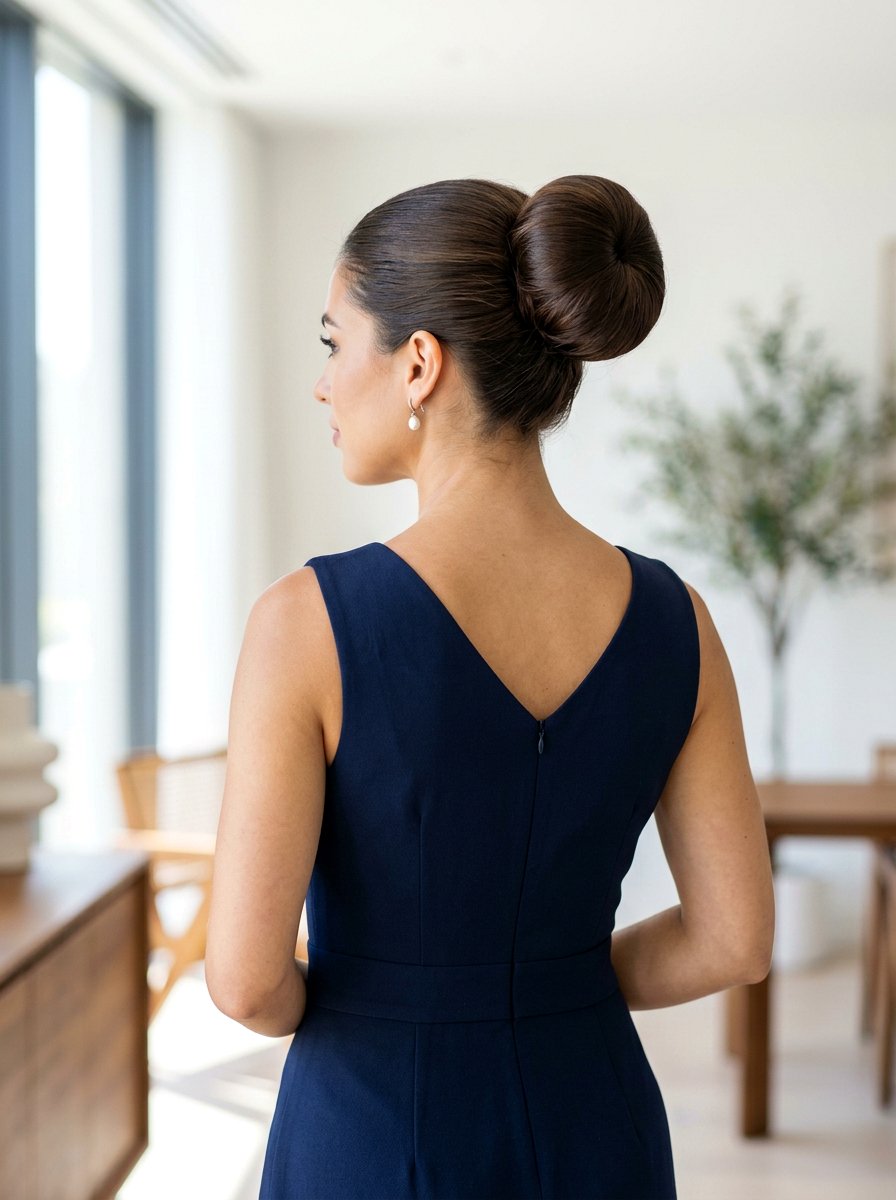
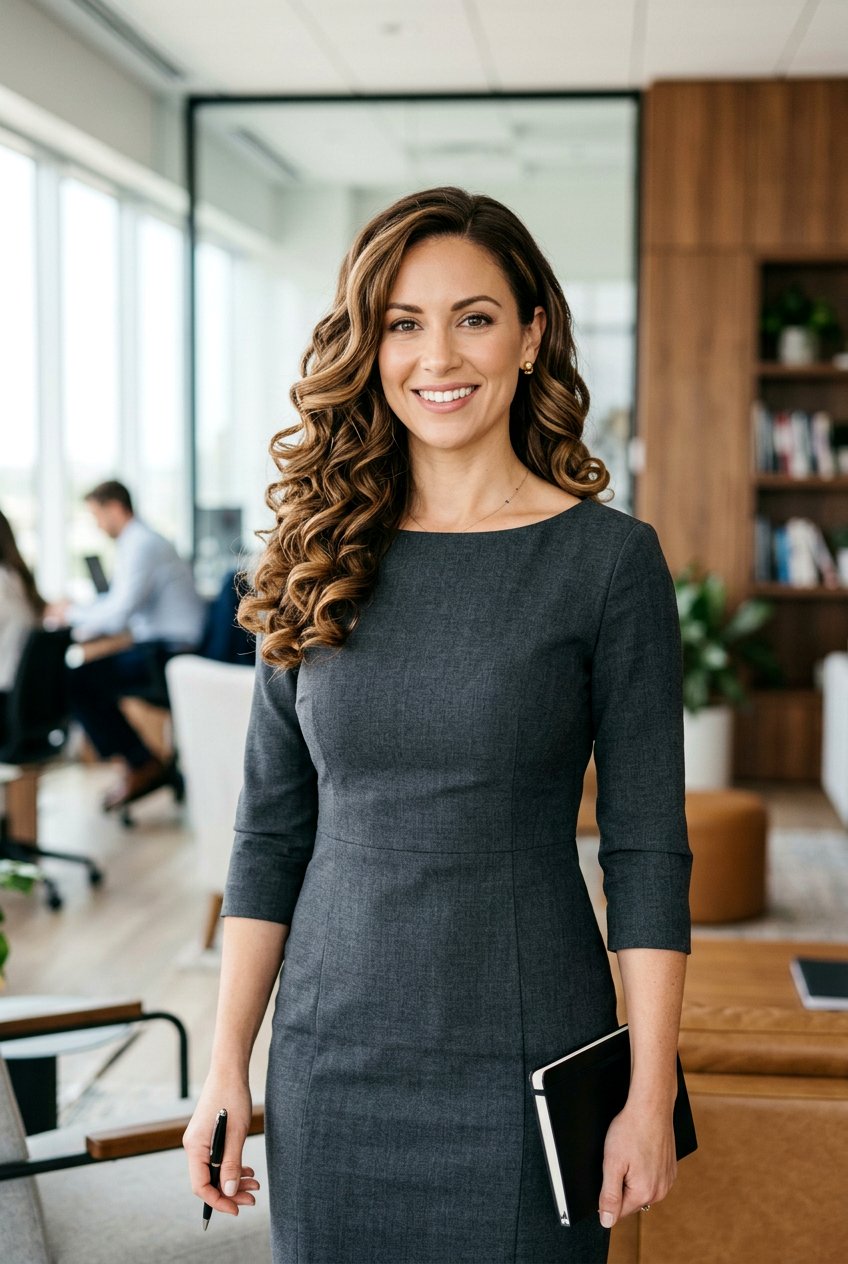
16. Double Pinned Back

For a variation on the pinned temple look, the double pinned back style uses two pins on each side to create a more secure and decorative frame. By spacing the pins about an inch apart, you create a parallel line effect that looks very modern and intentional. This is a great way to handle “bangs” or shorter face-framing layers that are currently growing out. It provides a very clean, wide-open look for the face, which is statistically shown to make a person appear more honest and engaging during a first meeting. The double pins provide extra security so you won’t feel the need to adjust your hair.
17. Relaxed French Braid
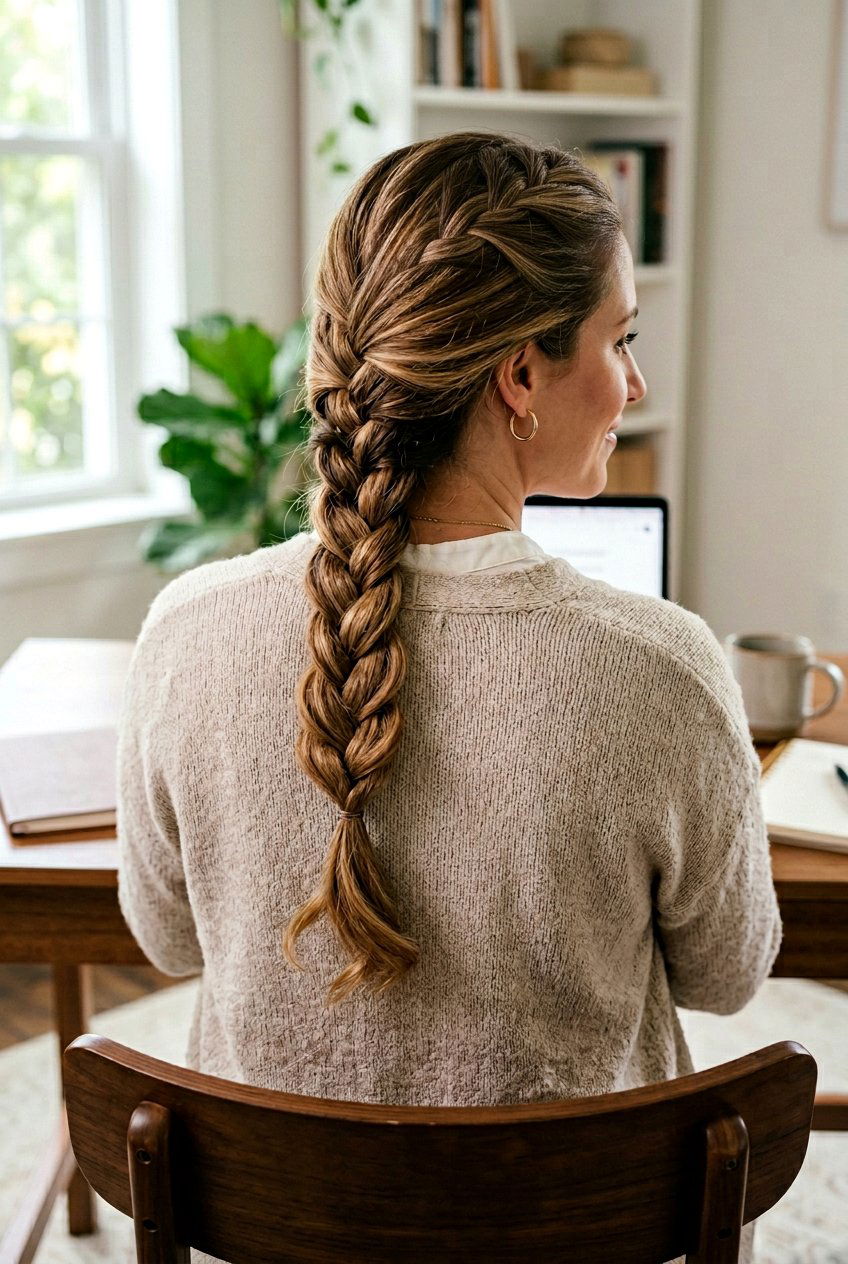
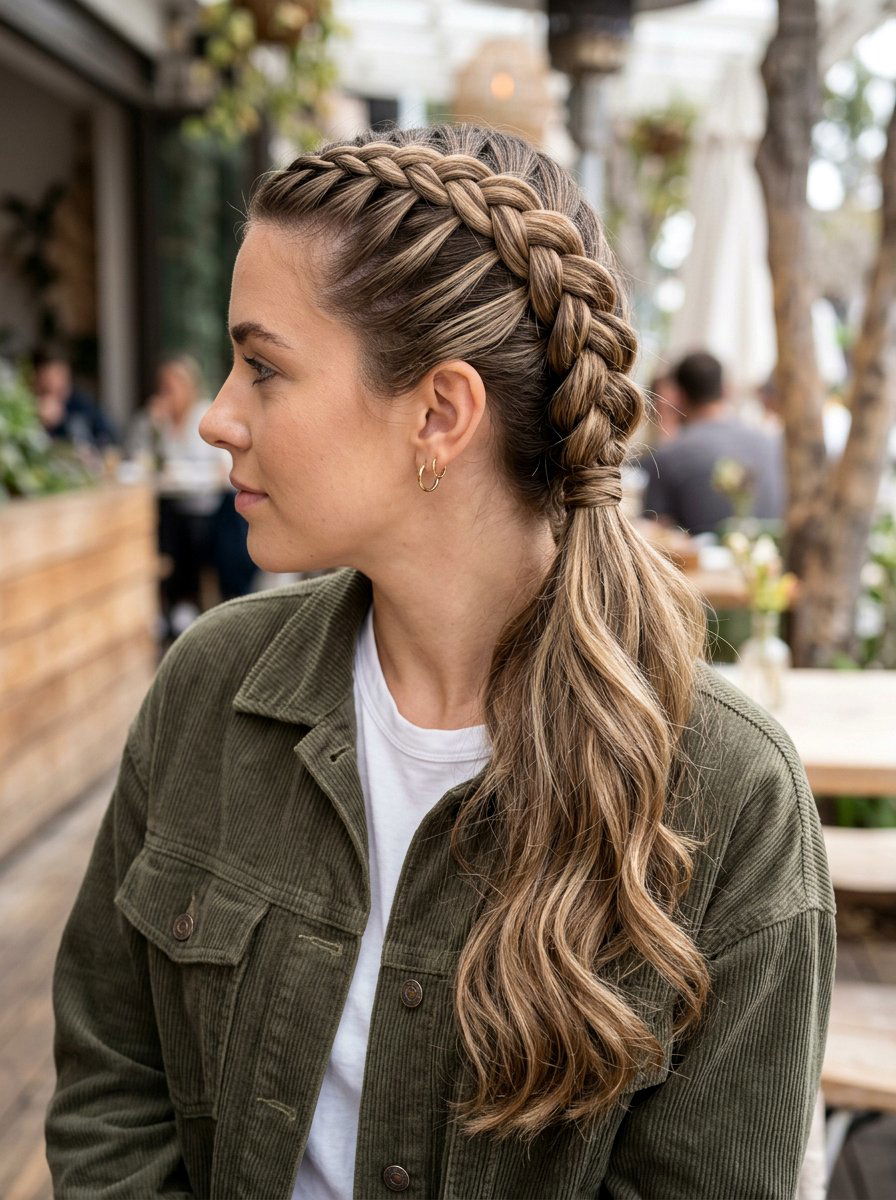
A relaxed French braid is a wonderful option for long hair that has a lot of natural texture or curl. Start the braid at the crown and continue down to the nape, but keep the tension moderate rather than tight. This avoids the “schoolgirl” look and instead creates a sophisticated, textured rope of hair. It is a very practical style for long interviews that might involve tours of a facility or office, as it keeps the hair completely contained and tangle-free. The French braid is a universal symbol of a person who is capable, practical, and prepared for any task that might come their way.
18. Wrapped High Ponytail

While low ponytails are the standard for interviews, a wrapped high ponytail can be appropriate for more creative or energetic roles. By placing the ponytail at the mid-point of the back of the head and wrapping the base with hair, you create a look that is both professional and dynamic. This style gives a subtle “lift” to the face and projects an image of high energy and enthusiasm. Ensure the “tail” is perfectly smooth and free of tangles to maintain the professional edge. This look is particularly effective if you are wearing a blouse with a lower neckline or a simple round neck sweater.
19. Twisted Side Bun
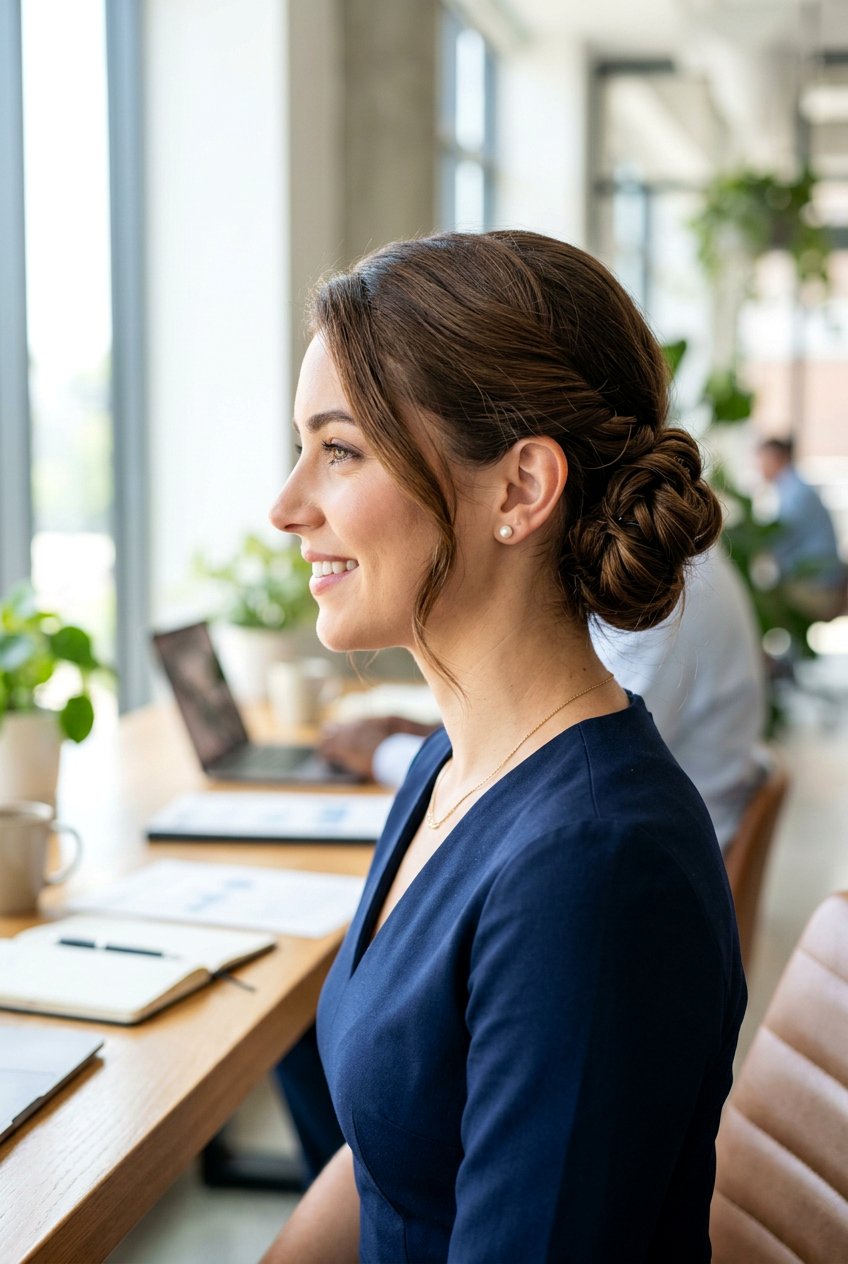
The twisted side bun offers a softer, more romantic silhouette that still fits within professional guidelines. By gathering the hair behind one ear and twisting it into a low bun, you create a look that is very flattering in photos and on video calls. It breaks the symmetry of the face in a way that is often very pleasing to the eye. This style is a great choice if you know the interview will be conducted via a screen, as it ensures your hairstyle is visible and looks styled even when only your head and shoulders are in the frame. It shows a creative flare while remaining respectful.
20. Simple Bubble Ponytail
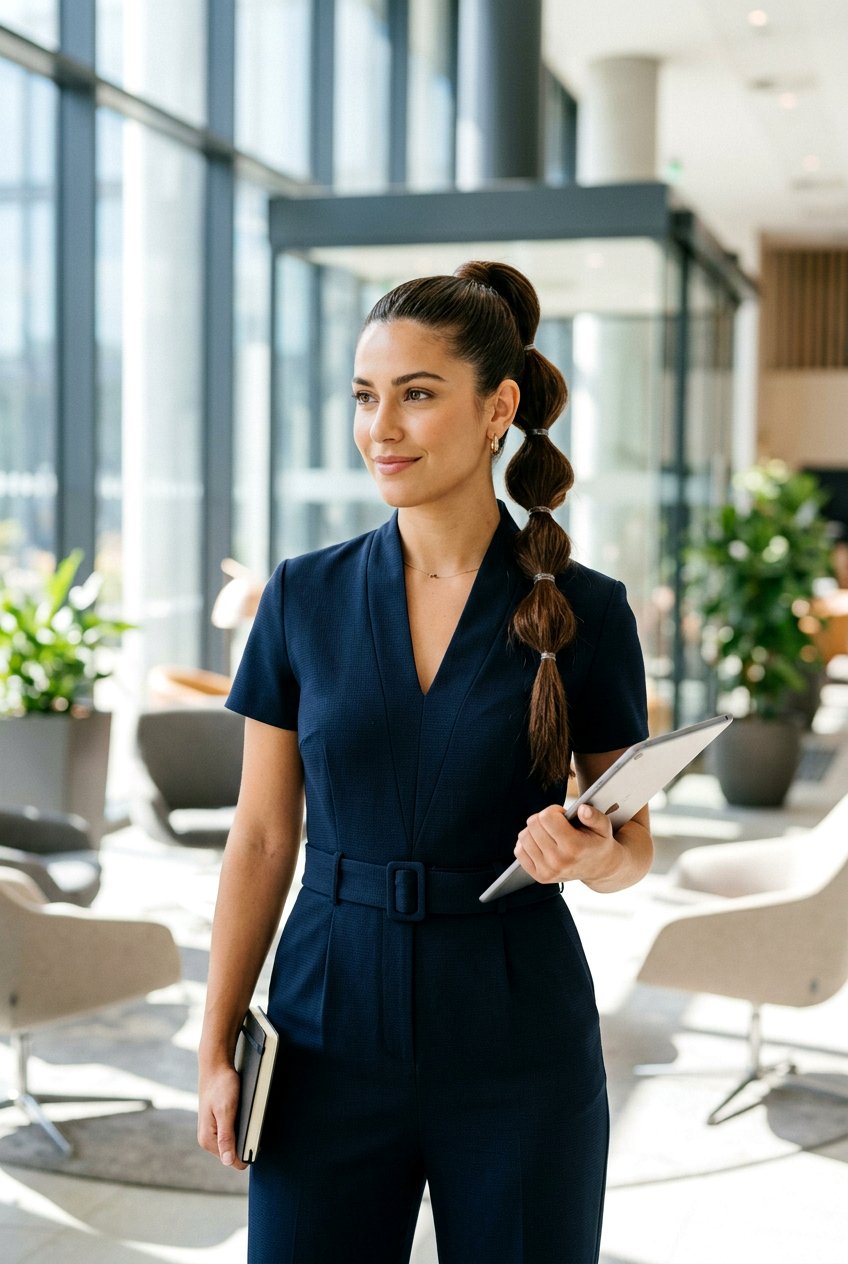
A simple bubble ponytail is a creative yet tidy way to manage extreme length. By placing small, clear elastics every few inches down the length of a low ponytail, you create “bubbles” of hair. For an interview, keep the bubbles small and sleek rather than voluminous and messy. This prevents long hair from snagging on your chair or clothing and keeps it perfectly straight behind your back. It is a conversation starter that shows you are organized and have a modern sense of style. This look is incredibly secure and will not move a centimeter, no matter how long your interview day lasts.
Conclusion:
Selecting a simple hairstyle for interview with long hair is a vital step in your professional preparation process. The goal is to find a balance between showing off your personal style and adhering to the expectations of a professional environment. Whether you choose the authority of a sleek low ponytail or the approachability of a polished half updo, the most important factor is that the style makes you feel confident and comfortable. When you aren’t worried about your hair falling in your face or coming undone, you can devote 100% of your mental energy to answering questions and making a lasting impression. Remember that a well-groomed appearance is a silent ambassador for your professional brand.
You'll Like These Styles:




Leave a Reply