
Selecting a professional low bun with middle part is the ultimate way to achieve a polished, authoritative look that never goes out of style. This versatile hairstyle has become a staple in corporate environments and creative workspaces alike because it perfectly balances symmetry with sophistication. Whether you are preparing for a high-stakes board meeting or a casual day at the office, the middle part provides a structural frame for your face that enhances your natural features. Many women prefer this specific updo because it keeps hair securely out of the way while maintaining an air of high-fashion elegance. In this guide, we will explore various ways to execute this timeless look to suit your unique hair texture and professional needs.
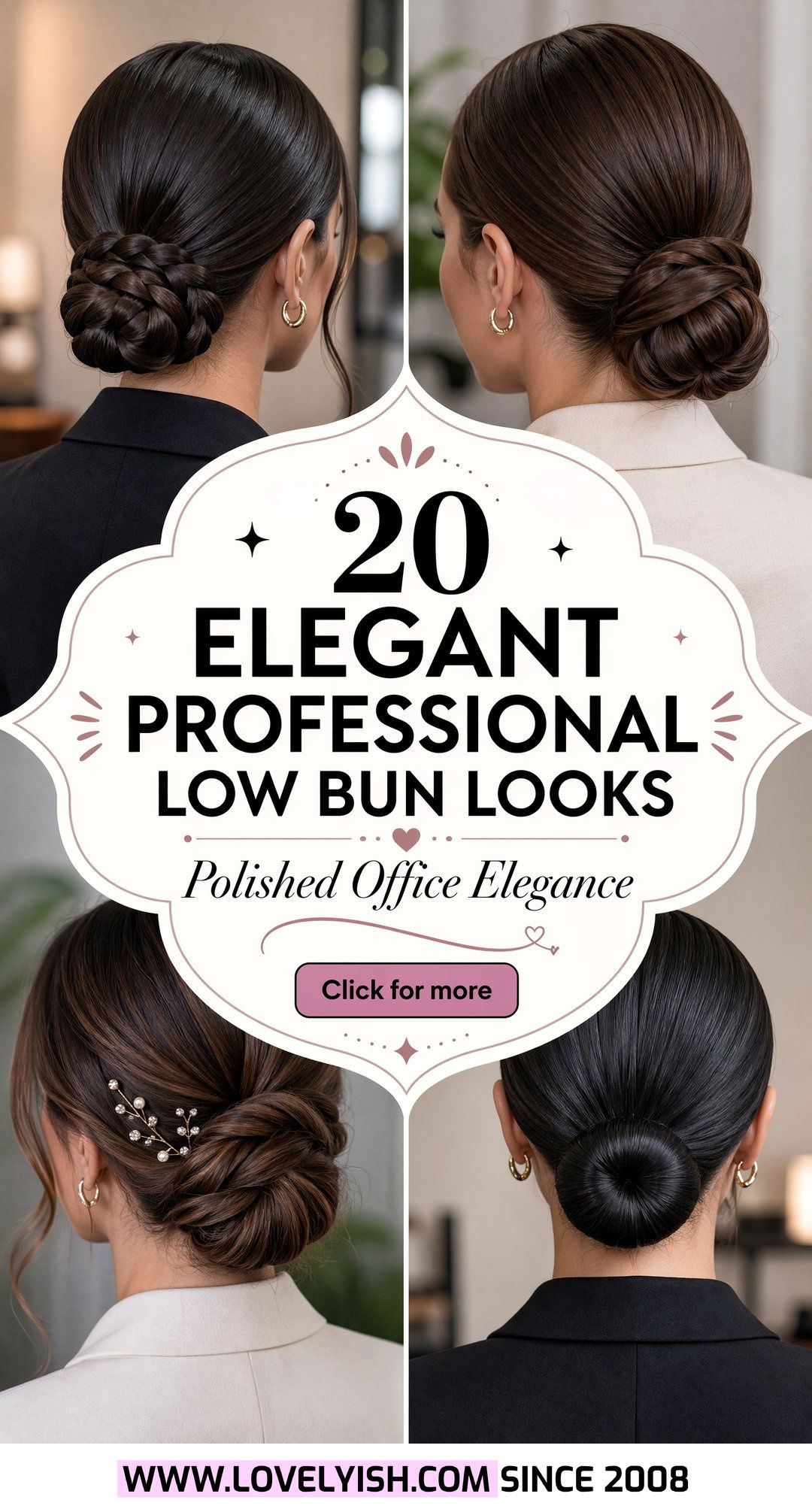
1. Sleek Low Bun

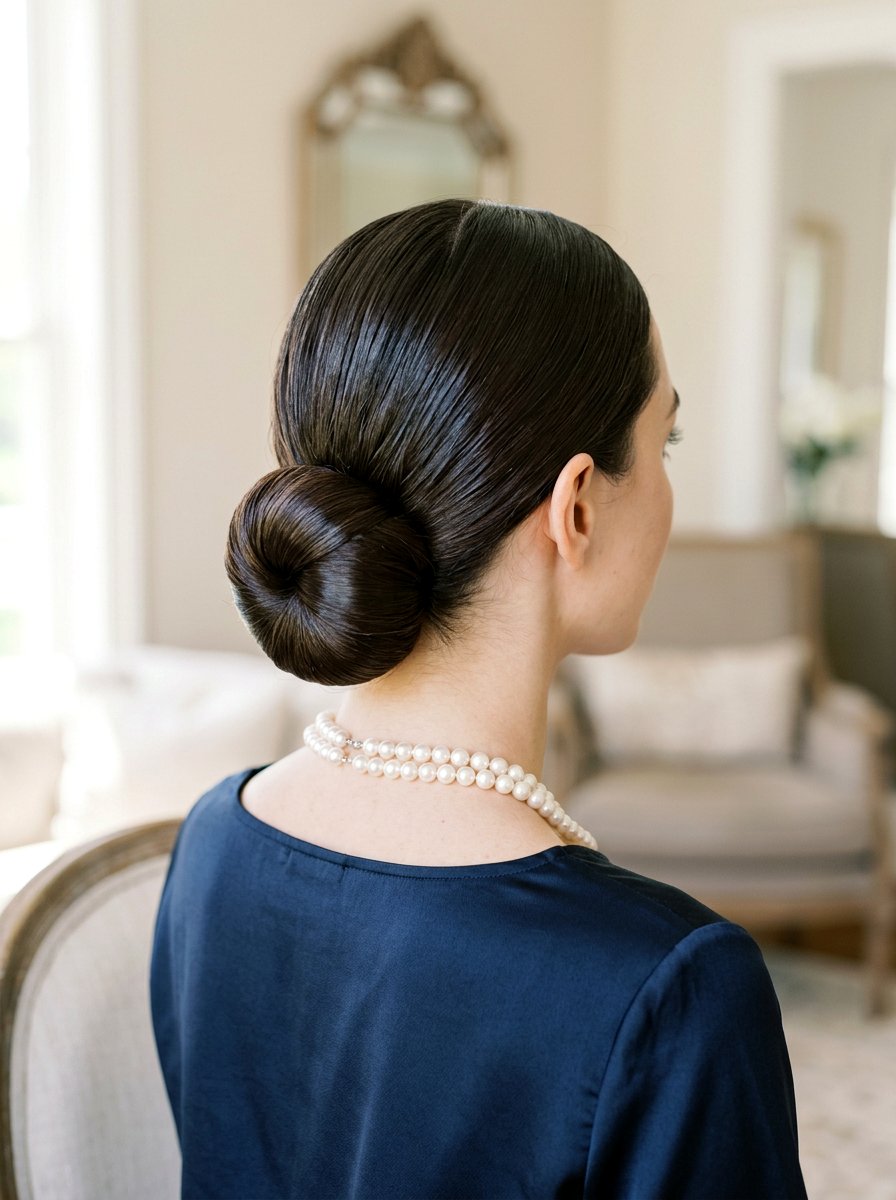
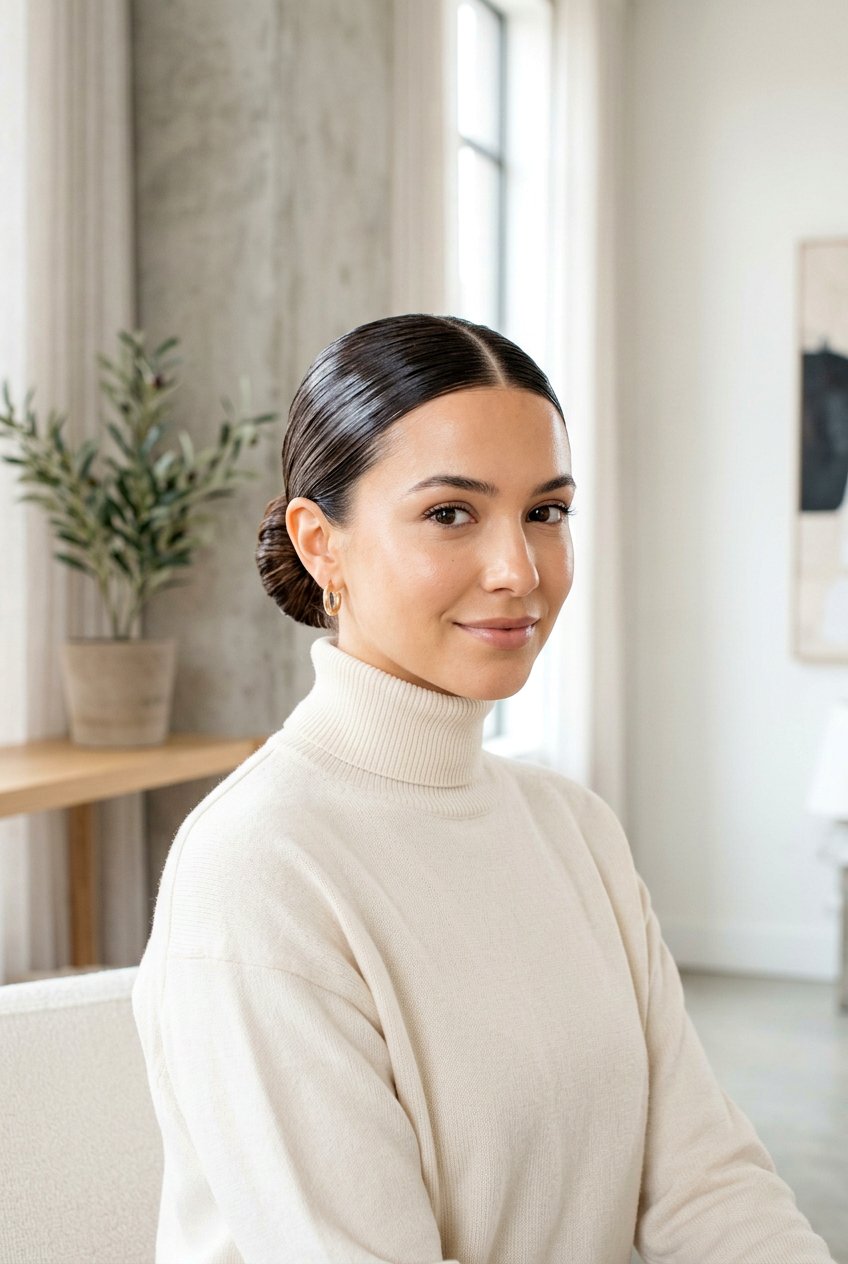
Achieving a sleek low bun requires a focus on precision and high-shine finishes to project a truly professional image. You should start by using a fine-tooth comb to create a razor-sharp middle part, ensuring the line is perfectly centered from your hairline to the crown. Applying a lightweight smoothing gel or pomade will help tame any stubborn flyaways and create that glass-like surface that defines this specific look. Once the hair is gathered at the nape of the neck, secure it into a tight ponytail before twisting it into a compact, circular bun. This version of the style is particularly effective for those with straight or chemically relaxed hair who want a powerful, no-nonsense aesthetic for their workday.
2. Braided Low Bun
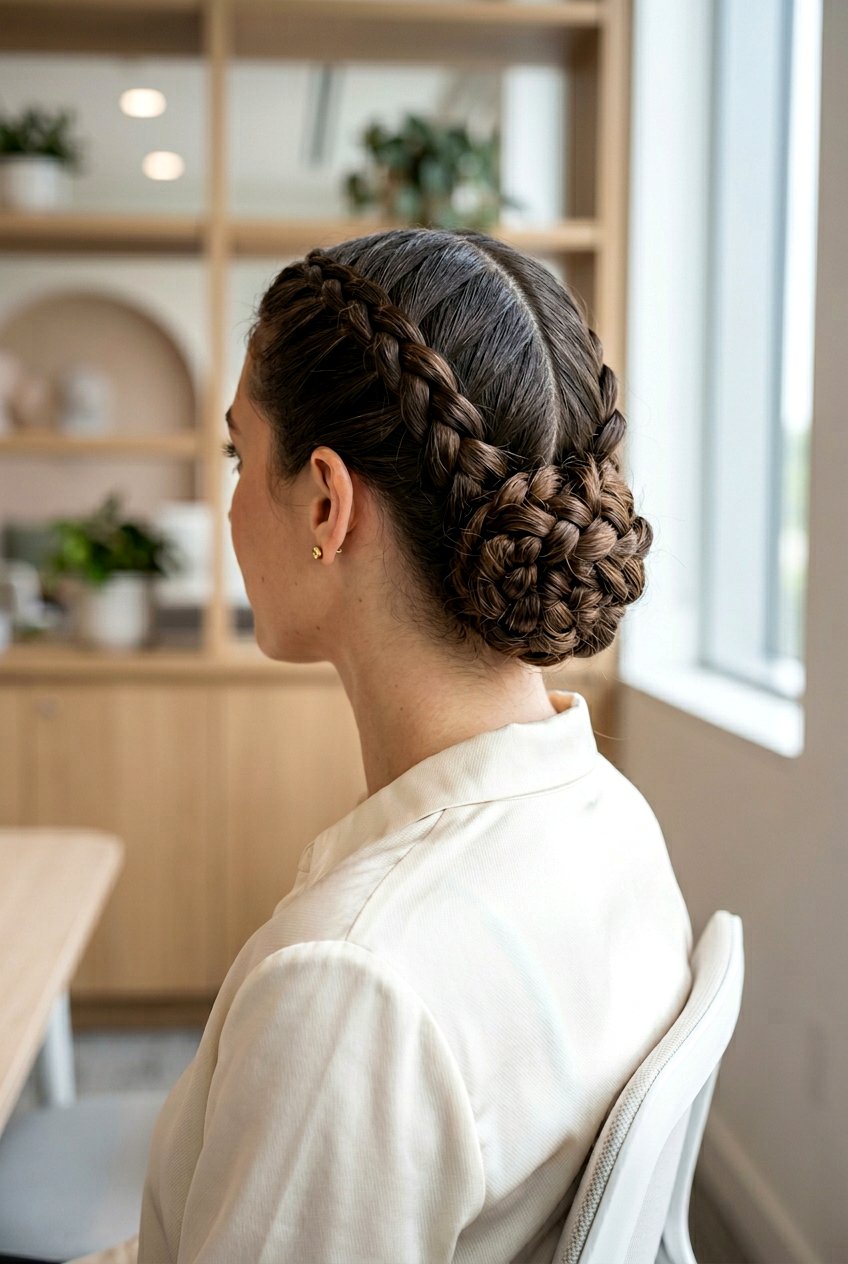
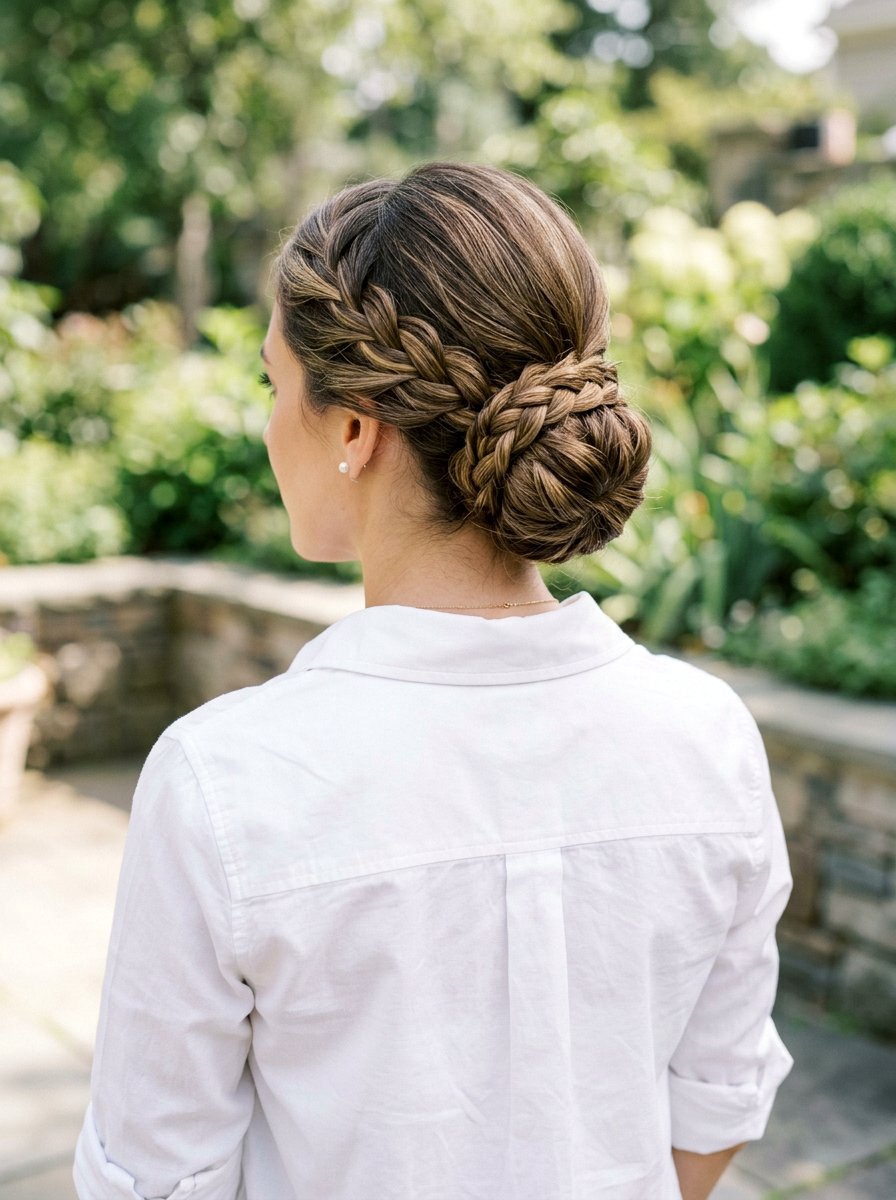
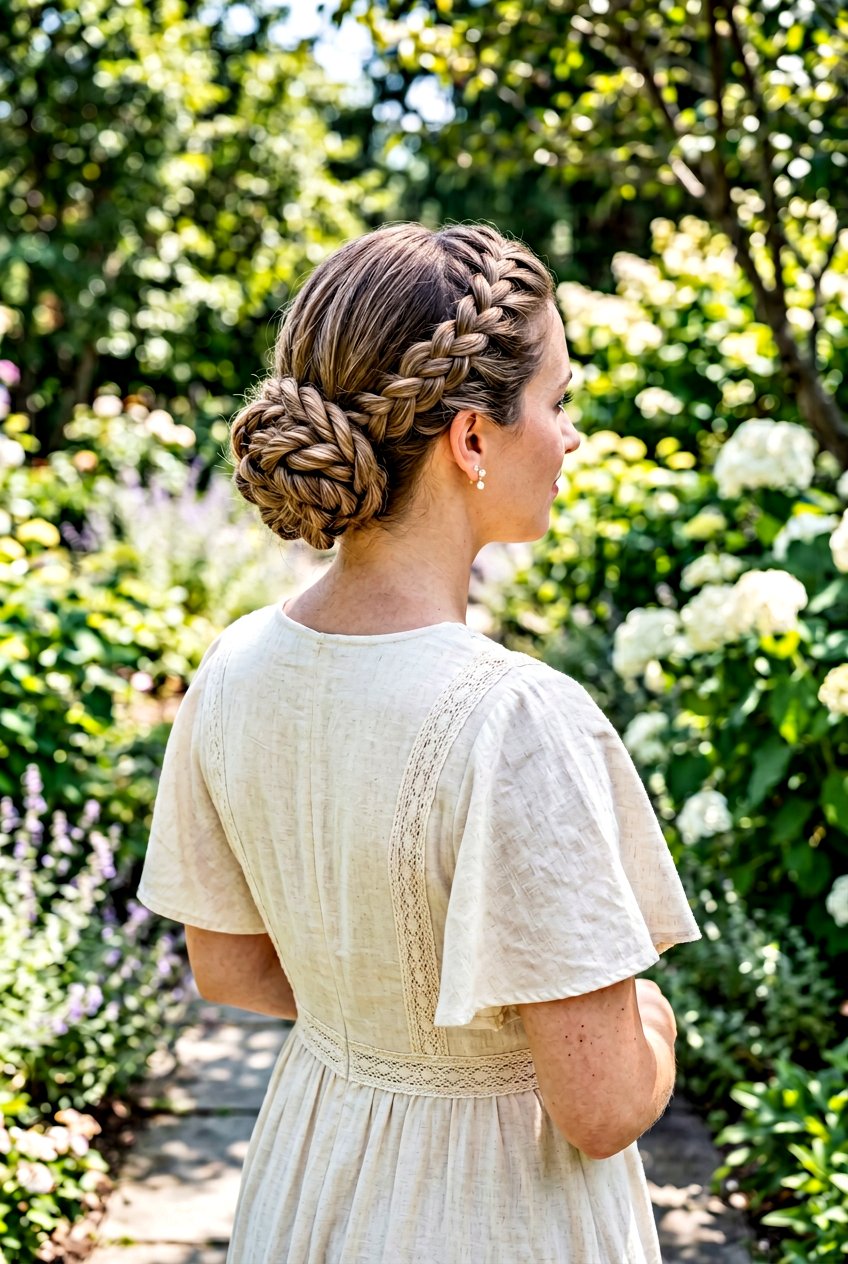
Incorporating a braid into your low bun adds a sophisticated layer of detail that elevates the standard professional look. After establishing your middle part, you can choose to braid the entire ponytail or create two smaller side braids that feed into the main bun at the back. This style is excellent for long-haired professionals who need extra security to keep their strands in place throughout a busy ten-hour shift. The braided texture provides a visual point of interest while keeping the overall silhouette neat and contained against the head. Using a small amount of texturizing spray before braiding can help provide the grip necessary to keep the plait from loosening as you move through your daily tasks.
3. Twisted Low Bun
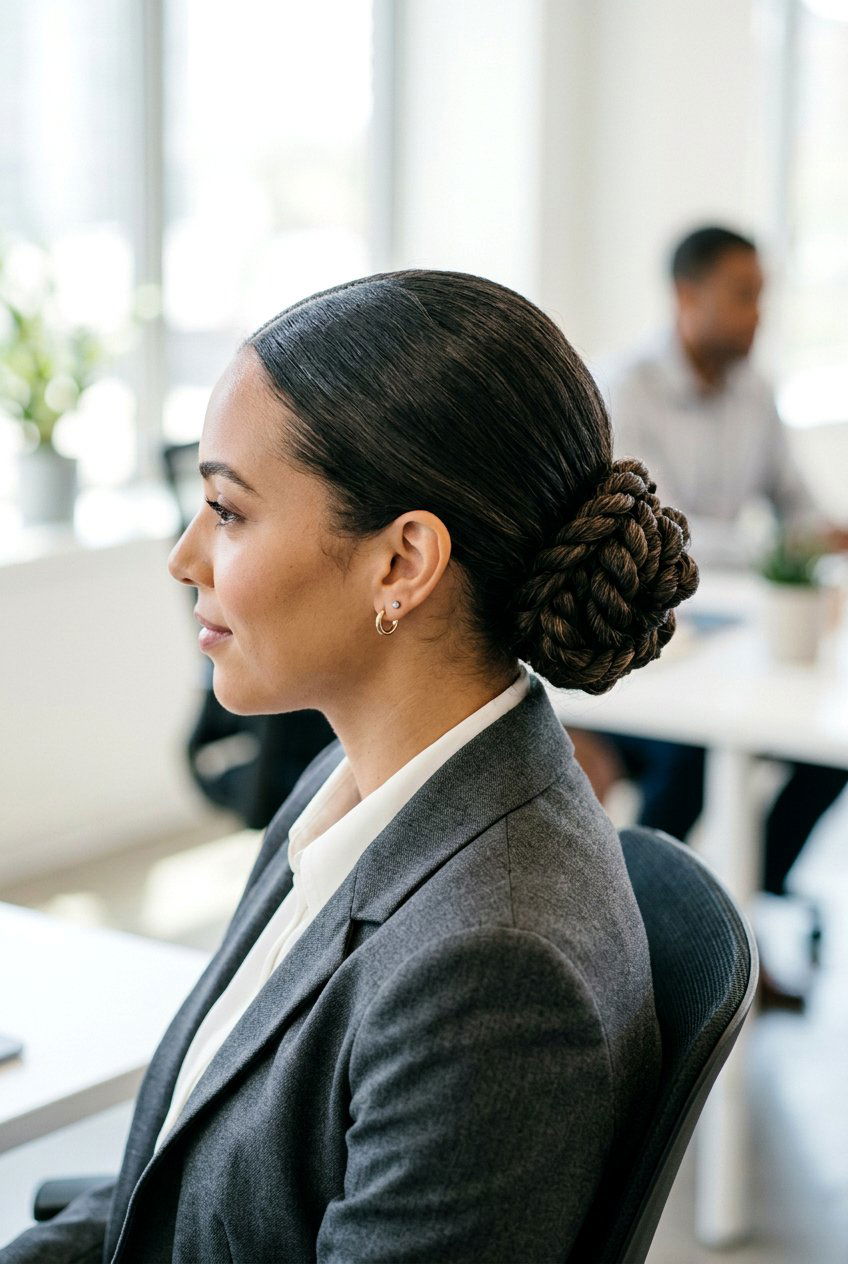
A twisted low bun offers a softer, more dimensional alternative to the traditional wrapped bun while still maintaining a clean middle part. To create this look, divide your low ponytail into two equal sections and wrap them around each other to form a rope-like strand. Carefully coil this rope around the base of your hair elastic and pin it securely with U-shaped hairpins to maintain the twisted pattern. This technique works wonders for those with medium-to-thick hair, as it manages bulk while creating an intricate, knot-like appearance at the nape. It looks especially graceful when paired with tailored blazers or silk blouses, providing a touch of feminine elegance to a structured professional outfit during any season.
4. Curly Low Bun
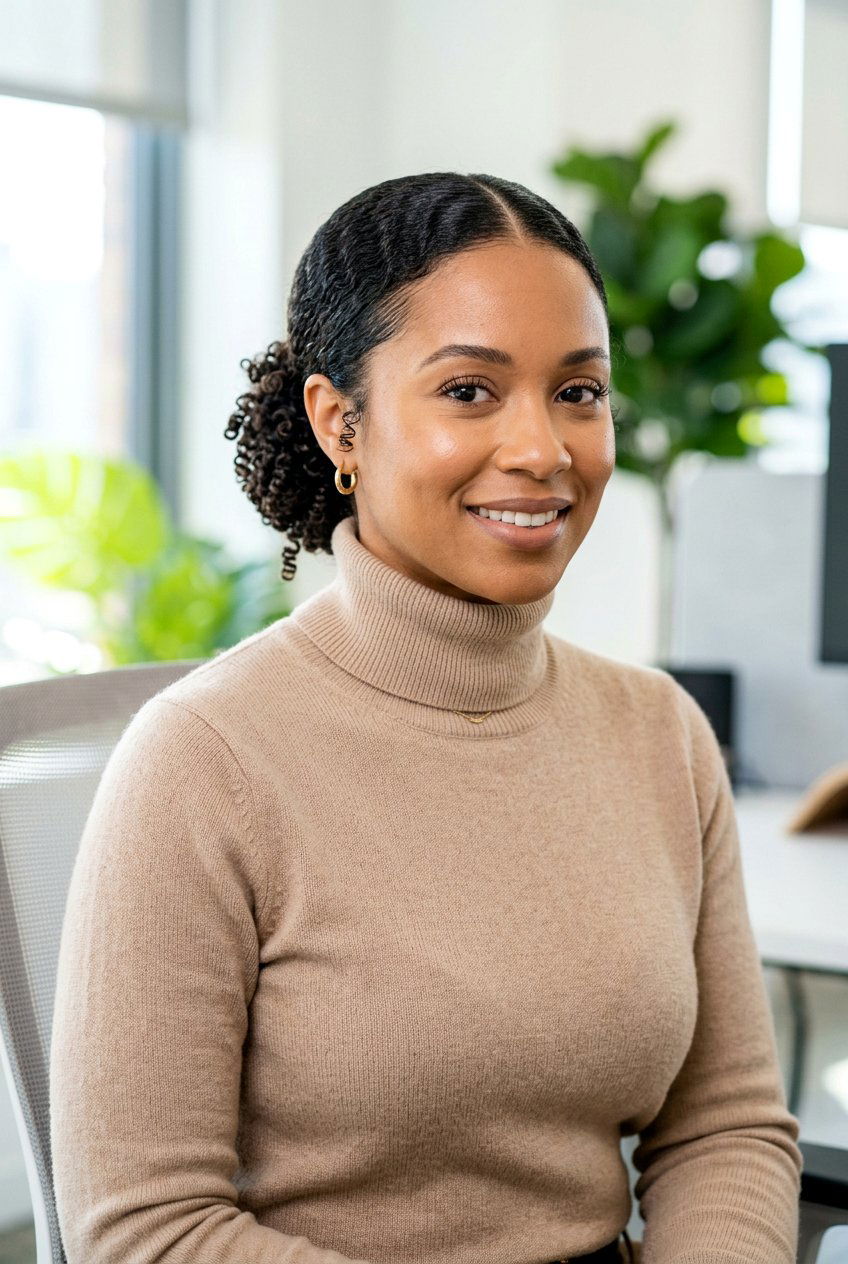
Embracing your natural curls with a middle part low bun proves that professional hair does not have to be perfectly straight or slicked down. You should begin by applying a moisturizing curl cream to damp hair to define your ringlets and reduce frizz before creating your central parting. Instead of pulling the hair tight, allow the natural volume of your curls to create a full, textured bun that sits comfortably at the base of your neck. This approach celebrates your natural hair texture while the middle part provides the necessary structure to keep the look appropriate for a formal office setting. It is a fantastic way to look put-through and professional without spending hours with a flat iron every single morning.
5. Messy Low Bun
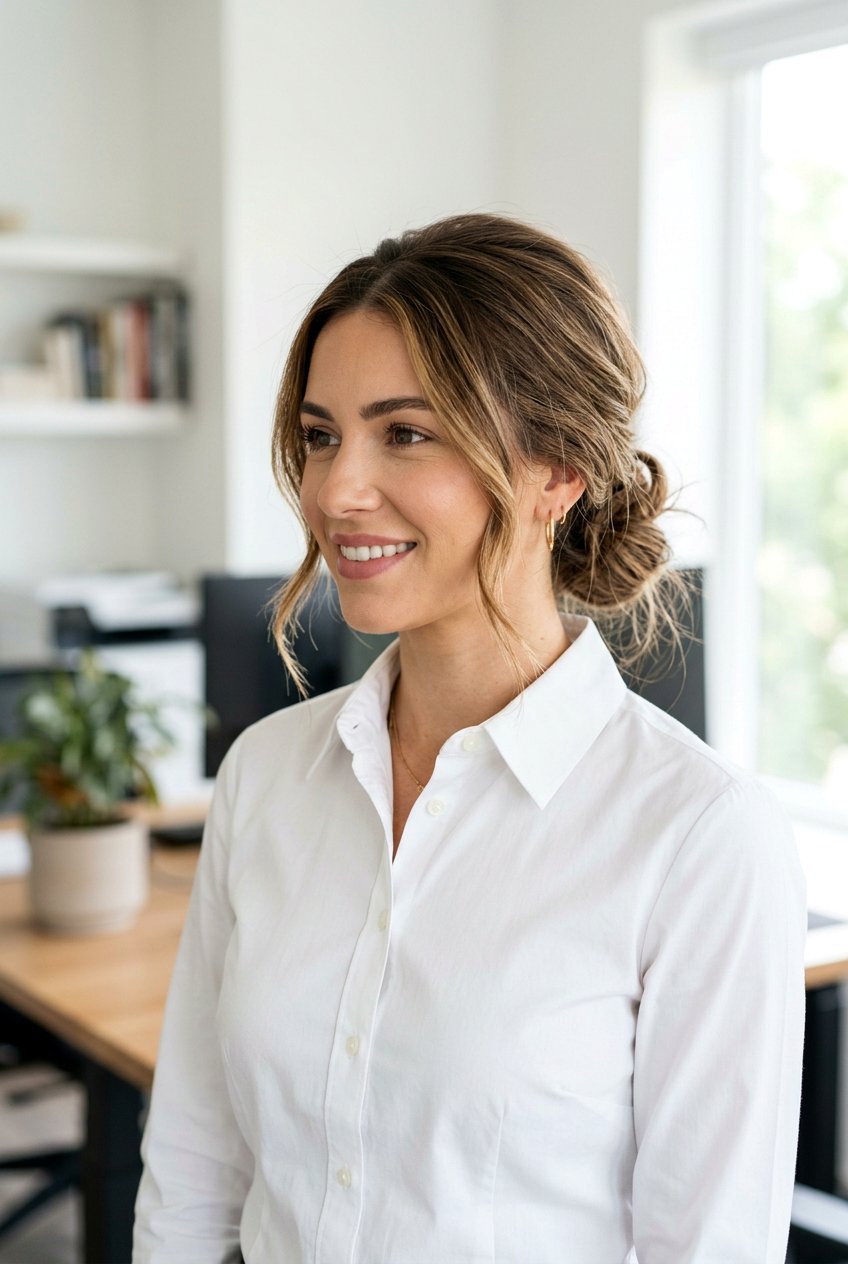
The modern professional messy low bun is an intentional style that looks effortless yet remains strictly polished enough for a business casual environment. Unlike a gym bun, this version starts with a clean middle part and uses strategic volume at the crown to create a flattering, balanced shape. You can leave a few small tendrils out around the ears to soften the face, but the bun itself should remain tucked and pinned to avoid looking unkempt. This style is ideal for those with wavy or fine hair who want to add some visual thickness to their updo. Using a dry shampoo or volume powder at the roots will help maintain the height and structure needed to keep this look looking professional all day.
6. Chignon Low Bun
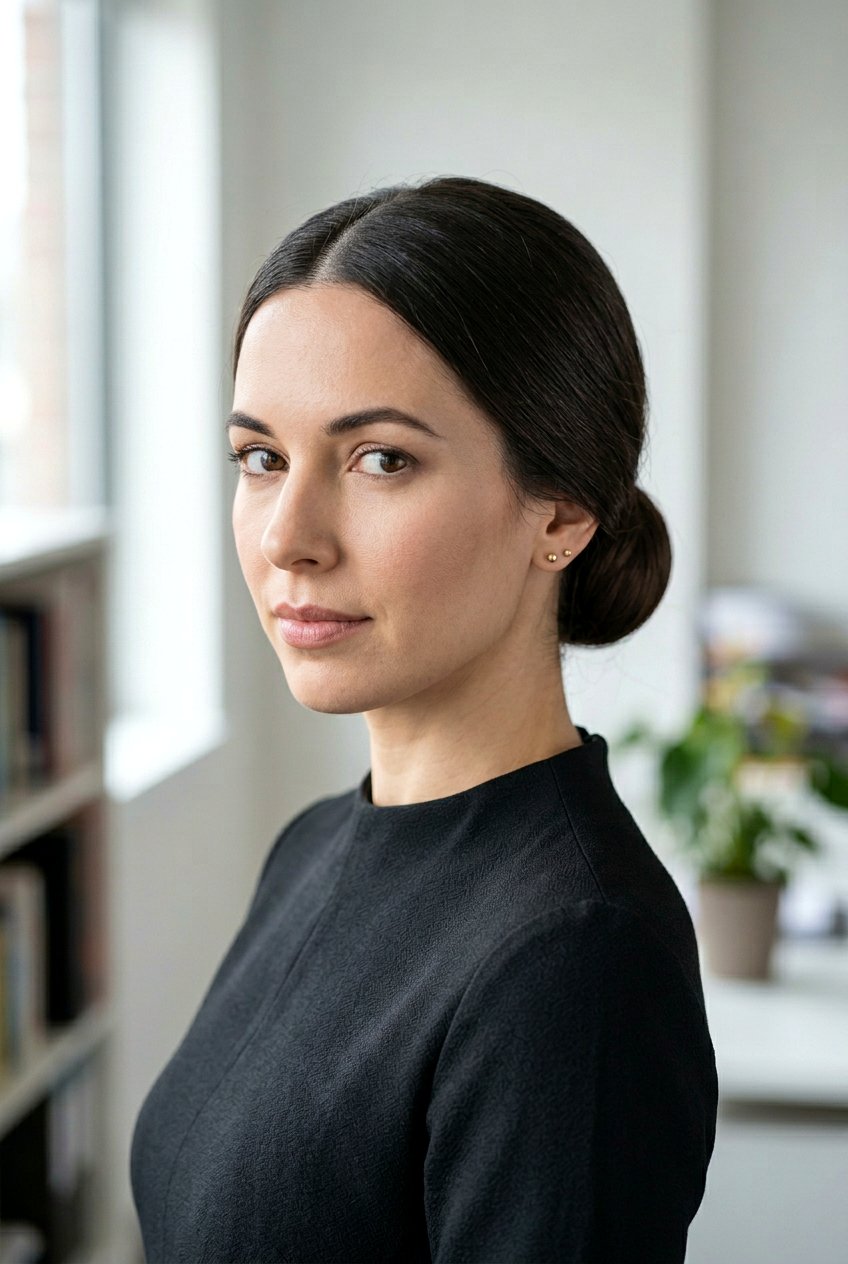
A classic chignon is often considered the gold standard for formal professional events where a standard bun might feel too casual or simple. This style involves tucking the hair upward or looping it through the elastic to create a horizontal, bread-roll shape that rests horizontally along the nape. The middle part adds a modern, symmetrical edge to this vintage-inspired look, making it feel current rather than dated for the contemporary workplace. It is a very secure hairstyle that stays in place even through heavy movement, making it a favorite for those in active professional roles. Finishing the look with a firm-hold hairspray will ensure that the smooth, tucked edges remain crisp and elegant from morning until the evening.
7. Wrapped Low Bun
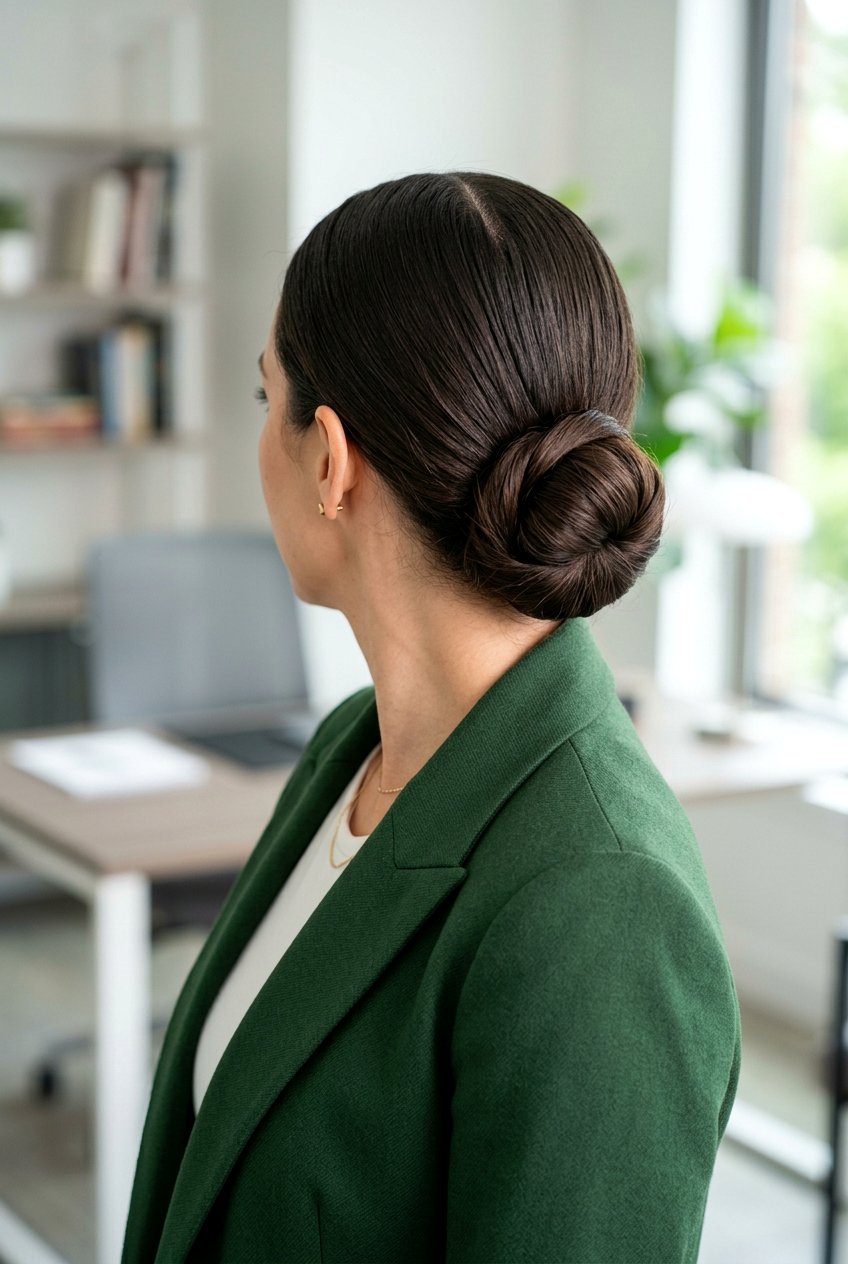
The wrapped low bun uses a small section of hair to cover the elastic, providing a seamless and high-end finish to your middle part style. After securing your hair into a low bun, leave out a thin strand of hair from the bottom of the ponytail to wrap around the base. This tiny detail hides the functional hair tie and replaces it with the beauty of your own hair, instantly making the look feel more expensive. It is a favorite among fashion-forward professionals who appreciate minimalism and clean lines in their grooming routines. This technique works best on straight or slightly wavy hair where the wrapped strand can lay flat and smooth against the rest of the bun’s structure.
8. Voluminous Low Bun
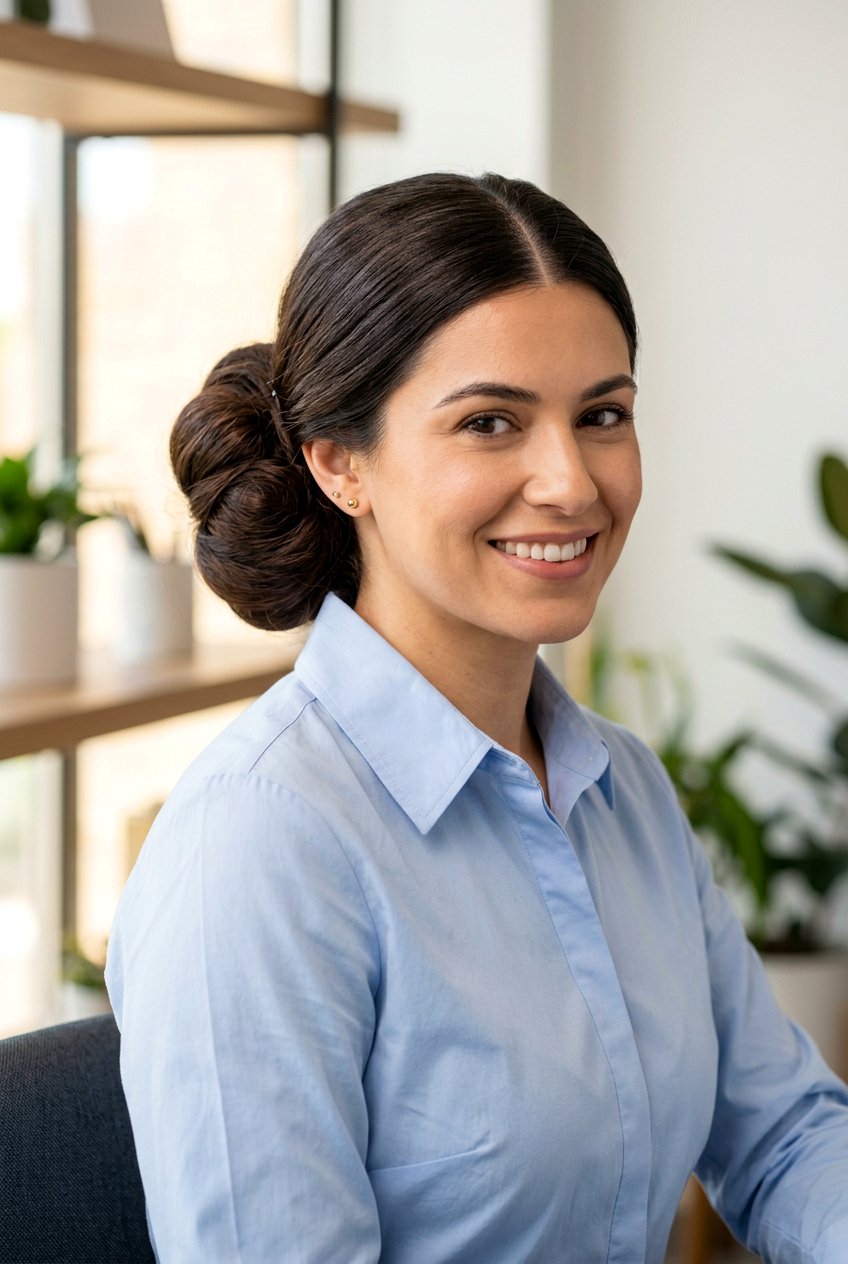
For individuals with fine or thin hair, a voluminous low bun can be achieved by using a foam donut or light backcombing at the base. The middle part helps distribute the hair evenly over the padding, ensuring that the bun looks full and symmetrical from every possible viewing angle. You should focus on keeping the front sections smooth and flat against the head to contrast with the larger, rounded bun at the back. This creates a professional silhouette that looks healthy and robust, which is often a goal for those dealing with flatter hair types. Ensuring the bun is pinned securely to the head prevents it from drooping, which is essential for maintaining a sharp and professional appearance.
9. Knotted Low Bun
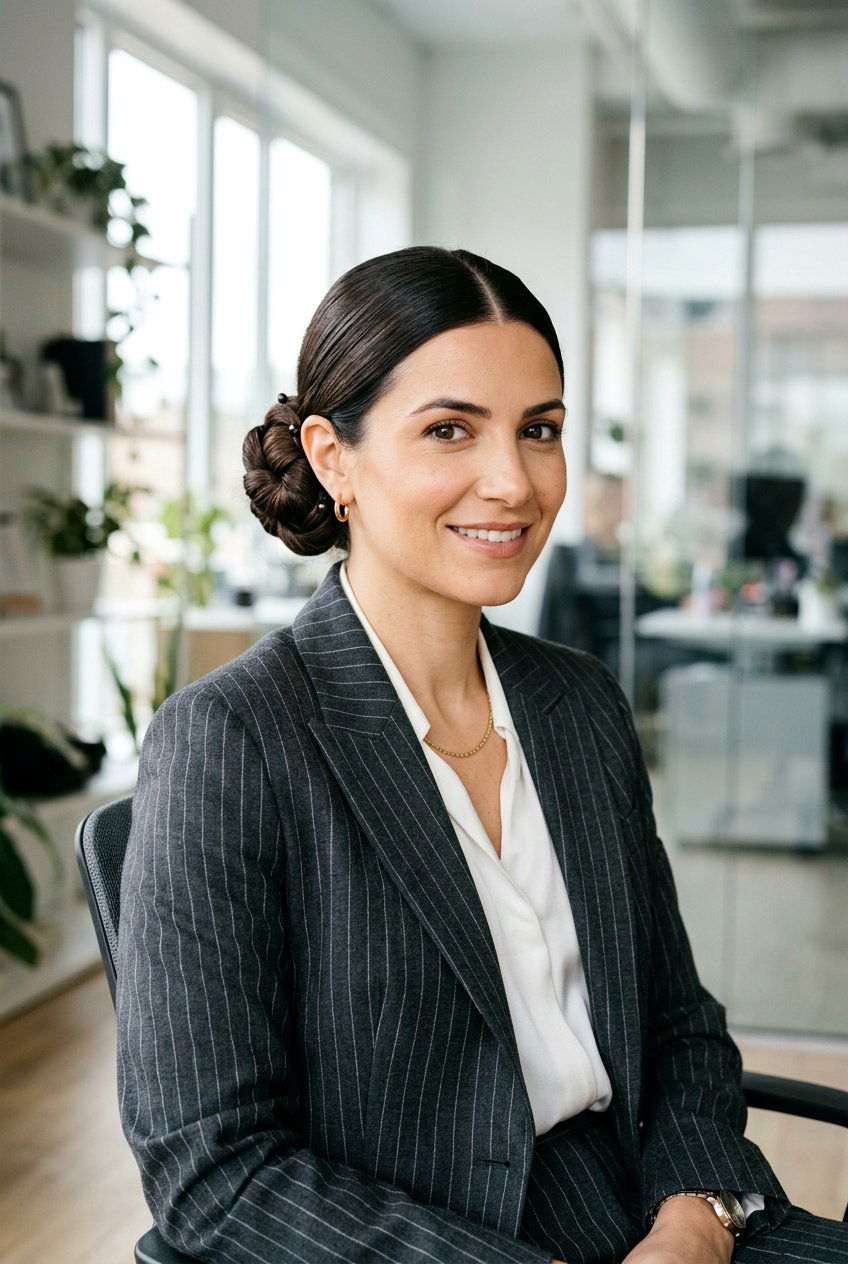
A knotted low bun involves literally tying your hair into a simple knot before pinning the ends, resulting in a unique and modern professional shape. This style thrives on a crisp middle part, as the simplicity of the parting balances the complex look of the knot itself at the nape. It is one of the quickest professional updos to master, making it perfect for those mornings when you are running short on time but still need to look polished. The knot naturally holds itself together quite well, requiring fewer pins than more traditional circular buns. It works best on medium-length hair that has enough flexibility to bend without creating stiff, awkward ends that might stick out.
10. Low Bun Accessories
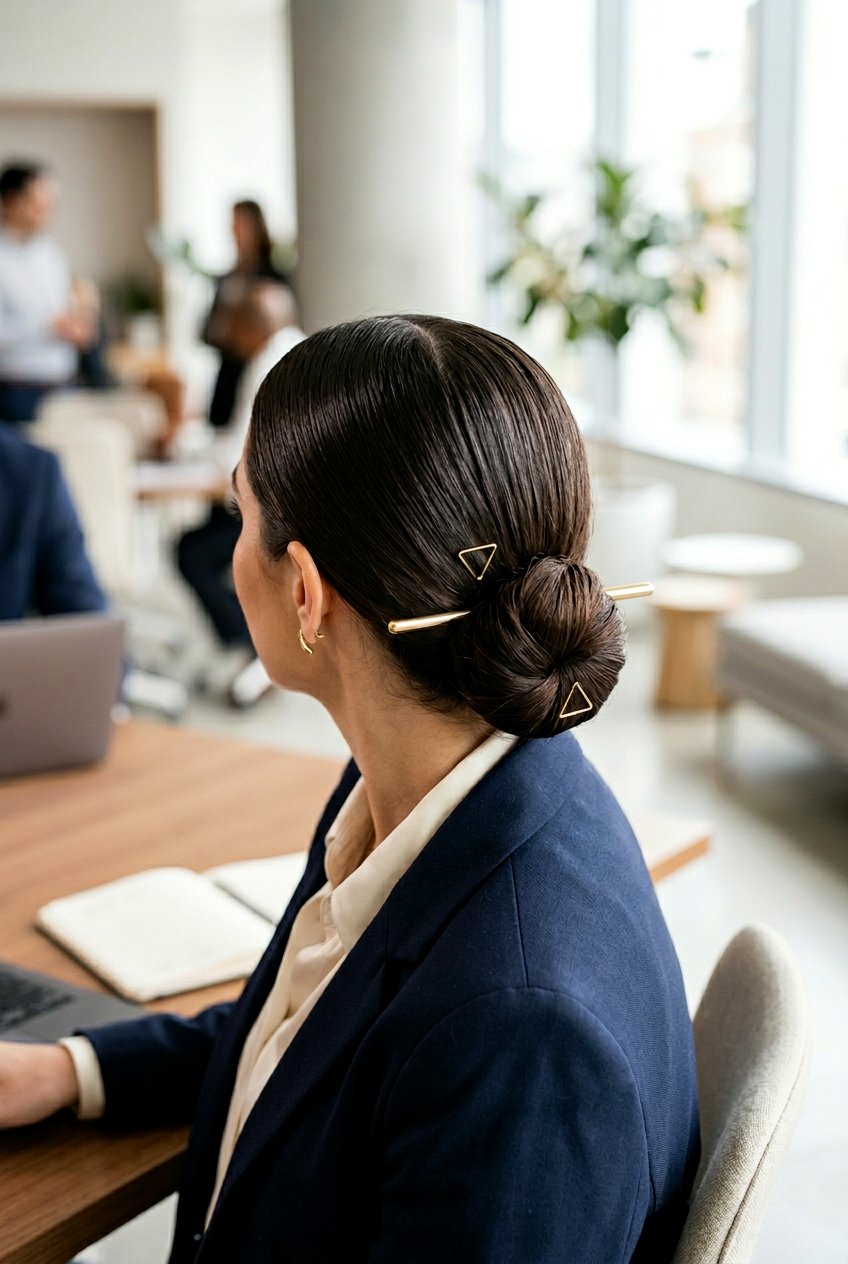
Adding subtle accessories to your middle part low bun can personalize your professional look without breaking the workplace dress code or appearing too flashy. Small, minimalist items like gold hair cuffs, pearl-tipped pins, or a simple tortoise-shell clip can add a touch of personality to a standard updo. The key is to keep the accessories functional and understated, ensuring they complement your professional attire rather than distracting from your face. When using accessories, the middle part should remain the focal point of the front view, with the decorative elements placed strategically at the back or side. This allows you to express your individual style while remaining firmly within the bounds of traditional corporate or professional grooming standards.
11. Side Pinned Bun
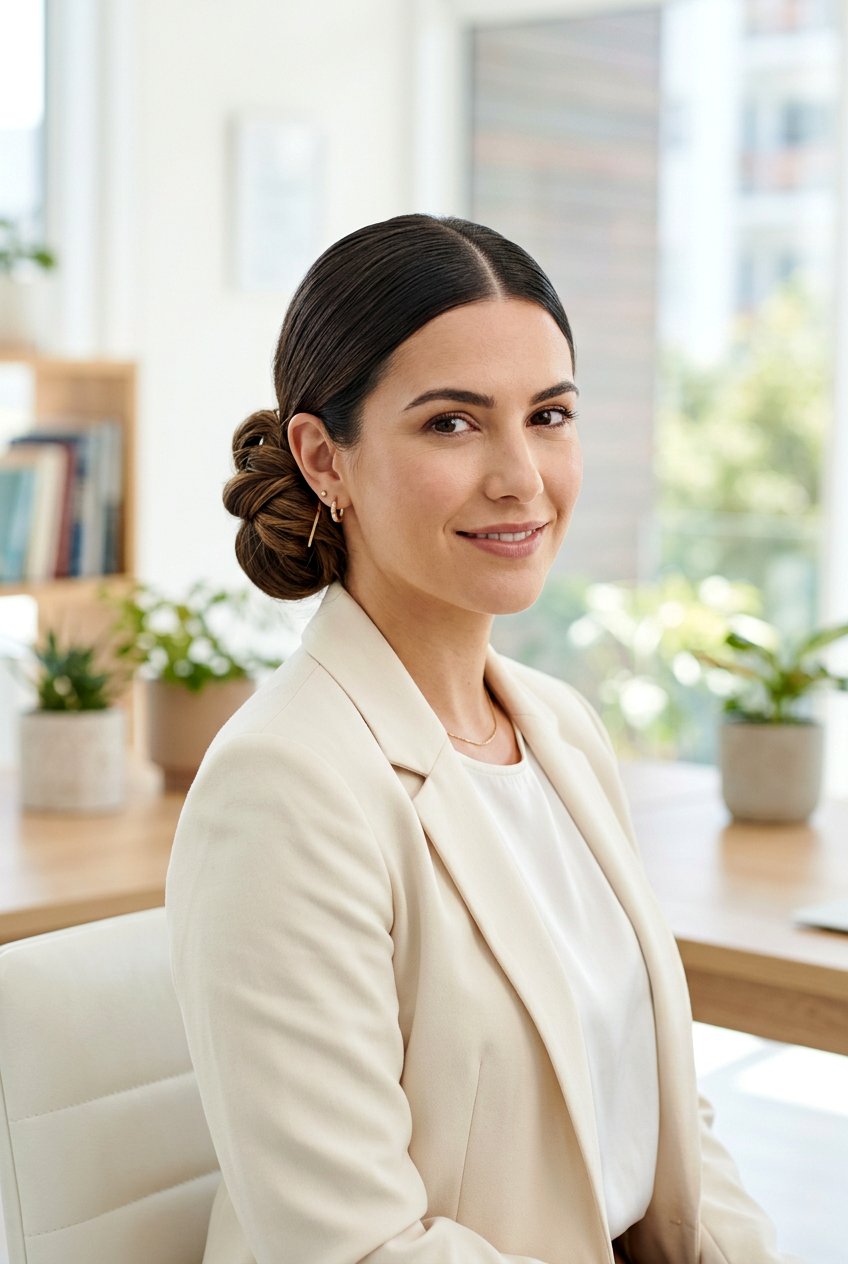
A side pinned low bun takes the traditional middle part and shifts the focus of the bun slightly to one side for a sophisticated silhouette. While the part remains centered to frame the eyes and cheekbones, the hair is gathered and secured just behind one ear instead of directly in the middle. This slight asymmetry adds an artistic flair to your professional look that is particularly popular in creative industries like marketing or design. It provides a beautiful profile view that is perfect for presentations or meetings where you will be seen from various angles. Make sure to keep the side opposite the bun very sleek to maintain the professional balance and prevent the style from looking lopsided.

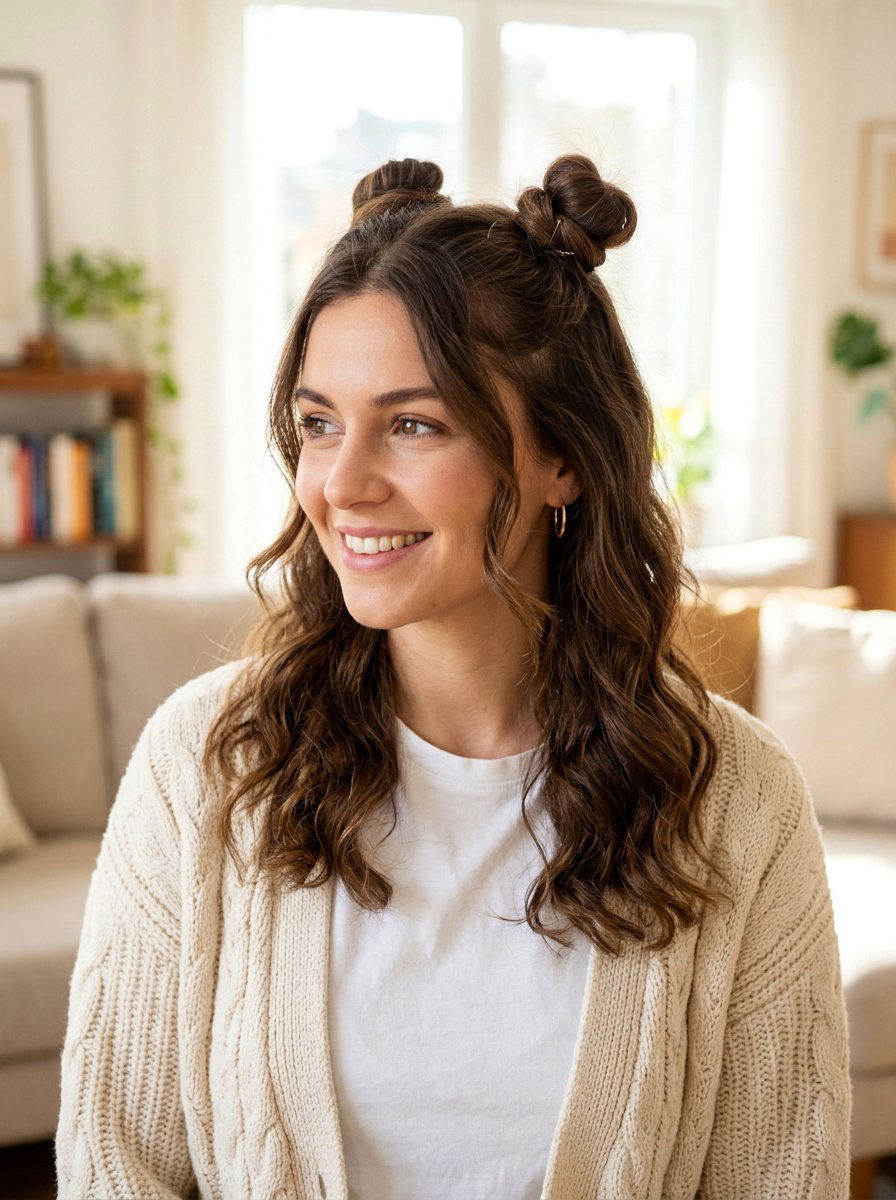
12. Wet Look Bun
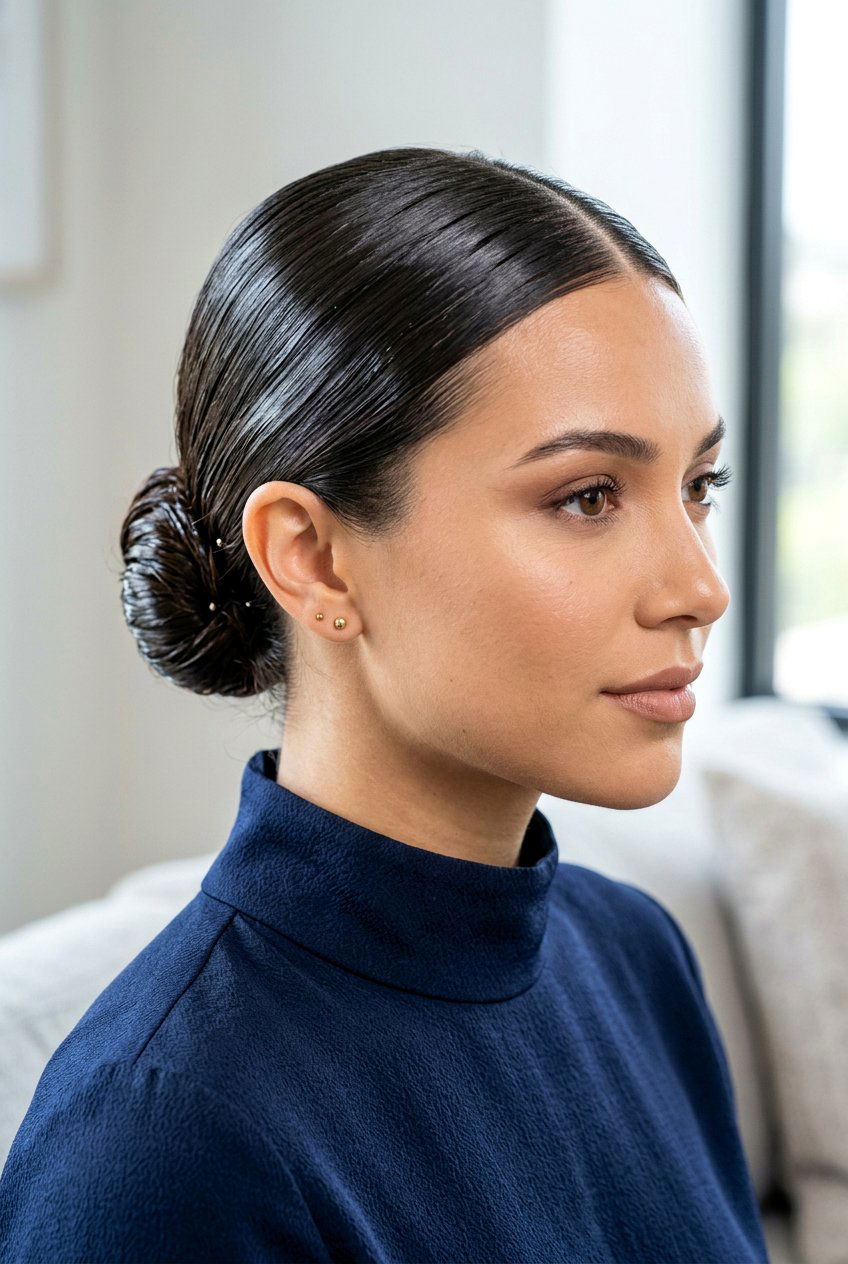
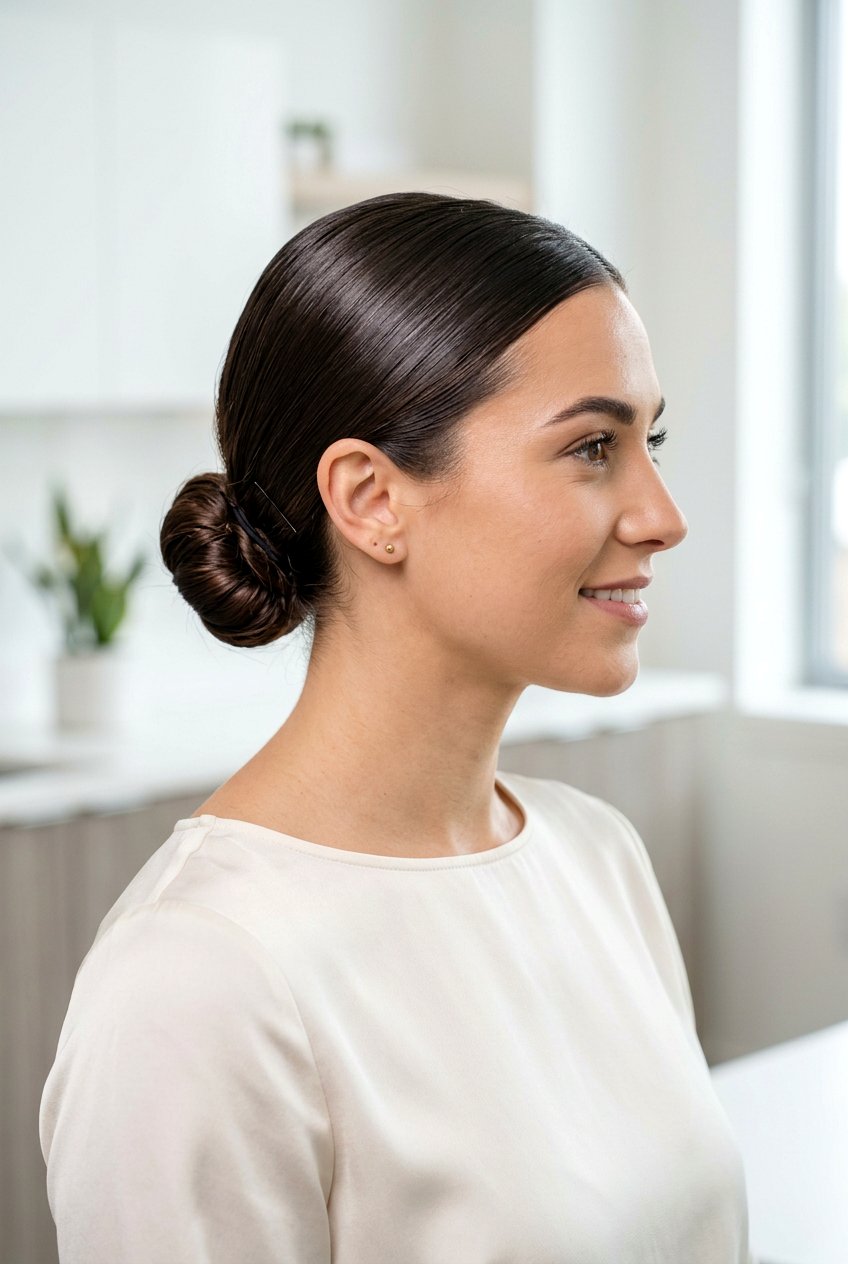
The wet look low bun is a high-fashion professional trend that involves using high-shine gels to give the hair a damp, glossy appearance. By starting with a strong middle part, you create a look that is incredibly sharp and stays perfectly in place regardless of the weather or humidity. This style is excellent for rainy days or during the summer when you want to look cool and collected despite the rising outdoor temperatures. Because the hair is saturated with product, every strand is controlled, making it the most “put-together” version of the low bun family. It creates a very strong, confident image that is often seen on runways and in high-level executive offices across major metropolitan cities.
13. Folded Low Bun
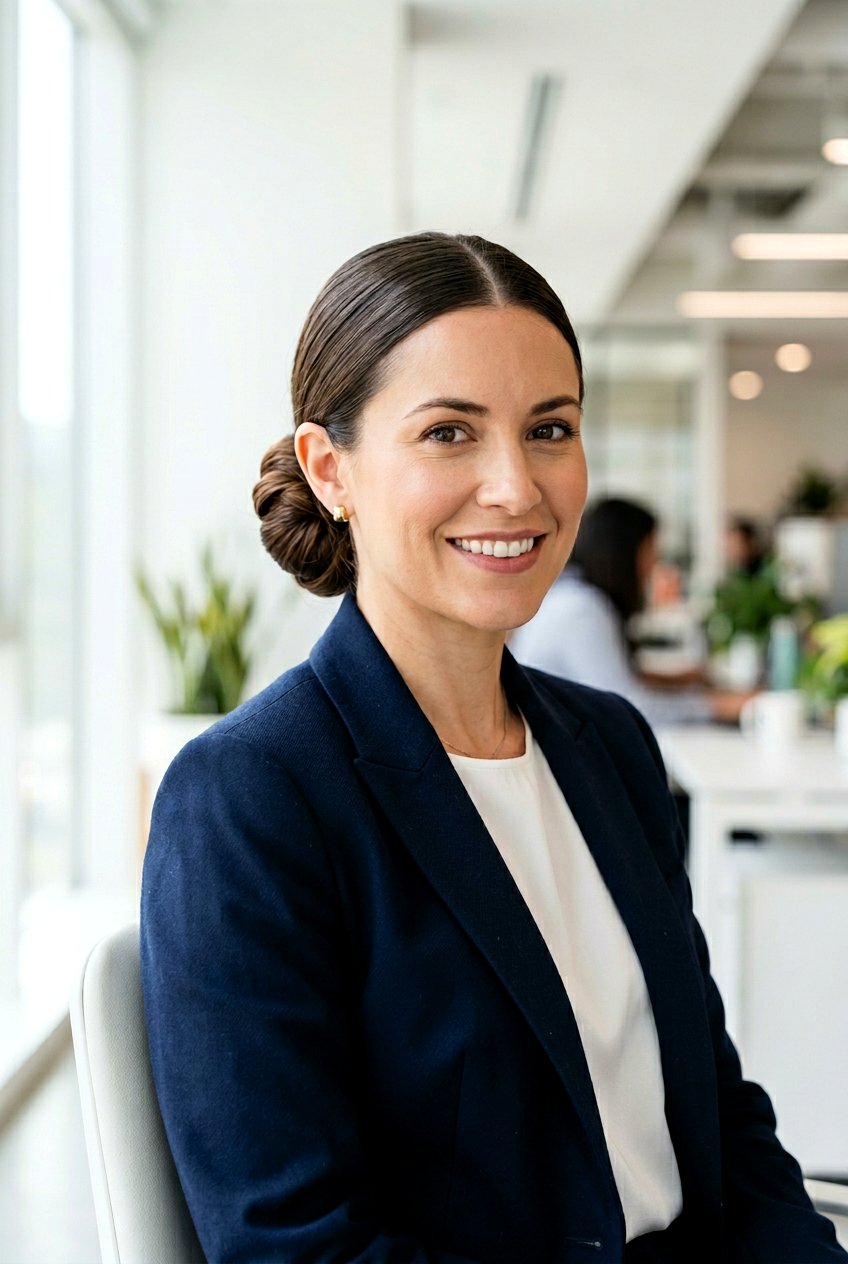
The folded low bun is a variation where the hair is looped through the elastic but not pulled all the way through, leaving the ends tucked or pointing down. This creates a more rectangular or oval shape compared to the standard round bun, offering a modern twist on a classic professional staple. The middle part ensures that the fold stays centered and looks intentional rather than like a rushed “lazy” bun from the weekend. This style is particularly effective for those with shoulder-length hair who may not have enough length for a full, multi-wrapped circular bun. It is a quick, efficient, and very sturdy option for anyone who needs their hair to stay put during a long day of physical activity.
14. Bubble Low Bun

A bubble low bun uses multiple elastics to create a “bubble” effect within the bun itself, adding volume and interest to a middle part style. You can achieve this by placing an extra elastic an inch or two below the first one and then tucking the section to create a rounded, puffed shape. This look is playful yet professional, making it a great choice for Friday office wear or less formal business meetings. The middle part keeps the look grounded in traditional professional standards, while the bubble adds a contemporary touch that shows you are aware of current trends. It works exceptionally well on thick hair that can support the weight and shape of multiple elastics without falling.
15. Smooth Crown Bun

The smooth crown low bun focuses on creating a perfectly flat and shiny top section of hair that leads into a neat bun at the nape. Using a boar bristle brush after making your middle part will help lay the hair down flat against the scalp, eliminating any bumps or unevenness. This creates a very aerodynamic and clean professional look that highlights the structure of your face and the clarity of your skin. It is often the preferred style for women in law, finance, or other traditional fields where a very neat appearance is expected. The contrast between the flat crown and the textured bun provides a sophisticated visual balance that is timelessly professional and very easy to maintain.
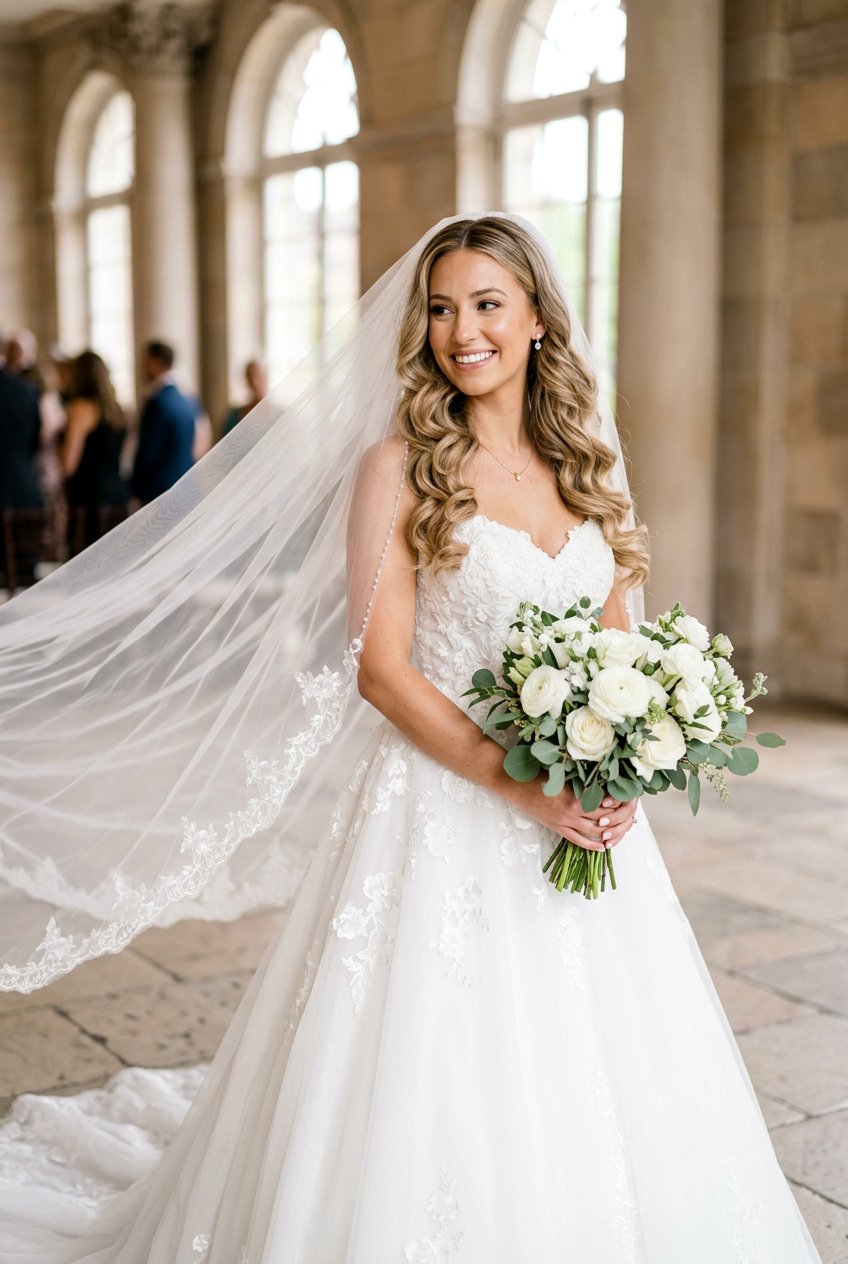

16. Low Bun Bangs

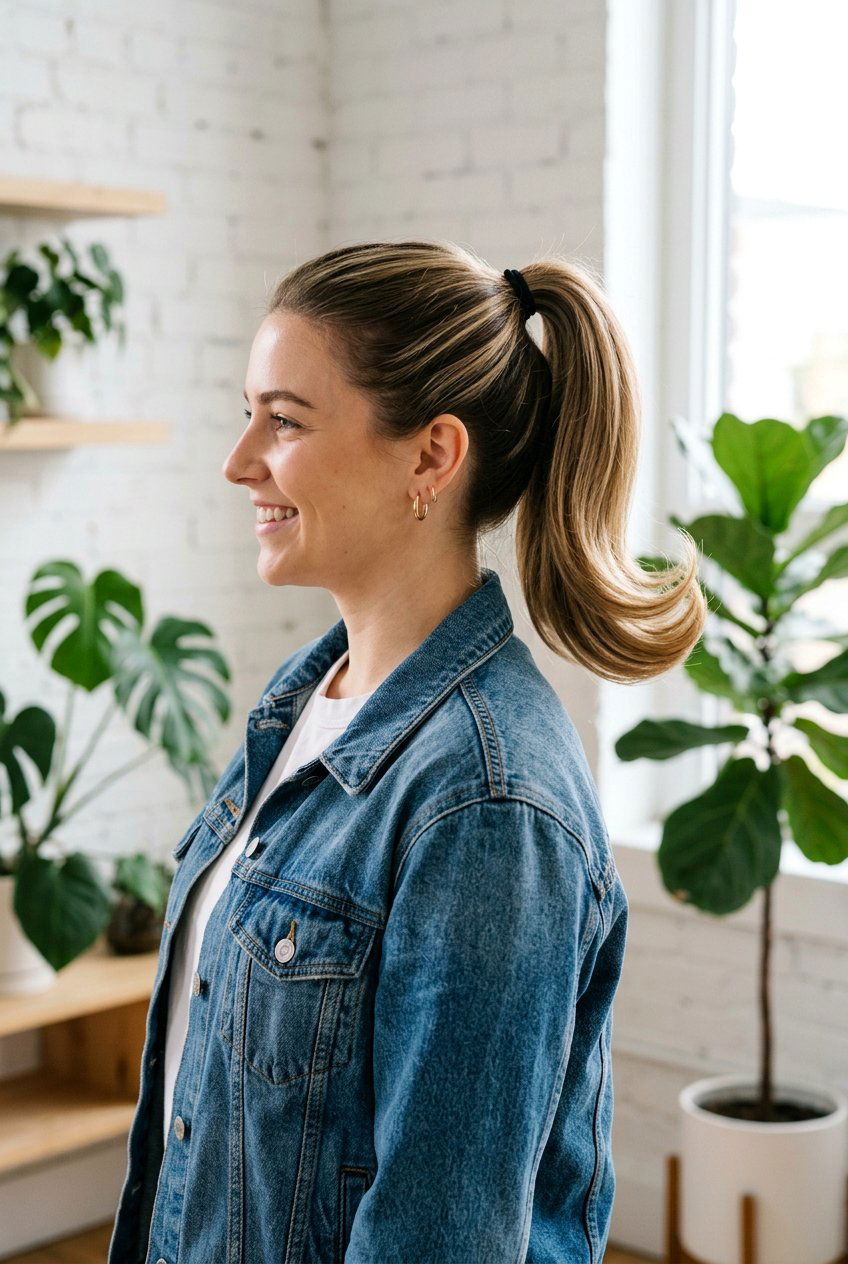
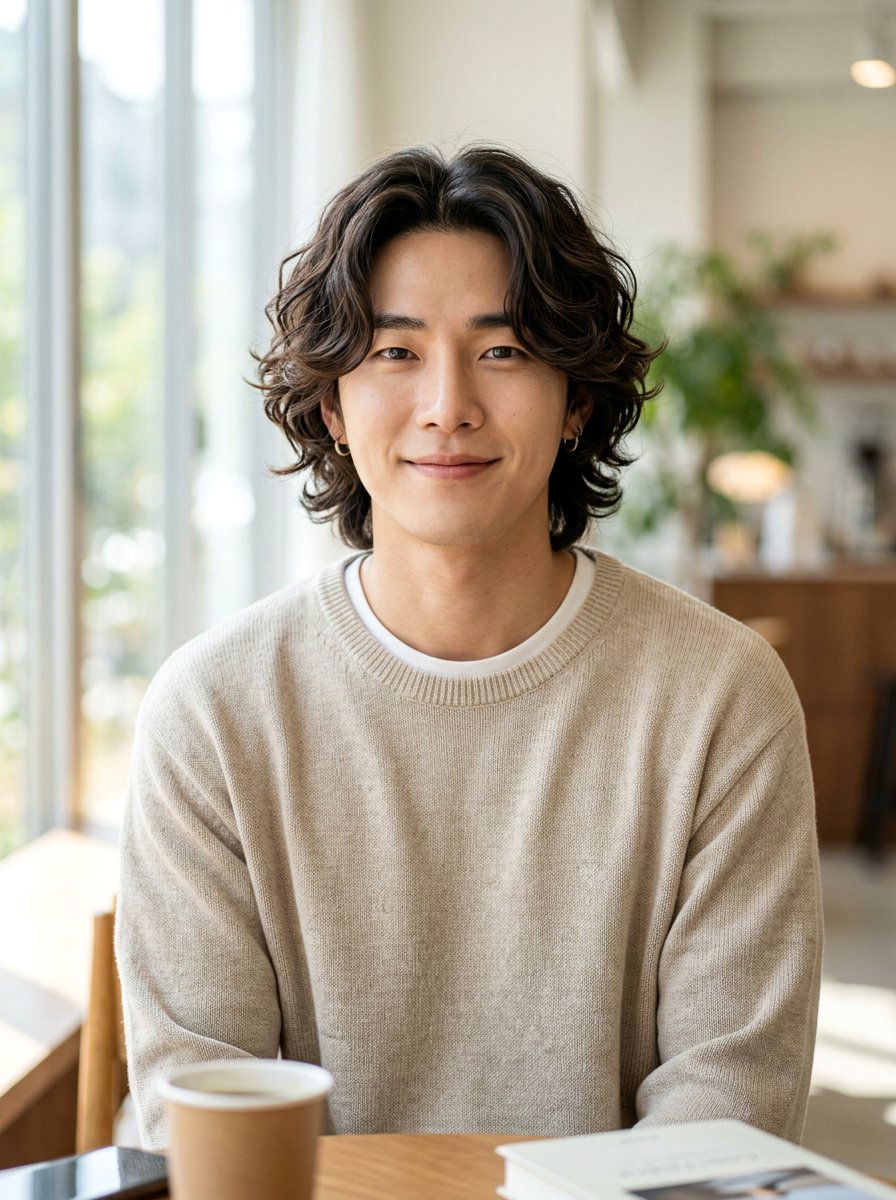
Integrating bangs with a middle part low bun allows you to frame your face while keeping the bulk of your hair out of the way. Whether you have curtain bangs, wispy fringe, or blunt cuts, splitting them down the middle to match your part creates a cohesive and intentional look. This style is perfect for those who feel their face is too exposed with a fully slicked-back bun and want some softness around the forehead. The bun at the back should remain neat to ensure the overall aesthetic stays professional and doesn’t veer into casual territory. It is a versatile choice that works well with glasses and helps to balance out longer face shapes in a professional context.
17. Tuck In Bun
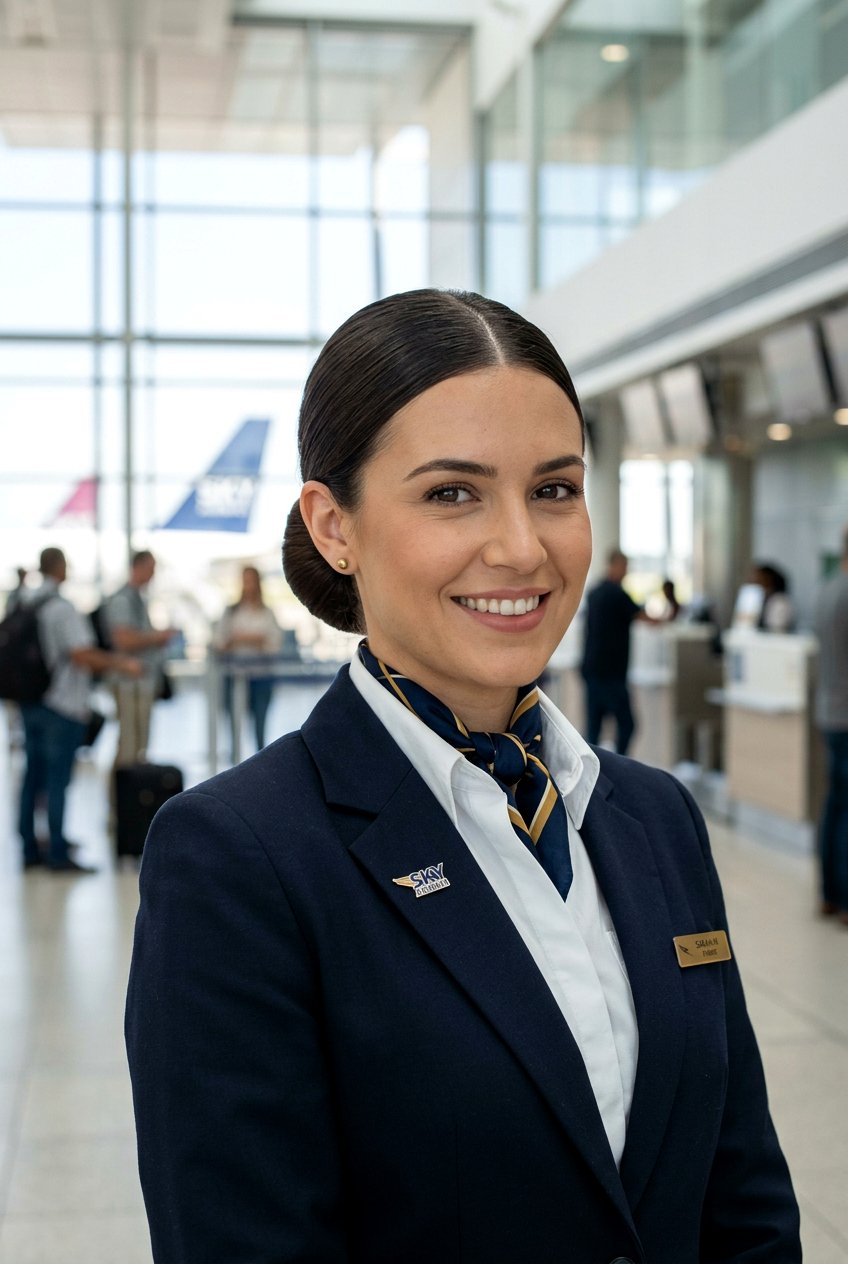
The tuck in low bun is a very tidy method where the ends of the hair are completely hidden inside the bun or under the hair tie. This creates a seamless, “endless” look that is the epitome of clean professional grooming because there are no stray ends or wispy bits visible. You can use a small hair tool or simply your fingers to roll the hair into itself before pinning it against the nape of your neck. This style is extremely secure and is often used by flight attendants and military professionals for its durability and neatness. The middle part provides the necessary symmetry to make this very tucked-away style look high-fashion rather than just purely functional.
18. Thick Hair Bun

Managing thick hair in a professional low bun requires extra pins and a strong elastic to ensure the weight doesn’t cause the style to sag. A middle part is helpful for thick hair because it divides the bulk into two manageable sections that can be smoothed down more easily than one large mass. You might find it helpful to secure your hair in a ponytail first and then braid or twist it to reduce the volume before forming the bun. This prevents the bun from becoming too large or heavy, which can sometimes look out of proportion with your head shape in a professional setting. Using large, industrial-strength bobby pins will help keep the style anchored firmly for your entire workday.
19. Fine Hair Bun
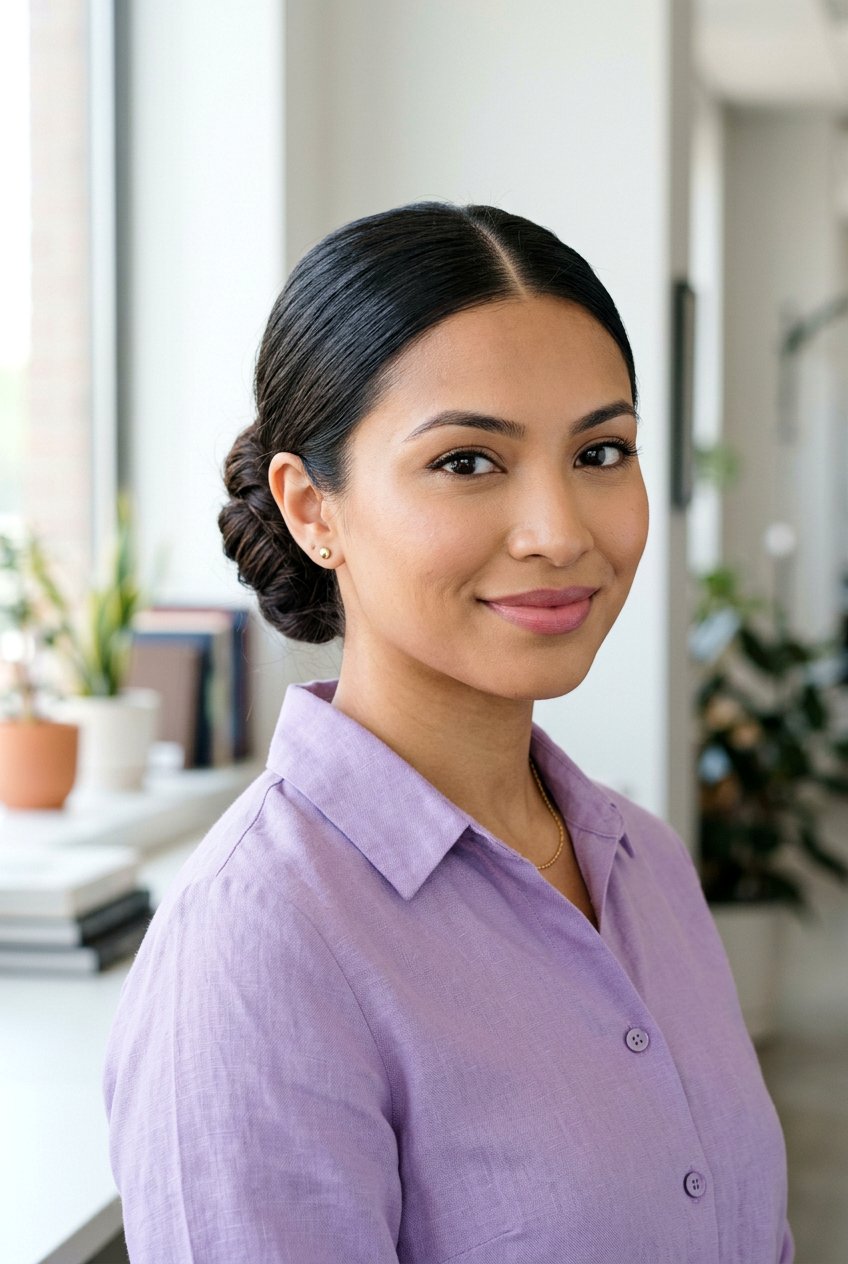
For those with fine hair, the goal of a professional low bun with a middle part is to create the illusion of more density and volume. Using a light texturizing spray before styling can give the hair more “grip,” making the bun appear larger and preventing it from slipping out of the elastic. The middle part should be done carefully to avoid showing too much scalp, ensuring a full and healthy look for the front of the hair. You can also lightly pancake or pull on the loops of the bun once it is secured to make it look wider and fuller. This allows those with thinner strands to enjoy the classic professional look without their hair appearing sparse or flat against the head.
20. Short Hair Bun

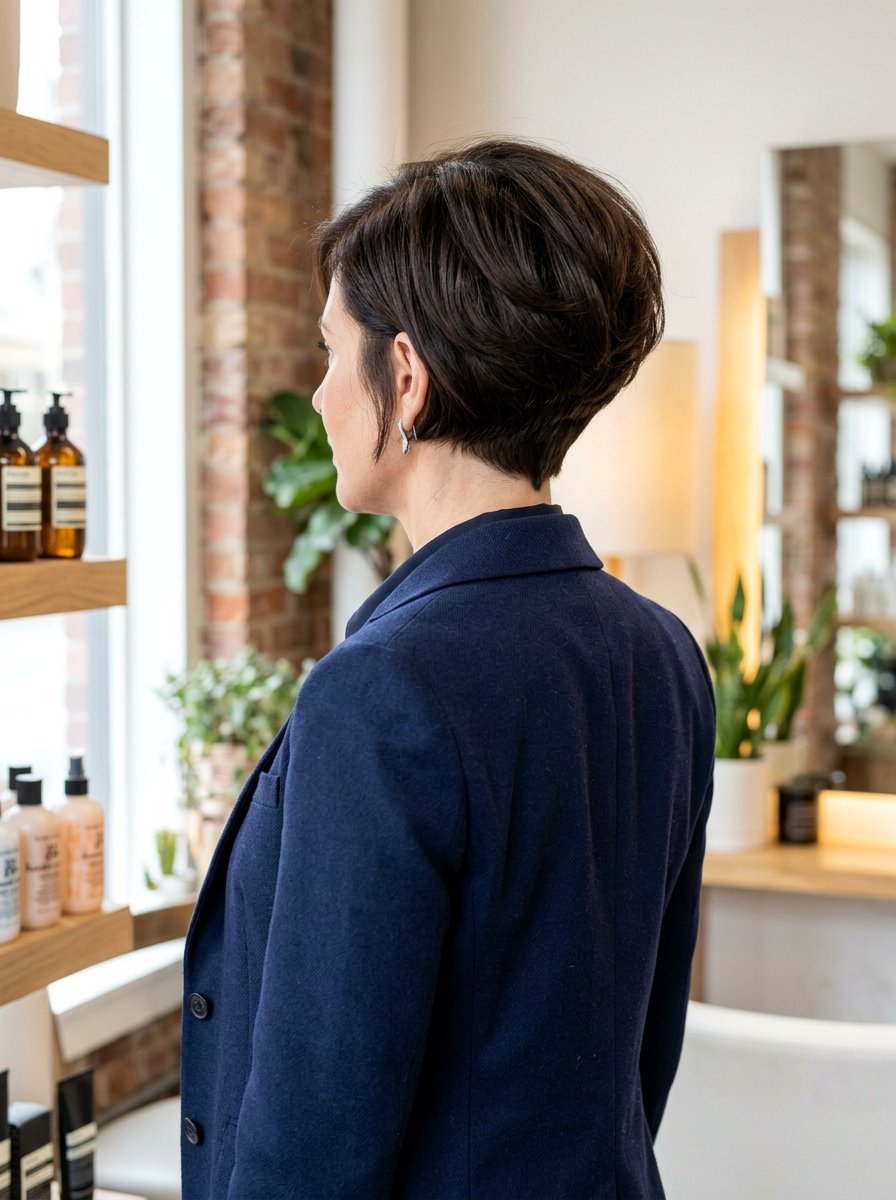
You can still achieve a professional low bun with a middle part even if your hair is only bob-length or shorter. By using small clear elastics and plenty of pins, you can gather your hair at the very base of your neck to create a “micro-bun” or a small tucked loop. The middle part is essential here as it gives the short hair a clear direction to follow, making the small bun look deliberate and styled. If you have layers that are too short to reach the back, you can use a tiny amount of hair wax to slick them behind your ears. This keeps the front looking professional and ensures that your shorter length doesn’t prevent you from wearing this iconic and polished office hairstyle.
Conclusion:
The professional low bun with a middle part remains one of the most reliable and stylish choices for any modern woman in the workforce. Throughout this guide, we have seen how this single concept can be adapted for every hair type, length, and professional environment imaginable. Whether you choose a sleek, high-shine finish for a corporate meeting or a soft, curly version for a creative office, the middle part provides a consistent foundation of symmetry. It is a hairstyle that communicates confidence, attention to detail, and a sense of timeless elegance. By mastering a few of these variations, you can ensure that your hair always looks polished, professional, and perfectly suited to your personal style.
You'll Like These Styles:




Leave a Reply