
Mulberry hair color blends deep red and purple tones into a rich berry shade that feels bold but still very wearable for everyday life. It sits in the same family as burgundy and plum, yet leans a bit brighter and juicier, like the actual fruit. You’ll see this tone all over social feeds and short-form video right now, especially in DIY color transformations and “berry hair” tags. Colorists also predict more jewel-toned, statement shades in 2026, so mulberry fits right into that mood if you want something eye-catching without going neon. The best part is how adaptable it is: you can wear it as an all-over color, ombré, balayage, peekaboo panels, or just a soft tint on dark hair. Below are 20 complete mulberry hair color looks to inspire your next salon visit or at-home experiment, with practical tips on who they suit, how to maintain them, and what to ask your colorist for each one.
1. Solid Mulberry Hair Color
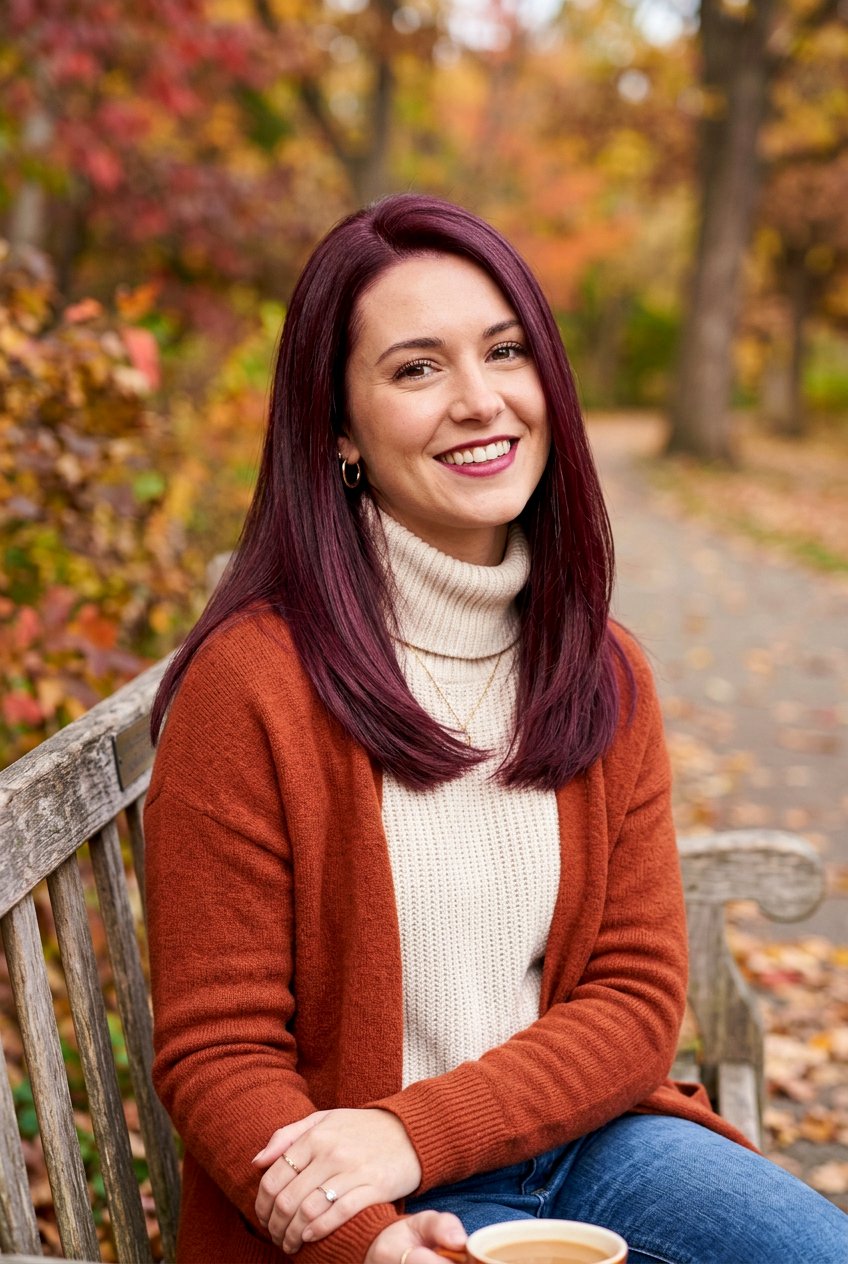
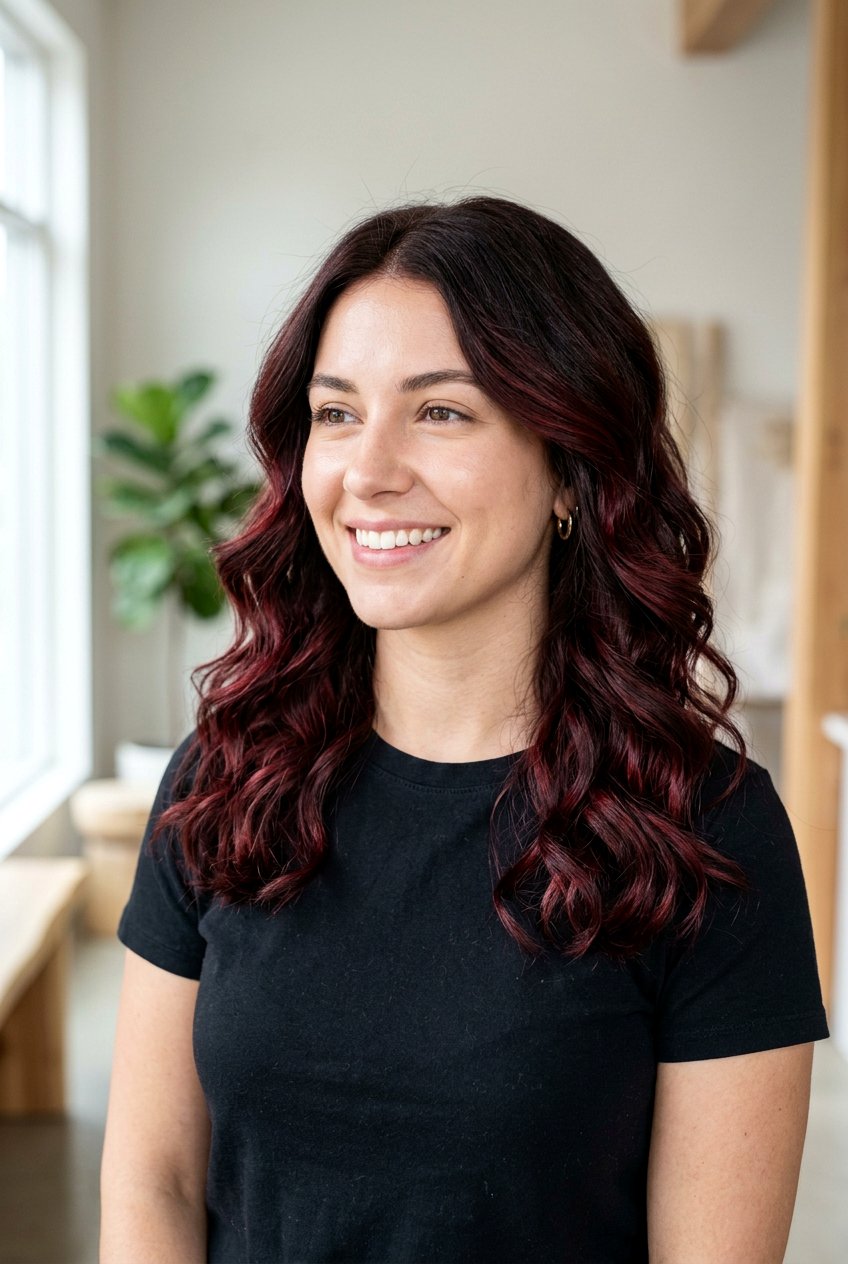
A solid mulberry hair color is the most straightforward way to embrace this berry shade, and it makes an instant statement from every angle. This look works beautifully on straight, wavy, or curly textures because the uniform color lets your natural pattern do the talking. On darker bases, a solid mulberry usually reads as a deep, cool red with a subtle purple sheen in bright light, which feels sophisticated instead of flashy. If your hair is light brown or blonde, your colorist will often deepen your base first so the result looks rich and not overly pink. Ask for a single-process cool red-violet formula in the mulberry family and make sure they use a bond builder if your hair is previously colored or fragile. At home, switch to sulfate-free shampoo and wash with cooler water to slow fading, since berry reds can lose intensity quickly without gentle care.
2. Dark Mulberry Burgundy Hair
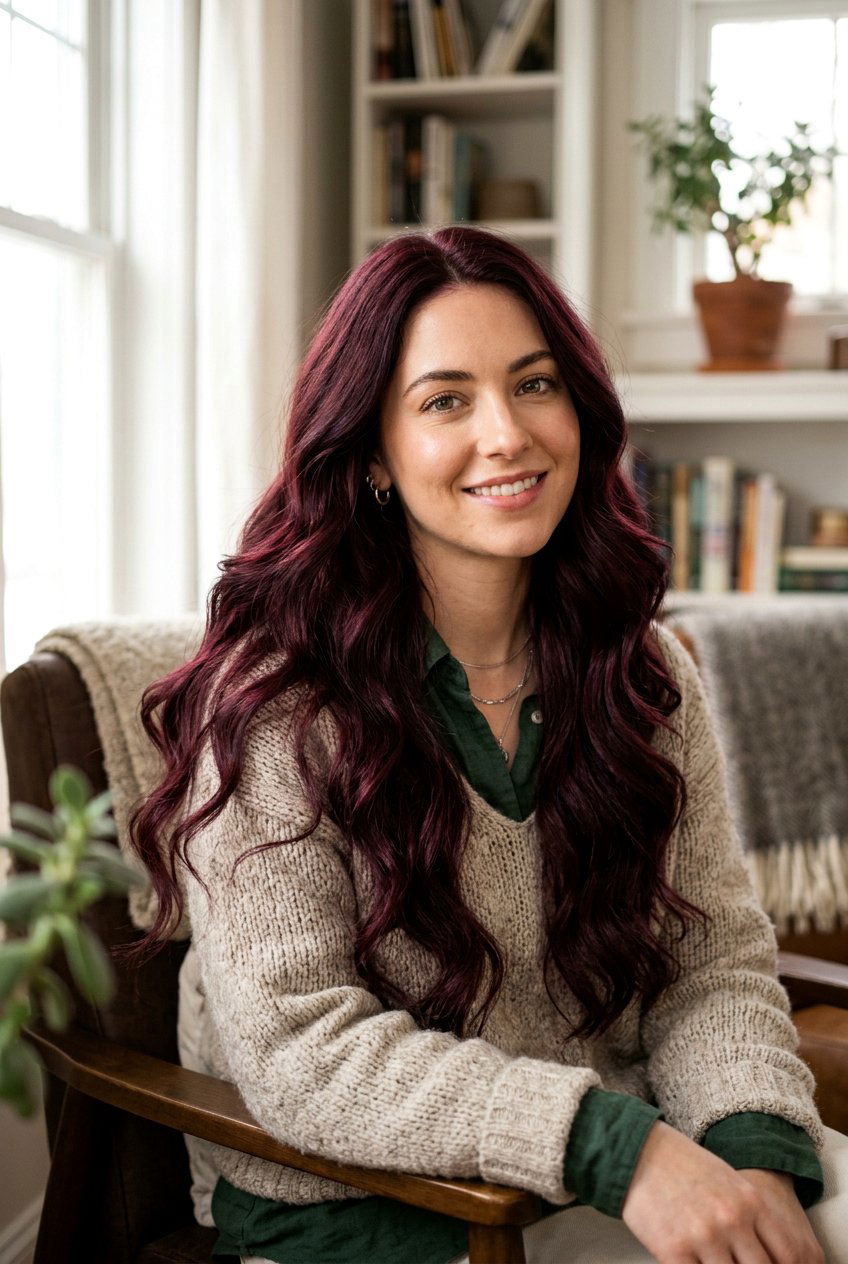
Dark mulberry burgundy hair combines the depth of burgundy with a fruit-inspired twist that feels romantic and timeless. This shade leans a little more red than purple, which makes it flattering on warm, neutral, and cool undertones because it lands right in the middle. On long, layered cuts, it looks almost like velvet in low light, then reveals a juicy berry glow when sunlight hits the strands. People with naturally dark brown or black hair love this version because it often requires less lightening than brighter berry hues while still giving a noticeable transformation. To get it, ask your colorist for a deep burgundy base with mulberry tones and subtle purple reflects instead of a flat wine red. Maintain the shade with color-depositing masks in red-violet and avoid high-heat styling without protectant, since heat quickly dulls the shine in deeper reds.
3. Mulberry Balayage On Brown Hair
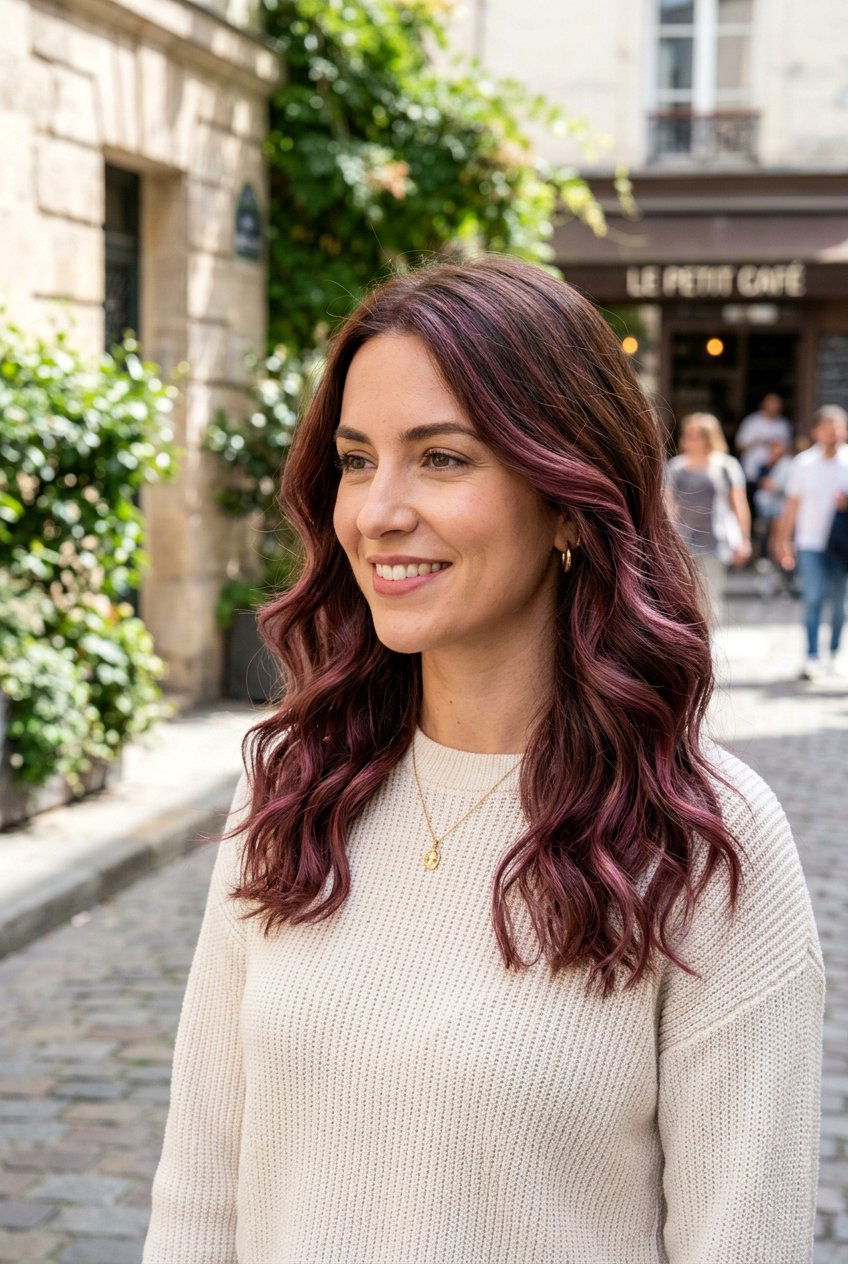
Mulberry balayage on brown hair gives you that berry pop while keeping your roots natural and low maintenance. Your colorist will hand-paint mulberry tones through the mid-lengths and ends, usually focusing around the face and surface layers so the color catches the light. This look is especially pretty on medium and dark brown bases because the contrast creates that trendy “glowing color” effect without looking stripey. Soft waves or loose curls help showcase all the painted pieces, making the mulberry ribbons appear dimensional and expensive. Ask for a subtle lift just a few levels lighter than your base before applying the berry gloss, so the result is saturated but not patchy. To keep it fresh, book gloss appointments every six to eight weeks and use a hydrating mask weekly, since balayage lightening can leave ends a bit drier.
4. Mulberry Ombre Hair Color
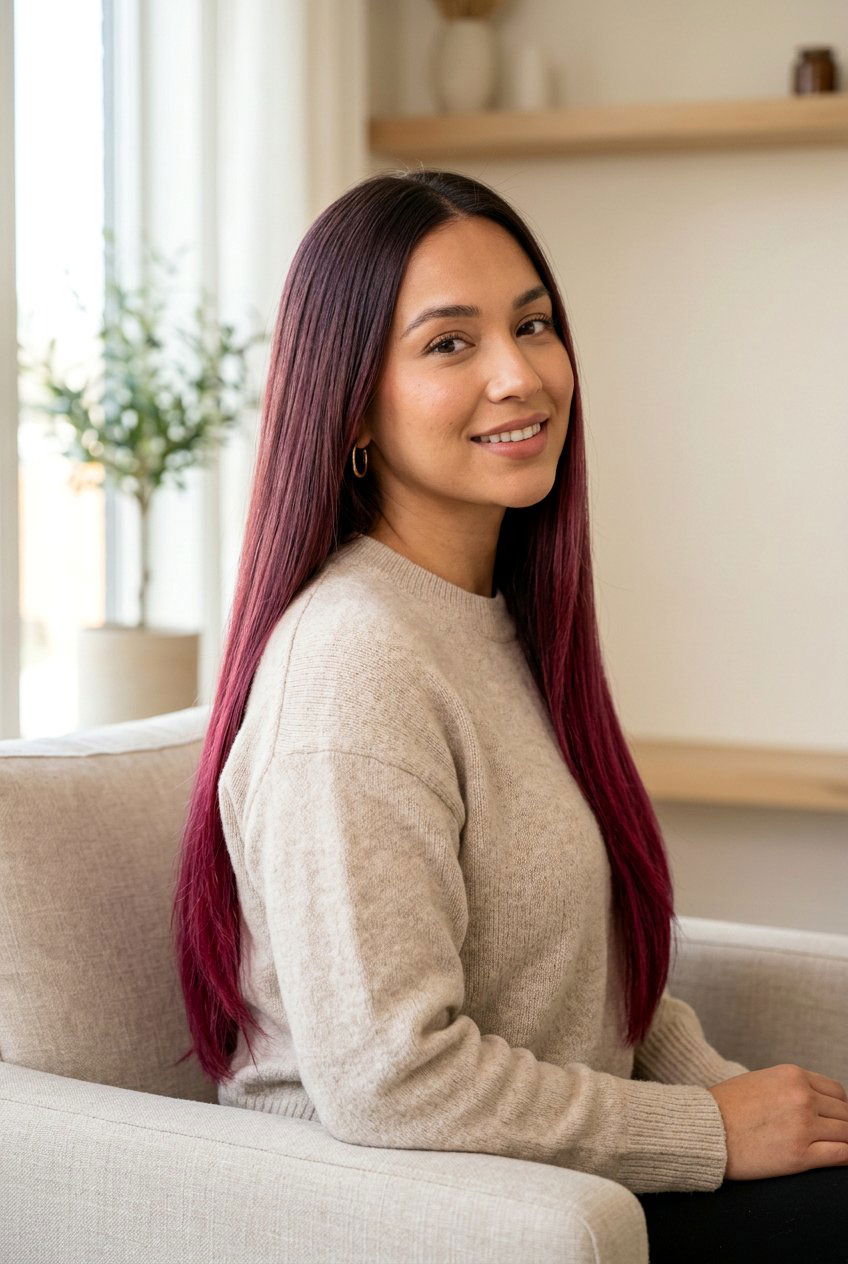
Mulberry ombre hair color is perfect when you want a dramatic berry finish without fully committing from roots to ends. The look usually starts with your natural shade through the roots and mid-lengths, then melts into a saturated mulberry tone from mid-shaft downward. On dark brunettes, the fade into mulberry creates a moody, jewel-toned result that still feels polished enough for work or school. If your hair is already lightened on the ends, your colorist can often overlay a mulberry glaze with minimal extra bleaching, which helps preserve your length. Styling-wise, soft curls, beachy waves, or even a sleek straight finish help showcase the gradient, especially when the transition is blended, not harsh. For upkeep, focus your leave-in treatments and oils on the colored ends, and refresh the ombré with a semi-permanent berry color whenever it starts to look washed out.
5. Mulberry Highlights On Dark Hair
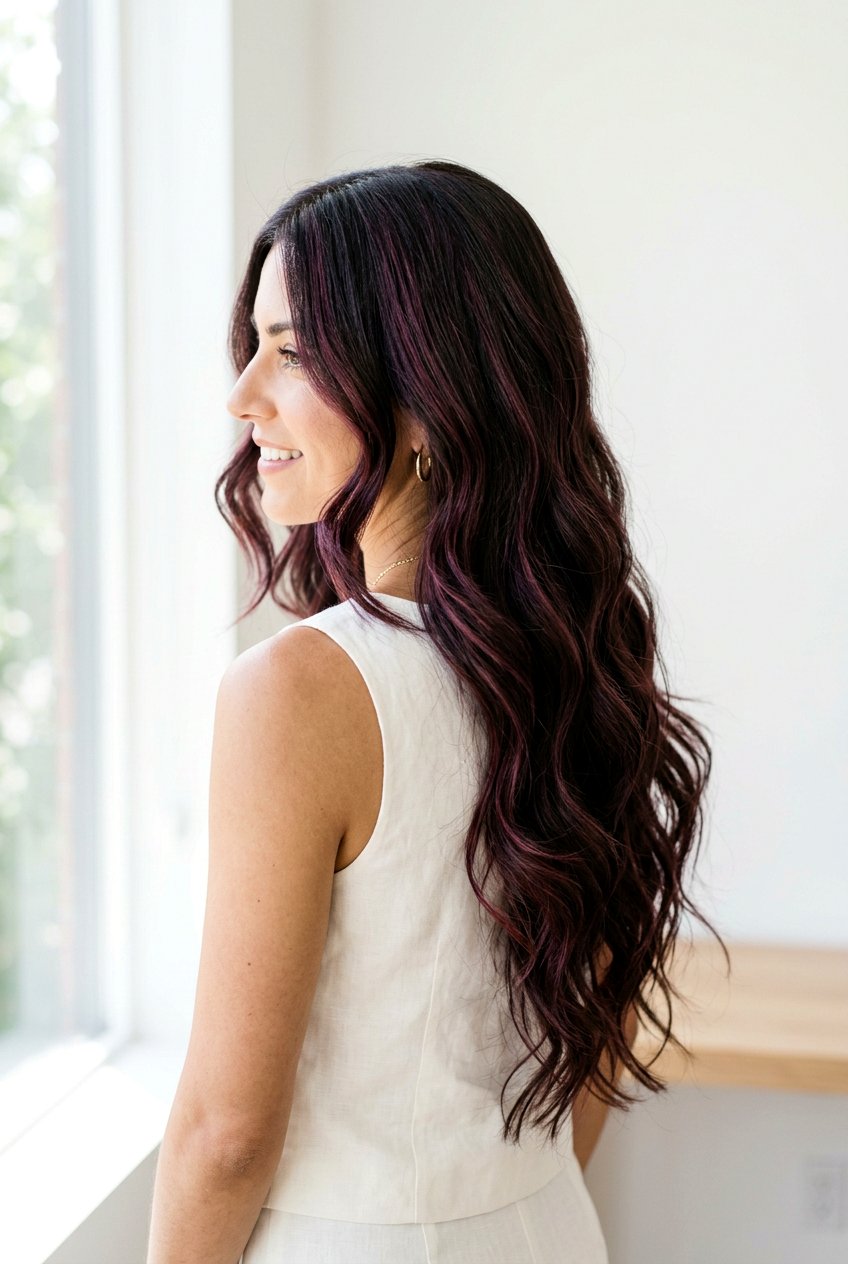
Mulberry highlights on dark hair give you that on-trend berry tone in a subtle, wearable way that still feels professional. Instead of light blonde or caramel, your colorist will weave fine slices or babylights and tone them with a mulberry formula that shows as soft red-violet pops. This technique works especially well for naturally dark brunettes who want dimension and interest without going drastically lighter or dealing with obvious grow-out. The result can range from very delicate, where the berry hue only appears in the sun, to more defined streaks that frame the face. Ask for micro-fine highlights and a cool berry gloss so the overall effect feels expensive and modern, not chunky or streaky. Use a purple-leaning color-safe shampoo occasionally to keep the red-violet tones from turning too warm, and limit chlorine exposure, which can distort fashion reds quickly.
6. Mulberry Peekaboo Hair Color
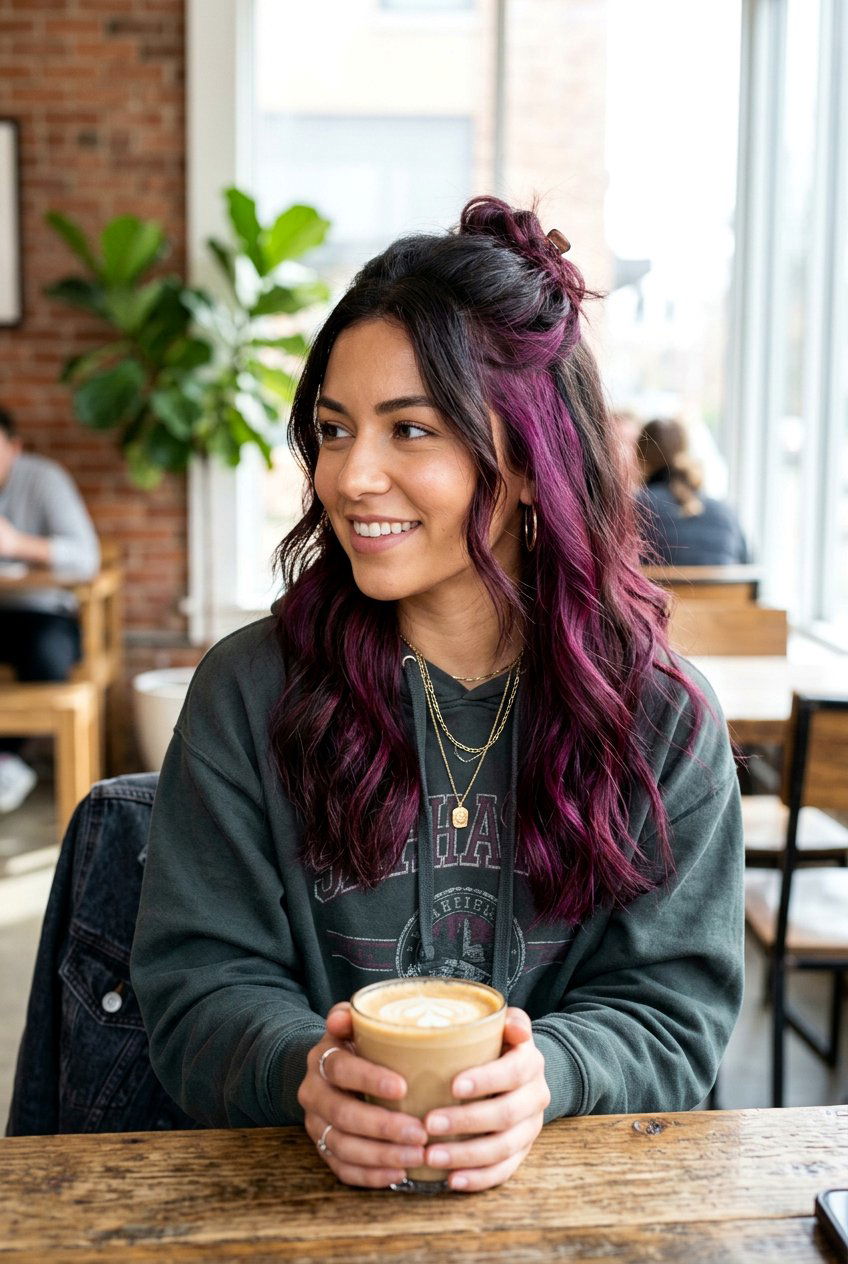
Mulberry peekaboo hair color hides vibrant berry sections underneath your top layers, revealing flashes of color when you move or style. This is a great option if you like playful hair but need to keep the surface fairly natural for work or personal preference. Your colorist will usually lighten panels on the lower half of your hair, then apply a mulberry shade so the pops show in ponytails, braids, or waves. On straight hair, the peekaboo pieces peek out at the ends, while curls and layers show more of the color throughout. You can go subtle with just one or two panels or bold with several sections placed around the head for maximum movement. Care-wise, wash less often and use cool water so the hidden berry pieces stay vibrant, and consider sleeping on a silk pillowcase to reduce friction and fading.
7. Mulberry Money Piece On Brown Hair
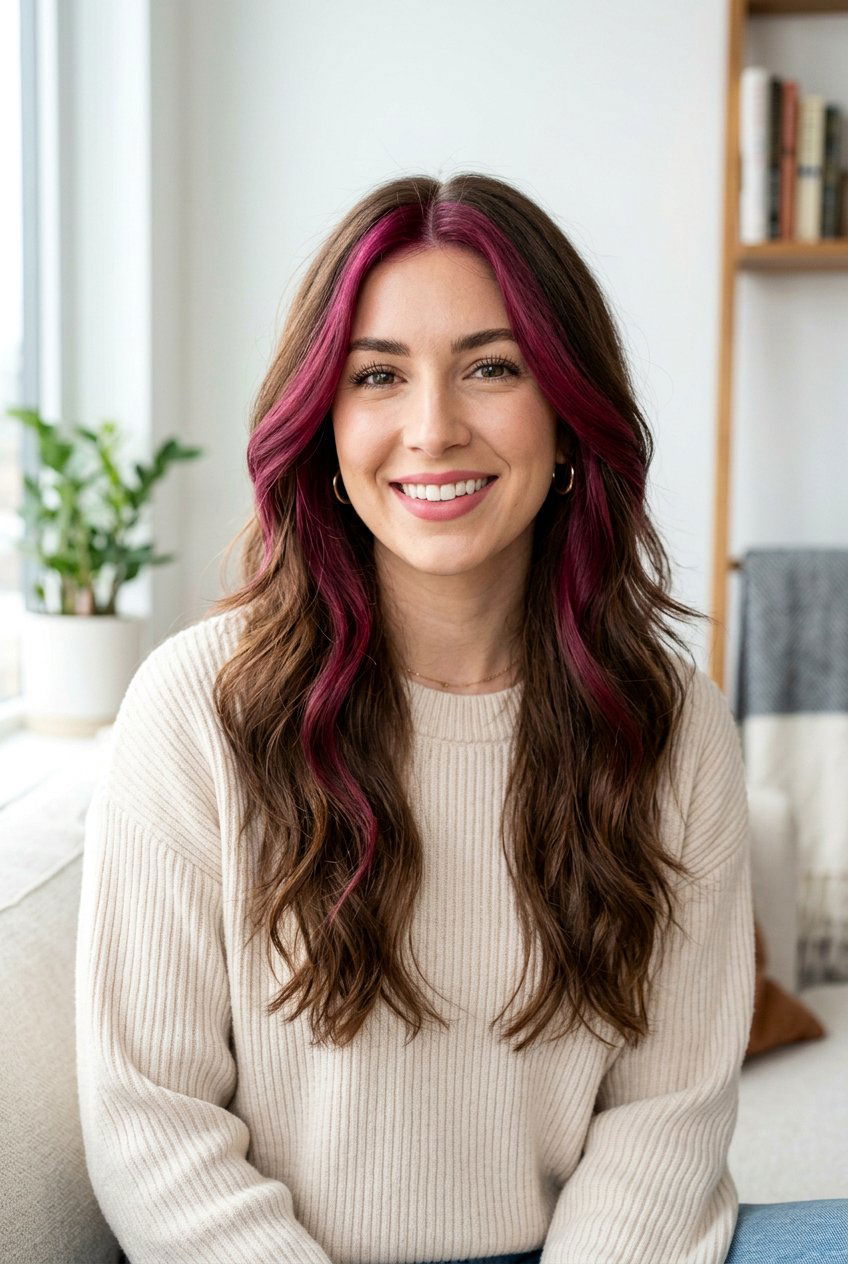
A mulberry money piece on brown hair focuses your berry color right around the face, creating instant brightness and a modern focal point. This look is all over trend lists because it gives big impact with minimal processing on the rest of your hair. Your colorist will lighten a chunky or soft section at the front hairline, then tone it mulberry so it contrasts against your deeper base in a flattering way. It pairs beautifully with curtain bangs, face-framing layers, or a long bob, since the colored pieces sit right where hair curves around your cheeks. Ask for a berry red-violet tone that complements your skin, and make sure the transition from money piece to base color is well-blended, not blocked. Maintain the vibrancy with targeted color-safe products just on the front pieces and consider a gloss refresh every four to six weeks as this area fades fastest.
8. Mulberry Hair Color On Black Hair
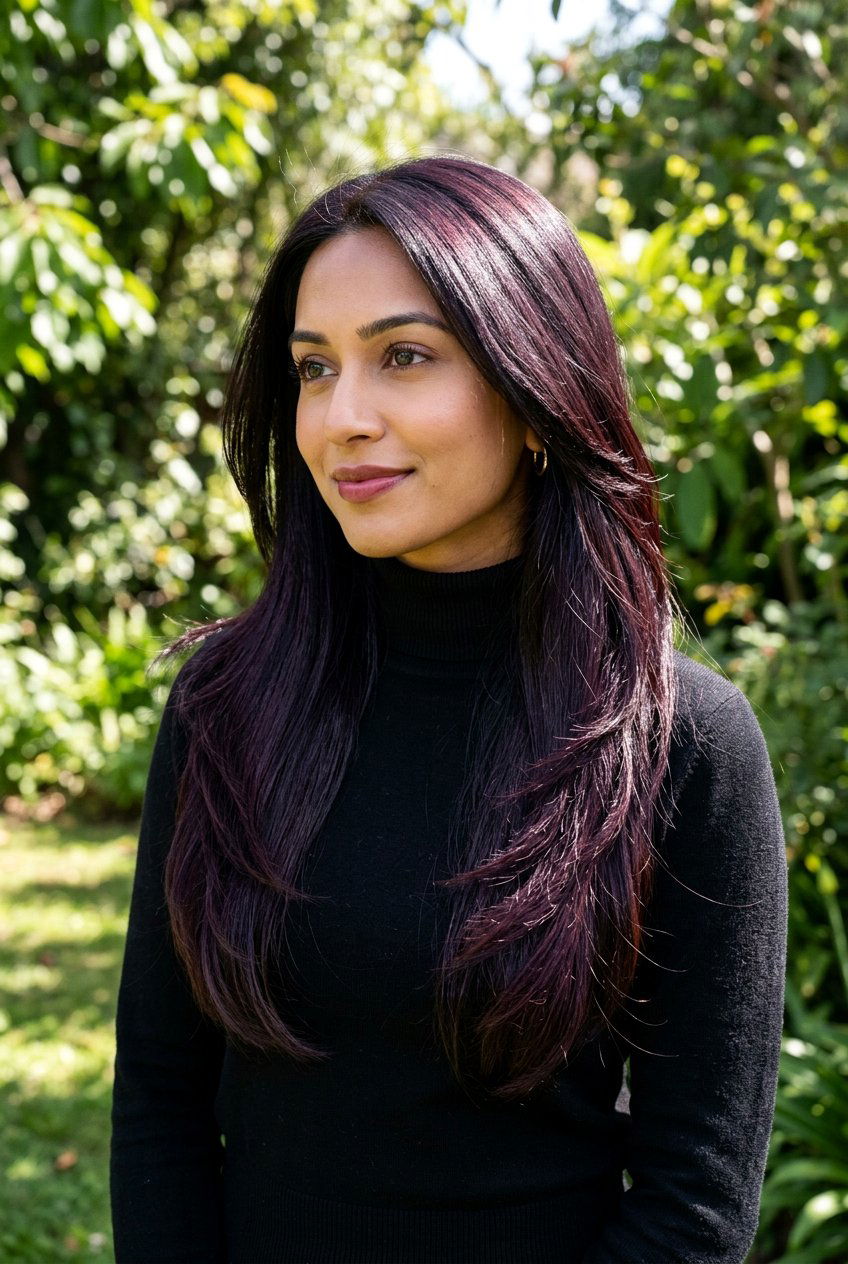
Mulberry hair color on black hair creates a subtle, sultry effect where the berry tones glow softly instead of looking neon. Depending on your starting level, your colorist may apply a dark mulberry tint over your natural black, resulting in a cool, almost wine-like sheen. Under indoor lighting, it can read as soft black, but step into sunlight and you’ll notice red-violet reflections that feel chic and understated. This approach is ideal if you want something low-commitment or are just starting to experiment with color beyond browns. For more intensity, your stylist might subtly lighten the mid-lengths before adding a deeper mulberry, keeping your roots close to natural for easy grow-out. Use shine-enhancing serums and glossing sprays to emphasize the reflective quality, and avoid frequent clarifying shampoos, which can strip the delicate berry pigments quickly.
9. Mulberry Hair Color On Blonde Hair

Mulberry hair color on blonde hair gives one of the brightest, most high-impact results because the lighter base lets berry tones fully show. On platinum or very light blonde, mulberry can look like a vivid, cool magenta with a purple cast, which feels edgy and fun. If you prefer something softer, your colorist can deepen your base to a dark blonde or light brown first so the final shade reads as rich mulberry, not hot pink. This look is striking on blunt bobs, shags, and long waves because it turns your whole haircut into a statement. Ask for a semi-permanent mulberry formula if you’re nervous about commitment, since these gradually wash out and are easier to tweak later. To protect your lightened hair, prioritize bond-building treatments and protein-moisture balance, and keep hot tools on lower temperatures to prevent breakage and color dullness.
10. Mulberry And Plum Hair Color Blend
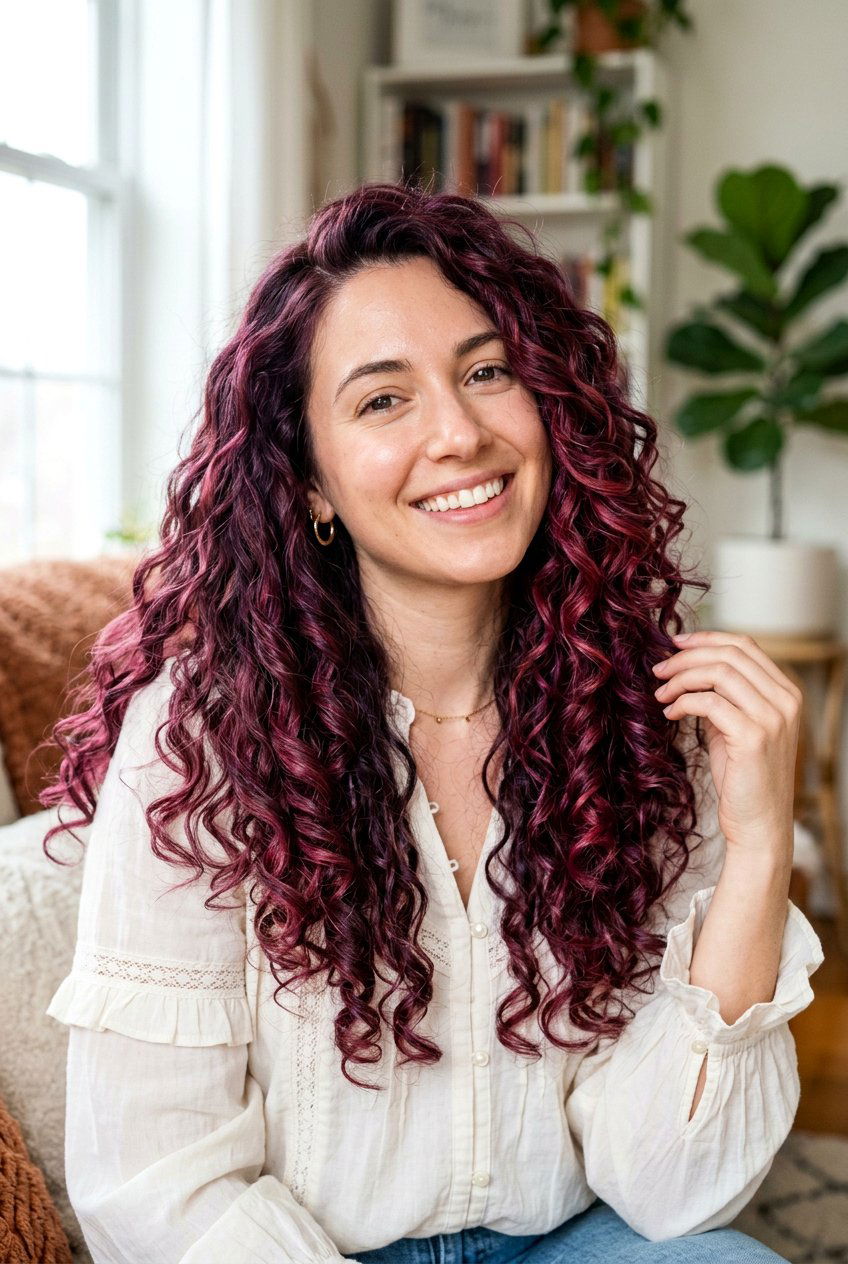
A mulberry and plum hair color blend layers two berry tones together for extra depth and movement. Mulberry tends to lean more red, while plum is slightly darker and more purple, so combining them gives a dimensional, jewel-toned result. Your colorist might place mulberry on the top layers and weave plum through the underlayers, or alternate the tones in highlights for a multi-tonal effect. This look flatters straight and wavy cuts because the different shades catch the light differently as you move. It is especially stunning in braids and updos, where the twist and turns show every nuance in the color blend. Maintaining this mix means using gentle, color-safe products and scheduling periodic glosses in both tones so one shade doesn’t overpower the other as it fades over time.
11. Mulberry Red Violet Hair Color
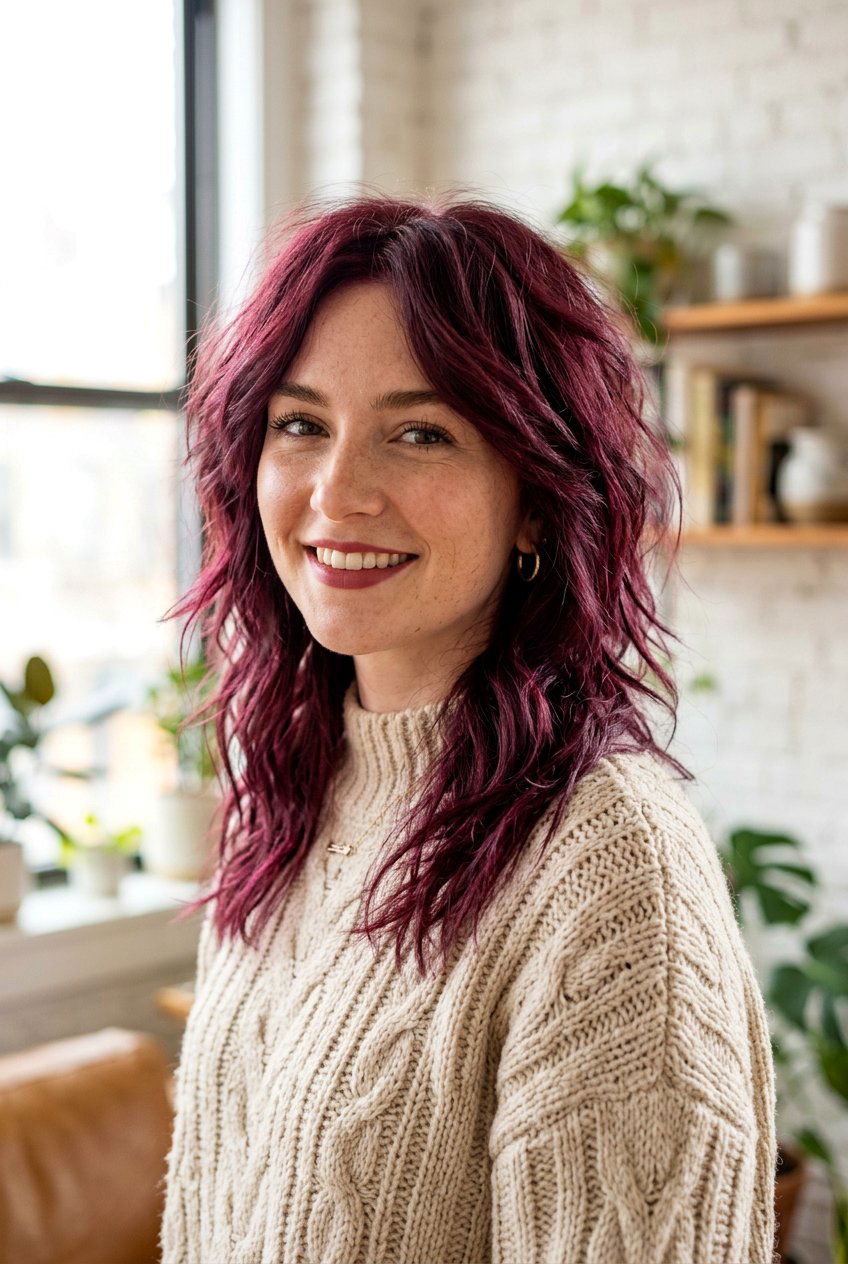
Mulberry red violet hair color pushes further into the purple side while keeping a strong red core, giving a true berry sorbet effect. This tone plays nicely with fair, medium, and deep skin because the violet keeps it cool while the red adds warmth and life. It suits trendy cuts like lobs, shaggy layers, and textured wolf cuts, where the choppy pieces make the color look lively and youthful. If you already have red or copper hair, a red-violet mulberry glaze can shift your color cooler without a full color overhaul. Ask your stylist for a red-violet formula in the mulberry family and bring reference photos showing how intense you want the purple factor. To keep the tone balanced, avoid overly warm shampoos and use masks designed for red or purple hair that deposit small amounts of pigment while conditioning.

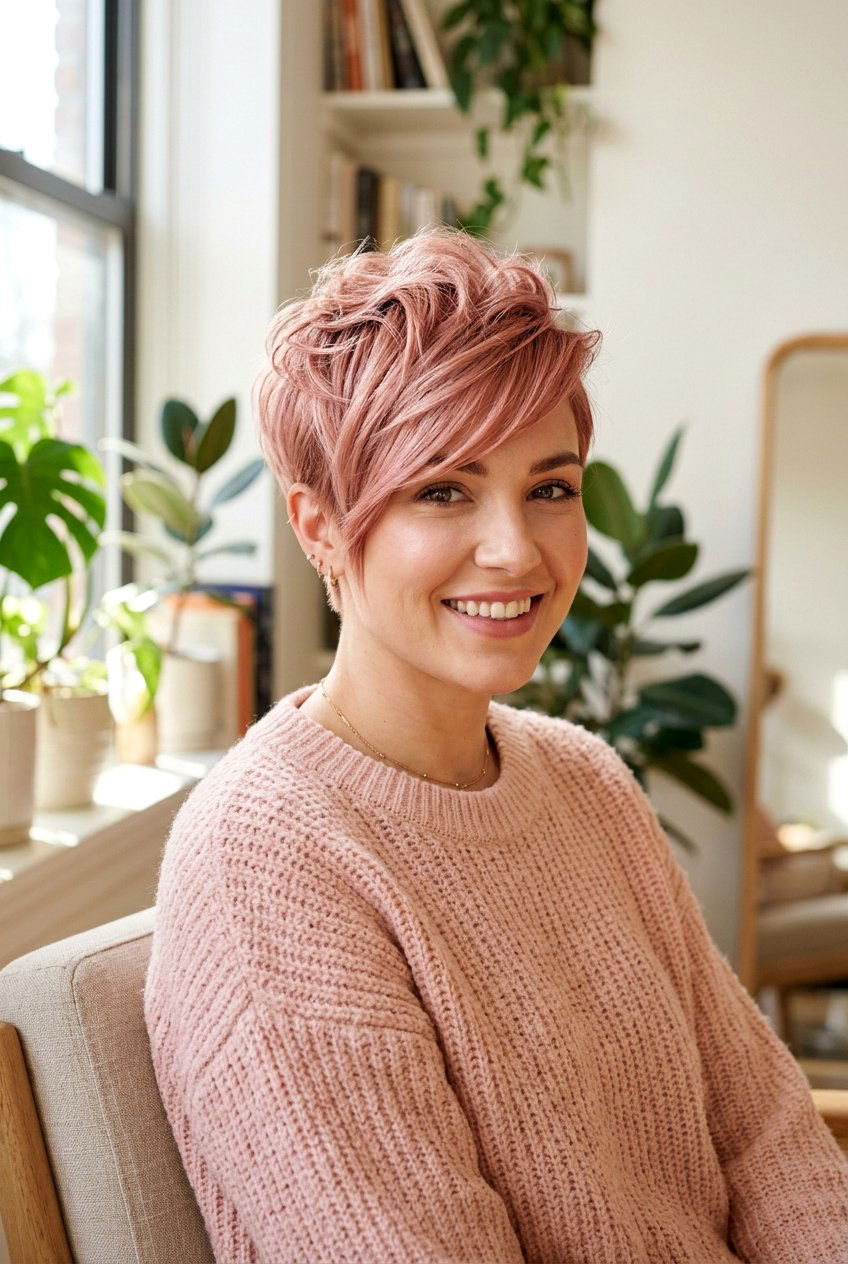
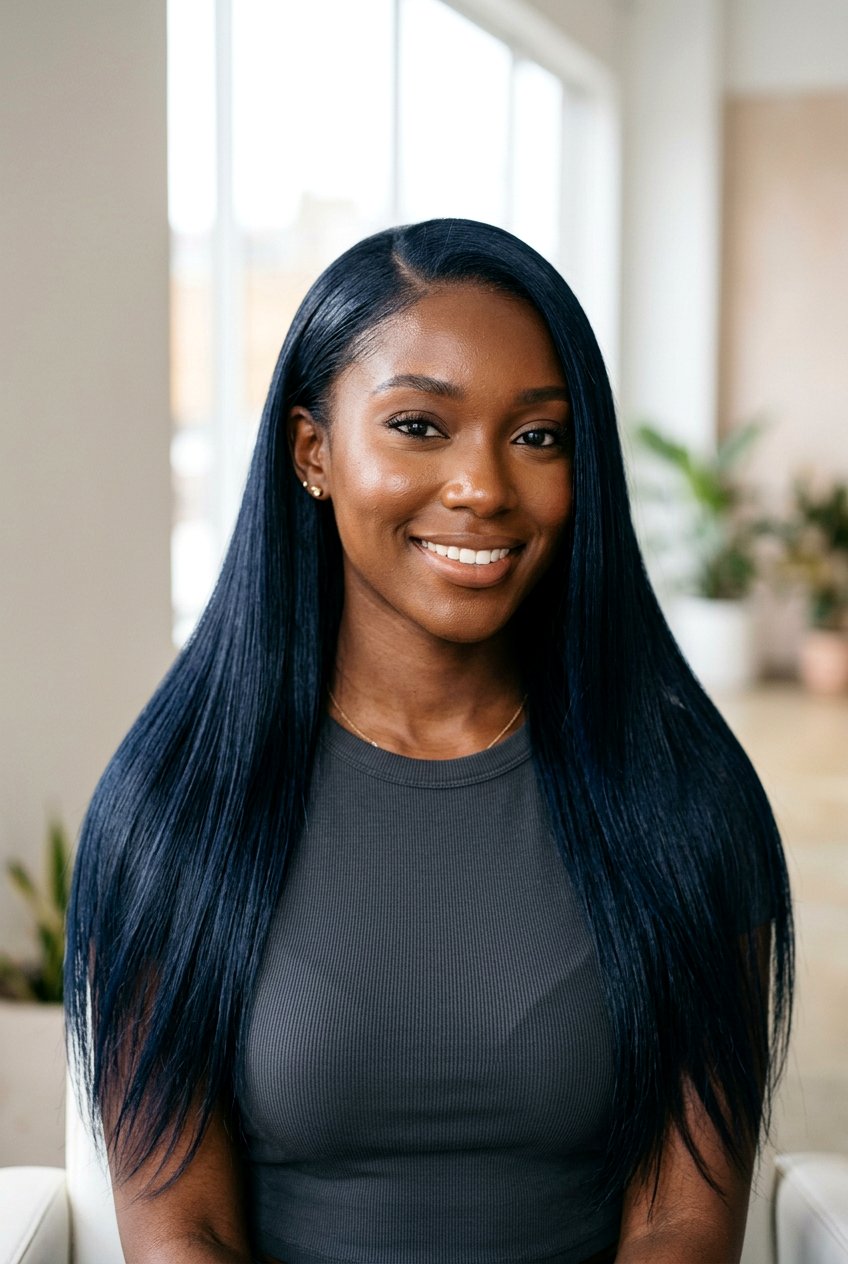
12. Mulberry Balayage On Black Hair
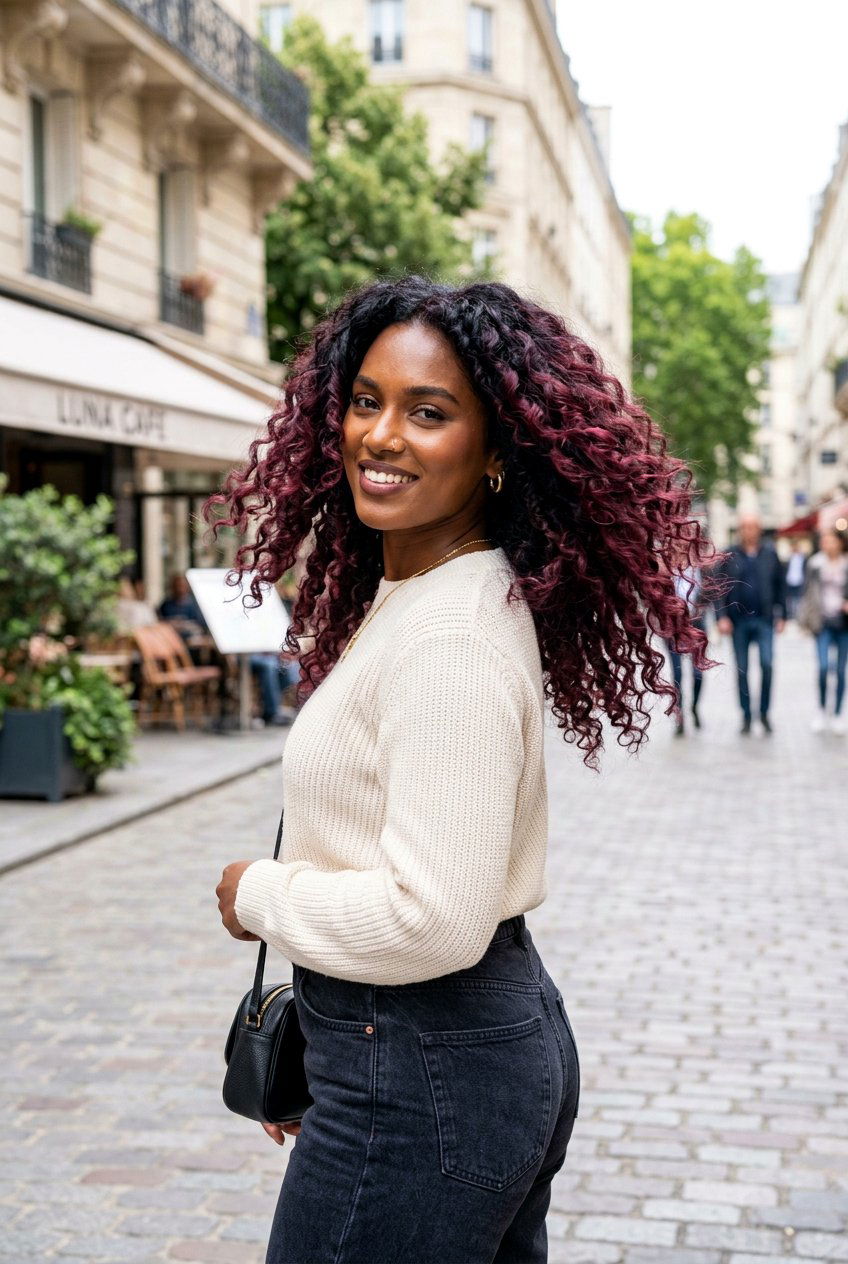
Mulberry balayage on black hair creates a striking contrast that still feels blended and soft around the edges. Your colorist will paint lighter pieces through the mid-lengths and ends, then tone them mulberry so they pop against your deep natural root. The result often looks like glowing berry ribbons layered over a dark backdrop, especially when styled in loose curls or waves. This look is great if you want something bolder than subtle tints but not as high-maintenance as full-head lightening. Placement can be customized: some people prefer just face-framing balayage, while others choose a full halo for brightness all around. Care for it like any lightened hair by using bond-building treatments, minimizing heat, and refreshing the mulberry glaze every couple of months to keep the contrast crisp but still seamless.
13. Mulberry Brown Hair Color

Mulberry brown hair color is a softer, more office-friendly take on the trend where brown is the base and berry tones are the whisper. Think of it as a rich chocolate or chestnut brown infused with subtle mulberry reflects that show in sunlight and movement. This look works wonderfully if you want something more interesting than plain brown but still understated enough for conservative settings. Your colorist might mix a brown formula with a bit of red-violet or apply a mulberry gloss on top of your existing brunette shade. On layered cuts, especially medium lengths, the soft berry undertone makes the hair appear fuller and shinier without looking obviously “colored.” Maintain it by spacing out washes, using color-safe shampoo, and occasionally adding a shine-enhancing clear gloss if the brown starts to look dull between color appointments.
14. Mulberry Hair Color On Curly Hair
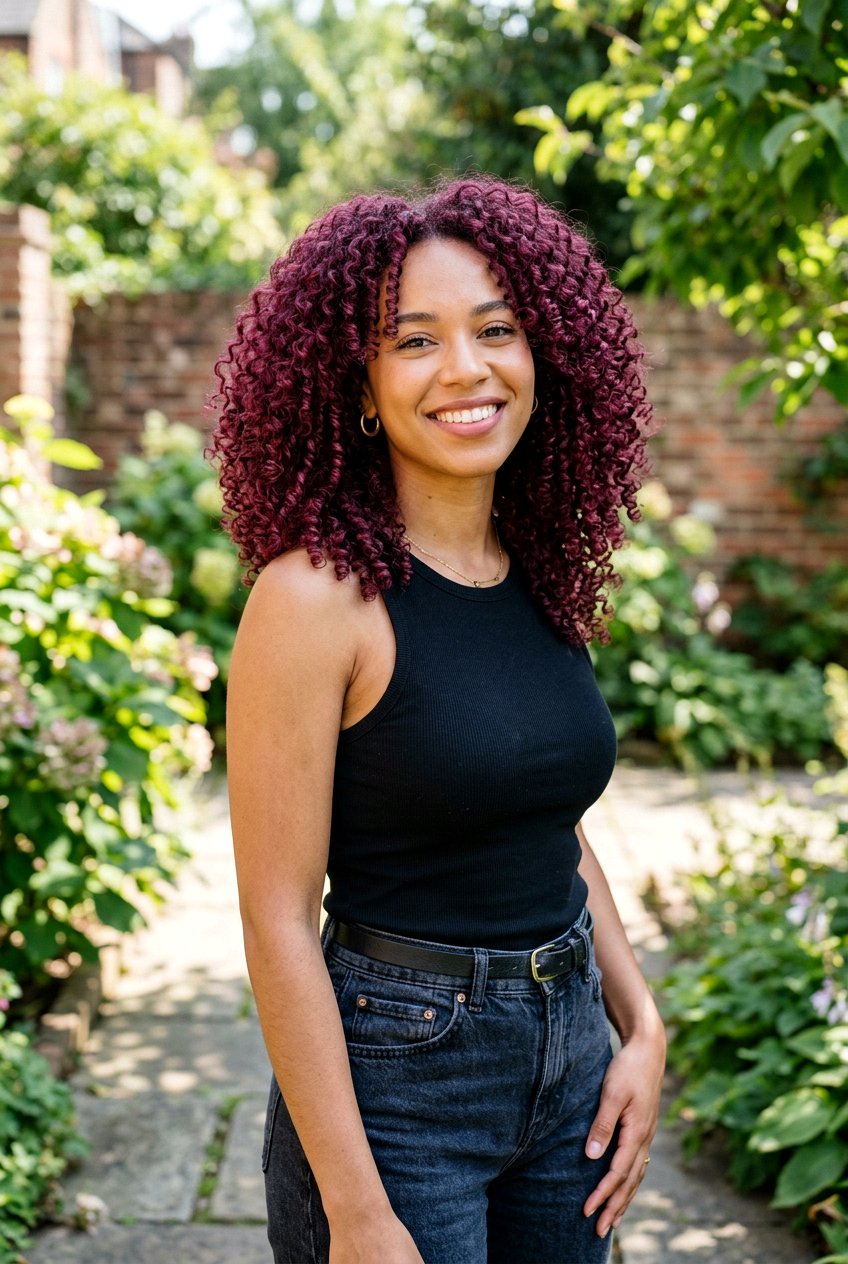
Mulberry hair color on curly hair looks incredibly dimensional because each coil reflects light differently, showing off all the berry nuances. Whether your curls are loose waves or tight spirals, this shade tends to make them appear more defined and glossy. You can choose an all-over mulberry or go for painted pieces that highlight your curl pattern, especially around the face and crown. Since curls are often drier, it is important to use moisturizing color formulas and deep-conditioning treatments both before and after coloring. Ask your colorist to apply mulberry in a way that respects your curl pattern, avoiding over-brushing or rough blow-drying that could cause frizz. At home, rely on sulfate-free cleansers, rich masks, and low-heat diffusing, because healthy curls hold onto vibrant berry pigments and shine much better than dehydrated strands.
15. Mulberry Hair Color On Short Hair
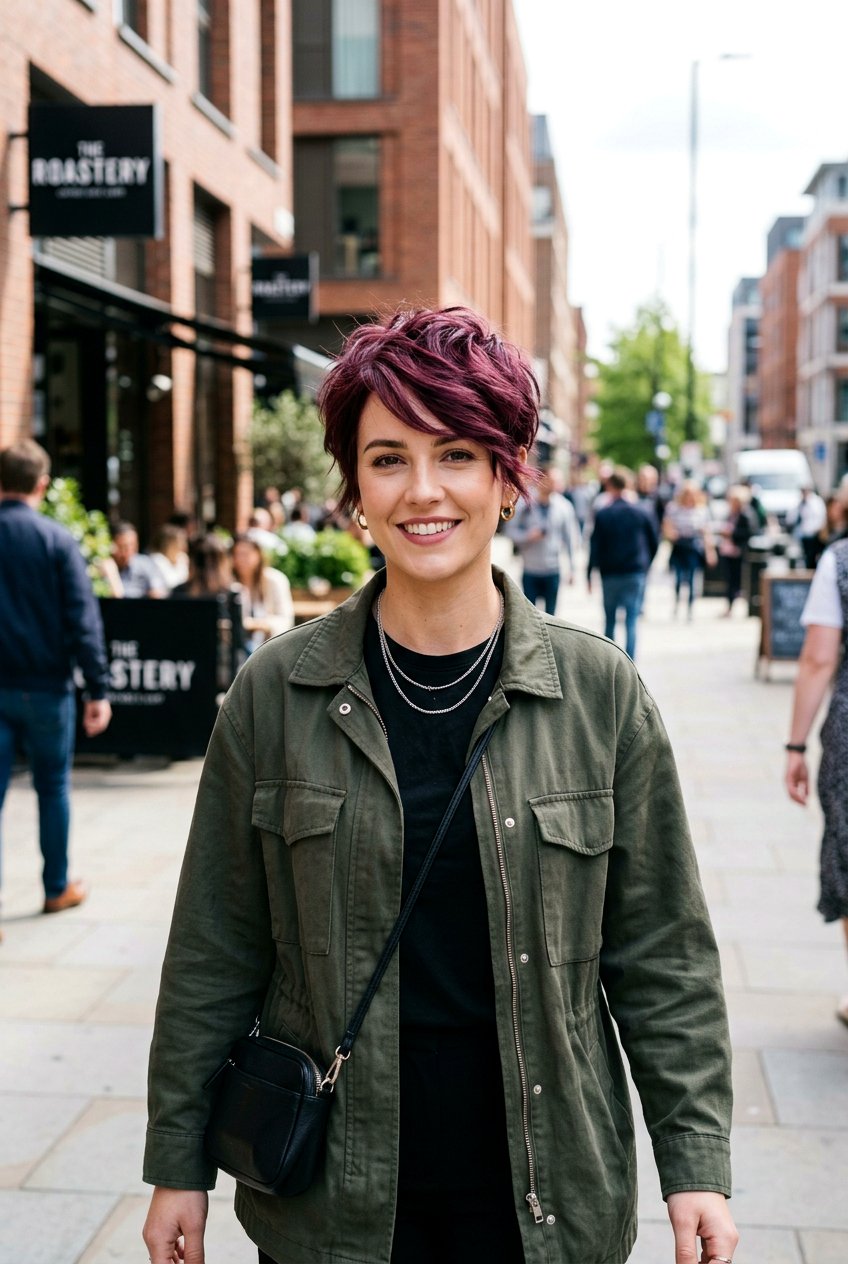
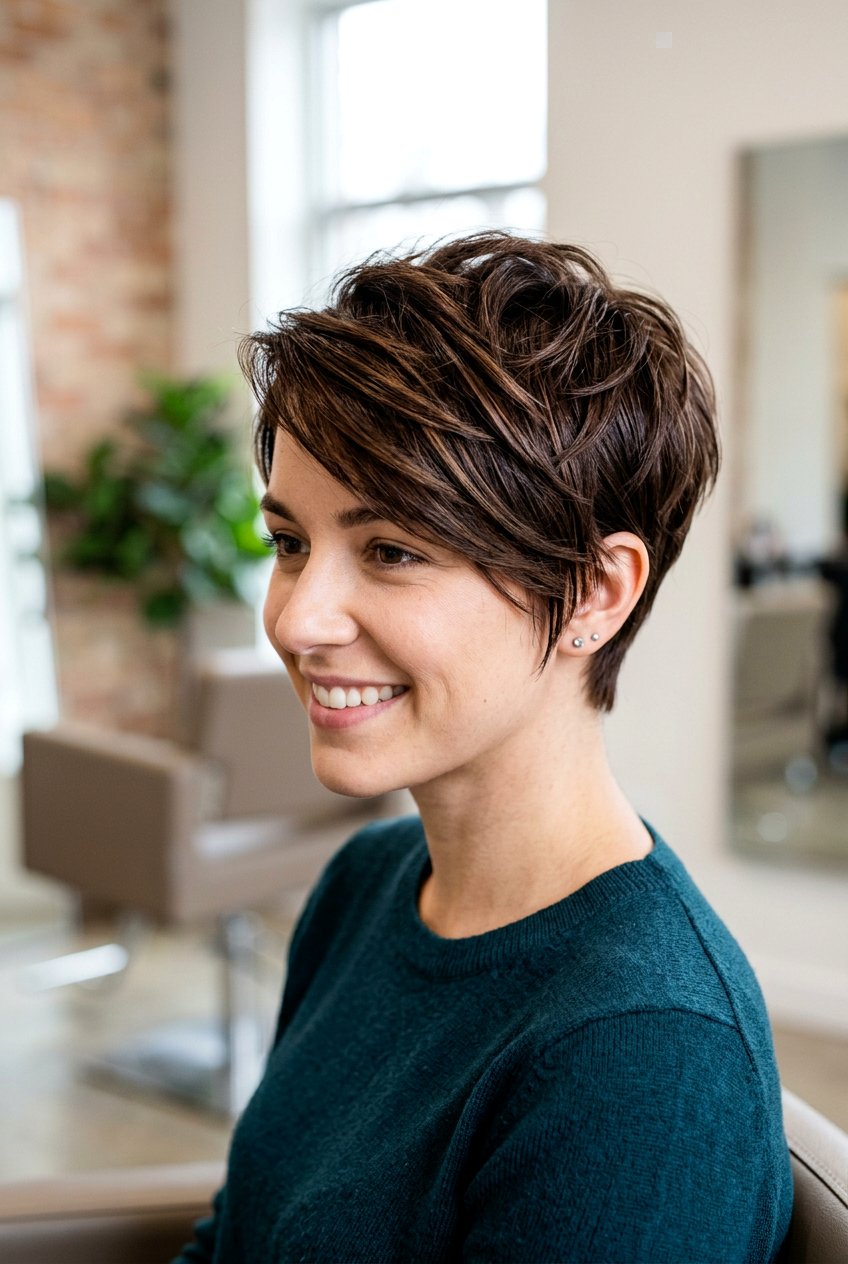
Mulberry hair color on short hair packs a lot of punch because there’s no extra length to dilute the impact. Pixie cuts, cropped shags, and short bobs all look instantly more fashion-forward with a bold berry shade. The cleaner lines of a short haircut make the color look intentional and edgy, especially when styled with texture paste or soft waves. Since there’s less hair to process, your stylist can often take you a bit brighter or more saturated without compromising hair health. Ask for a mulberry tone that matches your vibe: deeper and more wine-like for a chic look, or lighter and brighter for something playful. Maintenance is relatively easy because trims are frequent, but keep using color-safe products and heat protectant to prevent fading between cuts, especially if you style with hot tools regularly.
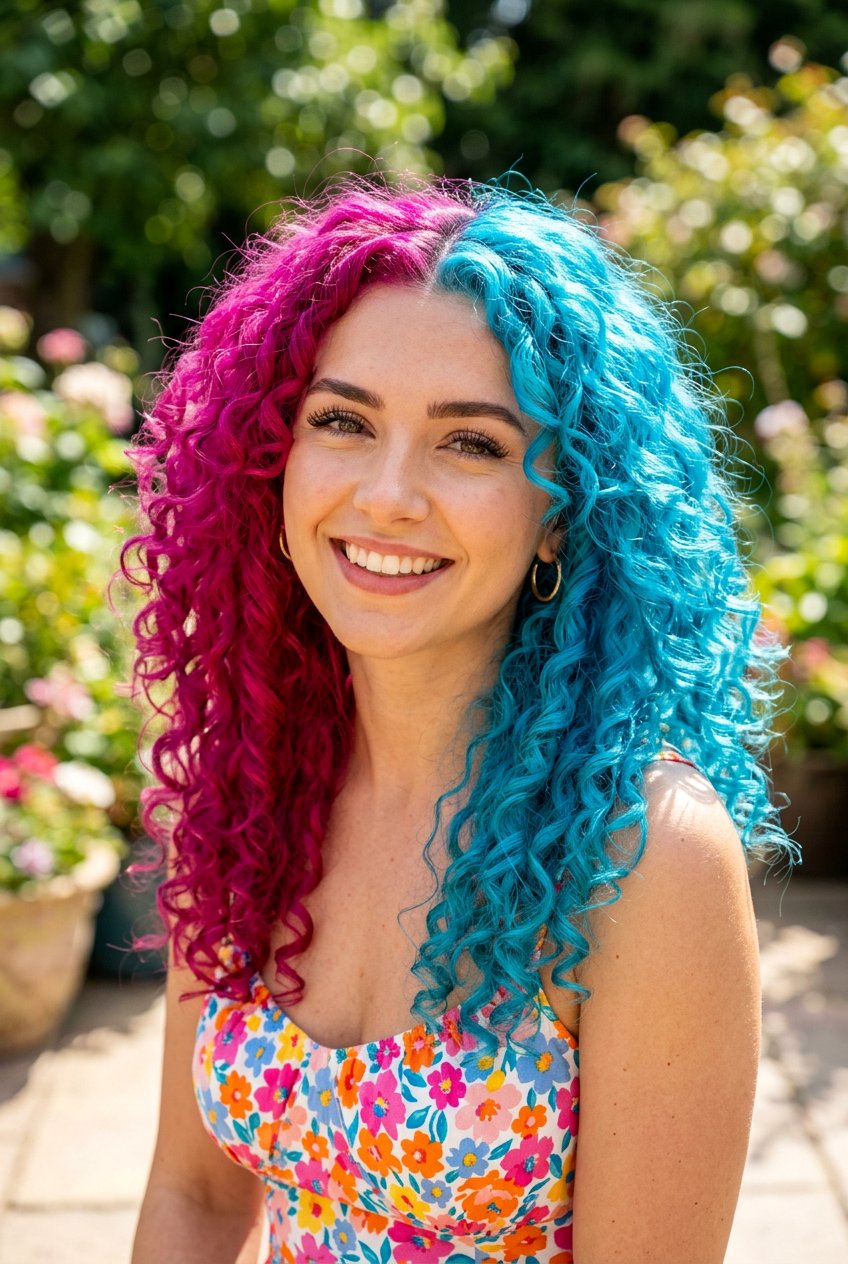
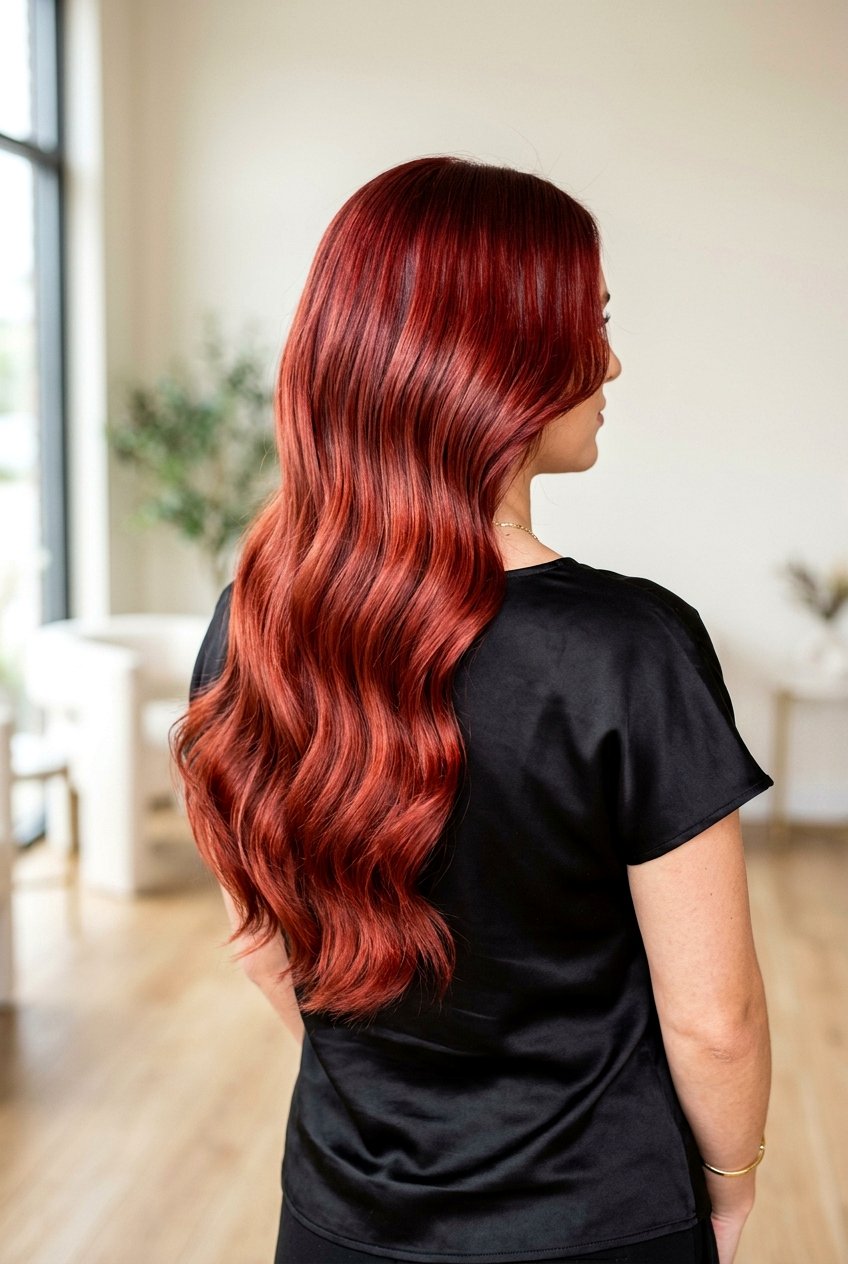
16. Mulberry Hair Color With Face Framing Layers
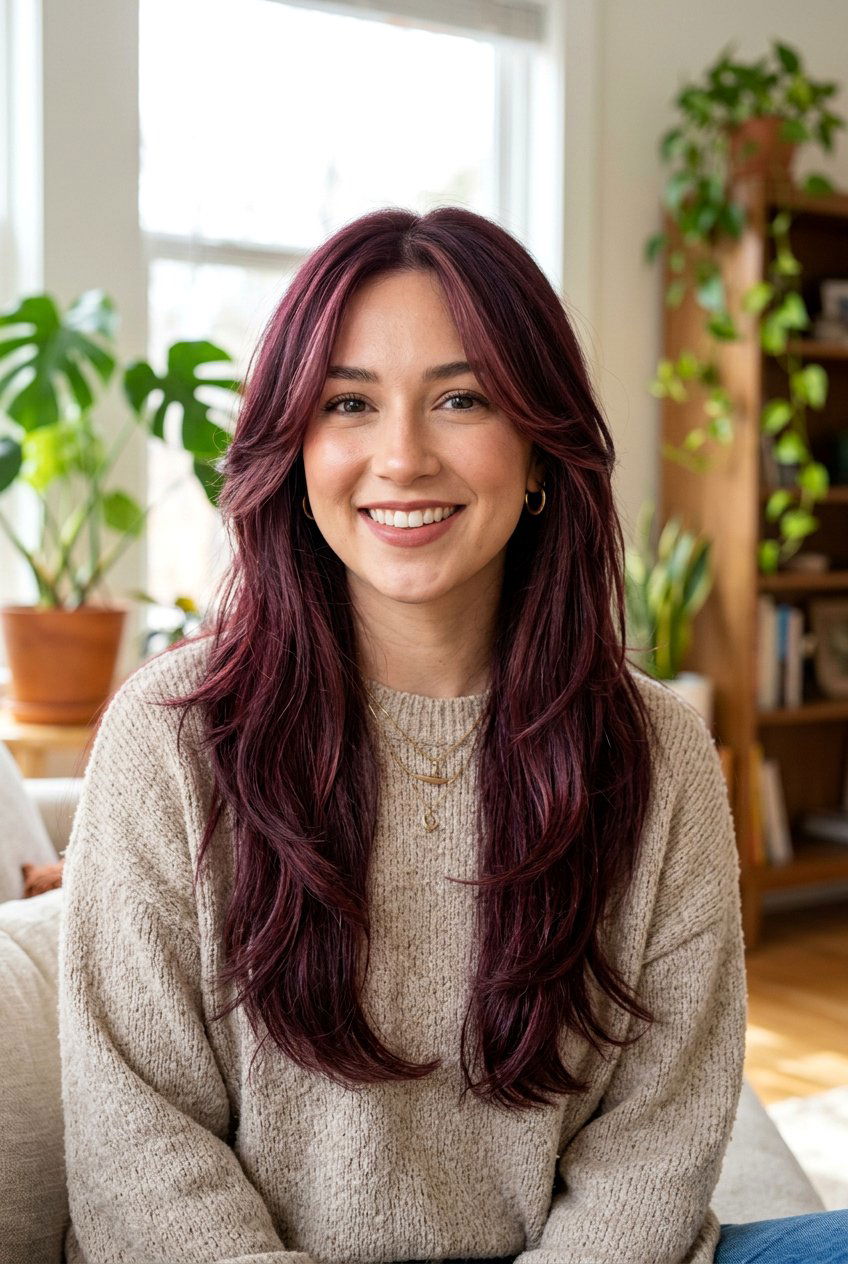
Mulberry hair color with face framing layers draws attention to your features and gives instant dimension around the front. The layered pieces create movement, and when tinted mulberry, they bring a soft, flattering glow to your complexion. You can choose to keep the rest of your hair a neutral brown or black and concentrate the berry shade just on the shorter, face-framing sections. This works especially well on medium to long hair, where the layers naturally fall around the cheekbones and jawline. Ask your stylist to strategically place the mulberry color on the layers that curve toward your face, making the hue appear intentional and face-brightening. To maintain the look, prioritize color-safe care around the front hairline, where cleansing and styling products hit most frequently and can cause the berry tone to fade faster.
17. Mulberry Hair Color With Shadow Root
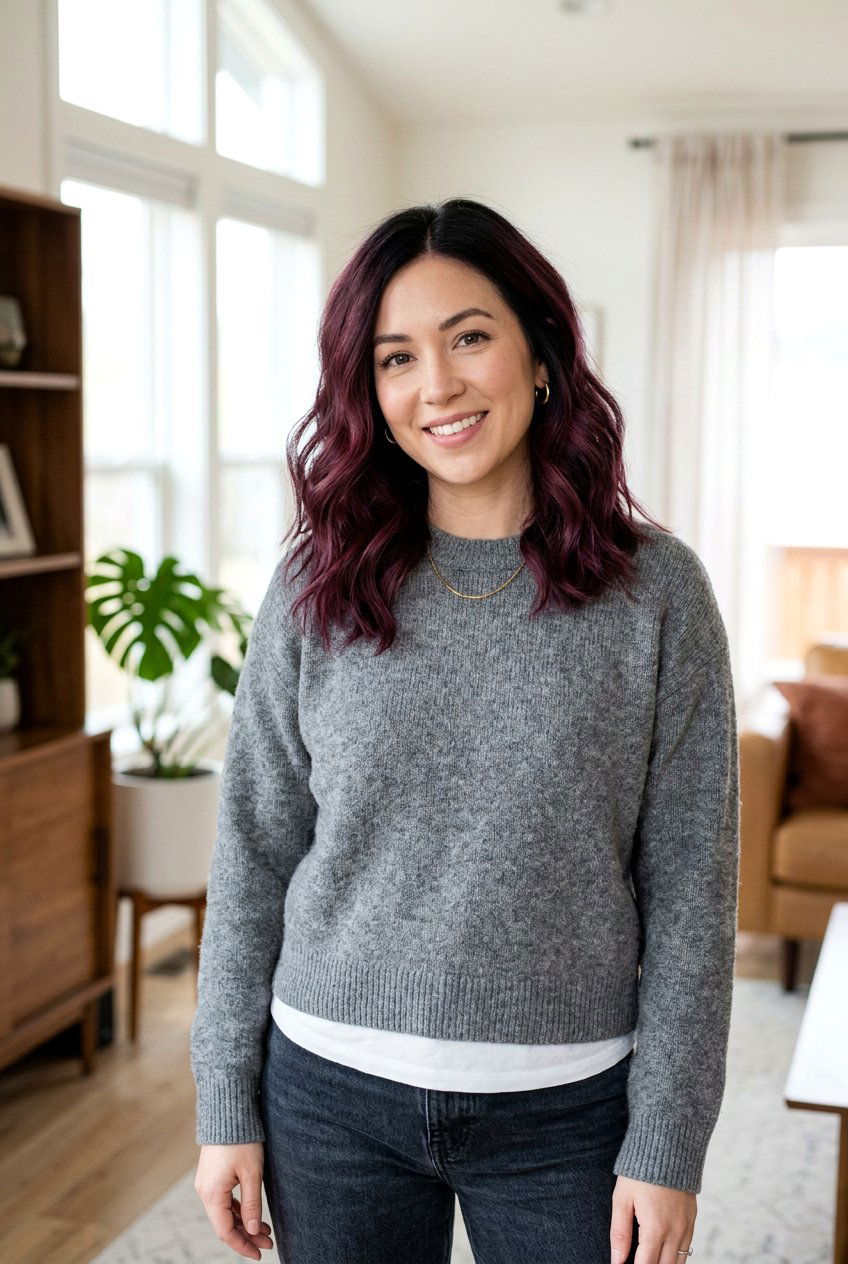
Mulberry hair color with a shadow root gives you the drama of vivid mids and ends with easier upkeep at the scalp. Your stylist will keep your natural color or a slightly deeper tone at the roots, then blend into mulberry through the lengths. This soft root contrast helps your hair look fuller and makes grow-out less obvious, which is perfect if you don’t want constant touch-ups. The overall effect feels modern and slightly grunge-inspired, especially on lobs and long, tousled layers. Ask for a seamless melt rather than a harsh line between root and berry color so the look stays soft as it grows. Use dry shampoo and gentle cleansing to extend time between washes, since shadow-rooted, fashion-toned hair holds up best when you avoid over-washing and harsh surfactants.
18. Mulberry Hair Color With Copper Tones
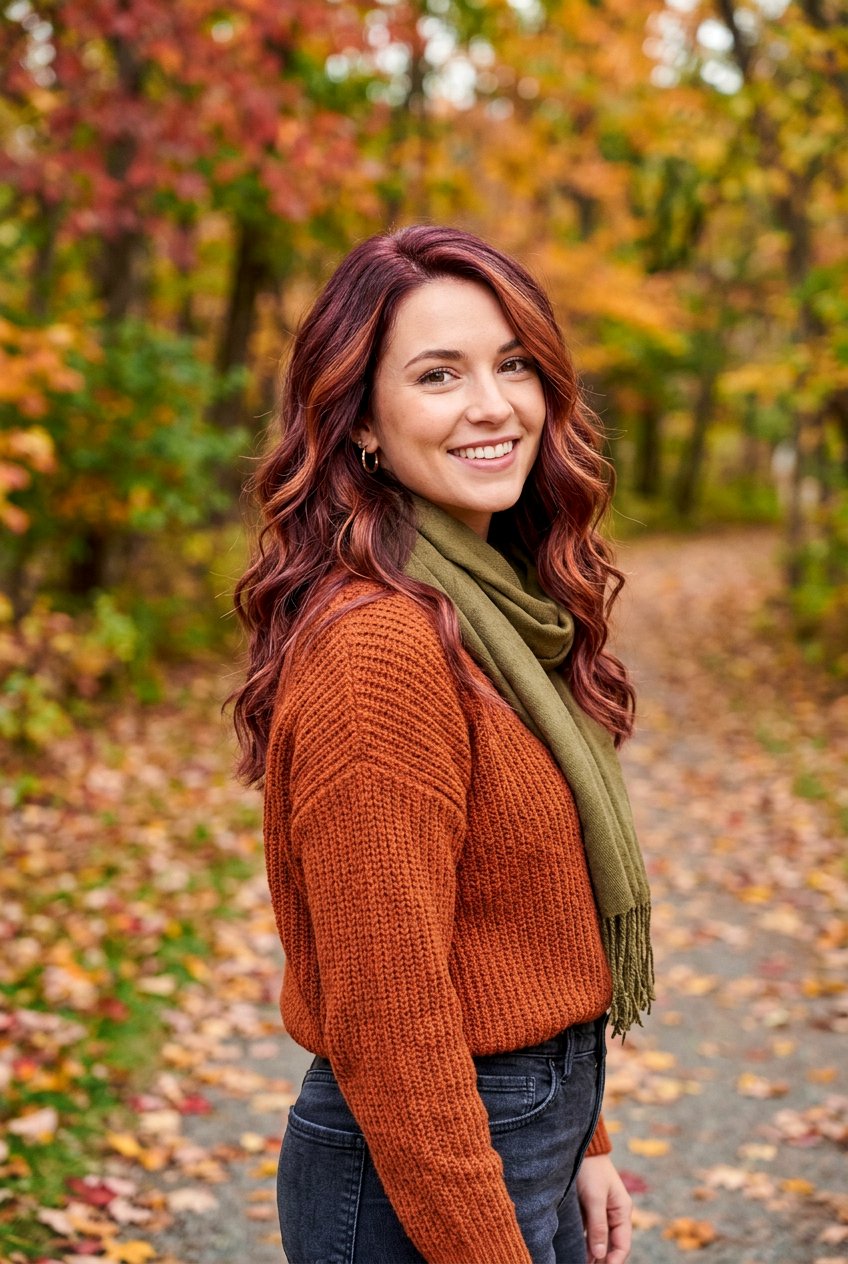
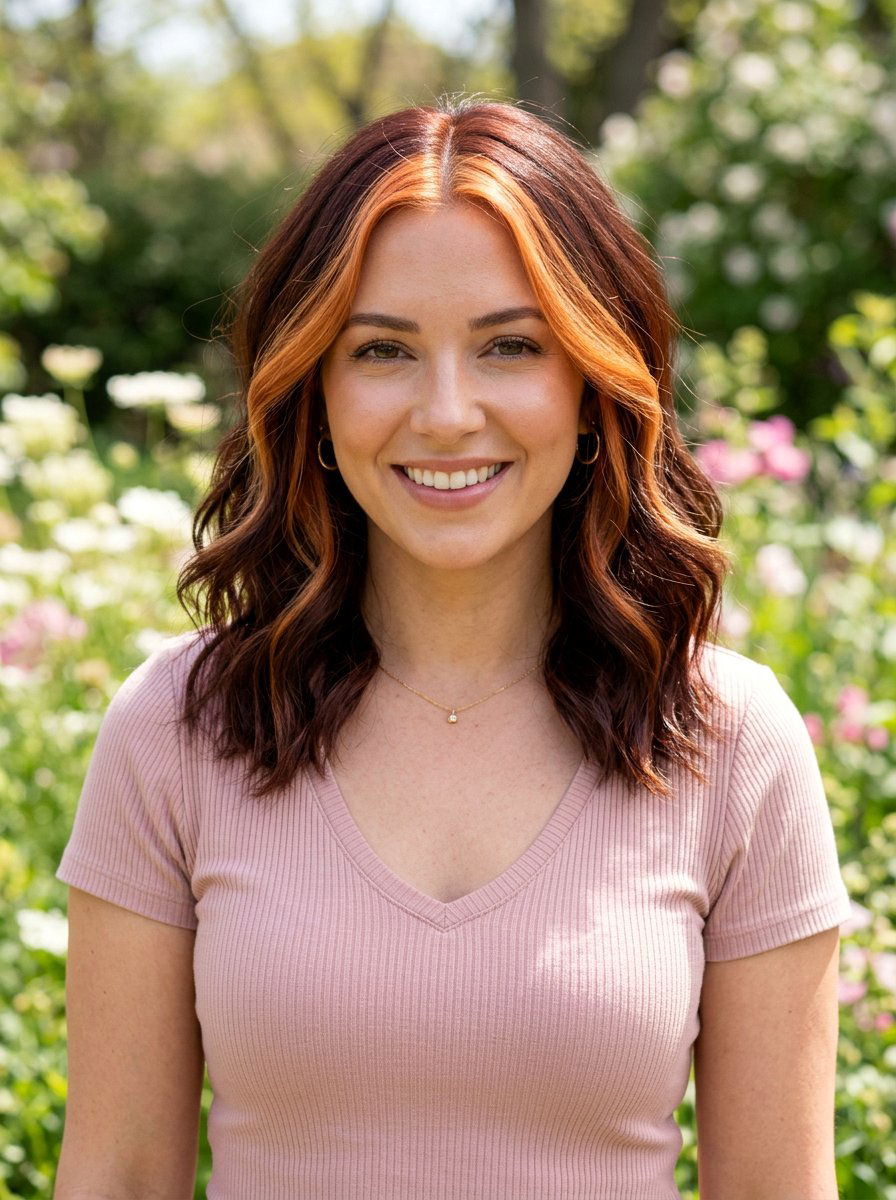
Mulberry hair color with copper tones warms up the classic berry look and makes it especially flattering on golden or olive skin. By adding copper, you introduce a bit of orange-red into the red-violet mix, creating a multidimensional, sunset-inspired effect. This blend looks gorgeous on wavy and curly textures because the warmer pieces catch light differently than the cooler mulberry sections. Your colorist might place copper highlights through the top and mulberry in the mid-layers, or mix both tones in a customized formula. Ask for a warm berry color with copper reflects and bring references that show the balance you like between red, purple, and orange. To keep both tones from turning brassy, use color-safe products and occasional color-depositing masks designed for red hair, avoiding anything that’s strictly for blondes or brunettes.
19. Mulberry Hair Color With Rose Gold Ends
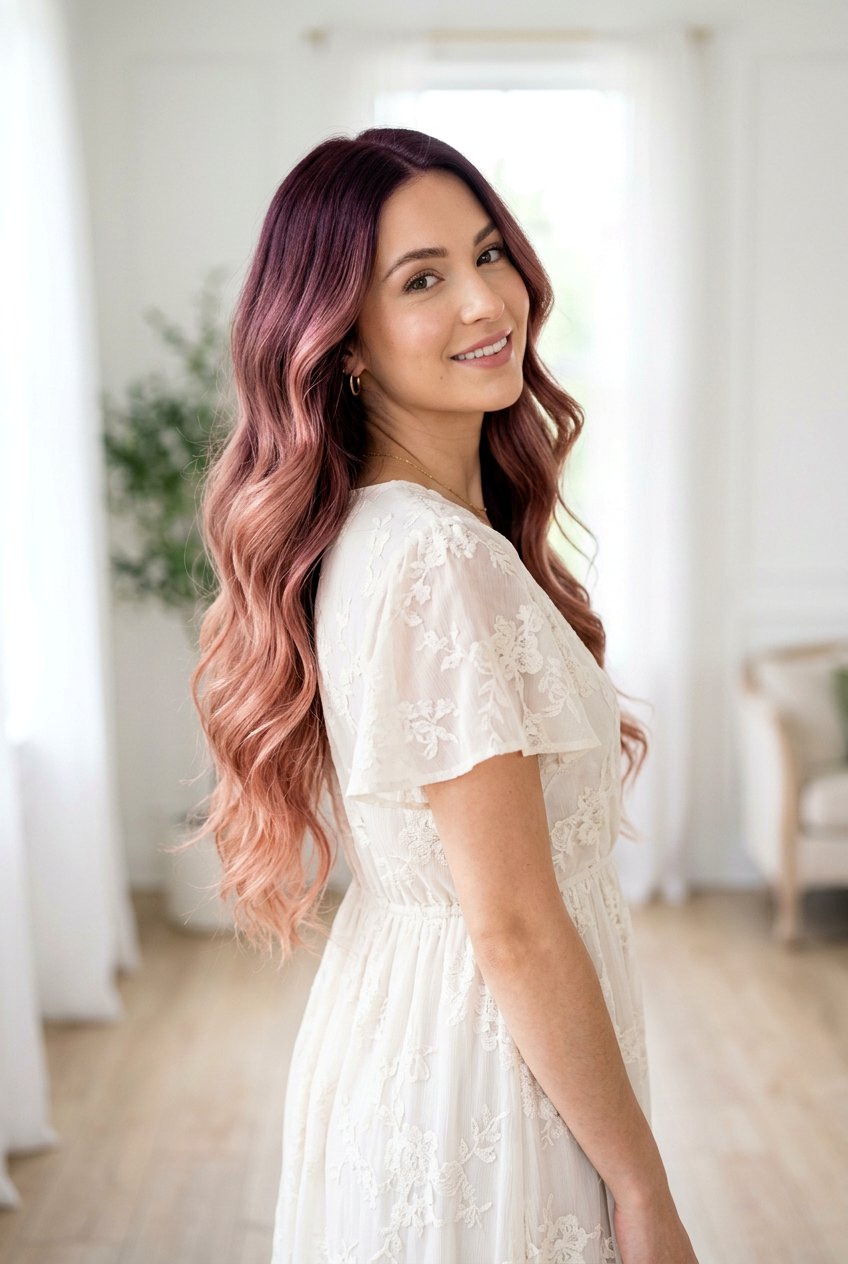
Mulberry hair color with rose gold ends gives you a soft, romantic twist on bold berry hair. The roots and mids stay mulberry, while the very tips transition into a rosy, metallic pastel that feels delicate and trendy. This gradient is especially pretty on shoulder-length and longer cuts, where there’s enough length to see the full transition from deep to light. On straight hair, the shift looks sleek and ombré, while waves make the rose gold ends blend into the berry mids more seamlessly. Ask your colorist to carefully pre-lighten the ends to a pale blonde before toning rose gold, since the pastel needs a light base to show correctly. Maintain the look by using gentle shampoos, avoiding chlorinated pools, and refreshing both the mulberry and rose gold with semi-permanent glosses as they gradually fade.
20. Mulberry Hair Color With Pink Highlights
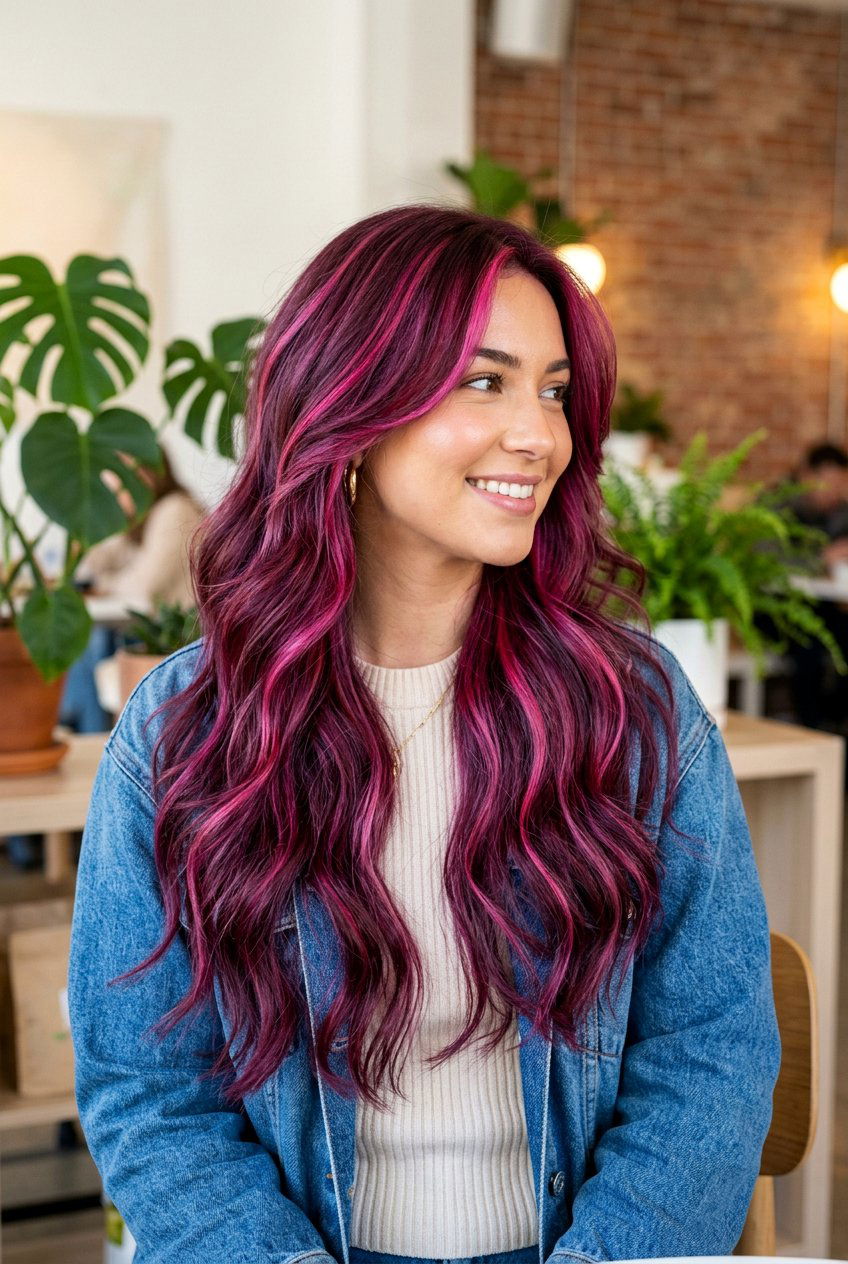
Mulberry hair color with pink highlights is a fun, high-energy take that leans into brighter, more playful tones. With mulberry as the base, your stylist weaves in ribbons of vibrant pink that brighten the overall look and give a multi-tonal effect. This pairing fits the broader trend toward bold, saturated colors and pastel accents that many stylists predict will dominate current seasons. It suits medium to long cuts best, since more surface area means more space for the pink pieces to stand out. Ask for thin to medium highlights rather than thick chunks so the overall blend feels cohesive and wearable, not cartoonish. To keep both colors crisp, wash in cool water, use a UV-protective leave-in, and touch up with color-depositing conditioners specifically formulated for pink and berry tones.
Conclusion:
Mulberry hair color is one of those rare shades that manages to feel edgy and elegant at the same time, which is why it keeps showing up in trend reports and social feeds. It sits right in the sweet spot between red and purple, so you can tweak it slightly warmer or cooler to flatter your skin tone and personal style. From subtle mulberry browns and hidden peekaboo panels to full-on berry transformations and blended ombrés, there’s a version that fits almost every comfort level and maintenance preference. Stylists expect bold, jewel-toned hair colors to remain strong through 2026, which means this shade is more than a passing fad. For the best result, bring clear reference photos, talk honestly with your colorist about your starting hair and upkeep routine, and commit to color-safe products so your new mulberry shade stays shiny, rich, and eye-catching for as long as possible.
You'll Like These Styles:


Leave a Reply