
The mullet fade has evolved from a retro relic into a high-fashion staple for men with straight hair. This modern iteration thrives on the contrast between sharp, clean sides and the disciplined flow of straight strands at the back. Unlike its predecessors, the 2026 version emphasizes precision and texture, utilizing advanced fading techniques to bridge the gap between business in the front and a party in the back. Straight hair provides the perfect canvas for these architectural cuts, allowing for crisp lines and a smooth, polished silhouette that highlights the barber’s technical skill. Whether you prefer a subtle taper or a bold burst fade, this guide explores the most popular mullet fade for straight hair men to help you find your next signature look.
1. Low Fade Mullet
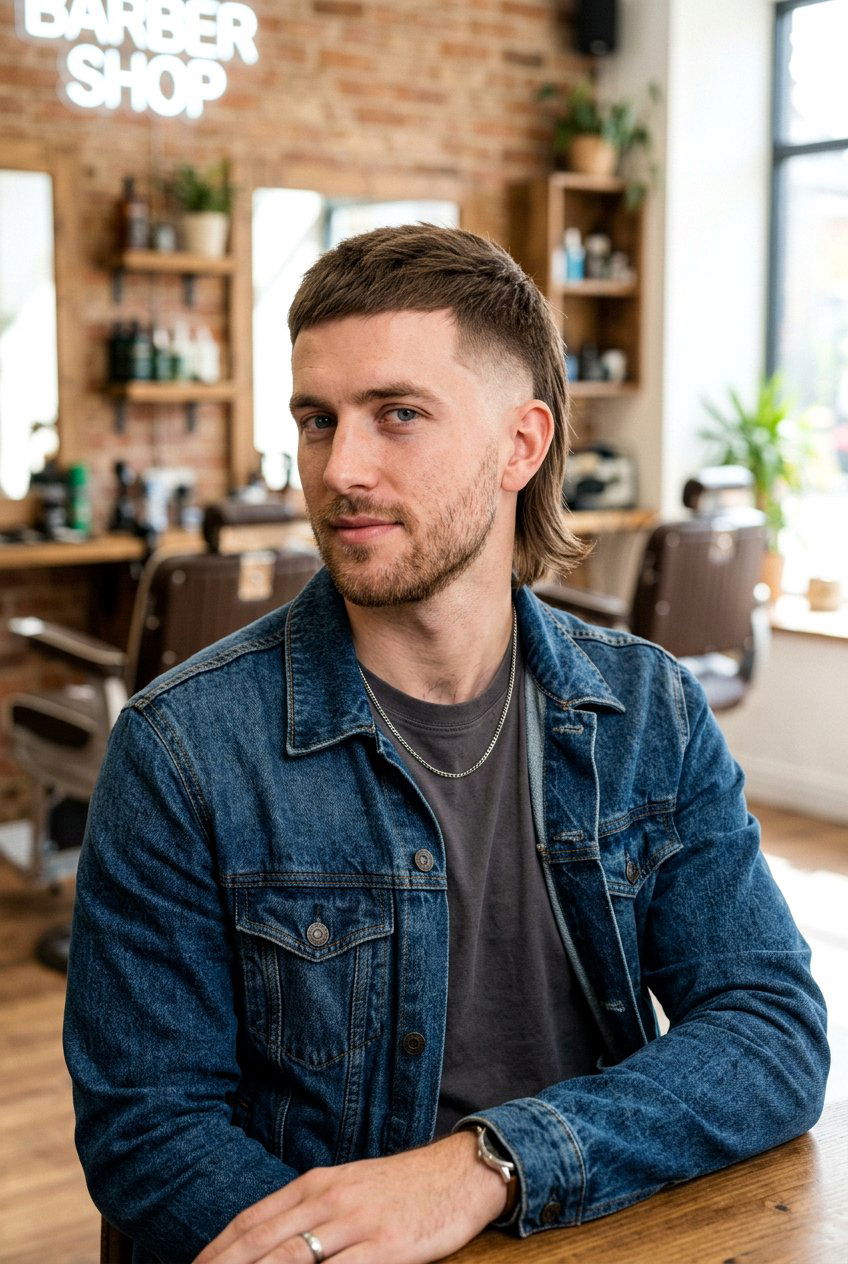
The low fade mullet is the perfect entry point for men who want a modern edge without committing to an overly dramatic silhouette. This look focuses on a subtle transition where the hair begins to taper just above the ears, keeping the sides neat while allowing the straight hair on top to flow seamlessly into the longer back. Because straight hair naturally lies flat, this cut relies on internal layers to create volume and prevent the hair from looking limp. It is an excellent choice for professional environments because the “mullet” aspect is understated, offering a clean-cut appearance from the front while maintaining that signature length at the nape for a touch of personality.
2. Burst Fade Mullet
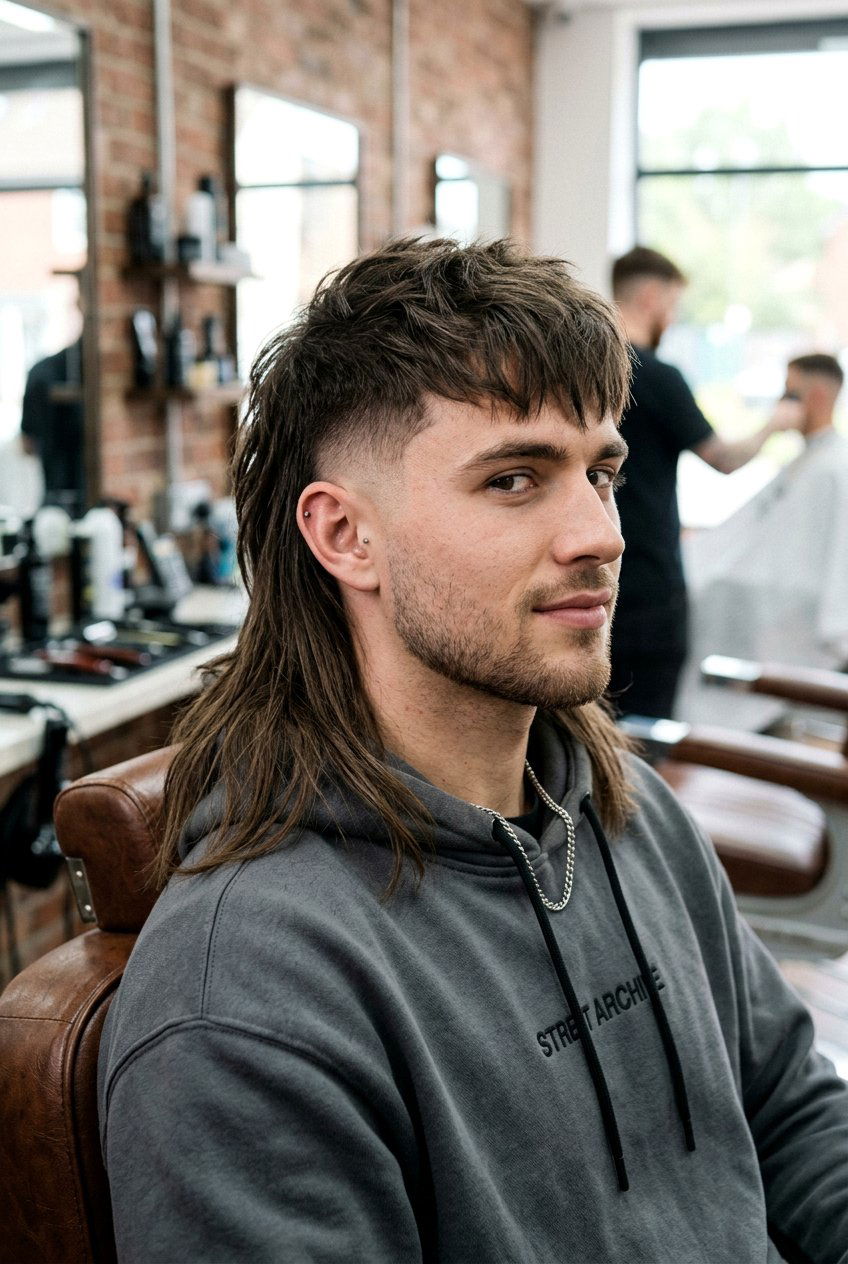
A burst fade mullet is one of the most dynamic options for straight hair because it creates a circular fade around the ear, leaving the back and top fully intact. This specific technique produces a “burst” effect that draws the eye toward the crown and the nape, making the straight hair at the back appear more prominent and thick. For men with naturally fine or straight hair, the burst fade provides much-needed structure and a sense of intentionality to the cut. You can style the top with a light pomade to add a bit of height, which contrasts beautifully against the skin-faded semicircles on the sides, resulting in a look that is both athletic and trendy.
3. Taper Fade Mullet
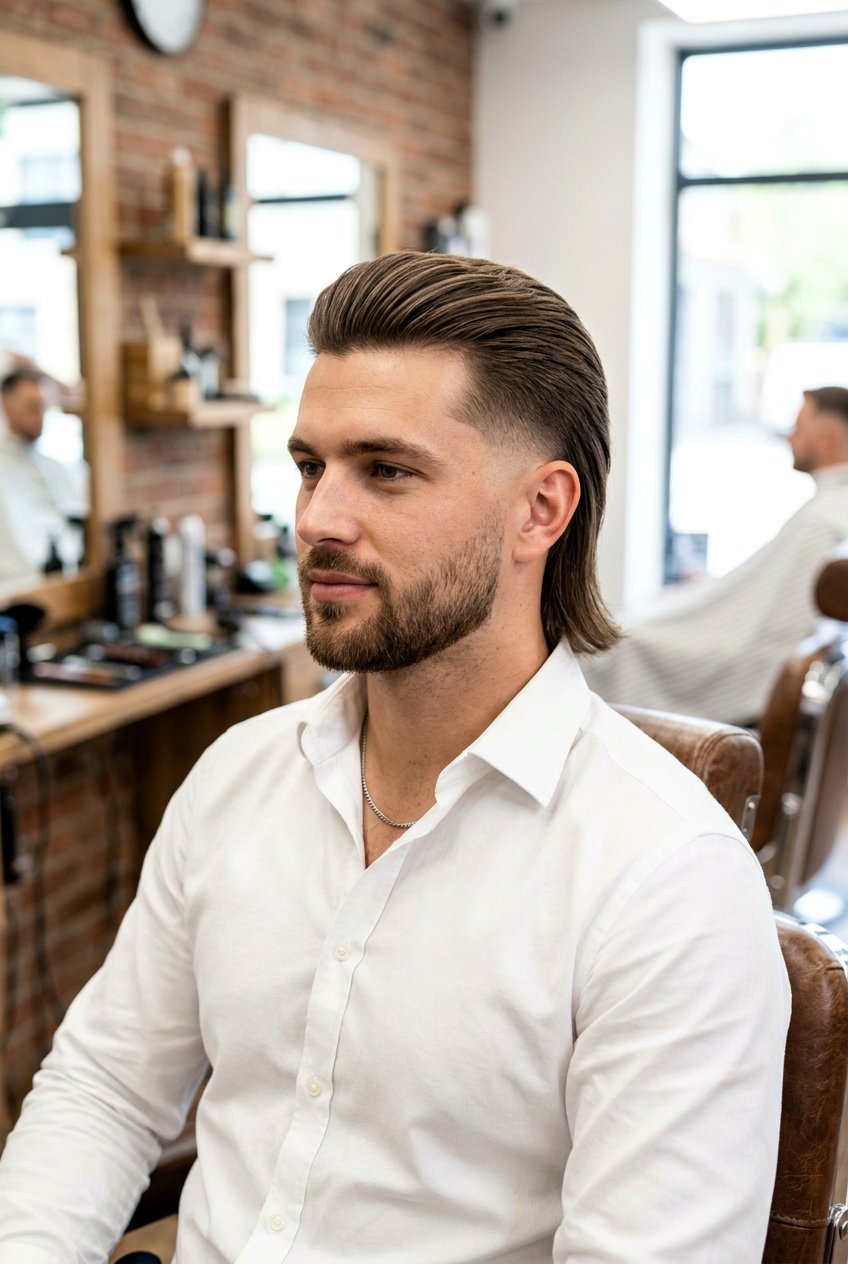
The taper fade mullet offers a classic, sophisticated take on the trend by focusing on a gradual reduction of hair length at the temples and the neckline. This version is particularly flattering for straight hair because it highlights the natural sheen and smoothness of the strands without the harshness of a skin fade. It creates a very balanced silhouette where the transition from the short sides to the longer back feels organic rather than disconnected. To keep this look sharp, regular maintenance is key to ensuring the sideburns and edges remain crisp. It is a versatile choice that works well with a clean-shaven face or a well-groomed beard, offering a timeless aesthetic.
4. High Fade Mullet
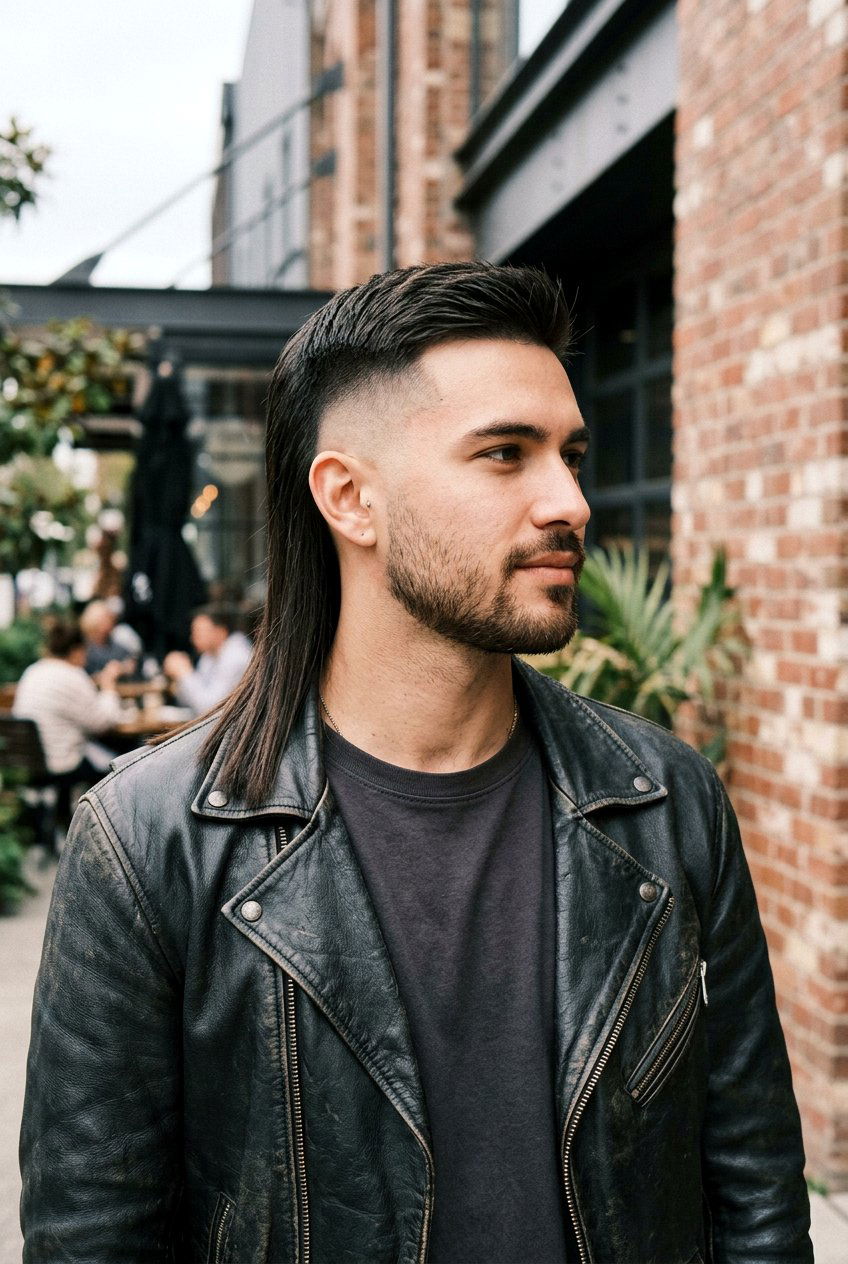
For those who want a high-contrast and bold statement, the high fade mullet pushes the boundaries by extending the fade much higher up the sides of the head. This leaves a narrow strip of straight hair running down the center, often referred to as a “mohawk mullet” hybrid. The high fade creates a very sharp, aggressive look that emphasizes the length of the hair at the back, making it appear longer and more dramatic against the nearly shaved sides. This style is incredibly easy to manage on a daily basis since there is very little hair on the sides to style, allowing you to focus entirely on adding texture to the top and back.
5. Mid Fade Mullet
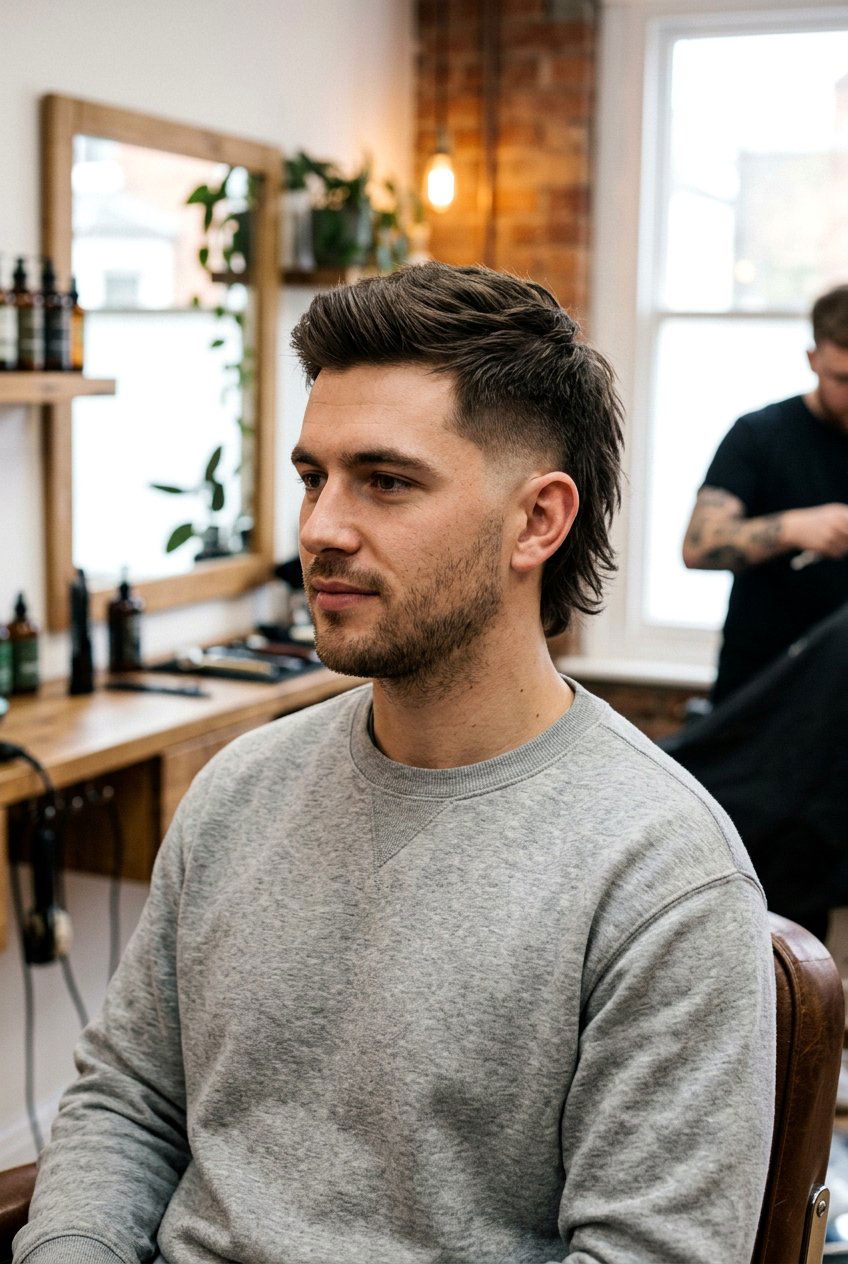
The mid fade mullet strikes a perfect balance between the subtlety of a low fade and the boldness of a high fade. By starting the transition at the midpoint of the sides, it provides enough skin visibility to look modern and sharp while retaining enough hair to frame the face effectively. For men with thick, straight hair, the mid fade is ideal because it removes bulk from the widest part of the head, creating a more streamlined and flattering shape. This cut works exceptionally well when paired with a textured fringe or a messy top, as the clean sides prevent the overall look from appearing unkempt or overly shaggy.
6. Skin Fade Mullet
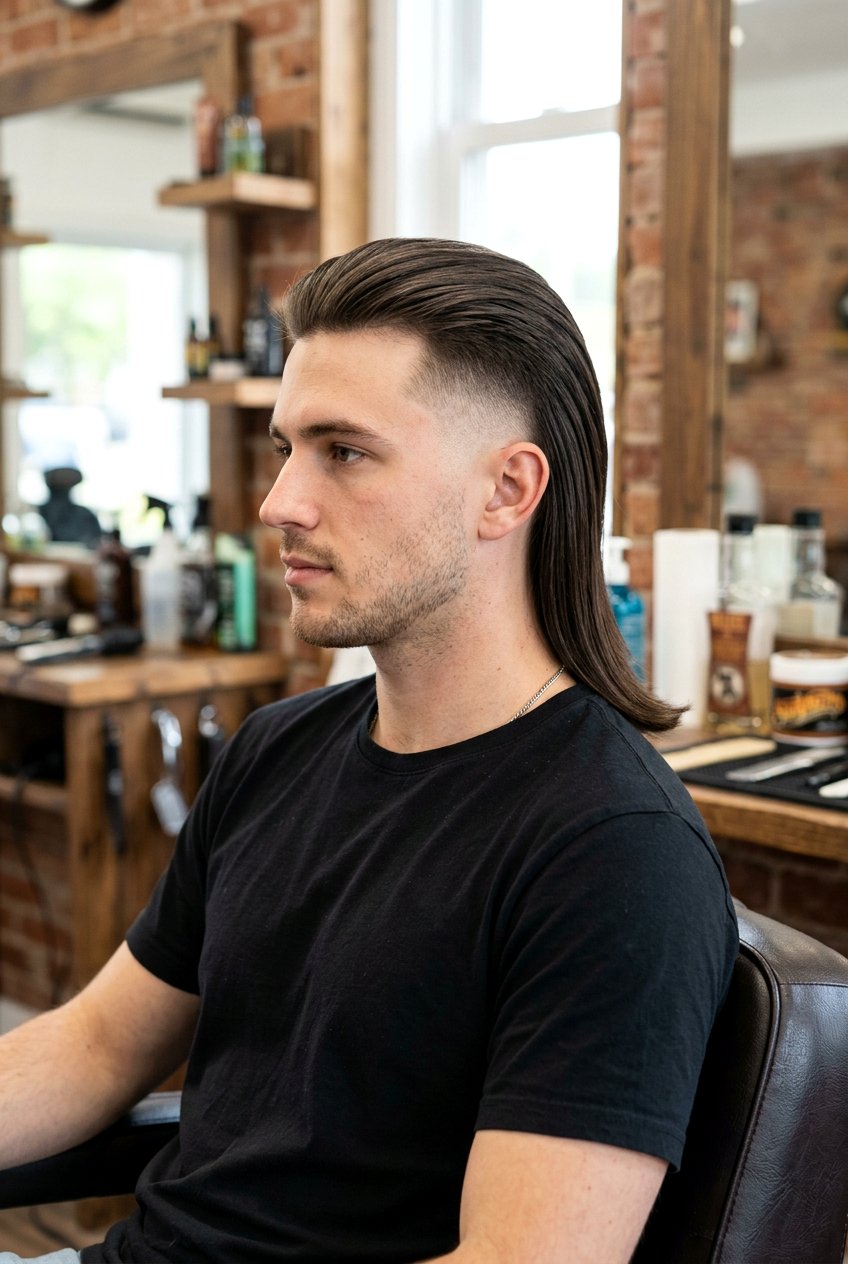
A skin fade mullet is the ultimate choice for men who prioritize a clean, bald finish on the sides to make the rest of their hair pop. By fading the hair down to the scalp, the contrast between the bare skin and the long, straight hair at the back is maximized, creating a striking visual impact. This style is particularly effective for highlighting the texture of the hair at the nape, whether you choose to keep it blunt or have it point-cut for a more jagged, edgy feel. Because the sides are so short, this version of the mullet feels cooler and more breathable, making it a popular choice for the warmer months.
7. Drop Fade Mullet
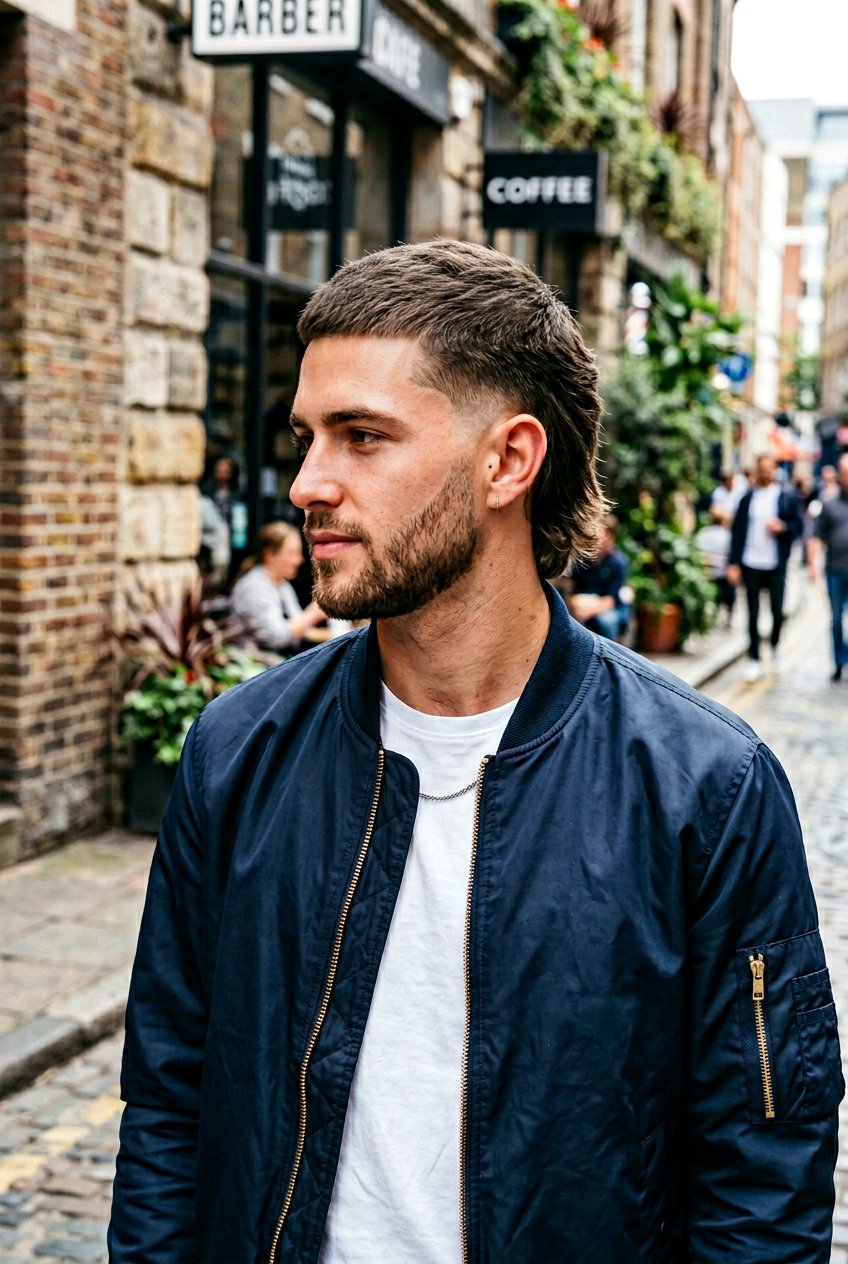
The drop fade mullet features a unique fading line that “drops” behind the ear as it wraps around the head, following the natural curve of the skull. This technique adds a layer of complexity to the haircut that looks incredible with straight hair, as it creates a more contoured and three-dimensional appearance. The drop fade helps to emphasize the “tail” of the mullet by providing a clean, curved backdrop that sets the back length apart from the sides. It is a stylish and modern variation that feels less rigid than a standard fade, offering a flowy and artistic vibe that appeals to men looking for a custom-tailored haircut.
8. Temple Fade Mullet

If you prefer a more conservative approach that still honors the mullet silhouette, the temple fade mullet focuses exclusively on fading the hair at the temples. This leaves most of the hair on the sides intact, providing a very soft and natural transition that is barely noticeable but still adds a touch of modern grooming. For men with straight hair, this look is all about the “wolf cut” aesthetic, where the hair is heavily layered to create movement and flow. It is a low-maintenance option that grows out gracefully, making it perfect for someone who cannot visit the barber every two weeks but still wants to look stylish.
9. Bald Fade Mullet
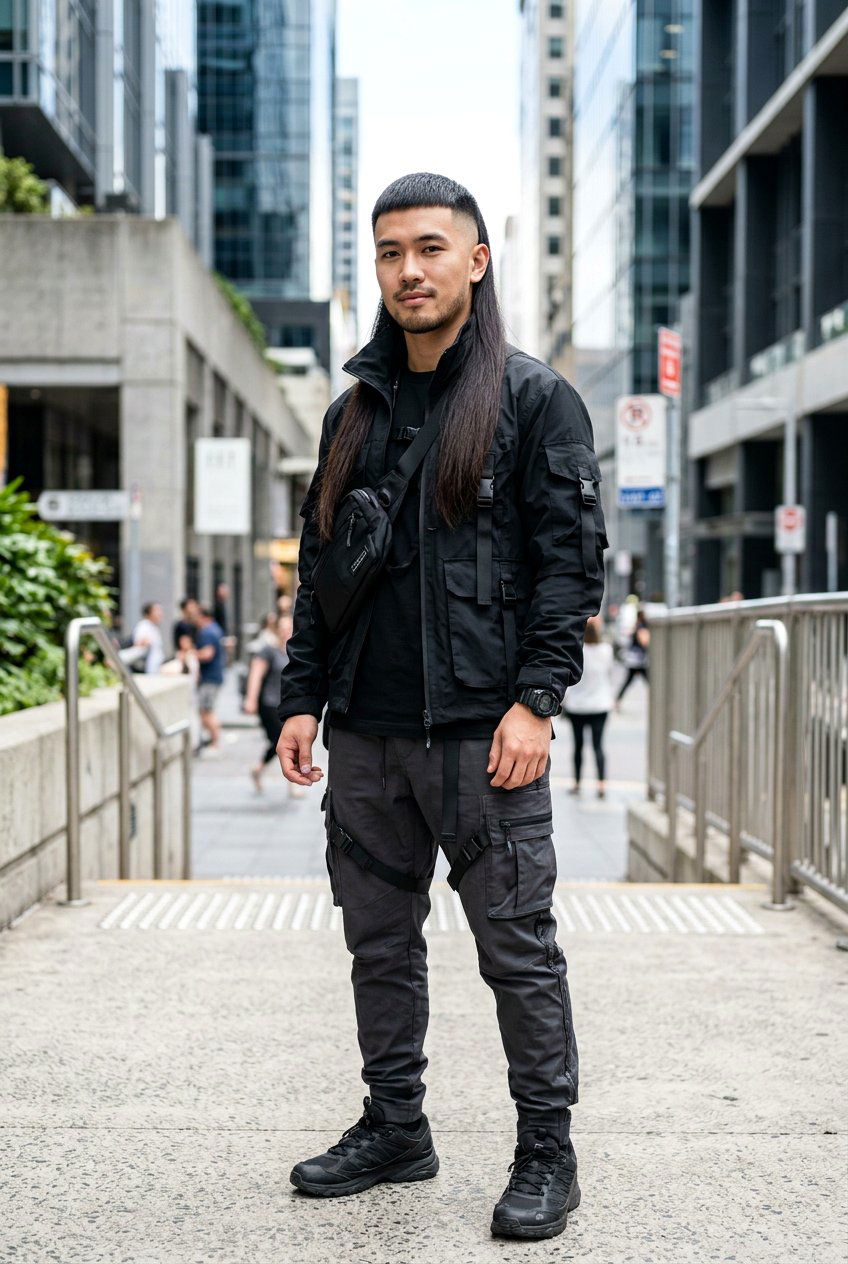
The bald fade mullet is very similar to the skin fade but often starts even higher or incorporates a more aggressive transition to the skin. This look is frequently paired with a very short, cropped top—often a French crop or Caesar cut—while the back remains long and flowing. The juxtaposition of the extremely short, faded sides and the long back creates a silhouette that is synonymous with modern street style and alternative fashion. For straight-haired men, using a sea salt spray on the back section can add a bit of “grit” and texture to prevent the long hair from looking too flat or greasy.
10. Mullet With Fringe
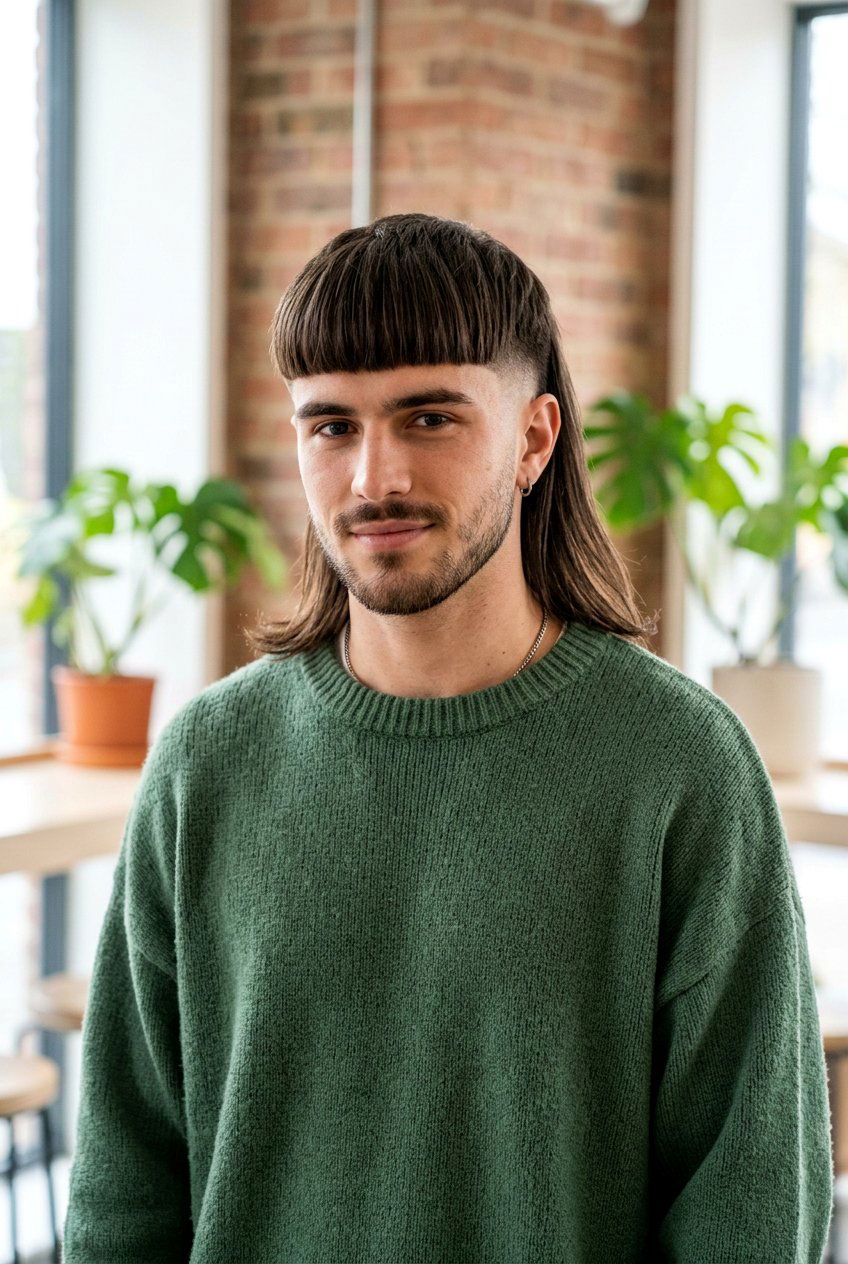
A mullet with a fringe is a popular variation where the front hair is cut into a straight or textured bang that covers the forehead. This is an excellent way to balance out a long face shape or a high forehead while leaning into the retro-modern aesthetic. Straight hair is particularly well-suited for a blunt fringe, as it hangs naturally and requires minimal styling to stay in place. When combined with a mid or low fade, the fringe creates a cohesive look that feels intentional and high-fashion. You can opt for a “micro-fringe” for a more avant-garde vibe or a longer, eyebrow-grazing fringe for a softer appearance.
11. Slick Back Mullet
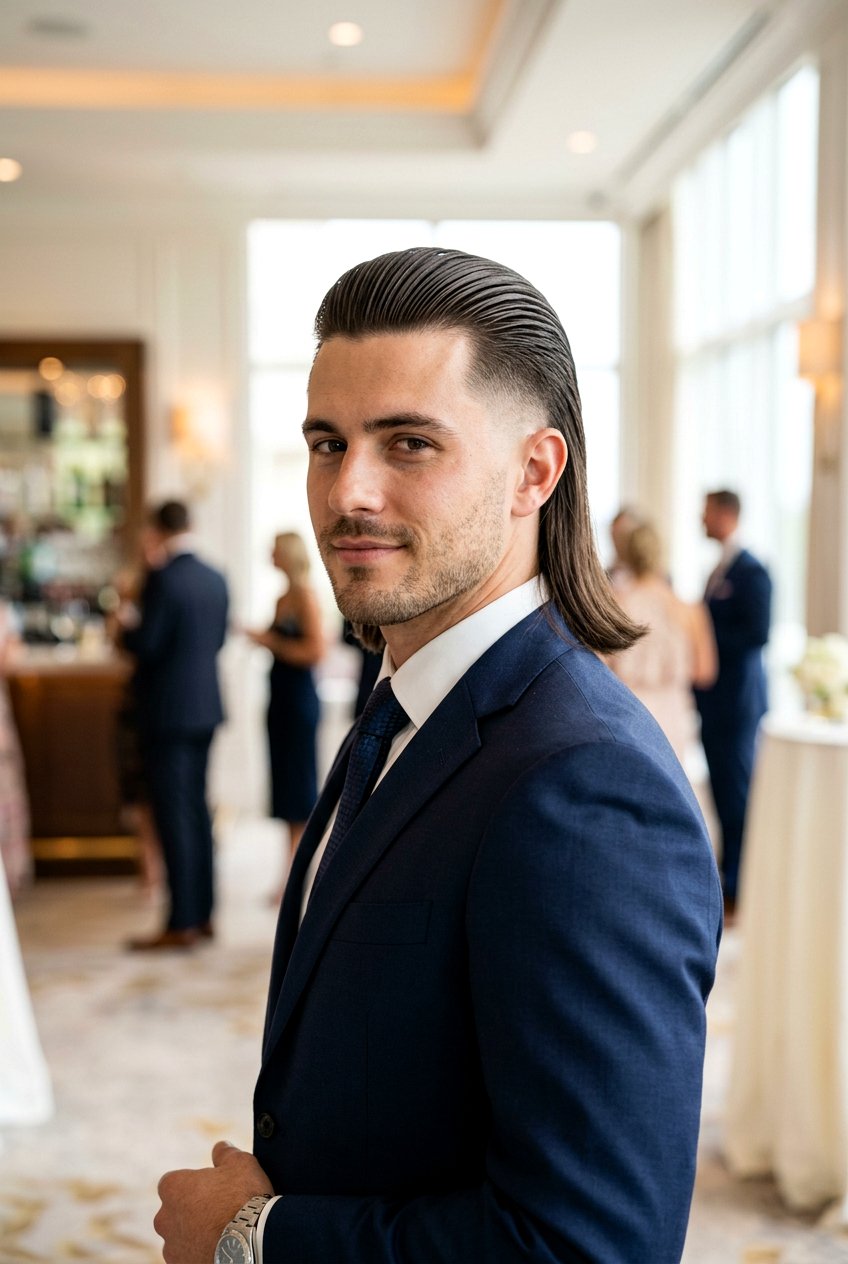
The slick back mullet combines the elegance of a classic greaser look with the rebellious nature of the mullet. By using a strong-hold pomade or gel, the straight hair on top is combed straight back towards the crown, where it joins the longer hair at the nape. This creates a very sleek, aerodynamic silhouette that looks fantastic with a sharp taper or fade on the sides. It is one of the more formal ways to wear a mullet, as the “slicked” nature of the hair provides a polished finish that is suitable for events or evenings out. It highlights the straight texture of the hair by emphasizing its smoothness.

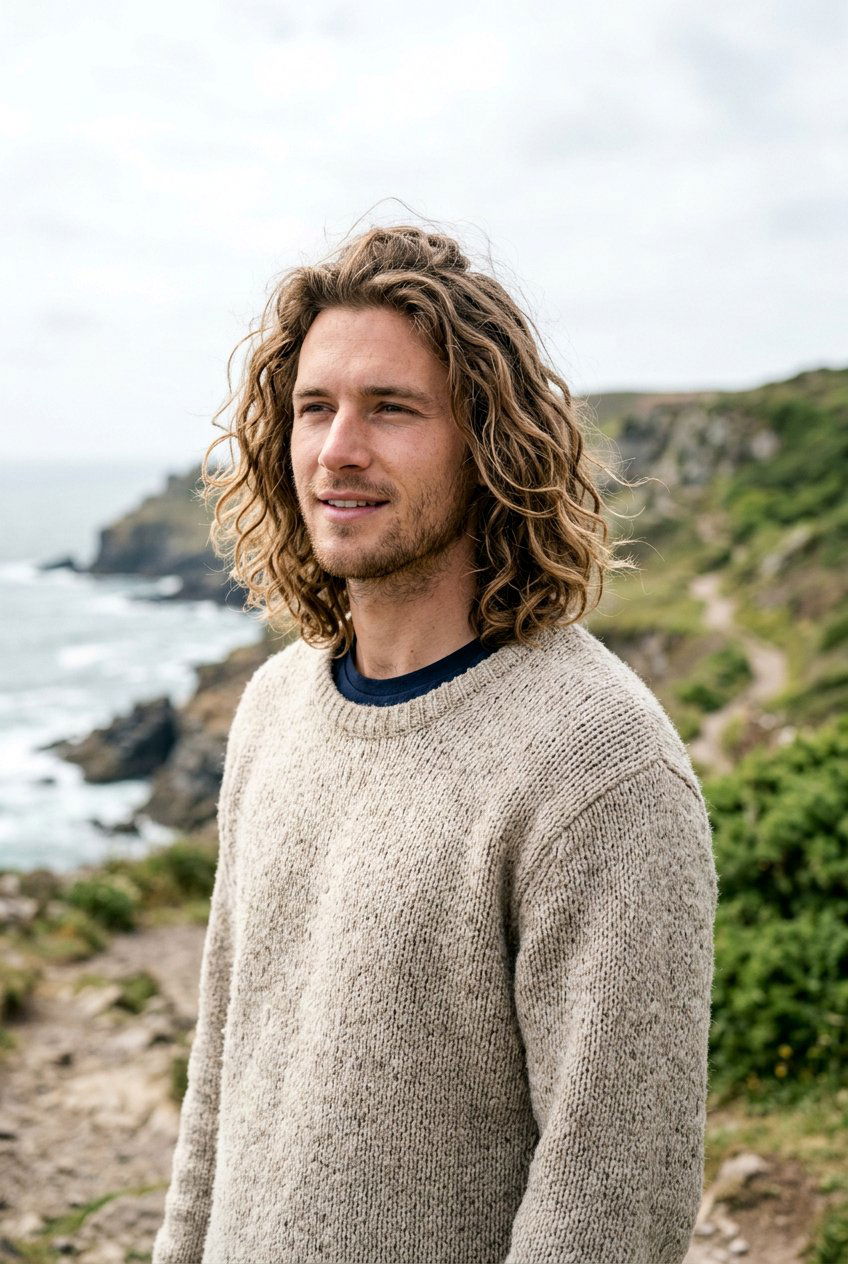
12. Textured Mullet Fade
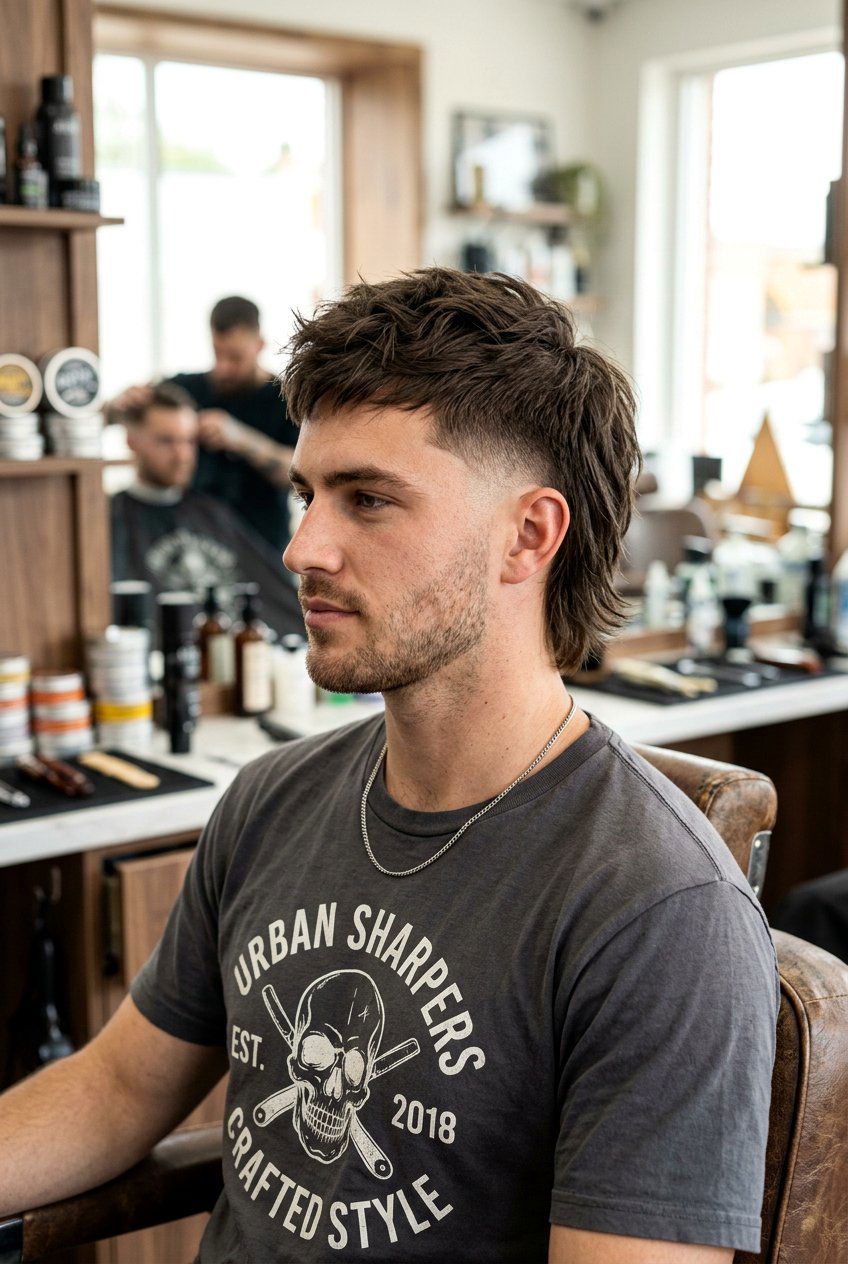
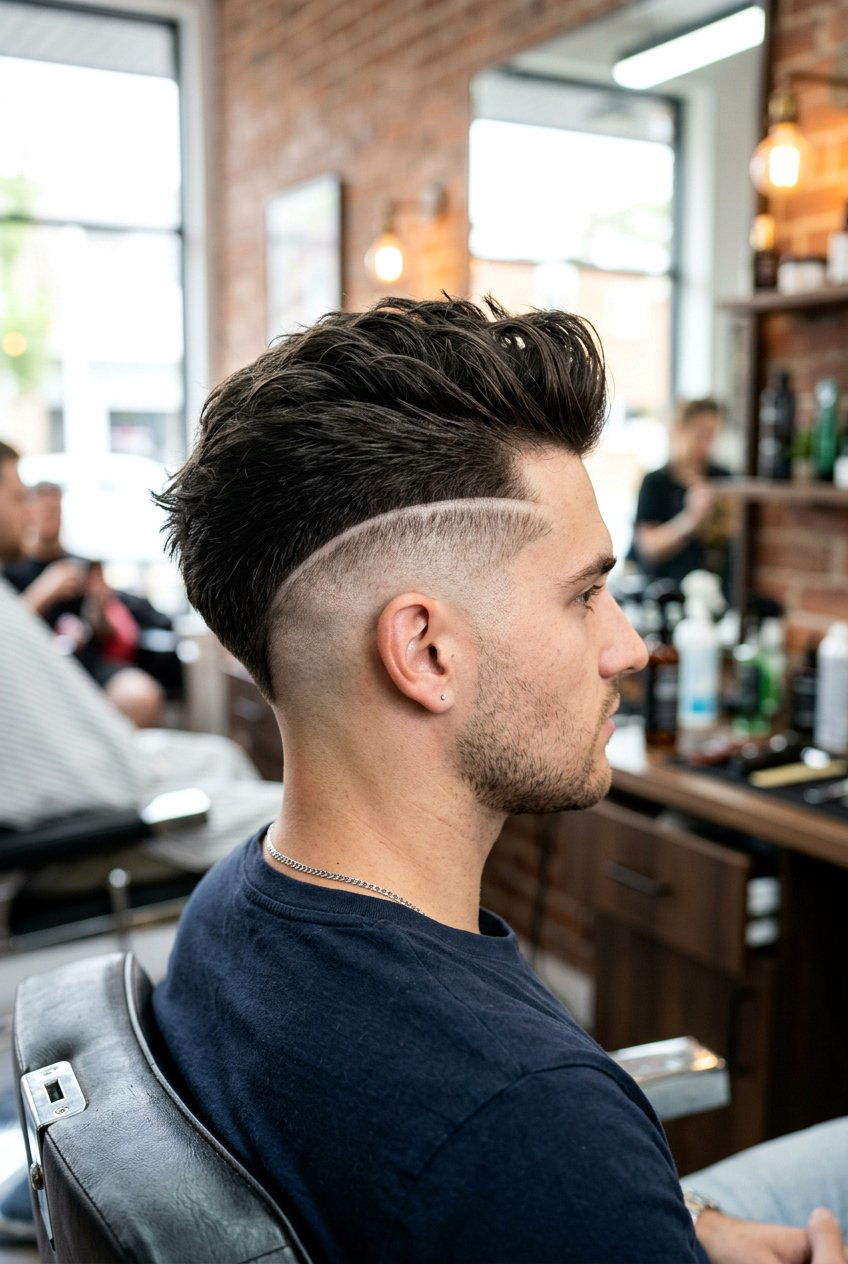
For men who feel that straight hair can sometimes look a bit “boring,” the textured mullet fade is the solution. This cut involves using thinning shears or a razor to create various lengths within the hair, which adds depth and a sense of movement. When paired with a clean fade, the choppy layers on top and at the back create a messy, effortless look that is very popular in current 2026 trends. Using a matte clay or wax is essential here, as it allows you to pinch and twist individual sections of the hair to define the texture without adding any unwanted shine.
13. Short Mullet Fade
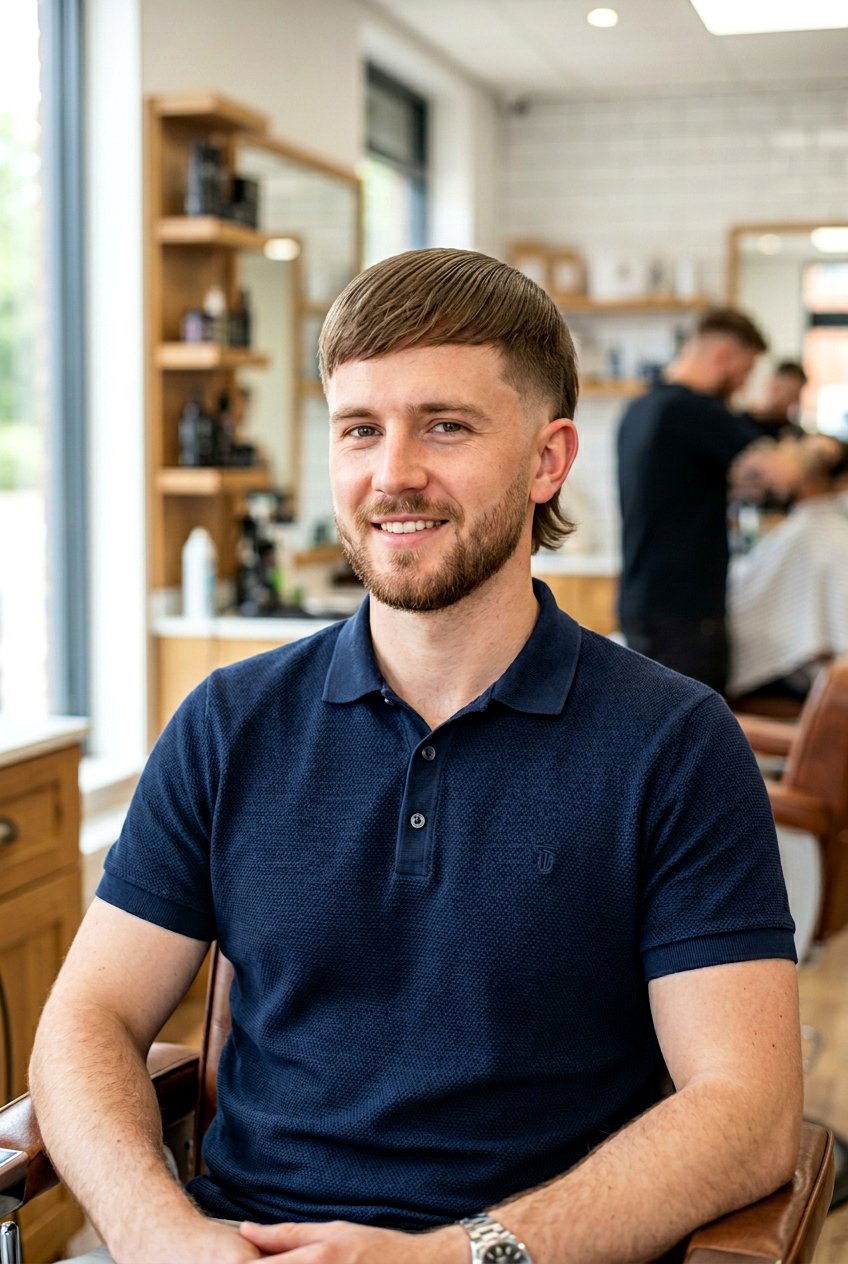
The short mullet fade is a “business-casual” version of the haircut that keeps the length at the back relatively modest—usually not extending past the collar. This makes it a very practical choice for men who want the mullet shape without the hassle of managing very long hair. The sides are typically faded quite short to maintain the signature silhouette, while the top is kept at a manageable length. It is a great way to test the waters of the mullet trend to see if it suits your face shape before committing to a more extreme version with significant length at the back.
14. Long Mullet Fade
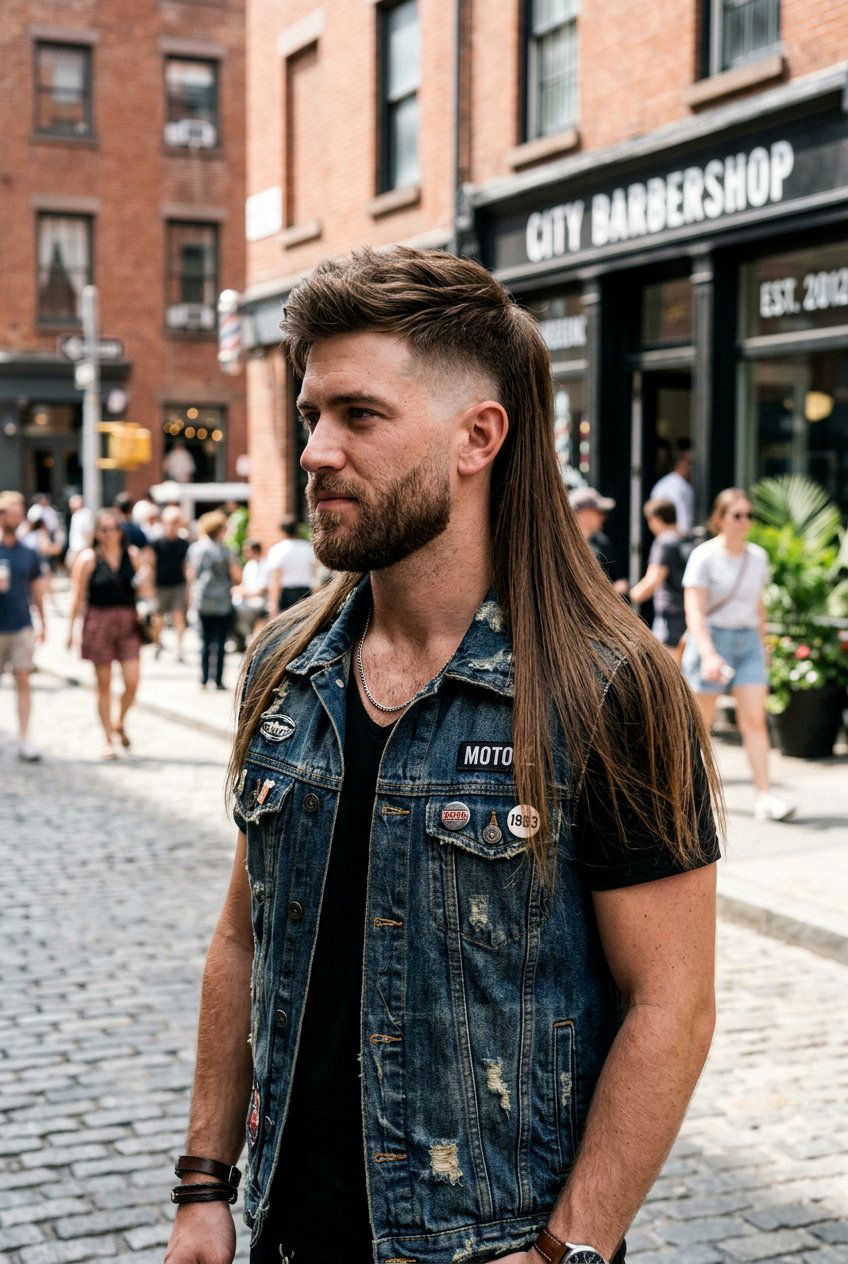
At the opposite end of the spectrum is the long mullet fade, which celebrates maximum length at the back, often reaching down to the shoulder blades. This is a bold, high-commitment style that requires a great deal of confidence to pull off. The fade on the sides is essential for keeping the look from becoming a standard “long hair” style; it provides the structure that defines the mullet. Straight hair in a long mullet looks best when it is kept healthy and trimmed to avoid split ends, as the straightness of the hair makes any damage very visible to the naked eye.
15. Pompadour Mullet Fade
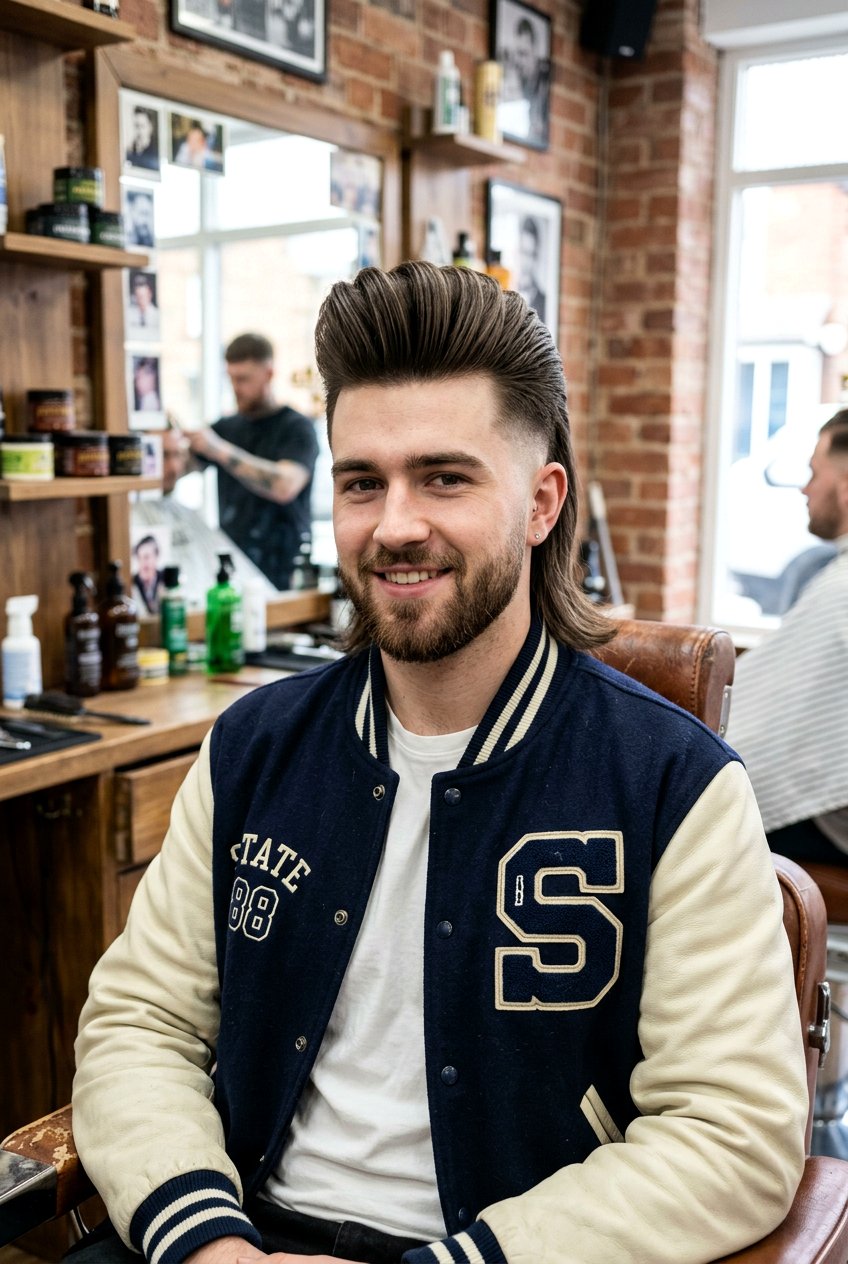
The pompadour mullet fade is a fusion of two iconic hairstyles that results in a high-volume, high-impact look. The hair on top is styled into a voluminous “quiff” or pomp, while the back remains long and the sides are faded. This creates a very tall silhouette that is excellent for men with round or square face shapes as it adds height and elongates the face. Straight hair is the ideal medium for a pompadour because it provides the structural integrity needed to hold the shape, especially when supported by a high-quality hair dryer and a round brush during the styling process.

16. Euro Mullet Fade
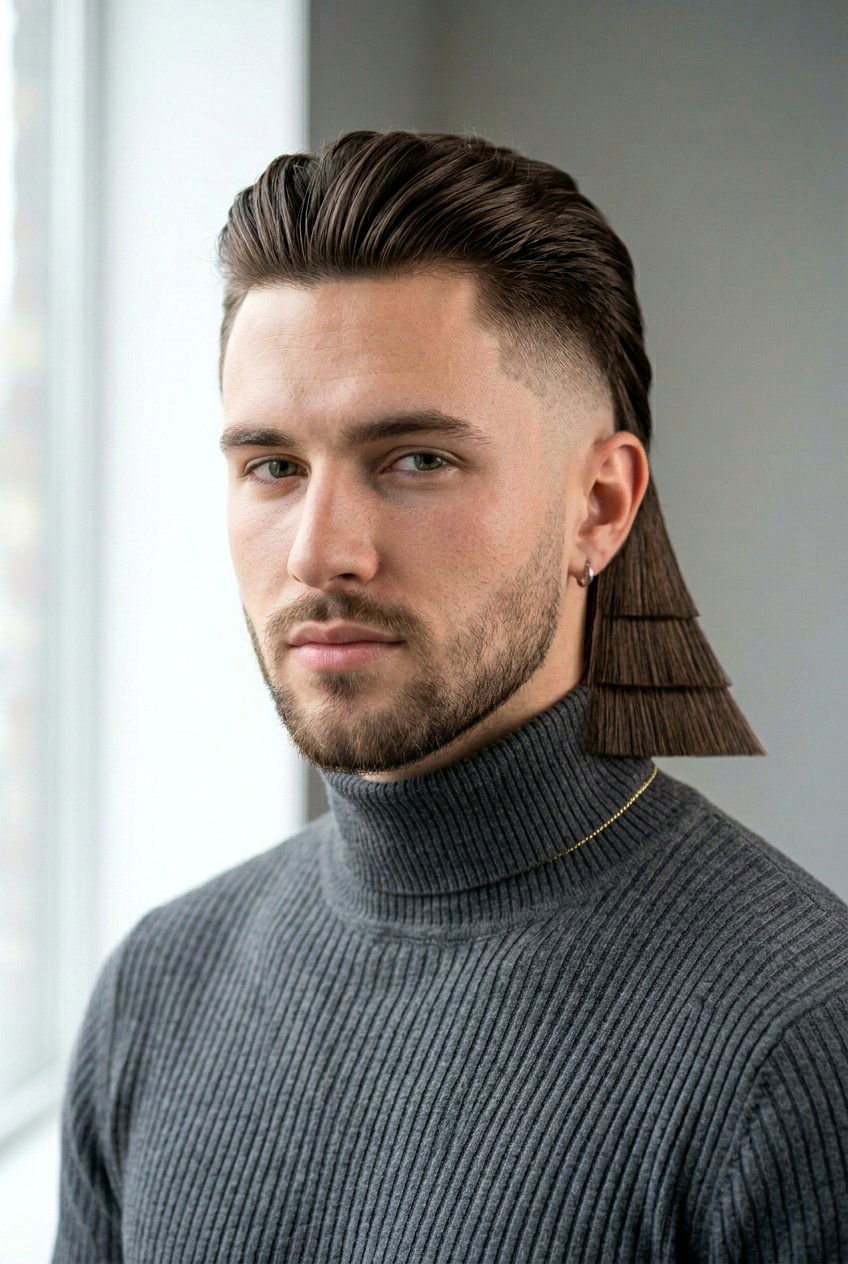
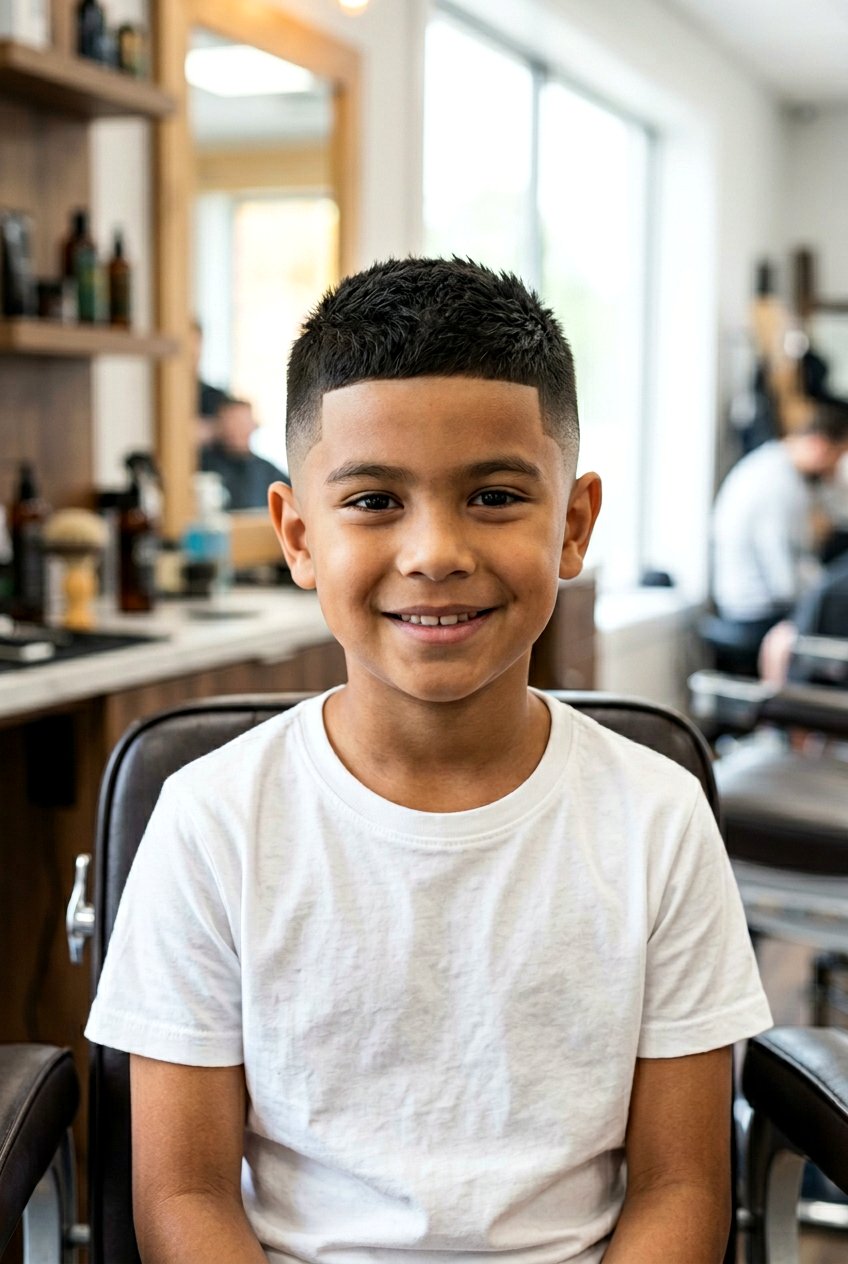
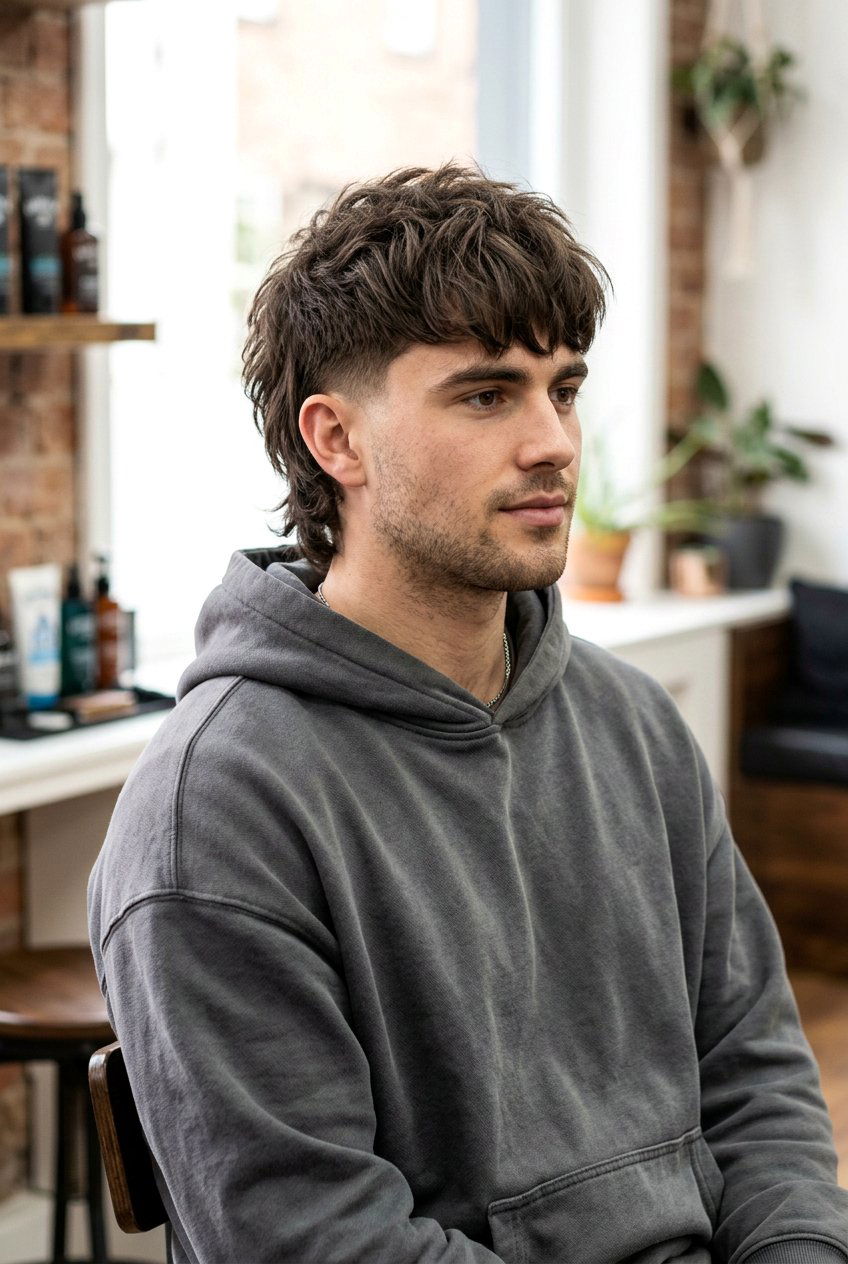
The Euro mullet, often characterized by its extreme disconnection and very straight, blunt lines, has become a staple in European street fashion. This version often features a very wide “mohawk” section that extends almost to the ears before hitting a sharp, high skin fade. The back is typically cut straight across in a blunt line rather than being tapered or layered, which creates a very geometric and modern appearance. It is a look that embraces “ugly-cool” aesthetics and is often paired with bold fashion choices. The straightness of the hair is vital for maintaining those sharp, intentional lines that define the Euro style.
17. Curly Tip Mullet Fade
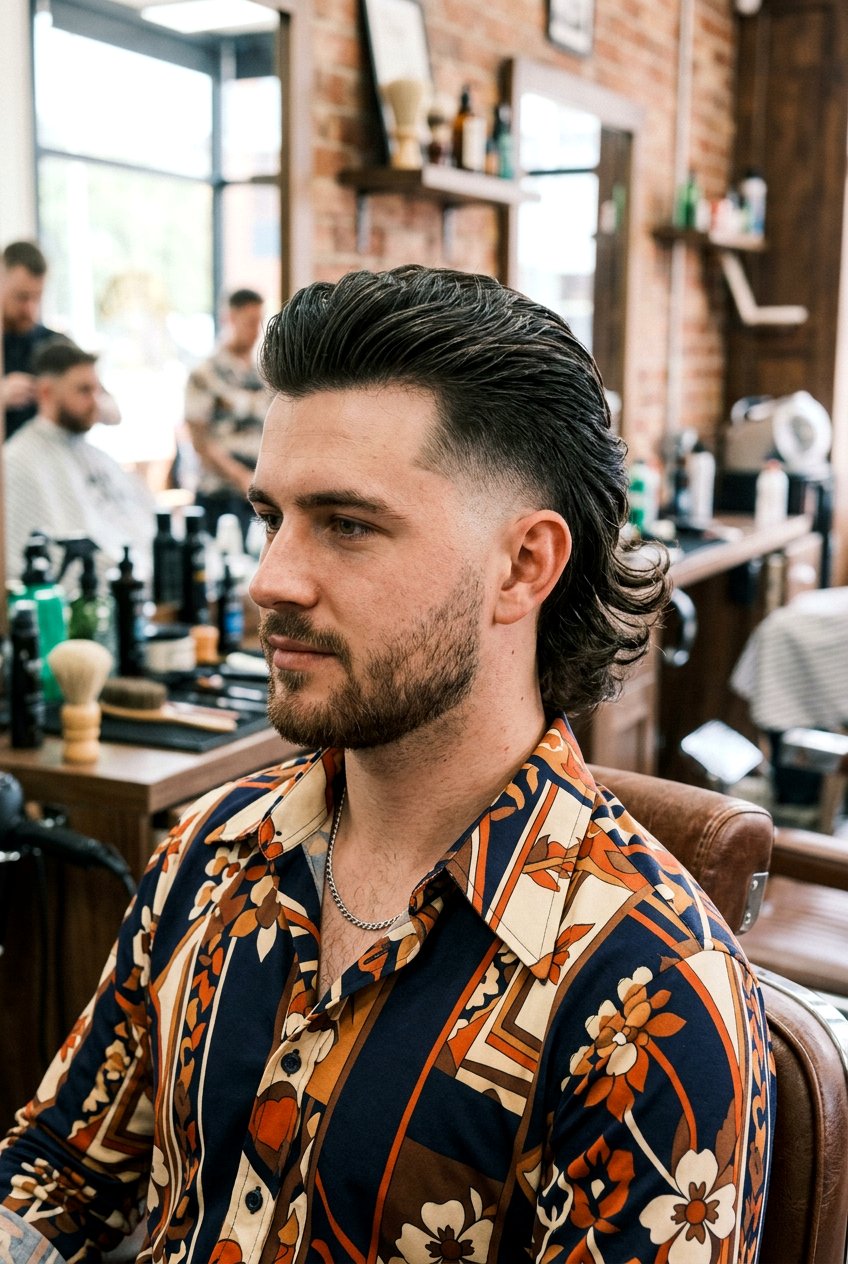
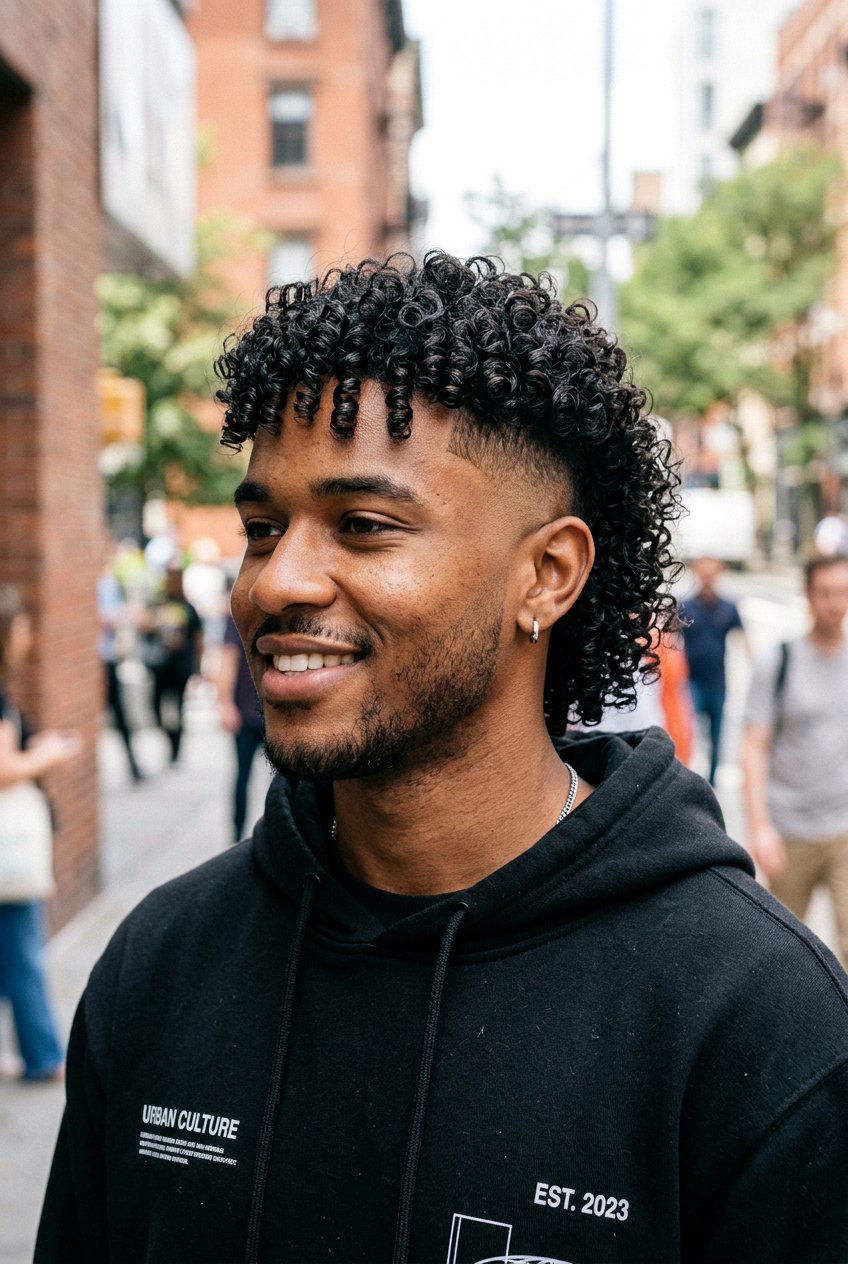
Even men with straight hair can enjoy a bit of texture by opting for a mullet where only the very ends of the back are curled or permed. This creates a “flicked out” effect that adds personality and a vintage 1970s vibe to the modern fade. It is a fun way to play with different textures without committing to a full head of curls. The fade on the sides keeps the look grounded in the present day, while the slightly curled ends at the back provide a soft, playful contrast to the straight hair on top. This style is often seen on athletes and musicians who want a standout look.
18. Side Part Mullet Fade
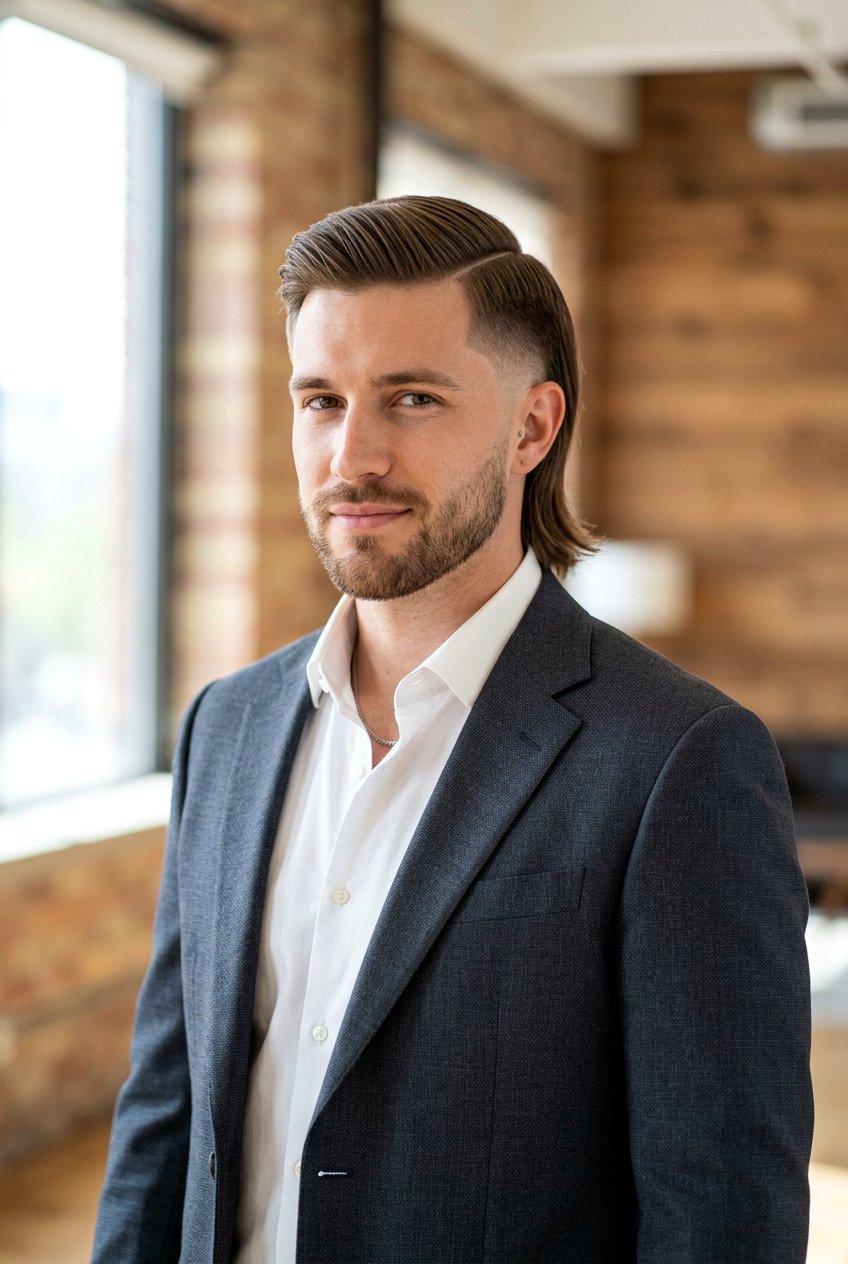
The side part mullet fade brings a bit of traditional barbering into the mix by incorporating a hard part or a defined side-swept top. This adds a level of structure and formality to the mullet that is often missing from the more “wild” variations. By parting the hair to one side, you create a clear distinction between the top and the faded sides, which makes the longer hair at the back feel like a deliberate styling choice rather than an accident. It is a very clean look that works exceptionally well for men with straight hair who want a “gentlemanly” version of the mullet.
19. Spiky Mullet Fade
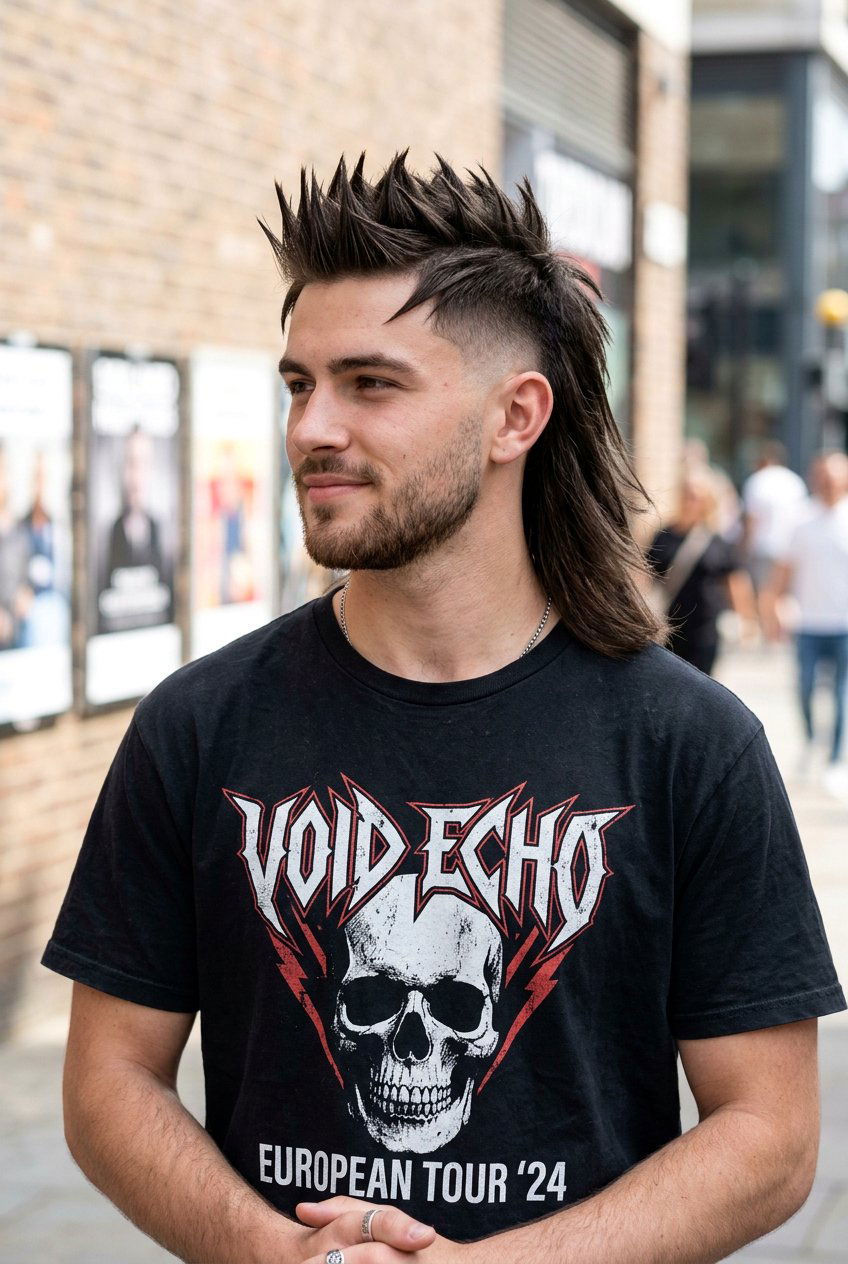
The spiky mullet fade is a nod to the early 2000s punk scene, updated with modern fading techniques. The straight hair on top is cut shorter and styled upwards into sharp points using a strong-hold hair gel. This vertical movement is contrasted by the long hair at the back, which hangs straight down. The result is a high-energy look that feels youthful and edgy. The fade on the sides is usually kept very tight—often a skin or high fade—to ensure that the focus remains on the spikes and the length at the back, creating a very balanced and aggressive silhouette.
20. Mohawk Mullet Fade
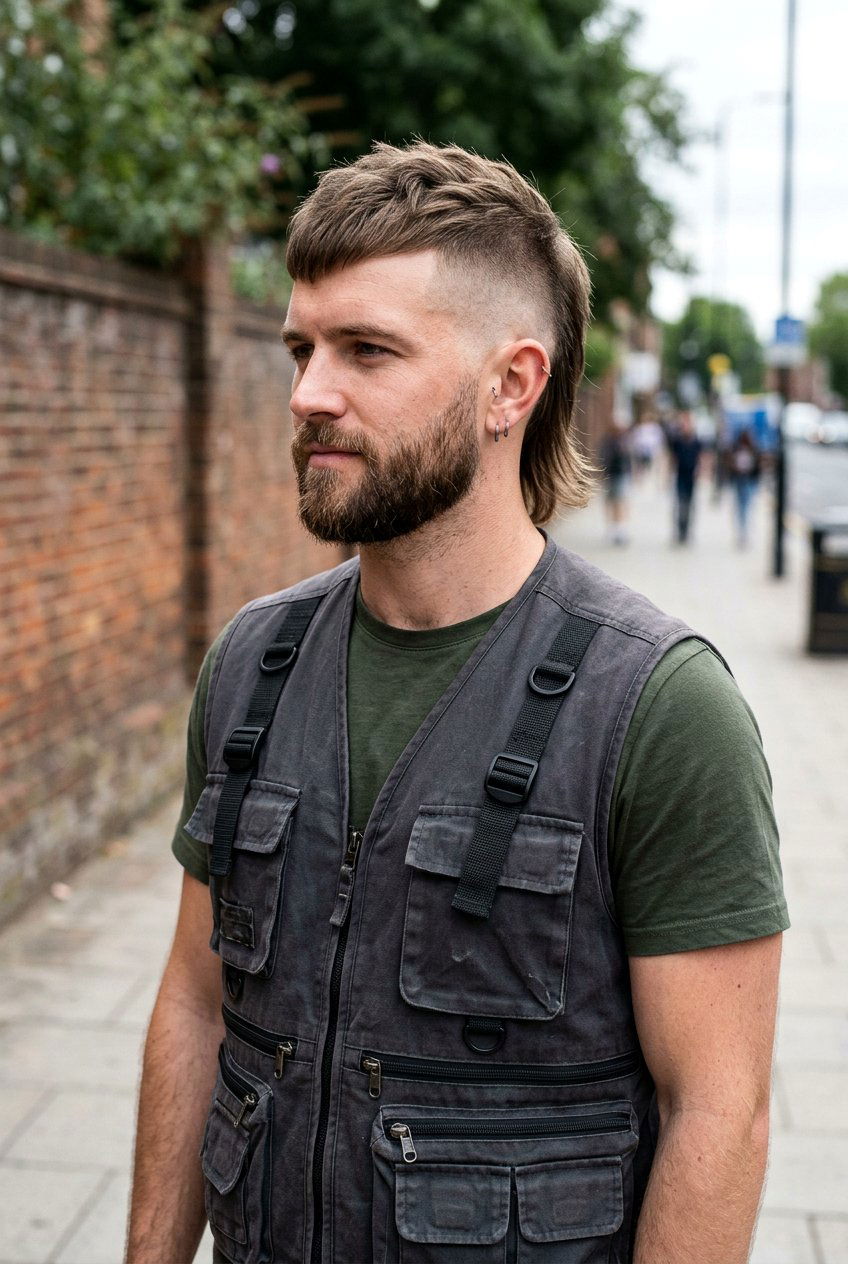
The mohawk mullet fade is the most extreme version of the trend, where the sides are faded or shaved completely, leaving a continuous strip of hair from the forehead all the way down to the nape. Unlike a traditional mohawk, the “mullet” element comes from the fact that the hair at the back is significantly longer than the hair on top. This creates a very narrow and long silhouette that is incredibly striking. For men with straight hair, this look is all about precision; the central strip must be perfectly centered and the fade must be flawlessly blended to achieve the high-fashion aesthetic this cut demands.
Conclusion:
The mullet fade for straight hair men is a testament to how classic styles can be reinvented for the modern era. By combining the rebellious length of the traditional mullet with the clean, sharp lines of a professional fade, barbers have created a look that is both versatile and undeniably cool. Whether you choose a subtle taper for a professional look or a bold burst fade to stand out from the crowd, the key to a great mullet lies in the balance between the different lengths. With the right products and regular maintenance, this hairstyle offers a unique way to express your personality while embracing the natural characteristics of your straight hair.
You'll Like These Styles:



Leave a Reply