
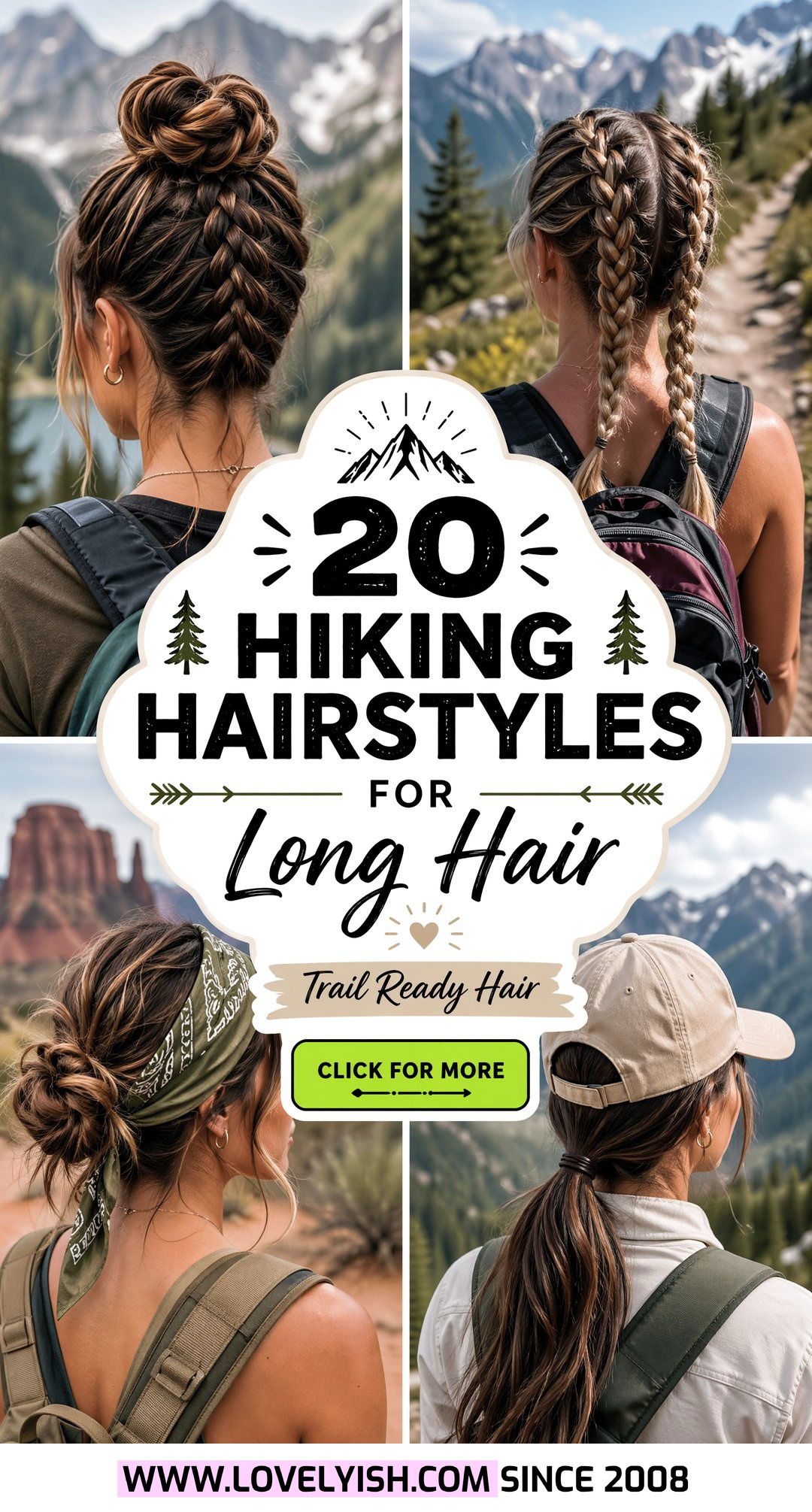
Hitting the trail with long hair can feel amazing when your hair is secure, cool, and out of your face, instead of stuck to your neck or tangled in your backpack straps. The best hiking hairstyles for long hair keep your strands contained, reduce tangles, and work with hats or buffs, not against them. They also need to handle sweat, wind, and hours of movement without constant touch‑ups. Braids, buns, and low‑maintenance pulled‑back looks show up again and again in outdoor guides because they balance comfort and style for long treks. When you build your trail look around full, practical hairstyles, you can enjoy the views and the climb instead of fighting your hair the whole time.
1. High Ponytail For Hiking Long Hair
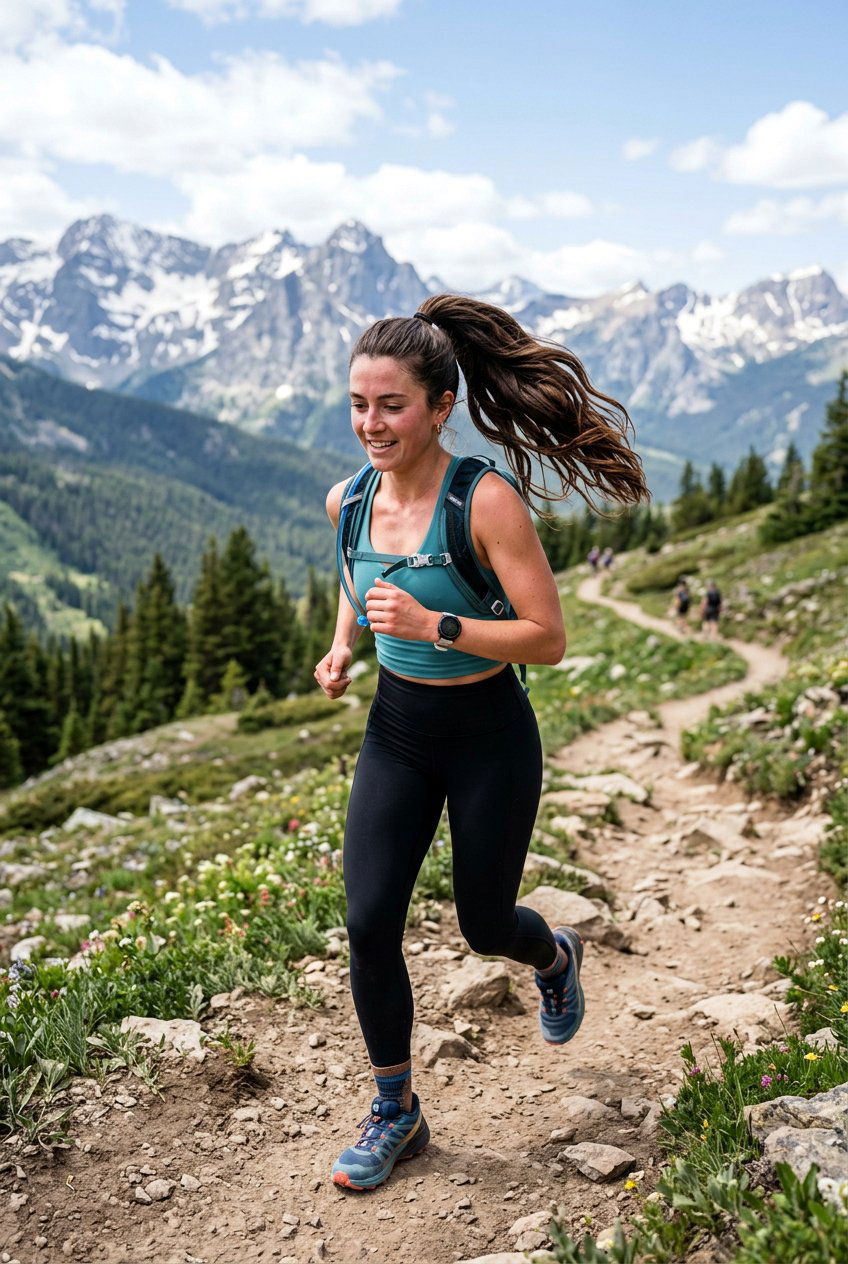
A classic high ponytail is often the first thing people try when figuring out how to hike with long hair because it is fast, familiar, and easy to adjust on the trail. For hiking, place the ponytail high enough that it clears your backpack collar, so the hair does not rub between your neck and the straps while you move. Use a soft, strong elastic or scrunchie that will not snag or snap when your hair gets sweaty, and wrap it enough times to keep the base firm without pulling your scalp. If your hair is very long, you can braid the ponytail length to cut down on tangles in wind or drizzle. This turn takes a simple ponytail from everyday to trail‑ready, making it comfortable for long distances while still looking neat in photos at the summit.
2. Low Ponytail With Baseball Cap For Hiking
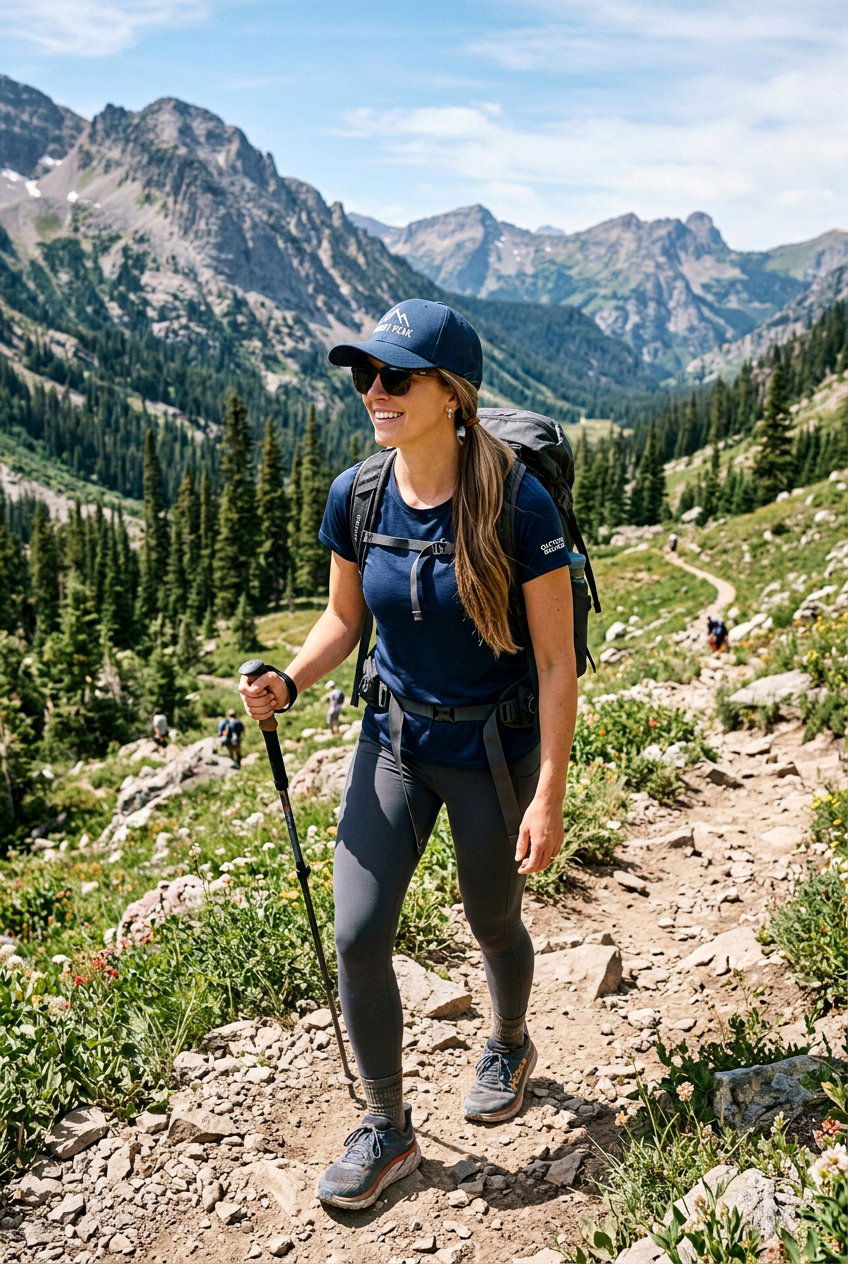
A low ponytail paired with a baseball cap is a go‑to hiking hairstyle when you want sun protection, clear vision, and a secure, minimalist look that stays put all day. Place the ponytail at the nape of your neck or slightly above, threading it through the back opening of your cap so the hat sits flat and does not ride up. This position is ideal under hiking backpacks because it keeps hair from bunching under the collar and reduces friction on steep climbs. Use a smooth elastic or fabric tie and a light leave‑in conditioner before styling to help prevent tangles as the ponytail rubs against your shirt through the day. The result is a simple, sleek hiking look that works in sun, wind, and light rain without needing a mirror to fix.
3. Single French Braid For Hiking Long Hair
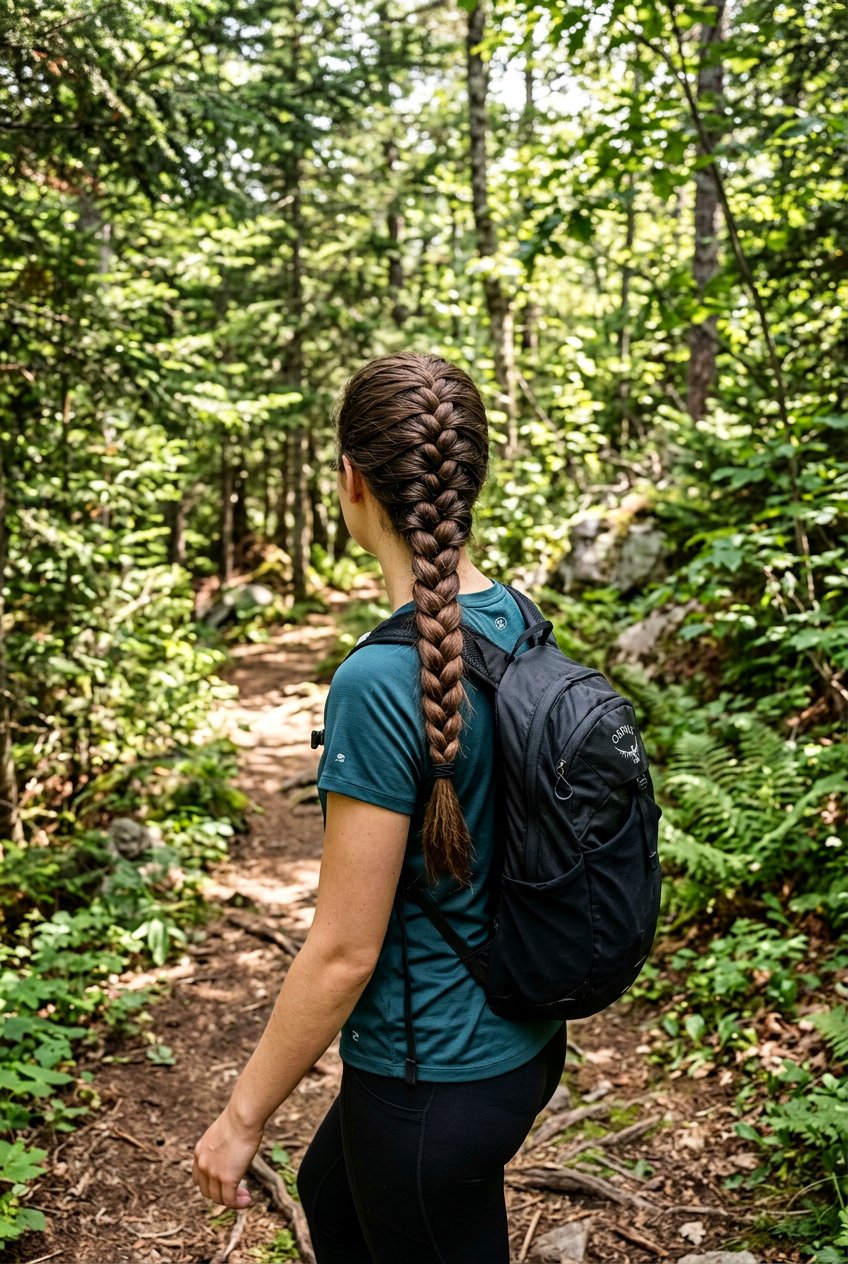
A single French braid is one of the most recommended hiking hairstyles for long hair because it anchors from the top of your head and locks in layers, bangs, and flyaways. Starting near your hairline, you gradually add sections as you braid down, which keeps hair closer to your scalp and less likely to whip into your eyes on windy ridges. This full‑head structure also fits comfortably under hats and helmets, making it great for long, exposed hikes where you need consistent sun protection. Coat your lengths lightly with leave‑in conditioner or a small bit of braid cream before styling to cut down on friction and make post‑hike detangling easier. When finished, secure the end with a snag‑free elastic and gently tug sections for a bit of volume that still stays neat inside a hood or beanie.
4. Simple Side Braid For Hiking
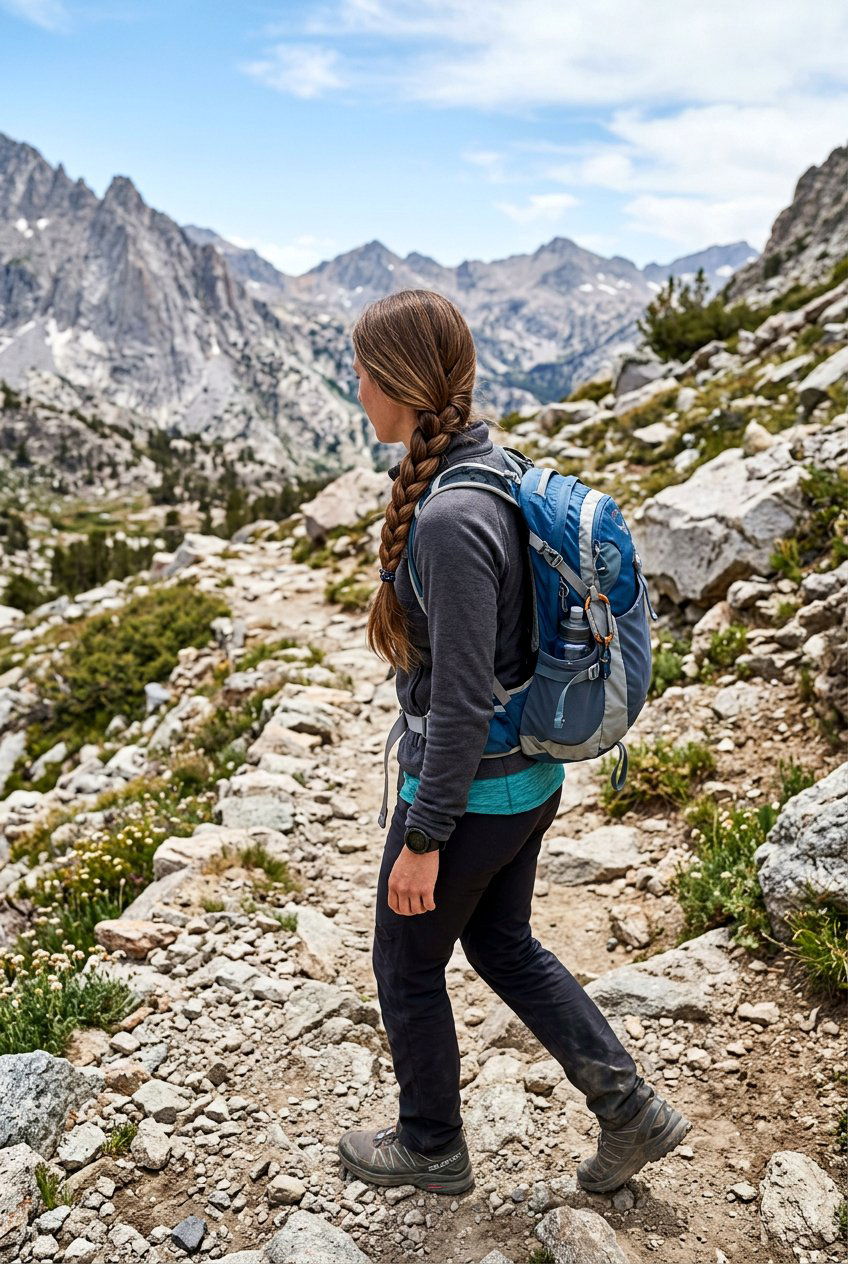
A simple side braid works well on hikes when you want long hair contained but do not feel like doing a full French braid from your crown. Gather your hair over one shoulder and braid from just below your ear down, securing the end with a sturdy elastic that can handle swinging and friction against your backpack strap. This placement keeps hair off the back of your neck, which helps you stay cooler on warm ascents and stops strands from getting pinched under pack waist belts. If your hair tends to slip out, start with a low side ponytail, secure it, then braid from the base for extra hold. The side braid gives a relaxed, outdoorsy look in photos while still being practical when you are winding through brush or dealing with gusty trail conditions.
5. Double Braids For Hiking Long Hair
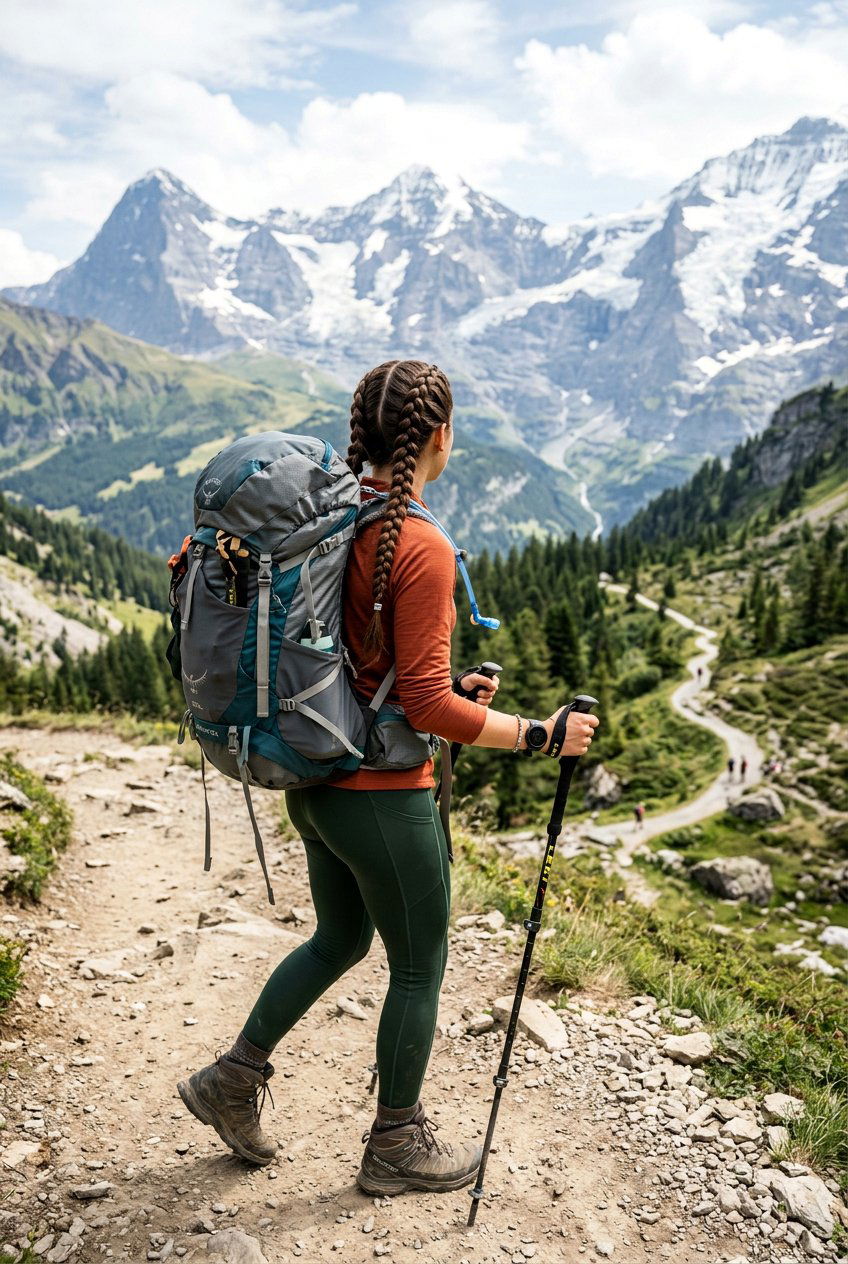
Double braids, often called pigtail braids, are perfect for hikers with very long or thick hair who want weight distributed evenly on both sides of the head instead of one heavy braid pulling on the neck. Part your hair down the middle, then braid each side in a classic three‑strand braid from just below the ear or from the crown for extra control. This setup keeps your scalp comfortable on long days and leaves braids slim enough to sit under backpack straps without forming a bulky lump. Double braids also work well with beanies or caps because you can pull each braid forward over your shoulders to keep them clear of jacket collars. The look is fun, very secure, and easy to redo quickly at rest stops if one elastic loosens or hair starts to frizz.
6. Dutch Braids For Hiking Long Hair
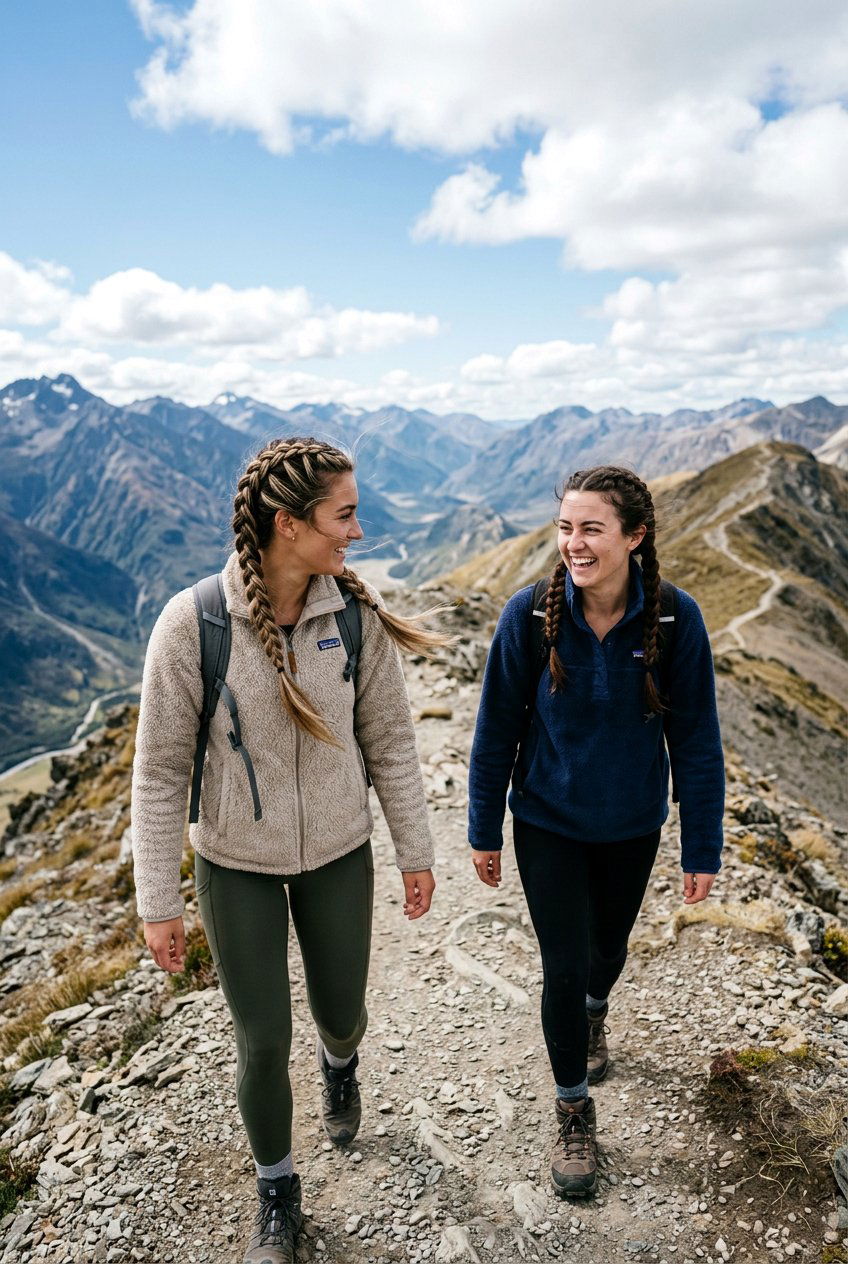
Dutch braids, which sit on top of the hair rather than inside it, give extra grip and definition that can handle sweat, movement, and weather better than looser braids. For hiking, create two Dutch braids starting near your hairline and work them back along your scalp, then braid the lengths down past your shoulders. This pattern keeps everything tight to your head, so there is almost no loose hair to blow in your face on switchbacks or exposed ridges. Because the braids are raised, they also ventilate the scalp slightly more than a full bun, which feels cooler on hot or humid trail days. Finish with small elastics and, if needed, lightly mist the braids with flexible hairspray for long trips to hold shorter layers in place without making them crunchy.
7. Braided Crown For Hiking Long Hair
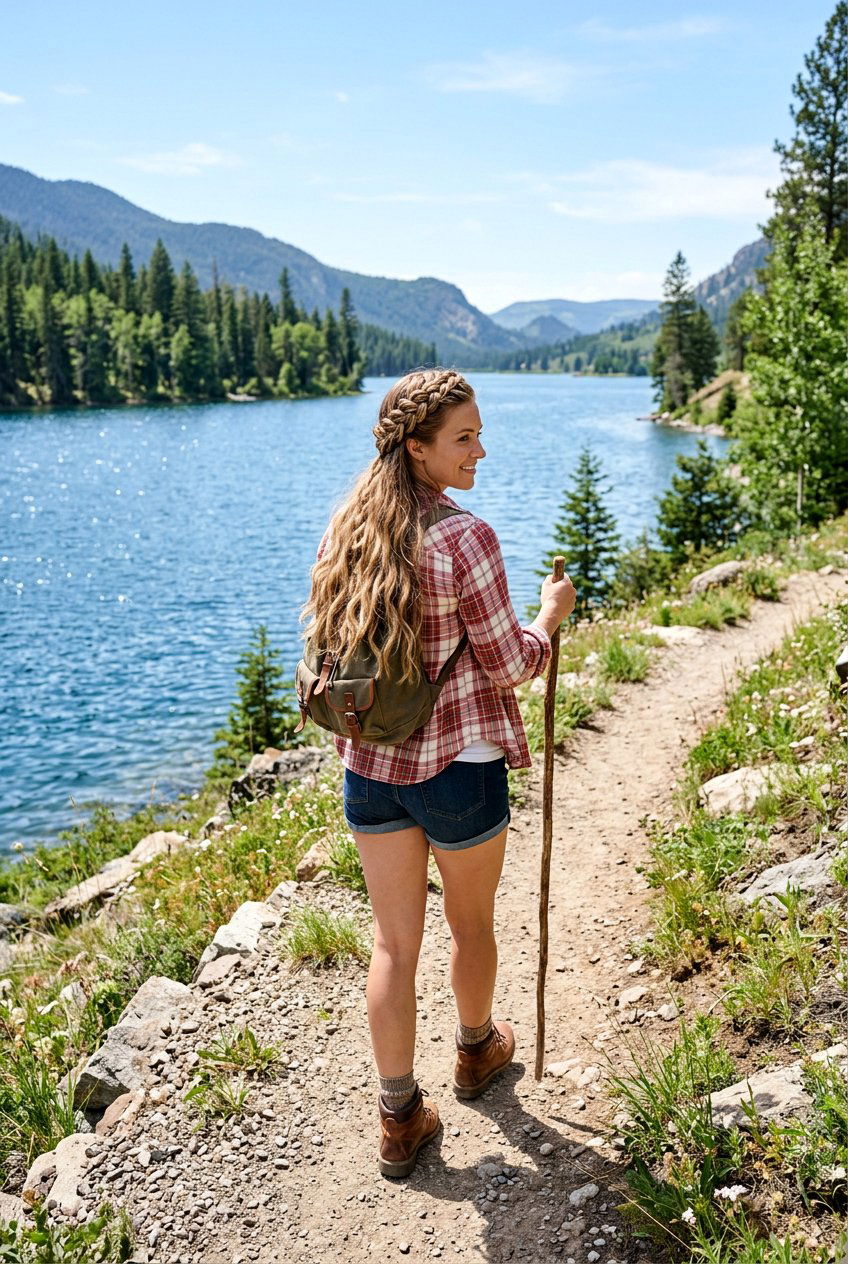
A braided crown wraps your hair around your head, keeping lengths off your neck while creating a secure, headband‑like effect that works nicely with light backpacks and day hikes. Start with two braids or one long braid, then pin or wrap it across the top of your head, anchoring with flat, sturdy pins that will not dig into your scalp under a hat. This style is especially helpful if you have shorter front layers or grown‑out bangs because it keeps them tucked away the entire hike. A braided crown also minimizes friction at the back of your head, where many people feel sore spots from ponytails pressed against backpack padding. With a little practice, it becomes a romantic yet practical hiking look that stays neat all day and still looks good when you take off your hat at the trailhead café.
8. Braided Bun For Hiking Long Hair
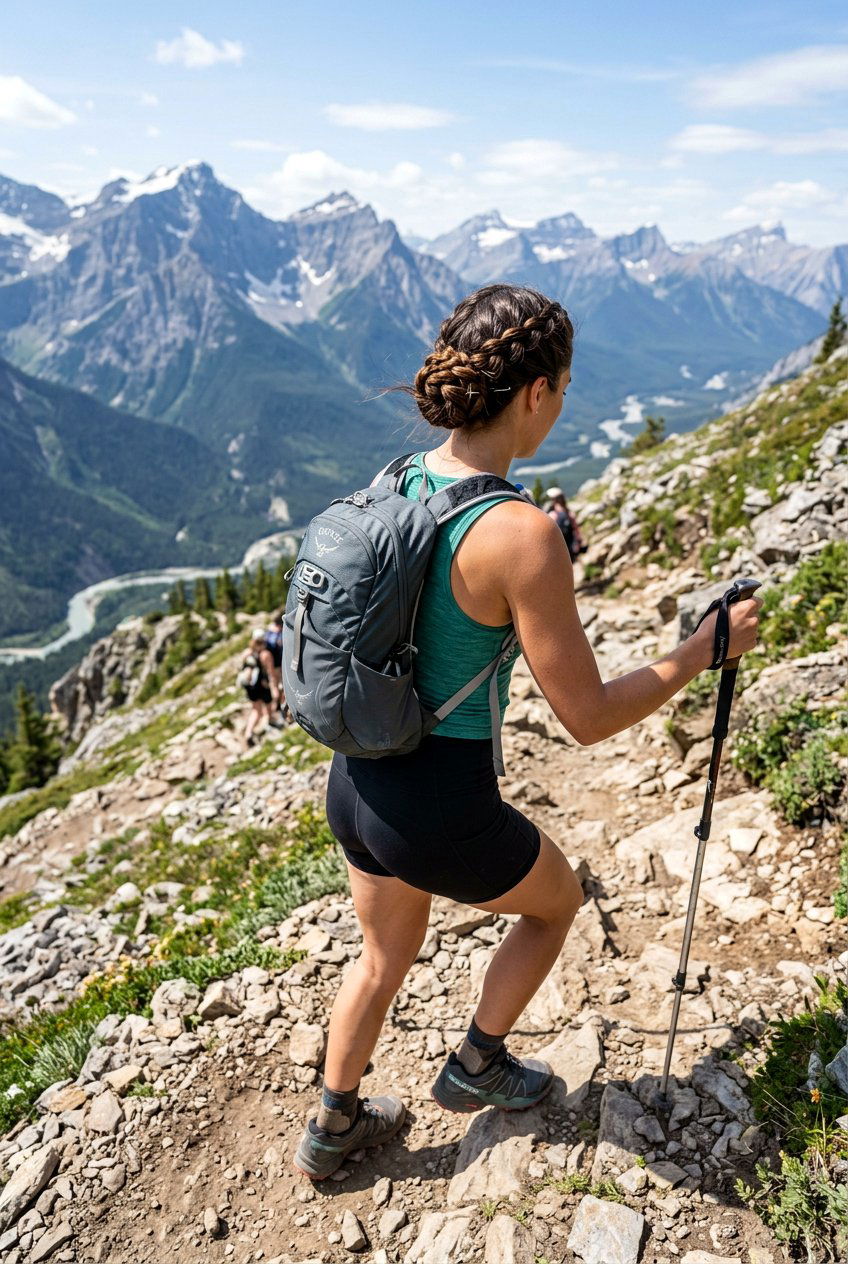
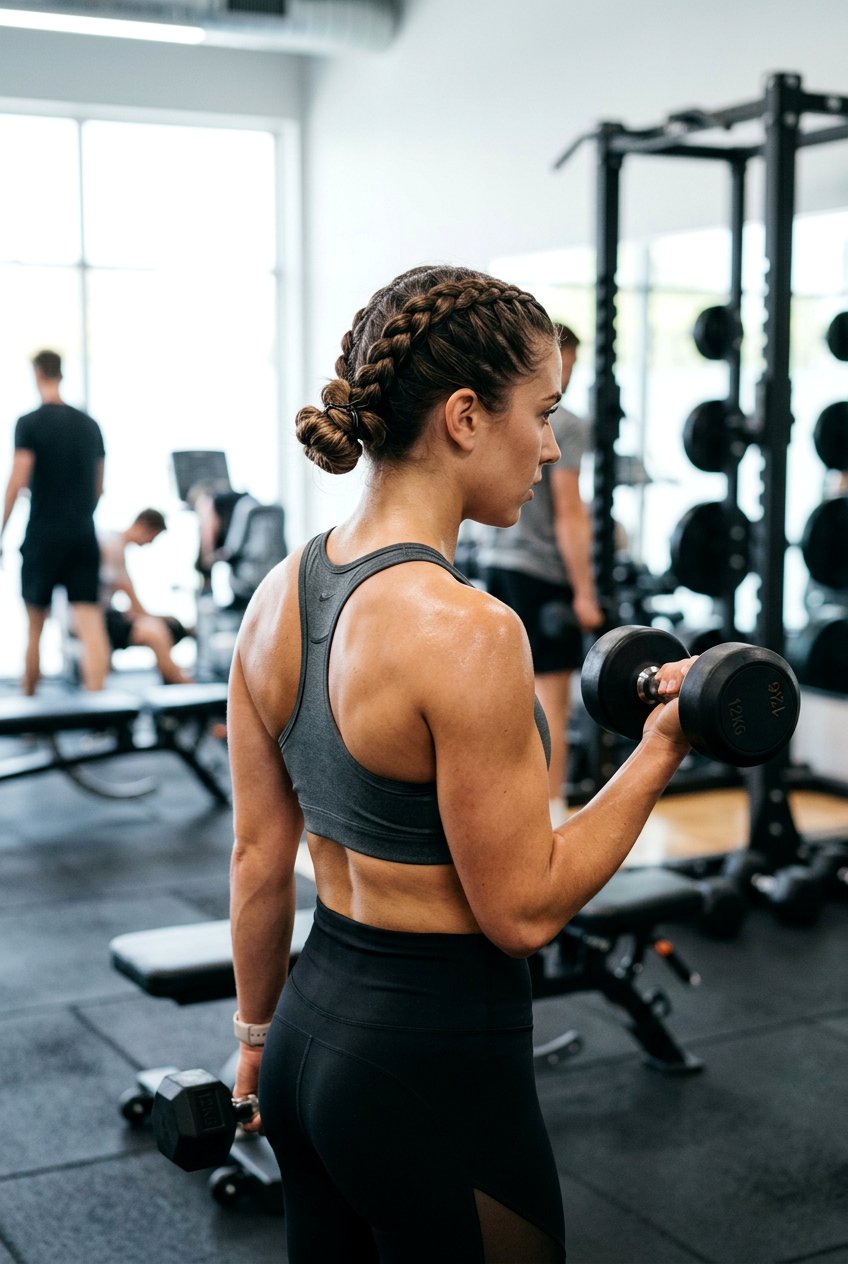
A braided bun is one of the most practical hiking hairstyles because it combines the tangle‑prevention of braids with the cooling comfort of having your hair completely off your neck. To create it, first secure a mid or high ponytail, braid the length, then wrap the braid around the base and pin or tie it into a bun. This approach prevents loose strands from working their way out as quickly as they might in a standard messy bun, especially in strong wind. Many hikers prefer a slightly higher placement so the bun clears backpack collars and does not rub under headrests on long drives to the trail. With a sweatband or buff at the front, a braided bun can also help absorb moisture on hot days and keep your forehead dry without sacrificing stability.
9. Messy Top Knot For Hiking Long Hair
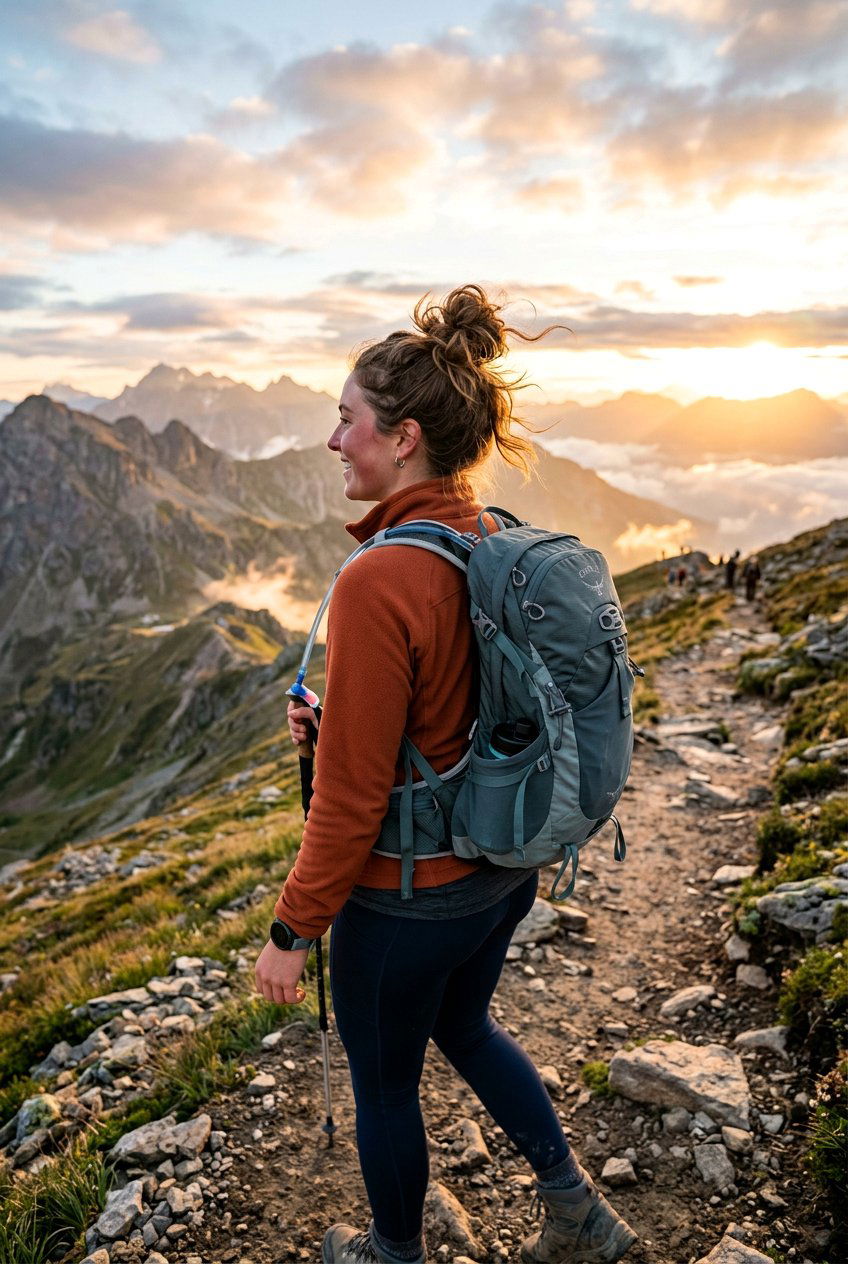
A messy top knot is a great hiking option when you are rushing out the door for an early start and just want your long hair off your neck, shoulders, and gear. Pull your hair into a high ponytail near the crown, twist it loosely, wrap it into a bun, and secure with a strong elastic or hair stick. The key is to keep it high enough that it clears your backpack and low enough that it does not bump into the inside of your hat if you wear one. A bit of frizz does not matter on the trail, and many hikers like the casual look in mid‑hike selfies and summit photos. Just pack an extra elastic and a few pins in your pocket so you can tighten the knot quickly if it loosens after a steep, sweaty climb.
10. Half Up Ponytail For Hiking Long Hair
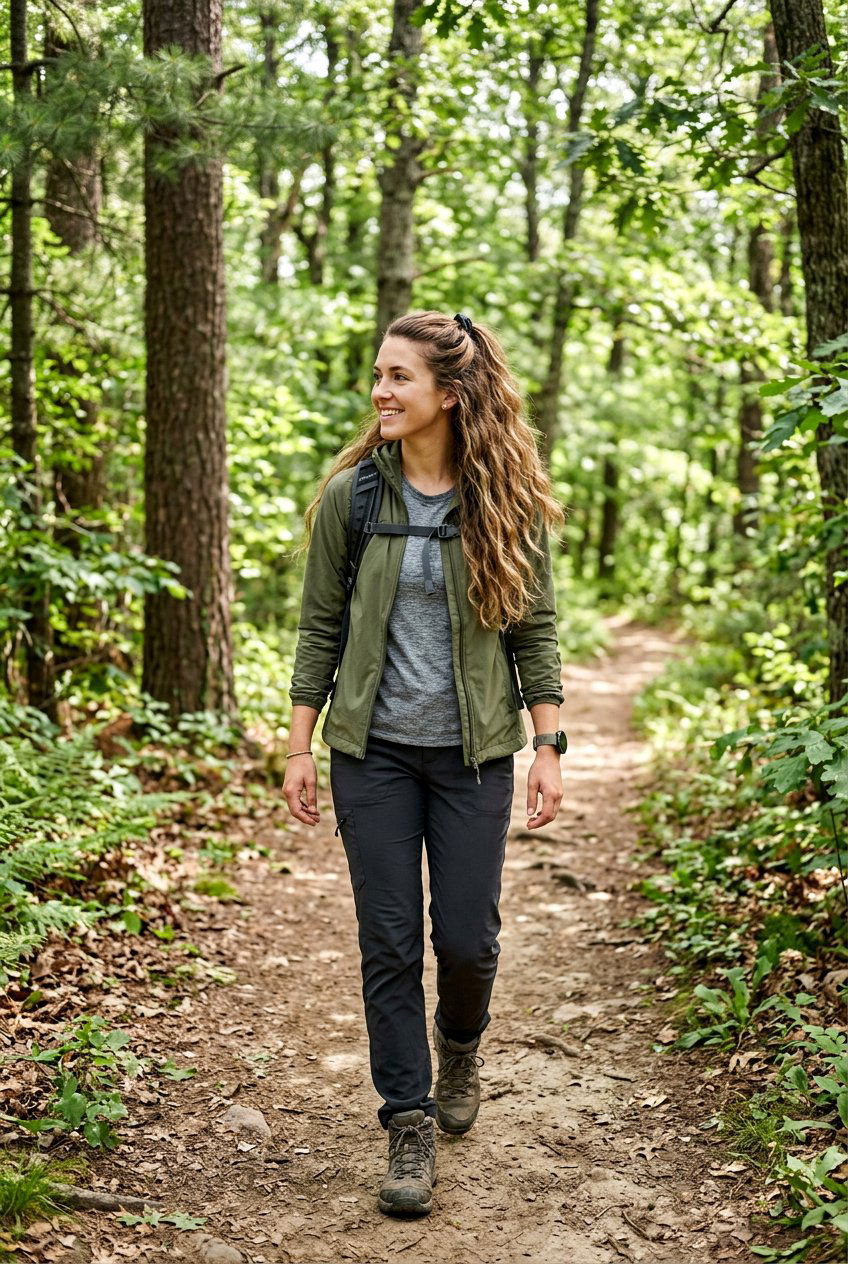
A half up ponytail balances airflow and control, making it a good choice for cooler days or shorter hikes where you still want some movement in your long hair. Gather the top half of your hair from temple to temple and secure it at the back of your head, leaving the bottom half loose. This keeps hair out of your eyes while allowing the lower lengths to move and dry more easily if they get damp from sweat or mist. It works especially well if you are hiking with minimal gear and do not have a heavy pack pressing against your hair. For extra security, you can twist the upper section into a small bun instead of a ponytail, then let the rest fall over your shoulders for a relaxed, trail‑friendly look.
11. Half Up Braided Look For Hiking Long Hair
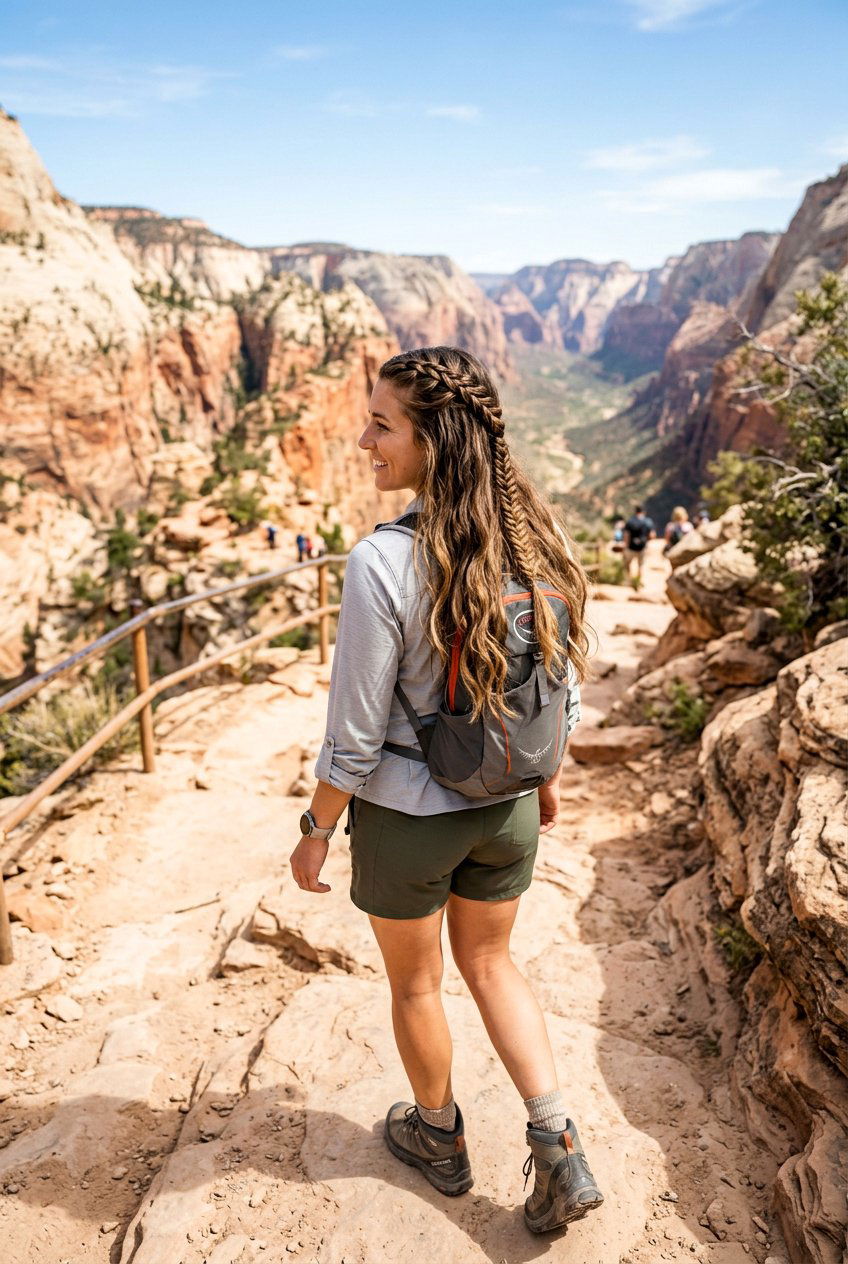
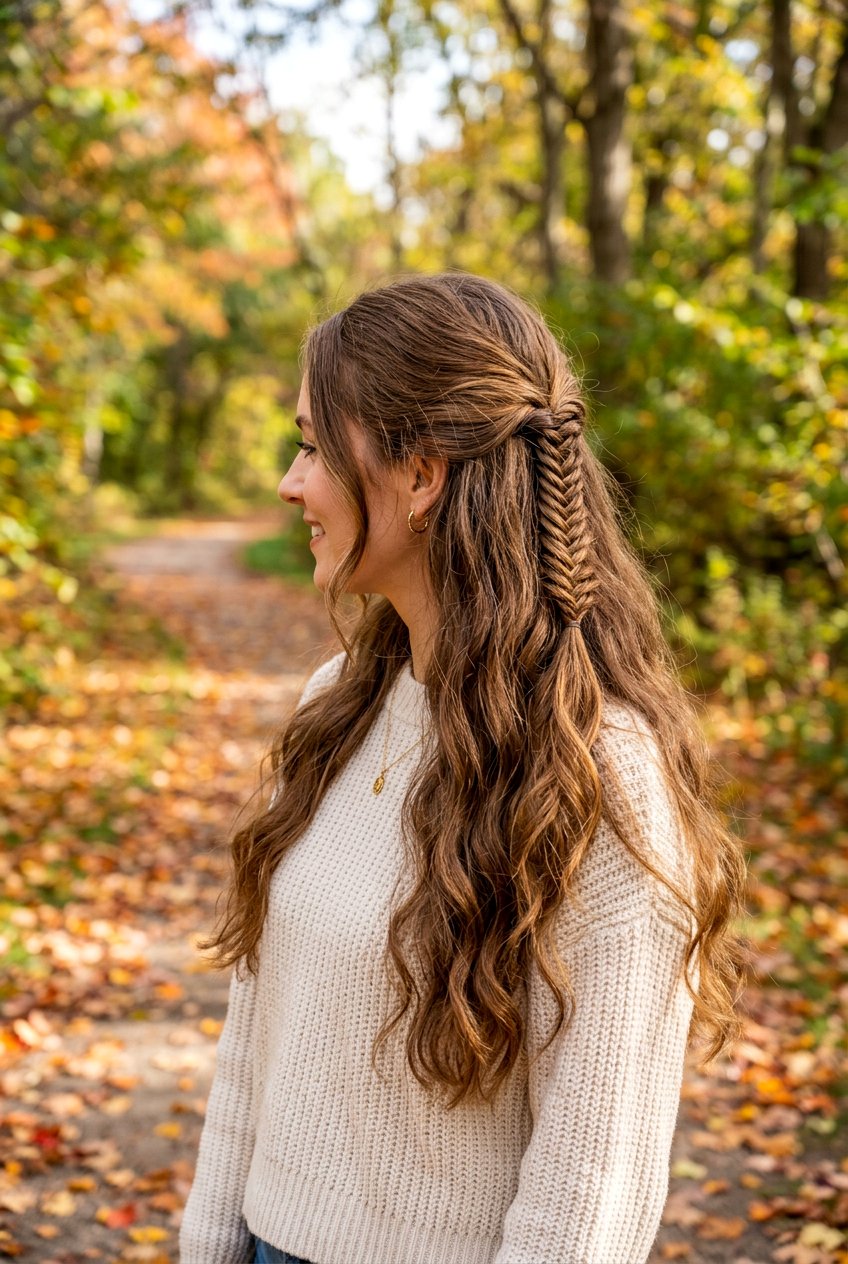
A half up braided look gives you more grip than a half ponytail while still letting some of your long hair flow freely for a softer, more relaxed hiking vibe. Start by sectioning off the top half of your hair, then braid that section into a classic or French braid that ends at the back of your head. Secure it with an elastic and let the rest of your hair hang loose down your back or over one shoulder. This keeps the front and crown area tidy, which is where most hikers get the most annoying tangles and sweat, but avoids a fully pulled‑back look. It is a good compromise on moderate trails or cooler seasons when overheating is less of an issue and you want your hair to show more in photos.

12. Low Braided Bun For Hiking Long Hair
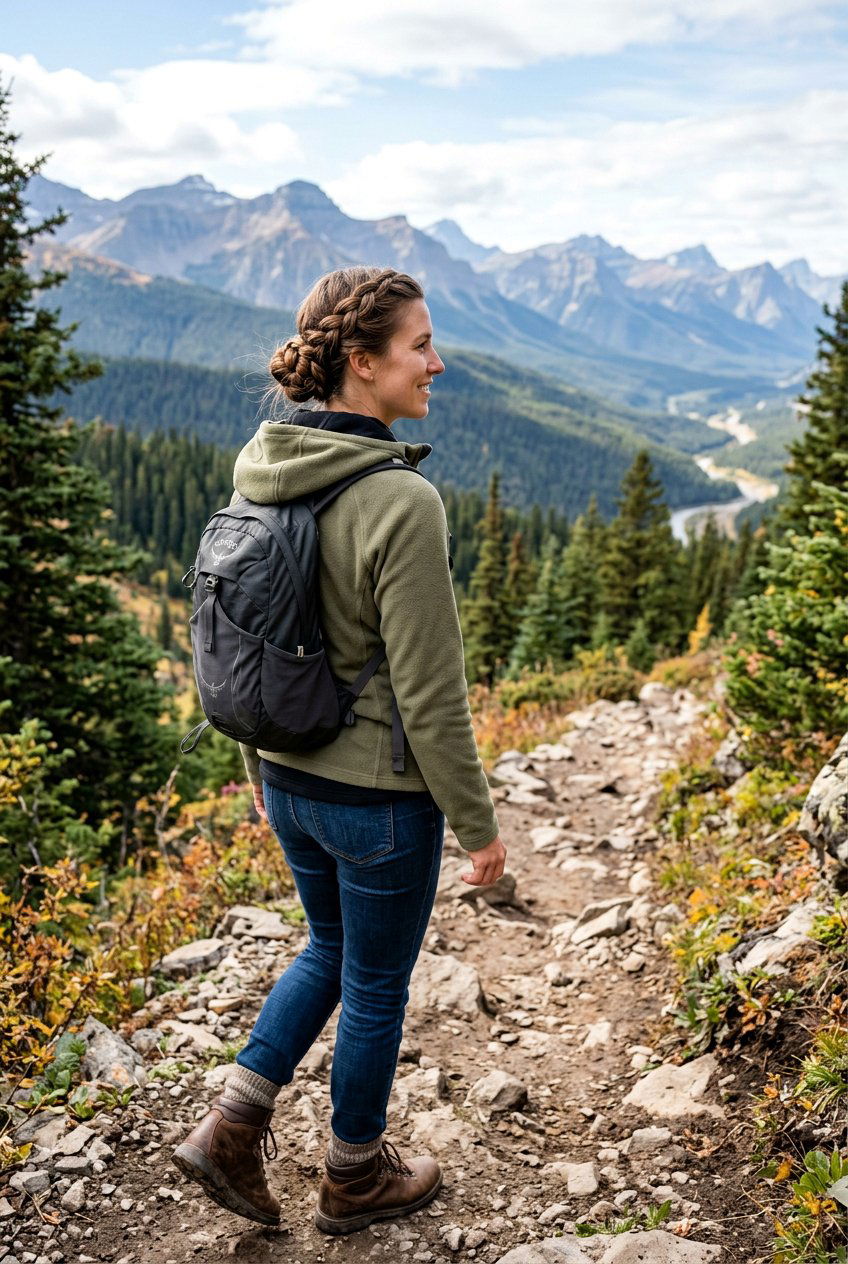
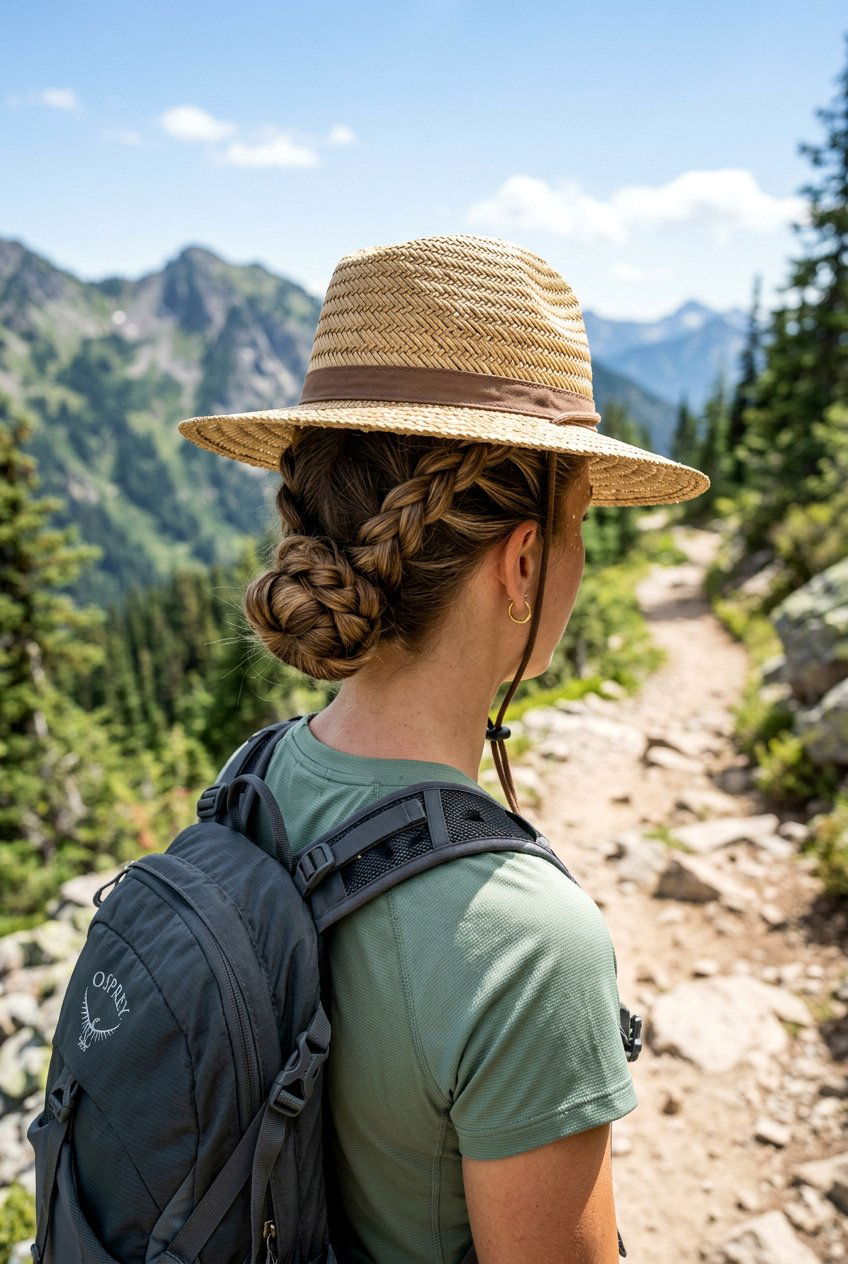
A low braided bun is ideal for hikers who prefer their hairstyles to sit close to the head and under the line of a hat or beanie. Start with a low ponytail at the nape, braid the length, then coil it into a compact bun and secure with a strong tie and a few pins. This keeps your hair neatly contained and less likely to snag on branches or pack buckles as you turn your head. It also works well under wide‑brimmed hats because the bun sits beneath the hat band, reducing pressure on your scalp. If you are prone to neck heat, choose this style on cooler days or pair it with moisture‑wicking clothing to balance warmth and comfort as you hike uphill.
13. Bubble Ponytail For Hiking Long Hair
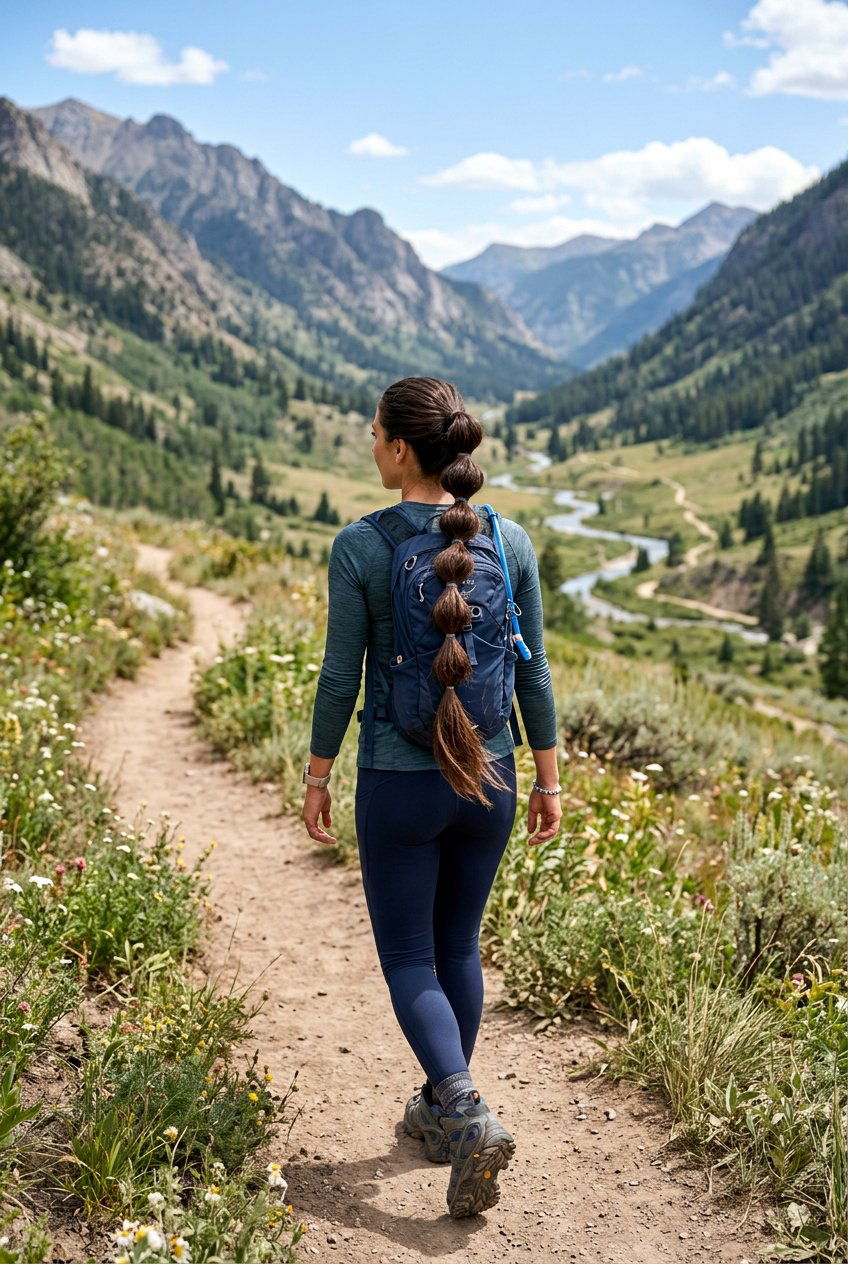
A bubble ponytail adds structure along the length of your hair, which helps control very long strands that tend to knot quickly in wind or humidity. Create a regular ponytail first, then add additional elastics every few inches down the length, gently tugging each section to form rounded “bubbles.” This segmented shape limits how much the hair can twist and tangle, while still feeling lighter than a full braid for some hikers. It sits comfortably under caps and works with both high and mid ponytail placements depending on your backpack fit. For best results on the trail, use soft, snag‑free elastics and avoid pulling the bubbles too wide so they do not rub awkwardly against your pack straps or jacket.
14. Rope Braid Ponytail For Hiking Long Hair
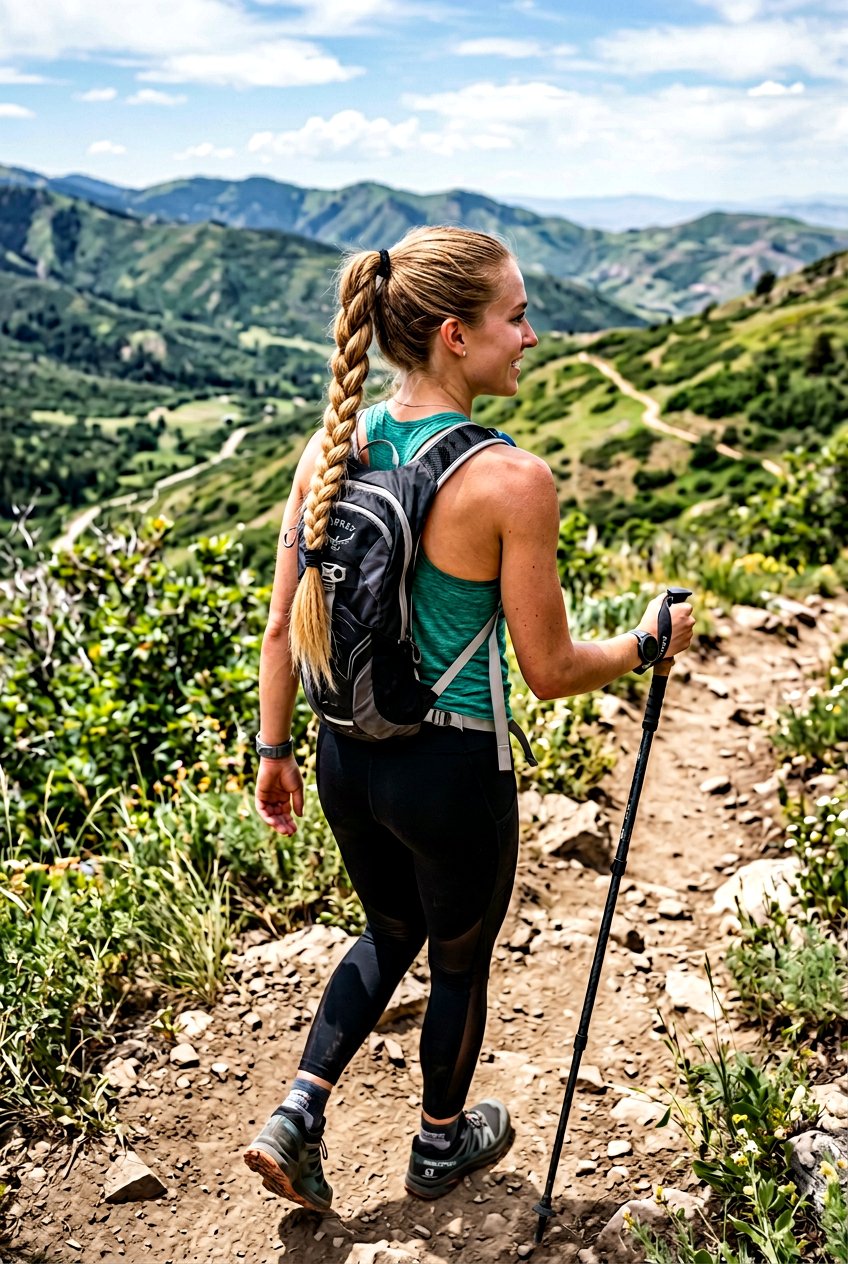
A rope braid ponytail gives a sleek, contained finish that is quicker than a standard braid but more secure than a loose ponytail, making it perfect for rushed trail mornings. Start with a ponytail, divide it into two sections, twist each section in the same direction, then wrap them around each other in the opposite direction. This technique creates a firm rope effect that resists unraveling even as you move, sweat, and adjust your backpack. The smooth, cylindrical shape slides easily over collars and strap padding, reducing friction and tangles on long hikes. Finish with a grippy elastic at the end and, if needed, a light mist of leave‑in conditioner to keep the rope braid looking tidy until you are back at the trailhead.
15. Ponytail With Headband For Hiking Long Hair
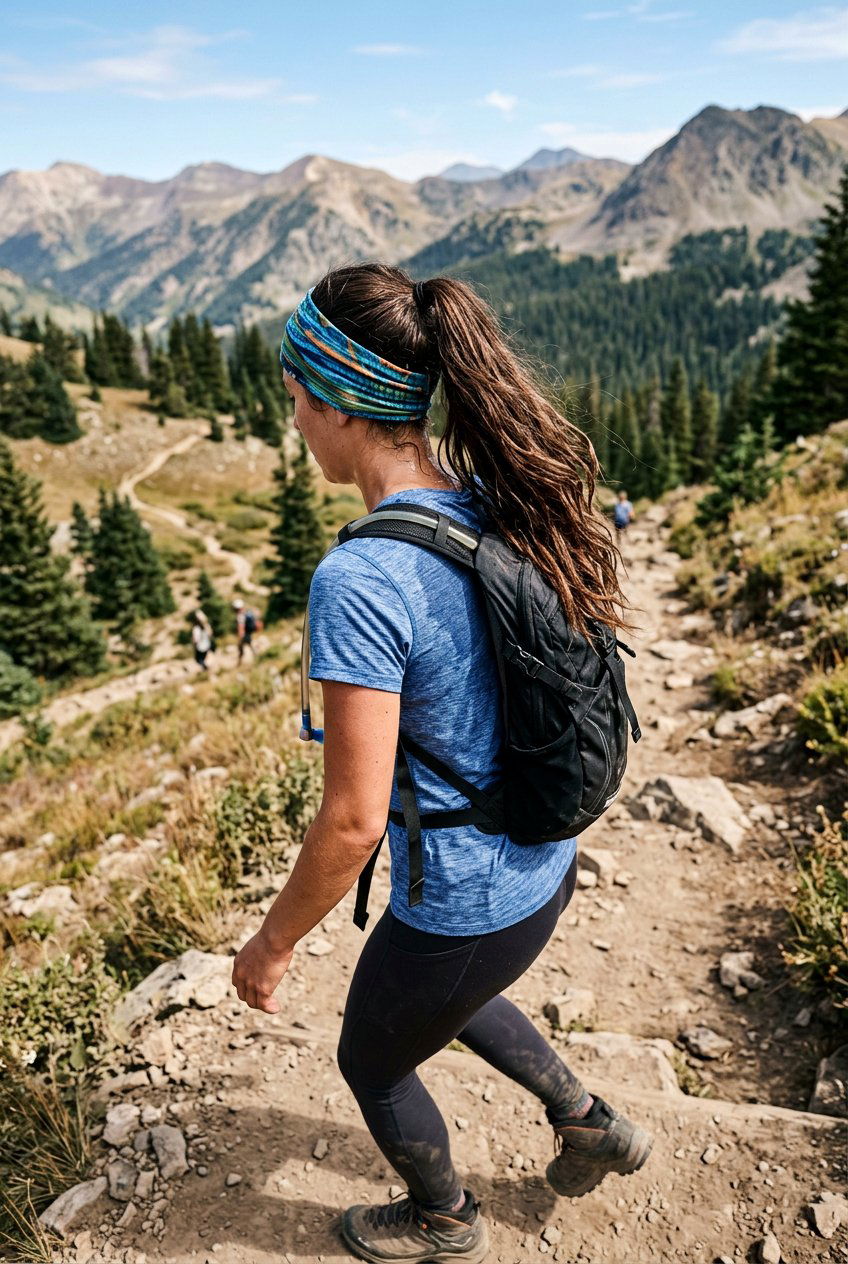
A ponytail with a headband is a smart option when you struggle with sweat and flyaways at your hairline during long climbs. First, put your hair into a mid or high ponytail that clears your backpack, then slide on a moisture‑wicking fabric headband that covers from your forehead to just behind your ears. This combo holds back shorter pieces that cannot reach the ponytail and absorbs sweat before it drips into your eyes. The headband also adds a bit of cushioning under hat bands or helmet straps, which can feel more comfortable on all‑day hikes. Choose breathable materials and avoid overly tight bands so you get all the control and sweat management benefits without headaches or pressure marks.
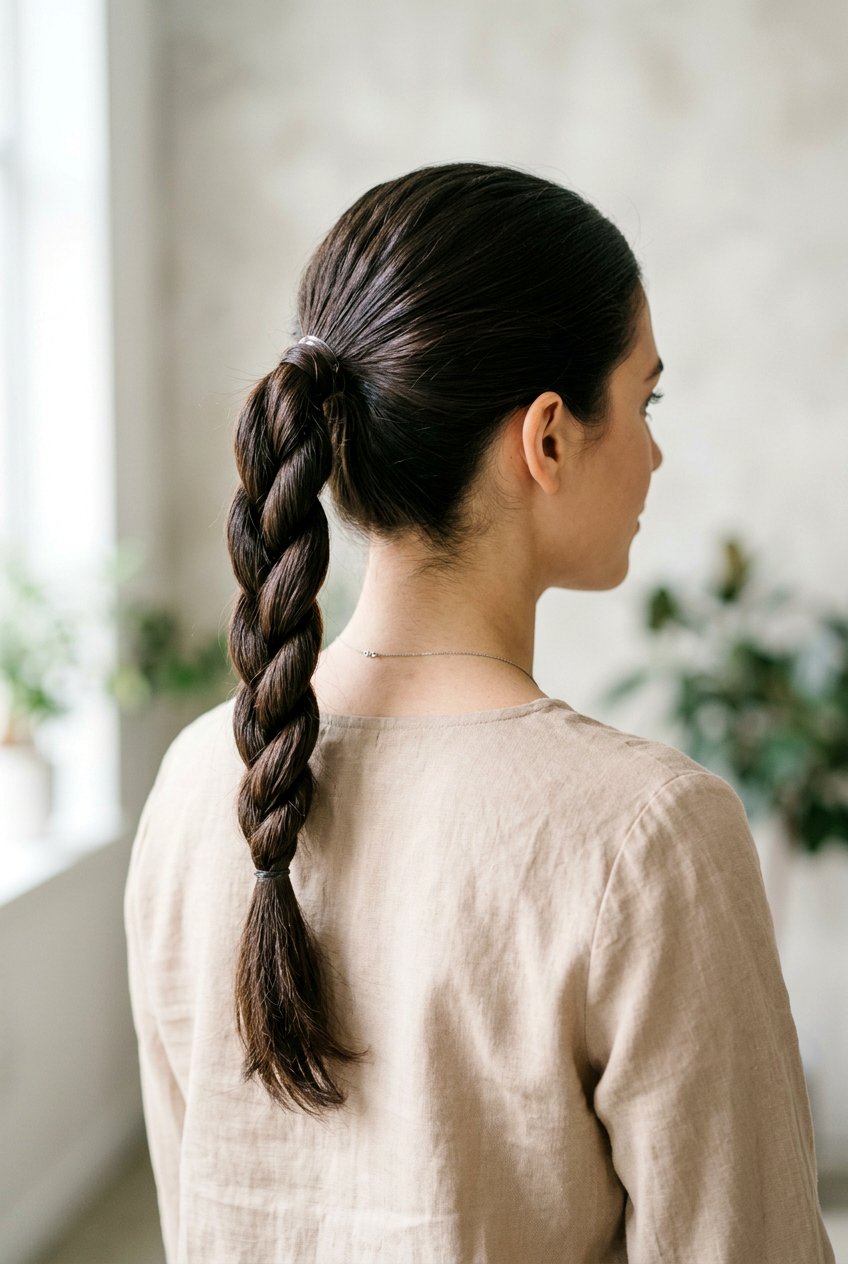

16. Braided Ponytail With Hat For Hiking Long Hair
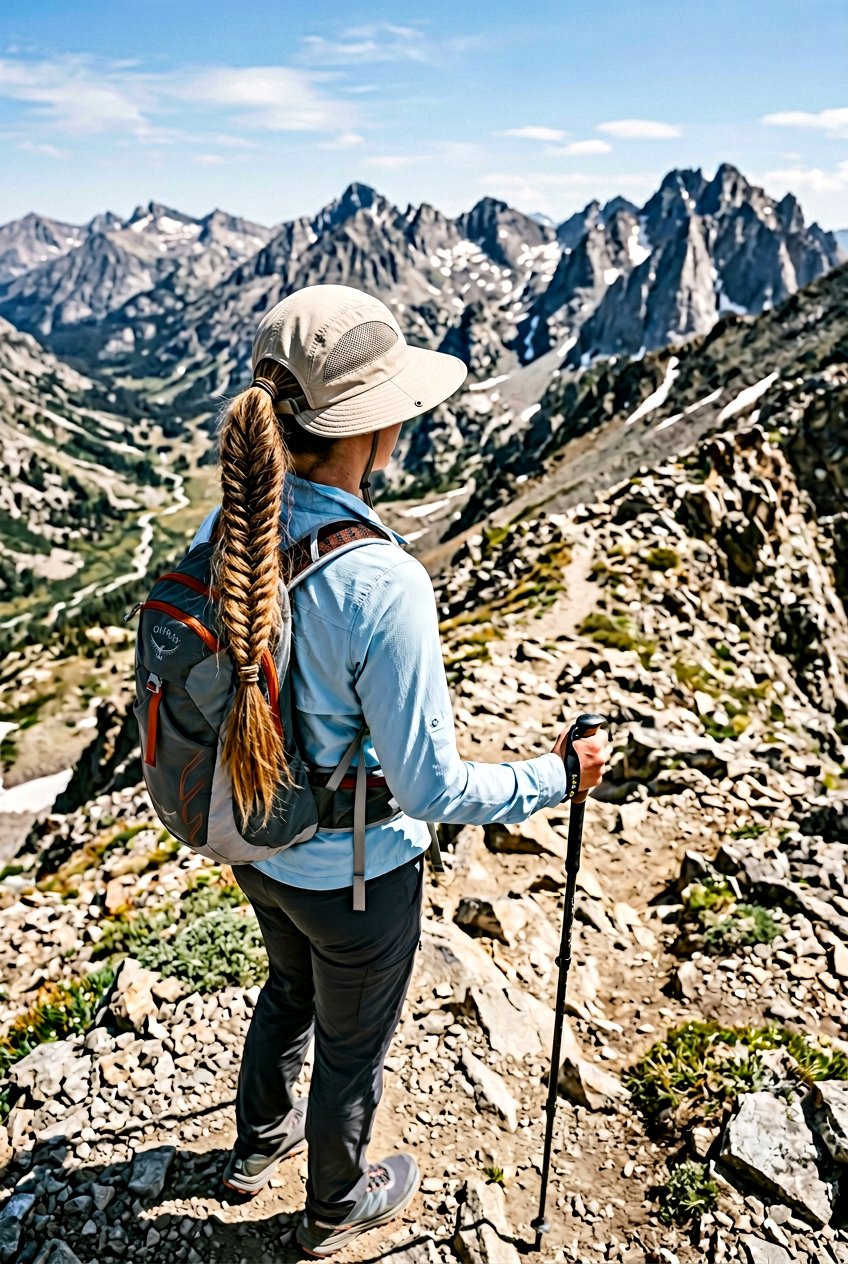
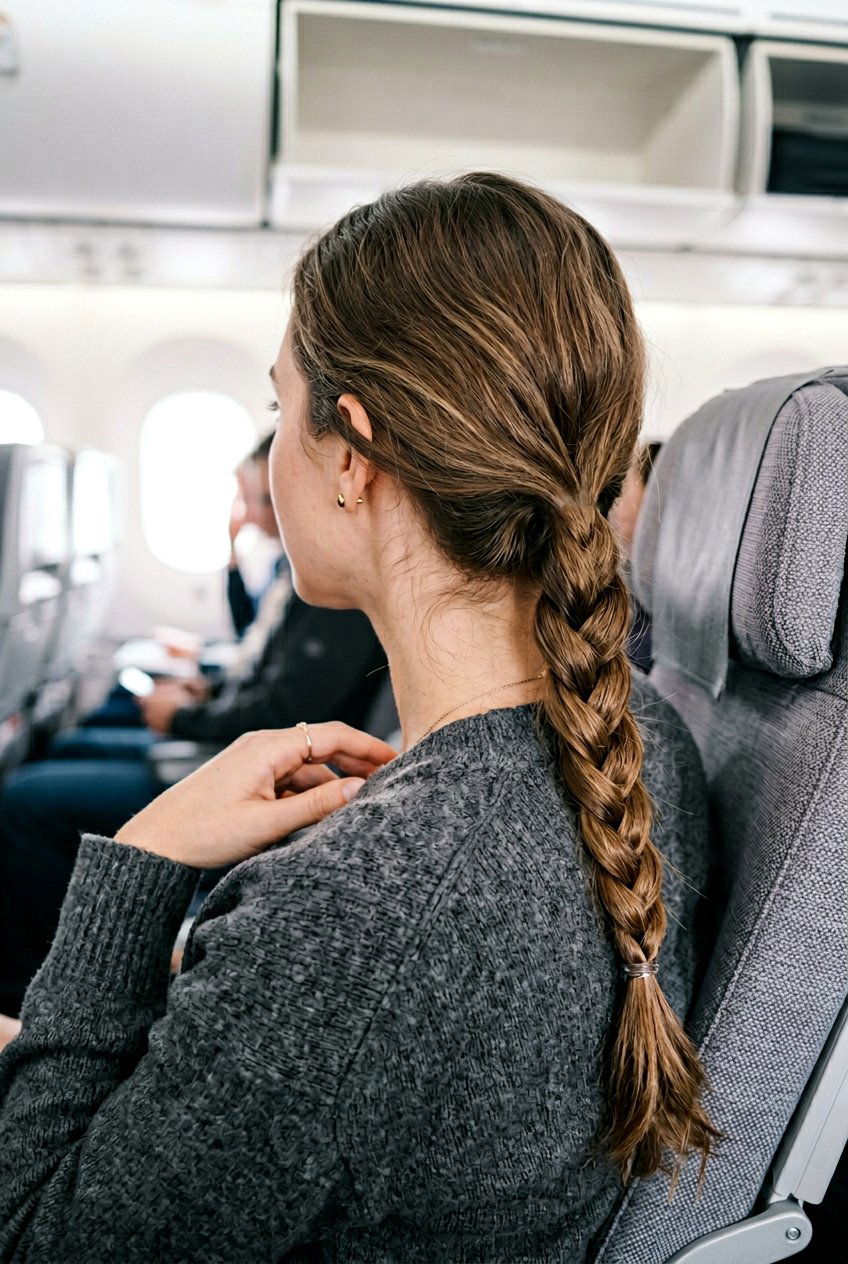
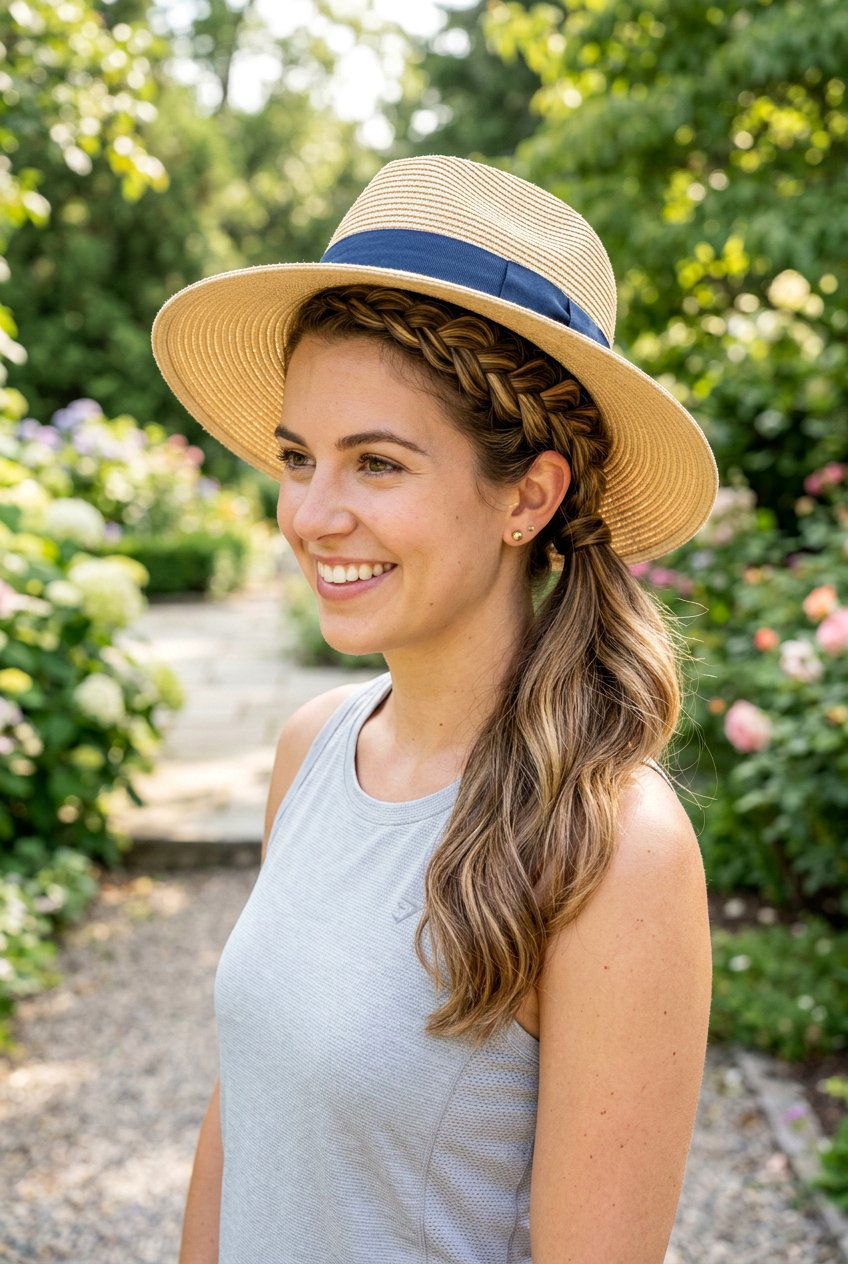
A braided ponytail with a hat blends sun protection with strong tangle control, making it a practical choice for exposed trails and summer hiking. Start with a low or mid ponytail that lines up with the opening in your hat, then braid the ponytail length and secure it firmly at the end. Thread the base through the hat opening so everything sits flat and does not pull when you tighten your chin strap or adjust the brim. The braid keeps your hair from whipping around in wind, while the hat shields your scalp and lengths from UV exposure that can dry and damage strands. This full look stays neat for hours, and it is easy to redo the braid quickly if you remove your hat during breaks or after the hike.
17. Scarf Wrapped Braid For Hiking Long Hair
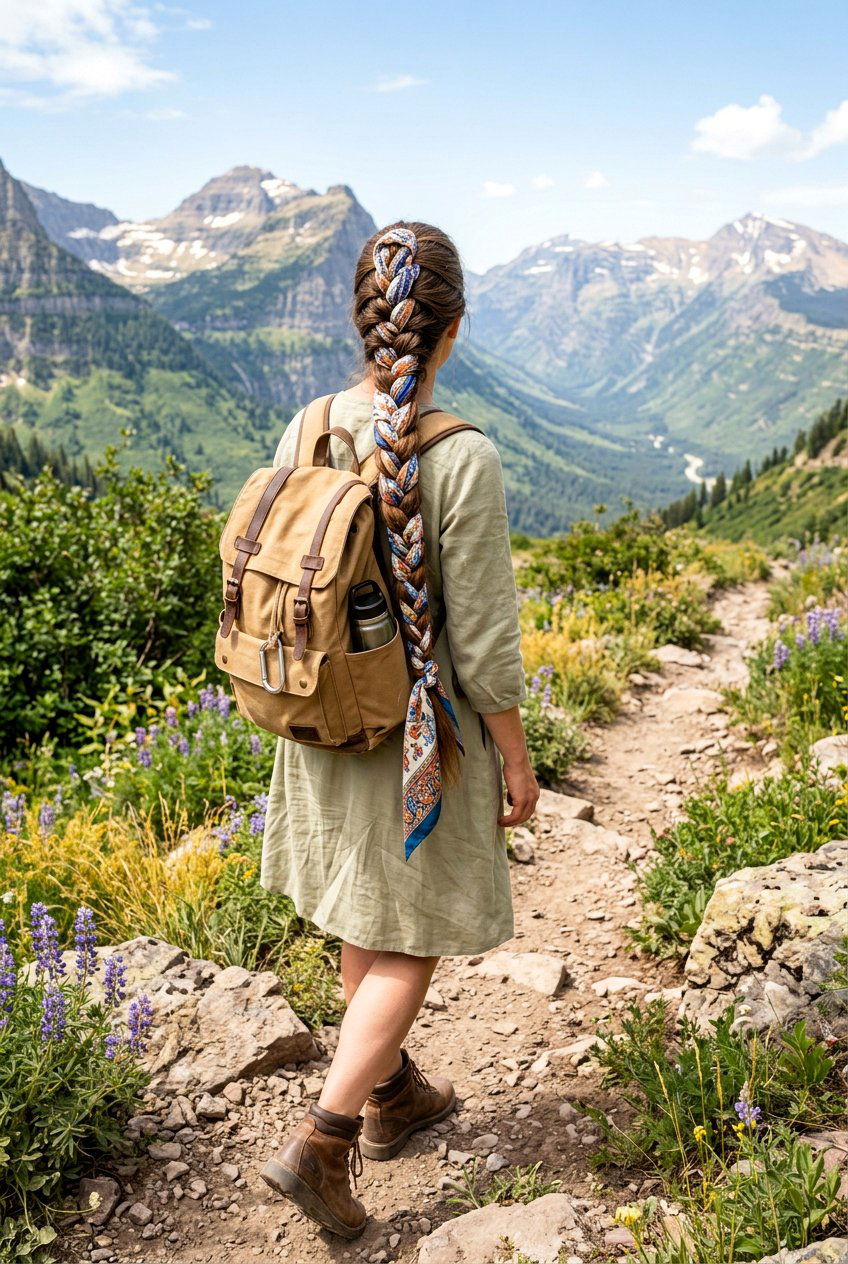
A scarf wrapped braid gives your hiking hairstyle extra protection and flair, especially useful if your hair tangles easily or you are out in strong sun. To create it, start a low or side braid, then weave a lightweight scarf or bandana through one of the three strands as you braid down. The fabric helps shield hair from friction against clothing and gear while also adding a barrier against dust and grit. Choose breathable, quick‑dry materials so the scarf does not stay damp if you sweat or get caught in light rain. This look works well on casual hikes and travel days, giving you a distinctive trail vibe without sacrificing the practical benefits of a standard hiking braid.
18. Braided Pigtails With Hat For Hiking Long Hair
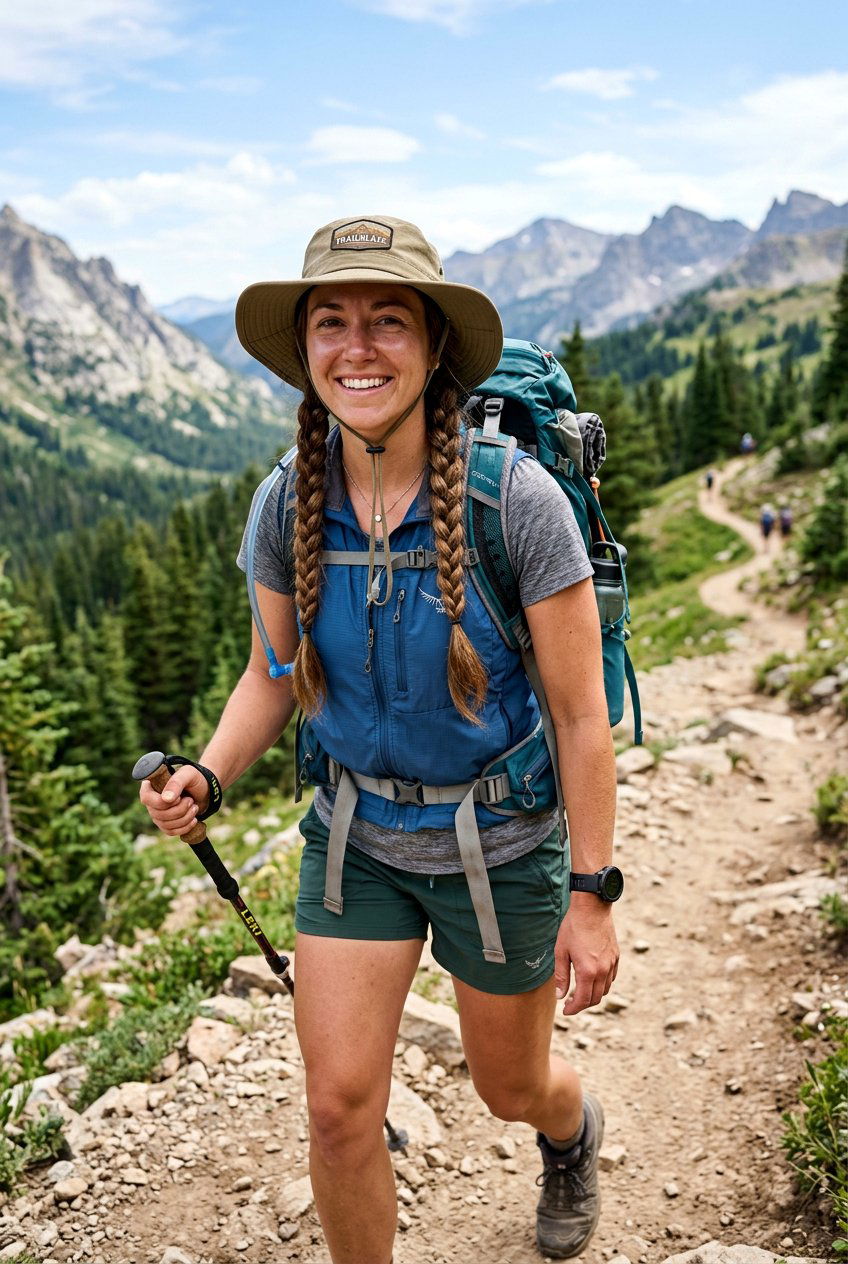
Braided pigtails with a hat are a playful yet highly functional hiking hairstyle for long hair, especially on windy ridgelines or long out‑and‑back routes. Part your hair down the center, braid each side from the crown or just below the ear, and secure the ends with small elastics. Then add a baseball cap or wide‑brimmed hat over the braids, letting them fall in front of your shoulders so they do not interfere with backpack straps. This arrangement keeps your hair anchored, your scalp shaded, and your neck relatively clear, which helps control overheating on sunny days. It is also easy to loosen or rebraid one side at a time during breaks without disturbing your hat setup or pack harness.
19. Low Bun With Buff For Hiking Long Hair
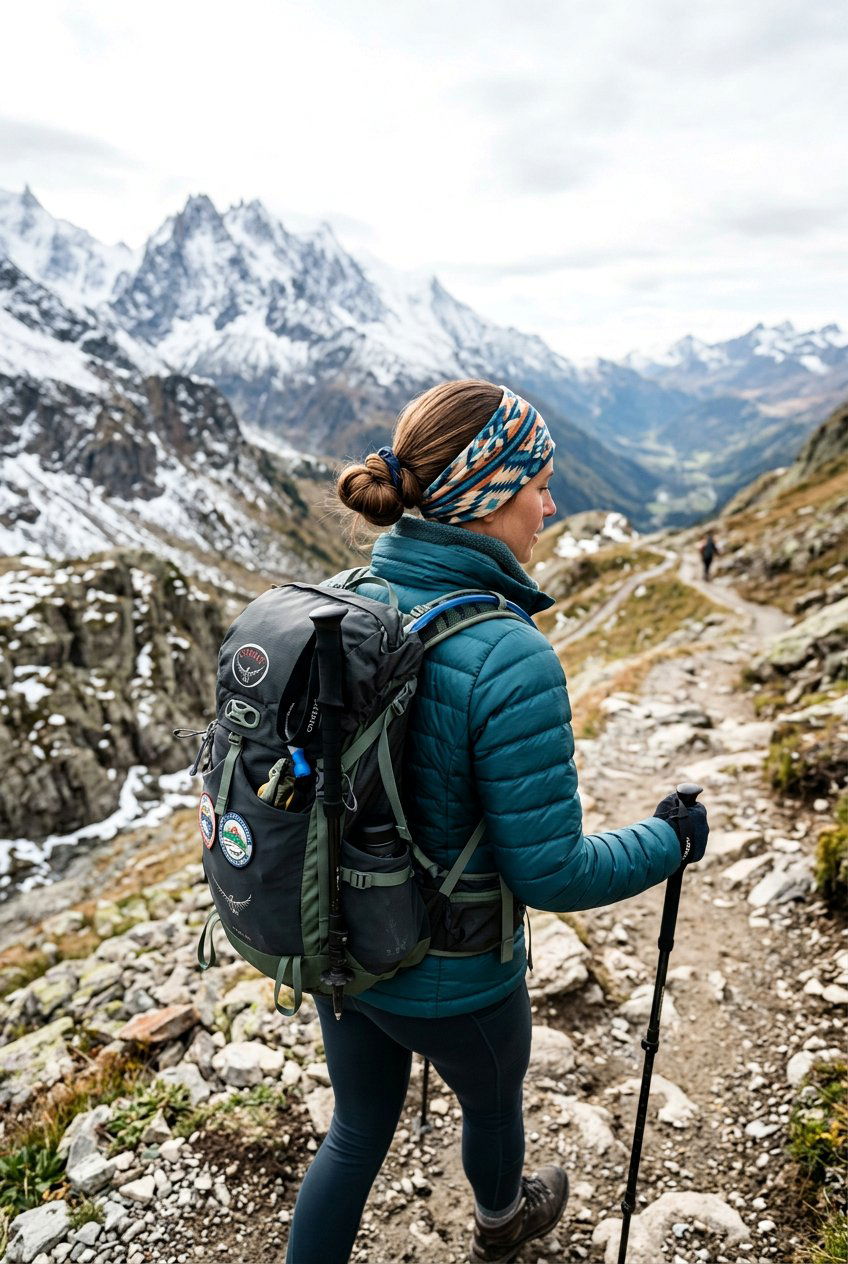
A low bun with a buff is a reliable choice for multi‑day hikes or cooler conditions where you want extra warmth and control without a heavy hat. Twist your hair into a low bun at the nape, secure it firmly, then pull a stretchy buff or tube scarf over your head and position it like a wide headband. The buff helps trap warmth, keeps short hairs and frizz contained, and provides a layer of protection between your hair and any jackets or pack straps. This combination is also helmet‑friendly for activities like climbing approaches or via ferrata routes that still involve plenty of hiking. With proper placement, you get a streamlined silhouette that stays comfortable for hours while keeping your long hair neatly tucked away.
20. Loose Waves Under Wide Brim Hat For Hiking Long Hair
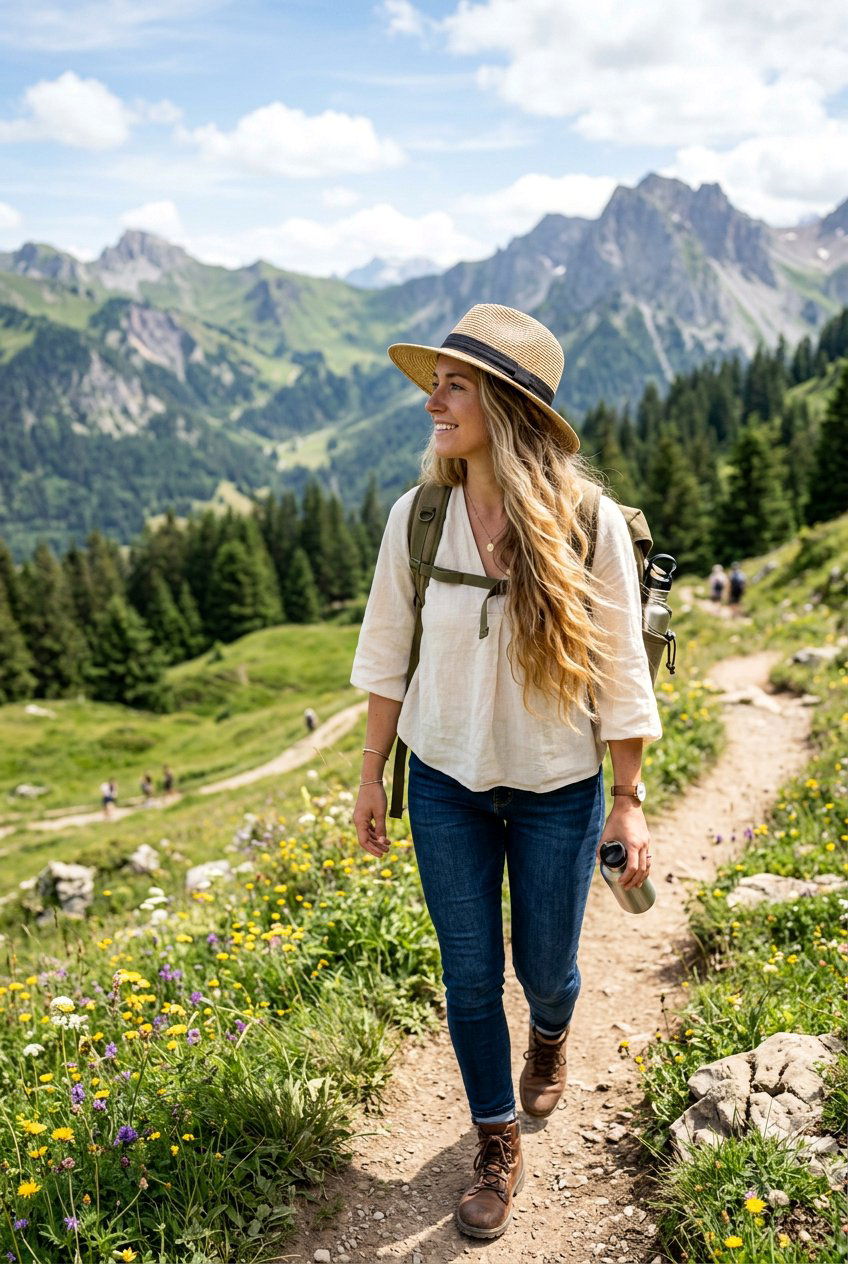
Loose waves under a wide brim hat create a more relaxed hiking look for easy trails, photo stops, or cooler days when overheating is not a big concern. Let your hair fall naturally or add soft waves beforehand, then place a wide‑brimmed hiking hat on top, making sure the crown is not too tight. This style gives your scalp shade and protects your hair from direct sun, which helps reduce dryness and color fading over time. Because the hair is loose, it is best for gentle walks, shaded forest routes, or times when you do not expect strong wind. Carry a small, wide‑tooth comb in your pack and apply leave‑in conditioner before your hike to make detangling easier once you are off the trail.
Conclusion:
Planning hiking hairstyles for long hair is really about comfort, safety, and hair health, not just how your hair looks in summit photos. Braids, buns, and secure ponytail variations consistently show up in outdoor experts’ recommendations because they reduce tangles, prevent distraction, and stay put under hats and backpacks. Adding simple helpers like moisture‑wicking headbands, buffs, or breathable scarves can make a noticeable difference in sweat control and scalp comfort on long climbs. It also helps to prep your hair with conditioner and use gentle elastics so your strands stay healthier despite sun, wind, and trail dust. When you choose a hiking hairstyle that matches your pack setup, weather, and trail length, you can focus fully on the views, miles, and memories instead of fighting with your hair all day.
You'll Like These Styles:




Leave a Reply