
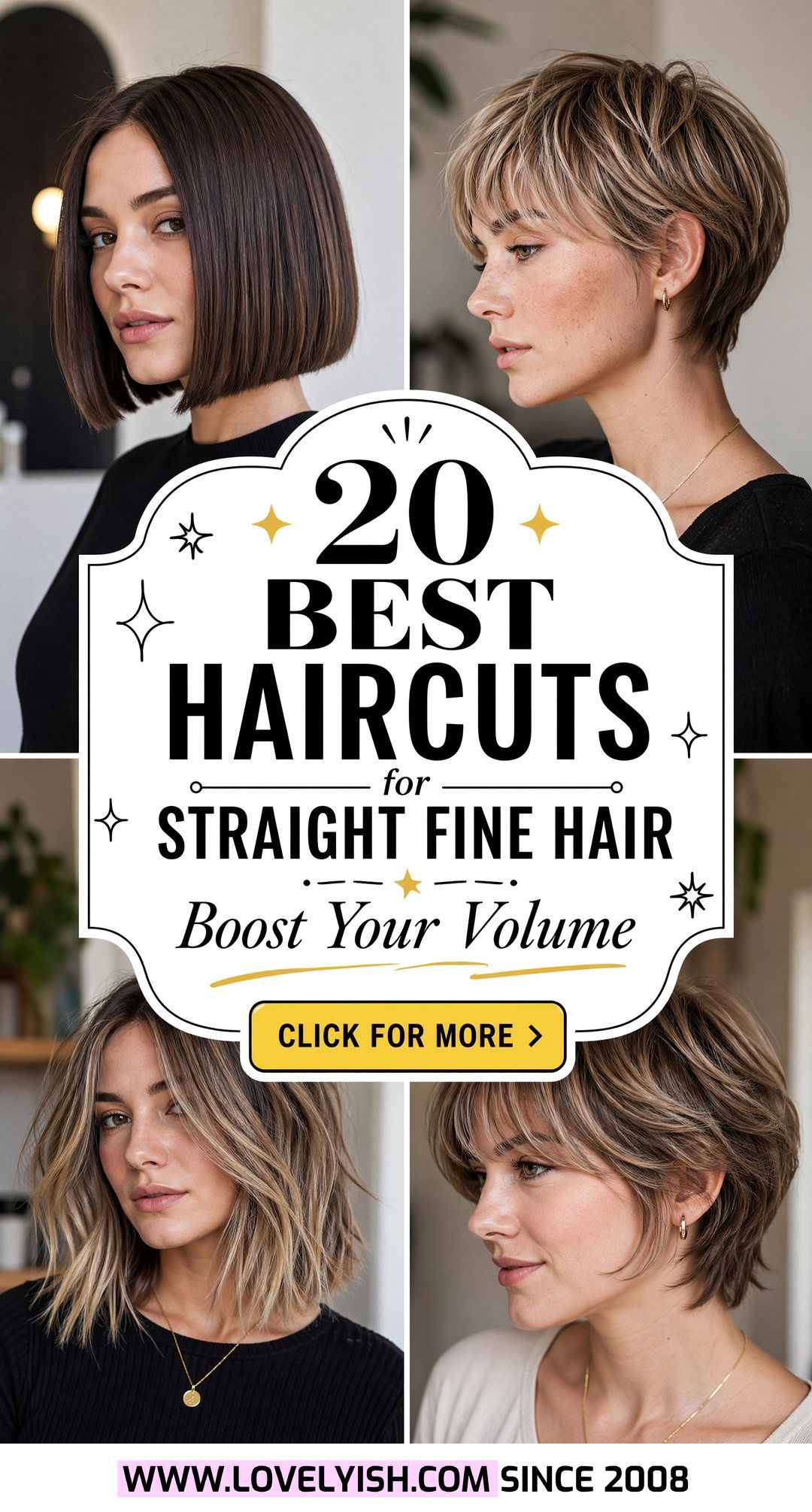
Thin, straight hair can actually be a secret weapon when you choose the right cut that builds in shape, lift, and movement without sacrificing density at the ends. The best haircuts for straight fine hair focus on clean lines, soft layering, and clever length choices that make your hair look fuller from every angle. Instead of fighting flatness with heavy products, you get volume from the cut itself, whether you go for a chic bob, a modern shag, or a low-maintenance pixie. Many stylists now favor blunt or lightly layered edges, invisible layers, and face-framing detail to keep the perimeter strong while adding interior texture. When you pair these cuts with simple styling—like a round brush blowout, light mousse, or texturizing spray—you can quickly transform fine, limp strands into hair that looks thicker and more polished every day.
1. Blunt Bob For Fine Straight Hair

A blunt bob is one of the most reliable ways to make straight fine hair look instantly thicker because the ends are all one length, which visually concentrates fullness at the perimeter instead of letting it thin out. The hair is usually cut around the chin to just below it, with minimal or no layers, so your strands naturally stack together and create a denser, boxier shape that reads as fuller and healthier. This works especially well if your hair tends to fall flat at the roots, because lifting the length off your shoulders gives built‑in bounce without a lot of styling effort. Ask your stylist for a classic blunt bob with slightly softened ends so the cut looks modern rather than harsh, and style it with a volumizing mousse and a round brush, curling the ends under for a sleek, polished finish that still feels light.
2. French Bob For Straight Fine Hair

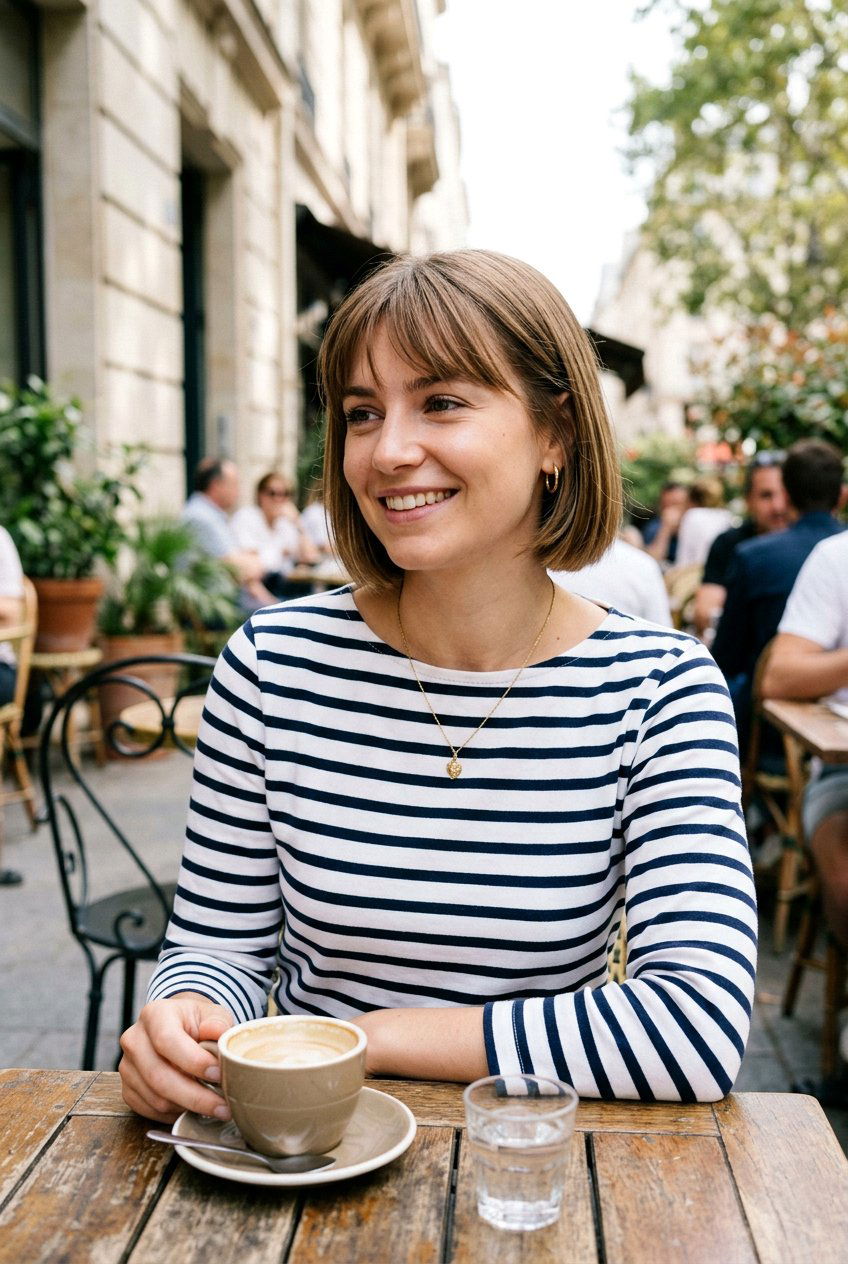
The French bob takes the blunt bob and makes it a bit shorter and more playful, typically hitting somewhere between the lips and the chin, which automatically opens up your neck and gives fine hair a lifted, airy look. Because it is cut relatively straight across with subtle internal texture, the shape keeps weight in the ends while still allowing a little movement so straight hair does not look too severe or flat. Many French bobs are paired with soft fringe or piecey micro bangs, which are especially flattering on fine hair because they bring attention to your eyes and cheekbones while adding volume around the front. Ask for a short, chin‑grazing bob with a blunt baseline, light point‑cutting through the interior, and optional wispy bangs; then style it by blow‑drying with a small round brush and finishing with a light texturizing spray to keep everything touchable and full.
3. Long Bob For Straight Fine Hair

A long bob, often called a lob, is perfect if you have straight fine hair and want volume without losing too much length, because it usually sits around the collarbone and keeps the weight line strong while still offering movement. The key is a mostly blunt edge at the bottom with very soft, blended layers that start around the chin or slightly below, which helps the hair swing and not collapse against your face. This shape works well on a lot of face shapes and looks especially modern when worn with a center part or a slightly off‑center part, so you can switch things up and adjust where you want lift at the roots. Ask your stylist for a collarbone‑length lob with a blunt perimeter and minimal layers, then use a root‑lifting spray and a round brush to blow‑dry, adding a small bend at the ends with a flat iron or curling iron for a fuller, more dimensional finish.
4. Angled Bob For Straight Fine Hair

An angled bob, with the back shorter and the front gradually longer, is great for straight fine hair because it builds instant shape and visual volume without needing intense layering. By lifting the length at the nape and allowing it to drop toward the front, you get a slight stack effect that makes the back appear thicker while the longer front pieces frame your face. This kind of cut is especially flattering if your hair tends to look flat from the side, because the diagonal line adds movement even when your hair is styled straight. Ask for an angled bob that hits around the nape in the back and reaches the collarbone in the front, with a mostly blunt perimeter and just enough internal texturing, then blow‑dry with a round brush and a volumizing mousse to keep the crown lifted and the front sleek and swinging.
5. Textured Pixie Cut For Straight Fine Hair

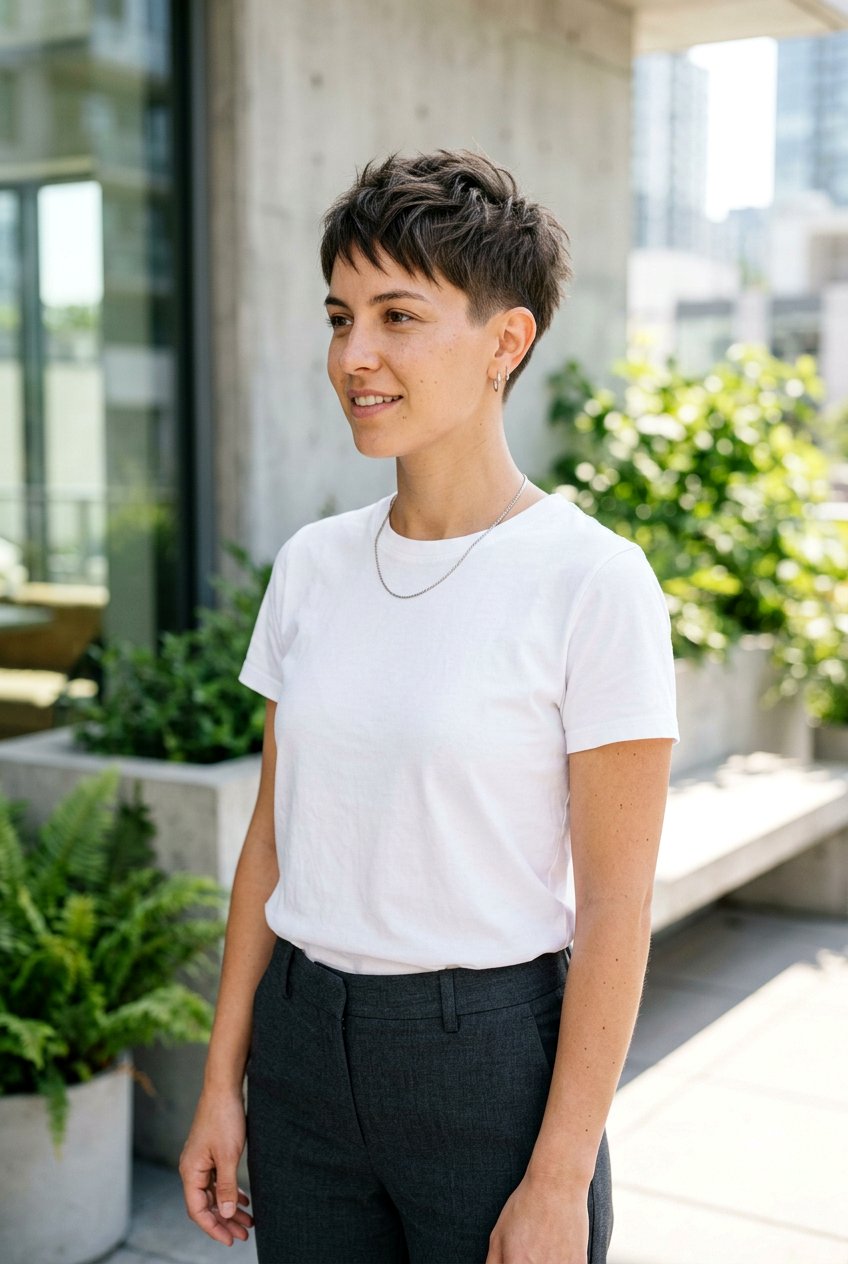
A textured pixie works beautifully on straight fine hair because the short length prevents your strands from lying flat while layered pieces on top create built‑in lift and movement. The back and sides are cut close to the head, while the top is left slightly longer and point‑cut or razor‑cut to introduce choppy dimension that makes the hair look thicker. This is ideal if you want a low‑maintenance haircut that still feels modern and edgy, since it styles quickly with just a bit of product for separation and volume. Ask your stylist for a short pixie with tapered sides and back, leaving extra length through the crown and fringe area; then style by working a lightweight texturizing cream or paste through the top, pushing pieces upward and forward to create a soft, full shape instead of flat, smooth layers.
6. Short Shag Haircut For Straight Fine Hair

A short shag can transform straight fine hair by adding lots of piecey layers that create movement and lift, especially around the crown and sides. The cut usually sits somewhere between the cheekbones and the collarbone, with choppy layers throughout and sometimes curtain bangs, which together give that effortless, tousled look that does not rely on heavy styling. Because the interior is layered and the ends are often slightly feathered, the hair appears fuller and more textured, which is ideal if your fine strands tend to cling together and look limp. Ask for a shag with soft, short‑to‑long layers starting at the cheekbones and extending down, plus optional curtain bangs, then style with a volumizing mousse and a texturizing spray, scrunching or flipping sections away from the face to emphasize the lived‑in, volumized finish.
7. Layered Mid Length Haircut For Fine Straight Hair
A layered mid‑length cut is a great choice if you like your straight fine hair somewhere between your shoulders and chest but want to avoid that stringy, dragged‑down look. The idea is to keep the overall length while adding carefully placed, soft layers starting near the chin or collarbone so the hair lifts away from the face and gains shape without losing too much density at the ends. This kind of haircut works especially well if your hair is fine but not super thin, since it uses movement and gentle layering instead of strong blunt lines alone. Ask your stylist for a shoulder‑skimming to chest‑length cut with long, blended layers and possibly some face‑framing pieces, then style with a round brush, pulling sections up and away from your head to raise the roots and finishing with a light hairspray to keep your volume in place.
8. Blunt Lob For Straight Fine Hair

A blunt lob combines the fullness of a straight‑across edge with the versatility of a longer length, making it perfect if you have fine hair that needs a bit more drama. The length typically hovers around the collarbone or just below, and the ends are cut in a clean, even line so the perimeter looks solid and thick, not wispy. Many stylists add very subtle internal layers or invisible layers just to break up bulk and add movement while keeping the overall impression strong and dense. Ask for a collarbone‑length blunt lob with a straight perimeter and minimal interior texturing, then blow‑dry with a flat brush for sleekness or add loose waves with a curling iron if you want even more fullness, finishing with a lightweight serum at the ends so your hair looks glossy but not weighed down.
9. Long Layers With Curtain Bangs For Fine Straight Hair
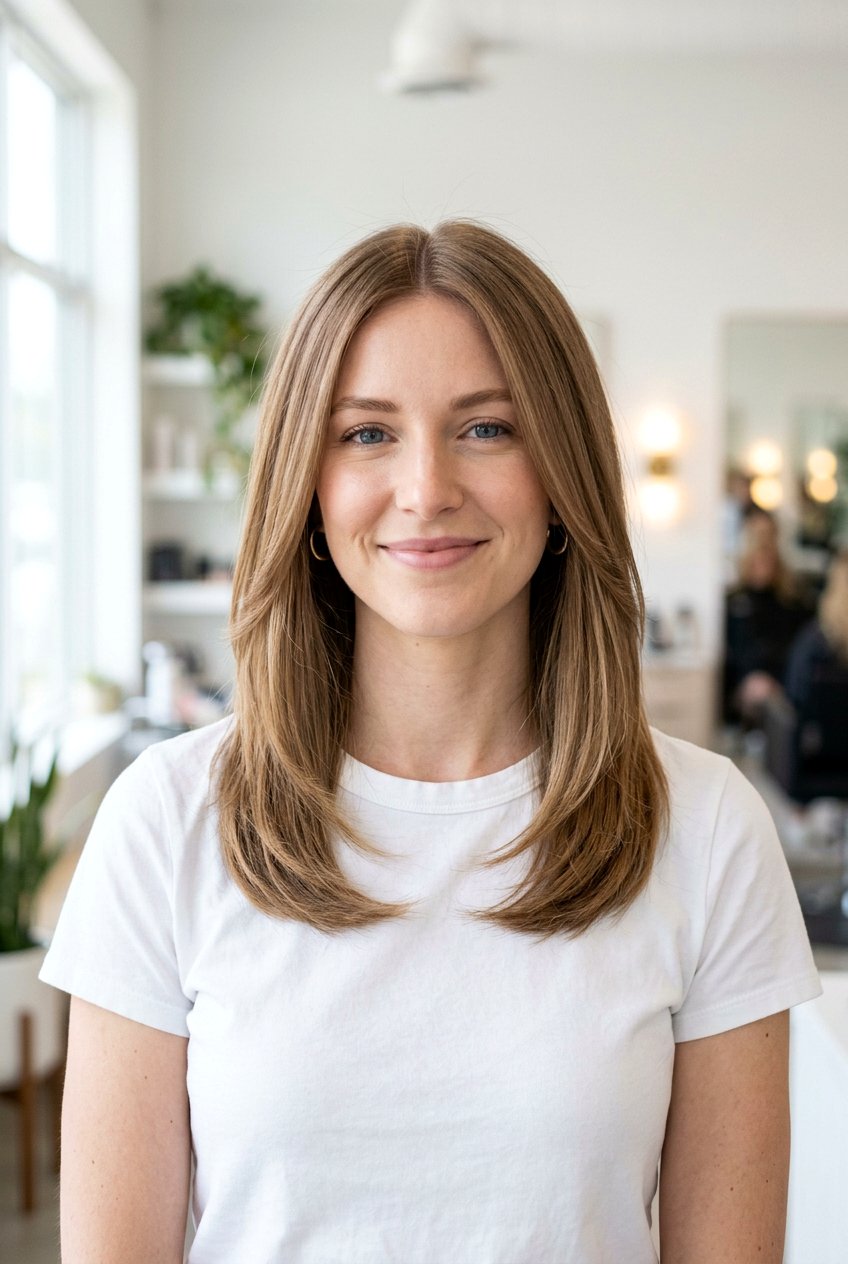
Long layers with curtain bangs are a great option if you want to keep your straight fine hair long but still create shape, volume, and interest around your face. The length usually falls below the shoulders, while long, blended layers lighten up the lower half so your hair can move without looking thin or sparse at the ends. Curtain bangs, parted in the middle and sweepingFine, straight hair can look sleek and expensive, but it also tends to fall flat, separate into stringy sections, and lose shape fast throughout the day. The right haircut changes everything because it controls weight, adds movement in the right places, and builds the illusion of density without over-thinning your ends. When you focus on smart structure—like blunt edges, soft invisible layers, or a bob that sits at the perfect point on your jaw or collarbone—your hair instantly looks fuller. Recent expert recommendations highlight classic bobs, modern shags, pixies, and mid-length cuts as top options for fine, straight hair in 2025–2026 because they combine volume and easy styling. The picks below walk you through 20 of the best haircuts for straight fine hair, what makes each work, and how to style them so your hair looks thicker, not thinner, every day.
1. Blunt Bob For Fine Straight Hair
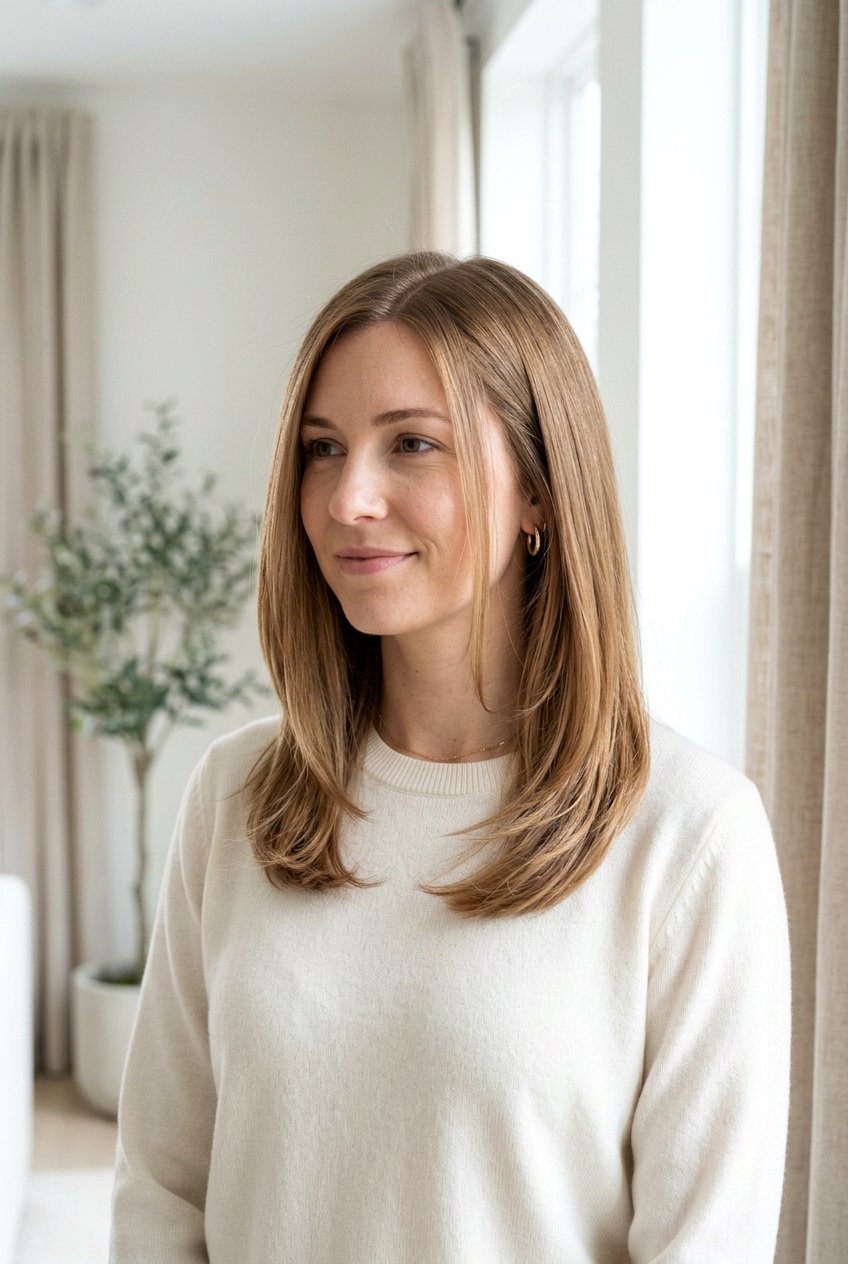
Imagine your hair cut clean and sharp right at the chin or just below, with every strand ending in one solid, straight line. That is a blunt bob, and it is one of the strongest choices if your straight fine hair always looks wispy at the ends. Because there are no layers through the length, all the weight sits at the bottom, which visually thickens your perimeter and makes your hair look denser. Ask your stylist for a bob that grazes your jaw or slightly below, with a straight, even hem and maybe the softest micro texturizing only at the very tips so it does not flip out. Style it by blow-drying with a round brush for a slight bend under and using a light mousse or volumizing spray at the roots, avoiding heavy oils that separate strands.
2. French Bob For Straight Fine Hair
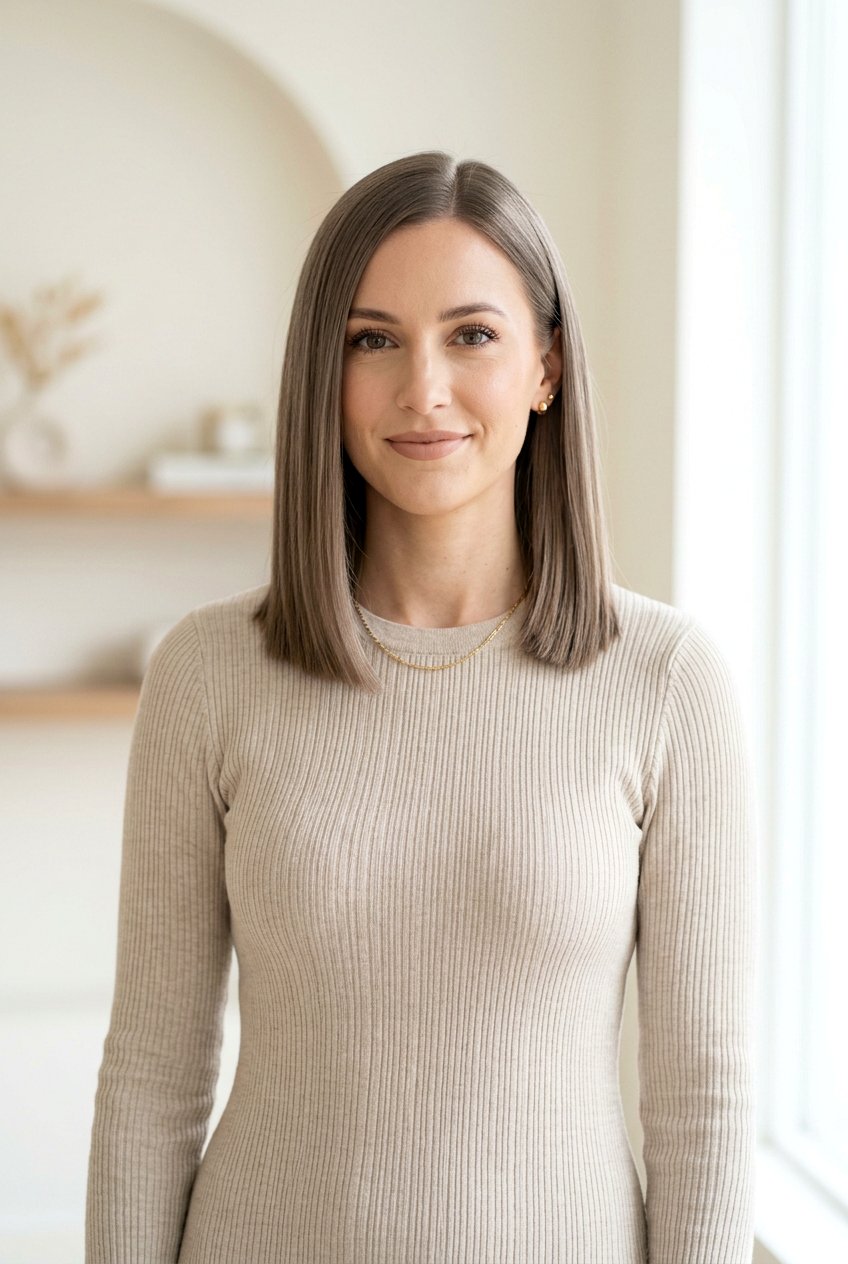
If you like that chic, slightly undone Parisian look, a French bob is a great twist on the classic bob for fine straight hair. This cut usually hits between the cheekbones and jaw, or just at the lips, with a blunt edge and soft internal texture so it never looks too stiff. The length being higher off the shoulders instantly boosts volume because your hair is not weighed down, and the subtle inner layers add movement without thinning the bottom line. Pair it with light, brow-skimming fringe or airy micro bangs if you want more shape around your face, but keep the overall outline fairly solid. To style, rough-dry upside down for lift, then smooth the surface with a small round brush or flat iron, keeping some natural bend instead of pin-straight ends for a fuller, effortless finish.


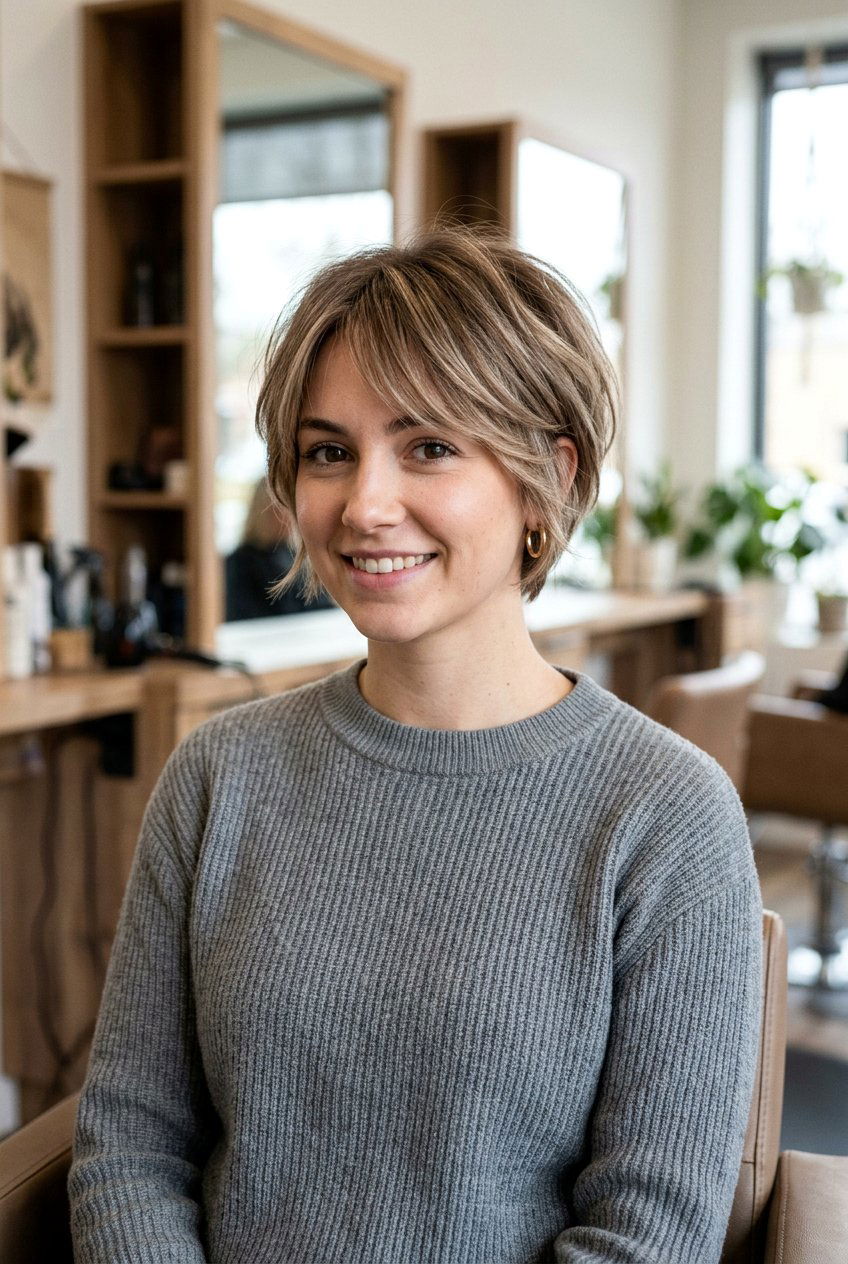
3. Long Bob For Straight Fine Hair

A long bob, or lob, is perfect when you want the fullness of a bob but still like a bit of length brushing your collarbone. The key for fine straight hair is a cut that hits between the collarbone and just above the shoulders, with mostly blunt edges and only gentle, face-framing layers. This shape keeps weight at the bottom so your ends don’t look see-through, yet the soft layers keep the style from feeling heavy or flat. Ask your stylist for a lob that is one length through the back, with minimal internal layering and maybe slightly shorter pieces around the face for movement. When styling, use a volumizing mousse at the roots, blow-dry with a medium round brush, and add a subtle bend with a curling iron or straightener, avoiding tight curls that can make fine hair look sparse.
4. A Line Bob For Straight Fine Hair

An A line bob gives straight fine hair a built-in shape that looks polished from every angle. This cut is shorter in the back and gradually becomes longer toward the front, creating a diagonal line that frames your jaw and cheekbones. The stacked effect at the nape adds volume and lift, while the longer front pieces keep the look modern and elongate the face. For fine hair, ask your stylist to keep layers subtle and the ends mostly blunt, so the back has height but the perimeter still feels solid. Styling is easy: blow-dry the back with a round brush for extra lift at the crown, smooth the front sections forward or slightly inward, and finish with a lightweight volumizing spray so the shape holds without collapsing or getting greasy.
5. Textured Pixie Cut For Fine Straight Hair

For anyone ready to go short, a textured pixie is a bold way to make fine straight hair look much thicker. This cut keeps the back and sides closely cropped while leaving slightly longer layers on top, which are cut with scissors or a razor to create choppy movement. The short length automatically prevents your hair from lying flat, and the layered top builds height and interest so there is no limpness. Ask your stylist for piecey, feathered layers on the crown and fringe area, with soft edges around the ears and nape to keep it feminine and wearable. Style by working a small amount of lightweight texturizing cream or paste through damp or dry hair, pushing pieces upward and slightly forward, and avoiding heavy waxes that can separate strands and expose the scalp.
6. Choppy Pixie Cut For Straight Fine Hair
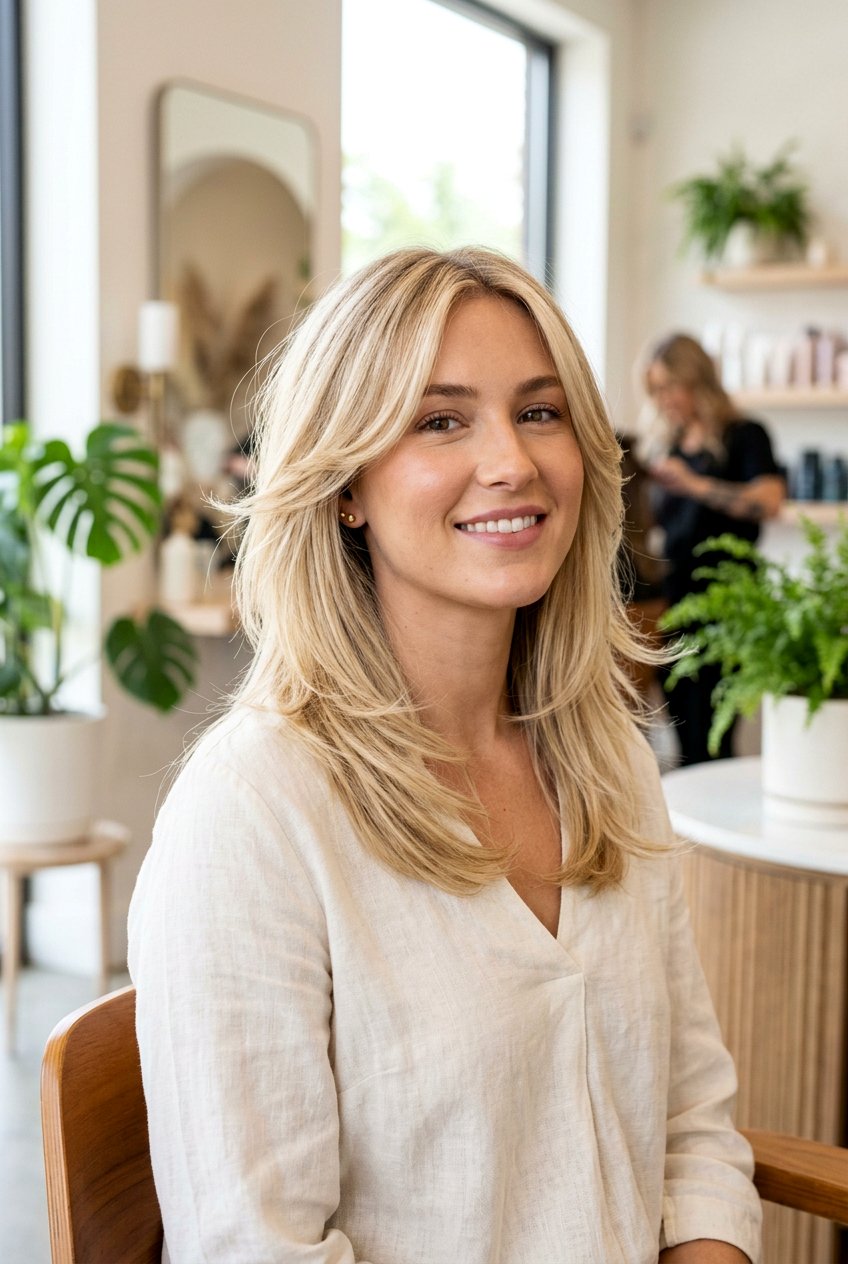
A choppy pixie pushes the texture even further for those who love a more playful, edgy look on fine straight hair. Here, the layers are more uneven and heavily texturized, so the top and fringe area have lots of short, broken pieces that create instant volume and dimension. Keeping the sides close while letting the crown stay longer creates contrast, making the top look fuller and thicker. Ask your stylist for choppy layers throughout the top and front, with point-cut ends and maybe a slightly longer fringe you can wear forward or swept to the side. For styling, use a volumizing mousse or foam when your hair is damp, then finish with a dry texturizing spray or powder, scrunching at the roots to keep everything lifted and touchable rather than stiff or over-styled.
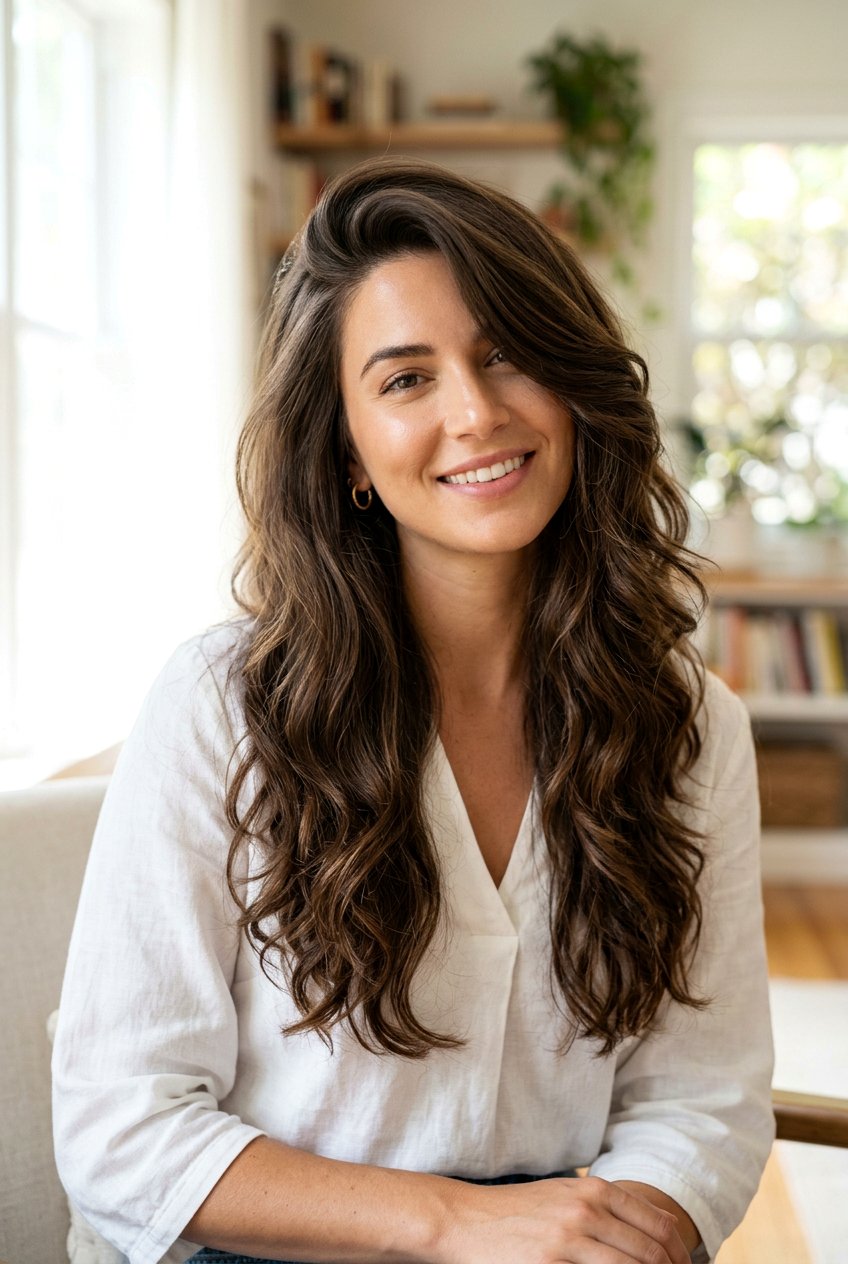
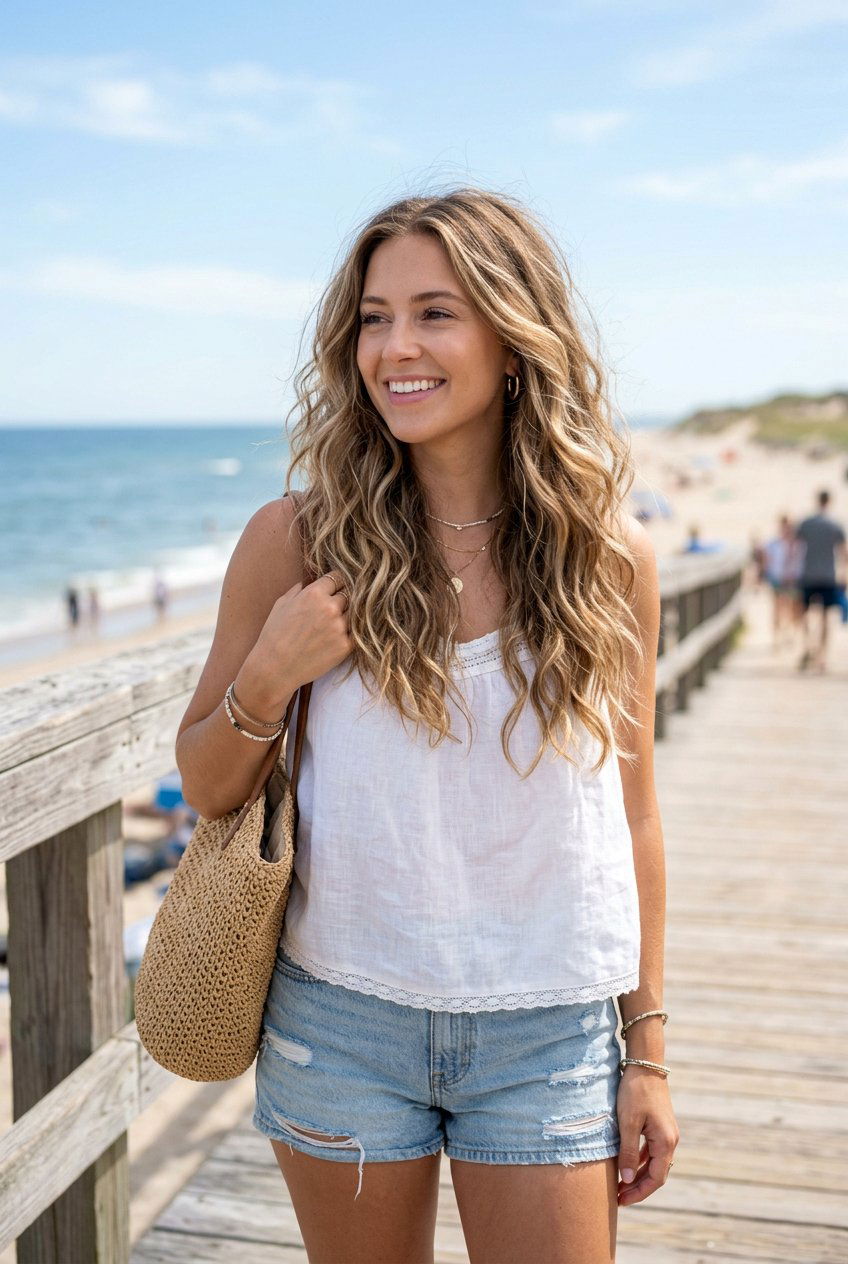

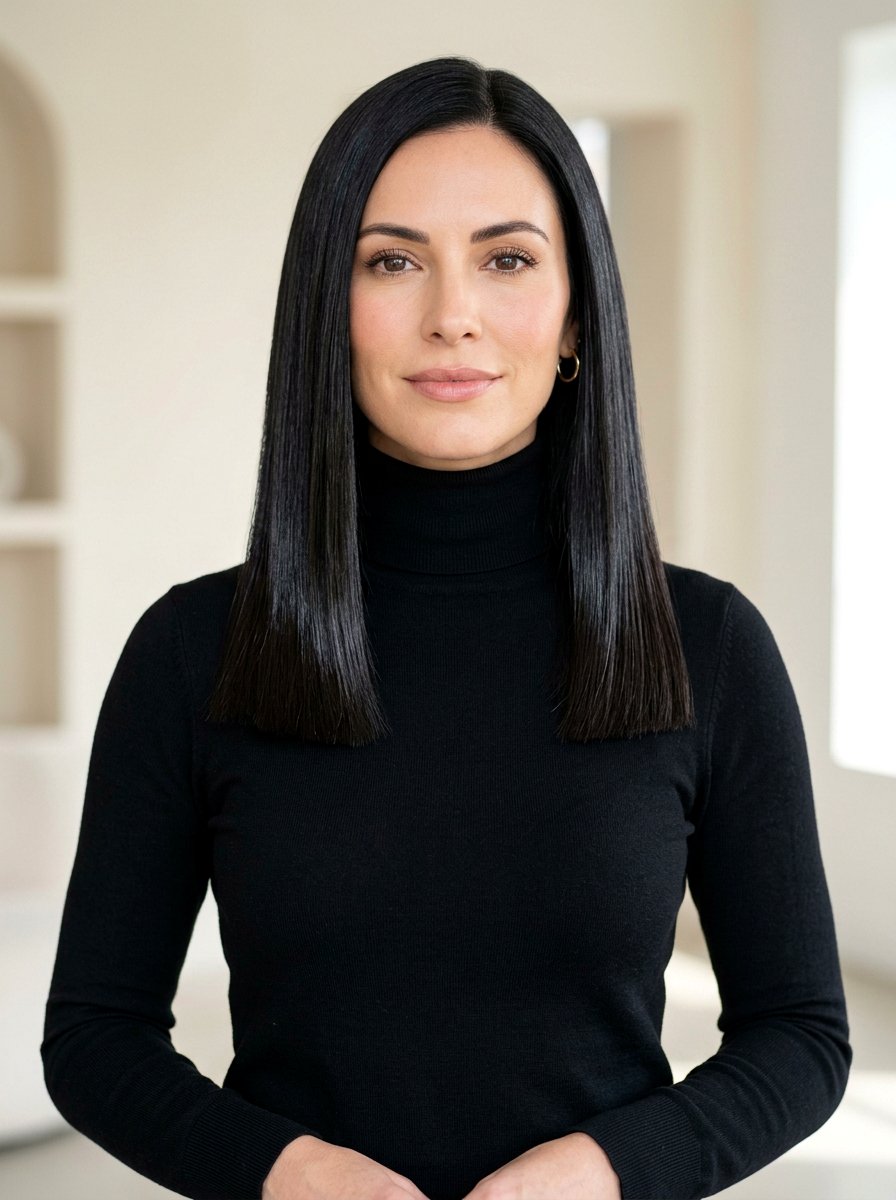

7. Short Shag Haircut For Straight Fine Hair
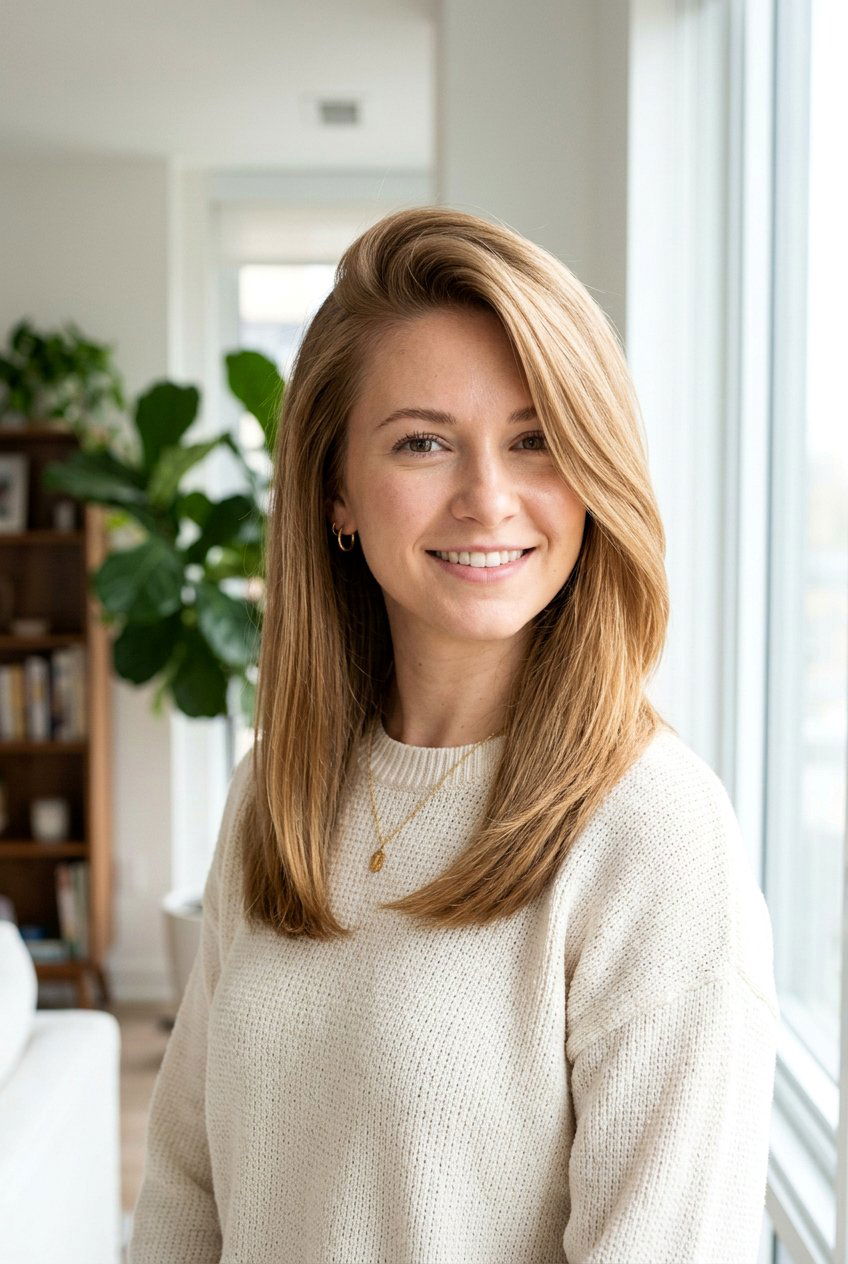
If you like a little rock-and-roll edge, a short shag is a great match for straight fine hair because it builds volume with choppy layers everywhere. This cut usually hits somewhere between the jaw and the collarbone, with lots of piecey layers around the crown and through the lengths, and often includes curtain or wispy bangs. The shag shape removes some weight from the interior while keeping enough fullness at the ends, so your hair moves without looking thin. Ask for soft, shattered layers starting around the cheekbones or just below, plus face-framing pieces and optional bangs that blend into the rest of the cut. Styling is low effort: apply a light texturizing spray or mousse, rough-dry with your hands, and maybe flick a few pieces with a curling iron to add soft bends, embracing an imperfect, tousled finish rather than a super-sleek look.
8. Medium Shag Haircut For Straight Fine Hair

A medium shag hits around the shoulders or slightly longer and works well when you want volume but still crave more length than a short shag. This version spreads its layers throughout the mid-lengths and ends, which creates airy movement and makes fine straight hair look more dynamic. Because the layering is more graduated, you keep a bit more density toward the bottom while still getting that lived-in, feathered vibe. Ask your stylist for choppy, blended layers starting near the cheekbones or jaw, soft face-framing pieces, and optional curtain bangs that flow into the rest of the cut. Styling is all about texture: use a volumizing spray or foam at the roots, rough-dry, then finish with a salt-free texturizing spray, scrunching lightly so the hair does not clump or separate but still shows off the layered shape.
9. Layered Mid Length Cut For Straight Fine Hair
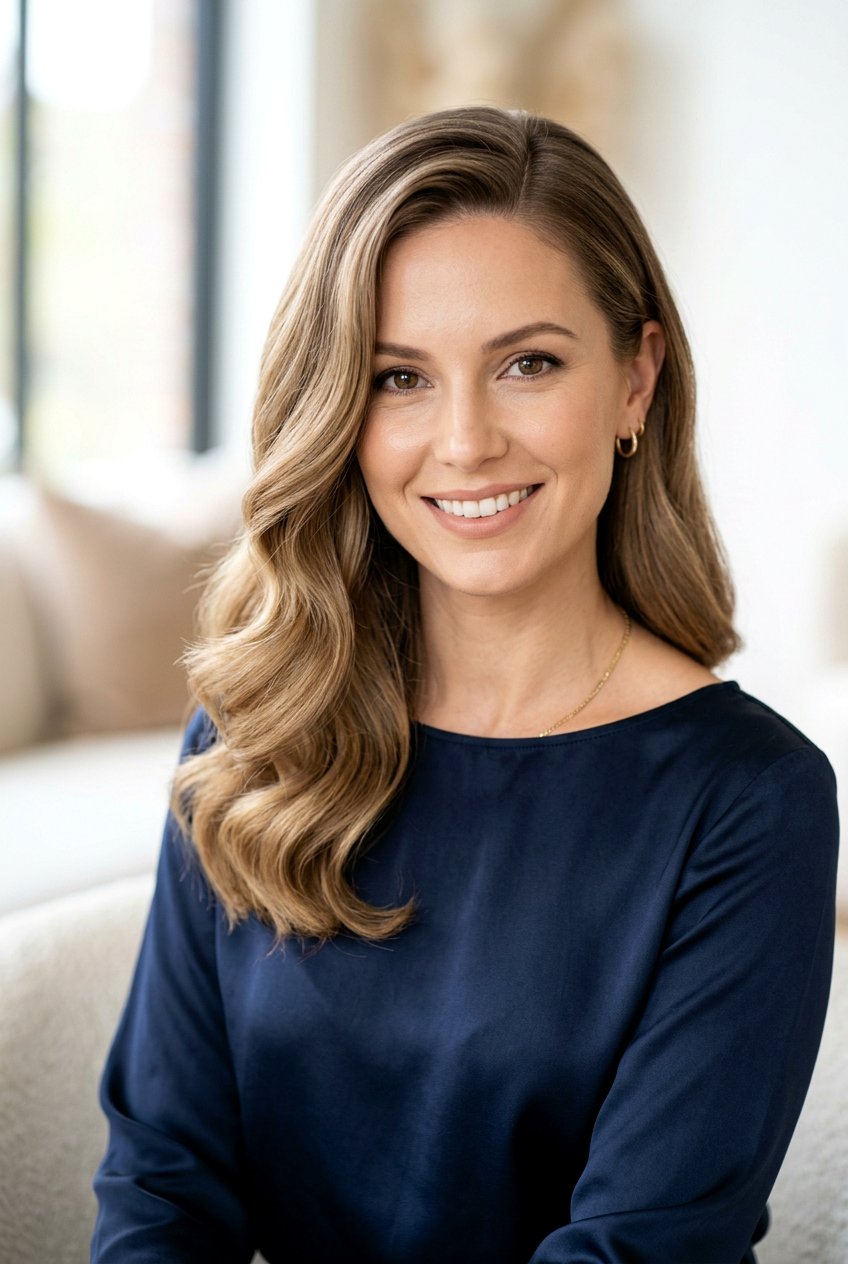
A layered mid length cut around the collarbone is a smart compromise for straight fine hair when you want versatility without sacrificing fullness. This haircut usually falls between the shoulders and upper chest, with soft, blended layers starting near the chin or collarbone rather than too high on the head. Keeping layers lower helps maintain density at the roots and ends, so your hair does not look overly thinned out. Ask your stylist for long, subtle layers that create movement and lift without obvious step lines, plus gentle face-framing pieces that open up your features. To style, apply a volumizing mousse from roots to mid-lengths, blow-dry using a round brush for lift, then add a few loose bends with a curling iron, alternating directions so the layers stack and give the illusion of more body.
10. Invisible Layers For Straight Fine Hair

Invisible layers are perfect if you want movement in straight fine hair without obviously “layered” ends. This technique uses very soft, internal layers that are cut within the hair rather than clearly carved out at the surface. The result is a cut that looks mostly one length but moves easily and resists that limp, heavy look. Ask your stylist for invisible or internal layering customized to your length—whether lob or mid-length—emphasizing that you do not want to see choppy steps or thinned-out tips. Styling is simple: use a light mousse or root lift spray, blow-dry with a round brush while lifting sections at the crown, and add very soft, large-barrel waves if you want to emphasize the hidden layers while still keeping a sleek overall look.
11. Blunt Lob Haircut For Straight Fine Hair
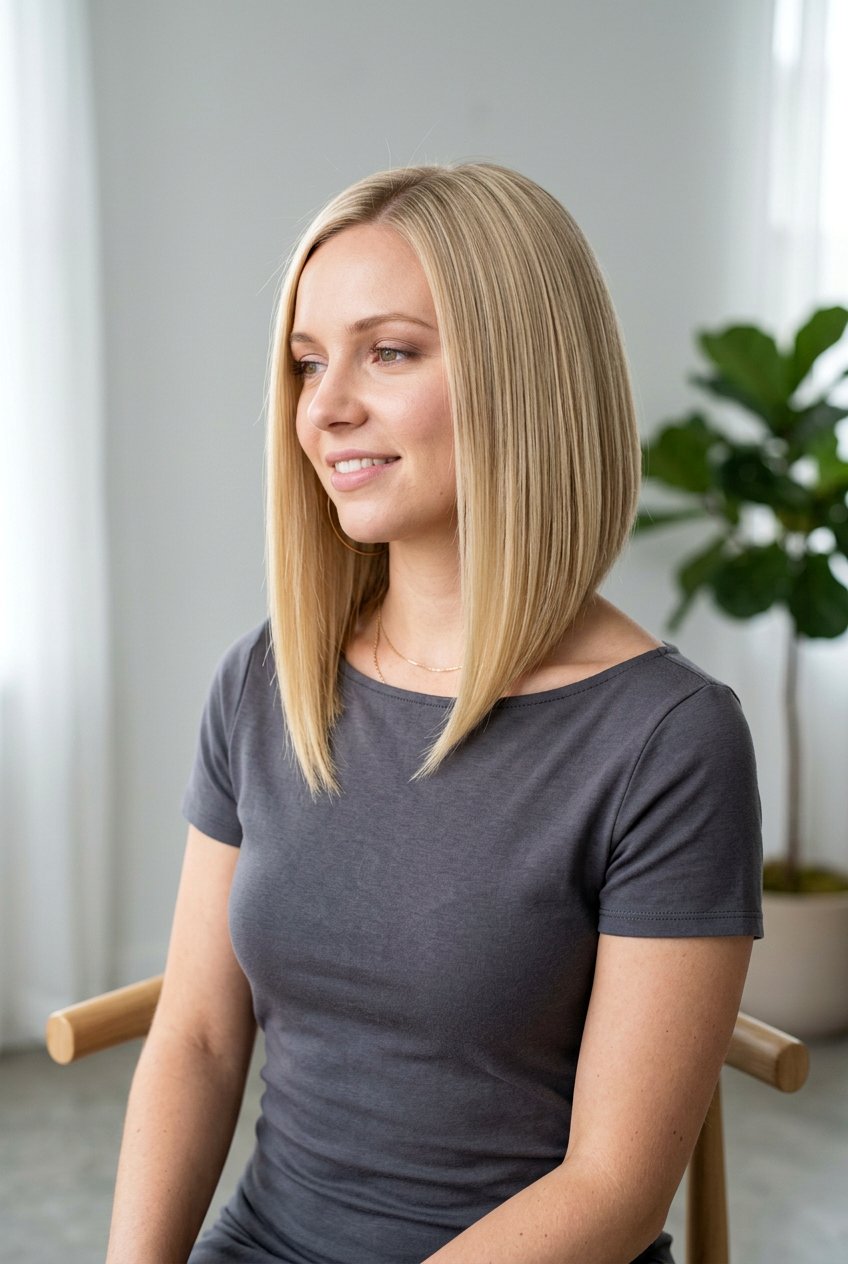
A blunt lob combines the elongating effect of a longer cut with the density-building power of a straight, even edge. This haircut typically hits at or just below the collarbone and keeps the perimeter one length, which makes the ends look thick and healthy. Because the hair is not too long, it still lifts away from the scalp with basic blow-drying, so you avoid that heavy, flat effect common with long fine hair. Ask for a lob with a clean, blunt line all the way around, plus maybe the slightest internal shaping if you need movement, but no obvious layers in the bottom few inches. To style, apply a volumizing mousse at the roots, smooth the lengths with a round brush, and create a soft bend at the ends, finishing with a flexible-hold spray so it stays full but still touchable.
12. Soft Bob Haircut For Straight Fine Hair
A soft bob is a great option if a very sharp, blunt edge feels too severe for your face shape or style. This bob usually hits between the lips and chin or slightly lower, but instead of a boxy end, the perimeter is gently softened with light texturizing. That subtle breaking up of the ends helps your bob move and sit naturally, which can flatter fine straight hair that tends to cling to the jaw. Ask your stylist for a bob that is technically one length but “dusted” at the bottom with point cutting, plus very minimal layering so the cut still feels full. Style it by adding a heat protectant and volumizing spray, blow-drying with a small round brush for a slight curve under, and using your fingers to loosen the finish so the ends have a relaxed, soft look without losing their density.
13. Lob With Soft Layers For Straight Fine Hair
A lob with soft layers is a nice step up if your hair is straight and fine but you still want some airy movement. This cut sits around the shoulders, keeping a mostly blunt perimeter while adding subtle, long layers through the mid-lengths. Those layers keep the lob from feeling blocky and also create more motion when you add gentle waves or blow-dry with a round brush. Ask for a shoulder-grazing lob with soft, blended layers that start below the chin and frame your face without cutting into the thickness at the ends. Styling works best with a light mousse or foam at the roots, a smooth blowout, and then a few large, loose bends created with a curling iron or straightener, raked out with fingers so everything looks full but still light and swingy.
14. Curtain Bangs With Long Layers For Straight Fine Hair
Curtain bangs paired with long layers can turn straight fine hair into a more dimensional look without going extremely short. Curtain bangs split down the middle and frame each side of your face, while long layers throughout the length create movement and subtle volume. That face-framing shape draws attention to your features and makes the overall cut look more intentional, even if your hair itself is not super thick. Ask for soft, cheekbone- or jaw-length curtain bangs that blend into long, gradual layers starting around the collarbone or lower. Style by blow-drying your bangs with a round brush, pushing them back and out for a swooping effect, then adding loose waves or bends through the rest of your hair with a curling iron and finishing with a lightweight texturizing spray for body.
15. Feathered Cut For Straight Fine Hair
A feathered cut uses light, airy layers to give straight fine hair more texture and movement. Instead of blunt, heavy edges, the hair is cut so that each layer softly tapers, creating a feathered effect that flows away from the face. That lightness allows the layers to stack and move, making hair appear fuller and less flat. Ask your stylist for long, feathered layers starting below the cheekbones or around the jaw, with the ends carefully texturized rather than heavily thinned. Styling is all about lift and softness: apply a volumizing mousse, blow-dry with a round brush, flipping the front sections slightly away from your face, and finish with a very light flexible spray so your strands stay airy instead of stiff.
16. Lifted Side Part Haircut For Straight Fine Hair
A lifted side part is more about how your haircut is shaped and styled than a specific length, but it can make a big difference for fine straight hair. Many stylists now recommend a slightly off-center or side part paired with light, strategic layering to boost volume at the crown. The shift in part line disrupts how your hair normally falls, instantly creating lift and making the top look fuller. Ask for a cut—lob, bob, or mid-length—with subtle layers near the crown and front, then style with a deep or soft side part plus a root-lifting spray. Blow-dry with a round brush, lifting at the roots on the heavier side, and if needed, tuck the lighter side behind the ear to keep focus on the fuller, lifted section of your hair.
17. Lightly Textured Mid Length Haircut For Straight Fine Hair
A lightly textured mid length cut brings a softer, lived-in finish to straight fine hair without sacrificing density. Instead of dramatic layers, this cut uses very delicate texturizing through the mid-lengths to break up the surface and stop hair from clumping together. The length usually hovers around the shoulders, which is long enough to pull back but short enough to hold volume. Ask your stylist for a shoulder-length cut with minimal, softly blended texture through the middle of the hair shaft, and a mostly blunt line at the ends to maintain fullness. Use a lightweight mousse or styling cream, blow-dry with a round brush while lifting sections, then finish with a flexible texturizing spray, scrunching gently so you have movement and body but no obvious choppy layers.
18. Glam Waves Haircut For Straight Fine Hair
Glam waves are usually thought of as a style, but they work best when the cut underneath supports volume, especially on fine straight hair. A medium or long cut with clean edges and subtle layering around the face helps full, brushed-out waves look thick instead of stringy. Keeping the perimeter solid prevents the ends from disappearing when you curl and brush them. Ask your stylist for a mid- to long-length cut with soft, long layers and a blunt or slightly softened bottom line, plus a side or off-center part to lift one side. When styling, set large-barrel curls away from the face, let them cool, then brush them out for smooth waves, finishing with a light mousse or volumizing spray at the roots so the style does not collapse.
19. Tousled Waves Haircut For Straight Fine Hair
Tousled waves pair beautifully with a cut that already has some built-in movement, which is ideal for straight fine hair that needs texture. Think shoulder-length or slightly longer hair with soft layers that encourage bend and make it easy to create an undone finish. The goal is not perfect curls but relaxed, irregular waves that add width and body. Ask for a lob or mid-length haircut with gentle layers starting below the chin, plus optional curtain bangs if you like more shape around your face. Style by spritzing a lightweight texturizing spray on damp hair, blow-drying roughly, then adding loose, alternating-direction waves with a curling iron, breaking them up with your fingers so everything looks softly tousled rather than defined or crunchy.
20. Long Angled Bob Haircut For Straight Fine Hair
A long angled bob gives straight fine hair strong structure and movement while staying long enough to feel versatile. The back sits shorter around the nape and gradually lengthens toward the front, often ending around the collarbones or a bit lower. This diagonal line visually thickens the front and adds shape that stops your hair from looking flat against your face. Ask your stylist for a slightly stacked back with gentle graduation and longer front pieces, plus minimal layering so the ends stay full and blunt. Style with a volumizing mousse, blow-dry with a round brush focusing on lift at the crown and smoothing the front forward, then add a small bend at the mid-lengths for movement, finishing with flexible-hold spray.
Conclusion:
Choosing the best haircut for straight fine hair is really about balancing fullness, movement, and everyday styling time. Cuts like blunt bobs, lobs, and angled shapes pack visual weight into the perimeter so your ends look thicker, while shags, invisible layers, and textured pixies rely on internal shaping to build lift and dimension without obvious bulk. Current expert advice from 2025–2026 also leans heavily toward lighter styling products, root-focused volume, and avoiding aggressive thinning shears on already fine hair. Whatever length you choose, talking clearly with your stylist about how much maintenance you want—daily blowouts versus air-drying, heat tools versus minimal styling—will help them personalize any of these 20 cuts for you. Use this guide as a starting point, save a few reference photos, and you will walk into your next appointment knowing exactly how to turn your straight fine hair into a fuller, more flattering look that actually works in real life.
You'll Like These Styles:








Leave a Reply