
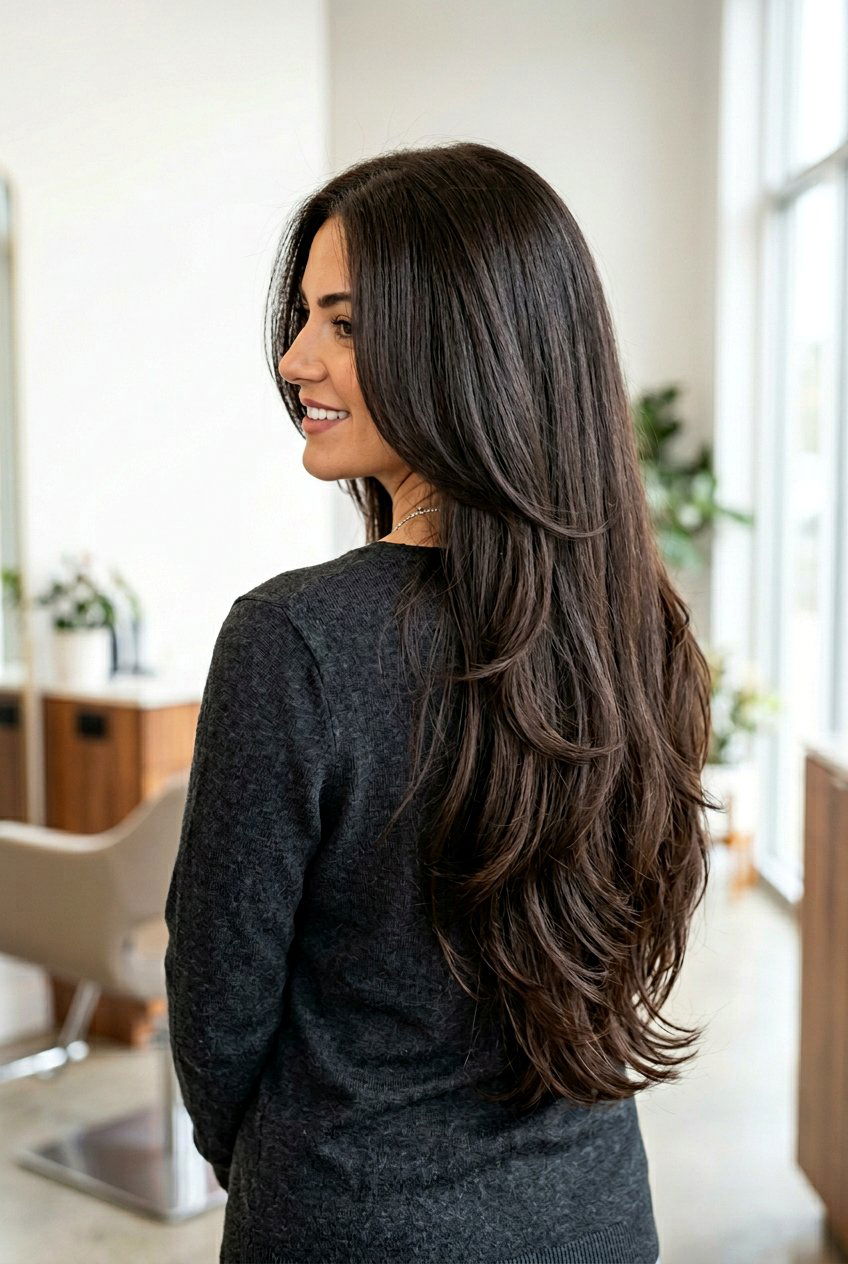
If you are tired of waking up with tangled hair and frizzy ends, a bedtime braid for long layers is the perfect solution for your nightly routine. Maintaining long, layered hair requires a careful balance of protection and styling to ensure those shorter pieces do not snap or frizz against your pillowcase. By incorporating a strategic braiding technique before you sleep, you can secure your layers, lock in essential moisture, and wake up with effortless, heatless waves that look professionally styled. This method not only saves you significant time during your busy morning rush but also promotes overall hair health by reducing the friction and mechanical damage caused by tossing and turning throughout the night.

1. Loose French Braid
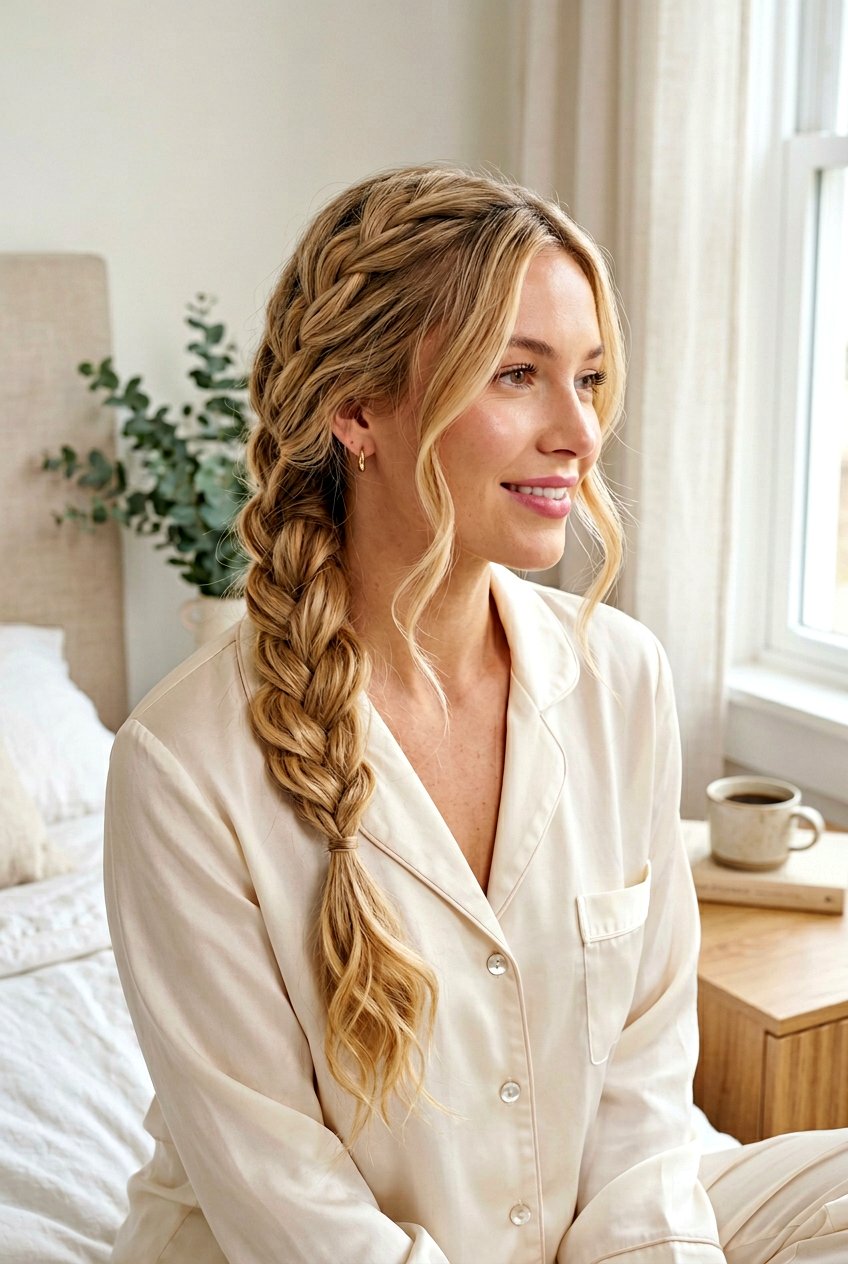
A loose French braid is a fantastic choice for anyone with long layers because it starts high enough to capture shorter face-framing pieces. By gradually incorporating hair from the scalp down to the ends, this style keeps your layers contained so they do not poke out or tangle while you sleep. It is important to keep the tension relaxed to avoid pulling on your hair follicles, which ensures a comfortable night of rest. In the morning, you can simply unravel the weave to reveal soft, voluminous waves that start right from the crown. This look provides a natural, lived-in texture that is perfect for a polished yet effortless daytime appearance without using any heat.
2. Double Dutch Braid
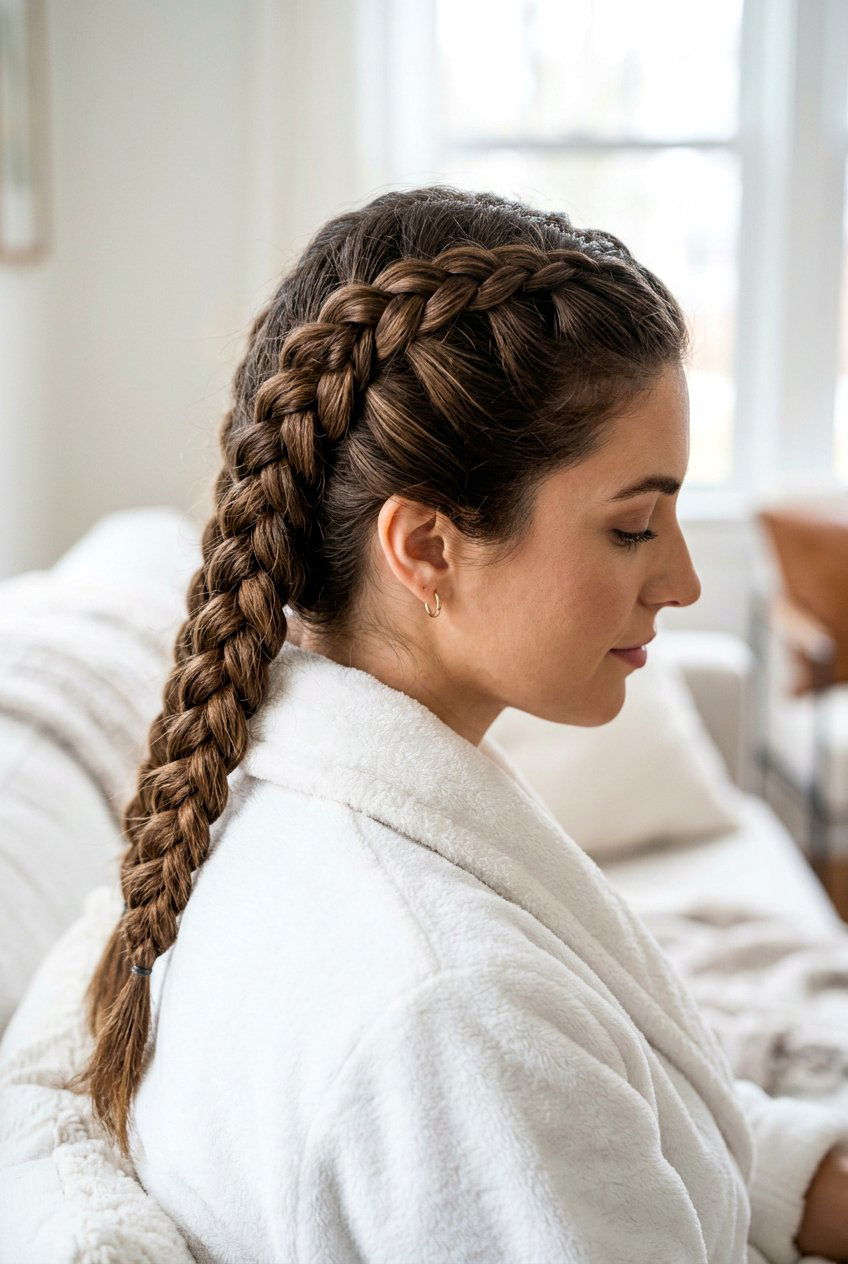
Double Dutch braids are highly effective for securing thick, layered hair because they use an underhand crossing technique that sits tightly against the scalp. By splitting your hair into two even sections, you can manage the volume of long layers more easily and ensure that every strand is tucked away safely. This style is particularly popular for creating more defined, tighter waves that mimic the look of a professional crimp or beachy texture. Because the braids are positioned on either side of the head, they are very comfortable for back sleepers who want to avoid a bulky lump at the nape of the neck. You will wake up with hair that feels secure and look ready for the day.
3. Low Three Strand Braid
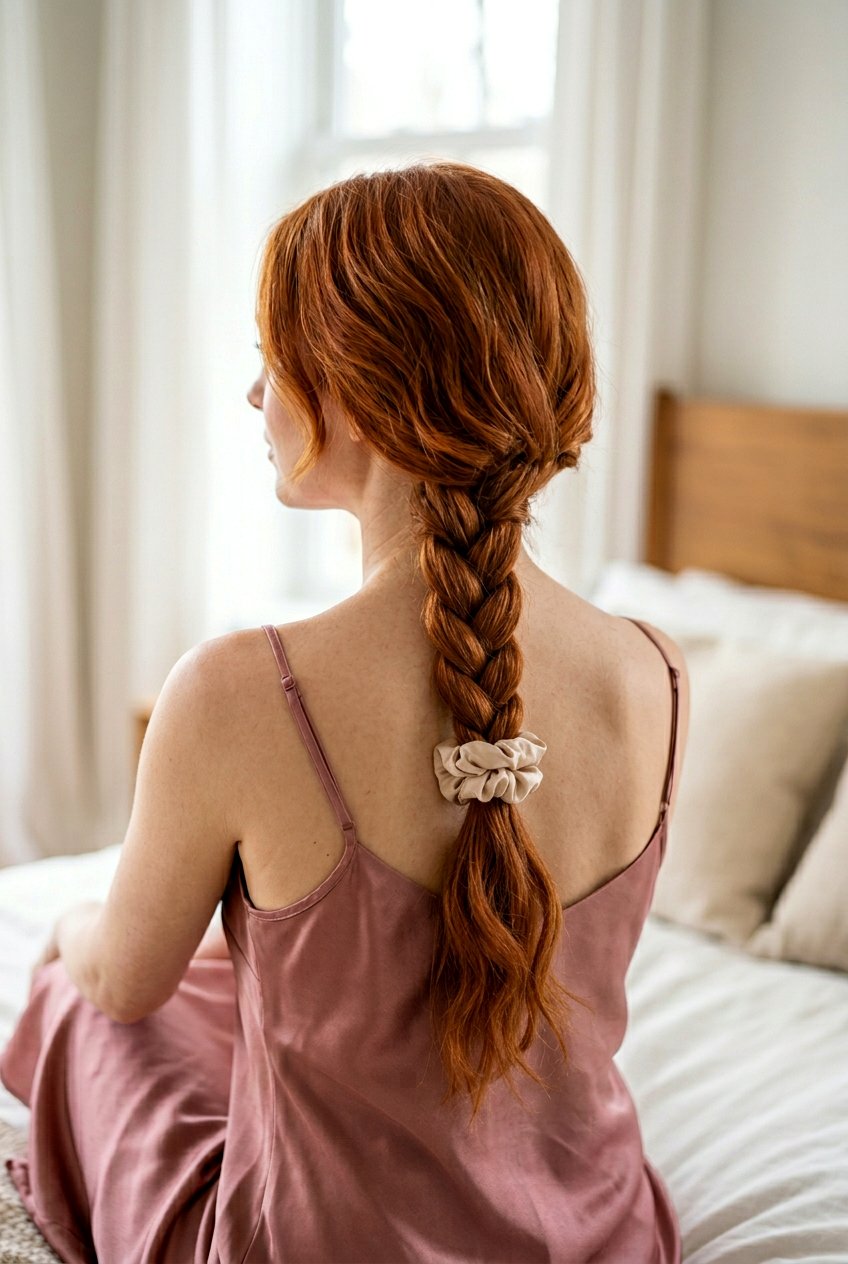
The low three strand braid is the ultimate quick fix for a protective nighttime routine when you are short on time. This classic technique involves gathering all your hair at the nape of the neck and performing a simple overhand weave down to the very tips. While it may not catch the shortest layers near the face, it is excellent for preventing the mid-lengths and ends of long hair from matting. To get the best results, secure the end with a soft silk or satin scrunchie to prevent any harsh creases or breakage. This method results in very loose, gentle bends in the hair, giving you a subtle boost of body and movement for the next day.
4. Side Plait

A side plait is a stylish and practical way to manage long layers, especially if you tend to sleep on your side or back. By sweeping all of your hair over one shoulder and braiding it loosely, you ensure that the hair remains visible and controlled throughout the night. This position reduces the amount of friction the back of your hair faces against the pillow, which is a common cause of “bedhead” frizz and knots. It is a very comfortable option that allows for easy movement while keeping your layers bundled together. In the morning, the side-swept waves offer a romantic, asymmetrical volume that looks great with a deep side part or a casual headband.
5. Fishtail Braid
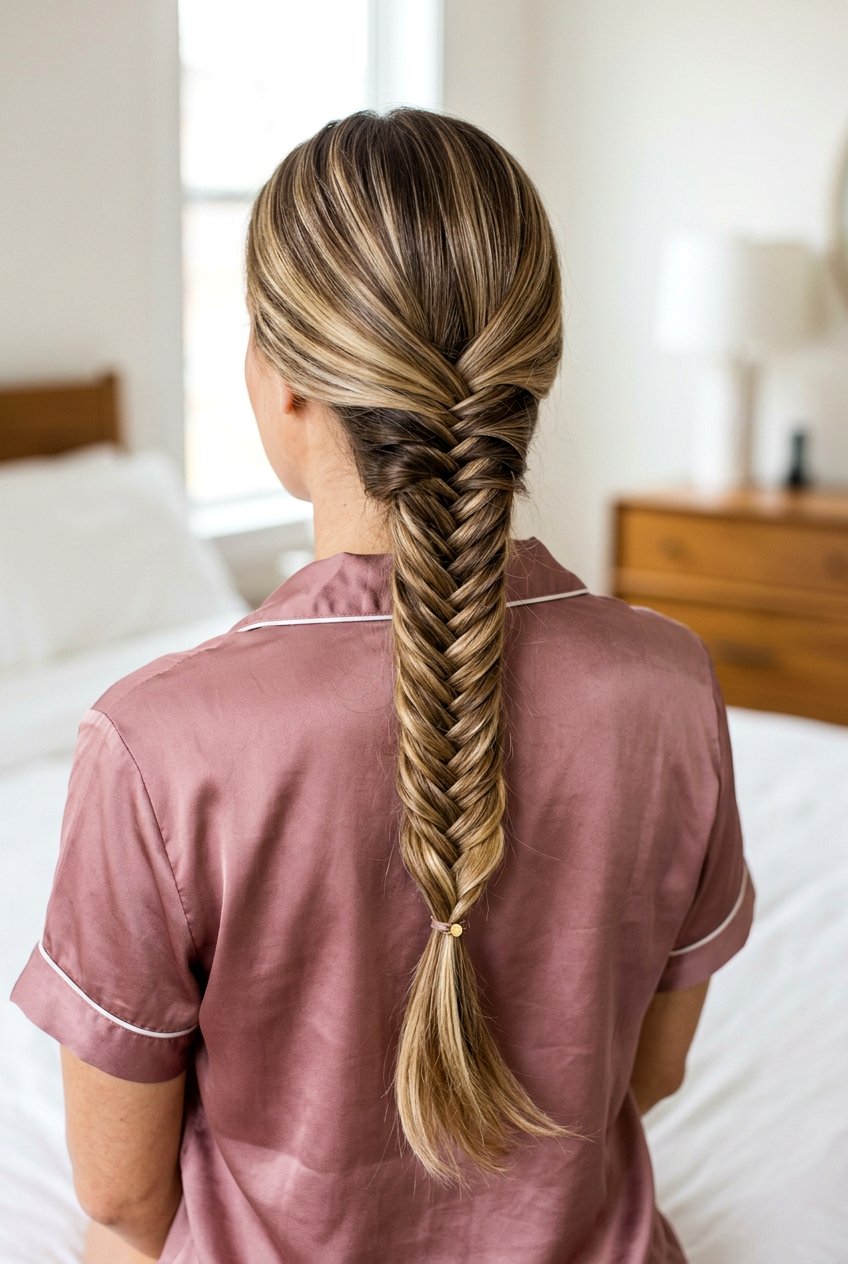
The fishtail braid is a beautiful and intricate-looking option that actually provides a very secure hold for layered hair types. Because this style uses many small sections of hair rather than three large ones, it acts almost like a net that keeps shorter layers from slipping out of the pattern. It is an excellent choice for those who want a more detailed wave pattern the following morning, as the smaller sections create a unique, textured crimp. To ensure the braid stays intact, you can apply a tiny amount of lightweight hair oil to your layers before you start weaving. This adds the necessary grip and shine, making the unraveling process much smoother and frizz-free.
6. Rope Twist Braid
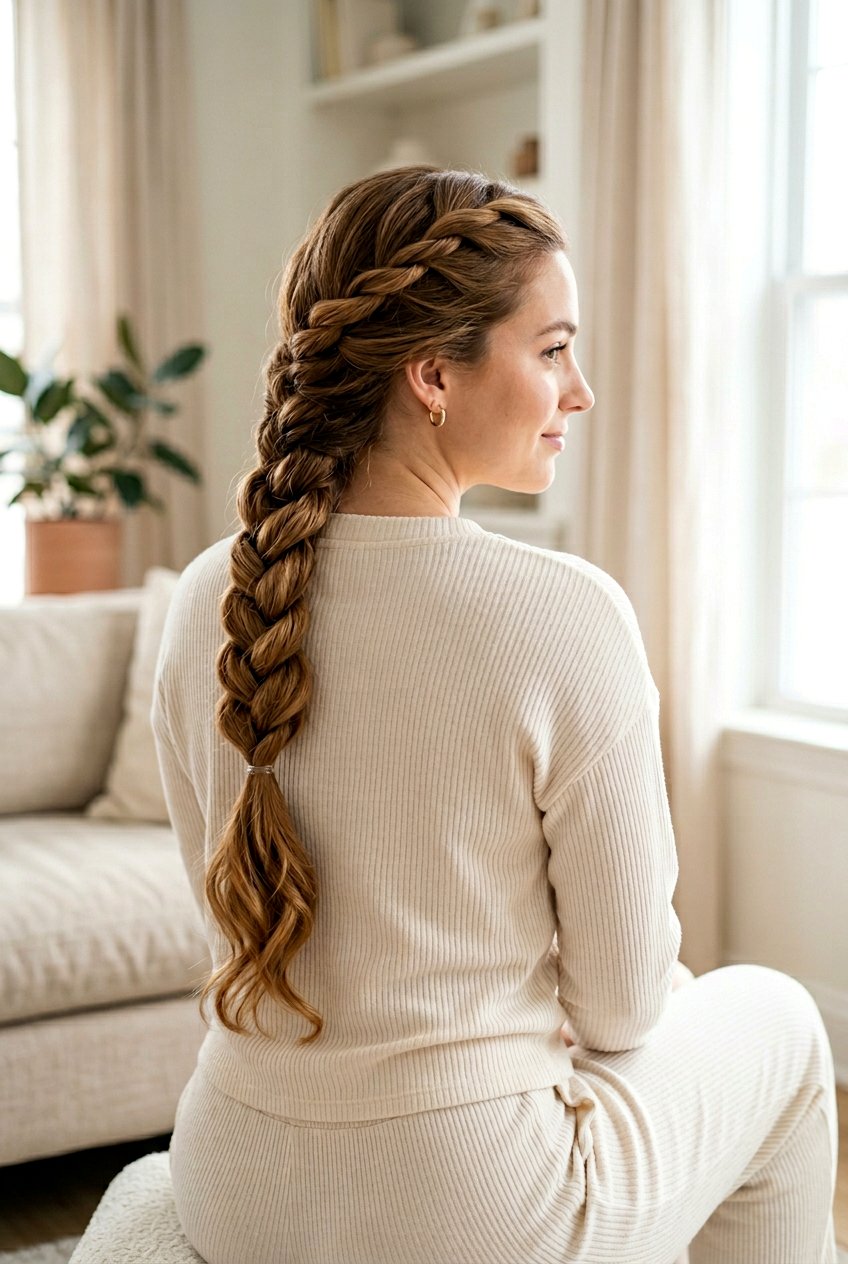
A rope twist braid is a two-strand technique that is incredibly easy to master and very comfortable for sleeping. By twisting two sections of hair in one direction and then wrapping them around each other in the opposite direction, you create a sturdy “rope” that holds its shape. This counter-tension is the secret to keeping long layers from popping out, even if you move around a lot during the night. The result of a rope twist is usually a series of large, bouncy spiral waves that look like they were made with a large-barrel curling iron. It is a great alternative to traditional three-strand braids if you prefer a smoother, more modern wave.
7. Multi Braid Pigtails
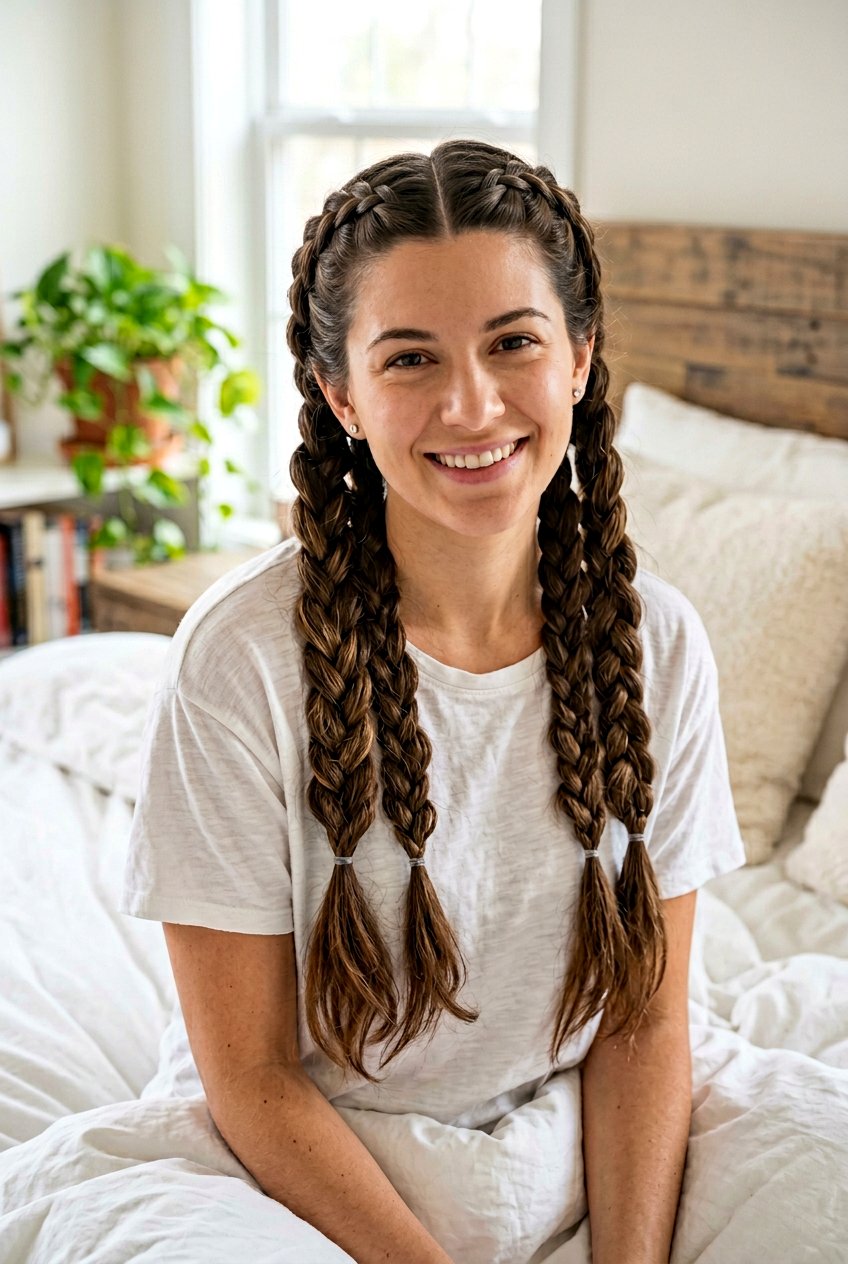
If you have extremely thick hair with many layers, creating multi braid pigtails can help distribute the weight and ensure a more even wave pattern. By dividing your hair into four or more small braids, you ensure that every layer is tightly controlled and that the hair dries or sets completely if you braid it while slightly damp. This method is perfect for achieving a high-definition, voluminous look that lasts all day long. Small braids are also less likely to come undone during sleep compared to one large, heavy braid. This technique is a favorite for those who love a “maximalist” texture and want to avoid the flat-on-top look that single braids sometimes cause.
8. Pull Through Braid
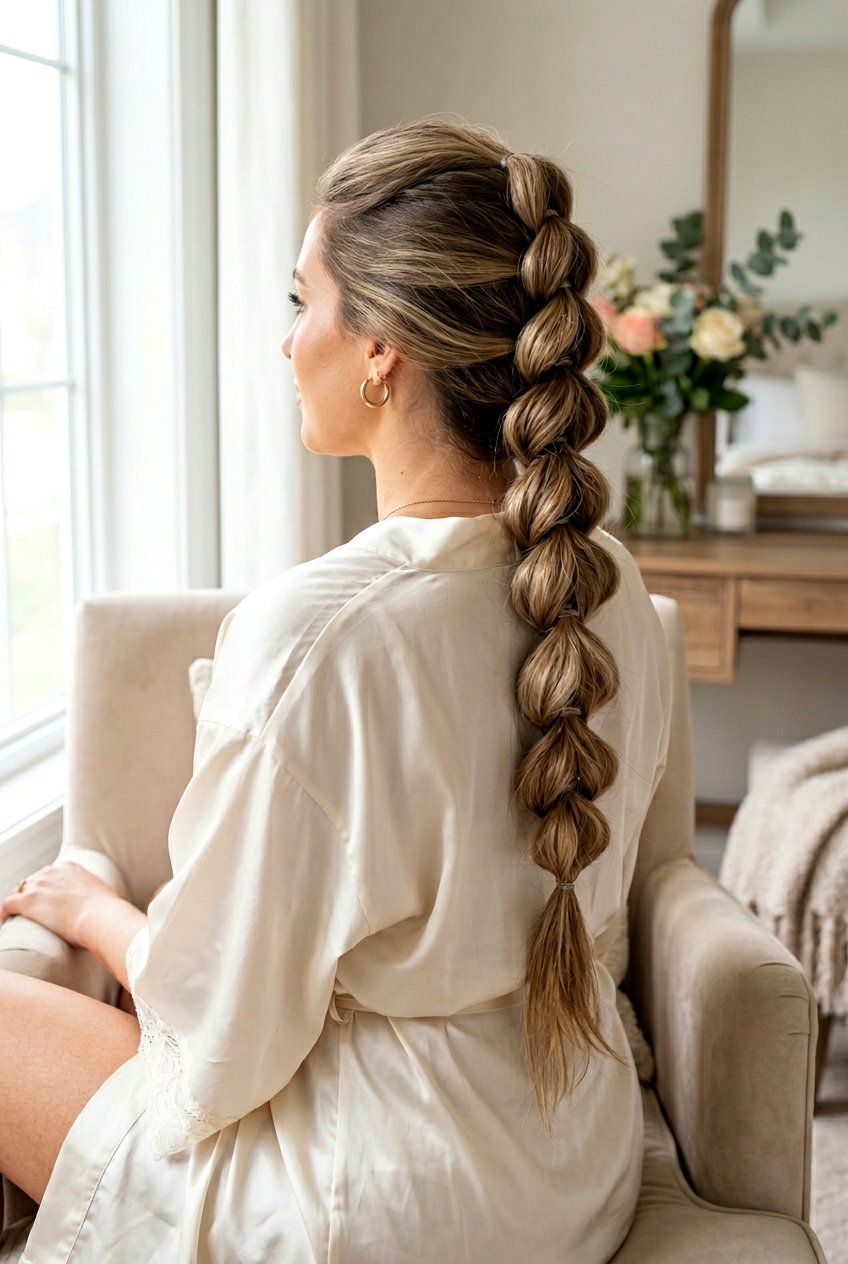
The pull through braid is a modern styling secret that uses small elastics to create the appearance of a thick, lush braid without traditional weaving. For bedtime, this is a “cheat code” for layers because each section is secured with its own tie, meaning shorter pieces literally cannot escape. It is essentially a series of linked ponytails that look like a voluminous braid, providing maximum security for even the most difficult-to-manage hair. When you take it out in the morning, the volume is unmatched, and your layers will have a beautiful, rounded shape. This style is especially helpful for people with slippery, fine hair that usually slides right out of a standard three-strand plait.
9. Bubble Braid
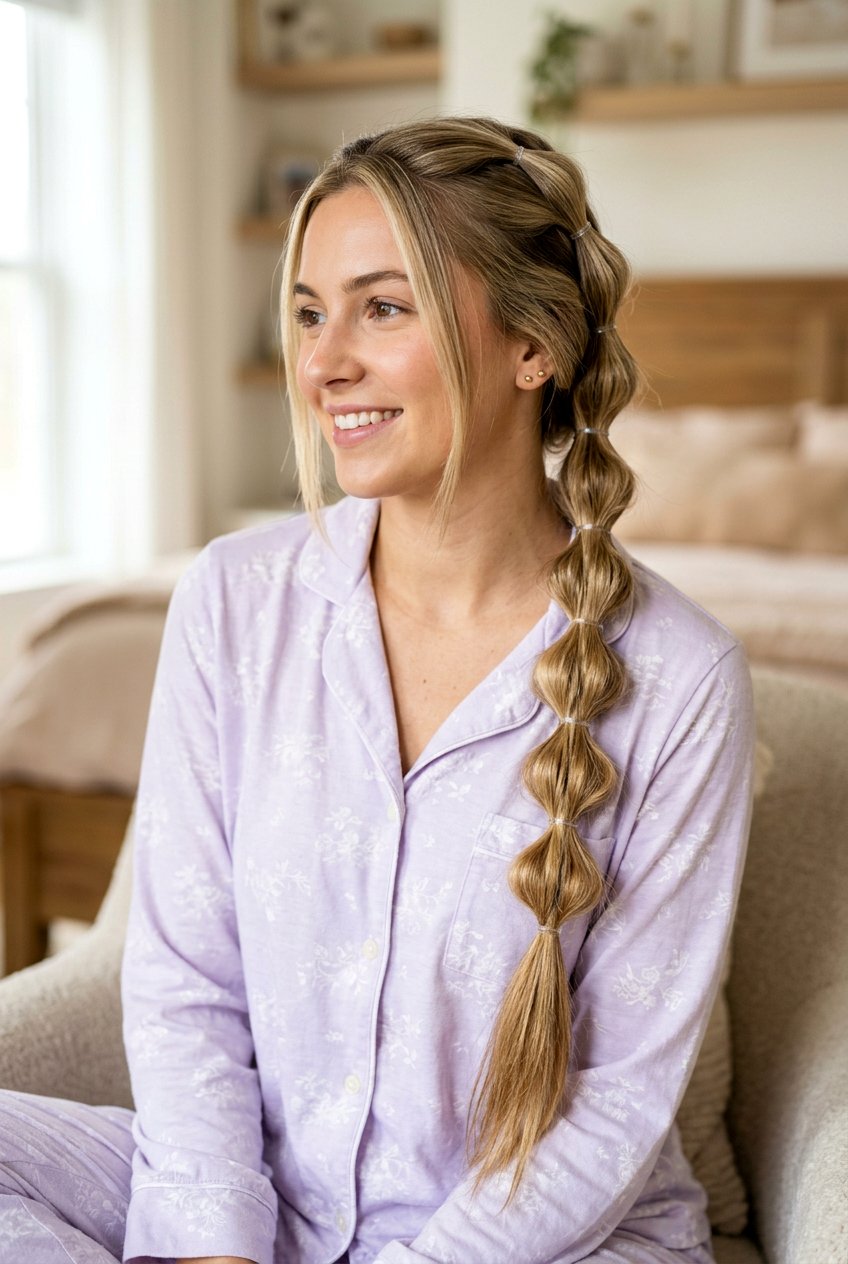
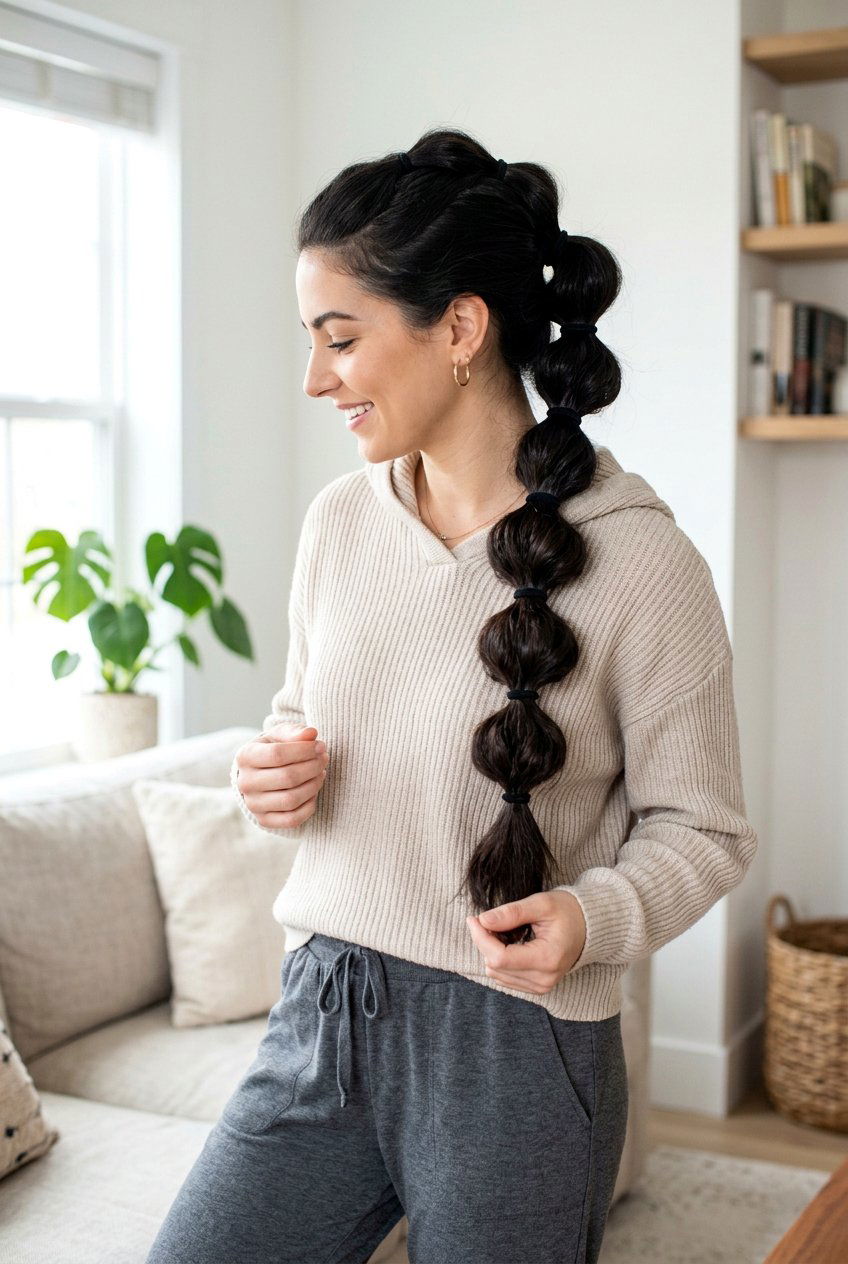
Bubble braids have become a massive trend because they are incredibly simple to do and look very high-fashion. To use this as a bedtime style for long layers, you simply place elastics every few inches down the length of a ponytail. You then gently “fluff” the hair between the elastics to create a bubble effect, which keeps the layers contained within each segment. This is perhaps the most comfortable “braid” to sleep in because there is no tight weaving against the scalp. In the morning, you won’t have waves, but you will have perfectly detangled hair with a bit of extra volume at the ends. It is a great protective style for maintaining straight hair.
10. Pineapple Braid

The pineapple braid is a variation of the popular “pinepapping” technique used by those with curly or wavy hair to preserve their texture. You gather all your hair at the very top of your head, near the forehead, and create a very loose braid from that point. By keeping the hair on top of your head, you ensure that you aren’t laying on any part of the style, which prevents the braids from being flattened or frizzed by your head’s weight. This is a life-saver for keeping face-framing layers off your neck and face, which can also help prevent skin breakouts. It creates a massive amount of root lift and volume when you let it down.
11. Crown Braid
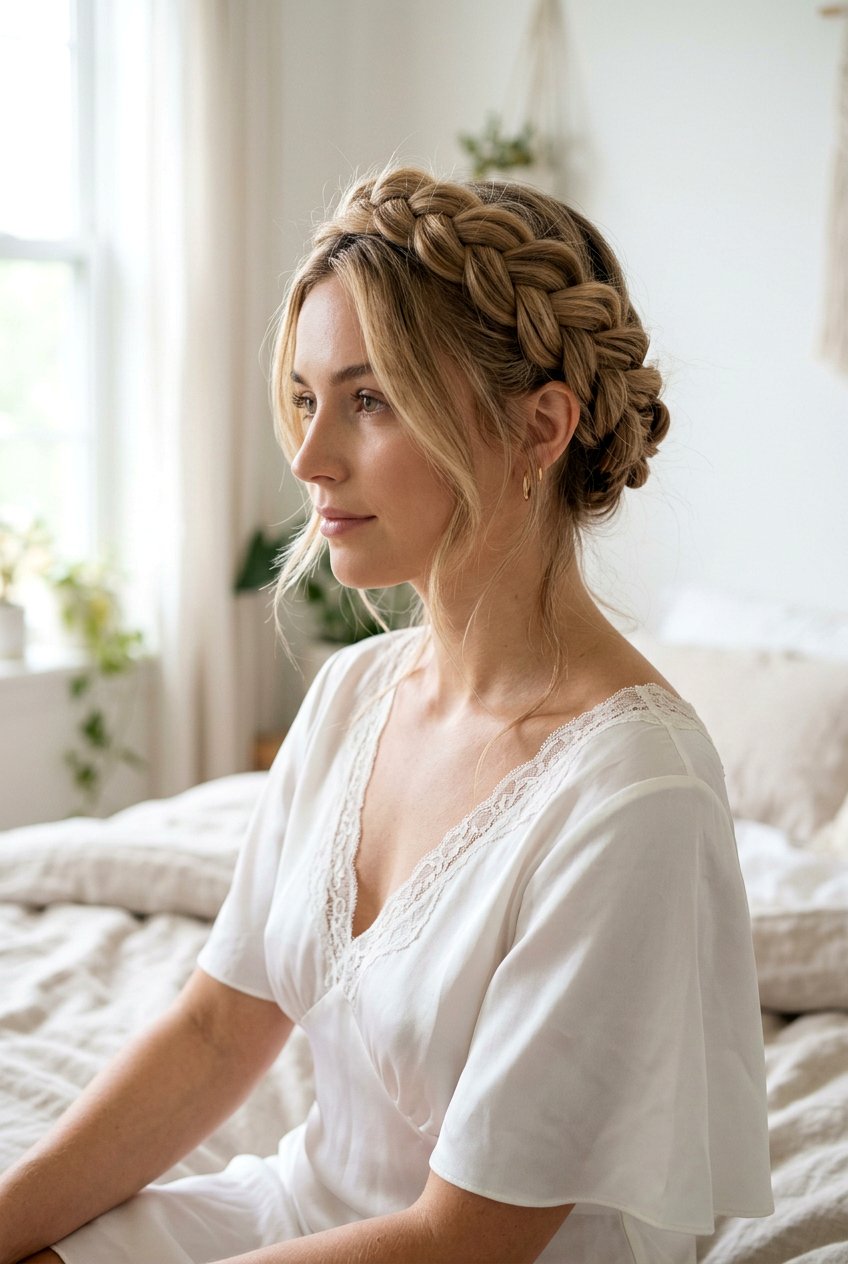
A crown braid, or milkmaid braid, involves wrapping two braids around the top of your head like a tiara. This is the ultimate protective style for long layers because all the hair is pinned up and away from any surface that could cause friction. While it takes a little more effort to set up before bed, it is arguably the most secure way to ensure that not a single hair moves out of place. Because the braids sit on top of your head, they don’t interfere with your sleep regardless of your position. In the morning, you are rewarded with gorgeous, halo-like waves that have a lot of body and very little frizz.

12. Half Up Braid
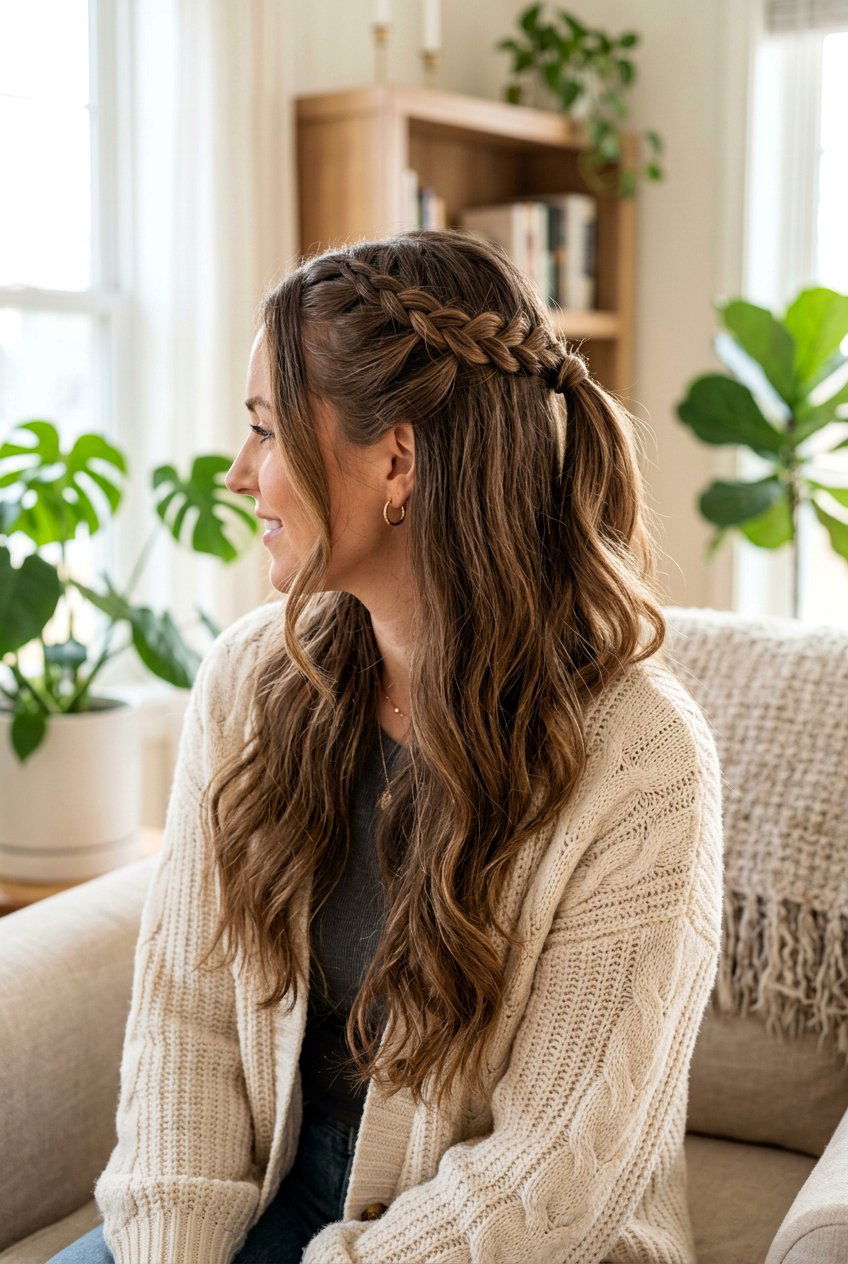
If you have layers that are mostly concentrated at the top of your head, a half up braid allows you to secure those shorter pieces while leaving the rest of your hair loose. This is a good middle-ground option for people who find full braids too restrictive or uncomfortable for sleeping. You can perform a small French or Dutch braid with the top half of your hair and leave the longer, bottom layers in a loose ponytail or free. This keeps the most visible layers near your face from getting tangled or messy. It is a quick and easy way to maintain the shape of a layered cut without committing to a full overnight set.
13. Reverse French Braid
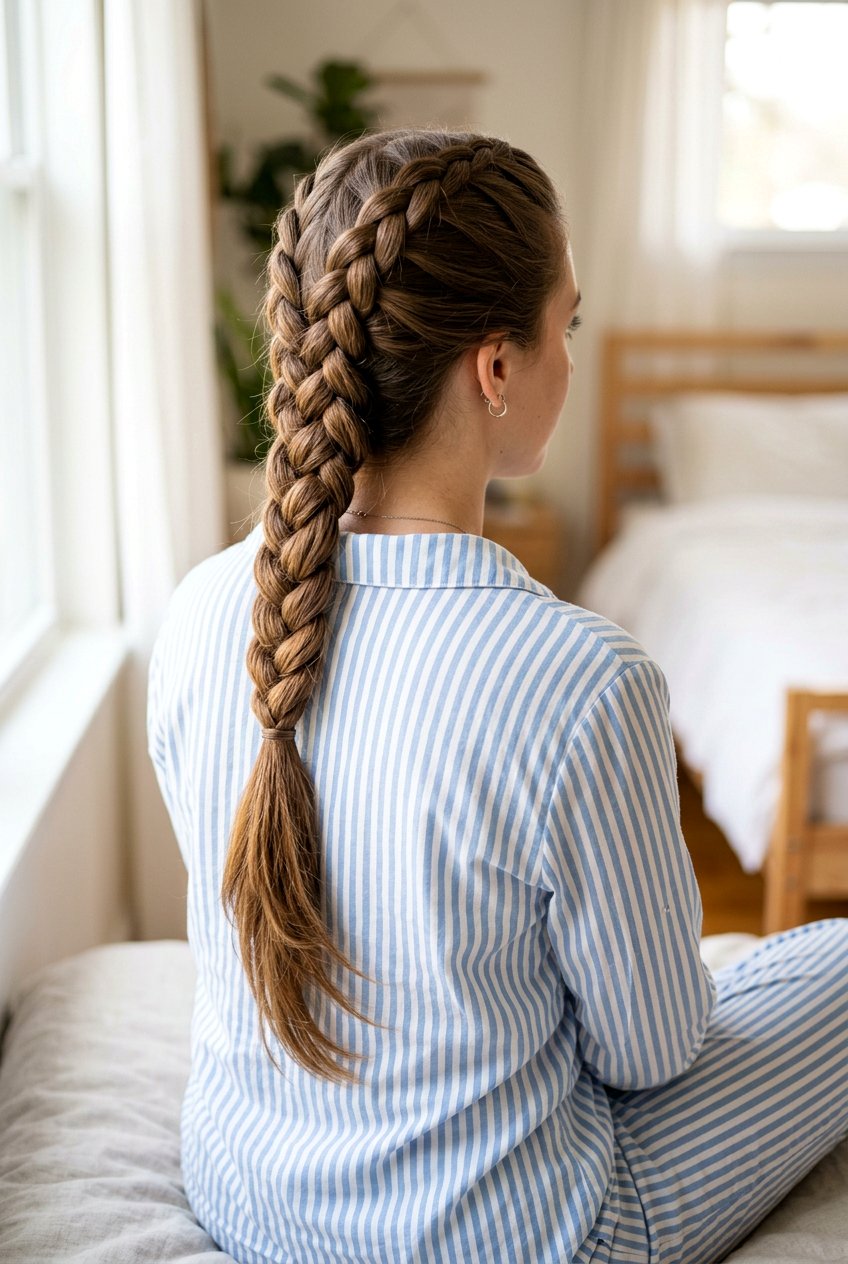
The reverse French braid, also known as a Dutch braid, is ideal for long layers because it creates a 3D effect where the braid sits on top of the hair. This structure is very effective at “pinning” down shorter layers that might otherwise slip through the gaps of a standard French braid. By crossing the strands under rather than over, you create a much tighter and more secure bond. This style is known for producing very distinct, wide waves that look like they were created with a triple-barrel waver tool. It is a sturdy, reliable bedtime choice for those who want their style to look just as good on day two as it did on day one.
14. Waterfall Braid
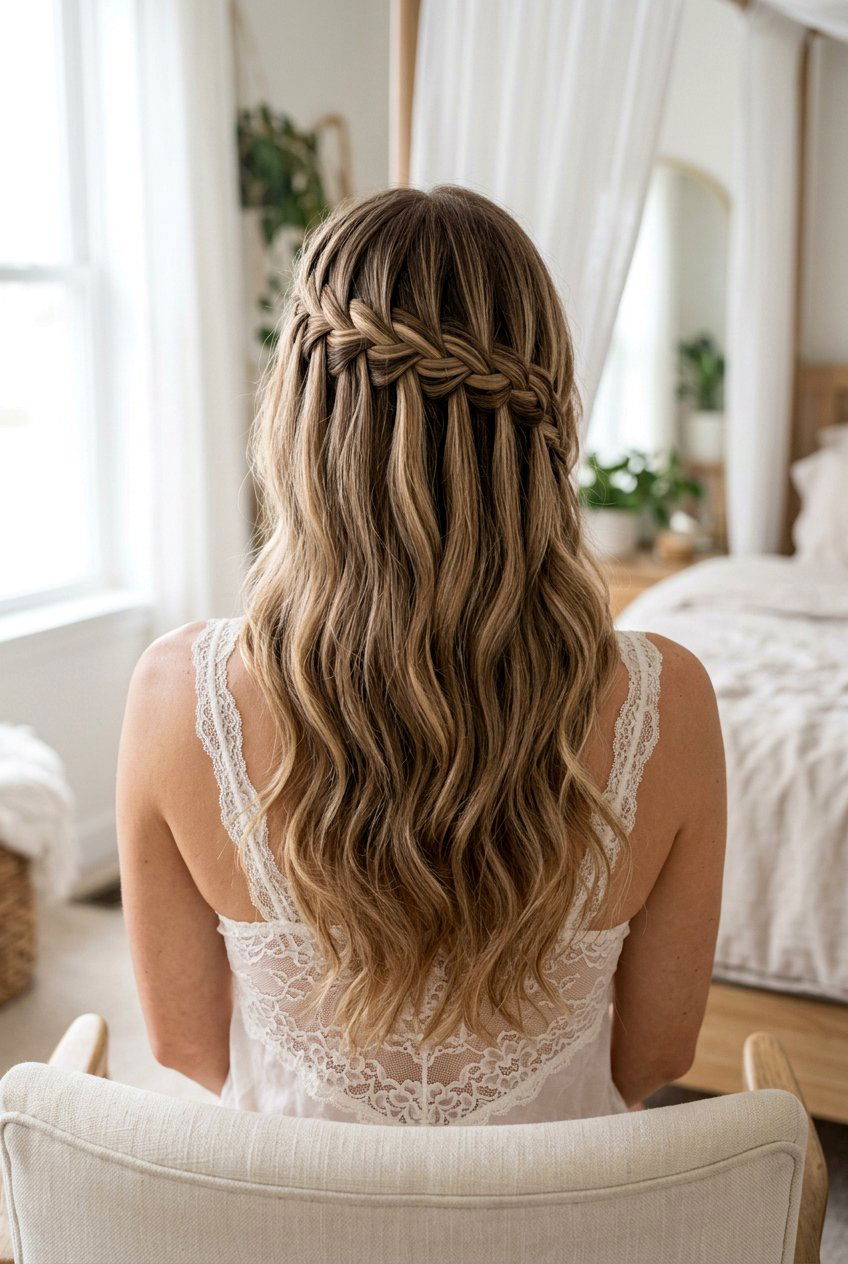
A waterfall braid is typically seen as a formal hairstyle, but a simplified version can be used as a bedtime protector for layers. By weaving a horizontal braid around the back of the head and letting pieces “fall” through, you can secure the top layers while allowing the length to breathe. This is particularly useful if you want to avoid a uniform wave pattern and prefer a more natural, haphazard texture. It keeps the hair away from your face and prevents the top layers from matting into the bottom ones. This style is best for those with very long hair who find that full braids become too heavy or uncomfortable during the night.
15. Invisible Braid
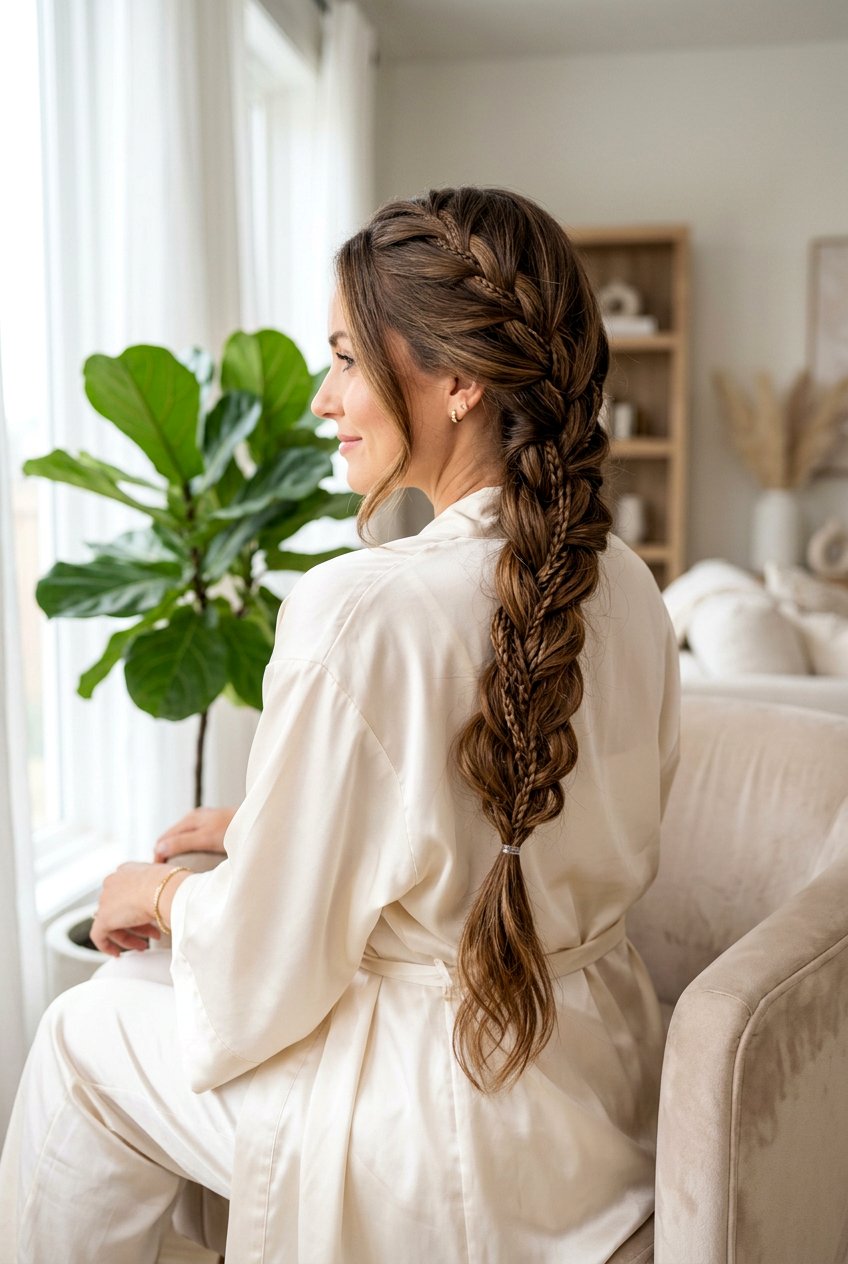
The “invisible” braid technique involves creating very tiny, thin braids throughout your hair, which are then tucked into one larger braid. This is a professional-level tip for long layers because the small braids act as anchors for the shorter strands, preventing them from poking out of the main style. It is an extremely secure method that is favored by those with very silky or fine hair that tends to fall apart mid-sleep. While it takes a few extra minutes to prep, the results are incredibly long-lasting. You will wake up with a complex, multi-dimensional texture that gives your long layers a thick, voluminous appearance that lasts all day.

16. Diagonal Braid
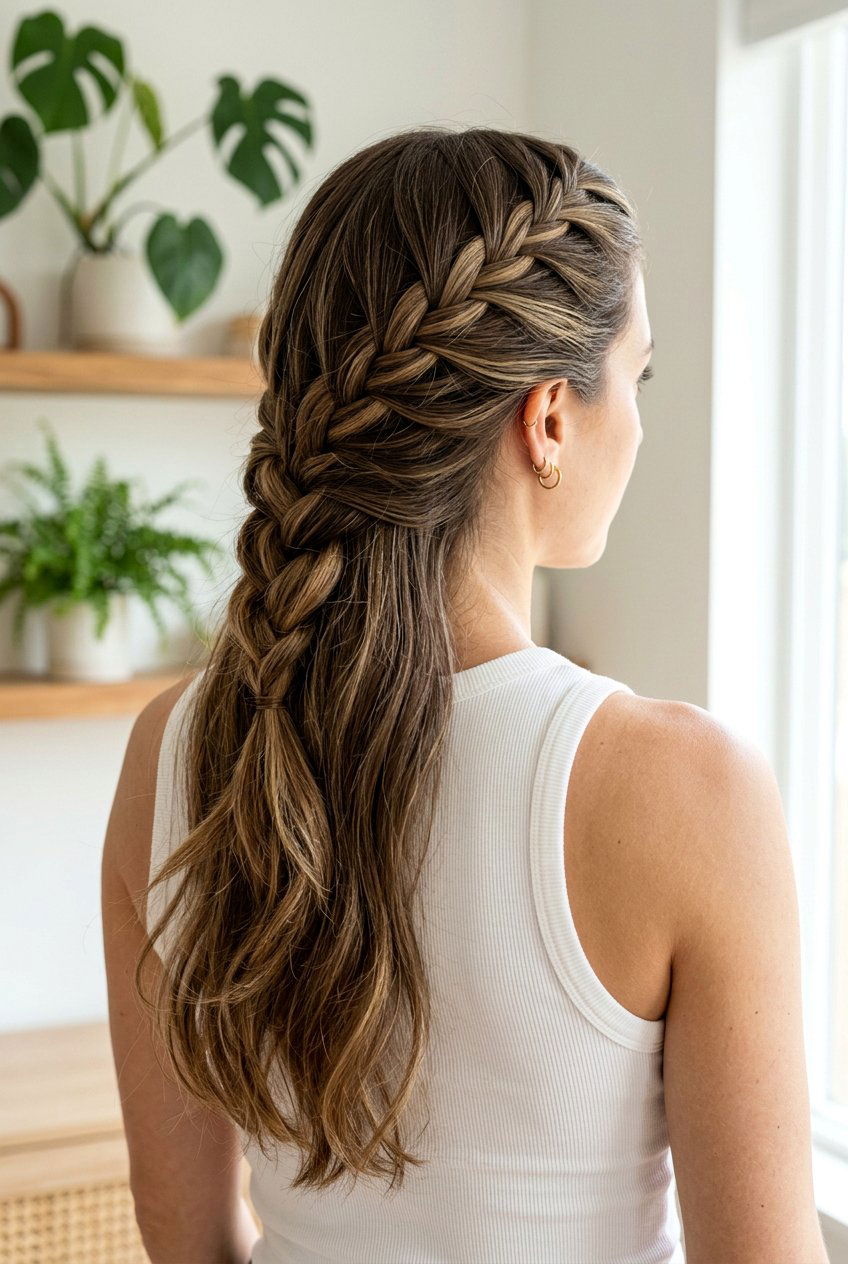
A diagonal braid starts behind one ear and travels across the back of the head to the opposite nape. This unique path allows you to capture layers that are cut at different lengths across the back of your head more effectively than a straight vertical braid. Because the braid follows the natural curve of your skull, it often stays flatter and more secure against the pillow. This is a very comfortable option for people who move their heads from side to side while sleeping. The resulting waves have a beautiful flow and directionality that looks very modern and prevents the hair from looking too “blocky” or stiff in the morning.
17. Four Strand Braid
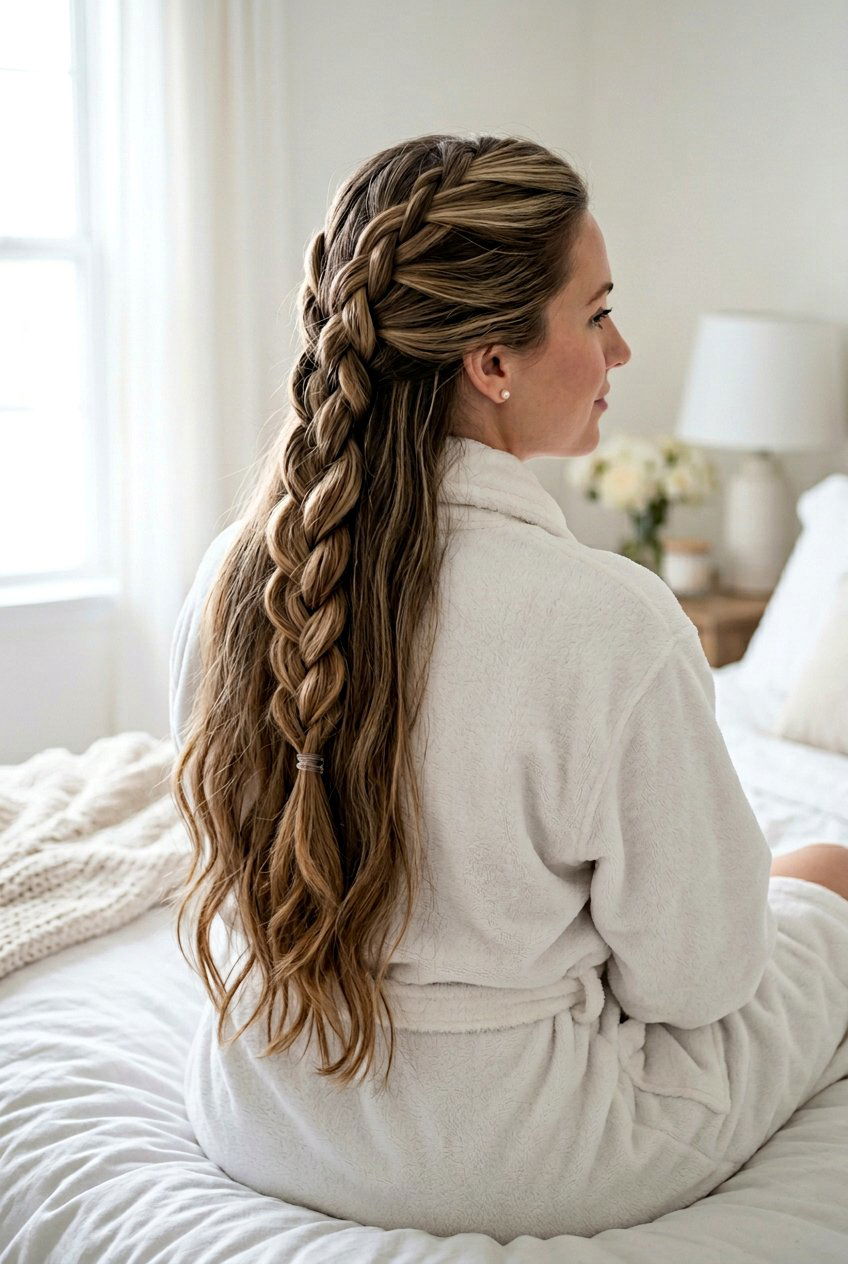
The four strand braid is a slightly more advanced technique that creates a rounder, more rope-like structure than the flat three-strand version. This extra strand provides more “walls” to keep long layers contained, making it a superior choice for those with heavily feathered cuts. The braid feels very substantial and heavy-duty, which is great for protecting the integrity of your hair through a long night of sleep. When unraveled, the waves are more rounded and 3D, giving your hair a much thicker and more luxurious look. It is a great way to add some variety to your overnight routine and experiment with different types of heatless texture.
18. Messy Bedtime Plait

Sometimes the best way to handle layers is to embrace the “messy” look from the start. A messy bedtime plait is done very loosely and purposefully leaves some ends out to prevent tension. This is a great choice if your hair is prone to breakage or if you have a sensitive scalp. The loose nature of the braid allows for maximum airflow and prevents moisture from being trapped, which can sometimes lead to scalp irritation. While the waves will be less defined, your hair will have a very natural, “I woke up like this” volume that is easy to style with just a quick spritz of sea salt spray in the morning.
19. Infinity Braid
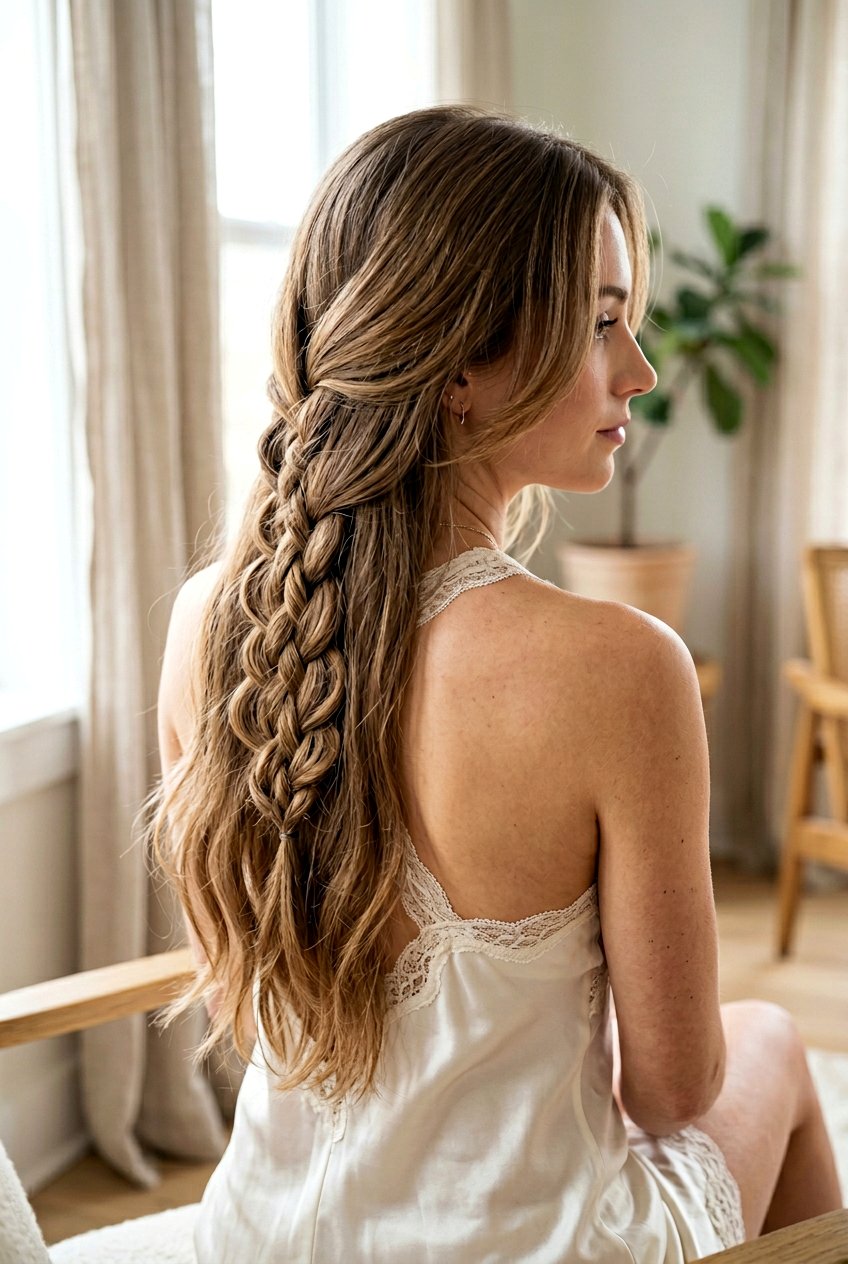
The infinity braid uses a figure-eight weaving pattern that is incredibly tight and secure. For long layers, this is like a “straitjacket” for your hair in the best possible way—nothing is getting out of this braid. It is excellent for those with very slippery hair or those who are extremely active sleepers. Because the weave is so dense, it protects the hair from almost all external friction. The wave pattern it creates is very unique and zig-zagged, offering a high-fashion editorial look that requires zero effort once you wake up. It is a highly effective protective style that also doubles as a stunning morning hair reveal.
20. Tucked Under Braid
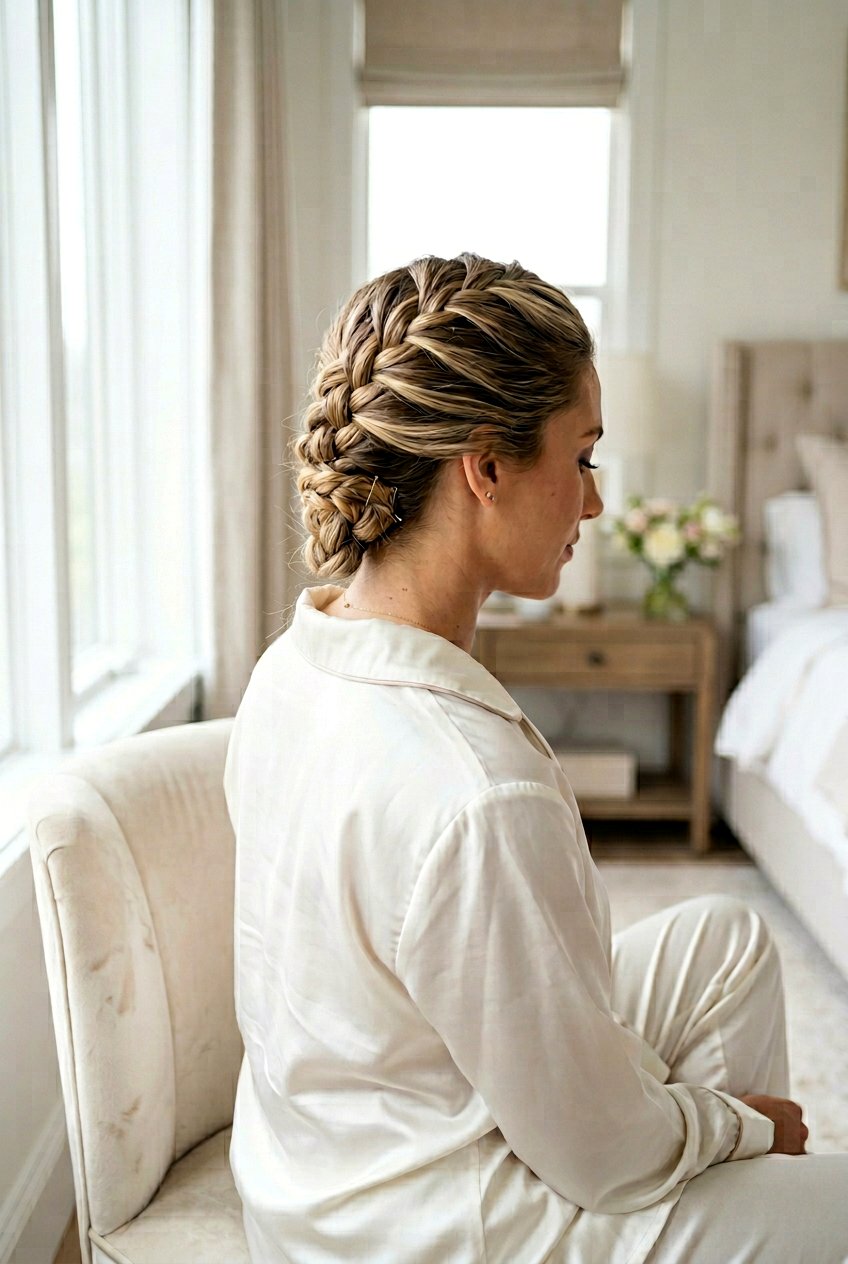
The tucked under braid involves finishing a standard braid and then folding the tail up and pinning it at the nape of the neck. This protects the most vulnerable part of your long layers—the ends—from rubbing against your clothing or bedding. By tucking the ends away, you prevent split ends and keep the moisture locked into the hair tips. This is especially important for those with colored or chemically treated hair that might be more fragile. It is a neat, compact style that feels very secure and out of the way. You will find that your ends stay much smoother and more hydrated when they are tucked away safely overnight.
Conclusion:
Adopting a bedtime braid for long layers is one of the simplest yet most effective changes you can make to your hair care routine. By taking just a few minutes each night to secure your strands, you are investing in the long-term health, shine, and manageability of your hair. Whether you prefer the defined waves of a Dutch braid or the soft volume of a loose French plait, these styles ensure your layers stay protected from the damaging effects of friction and dryness. You will not only enjoy better sleep knowing your hair is cared for, but you will also reclaim precious time every morning. Start experimenting with these twenty styles tonight and discover how easy beautiful, healthy hair can truly be.
You'll Like These Styles:










Leave a Reply