
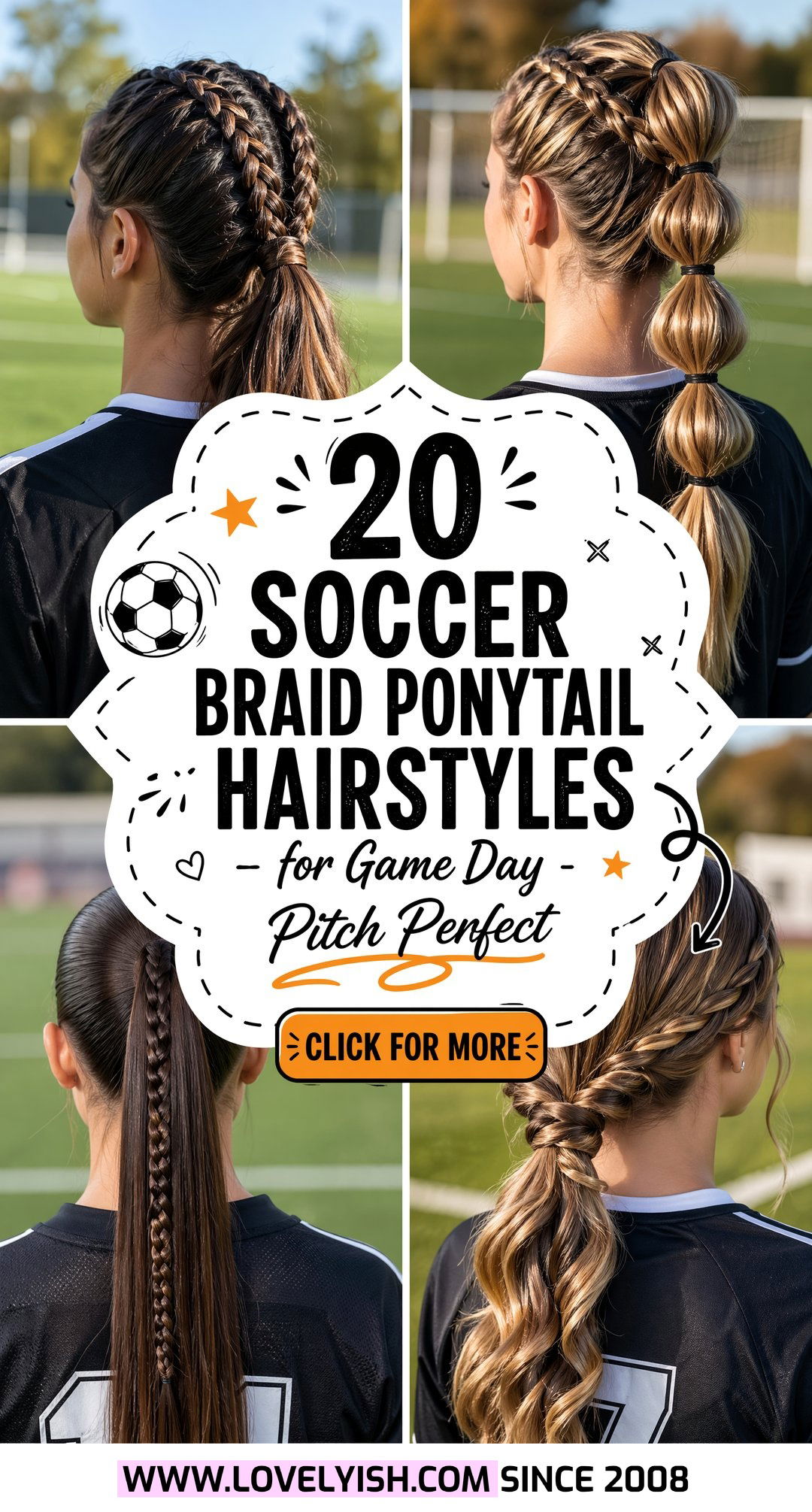
A soccer braid ponytail is one of those rare hairstyles that looks cool and stays put through every sprint, header, and dive on the field. It combines tight braiding near the scalp with a secure ponytail so hair doesn’t whip into the eyes or stick to the face while you play. Today, braided ponytails are a go-to look for many girls in youth leagues, school teams, and competitive clubs because they balance function and style in a single, game-ready look. You can keep it simple with one braid feeding into a basic ponytail or get more creative with Dutch, French, bubble, and fishtail details that still hold up to contact play. With the right prep and placement, each variation below gives you a solid, no-fuss hairstyle for soccer days that also looks great off the field.
1. Classic Soccer Braid Ponytail
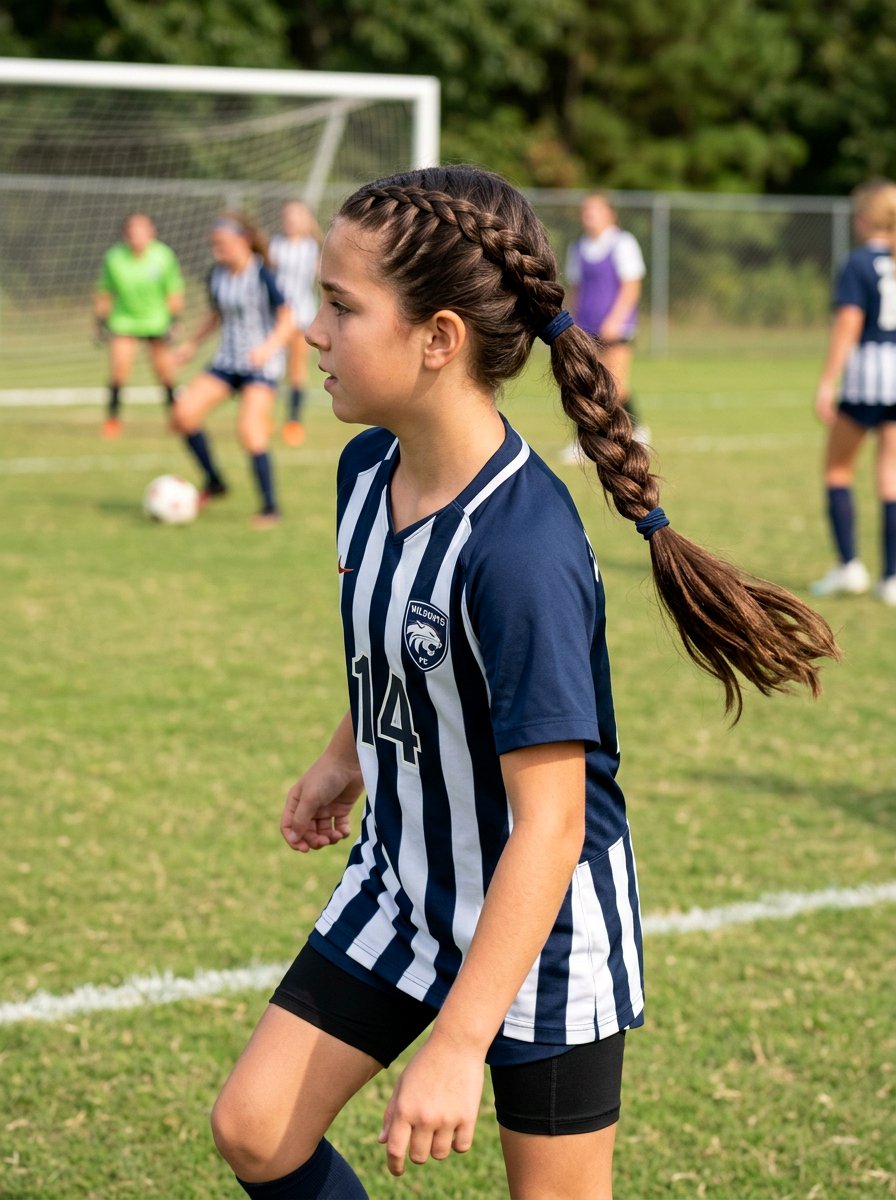
The classic soccer braid ponytail is where most players start because it is secure, simple, and easy to redo before a game or practice. You begin by brushing the hair smooth, then creating a single French braid starting near the front hairline and running straight back to the crown. From there, you gather the remaining loose hair and the braid into one medium or high ponytail, securing it tightly with a strong elastic that can handle jumping and running. This look keeps strands off the face, reduces tangles, and works well on straight, wavy, or slightly curly hair, even if you are playing in heat or humidity. A light mist of hairspray or gel at the part line can help control flyaways without making the hair stiff, which is important when you need to re-braid quickly between matches.
2. Double French Braid Ponytail For Soccer
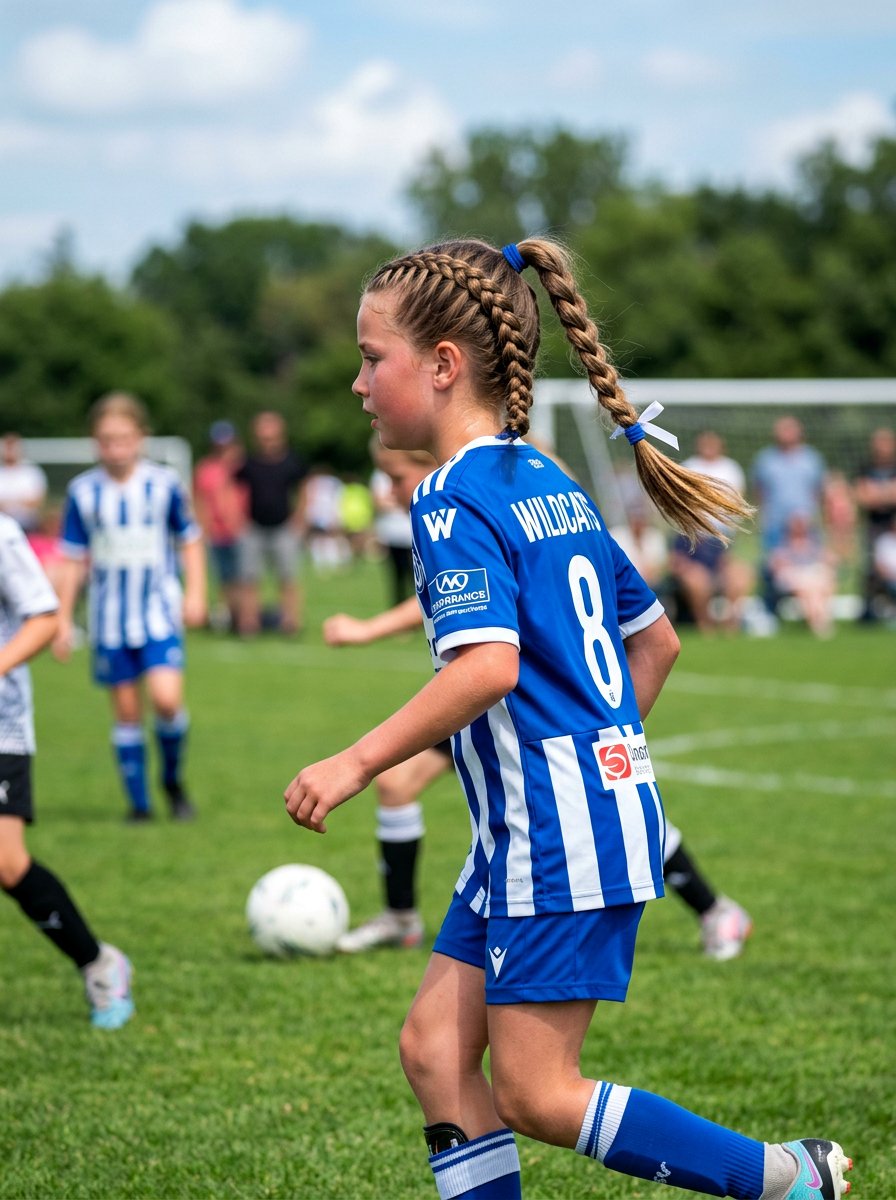
Double French braid ponytail looks are perfect when you want maximum control and a sporty, symmetrical finish for match days. You part the hair down the middle, then create a French braid on each side, starting at the front and working toward the nape while adding in small sections for a tight grip on the scalp. Once both braids reach the back, you gather them and any remaining hair into one centered ponytail, securing everything with a strong elastic and, if needed, a second one for extra hold. This layout spreads tension more evenly, so the style feels comfortable through long tournaments and travel days while still keeping shorter layers from slipping out. It also looks sharp under a headband, which many players wear to absorb sweat or prevent baby hairs from coming loose around the hairline.
3. Dutch Braid Soccer Ponytail
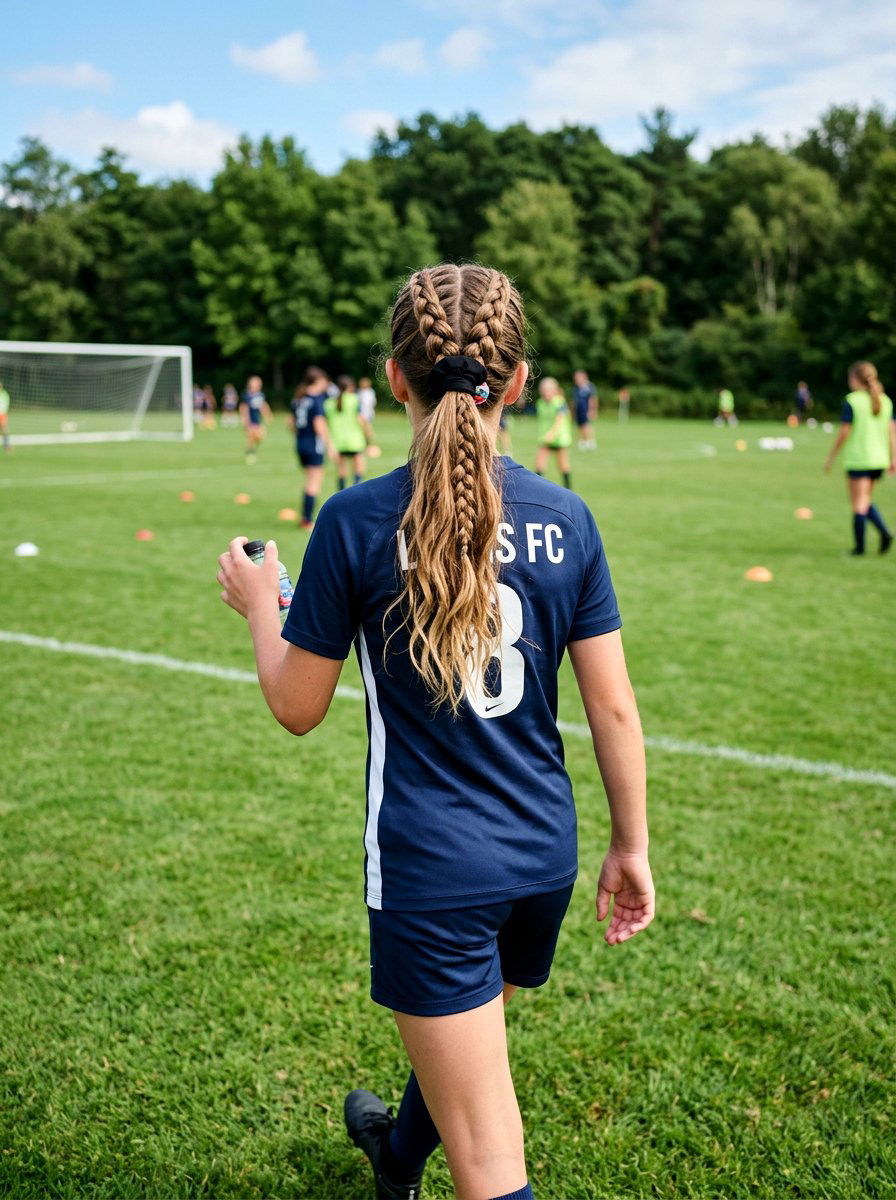
Dutch braid soccer ponytail hairstyles give you bold texture that stands out, even from the sidelines, while keeping hair close to the head. Instead of crossing sections over, you cross them under to create that raised braid effect that many girls love for sporty looks. Start with a high or mid ponytail placement in mind, then build one Dutch braid from the front center hairline straight back, feeding in small sections for a snug, clean pattern that will not loosen during play. Once you reach the crown, secure the braid and pull the rest of the hair into a ponytail, adding extra elastics for long or thick hair that tends to bounce. This hairstyle is great if you want a little attitude with your game-day hair, but still need something that works under shin-guard-level intensity.
4. High Soccer Braid Ponytail
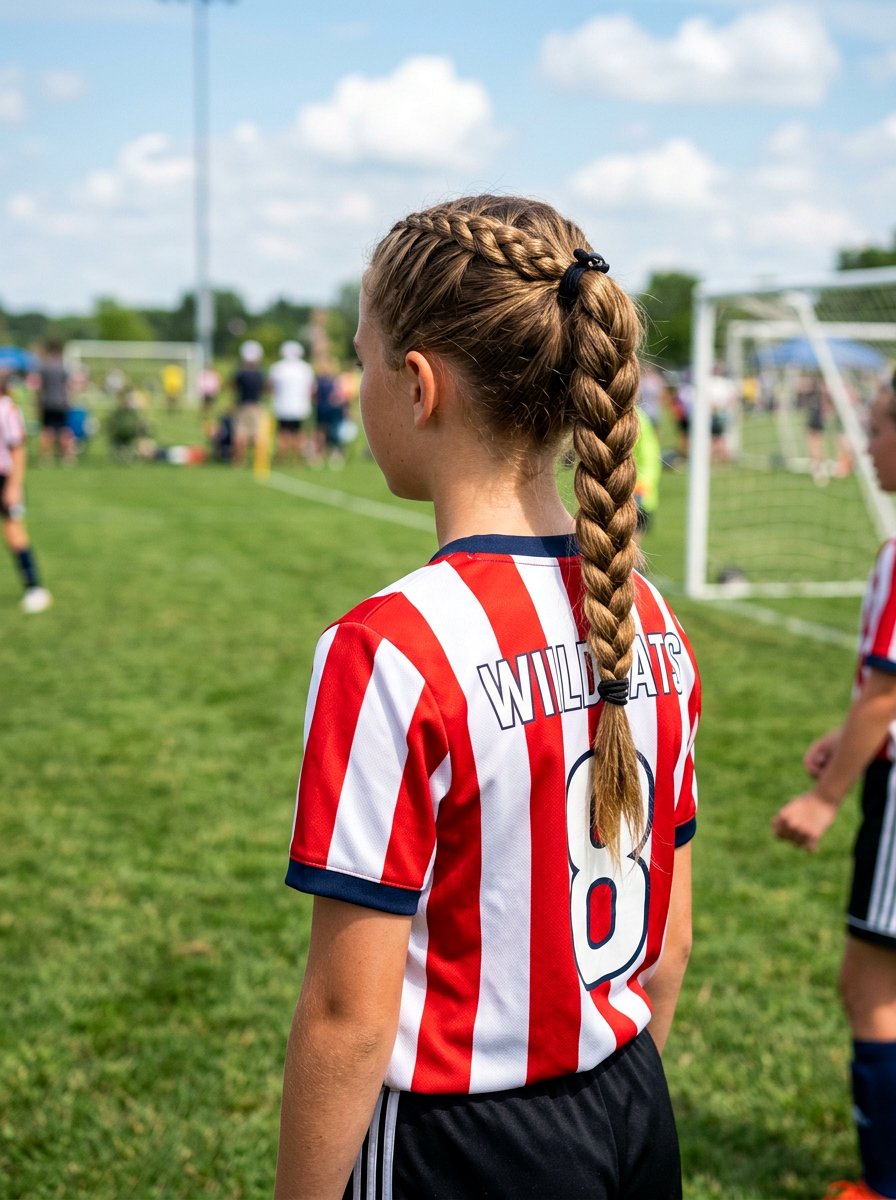
The high soccer braid ponytail lifts everything up and away from your neck, which can feel cooler during hot afternoon games or tournaments. You start by deciding on a high ponytail point, usually near the crown or slightly above, then create one or two tight braids that lead straight up into that anchor spot. Many players choose a French braid from the front hairline or a pair of side braids that feed into the elevated ponytail for a neat, athletic look that still swings when you run. Once gathered, the ponytail is wrapped with a strong elastic and sometimes a second hair tie for backup, especially on very thick or long hair. This version is ideal for girls who dislike hair brushing their shoulders during play but still want a ponytail instead of a bun.
5. Low Soccer Braid Ponytail
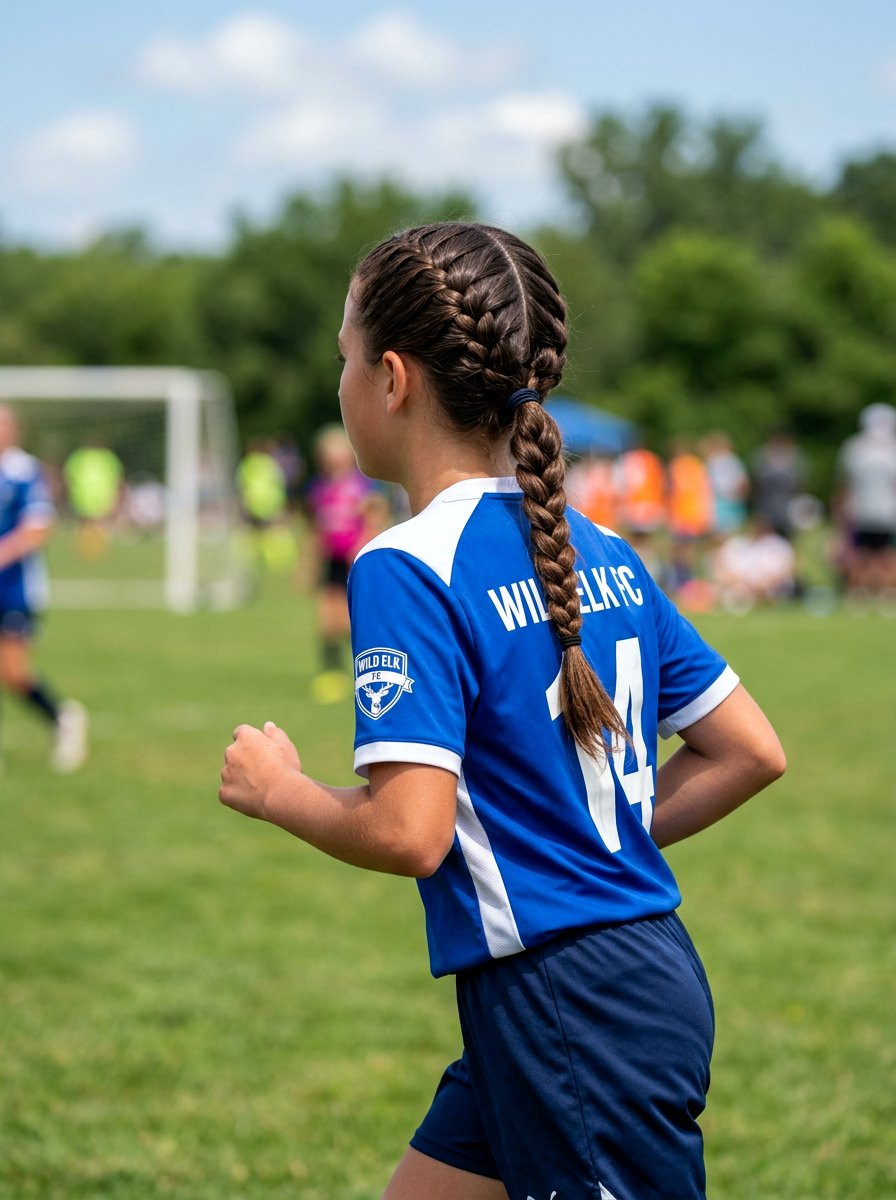
A low soccer braid ponytail is a smart choice if you wear a protective headband or hat for training, since it sits comfortably below most gear. To create it, you braid from the crown or slightly above, using a French or Dutch braid that travels down the back of the head before merging into a ponytail at the nape. This keeps pressure off the top of the head while still anchoring the hair tightly enough for high-energy drills, scrimmages, and full matches. A low placement also works nicely for players with fine hair that tends to slip out of high ponytails, because gravity is working with you, not against you. If a few shorter layers escape around the ears, a thin athletic headband usually handles them without disturbing the main braid-into-ponytail structure.
6. Bubble Braid Soccer Ponytail
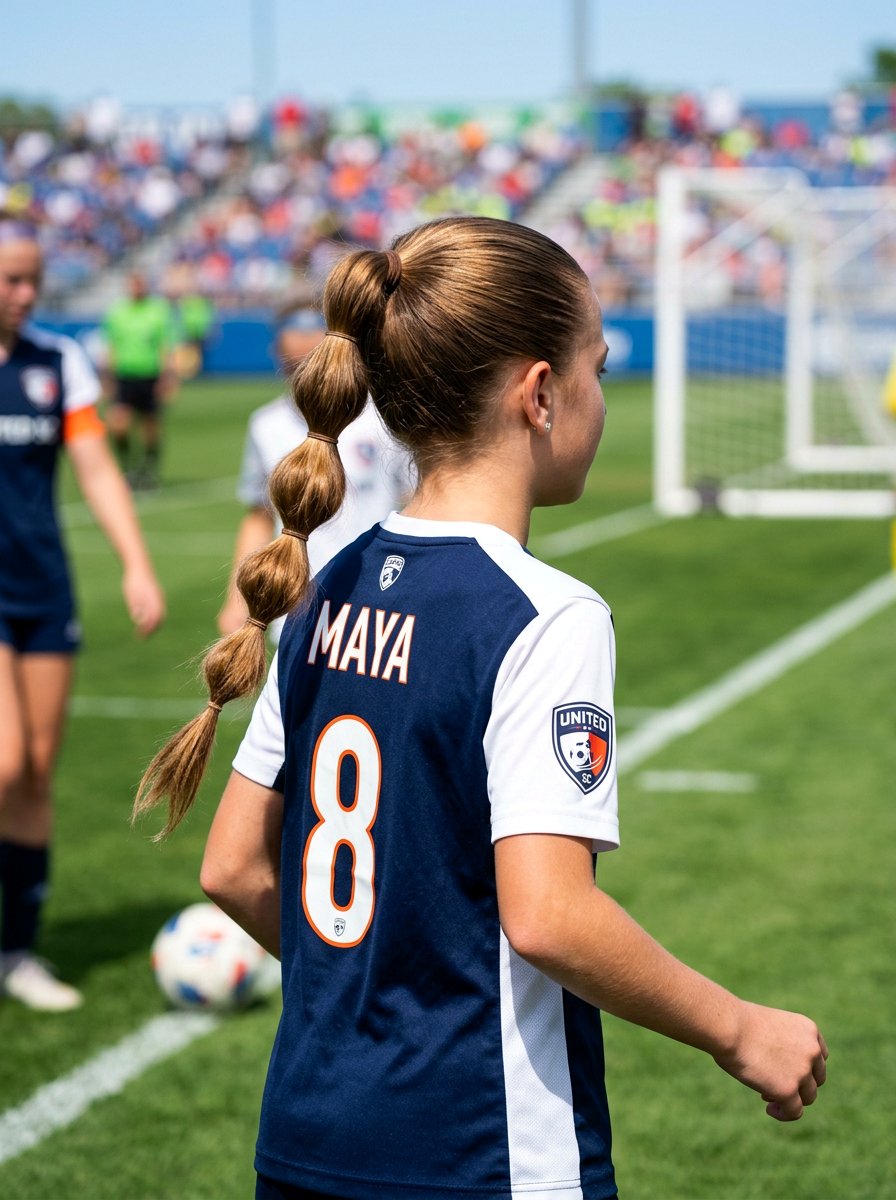
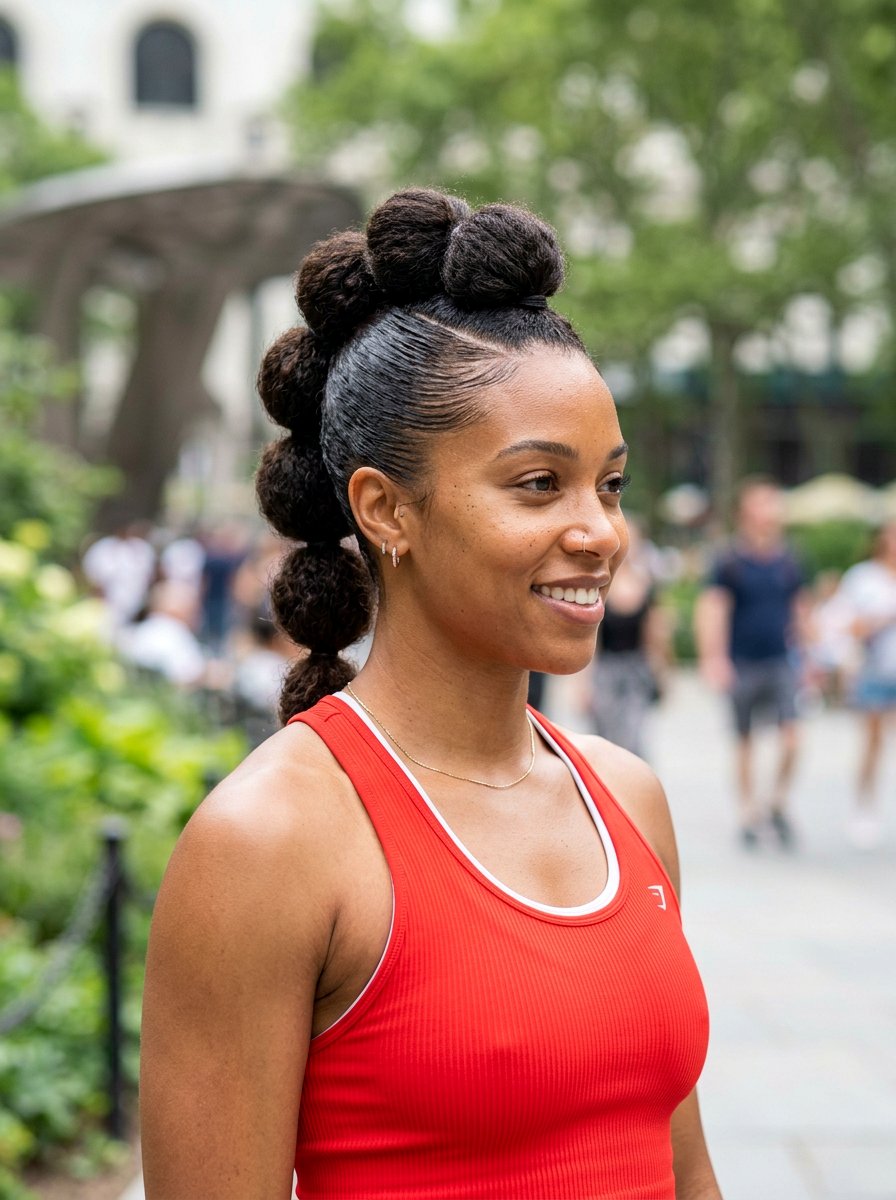
Bubble braid soccer ponytail looks are trendy on social media and surprisingly practical on the field when done with snug elastics. You begin with a standard high or mid ponytail, then place small hair ties down the length every one to two inches, gently tugging each section outward to form rounded “bubbles.” Many players pair this technique with a small braid leading into the ponytail base, which helps grip the hair and prevents the top from getting loose during aggressive play. Using soft, snag-free elastics is important so you can remove them after the game without breakage or painful tangles. This style works best on medium to long hair and gives a fun, youthful look that still feels neat and controlled when you are sprinting for the ball.
7. Fishtail Braid Soccer Ponytail
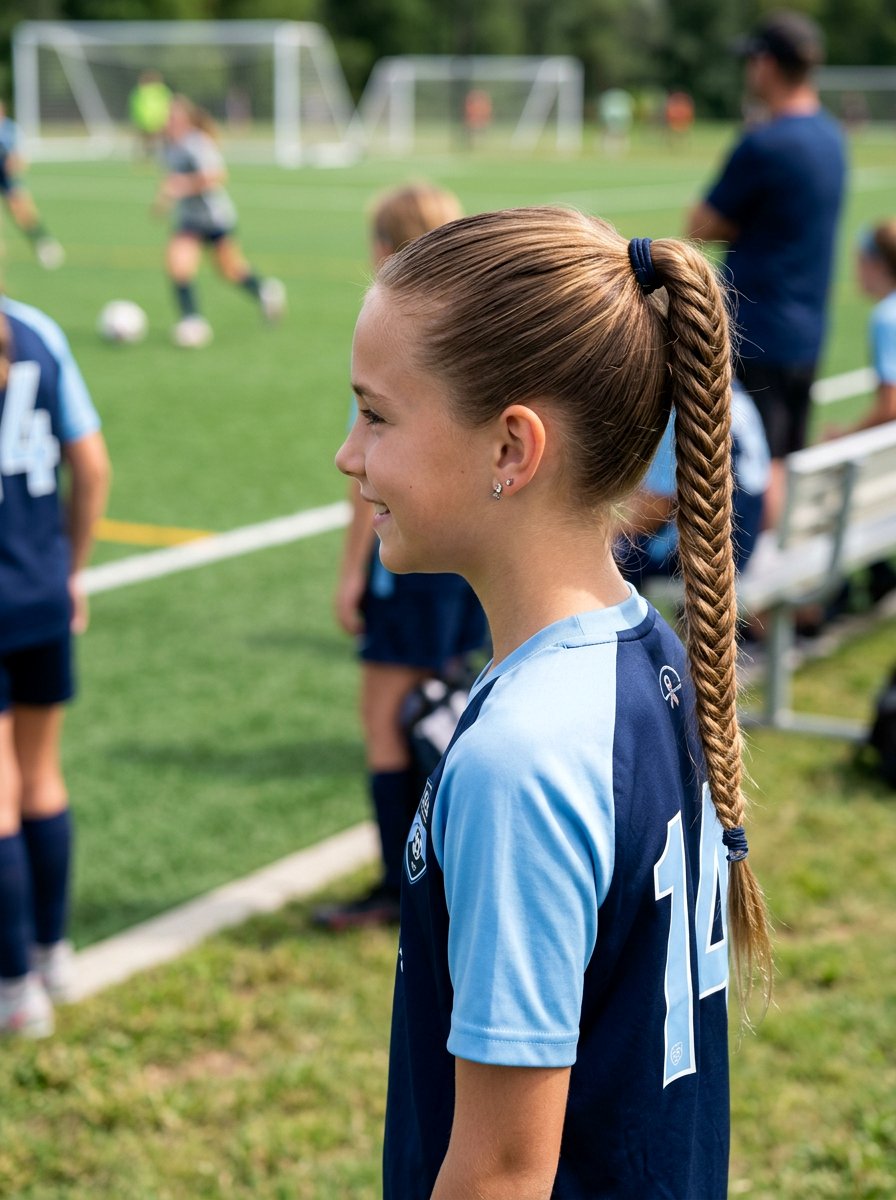
A fishtail braid soccer ponytail adds a more intricate pattern while keeping the ponytail compact and less prone to tangling during long games. You can start with a regular ponytail at the back of the head, then divide the tail into two sections and alternate thin outer pieces to build the fishtail from top to ends. Some players prefer to first create a small French braid at the crown and then switch into a fishtail braid once the hair is gathered into the ponytail. The result is a detailed, rope-like shape that holds together well, especially if you secure the end with a tight elastic and add a light layer of hairspray. It is a good pick for girls who want something a bit fancier for tournaments or photos but still need movement and comfort on the field.
8. Half Up Soccer Braid Ponytail
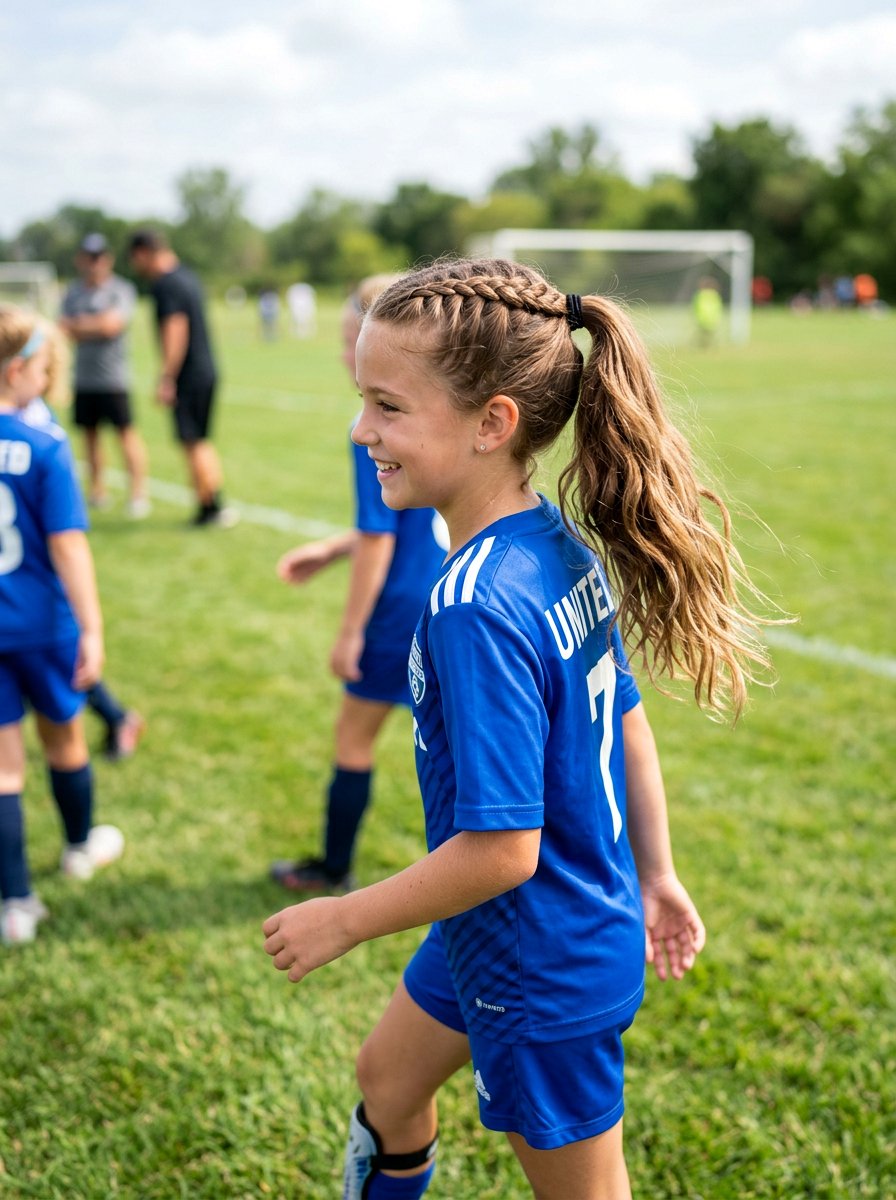
The half up soccer braid ponytail is ideal for players who want some hair left down but still need structure and visibility during play. You start by sectioning off the top half of the hair, from the temples or just above the ears, and create one or two tight braids in that upper section. Those braids then gather into a ponytail at the back of the head, while the lower half of the hair remains loose yet partially controlled by the weight of the top section. This gives you a more relaxed look for lighter training sessions, warm-ups, or friendly matches where you do not need maximum control. Adding a bit of product through the loose lengths helps reduce frizz and knots so your hair still feels manageable when you leave the field.
9. Side Braid Soccer Ponytail
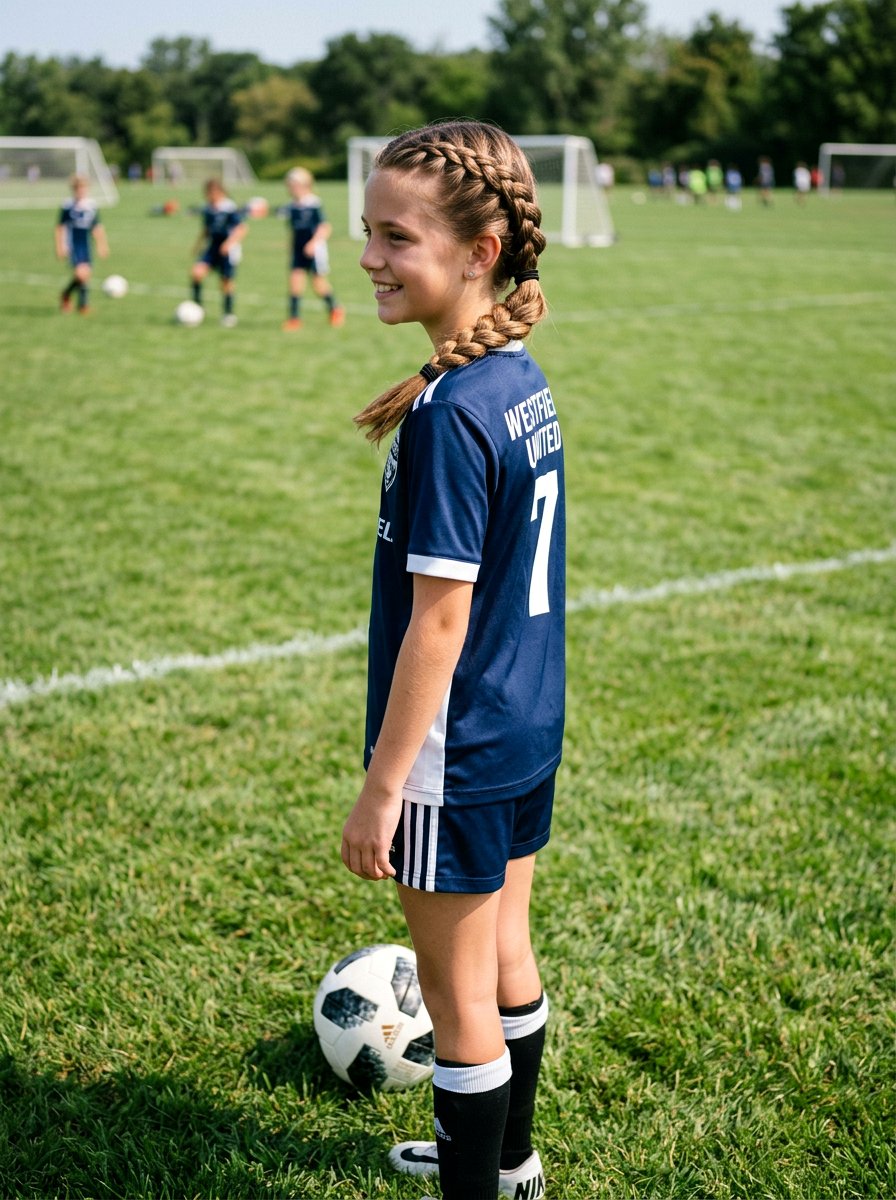
A side braid soccer ponytail brings a little personality to your game-day look while still meeting practical needs like vision and comfort. To create it, you part the hair slightly off-center and build a French or Dutch braid along one side of the head, starting near the temple and following the hairline back. Once you reach the back, you sweep all the hair, including the side braid, into a mid or low ponytail that lines up with the braid’s path for a cohesive finish. This setup works well for players who like a softer look but still want hair anchored enough for running, tackling, and quick turns. A slim athletic headband or a few bobby pins can help tame shorter strands around the opposite side and neckline without ruining the asymmetric design.
10. Braided Headband Soccer Ponytail
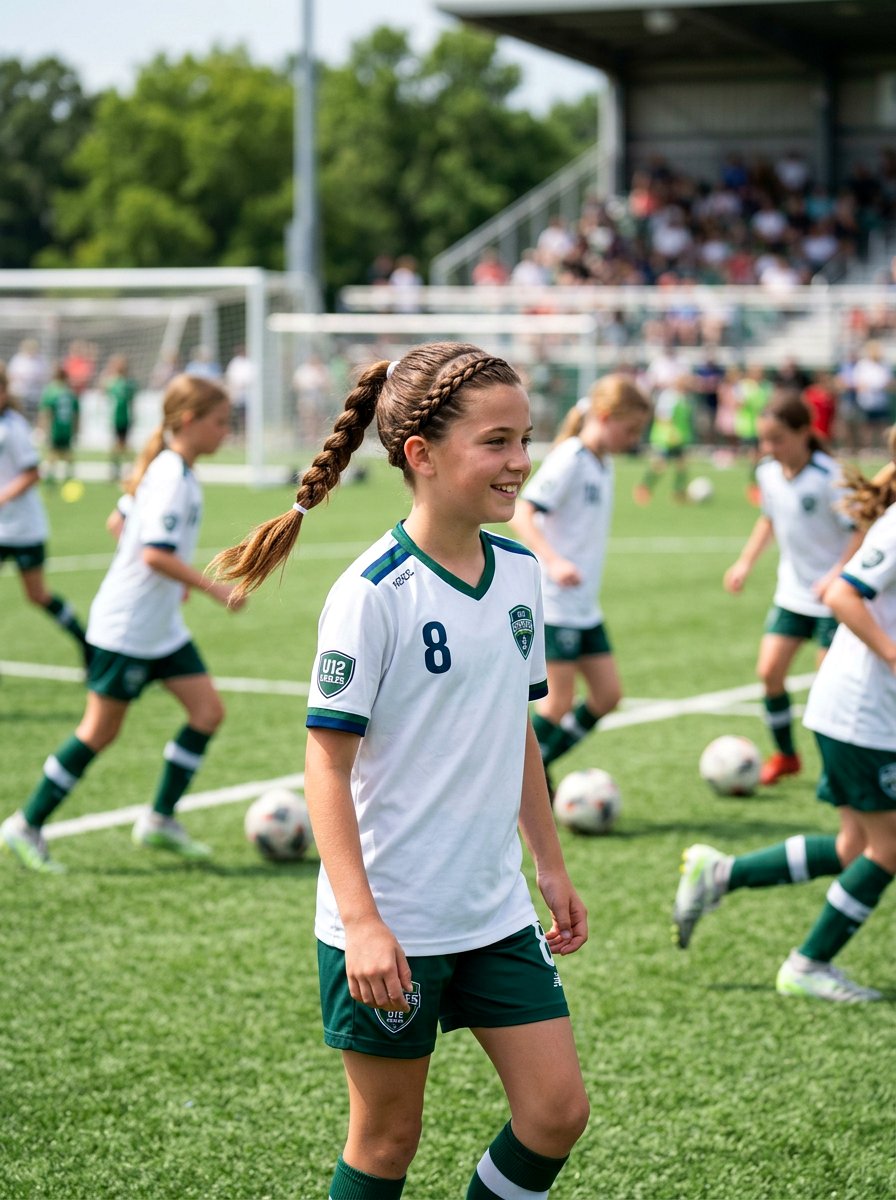
The braided headband soccer ponytail is especially helpful if you always battle baby hairs or bangs falling into your eyes during crucial plays. You create a thin French or Dutch braid along the front hairline from one side to the other, mimicking the placement of a fabric headband. After that, you gather the remaining hair into a mid or high ponytail at the back, letting the braided “headband” hold the front in place while you run. This design pairs nicely with actual sweatbands if you place them slightly behind the braid, so the two work together instead of fighting for space. It is a smart option for players with shorter front layers, because the braid locks them down more securely than gel alone.
11. Wrapped Pull Through Braid Ponytail For Soccer
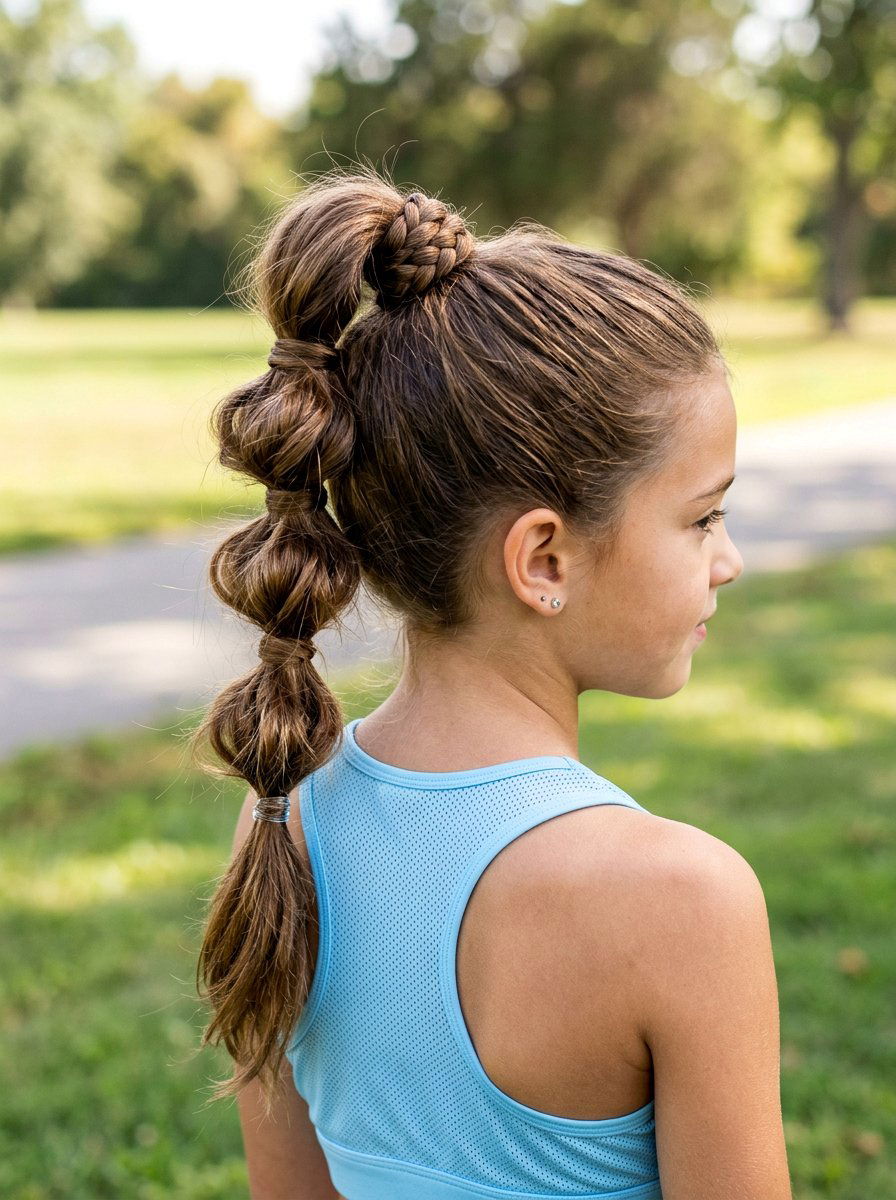
Wrapped pull through braid ponytail looks deliver big volume and eye-catching texture without needing to know complex braiding techniques. You start by making a high or mid ponytail and securing it with an elastic, then divide it into stacked sections that you loop and “pull through” each other using additional hair ties. Each loop is gently tightened and fanned out to create a full, chunky pattern that holds together well during movement on the field. Many tutorials recommend wrapping a small section of hair around the base elastic and pinning it for a polished, seamless finish. With the hair anchored in multiple spots down the length, this style resists tangles better than a loose ponytail and still looks playful and modern.
12. Viking Braid Ponytail For Soccer
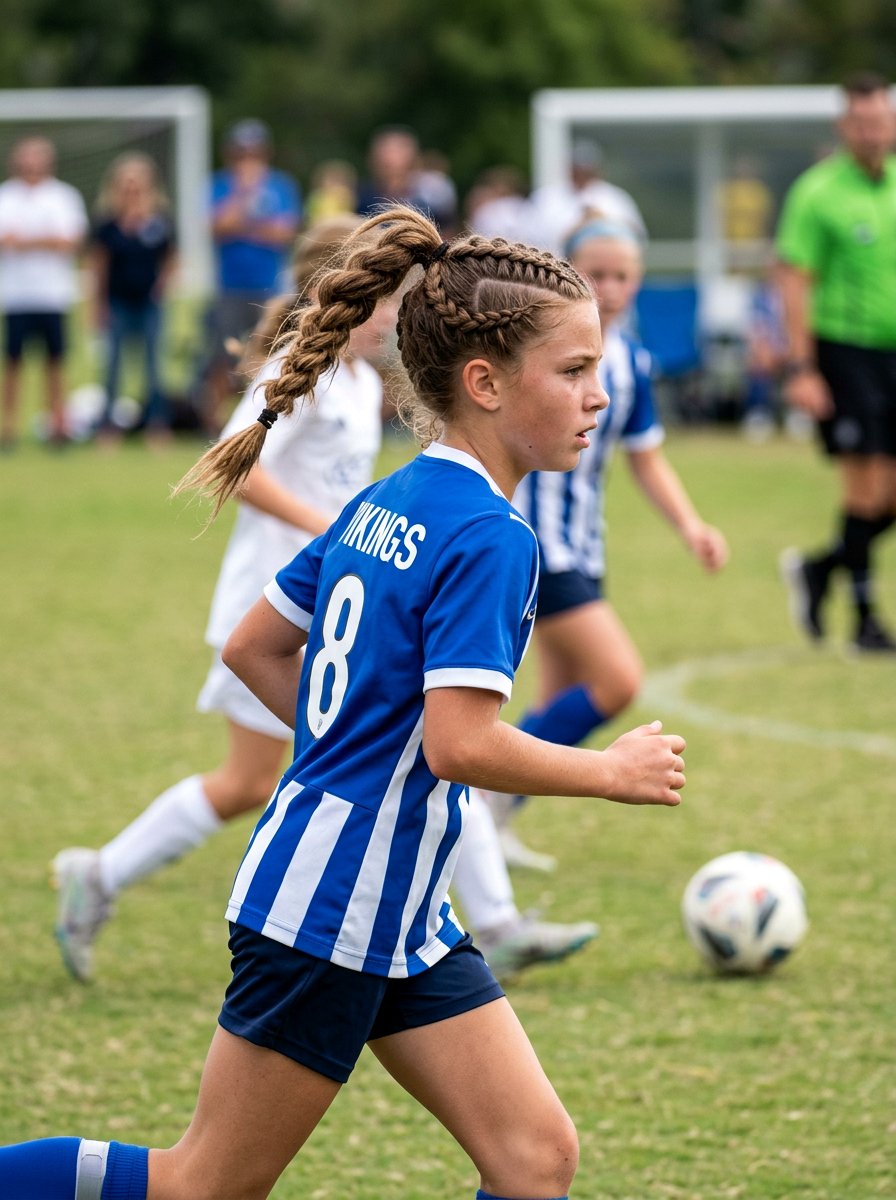
Viking braid ponytail for soccer brings in bold, warrior-inspired structure that feels right at home in a competitive match setting. You often see a central Dutch braid running from the front hairline to the crown, flanked by one or two smaller braids on each side for extra grip and drama. All braids join into a high or mid ponytail that can then be wrapped into a simple three-strand braid, a rope braid, or left mostly loose, depending on preference. This multi-braid foundation helps keep the style secure through contact, headers, and quick pivots, even on thick or heavy hair. It is a great choice for tournaments or championship games when you want your hair to look as fierce as your gameplay while still staying functional.
13. Criss Cross Braid Soccer Ponytail
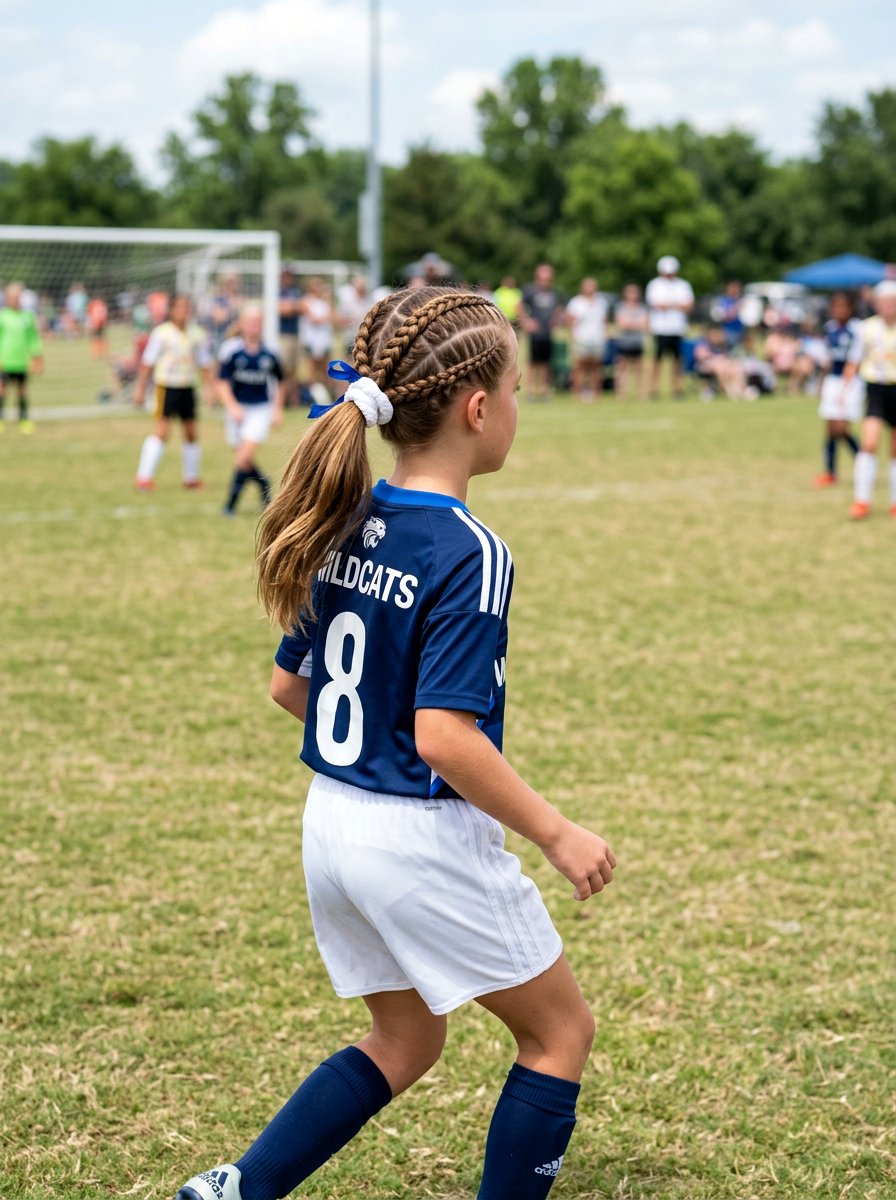
The criss cross braid soccer ponytail adds a fun visual pattern across the back of the head while locking hair into place. You divide the top section into two parts, braid each one, then cross them over each other in an “X” shape before securing them into a ponytail with the rest of the hair. Pins or small elastics help anchor the crossover so it does not shift around as you run or head the ball. Some players like to extend the braids beyond the crossover and continue them into the ponytail for even more texture and security. This look offers strong hold and a unique design that stands out in team photos without taking much longer than a standard double braid.
14. Ladder Braid Soccer Ponytail
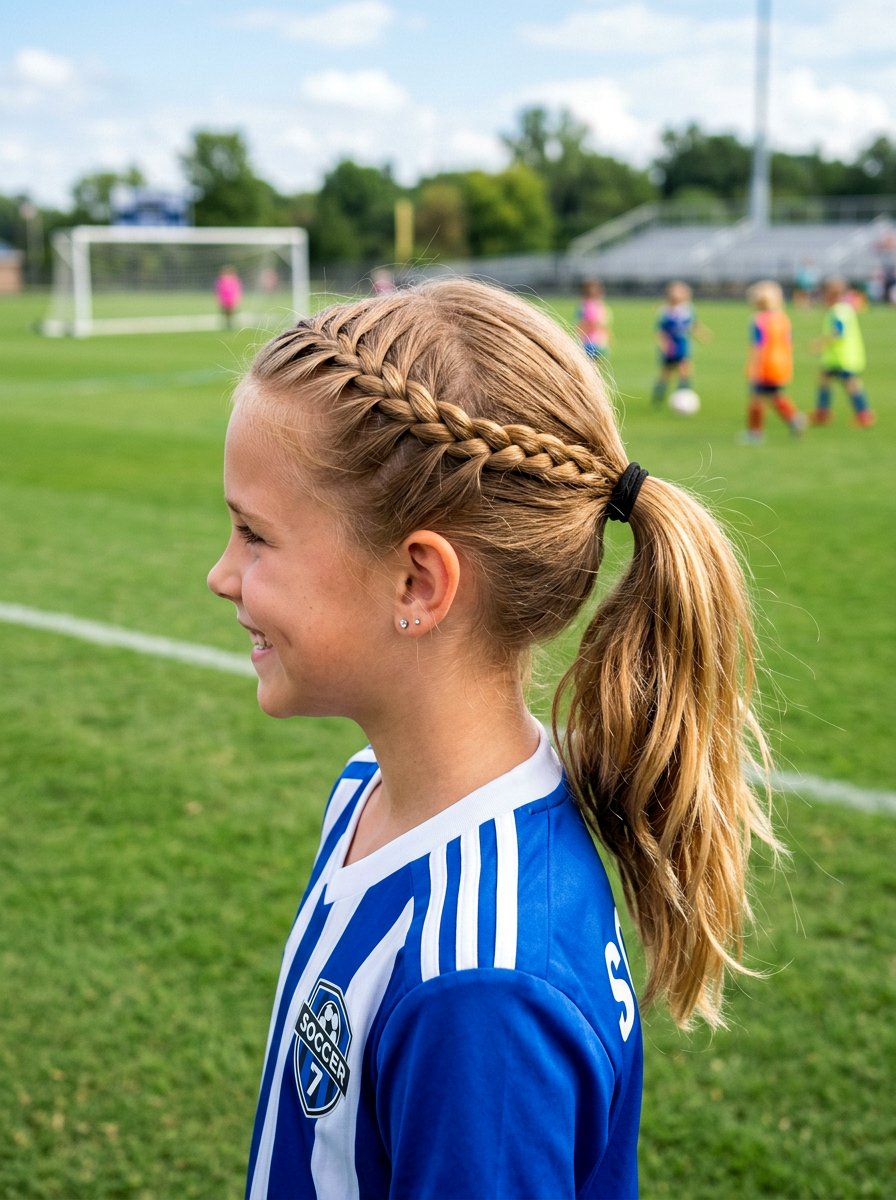
Ladder braid soccer ponytail hairstyles are more detailed but worth the effort if you enjoy creative game-day hair. The style usually starts with one main French or Dutch braid, then smaller sections feed in and out of the main braid, creating a ladder effect along one side of the head. Once you reach the back, everything is collected into a ponytail that can be left plain or further braided for extra control and structure. This technique works best on medium to long hair because you need enough length for both the ladder pattern and the tail. Using a lightweight styling cream before braiding can help define the sections so the ladder stands out cleanly, even after a full game.
15. Rope Braid Soccer Ponytail
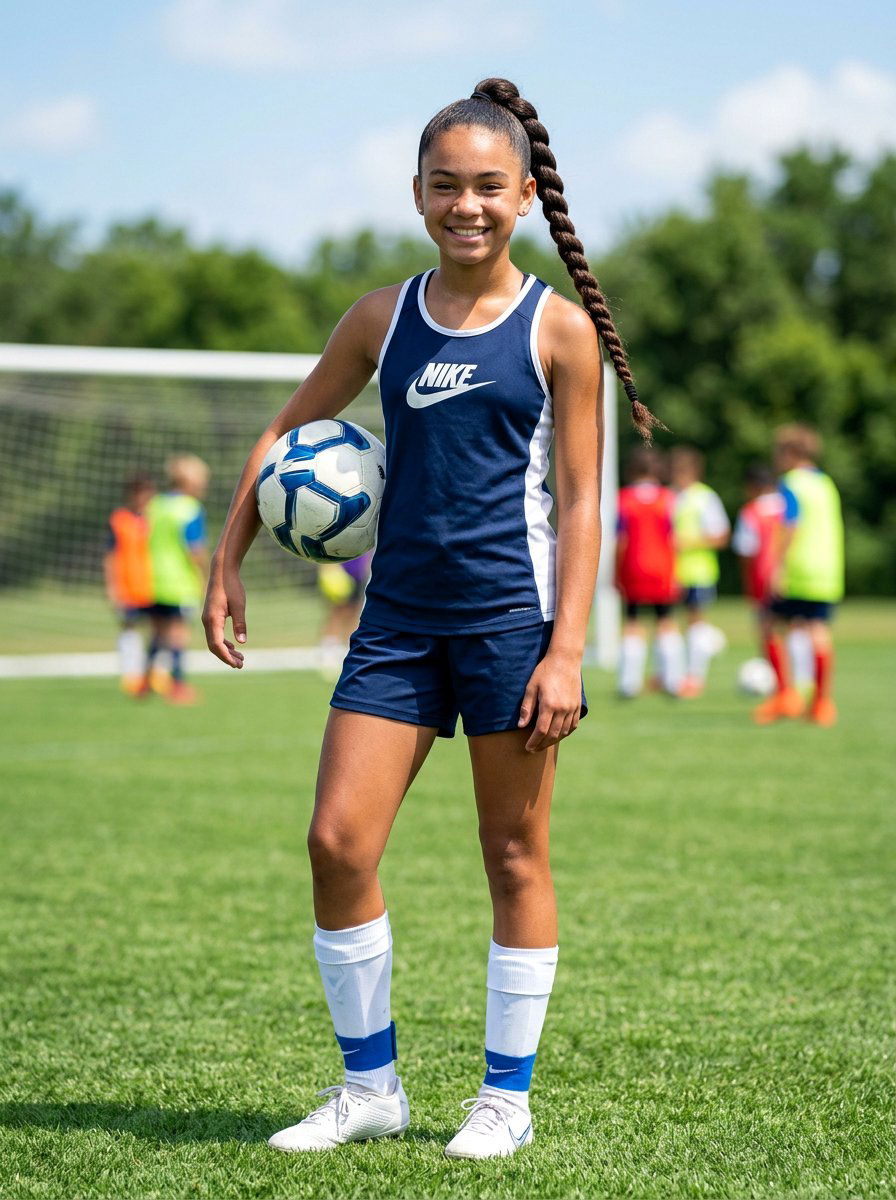
A rope braid soccer ponytail is a great low-effort option that still reduces tangles and keeps hair out of the way. You pull the hair into a mid or high ponytail, then divide it into two equal sections, twisting each section in the same direction before wrapping them around each other in the opposite direction. This counter-twist method locks the rope shape so it does not unravel easily, especially when secured with a tight elastic at the end. The finished look is sleek and compact, which helps the ponytail stay closer to the back instead of swinging wildly during sprints. It is also quick to undo and redo between games, making it perfect for busy weekends with back-to-back matches.

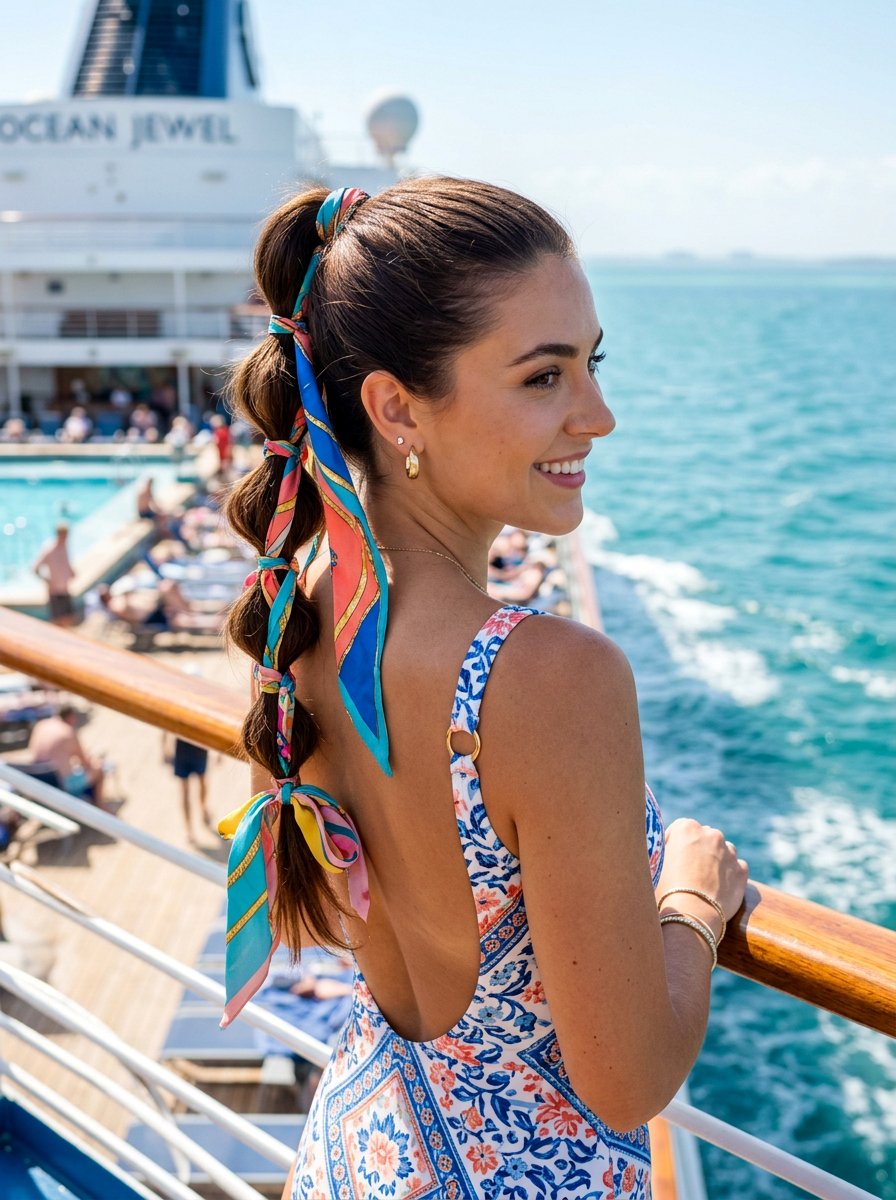
16. Braided Mohawk Soccer Ponytail
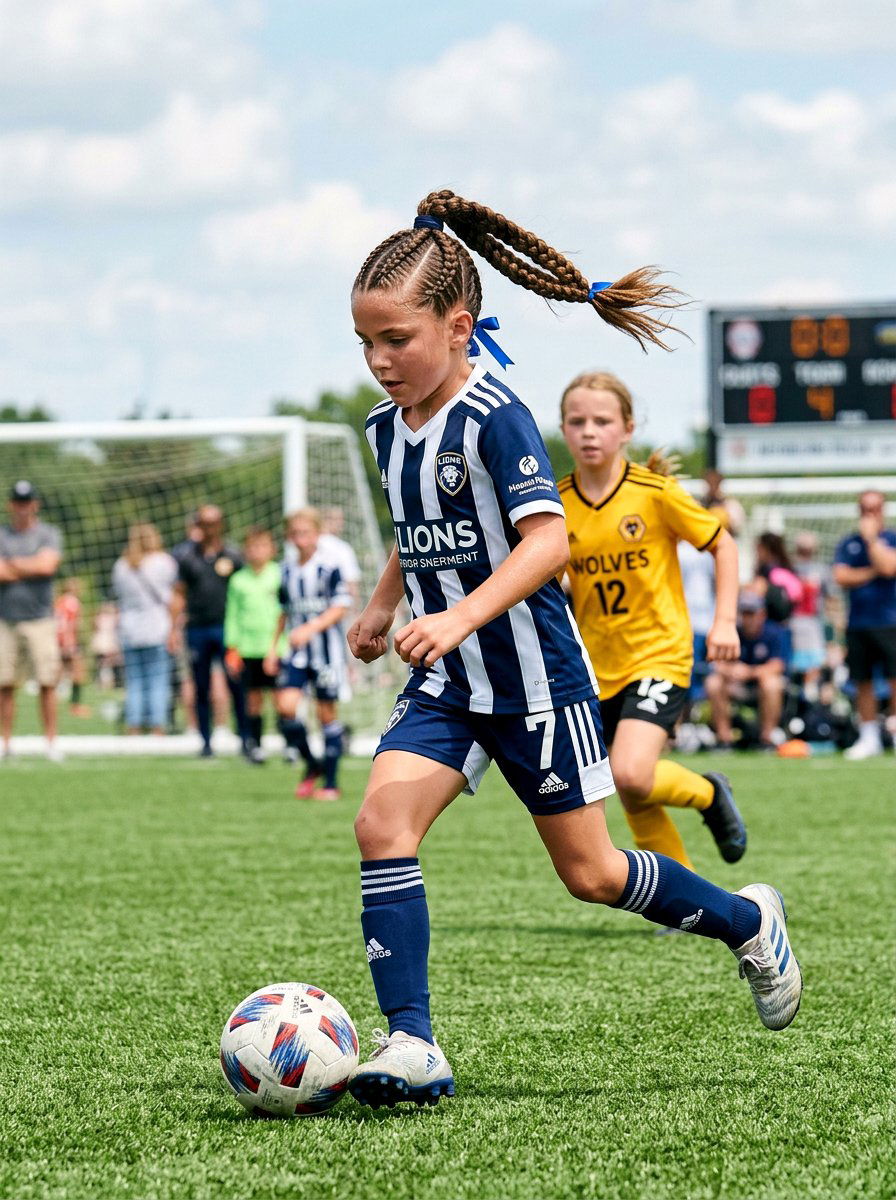
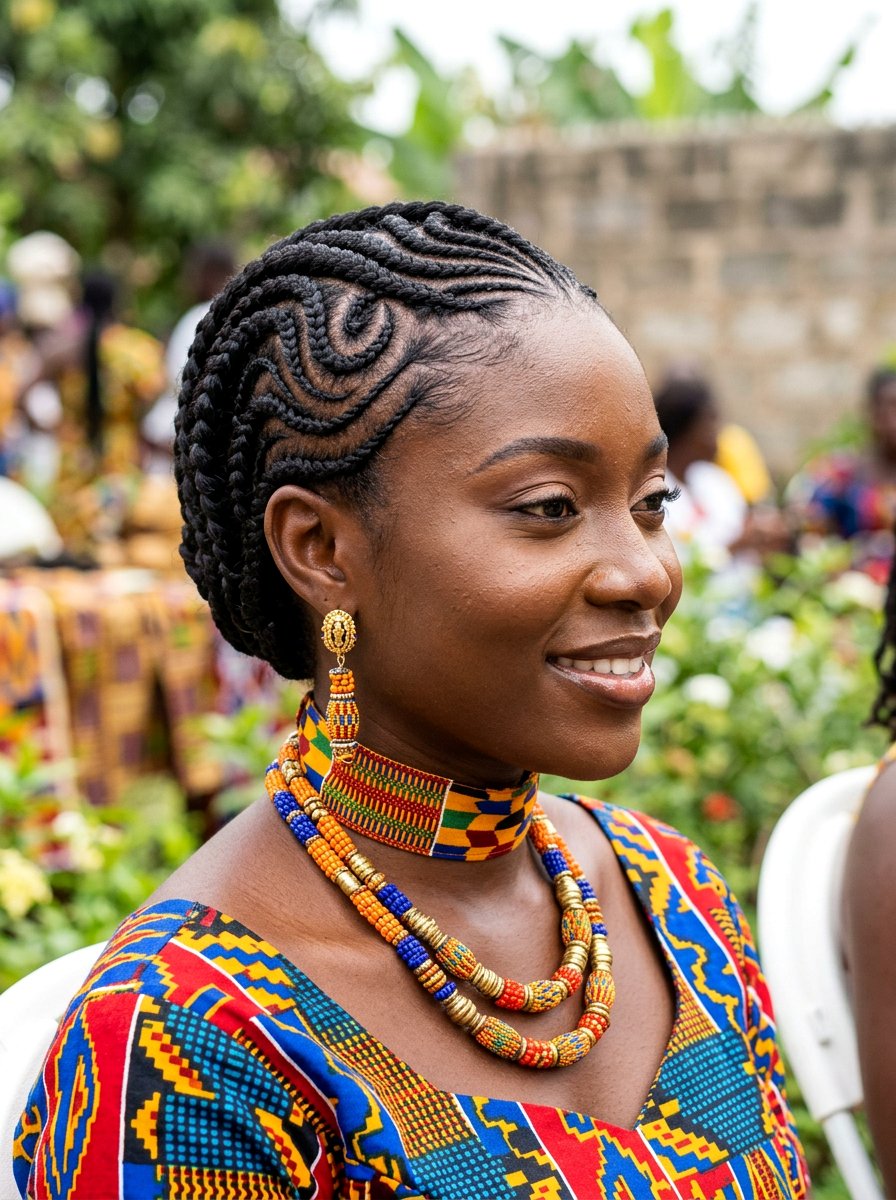
The braided mohawk soccer ponytail is ideal if you want a bold center focus with shaved-sides-inspired structure, minus the actual shave. You create multiple small braids or one wide Dutch braid running right down the middle of the head from forehead to crown. The side hair is either slicked back tightly or gathered into the main braid, leaving a raised, textured strip that feeds into a high ponytail at the back. This design keeps the top very secure and reduces the chance of hair collapsing into your face when you jump or turn quickly. It is a standout choice for players who love expressive hair but still need a practical, helmet-friendly option for certain sports or training setups.
17. Accent Braid Soccer Ponytail
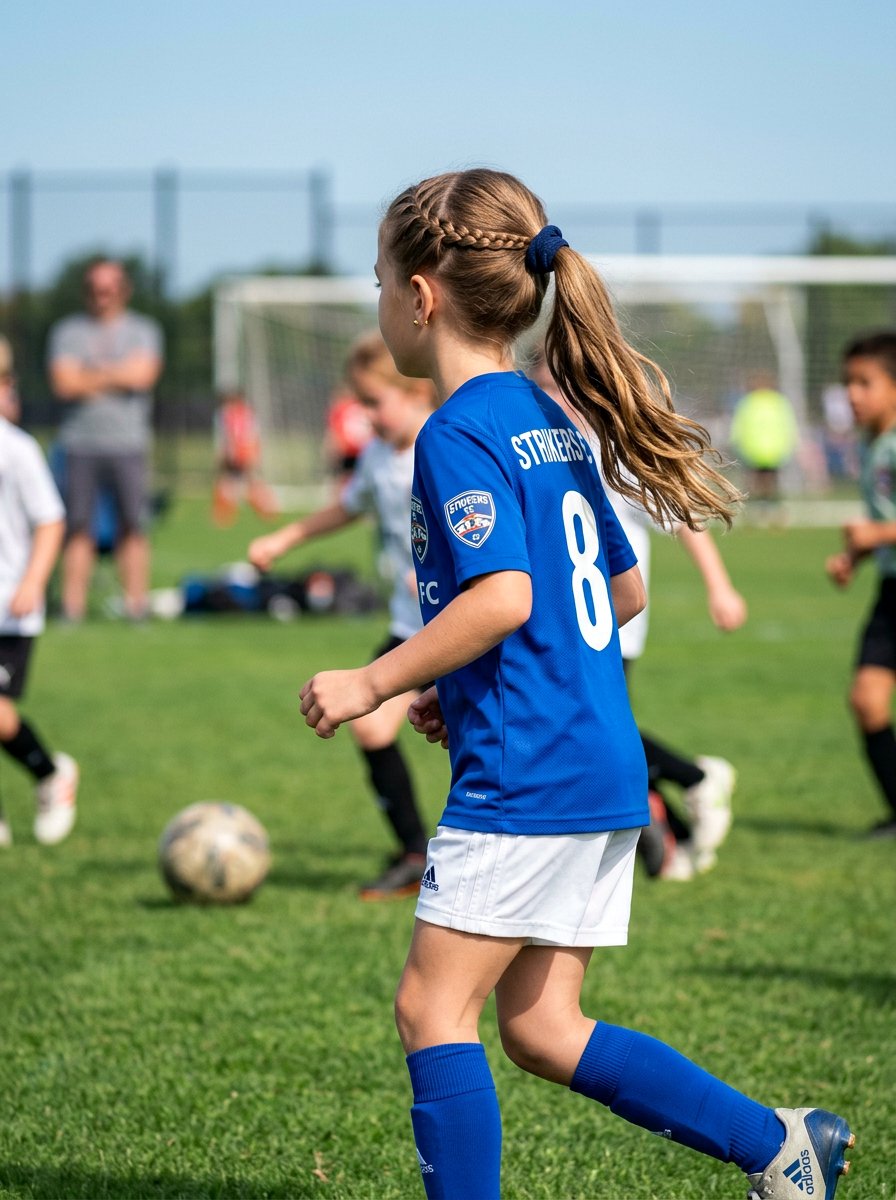
An accent braid soccer ponytail is perfect if you are new to braiding but want a bit more interest than a plain ponytail. You pull the hair into a regular ponytail first, then take a small section from the ponytail and create a three-strand braid or fishtail through that piece. This accent braid can be wrapped around the base to hide the elastic or left to hang along the main ponytail for a layered effect. The style is fast, easy to learn, and still keeps most of the hair controlled and away from your face during play. It is a convenient in-between look for practices, casual games, or days when you have only a few minutes before leaving for the field.
18. Curly Hair Soccer Braid Ponytail
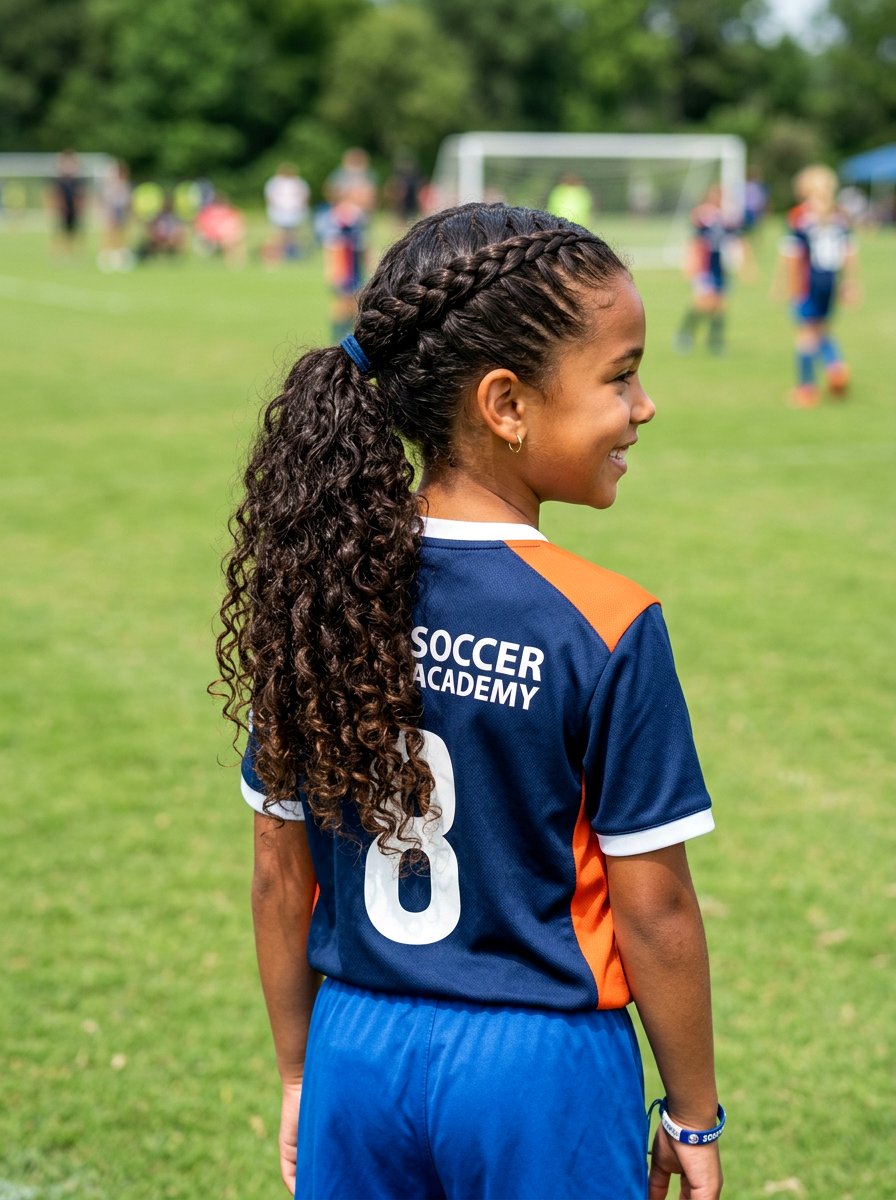
Curly hair soccer braid ponytail looks need a little extra moisture and prep, but they hold beautifully once secured. Start with a light leave-in conditioner or curl cream to reduce frizz, then create a French or Dutch braid from the front into a mid or high ponytail. The ponytail itself can stay mostly curly, with the natural texture adding volume and personality behind you while you play. Using coated elastics and avoiding overly tight tension at the hairline helps protect curls from breakage and traction issues. This style supports movement, keeps curls out of your eyes, and looks great when you take off your jersey and head out after the game.
19. Thick Hair Soccer Braid Ponytail
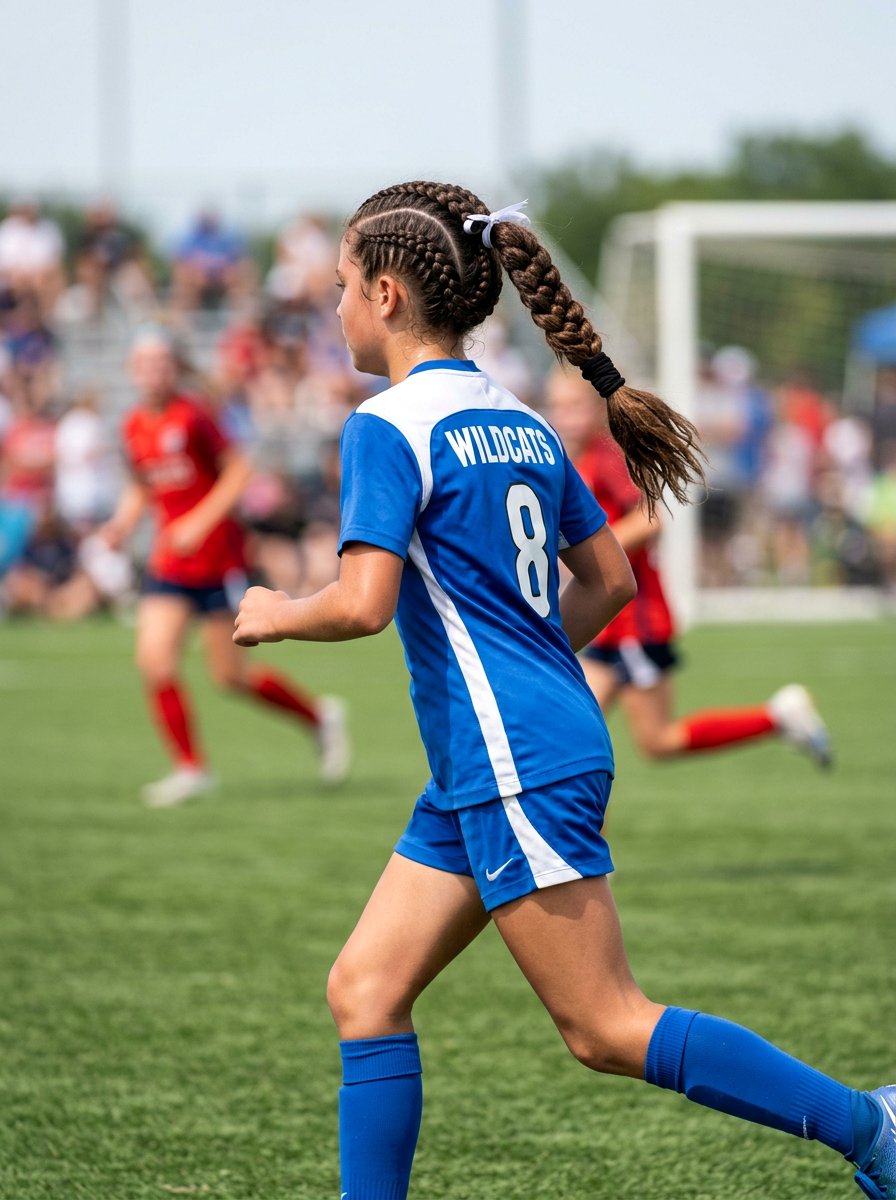
Thick hair soccer braid ponytail hairstyles must prioritize strong anchors and layered support so the weight does not pull everything loose. Many players with dense hair start with two or three braids on top or along the sides, then combine them into a single ponytail secured with a heavy-duty elastic. Sometimes, a second elastic is added a few inches down the ponytail to distribute tension and control bounce. Using sectioning clips and smoothing cream while you braid keeps the style neater and helps the elastics grip better through an entire match. With enough support points, even very thick hair can feel comfortable and stay out of the way during aggressive offense and defense.
20. Easy Beginner Soccer Braid Ponytail
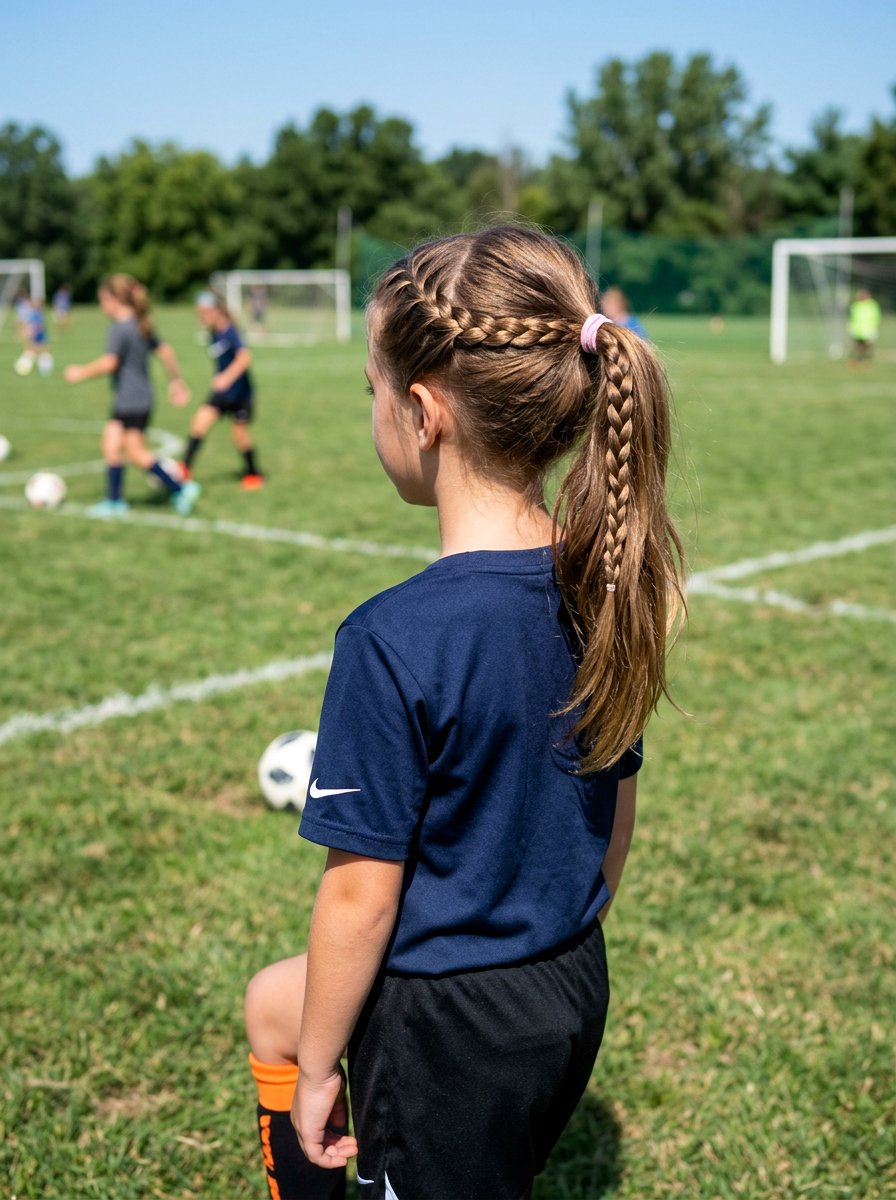
An easy beginner soccer braid ponytail makes game prep faster for parents and players who are just learning basic techniques. You start with a well-brushed ponytail at mid height, then add one simple three-strand braid either along the top back section or inside the ponytail itself. The focus is on tight elastics, smooth brushing, and a braid that is firm but not painfully tight at the scalp so kids stay comfortable. As you get more confident, you can slowly transition into French or Dutch braids while keeping the same ponytail placement that already works. This straightforward approach delivers a reliable, no-fuss hairstyle that holds up across school, warm-ups, and full games without needing constant fixes.
Conclusion:
A good soccer braid ponytail should always balance secure hold, comfort, and personal style so you can focus fully on the game, not your hair. Whether you choose a classic French braid into a ponytail or a more advanced Viking, ladder, or bubble braid look, the key is tight sections at the scalp and strong elastics at the base. Prepping with gentle detangling, the right products, and snag-free ties goes a long way toward preventing mid-match re-dos or painful tangles afterward. It also helps to match braid complexity to your skill level and schedule, saving detailed designs for special tournaments and using simpler patterns on busy practice days. With these twenty soccer braid ponytail options in your rotation, you can always find a look that suits your hair type, comfort needs, and competitive energy on the field.
You'll Like These Styles:







Leave a Reply