
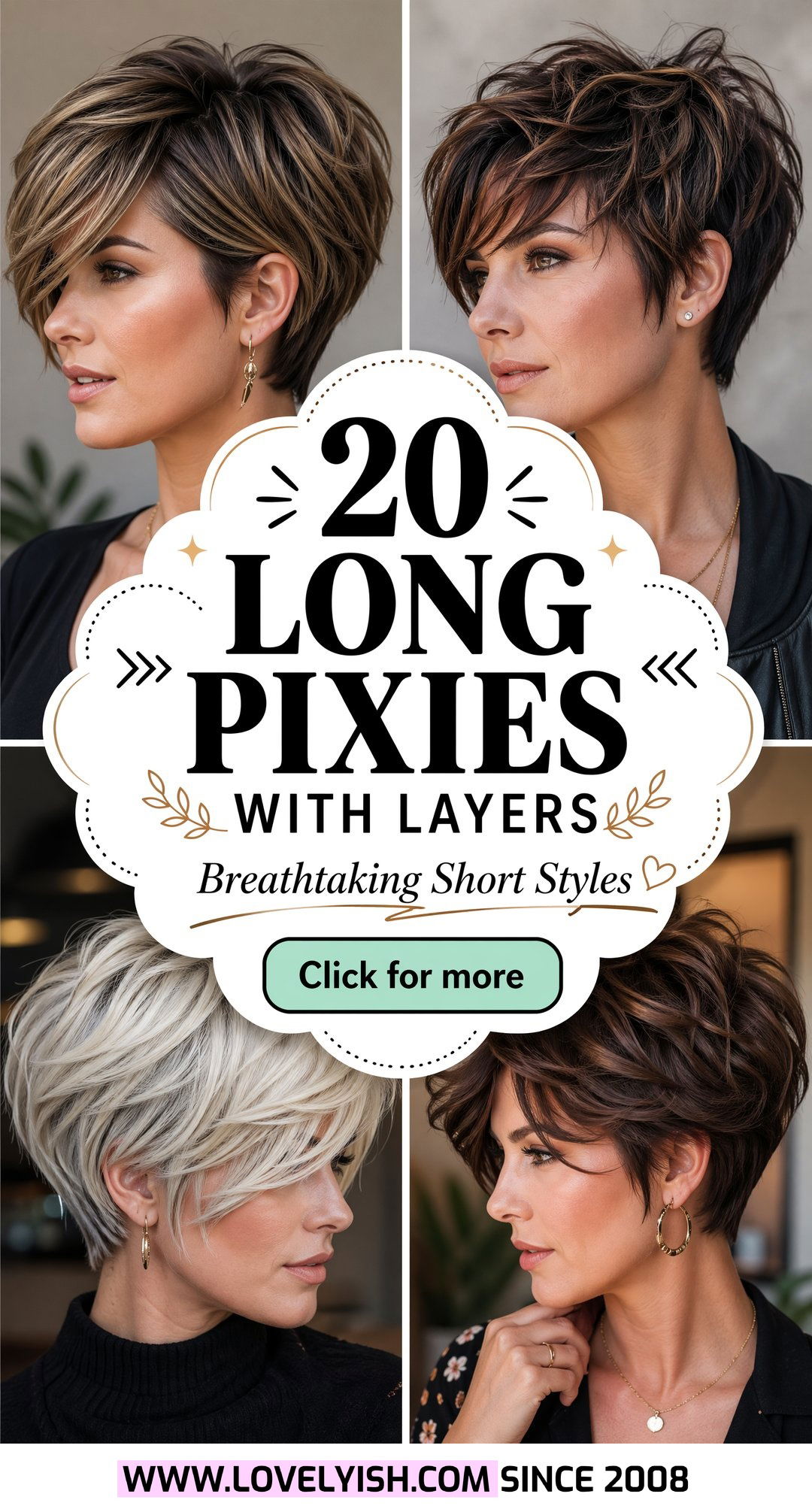
Layered long pixie cuts are one of the most versatile short hair options you can choose right now, sitting perfectly between a classic crop and a bob while still feeling modern and low‑maintenance. They are trending hard for 2025–2026 because the extra length and layered structure make them easier to personalize for different face shapes, hair types, and lifestyles. With a good cut, you can get built‑in movement, texture, and volume without spending ages styling every morning. Many stylists recommend long pixies with layers as a softer way to try short hair if you are nervous about going super cropped, because they keep flattering length around the face and on top. You can wear them sleek and polished for work or tousled and messy for weekends, and a small tweak to the parting or fringe can shift the whole vibe. Below are 20 layered long pixie looks that cover different textures, densities, and face shapes, with clear styling tips to help you talk confidently with your stylist and keep your cut looking salon‑fresh at home.
1. Long Pixie With Soft Face Framing Layers
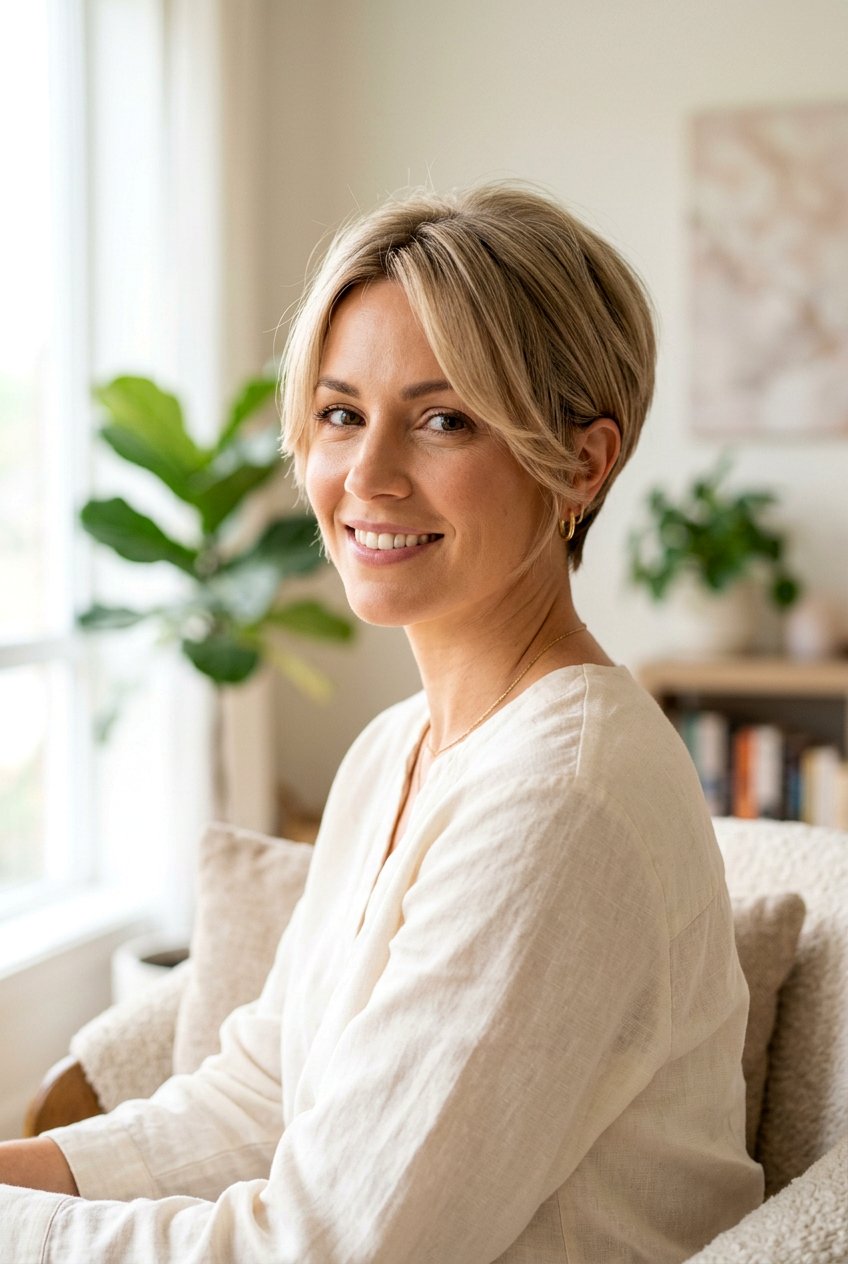
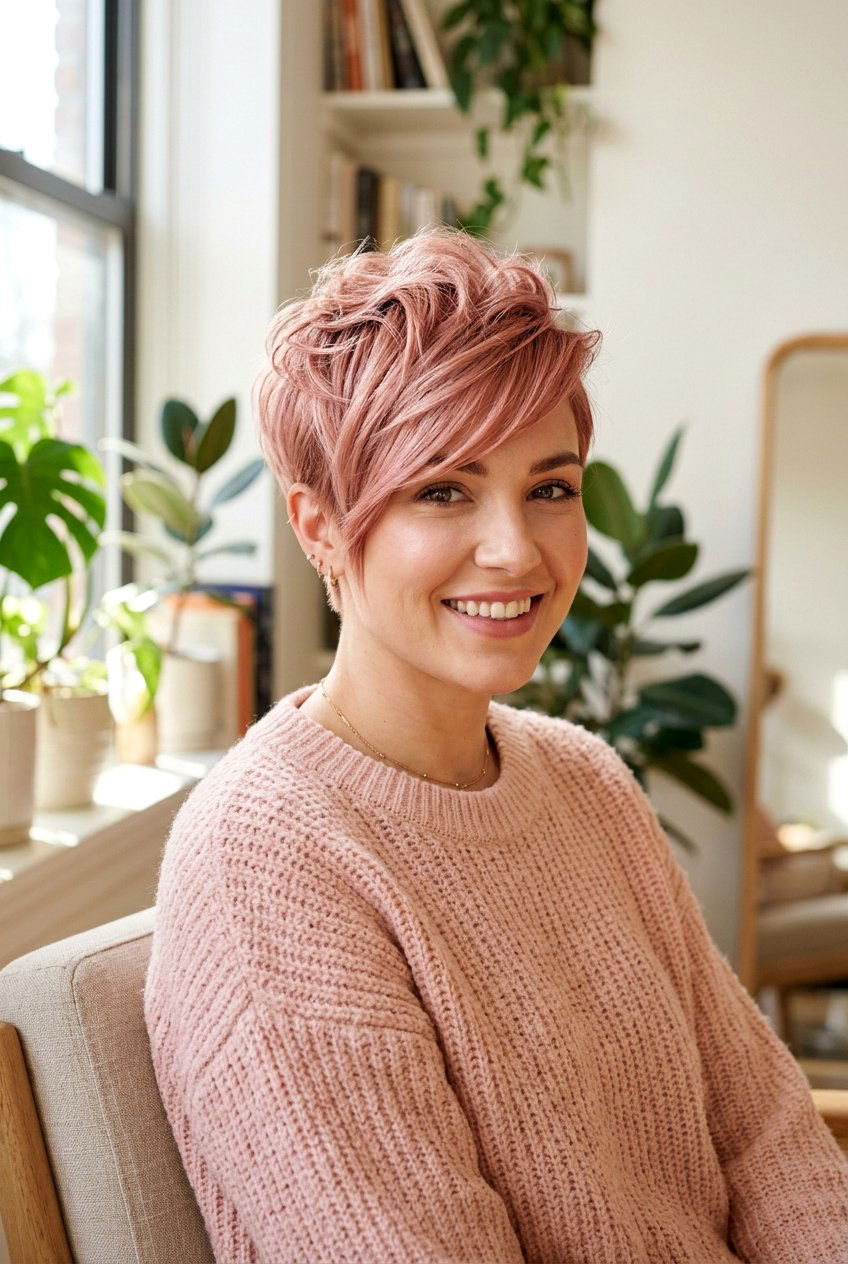
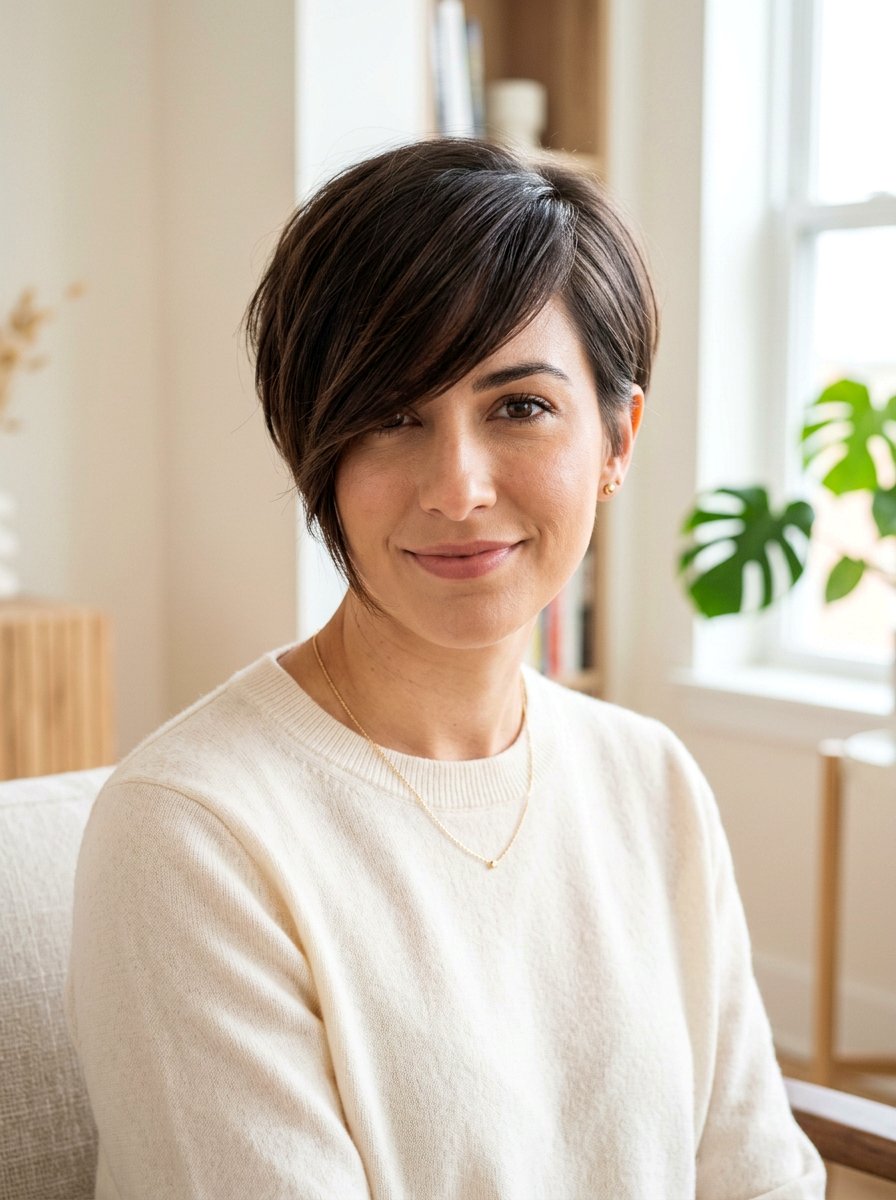
A softly layered long pixie with gentle face framing is a great starting point if you want a change but still need something wearable every day. The length typically hits between the cheekbones and jawline, with slightly longer pieces around the face that curve in, giving a subtle, feminine outline without feeling too “done.” Layers are light and blended rather than choppy, which helps fine to medium hair look a bit fuller while staying easy to brush through and style in minutes. Ask your stylist for internal layering instead of heavy thinning, so the hair has movement but does not collapse at the crown. At home, blow‑dry with a small round brush, lifting the roots around the part, then smooth the ends with a light cream or serum to keep things polished but not stiff. This shape works well for oval, heart, and softly rounded faces because the face‑framing pieces can be adjusted to skim cheekbones or soften a sharper jaw.
2. Asymmetrical Long Pixie With Layers
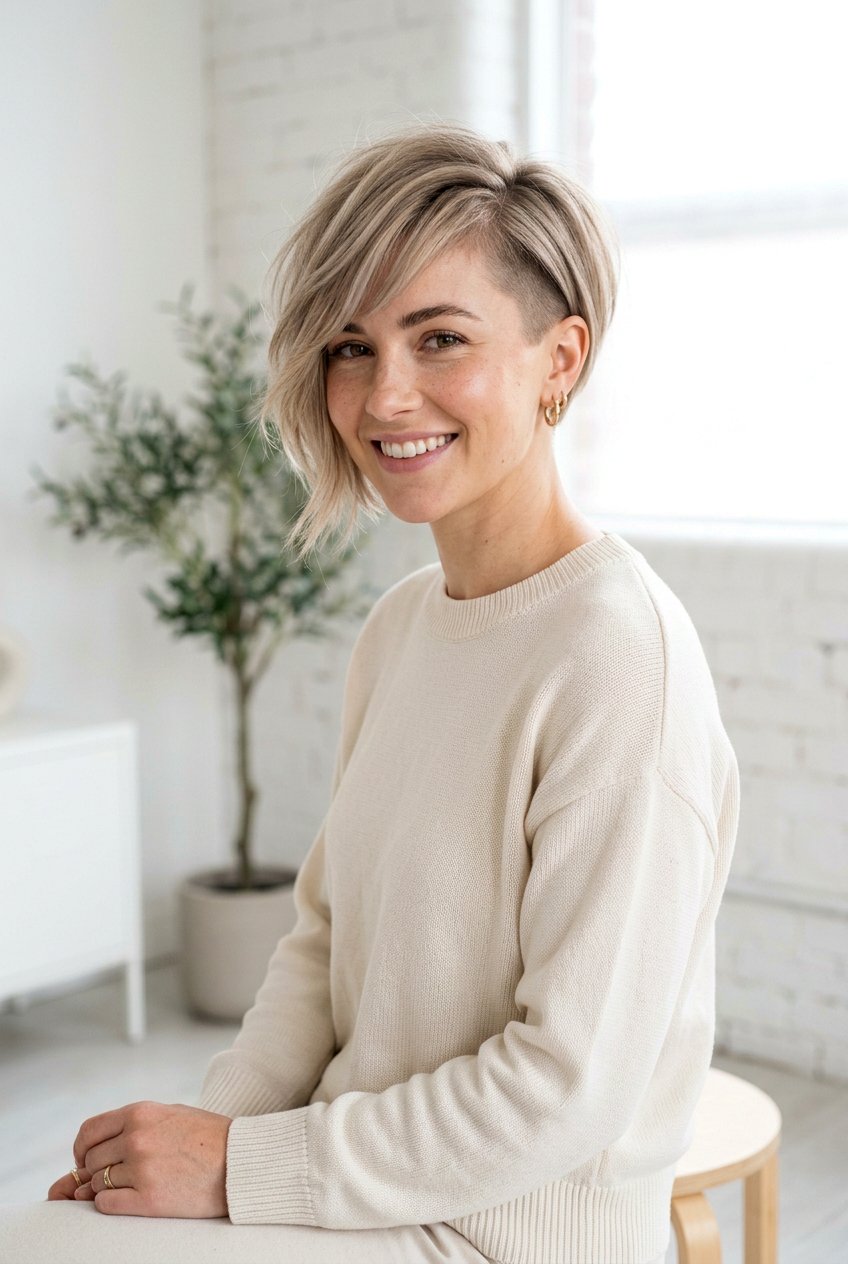
An asymmetrical long pixie with layers gives you an instant modern edge while still being surprisingly wearable. One side is cut shorter and more tucked in, while the other side is left noticeably longer, usually grazing the cheek or jaw, and layered for lightness and swing. This imbalance draws the eye diagonally, which can visually slim fuller cheeks or balance a strong jawline. Layers through the crown add gentle lift, so the shape does not fall flat, especially on straight or slightly wavy hair. Ask your stylist to keep the shorter side close but not shaved, and to build soft, graduated layers up to a longer, sweeping side section. Styling is simple: create a deep side part on the longer side, blow‑dry everything in that direction, and finish with a texturizing spray to keep the layers airy rather than stiff. This cut works especially well if you love tucking one side behind your ear or wearing statement earrings, because that shorter side shows off your features.
3. Long Layered Pixie With Side Swept Bangs
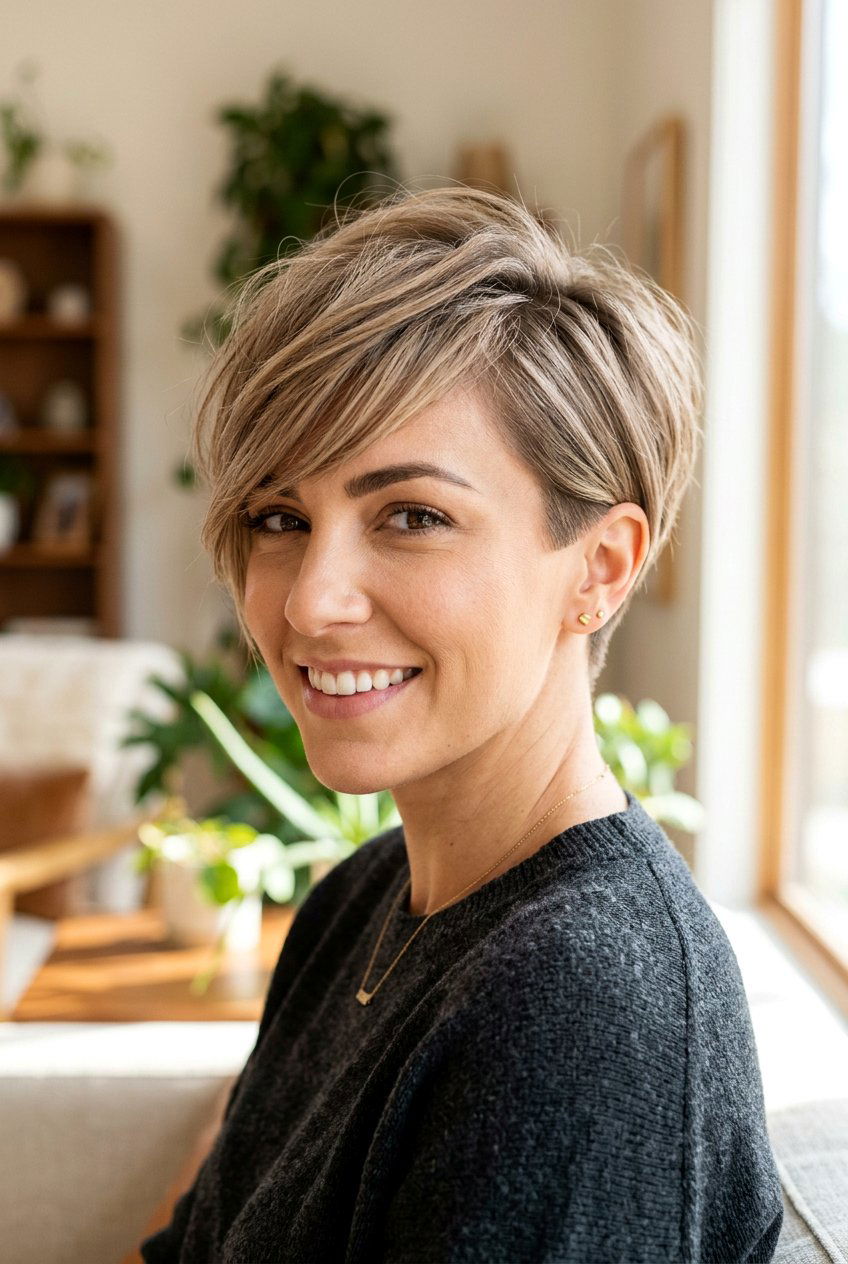
A long pixie with layered side swept bangs is ideal when you want softness over the forehead without committing to a full fringe. The main body of the cut stays slightly cropped around the back and sides, while the top and front are cut longer and layered to sweep easily to one side. These bangs can skim your brows or sit at cheekbone level, creating a flattering diagonal line that highlights the eyes and cheekbones. Layering through the fringe prevents it from feeling heavy or flat, which is helpful for fine hair that tends to separate. Ask your stylist to over‑direct the fringe area when cutting, so you keep length and get a softer, more blended fall toward one side. At home, blow‑dry the bangs forward first, then sweep them sideways with a vent brush while lifting at the roots for a bit of airy volume. A pea‑sized amount of lightweight pomade on the ends can help the layers hold their shape without looking greasy or stiff.
4. Choppy Long Pixie With Layers
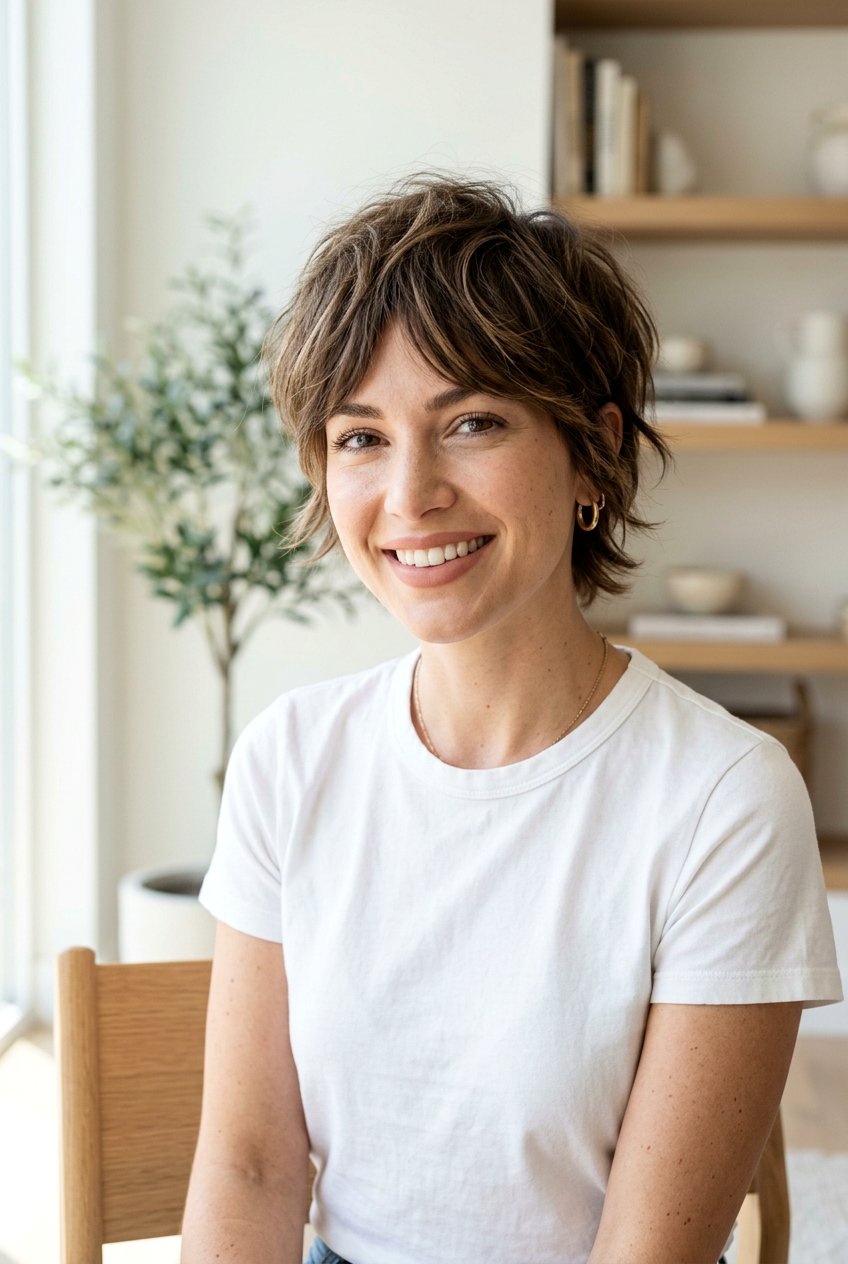
A choppy long pixie with layers leans into texture and movement, giving that cool, tousled look that feels effortless but intentional. The cut keeps some length around the sides and top, but the layers are clearly defined and sliced into rather than softly blended. This pieced‑out texture works especially well on straight and slightly wavy hair because it builds the illusion of fullness and makes the cut look more dimensional. Ask your stylist for point cutting or razor work through the mid‑lengths and ends, focusing on breaking up any heavy corners while leaving enough length to play with. For styling, rough‑dry with your fingers instead of a brush, lifting at the roots and twisting small sections as you dry to keep the choppiness visible. Finish with a matte texturizing paste or clay, emulsified well in your hands, then pinched into the ends so the layers stand out in a casual, undone way. This kind of cut is great if you like slightly edgy hair that still feels wearable for work and weekends.
5. Long Pixie Bob With Layers
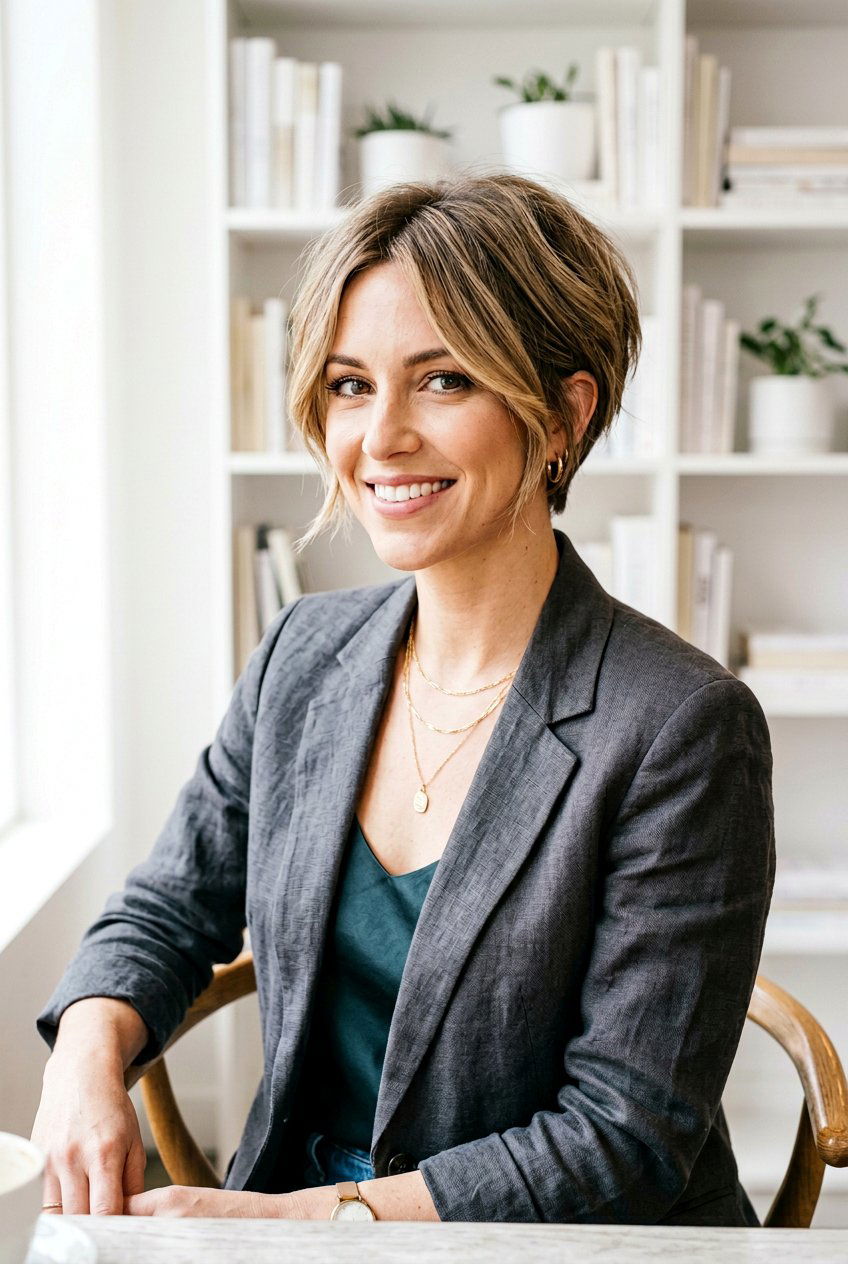
A long pixie bob with layers sits right between a traditional pixie and a chin‑length bob, giving you the best of both worlds. The nape and sides are gently cropped and shaped close to the head, while the top and front extend down toward the jaw or slightly below, creating a soft, bob‑like outline. Layers are used to remove bulk and give movement, so the shape curves nicely around the head instead of stacking too heavily in one area. This cut is especially flattering for those easing into shorter hair because it still feels like you have “length” to tuck behind the ears or style with waves. Ask your stylist for a graduated shape in the back with longer, layered pieces around the face and a smooth transition between the two. Blow‑dry with a round brush, turning the ends slightly under at the front for a polished, bob‑like effect, or add loose bends with a small curling iron for a softer, tousled finish.
6. Long Pixie With Layers For Fine Hair
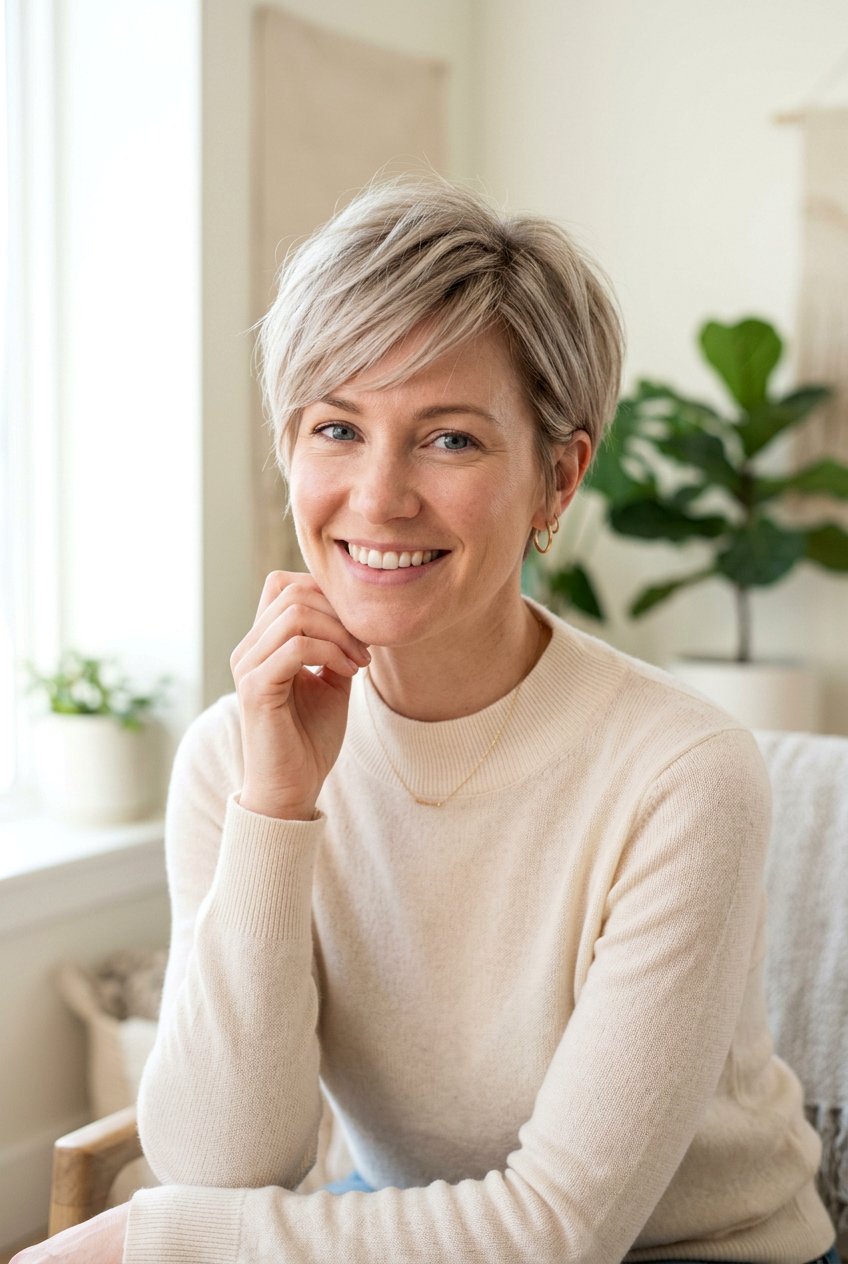
A long pixie with layers is one of the most recommended short cuts for fine hair because it can create the illusion of density while staying light and manageable. The key is keeping strategic length on top and around the face, then adding internal layers that lift and support instead of thinning the hair out. Stylists often advise against going too cropped all over with fine hair, since extremely short lengths can make the scalp more noticeable and reduce styling options. Instead, a slightly longer pixie lets the hair sit closer to the head in a controlled way, reading as intentional and modern rather than limp. Ask your stylist to focus on soft, invisible layers through the crown and sides, avoiding heavy texturizing at the ends, which can make hair look wispy. At home, use a lightweight volumizing mousse at the roots, blow‑drying with your head flipped upside down, then finish with a fine mist of flexible hairspray to hold lift without stiffness.
7. Long Pixie With Layers For Thick Hair
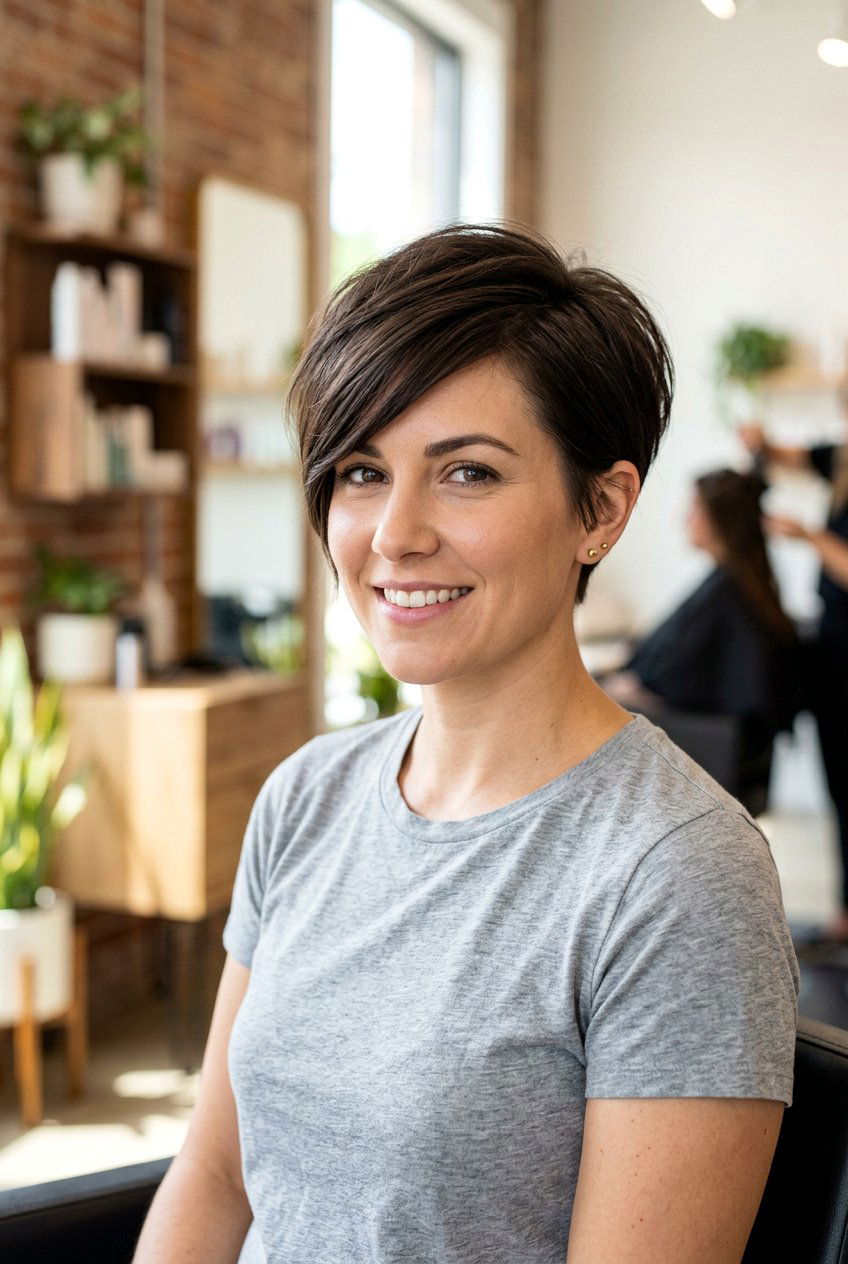
For thick hair, a long pixie with layers can be a game changer, taking off bulk while keeping a chic, sculpted shape. The length usually stays a bit longer on top and around the face, while the back and sides are carefully debulked and tapered so they follow the head shape instead of puffing out. Layers help remove weight, especially around the crown and behind the ears, which are common problem areas where thick hair can look blocky. Ask your stylist for controlled layering and possibly some undercutting or scissor‑over‑comb work at the nape to keep everything closer without harsh lines. It is important that they do not over‑thin the ends, though, because that can make the silhouette collapse and look frizzy. Styling‑wise, a smoothing cream or light balm will help tame volume while still showing texture, and a quick pass with a flat iron on the top layers can give a sleek finish when you want it.
8. Long Pixie With Layers And Undercut
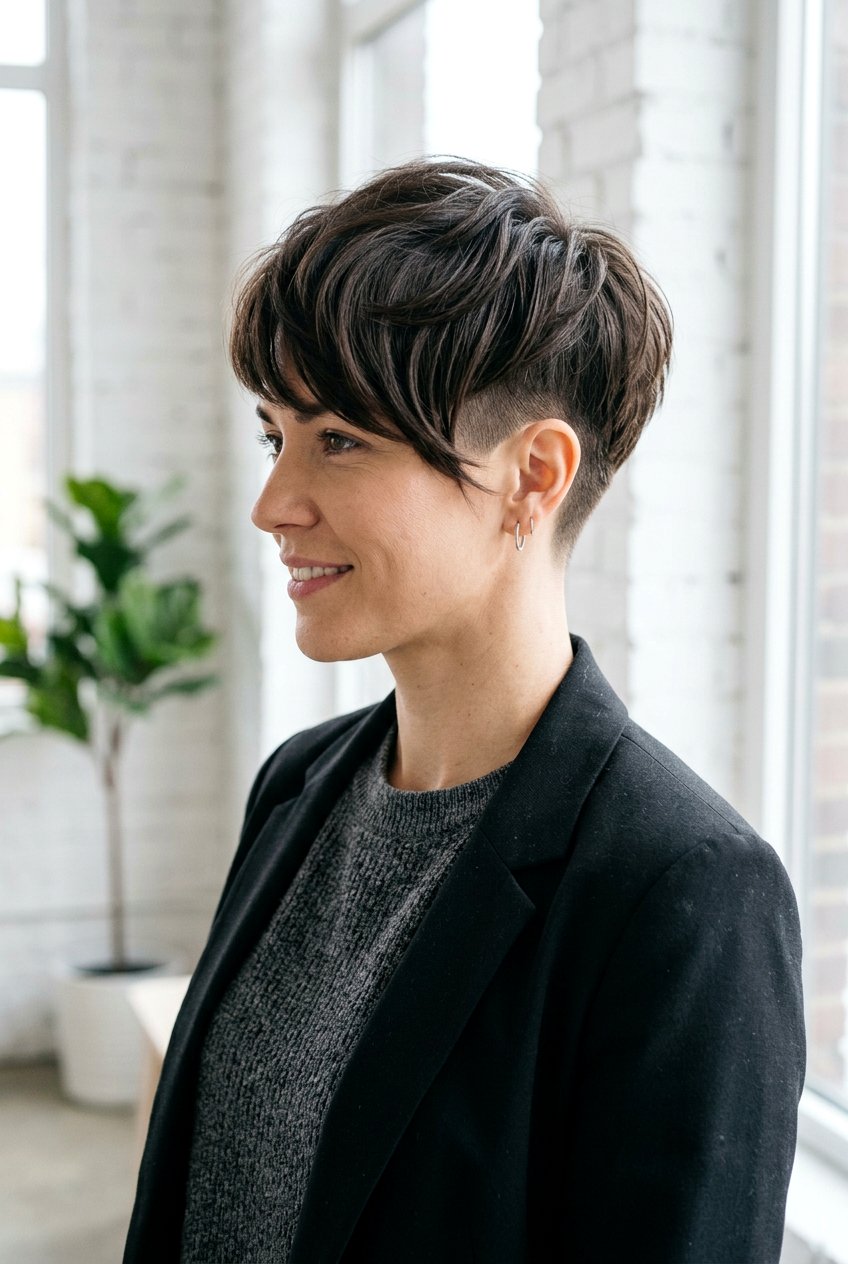
A long pixie with layers and an undercut combines softness on top with a clean, modern edge around the sides or nape. The undercut area is clipped shorter, usually around the back and sometimes one side, while the top and front remain longer and layered, falling over the shorter base. This contrast makes styling easier because the hair naturally collapses into place instead of puffing out at the bottom. It is a great option for thick or dense hair types that feel heavy, since the undercut removes weight without sacrificing visible length. Ask your stylist how high the undercut should go based on your head shape, then request soft, textured layers on the longer sections so they blend seamlessly when styled forward or to the side. At home, focus your product on the longer top layers: use a texturizing spray for a messy, lived‑in finish, or a smoothing cream for a sleeker, more polished look. Regular maintenance trims will be important, since the undercut area grows out quickly and can change the shape.
9. Long Pixie With Layers And Fringe
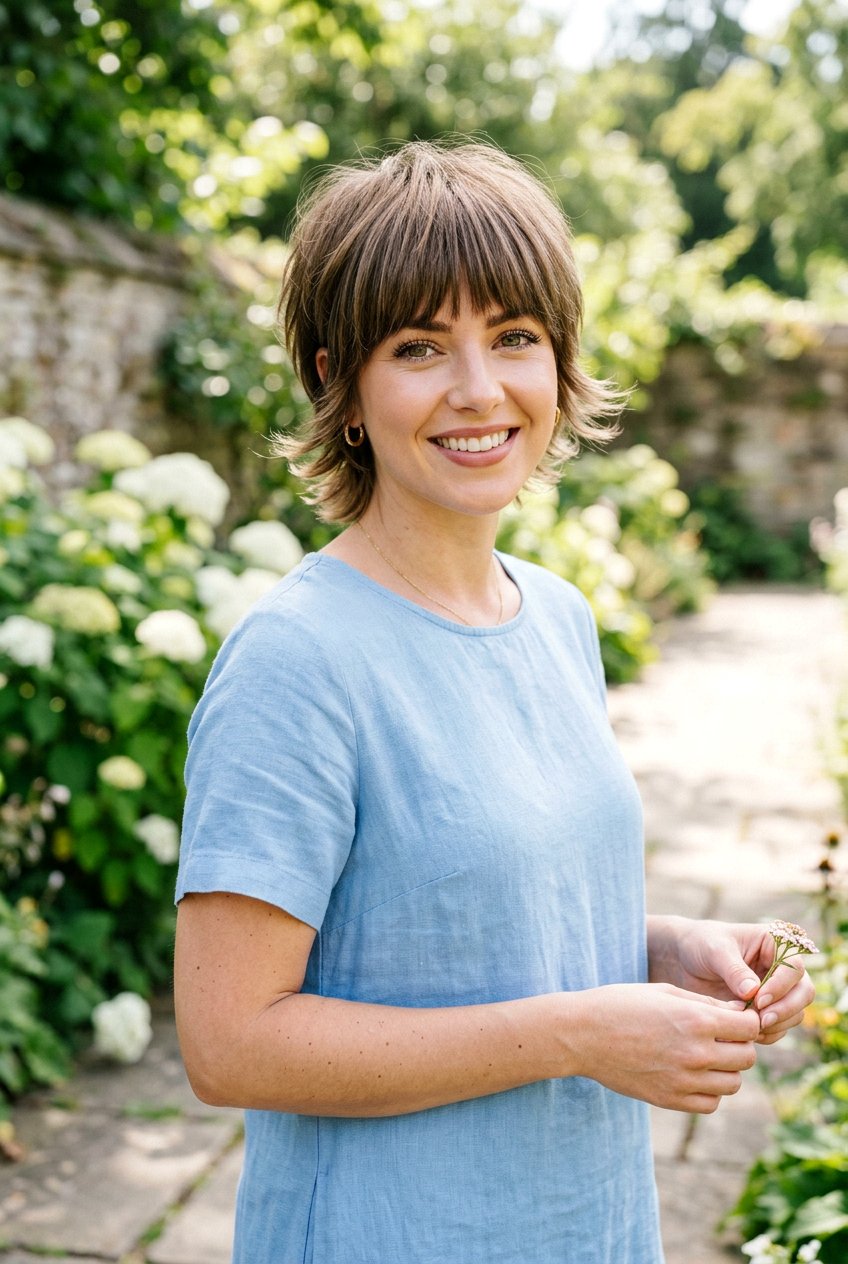
A long pixie with layers and a full fringe gives you that short‑hair freedom but keeps softness around the face. The fringe can be blunt, slightly curved, or textured, but it usually sits at or just below the eyebrows, with subtle layering so it does not feel like a solid curtain. The rest of the cut stays cropped and layered, with a little extra length on top so the fringe blends naturally into the upper sections. This shape works beautifully to highlight the eyes and can help balance a larger forehead or longer face by visually shortening the upper third. Ask your stylist to cut the fringe dry or nearly dry, as this gives a more accurate picture of where it will sit day to day. Styling is mostly about keeping the fringe smooth and controlled: use a small round brush to blow‑dry it straight down, then sweep slightly to one side if you prefer a softer look. A tiny bit of light hold spray or cream will keep the layers from separating or splitting.
10. Long Layered Pixie With Deep Side Part
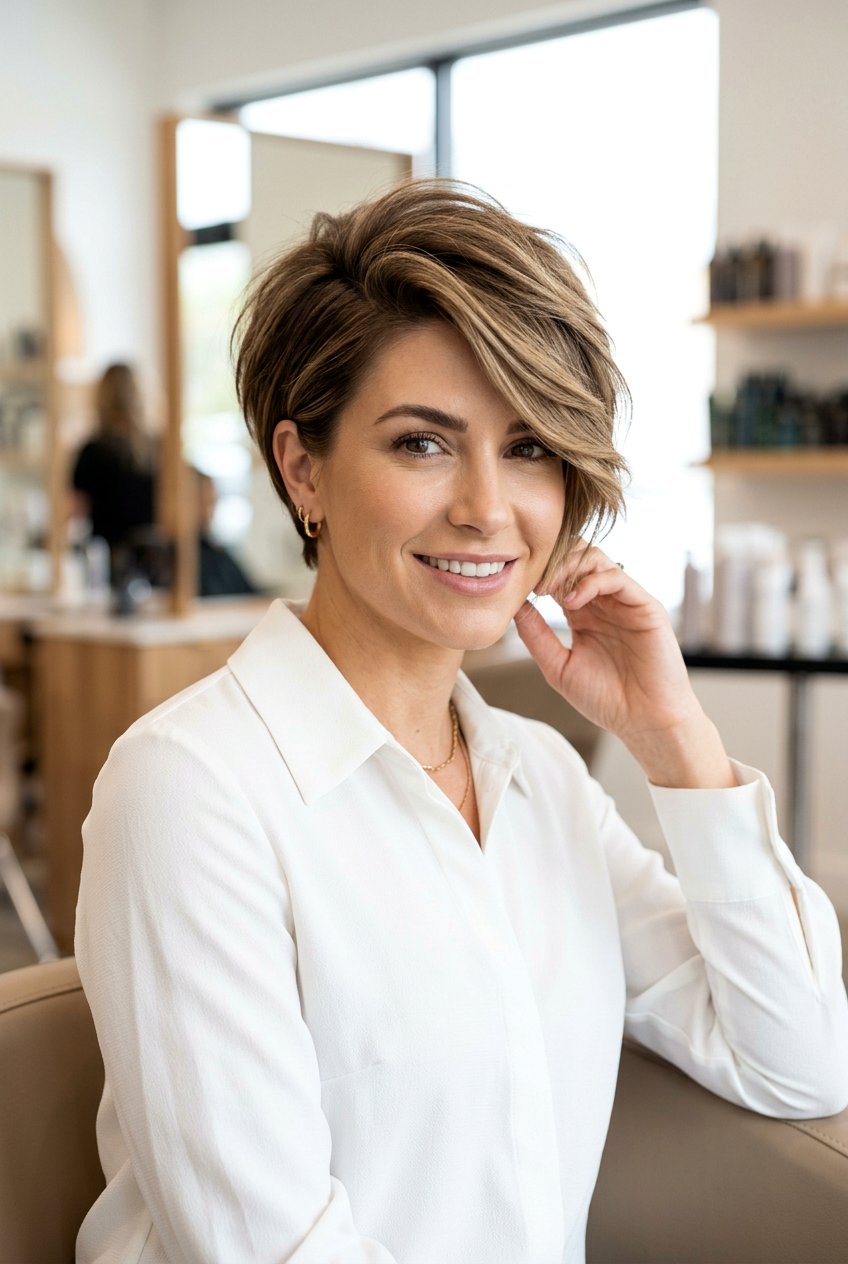
A long layered pixie with a deep side part instantly adds drama and volume, especially on top‑heavy or finer hair. By shifting the part line far to one side, you stack more hair over the fuller side, creating a natural lift and asymmetry without needing a complicated cut. The layers are typically shorter toward the crown and gradually longer toward the front, which helps the hair sweep across the forehead and fall into place easily. Ask your stylist to cut the top section with your preferred parting in mind, so the layers support the side you actually wear daily rather than a centered default. At home, blow‑dry everything away from the part, lifting at the roots with your fingers and directing the hair toward the opposite side for extra height. A mist of volumizing spray or dry texture spray at the roots on the heavy side will keep the lift going all day without making the hair feel gritty. This look is especially flattering if you like one side tucked behind the ear and the other side more sweeping and full.
11. Long Pixie With Layers For Round Face
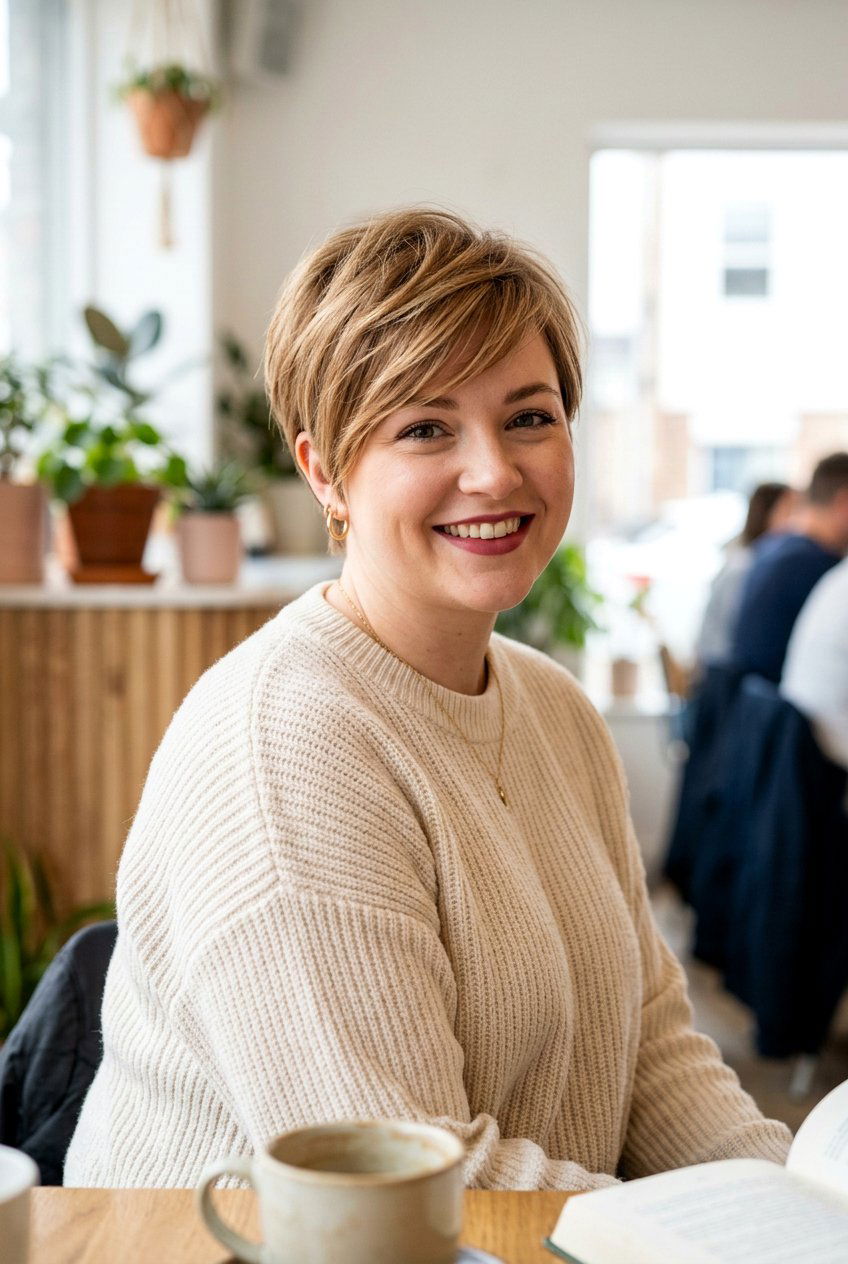
A long pixie with layers tailored for a round face focuses on vertical height and diagonal lines to visually elongate the face. The cut usually keeps extra length on top with layered volume at the crown, while the sides are slightly slimmer and more tapered to avoid widening the cheek area. Longer, side‑swept bangs or an asymmetrical front section help break up the roundness by drawing the eye across and downward. Ask your stylist to avoid heavy width at the temples and cheeks, instead creating soft, face‑skimming pieces that fall just below the cheekbones. Layering should be focused more on the upper half of the head to build lift, leaving the lower edges slightly smoother for a slimming effect. Styling is simple: use a volumizing foam at the roots on top, blow‑dry upward and slightly back, then sweep the fringe diagonally across the forehead. A light mist of flexible spray will keep the shape in place without making the hair look stiff or helmet‑like.
12. Long Pixie With Layers For Oval Face
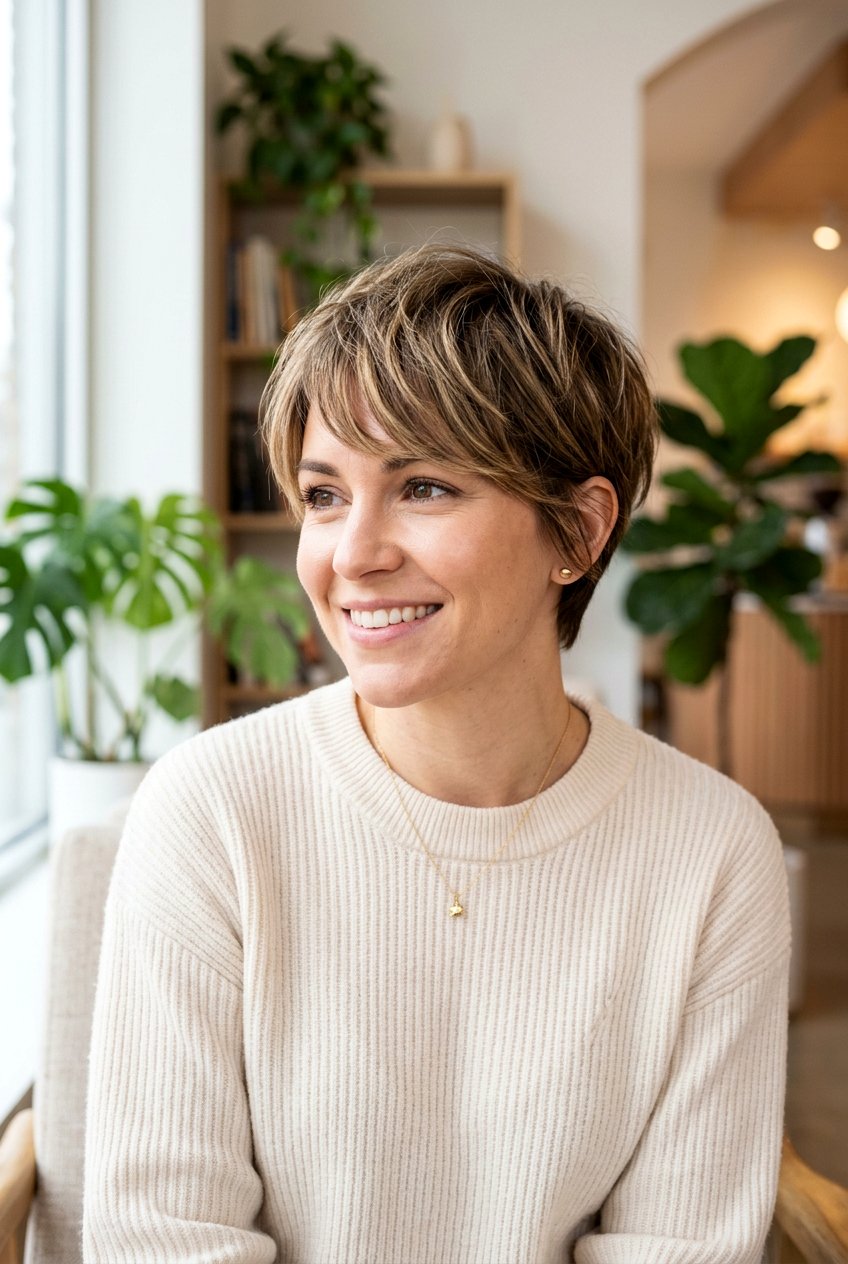
For an oval face, a long pixie with layers can be customized almost any way you like, because this face shape balances well with many proportions. You might choose a slightly longer fringe that grazes the brows, softly layered sides that hug the cheekbones, and a crown with gentle lift for a classic, flattering silhouette. Layers should enhance your natural texture without overpowering your features, so many stylists keep them soft and blended rather than extremely choppy. Ask your stylist which area of your face you want to highlight most—eyes, cheekbones, or jawline—and have them adjust length and layering to point attention there. For example, shorter layers around the temples can draw focus to your eyes, while longer front pieces can emphasize the cheek area. Styling can be minimal: smooth cream for a sleek finish or a light texturizing spray scrunched through for a more relaxed look. Because the shape is so balanced, small tweaks in parting or product choice can give you lots of different looks from one cut.
13. Long Pixie With Layers For Heart Shaped Face
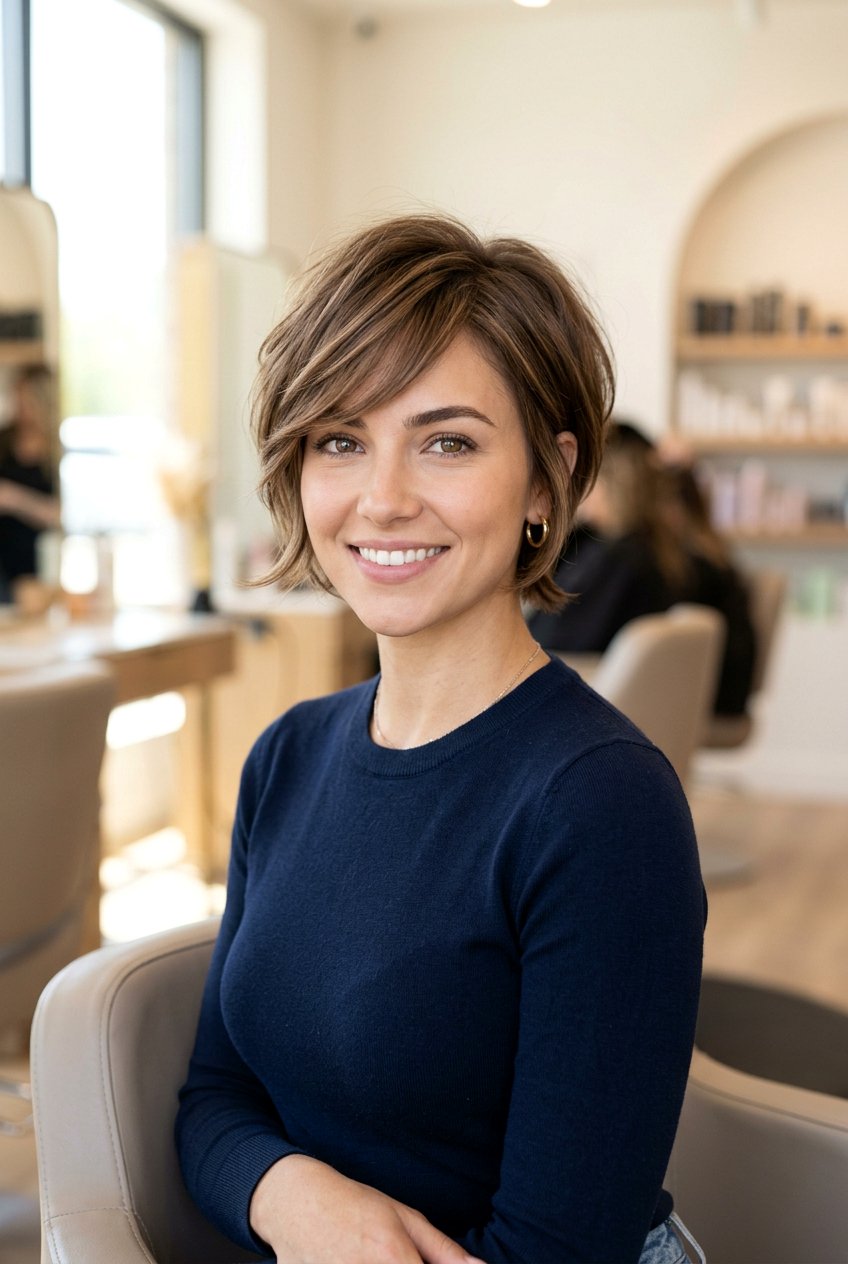
A heart shaped face pairs beautifully with a long pixie that softens the forehead and adds a bit of fullness near the jawline. The cut often features longer, layered side bangs that sweep across the forehead, visually narrowing the widest point near the temples. Meanwhile, the back and sides remain tapered but not too tight, so there is still some volume around the lower half of the head to balance a narrower chin. Ask your stylist to keep the top softly layered, avoiding extreme height, and to design the fringe so it hits somewhere between the brows and cheekbones for gentle framing. Slightly longer pieces around the jaw can also help create the illusion of more width in the lower face. Styling is mostly about keeping the sweeping fringe smooth and controlled while letting the rest of the layers have a bit of texture. Use a small amount of light cream on damp hair through the front, blow‑dry with a side part, then finish the mid‑lengths with a spritz of texturizing spray for airiness.
14. Shaggy Long Pixie With Layers
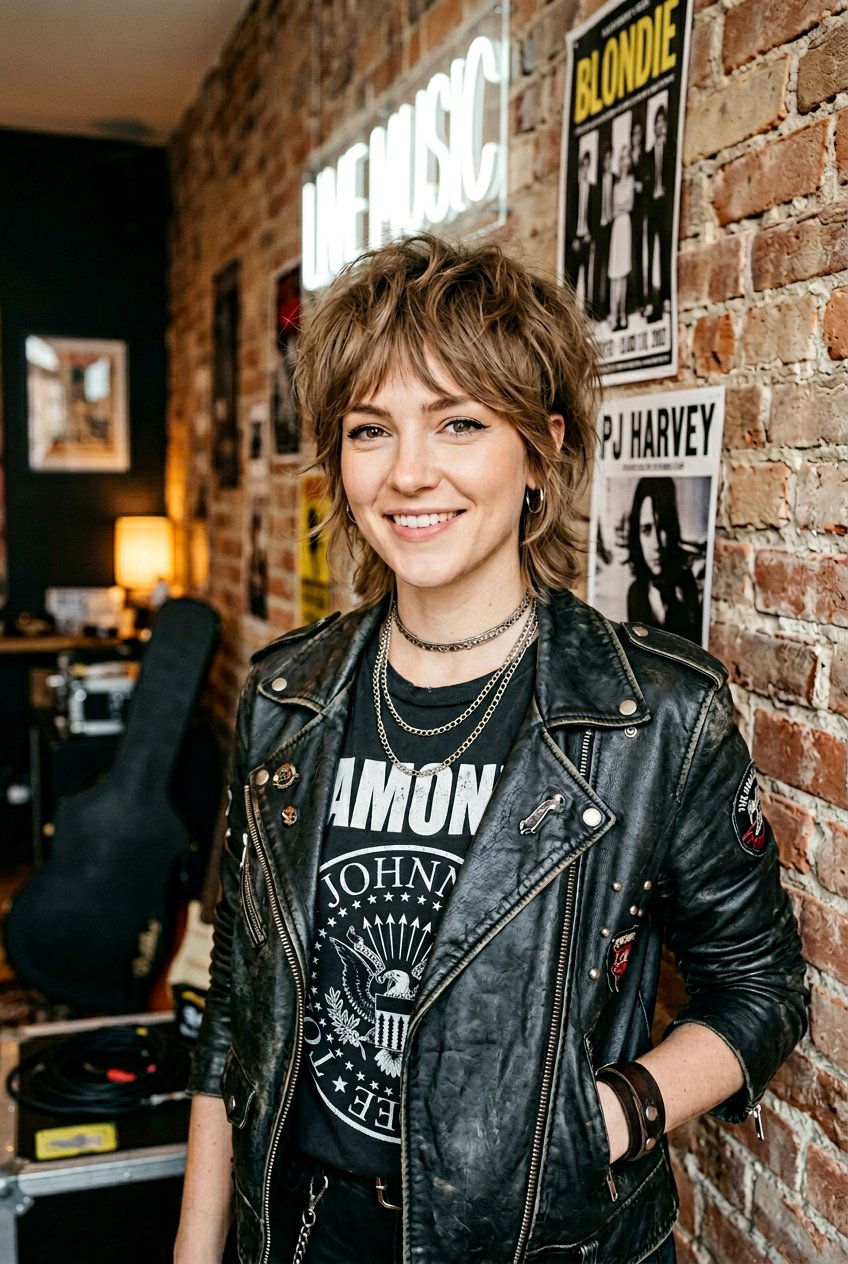
A shaggy long pixie with layers takes inspiration from modern shags, giving you lots of piecey texture and a relaxed, rock‑inspired vibe. The shape usually has more length on top and around the face, with shorter, choppy layers cut throughout to create movement and separation. This works well on fine to medium hair because the layers create a fuller, fluffier appearance without feeling heavy. Ask your stylist for point‑cut layers and possibly a bit of razor work through the ends to get that wispy, feathered look without harsh lines. A light, shaggy fringe that brushes the brows or sits slightly parted in the center can tie the look together and soften the forehead. Styling is best kept loose: blow‑dry with your fingers, scrunching and lifting as you go, then finish with a sea salt or texture spray to enhance the piecey layers. Avoid heavy oils or thick creams that could weigh the texture down and make it look flat instead of airy.
15. Long Pixie With Layers And Tapered Nape
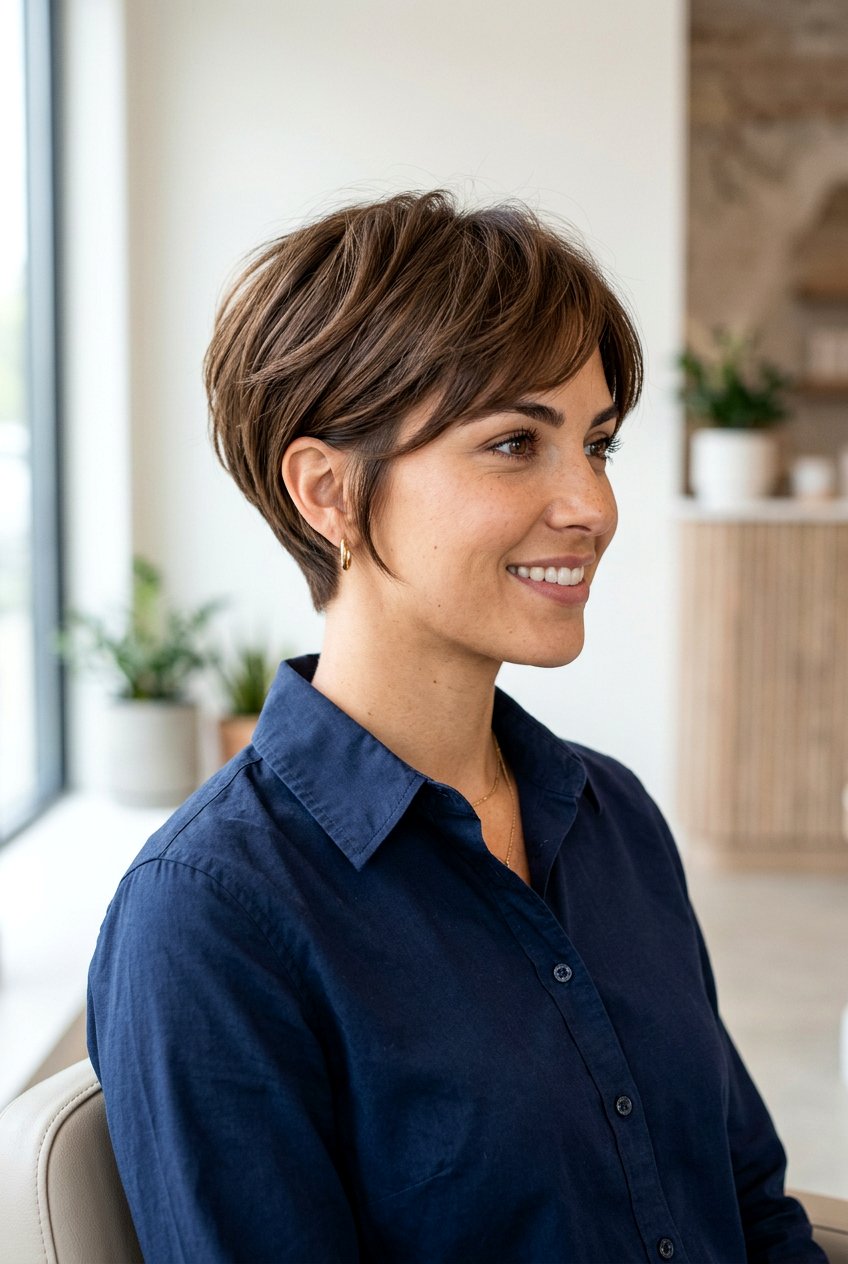
A long pixie with layers and a tapered nape looks clean and polished from every angle while keeping flattering softness on top. The nape area is cut shorter and closer to the neck, gradually lengthening as it moves up the head, which creates a gentle, elongated silhouette instead of a bulky block of hair. Layers through the crown and upper sections add lift and texture, so the shape feels light and modern rather than stiff. Ask your stylist for a tapered finish achieved with scissors or scissor‑over‑comb rather than a harsh clipper line, unless you prefer a bolder contrast. The sides can be kept slightly longer to skim the tops of the ears or tucked back, depending on how much coverage you like. Styling is straightforward: blow‑dry the nape smooth and close to the head, then lift the crown with a round brush or your fingers for subtle height. A small amount of light wax or cream worked through the top layers will define the texture without overwhelming the soft taper.
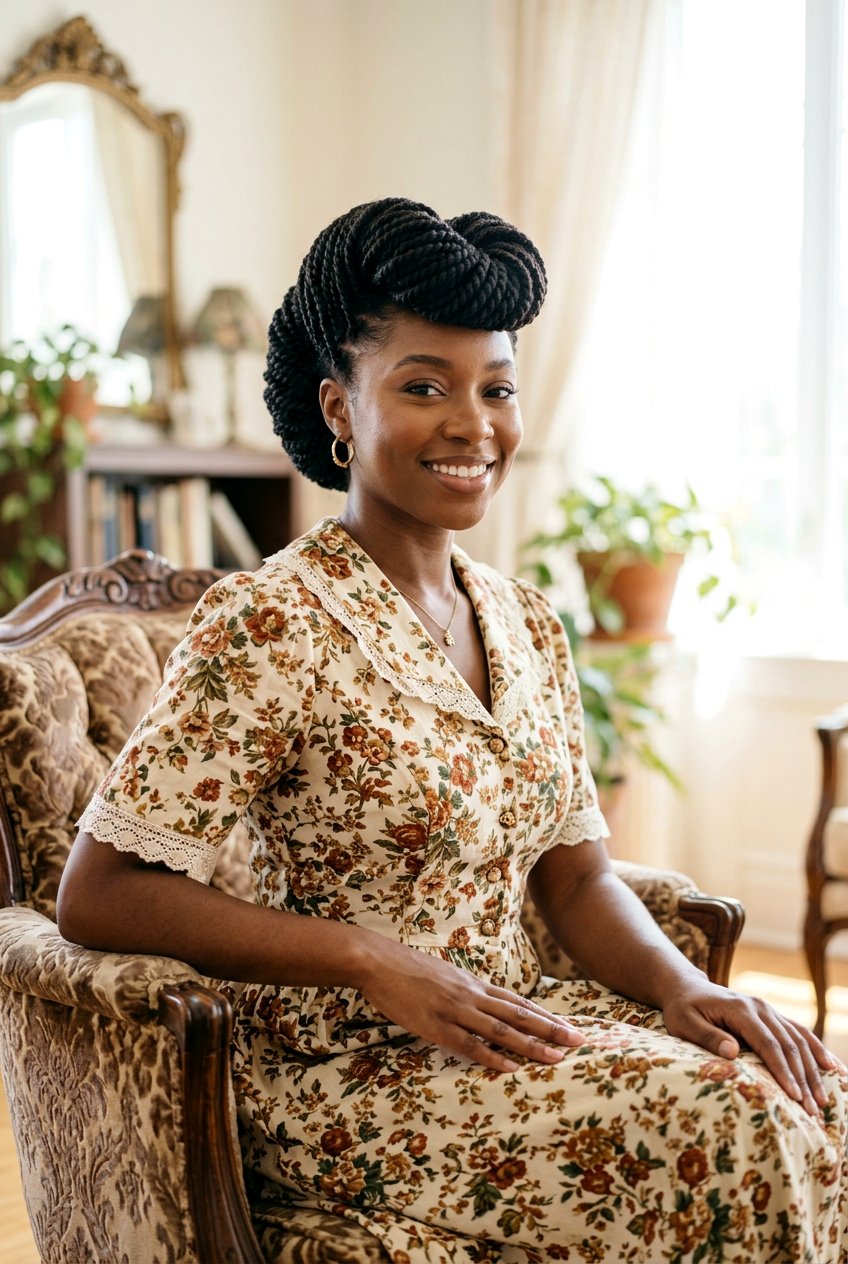
16. Long Pixie With Layers And Volume On Top
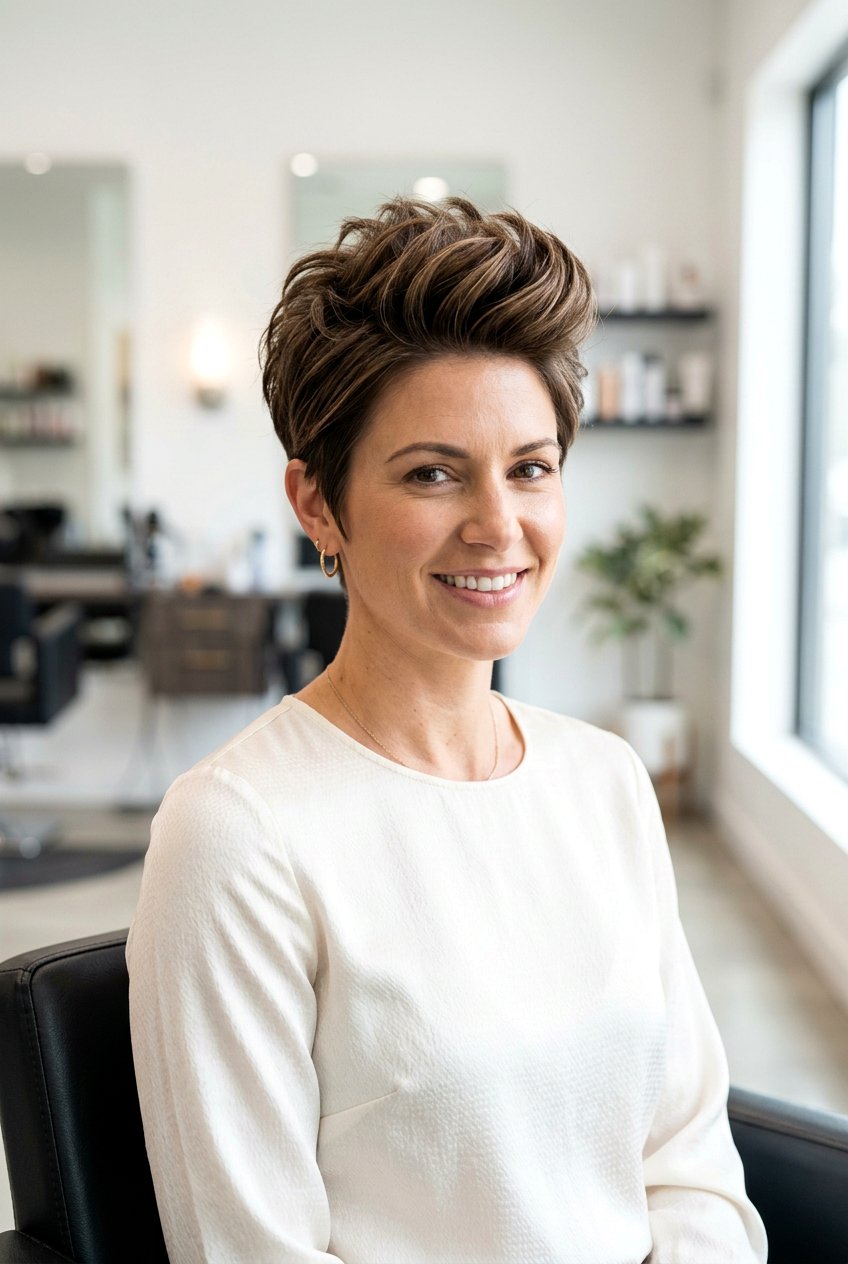
A long pixie with layers and extra volume on top is perfect if you love a lifted, slightly dramatic silhouette. The cut keeps the sides and back more fitted to the head while leaving added length and layering through the top, especially toward the front and crown. This extra length gives you room to create height when styling, which can help balance round, square, or wider face shapes by adding vertical lines. Ask your stylist to build shorter support layers under the longer top sections so the hair naturally wants to stand up rather than collapse. Blow‑dry with a volumizing mousse at the roots, lifting the hair upward and slightly back with a round brush or your fingers. Once dry, you can use a small amount of lightweight paste at the roots on top to keep the volume going, then smooth the ends so the overall effect stays chic. A side or slightly off‑center part often works best, as it breaks up the height and keeps the look modern.
17. Long Pixie With Layers And Side Bangs
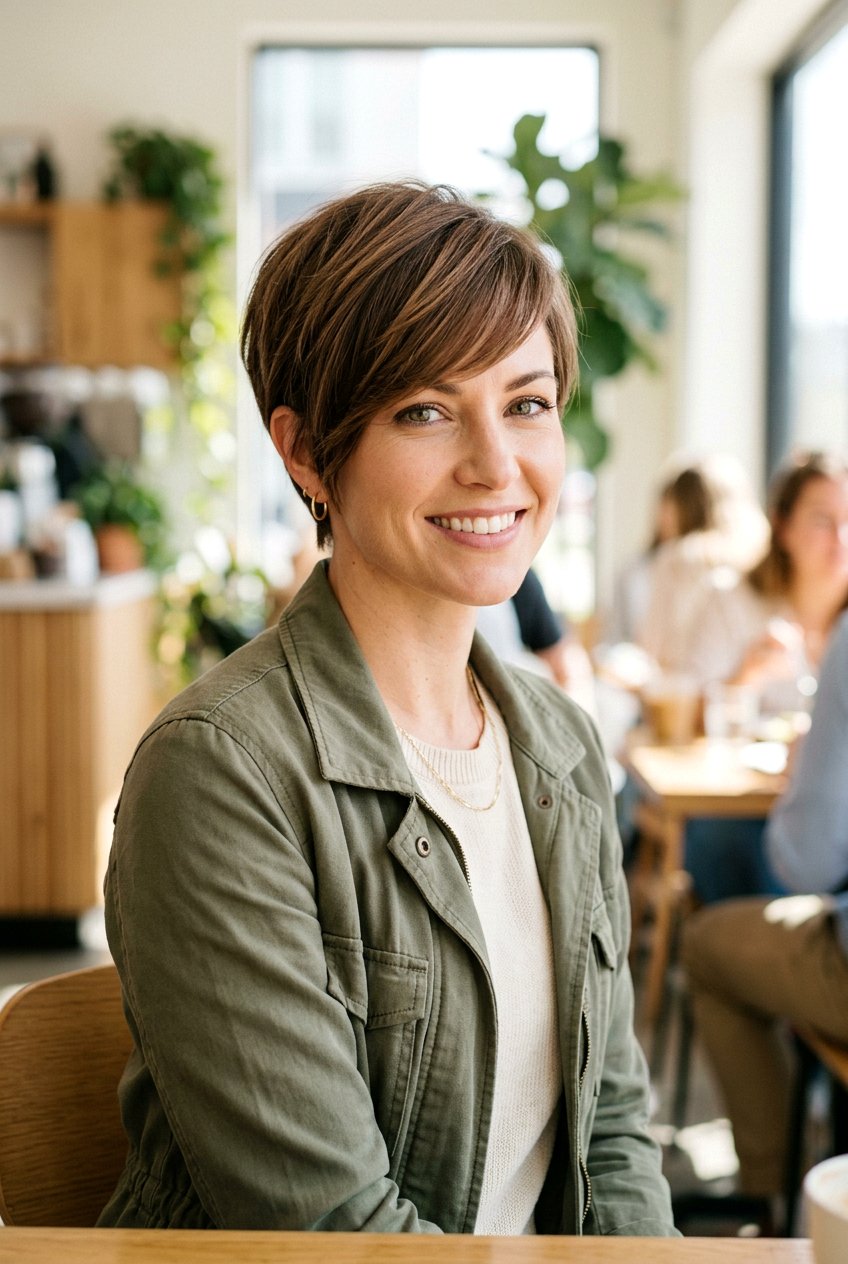
A long pixie with layers and side bangs is an easy, flattering option if you want some forehead coverage without a heavy fringe. The bangs are cut to sit somewhere between the brows and cheekbones, then layered to sweep softly to one side, blending into the rest of the top layers. This diagonal movement can soften strong features and is particularly flattering on square or round faces. Ask your stylist to over‑direct the bang section when cutting so it lies smoothly and does not bounce up too short when dry. The rest of the cut can be softly layered, with the back and sides slightly shorter for shape while the top stays long enough to support the side fringe. For styling, blow‑dry the front forward first, then direct it sideways with a brush while keeping the roots lifted to avoid a flat, separated look. A light styling cream or lotion is usually enough to keep the bangs in place while the rest of the hair can be left more textured or sleek depending on your mood.
18. Long Pixie With Layers And Highlights
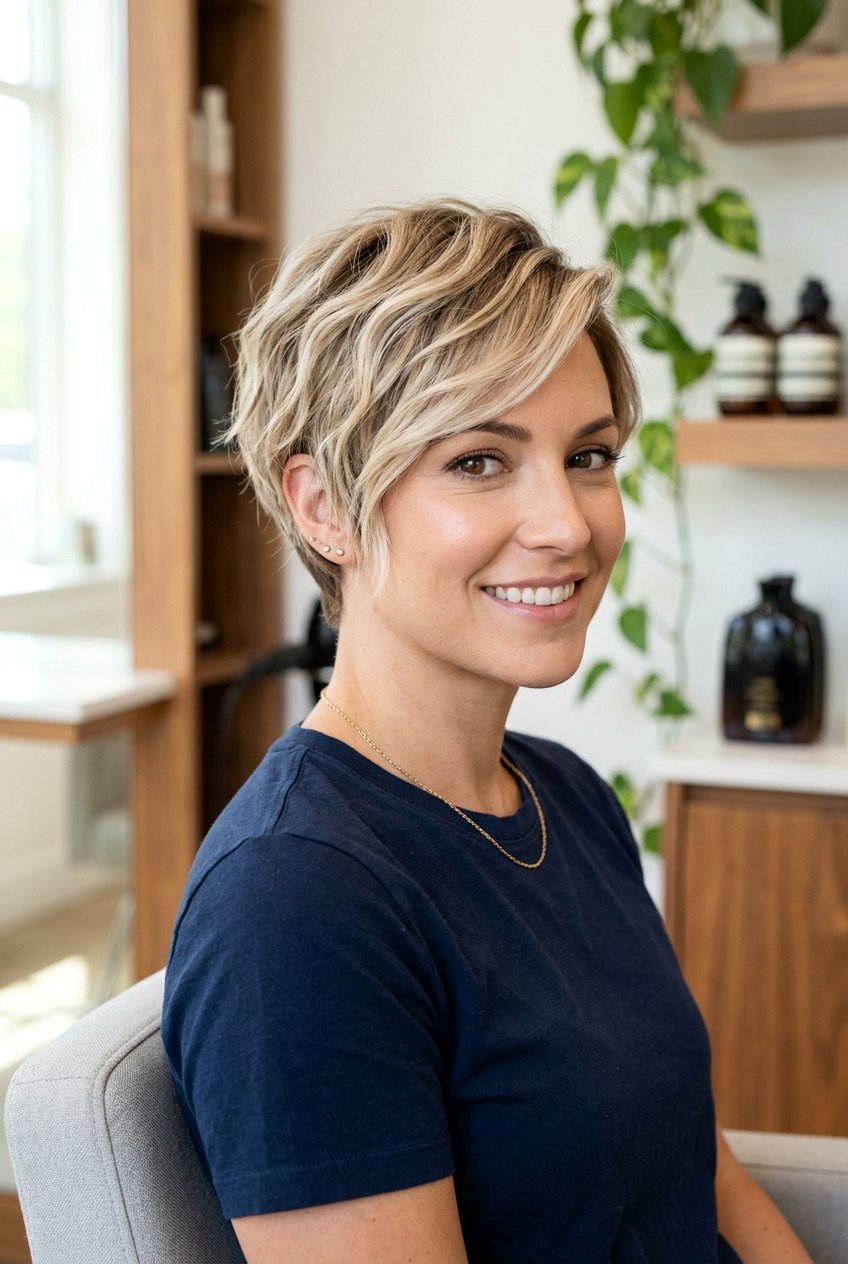
A long pixie with layers and highlights can show off dimension and texture in a big way, even though the hair is short. The layered structure gives multiple lengths for the lighter pieces to sit on, so every flip or movement of the hair reveals different tones. Soft, blended highlights or balayage work especially well here, because harsh, high‑contrast streaks can look blocky on shorter cuts. Ask your colorist to place brighter pieces around the face and through the top layers, keeping the underneath slightly deeper for depth. This approach prevents the hair from looking flat and can make fine hair appear fuller thanks to the contrast between light and dark. Maintenance will depend on how close the highlights are to your root color; lived‑in or shadow‑root techniques can stretch your appointments longer. Use a color‑safe shampoo and occasional gloss treatment to keep the tones fresh and the hair shiny, since lightening can dry out shorter layers quickly.
19. Messy Long Pixie With Layers
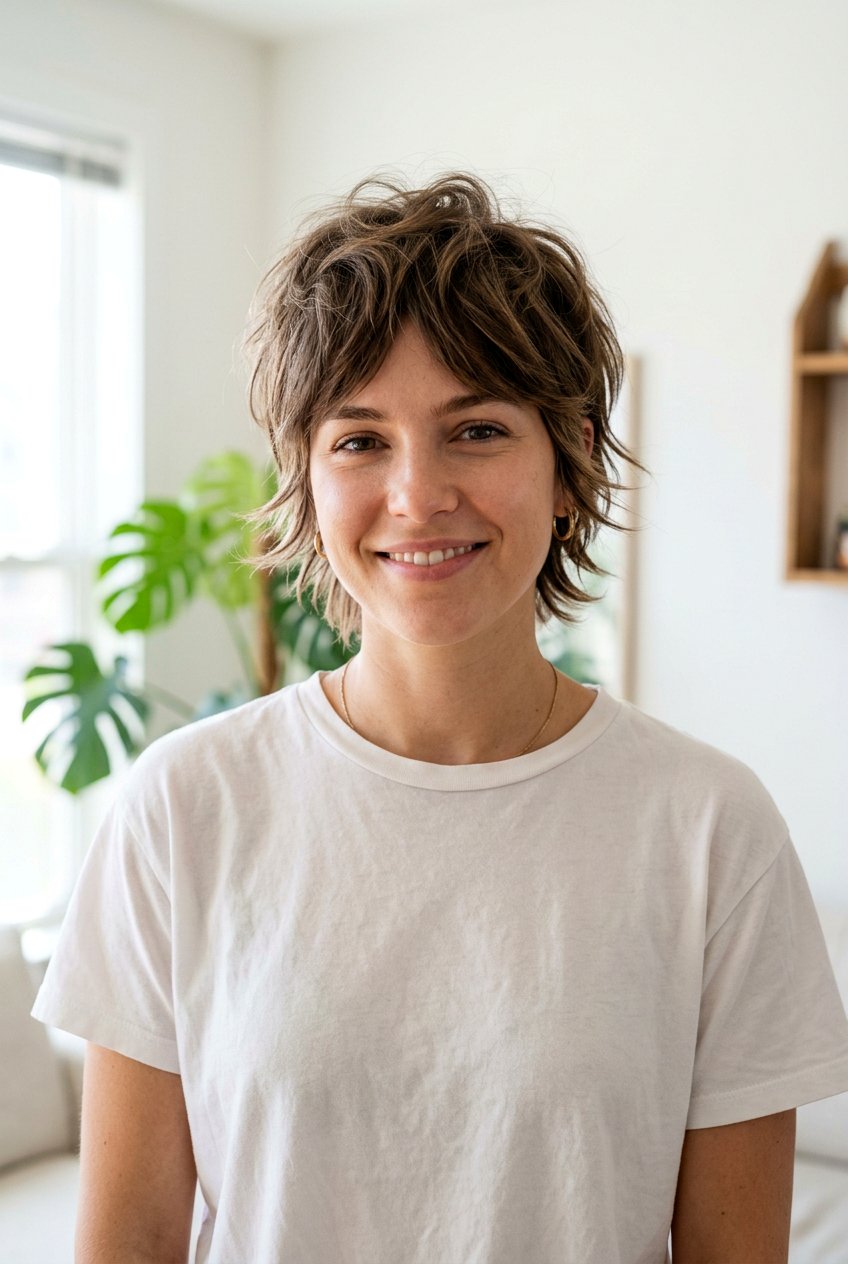
A messy long pixie with layers is all about an undone, carefree finish that still looks intentional and stylish. The cut usually has medium‑length layers through the top and sides, with enough length around the crown and fringe to push and tousle in different directions. This makes it a great option if you like wash‑and‑go hair, because the shape relies more on natural movement than perfect blow‑drying. Ask your stylist for textured layering and to avoid razor‑thin ends; you want the hair to have some substance so the messy look feels full instead of stringy. A slightly shattered perimeter can also help the edges blend into the overall texture. To style, apply a light mousse or sea salt spray to damp hair, scrunch, and either air‑dry or diffuse on low heat while lifting at the roots. Once dry, use your fingers with a touch of matte paste to twist a few pieces and define the layers without losing that relaxed, piecey vibe.
20. Long Pixie With Layers And Curtain Bangs
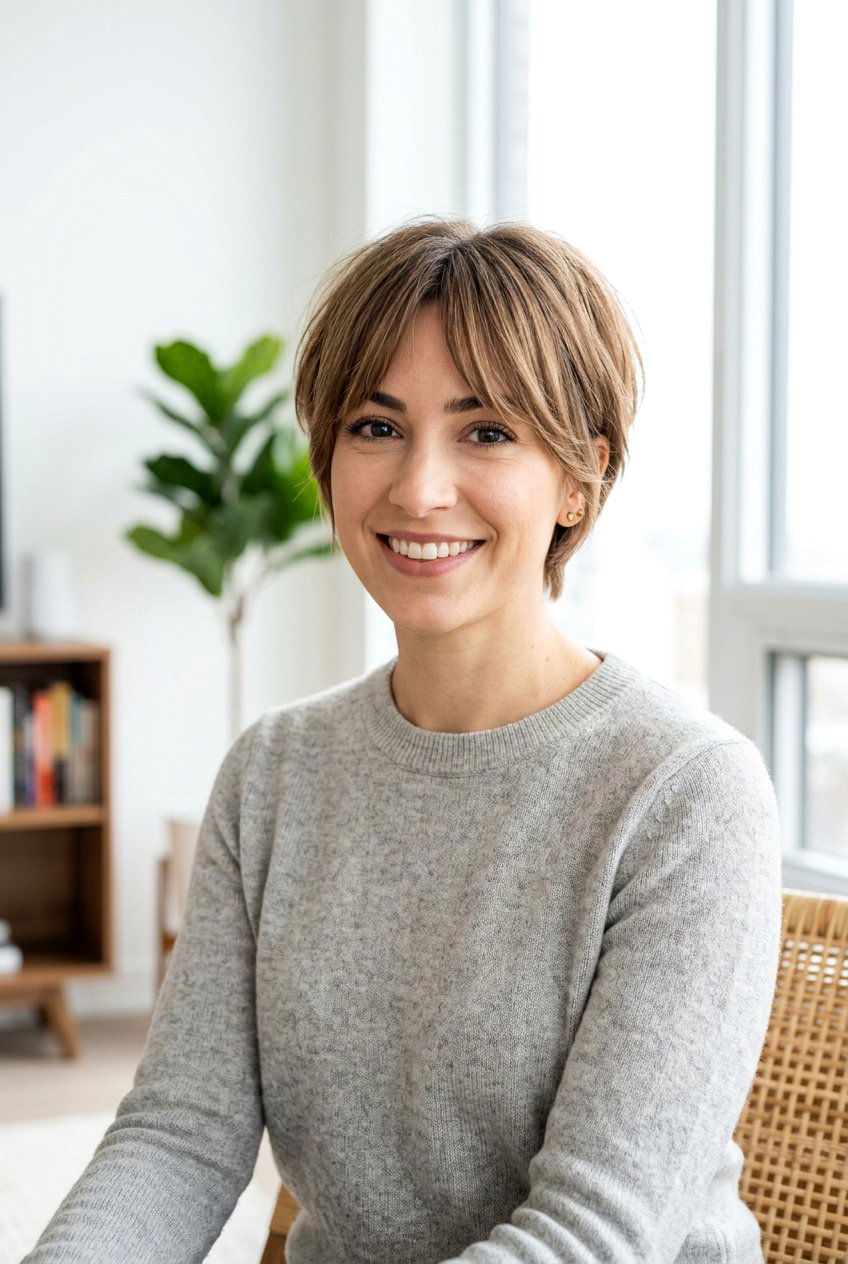
A long pixie with layers and curtain bangs gives a soft, face‑framing effect that feels very current and flattering on many face shapes. The curtain bangs are parted in the center or slightly off‑center, then cut to fall around the cheekbones, curving gently away from the face. They blend into the longer, layered top and side sections, creating a seamless frame that works especially well if you are growing out a bob or previous fringe. Ask your stylist to keep the bangs slightly longer in the middle and shorter toward the sides, so they open up the face while still offering some forehead coverage. The rest of the pixie should be softly layered, with the back and sides tapering neatly to keep the silhouette light. Styling is simple: blow‑dry the bangs forward first, then split them and wrap each section around a round brush away from your face for that soft, curtain effect. A light texturizing spray over the top layers will add movement and keep the cut from feeling too neat, while a touch of shine spray can enhance the flowy shape.
Conclusion:
Choosing a long pixie with layers is one of the easiest ways to step into shorter hair without losing all your length or styling options. The extra inches around the top and face give you room to play with volume, partings, and fringe, while thoughtful layering keeps the shape light, modern, and tailored to your hair type. Whether your hair is fine and needs lift, thick and needs debulking, or somewhere in between, there is a layered long pixie variation that can make your texture look intentional rather than tricky to manage. Working with a stylist who understands face shapes and internal layering will help you customize details like fringe length, part placement, and how close you want the sides and nape. Day to day, most of these cuts are low‑maintenance, relying on a good base shape, a quick blow‑dry or air‑dry, and a small amount of product to enhance movement or smoothness. Use the looks above as clear language and visual direction when you book your next appointment, so you can walk out with a long pixie that suits your lifestyle, texture, and personal style instead of a one‑size‑fits‑all crop.
You'll Like These Styles:


Leave a Reply