
Now I have enough research to write the full article. Let me craft all 20 sections on indigo hair color ideas.
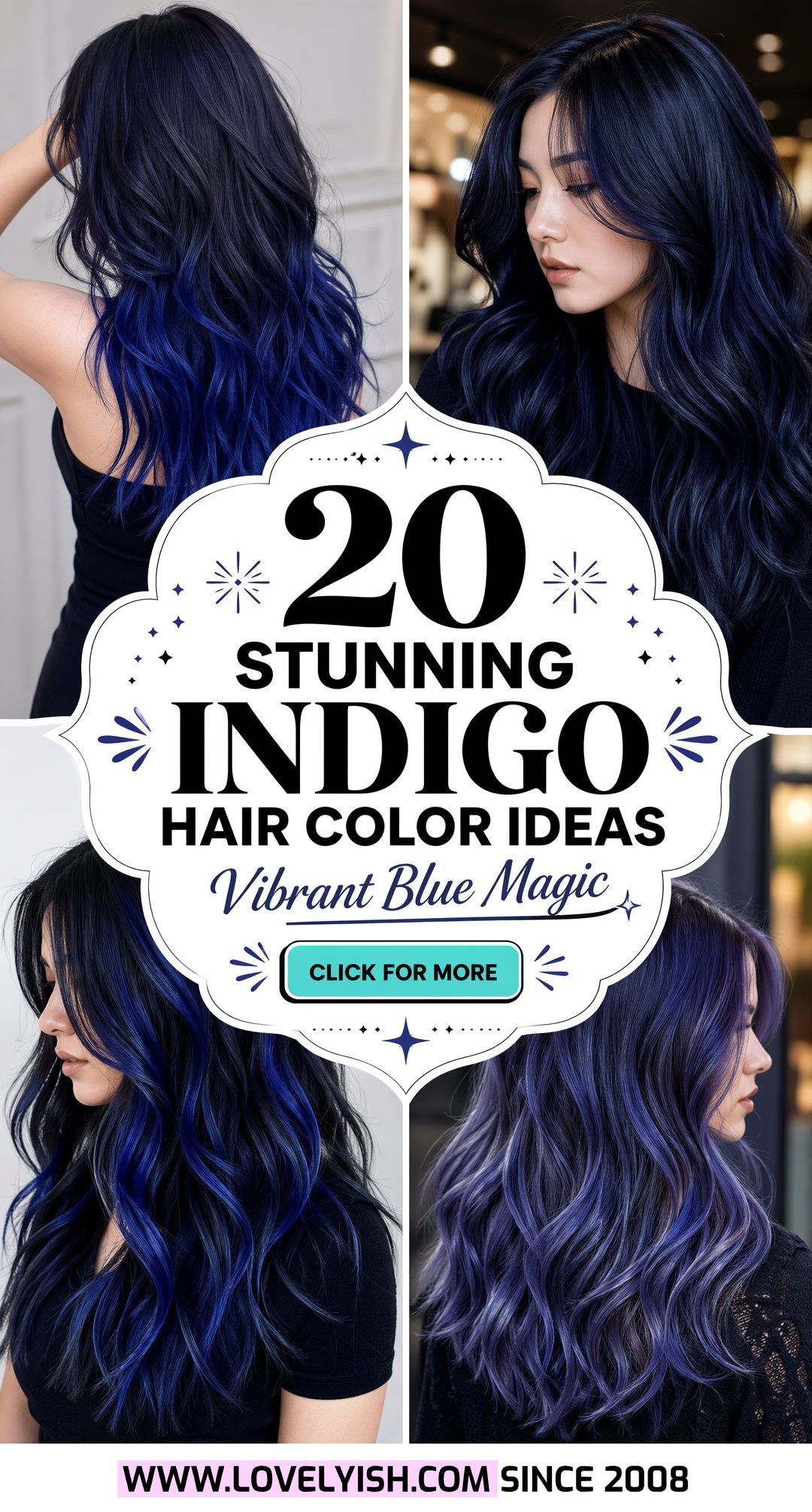
Indigo hair color is one of the most captivating and versatile shades trending right now — sitting right at the crossroads of deep blue and rich violet. Whether you want a bold, all-over transformation or a subtle pop of color tucked beneath your natural layers, indigo works beautifully across a wide range of hair types and skin tones. It can be vivid and electric or deep and mysterious, making it one of the most adaptable fantasy shades you can choose. From natural henna-based indigo dyes used for centuries to modern semi-permanent vivid formulas, there’s a version of this color for everyone. Read on to find the perfect indigo hair color look that matches your vibe, lifestyle, and personality.
1. Indigo Blue Balayage Hair Color
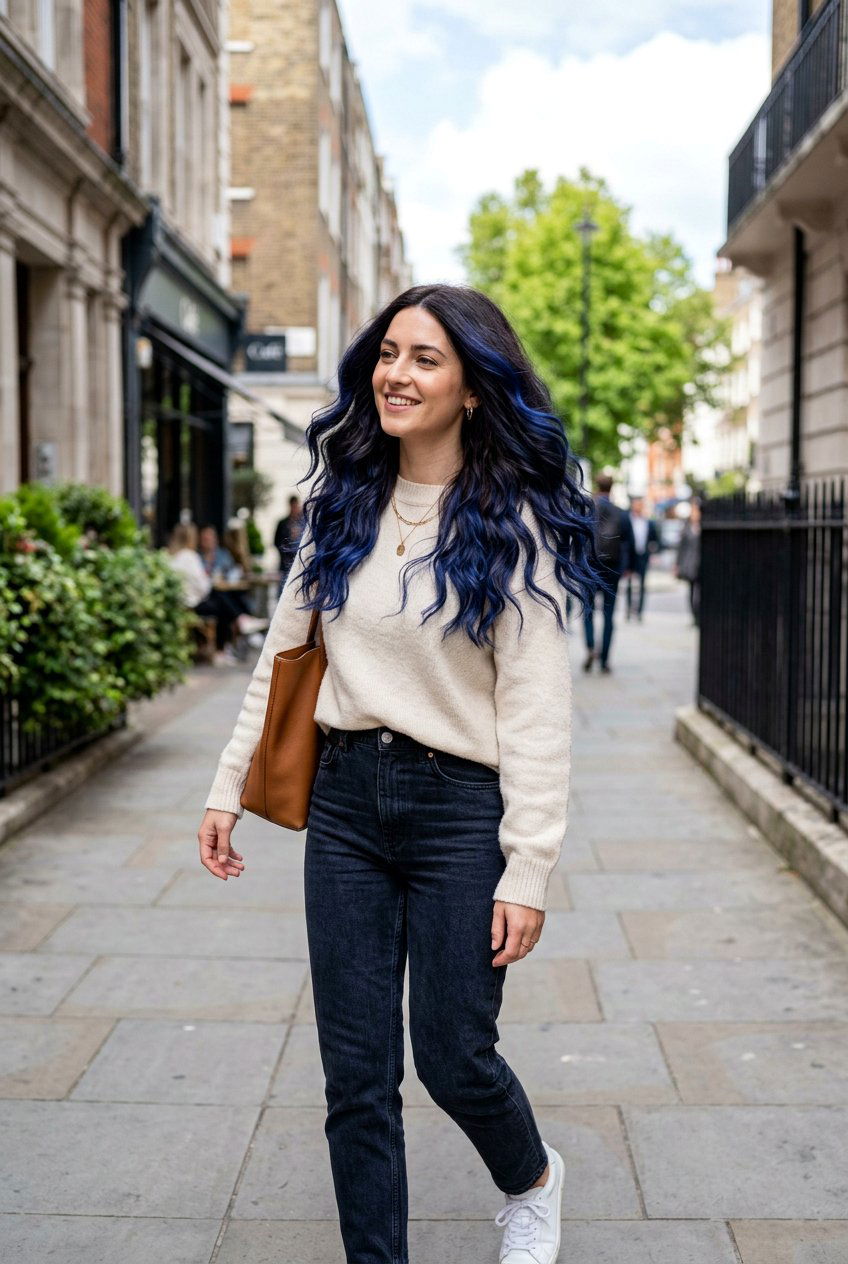
Balayage and indigo are a match made in color heaven. This technique involves hand-painting indigo blue tones directly onto sections of the hair, creating a soft, sun-kissed gradient that looks natural and dimensional at the same time. The color builds from your roots — whether dark brown or black — and sweeps into vivid blue-indigo at the mid-lengths and ends. One of the best things about an indigo balayage is how low-maintenance it feels compared to full-color applications. Since the roots are left natural, regrowth blends in seamlessly instead of creating harsh lines. The result is a lived-in, artistic finish that moves beautifully with textured waves or loose curls. Ask your colorist for a pre-lightening step if you want the indigo to really pop against your base shade.
2. Full Indigo Hair Color
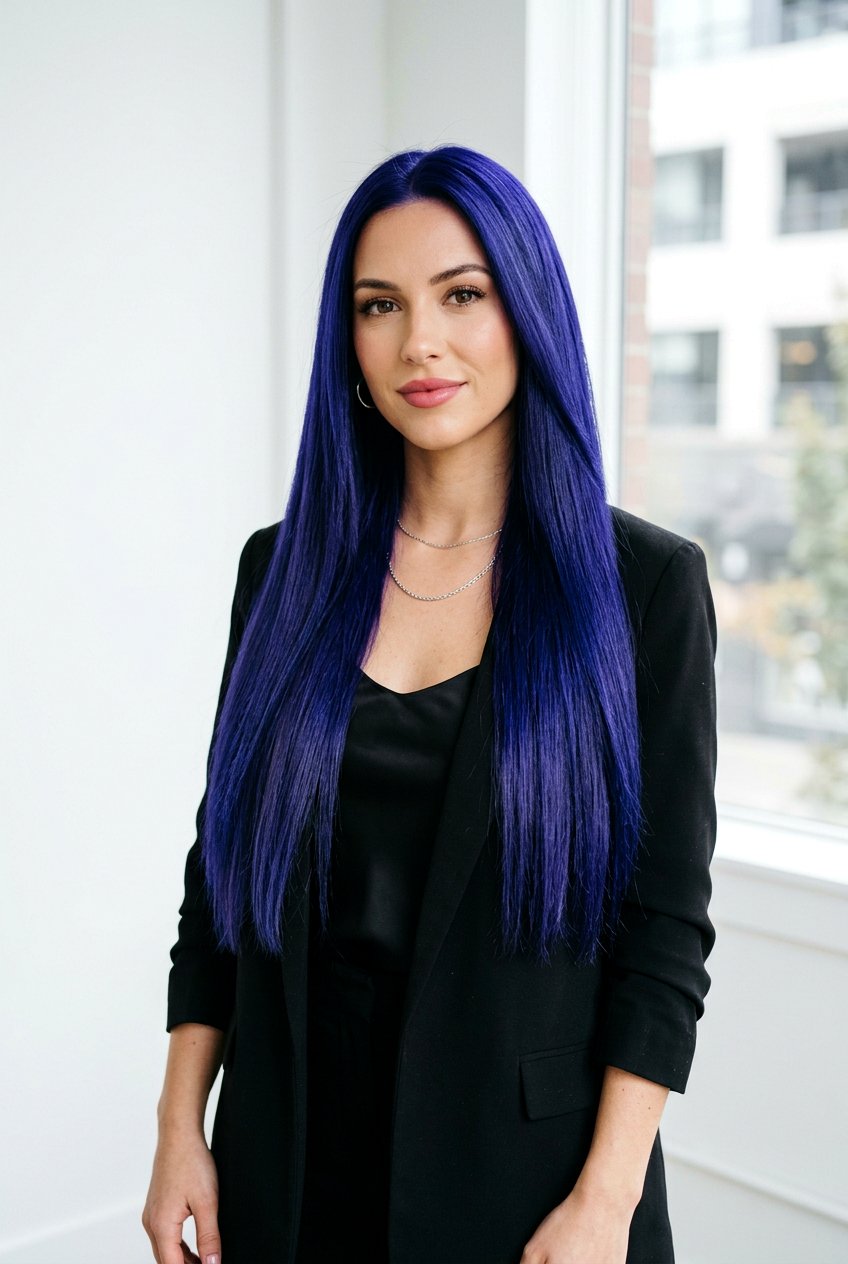
Sometimes you just want to go all in, and a full head of indigo color delivers exactly that. This bold, all-over application coats every strand in a rich, deep blue-violet hue that’s impossible to ignore. When applied to dark hair, full indigo takes on a near-black depth with stunning blue-purple reflections in sunlight — it’s moody, magnetic, and completely show-stopping. On lightened or blonde hair, the color comes through as a bright, vivid indigo that reads more intensely blue. You can choose between a semi-permanent formula for a softer commitment or a permanent dye for longer-lasting results. Either way, using a color-safe shampoo will help keep the tone fresh and vibrant for weeks.
3. Indigo and Black Hair Color
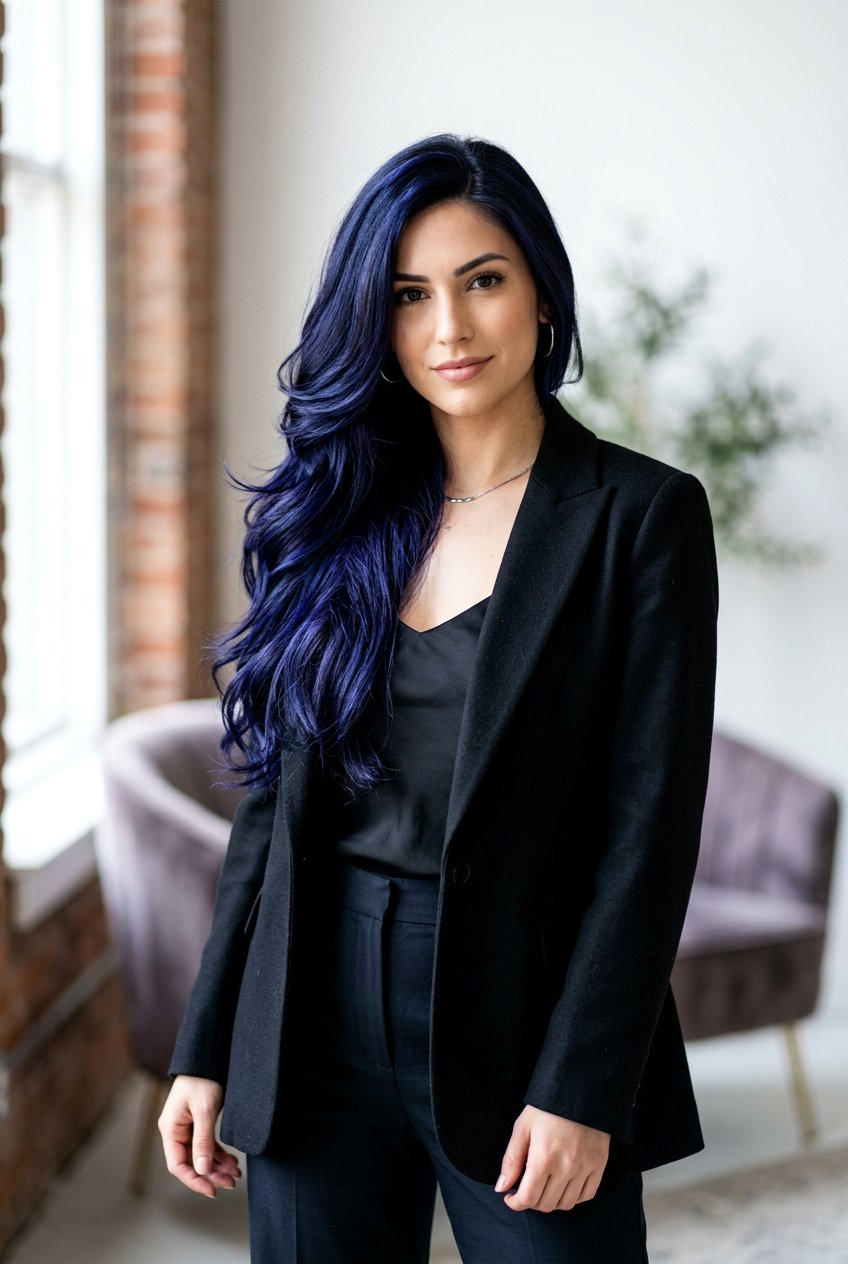
Blending indigo with black creates one of the most sophisticated dark hair color looks you can get. The indigo doesn’t overpower — it just adds depth, dimension, and a gorgeous blue-violet sheen that catches light in the most flattering way. This look works especially well on naturally dark hair, where the indigo acts almost like a gloss treatment, enriching the base rather than replacing it. Stylists often apply a vivid indigo gloss or toner over existing dark hair to get this effect without extensive bleaching. The result looks polished and editorial but still wearable for everyday life. It’s the perfect pick if you love the idea of color but aren’t ready to commit to something super bold.
4. Indigo Ombre Hair Color
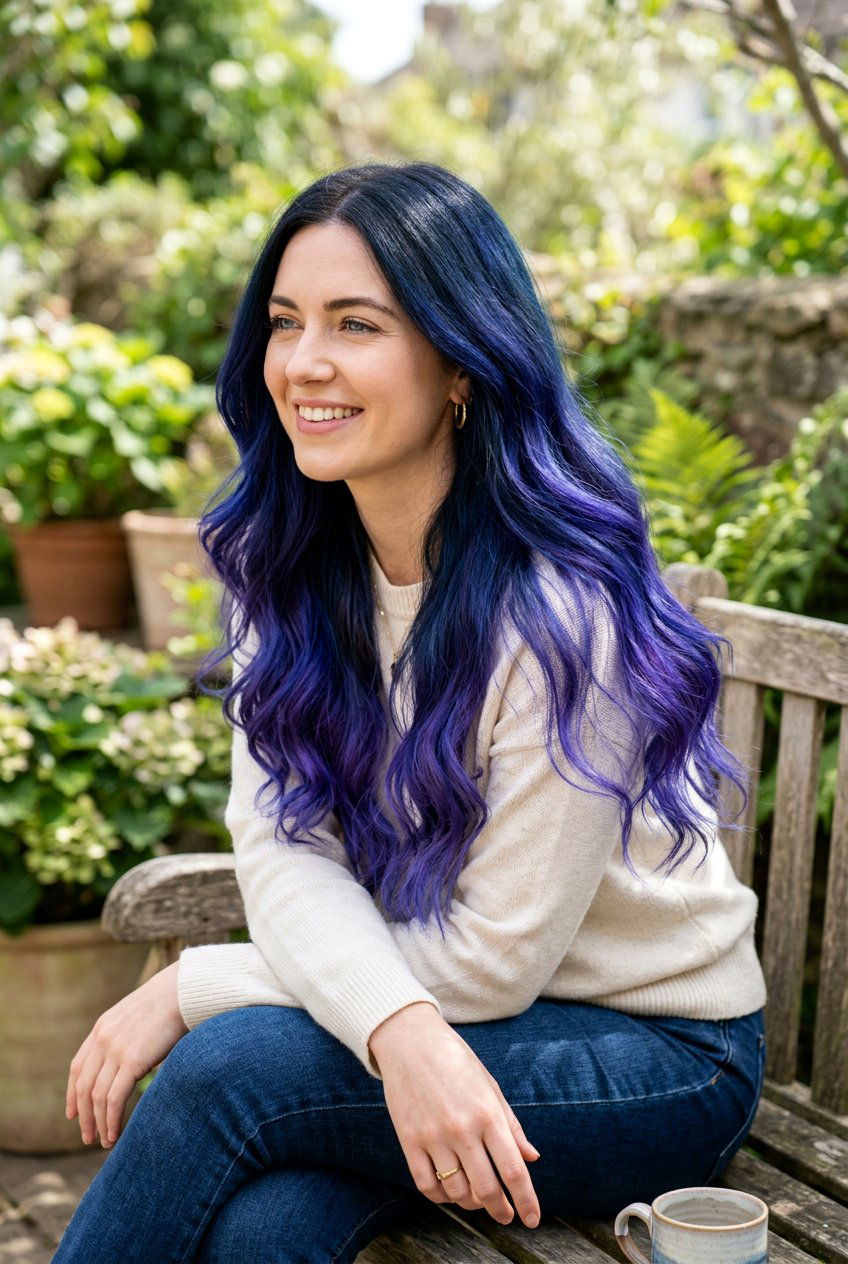
Ombre with indigo is a look that feels dramatic from root to tip. The style starts with your natural color — usually dark brown or black — at the roots and transitions gradually into a deep or vivid indigo at the ends. The fade can be subtle or sharp depending on how much contrast you want. A soft, blended ombre has a dreamy, gradient quality that photographs beautifully, while a more defined ombre with a clear color break looks bold and intentional. For the best result, a colorist will lightly bleach the ends to a pale yellow before applying the indigo, which helps the color appear true and saturated. This style suits long and medium-length hair best, where the full gradient transition has enough room to shine.
5. Indigo Highlights on Dark Hair
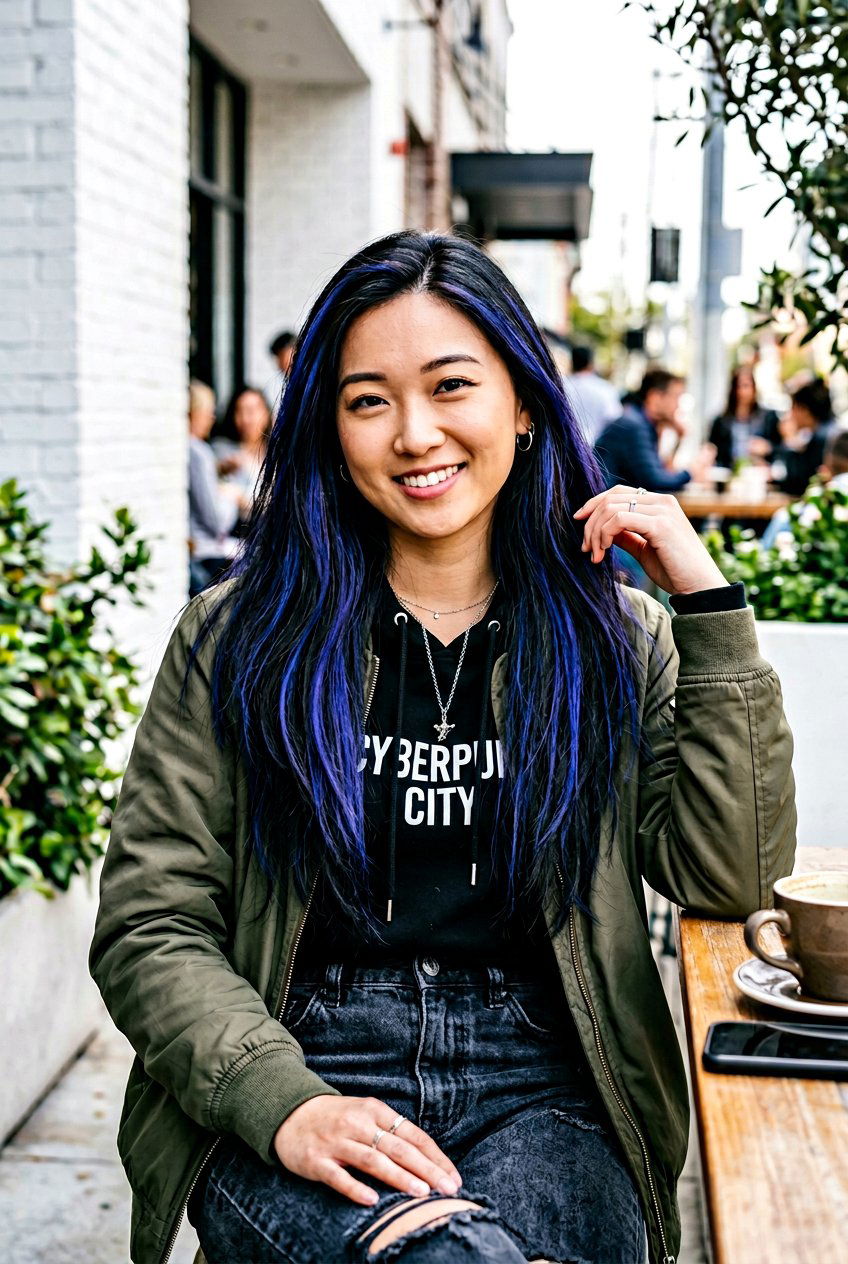
If you love your dark base but want to spice things up, indigo highlights are the answer. Thin or chunky indigo streaks woven through dark brown or black hair create a subtle but striking contrast that reads almost like a jewel-toned shimmer. The highlights don’t require full pre-lightening in some cases, especially when using vivid semi-permanent formulas designed to show on dark hair. They peek through whenever light catches the hair, giving you that “is that blue?” moment that makes the style so fun. This is also a great way to test whether you love indigo before committing to a full-color application. Curls and waves especially amplify the highlight effect, making the color dance through the hair with every movement.
6. Indigo and Purple Hair Color
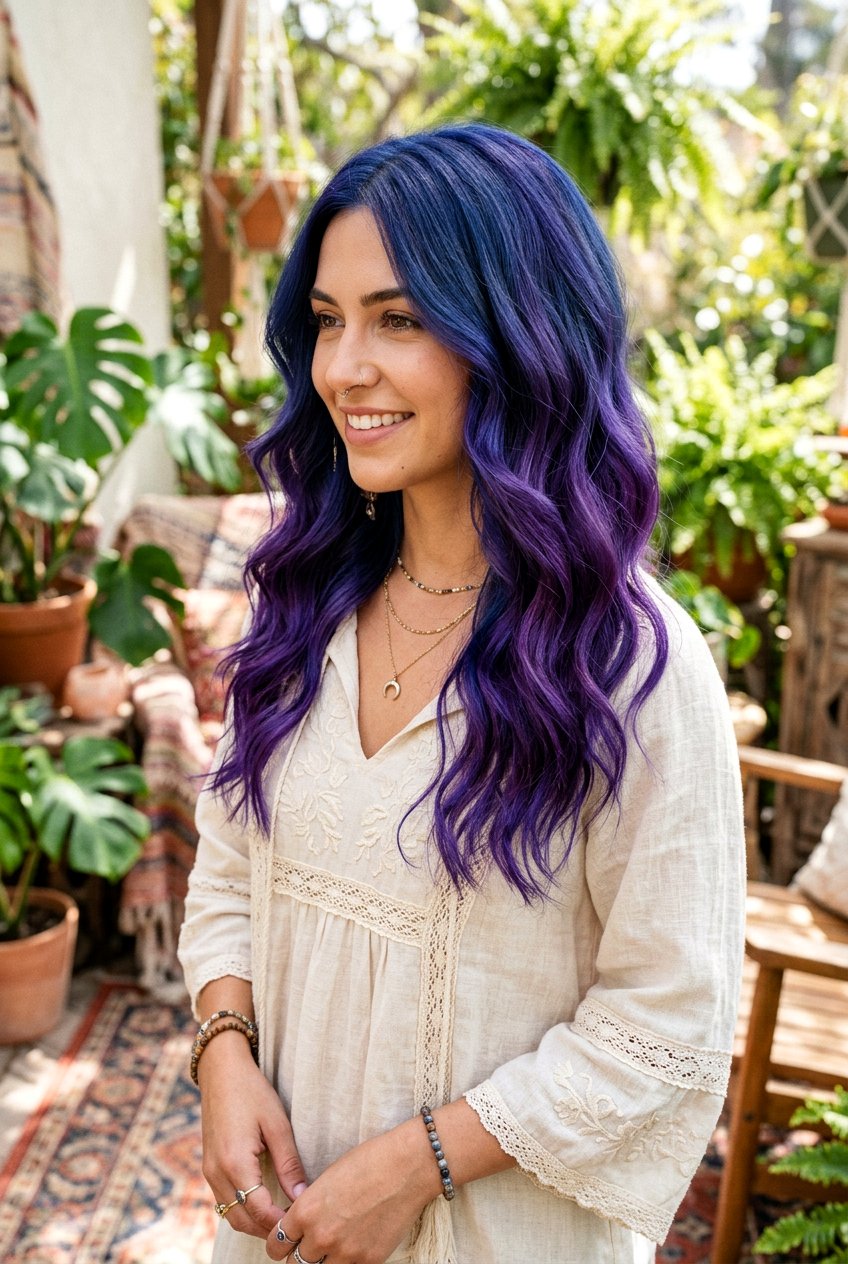
Pairing indigo with purple creates a rich, multidimensional color combination that’s full of personality. The two shades sit right next to each other on the color wheel, so they blend together naturally without clashing. You can go for a split placement — indigo on the top or underneath and purple throughout the lengths — or ask for a seamless blend where both colors melt into each other. Some stylists use a deeper, blue-leaning indigo with a brighter violet purple for contrast, while others prefer a more tonal approach with different depths of the same purple-blue family. The finished look has an almost galaxy-like quality that works beautifully on wavy or curly hair. This combo is one of the most-requested fantasy color pairings in salons right now.
7. Indigo Hair Color on Curly Hair
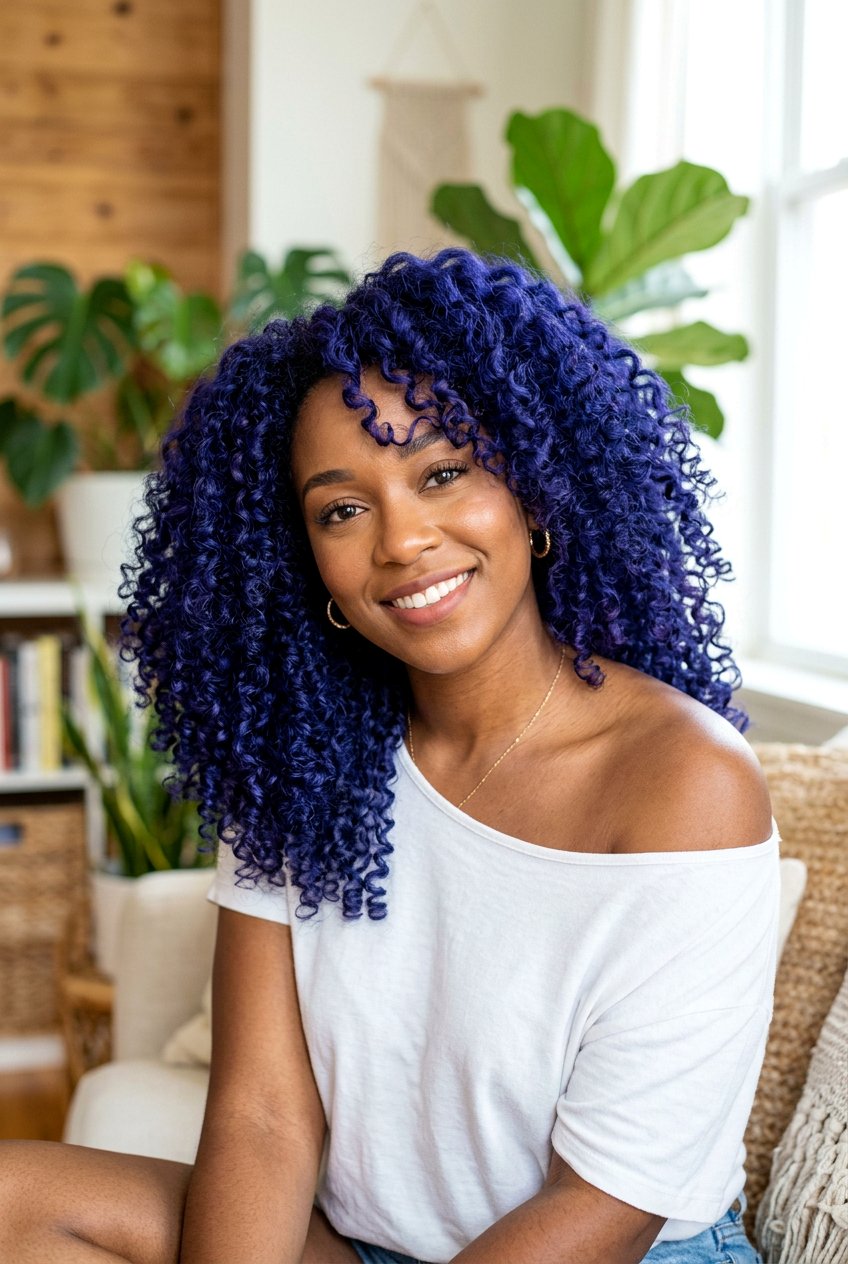
Curly hair and indigo color are an absolutely stunning pair. The natural coil pattern of curly hair adds incredible dimension to vivid colors like indigo, creating a look that feels layered and alive with movement. Because curls naturally reflect light at multiple angles, the indigo shade shifts between a deep navy and a rich violet depending on how the curl stretches or coils. For the best result, apply the dye to damp, detangled curls and use a wide-tooth comb to distribute it evenly from root to tip. Deep conditioning is a must after coloring curly hair to keep the curl pattern bouncy and frizz-free. Color-protecting leave-ins designed for curly textures will also help extend the life of the shade.
8. Indigo Root Smudge Hair Color
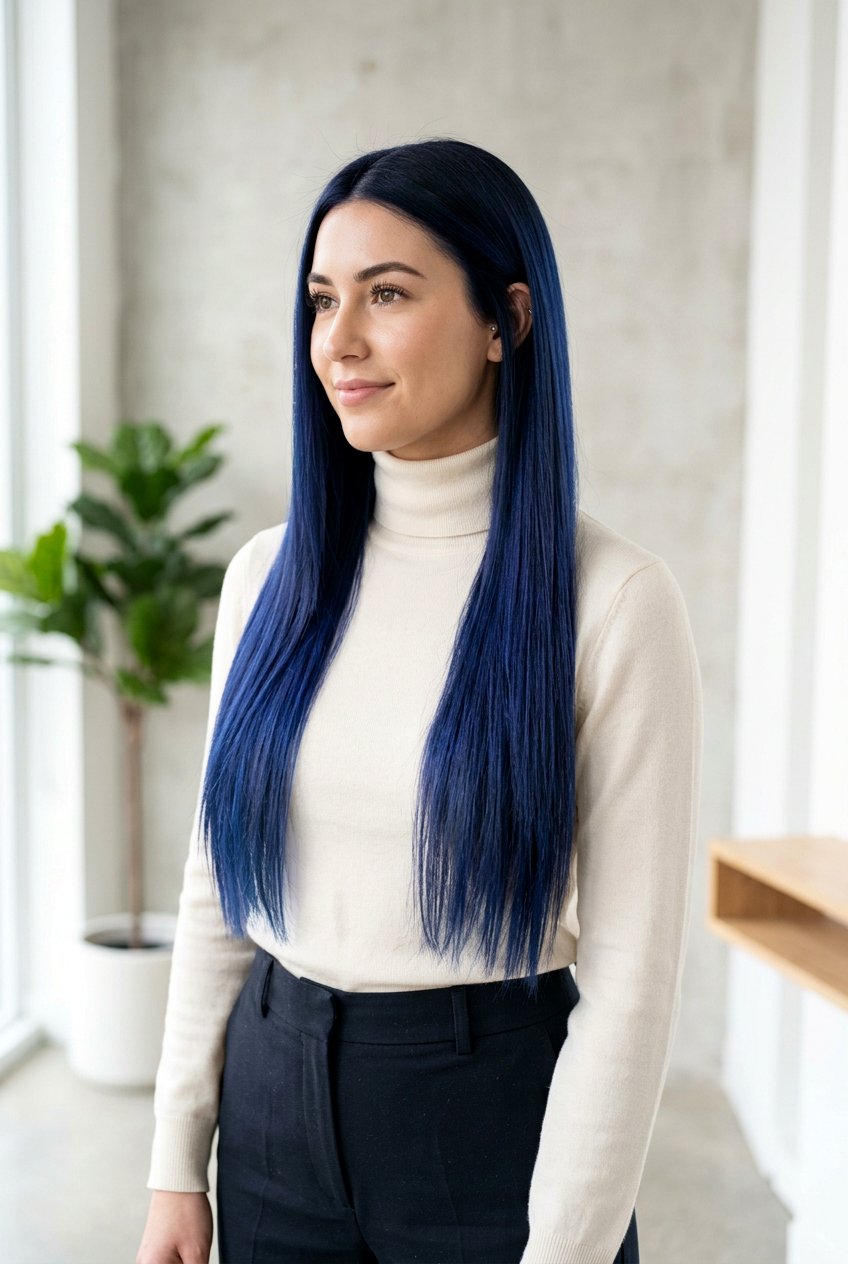
Root smudging with indigo is a clever technique that makes vivid color look intentional and polished rather than grown-out. A stylist applies a dark indigo or near-black indigo shade directly at the roots and blends it down a few inches before transitioning into lighter color underneath. It mimics the natural shadowing of hair while adding a cool blue-violet undertone that elevates the whole look. This technique works particularly well on women who already have indigo or blue-toned colored hair and want to soften the contrast between regrowth and color. It also adds a lived-in, editorial vibe that’s extremely popular in modern salon work. Root smudging is lower maintenance than a full root touch-up, making it a smart and stylish option for busy lifestyles.
9. Pastel Indigo Hair Color
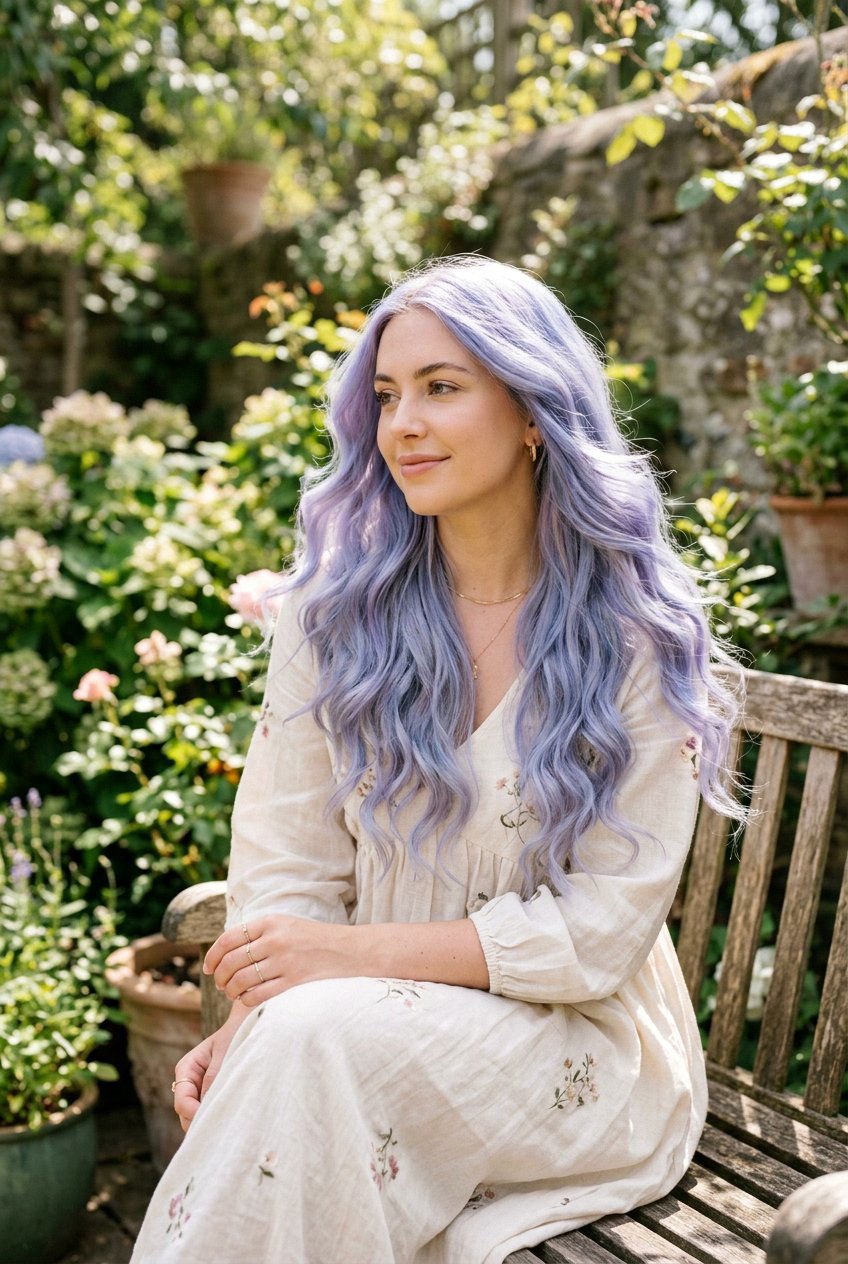
Pastel indigo is a softer, more ethereal take on the classic vivid shade. Instead of a deep, saturated blue-violet, pastel indigo gives you a cool, muted lavender-blue that feels delicate and romantic. To achieve this version, hair must first be pre-lightened to a pale blonde or platinum base, then the indigo dye is diluted with a clear conditioner to reduce the pigment intensity. The result is a dreamy, watercolor-like finish that looks especially beautiful on medium and long hair worn in loose waves. Pastel shades do fade faster than deeper tones, so expect to refresh the color every few weeks to maintain that soft blue-purple glow. Dry shampoo and cold-water rinses are your best friends for keeping the tone looking fresh.
10. Indigo Hair with Blue Tint
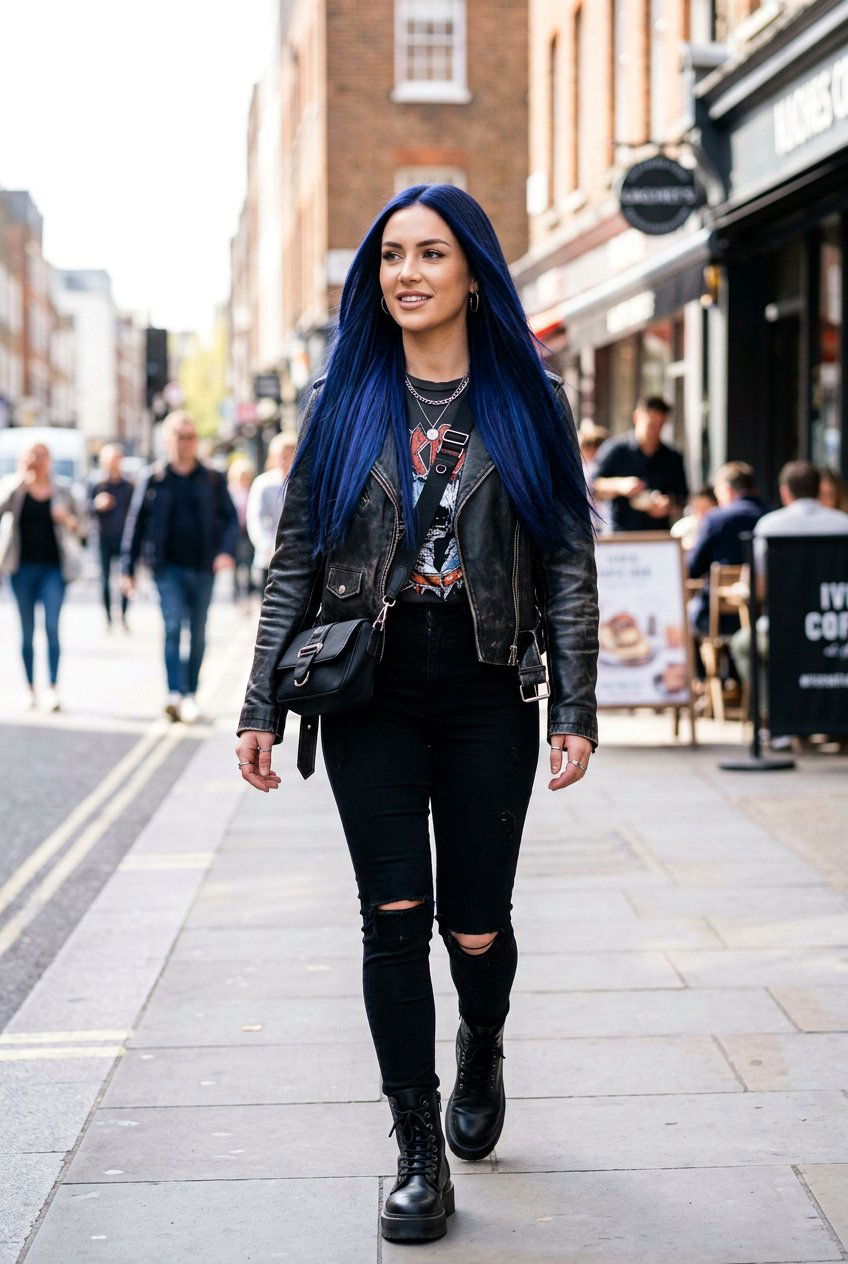
A blue-tinted indigo hair color sits right at the border between a classic vivid blue and true indigo. This shade leans cooler and more electric than a straight indigo, giving the hair a neon-like shimmer that photographs with incredible vibrancy. It’s the perfect pick for someone who loves the depth of indigo but wants the energy of bright blue without going full cobalt or teal. Stylists typically achieve this by mixing a primary blue dye with an indigo shade in small amounts, building the tint gradually. This color hits differently depending on lighting — indoors, it reads as a deep, moody blue; outside in natural light, it shifts into that signature indigo blue-violet. The contrast is what makes it so photogenic and wearable across seasons.
11. Indigo and Teal Hair Color
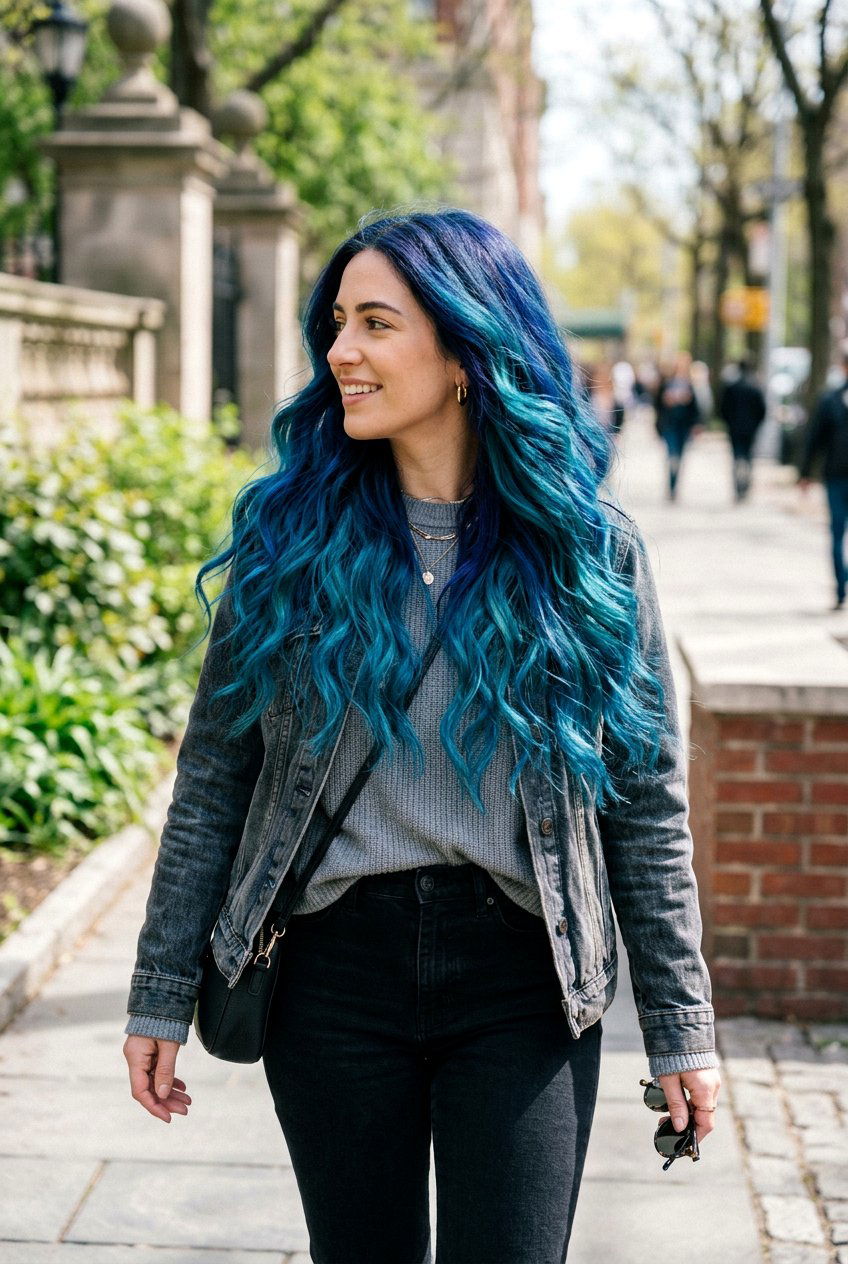
Indigo and teal together create a bold ocean-inspired color combination that’s both edgy and artistic. While indigo is all blue-violet depth, teal adds a green-blue brightness that creates beautiful contrast between the two tones. This combination is often applied as a split or section color, with indigo dominating the top layer and teal peeking through from underneath or at the ends. You can also blend them in a balayage format, allowing the two shades to melt naturally into each other at the midpoint of the hair. The effect is reminiscent of deep sea hues — mysterious, layered, and visually stunning. This color pairing suits medium to long hair where both shades have enough space to show their individual personalities and create a striking gradient.
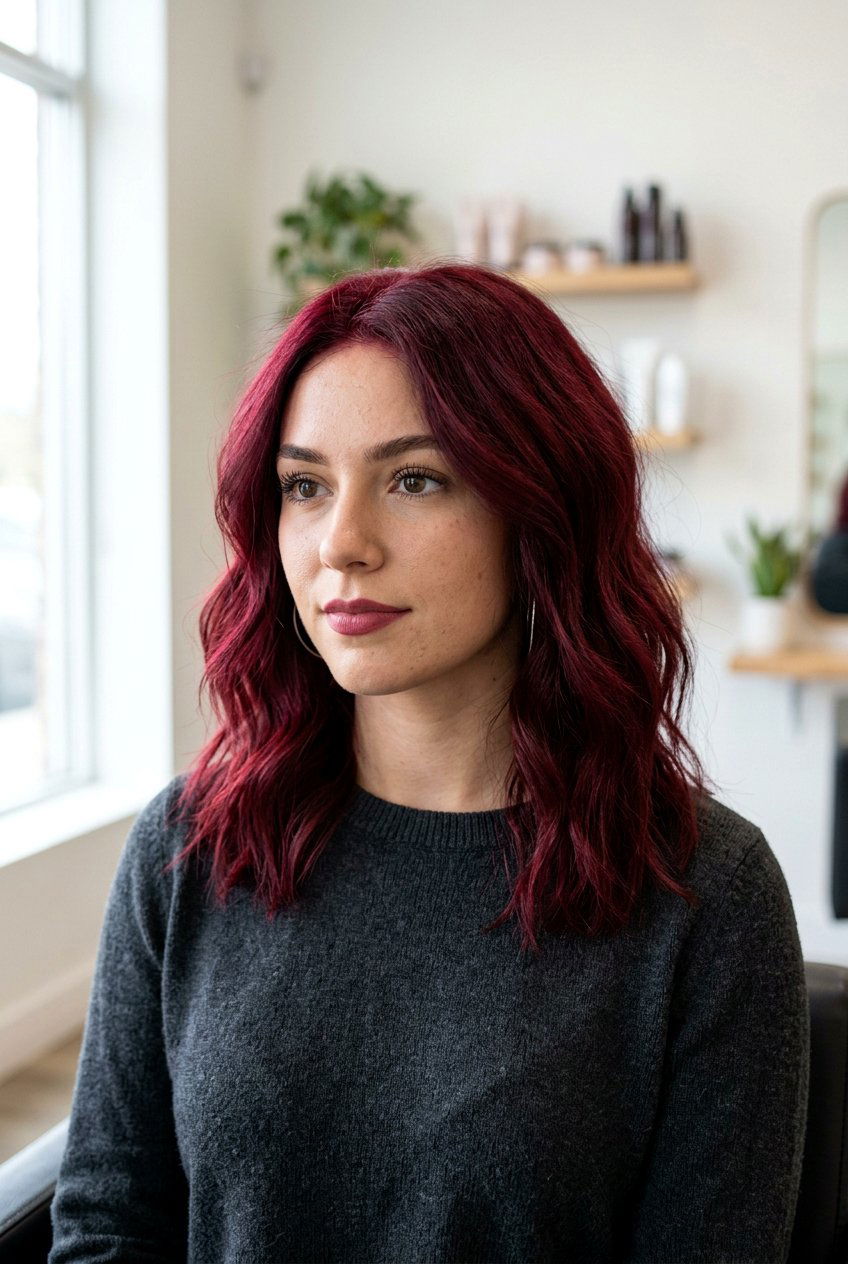
12. Dark Indigo Hair Color for Dark Skin
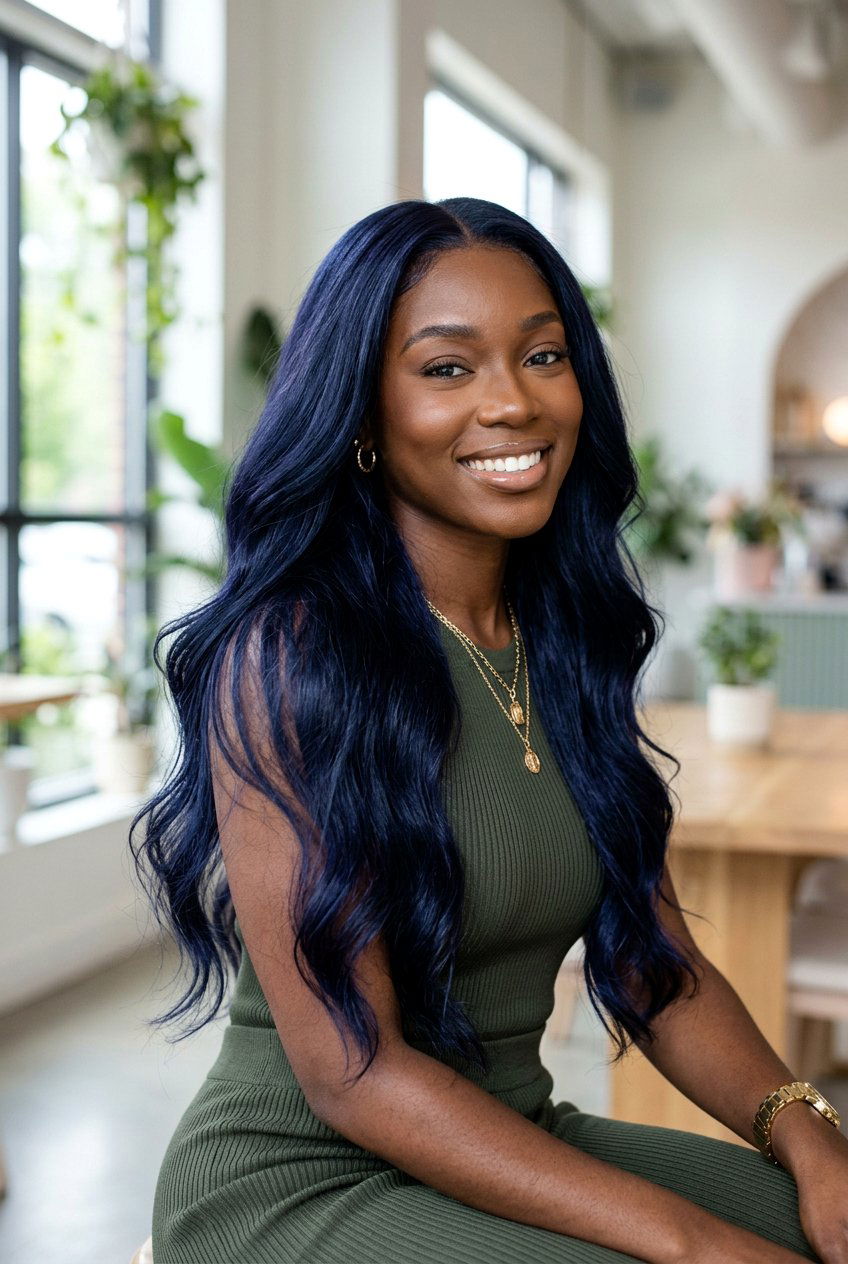
Deep indigo on dark skin is one of the most flattering color combinations in modern hair trends. The richness of the indigo — especially in its near-black or deep violet-blue form — complements warm and deep skin tones by creating contrast without washing out the complexion. Unlike lighter fantasy shades that can sometimes clash with deeper skin tones, indigo’s inherent darkness means it stays grounded and wearable. Melanin-rich skin tones make dark indigo look luxurious, sophisticated, and powerful. A full-coverage deep indigo or an indigo-black gloss works especially well here. You don’t even need extensive pre-lightening — a vivid semi-permanent applied over naturally dark hair gives just enough of a blue-violet shift to transform the look without going too extreme.
13. Indigo Peekaboo Hair Color
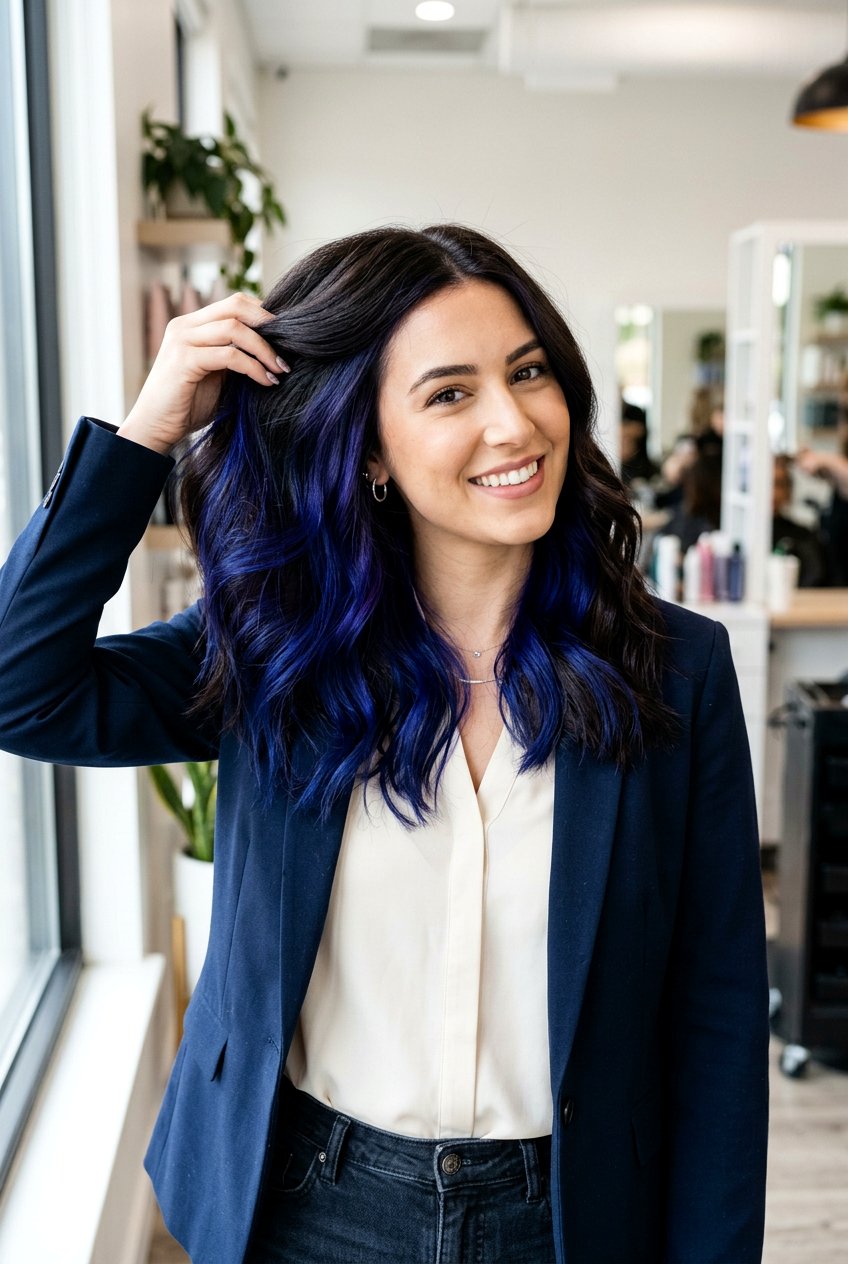
Peekaboo indigo is the ultimate low-commitment way to experiment with bold color. The technique involves placing vivid indigo color in the sections of hair that sit underneath the top layer, so the color is completely hidden when the hair is down. When you pull your hair up into a ponytail, bun, or half-up style, the indigo panels reveal themselves in a surprising, playful flash of color. This approach is ideal for professionals who work in environments where visible bold color isn’t appropriate, but who still want to express themselves creatively. It’s also a great starter look for color beginners because the placement is very targeted and easy to maintain. The hidden panels can be refreshed independently without disturbing the rest of the hair.
14. Indigo Money Piece Hair Color
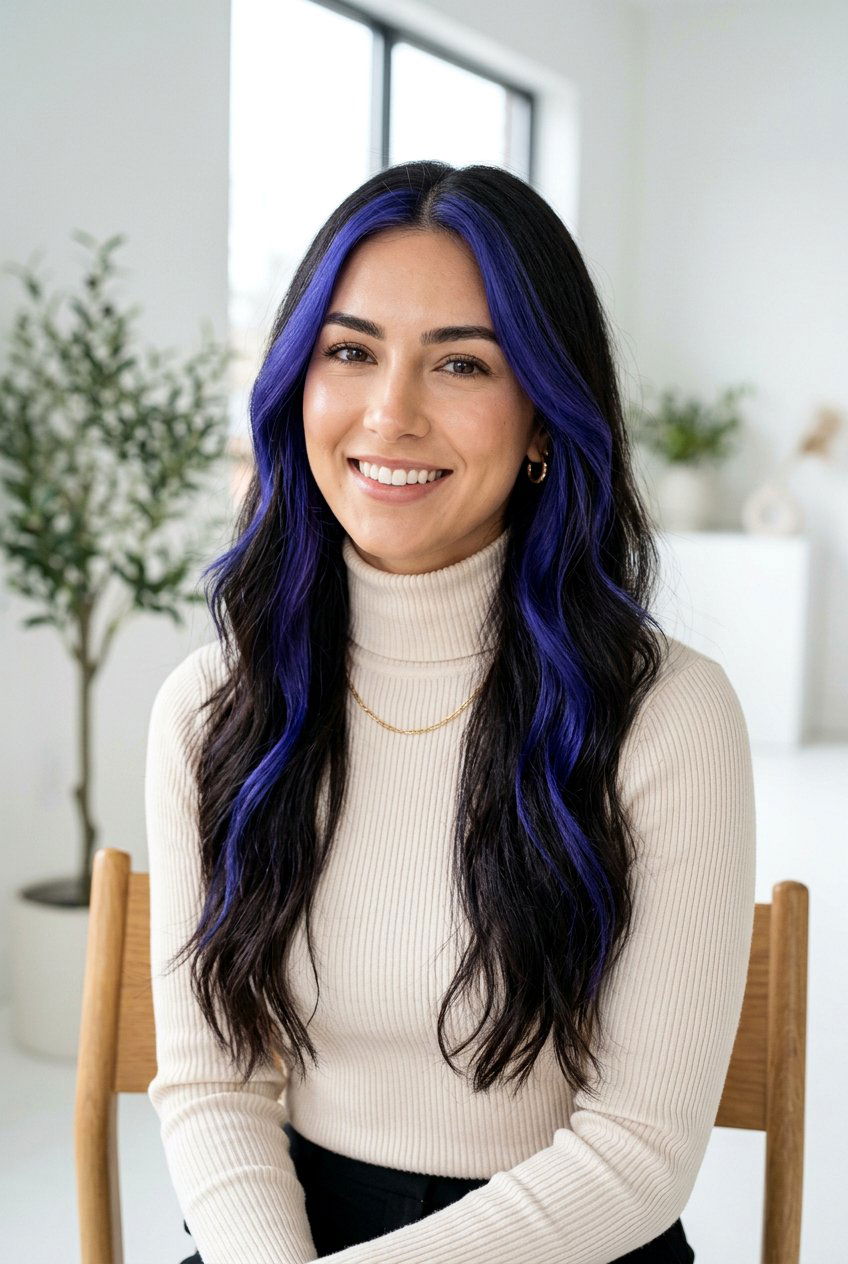
The money piece technique gives maximum impact with minimal effort, and indigo is a bold choice for this face-framing highlight. Two sections of hair on either side of the part — right next to the face — are saturated in vivid indigo to create a striking color accent that draws attention to your features. On dark hair, the money piece may need pre-lightening first to let the indigo really show. On lighter hair, the color pops immediately with no prep needed. The result is a modern, editorial accent that feels intentional and high-fashion. You can keep the rest of the hair natural for contrast, or blend the money piece into an overall color for a more cohesive look. Either way, this placement makes every single face shape look more defined.
15. Indigo Hair Color for Gray Coverage
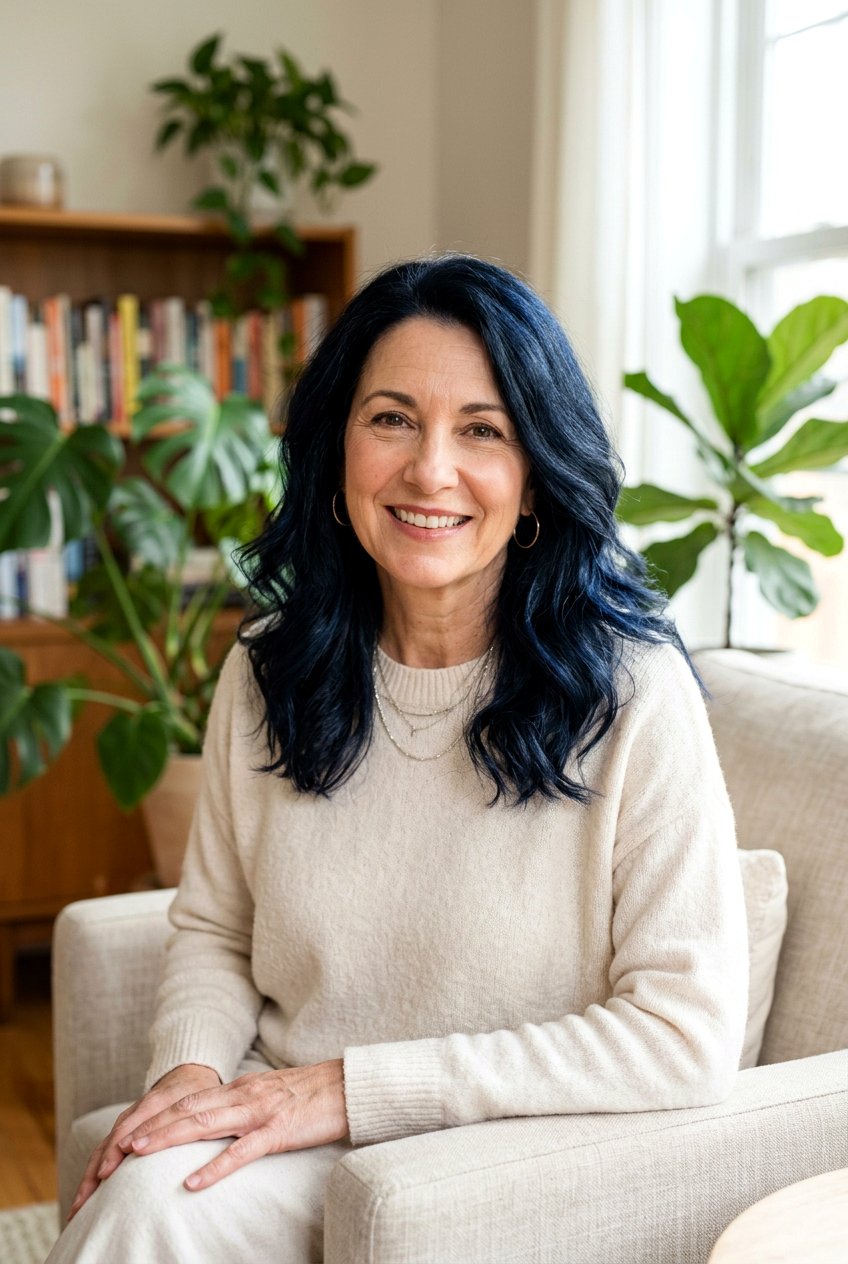
Using indigo powder to cover gray is one of the oldest natural hair coloring methods in existence. Derived from the Indigofera tinctoria plant, indigo has been used for centuries across South Asia and the Middle East to transform gray strands into rich brown and black tones. The standard method involves a two-step process: first applying pure henna to create an orange-red base, then layering indigo on top to shift the color into cool brown, dark brown, or jet black depending on how long you leave it on. For a lighter brown result, you leave the indigo on for 15 to 45 minutes; for deep black, you wait one to two hours. The result is a natural, chemical-free color that also conditions and strengthens the hair shaft.
16. Indigo Blue Lob Hair Color

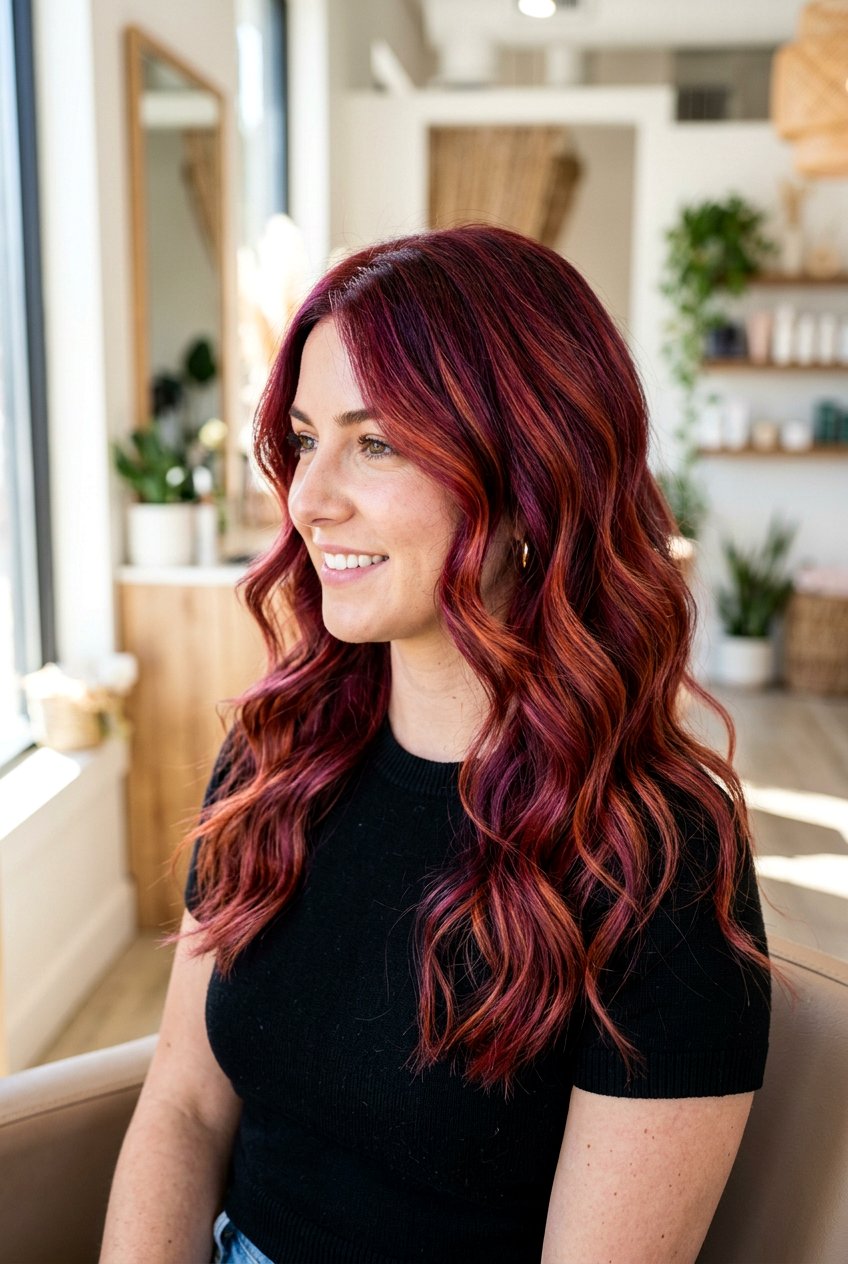
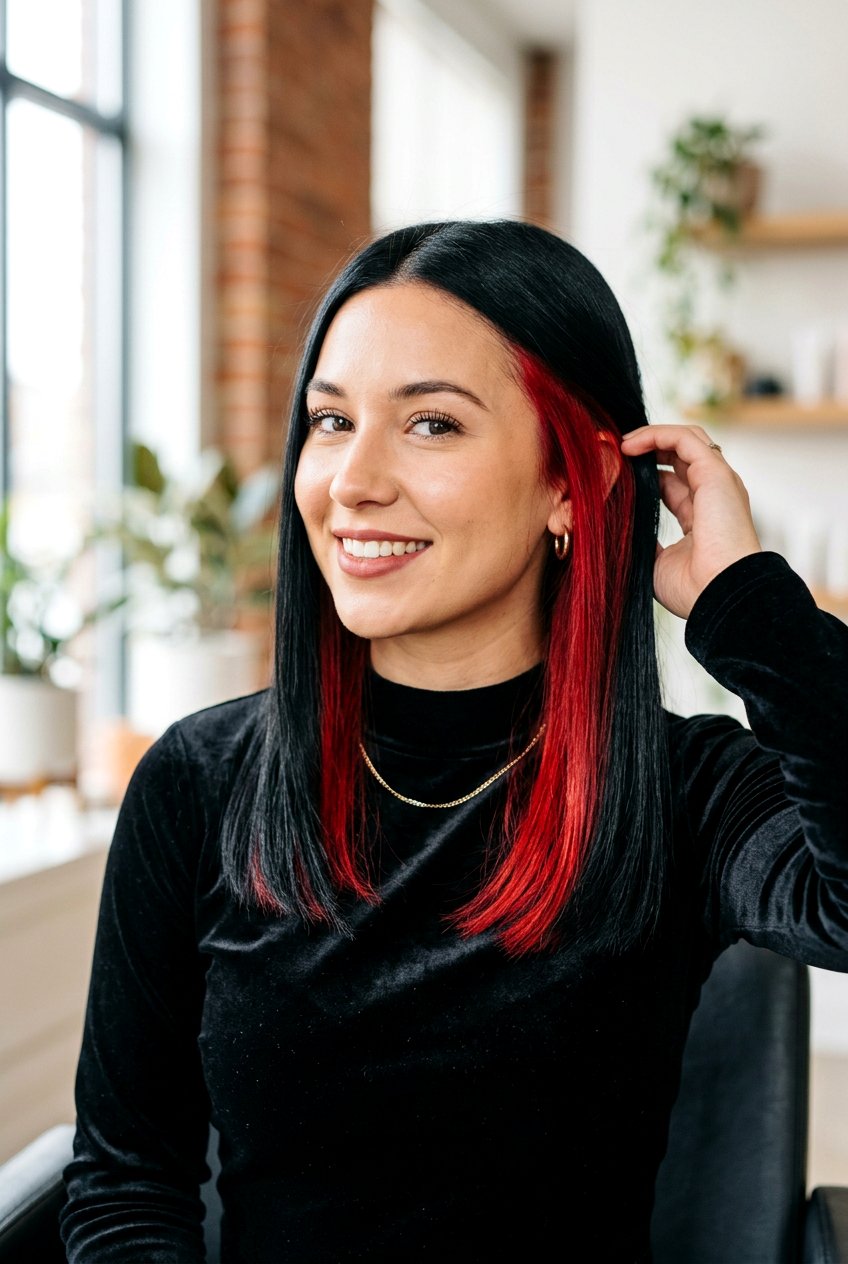
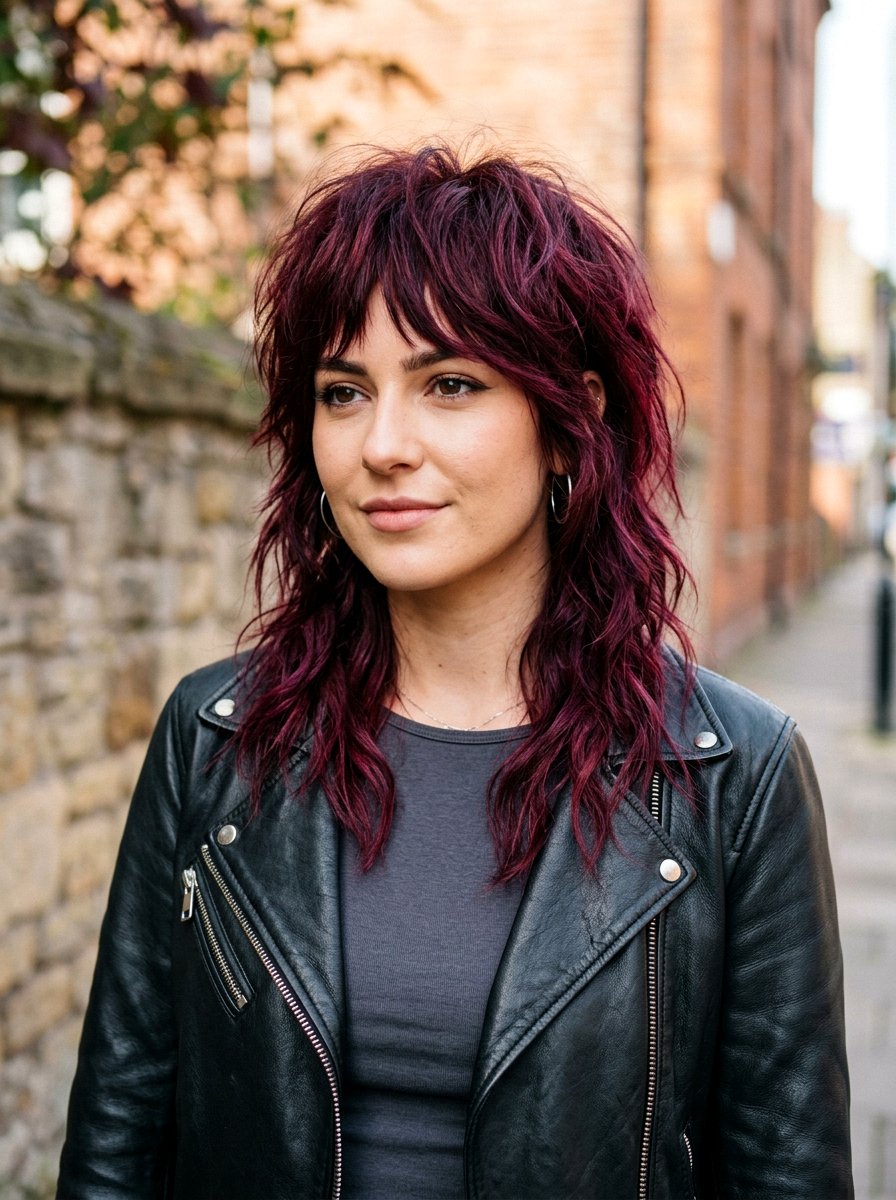
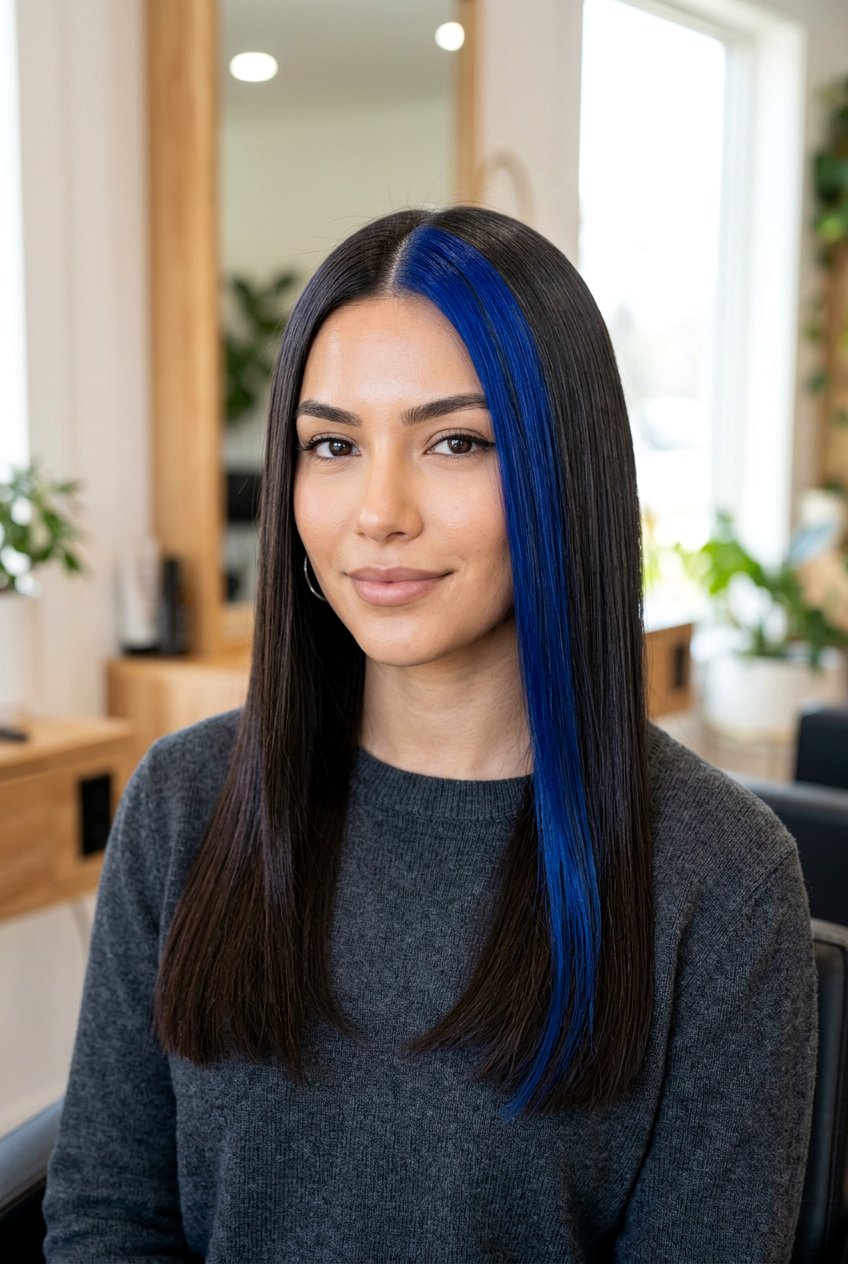
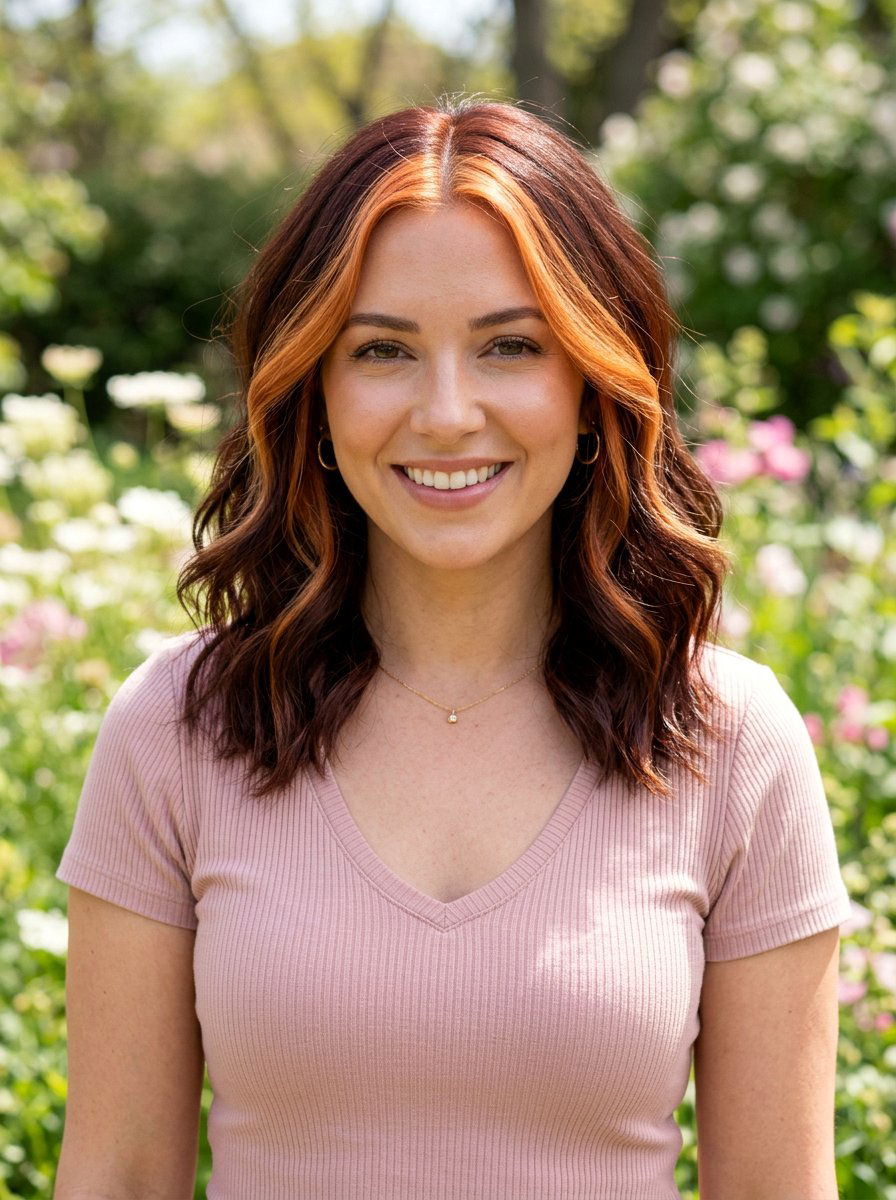
A lob — or long bob — is the perfect canvas for showcasing a vivid indigo hair color. The shoulder-grazing length keeps the style polished and versatile while giving the color enough surface area to make a serious statement. When indigo is applied to a lob, the blunt or slightly layered ends help the color read as crisp and intentional. You can go for an all-over application for full impact, or use a balayage placement that concentrates the indigo at the ends to create a lighter-to-vivid transition. The lob also works well for the indigo-to-black blend, where the color appears almost natural at first glance but reveals its blue-violet magic under direct light. Soft waves or a sleek straight style both show off the color equally well.
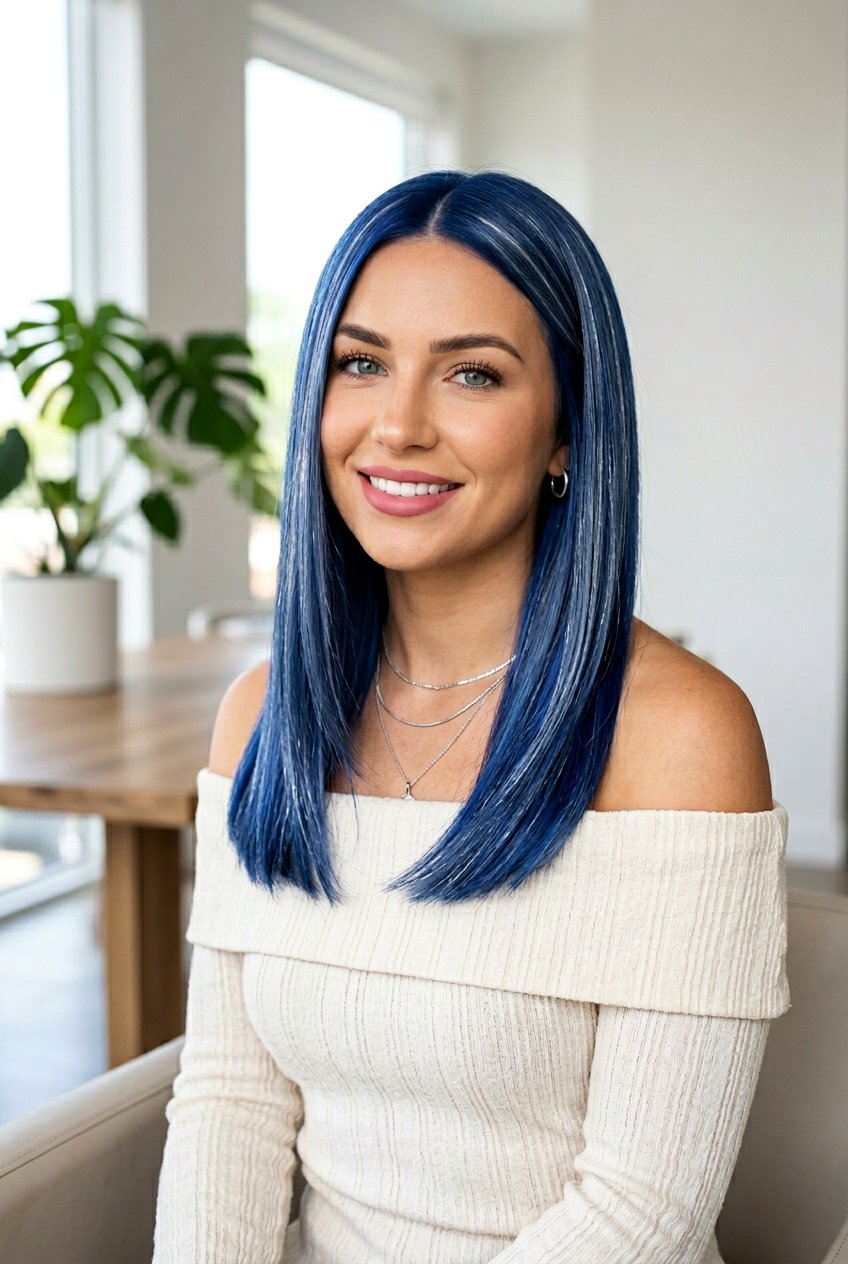
17. Indigo Hair Color with Silver Streaks
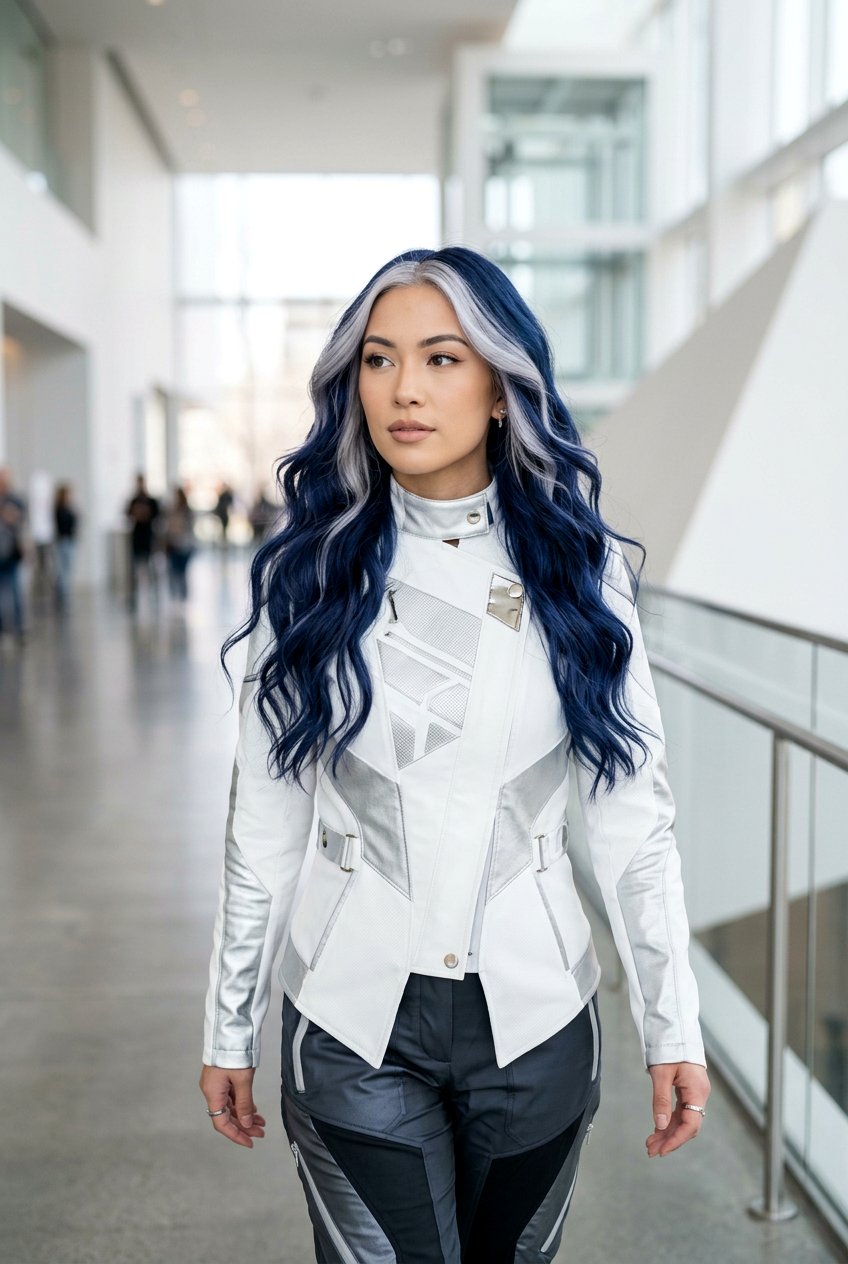
Pairing indigo with silver or platinum streaks is a high-contrast color combination that looks absolutely futuristic. The cool, icy tones of silver and the deep blue-violet of indigo sit in the same cool-toned color family, so they naturally harmonize while still creating real visual drama. Stylists place the silver streaks strategically — sometimes at the front sections framing the face, sometimes woven throughout — to add dimension and contrast without disrupting the overall indigo base. This color story works especially well on medium to long wavy hair where the movement helps blend the two tones together. It’s an especially striking option for women embracing their natural silver growth, because the pre-existing silver sections can be toned with a purple-indigo gloss to unify the whole look effortlessly.
18. Indigo Hair Color on Short Pixie Cut

A pixie cut with indigo color is a powerful, edgy combination that immediately signals boldness and confidence. The short length means every strand of color is visible from all angles, making the vivid blue-violet hue the star of the show without any distraction. Because there’s so little hair to color, you can achieve a fully saturated, salon-quality indigo application more quickly and with less product than longer styles. The close crop also makes touch-ups easier and more cost-effective over time. Textured pixies with choppy layers make the color look multidimensional, while sleek, close-cropped pixies give the indigo a sleek, fashion-forward finish. This look pairs especially well with clean, minimal styling and bold accessories that match the energy of the color.
19. Indigo and Magenta Hair Color
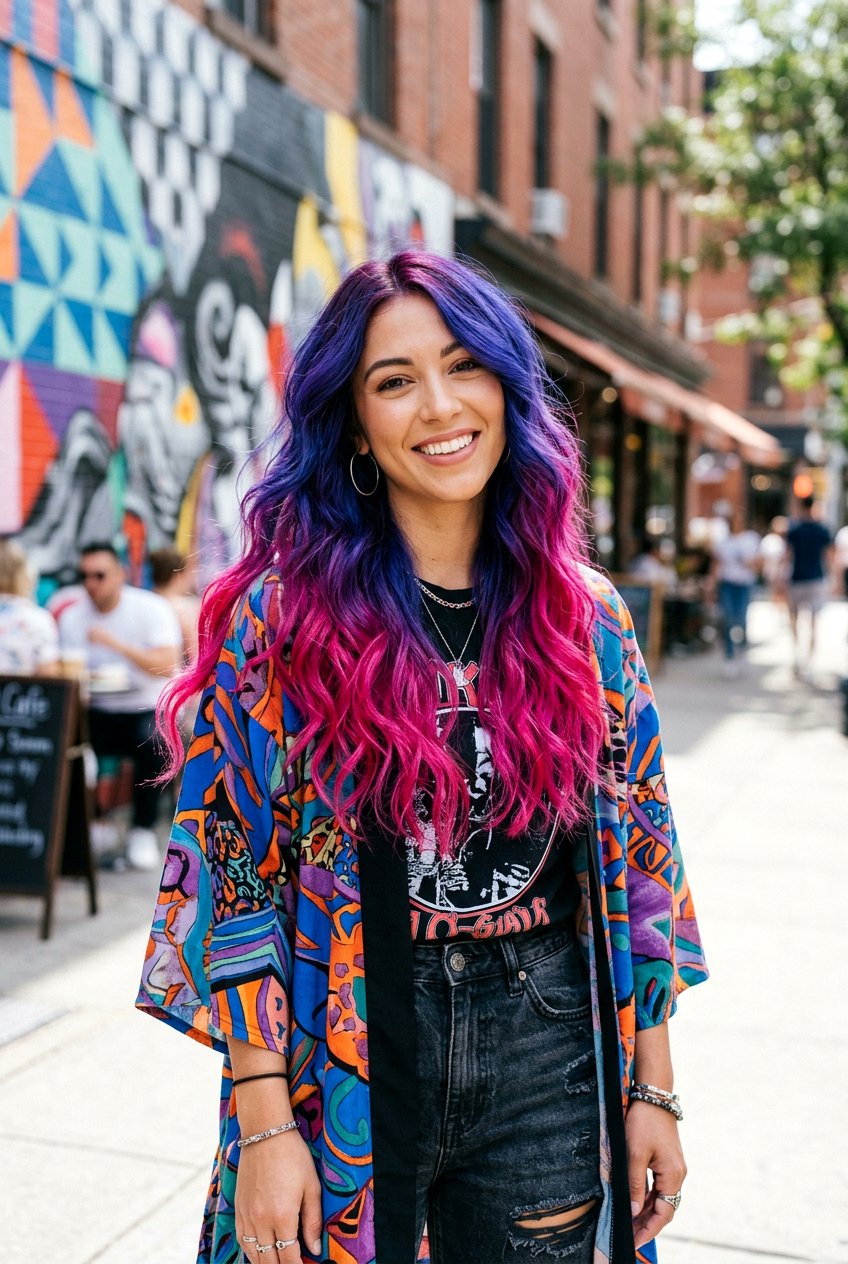
Indigo and magenta together create a vivid, high-energy color combination that’s all about boldness and personality. The deep, cool blue-violet of indigo against the warm, electric pink-red of magenta creates a contrast that is genuinely eye-catching from every angle. This pairing is often styled as a split down the middle, with indigo on one side and magenta on the other, or as a blended color melt that lets both shades transition into each other. You can also apply them in a two-toned balayage with indigo at the roots and magenta at the tips, creating a dramatic gradient that feels bold and artistic. This combo suits women who love vivid fantasy color and aren’t afraid to turn heads. It photographs brilliantly under both natural and studio lighting.
20. Natural Indigo Hair Dye for Black Hair
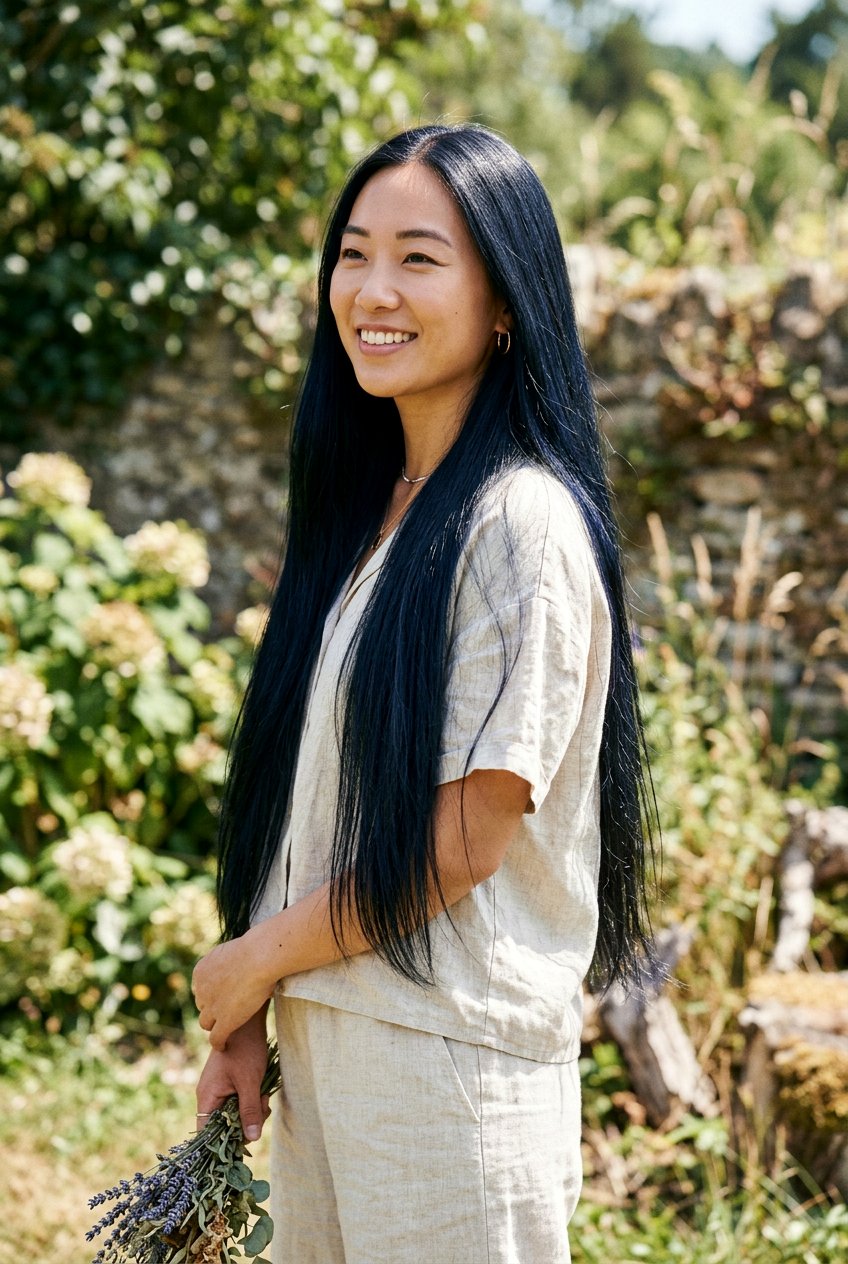
Natural indigo powder is one of the most trusted plant-based options for achieving rich black hair at home. The dye comes from dried, ground leaves of the Indigofera tinctoria plant and must always be paired with henna for effective and lasting results. Used alone, indigo won’t bond properly and can result in a greenish tint that fades quickly. The two-step method — henna first, indigo second — builds a layered color that sits beautifully on the hair shaft, producing a deep black with subtle blue-violet undertones in sunlight. The full color develops and oxidizes over 48 to 72 hours after application. Unlike chemical black dyes, natural indigo won’t strip the hair’s natural proteins, making it a genuinely nourishing alternative for color-conscious women. The process does take a few hours, but the results are well worth it.
Conclusion:
Indigo is a truly timeless shade that works across every hair type, texture, and length — and these 20 indigo hair color ideas prove just how versatile it really is. Whether you’re drawn to the natural, chemical-free depth of henna-indigo black, the bold drama of a full vivid application, or the subtle sophistication of indigo peekaboo panels, there’s genuinely a version of this color for every lifestyle and comfort level. The key is choosing the right technique for your hair’s current condition and your personal maintenance preferences. Always consult a professional colorist for bleaching steps, and invest in color-safe haircare products to keep your indigo looking vibrant and fresh for as long as possible. Indigo isn’t just a color trend — it’s a full hair personality upgrade waiting to happen.
You'll Like These Styles:




Leave a Reply