
Deep sangria balayage hair looks like a glass of red wine poured through your strands, with rich berry, burgundy, and plum tones melting into a darker base. This color trend takes the freehand balayage technique and infuses it with wine-inspired hues that feel bold, expensive, and still surprisingly wearable for everyday life. It is especially flattering on brunettes, because the darker root helps the red‑violet ribbons look dimensional instead of flat or too bright. In 2025 and 2026, wine shades like sangria, merlot, and cherry cola are all over social media and salon menus, sitting right alongside classic coppers and blondes as must‑try colors. Sangria balayage works on straight, wavy, and curly hair, and can be customized from subtle maroon glows to high‑contrast violet‑red panels, which makes it a flexible choice for both first‑time color clients and seasoned color lovers. With the right placement and aftercare, this color can look glossy, luxurious, and photogenic from every angle.
1. Sangria Balayage On Dark Brown Hair
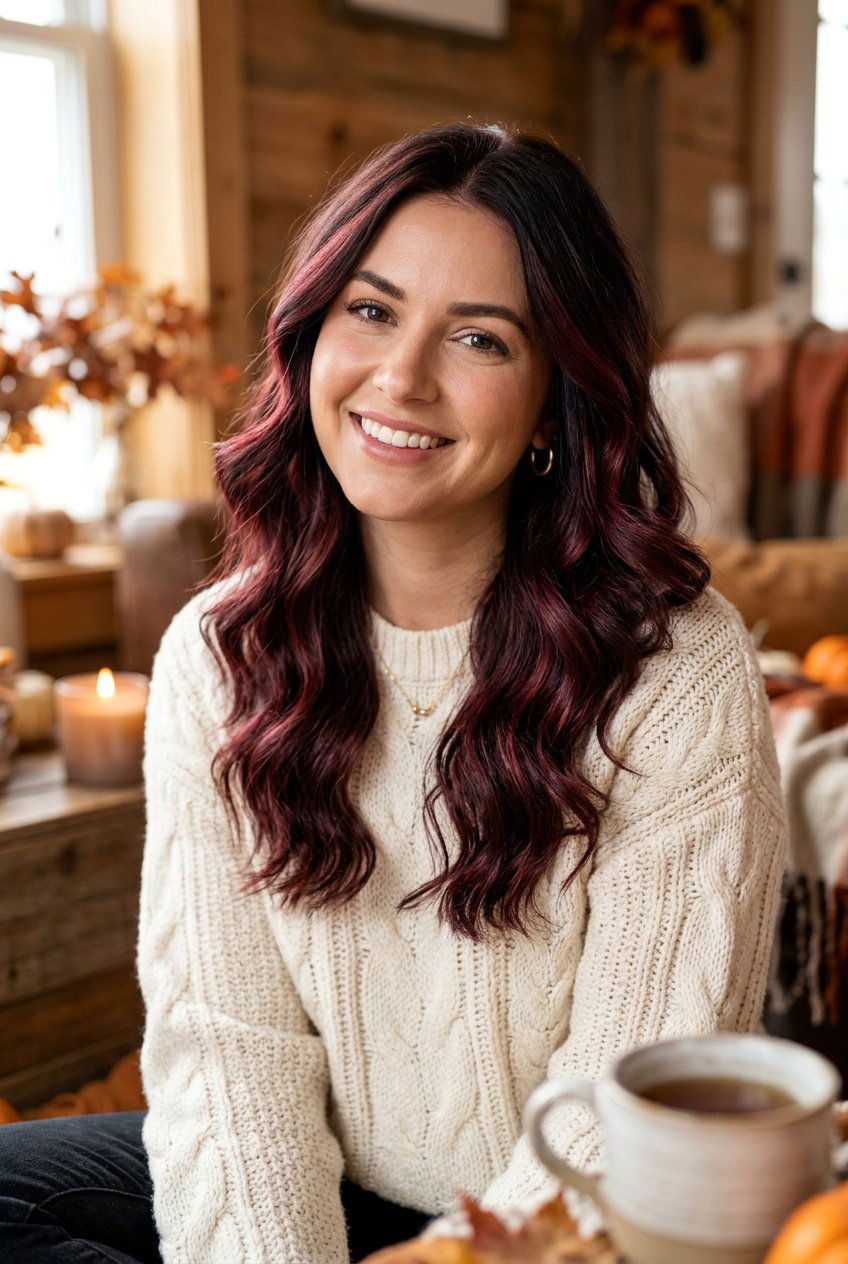
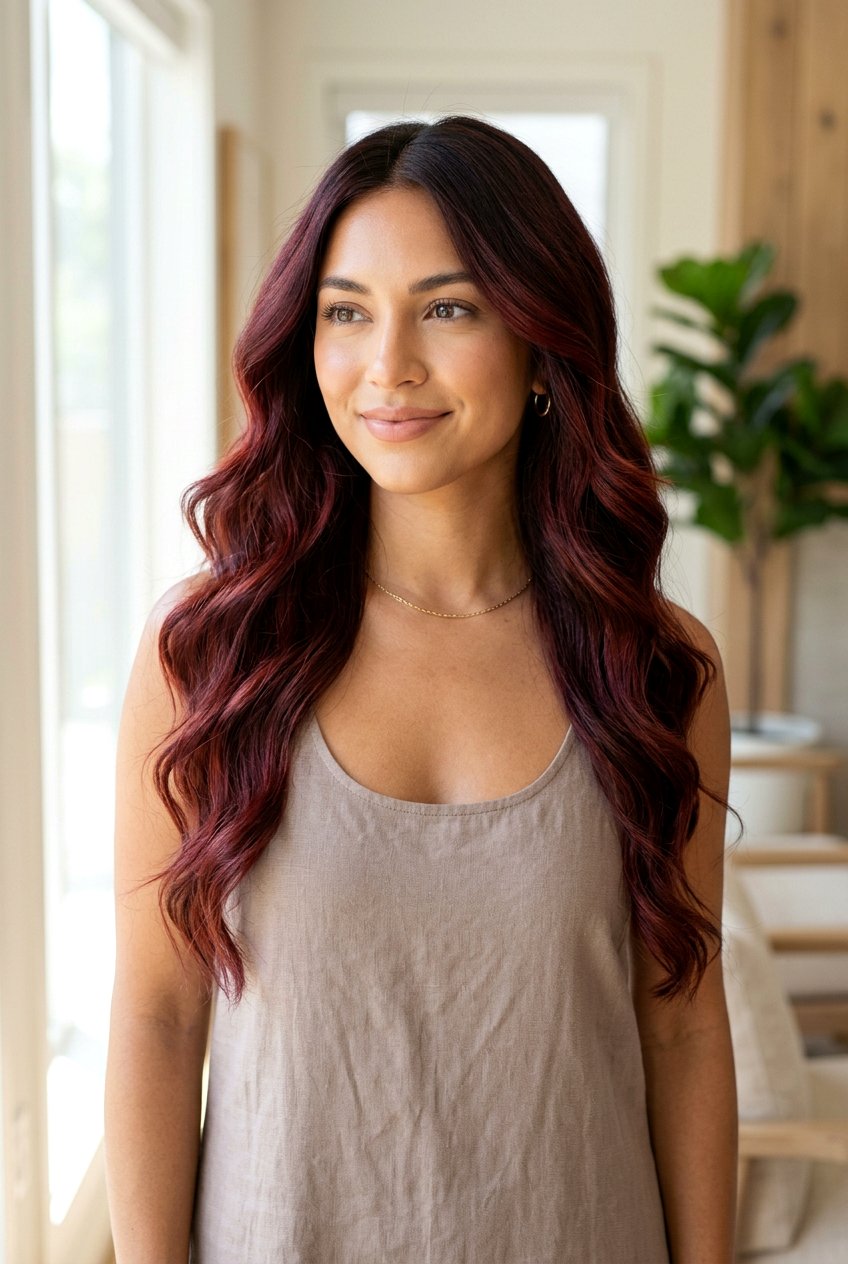
Sangria balayage on dark brown hair is one of the easiest ways to try this trend without feeling too dramatic, because your natural base already supports those winey tones. Colorists usually keep the roots a deep espresso or soft black, then paint freehand balayage pieces through the mid‑lengths and ends, focusing around the face and the surface layers so the sangria ribbons are visible but not stripy. The color often sits in the burgundy to mahogany family, with hints of red and violet that only really pop in bright light or sunlight, which makes it office‑friendly while still looking special in photos or on nights out. This placement also grows out softly, because the balayage is painted in a blended way, so you can stretch your touch‑ups to every 10–12 weeks instead of needing constant root work. Ask your colorist for a red‑purple balayage formula customized to your skin tone, and pair the look with long layers or soft waves to show off the dimension.
2. Sangria Balayage Lob Haircut
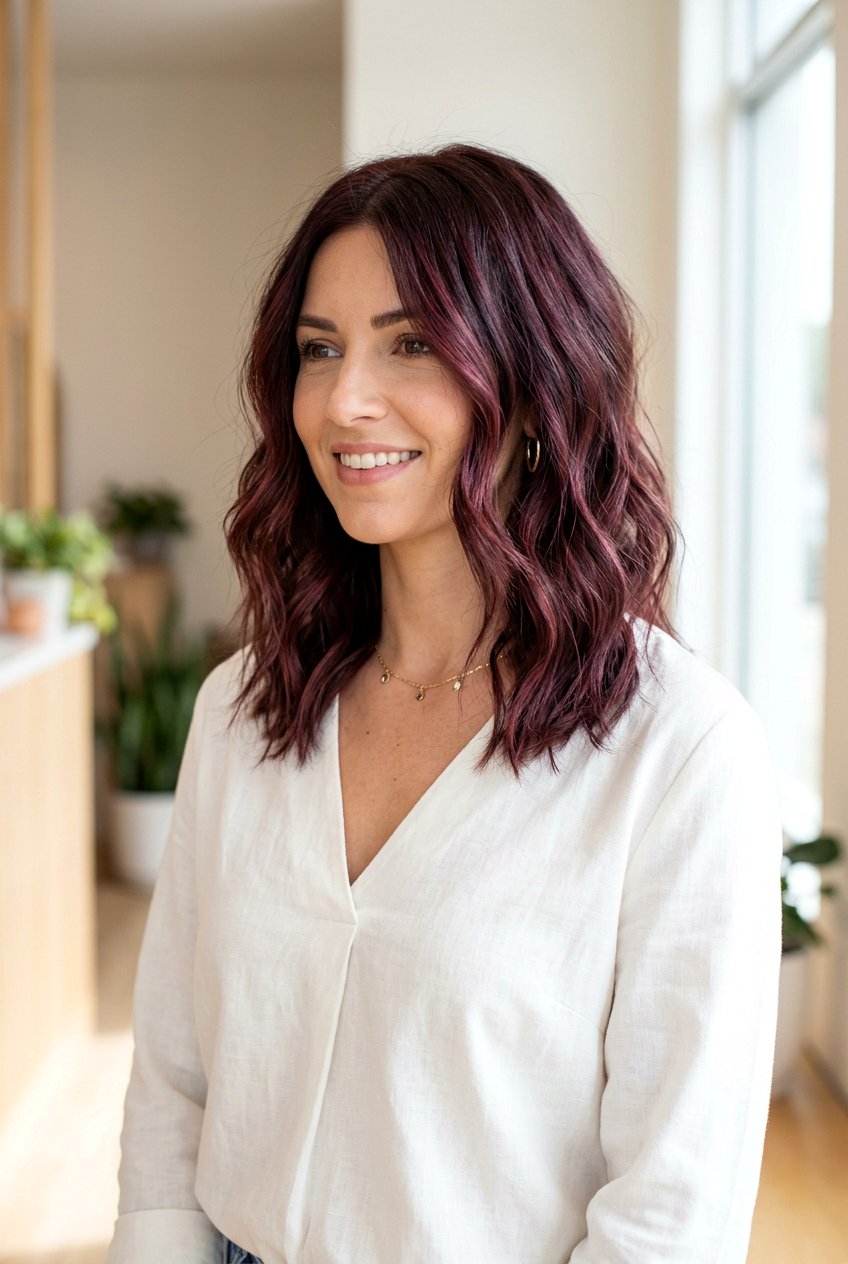
A sangria balayage lob pairs a shoulder‑skimming long bob with wine‑toned color that frames the face and brightens the ends. The lob length keeps hair looking thick and healthy, which is perfect when you are adding red‑violet tones that shine best on smooth, glossy strands. Color is usually focused from mid‑shaft down, with slightly heavier painting on the front pieces and bottom layers so the lob does not look too heavy or one‑length. This placement allows the natural or tinted root to anchor the look while the sangria pieces flip and move, showing different depths of burgundy, berry, and plum depending on how the hair falls. Styling a lob with a big round brush or a large curling iron, then brushing through for loose bends, lets each balayage ribbon catch the light and keeps the overall vibe polished but low‑maintenance. It is a strong choice if you want a noticeable change in both cut and color without committing to very short hair.
3. Deep Sangria Balayage On Black Hair
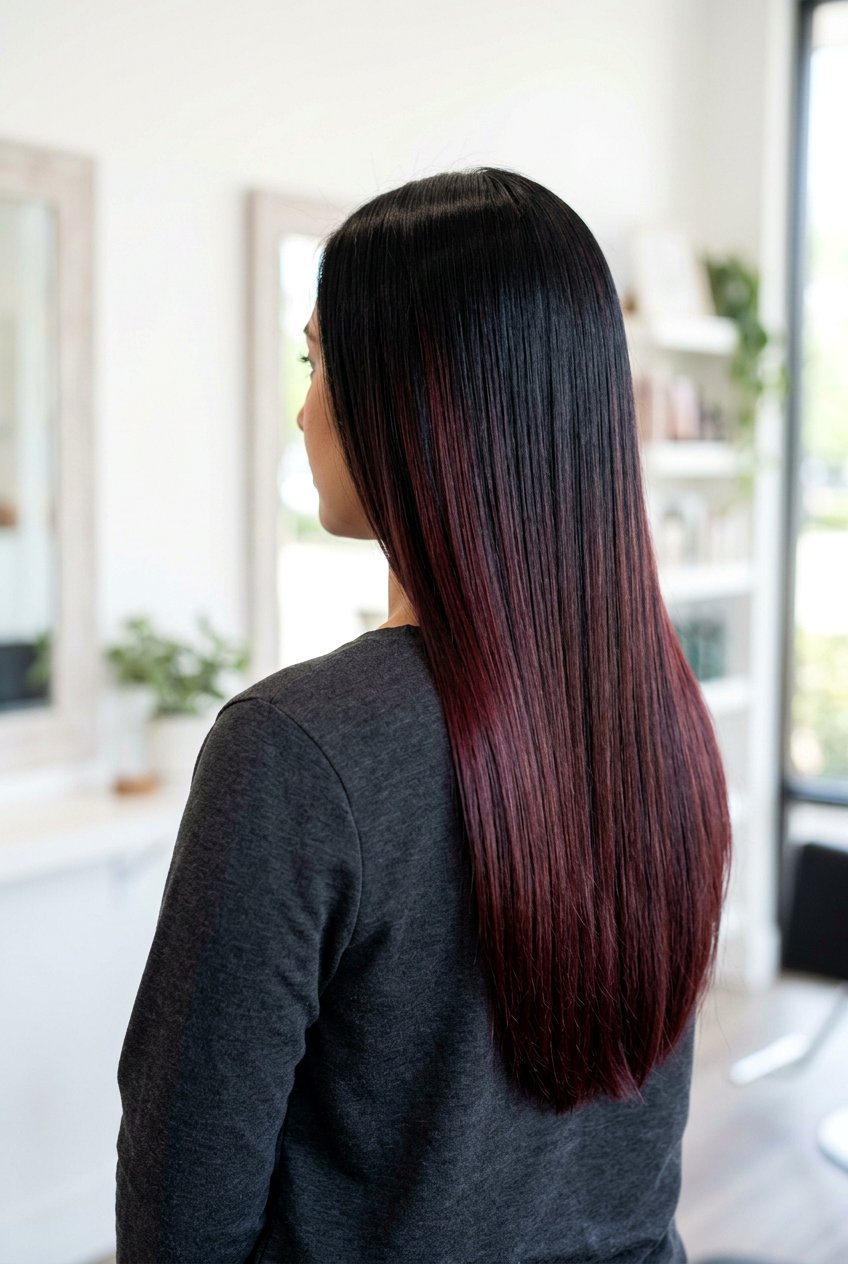
When you apply deep sangria balayage on black hair, the contrast creates an intense, sultry result that feels more alternative and edgy. Stylists usually lighten select sections first, because rich wine colors need some lift to show through a very dark base instead of disappearing. Those lighter pieces are then toned with a mix of burgundy, plum, and violet‑red shades, so the ends look like a dark red wine with subtle purple reflections rather than a flat red. The root is left in its natural black or slightly softened with a base break, which keeps the grow‑out soft and adds shadow so the balayage has depth. This version suits straight and wavy hair, but it looks especially dramatic on sleek, flat‑ironed styles or glass‑hair finishes because the shine amplifies the color. To maintain vibrancy, a color‑safe shampoo and occasional gloss are essential, since deeper red‑purple pigments can fade faster on previously lightened hair.
4. Subtle Sangria Balayage For Brunettes
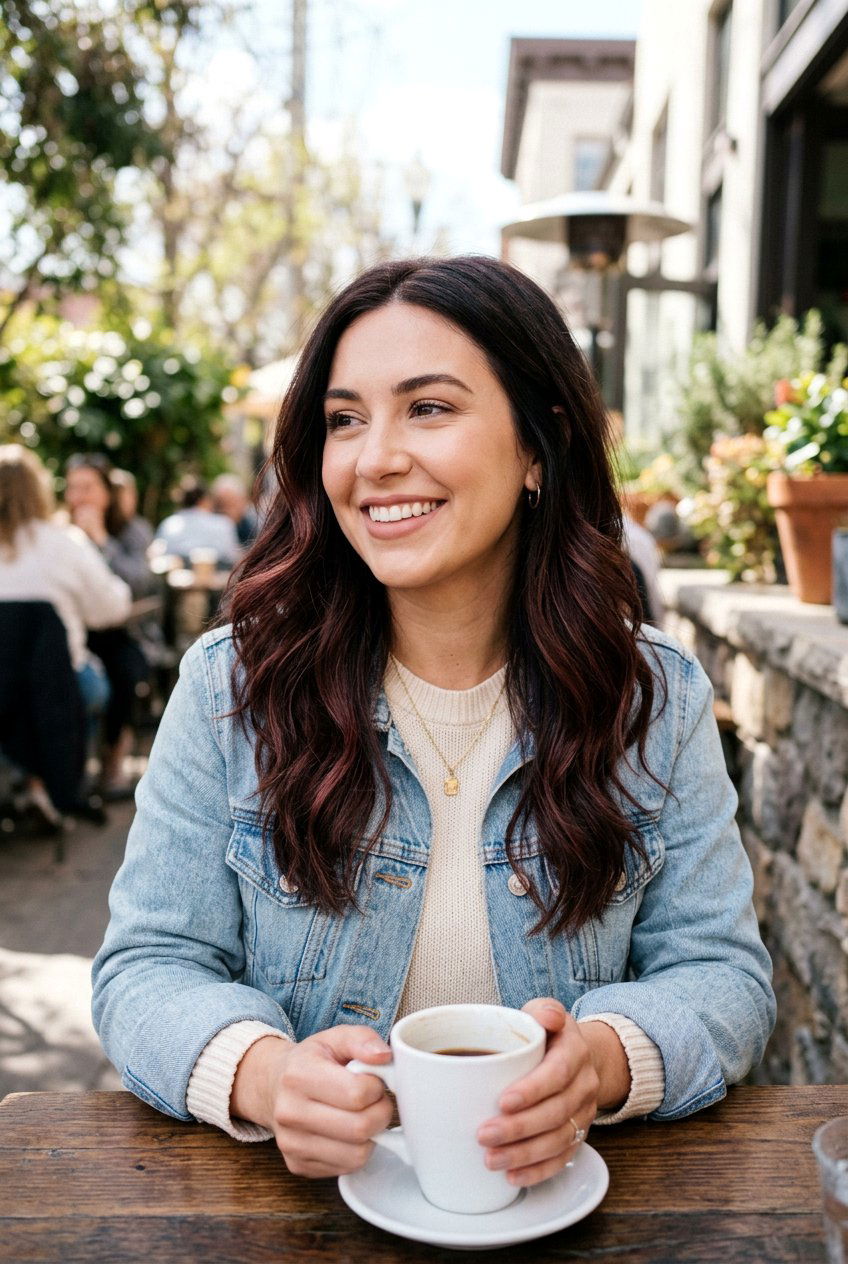
Subtle sangria balayage for brunettes is perfect if you want a low‑commitment shift that reads more like a tinted glow than a major color overhaul. Instead of dramatic streaks, the stylist paints very fine, feathered pieces just a shade or two lighter than your base, then tones them with soft maroon or red‑brown hues that melt seamlessly into the natural color. The result is a brunette that looks richer, shinier, and more dimensional, with red wine reflections that really show in the sun but stay elegant indoors. Because the balayage is so diffused, maintenance is minimal: you can often go several months between appointments, topping up only when the red tones soften or you crave more intensity. This option works well for professional settings or anyone nervous about bold red hair, since it keeps the overall identity brunette while borrowing the best of the sangria trend. Soft waves or blowouts that curve away from the face will emphasize the gentle color shifts without looking overdone.
5. Sangria Balayage On Curly Hair
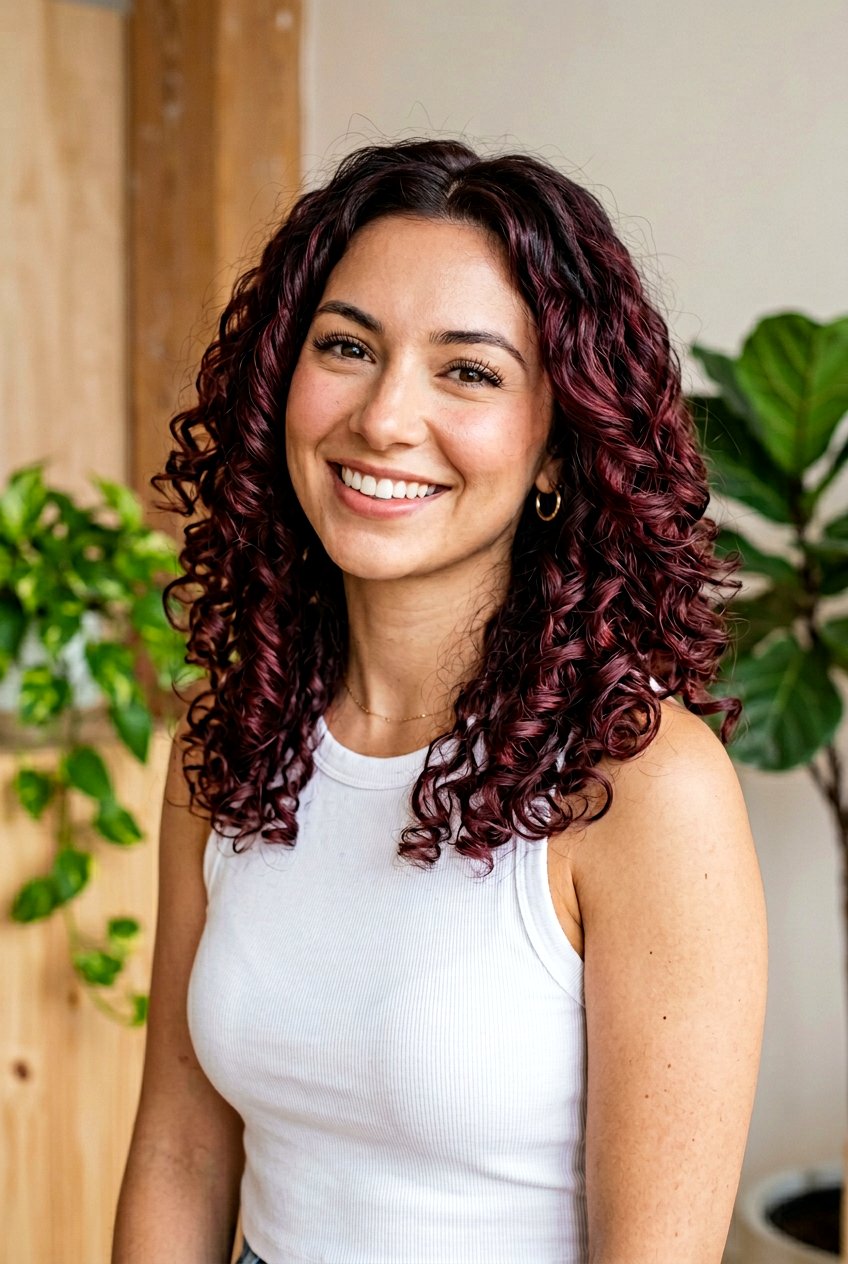
Sangria balayage on curly hair turns every curl into a little ribbon of color, which makes the wine‑tone trend especially striking on coils and ringlets. Colorists often keep the root natural and paint balayage onto the outer layer of curls and mid‑lengths, avoiding the scalp area so the curls keep their shape and health. Red‑purple shades like magenta, berry, and aubergine are blended together for a multi‑dimensional effect that adds depth to the curls rather than flattening them. When the hair moves, you see flashes of burgundy and plum against the darker base, which enhances the overall curl pattern and makes the style look more defined. To protect curl integrity, stylists usually recommend bond‑building treatments and sulfate‑free, hydrating products, since curly hair can be naturally drier and more vulnerable to color services. Air‑drying with a curl cream or diffusing on low heat helps maintain bounce while showcasing the sangria ribbons from every angle.
6. Sangria Balayage With Face Framing Highlights
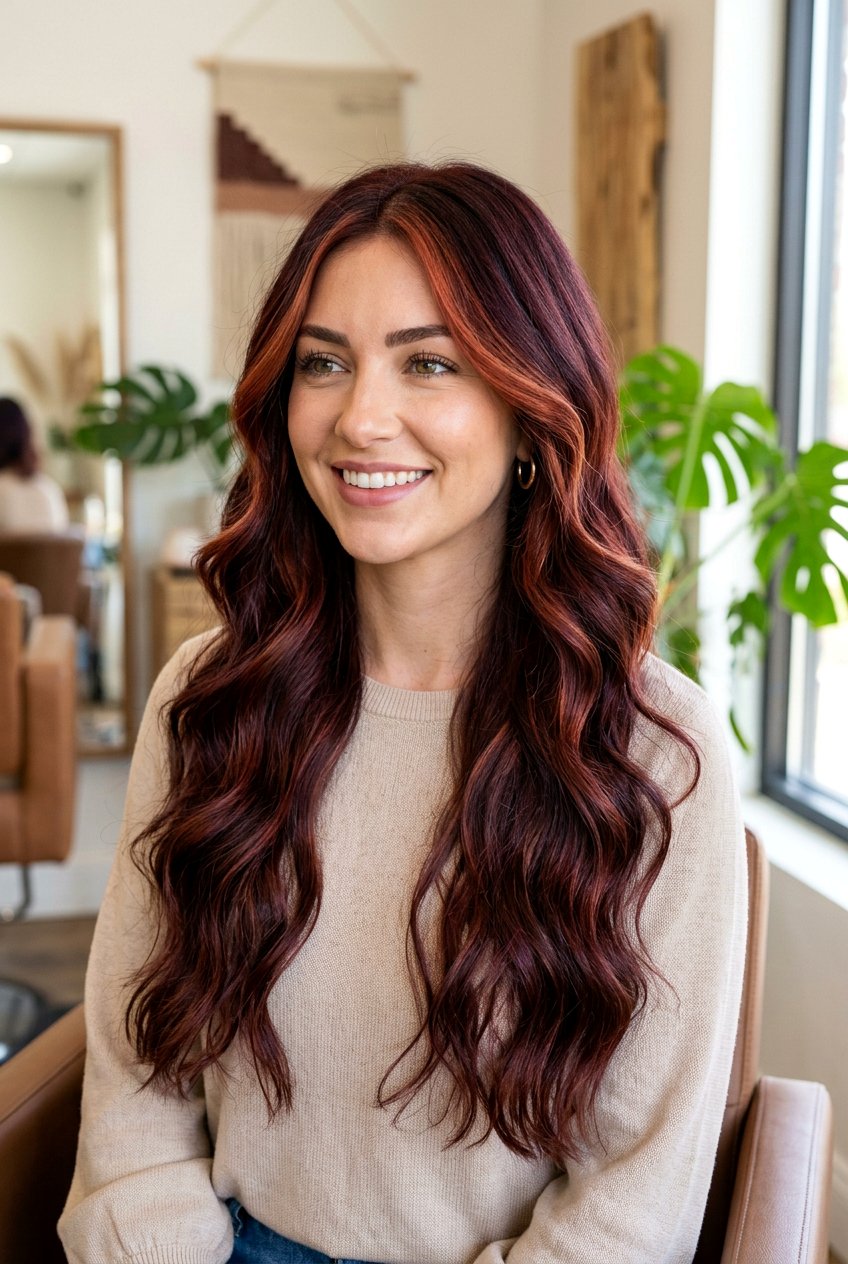
Sangria balayage with face framing highlights focuses the boldest color around the front pieces to brighten your complexion and draw attention to your features. The rest of the hair gets softer, more scattered balayage, while the front sections are lifted higher and saturated with richer sangria, cherry, or burgundy tones. This creates a halo effect when you wear your hair down, and it also looks great pulled back, because those front ribbons still show even in simple ponytails or buns. People who like the money‑piece trend often gravitate to this look, but the sangria twist keeps it current and seasonless rather than tied to summer blonding alone. It flatters straight, wavy, and curly textures and can be adjusted in thickness depending on how bold you want the frame to be. A gloss every few weeks helps those front pieces stay vibrant, since they are more exposed to sun and heat styling than the rest of the hair.
7. Sangria Balayage On Long Layered Hair
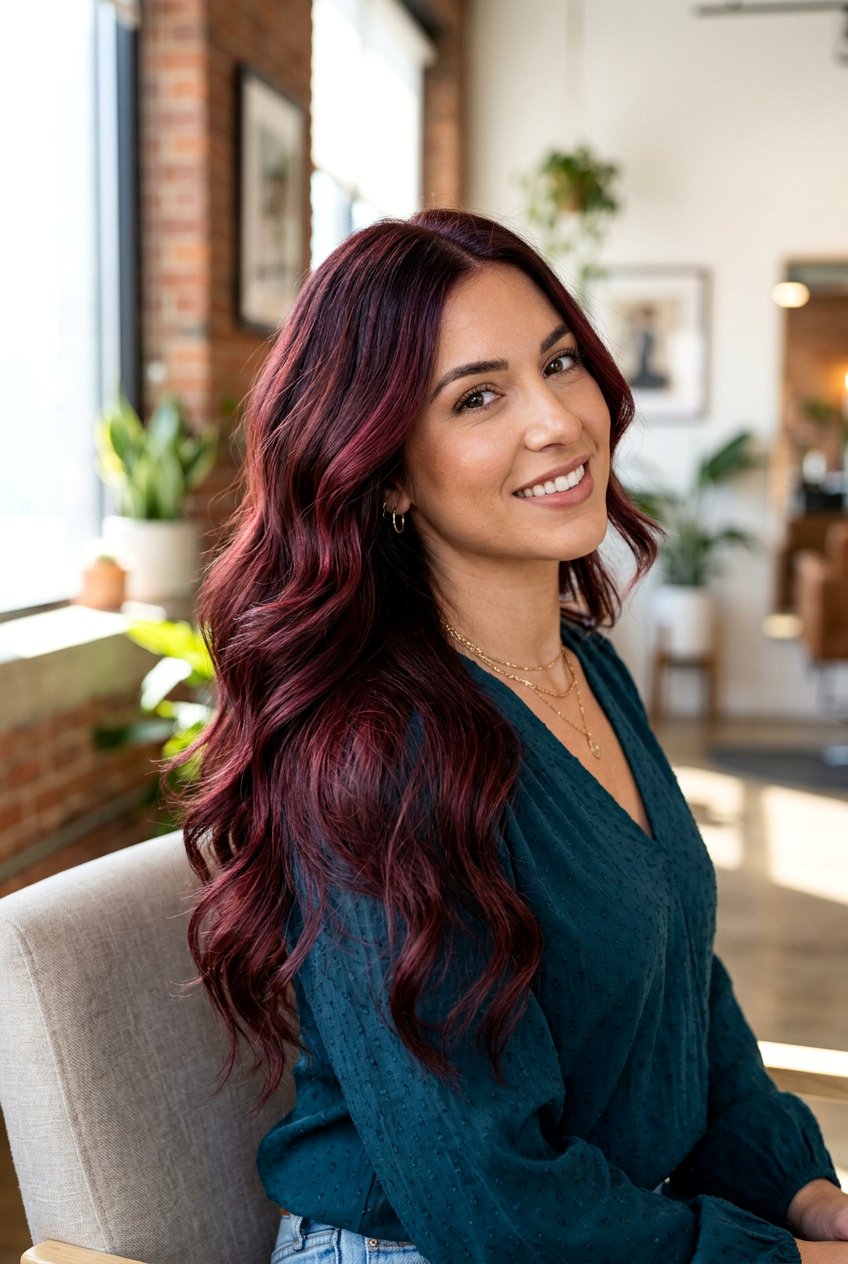
Sangria balayage on long layered hair gives you maximum movement and color play, because the layers create natural ledges for the wine tones to sit on. Stylists usually paint balayage in a V‑shape through the back and slightly heavier around the face and mid‑lengths, so the deeper burgundy shades frame the face while brighter berry tones pop on the outer layers. When long hair is curled or waved, those layers separate and show off the shift from darker roots to sangria mid‑lengths and slightly lighter ends, mimicking the way light passes through a glass of red wine. This look is ideal if you want hair that still feels long and versatile but has a noticeable color story that photographs beautifully. Because there is usually more lightening involved on long hair, a good at‑home routine with color‑safe shampoo, conditioner, and weekly masks is key to keeping the lengths glossy and free from dryness. Trims every 8–10 weeks will keep the ends from looking frayed, which helps the balayage appear more expensive and polished.
8. Sangria Balayage With Shadow Root
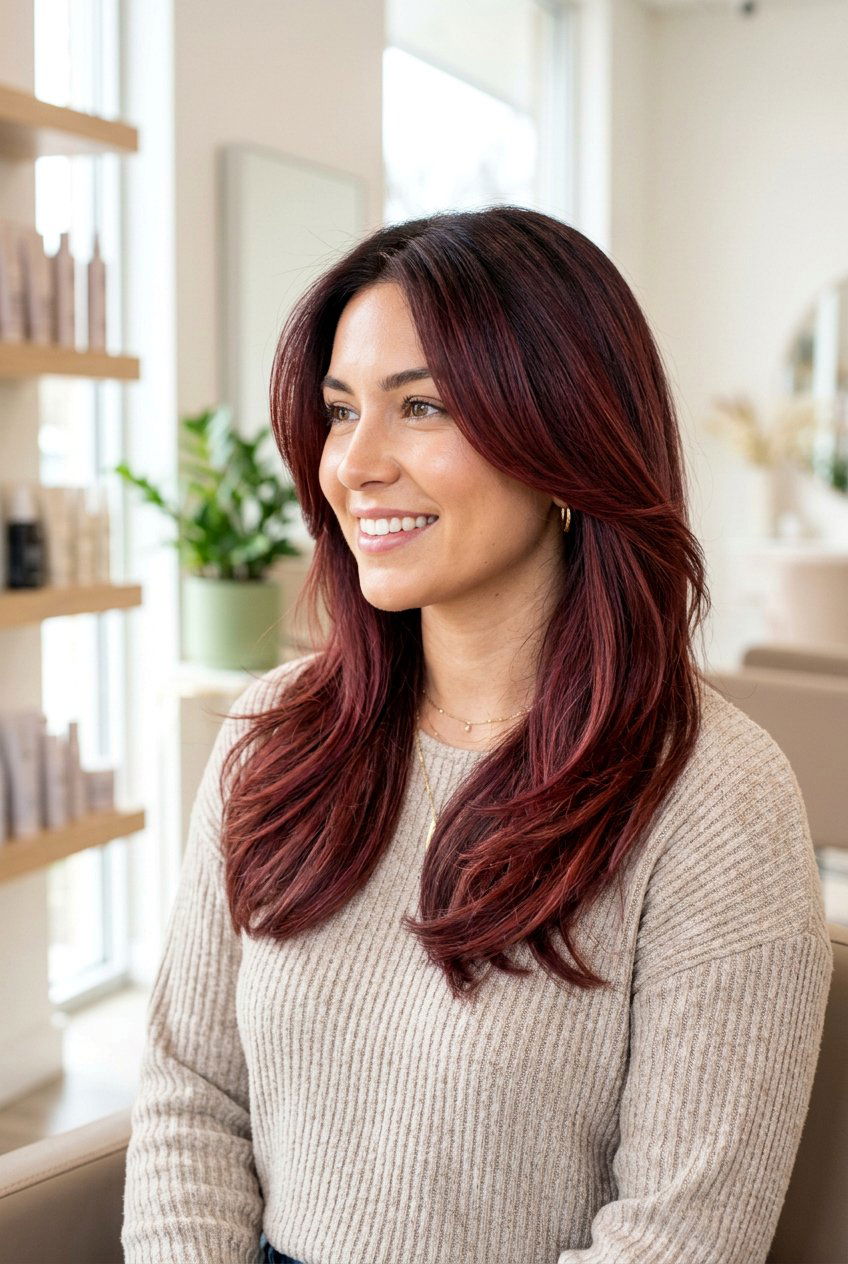
Pairing sangria balayage with a shadow root gives the color a cool, lived‑in finish and dramatically improves grow‑out. The stylist deepens or slightly adjusts the natural root color a shade or two darker, then blends that shadow into mid‑lengths painted with wine‑inspired tones like merlot, plum, and cherry. This creates a soft melt from the scalp down, so there is no harsh line when your natural hair grows in, which is especially helpful with stronger red‑violet pigments. The shadow root also adds visual depth at the top of the head, making hair look thicker and more dimensional while keeping the sangria tones focused where they reflect the most light. It works on straight, wavy, and curly textures, and you can keep the overall vibe subtle or dramatic depending on how far down the balayage begins. Maintenance often consists of refreshing the root shadow and ends gloss every couple of months, rather than frequent full‑head color services.
9. Sangria Balayage On Wavy Hair
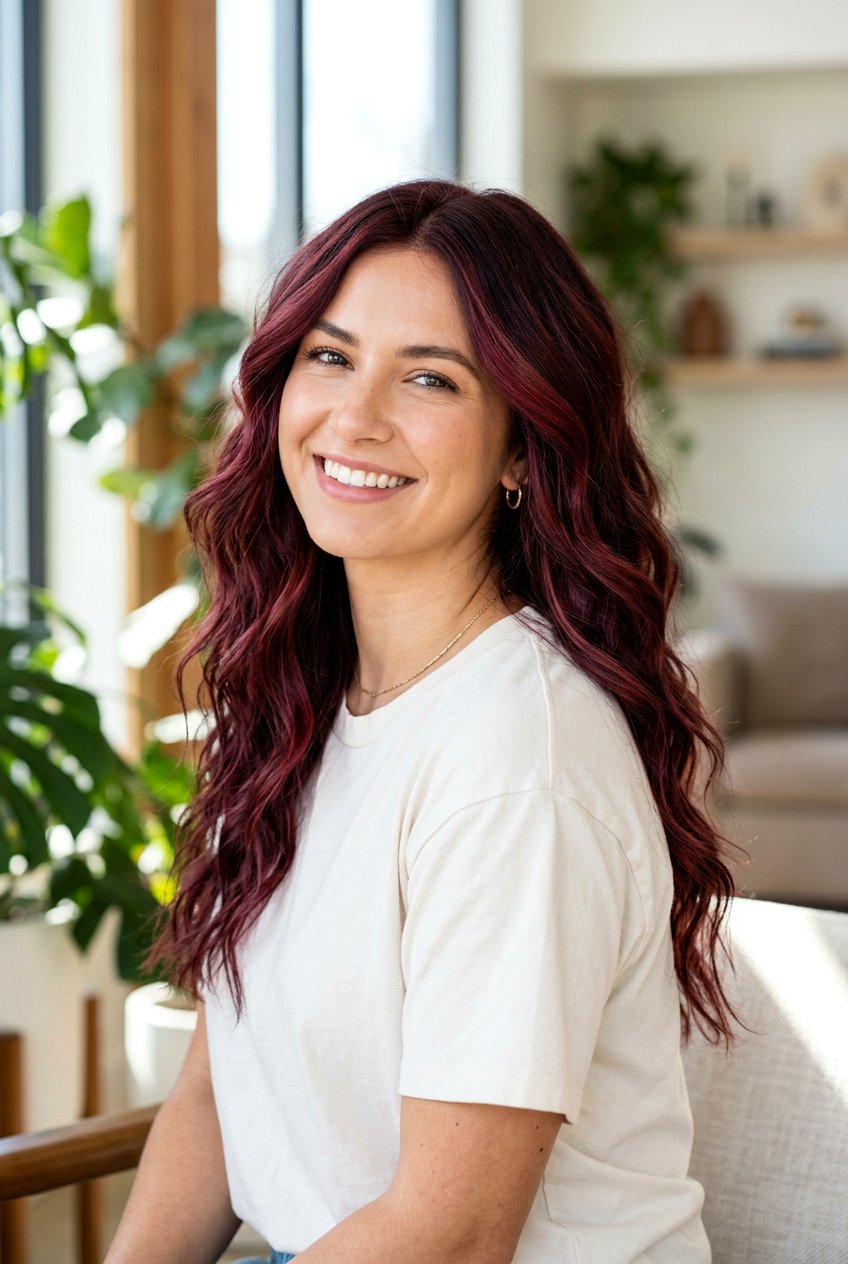
Sangria balayage on wavy hair feels very beach‑meets‑autumn, combining relaxed texture with rich, cozy color that still works year‑round. The freehand painting works naturally with waves, because the colorist can follow the way your hair bends and place sangria pieces where they will pop most when styled. Often, the lighter, more vivid tones are painted on the outermost waves and around the face, while deeper burgundy shadows sit underneath to add depth. When you curl or use a wand for loose bends, those placements reveal themselves as streaks and ribbons that move with every toss of your hair. This look is great if you love undone, tousled finishes, since perfect curls are not required for the color to shine. A lightweight mousse or texture spray that does not strip color will help enhance the waves while respecting the integrity of the red‑violet pigment.
10. Sangria Balayage On Straight Hair
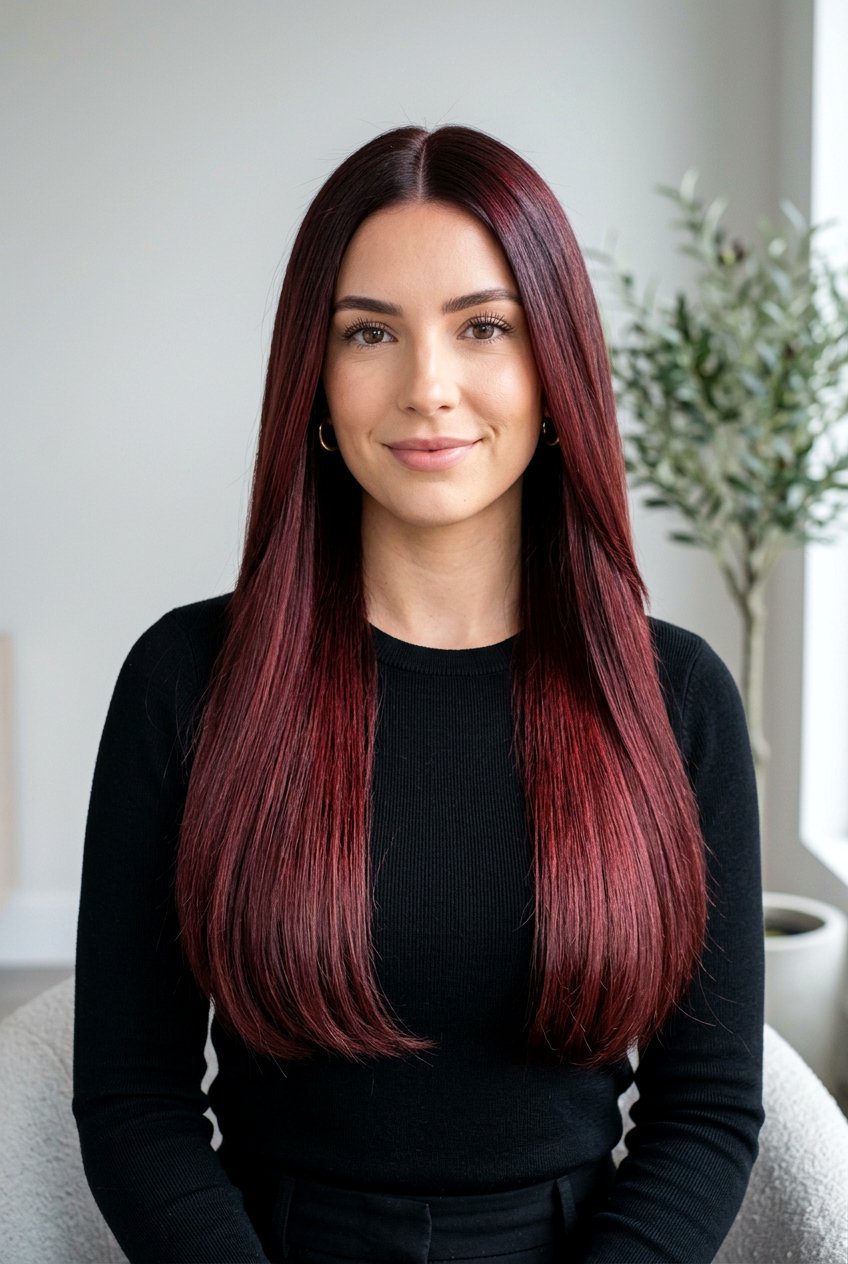
On straight hair, sangria balayage looks sleek and modern, letting the color story speak for itself without relying on curls. Because there is less texture to hide any unevenness, the balayage placement must be very smooth and blended, with soft transitions from root to mid‑lengths and ends. Stylists often paint vertical slices and diagonal sections to create a gentle, elongated gradient of red wine tones that lengthens the appearance of the hair. When the hair is blow‑dried straight or flat‑ironed, you can see every nuance of the burgundy, plum, and cherry hints against the darker base, similar to a high‑gloss lacquer finish. This version is particularly striking on blunt cuts or chic, one‑length silhouettes, where the clean shape sets off the color. Using heat protectant is non‑negotiable with this style, because straightening tools can quickly dull red‑based pigments and cause dryness if you skip protection.
11. Dark Sangria Balayage On Medium Hair
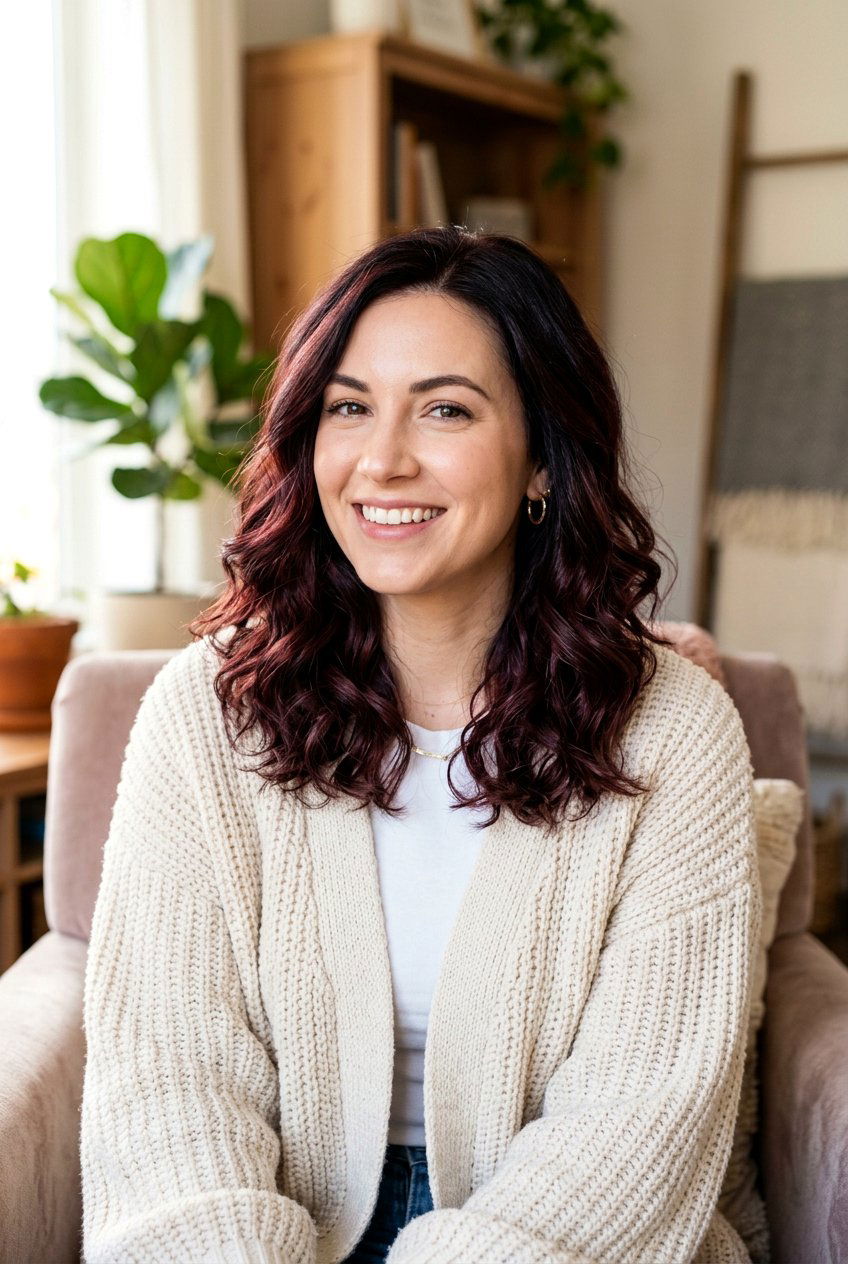
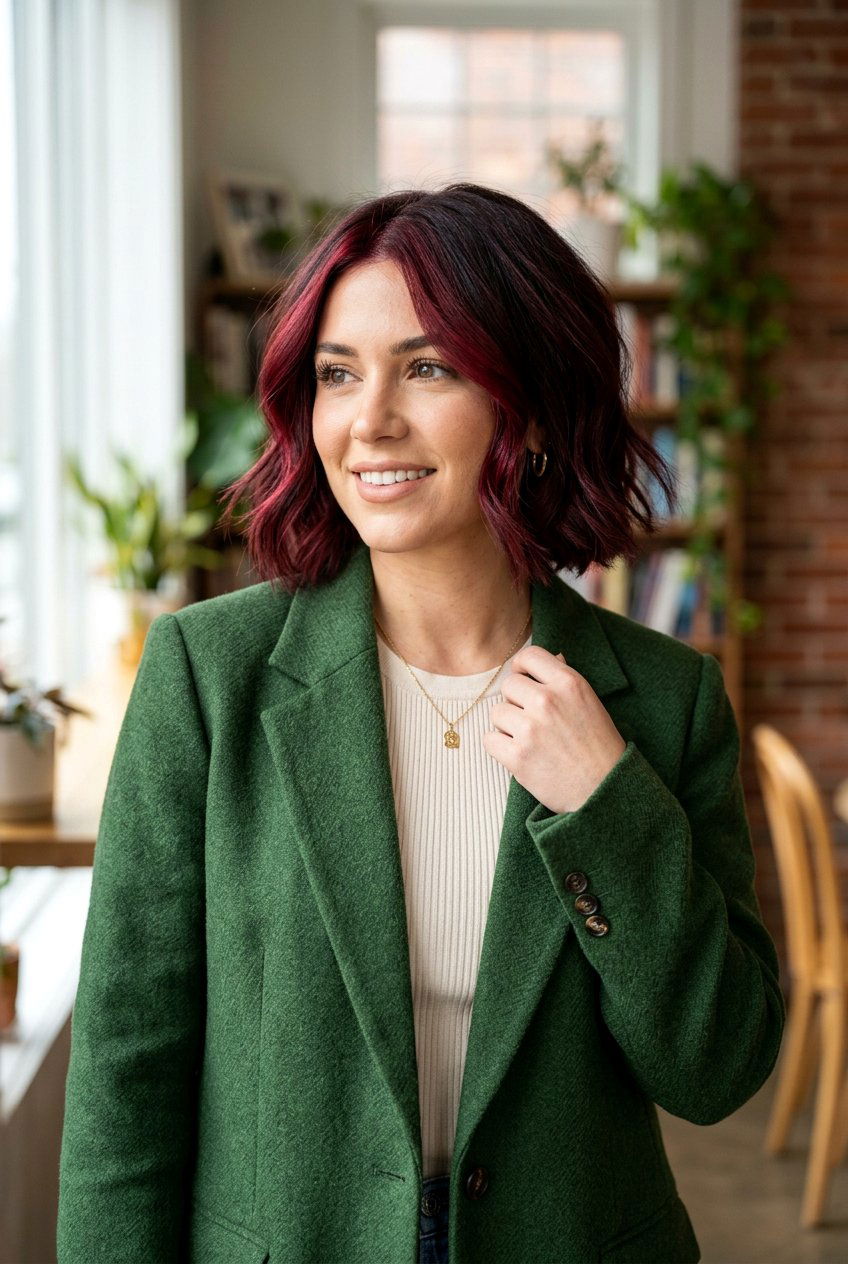
Dark sangria balayage on medium hair hits the sweet spot if you want color drama without ultra‑long maintenance or very short hair. The mid‑length gives enough canvas for visible balayage, while still being easy to style and care for day‑to‑day. Colorists often choose deeper maroon, mulled‑wine, and black cherry shades for this length, letting them melt from a brunette or soft black root into lush mid‑lengths and richer ends. This creates a chic, almost velvet effect that looks great in both straight and wavy finishes and flatters many skin tones. A simple blowout with the ends turned under, or loose S‑waves, will highlight the color without needing elaborate styling routines. Maintaining this look typically means glossing the mids and ends every couple of months and trimming regularly to keep the shoulder‑grazing length sharp and healthy‑looking.
12. Sangria Balayage With Money Piece
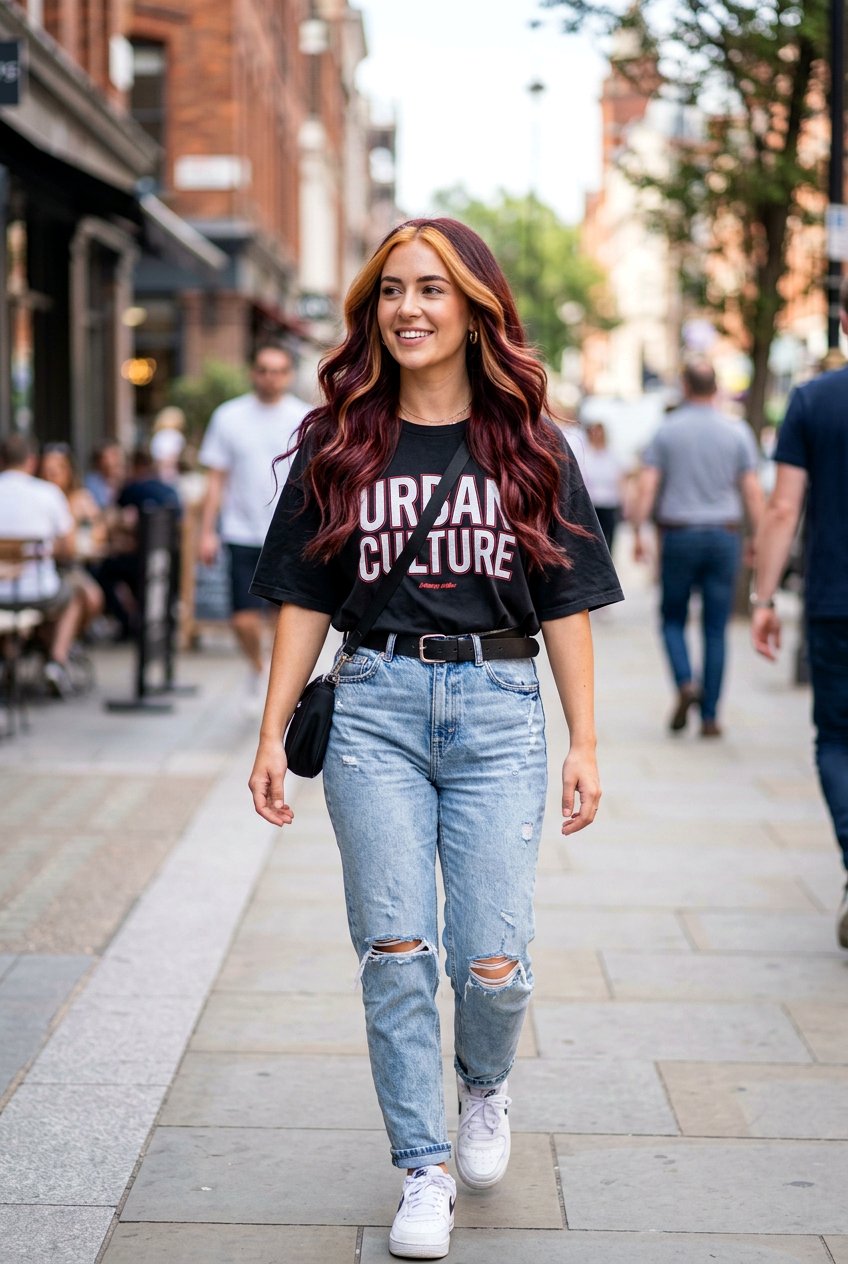
Sangria balayage with a money piece combines two popular trends, channeling color impact right at the front. The money piece is a thicker, brighter face‑framing section, usually lifted higher and toned with a more intense sangria or cherry cola hue than the rest of the balayage. The remaining hair gets softer wine‑tone ribbons, so the whole look stays cohesive instead of feeling like just two bright streaks. This placement flatters most face shapes because it highlights cheekbones and eyes, acting almost like built‑in contour and highlighter. It looks especially striking when you tuck one side behind the ear or wear a half‑up style, which showcases the bold front pieces against the darker base. Since the money piece is the most exposed section, using UV protection sprays and nourishing masks is crucial to prevent fading and dryness.
13. Sangria Balayage On Short Hair
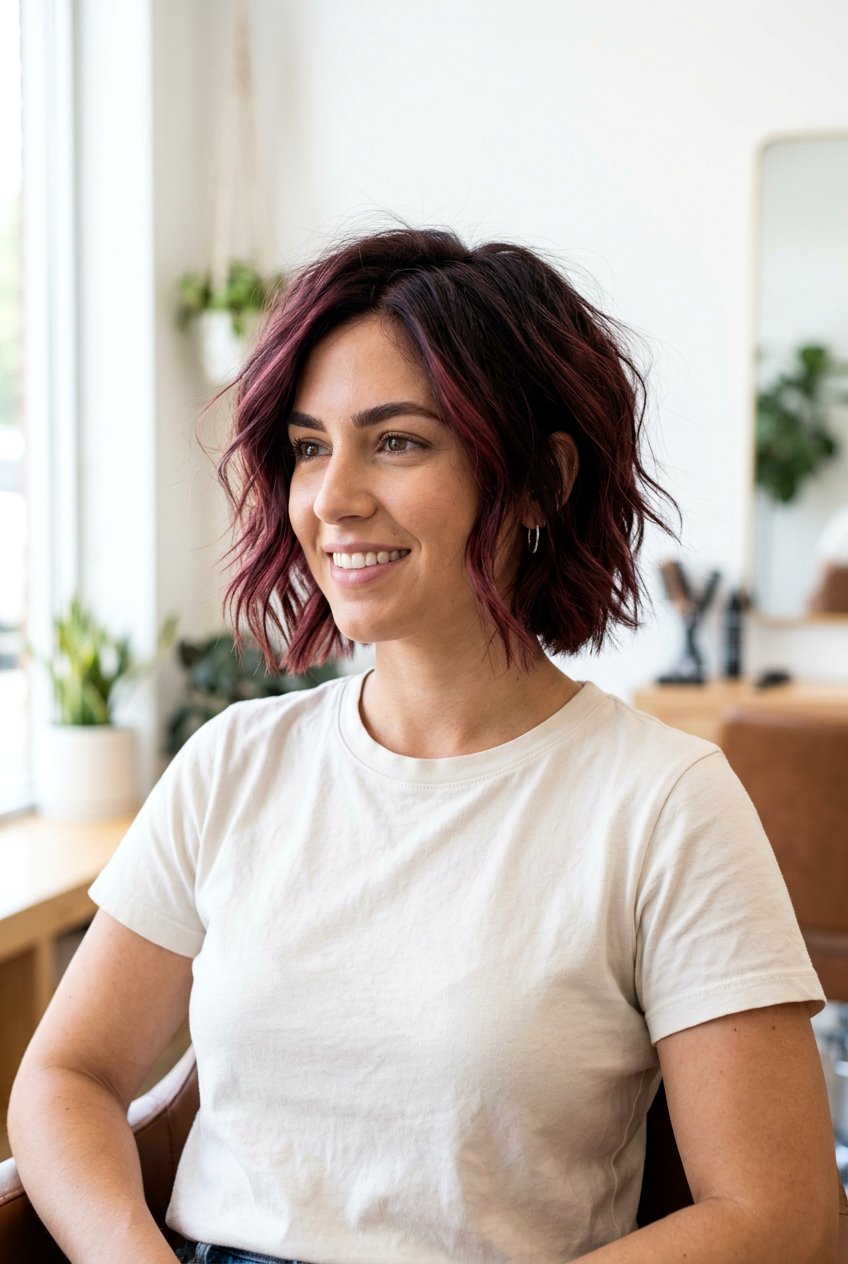
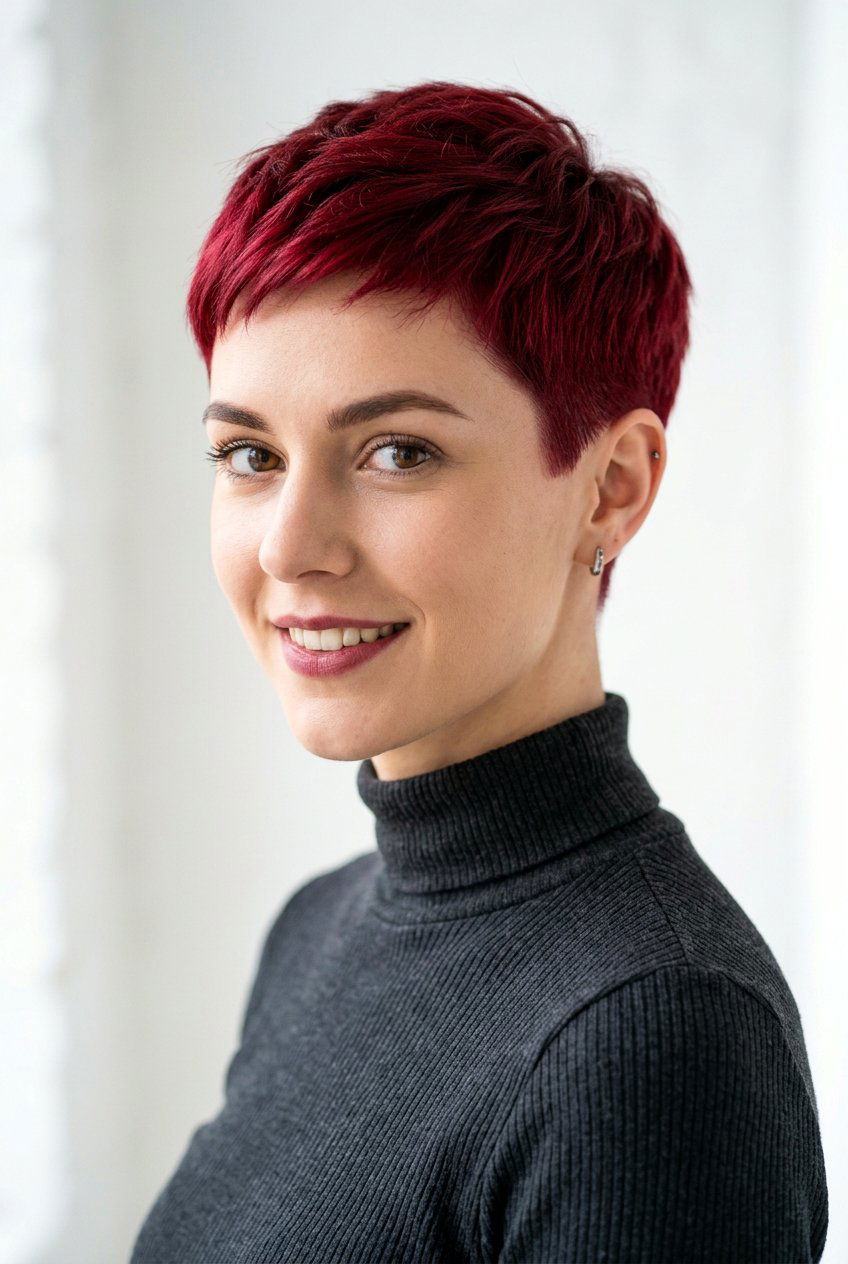
Sangria balayage on short hair proves you do not need long lengths to enjoy dimensional, wine‑inspired color. On bobs, shags, or pixie‑like crops with longer tops, stylists strategically place brighter sangria tones on the crown, bangs, and around the face while keeping the nape and underlayers deeper. This creates movement and shape, making the cut appear more textured and intentional. Because there is less hair, the color reads quite bold, so most colorists lean into richer burgundy and berry shades rather than pastel interpretations. Short hair with sangria balayage looks great styled with tousled waves, a round‑brushed blowout, or piecey texture created with a lightweight cream or pomade that will not dull the color. Regular trims every 4–8 weeks are helpful to keep the cut crisp and prevent the balayage placement from drifting too far down as your hair grows.
14. Sangria Balayage With Plum Tones
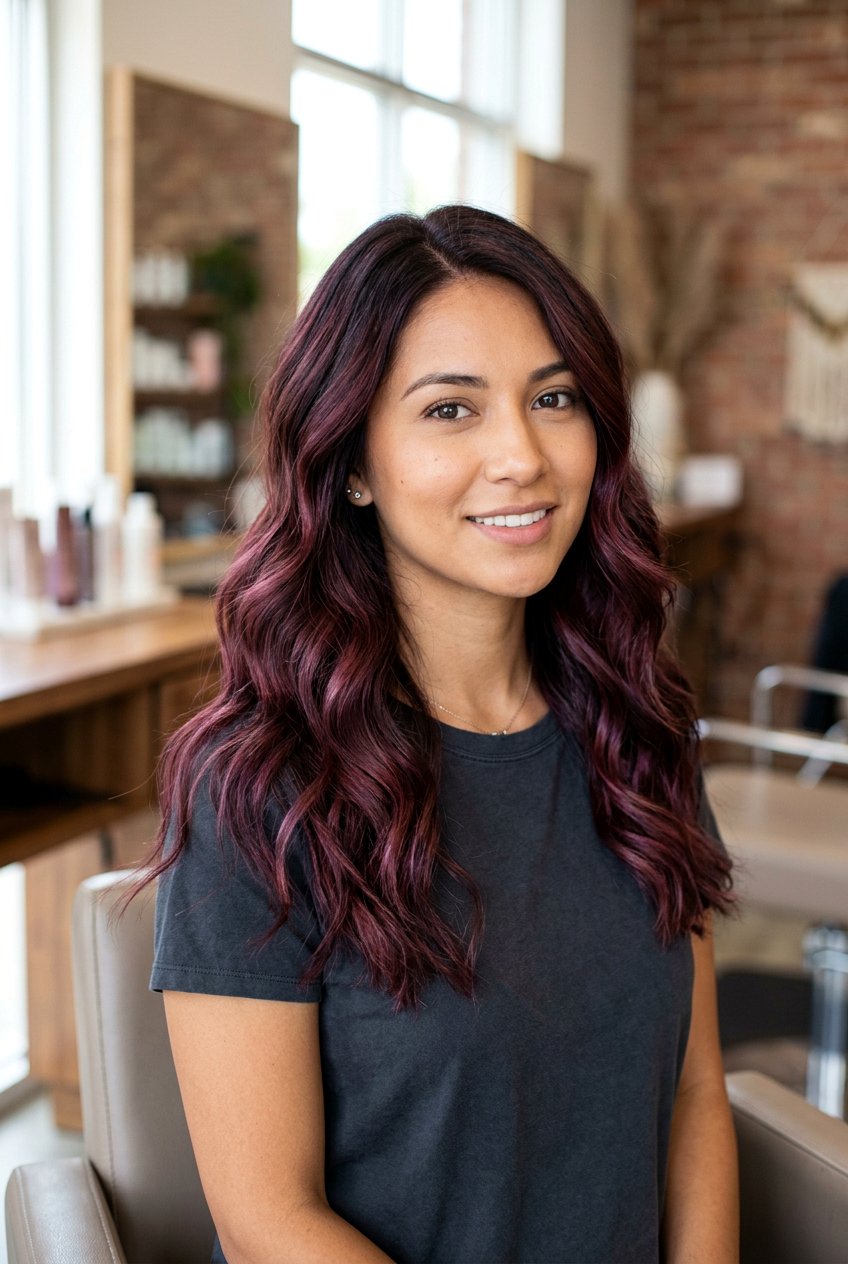
Adding plum tones to sangria balayage pushes the look toward the purple side of the red‑violet spectrum. Color formulas often blend sangria or wine shades with smoky violet or magenta tints, resulting in a deep berry hue that shifts slightly depending on the lighting. This mix is popular for people who want something more fashion‑forward and editorial without going full neon or pastel. The balayage technique keeps it wearable by softening the transitions and allowing natural shadow at the root. On wavy or curly hair, those plum ribbons help emphasize texture, while on straight hair they give a glossy, inky finish that looks almost like velvet. Because purple pigments can fade quickly, stylists usually recommend cool water, gentle washing, and occasional pigment‑boosting conditioners to keep the color saturated.
15. Sangria Balayage On Warm Brunette Base
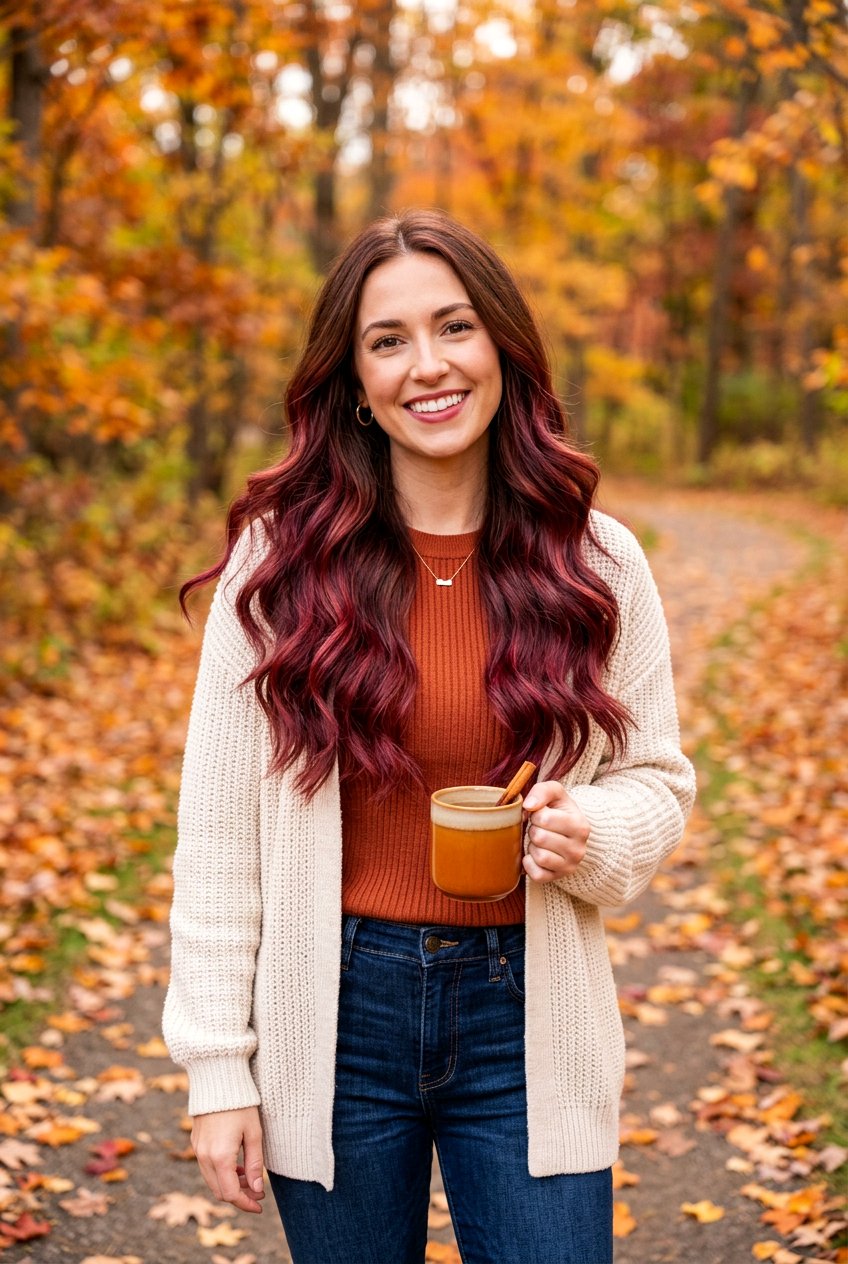
Sangria balayage on a warm brunette base creates a cohesive, glowing result because the underlying golden or caramel tones support the red wine hues. Instead of fighting the warmth, the colorist uses it, layering maroon, cherry cola, and burgundy balayage over the existing warmth to build a multi‑dimensional, cozy effect. This approach is especially useful when transitioning from previous caramel highlights or sun‑lightened hair, since it requires less correction and keeps the hair healthier. The final look feels rich and luxurious, with red and copper sparks that catch the light beautifully without clashing against your natural tone. It is a strong choice for fall and winter but works year‑round, particularly on medium and olive skin tones that already suit warmer palettes. A color‑safe, moisture‑rich routine will help keep both the brunette and sangria elements shiny and smooth.
16. Sangria Balayage With Burgundy Ends
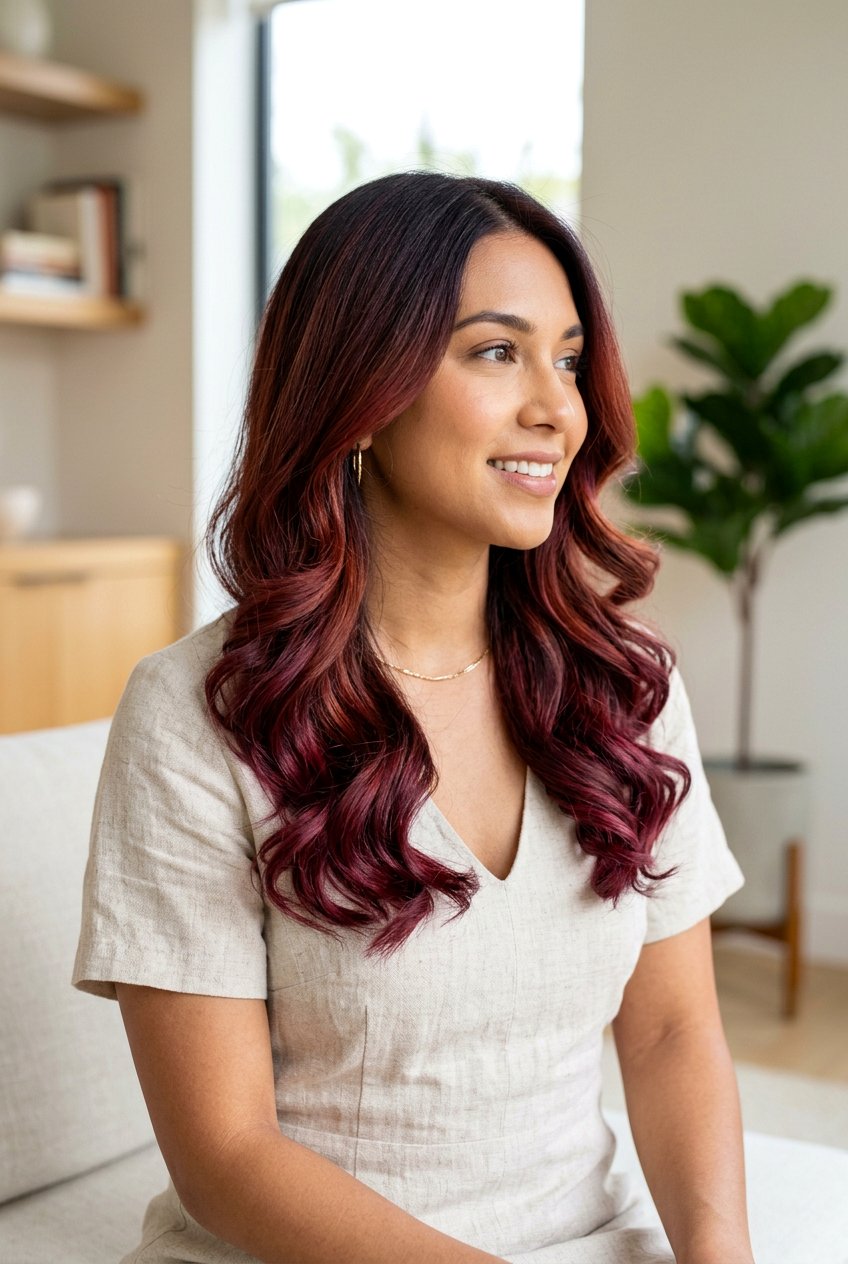
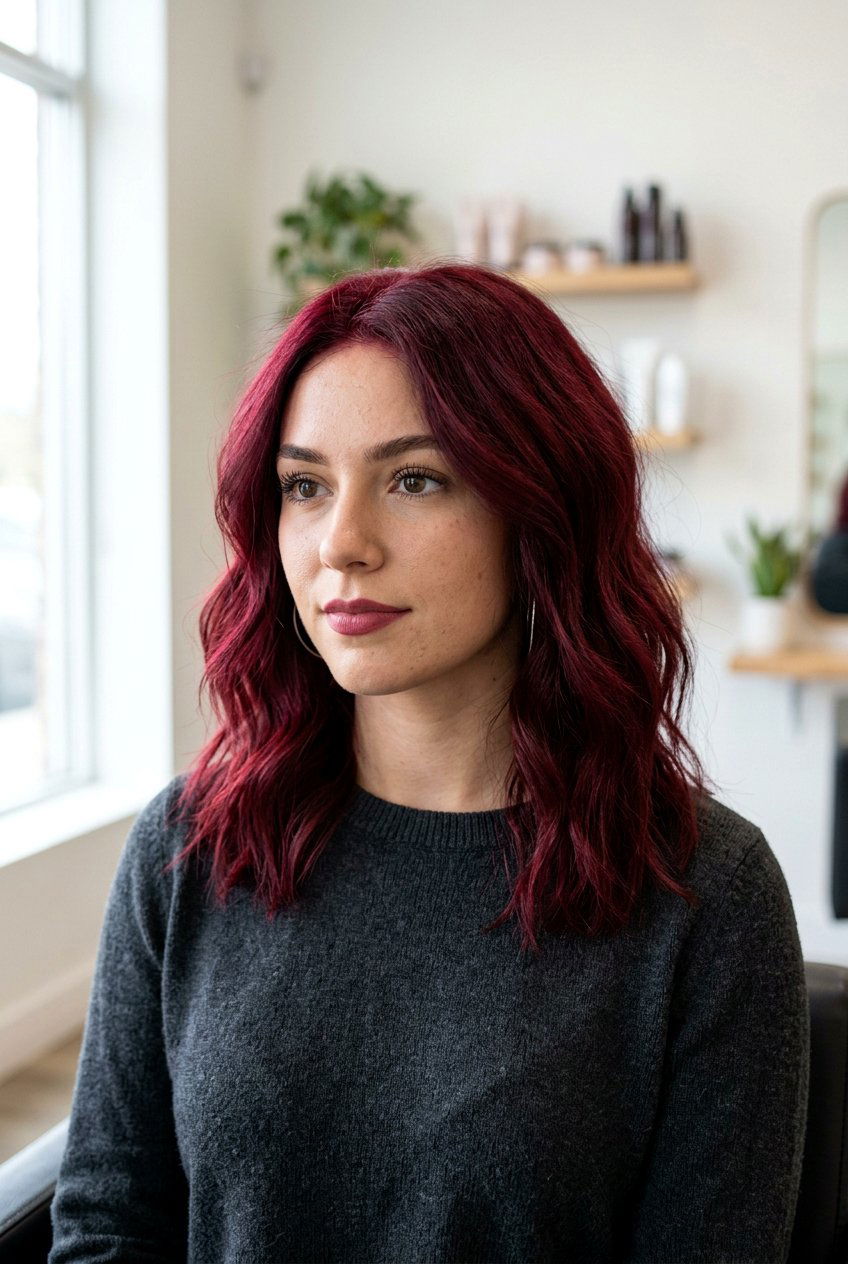
Sangria balayage with burgundy ends leans into a dip‑dyed look while still using balayage for softness and blend. The mid‑lengths are painted with softer sangria or red‑brown tones, while the lower third of the hair is lifted more and saturated with deeper burgundy. That creates a gradient from darker root to medium mid‑length to bold, wine‑dark ends that look dramatic but still refined. It is especially striking on long or medium hair, where there is enough length to show the full transition. Styling the ends with a slight bend or inward flip keeps the look polished and helps the darkest color catch the light. Since the ends are the most processed, regular trims, masks, and leave‑in treatments are important to avoid roughness or breakage that could make the color look dull.
17. Sangria Balayage On Natural Hair Texture
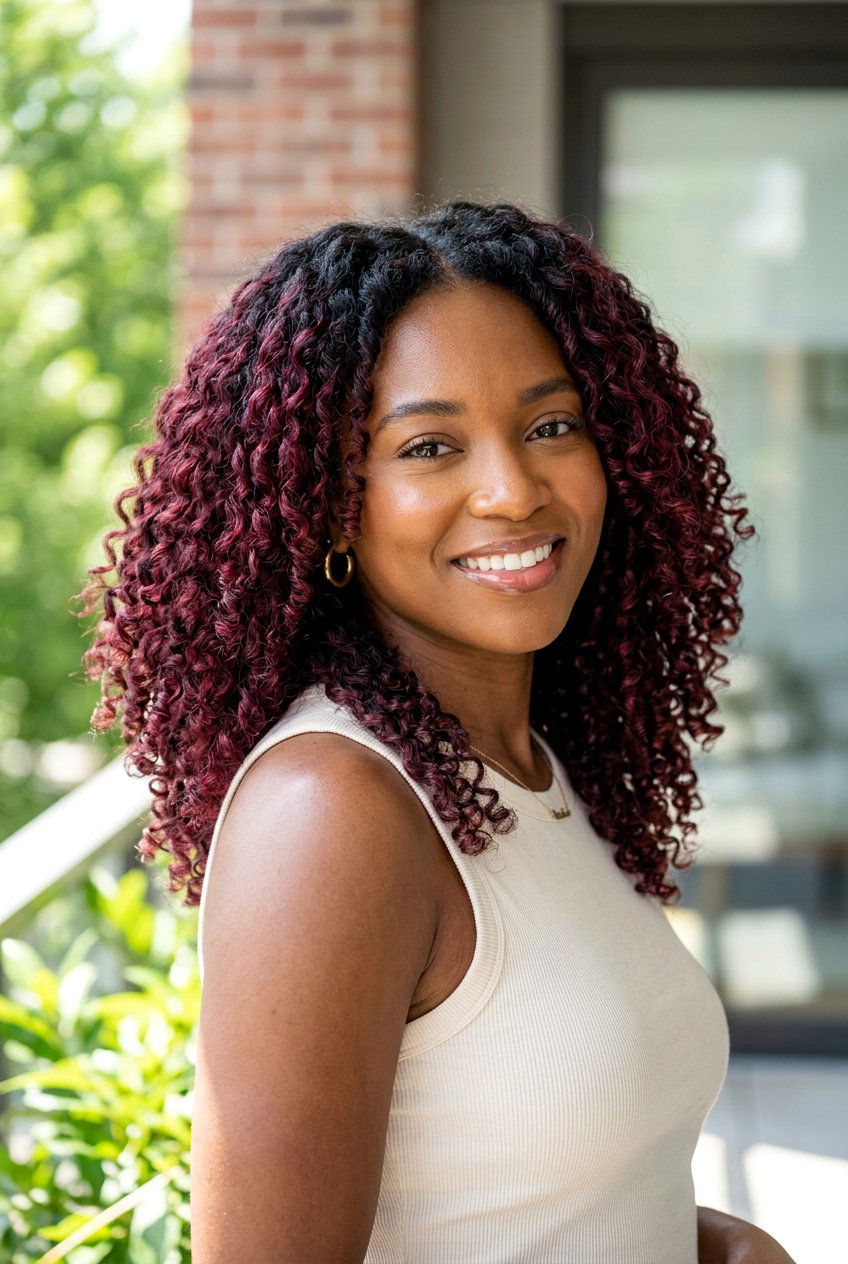
Sangria balayage on natural hair texture celebrates the curls, coils, and waves you already have while adding wine‑inspired dimension. Stylists tailor the placement to your unique pattern, painting balayage on select sections where the sun would naturally hit, like the crown, outer layers, and face‑framing curls. Red‑purple shades like plum, berry, and aubergine are chosen to flatter your skin tone and enhance your natural depth, rather than masking it. Because natural hair textures can be more fragile, many colorists use gentler lighteners, bond builders, and intensive conditioning before and after the service. The result is a multi‑dimensional, sangria‑kissed look that still feels authentically you, with coils that catch the light in hints of wine and berry. Maintaining this look means using sulfate‑free shampoos, rich conditioners, and avoiding excessive heat, which helps preserve both the curl pattern and vibrancy.
18. Sangria Balayage With Red Velvet Tones
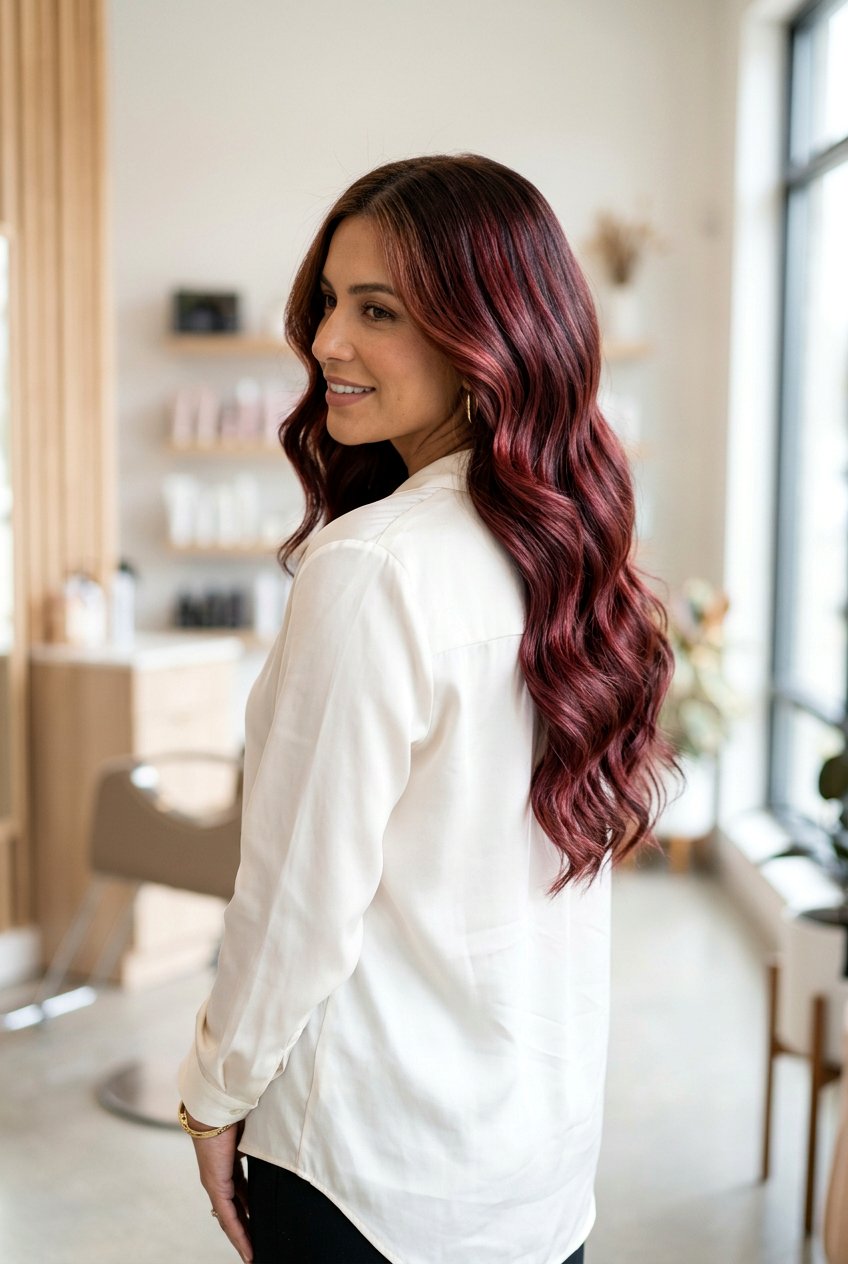
Sangria balayage with red velvet tones brings a slightly sweeter, more dessert‑inspired twist to wine hair colors. Instead of leaning heavily violet, the formulas here favor richer crimson, maroon, and red‑brown shades layered over a brunette base. The balayage is applied in soft sweeps through the mid‑lengths and ends, sometimes with a brighter pop around the face, so the overall effect is plush and dimensional rather than flat. Under indoor lighting, it often reads like a deep brunette with a red sheen, while in sunlight you see more of that saturated red velvet tone. This option flatters many skin tones and can be dialed up or down in intensity based on your comfort level. To keep the color looking rich, space out washes and incorporate shine‑boosting serums or oils that are safe for color‑treated hair.
19. Sangria Balayage On Fine Hair
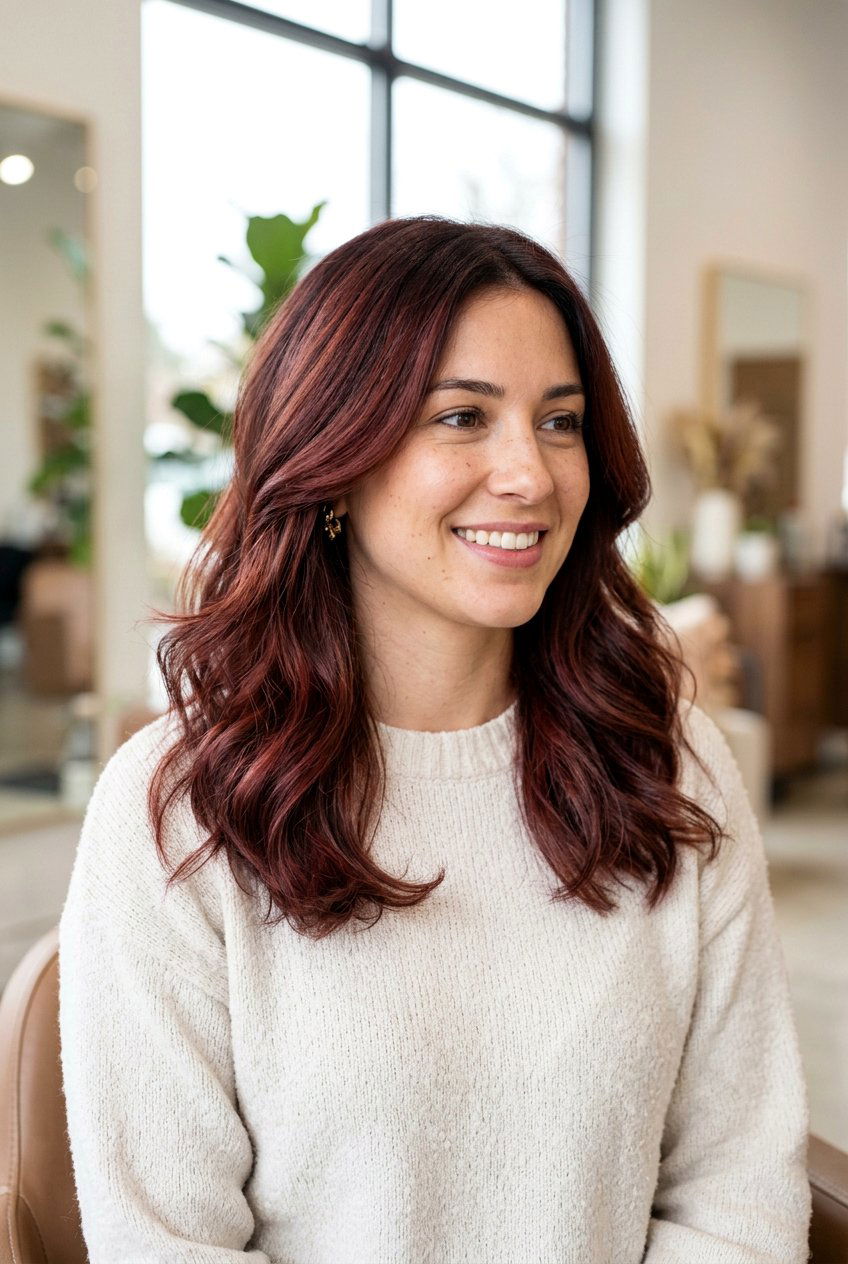
Sangria balayage on fine hair focuses on creating the illusion of thickness and body with smart color placement. Instead of heavy lightening, colorists usually choose delicate, strategically placed balayage pieces that add depth and contrast without over‑processing the strands. Darker shadows near the roots and underlayers paired with lighter sangria ribbons on the surface help fine hair look fuller and more dimensional. Keeping the base close to your natural shade also avoids harsh regrowth lines that could make finer hair look sparse at the scalp. A blunt or softly layered haircut paired with this color will boost the illusion of density even more. Lightweight volumizing products and heat protectant are key so you can style without weighing the hair down or fading the red‑violet tones.
20. Sangria Balayage Maintenance Tips
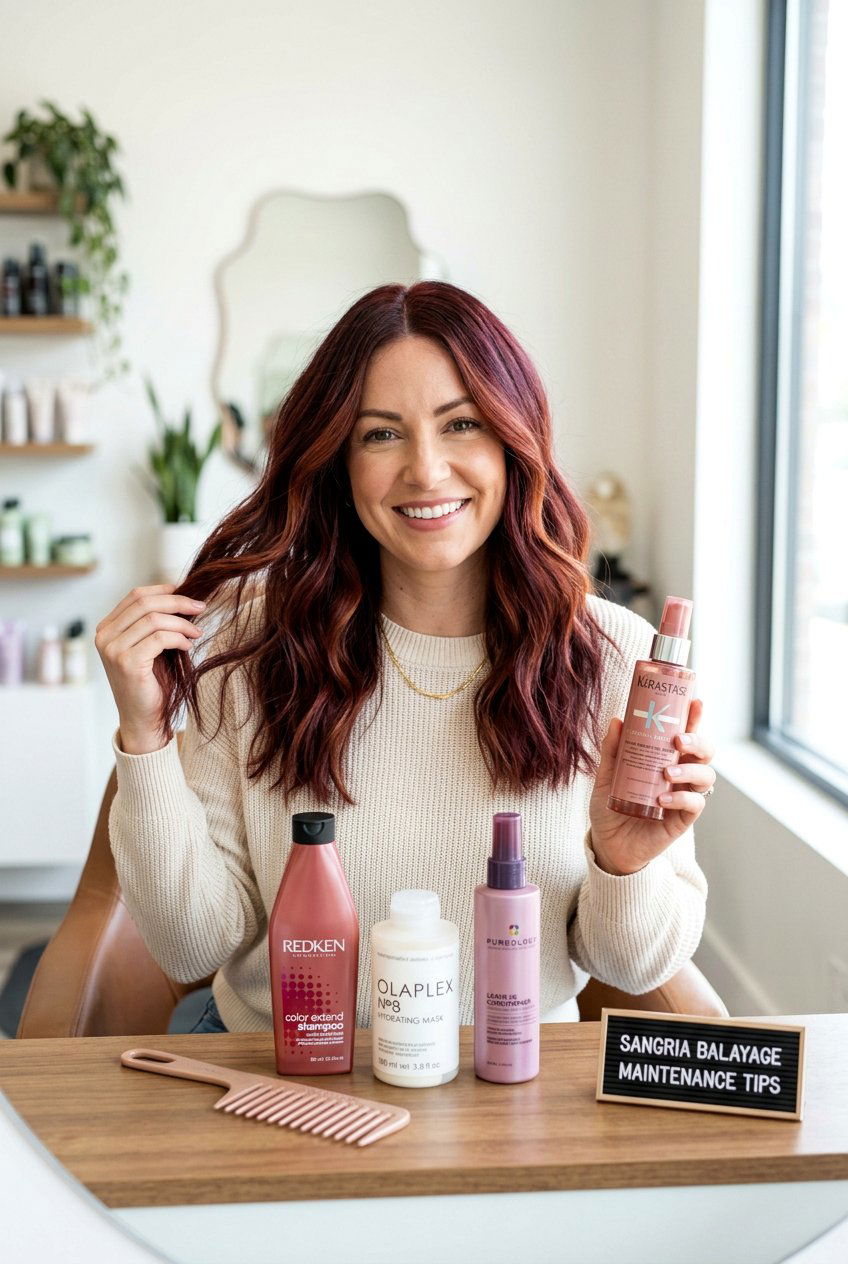
Keeping sangria balayage vibrant comes down to a few simple but important habits. First, wash less frequently and use sulfate‑free, color‑safe shampoos and conditioners, because harsh detergents strip red and purple pigments faster than other tones. Cool or lukewarm water will also help your wine shades last longer and maintain shine. Incorporate weekly hydrating masks or bond‑building treatments to repair any lightening damage and keep ends soft. Between salon visits, a tinted gloss or color‑depositing conditioner in a burgundy or berry tone can refresh the color and add back reflectiveness. Always use heat protectant before blow‑drying, curling, or straightening, since heat can fade and dull vivid pigments quickly. Finally, schedule touch‑ups or gloss appointments every 6–10 weeks depending on how bold your sangria is and how fast it fades on your hair type.
Conclusion:
Sangria balayage hair offers a rich, wine‑inspired spin on traditional balayage, blending burgundy, plum, and berry tones into darker bases for a dimensional finish. It works across lengths, from short crops to long layers, and on straight, wavy, curly, and natural textures, which makes it remarkably versatile. You can choose anything from subtle maroon glows on brunettes to high‑contrast violet‑red panels on black hair, tailoring the intensity to your lifestyle and comfort level. Strategic placements like face‑framing pieces, money pieces, and burgundy ends let you highlight your favorite features and create a personalized color story that still feels on‑trend. With the right at‑home care—color‑safe products, less frequent washing, regular masks, and heat protection—your sangria balayage can stay glossy, vibrant, and expensive‑looking between salon visits. Partnering with a skilled colorist who understands red‑purple formulas is the best way to achieve a customized shade that flatters your skin tone and keeps you excited about your hair every day.
You'll Like These Styles:


Leave a Reply