
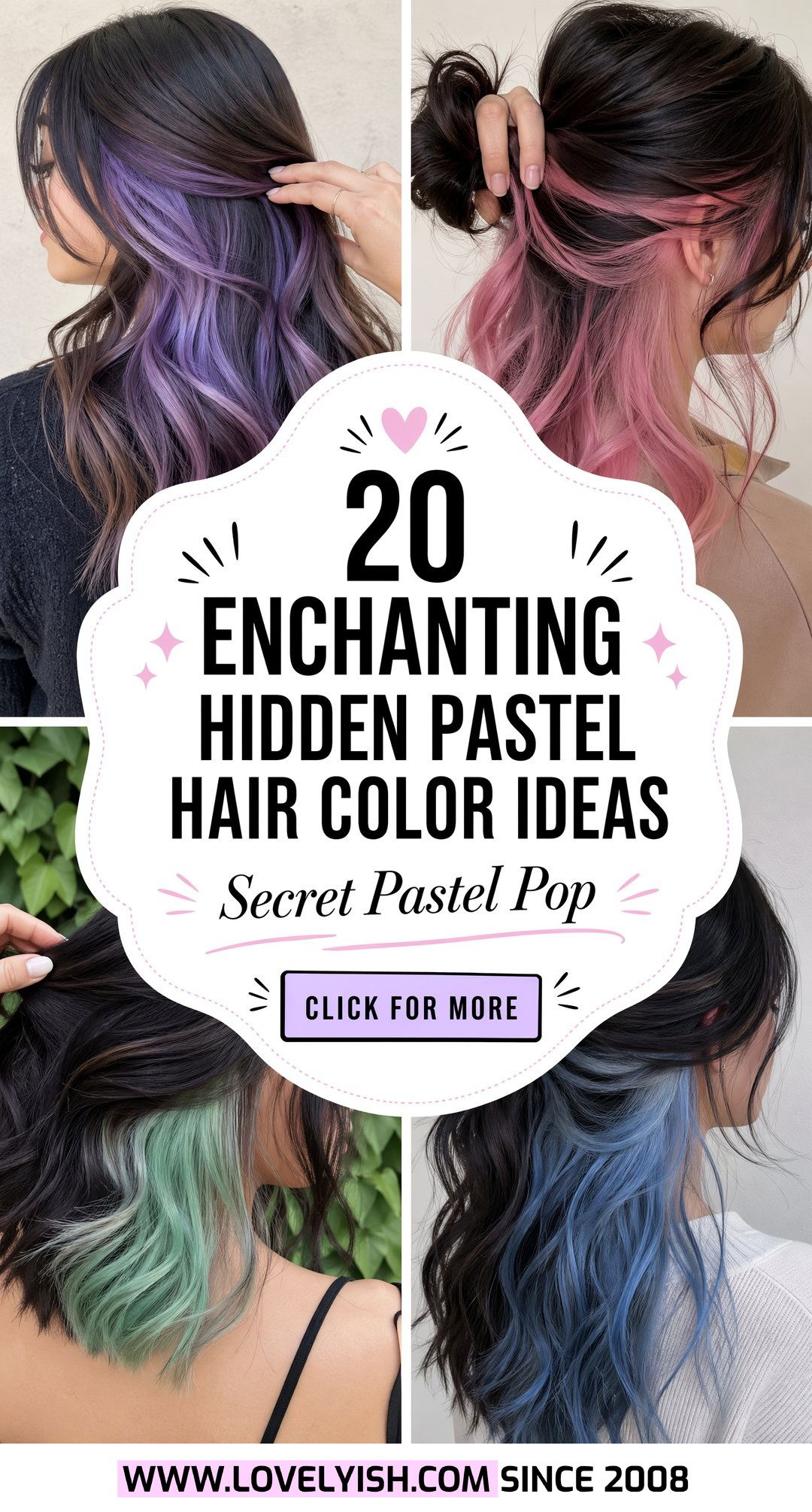
Soft, secret color can feel more exciting than loud hair that everyone sees right away. Hidden pastel hair color tucks dreamy shades under the surface, so you get a low-key, playful look that only shows when you move, flip, or style your hair a certain way. It fits the “gentle rebellion” trend, where people want fun color that still feels calm, wearable, and work-friendly. Think of soft pink, lavender, mint, or baby blue painted on the underlayers, peeking out from beneath brunette, blonde, or black hair. These pastels stay better protected from sun and daily damage because they sit underneath, so fading is often softer and less obvious. Whether you wear your hair up, down, braided, or curled, hidden pastels can transform even the simplest cut into something more personal and expressive.
1. Hidden Pastel Peekaboo Hair
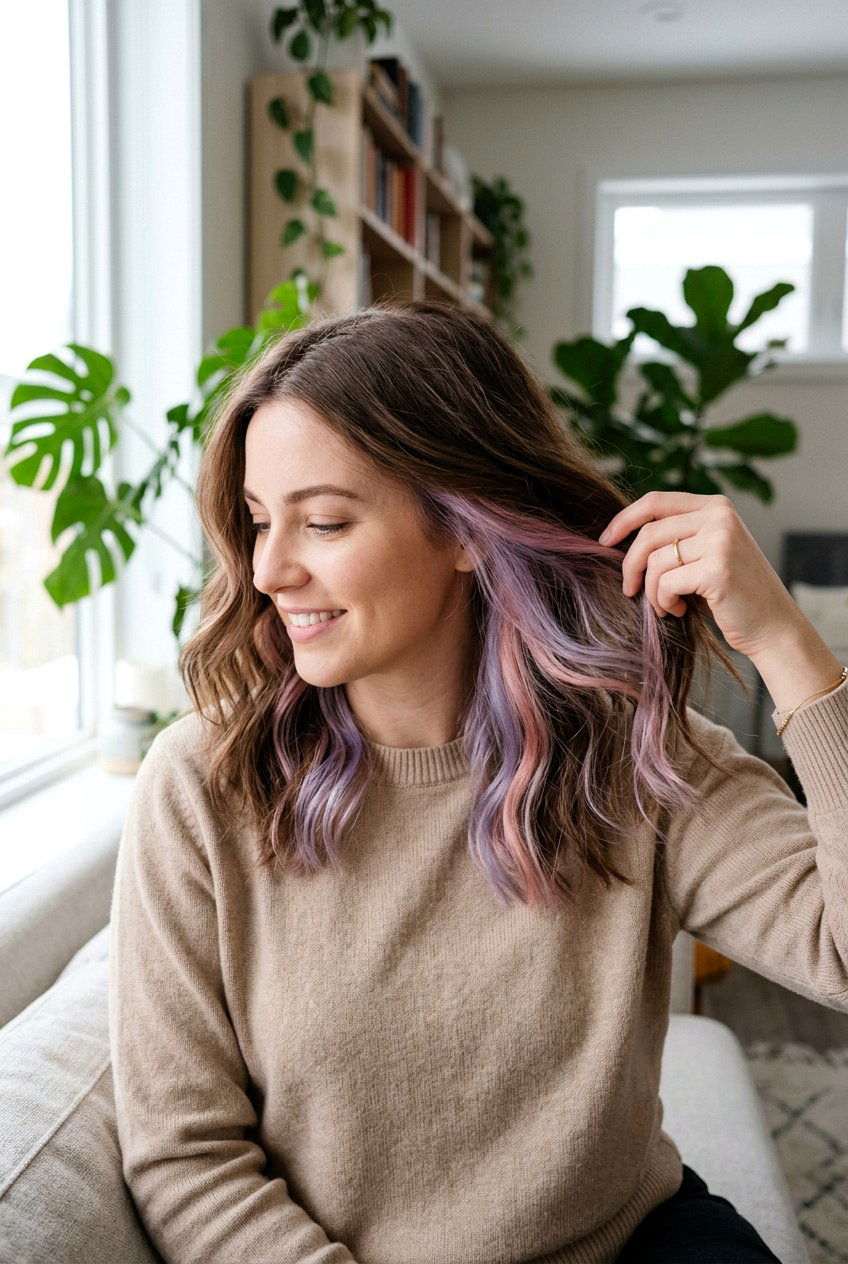
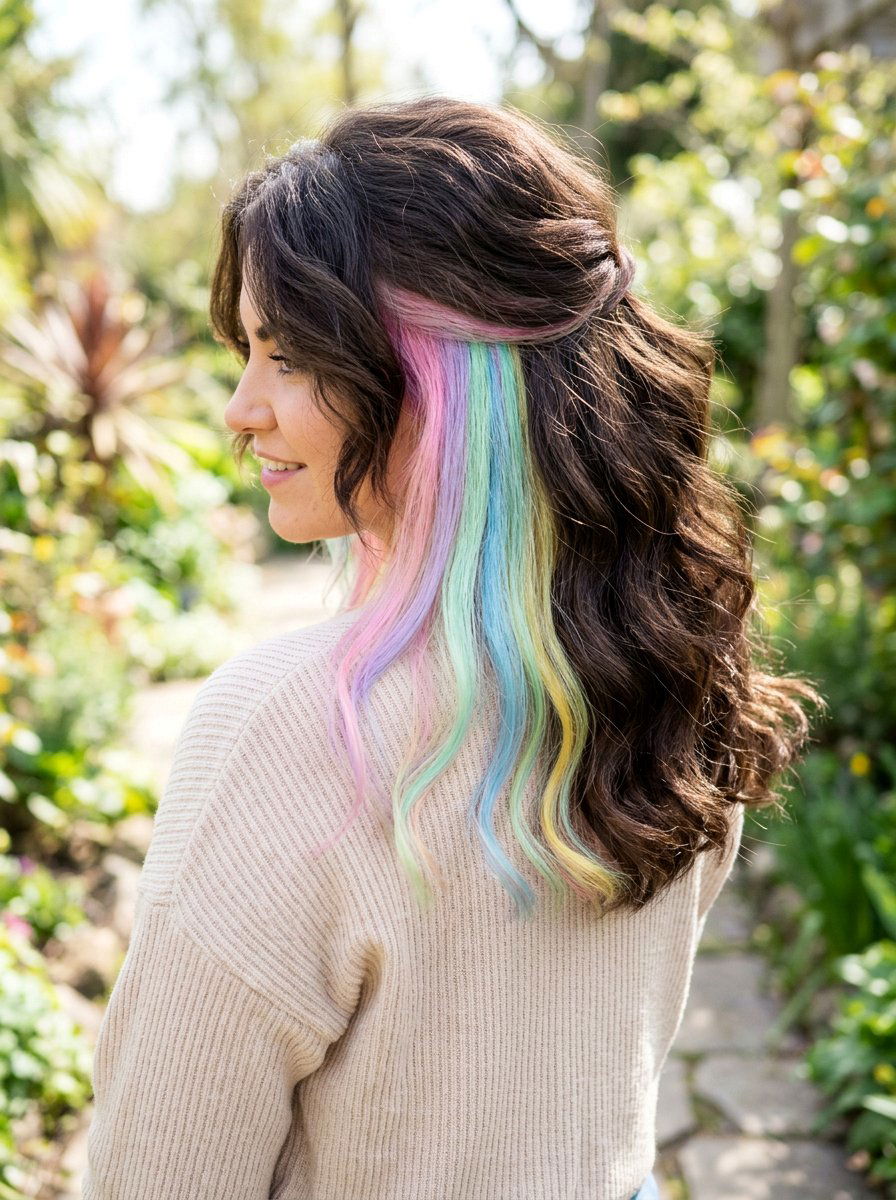
Picture smooth natural hair on top with a whisper of pastel color that appears only when you move or lift a section. Hidden pastel peekaboo hair means your colorist paints soft shades like lavender, blush pink, or periwinkle onto the underlayers, leaving the exterior hair your natural or chosen base color. When your hair is down, everything looks subtle and professional. Flip it into a half-up style or messy bun, and the color suddenly pops through in soft ribbons. This look works especially well for people who want creative color without changing their whole head or worrying about strict dress codes. It also helps stretching salon visits since regrowth is less obvious underneath. Ask for ultra-fine panels so the pastels melt softly into your base when they peek out.
2. Hidden Pastel Rainbow Underlayer
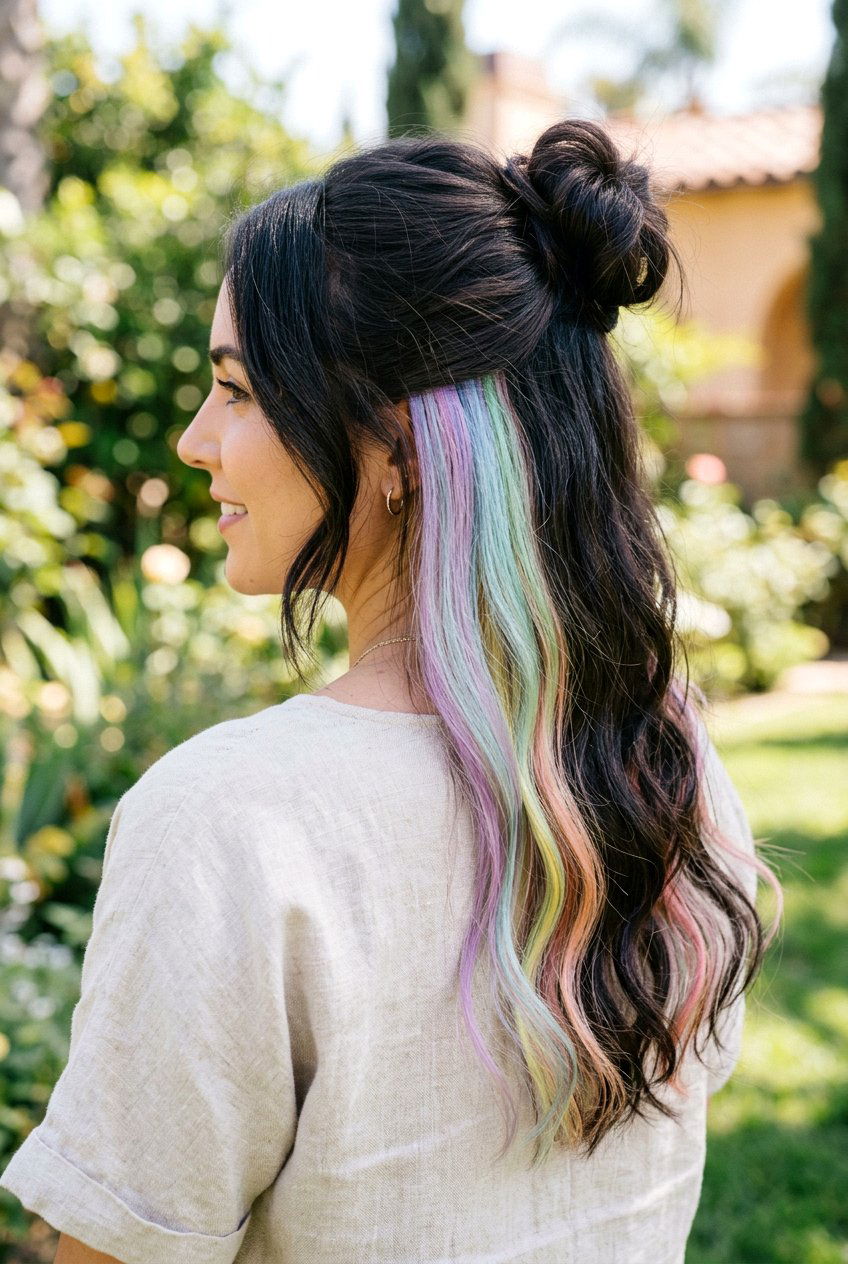
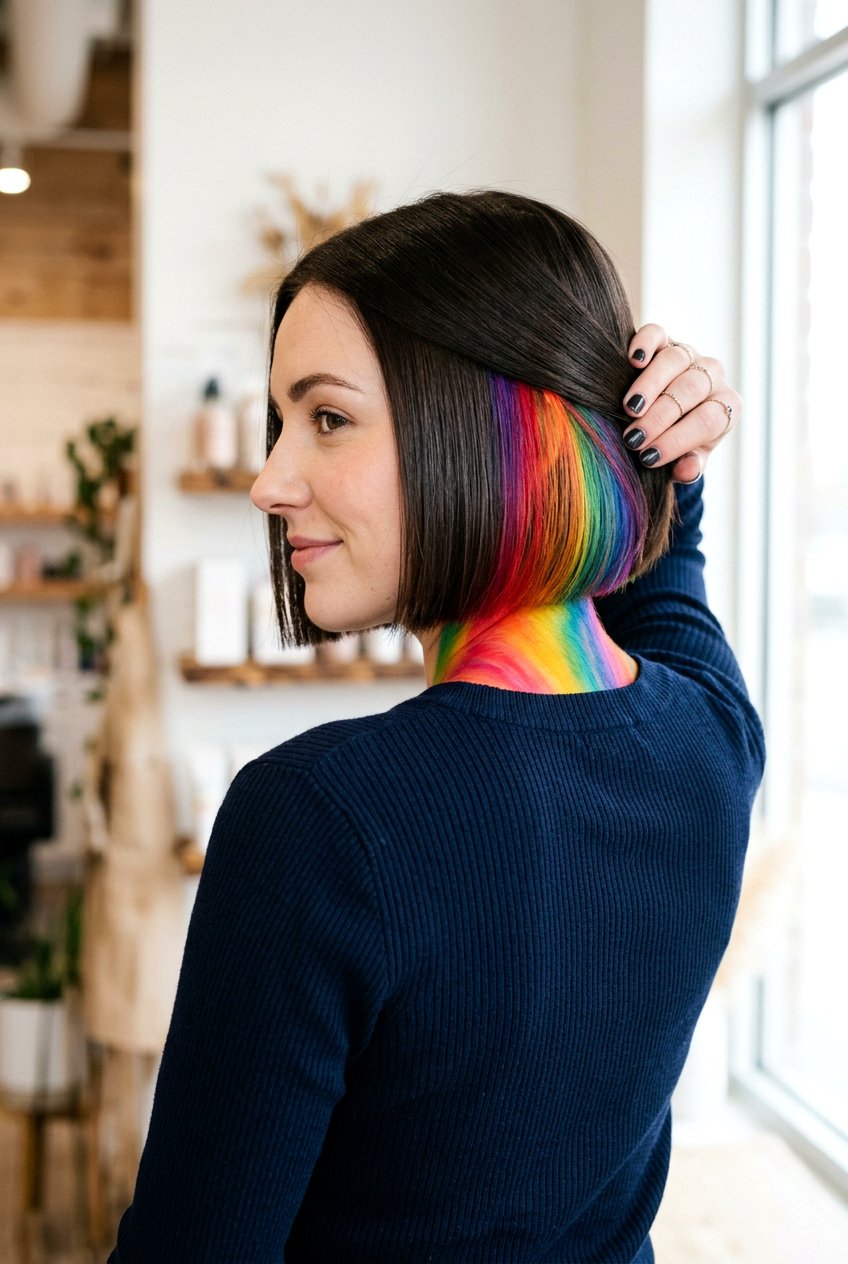
If you love bright rainbow hair but need something more wearable, a hidden pastel rainbow underlayer is a smart compromise. Your colorist lightens a section underneath, usually from temple to temple at the nape, then paints bands of diluted pink, blue, purple, mint, and yellow for a soft rainbow effect. The top layer stays natural or neutral, so the rainbow only shows when you wear half-up styles, braids, or high ponytails. This placement protects the pastel pigments from sun and heat, which helps the colors last longer and fade more gracefully than exposed rainbow hair. It is especially striking on medium to long hair, where the rainbow can cascade out when you flip your hair or twist it up. At work, it looks low-key; on weekends, it suddenly becomes the main character of your look.
3. Hidden Pastel Pink Hair Color
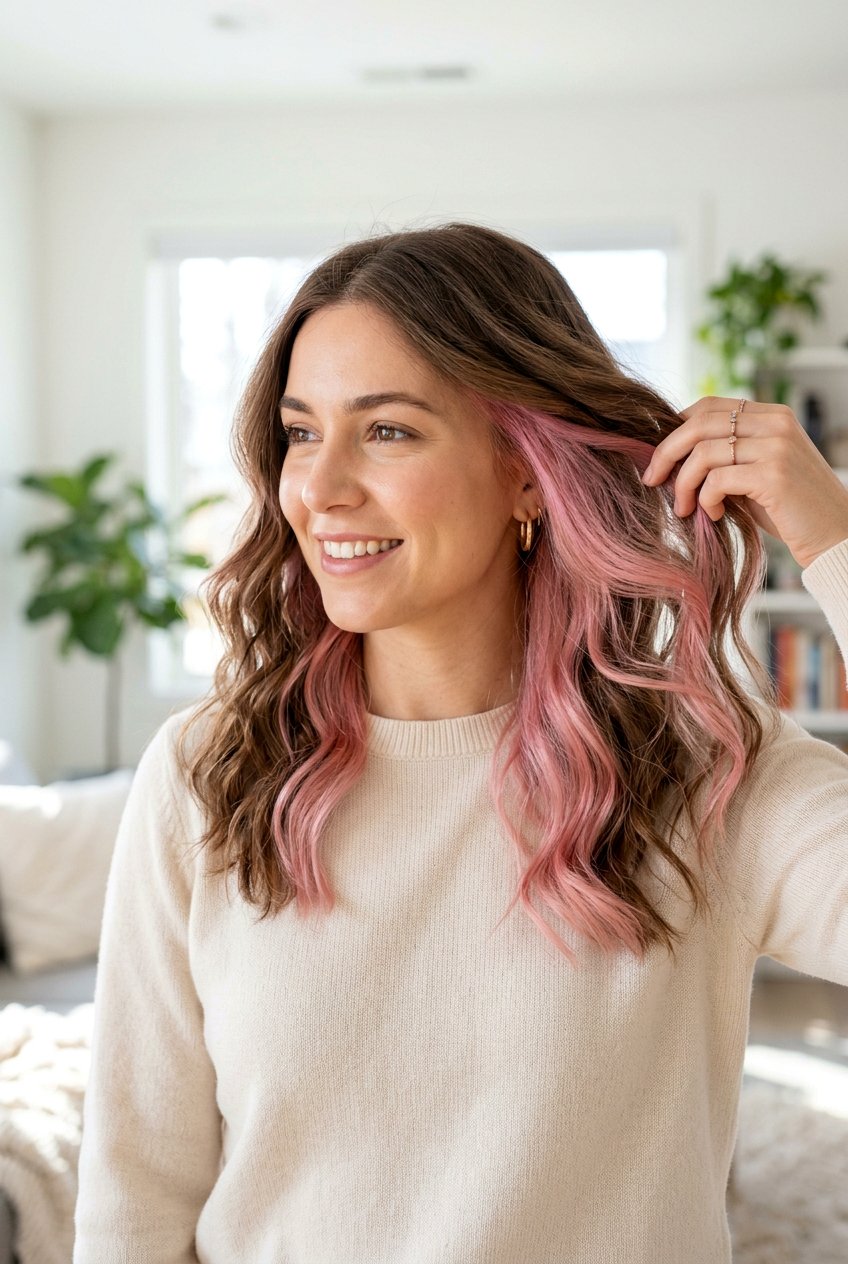
Soft hidden pink is one of the easiest pastel shades to wear because it flatters so many skin tones and base colors. For this look, your stylist lightens an underlayer and applies a pastel rose or blush pink, leaving your top layer brunette, blonde, or even black for contrast. When your hair is straight and down, the pink mostly disappears, giving you a classic surface. Once you curl, braid, or clip it back, pink slices peek through and add a romantic, playful feel. This placement is perfect if you want to try pink without committing to a full head or constant root touch-ups. Pastel pink does fade faster, but because it is hiding under your natural color, the fade can look like a soft rose gold wash rather than patchy streaks.
4. Hidden Pastel Purple Hair Color
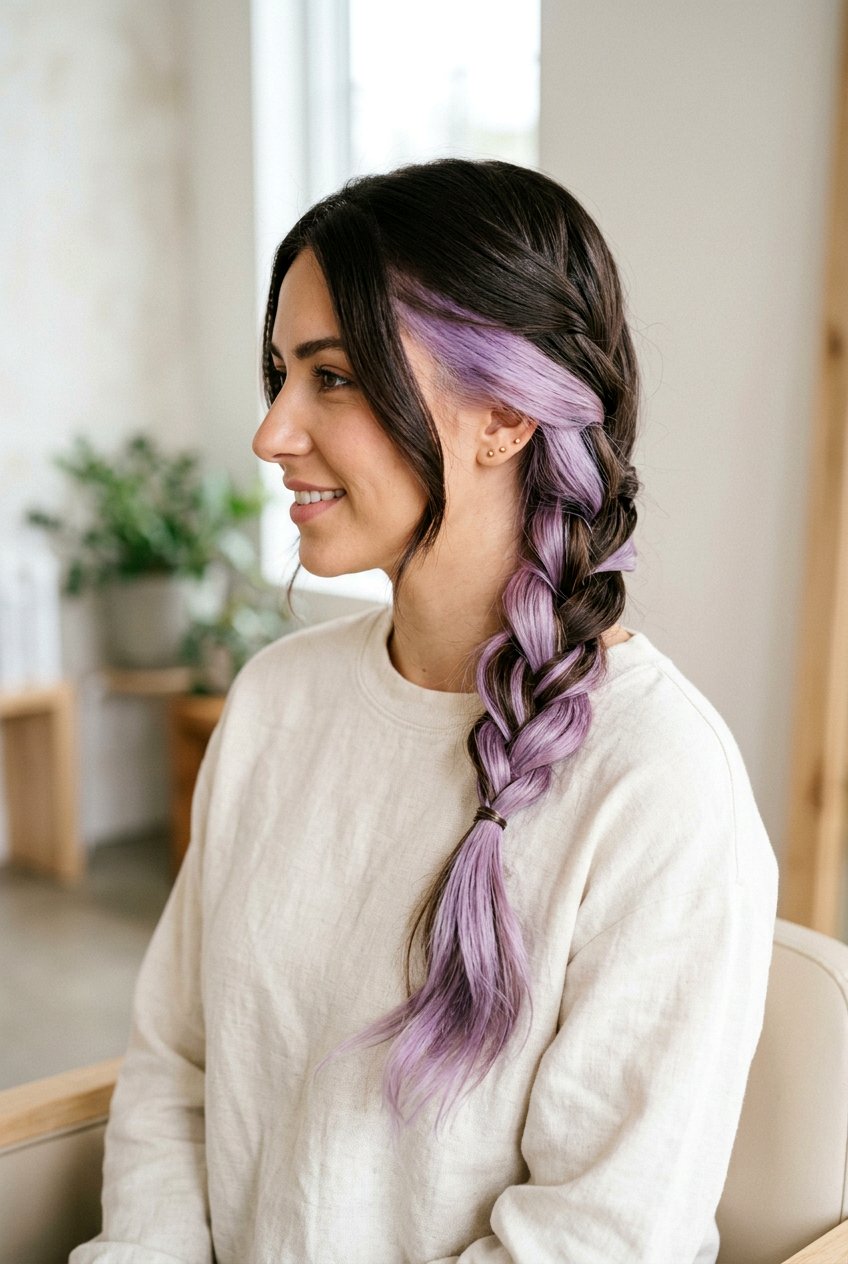
Hidden pastel purple hair suits anyone who likes a slightly moodier pastel that still reads soft and wearable. Your stylist will create a lightened panel underneath your top layer and apply shades like lilac, soft violet, or dusty lavender to that section only. The result is a cool-toned veil of color that peeks out at the ends, around the nape, or through braided sections depending on how you style your hair. Purple looks especially striking under dark brown or black hair because the contrast makes the pastel glow without feeling harsh. It is also a great match for ash or cool blonde bases where the tones blend seamlessly. Hidden placement means less exposure to UV and hot tools, so your lilac strands can stay true-toned a little longer before they softly shift toward silvery hues.
5. Hidden Pastel Blue Hair Color
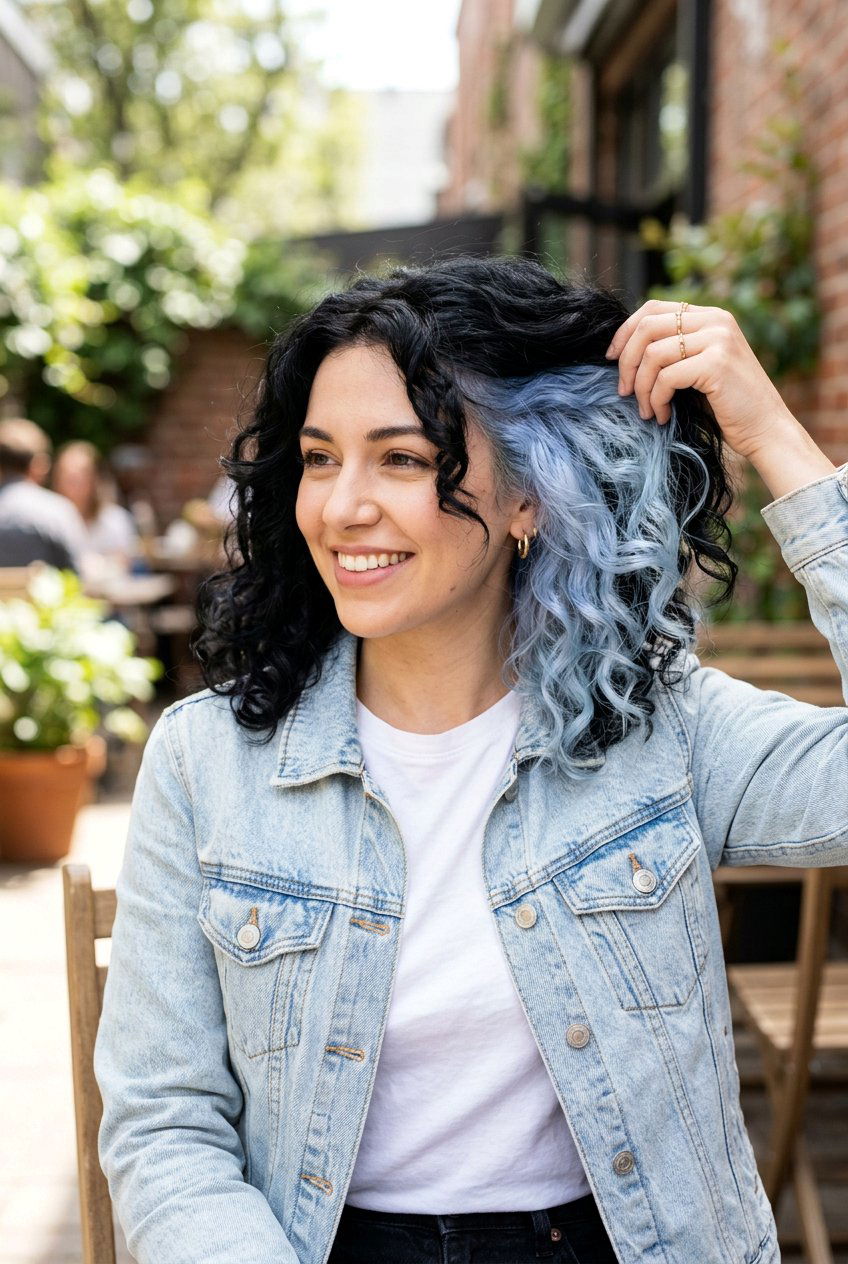
Hidden pastel blue hair has a calm, dreamy vibe that pairs beautifully with cool brunette, black, or icy blonde bases. To get this look, your colorist lightens the underlayer to a pale blonde, then tones it with a pastel blue, often similar to periwinkle or baby blue. The blue stays tucked under the natural top, so it is only visible when you twist your hair up, wear pigtails, or curl your ends outward. Pastel blue can sometimes fade toward silver, which actually looks intentional when it is hidden and softly blending with your base color. This option is perfect if you want something less common than pink but still soft and wearable. It works best on hair that can safely be lifted light enough for the pastel to show, so bond-protecting treatments and gentle aftercare are key parts of maintaining the overall look.
6. Hidden Pastel Mint Hair Color
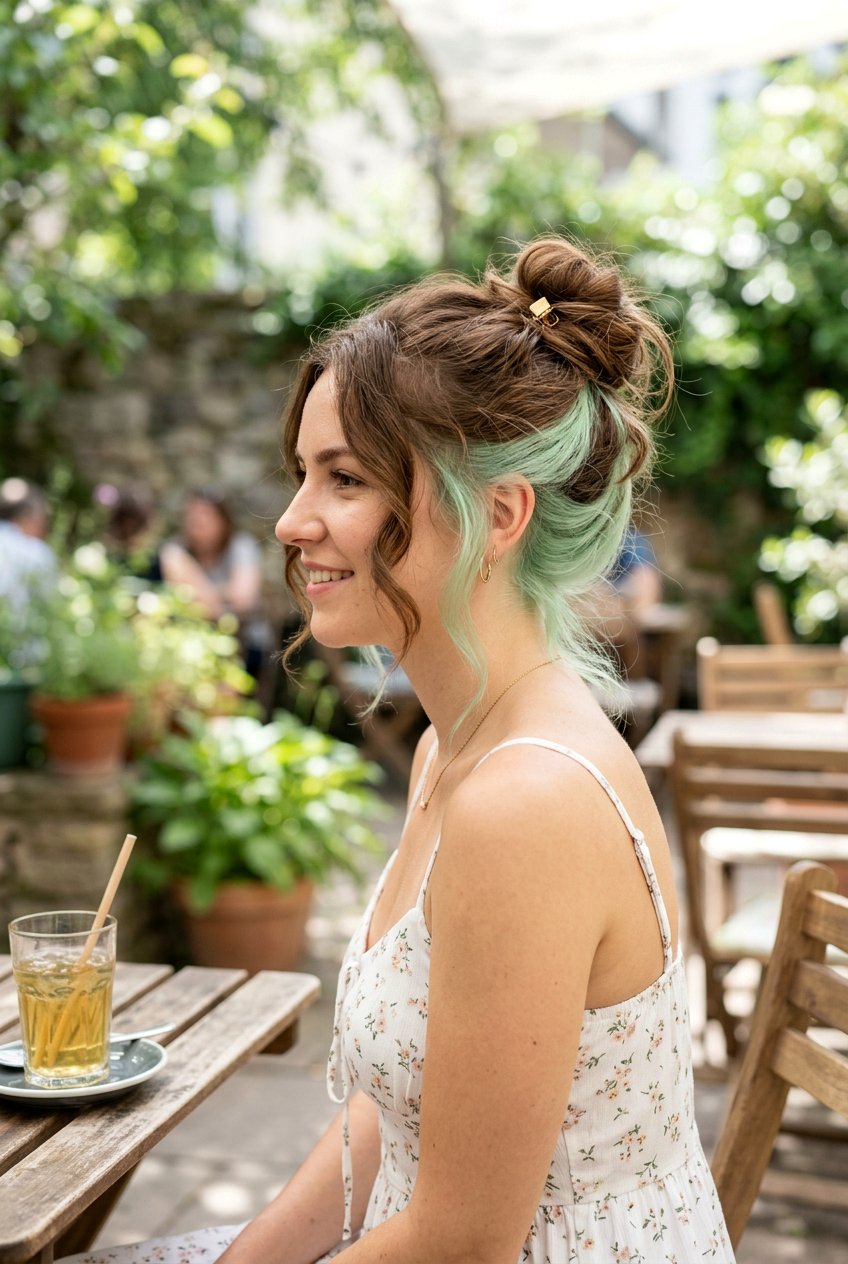
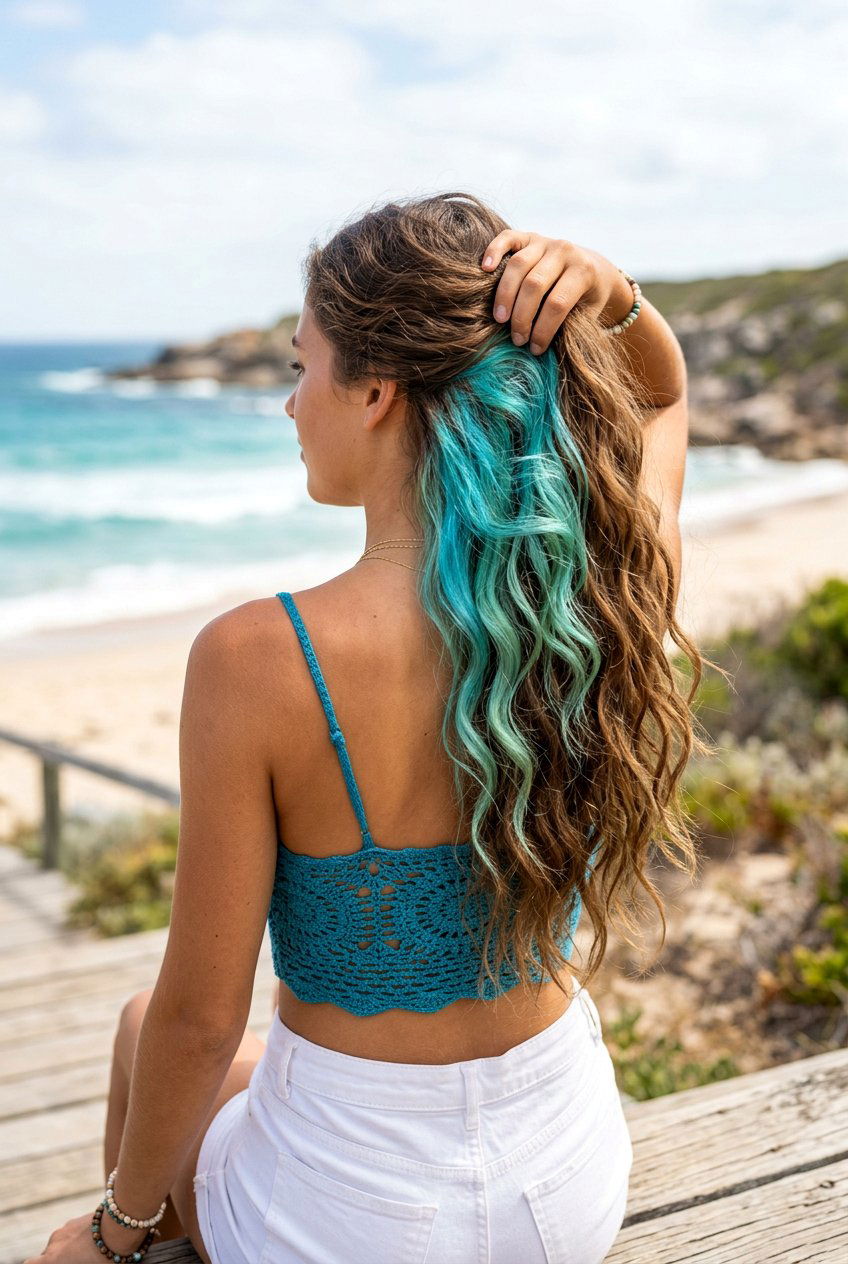
Hidden pastel mint hair color feels fresh and modern, especially for spring and summer. Your stylist will lift an underlayer to a pale blonde and then apply a diluted mint green, creating a soft, almost frosted effect under your natural color. When your hair is worn straight, the mint peeks out at the edges and nape, but it really comes alive with braids, soft waves, or half-up buns. Mint pairs nicely with cool brunettes, black hair, and ash blondes because it keeps the overall tone harmonious. It can also create a fun contrast against warm honey or golden blondes for a more playful, unexpected finish. Since green-based pastels can stain, the hidden placement makes grow-out and fading less stressful. Using sulfate-free shampoo and washing in cooler water will help preserve both the mint and your natural color’s shine.
7. Hidden Pastel Peach Hair Color
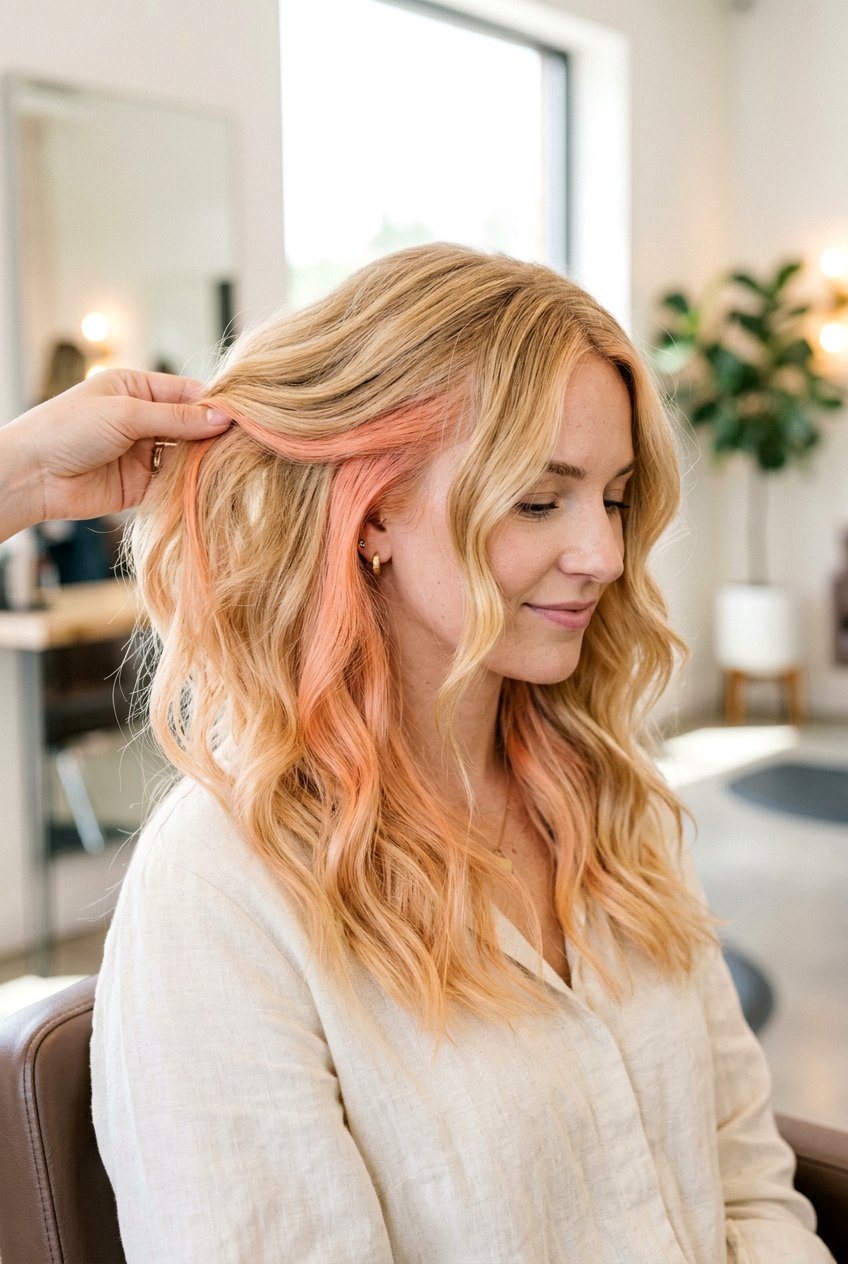
Hidden pastel peach hair gives a soft, sunlit glow without going full orange or copper. For this look, your colorist lightens the underlayer and applies a mix of soft coral, champagne, and warm pastel peach tones to create a diffused wash of color underneath. When your hair moves, those peachy pieces flash through and mimic the look of warm light hitting your hair from within. This shade works especially well with light brown, dark blonde, or golden blonde bases, since the warmth flows naturally. It can also soften sharp cool blondes by adding a gentle pastel contrast. Hidden placement helps keep the peach from looking too bold while still giving you that trendy, golden-peach effect that is popular for spring and early summer. A lightweight gloss every few weeks can refresh both the pastel and your surface color so everything stays cohesive.
8. Hidden Pastel Opal Hair Color
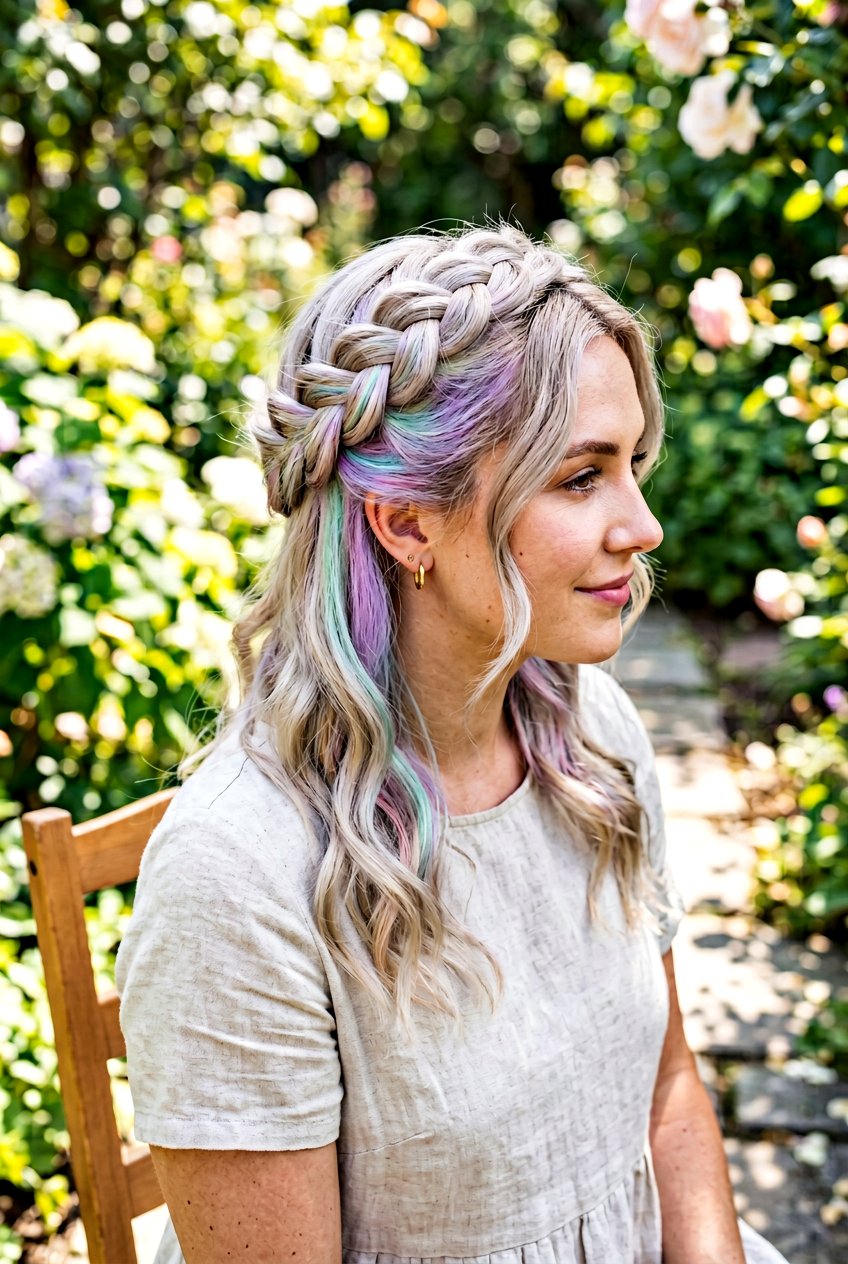
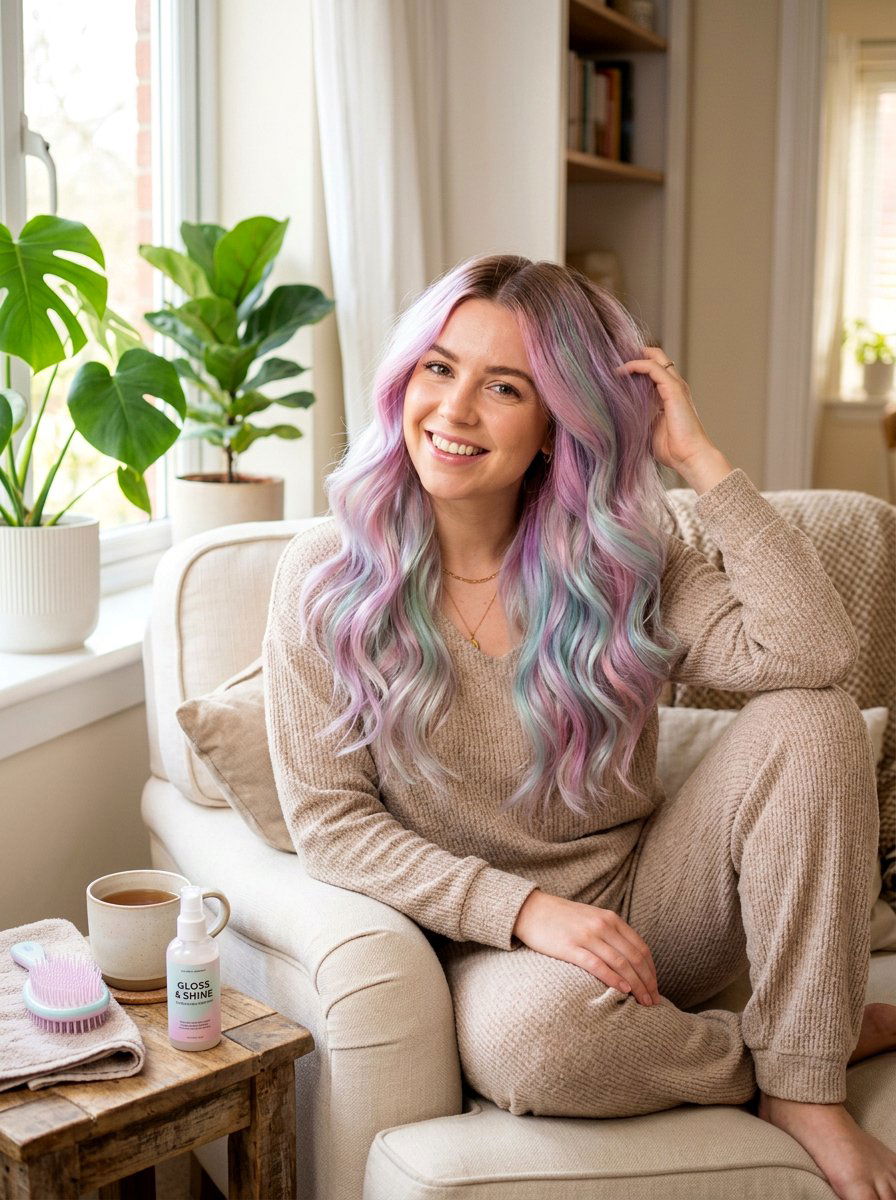
Hidden pastel opal hair brings together several soft colors over a pale base to mimic the look of an opal stone. Your colorist first lightens the underlayer to a cool, clean blonde, then layers sheer washes of pastel pink, blue, violet, and sometimes mint so they shimmer together rather than read as separate stripes. The top hair remains natural or neutral, so the opal effect appears only when you braid, twist, or flip your hair back. This look is ideal for people who love complex color but still need a low-maintenance surface. Because the pastels are sheer and multi-tonal, they fade softly into one another, often leaving a pearly impression even as they wash out. Regular deep conditioning helps keep the lightened underlayer healthy so the opalescent shine stays reflective instead of dull or dry-looking.
9. Hidden Pastel Ombre Underneath
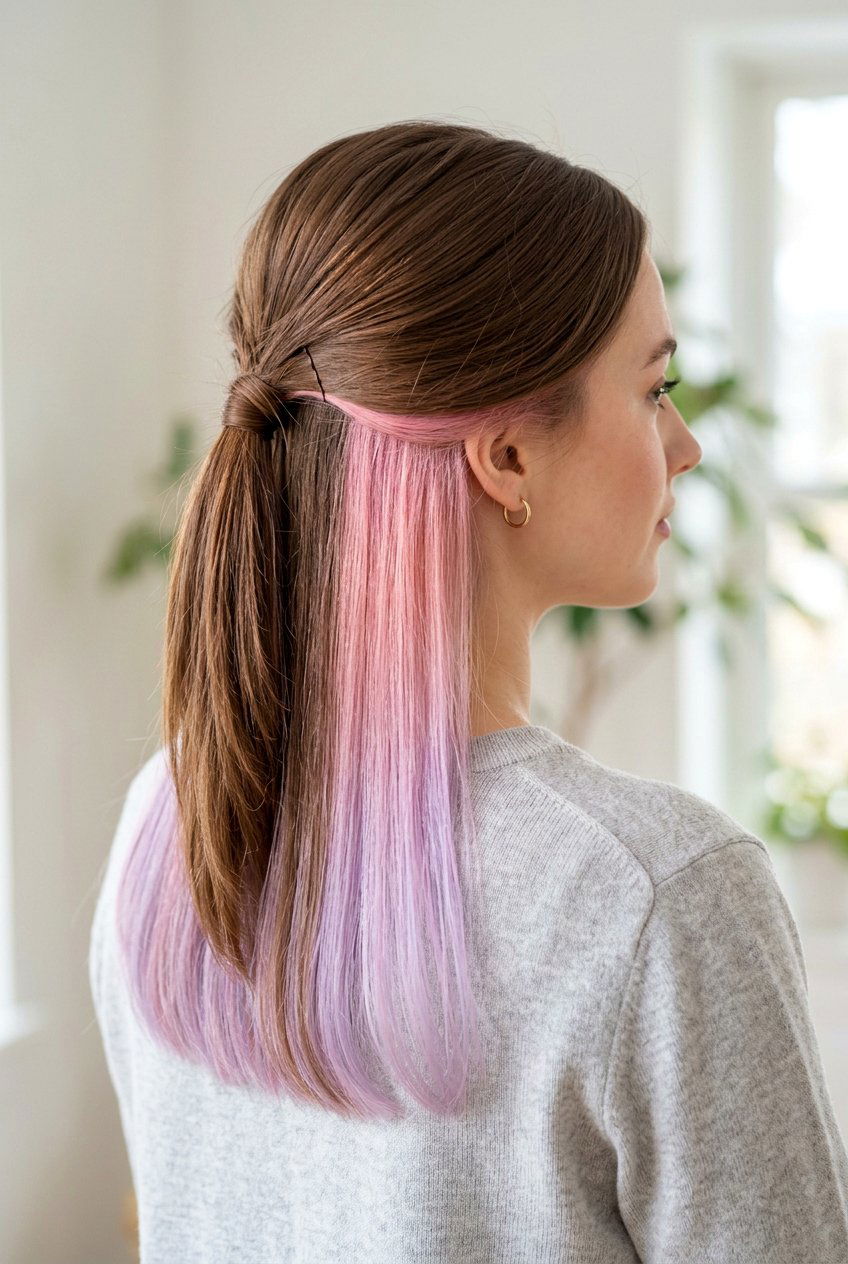
A hidden pastel ombre underneath gives you a gradient of soft color that flows from roots to ends on the lower layers only. Your stylist will lighten the undersection and then melt one or two shades, such as pastel pink into lavender or blue into mint, so the color gradually shifts toward the tips. The top stays your usual shade, making the ombre visible mainly when you curl, braid, or wear your hair half-up. This approach is perfect if you like dimension and movement rather than solid panels of color. As the pastels fade, the gradient softens rather than looking stripey or harsh. It is also easier to grow out because the lightest, most processed ends can be trimmed over time without affecting the rest of your haircut. Ask for a smooth blend at the transition point so the ombre feels seamless with your base.
10. Hidden Pastel Highlights Under Bangs
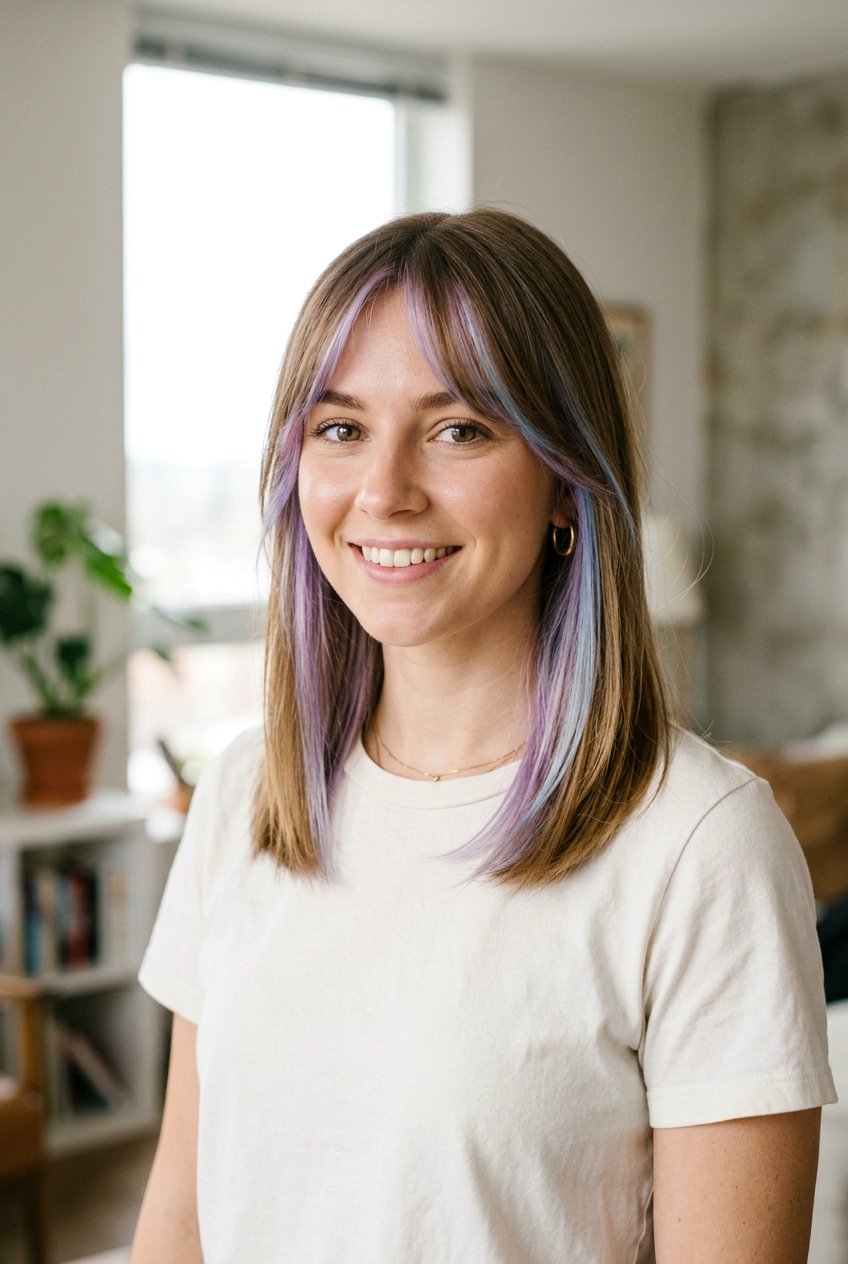
Hidden pastel highlights under bangs add a playful twist every time your fringe moves. For this look, your colorist lifts small sections beneath your bangs or face-framing pieces, then paints pastel shades like lavender, baby blue, or blush pink on those underneath strands only. When the bangs lie flat, the pastel barely shows, but if you part them, push them to the side, or style curtain bangs, the color suddenly flashes through. This option is great if you want a small area of hidden pastel without committing to a full underlayer. It pairs really well with straight or softly waved hair, where movement naturally reveals the color throughout the day. Because the section is small, maintenance is easier and you can refresh or switch shades more often without overprocessing the rest of your hair.
11. Hidden Pastel Hair On Brown Hair
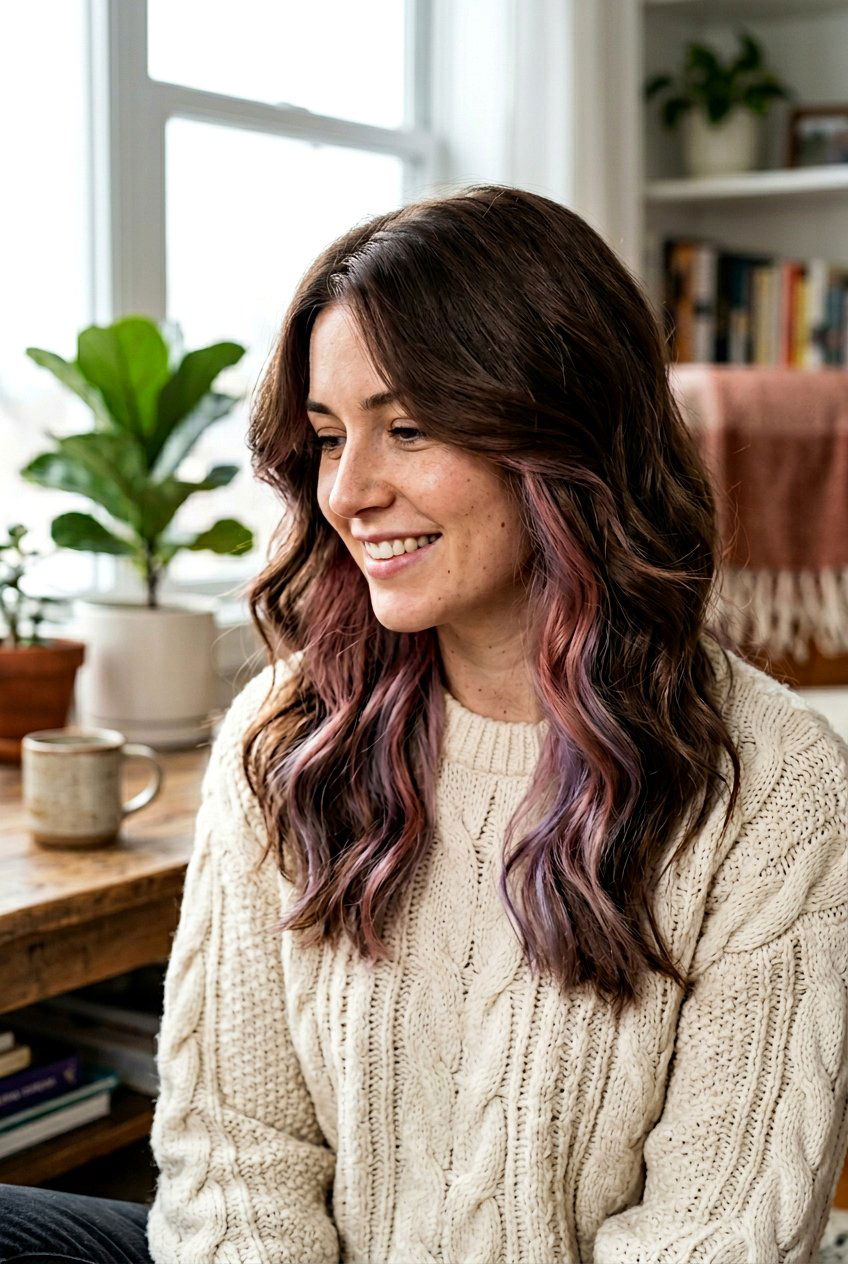
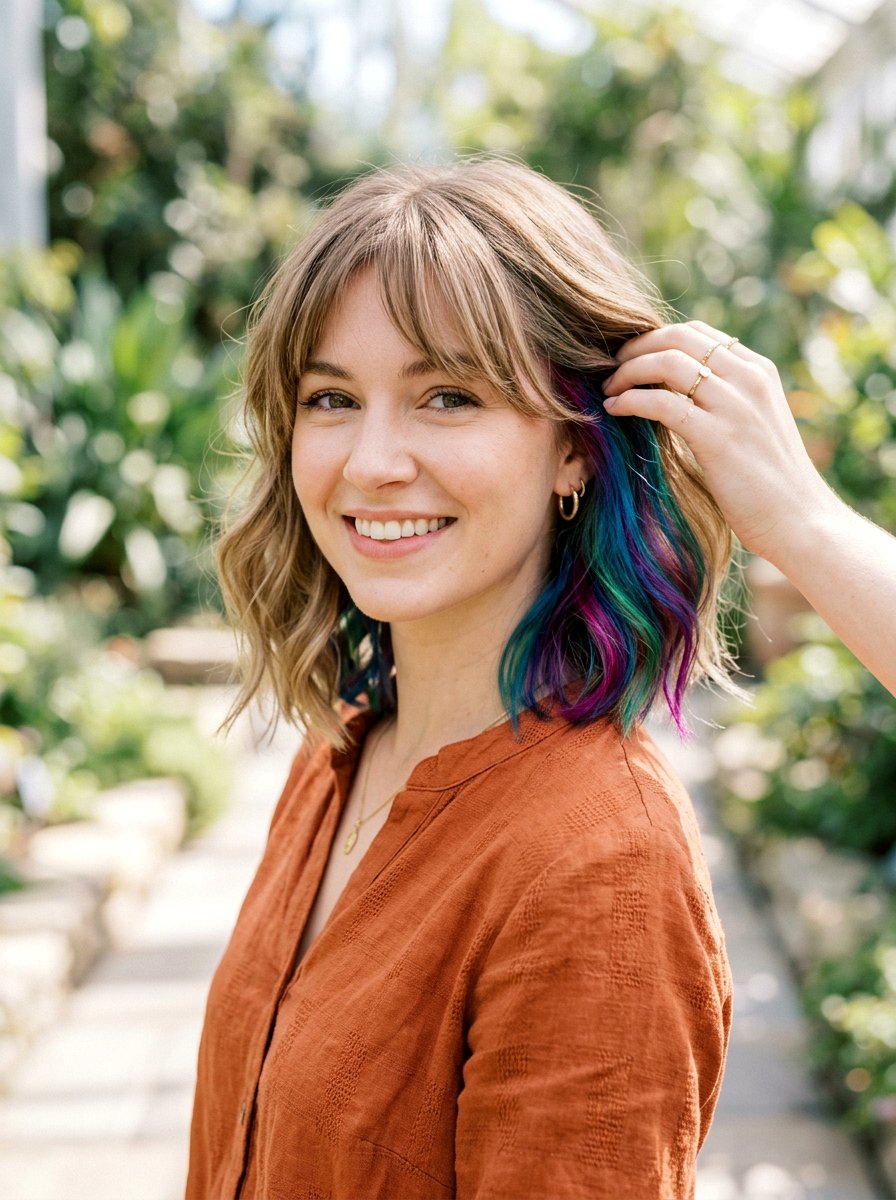
Hidden pastel hair on brown hair proves you do not need to be blonde to enjoy soft colors. Your stylist will section off panels underneath and pre-lighten them to a warm or neutral blonde before applying pastel shades that suit your brown base, such as lavender, rose, or mint. The top remains chocolate, chestnut, or espresso, giving the pastels a rich backdrop that keeps the overall look grounded and sophisticated. Because the color lives underneath, your brown hair still reads as the main shade, which is helpful if you prefer low-key color for work or school. The contrast between deep brown and soft pastel can make the hidden sections feel extra impactful when you style braids or updos. To keep the brown glossy and the pastels bright, use color-safe products and avoid harsh clarifying shampoos unless you are preparing for a color change.
12. Hidden Pastel Hair On Blonde Hair
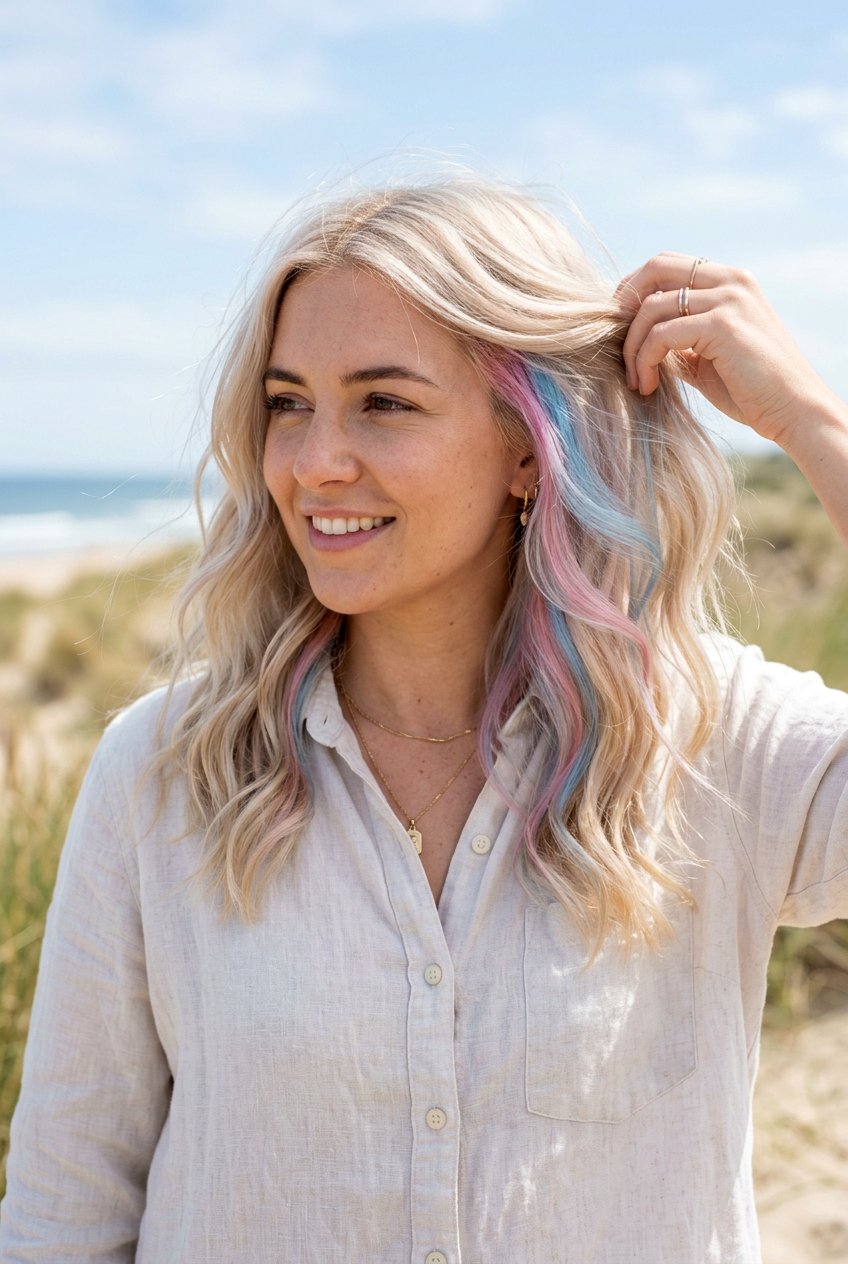
Hidden pastel hair on blonde hair creates a soft, dreamy blend that often looks seamless even when the color peaks through. Because blonde hair is already lighter, your colorist may only need minimal pre-lightening on the underlayers before applying shades like baby pink, sky blue, or lilac. The top blonde layer can stay neutral, cool, or warm depending on your preference, and the pastels will softly glow through when you move or style your hair. This combination is especially pretty with wavy or curled finishes, where the pastel ribbons weave in and out of the blonde. Pastels do fade faster, but on blonde hair the fade can look like a gentle tint rather than an obvious leftover stain. Regular toning treatments can keep brass away so the blonde and the pastel sections both look intentional and polished.
13. Hidden Pastel Hair On Black Hair
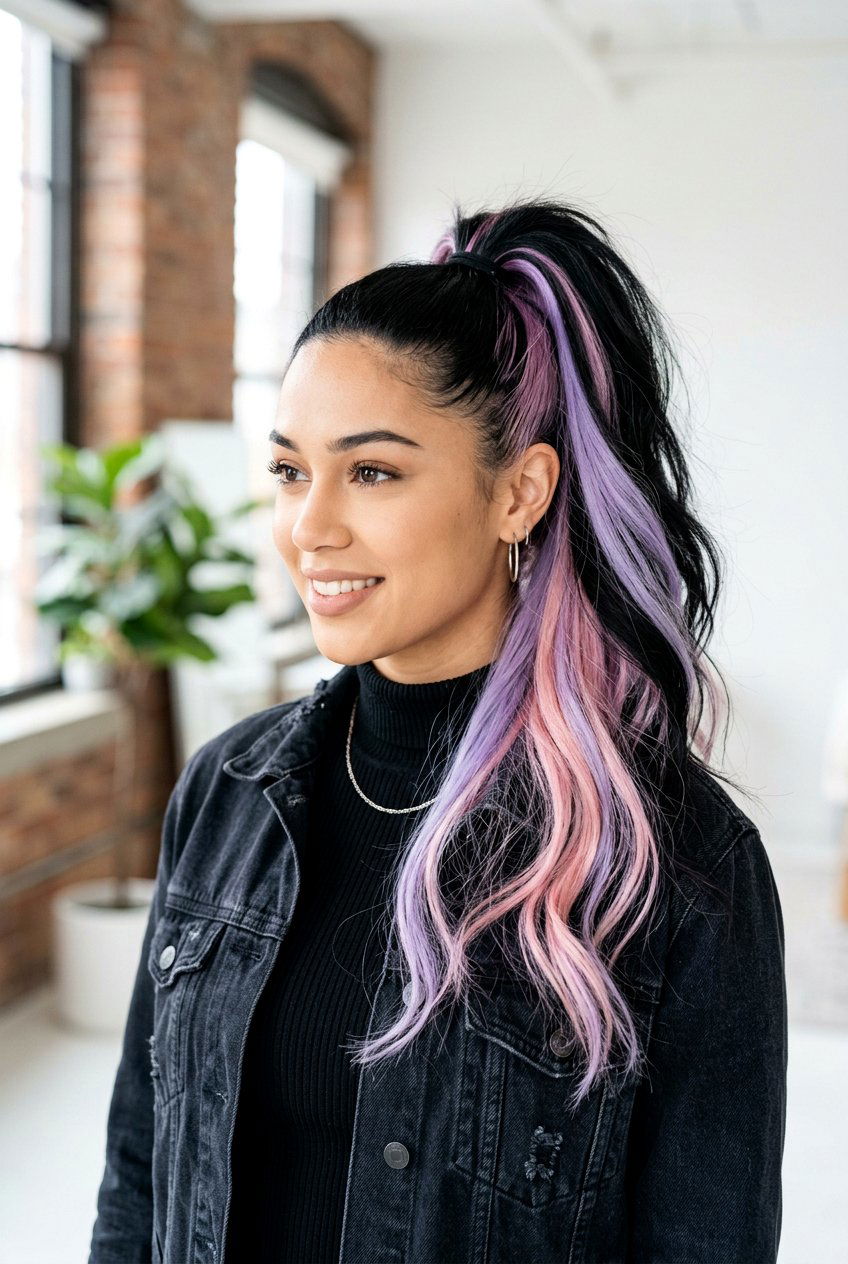
Hidden pastel hair on black hair makes for bold contrast while staying surprisingly wearable thanks to the placement. Your stylist will carve out sections underneath and lift them to a very light blonde, then apply soft pastels like lavender, periwinkle, or blush pink that really stand out against the dark top layer. When your hair is down, the black dominates, offering a sleek, classic appearance. Pull it into a ponytail, braid, or space buns, and the pastel slices suddenly look graphic and eye-catching. Because black hair requires more lifting, bond protection and intensive conditioning are essential to keep the hidden sections healthy. The benefit is that regrowth is tucked underneath, so you can let more time pass between touch-ups. This look is ideal if you love contrast but want the option to hide your color at a moment’s notice.
14. Hidden Pastel Bob Haircut
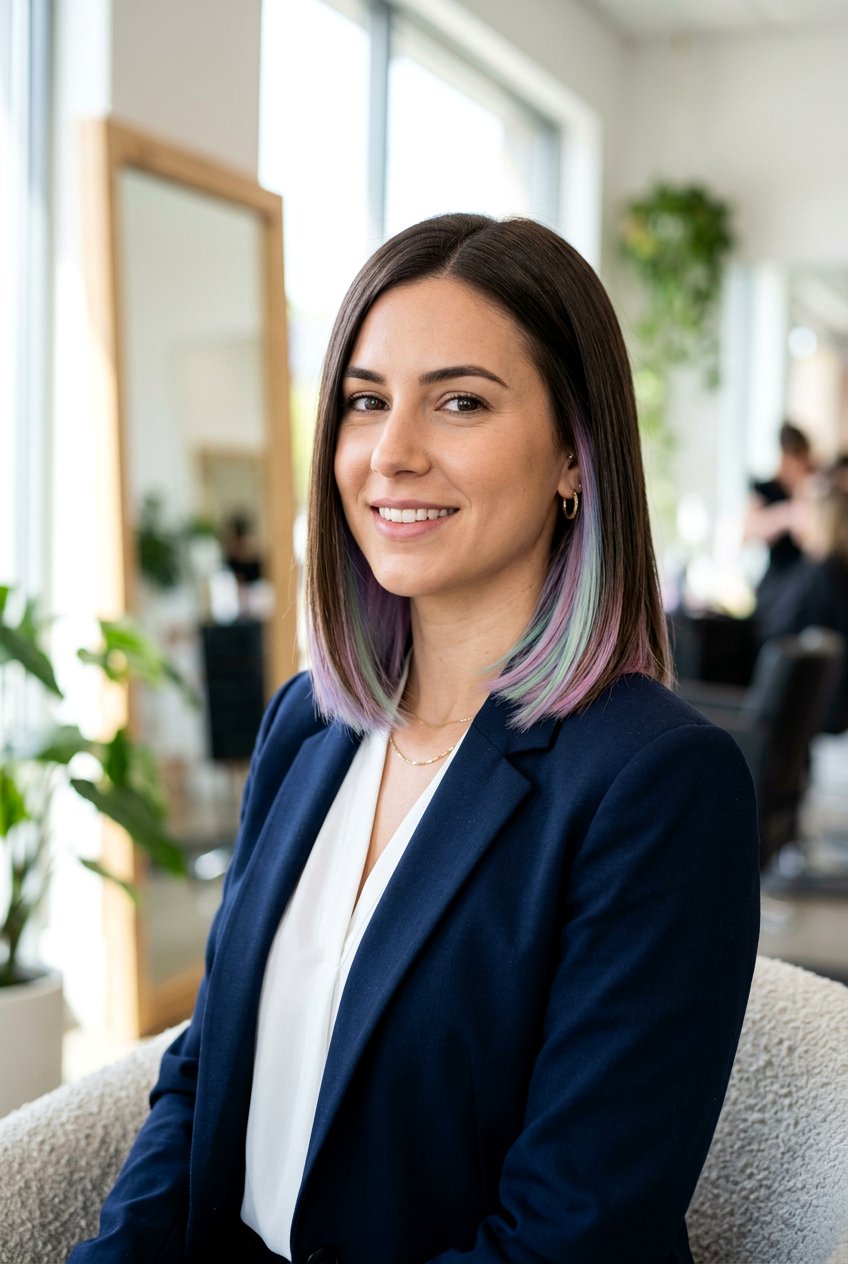
A hidden pastel bob haircut combines a sharp, modern shape with a secret burst of color underneath. On a blunt, layered, or slightly angled bob, your colorist lightens the lower half or interior sections and applies pastel shades that suit your base, like pink, lilac, or mint. When the bob is worn straight, the color may peek out slightly at the edges, giving just a hint of interest. Tuck one side behind your ear, flip the ends, or style a soft wave, and the hidden pastel becomes much more visible. This works beautifully for people who want their haircut to look clean and professional with the option of more personality on weekends. The shorter length also makes it easier to maintain color health because you can trim away tired ends often while keeping the look fresh and swingy.
15. Hidden Pastel Layered Hair
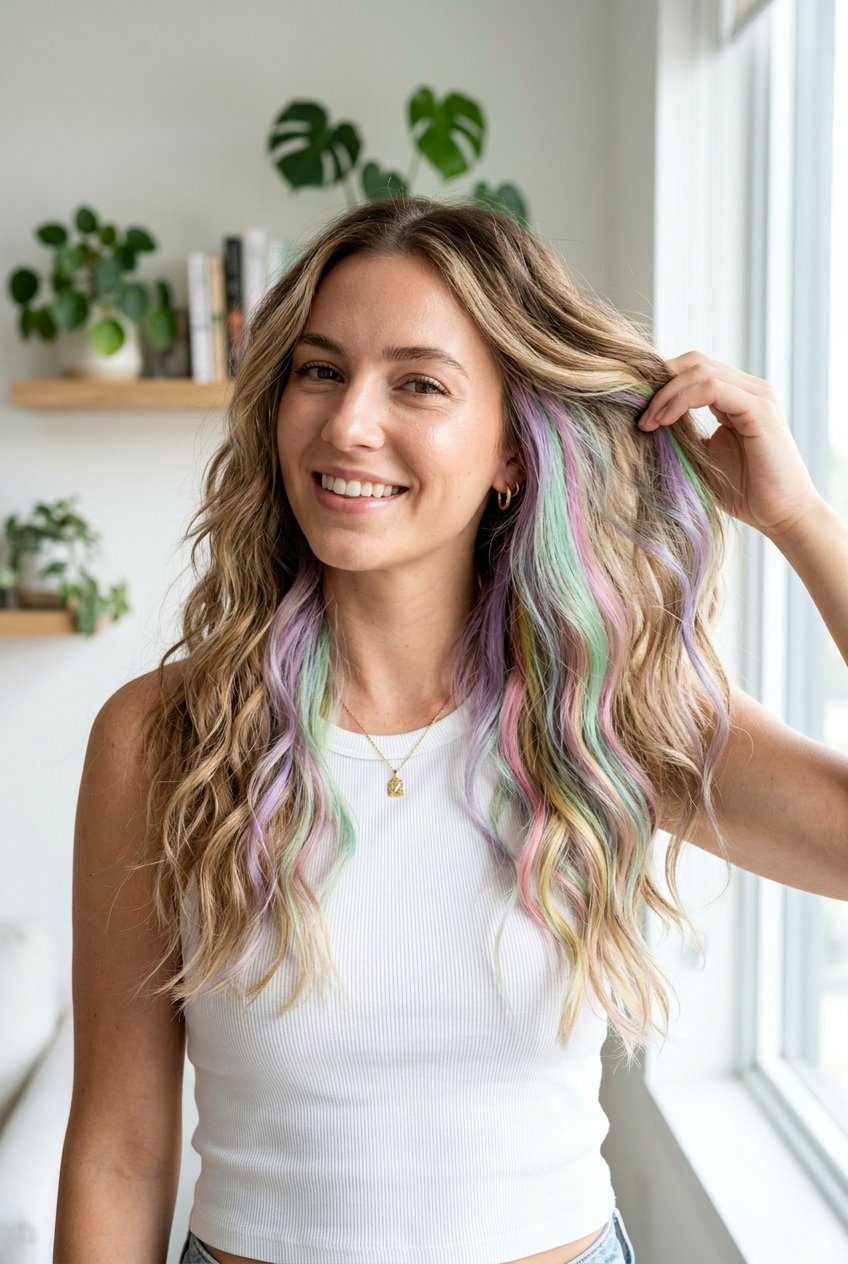
Hidden pastel layered hair uses your haircut’s built-in movement to reveal color in unexpected ways. With this look, the colorist paints pastels on select lower and interior layers, letting the shorter top layers fall over them as a natural curtain. As you move, the layers shift, and flashes of pink, blue, or lavender pop through your cut, especially around the mid-lengths and ends. This approach works well for medium to long hair and for hair that already has a shag, wolf cut, or soft layered shape. The hidden placement means your surface layers stay healthier and less processed, which helps your overall texture look smoother and shinier. Layered cuts also make it easier to grow the color out, since the most processed pieces sit toward the ends and can be removed gradually without sacrificing your shape.
16. Hidden Pastel Curly Hair
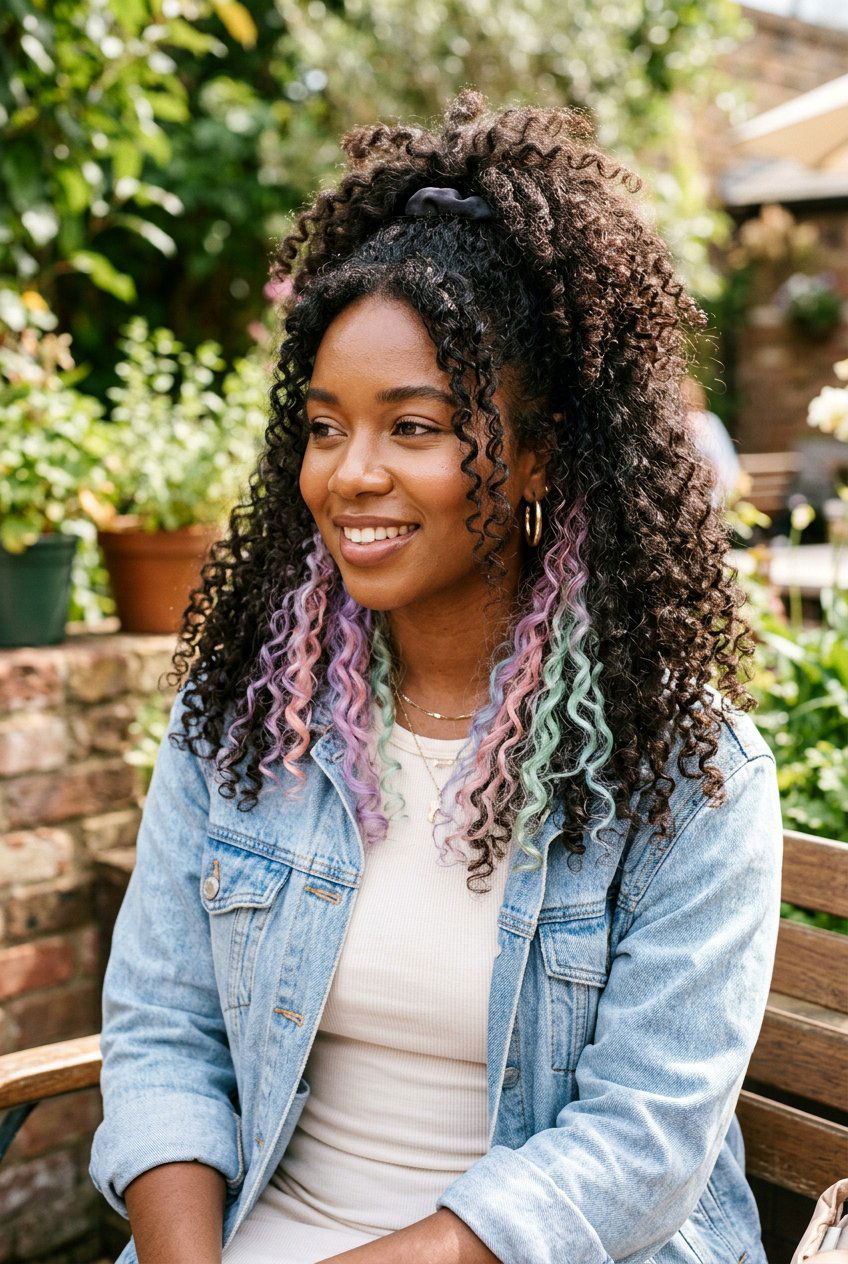
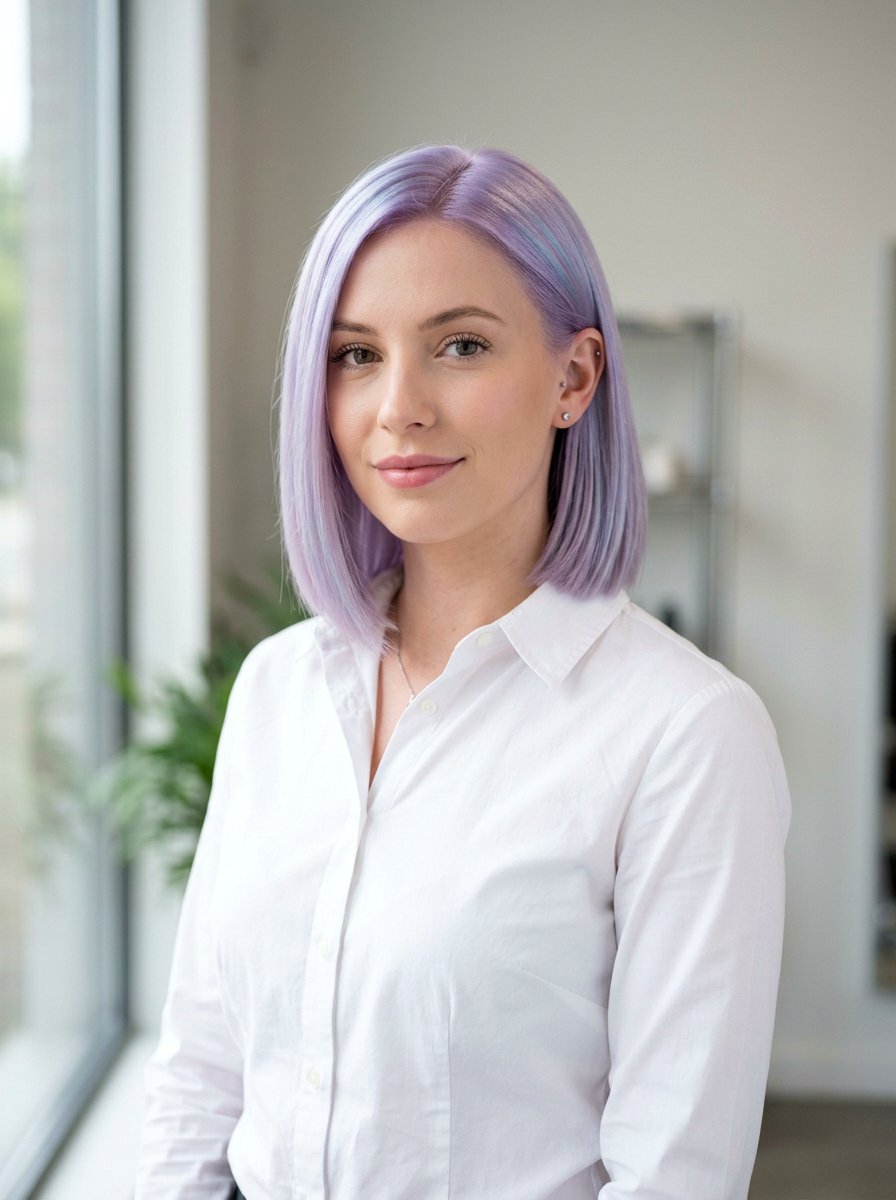
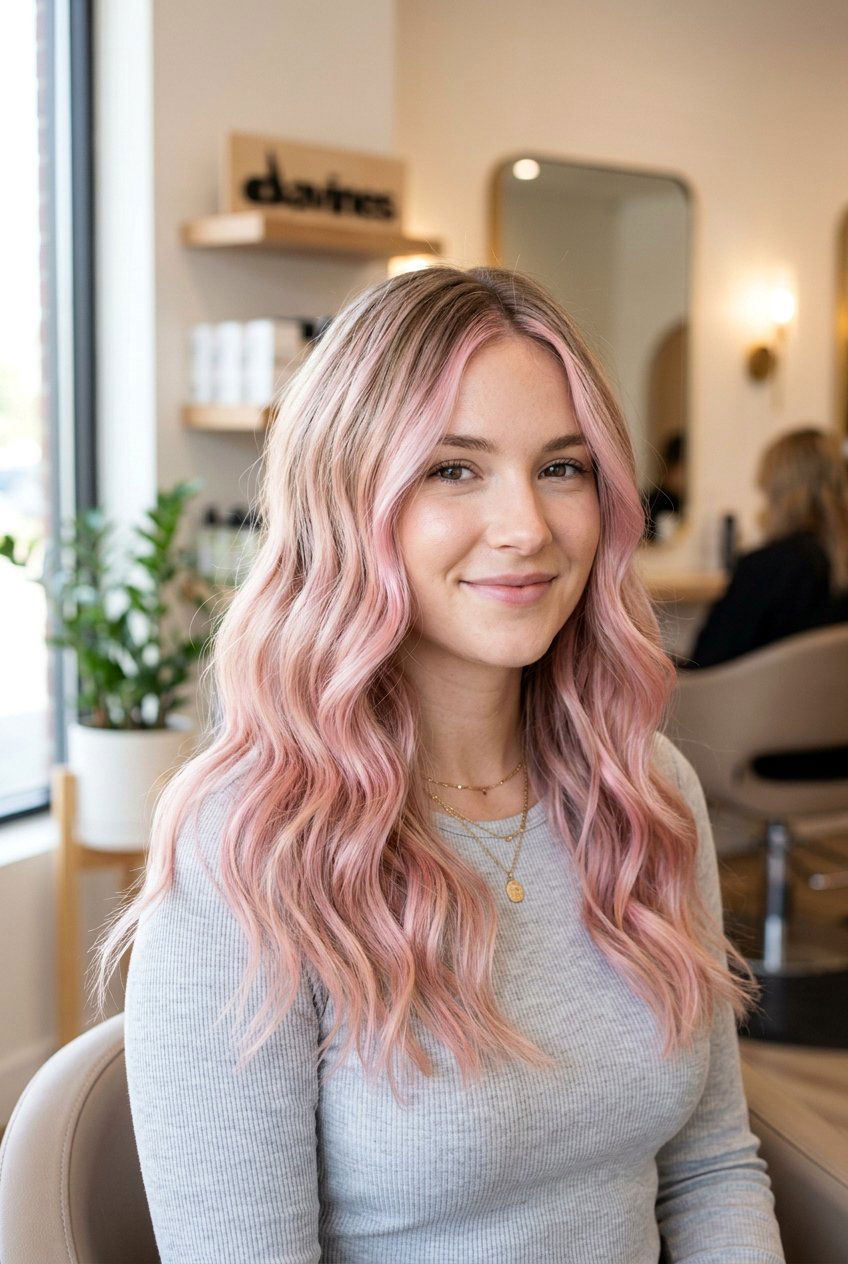
Hidden pastel curly hair shows how beautifully color and texture can work together. Your stylist will lighten and color specific curls or sections underneath your top curls, using pastel shades like lavender, peach, or mint that complement your natural base. When your curls are dry and defined, the color peeks through loops and coils rather than sitting in obvious blocks, which can look very organic and fun. This placement helps protect your curls from overprocessing because the top layer can stay natural or less lightened. To keep both the color and curl pattern healthy, focus on moisture-rich, sulfate-free products and limit heat styling. Hidden pastels in curls are especially striking in half-up styles, puffs, or pineapple updos, where the colored curls spring out from underneath and add dimension without overpowering your natural texture.
17. Hidden Pastel Hair For School
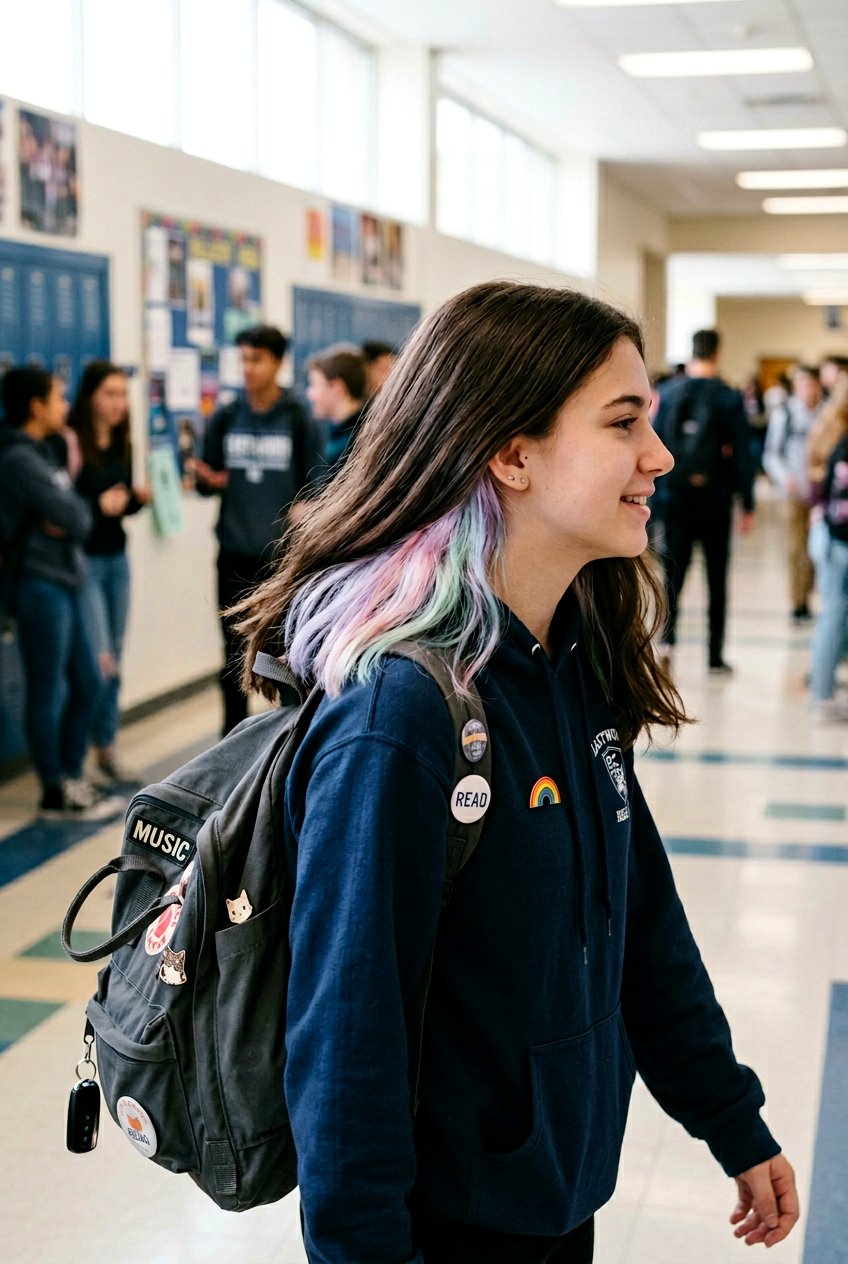
Hidden pastel hair for school gives you a way to express yourself while still respecting stricter dress codes. The idea is to keep bright or unconventional shades tucked under your top layers so they are only visible if you intentionally show them. Your stylist might color a small band at the nape or a panel behind your ears with soft pastel tones like pink, lavender, or baby blue, leaving the rest of your hair a natural shade. When your hair is down, it reads as everyday, rule-friendly hair. Once you are off campus or at activities that allow more freedom, you can braid, clip, or tie your hair up to reveal the hidden color. Choosing pastels rather than neons keeps the look softer and easier to blend if you ever decide to transition back to a fully natural color later.
18. Hidden Pastel Hair For Work
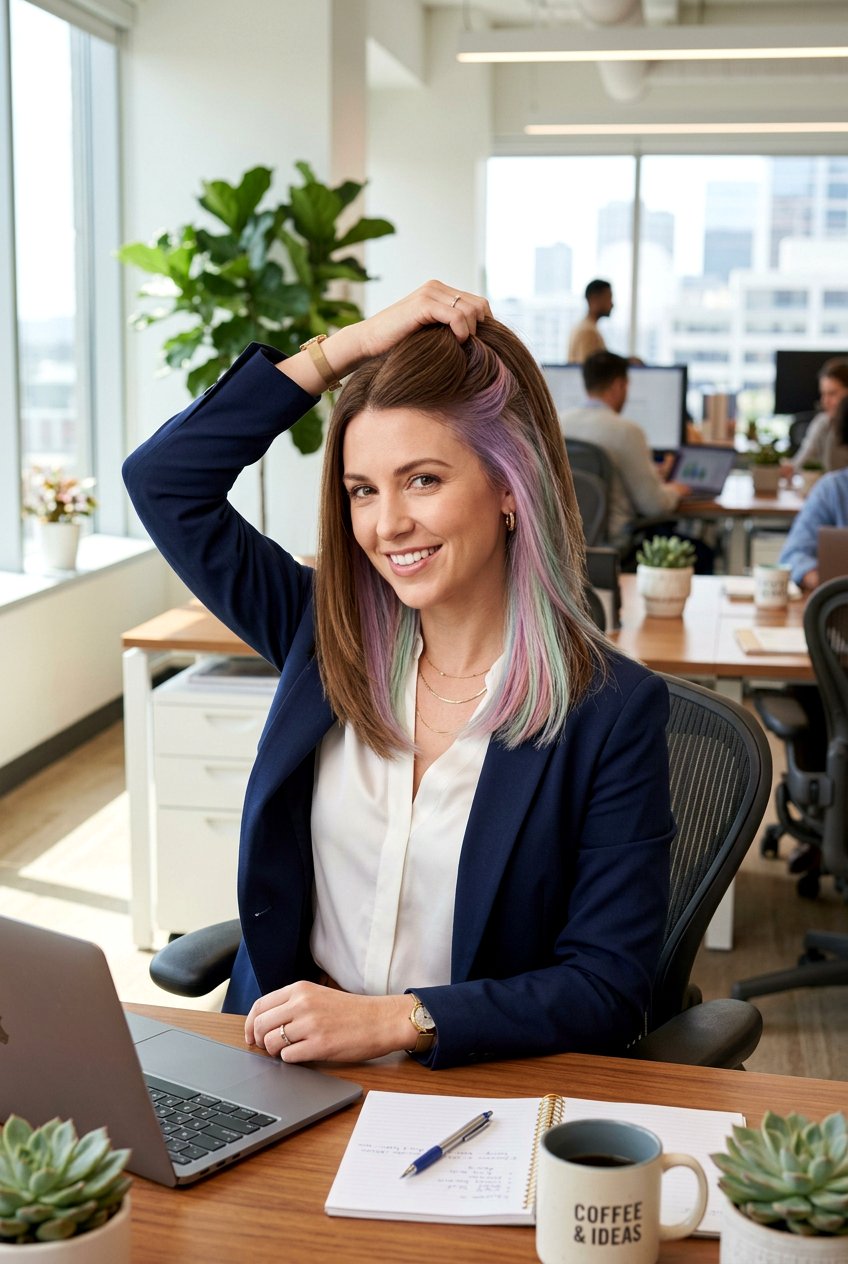
Hidden pastel hair for work balances professional polish with personal style. Your colorist focuses the pastel shades on interior sections or low underlayers that will not show when your hair is worn in typical office-friendly styles like straight and down or in a low ponytail. Soft hues such as blush, lilac, or periwinkle offer a quieter take on creative color that still feels current with 2026’s “gentle rebellion” trend. During work hours, clients and colleagues mostly see your natural or neutral top shade. Outside the office, you can switch to braids, high buns, or more playful styles that highlight the hidden pastel panels. To keep the overall effect polished, ask your stylist for clean sectioning and a tone-on-tone approach so the pastels harmonize with your base rather than compete against it.
19. Hidden Pastel Hair With Braids
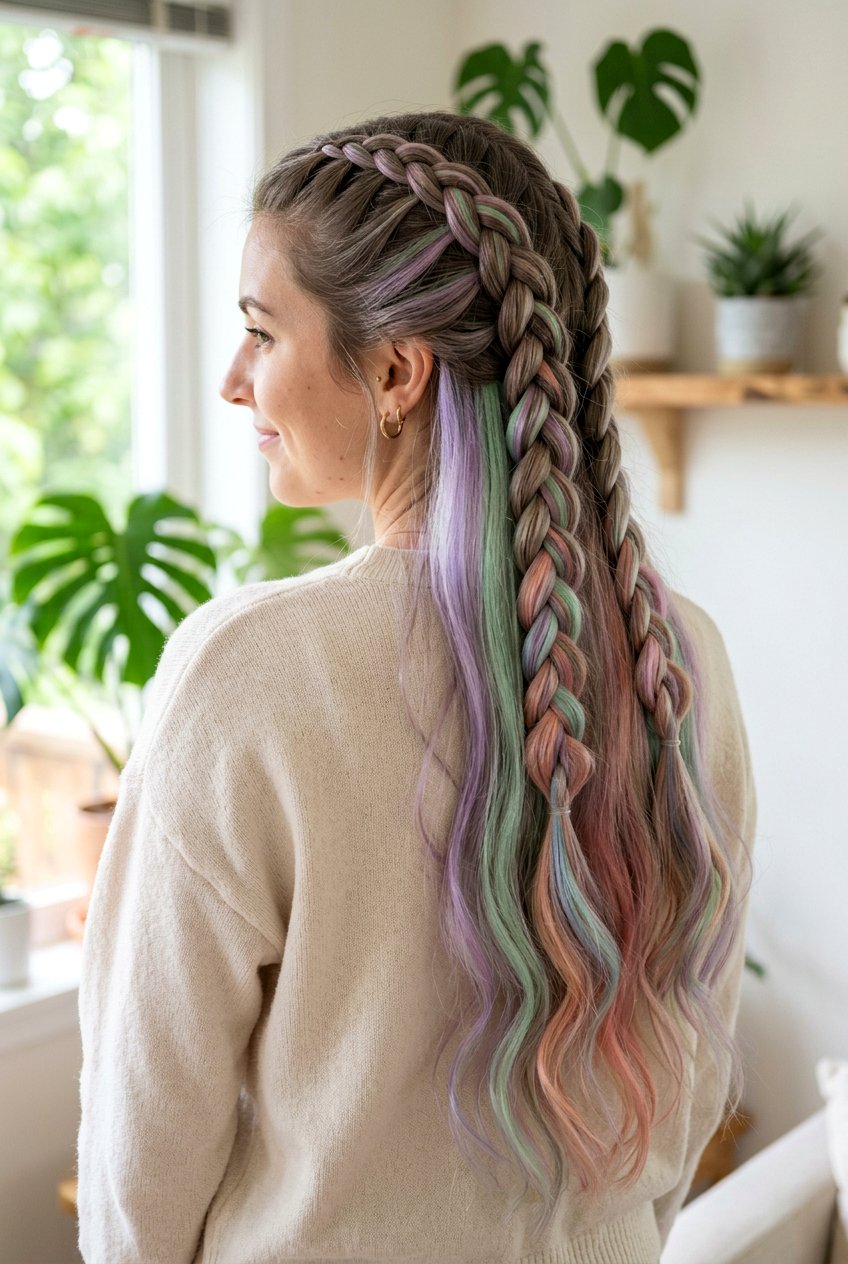
Hidden pastel hair with braids turns every plait into a color reveal. For this look, your stylist paints pastels on underlayers or interior strands, knowing that braids will weave those colors to the surface. When your hair is loose, you might only see small flashes at the ends. Once braided into Dutch braids, box braids, or simple three-strand plaits, the pastel strands sit alongside your natural color and create a woven ribbon effect. This works beautifully on both straight and textured hair, and you can customize how bold it looks by choosing softer or more saturated pastel tones. Hidden placement keeps the color safer from the sun, which is helpful because braids already expose more of the hair surface. A light, leave-in conditioner will help maintain slip so colored strands do not snag or fray when you braid and unbraid.
20. Hidden Pastel Hair With Waves
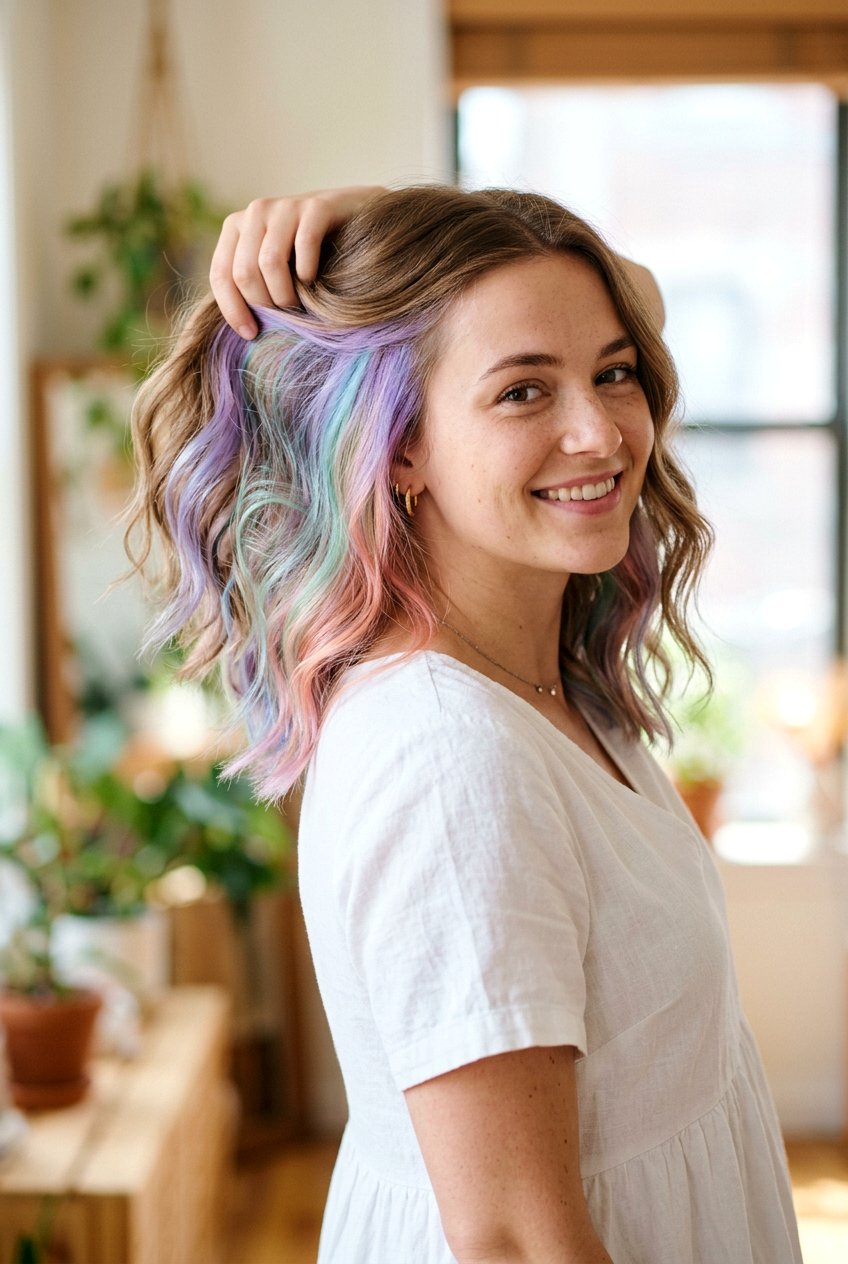
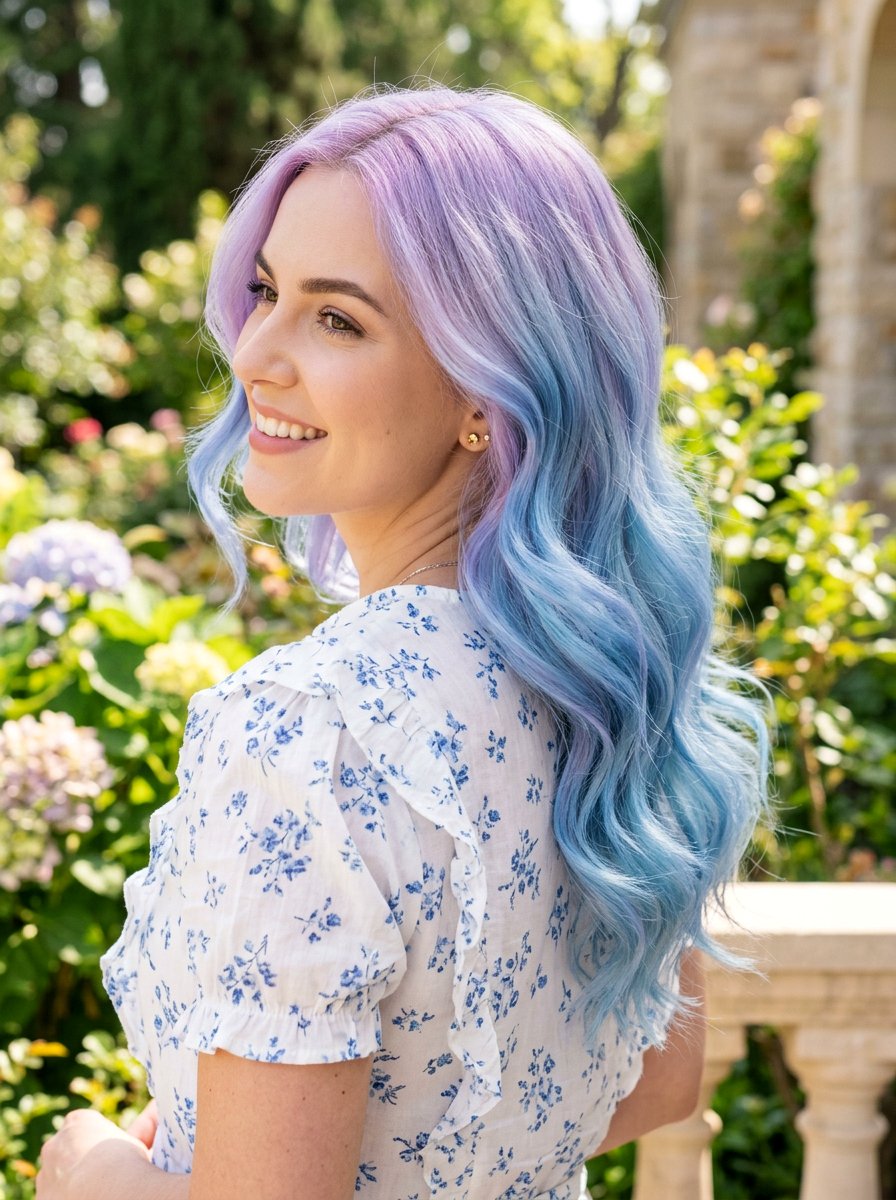
Hidden pastel hair with waves showcases color through movement and shine. Your stylist places pastel panels underneath or through mid-level layers, then you style your hair into loose waves with a curling iron, wand, or heatless method. As the waves fall, the pastel shades roll in and out of view, creating a soft, dimensional effect that feels more lived-in than high-contrast streaks. This look is especially pretty with beachy or brushed-out waves where the texture is relaxed and the color appears almost watercolor-like. It works on short, medium, and long hair, though medium to long lengths show more of the hidden panels when curled. To preserve both your waves and your color, use heat protectant and choose lower-temperature settings so the pastel pigments do not fade prematurely from excessive heat exposure.
Conclusion:
Hidden pastel hair color is one of the easiest ways to try creative shades without overhauling your entire look or lifestyle. By tucking soft colors like pink, lavender, mint, and blue under your natural base, you get a playful secret that shows only when you decide to reveal it. This placement also helps your color last longer and grow out more gracefully, since regrowth and fading are less obvious underneath. Whether you wear a bob, long layers, curls, or braids, there is a hidden pastel placement that can work with your haircut instead of against it. With the rise of gentle, low-key color trends in 2026, hidden pastels fit perfectly for school, work, or weekends while still feeling current and expressive. If you are ready to experiment, start with one small underlayer and build from there as you get more comfortable with color.
You'll Like These Styles:


Leave a Reply