
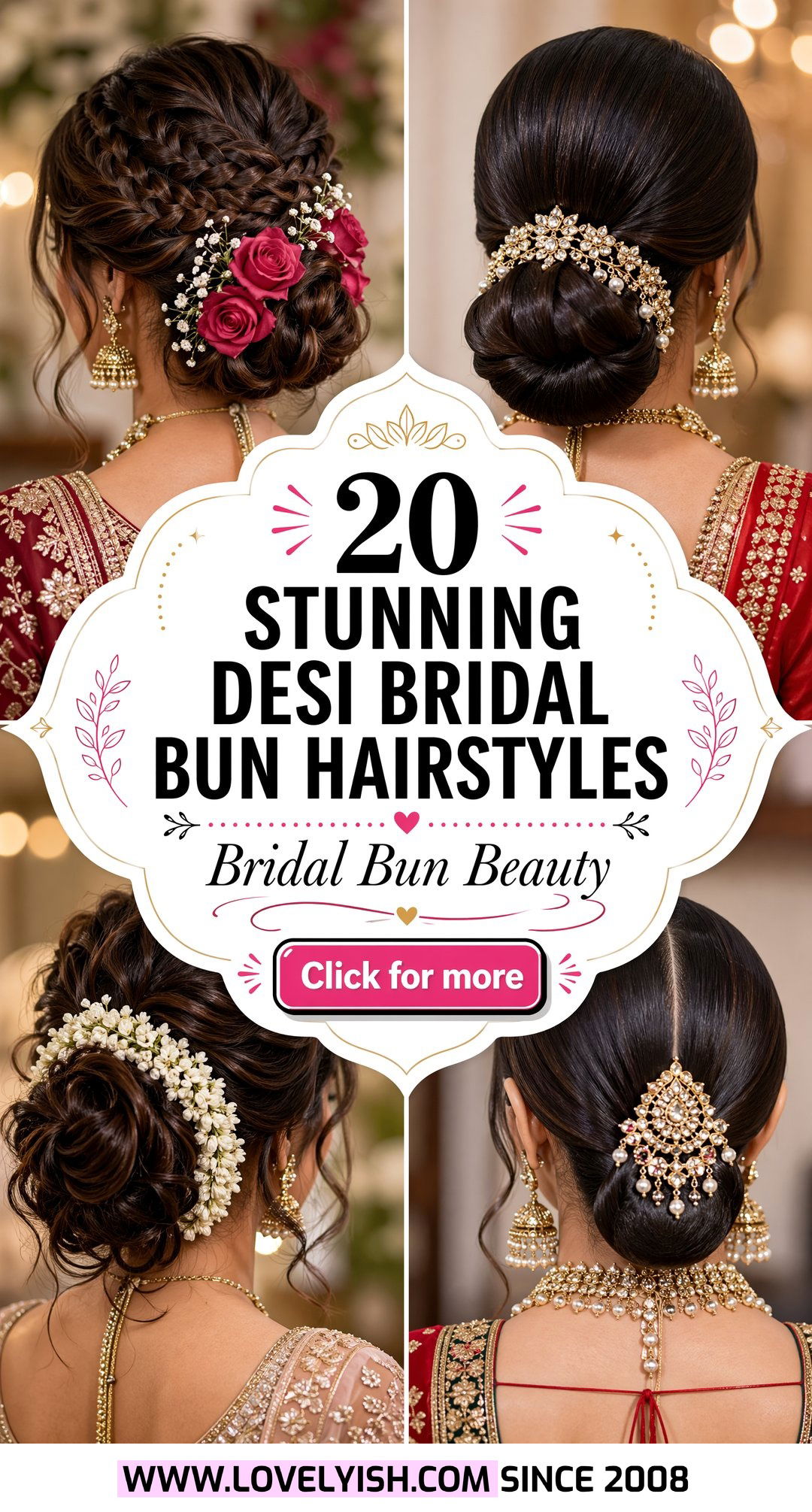
Soft jasmine fragrance, gleaming jewelry, and a perfectly set bun can instantly make a desi bride feel complete and confident on her big day. Desi bridal bun hairstyles are all about balance: tradition, comfort, and a polished finish that lasts through long rituals, photos, and dancing. Whether you are wearing a lehenga, saree, or gharara, the bun you choose influences how your dupatta or pallu sits, how your jewelry shines, and even how comfortable you feel for hours. In this guide, you will find twenty complete desi bridal bun looks, each explained in simple, practical language so you can picture how it will look from the front, side, and back. You will also find tips to match each bun with your outfit, face shape, and jewelry, so you can walk into your wedding day knowing your hair is fully taken care of.
1. Classic Gajra Bridal Bun
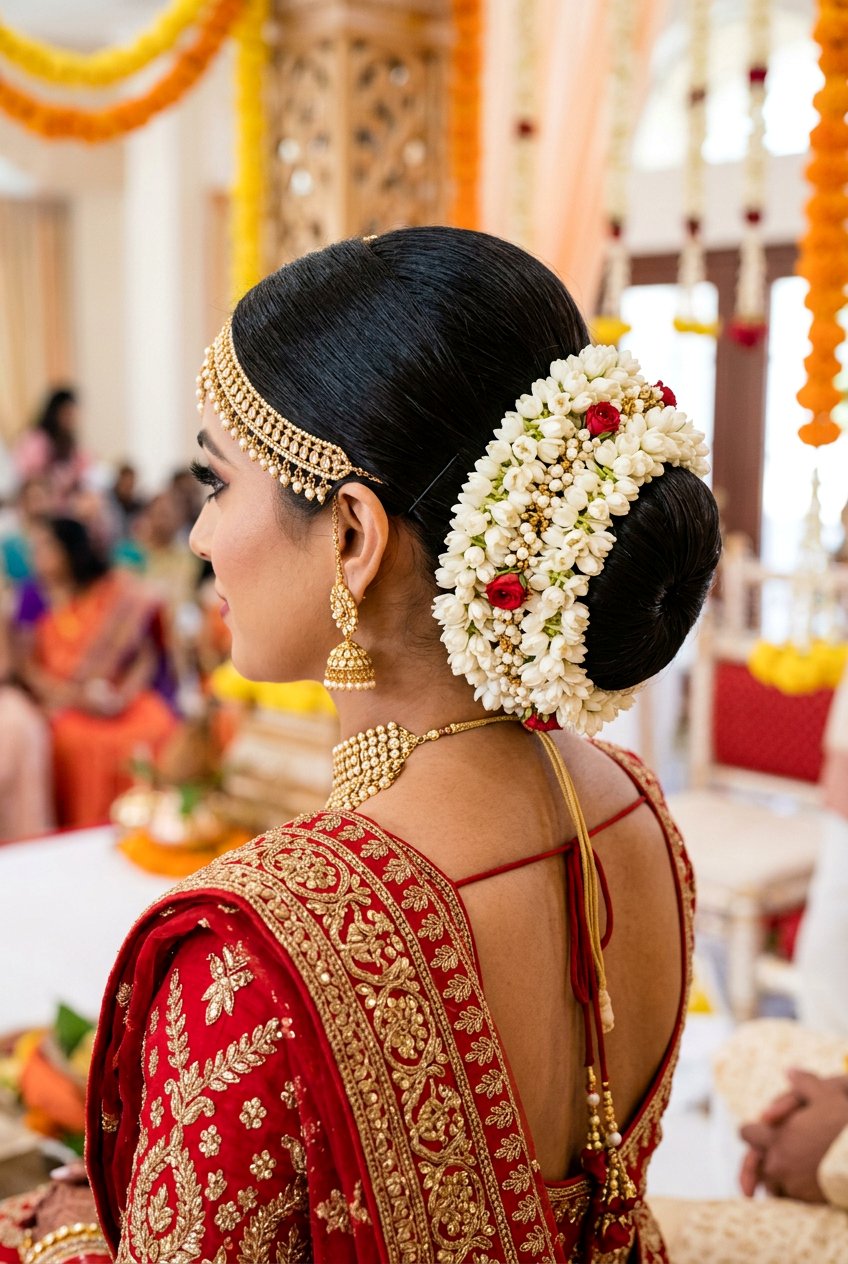
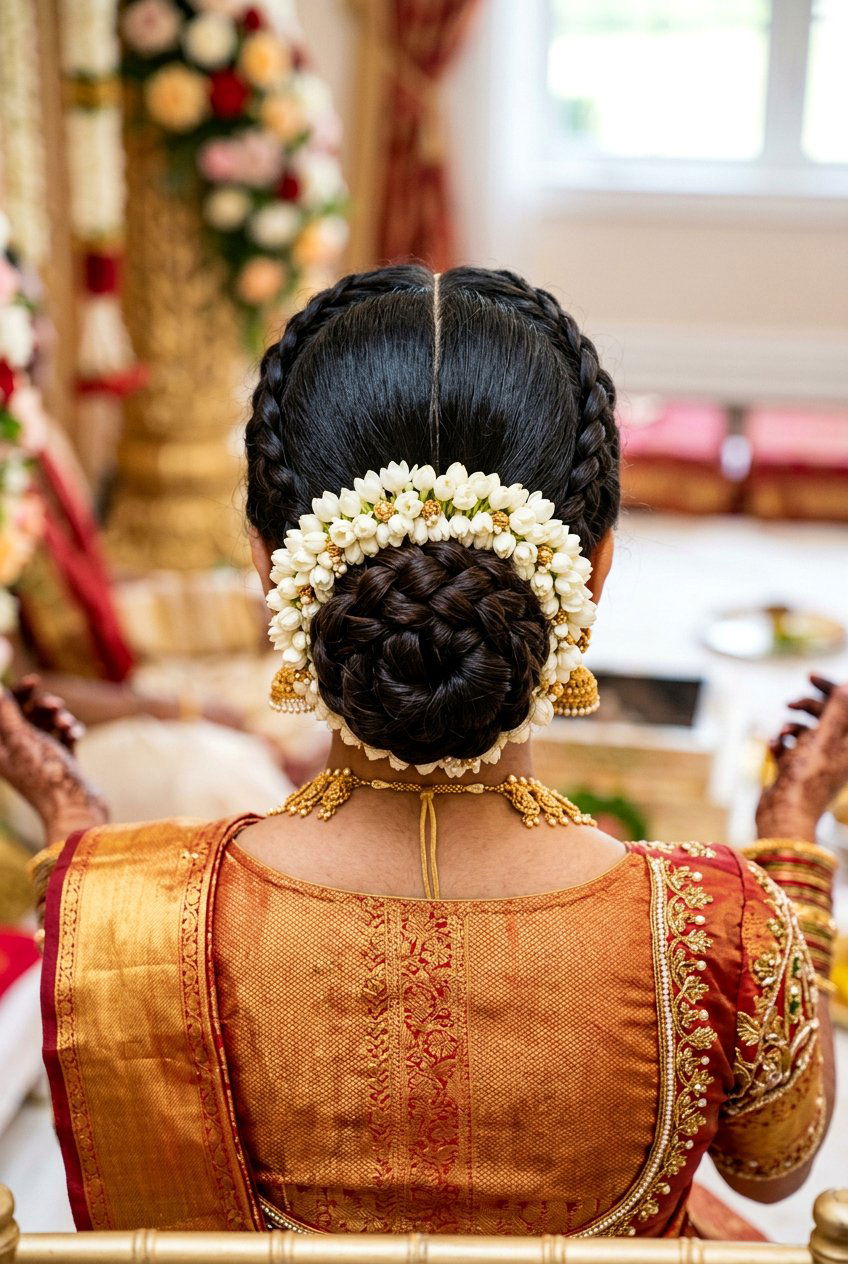
A classic gajra bridal bun is the first image many people picture when they think of a traditional desi bride, and for good reason. This look starts with sleek, center-parted hair pulled into a firm, round bun at the back of the head, usually at mid-level rather than too high or too low. The bun is then wrapped in fresh jasmine garlands, creating a fragrant, white halo that contrasts beautifully with deep red or maroon bridal outfits. This hairstyle pairs well with heavy gold jewelry, big jhumkas, and a bold maang tikka because the clean structure of the bun lets the accessories stand out. It suits straight or slightly wavy hair and works best when you use padding or extensions to achieve a full, round shape that holds the gajra securely. Brides who want a timeless, photogenic look that feels properly traditional often choose this as their main wedding ceremony hairstyle.
2. Low Bun With Maang Tikka And Passa
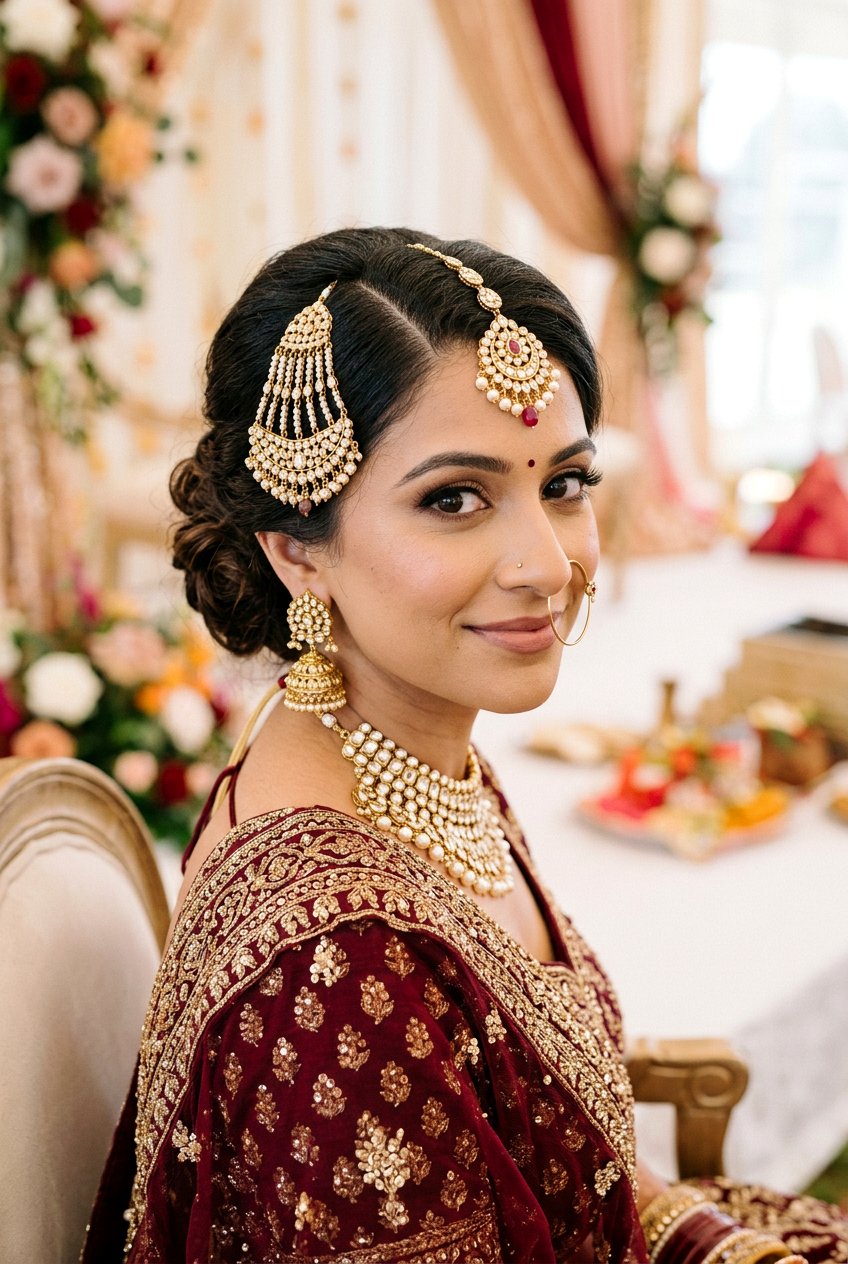
A low bun with maang tikka and passa creates a regal, slightly Mughal-inspired bridal look that photographs beautifully from every angle. Here, the hair is usually parted in the center or slightly to one side, then smoothed back into a neat low bun at the nape of the neck. The maang tikka anchors the center of the forehead, while a passa drapes delicately on one side, creating a frame around the face. This combination works especially well with shararas, ghararas, and heavily embroidered lehengas, because the bun sits low enough to support a dupatta over the head without disturbing the jewelry. The bun itself can be either sleek or slightly textured, but it should feel firm so the weight of the jewelry does not pull it down. This style flatters round, oval, and heart-shaped faces by drawing attention to the eyes and cheekbones, making it ideal for close-up bridal portraits.
3. South Indian Bridal Bun With Temple Jewelry
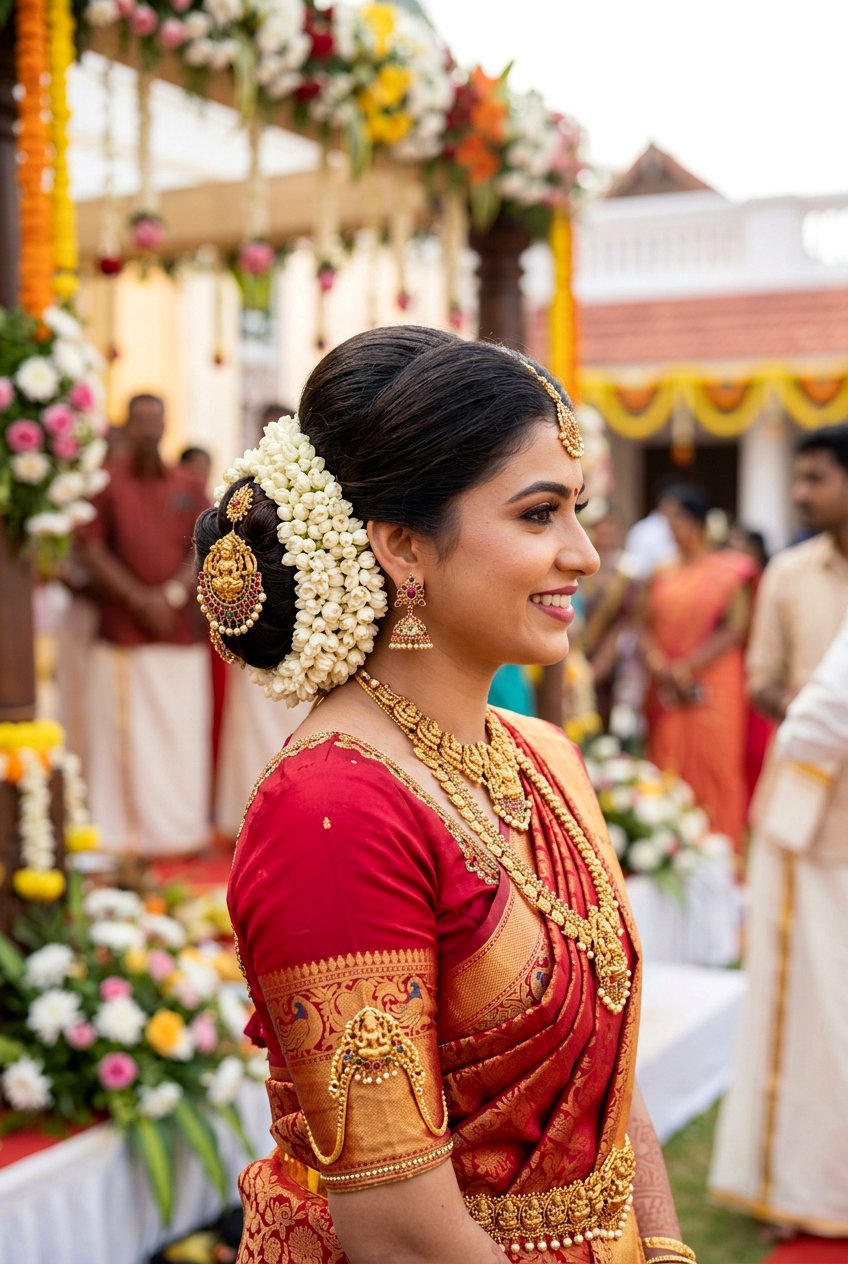
A South Indian bridal bun with temple jewelry is all about grandeur and cultural richness, making it perfect for Kanjeevaram sarees and traditional silk drapes. The hair is often parted in the middle, then pulled into a big, voluminous bun placed slightly lower on the back of the head. Fresh jasmine strands or a flower veni are arranged around or over the bun, while gold temple jewelry hairpieces and chains extend along the parting and crown. This creates a continuous line of sparkle from the forehead to the bun, which looks striking in side-profile shots. The bun itself is usually structured with padding or extensions to hold the weight of flowers and jewelry, so it stays intact through long ceremonies. This hairstyle suits brides who prefer a very traditional look with lots of detail, and it works especially well when coordinated with heavy gold necklaces, waist belts, and long earrings.
4. High Bridal Bun With Matha Patti
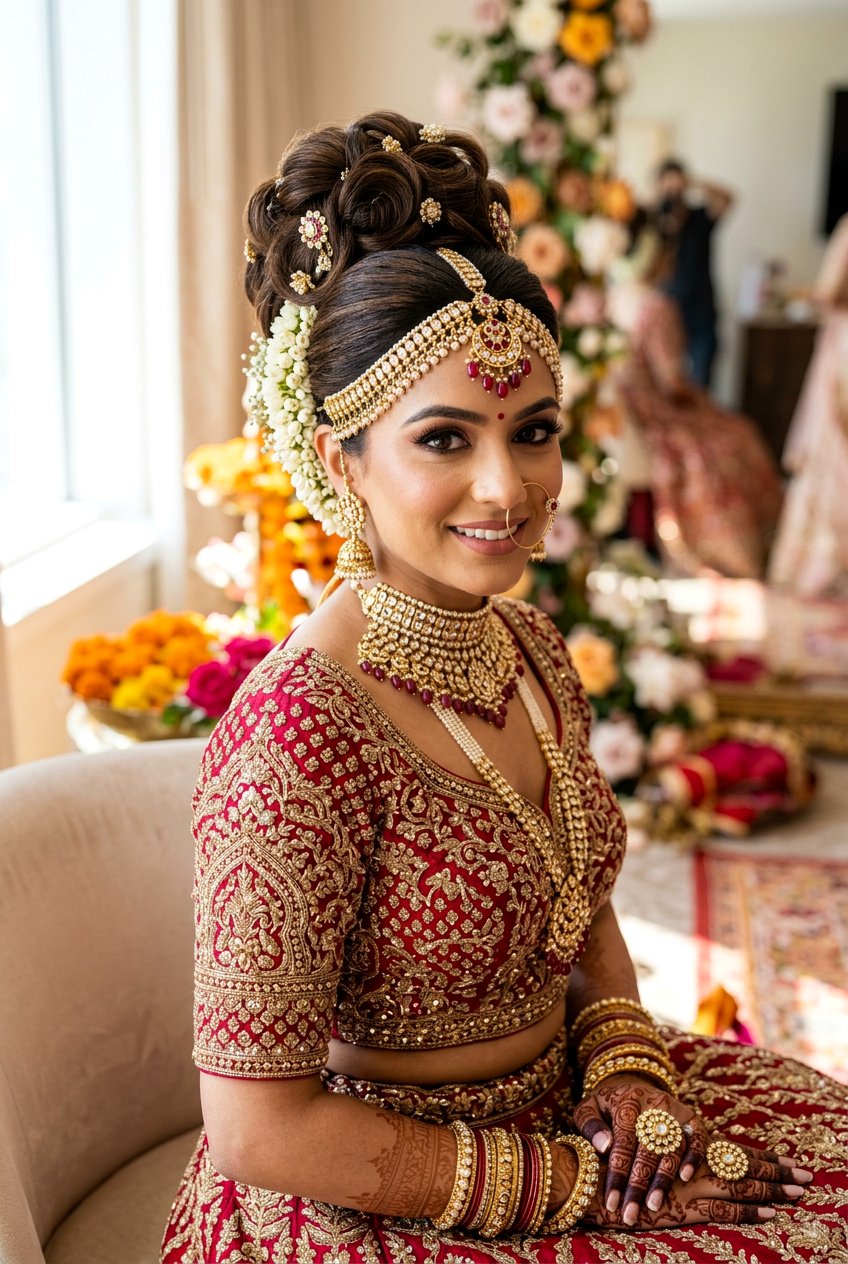
A high bridal bun with a matha patti gives a statuesque, elegant look that instantly elongates the neck and lifts the overall silhouette. In this style, the bun sits higher on the back of the head or near the crown, giving extra height and drama. The matha patti frames the forehead with delicate chains running along the hairline, connecting to a central tikka, so the front view feels rich and ornate. The bun itself can be smooth or softly textured, but it needs to be secure because the matha patti’s hooks or pins anchor into the hair around it. This look pairs beautifully with high-neck blouses, structured lehengas, and statement earrings, as it keeps hair neatly off the shoulders and chest. It is especially flattering for round or small faces that benefit from extra height, and it works well for brides who want a royal, camera-ready appearance in every wedding photo.
5. Messy Low Bridal Bun With Soft Curls
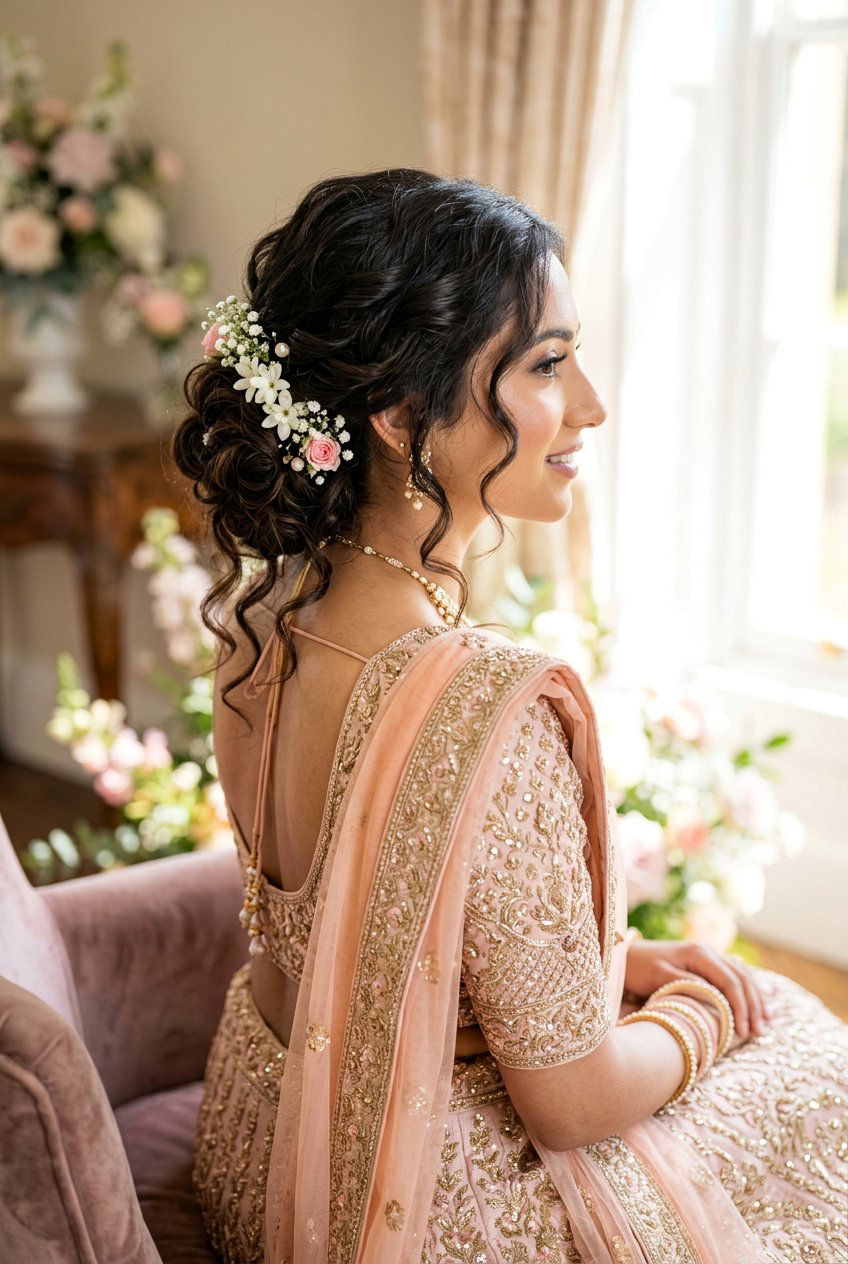
A messy low bridal bun with soft curls offers a romantic twist on traditional desi bridal hair, perfect for modern brides who still want a classic bun shape. The hair is generally parted in the center or slightly off-center, with the front sections softly curled and left out to frame the face. The rest of the hair is twisted into a low, textured bun at the nape, with deliberate loose pieces and gentle waves for a relaxed feel. This style looks beautiful with pastel lehengas, floral jewelry, and lighter makeup because it gives a soft, dreamy vibe instead of a very rigid finish. It works especially well on wavy or curled hair, but straight hair can be curled first for extra movement. This bun suits outdoor weddings, day events, and brides who like a more effortless look while still keeping hair securely up and out of the way.
6. Braided Crown Bun For Desi Bride
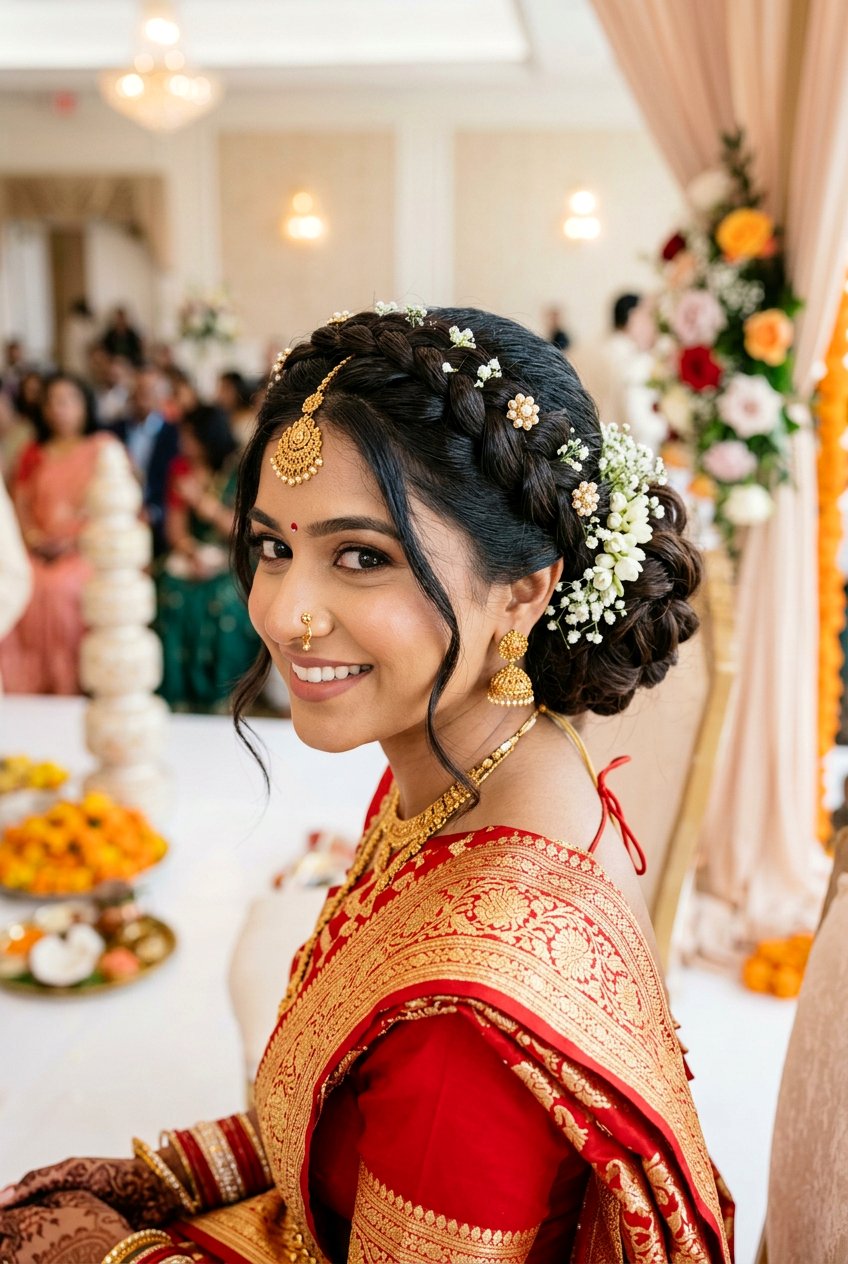
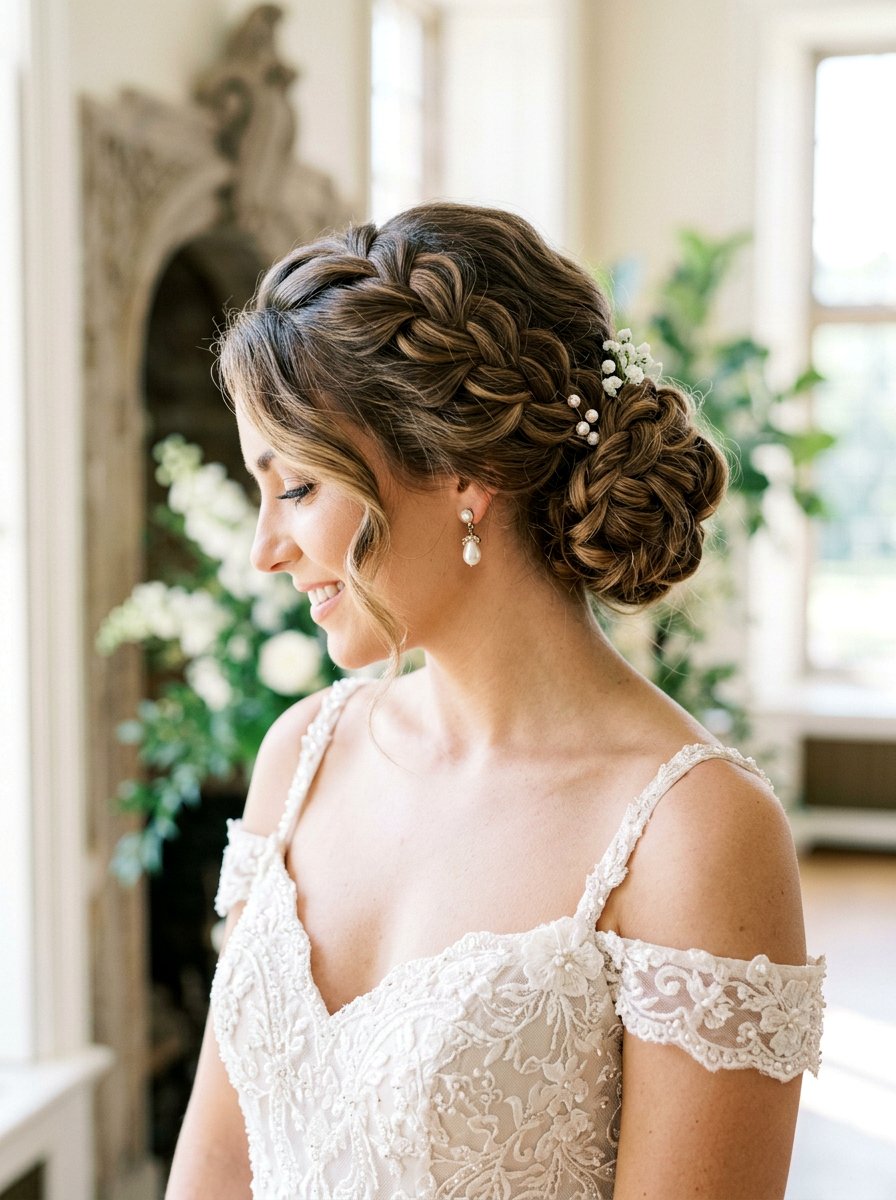
A braided crown bun for a desi bride combines traditional structure with intricate detail that looks gorgeous in close-up photos. The look usually begins with a braid created along the front hairline or around the head like a crown, which then feeds into a bun at the back. This bun may sit at mid-height or lower, depending on face shape and outfit neckline, but the braided sections add texture and interest. Flowers, tiny pearls, or hair jewelry can be tucked along the braid and around the bun to enhance the bridal feel. This style works beautifully with both sarees and lehengas and suits brides who want something different from a plain sleek bun without abandoning the classic updo. It is especially flattering for brides with medium to long hair and looks great in side and back profile shots, where the braided detail is most visible.
7. Low Bun Covered With Gajra
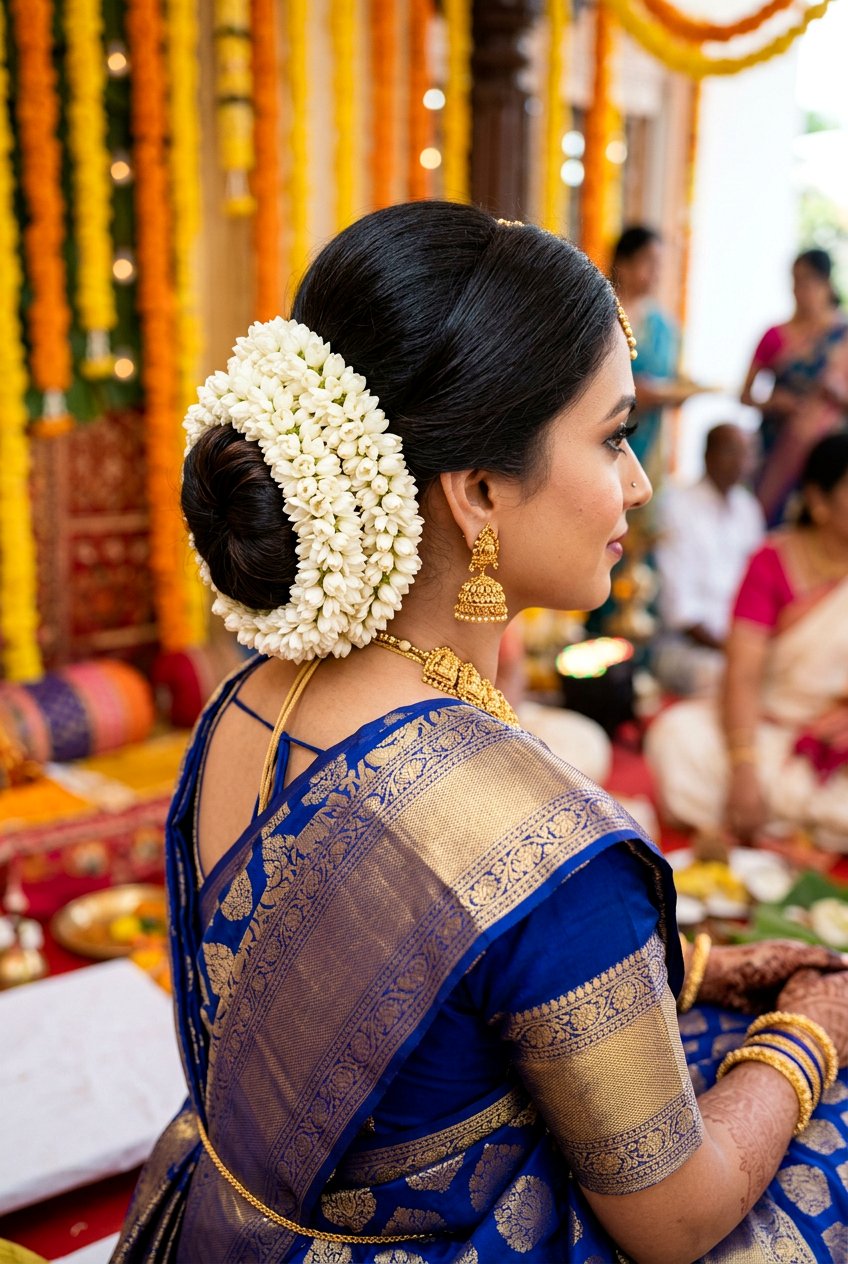
A low bun covered with gajra is a lush, floral-forward version of the classic bridal bun, ideal for brides who love a strong traditional touch. In this style, the bun is usually placed at the nape of the neck, formed into a round shape using padding or extensions if needed. Instead of a thin gajra wrapped once, multiple layers or a wider veni of jasmine or mixed flowers fully cover the bun, creating a dense floral cushion. The front can be sleek and center-parted or lightly puffed at the crown for height, depending on preference. This hairstyle matches beautifully with silk sarees, Banarasi lehengas, and heavy jewelry because the bun itself becomes a statement accessory. It is perfect for pheras or nikah ceremonies where the bride’s back is visible to guests, making the flower-covered bun a main visual highlight.
8. Side Part Bridal Bun With Puff
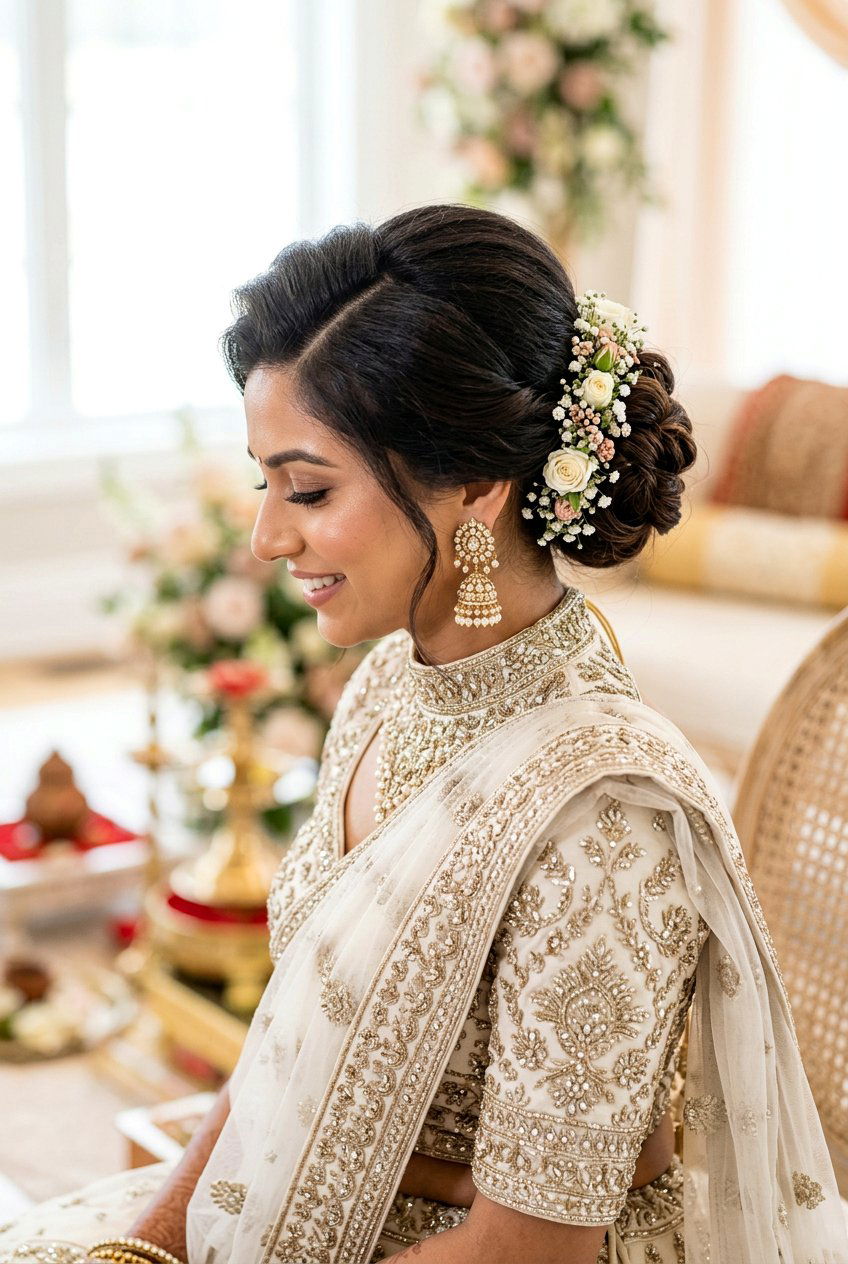
A side part bridal bun with puff is great for brides who want subtle volume around the crown without going too dramatic. The hair is parted to one side, and a soft puff or lift is created at the front or crown area using gentle backcombing or padding. The rest is smoothed back into a bun placed at mid-height or low, depending on how you want your dupatta to sit. The puff gives the face more definition and can make round or fuller faces appear slightly longer and more balanced. You can add flowers, pins, or a small gajra ring around the bun for a traditional touch. This look works well with both minimal and heavy jewelry because the puff draws the eye upward, framing the face while the bun keeps everything secure for long hours.
9. Pakistani Bridal Bun With Dupatta Setting
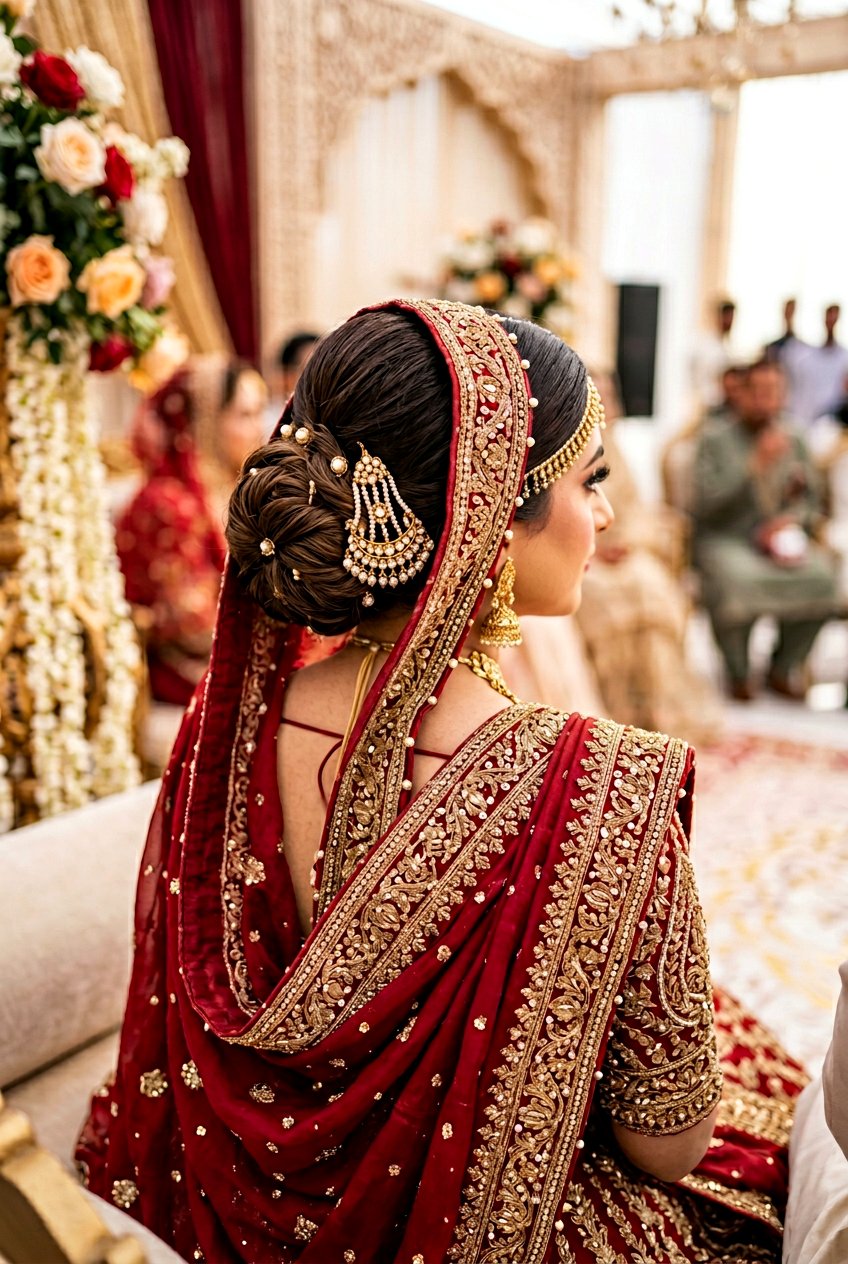
A Pakistani bridal bun with dupatta setting focuses strongly on how the hair supports the drape of the dupatta while still looking elegant and neat. The bun is usually placed mid to low on the back of the head so that the dupatta can be secured with pins over it without slipping. The front may be softly parted, with slight volume around the crown and face-framing layers curled for a gentle, romantic effect. Jewelry like a tikka and jhoomar or passa can be placed carefully so they sit comfortably even under the dupatta. The bun itself is typically firm and slightly larger so it acts almost like a base for the veil. This hairstyle suits long events where the dupatta stays on the head for hours, giving the bride comfort, structure, and a polished look for photos from every angle.
10. Sleek Middle Part Bridal Bun
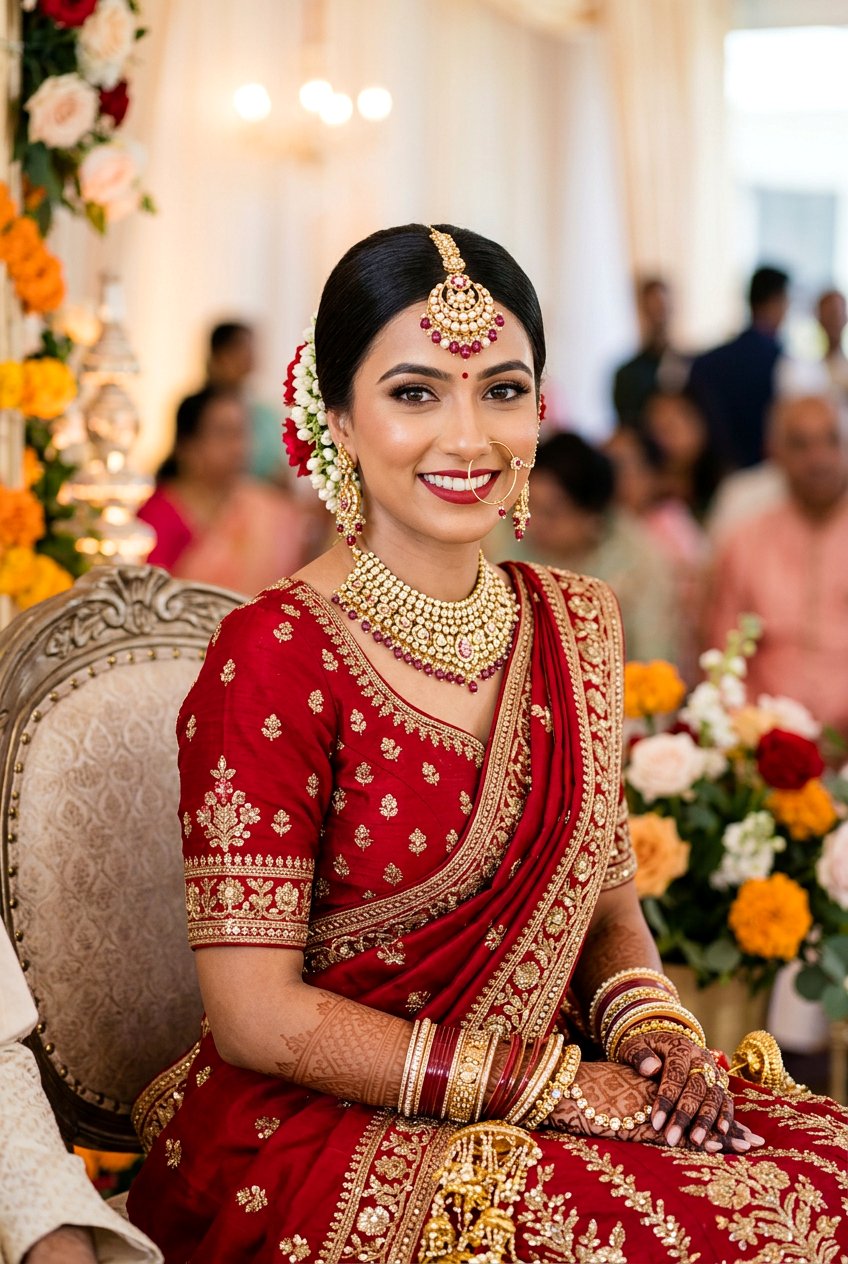
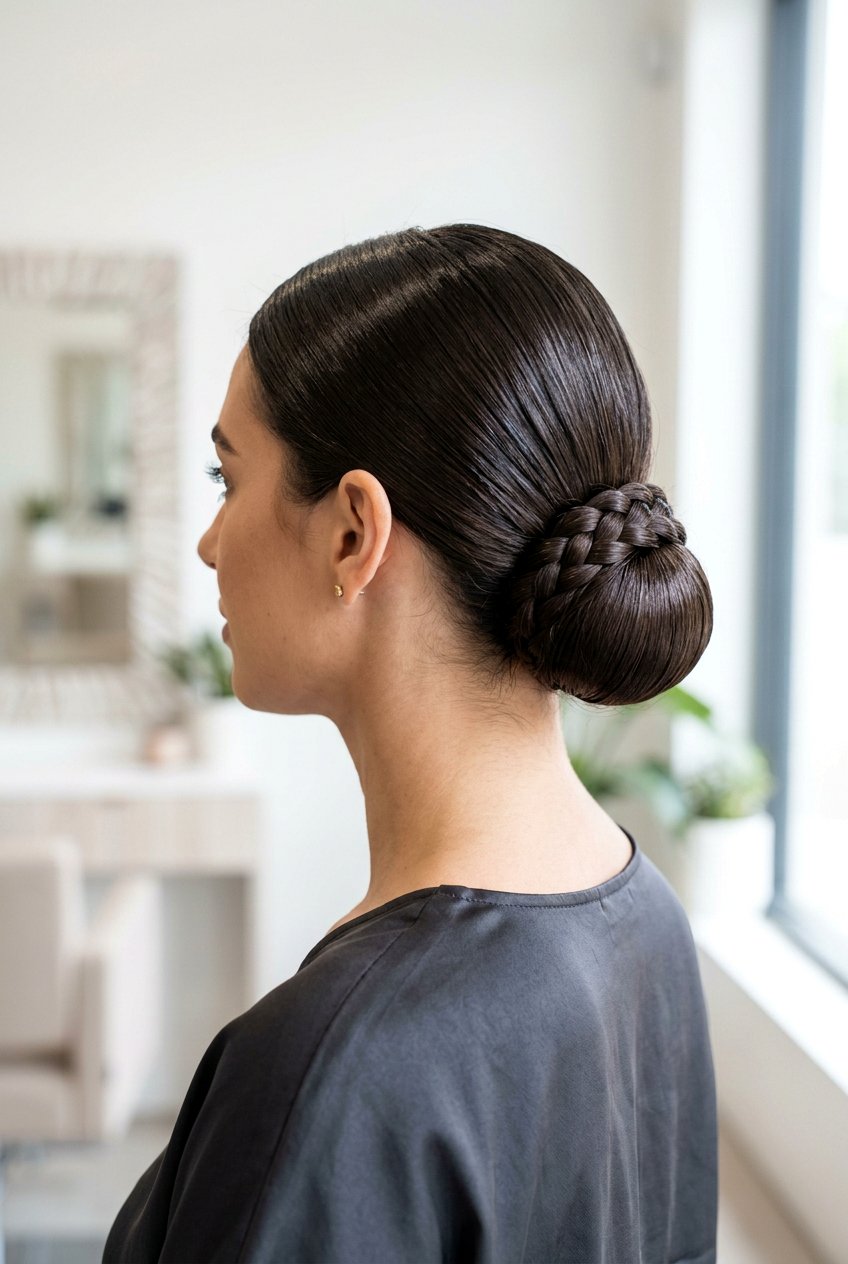
A sleek middle part bridal bun is an ideal choice for brides who love clean lines and a polished, modern-traditional finish. The hair is parted sharply down the center, smoothed with serum or styling cream, and pulled tightly back into a neat bun at mid or low height. This simplicity allows facial features, makeup, and jewelry like a bold maang tikka or statement earrings to stand out without competition. The bun is usually smooth and round, with minimal texture or loose strands, giving a sophisticated look that works well in high-definition photos. You can add a thin gajra ring, a jeweled bun pin, or keep it completely minimal depending on your outfit. This style suits almost every face shape but is especially flattering on oval and heart-shaped faces, and pairs nicely with both deep red and pastel bridal palettes.
11. Floral Decorated Bridal Bun For Mehndi
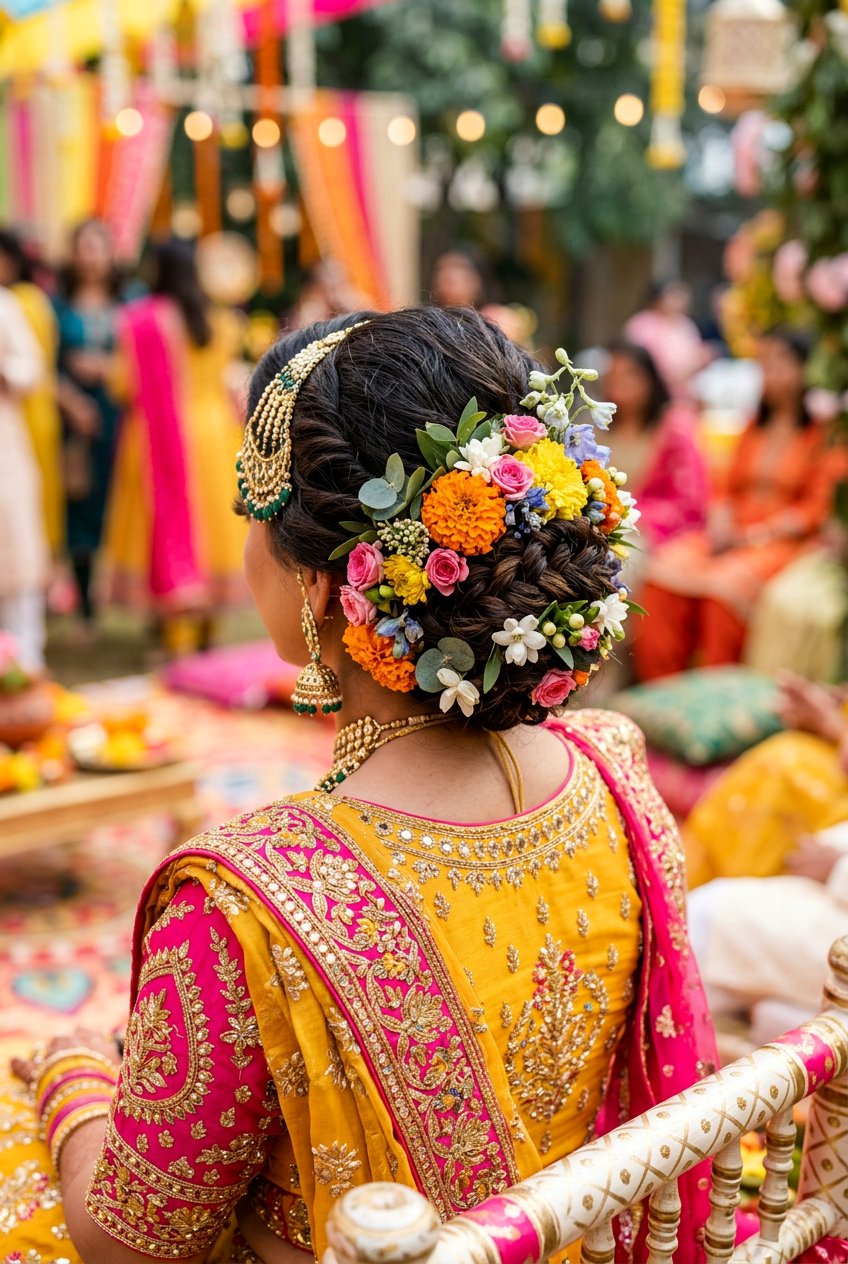
A floral decorated bridal bun for mehndi events leans into color, fun, and a slightly softer finish compared to the main wedding ceremony look. The hair is tied into a bun, usually at mid or low height, with some texture or loose twists rather than a very strict slick-back. Fresh flowers in bright shades like yellow, orange, pink, or mixed blooms are pinned around and over the bun, creating a playful, festive feel. The front can have soft waves or braids, and you can skip heavy jewelry in favor of floral jewelry or lighter earrings. This bun pairs perfectly with lighter, colorful outfits and lets you dance or move easily during functions. It is ideal for brides who want their mehndi hair to look clearly bridal but still relaxed, youthful, and different from their main-day hairstyle.
12. Bridal Bun With Braided Back Detail
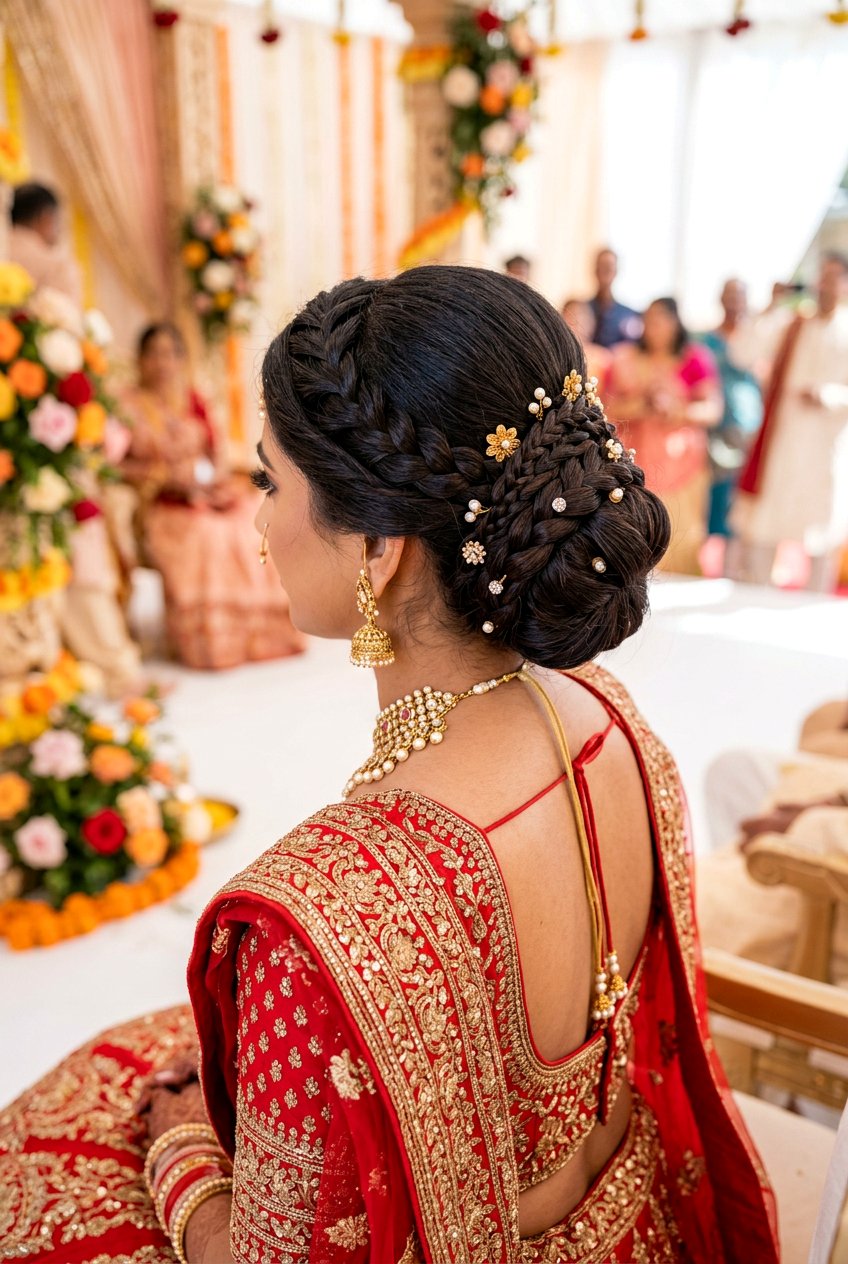
A bridal bun with braided back detail is perfect if you want the back of your hair to look intricate and special in photos and videos. In this style, one or more braids are created from the sides or mid-section of the hair and directed toward the bun, almost like a woven frame. The bun sits at mid height, built over or under the joining point of the braids, so the pattern is clearly visible. Flowers, beads, or small pins can be placed along the braids and around the bun to highlight the design. The front can be simple and sleek or slightly voluminous, depending on your taste and face shape. This look suits lehengas and sarees alike and works especially well for brides with medium to long hair who want a unique twist on the traditional bun.
13. Bun With Juda Pin And Hair Chains
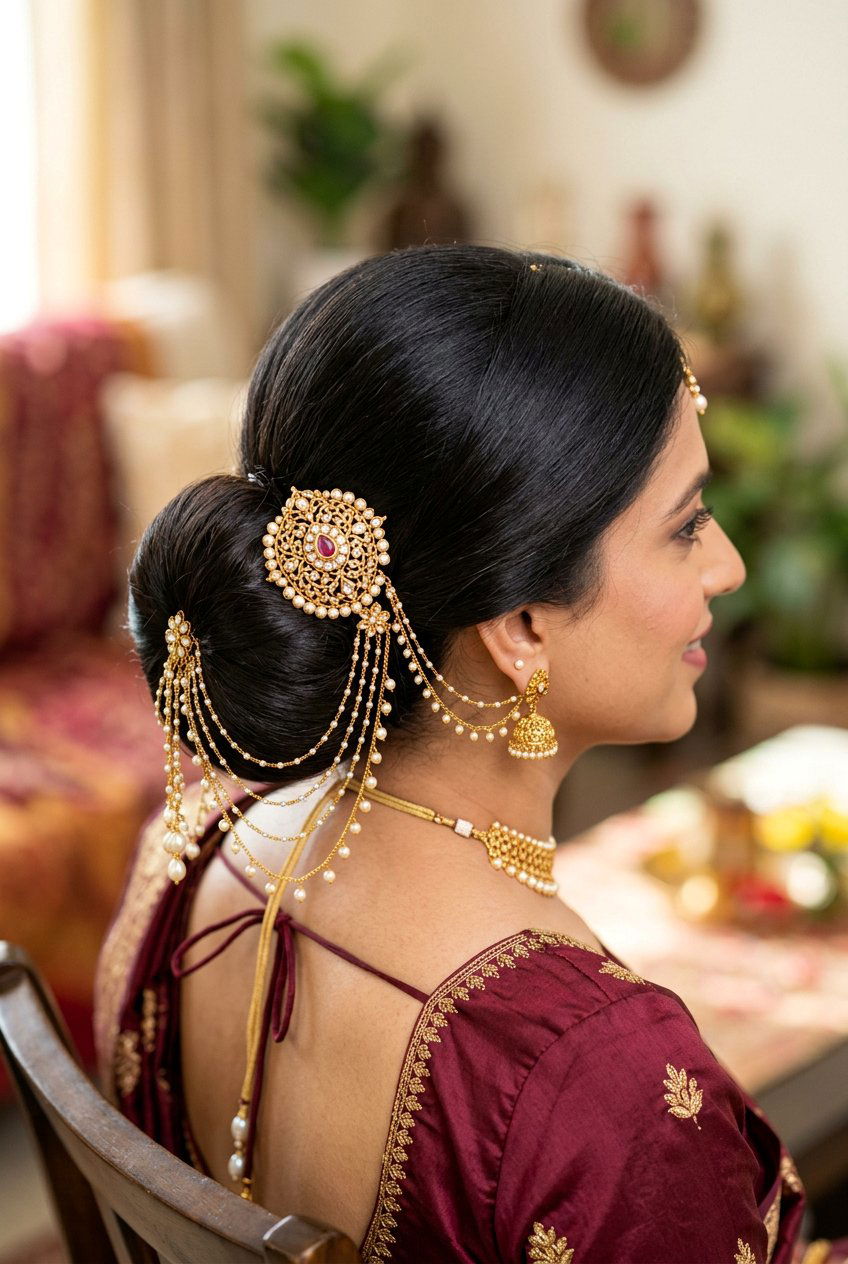
A bun with juda pin and hair chains creates a glamorous, jewelry-focused bridal look that shines under stage and camera lights. The bun is usually smooth and firm, placed mid or low on the head to give enough room for decorative pins and chains. A large juda pin or brooch sits at the center of the bun, often embellished with stones, pearls, or kundan work. Delicate hair chains can be draped from the sides toward the bun, or across the crown, adding extra sparkle. This style pairs best with richly embroidered outfits and heavier makeup because it leans toward a more dramatic aesthetic. It works well for reception or main ceremony looks where the bride wants her hairstyle to be as eye-catching as her jewelry and outfit.
14. Messy High Bridal Bun With Loose Strands
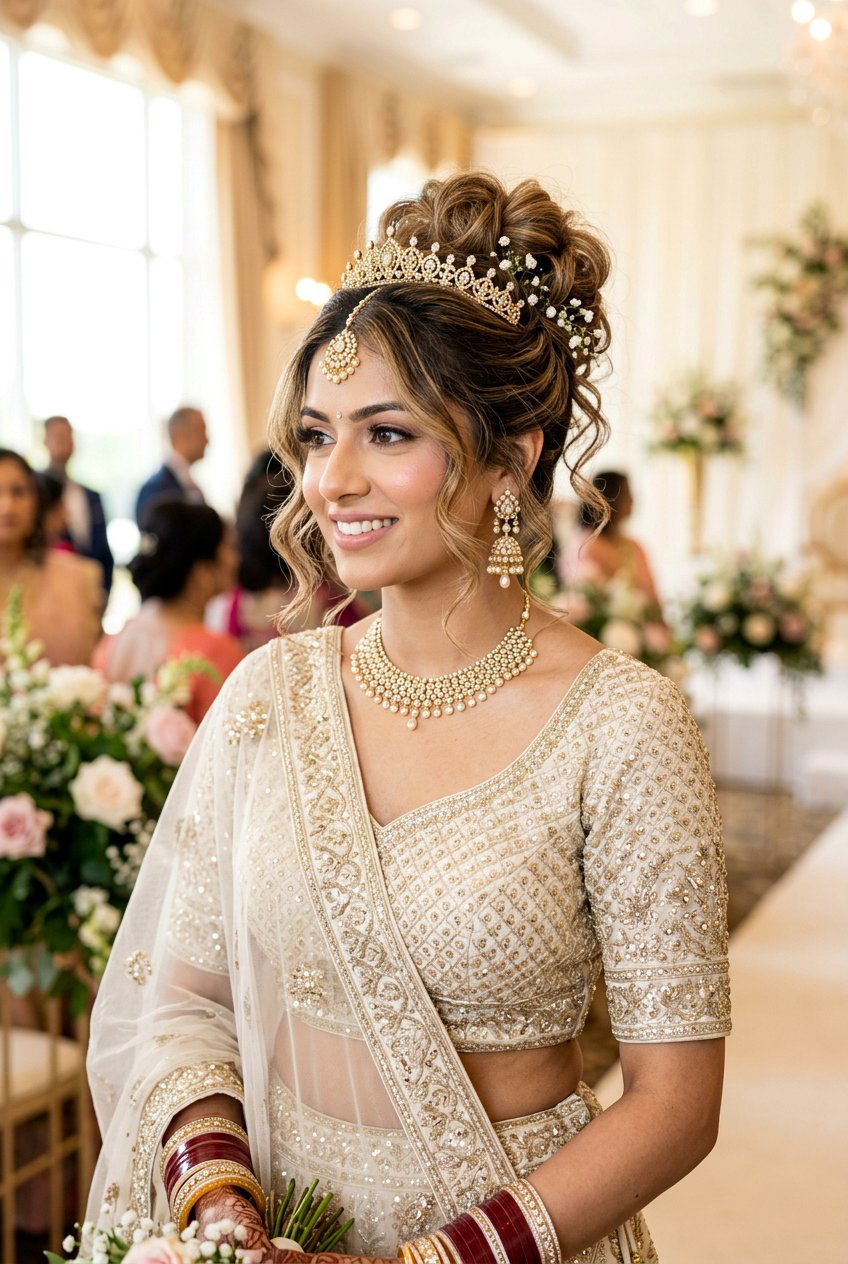
A messy high bridal bun with loose strands brings a soft, editorial-inspired touch to desi bridal hair while still keeping the traditional updo shape. The bun is set high on the back of the head or near the crown, with volume created using backcombing or hair padding. Sections are loosely twisted and pinned to form a textured bun, and a few face-framing pieces are curled and left out around the front and sides. This gives movement and softness, which looks beautiful in candid shots and close-ups. Light flowers, delicate pins, or a small gajra ring can be added for a desi finish without making it too heavy. This hairstyle suits lighter, modern lehengas as well as reception gowns and is ideal for brides who want a balance of glam and romance.
15. Traditional Bengali Bridal Bun With Mukut
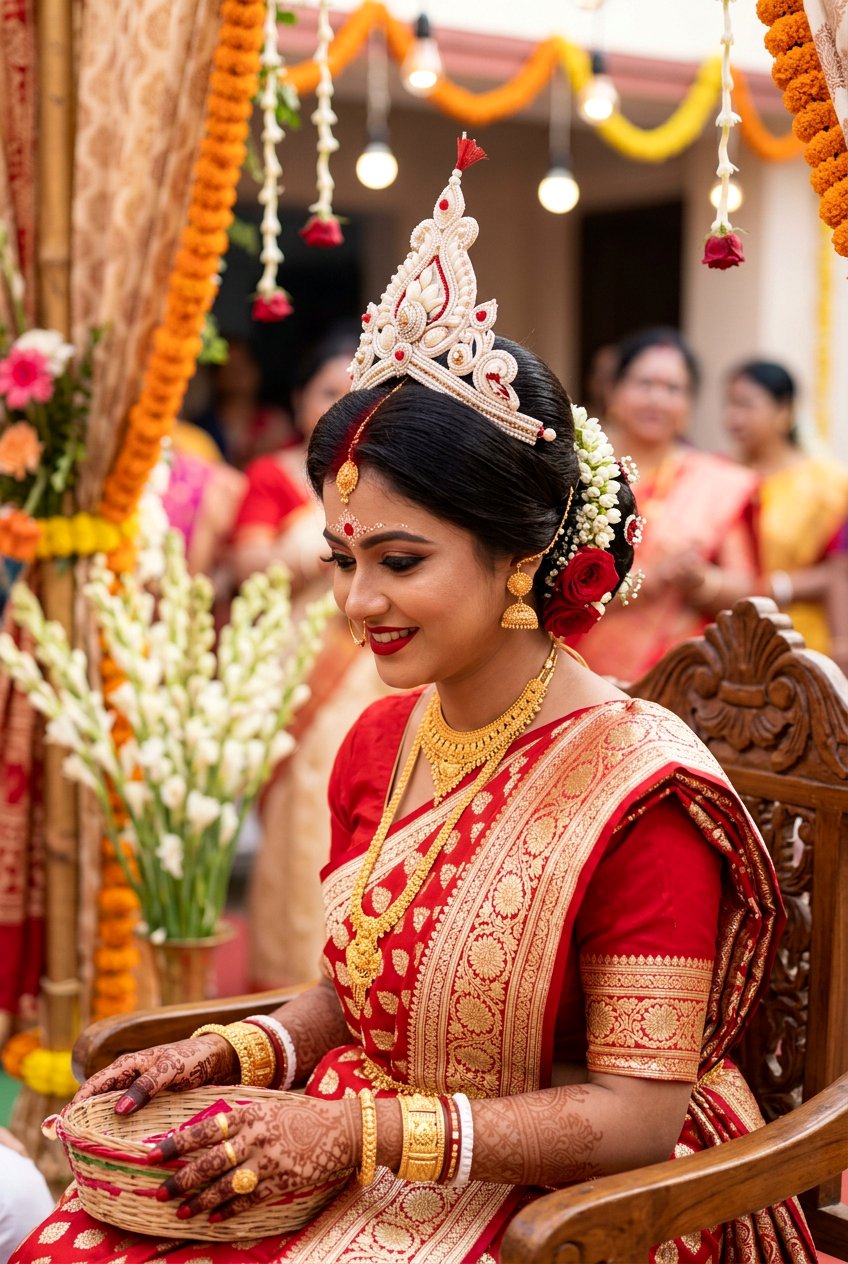
A traditional Bengali bridal bun with mukut is instantly recognizable and full of cultural charm. The hair is typically parted in the middle and smoothed back into a neat, mid-height or low bun that can hold the weight of the headpiece and veil. The signature white or gold bridal mukut sits atop the head, so the bun and front styling must be secure and balanced. The bun may be kept simple or lightly decorated with flowers at the back, allowing the mukut, tikka, and bold eye makeup to remain the main focus. This hairstyle works best with the classic red and white Bengali saree drape but also suits modern variations. It is ideal for brides who want to honor their regional traditions and ensure their look is clearly rooted in that heritage in photos and in person.
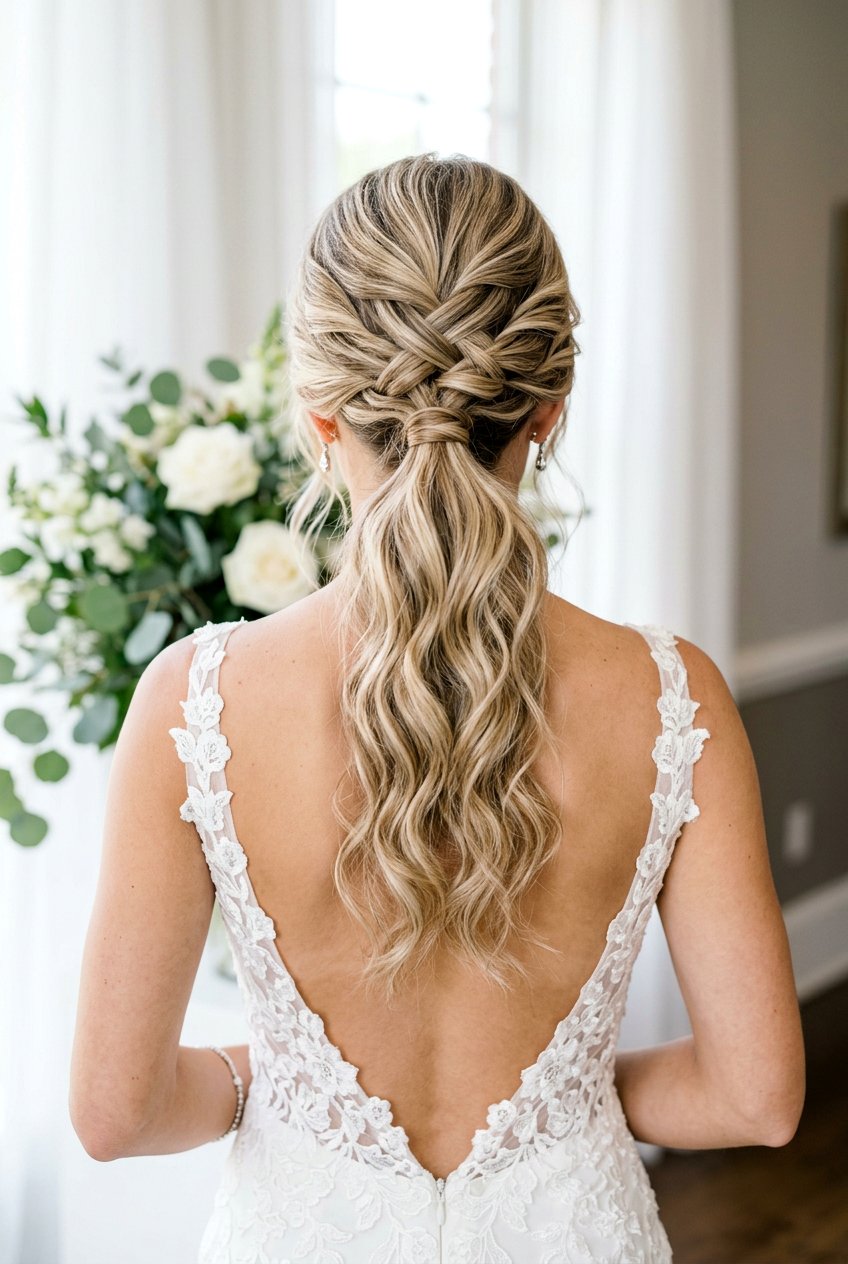
16. Bridal Bun With Layered Gajra And Roses
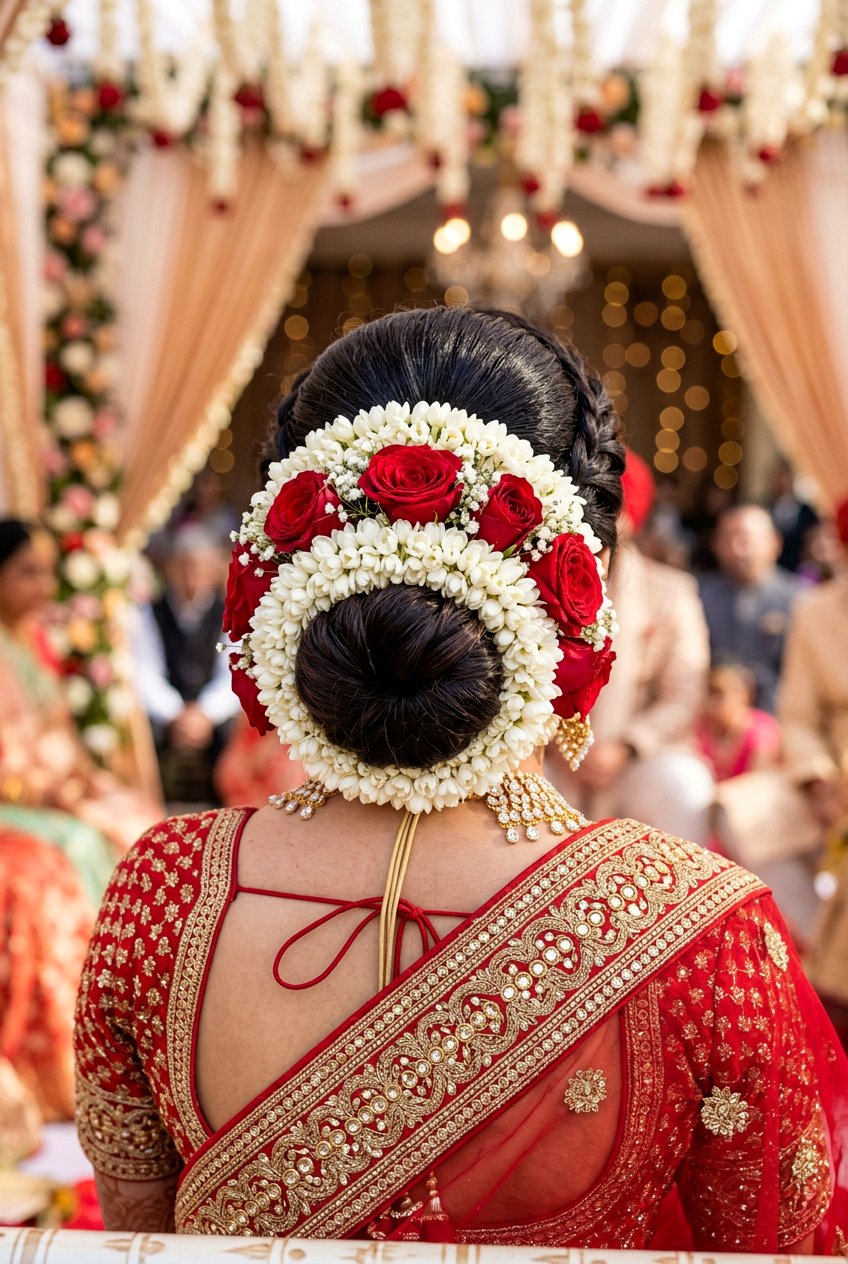
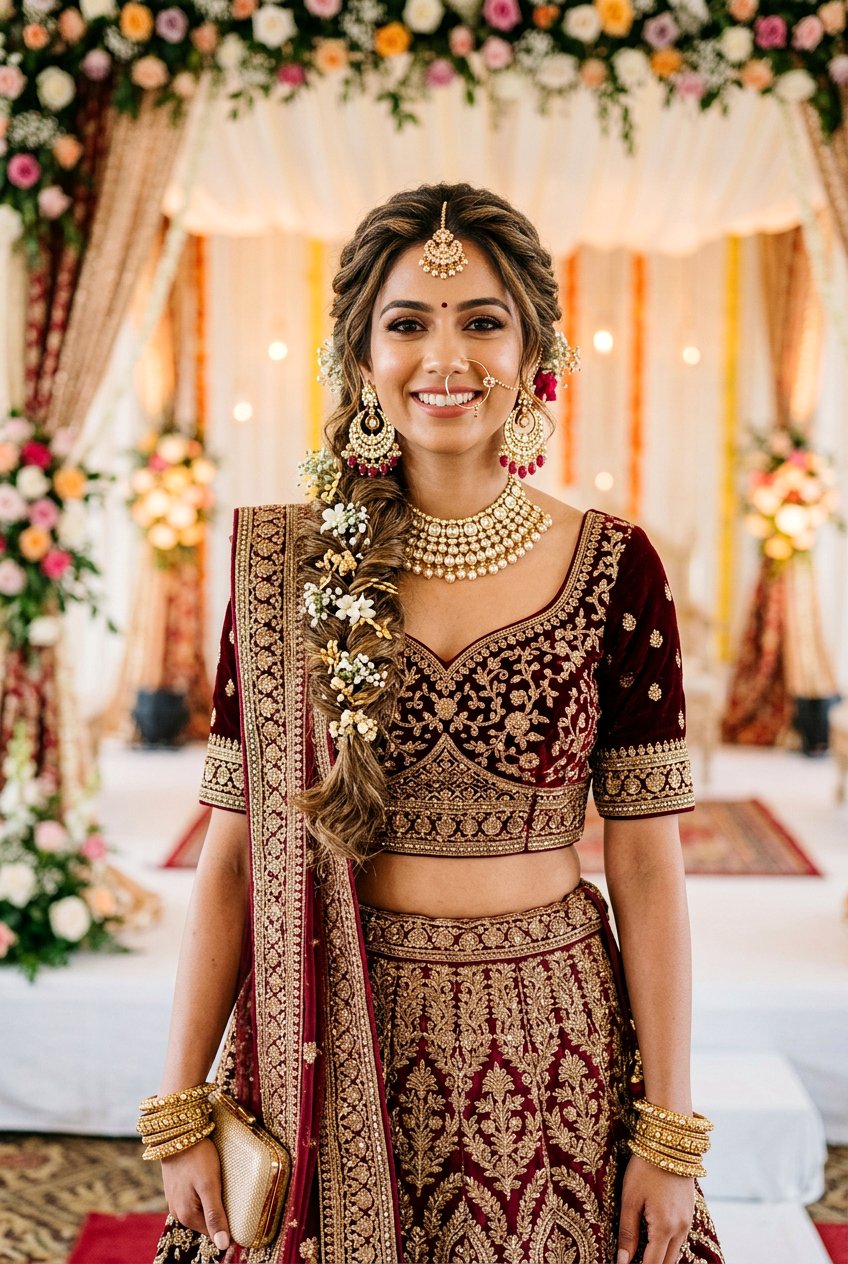
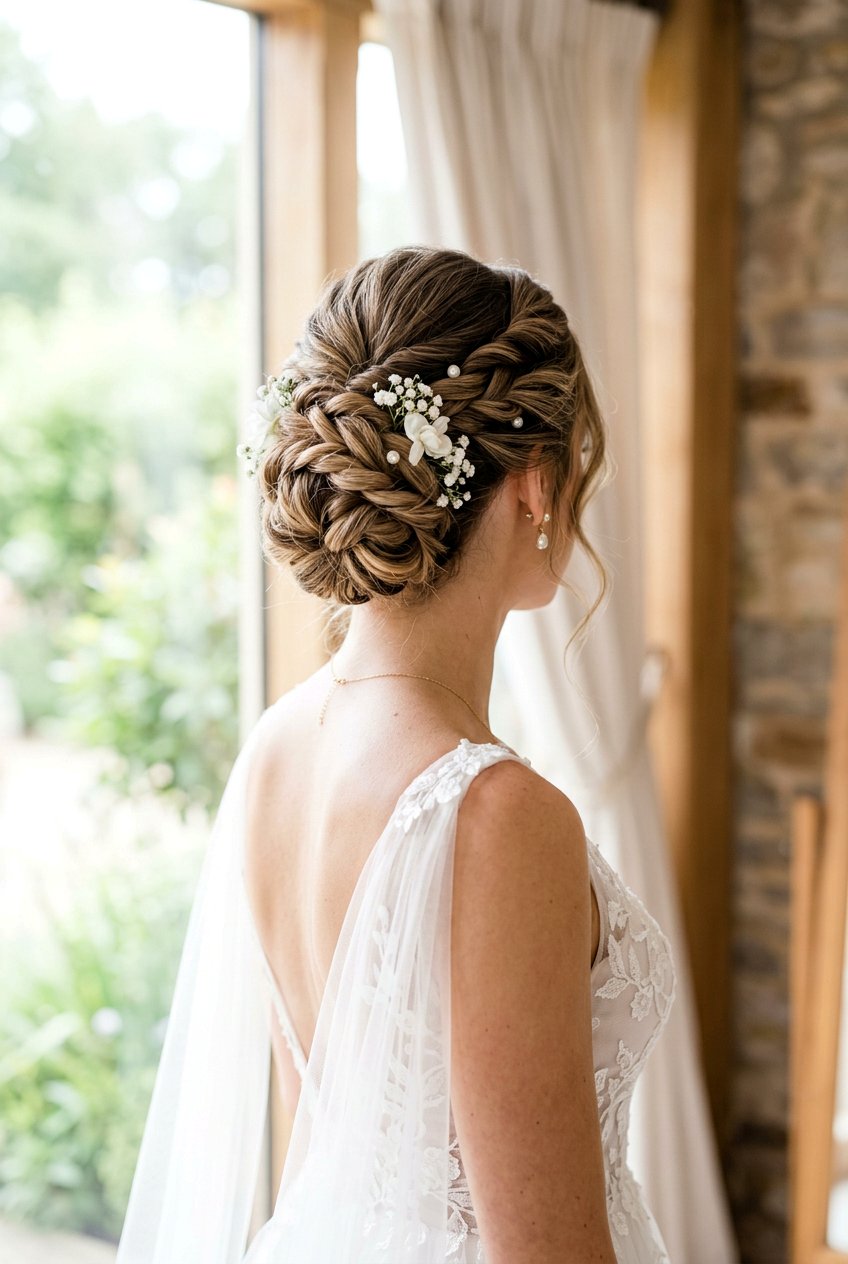
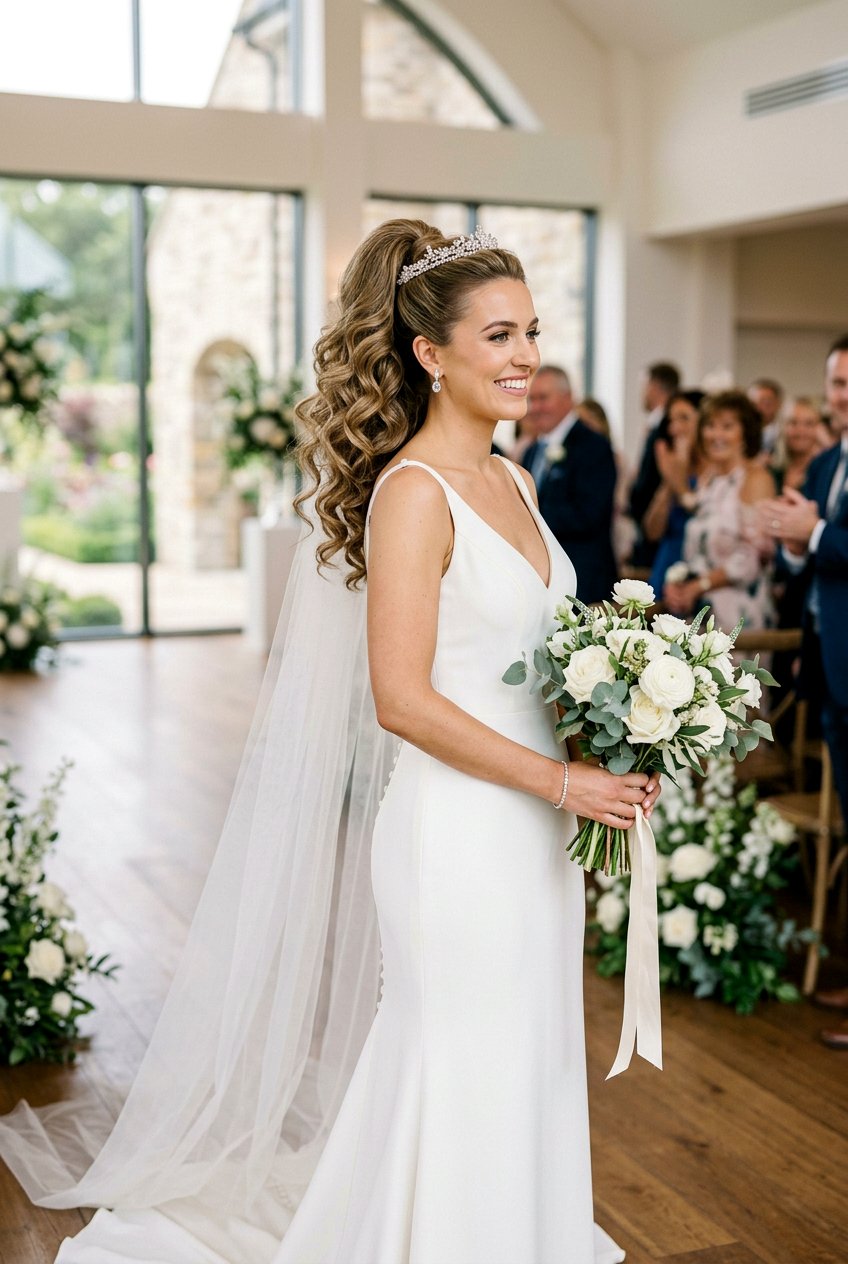
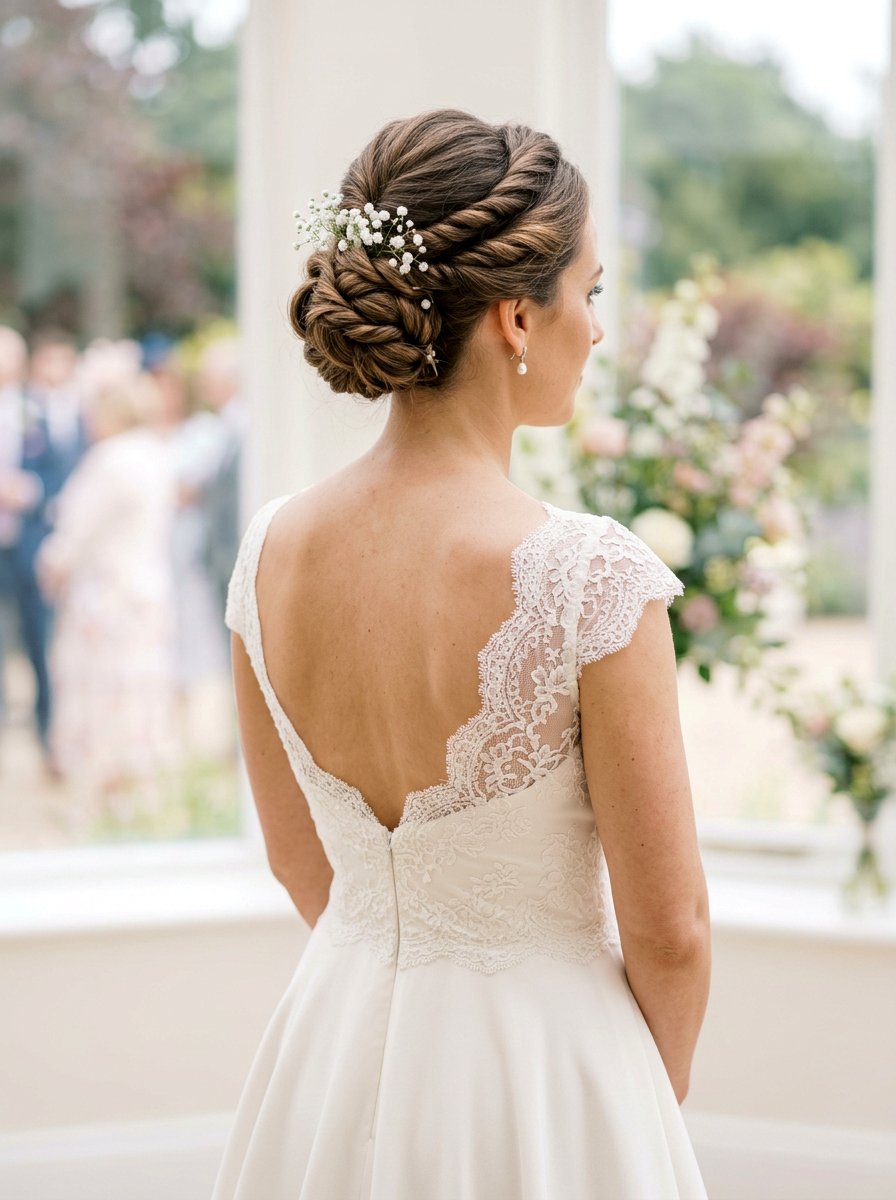
A bridal bun with layered gajra and roses turns the hair into a full floral arrangement that feels luxurious and grand. The bun is usually round and voluminous, placed at mid or low height, giving enough surface area for multiple layers of flowers. First, a ring of jasmine or other small white flowers is wrapped around the bun, followed by fresh red, pink, or pastel roses placed strategically on top or around the edges. This layered effect looks stunning in close-up back shots and adds richness to even a simple bun shape. The front can be sleek or softly voluminous, depending on your outfit and jewelry. This style suits evening weddings, royal-inspired bridal looks, and brides who love dramatic florals as a core part of their appearance.
17. Bun With Twist Front For Round Face
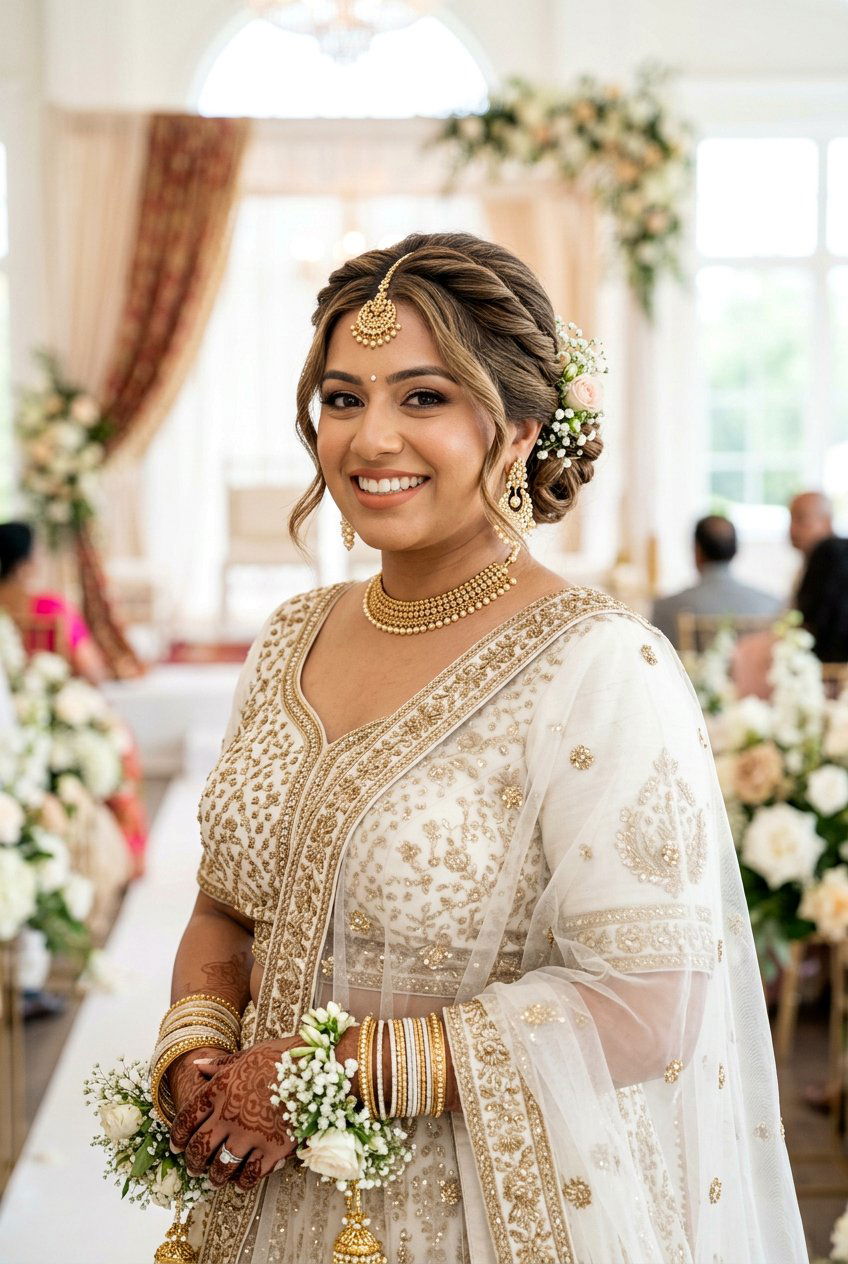
A bun with twist front for a round face focuses on framing and contouring the face shape while maintaining a secure bridal updo. Instead of a plain parting, sections at the front are twisted from each side and pinned back toward the bun, creating subtle angles around the forehead and cheeks. The bun itself can be mid or low height, either sleek or slightly textured, depending on your outfit and event. These twisted sections help visually slim the face and draw attention to the eyes and lips. Light flowers or a slim gajra ring can be added to the bun to keep it aligned with traditional desi bridal looks. This hairstyle is great for brides who find very flat center parts unflattering but still want a clean, elegant bun for their big day.
18. Simple Bridal Bun For Minimal Look
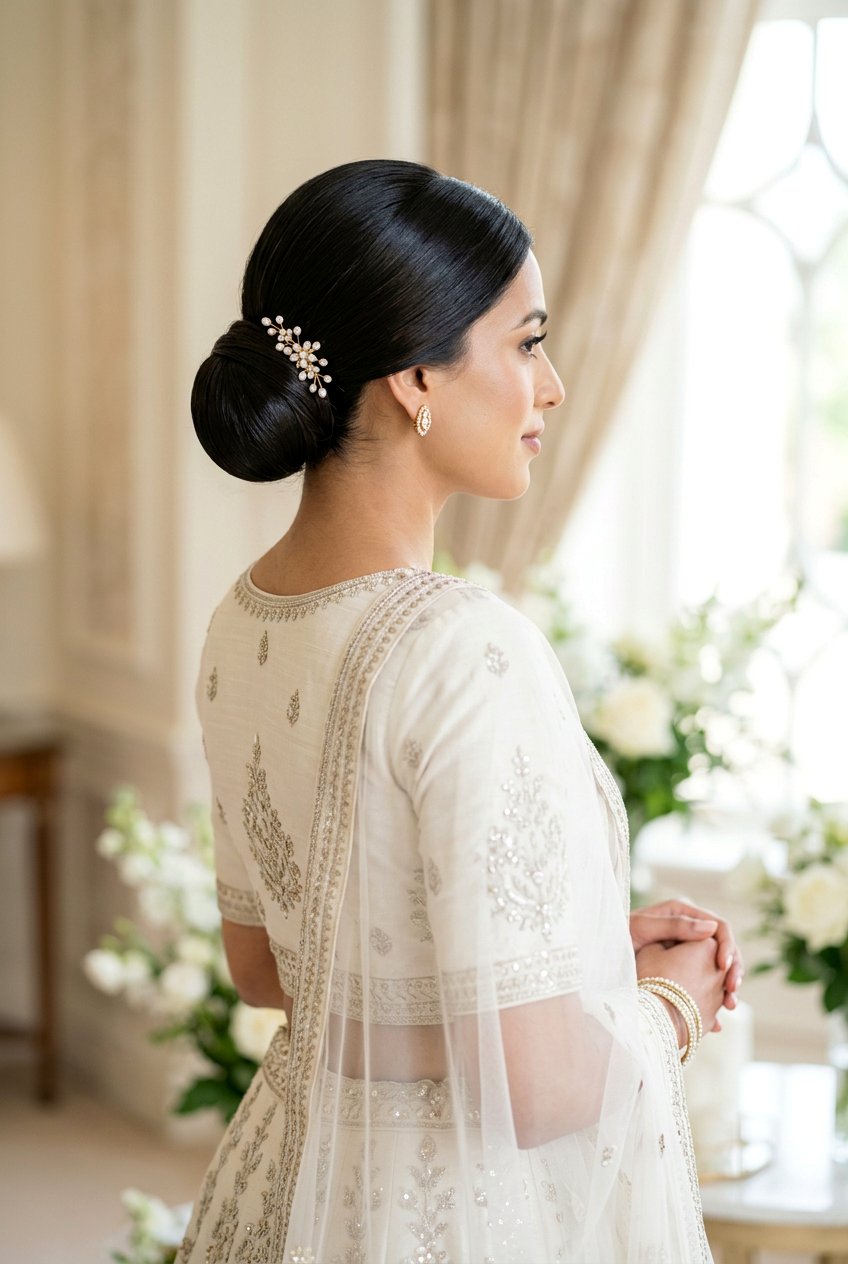
A simple bridal bun for a minimal look is perfect for brides who prefer understated elegance over heavy detailing. The hair is pulled back into a clean bun with minimal volume, usually at low or mid height, with a smooth front and barely any loose strands. Instead of large flowers or heavy jewelry, you might add a single bun pin, a thin gajra ring, or no accessories at all. This allows your makeup, outfit, and facial features to stand out without distraction. It works well with contemporary lehengas, monotone outfits, or brides who want to look sophisticated without feeling weighed down. This style is also practical for long events and hot weather because it is lightweight and easy to maintain throughout the day.
19. Reception Bridal Bun With Curls
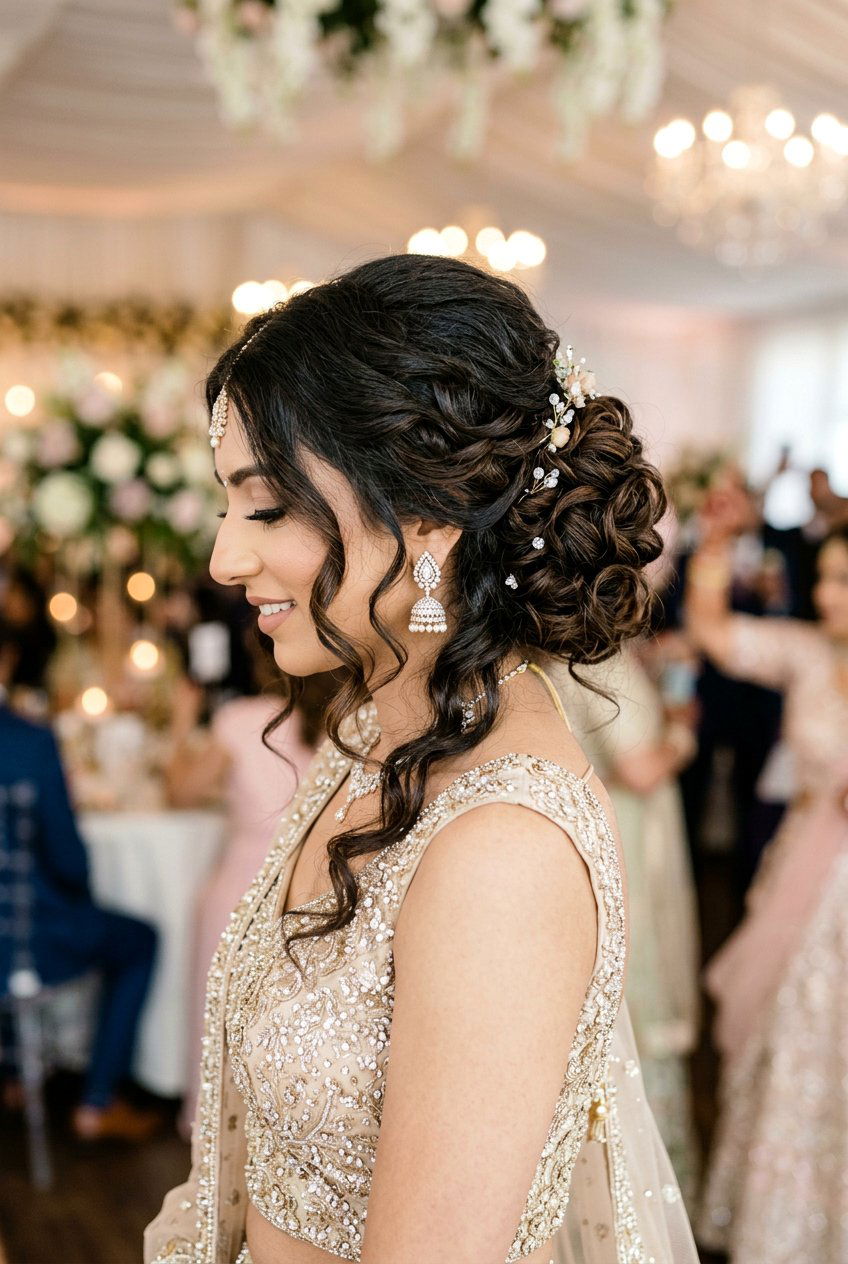
A reception bridal bun with curls offers a glamorous, slightly Western-inspired finish while staying true to the updo shape that many desi brides love. The hair is first curled throughout, creating soft waves and ringlets that are then gathered and pinned into a textured bun at the back. Some curled strands are left cascading around the bun or near the neck, adding movement and dimension. The front can be side-parted with sweeping curls, giving a softer, evening-ready feel that pairs well with gowns, lighter lehengas, or shimmer sarees. Sparkly hairpins, a crystal juda pin, or delicate hair vines can be added to catch the light on the dance floor. This look is ideal for the reception when you want something different from your main ceremony hairstyle but still want your hair up and comfortable.
20. Braided Low Bun For Traditional Bride
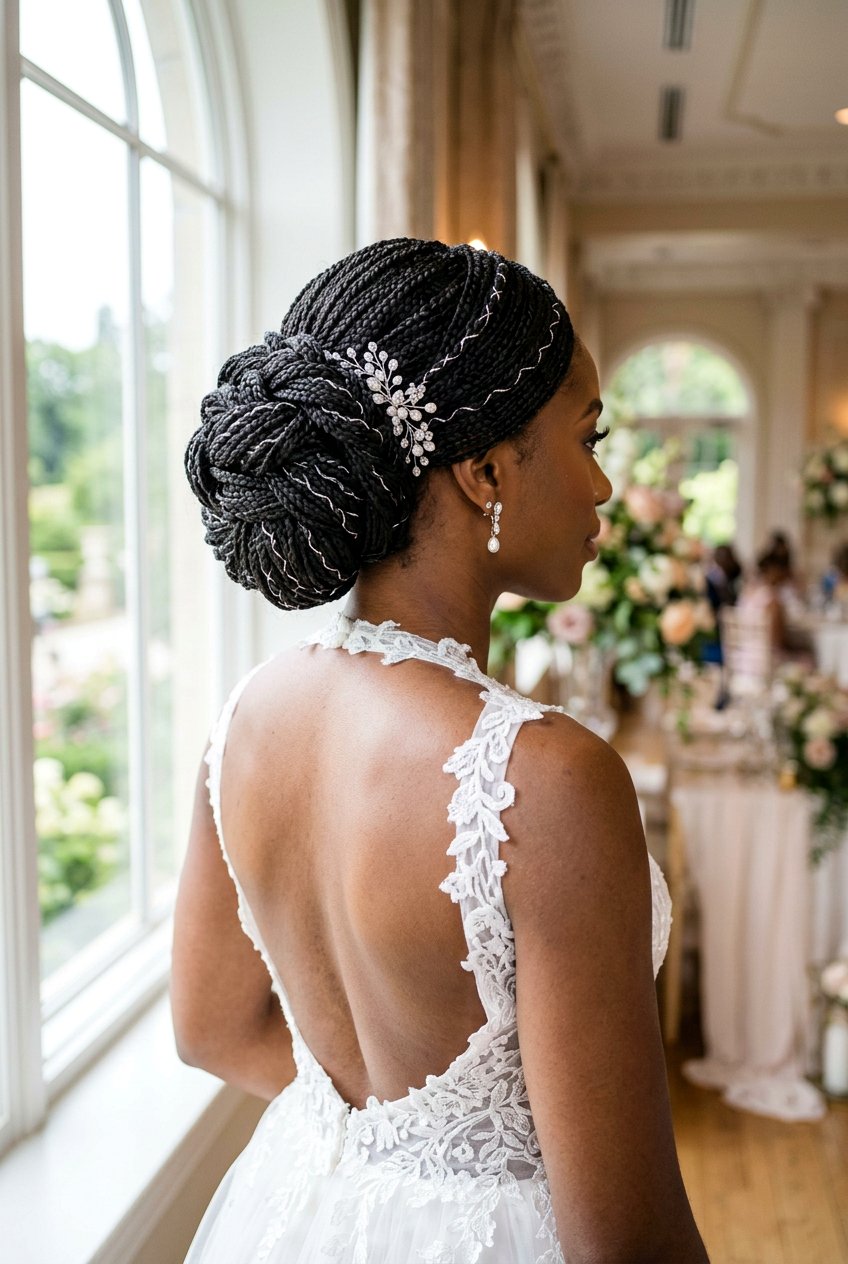
A braided low bun for a traditional bride combines the reliability of a low bun with the detailed beauty of braids, making it both practical and pretty. The hair is usually parted in the center, and one or more braids are created from either side, running back and merging into a low bun at the nape. The bun itself can be made from twisted or braided sections, giving extra texture. Flowers, gajra, or small gold pins can be added around the bun to keep the look firmly in the desi bridal zone. This hairstyle sits comfortably under a dupatta or pallu and holds up well through long ceremonies. It suits brides who want a hairstyle that feels neat, secure, and traditional but still shows off some intricate braiding work.
Conclusion:
Choosing a desi bridal bun hairstyle comes down to more than just what looks pretty in a picture; it is about comfort, culture, outfit coordination, and how you want to feel all day. From classic gajra buns and South Indian temple buns to messy textured buns and jewelry-heavy looks, each style creates a different mood for your bridal appearance. When picking your bun, think about your face shape, hair length, hair thickness, and how your dupatta or pallu will be set. Also consider the weight of your jewelry and flowers, since your bun must support them without causing discomfort. A trial session with your hairstylist can help you test how each bun looks from all angles and how well it holds up over time. With the right desi bridal bun, you will feel secure, beautiful, and fully yourself as you move through every moment of your wedding day.
You'll Like These Styles:


Leave a Reply