
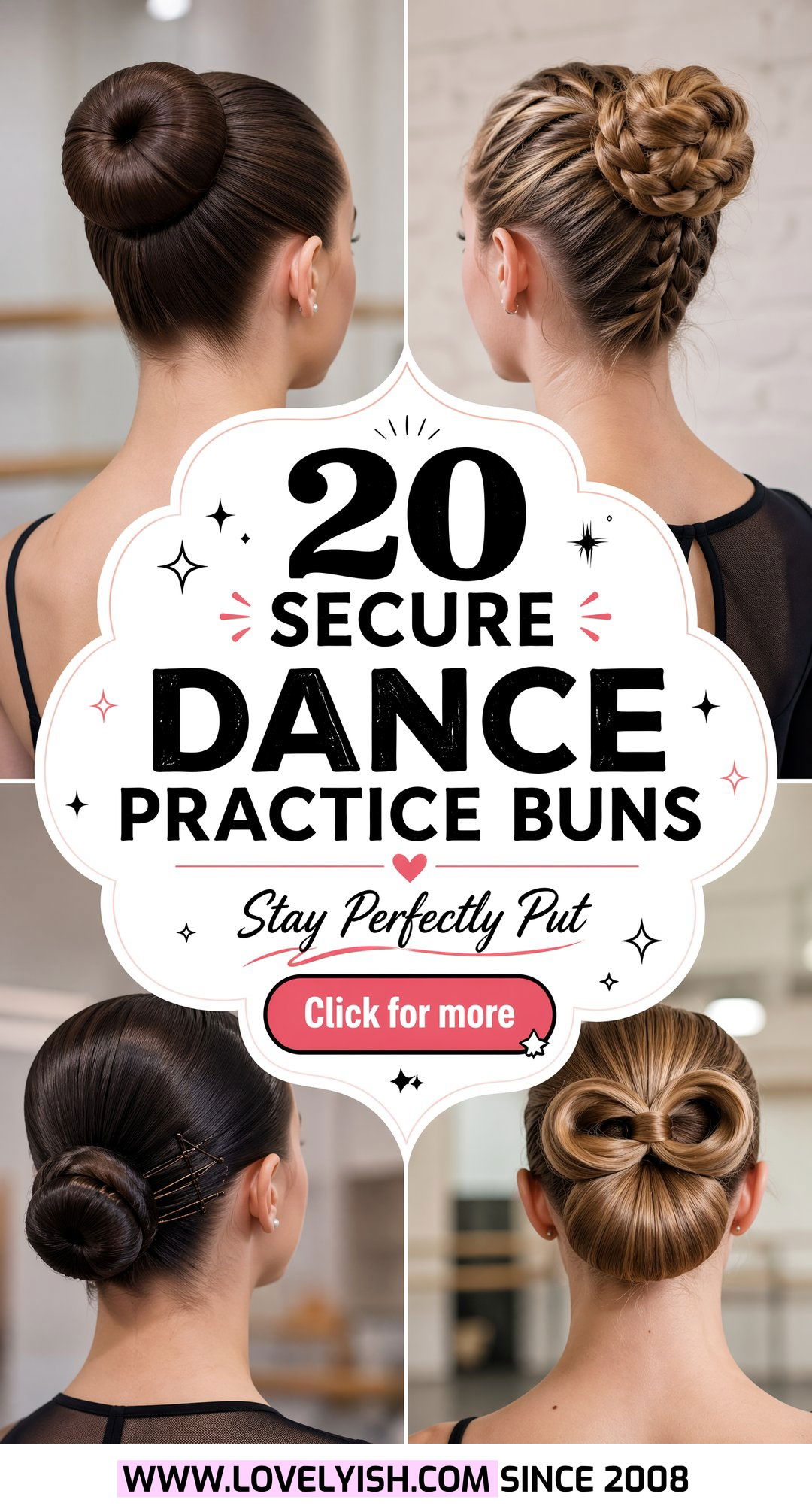
Finding the perfect dance practice bun hairstyle is a balancing act between aesthetic elegance and functional security. Whether you are prepping for a rigorous ballet technique class or a high-energy contemporary rehearsal, your hair needs to stay completely out of your face and off your neck. A well-constructed bun prevents distractions and ensures that your head turns and spots are clean without hair whipping into your eyes. Modern dancers in 2026 are shifting toward styles that prioritize hair health, using silk elastics and “pinless” techniques alongside traditional heavy-duty methods. By selecting the right bun for your specific dance genre, you can maintain a professional appearance while ensuring your hair remains secure through every leap and pirouette.
1. Classic Ballet Bun
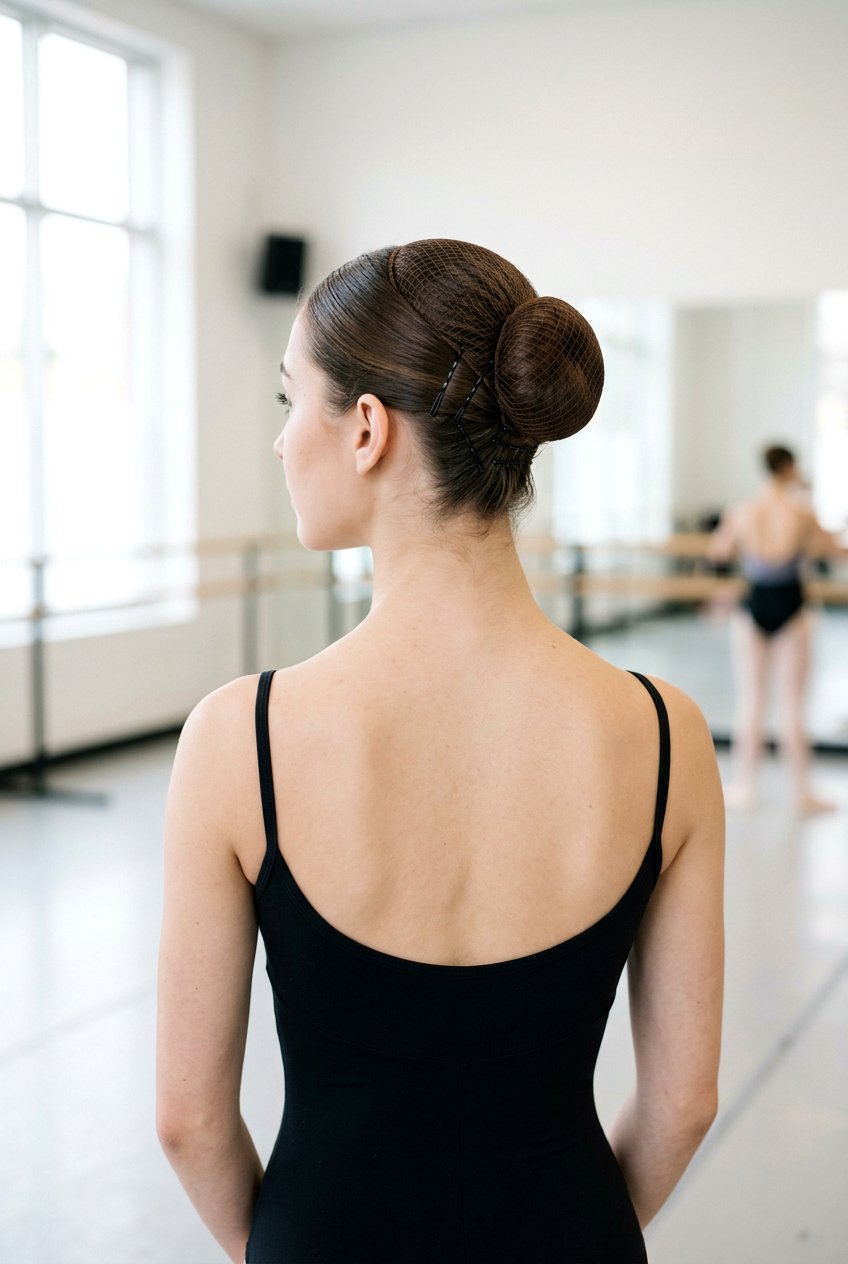
The classic ballet bun remains the gold standard for discipline and clean lines in the studio. To achieve this look, you must first secure your hair into a sturdy ponytail at the mid-point of the back of your head. Twist the length of the hair into a tight rope and coil it flatly around the hair tie. Use a fine hair net that matches your hair color to encapsulate the shape, which prevents any “flyaways” from escaping during turns. Secure the edges with several large bobby pins, ensuring they catch both the bun and the hair against your scalp. This style is essential for traditional technique classes where a neat silhouette is required by instructors.
2. Low Chignon Bun
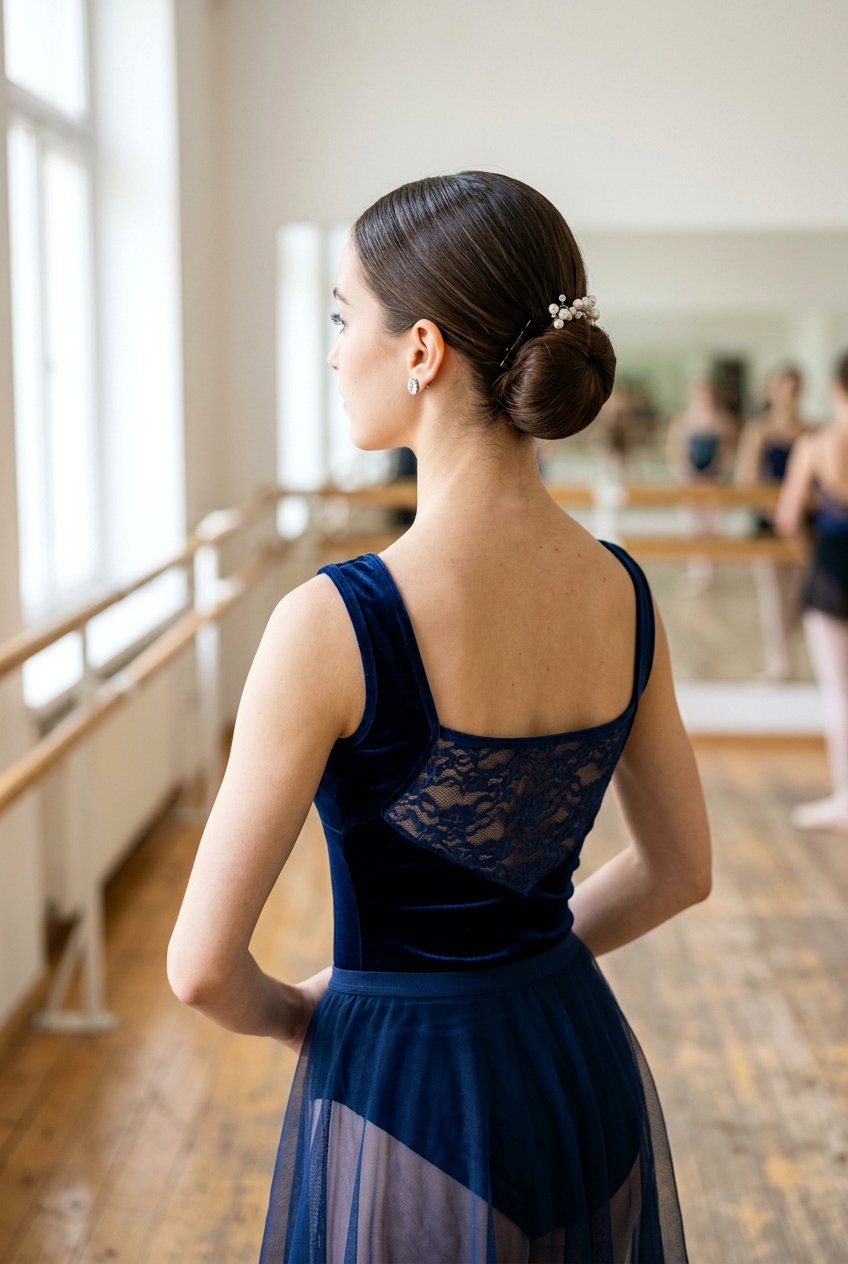
Choosing a low chignon bun is ideal for dancers who need to transition between classical and modern styles quickly. This look sits at the nape of the neck, providing a sophisticated and elongated appearance to the line of the throat. Start by brushing the hair back into a low ponytail and then loop the hair through itself or wrap it into a soft, round shape. Because it sits lower, it is often more comfortable for floor work where a high bun might interfere with head positioning on the marley floor. It offers a grounded, mature aesthetic that works beautifully for contemporary dance practice and lyrical rehearsals.
3. High Topknot Bun
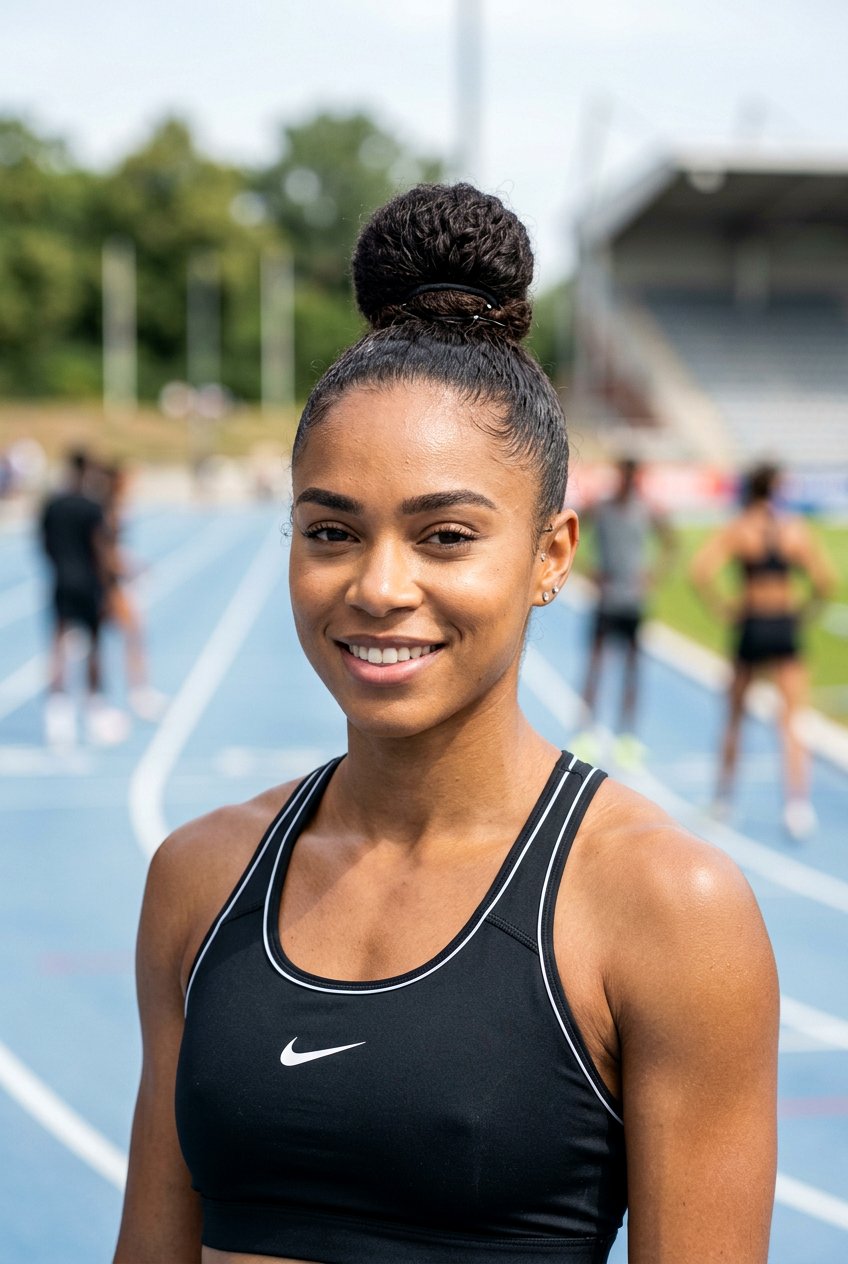
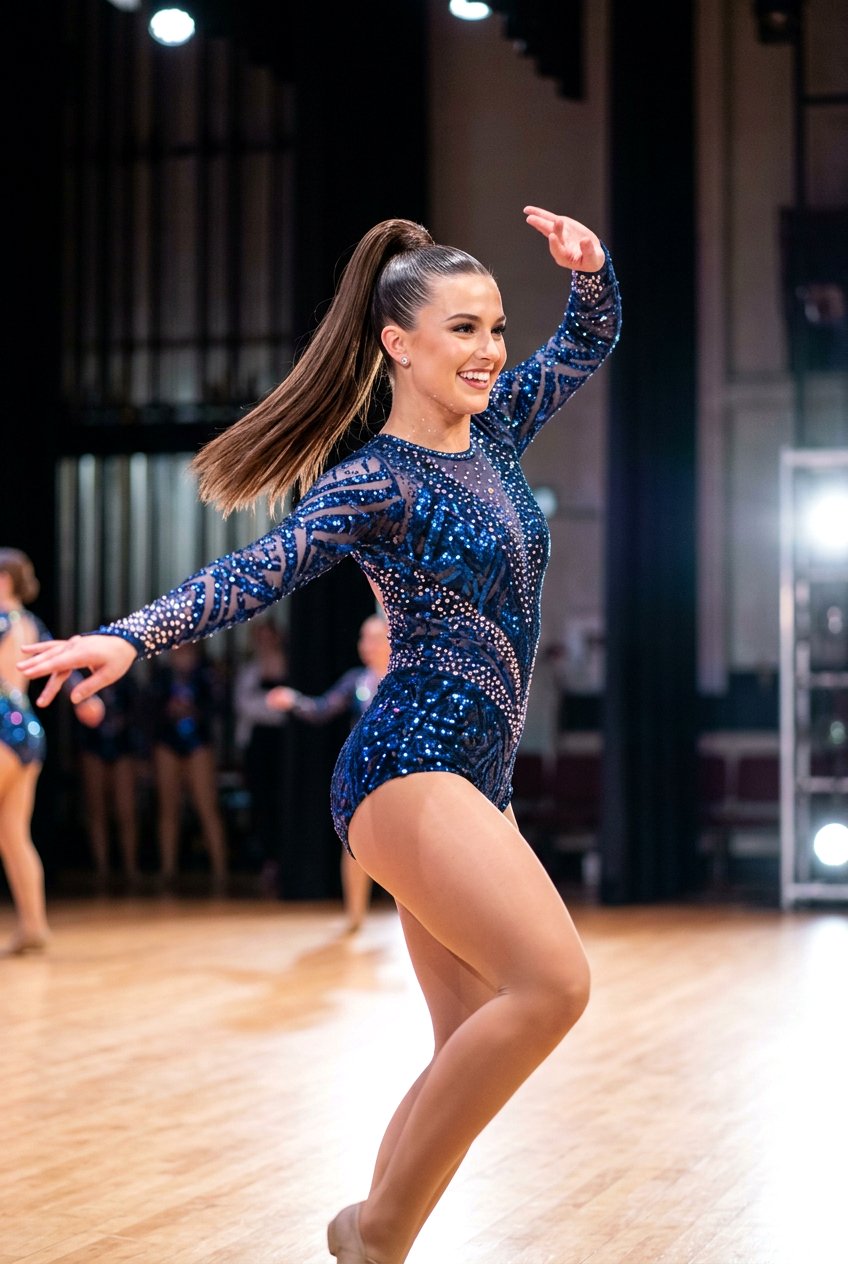
A high topknot bun is the ultimate choice for high-intensity rehearsals or hip-hop practice where you want maximum clearance. This hairstyle is positioned directly on the crown of the head, pulling all hair upward and away from the neckline to keep you cool. You should use a thick elastic to prevent the weight of the hair from sagging as you move. Many dancers prefer this style because it stays completely out of the way during floor rolls and inverted movements. For extra security, you can braid the ponytail before wrapping it into the bun, which adds a textured look and keeps layers from poking out.
4. Braided Dance Bun
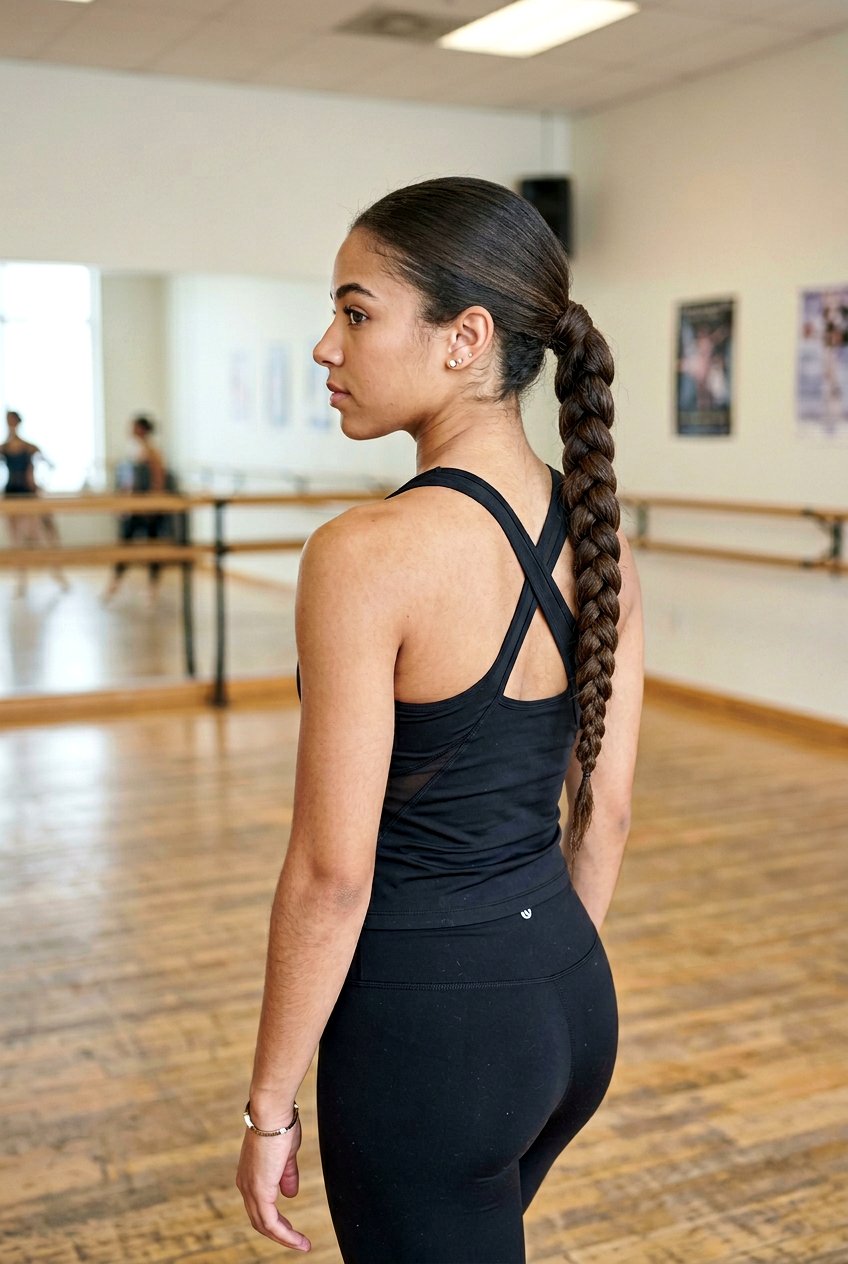
The braided dance bun offers a superior level of security for dancers with thick or heavy hair that tends to slip. By braiding the ponytail before coiling it into a bun, you create a structural “anchor” that is much harder to shake loose than a simple twist. This method also creates a beautiful, intricate pattern that looks professional without needing extra accessories. It is particularly effective for long rehearsals where you won’t have time to fix your hair between combinations. Use a light mist of high-hold hairspray to finish the look and ensure that the braid stays crisp and defined throughout the day.
5. Messy Studio Bun
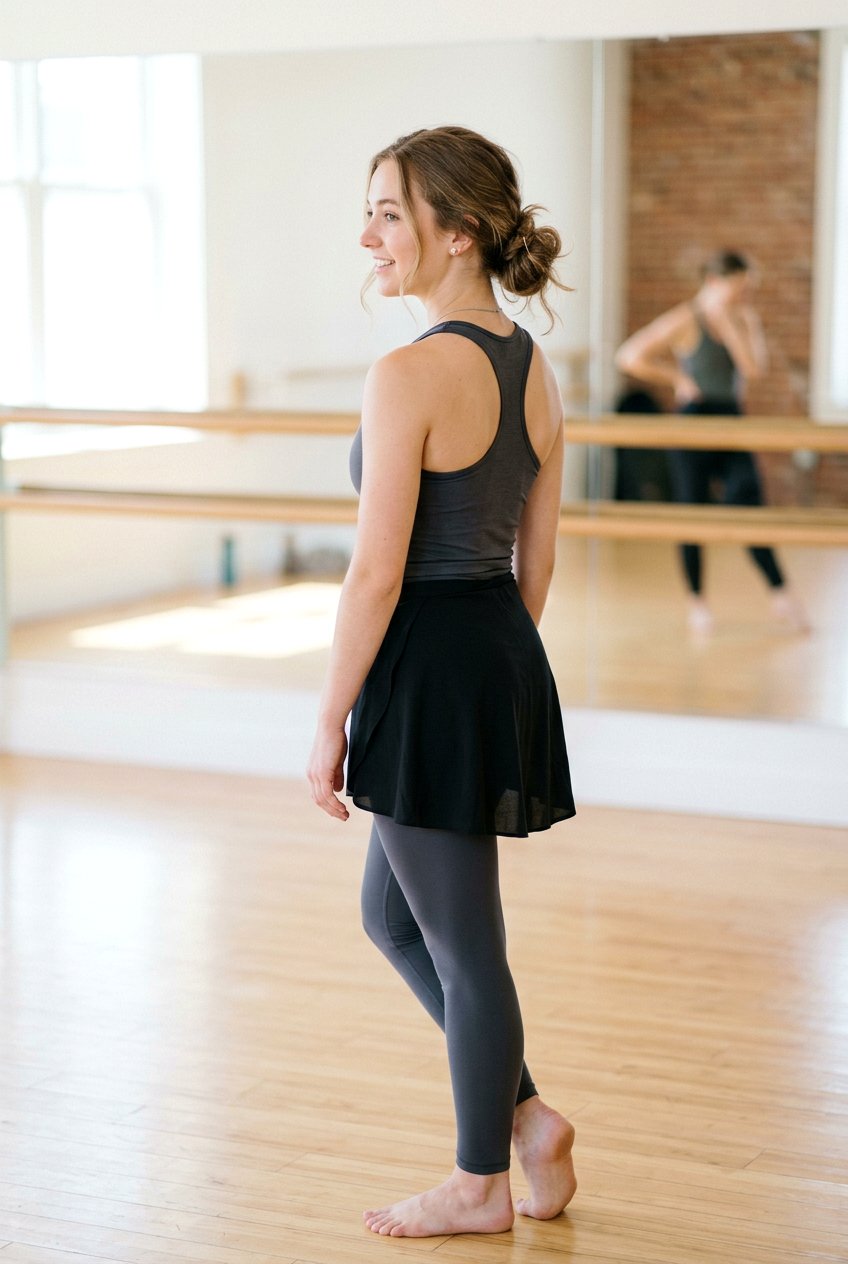
A messy studio bun is the go-to for contemporary and jazz dancers who want a relaxed yet functional appearance. Unlike the stiff ballet version, this style allows for a bit of natural texture and soft volume at the roots. You can achieve this by pulling the hair into a bun without using a brush, allowing your fingers to create organic lines. Even though it looks effortless, it still needs to be pinned securely so it doesn’t fall out during a jump. It is the perfect blend of “athleisure” style and practical dance wear, making it a favorite for casual weekend workshops or choreography sessions.
6. French Twist Bun
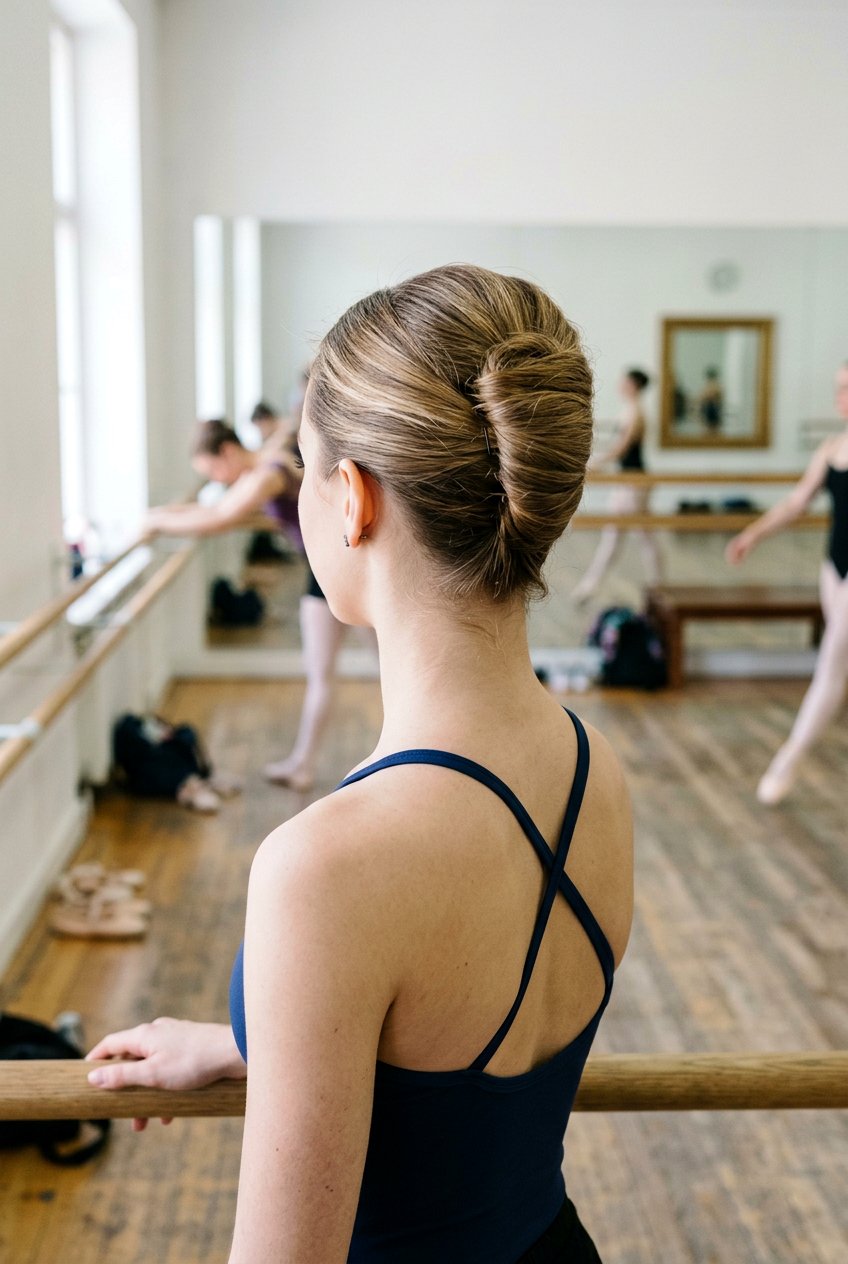
The French twist bun is a sophisticated alternative that provides a very sleek and vertical line at the back of the head. This style involves gathering the hair at the nape and twisting it upward against the scalp, tucking the ends inside the vertical fold. It is highly valued in professional company settings and auditions because it showcases the length of the neck and the alignment of the spine. While it requires a bit more practice to master than a standard round bun, the result is incredibly secure and elegant. Use long hair pins to lock the twist in place from top to bottom.
7. Double Space Buns
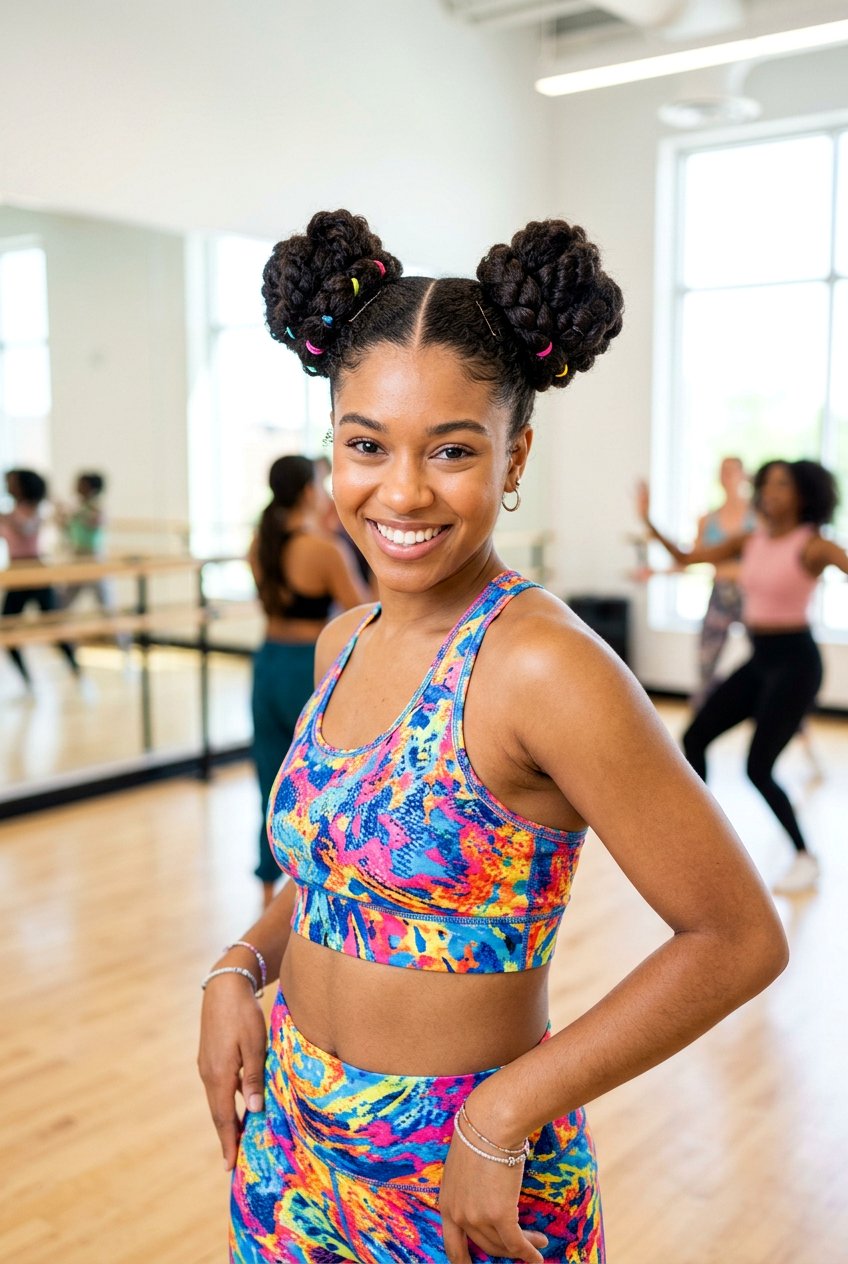
Double space buns are a fun and trendy option for younger dancers or those in commercial dance styles. By splitting the hair down the center and creating two symmetrical buns on either side of the head, you distribute the weight of the hair more evenly. This can be more comfortable than a single heavy bun for long days in the studio. Space buns stay very secure because each bun handles less hair volume, making them less likely to sag. They add a playful energy to your dance outfit and are excellent for keeping hair completely controlled during high-energy acrobatic or power moves.
8. Flat Disc Bun
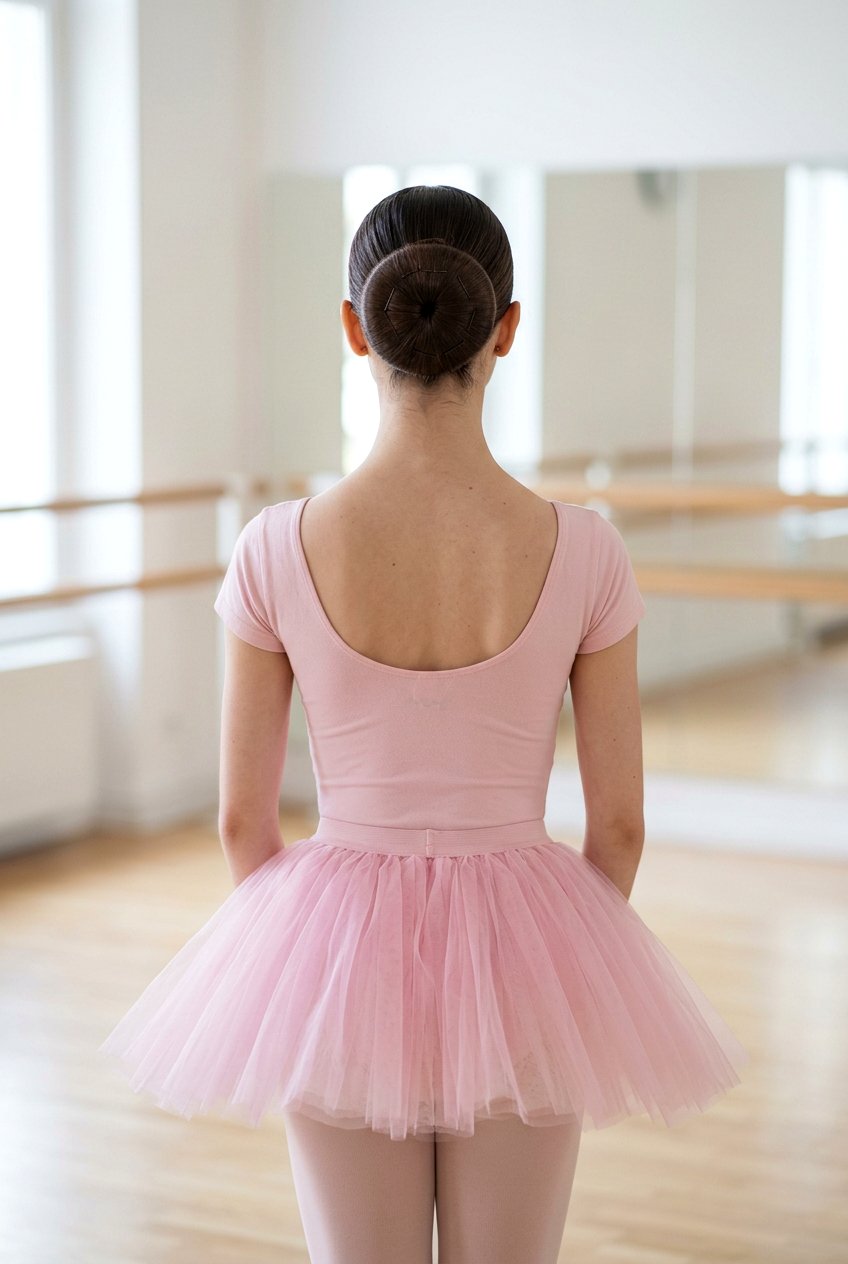
A flat disc bun is specifically designed for ballet dancers who need to wear headpieces or who want a very traditional, pancake-style look. Instead of a bulky “doorknob” shape, the hair is spread out wide against the head to create a flat profile. This is achieved by spiraling the hair in thin layers and pinning each section as you go, rather than twisting the whole ponytail at once. It is the most professional look for stage rehearsals and exams where every detail of the dancer’s form is being scrutinized. A flat bun ensures that the head’s shape is not distorted when viewed from the side.
9. Triple Bun Mohawk
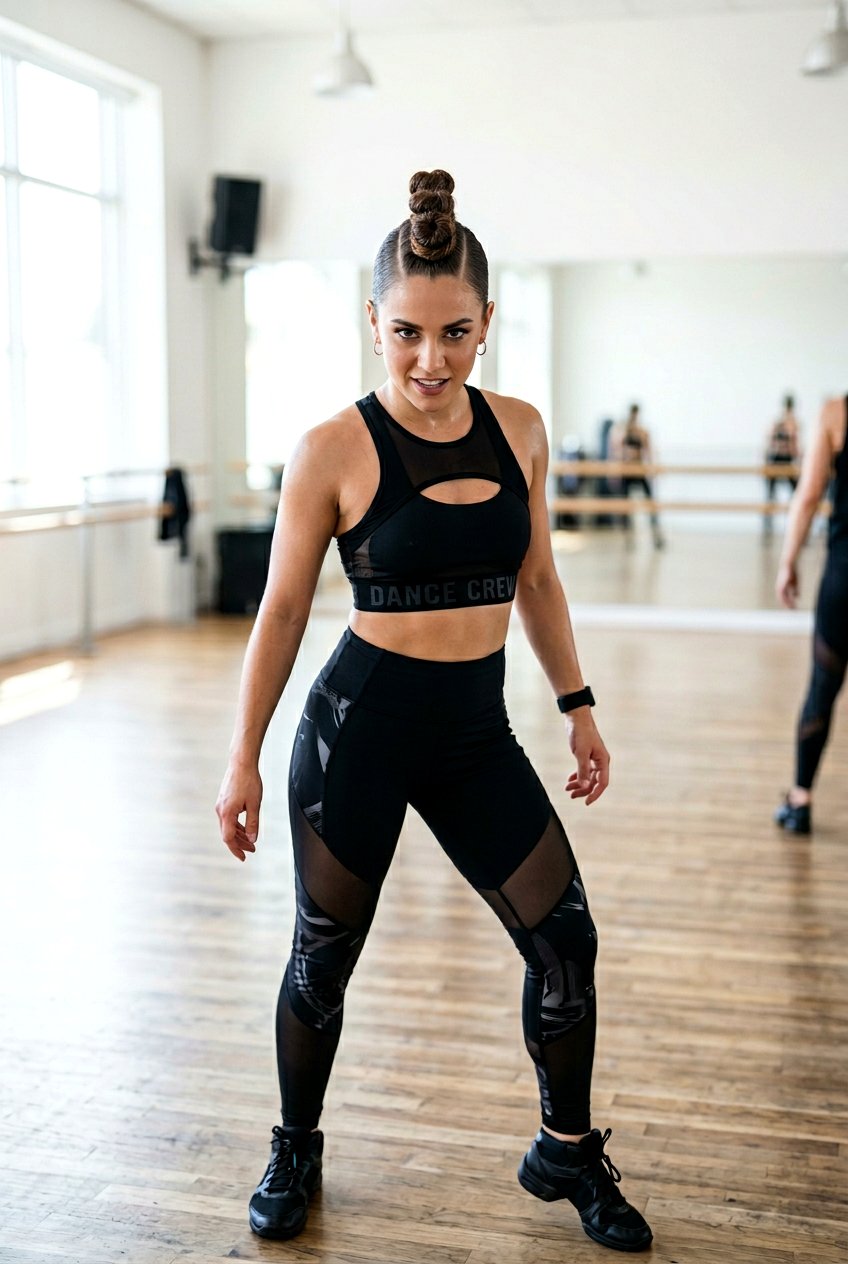
The triple bun mohawk is a creative and edgy style often seen in contemporary or jazz-funk classes. It involves sectioning the hair into three small buns aligned vertically from the crown to the nape. This unique distribution of hair is incredibly secure because each section is anchored independently, making it nearly impossible for the hair to fall down. It also provides a cool, modern look that stands out in a crowded studio. Dancers with a lot of layers often find this style helpful because short pieces can be tucked into the individual buns more easily than into one large one.
10. Slicked Back Bun
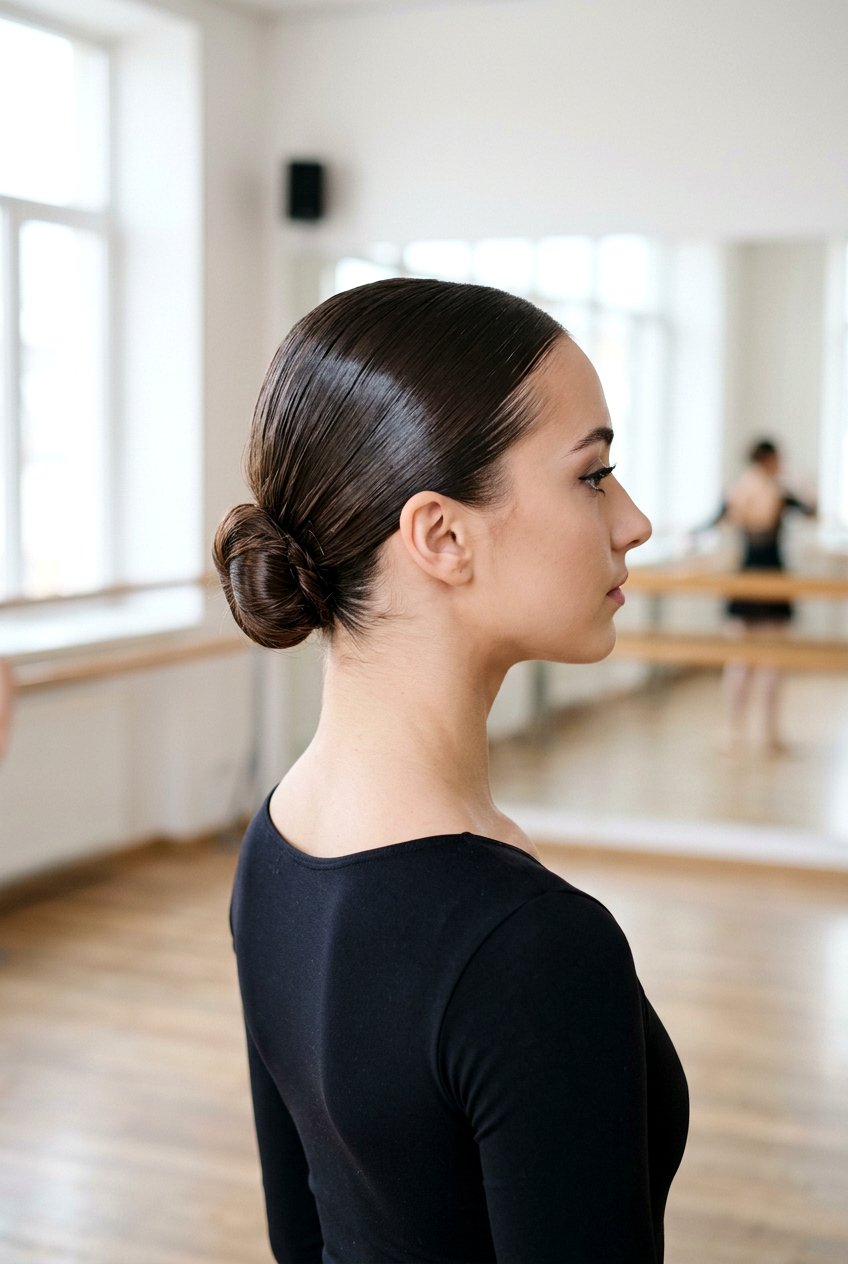
A slicked back bun focuses on the front of the hair, ensuring that every single strand is glued down for a waterproof finish. This is essential for dancers who sweat heavily or who are performing intense cardio-based choreography. You will need a fine-tooth comb and a generous amount of strong-hold gel or pomade to achieve the glass-like shine. Once the front is perfectly smooth, the back can be twisted into a simple, tight bun. This style prevents “flyaways” from catching the light and distracting the audience or the instructor, providing a sharp and focused aesthetic for the dancer.
11. Side Swept Bun
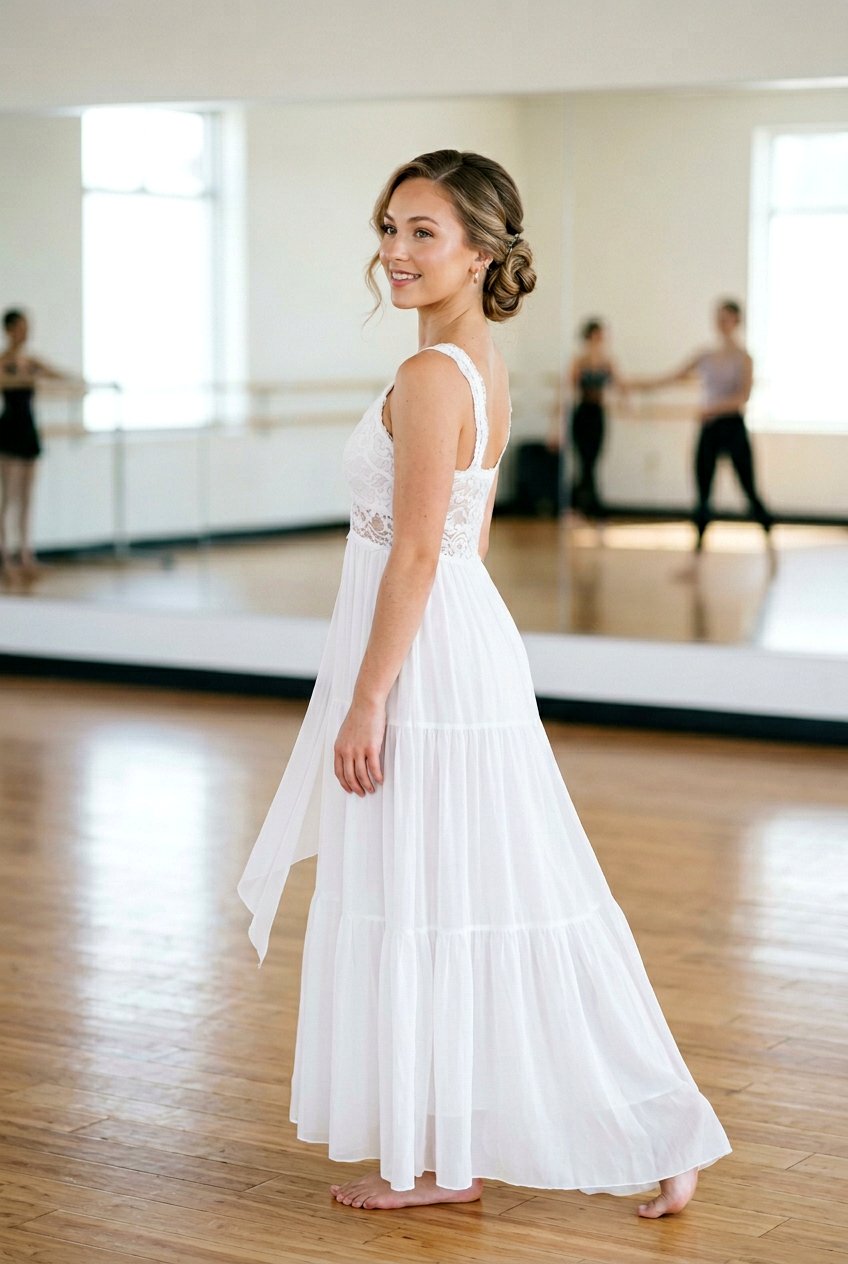
The side swept bun offers an asymmetrical look that is often used in lyrical or character dance practice. By positioning the bun slightly to one side behind the ear, you create a romantic and soft silhouette that complements expressive movement. It is important to ensure the opposite side is still tightly secured so it doesn’t loosen during across-the-floor combinations. This style works well for dancers with side-parted hair or those who want a change from the standard centered bun. It provides a touch of personality while still fulfilling the requirement of keeping the neck clear for proper alignment.
12. Fishtail Braided Bun
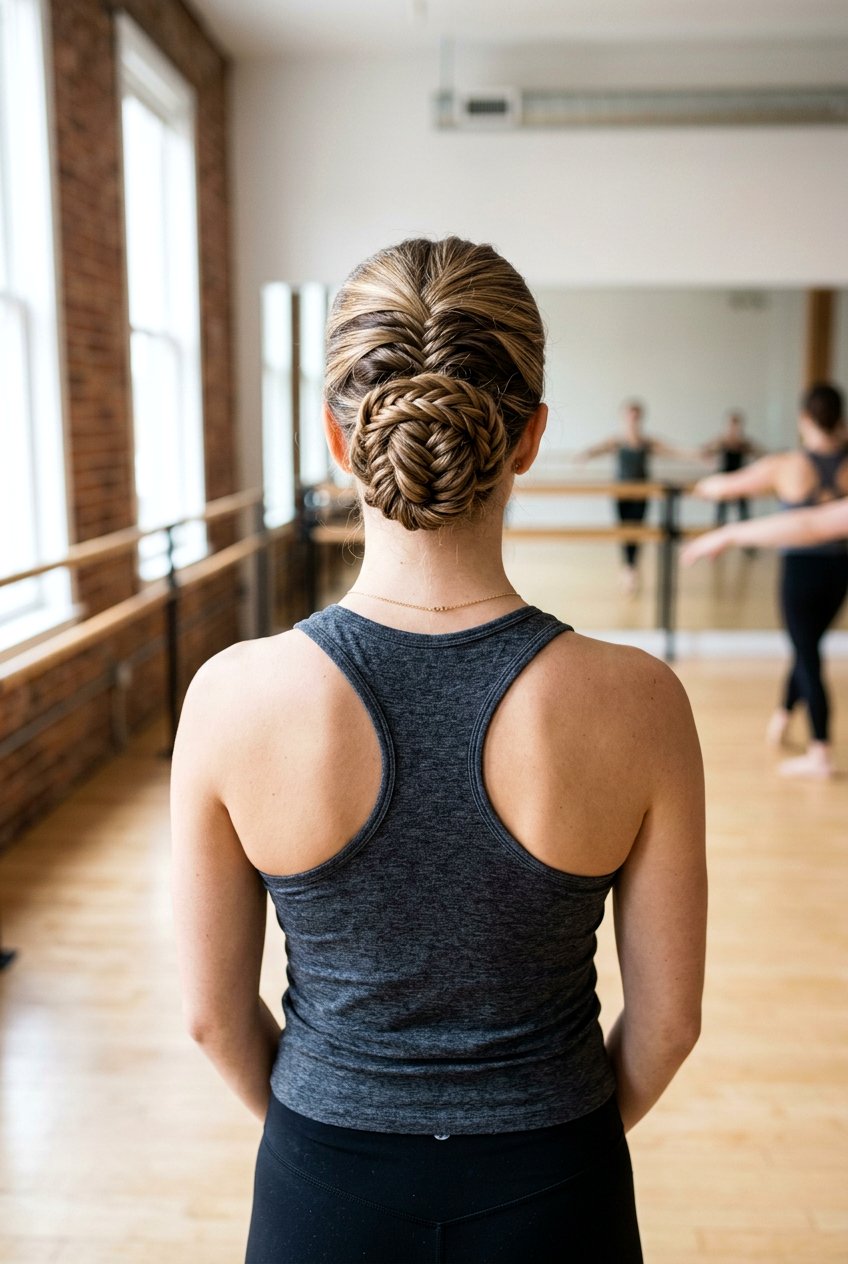
Incorporating a fishtail braid into your bun adds a high-fashion element to your rehearsal attire. A fishtail braided bun is created by first making a tight ponytail, then braiding it in the intricate fishtail style before wrapping it up. The result is a very dense and sturdy bun that looks much more complicated than it actually is. Because the weave of a fishtail is so tight, it holds layers in place exceptionally well. This is a great choice for dancers who want to look “camera-ready” for filmed studio sessions or social media dance videos without sacrificing the security of their hairstyle.
13. Bun With Headband
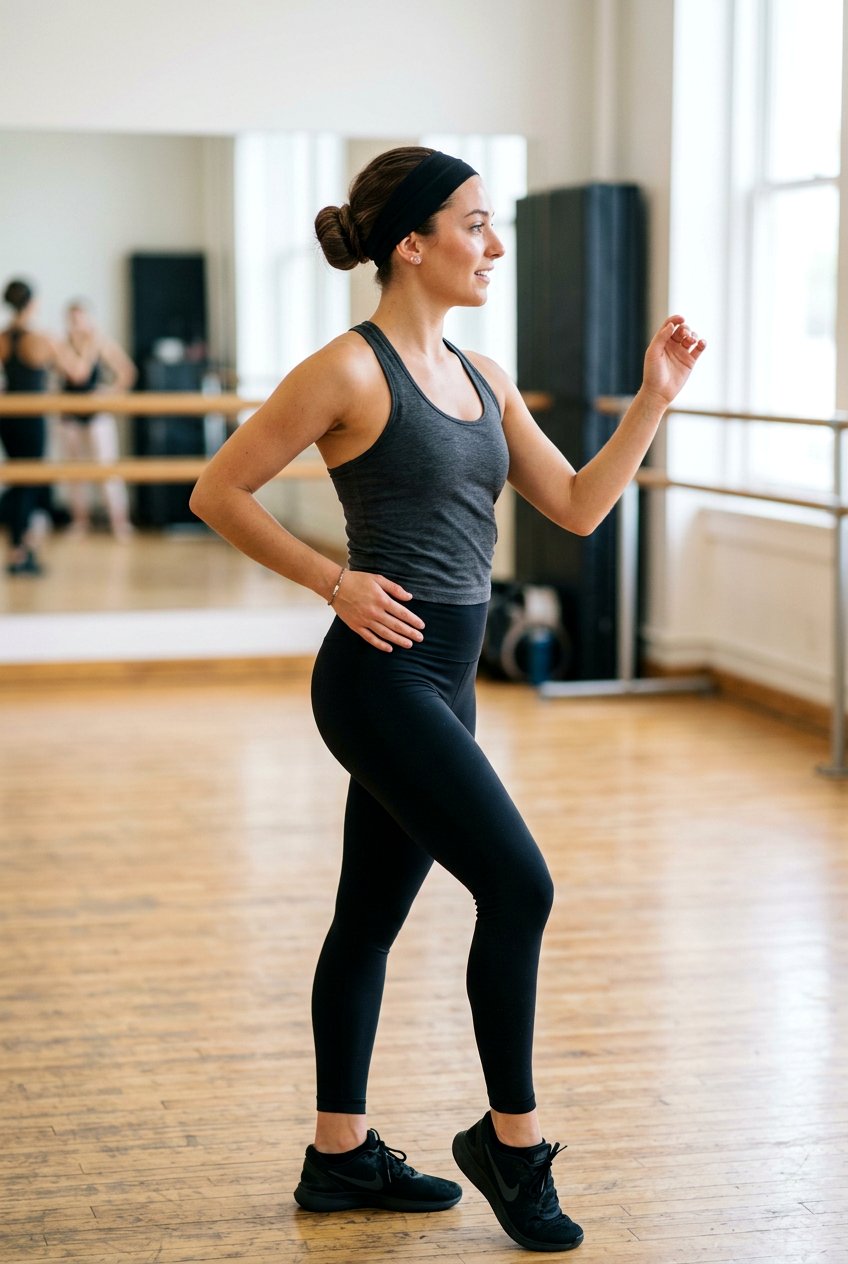
Adding a headband to your dance bun is a practical solution for dancers with bangs or shorter “baby hairs” around the forehead. A thick, non-slip grip headband keeps those shorter layers from falling into your eyes when you tilt your head back or go into a bridge. When paired with a mid-height bun, the headband adds an extra layer of security and a pop of color to your dance ensemble. Make sure the headband is snug but not so tight that it causes a headache during a long class. This combination is a classic “ballet school” look that is both cute and highly functional.
14. Wrapped Ribbon Bun
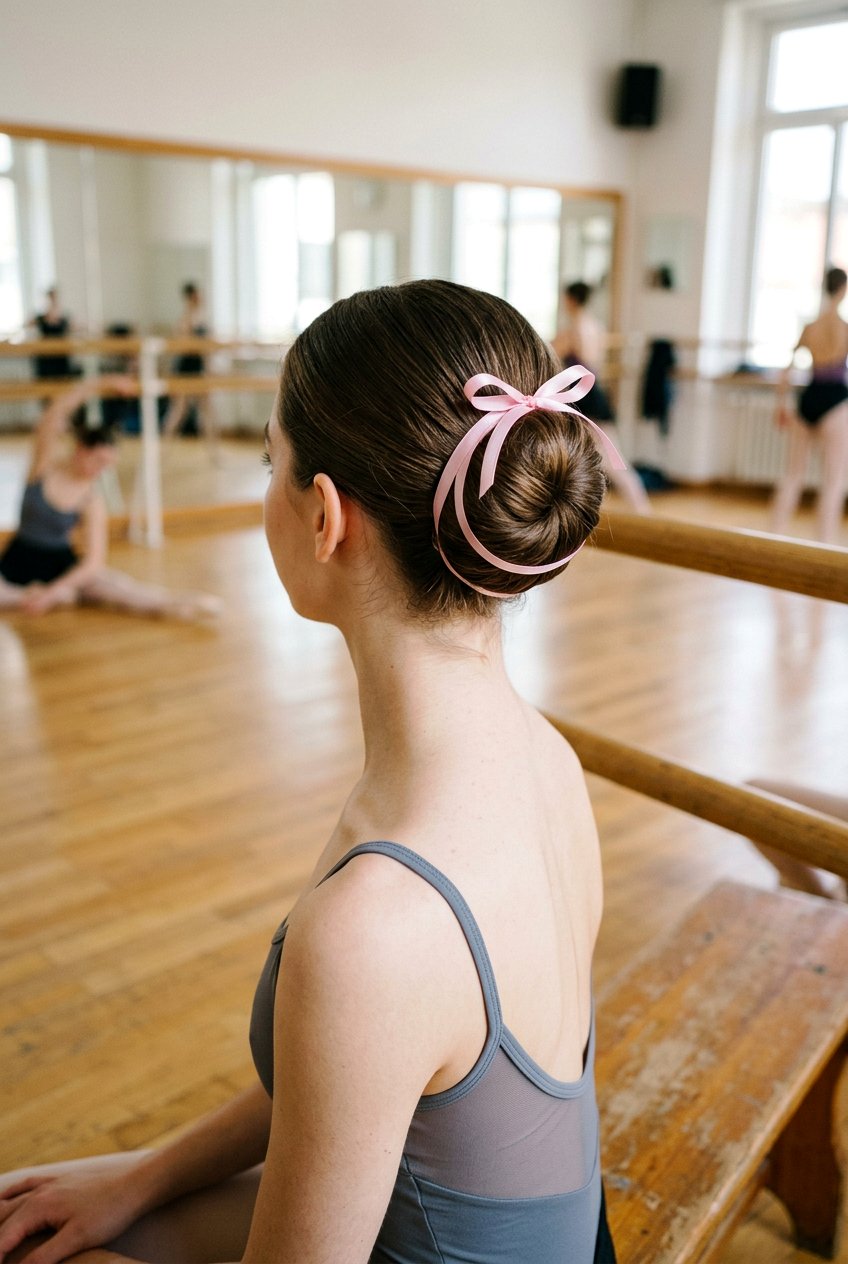
A wrapped ribbon bun is a traditional ballet rehearsal style that adds a bit of flair to a standard bun. After securing your bun with pins and a net, you wrap a satin or velvet ribbon around the base and tie it into a small, neat bow. This was historically used to hide the hair tie and pins, but today it is mostly a stylistic choice that honors ballet tradition. Ensure the ribbon is pinned down so the ends don’t fly out and hit you in the face during turns. It’s a beautiful way to coordinate your hair with your favorite leotard for a polished look.
15. Donut Bun Shaper
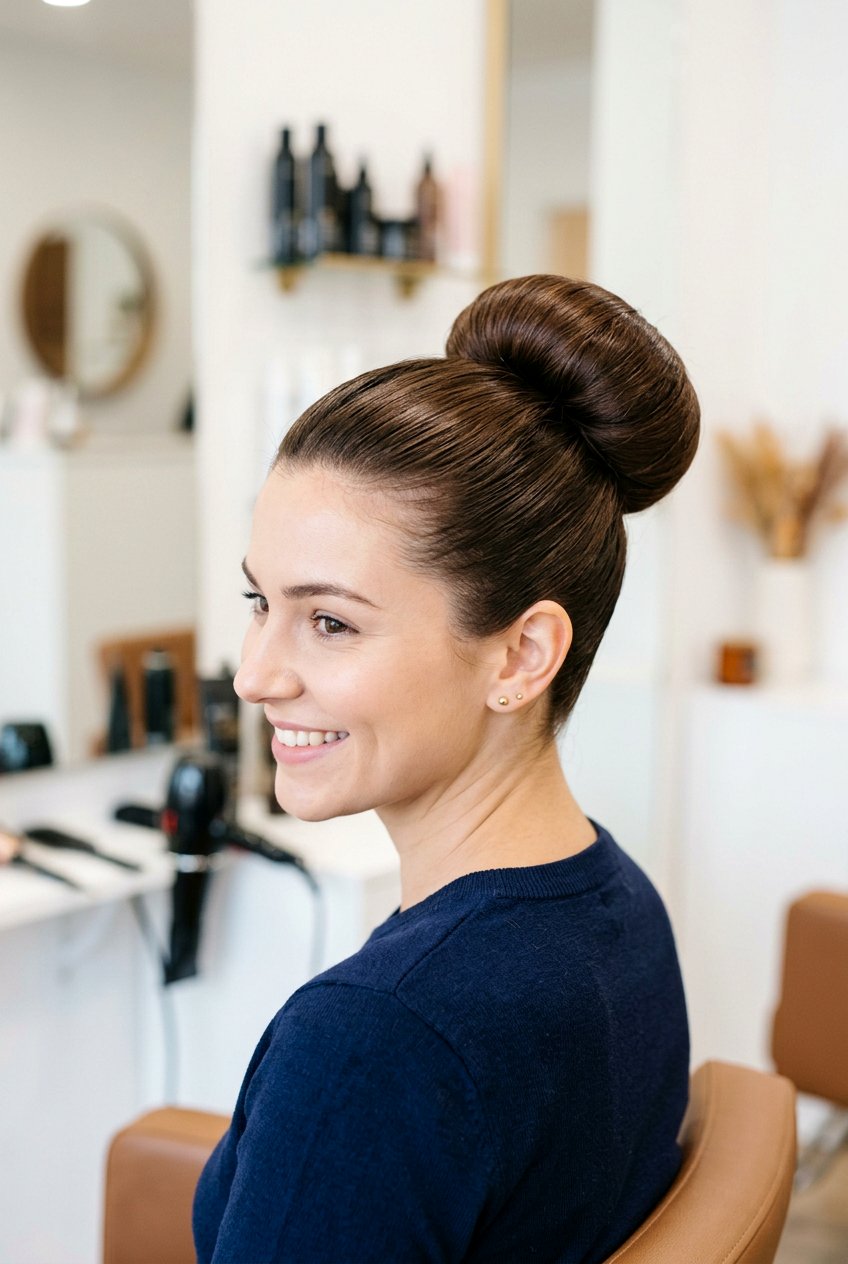
Using a donut bun shaper is the easiest way for dancers with fine or thin hair to achieve a full, voluminous bun. These foam ring accessories allow you to spread your hair evenly over the surface, creating a perfect, large circle every time. For dance practice, it is vital to pin the foam ring itself to your scalp hair before covering it, ensuring the entire structure doesn’t shift. This style provides a very consistent and professional shape that looks great from the back of a large studio. It is a favorite for younger students who haven’t yet mastered the hand-coiling technique of a traditional bun.
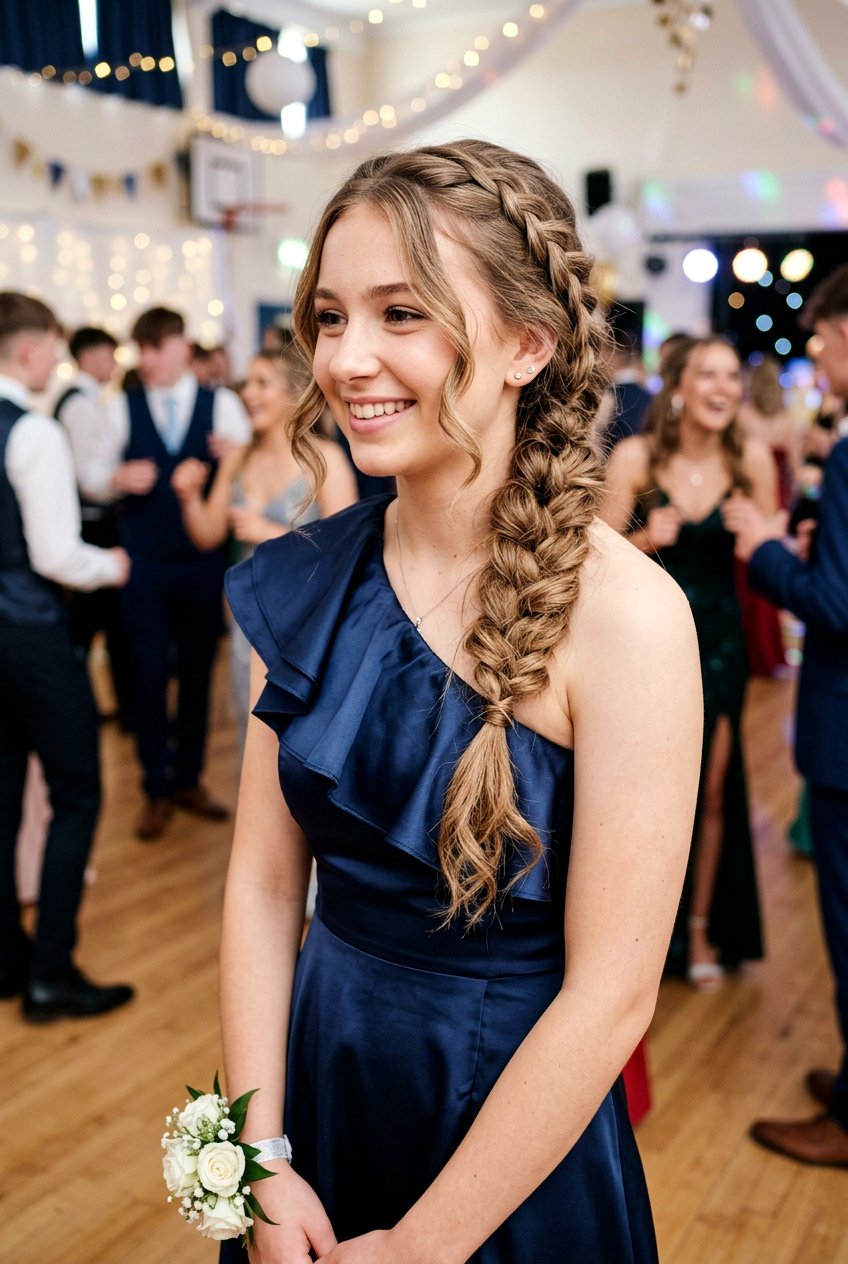
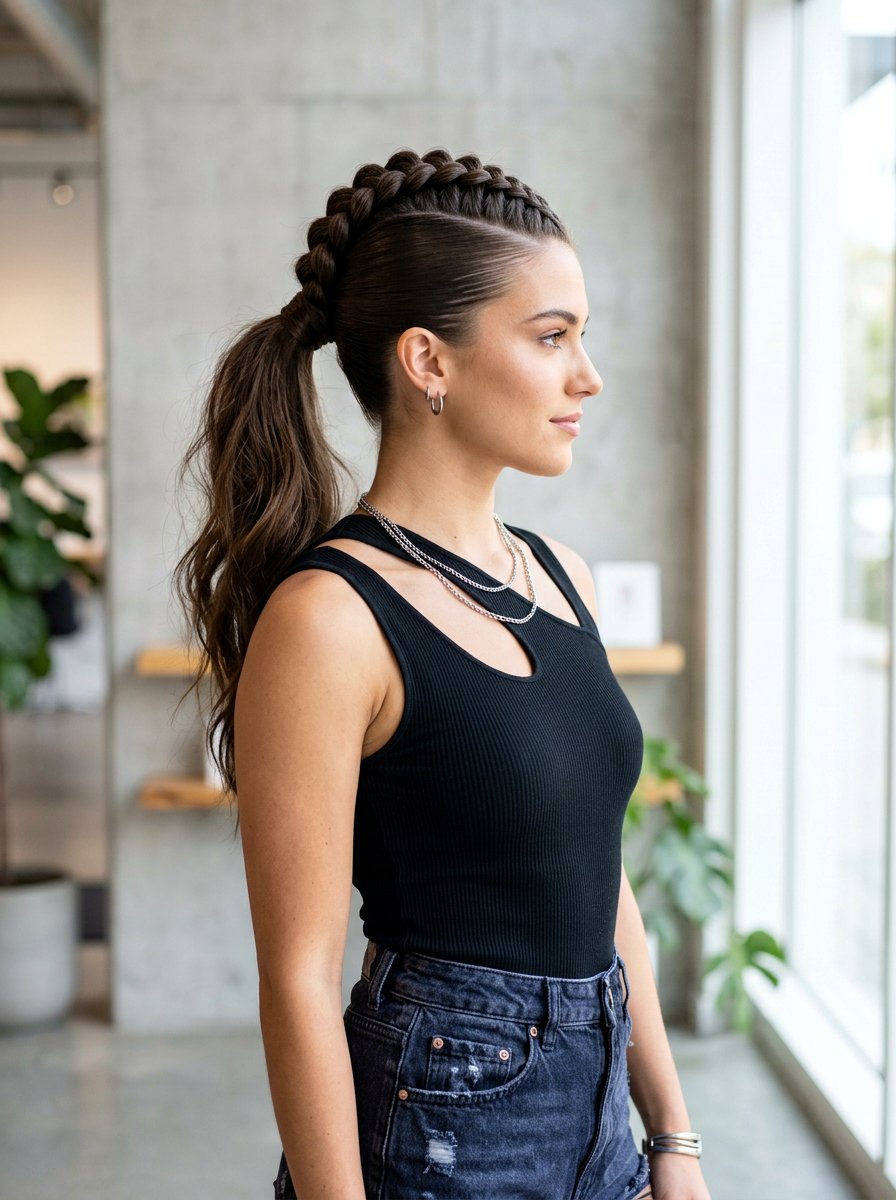
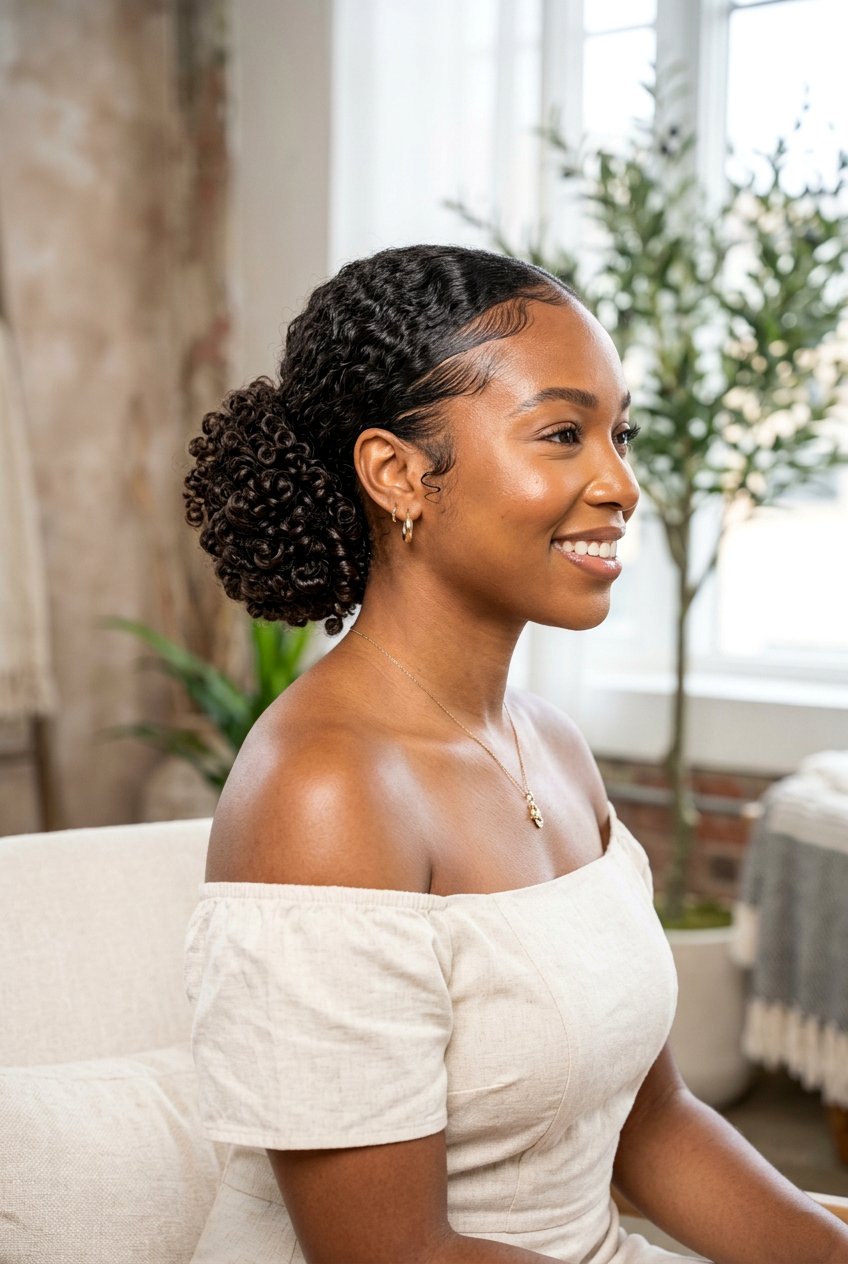
16. Half Up Bun

The half up bun is a popular choice for contemporary or hip-hop classes where a “down” look is desired but the face must remain clear. By pulling only the top half of the hair into a small, secure bun at the crown, you keep the hair out of your eyes while letting the rest flow. This style is best for genres that don’t involve a lot of spinning, as the loose hair can become a distraction. It offers a trendy, relaxed vibe that is very popular in modern dance studios in 2026. Make sure the top section is tight enough to stay put through jumps.
17. Twisted Rope Bun
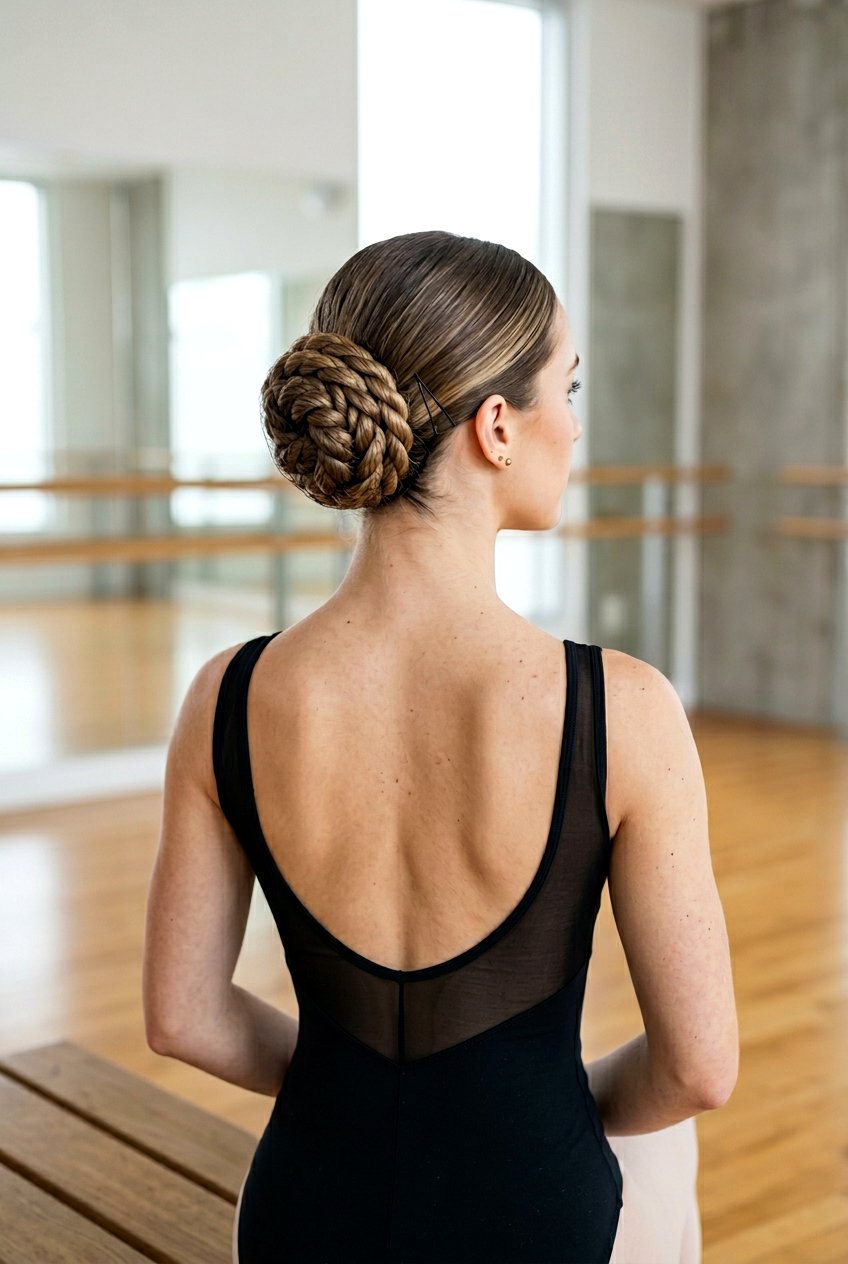
A twisted rope bun uses two sections of hair twisted around each other to create a very strong, cord-like ponytail before coiling. This technique creates a lot of internal friction, which helps the bun stay together even if a pin falls out. It results in a very neat, textured look that is more interesting than a basic twist but less time-consuming than a braid. It is excellent for dancers with very long hair that might feel too heavy in a standard bun. The rope twist distributes the bulk evenly, making the final bun feel lighter and more balanced on the head.
18. Dutch Braid Bun
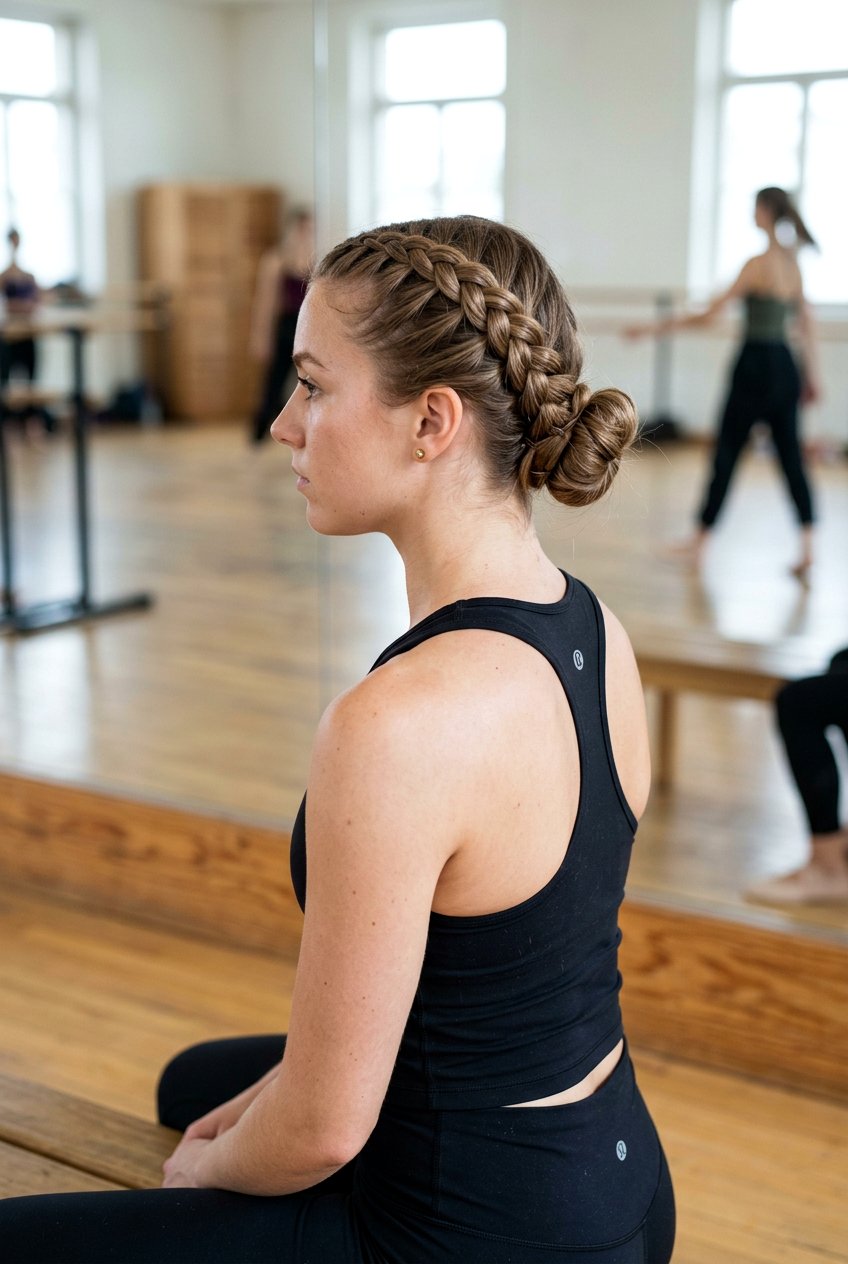
A Dutch braid bun starts with a braid that sits on top of the hair (an “inside-out” French braid) leading back into the bun. This style is incredibly secure because the braid anchors the hair from the very front of the hairline all the way to the back. It is a fantastic choice for dancers who have a lot of movement in their choreography, such as floor-to-standing transitions. The Dutch braid adds a beautiful 3D element to the hair that looks striking under studio lights. It effectively keeps every layer and flyaway locked down, making it one of the most reliable dance hairstyles.
19. Low Knot Bun
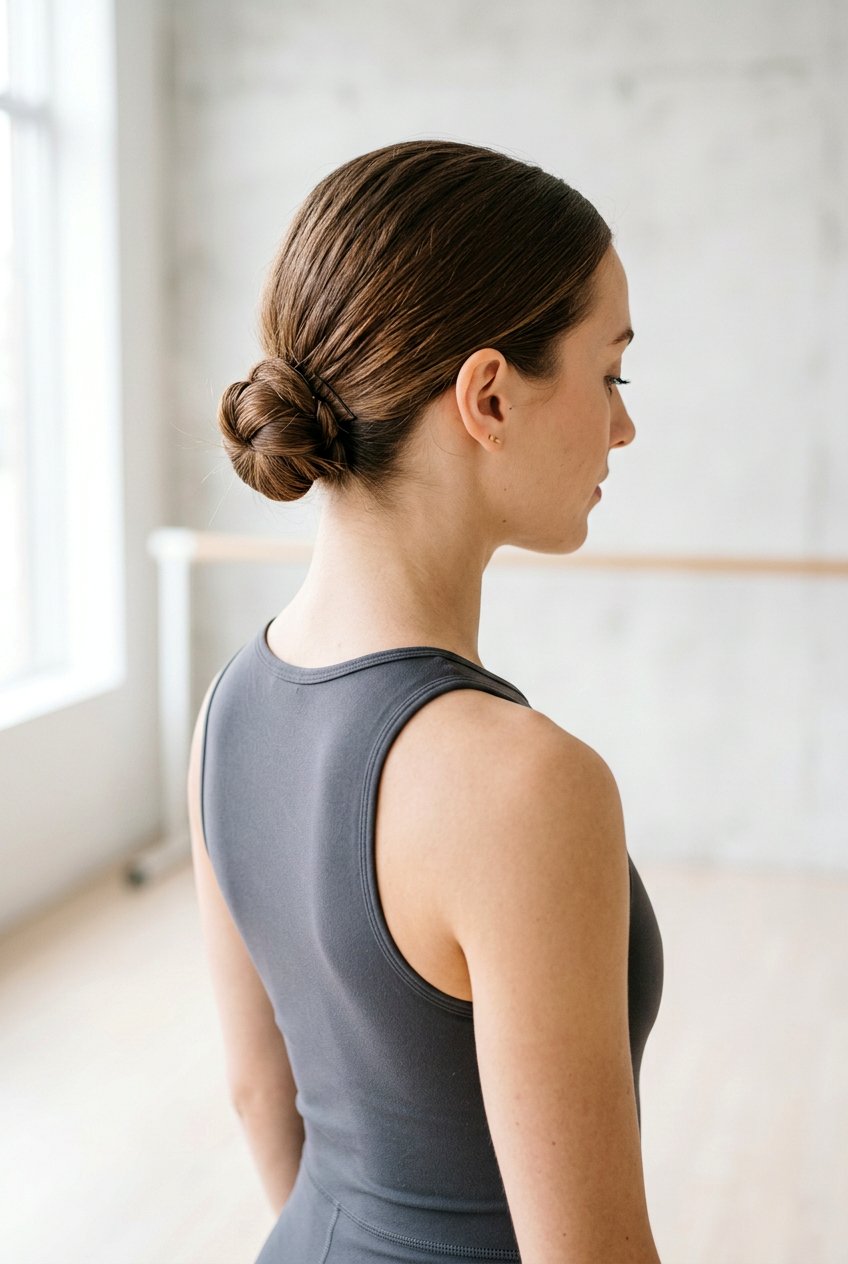
The low knot bun is a minimalist and modern take on the traditional chignon. Instead of coiling the hair, you literally tie the ponytail into a simple knot and pin the ends underneath. This creates a very flat and compact shape that stays very close to the nape of the neck. It is a sophisticated look that is often seen in professional modern dance companies. Because it is so low and flat, it is one of the most comfortable styles for lying on your back or performing neck-intensive movements. It requires very few pins, making it a quick option for busy dancers.
20. Multi Elastic Bun
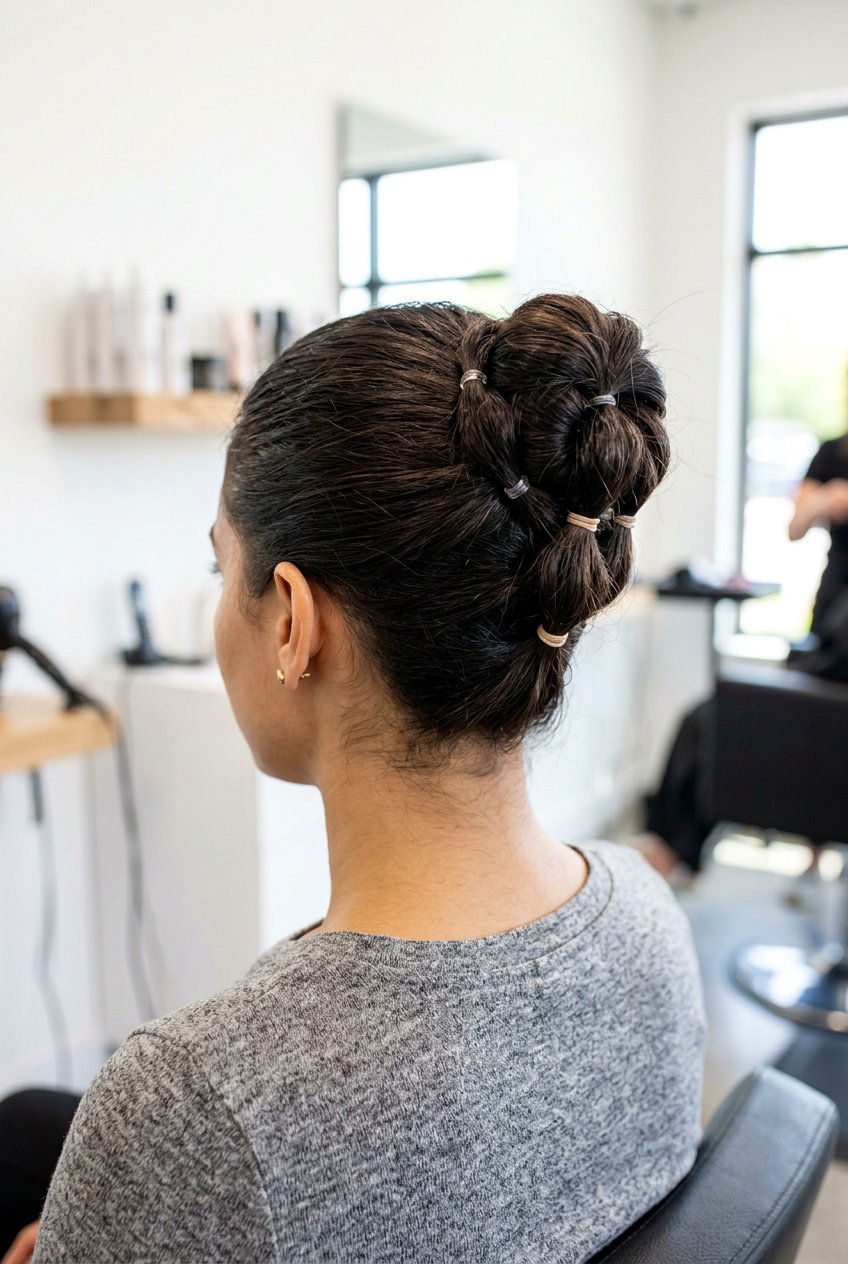
A multi elastic bun uses several small rubber bands along the length of the ponytail before it is wrapped into a bun. This “bubble” effect ensures that even if the main hair tie snaps, the hair remains somewhat contained. It is a “fail-safe” method used by dancers with extremely thick or slippery hair who struggle to keep a bun in place for more than an hour. Once the “bubbles” are created, the hair is coiled as usual. This creates a very secure, segmented look inside the bun that provides extra grip for your bobby pins to hold onto throughout your practice.
Conclusion:
Mastering the art of the dance practice bun hairstyle is a vital skill for any serious dancer. A secure bun not only follows studio etiquette but also protects your hair from the physical stress of constant movement and perspiration. From the discipline of the classic ballet bun to the creative security of the triple bun mohawk, there is a style suited for every hair type and dance genre. By investing a few extra minutes into your hair prep, you ensure that your focus remains entirely on your technique and artistry rather than on loose strands. Choose the style that makes you feel most confident and ready to perform your best.
You'll Like These Styles:


Leave a Reply