
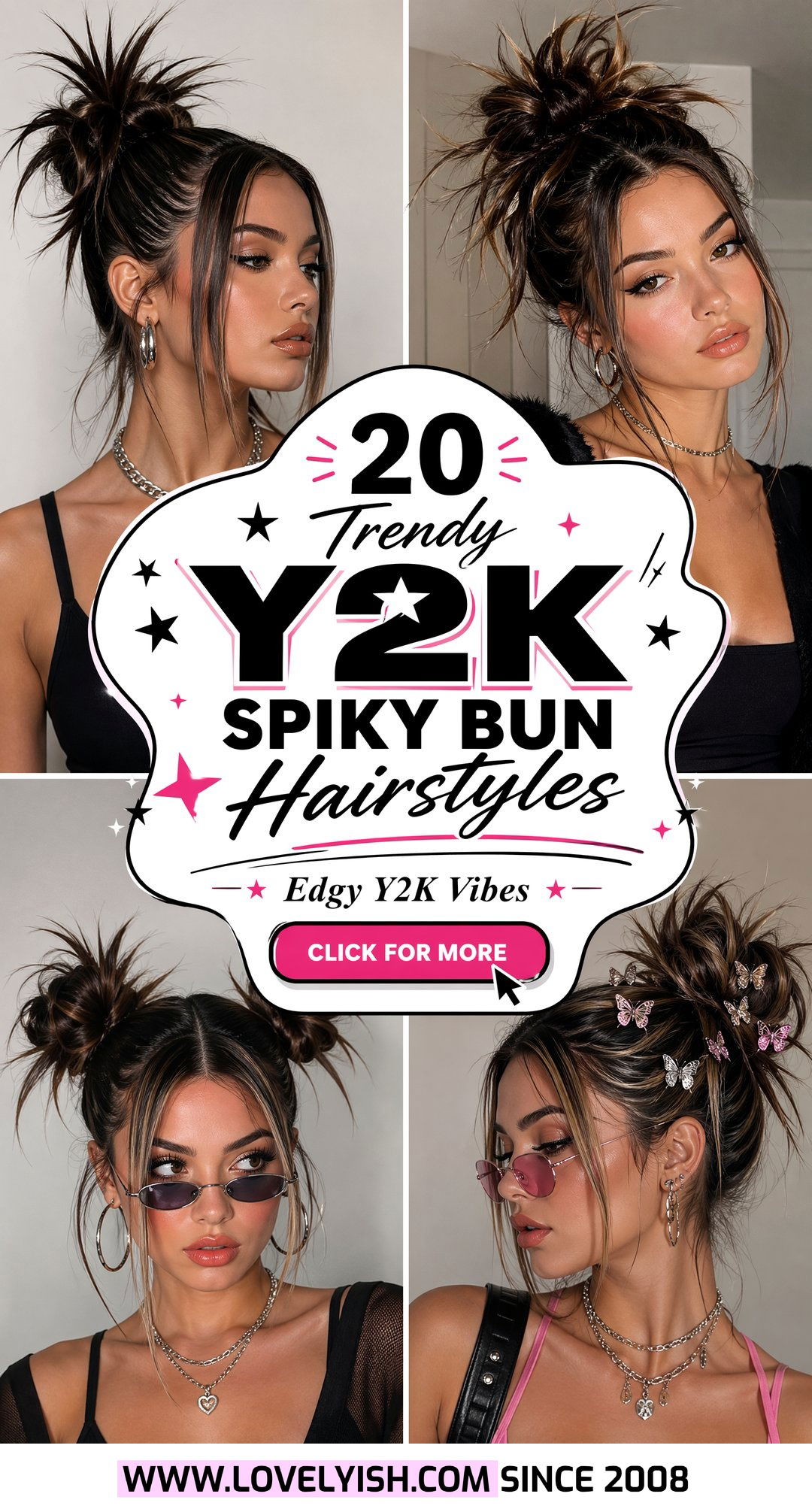
Y2K spiky bun hairstyles bring back that playful, early‑2000s energy with slick roots, sharp little ends, and lots of attitude packed into a simple updo. The look has returned in a big way thanks to TikTok, runway slick‑back trends, and celebrities like Bella Hadid and Kendall Jenner, who have helped turn the “feathered” spike bun into a modern staple again. At its core, a Y2K spiky bun is all about contrast: ultra‑smooth roots and hairline with piecey, intentionally visible ends poking out of the bun, almost like hair “rays” radiating from your crown. Recent guides from L’Oréal Paris, Glam, and pro stylists emphasize starting with straight or blown‑out hair, slicking everything back tightly, twisting a high ponytail into a bun, and then freezing those spiky ends with strong‑hold gel or hairspray for all‑day drama. You’ll also see lots of fun extras—zigzag parts, space‑bun doubles, butterfly clips, and face‑framing tendrils—so you can tailor each spiky bun to your vibe, from clean girl minimal to full Y2K pop‑star cosplay.
1. Classic High Y2K Spiky Bun
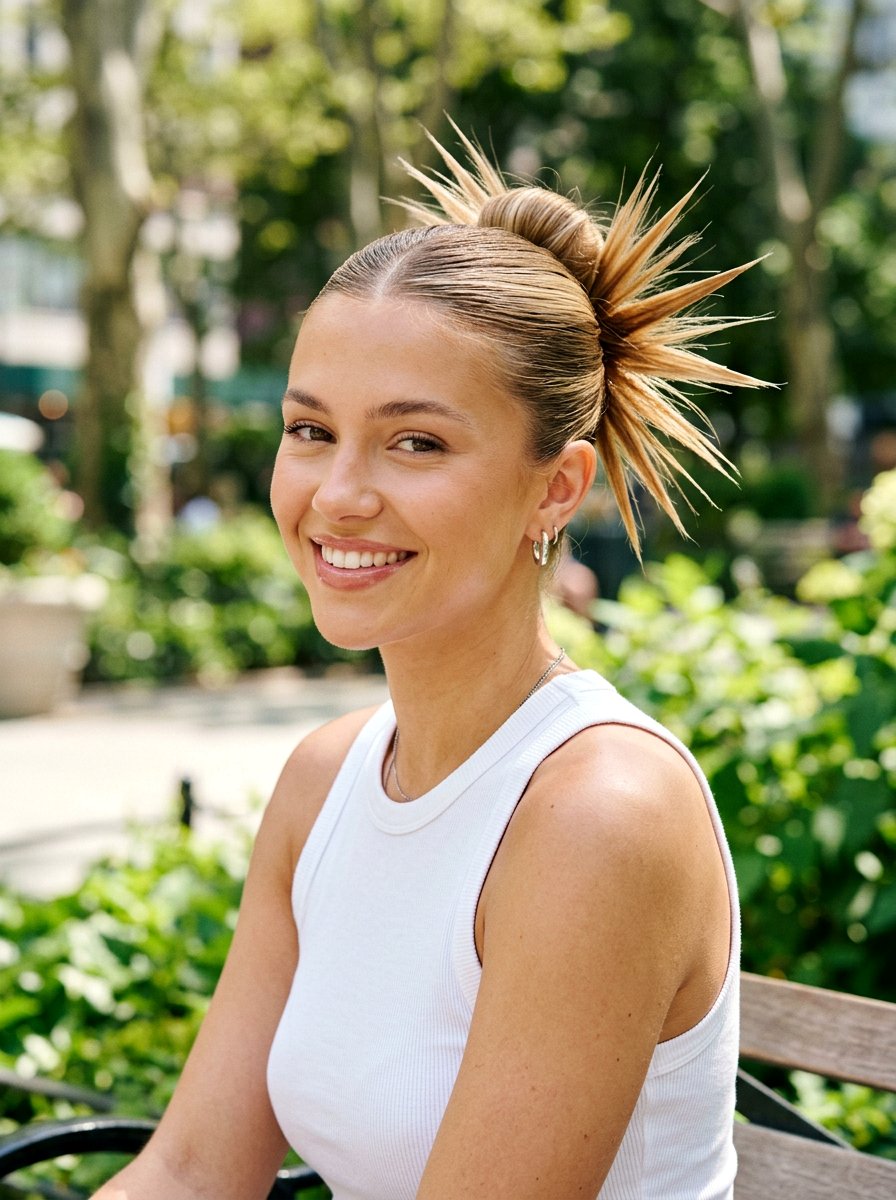
A classic high Y2K spiky bun is the base look that every other version builds on, and it works on most hair types that can be smoothed out with a brush and product. You start by brushing all your hair into a high ponytail at the crown, using gel or styling cream to create that sleek, glassy finish from hairline to roots. Then you twist the ponytail, wrap it loosely around its base, and leave the ends sticking out rather than tucking them fully under like a traditional ballerina bun. Those sharp ends are what give the bun its signature **spiky** silhouette, so you lock them in place with strong hairspray and a few well‑placed bobby pins so they angle in different directions instead of falling flat. To keep it modern, professionals suggest combing back any bumps, refining your part (middle or no part at all), and smoothing flyaways with a toothbrush and gel so the bun looks intentional, not messy. This is the perfect starting point for anyone new to the trend, and once you master it, you can add accessories, fringe pieces, or playful color without losing that early‑2000s feel.
2. Slick Middle Part Spiky Bun
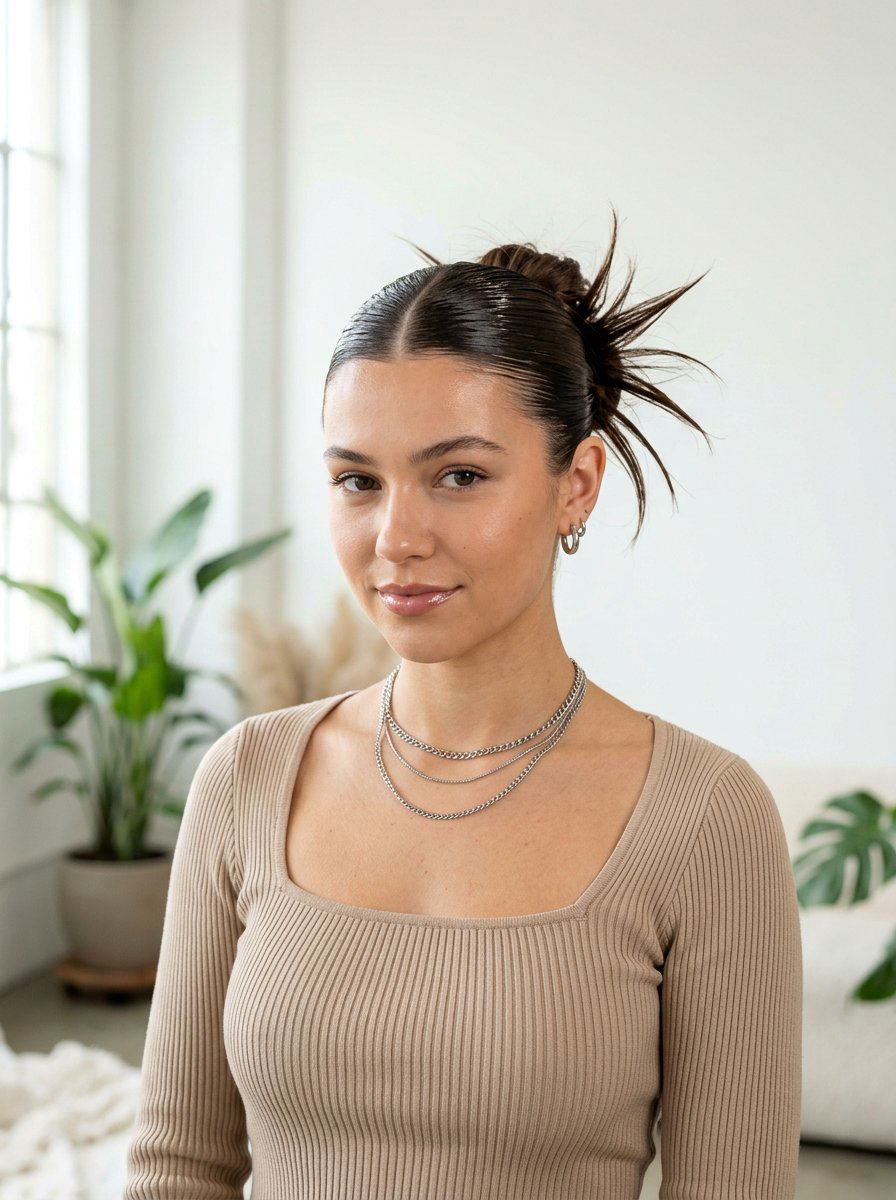
The slick middle part spiky bun combines the current “clean girl” aesthetic with retro Y2K texture, so it looks polished from the front and edgy from the back. You create a dead‑center part with a tail comb, then brush each side flat toward a high or mid‑height ponytail, using gel or a styling serum to keep every strand in line and reduce frizz. Once your ponytail is tight and secure, you twist it and wrap it into a compact bun, leaving a fan of ends poking out around the perimeter. Stylists recommend pinching small sections of the ends, coating them lightly with paste or wax, and pulling them upward or outward in little spikes for a feathered, almost crown‑like effect. The sleek middle part keeps the look sophisticated, which is why you often see this version paired with red‑carpet makeup and structured outfits, while the spiky bun itself still nods to 2000s pop stars and teen drama characters. This is a great choice if you want something that can go from daytime errands to a night out without changing the base style—just swap accessories or lip color and you’re ready.
3. Deep Side Part Spiky Bun
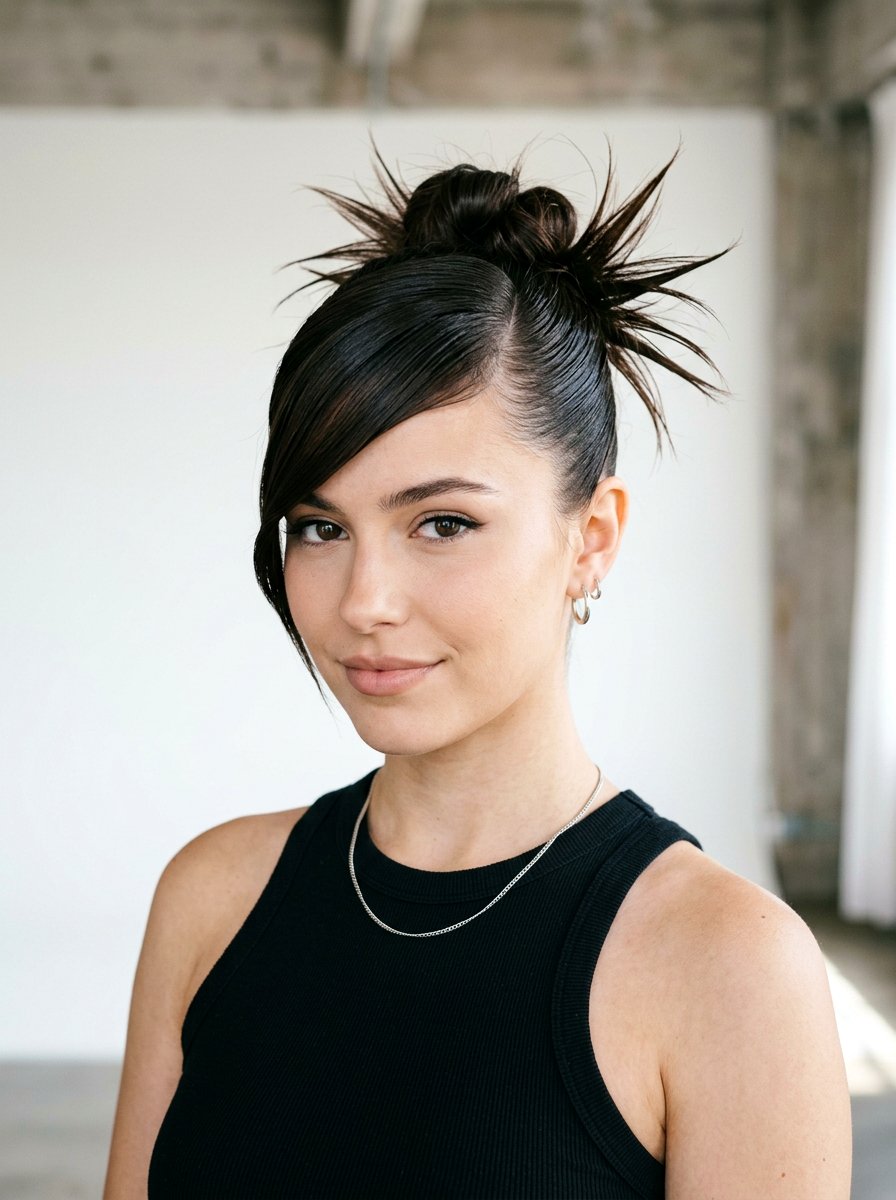
The deep side part spiky bun leans into drama and asymmetry, which feels very early‑2000s but still works with current slick‑back trends. Instead of parting in the middle, you draw a part far off to one side, then comb most of your hair across your forehead and back toward a high ponytail, almost like a swoopy, sculpted fringe. Gel or styling cream is essential here to keep that swoop smooth and shiny, especially near the hairline where frizz and baby hairs can break the effect. After you secure your ponytail, you twist it into a bun and leave the ends out, fanning them around so they stick out in multiple directions and contrast with the ultra‑controlled front section. Beauty editors note that side‑parted spiky buns can help balance face shapes by adding visual volume on one side while keeping the overall look sleek and lifted. It’s also a clever way to work with awkward grow‑out or uneven front layers, because you can sweep them into the side section instead of fighting to hide them.
4. Low Nape Spiky Bun
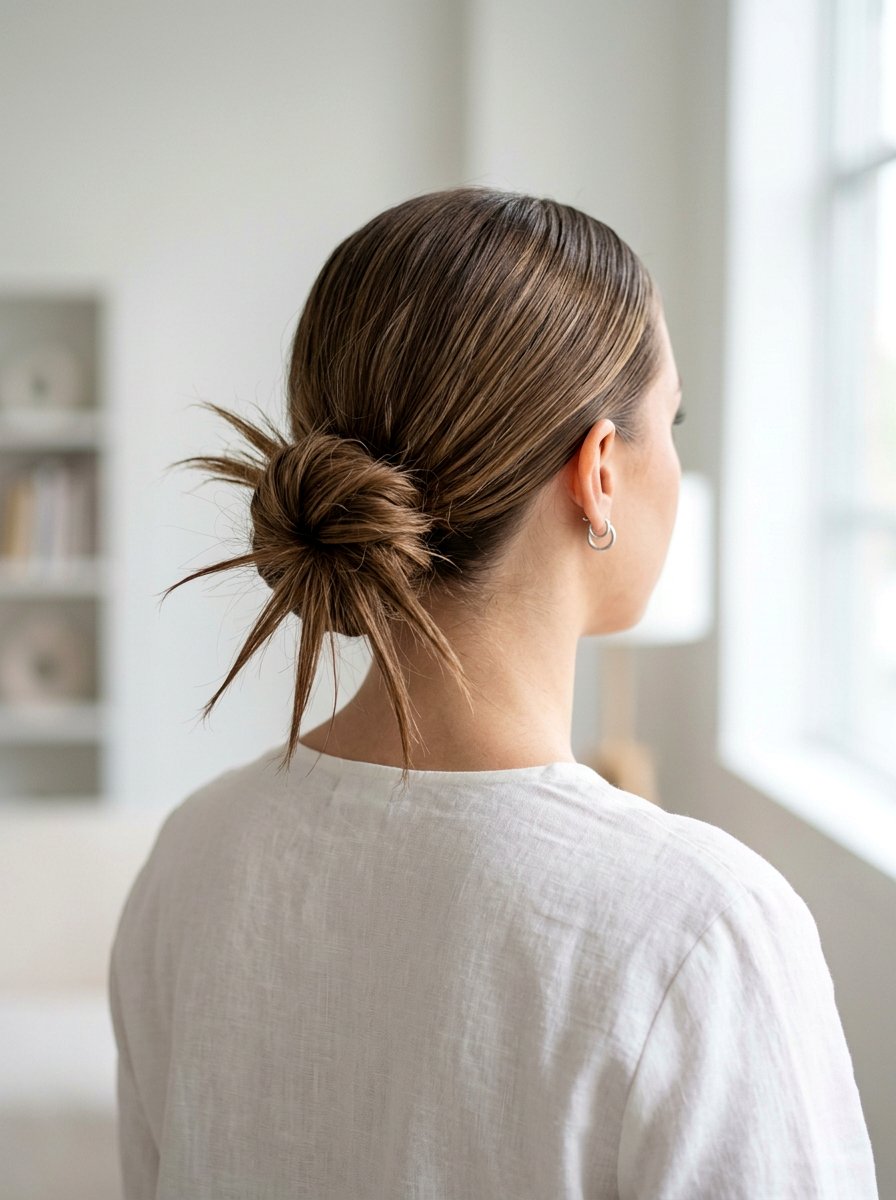
A low nape spiky bun offers a softer, more wearable take on the Y2K spike trend while still keeping those playful, sticking‑out ends. Instead of pulling hair to the crown, you gather it at the nape of your neck into a low ponytail, smoothing everything down with a brush and gel for a sleek silhouette from the front and sides. Twist the ponytail and wrap it into a bun that sits just above the collar, again leaving a decent amount of length untucked so you can create those signature spikes. This placement makes the hairstyle more comfortable for long days, since it doesn’t pull as tightly on the scalp and works well with hats or higher collars. Hairstyle guides suggest this look for dressier events because the lower bun reads more classic from some angles, while the spiky texture keeps it from feeling too stiff or formal. If your hair is fine, a bit of teasing at the ponytail before twisting can add the extra volume needed for the spikes to stand out instead of drooping.
5. Half Up Half Down Spiky Bun
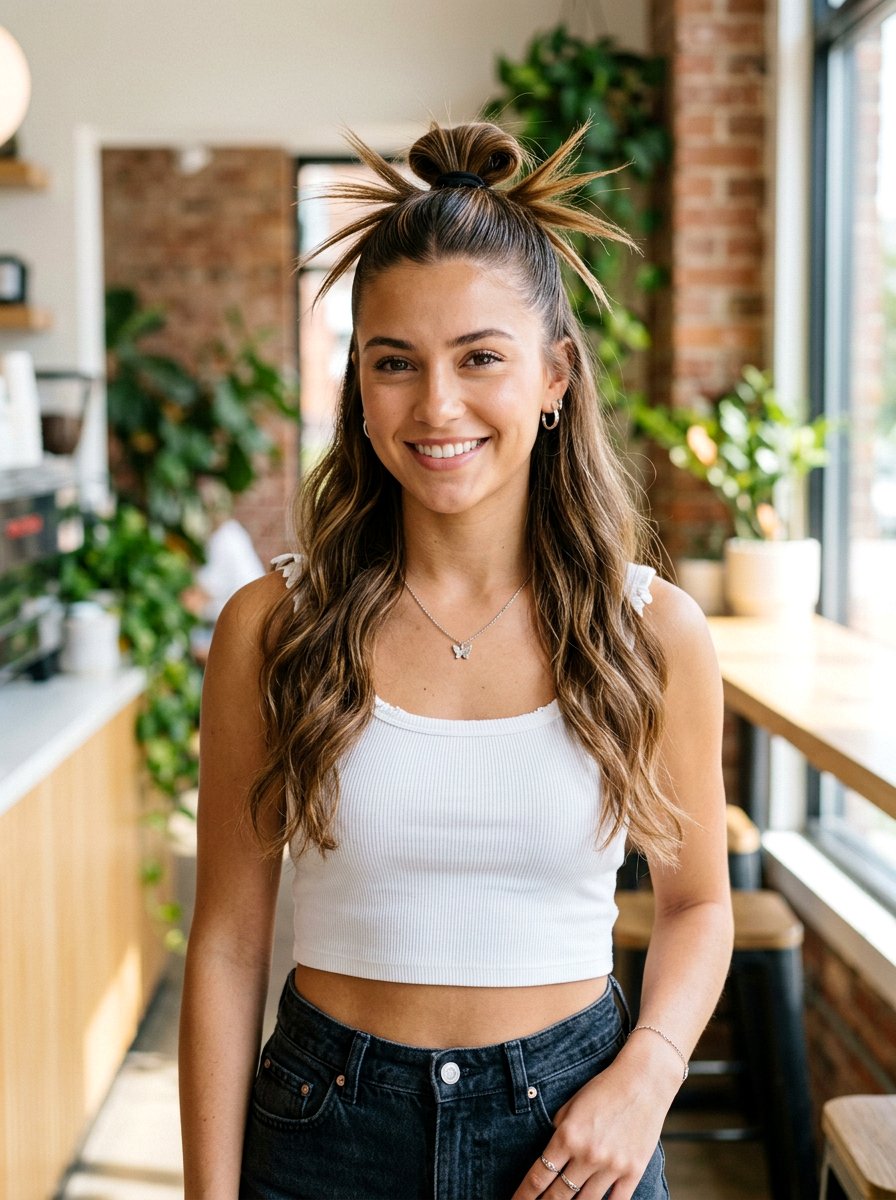
The half up half down spiky bun is a favorite in recent tutorials because it mixes the softness of loose hair with the edge of a mini spike bun on top. You section off the top half of your hair from temple to temple (or higher for more volume), secure it into a ponytail, and smooth the roots with gel or spray so the top looks sleek. Then you twist that ponytail into a small bun and leave the ends sticking upward and outward, using products to define each piece so the spikes are visible even from the front. The bottom half of your hair can be straightened, curled, or left natural, which makes this style flexible for different textures and levels of effort. Influencer tutorials often pair this look with two shorter face‑framing pieces or micro tendrils in the front, reinforcing the Y2K vibe while still keeping the crown sleek. It’s a great option for festivals, casual parties, or content days because it stays secure at the top but still shows off your hair length and movement in the back.
6. Double Space Buns With Spiky Ends
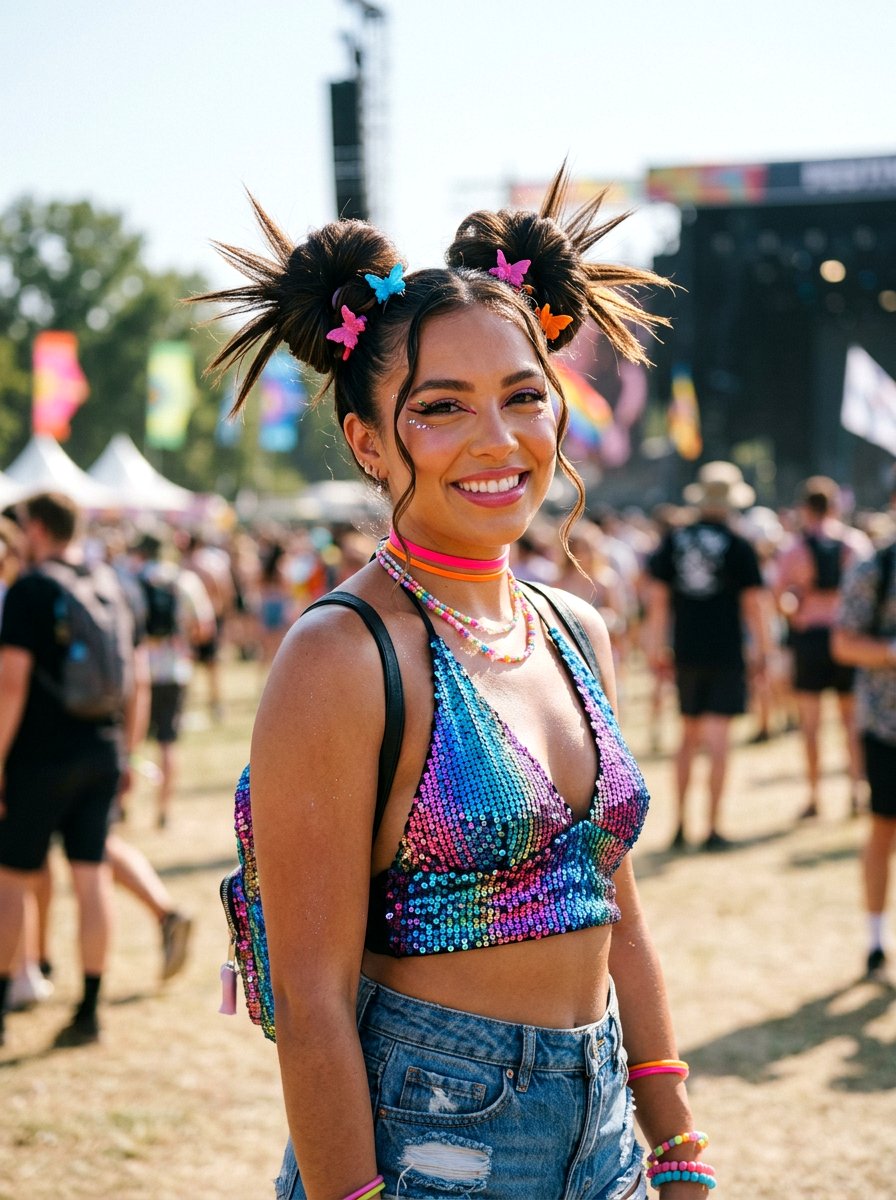
Double space buns with spiky ends combine two major Y2K signatures—space buns and spiky updos—into one bold, playful look. You start with a precise middle part, then section the hair into two equal halves and gather each side into a high ponytail above your temples or slightly back on the crown. Smoothing product helps keep the base sleek, which is key so the spiky texture doesn’t read messy or accidental. Once you twist each ponytail into a bun, you intentionally leave a good amount of length out and arrange the ends into spikes that fan around both buns, almost like twin halos. Many creators also like to pull out short front pieces or baby braids in front of the ears to reinforce that nostalgic, early‑2000s feel. This look photographs really well from all angles and pairs perfectly with fun accessories like butterfly clips, star barrettes, and colorful elastics scattered around or near the buns.
7. Sleek Spiked Y2K Bun With Face Framing Pieces
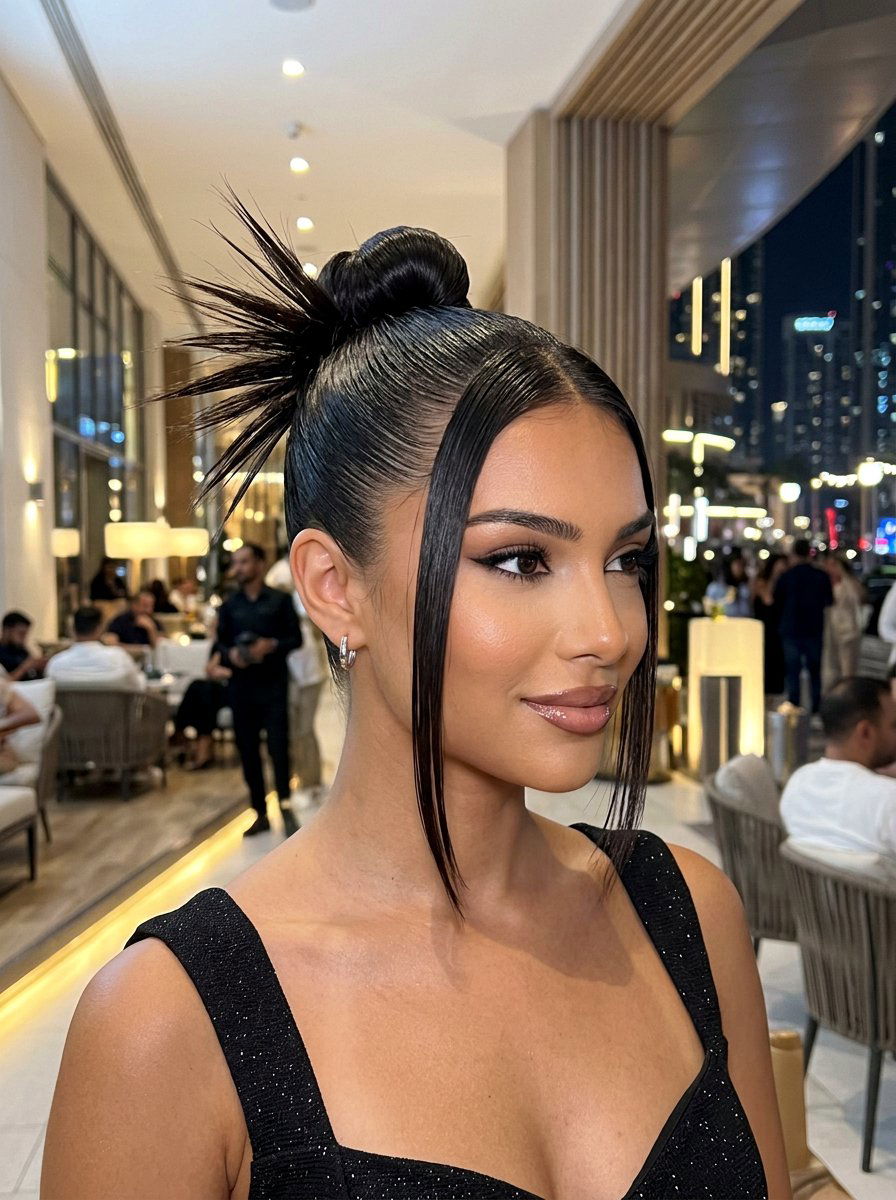
The sleek spiked Y2K bun with face framing pieces is one of the most popular modern interpretations because it blends red‑carpet polish with nostalgic detail. To get it, you start by straightening or blow‑drying your hair smooth, then sectioning out two narrow pieces at the front that will fall along your cheeks or jawline. The rest of the hair is combed back tightly into a high ponytail, slicked with gel or serum for that reflective finish and secured firmly with an elastic. After twisting the ponytail into a bun, you leave the ends sticking out and use a matte paste or strong hairspray to separate and “freeze” each spike. The two face framing pieces can be flat‑ironed straight or softly waved, giving movement that contrasts with the rigid bun spikes. This combination is frequently seen in tutorials from professional stylists and is a go‑to for nights out or photo shoots because it frames your features while still drawing attention upward.
8. Textured Curly Spiky Bun
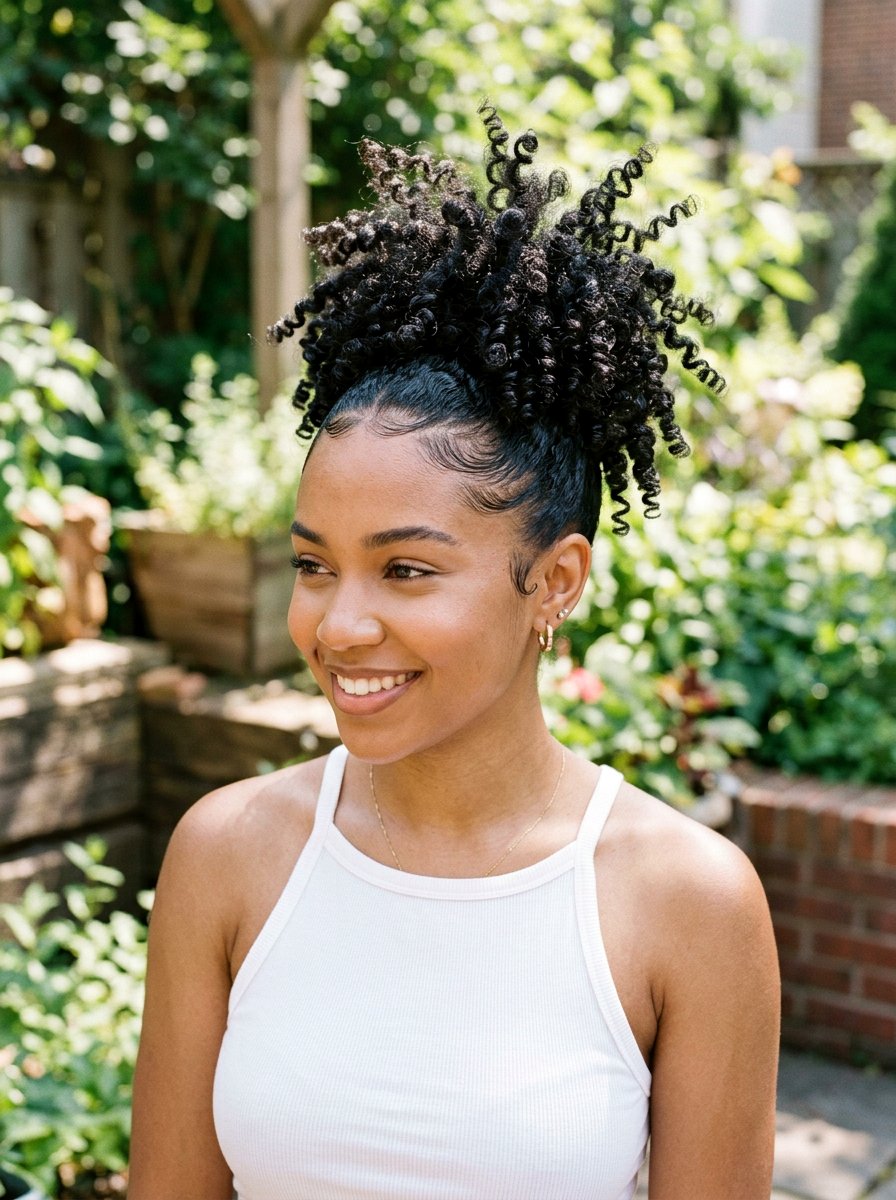
A textured curly spiky bun lets you embrace the Y2K vibe without flattening your natural curls or coils, instead using them as the main event. You apply a curl‑friendly gel or cream to define your texture, then gather your hair into a high ponytail, smoothing just enough at the roots to get a neat base without erasing volume. When you twist the ponytail into a bun, you keep the twist looser and leave a lot of the lengths free, so curls can spring out in different directions. Rather than aiming for perfectly straight spikes, you’re going for defined, springy pieces that radiate from the bun and show off your natural pattern. Many guides recommend edge control around the hairline and a diffuser beforehand if you’re enhancing definition, which helps balance smooth edges with big curly texture. This approach taps into the nostalgic energy of Y2K hair while feeling updated and inclusive, since it doesn’t demand you straighten your hair to participate in the trend.
9. Braided Ponytail Spiky Bun
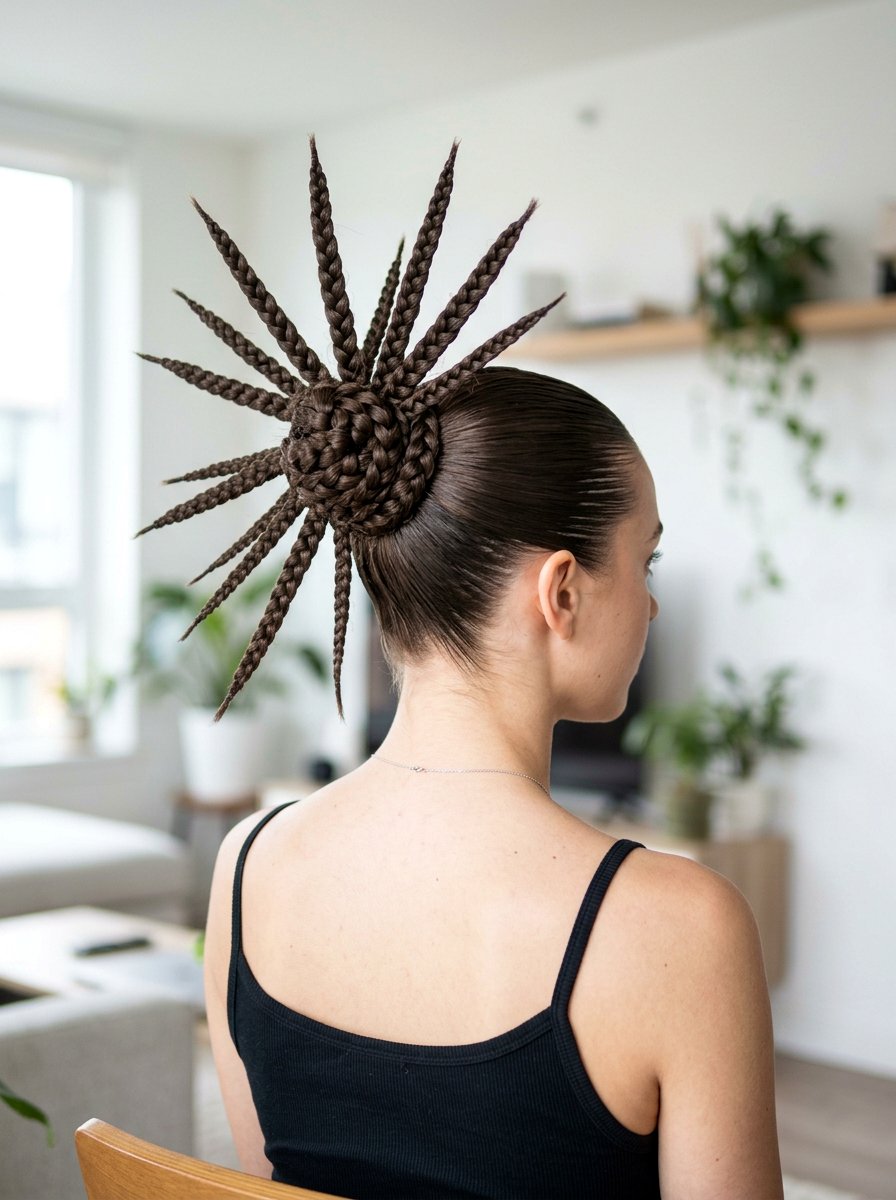
A braided ponytail spiky bun adds extra structure and visual interest by incorporating a braid before twisting everything into the bun. You start with the usual slicked‑back ponytail—high, mid, or low depending on your preference—and then braid the ponytail all the way down instead of leaving it loose. After that, you coil the braid around the base to form a bun and leave the tail end of the braid out to create a thicker, more defined spiky section. The braid itself adds texture inside the bun, while the loose tail can be fanned into several chunky spikes that hold their shape easily because of the plaited structure. Stylists sometimes pull out tiny braided strands from the bun or add a few micro braids near the hairline to bring more Y2K detail into the overall look. This version works especially well for longer hair or extensions, since the braid keeps length under control while still showcasing the spiky finish.
10. Zigzag Part Spiky Bun
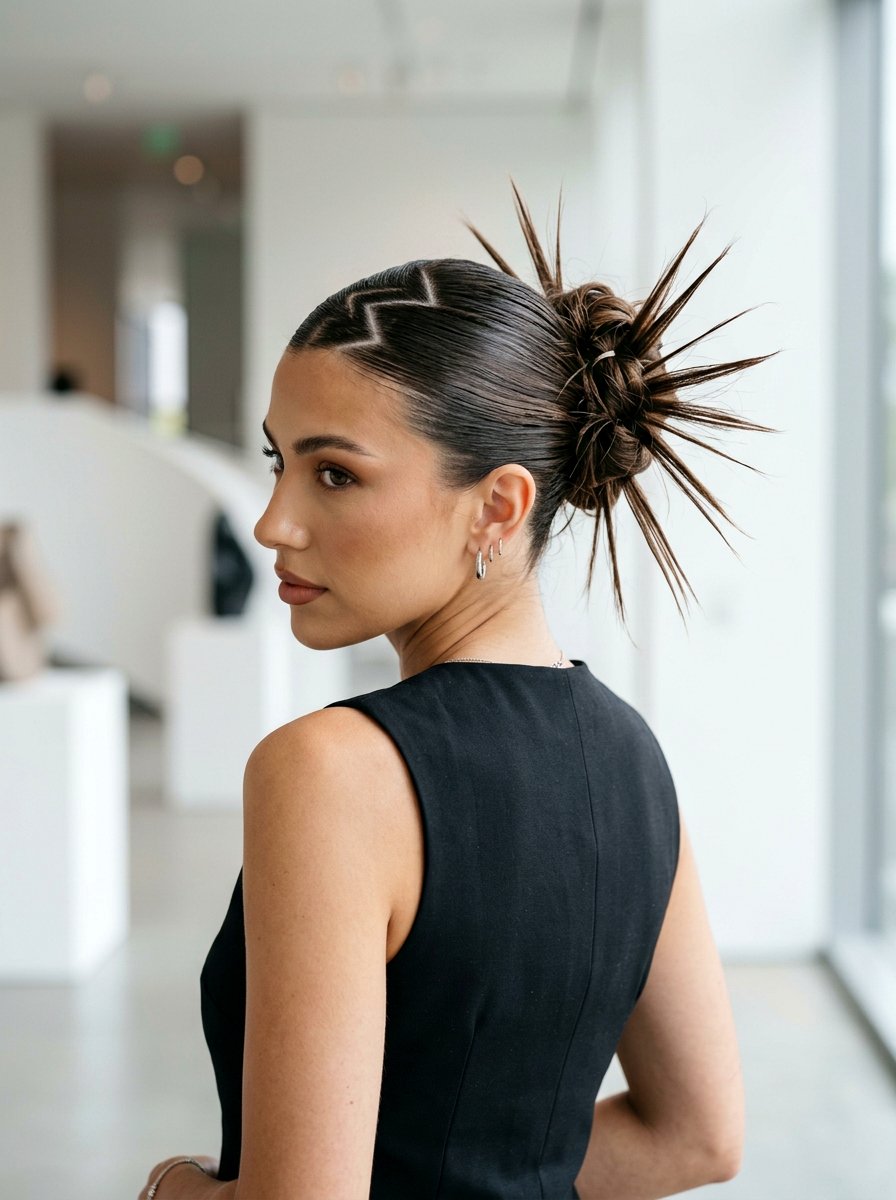
The zigzag part spiky bun is a direct callback to early‑2000s styling, when zigzag parts were everywhere from teen magazines to music videos. You use the tail of a comb to draw alternating triangles from the front hairline back toward your crown, creating a sharp zigzag that divides your hair into two interlocking sections. Then you apply gel and smooth both sides back into a single high ponytail, making sure the zigzag lines stay visible and crisp. After securing the ponytail, you twist it into a bun and leave the ends out to form the usual spiky halo, reinforcing the Y2K theme from all angles. Articles from L’Oréal and others mention zigzag parts specifically as an easy way to update basic buns and ponytails with a more playful, nostalgic edge. The result is a look that reads simple at a distance but reveals fun detail up close and in photos, especially if you finish with glossy product for extra shine.
11. Spiky Bun With Butterfly Clips
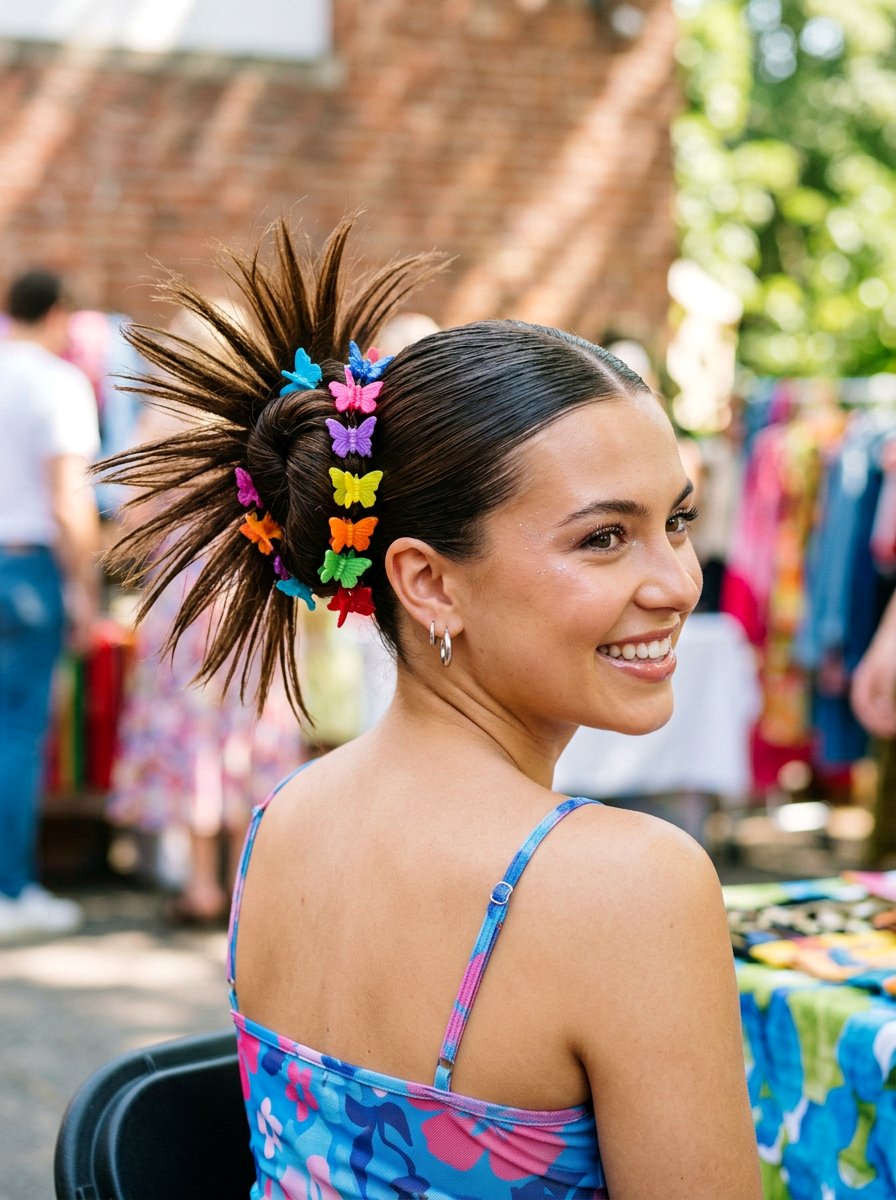
A spiky bun with butterfly clips leans fully into the Y2K accessory moment, turning a simple updo into a statement. You start with any slicked‑back spiky bun base—high, low, or half‑up—and once the spikes are set, you place small butterfly clips along your part, around the bun, or scattered across the crown. The clips catch the light and add playful color, making the hairstyle perfect for concerts, parties, or any throwback‑themed event. Many Y2K hairstyle roundups highlight butterfly clips as a defining accessory of the era, so pairing them with a spike bun instantly amplifies the nostalgic feel. To keep the look balanced rather than cluttered, you can stick to a tight color palette or place clips symmetrically on both sides of your head. This is also a great way to match your hair to your outfit without changing your color, since the accessories become the main pop.
12. Spiky Bun With Colorful Elastics
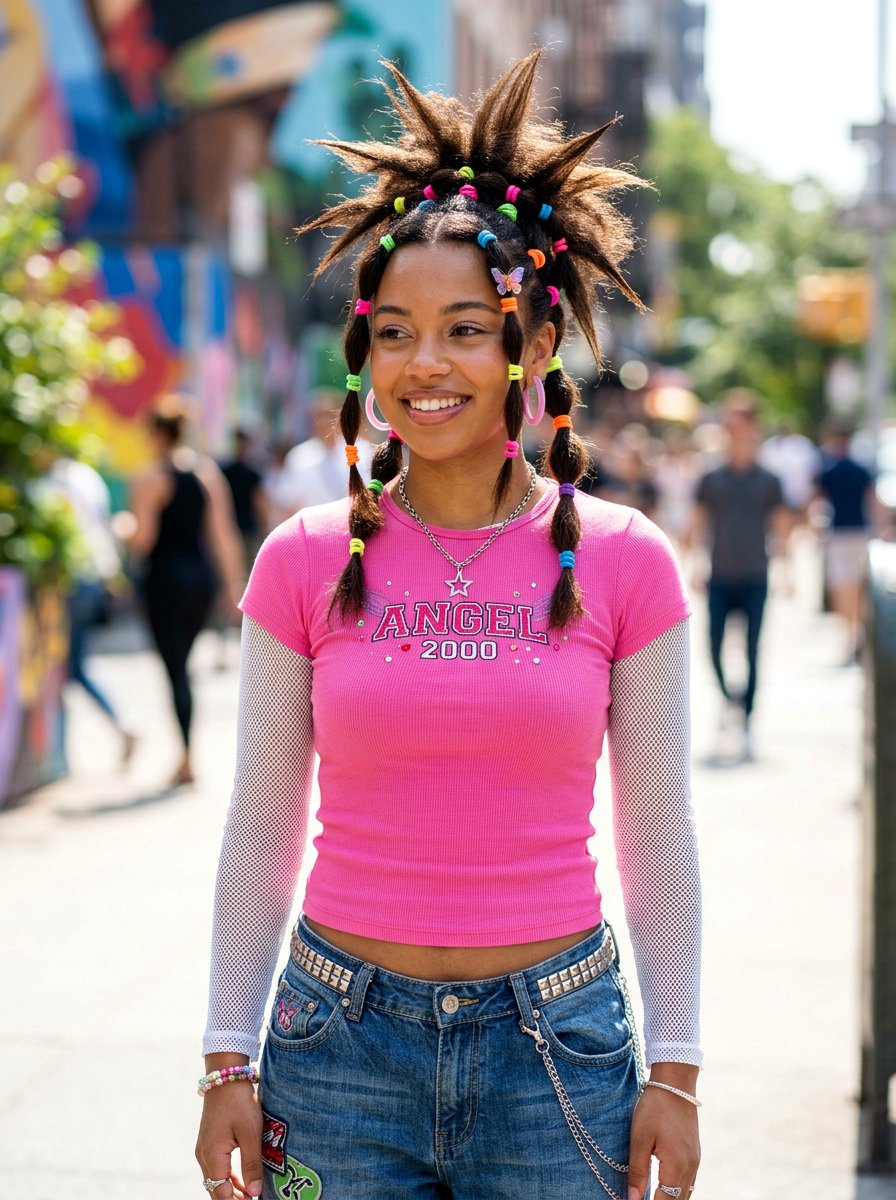
A spiky bun with colorful elastics offers another playful, low‑commitment way to bring Y2K flair into an everyday hairstyle. Before you pull your hair into a ponytail, you can divide the front or crown into small square sections and secure each mini ponytail with a bright elastic, creating a bubble grid that feeds back into the main ponytail. After that, you gather everything into your main pony, twist it into a bun, and leave the ends sticking out to form spikes. The elastic colors show through at the front and sides, while the spiky bun keeps the overall look cohesive and anchored at the back. Trend pieces often reference colorful hair ties and elastic “bubbles” as a big part of Y2K hairstyling, so this mash‑up feels authentic to the era. It’s particularly fun for summer, festivals, or school events, when you can coordinate your elastics with outfits or even nail colors.
13. Micro Tendrils Spiky Bun
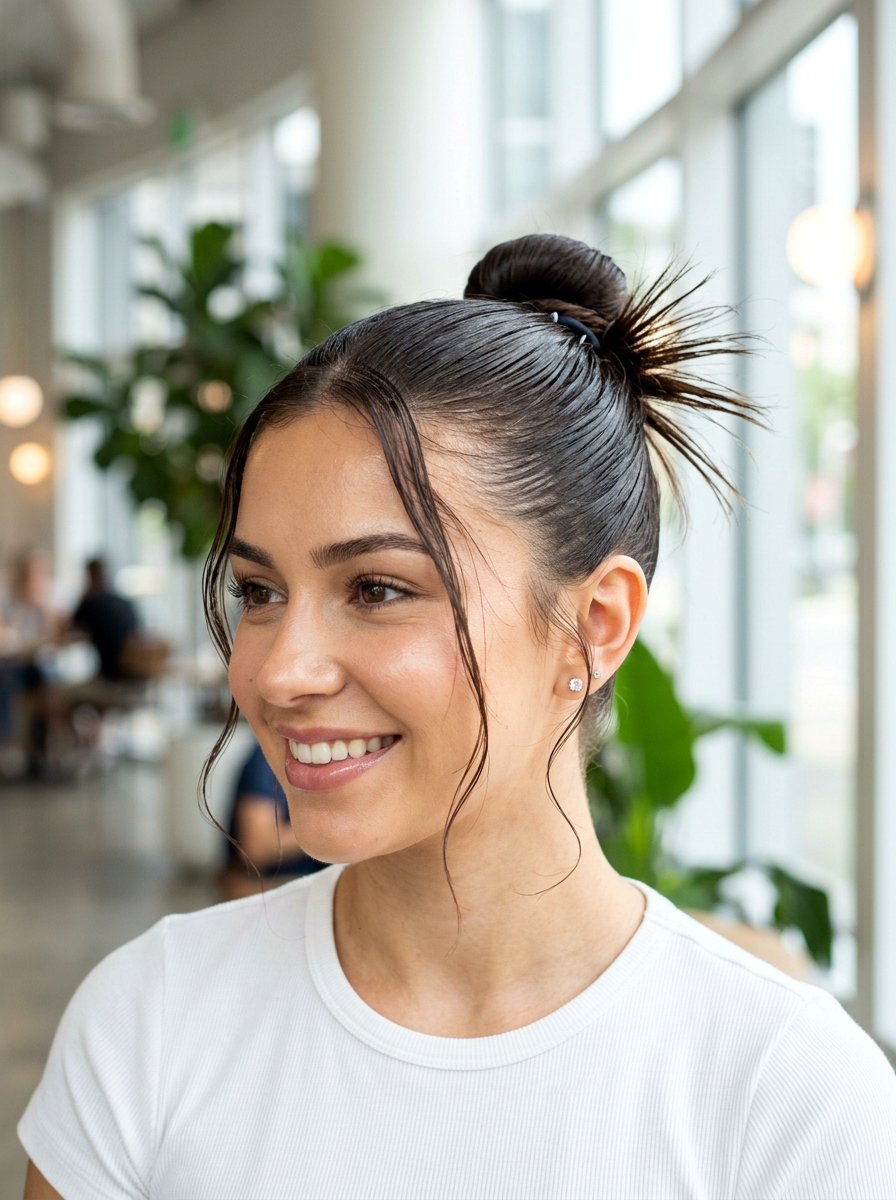
A micro tendrils spiky bun focuses on tiny face‑framing pieces that give a delicate, almost anime‑inspired feel around your features. You section out a few very thin strands at the hairline—often right at the center and near the temples—before slicking the rest back into a high ponytail. After twisting the ponytail into a bun and setting your spikes, you style those micro tendrils with a flat iron or small curling iron so they curve slightly toward your face. This detail softens the strong lines of the slick back and the spiky bun, making the overall look feel more romantic while still clearly Y2K. Fashion and beauty sites note that these skinny, intentional tendrils are trending again because they frame the face in photos without hiding your features. For staying power, a dab of gel or wax on each tendril helps keep them separated and prevents frizz, especially in humid weather.
14. Messy Y2K Spiky Bun
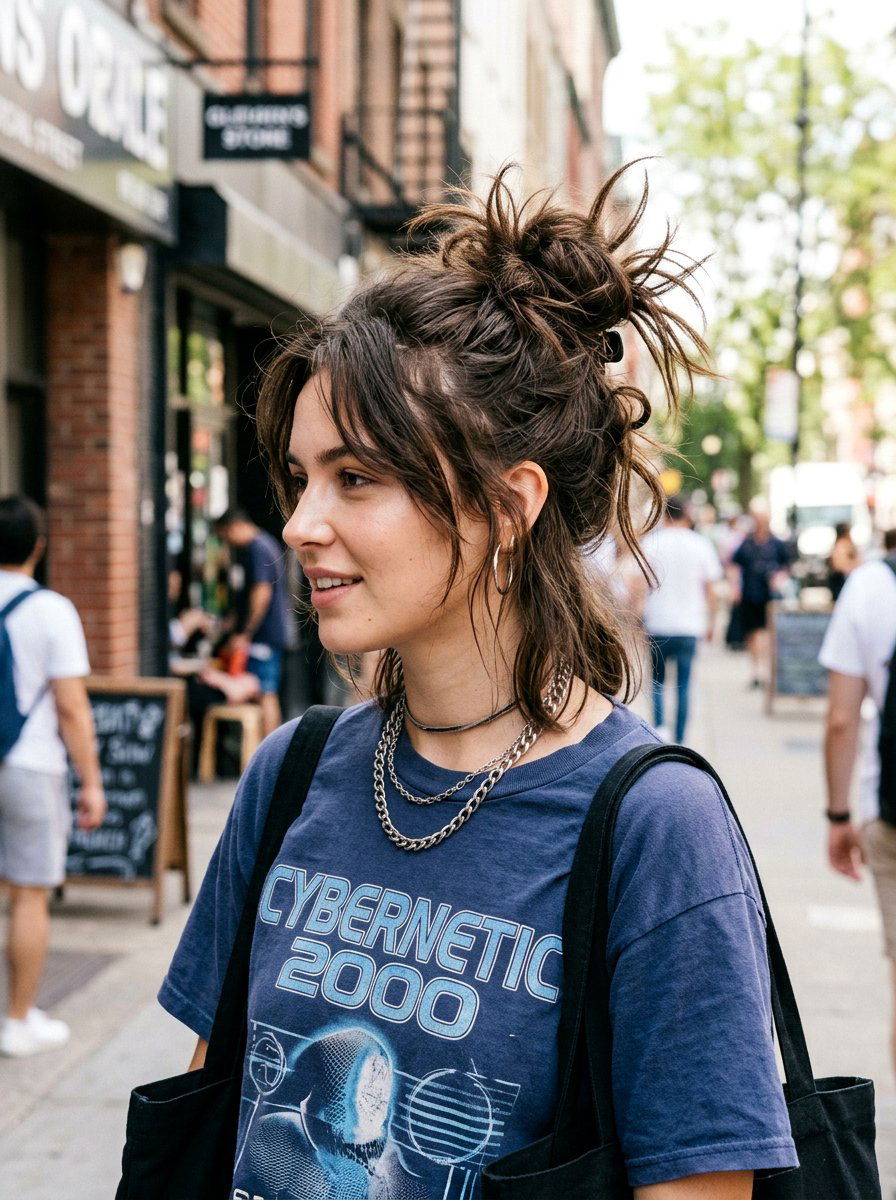
A messy Y2K spiky bun takes the structured spike concept and relaxes it for a more casual, off‑duty vibe. Instead of obsessing over a perfect, glass‑smooth base, you allow a bit of texture at the roots and pull your hair into a high or mid ponytail using less product. When you twist the ponytail into a bun, you wrap it loosely and leave generous ends out, then pinch and pull at the crown to create soft lift and movement. The spikes at the back are still defined with hairspray, but they don’t have to stand at identical angles or be perfectly separated. Articles about updated spiky buns mention this slightly undone finish as a modern take, especially for daytime wear or for people who prefer lived‑in texture over ultra‑slick styles. It’s also forgiving on second‑ or third‑day hair, since a bit of natural grit can help the spikes hold without additional teasing.
15. Sleek Spiked Bun With Braided Tendrils
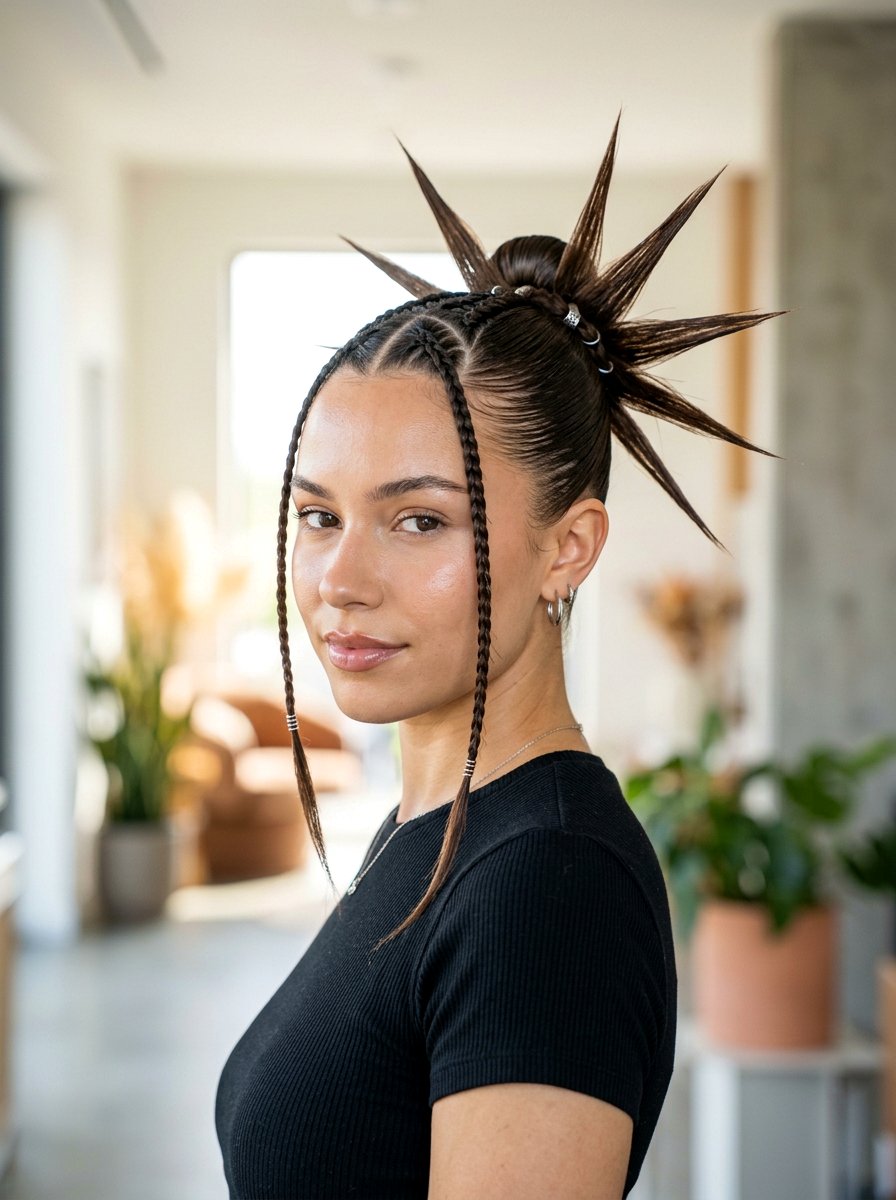
The sleek spiked bun with braided tendrils adds intricate detail to the front while keeping the overall shape streamlined. You part your hair in the middle or slightly off‑center, then separate two small sections at the front on each side and braid them into thin, tight plaits. The rest of your hair is slicked back into a high ponytail and twisted into a bun, with the ends left sticking out in classic spike fashion. The front braids hang down in front of your ears or along your cheeks, offering that unmistakable Y2K touch seen in many nostalgic photos and shows. Style guides often mention this as a way to incorporate braids without committing to full micro braids or box braids, giving you detail without hours of work. This style is especially striking with highlights or contrasting color in the tendrils, since braided pieces show dimension clearly.


16. Spiky Bun With Hair Scarf
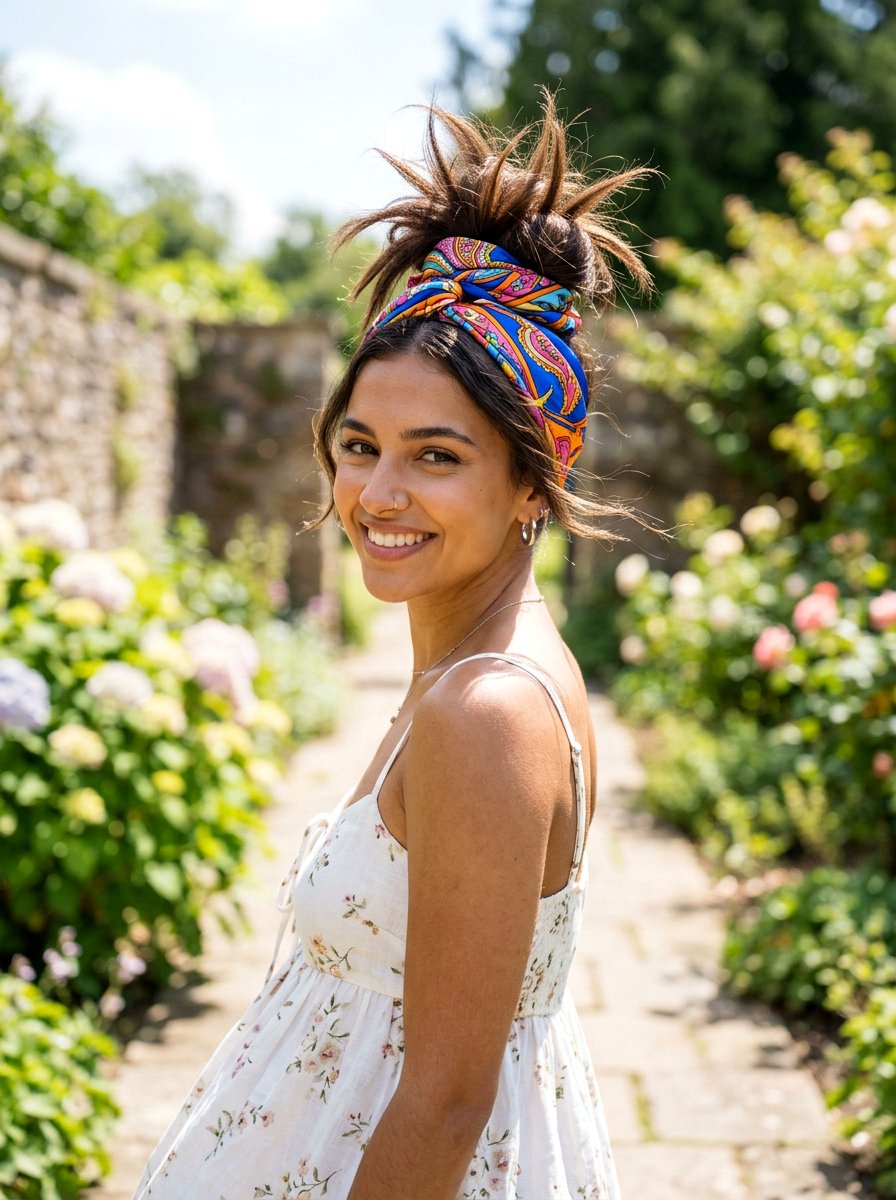
A spiky bun with a hair scarf wraps the Y2K shape in a softer, fashion‑forward accessory, making the look feel more boho while keeping that playful edge. You create your spiky bun first—usually high or mid‑height—then tie a lightweight scarf around the base, either in a bow or a knot with trailing ends. The scarf can sit just under the spikes so they still fan out above, or it can cover part of the bun while the sharp ends peek out from the top. Many Y2K inspiration posts show scarves used as headbands or wrapped around ponytails, so adapting that idea to a spiky bun feels natural. This version is perfect for breezy days or vacations, when you want your hair up and off your neck but still want a statement element in your look. Choosing prints that echo your outfit colors keeps everything cohesive without overwhelming the hairstyle itself.
17. Spiky Bun With Chunky Highlights
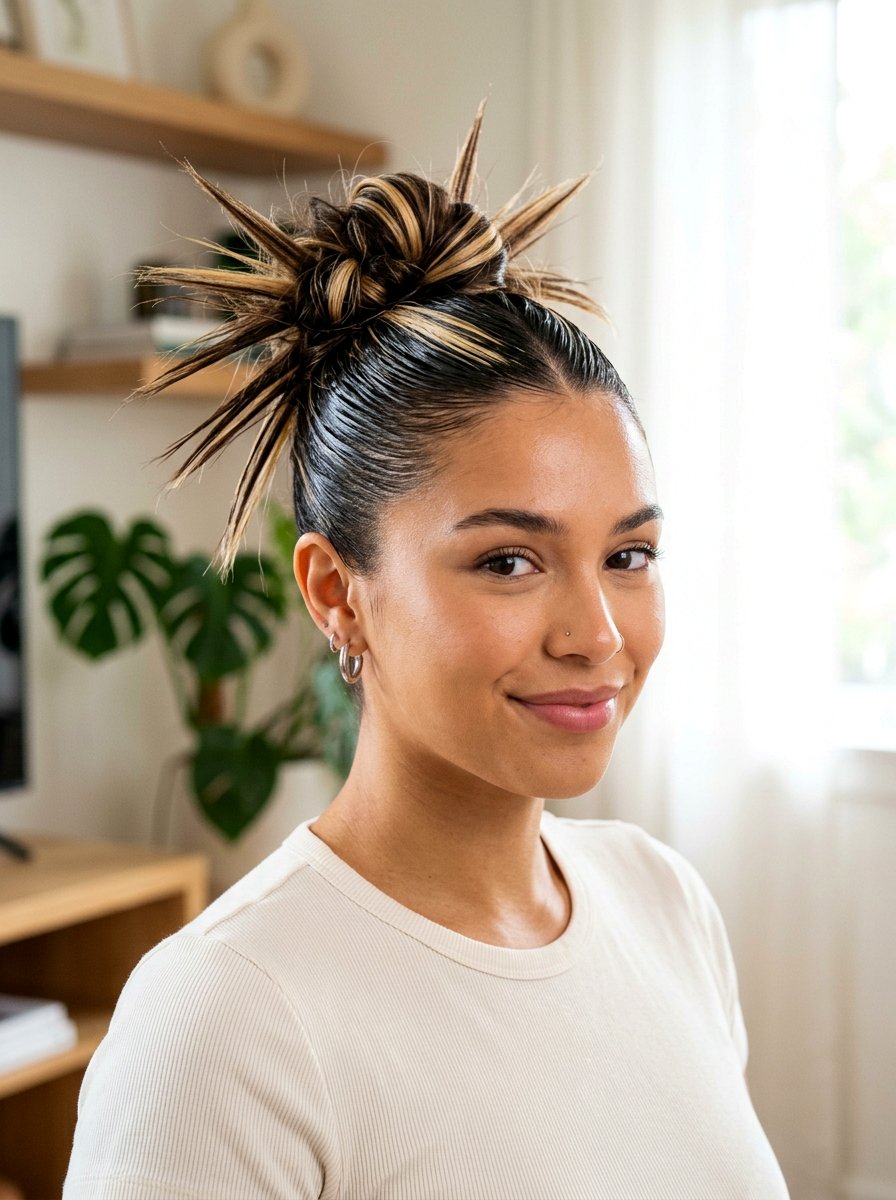
A spiky bun with chunky highlights taps into one of the most recognizable Y2K color trends, making the spikes themselves a showcase for contrast. Thick streaks of lighter or contrasting color—especially around the front and through the lengths—show clearly when you pull hair back and let the ends stick out. When you twist your highlighted ponytail into a bun and leave the tips free, each spike can reveal a different mix of base shade and highlight. Color guides explain that bold, chunky highlights have reemerged with a modern twist, often with softer blends at the roots but still visible contrast through the mid‑lengths and ends. This means a spiky bun can look especially graphic, almost like sunburst rays, when you turn your head or pose for photos. To keep hair healthy despite lightening, stylists recommend bonding treatments and regular deep conditioning so your spikes look shiny rather than dry.
18. Spiky Bun With Clip‑In Extensions
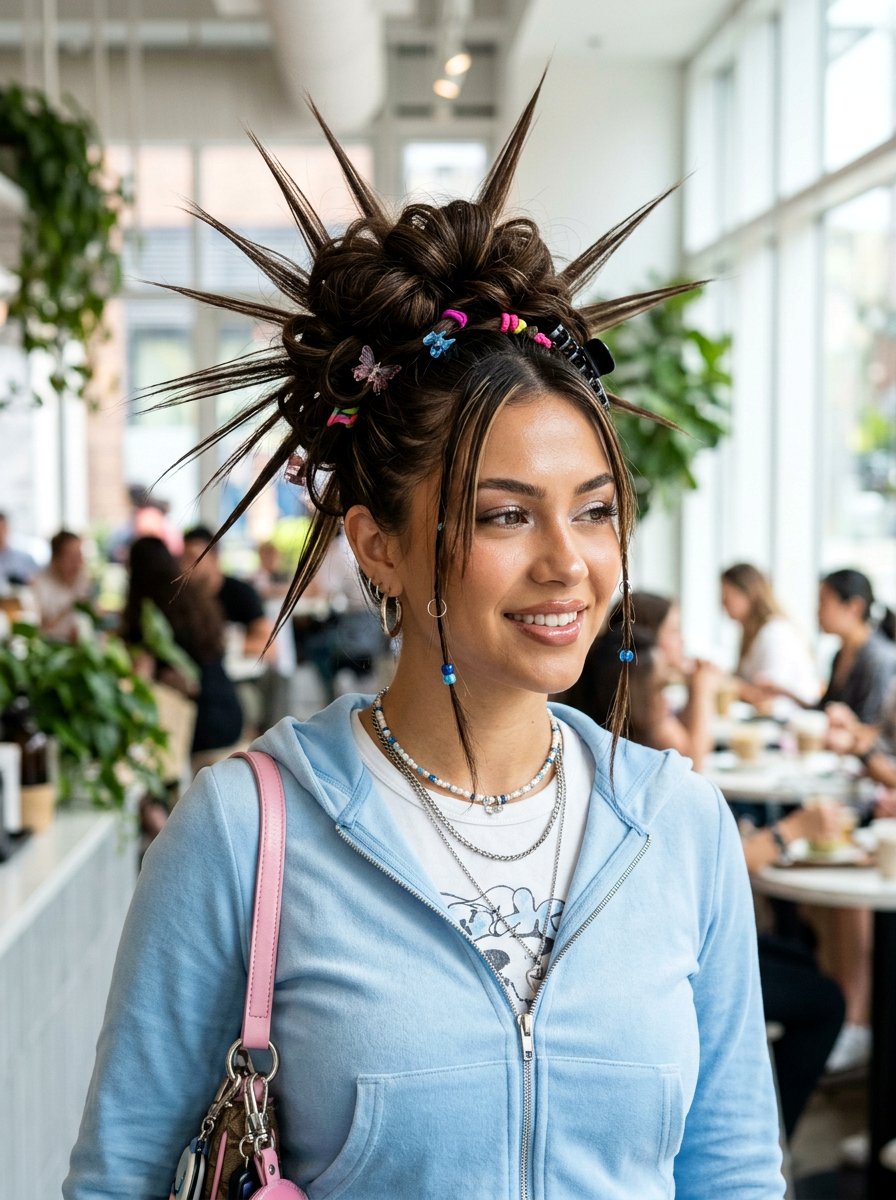
A spiky bun with clip‑in extensions is ideal if your natural hair isn’t long or thick enough to create dramatic spikes on its own. You clip extensions in around the crown and sides, blending them into your natural hair before pulling everything back into a high ponytail. Once secured, you twist the extended ponytail into a bun and leave the added length out as spikes, which gives a fuller, more exaggerated halo effect. Hair brands and blogs often show this technique to recreate celebrity‑level updos without permanent length or professional installations. It’s important to match texture and color as closely as possible so the bun and spikes look seamless, especially since the ends are the focal point. This approach also lets you experiment with temporary color—like streaks or ombré extensions—without committing to dye, which fits the playful spirit of Y2K hair.
19. Spiky Bun With Claw Clip Base
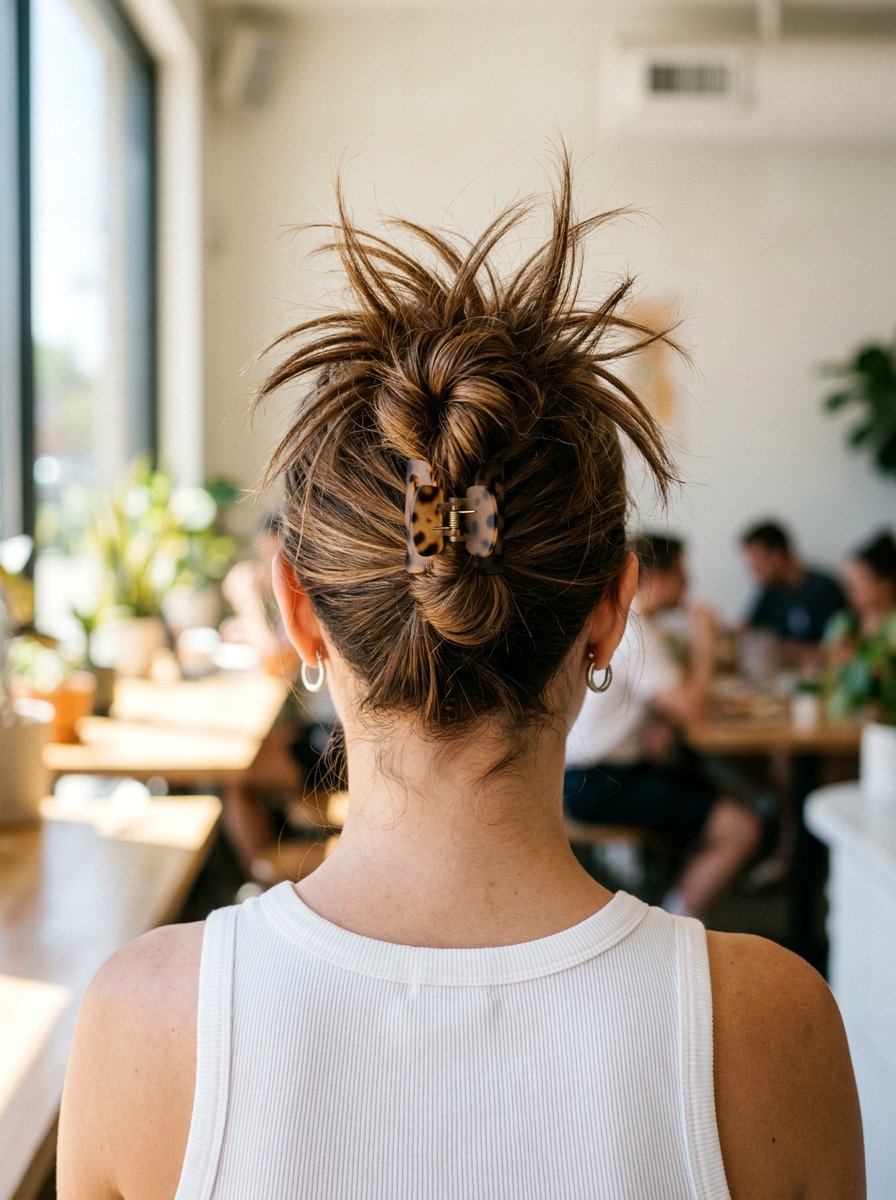
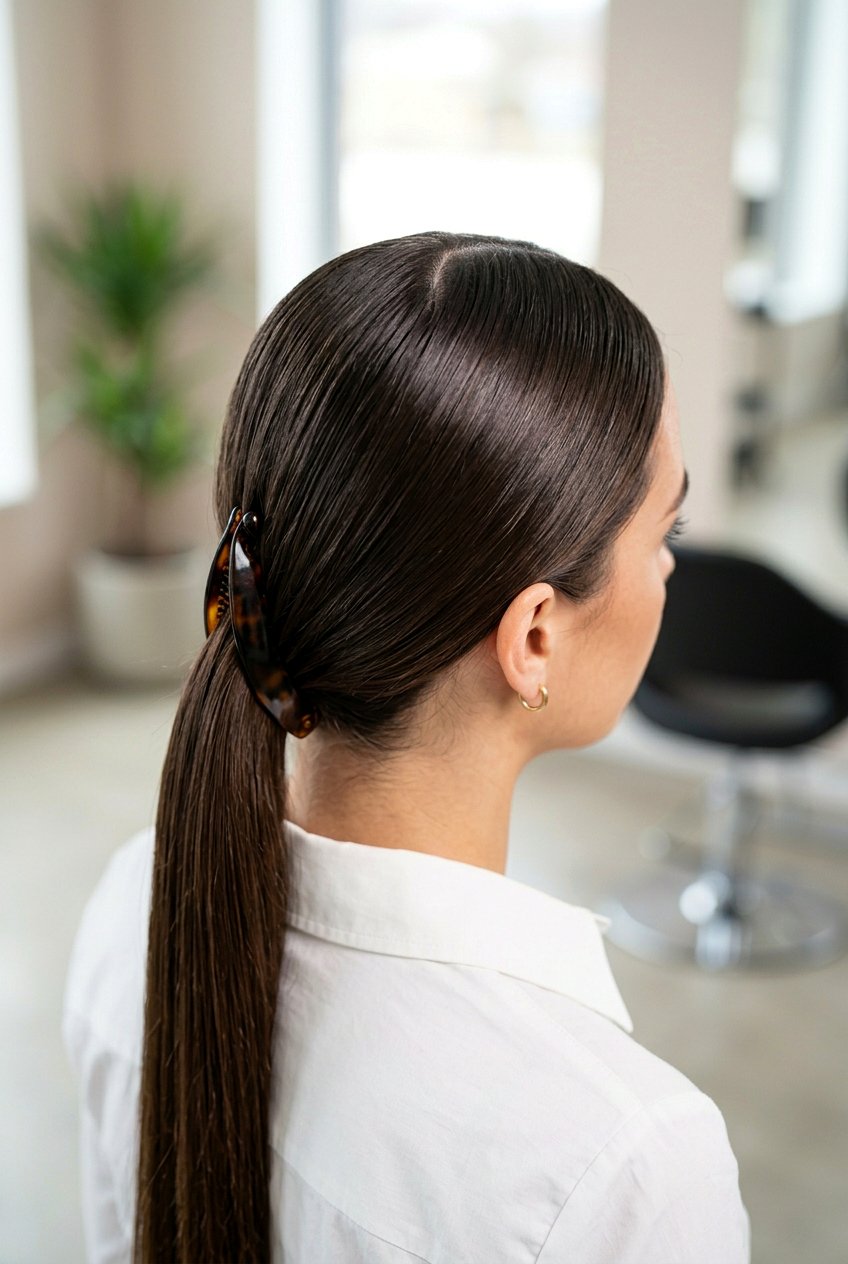
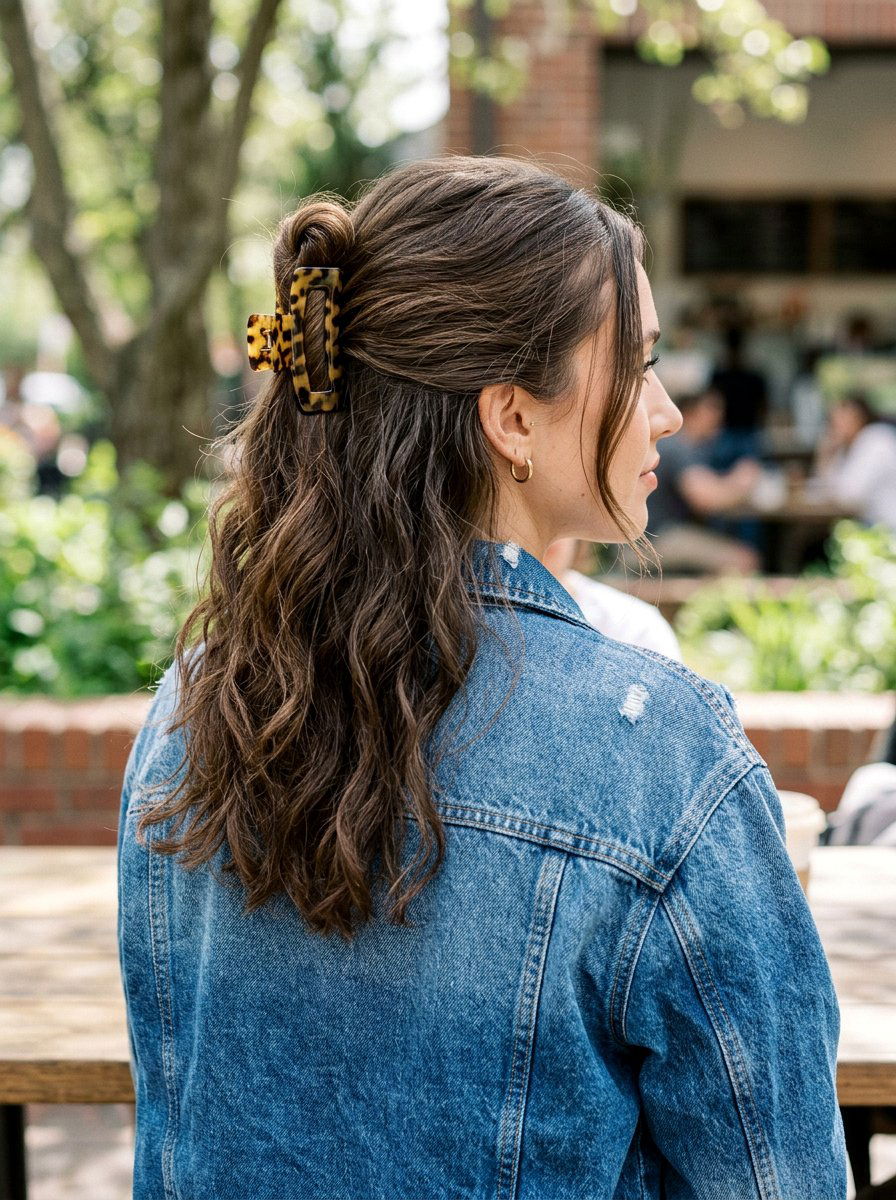
A spiky bun with a claw clip base uses a small clip to support the bun and give extra height and dimension. Instead of securing your ponytail only with an elastic, you twist the hair upward at the back of your head and clamp a claw clip around the base, leaving the ends free above it. You can then arrange those ends into spiky sections, using hairspray to set them so they fan out from the clip and create a bun‑like shape. Recent trend coverage mentions claw clips as a big part of the modern Y2K revival, often combined with slick roots and visible ends for that “model off‑duty” feel. This version is comfortable and easy to adjust during the day, since you can re‑clip or tweak the spikes without taking the whole style down. It’s a good option for medium lengths that might not wrap into a full bun but can still provide enough hair to spike out above the clip.
20. Spiky Bun With Decorative Pins
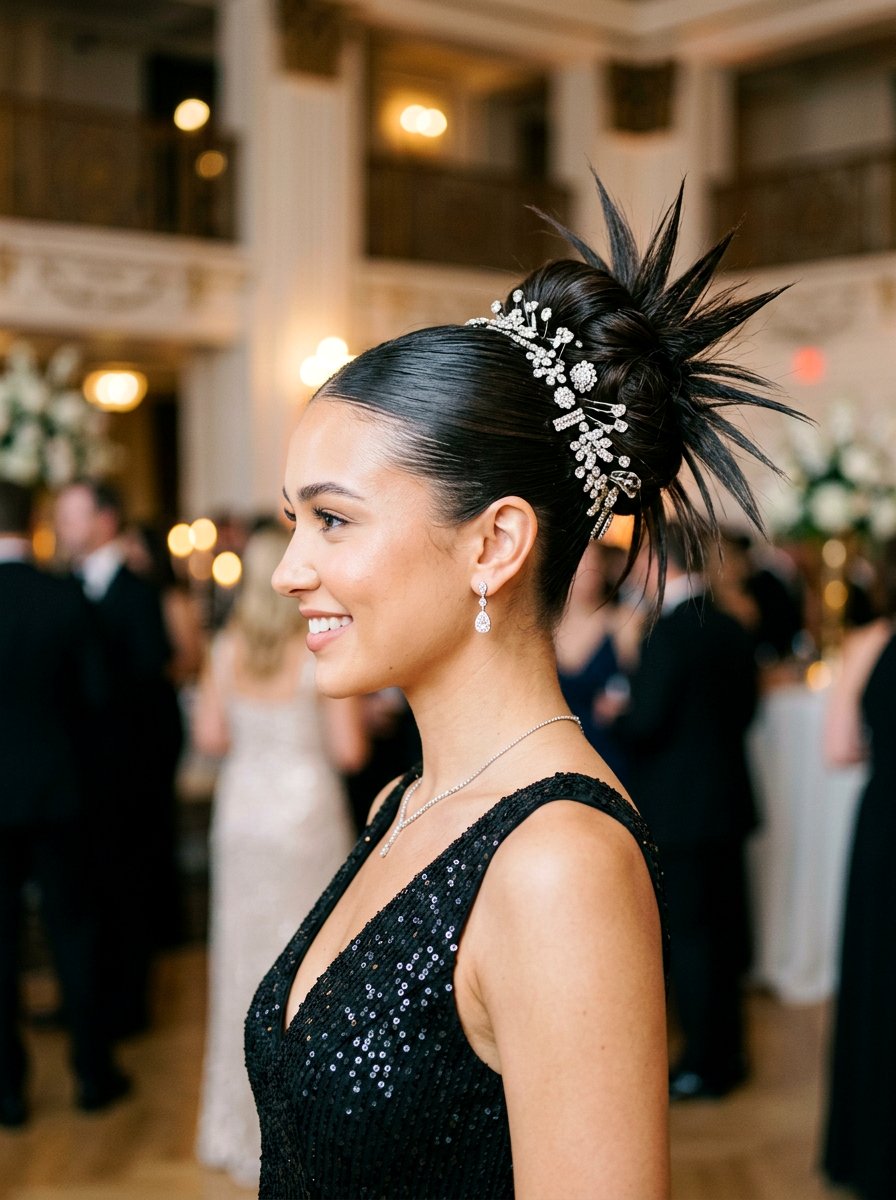
A spiky bun with decorative pins finishes the Y2K shape with subtle sparkle or metallic accents, great for evenings or special occasions. After creating any slicked‑back spiky bun, you slide decorative hairpins, rhinestone bobby pins, or pearl‑tipped pins into the base of the bun and around some of the spikes. The pins help secure the ends while also catching light whenever you move, turning the bun into a focal accessory on its own. Beauty articles note that embellished pins and barrettes have made a comeback along with other nostalgic accessories, making them an easy upgrade for simple updos. Keeping the rest of the hair sleek ensures the look doesn’t feel cluttered, even when you add multiple decorative pieces. This is an ideal way to take a daytime spiky bun into evening: you don’t change the structure, you just slide in more glamorous pins and refresh your hold spray.
Conclusion:
Y2K spiky bun hairstyles have evolved from a single nostalgic updo into a whole family of looks that can be clean, messy, minimal, or fully accessorized. At their heart, they all share the same core formula: sleek roots pulled into a bun with intentional, visible ends that jut out rather than hide away. Recent trend coverage from beauty brands and magazines highlights how this contrast between polished base and playful spikes fits perfectly with today’s mix of “clean girl” styling and retro references. Whether you go for double space buns, curly texture, braided details, or bold accessories like butterfly clips and decorative pins, each version lets you dial the drama up or down to match your personality and plans. With the right prep—good smoothing products, strong‑hold hairspray, and a few pins or elastics—these buns hold up for long days while still looking fun and expressive. That combination of versatility, nostalgia, and easy styling is exactly why the Y2K spiky bun continues to feel fresh each season instead of fading back into the archives.
You'll Like These Styles:


Leave a Reply