
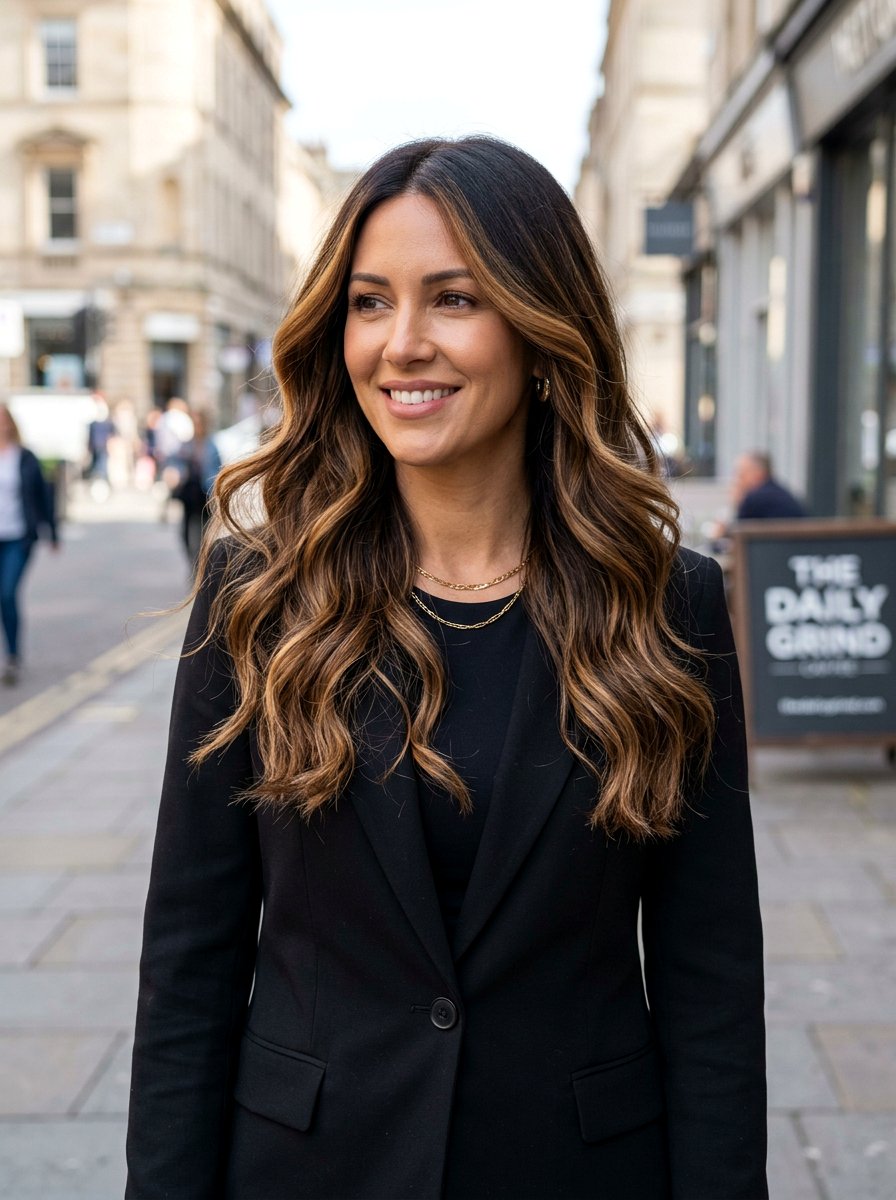
Walnut brunette with highlights is one of those hair colors that instantly makes brunette hair look richer, shinier, and more dimensional without feeling overdone. This shade usually blends a medium to deep brown base with soft golden, caramel, or toffee ribbons that mimic natural sunlight on the hair. Colorists love it because it works on many skin tones and can be adapted to different techniques like balayage, babylights, and traditional foils while still looking low maintenance and polished. You can keep it subtle for everyday wear or push the contrast a bit more for a bolder finish and extra drama in photos. Whether you are refreshing faded brunette, covering some gray, or upgrading your usual brown, walnut brunette with highlights gives you that soft, expensive-looking shine with far less upkeep than all-over lighter color.
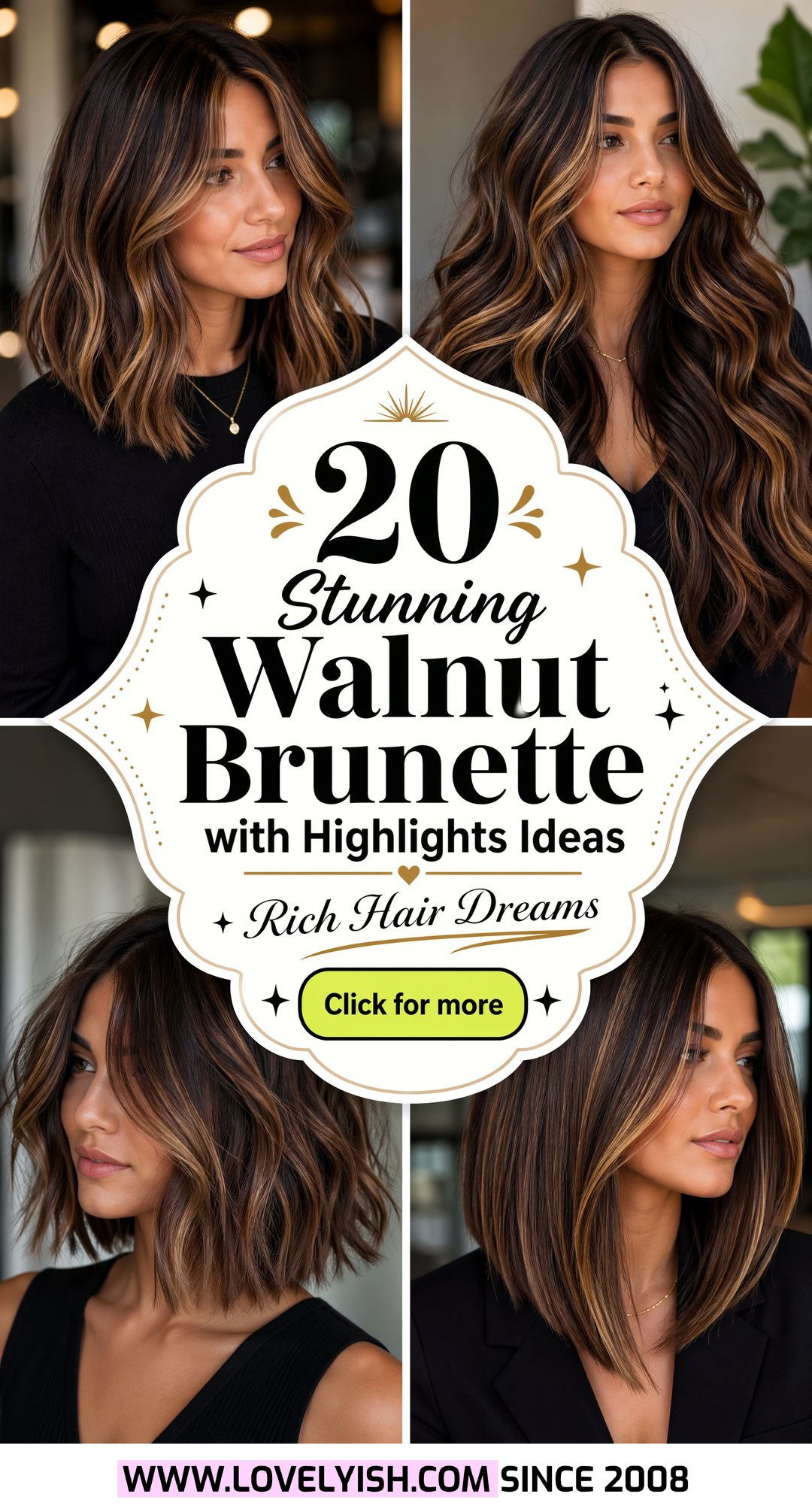
1. Classic Walnut Brunette With Caramel Highlights

Think of classic walnut brunette with caramel highlights as the easiest way to warm up dark hair while still looking natural and office-friendly. The base shade usually sits in the medium to deep brown range, similar to a walnut shell, while ribbons of caramel are painted a couple of levels lighter to catch the light around your mid‑lengths and ends. This combo flatters warm and neutral undertones especially well, adding that soft glow to your complexion without reading brassy when maintained with a color-safe shampoo and occasional gloss at the salon. Ask your colorist for thin to medium highlights focused away from the roots so your grow‑out looks blended and you can stretch appointments to every 10 to 12 weeks if your hair is healthy and not heavily highlighted already. Style-wise, a simple blowout or loose bend with a curling iron is enough to show off the caramel dimension in this classic look.
2. Walnut Brunette Balayage With Honey Highlights
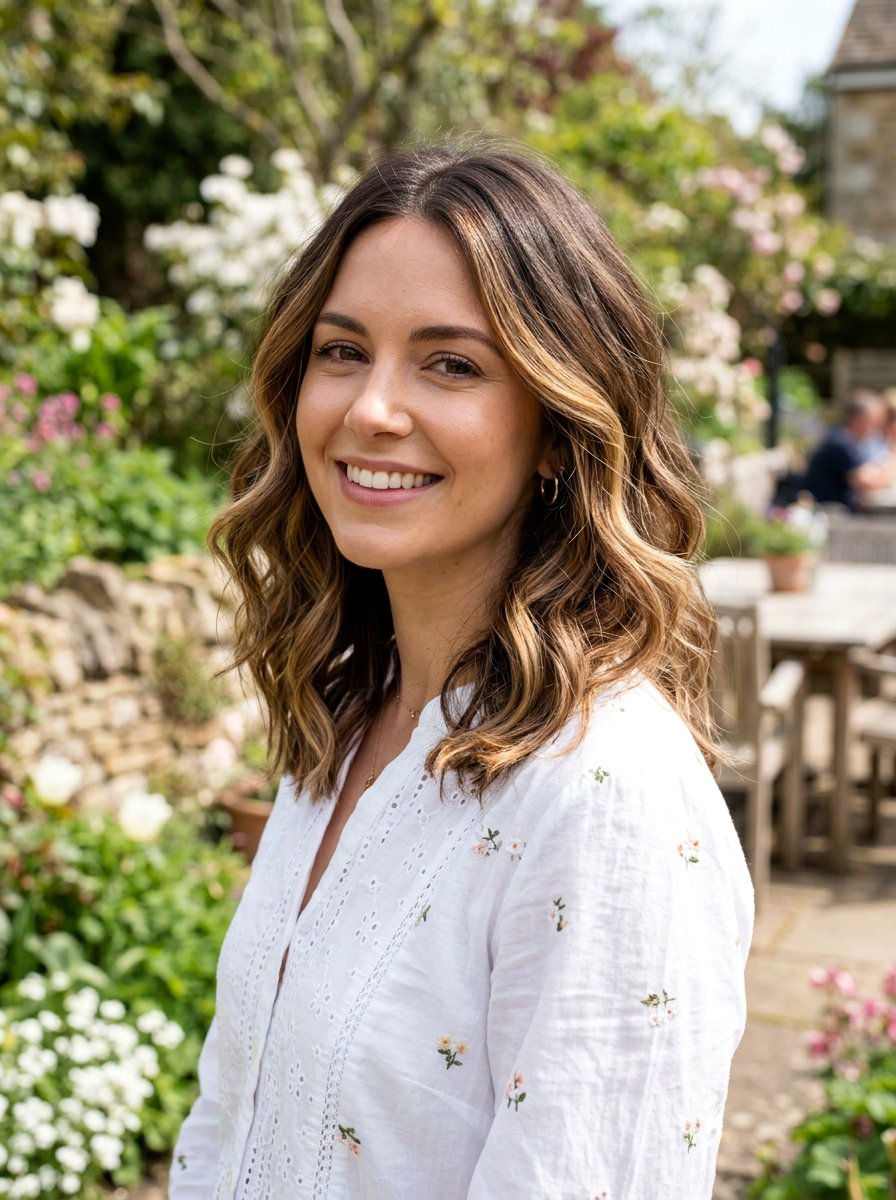
If you want something softer and more sun-kissed, walnut brunette balayage with honey highlights gives that lived-in brightness with very gentle regrowth. The colorist usually keeps the roots a rich walnut brown, then hand-paints honey tones through the mid‑lengths and ends, concentrating the lighter ribbons around the face for a subtle halo effect. Because balayage is painted on the surface in sweeping motions rather than in foils, the transition between brown and honey is blurred, which suits wavy and curly textures especially well. Honey highlights are great if you want warmth without going full blonde, and they read particularly flattering on olive and golden undertones by enhancing natural warmth in the skin. Maintenance is fairly low since the rooted walnut base stays close to your natural shade; you mainly need glosses every couple of months and a sulfate-free routine to keep the honey pieces from fading too quickly.
3. Soft Walnut Brown With Toffee Highlights
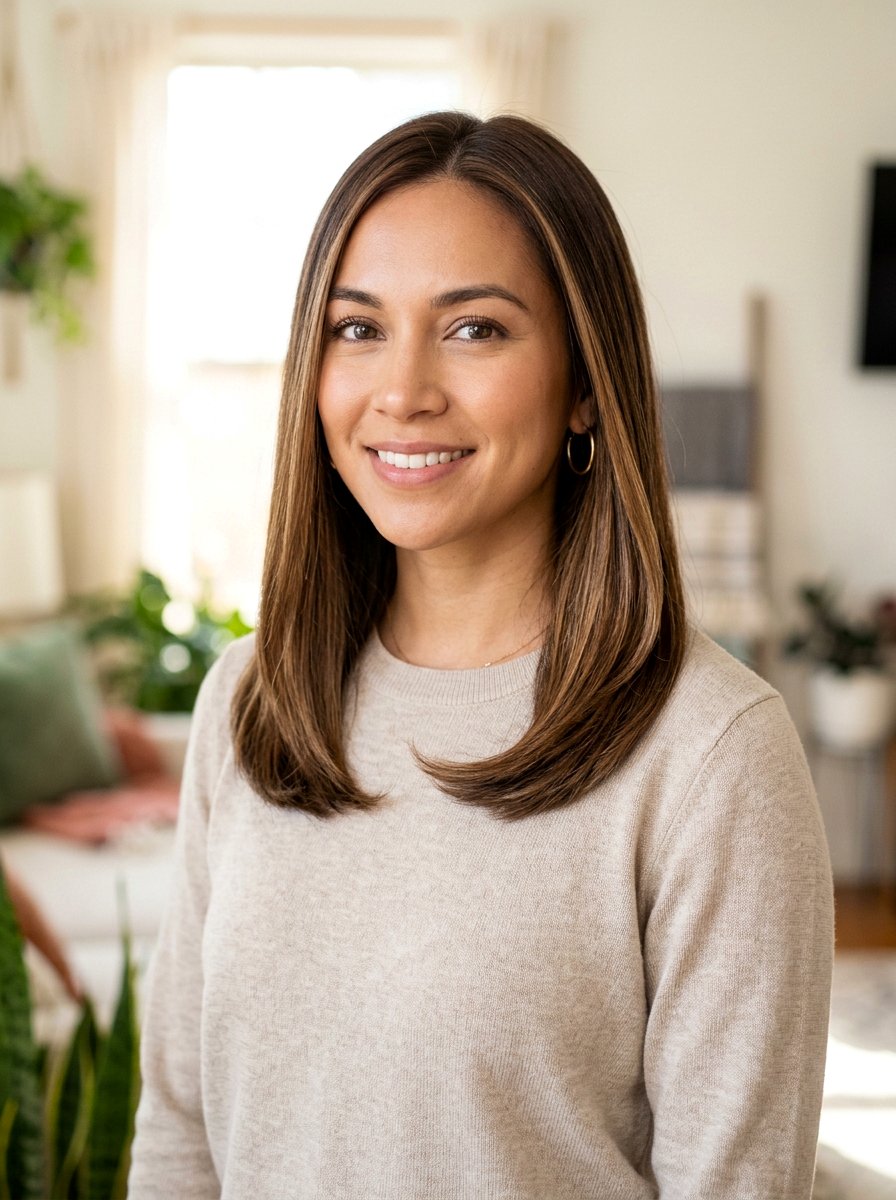
For brunettes who crave just a hint of lightness, soft walnut brown with toffee highlights is ultra subtle yet still dimensional. Here, your base color sits in a medium walnut tone, and the highlights are only a shade or two lighter in a toffee or soft caramel color, so you get glow and movement without bold streaks. This approach works especially well for fine hair because the close contrast makes strands appear thicker and shinier instead of stripy. It also flatters mature clients or anyone in conservative settings who wants change without a dramatic color shift, since toffee stays within the brunette family. Ask your colorist for fine, diffused highlights sprinkled throughout the top layers and around the face, paired with a warm gloss to tie everything together into one cohesive walnut tone that looks expensive but understated.
4. Deep Walnut Brunette With Subtle Highlights
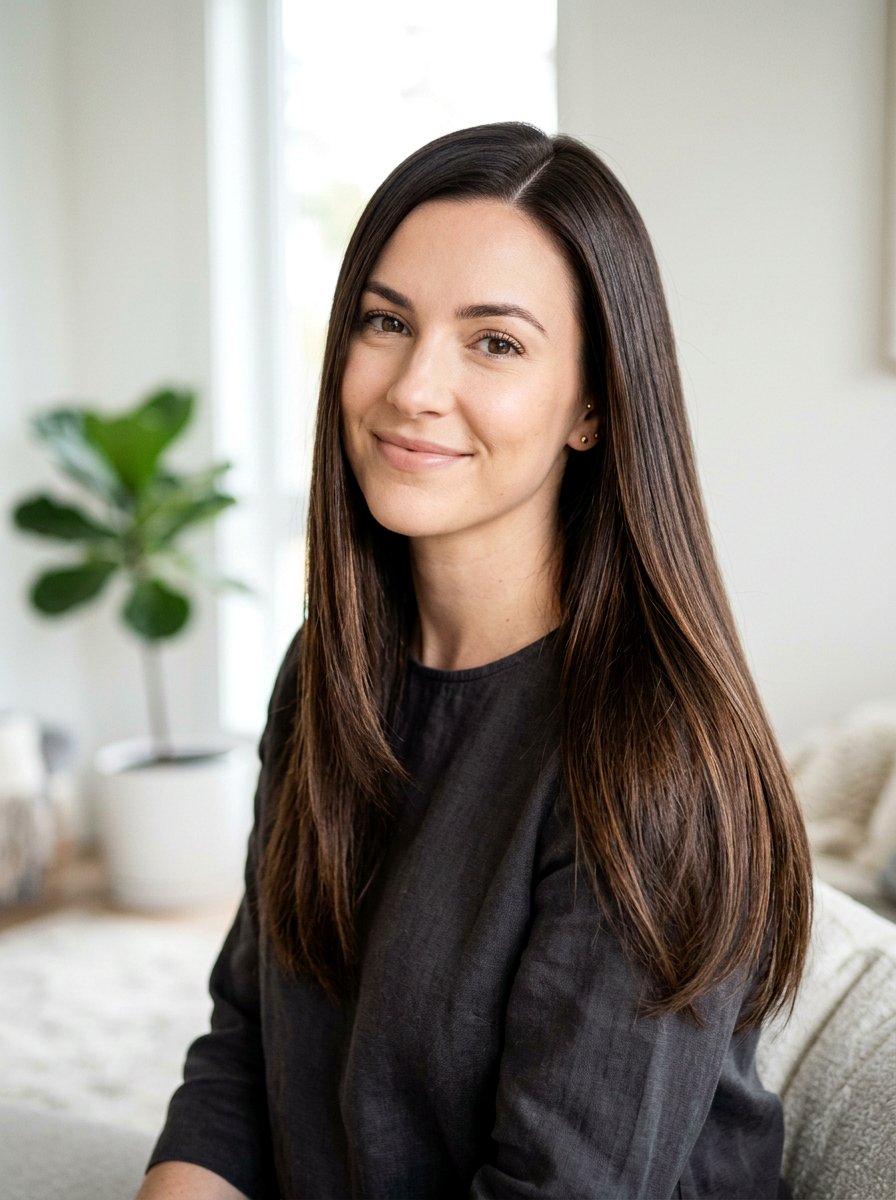
Deep walnut brunette with subtle highlights is perfect if you are nervous about going lighter but still want dimension and shine. The base shade usually leans deeper and richer, sometimes sitting between levels 3 and 4, which gives that near-espresso look while still showing warmth in the light. To keep it soft, the highlights are kept minimal and just one or two levels lighter, often in a neutral warm brown, so the effect is more like a natural sun-fade than obvious streaks. This kind of color is especially flattering on cool or neutral undertones because the deep walnut can be balanced with slightly cool or neutral glazes to avoid unwanted redness around the face. Ask your colorist for micro-fine highlights or babylights focused on the crown and face frame, plus a high-gloss toner to create that reflective, glassy brunette finish people associate with healthy hair.
5. Walnut Brunette With Face-Framing Highlights
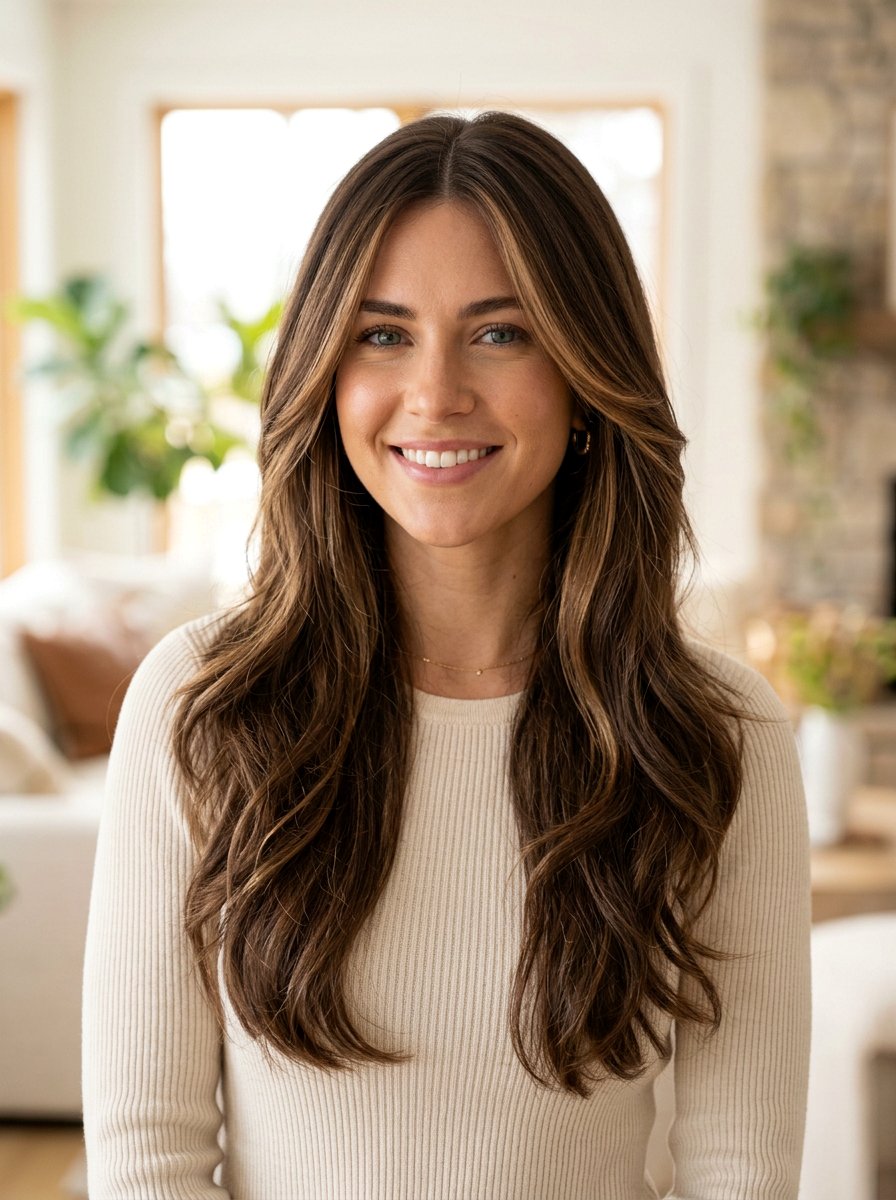
Walnut brunette with face-framing highlights focuses brightness right around your features while keeping the rest of your hair mostly rich and dark. This look usually starts with a medium to dark walnut base, then the colorist paints slightly lighter ribbons—often caramel, honey, or soft toffee—around the hairline and front layers to mimic a grown-out money piece. The contrast pulls attention to your eyes and cheekbones, so it is a smart choice if you love wearing your hair down or in simple styles like ponytails or buns, because a lighter frame still pops. Because only a smaller section of hair is lightened, this technique is kinder on your lengths and easier to maintain, especially when paired with a root shadow that stays close to your natural brunette. Plan on touch-ups every couple of months if you like a brighter face frame, and use a color-safe mask weekly to prevent dryness along those highlighted front pieces.
6. Walnut Brunette With Babylights
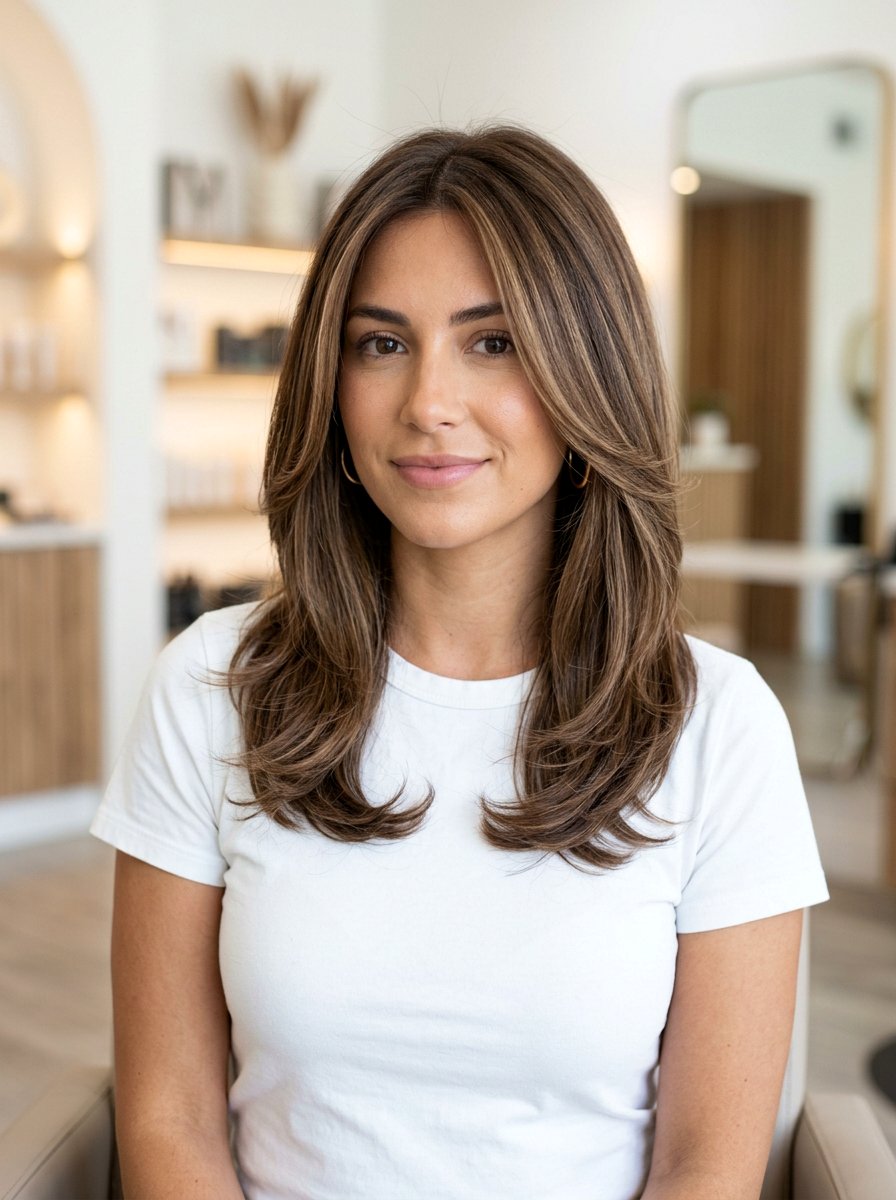
Walnut brunette with babylights is ideal if you love tiny, whisper-soft highlights that mimic how hair lightens naturally in childhood. In this look, very fine sections of hair are woven and highlighted in a tone just slightly lighter than the walnut base, often staying within the caramel-toffee family so everything feels cohesive. Because babylights are so delicate, they give an overall brightening effect without obvious streaks, which is perfect if you wear your hair straight or in sleek blowouts. This technique is also great for blending the first signs of gray because the ultra-fine ribbons help soften the contrast between colored hair and natural regrowth. Maintenance tends to be moderate; you will likely need to refresh your babylights and toner every eight to twelve weeks, especially if you heat style often or spend time in the sun. Using a gentle, sulfate-free shampoo and a UV-protective leave-in will help keep your walnut babylights from fading brassy between salon visits.
7. Walnut Brunette With Blonde Highlights
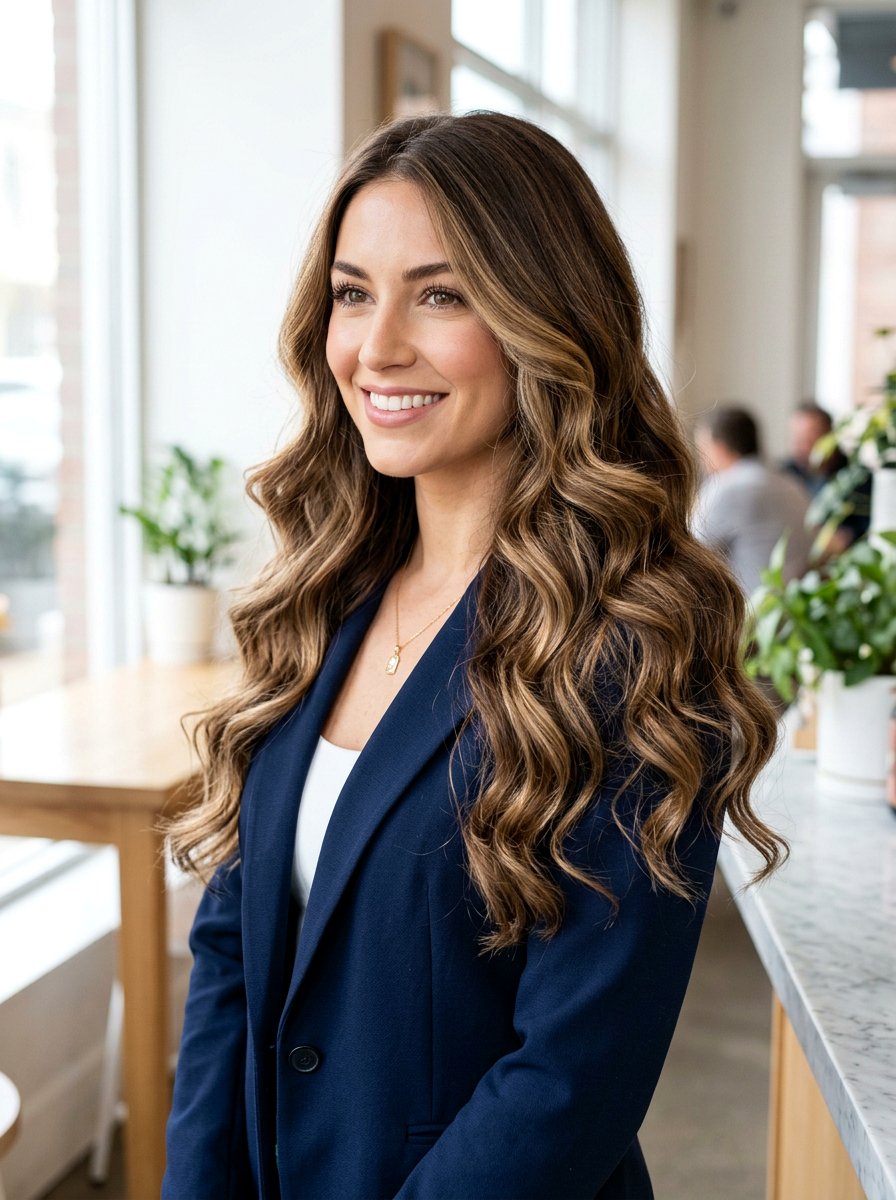
Walnut brunette with blonde highlights takes the contrast up a notch and is a good fit if you want more noticeable brightness while keeping a brunette identity. The walnut base stays deep and rich, while lighter pieces can range from beige blonde to honey blonde depending on whether your undertone is cooler or warmer, giving high-impact dimension. This color placement often focuses the brightest blonde on the mid‑lengths and ends, so you get that bronde-like vibe when your hair moves, but the roots remain deeper for easier grow‑out. Because blonde highlights require more lift, it is important to enter this look with relatively healthy hair and to commit to bond-building treatments or masks to prevent breakage. Brass-neutralizing shampoos can help keep the blonde pieces in the right tone, especially if you opt for a cooler beige or ash blonde against the warm walnut base.
8. Walnut Brunette Ombré With Highlights
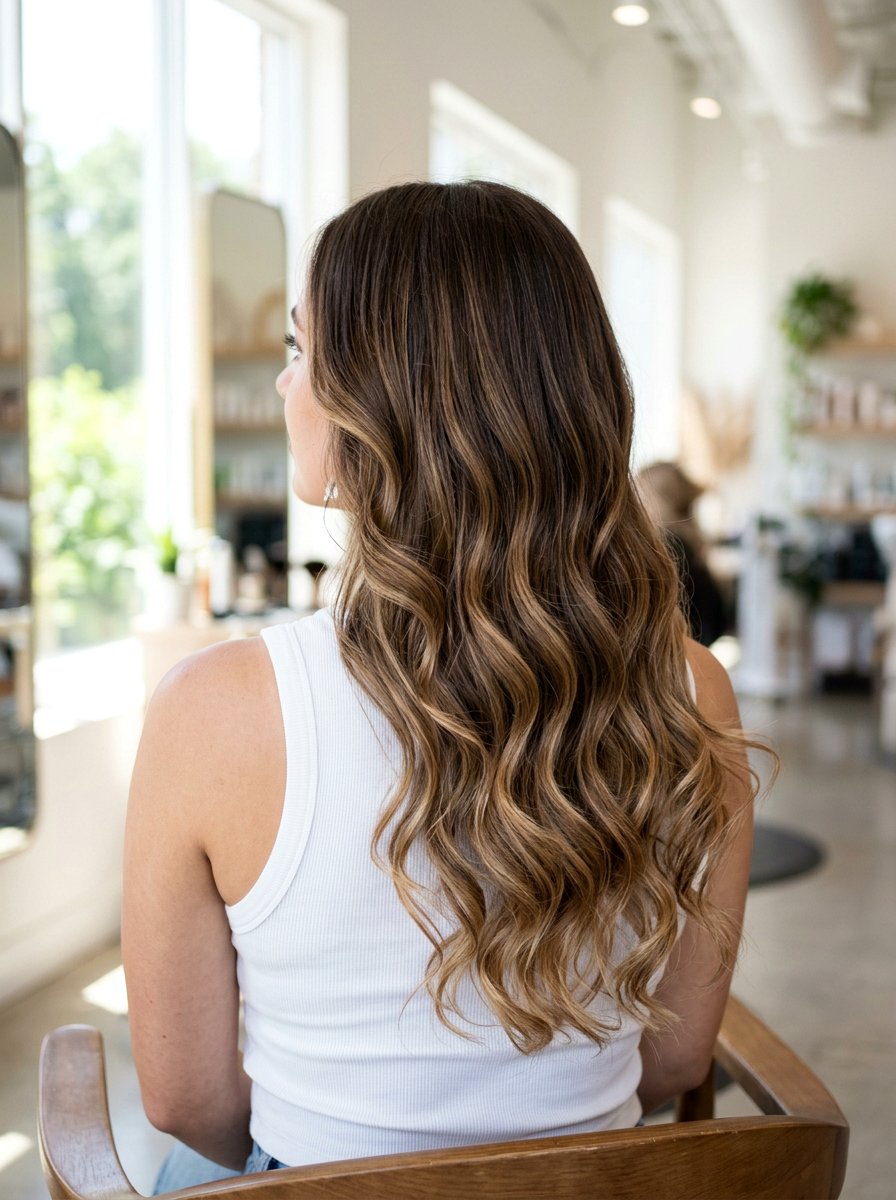
Walnut brunette ombré with highlights gives a gradient effect that transitions from a deeper root to a lighter, glowing mid‑length and ends. In this look, the roots and upper lengths stay a rich walnut shade, then gradually soften into caramel, honey, or soft blonde towards the bottom, often with a few lighter pieces painted higher up for dimension. This softer shift is flattering on straight, wavy, and curly hair because it visually elongates the strands and adds that beachy, low-maintenance vibe even on darker tones. Ombré is particularly practical for those who do not want to visit the salon frequently, since your natural root can be blended into the walnut base and left to grow without a harsh line. To keep the ombré portion smooth and shiny, use a deep conditioning treatment and heat protectant before styling, because the lighter mid‑lengths and ends naturally need more moisture and care.
9. Chestnut Walnut Brunette With Highlights
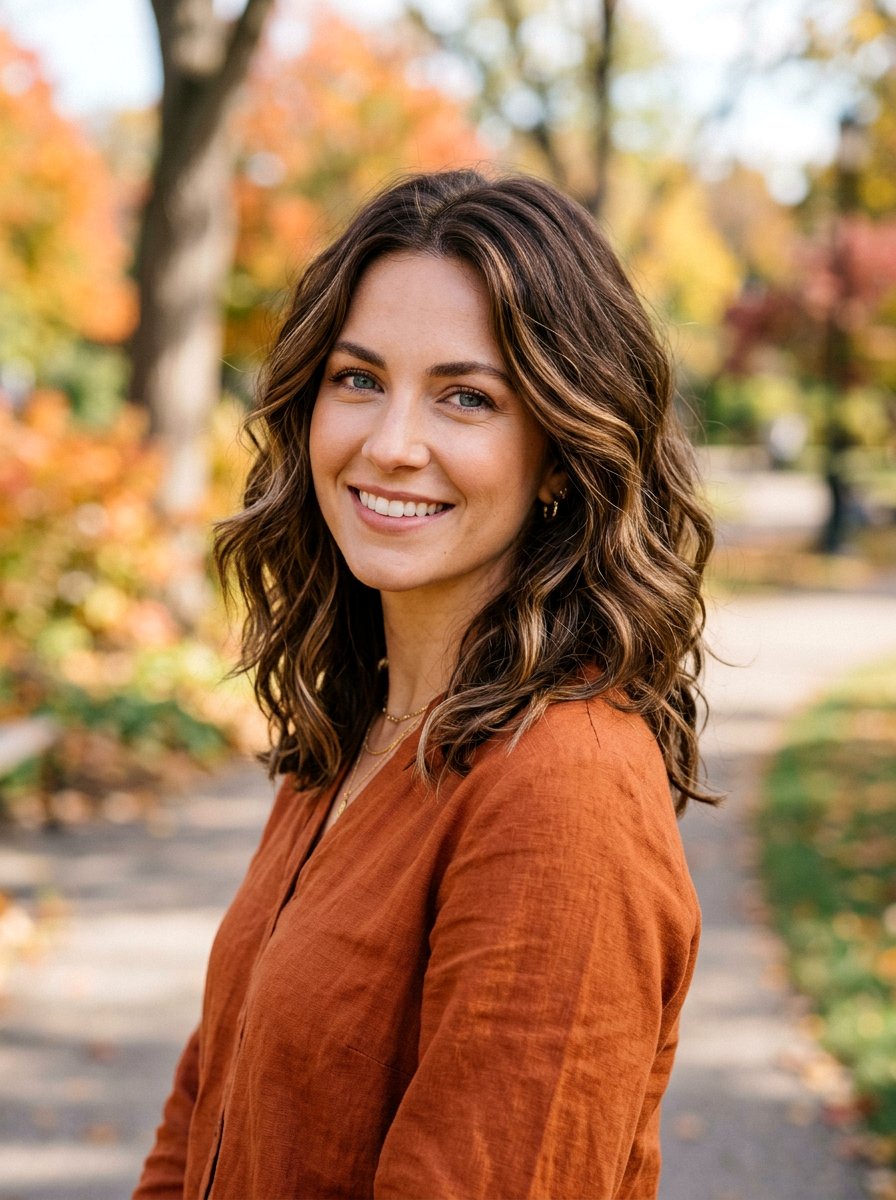
Chestnut walnut brunette with highlights leans into a slightly redder, cozier version of walnut brown that is perfect for fall and winter months. Here, the base is a blend of walnut and chestnut, giving a warm brown with a hint of reddish depth, while highlights often land in coppery caramel or warm golden tones to complement the richness. This combination flatters warm and neutral undertones and can bring out hazel or green eyes beautifully, making it a favorite among those who like warmer makeup palettes. Because red-based tones can fade faster, glosses and color-depositing conditioners in the right undertone are helpful to keep that chestnut warmth from turning dull between appointments. Ask your colorist for softly blended highlights through the top layer and face frame, keeping the deeper chestnut walnut visible underneath for depth and movement when your hair is curled or pulled back.
10. Golden Walnut Brown With Highlights
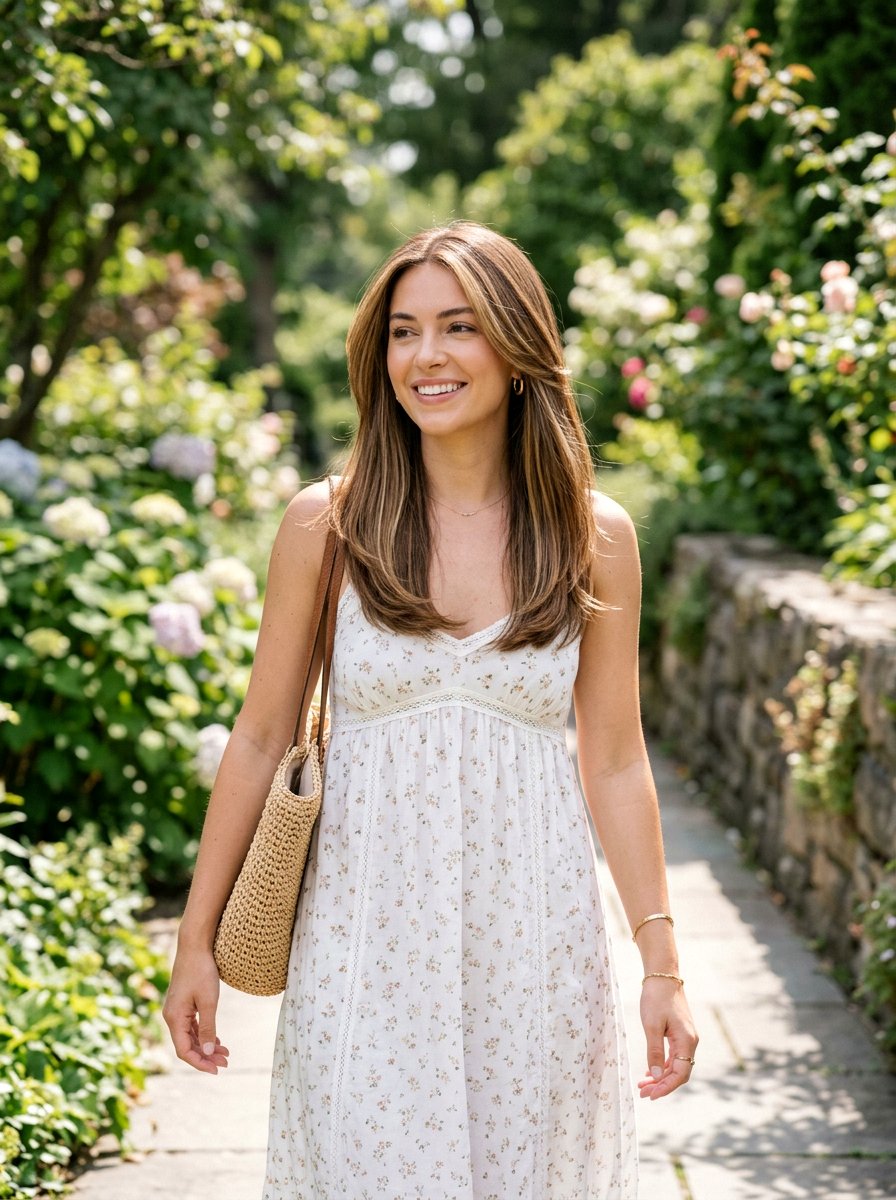
Golden walnut brown with highlights is a luminous option that feels bright yet still grounded in brunette territory. The base shade usually lands around a medium walnut brown with golden undertones, while the highlights amplify that glow using honey, golden caramel, or beige-gold ribbons placed where the light naturally hits your hair. This palette is especially flattering on warm and neutral skin tones and looks gorgeous in natural light, making it ideal if you love outdoor photos or live somewhere sunny. To avoid brassiness, your colorist might finish with a warm but balanced gloss that keeps the gold refined instead of orange, and you will want to use heat protection consistently. Because the overall look is on the warmer side, you can stretch maintenance a bit longer, as slight fading often still looks flattering and softly sunkissed rather than harsh.
11. Mushroom Walnut Brunette With Highlights
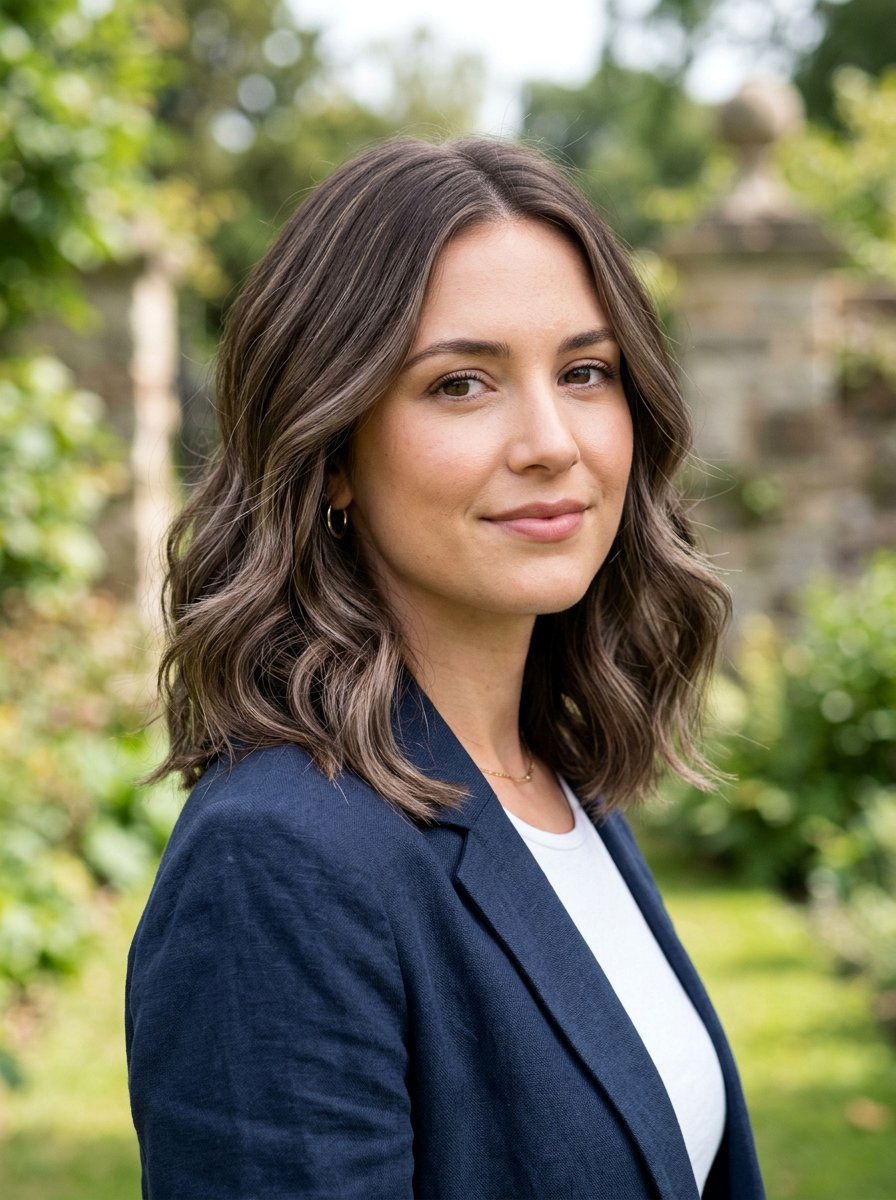
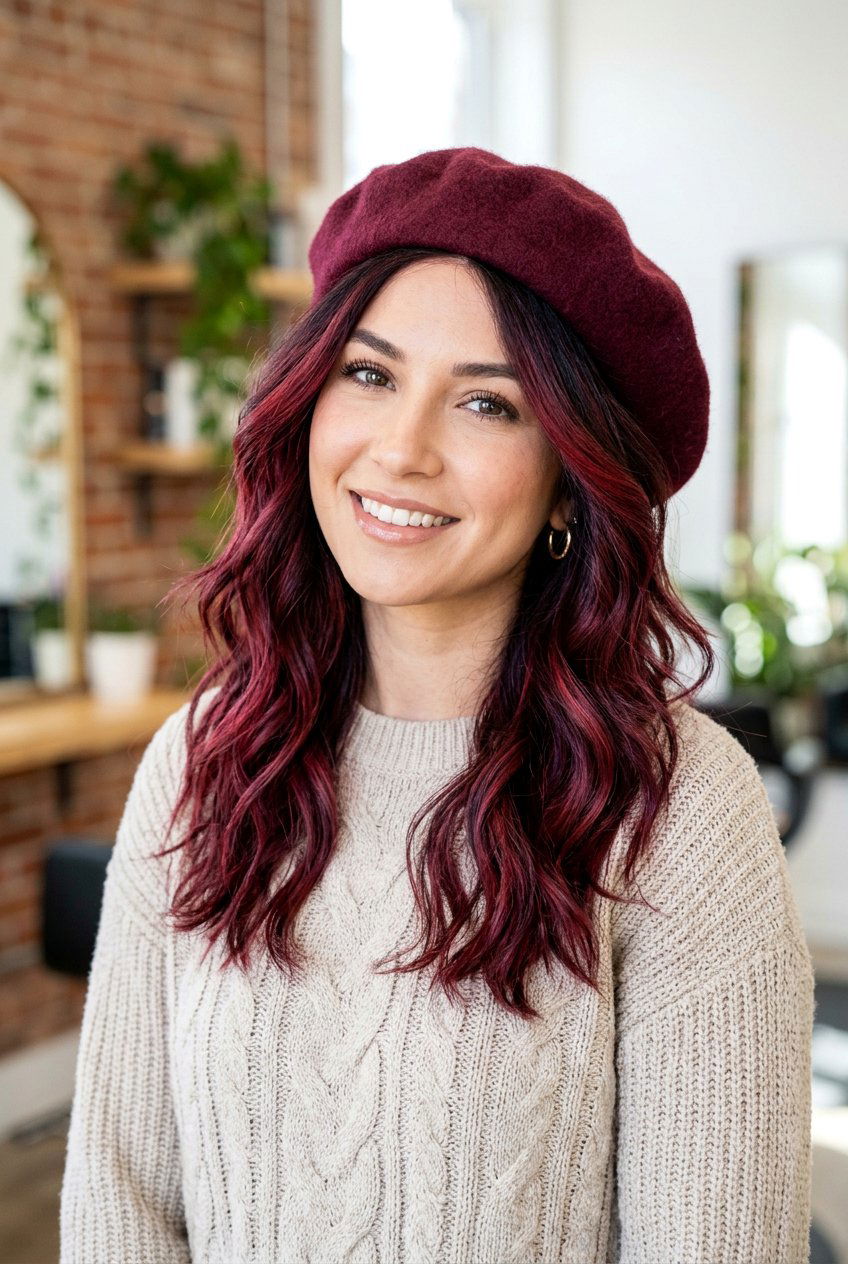
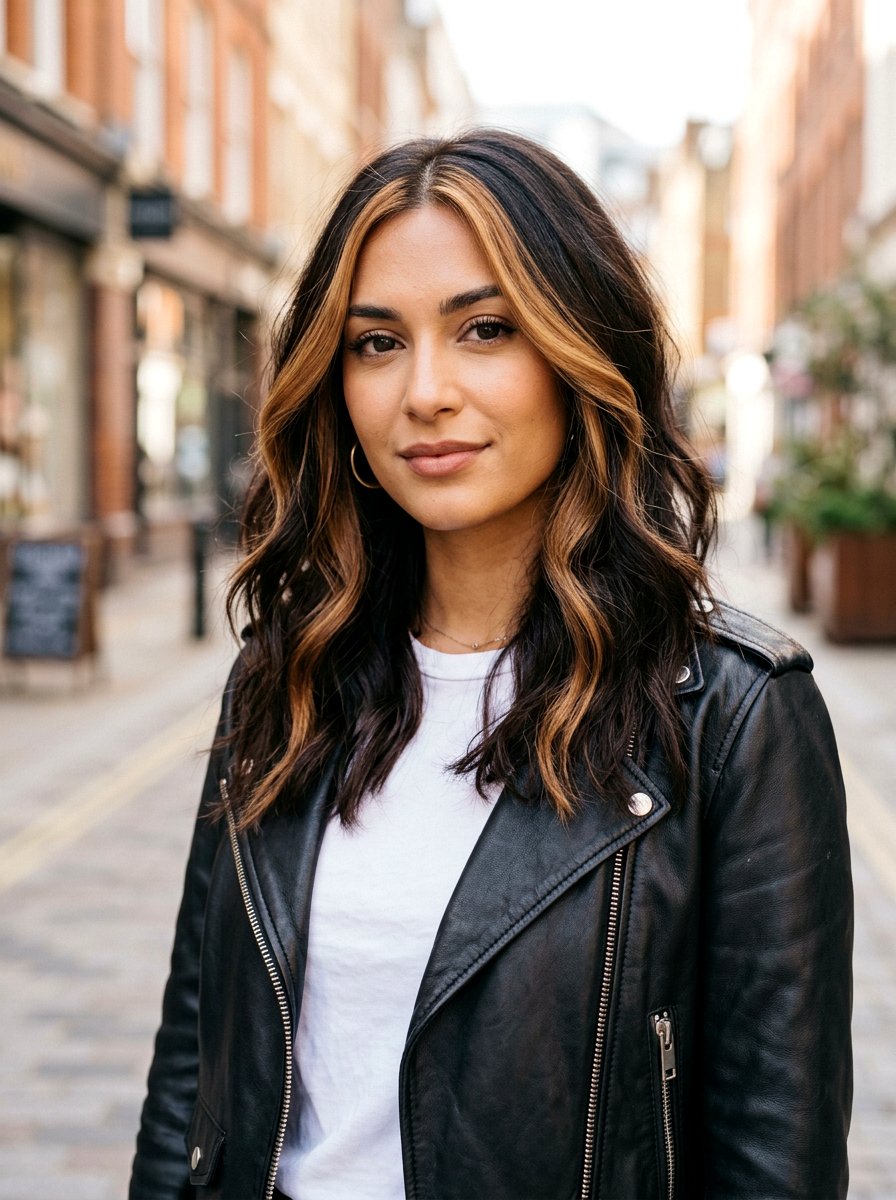
Mushroom walnut brunette with highlights gives a cooler, more ashy spin on classic walnut brown while keeping plenty of depth. In this look, the base brunette is neutral to slightly cool, and the highlights are often taupe, beige, or mushroom-toned, creating a multi-dimensional result without strong warmth. This option works well on cooler or neutral skin tones and can be a nice transition for former blondes who are going darker but still want some airy brightness around the face. Because cool tones tend to shift warmer over time, purple or blue-tinted shampoos and regular toning appointments are key to keeping the mushroom effect intact. You can ask for balayage or babylights, but either way, the goal is a soft blur between the walnut base and the cooler highlights so the overall color feels seamless and modern rather than streaky.
12. Walnut Brunette With Red-Toned Highlights
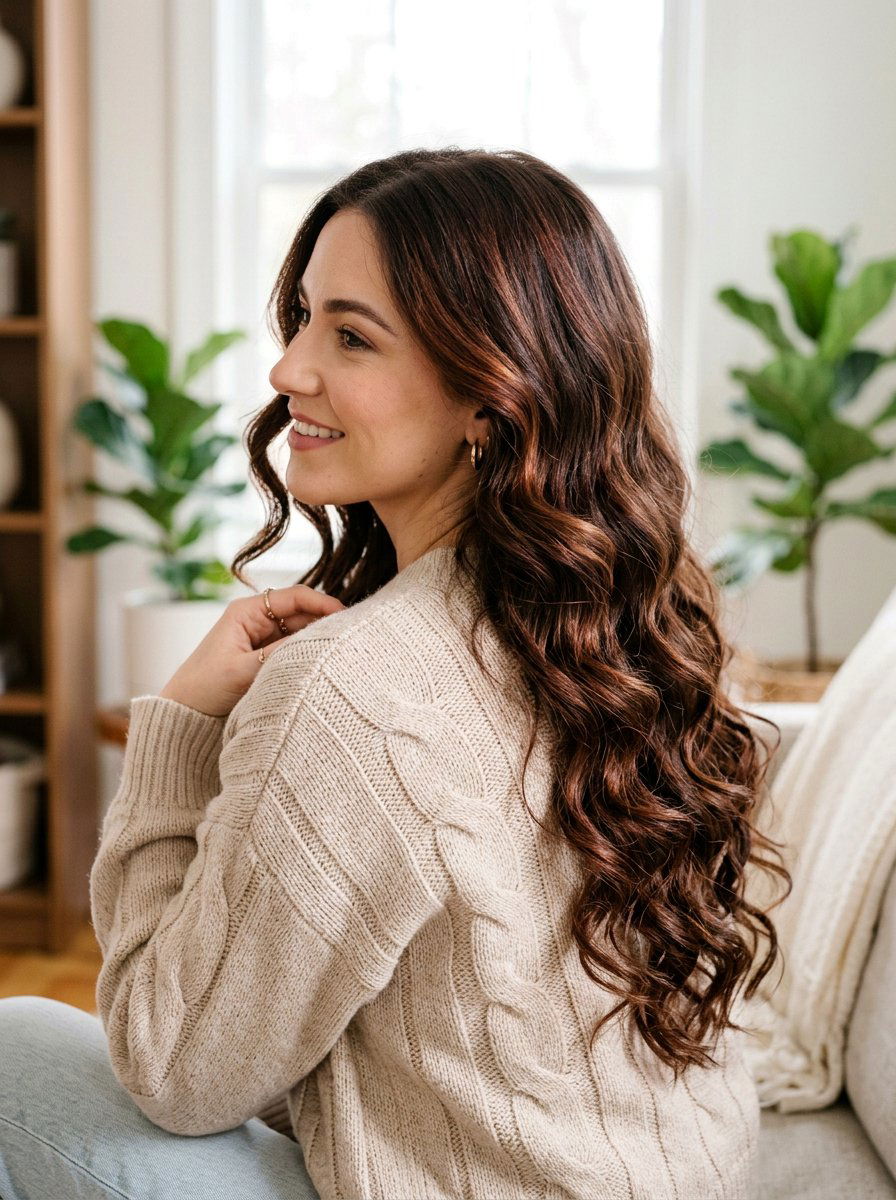
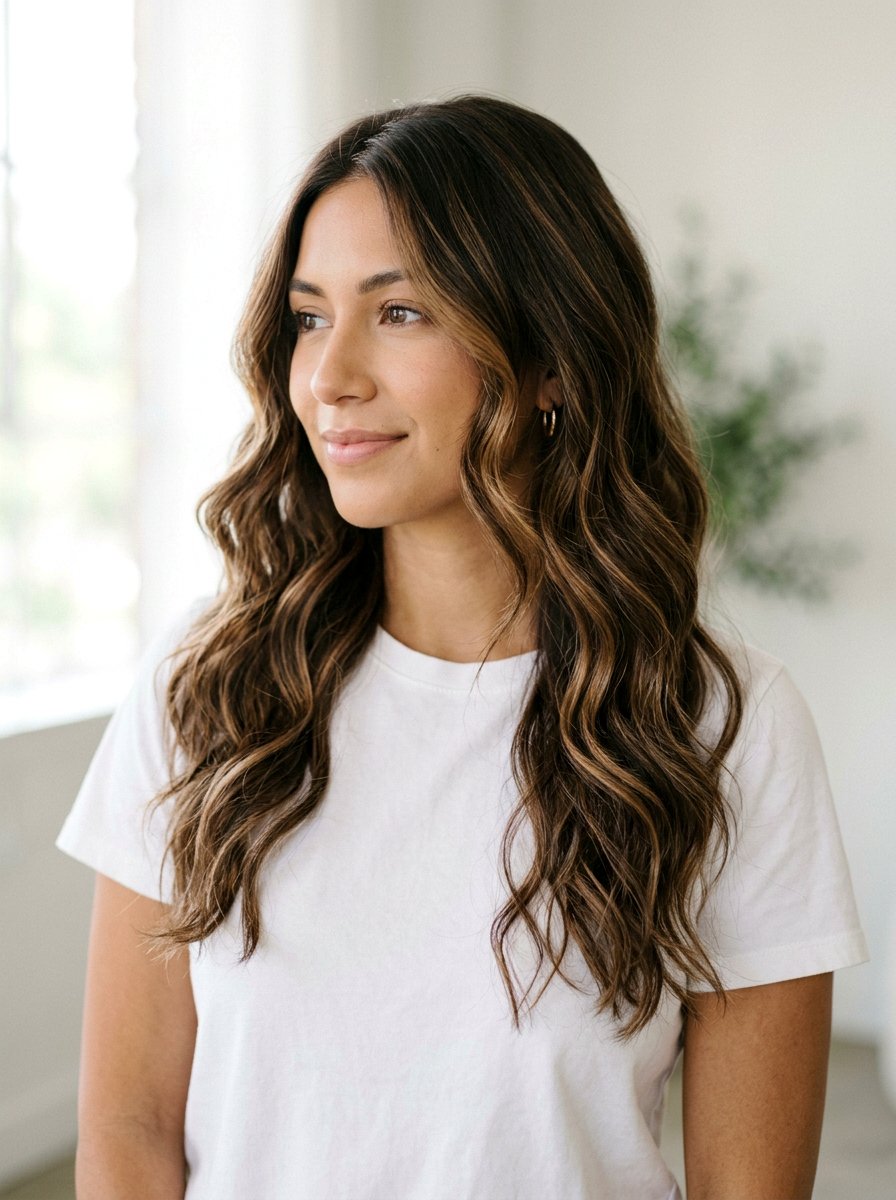
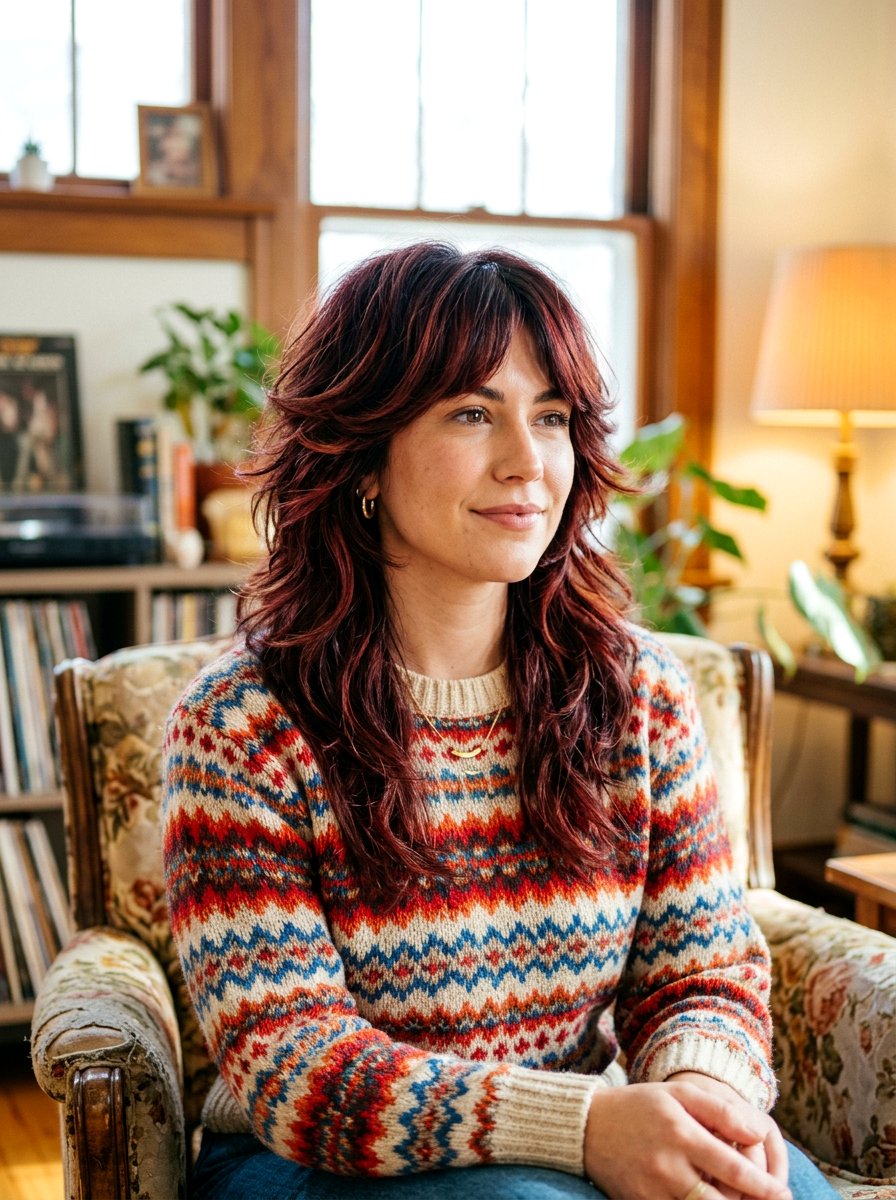
Walnut brunette with red-toned highlights is a bold, romantic choice that adds copper or auburn ribbons to a warm brown base. The starting walnut shade keeps things grounded, while the highlights are placed in cinnamon, copper, or soft auburn tones, which can make curls and waves look especially fiery and dimensional. This color story is gorgeous on warm and olive undertones, and it pairs well with bronzy makeup, making it popular for those who like a little extra drama. Red pigments tend to fade more quickly, so be prepared for frequent glosses, cooler water when washing your hair, and color-safe products to maintain saturation and shine. If you prefer something more subtle, you can ask your colorist to keep the red highlights thinner and more diffused, so the effect reads like a warm glow rather than obvious red streaks.
13. Walnut Brunette With Copper Highlights
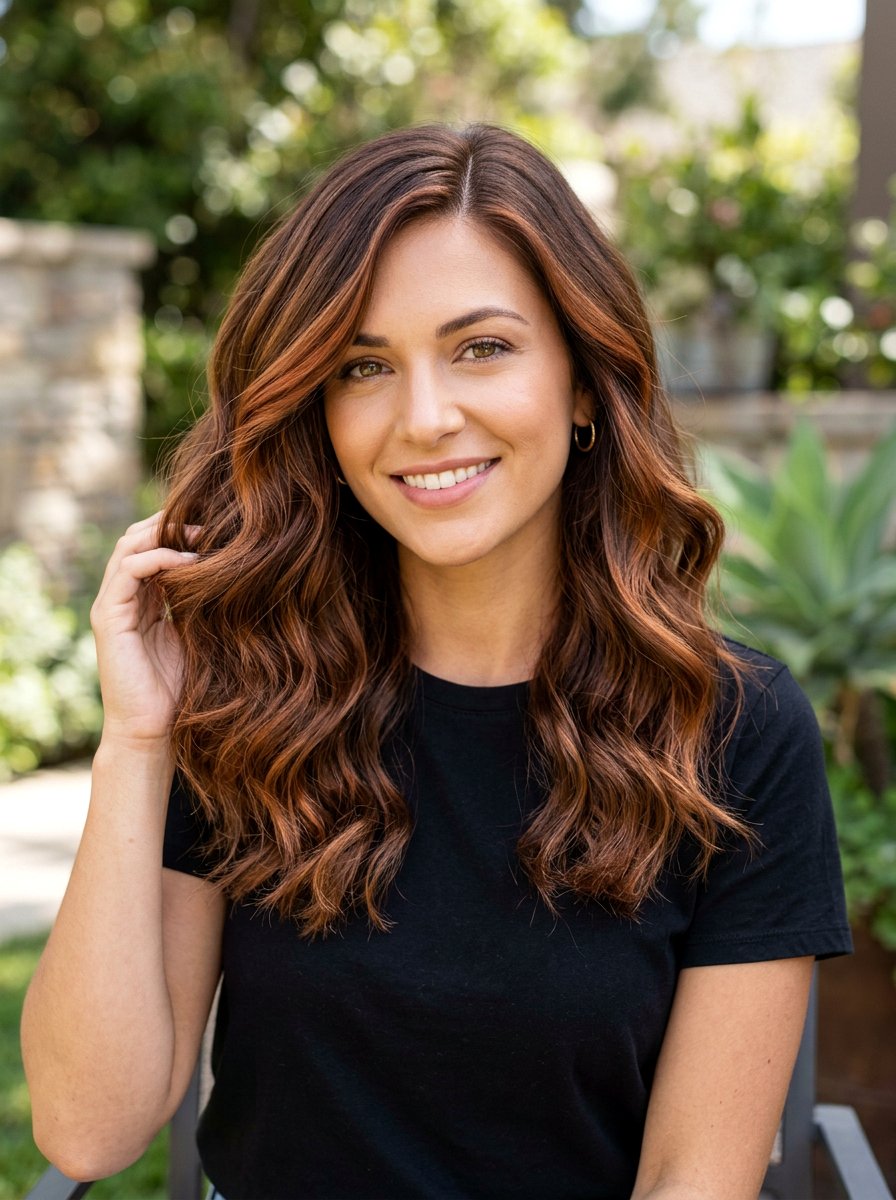
Walnut brunette with copper highlights focuses specifically on bright, metallic warmth woven through a rich brown base. The walnut base keeps things deep and dimensional, while carefully placed copper strands catch the light and add an almost reflective sheen to your overall look, particularly in curled or waved styles. This combination can be tailored to your comfort level, from soft, muted copper for a hint of spice to more vibrant copper ribbons for a statement finish that still feels wearable. To keep the copper from dulling, sulfate-free products, low-heat styling, and regular refreshing with a copper-tinted gloss or mask are very helpful. Ask your colorist to place some copper highlights around your face and through the top layers, leaving deeper walnut underneath for contrast that makes the brighter pieces pop even more.
14. Walnut Brunette With Hazelnut Highlights
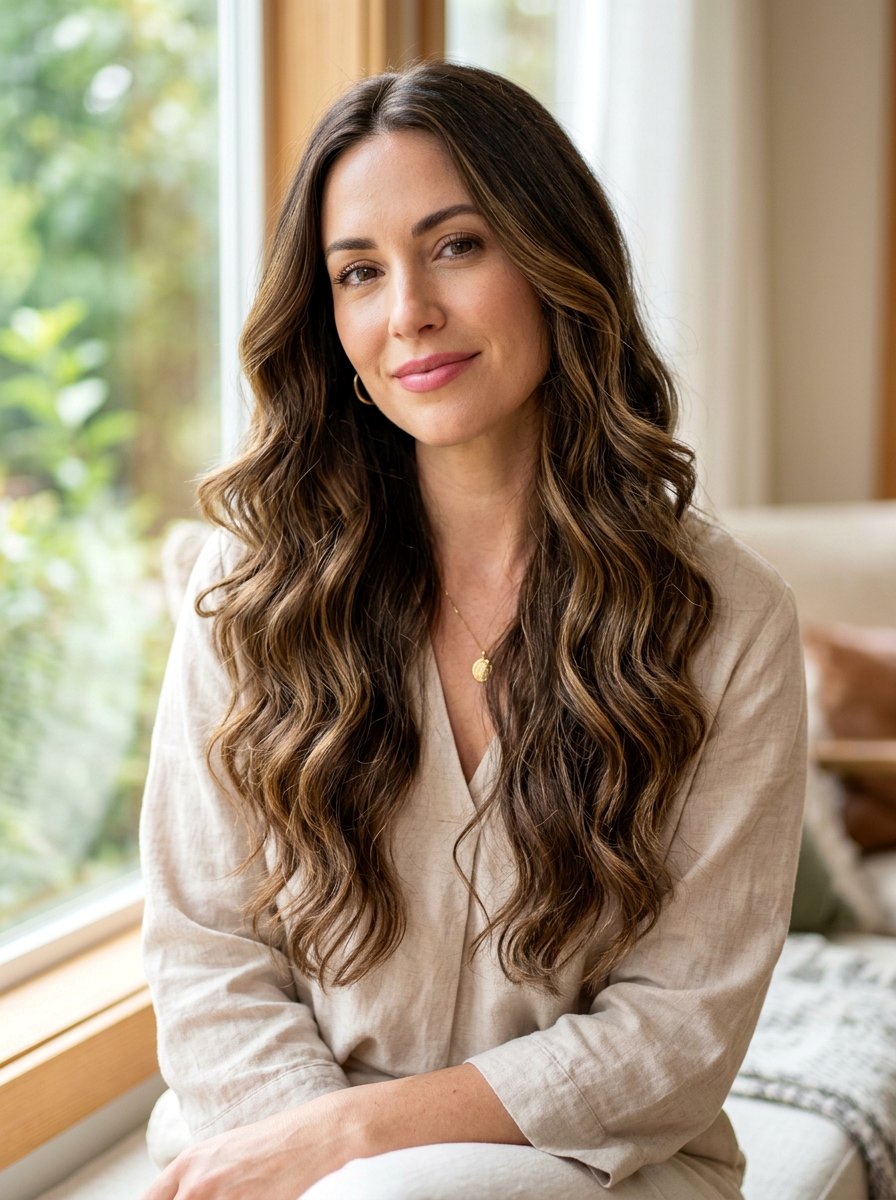
Walnut brunette with hazelnut highlights sits right between warm brown and bronde, delivering a creamy, latte-like finish. The base stays a medium walnut, and the highlights lean into hazelnut—a mix of warm brown with slightly lighter, glowing pieces that create a three-dimensional effect, similar to what you see in some sunkissed brunette trends. This look flatters many skin tones because it balances warmth and depth without going too golden or too ashy, and it works particularly well in layered haircuts where the color can move. Maintenance is moderate; you will likely need glosses to keep the hazelnut highlight tone refined and to protect against dullness from heat styling or sun exposure. When asking your colorist, mention you want hazelnut highlights that remain obviously brunette but still bright enough to show in photos and under indoor lighting.
15. Walnut Brunette With Ribbon Highlights
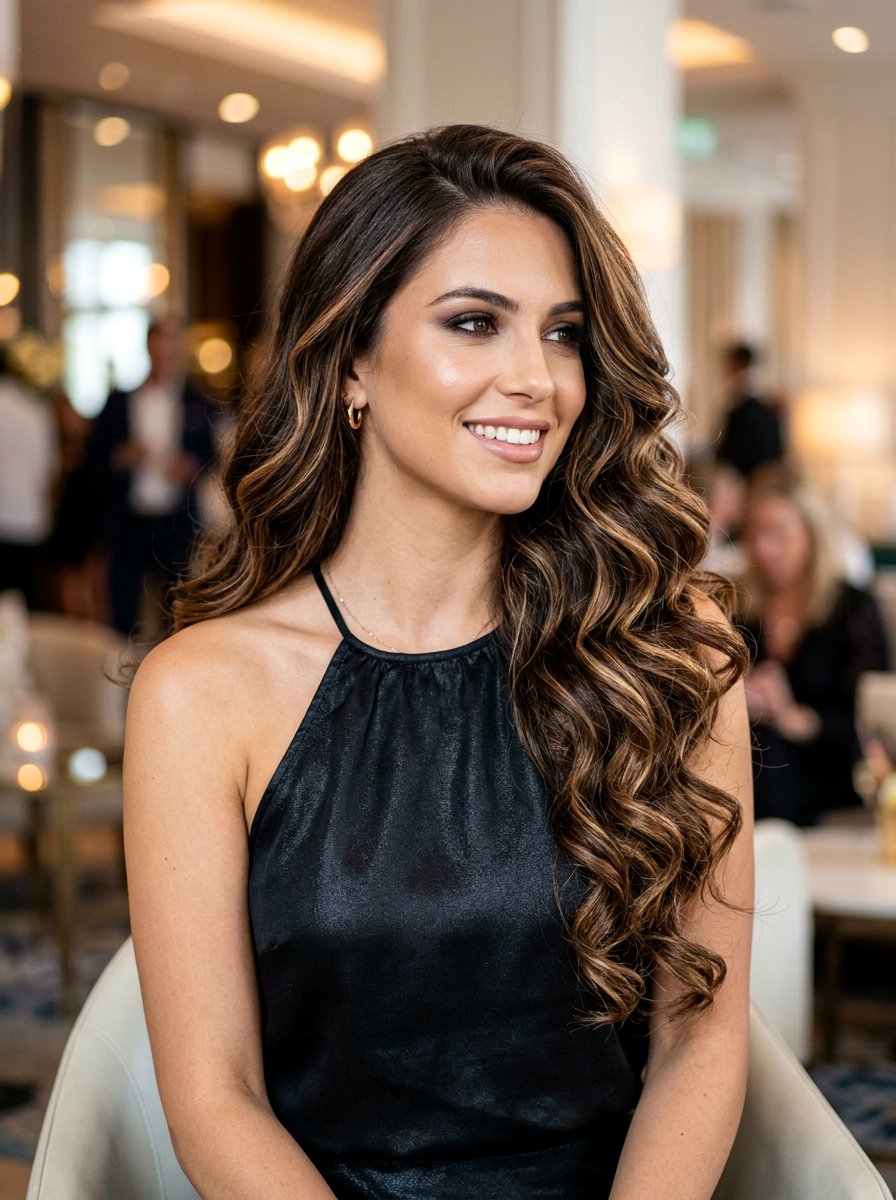
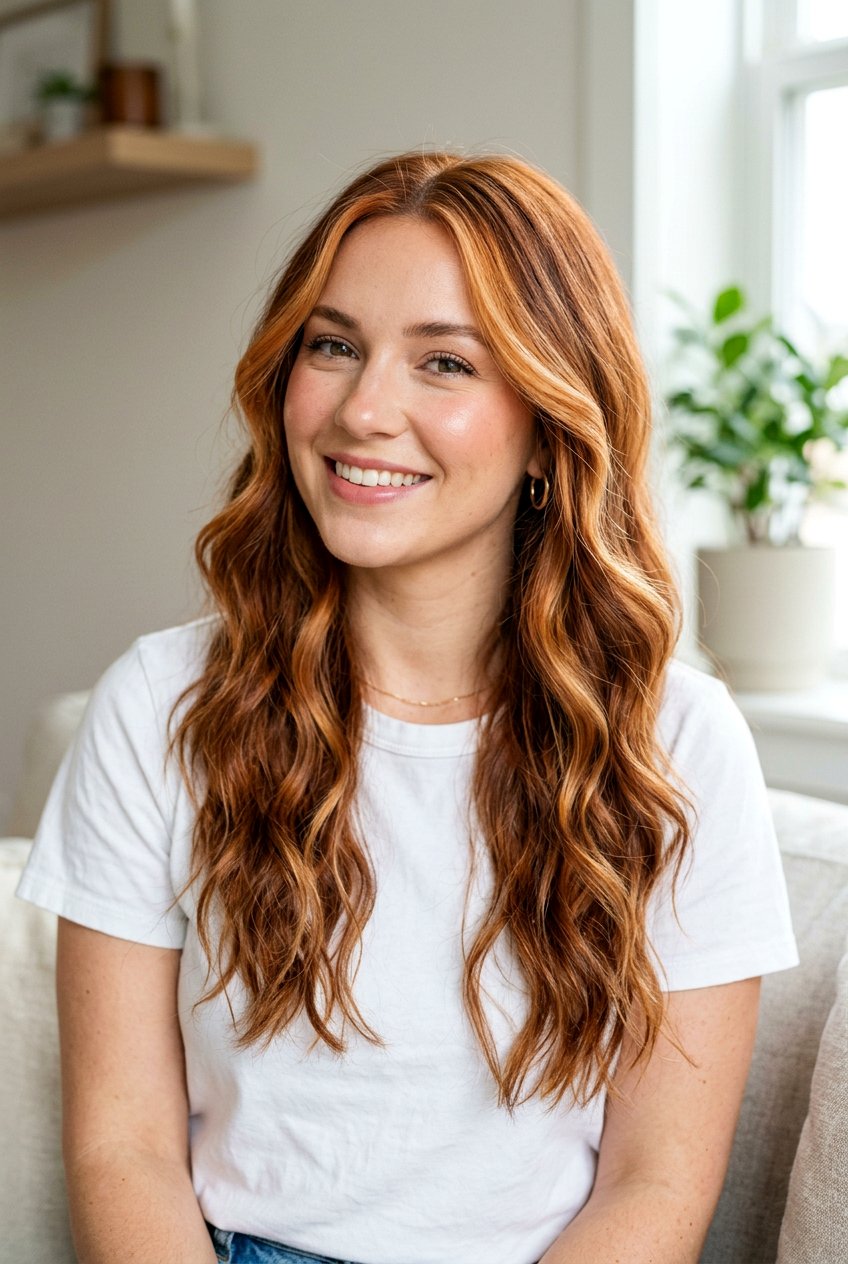
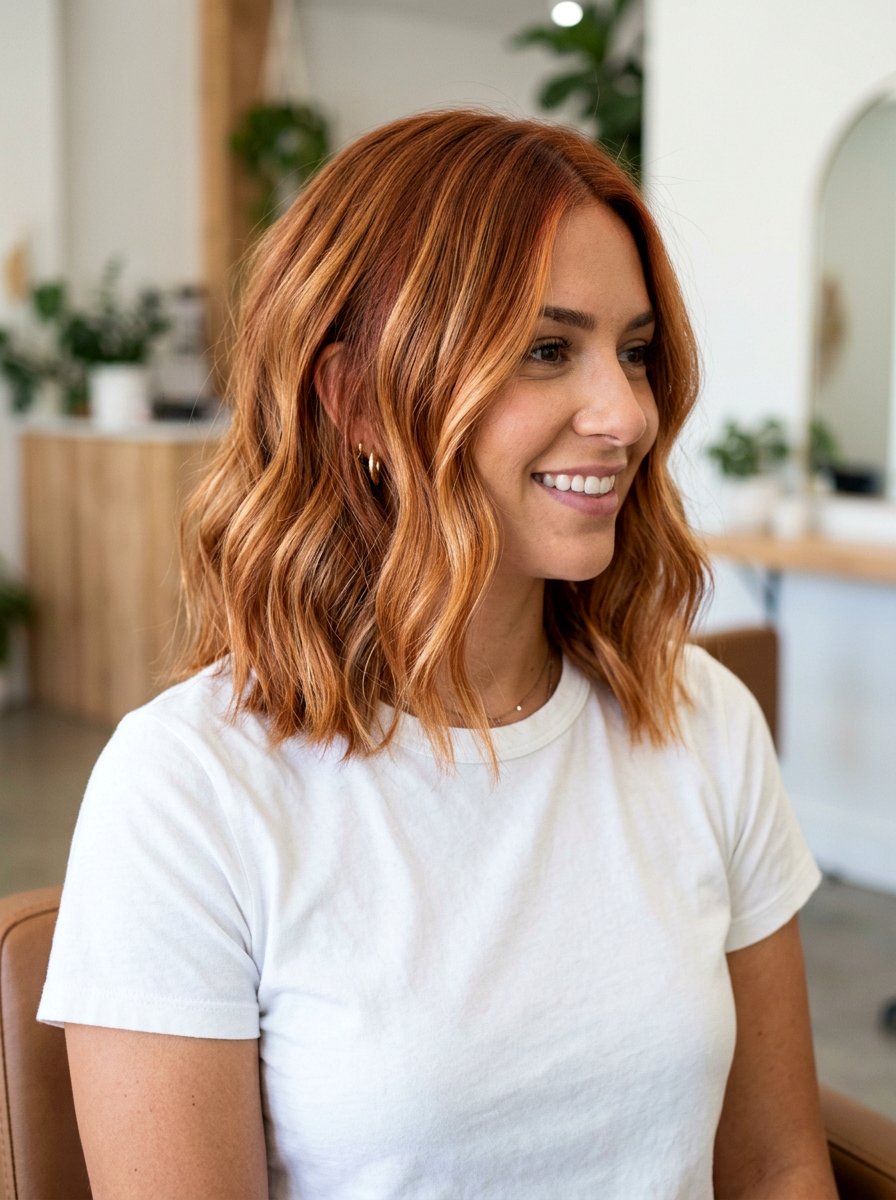
Walnut brunette with ribbon highlights creates bold yet polished streaks that snake through the hair for clear dimension. Ribbon highlights are usually thicker than babylights and follow the natural fall of your hair, so on a walnut base, they can be done in caramel, golden brown, or soft blonde depending on how dramatic you want the contrast. This technique shows especially well on long hair and big waves, where each ribbon catches and reflects the light as you move. Because the highlighted sections are larger, it is important that your colorist keeps the placement strategic around the face and crown so the pattern looks intentional rather than chunky. You can manage upkeep by keeping the roots slightly shadowed and focusing touch-ups on the mid‑lengths and ends, along with regular conditioning treatments to keep those more heavily lightened ribbons smooth.
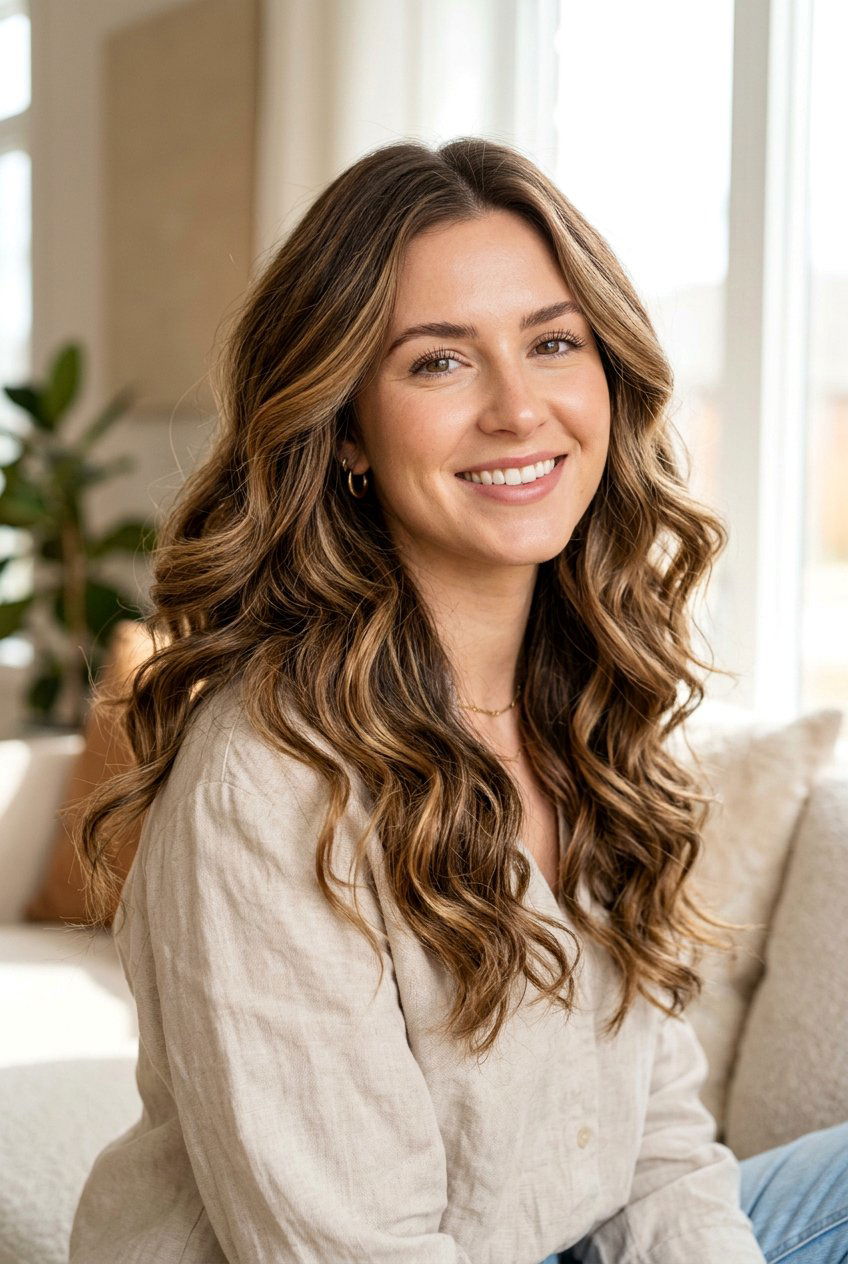
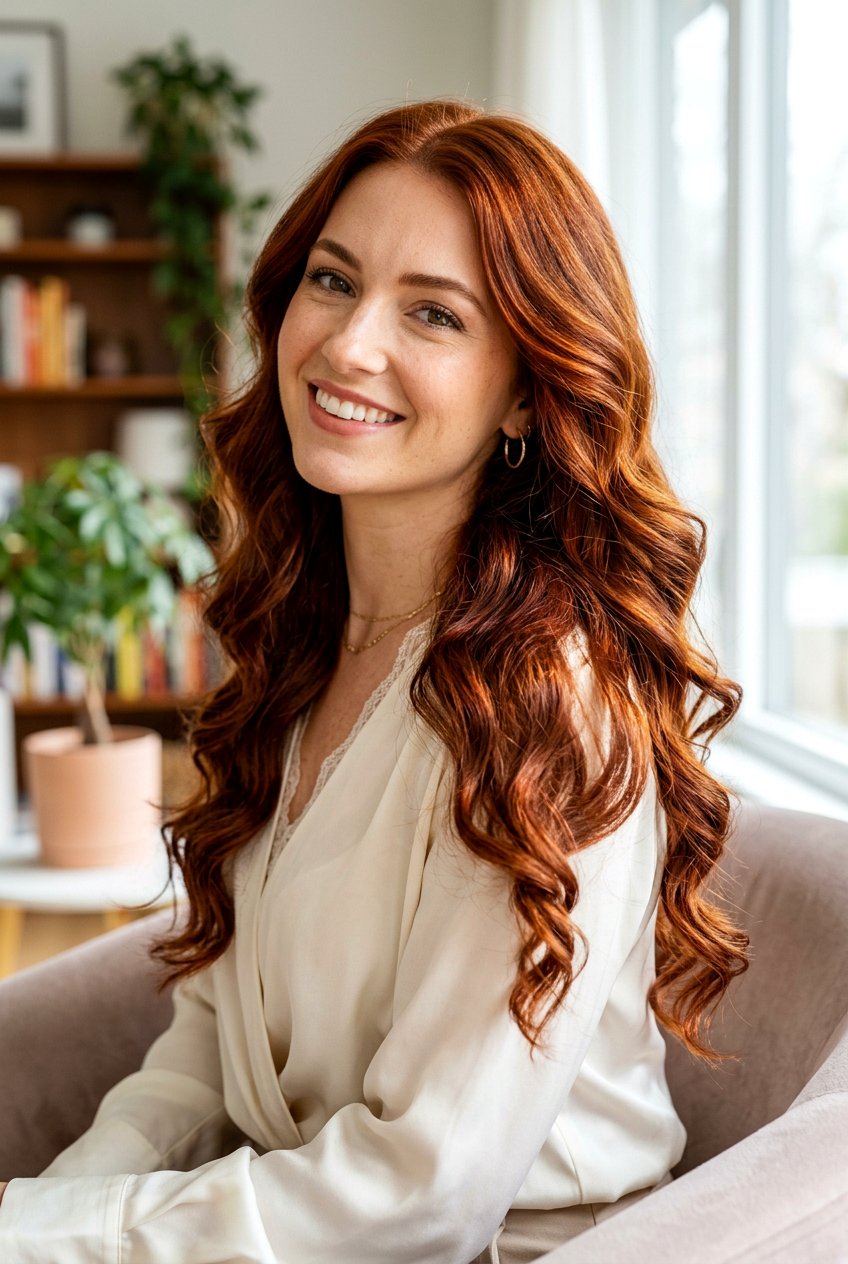
16. Walnut Brunette With Money Piece Highlights
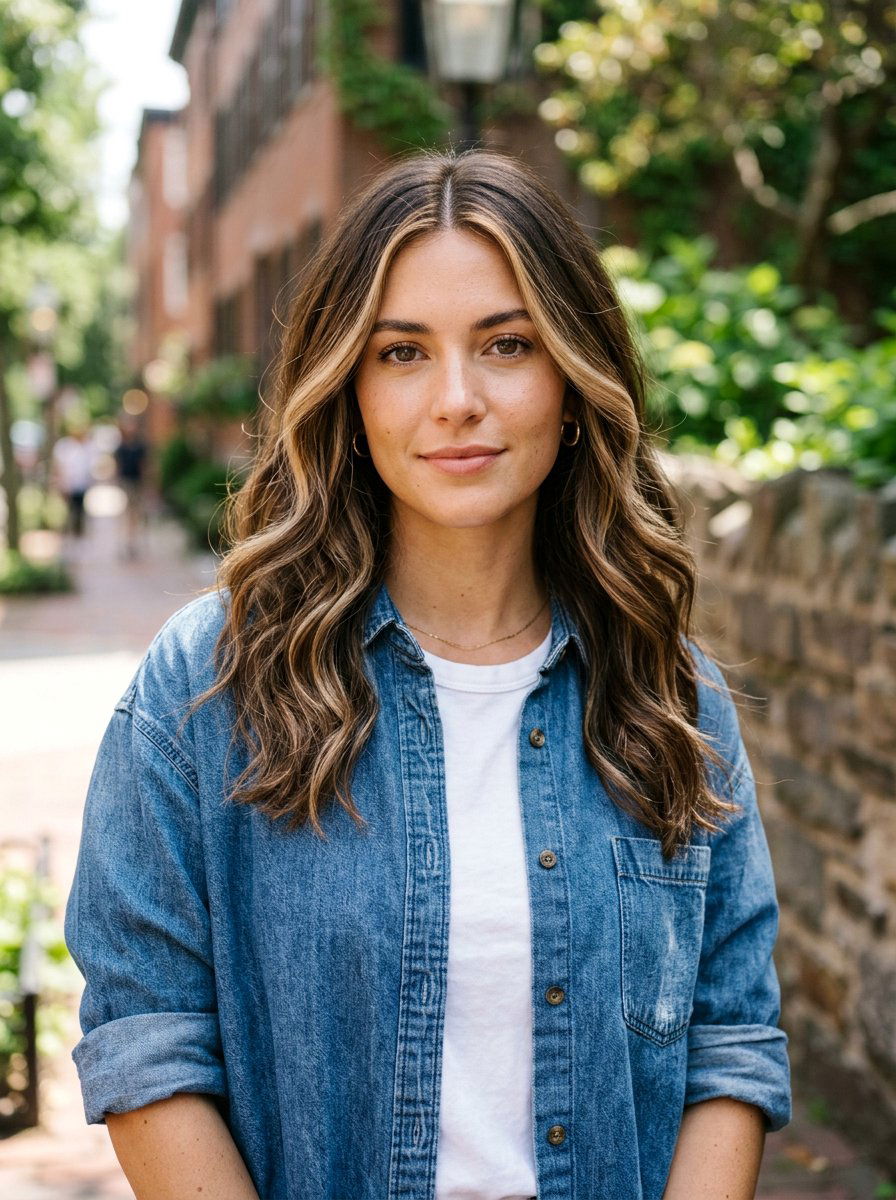
Walnut brunette with money piece highlights centers attention on one brighter section near the face, giving instant impact with minimal lightening overall. The main body of the hair stays a rich walnut shade, while a chunky or wider highlight at the front—often in caramel, honey, or blonde—is lifted several levels lighter to frame your features. This look is very flattering when you wear your hair down with a middle or side part, and it also stands out when hair is pulled into simple updos because that front section still shows. Since the money piece is lighter than the rest, you will want to protect it with heat protectant, strengthening treatments, and perhaps a toning gloss to prevent brassiness. The rest of your walnut brunette is relatively low maintenance, so you really only need to refresh the face-framing highlight and toner as it grows out or softens over time.
17. Walnut Brunette Lob With Highlights
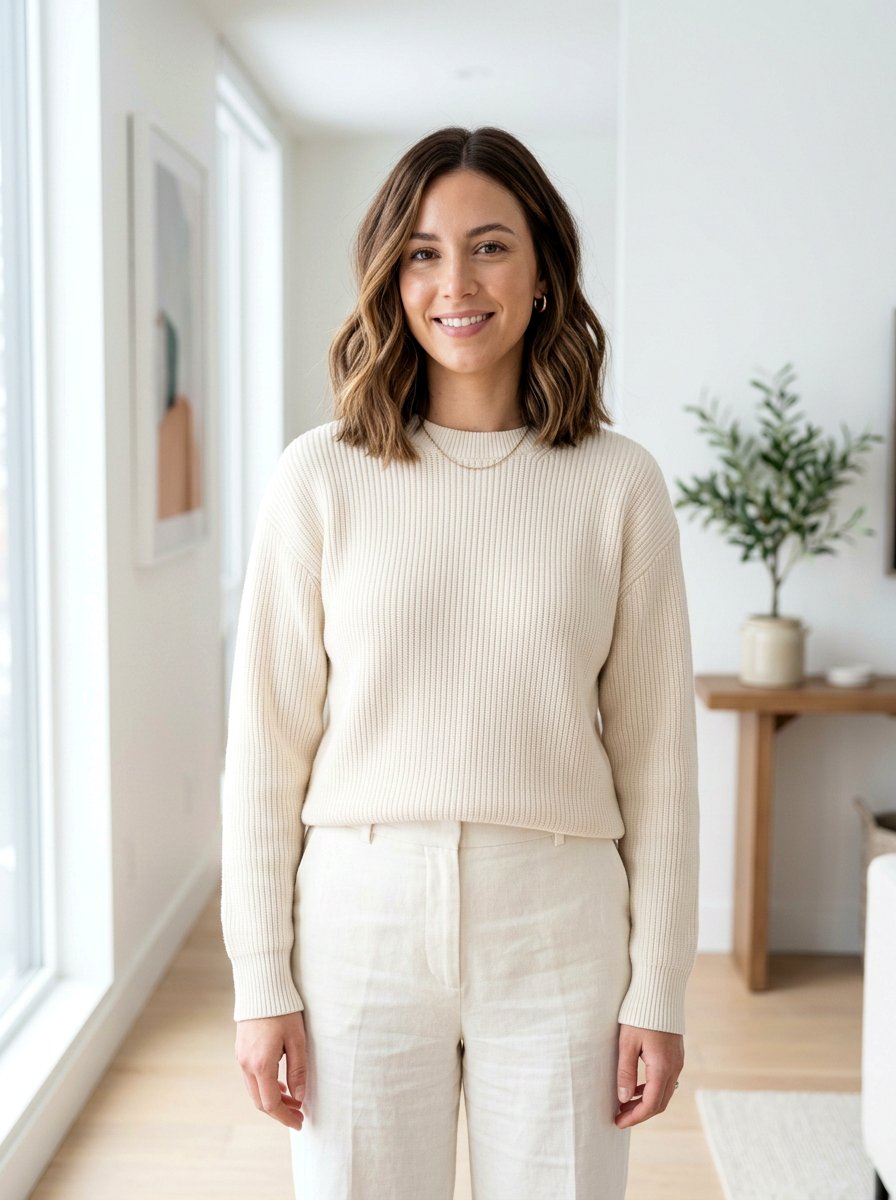
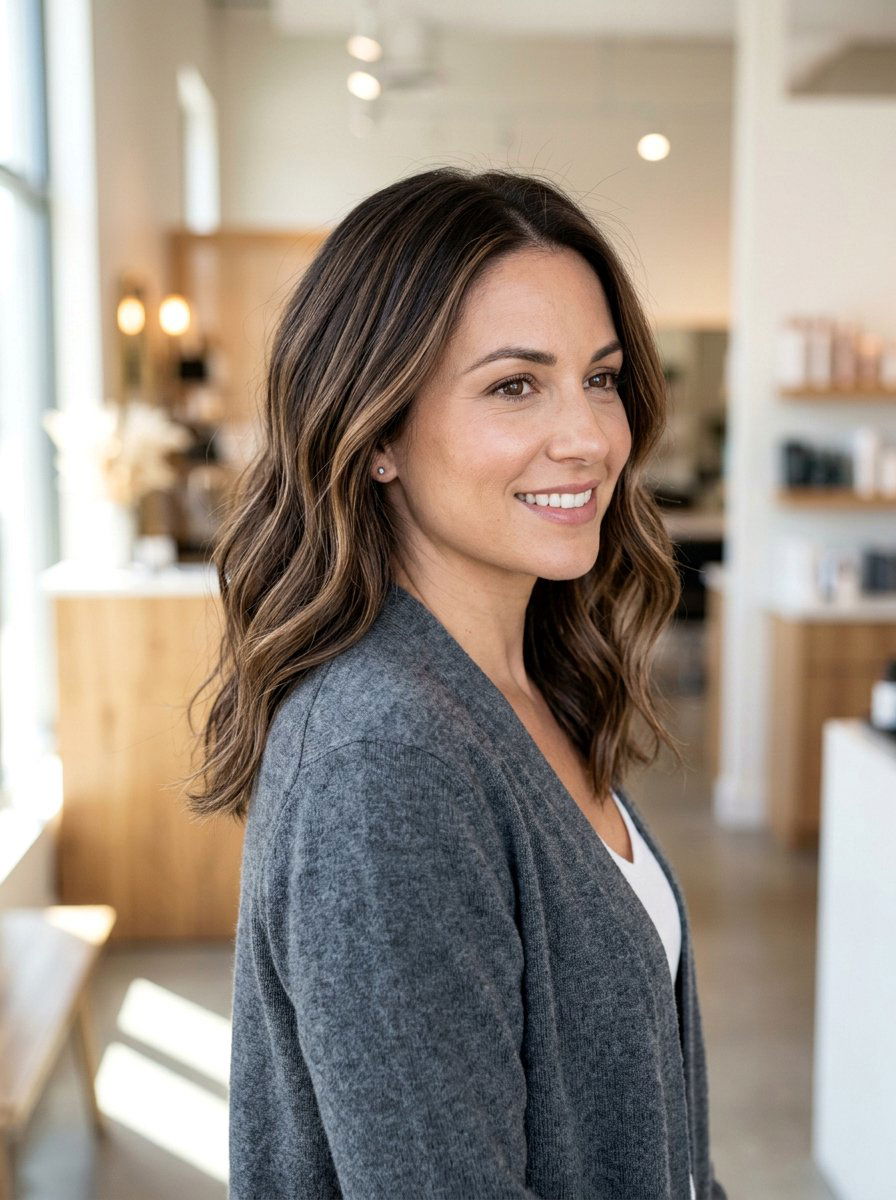
Walnut brunette lob with highlights combines a shoulder-grazing cut and dimensional color for a modern, easy-to-style look. On this length, a walnut base with blended highlights—usually caramel, honey, or beige—adds movement and keeps the lob from looking too heavy or solid, especially if you have thicker hair. A slightly textured lob with soft layers around the face lets the lighter pieces pop and gives you multiple styling options, from sleek and straight to loose waves that showcase the color variation. Because the length is shorter, your ends are often healthier, which helps the walnut shade look glossier and the highlights more reflective. Maintenance involves regular trims every six to eight weeks to keep the lob sharp, along with periodic toners or glosses to refresh both the base and highlighted sections as they fade with washing and heat styling.
18. Walnut Brunette Long Layers With Highlights
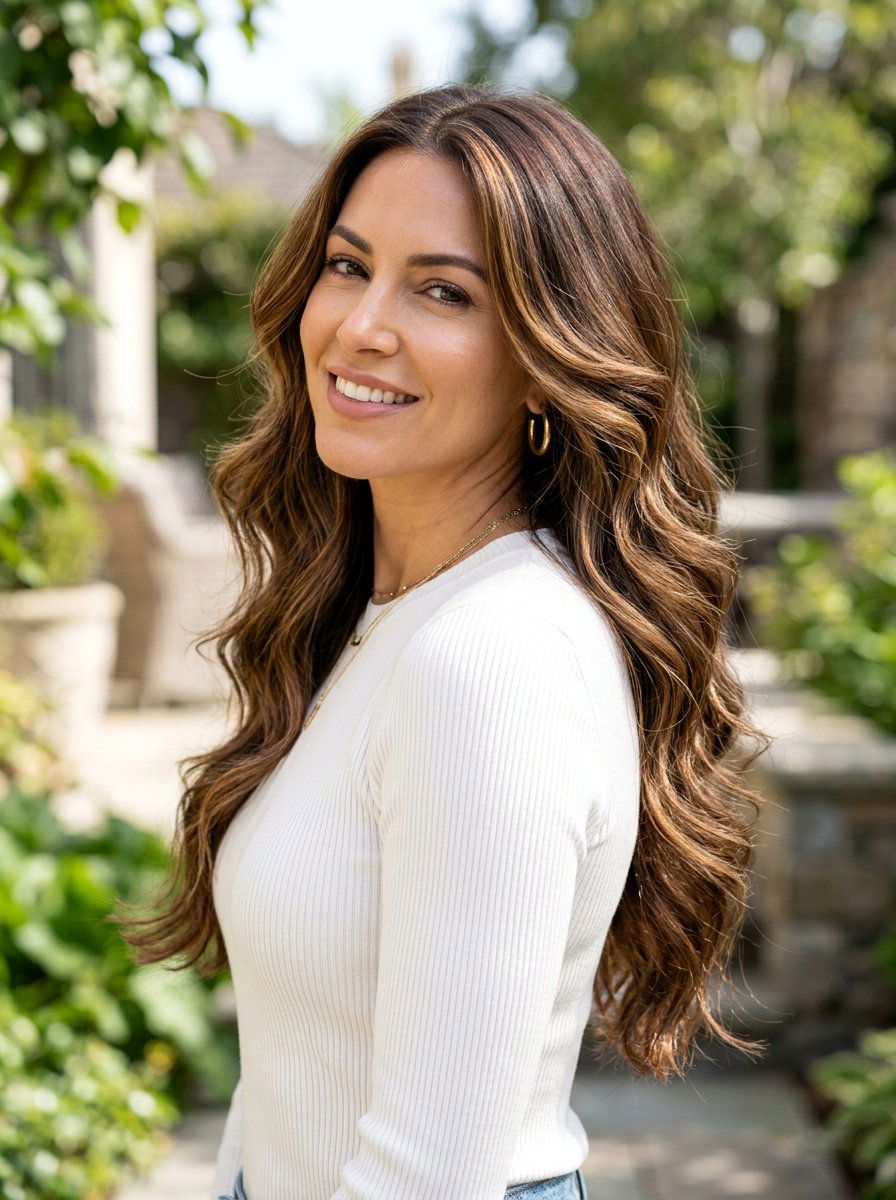
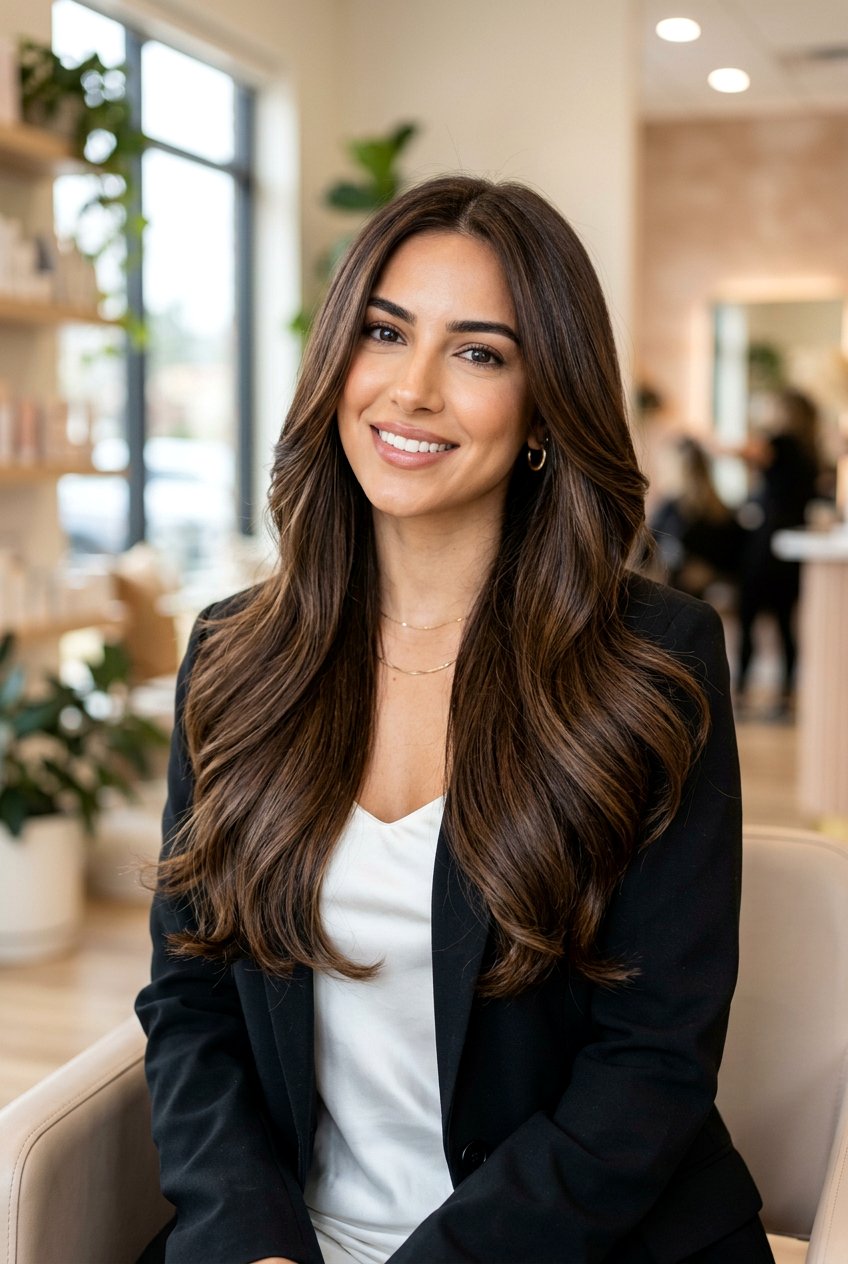
Walnut brunette long layers with highlights is a classic choice if you love length and want color that makes your haircut stand out. The rich walnut base creates depth near the roots, while highlights placed through the layered sections—from mid‑lengths to ends—help emphasize movement and prevent long hair from appearing flat or one-dimensional. Caramel, honey, toffee, or hazelnut tones all work beautifully here, and your colorist can place brighter pieces around the face and at the surface while leaving deeper brown underneath for contrast. Because longer hair shows more wear and tear, bond-building treatments, hydrating masks, and regular dusting of split ends are important to keep both the color and the cut looking fresh. Styling with a large-barrel curling iron or blowout brush will really highlight the interplay between the walnut base and the lighter ribbons in your layered lengths.
19. Walnut Brunette With Curly Highlights
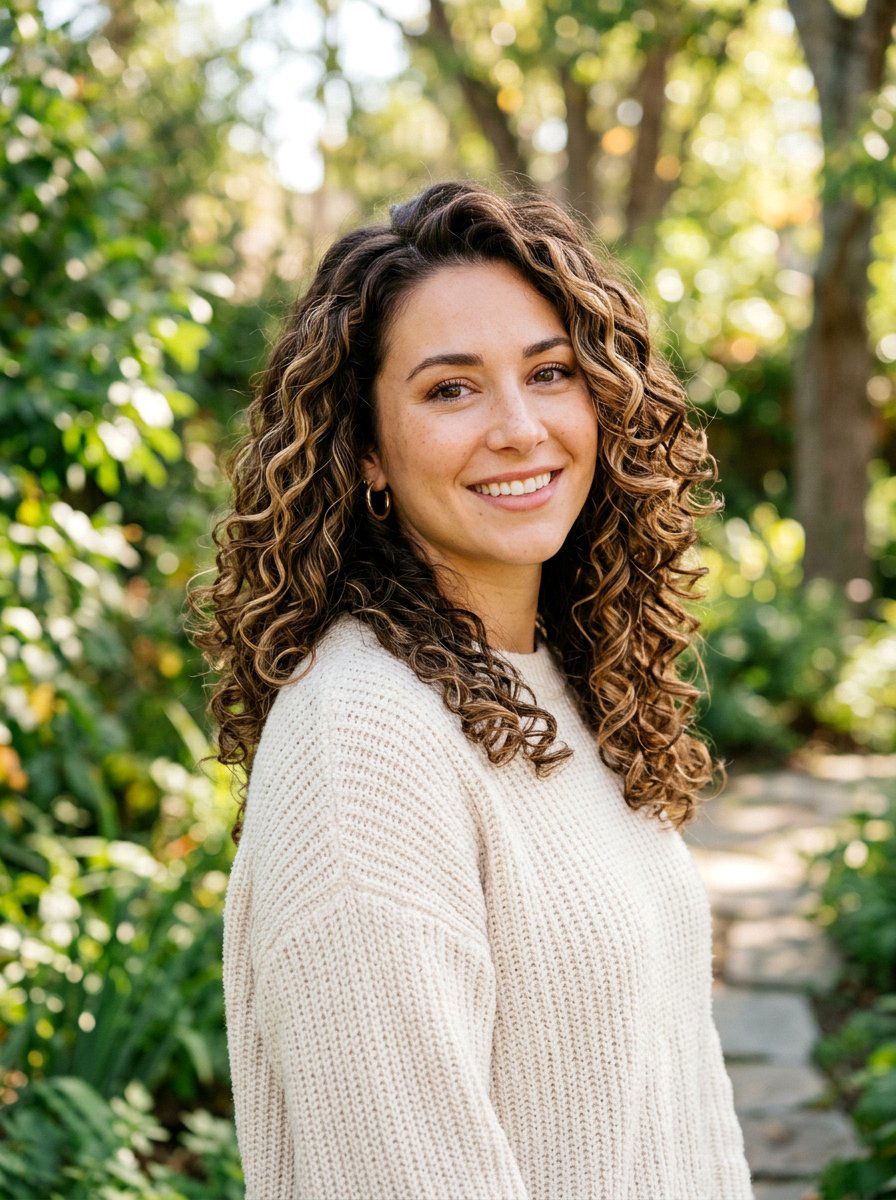
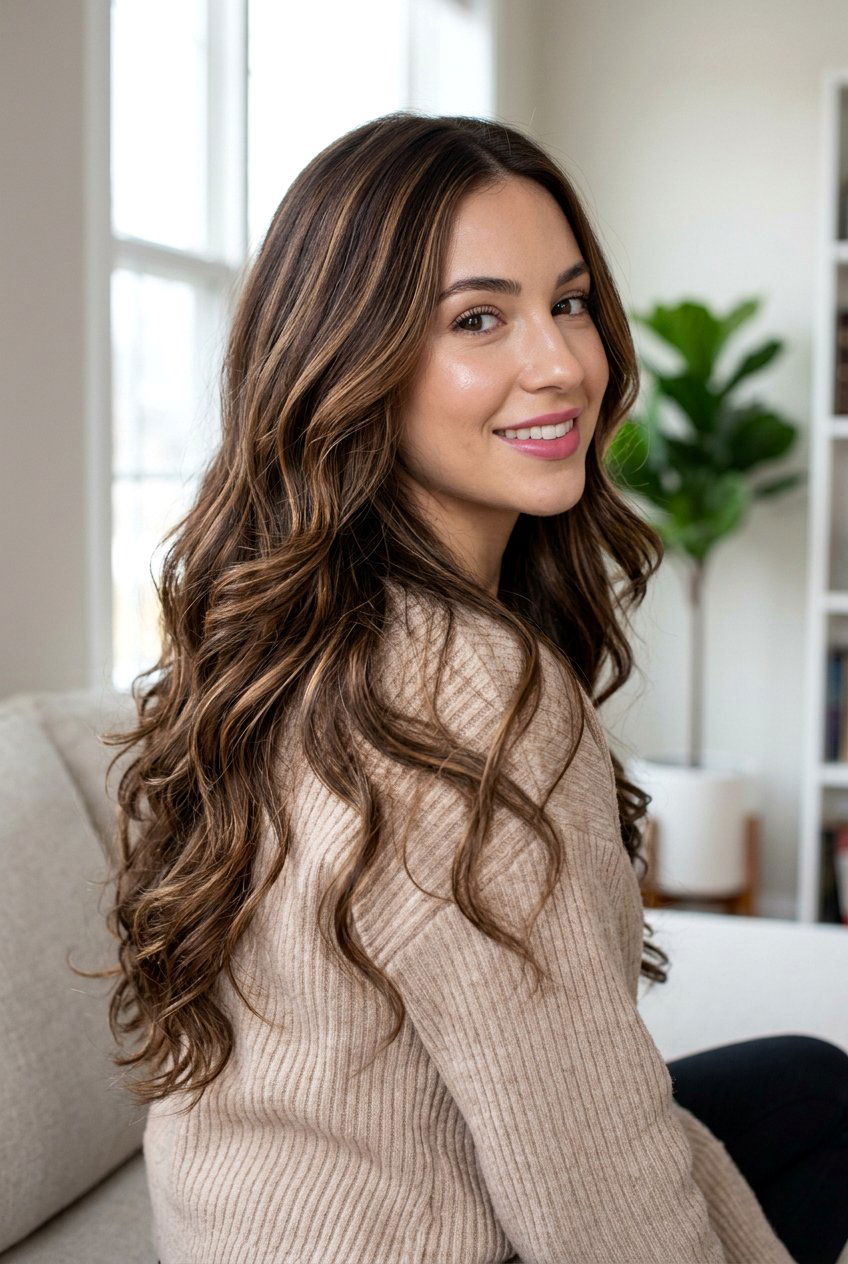
Walnut brunette with curly highlights is all about enhancing texture so curls look defined and multi-dimensional, not flat. On natural curls, a walnut base gives rich depth at the roots and interior, while strategically placed highlights—often caramel or honey—are painted on select curls or curl clumps to make the pattern pop. This placement technique avoids over-lightening and focuses on the curls that naturally catch light, which helps keep your hair healthier and more resilient. Maintenance includes moisture-rich, sulfate-free products and regular trims to avoid split ends weighing down your curl pattern, plus occasional toners to keep the highlighted curls in the right tone. Diffusing with a curl cream or gel will show off the walnut depth and highlighted pieces, making your curls look fuller and more defined without needing a drastic cut or color overhaul.
20. Low-Maintenance Walnut Brunette With Highlights
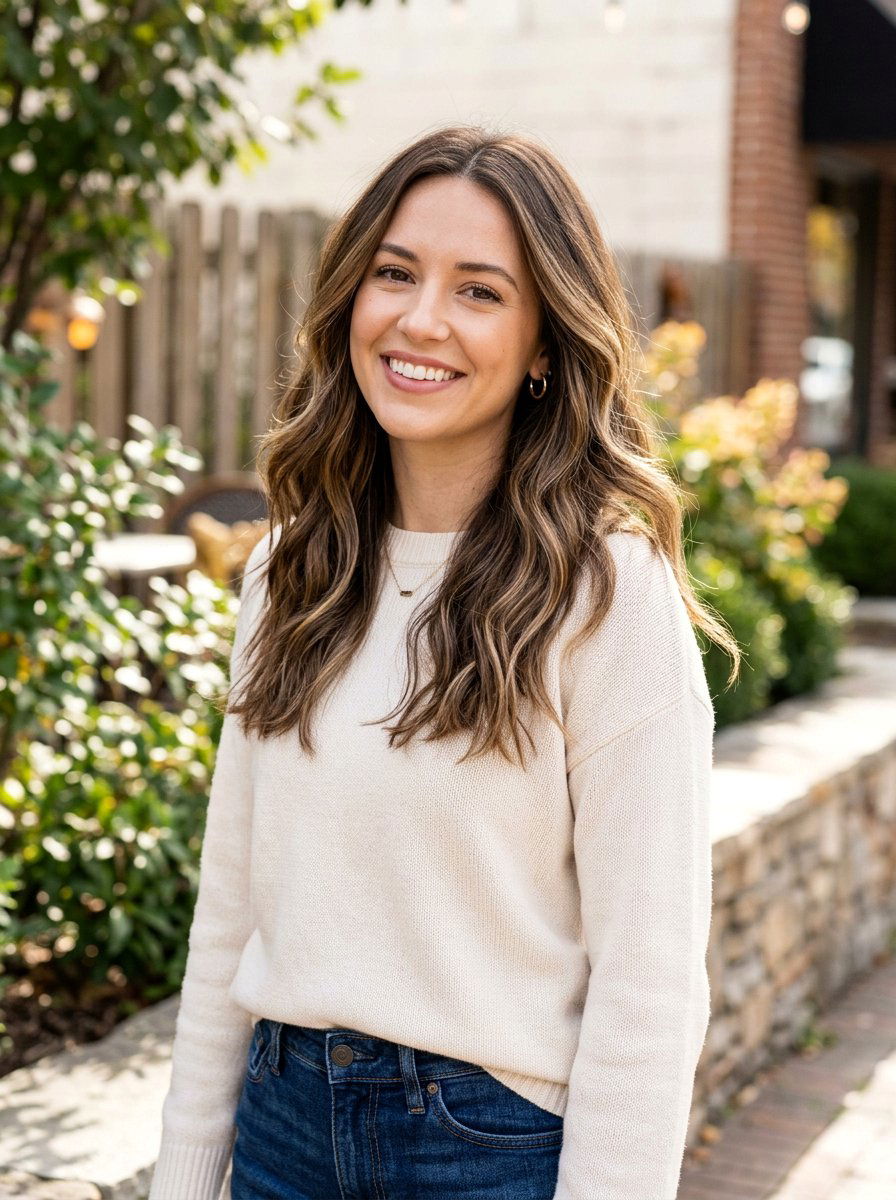
Low-maintenance walnut brunette with highlights focuses on placement and tone that grow out gracefully and require fewer salon visits. Typically, your roots stay very close to your natural color in a walnut shade, with highlights starting a bit lower down and kept within two to three levels of lightness to limit harsh regrowth lines. Techniques like balayage, smudged roots, and soft babylights are common here, because they create “color within color” and subtle contrast rather than stark stripes. You can choose warmer tones like caramel or toffee or go more neutral depending on your undertone, and your colorist can customize glosses that make fading more forgiving. At home, focus on gentle cleansing, occasional purple or color-balancing shampoos if needed, and weekly conditioning to maintain shine so your walnut brunette with highlights looks intentional even as it grows out.
Conclusion:
Walnut brunette with highlights is a versatile color family that can be tailored to almost every haircut, texture, and lifestyle while still feeling polished and modern. From subtle toffee babylights to higher-contrast blonde ribbons, the key is choosing highlight tones and placement that flatter your skin undertone and match how much maintenance you are realistically willing to handle. Rich walnut bases tend to look shinier and healthier than very light colors, and strategically placed highlights add just enough brightness to showcase your cut and texture without constant touch-ups. Working with a professional colorist who understands how to balance warmth and depth will help you avoid brassiness and keep the finish looking expensive instead of flat. Pair your new color with a routine of sulfate-free shampoo, heat protection, and regular glosses, and your walnut brunette with highlights can stay glossy, dimensional, and flattering season after season.
You'll Like These Styles:




Leave a Reply