
Violet balayage hair color feels like that perfect mix of edgy and soft, which is why it keeps trending every season. Instead of one flat purple shade, balayage gives you hand-painted ribbons of violet that melt into your natural base for a softer grow-out and less harsh regrowth lines. You can go bold and electric on dark brunette hair or keep it smoky and muted for a more wearable look. Colorists love it because the technique is customizable for different skin tones, hair textures, and lengths. With the right pre-lightening level and gloss, violet reflects can look glossy instead of patchy or dull. When paired with proper care, this color can stay vibrant for weeks without constant salon visits.
1. Violet Balayage On Dark Brown Hair
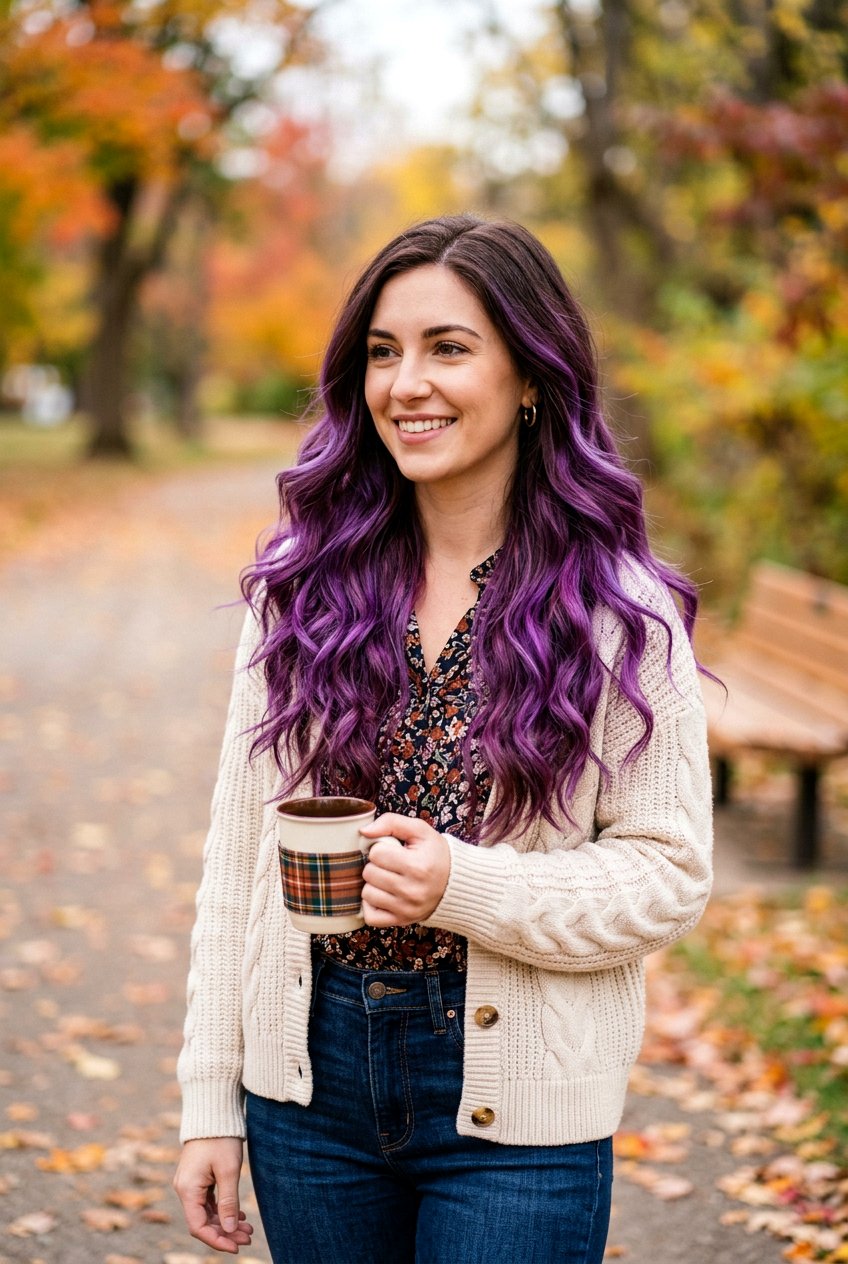
Rich chocolate roots with hand-painted violet balayage are one of the most striking options for brunettes who want a bold change without bleaching everything. The darker base gives depth, while saturated violet ribbons brighten the mid-lengths and ends so the color pops every time the light hits. A level 6 or darker brown usually needs pre-lightening in the balayage sections to at least a level 7–9, so the violet shows as true purple rather than muddy. Ask your colorist for slightly thicker painted pieces around the face and finer ribbons through the interior for dimension that still feels professional for work. Maintain shine and richness with sulfate-free shampoo, weekly deep conditioner, and a color-safe purple or violet-toning mask to keep warmth under control.
2. Soft Violet Balayage On Light Brown Hair
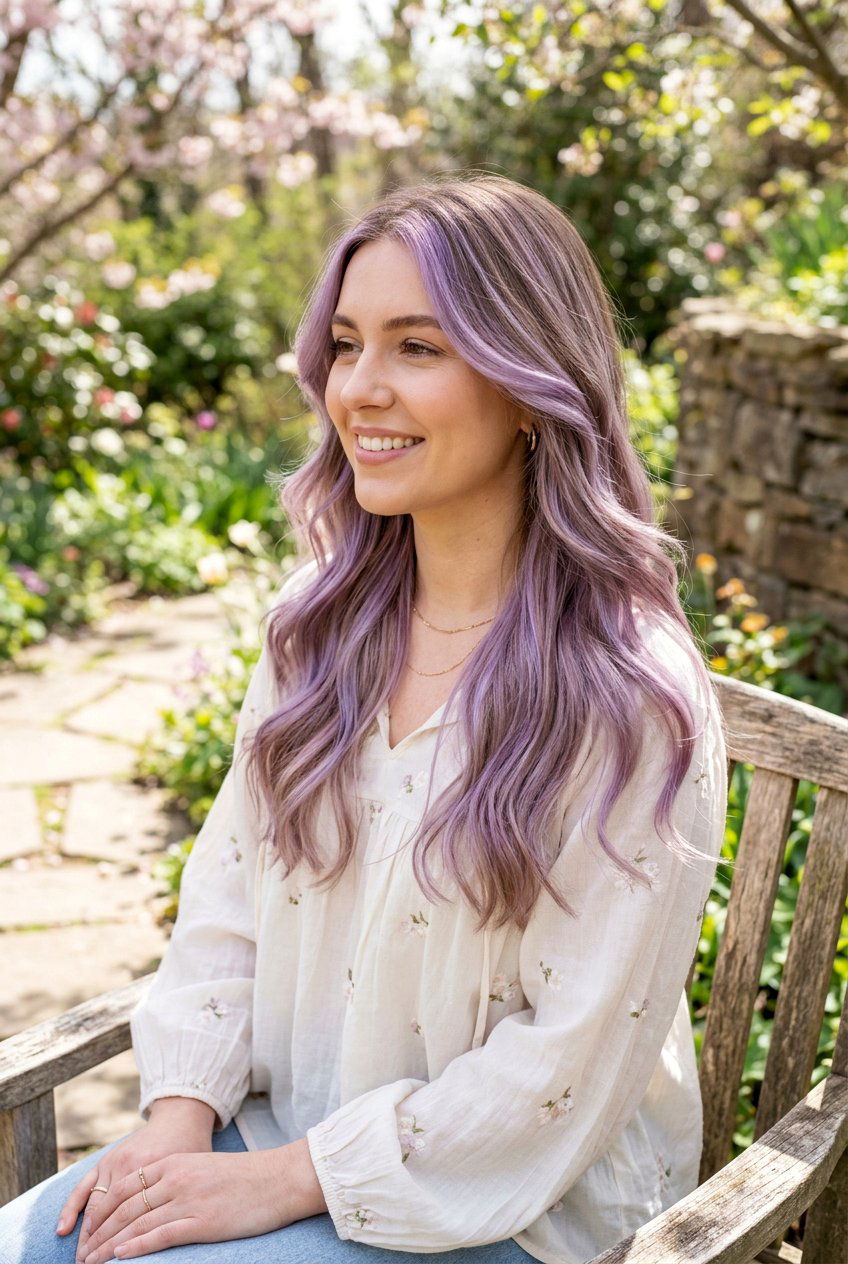
For someone who wants violet but not an ultra-high-contrast look, soft violet balayage on light brown hair reads more subtle and romantic. The base is usually a warm or neutral light brown around levels 6–7, which lets softer lilac and ash-violet tones blend in without harsh lines. Instead of solid streaks, the colorist hand-paints diffused sections that start a bit lower from the root and become more visible toward the ends. This gives a sun-kissed effect, just swapped with cool violet instead of blonde. Because the lift needed is slightly less intense than on dark hair, it can be a bit gentler on the cuticle with fewer sessions. To avoid brassiness, use a gentle purple shampoo occasionally and focus on nourishing masks and leave-in conditioners so the pastel-violet sheen stays soft and reflective.
3. Violet Balayage Lob Haircut
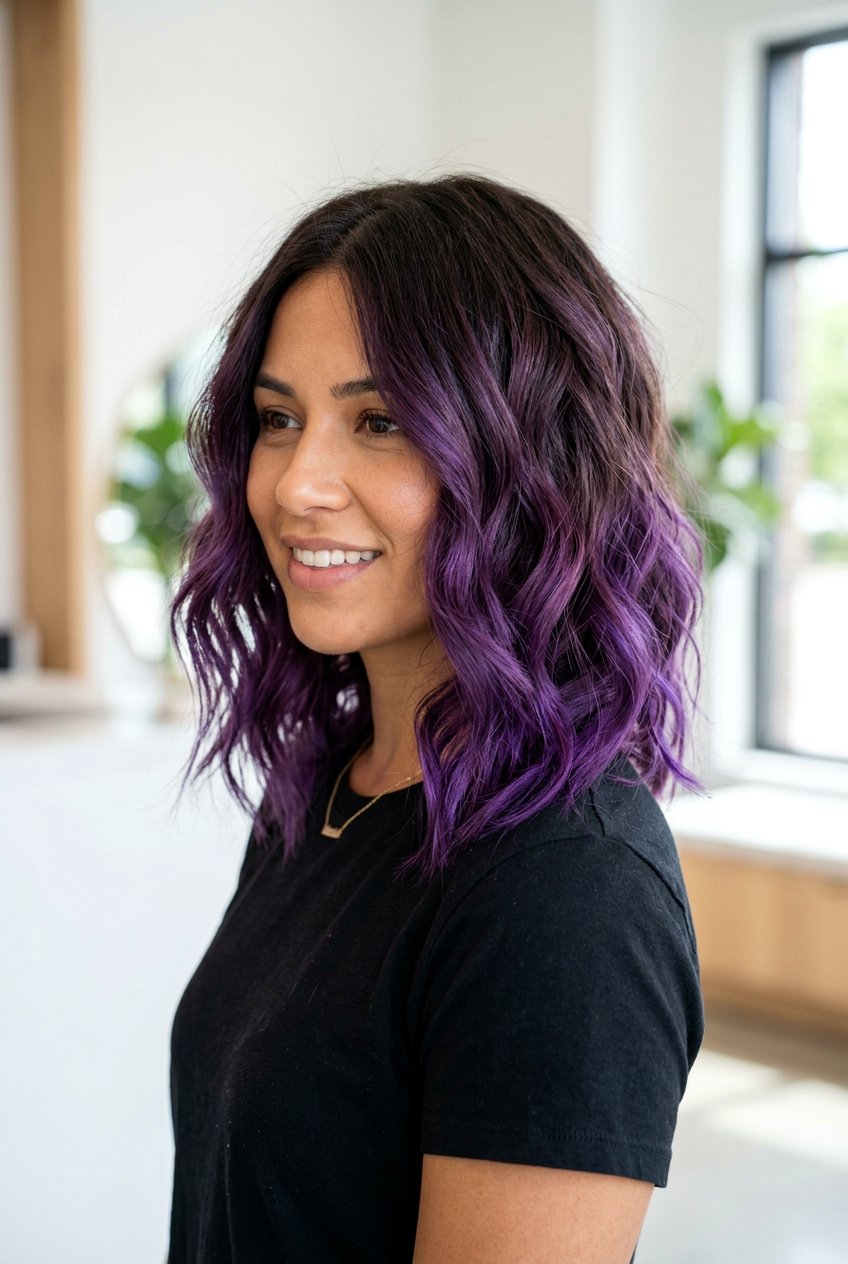
A lob sits in that sweet spot between short and long, and violet balayage takes it from basic to attention-grabbing with very little styling effort. Shoulder-grazing or collarbone-length cuts allow violet ribbons to sit right where waves naturally bend, showing off the color placement. Ask your stylist for long layers and textured ends so the balayage doesn’t fall as one solid block, which can hide the dimension. On a lob, violet shows beautifully when concentrated through the mid-lengths and tips, leaving the root area more natural for low maintenance. This also means your grow-out looks intentional because the soft transition mimics natural color fade. Add loose waves with a heat tool on low to medium temperature plus a heat protectant to avoid fading the pigment faster than necessary.
4. Violet Balayage On Black Hair
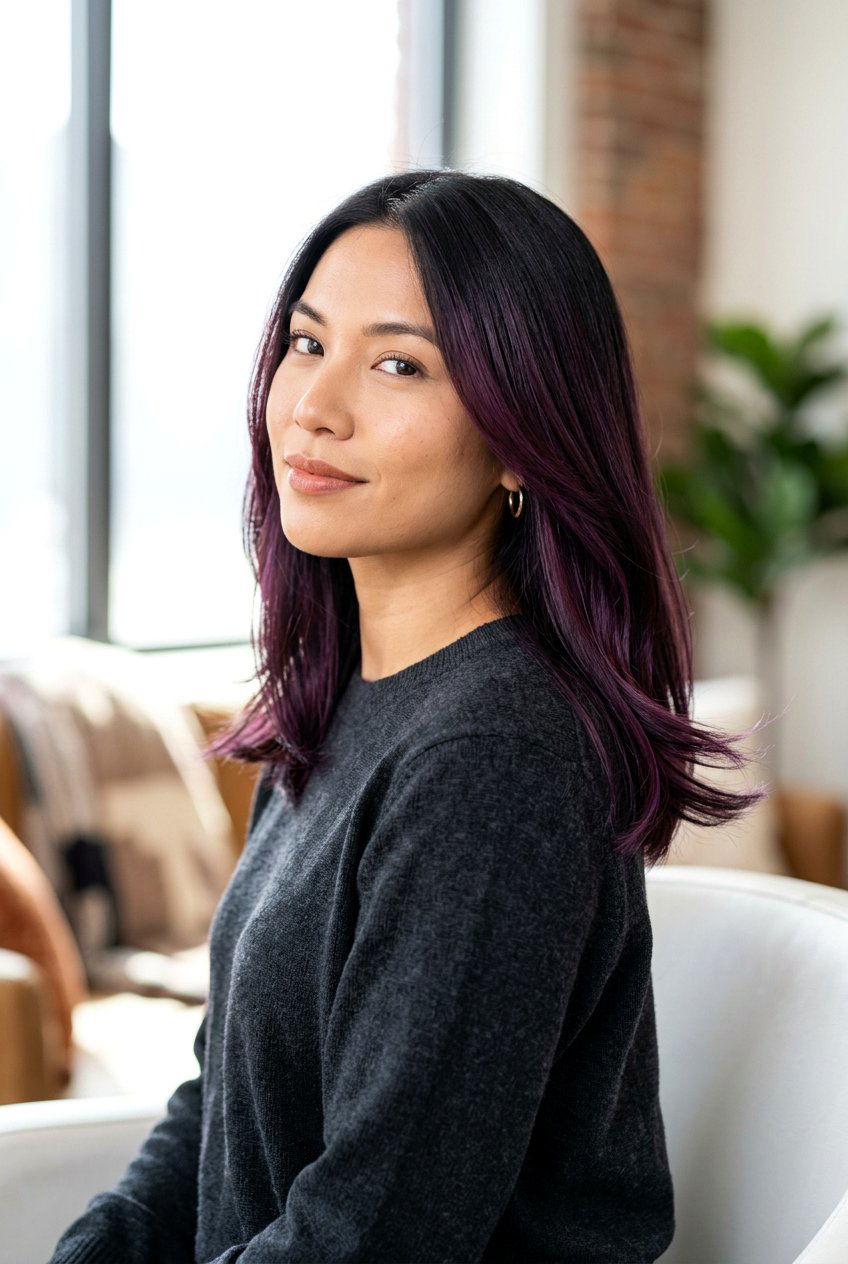
Black hair with violet balayage is dramatic and edgy, but it also requires realistic expectations about the lightening process. Because black hair typically sits at level 1–2, lifting to the lighter levels needed for clear violet can take multiple sessions to protect hair health. Many colorists use a mix of balayage and foilayage, placing some pieces in foils for extra lift while keeping others open-air for a softer blend. The resulting look often features deep violet and plum highlights that flash in the light rather than looking neon. It’s a great choice if you like wearing mostly dark hair but want movement and dimension without committing to full bleach. Plan on spacing sessions six to eight weeks apart and using rich masks, oils, and bond-building treatments to keep your strands strong and glossy.
5. Violet Balayage With Face Framing Highlights
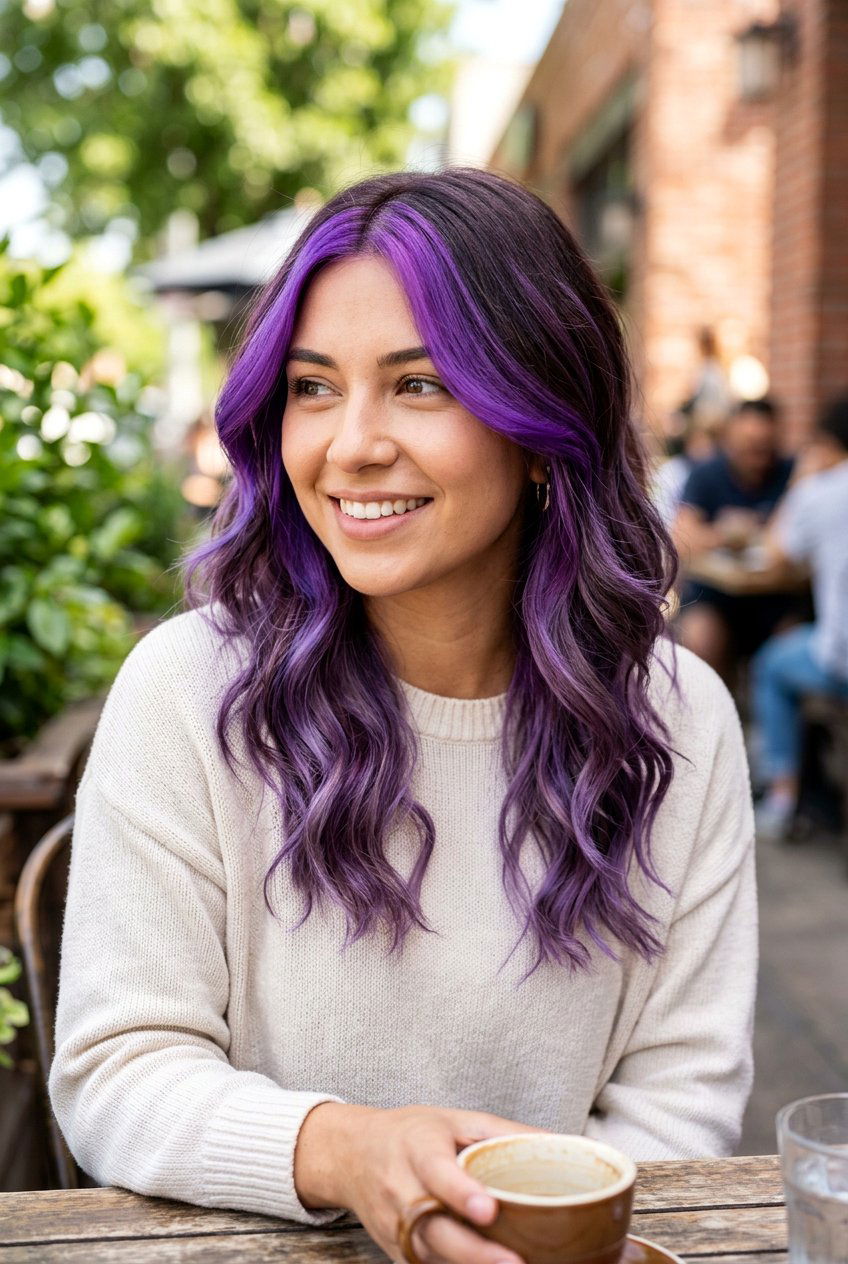
Violet balayage with face-framing highlights focuses the brightest purple tones around the front hairline to light up your features. This placement can instantly make eyes look brighter and skin appear more even because the cool violet contrasts against warm undertones. The rest of the hair can stay softer, with more diffused violet pieces through the mid-lengths and ends for a balanced look. Ask your stylist to paint slightly chunky money-piece sections near the face, then blend them seamlessly into finer balayage streaks toward the back. This combo keeps maintenance lower because you can refresh just the front pieces more often between full appointments. Protect the lighter front sections with extra care—use UV-protection sprays outdoors, wear your hair loosely tied instead of tightly pulled back, and avoid excessive heat around the hairline.
6. Violet Balayage With Curtain Bangs
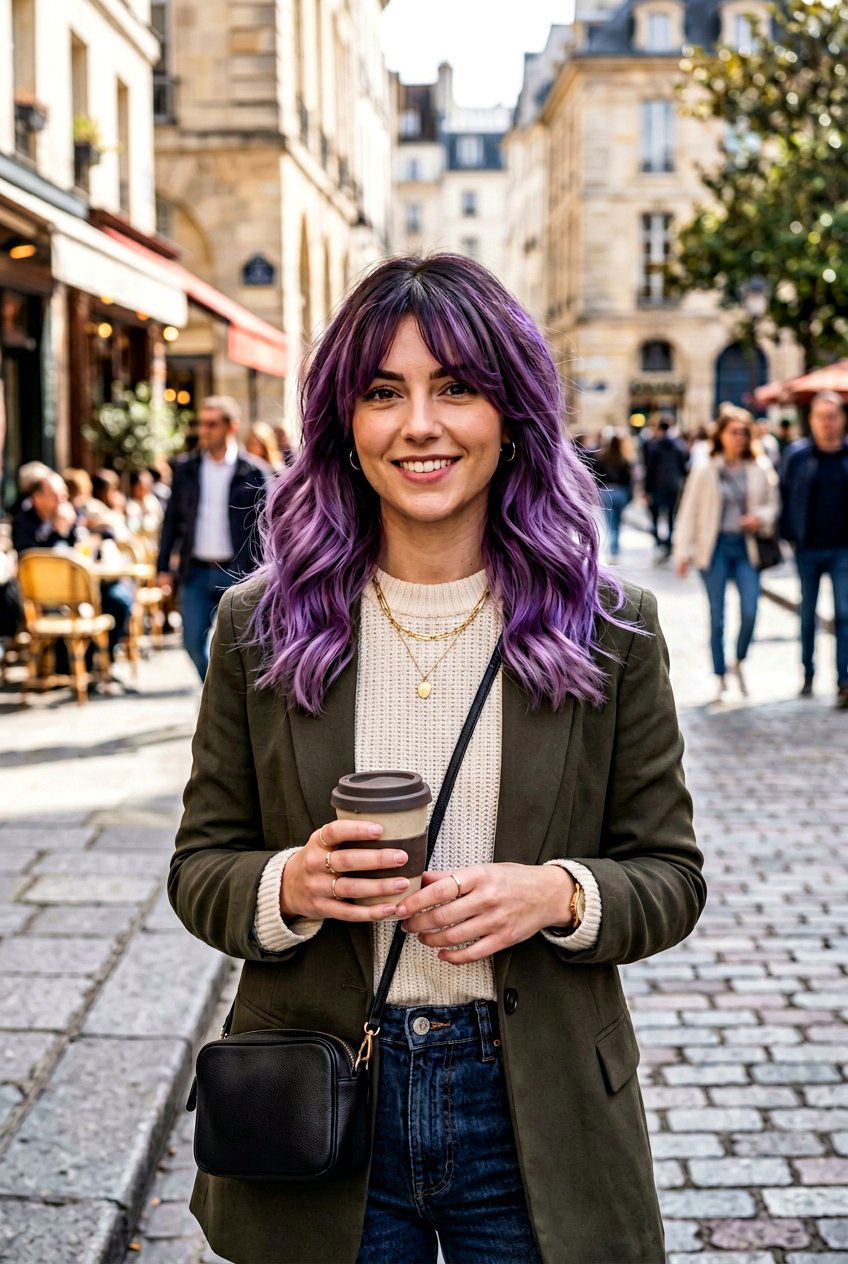
Pairing violet balayage with curtain bangs creates a soft yet trendy look that frames the face while still letting the color shine. Curtain bangs, which split down the middle and sweep toward the cheekbones, offer enough length to hold delicate touches of violet without looking too extreme. Your colorist can feather in subtle violet at the ends of the bangs and connect those pieces to the balayage throughout the front sections. This gives a cohesive flow when hair is styled straight or wavy. Because bangs get washed and heat-styled more often, they can fade faster, so a gentle routine is important. Use lightweight, sulfate-free products around the fringe, blot dry instead of roughly towel-drying, and keep your heat tools at lower settings to extend color life and reduce breakage.
7. Violet Balayage On Long Wavy Hair
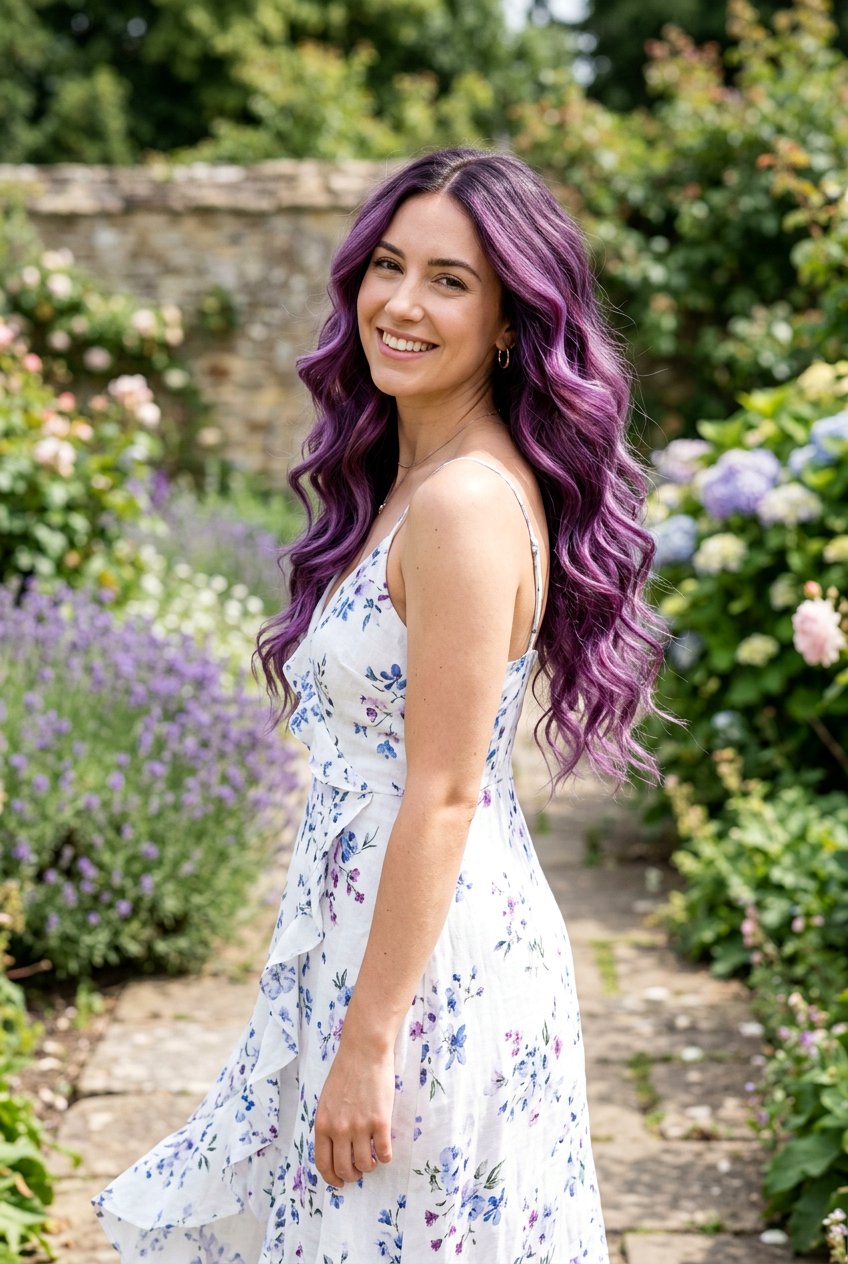
Long, wavy hair gives violet balayage plenty of room to shine, with each bend showing a different ribbon of color. When hair falls past the shoulders, your stylist can play with multiple depths of violet, from deeper plum near the mid-lengths to brighter tones toward the ends. The balayage technique prevents harsh lines, so the transition from your natural root to violet looks seamless even as it grows. On long hair, it helps to maintain some natural color on the top layers and concentrate the boldest tones underneath and through the lengths for built-in dimension. Because longer hair has older, drier ends, moisture is key for keeping the color reflective rather than dull. Incorporate weekly masks, minimal heat styling, and silk or satin pillowcases to reduce friction and protect both the cuticle and color vibrancy.
8. Violet Balayage On Straight Medium Hair
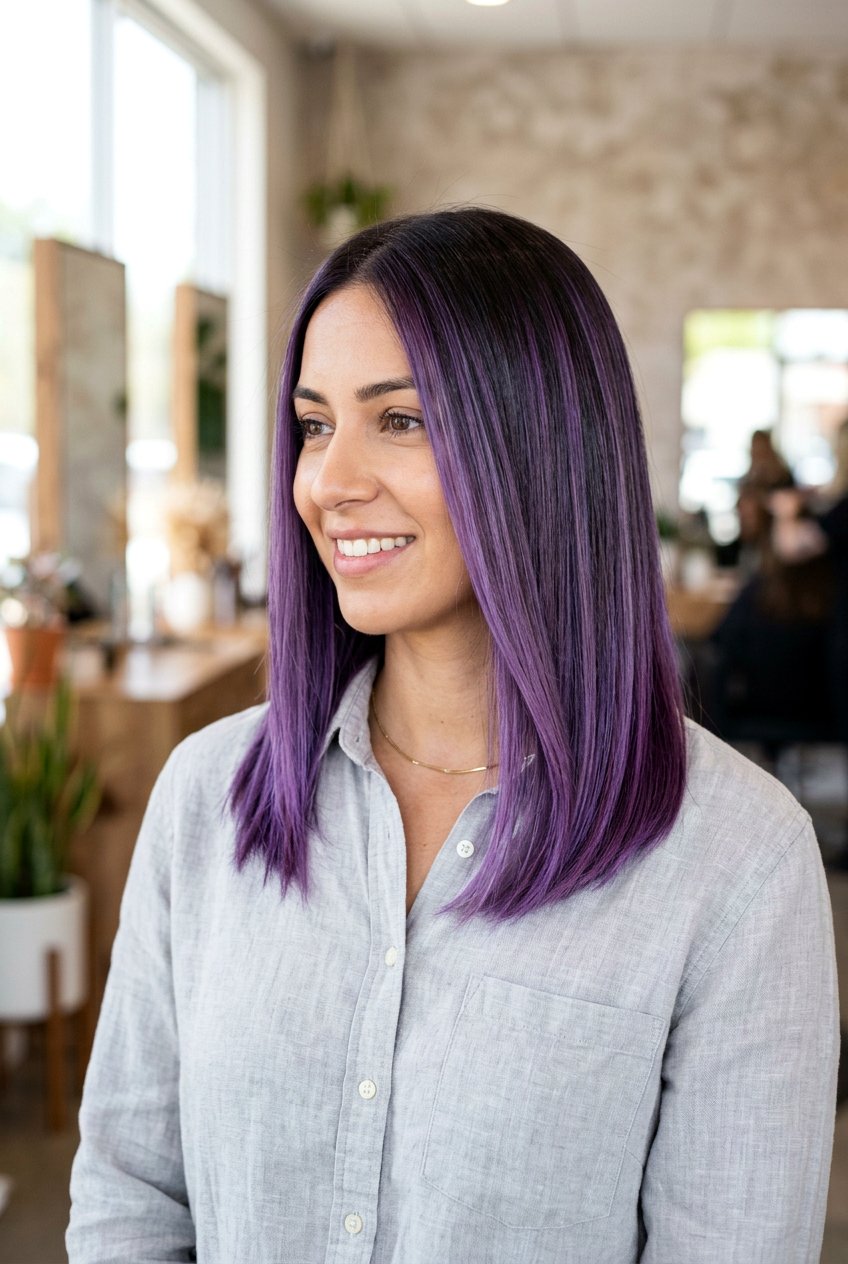
On straight medium-length hair, violet balayage looks sleek and modern because the color placement reads clearly from root to tip. Without waves to break up the surface, the way the stylist paints matters even more; fine, blended ribbons prevent stripy, obvious chunks. Ask for soft, diagonal sections that start a bit away from the root and gradually become denser through the ends. This helps the grow-out line stay blurred so you can go longer between touch-ups. Straight hair can show dryness quickly, so use shine-enhancing serums or lightweight oils that are safe for color-treated hair. To avoid flattening the look, blow-dry with a round brush for a bit of bend at the ends and always apply heat protectant so the violet pigment doesn’t fade prematurely.
9. Plum Violet Balayage On Brunette Hair
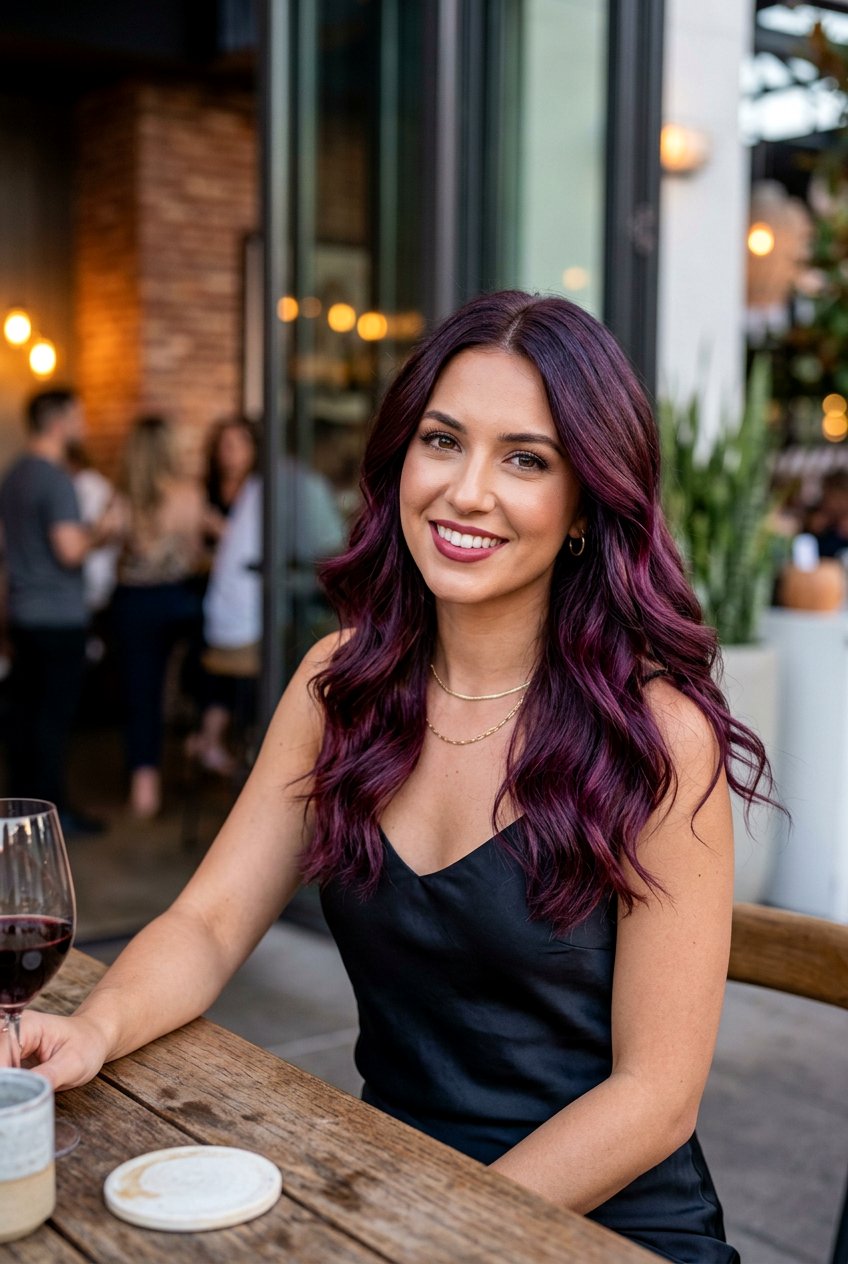
Plum violet balayage brings in red-purple tones that look especially flattering on warm or olive skin and deep brunette bases. This shade leans a bit richer and more wine-inspired than cool digital lavender, so it feels sophisticated yet still playful. The colorist usually lifts selected sections and then deposits a formula that mixes violet with a hint of red for that plum finish. Painted mostly from mid-lengths downward, it gives the illusion of thicker, fuller hair because darker roots contrast with the vibrant mid-shaft tones. To keep the plum from turning overly red or brown as it fades, use color-depositing conditioners or masks that refresh violet-red pigments between salon visits. Limit sun exposure and chlorine, both of which can quickly pull warmth and dull the refined plum undertone.
10. Ash Violet Balayage On Brown Hair
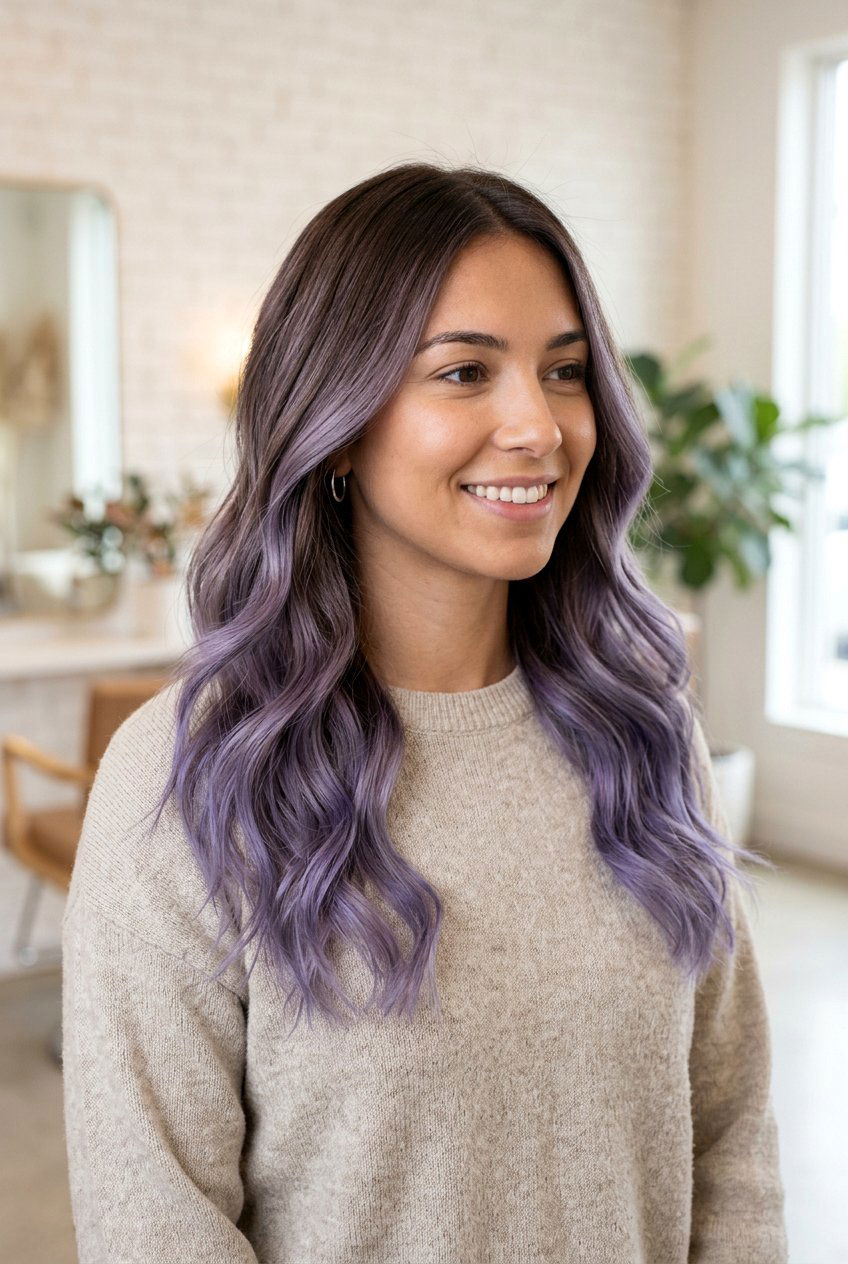
Ash violet balayage is ideal for anyone who prefers cool, smoky tones over bright or neon purples. On a medium or light brown base, ashy violet blends create a muted, expensive-looking finish that pairs well with neutral makeup and minimalist fashion. Achieving this look typically involves lifting the hair to a pale yellow undertone and then toning with violet formulas that also contain ash to counter orange and gold. Because cool shades fade faster, maintenance is all about keeping brass at bay. Incorporate purple shampoos or masks every week or two, focusing on mid-lengths and ends, and always rinse in cool water to help seal the cuticle. Avoid overly clarifying shampoos, which can strip the delicate ash violet pigments much more quickly than gentle, color-safe formulas.
11. Violet Balayage With Shadow Root
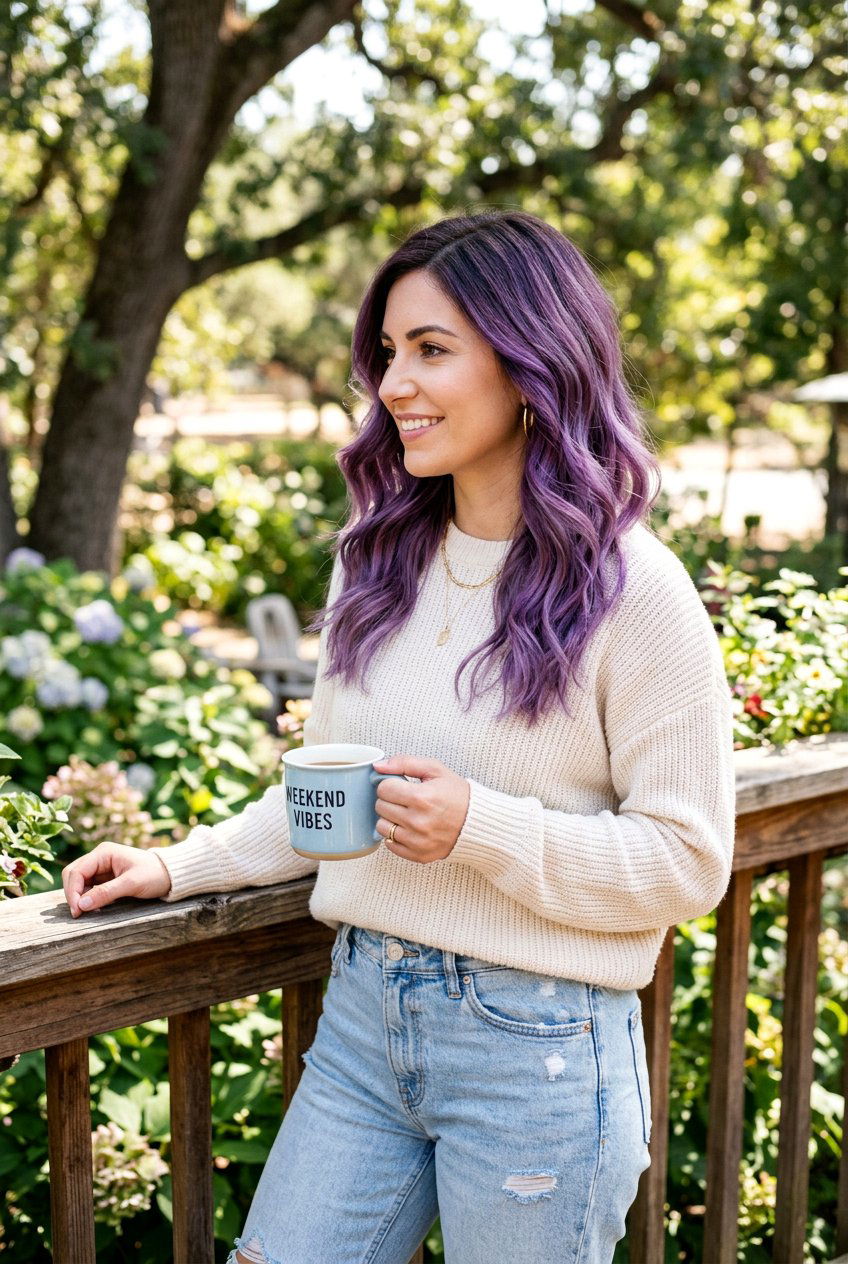
Violet balayage with a shadow root blends bold color with ultra-low maintenance, making it perfect for anyone who hates constant touch-ups. The stylist keeps your natural base—or a slightly deepened version—at the roots and softly melts violet balayage starting a few inches down. This shadow root hides new growth and creates a seamless transition, especially helpful if your natural shade contrasts strongly with violet. The mid-lengths and ends can carry more concentrated purple, while the root area stays more neutral for everyday wear. Because the root is not heavily lightened, your scalp and regrowth remain healthier and less prone to breakage. You’ll mainly maintain the mid-lengths and ends with toning products, deep conditioning, and occasional gloss appointments every eight to twelve weeks to refresh shine and depth.
12. Violet Balayage On Curly Hair
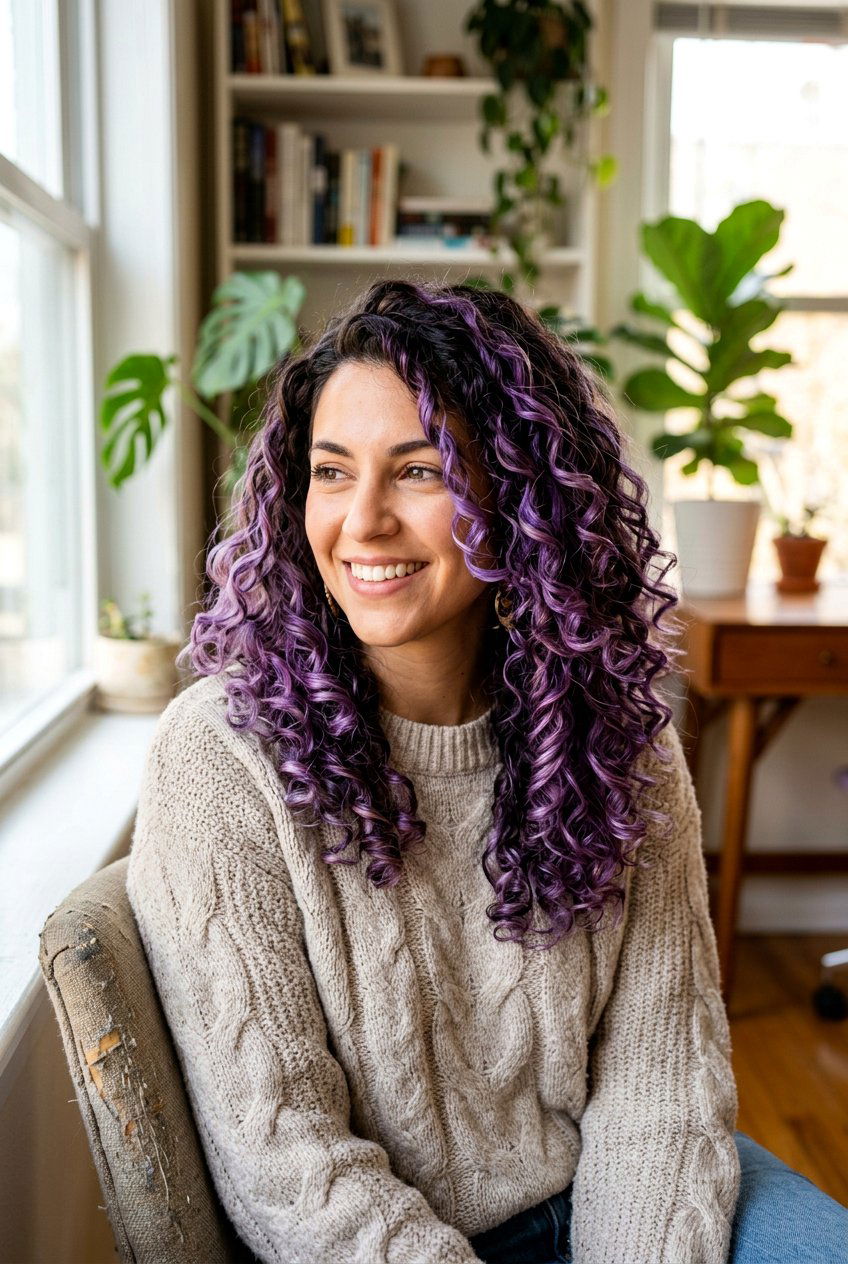
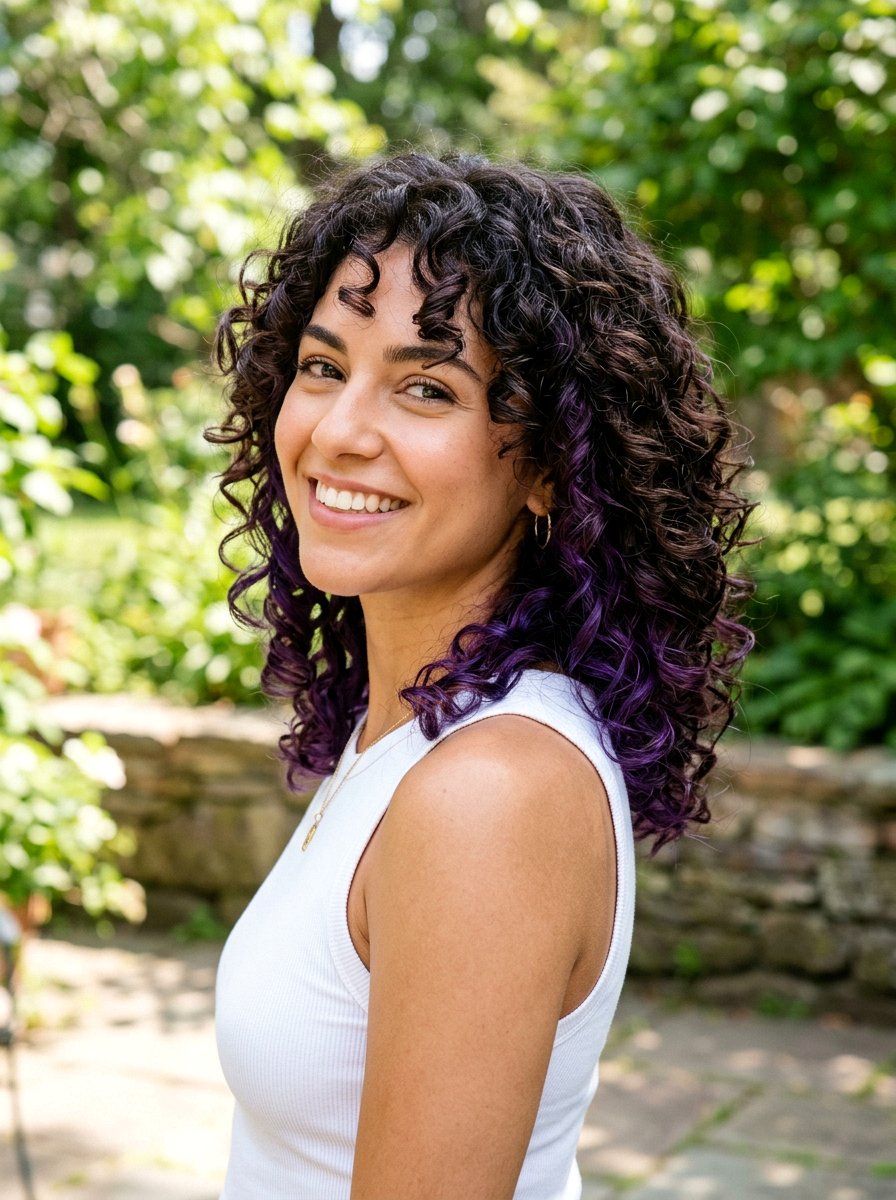
Curly hair and violet balayage are a dream match because curls naturally highlight dimension and movement. When color is hand-painted on curls, stylists can place brighter violet accents on the outermost curls and around the face to enhance the shape. Deeper violet and plum pieces tucked underneath add richness without overwhelming the overall look. It’s important to apply balayage on curls in their natural pattern so the color lands where the curl actually lives, not where it stretches when wet or straight. Curly hair tends to be drier, so hydration becomes even more critical after bleaching and coloring. Use gentle, sulfate-free cleansers, creamy conditioners, protein-balanced masks, and diffused drying on low heat to preserve both curl integrity and the brightness of the violet tone.
13. Violet Balayage On Short Bob Haircut
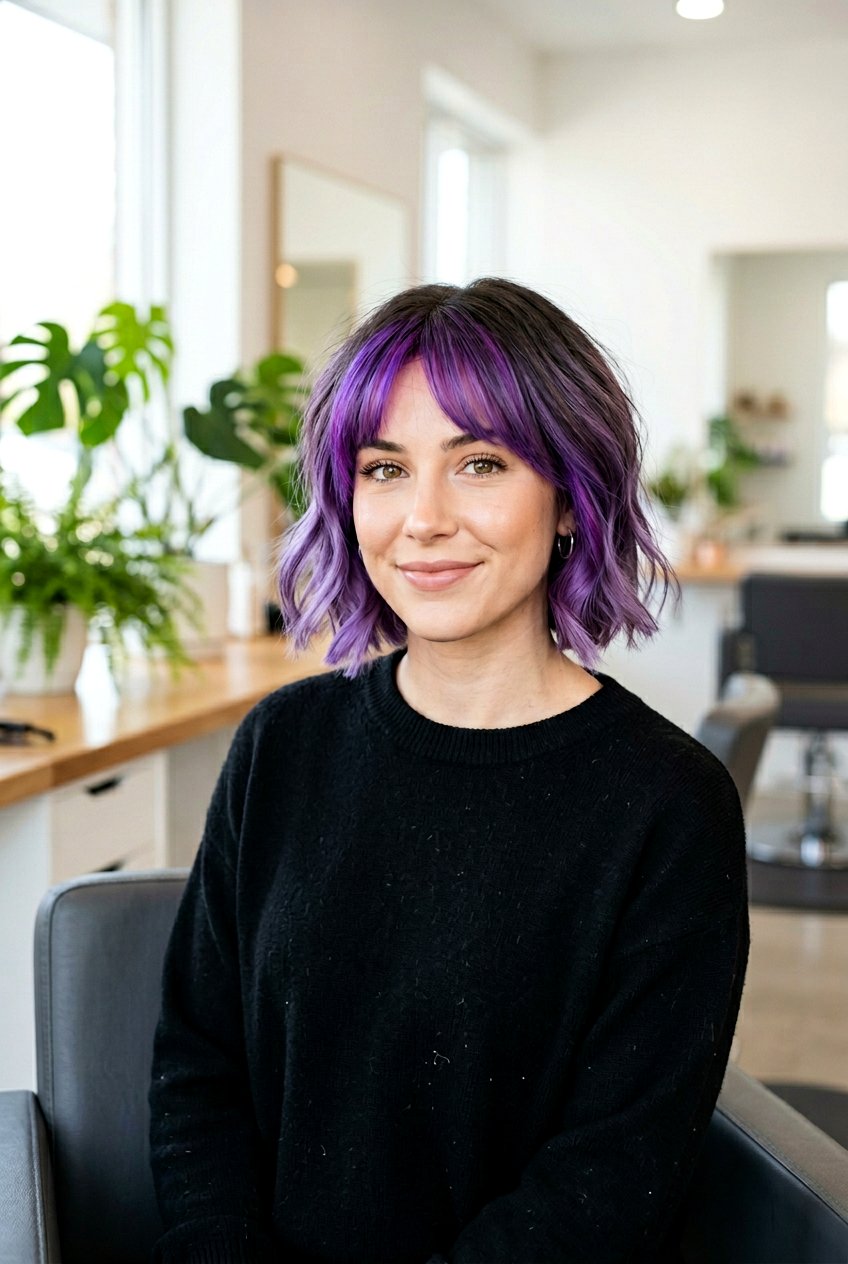
A short bob with violet balayage looks chic and fashion-forward, especially when the cut sits at the jawline or just below. Because there is less length, the color placement has to be precise; a few well-placed balayage panels can completely transform the shape. Ask for violet concentrated mainly around the front and lower layers, with softer blending in the crown so the overall silhouette stays balanced. On straight or slightly wavy bobs, subtle texturizing at the ends keeps the purple from looking blocky. Short hair often gets more frequent trims, which helps keep the lightened ends healthy and prevents excessive split ends. Maintain shine with lightweight styling creams and regular deep conditioning, and avoid overusing flat irons, which can quickly dull both the cuticle and color.
14. Violet Balayage On Layered Haircut
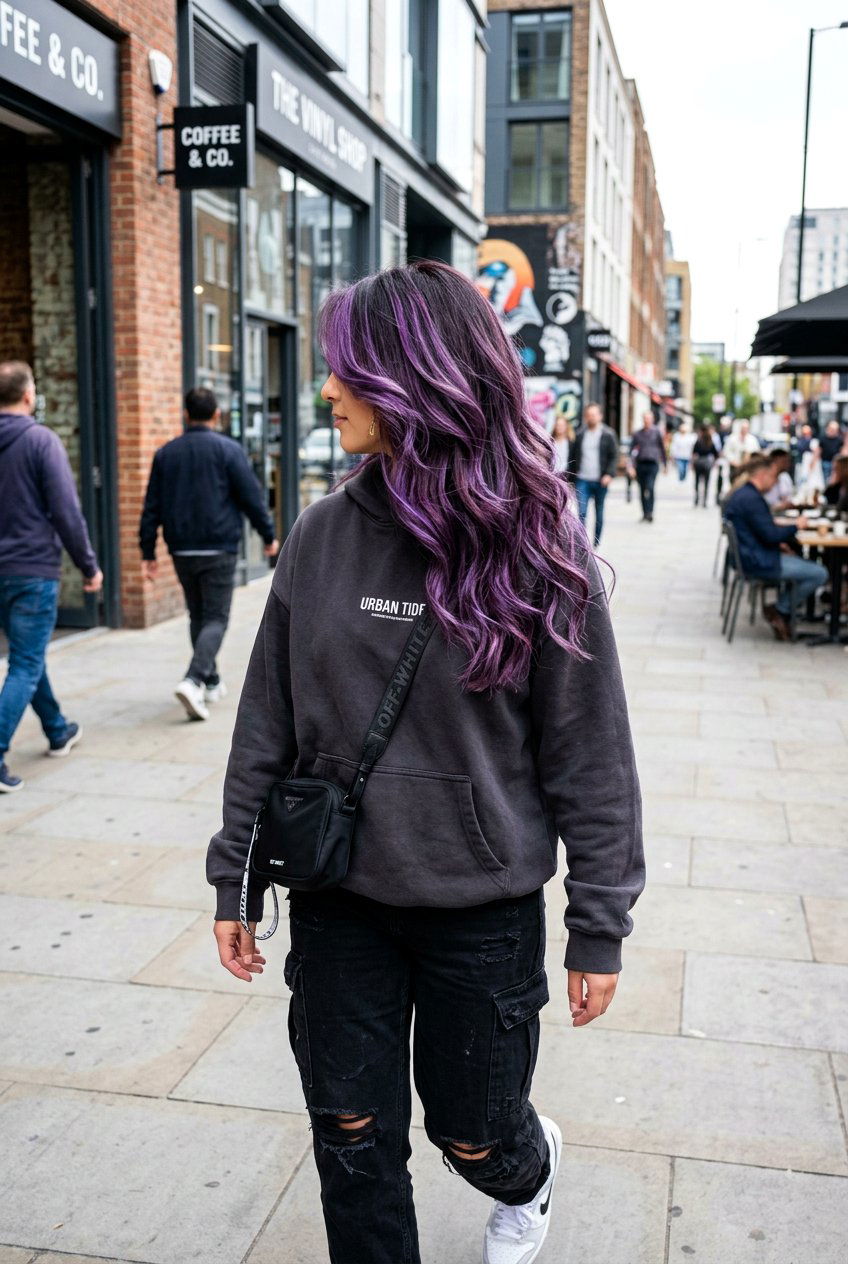
Layered haircuts pair beautifully with violet balayage because each layer provides a new surface for light to hit the color. Long layers create cascading ribbons of violet that look especially striking when styled with loose waves or a blowout. Even medium layers can build airy volume and stop the color from feeling heavy or flat. Your stylist can strategically paint brighter violet on the shorter top layers and deeper tones on the lower layers for a multi-dimensional finish. This approach is great for fine hair because it visually thickens strands through color placement. Keep the ends from fraying by scheduling regular dusting trims and using nourishing, color-safe products that smooth the cuticle without weighing down movement or bounce.
15. Violet Balayage On Warm Skin Tone
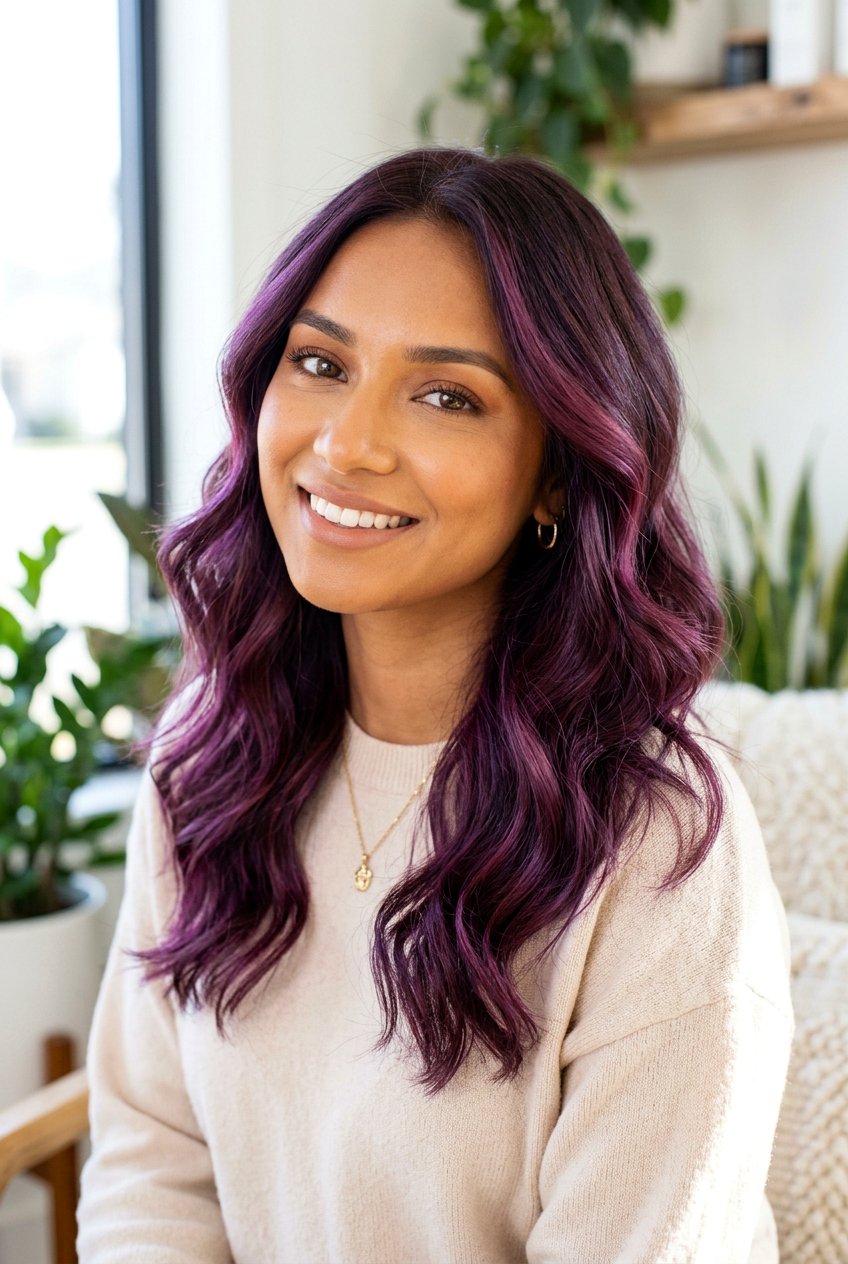
Violet balayage can absolutely flatter warm skin tones when the right undertones are chosen. Instead of icy lavender, warmer variations like plum, purple-red, or violet with a hint of magenta tend to harmonize better with golden or peachy complexions. These shades create a beautiful contrast without washing out the face. Ask your stylist to keep some warmth in your base—like chocolate brown or rich espresso—so the transition into violet feels cohesive. Strategically placed face-framing pieces in warmer violet tones can brighten your features while more neutral violets live throughout the rest of the hair. Maintain the richness with color-depositing conditioners formulated for red-violet tones and protect your hair from UV exposure, which can quickly fade these warmer pigments.
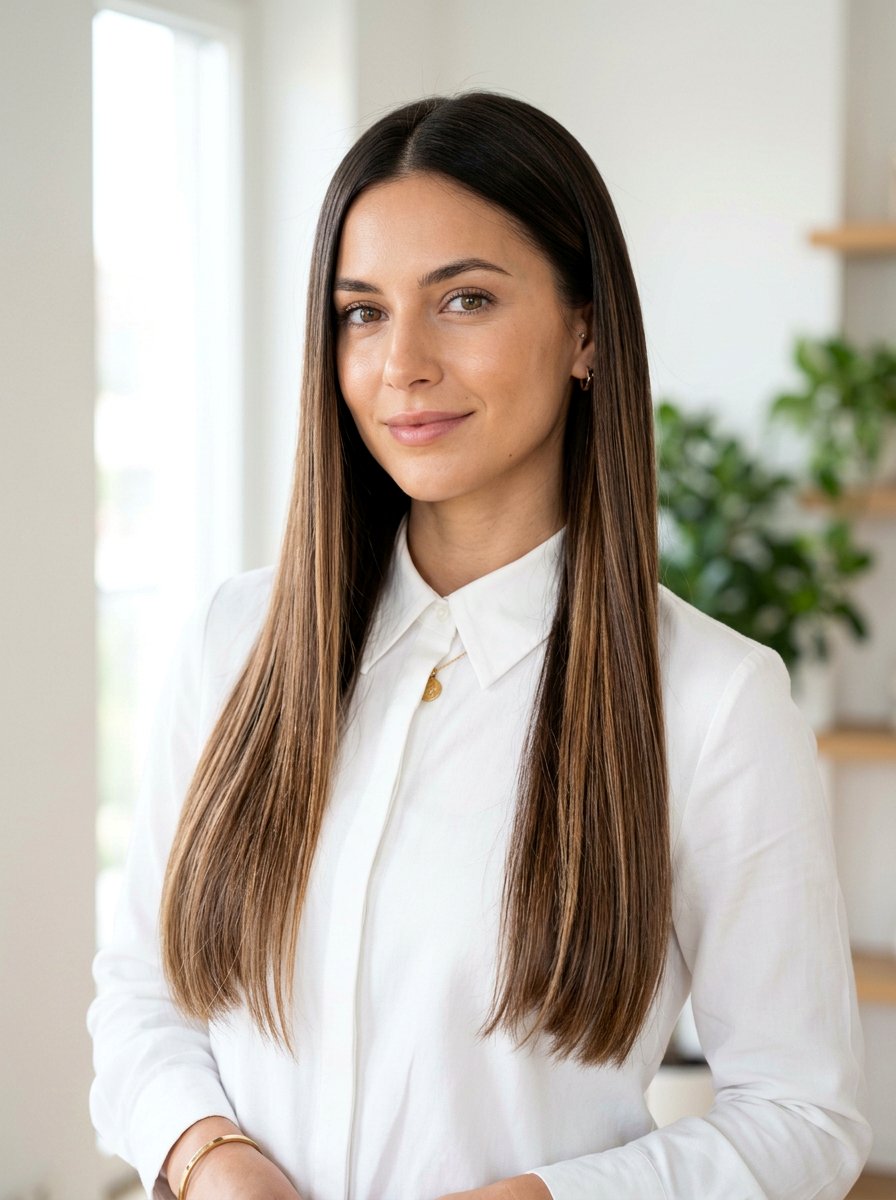
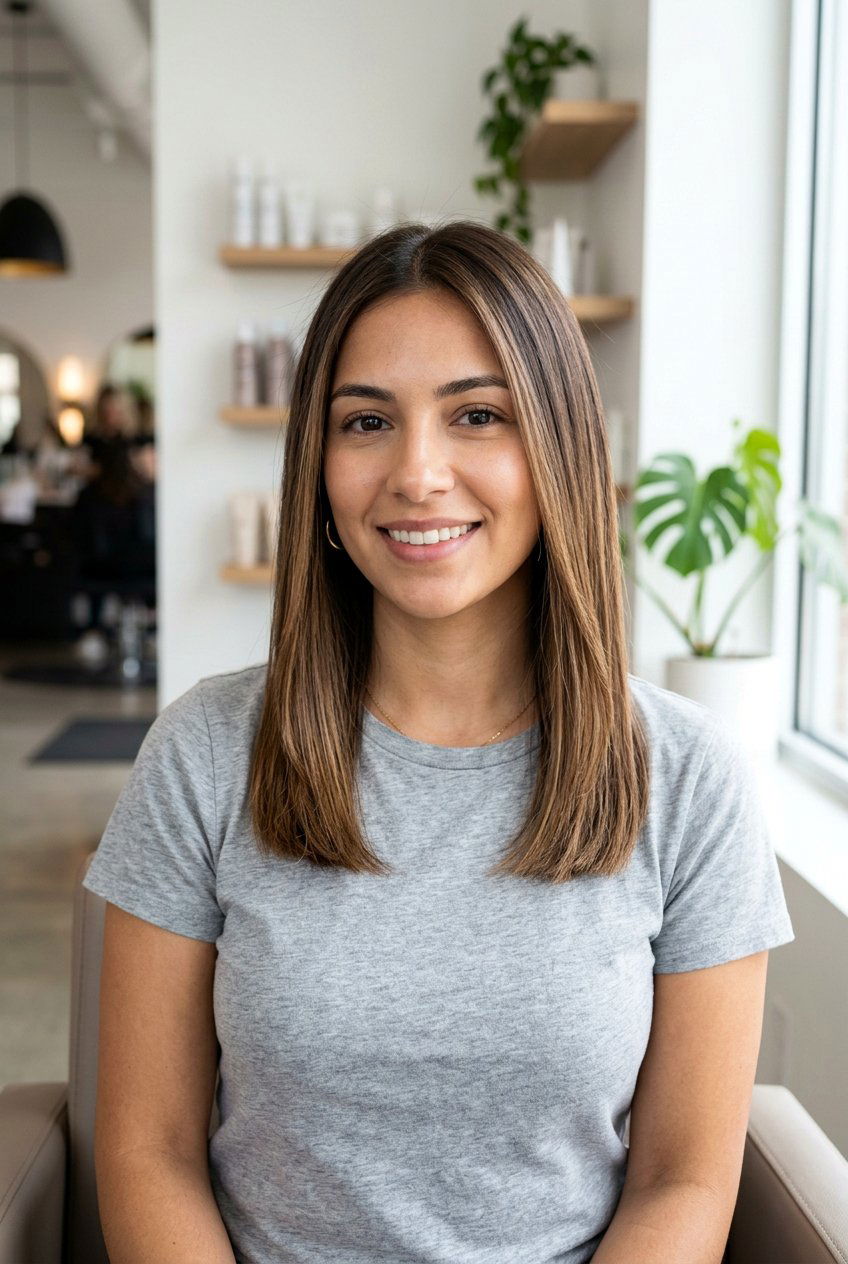
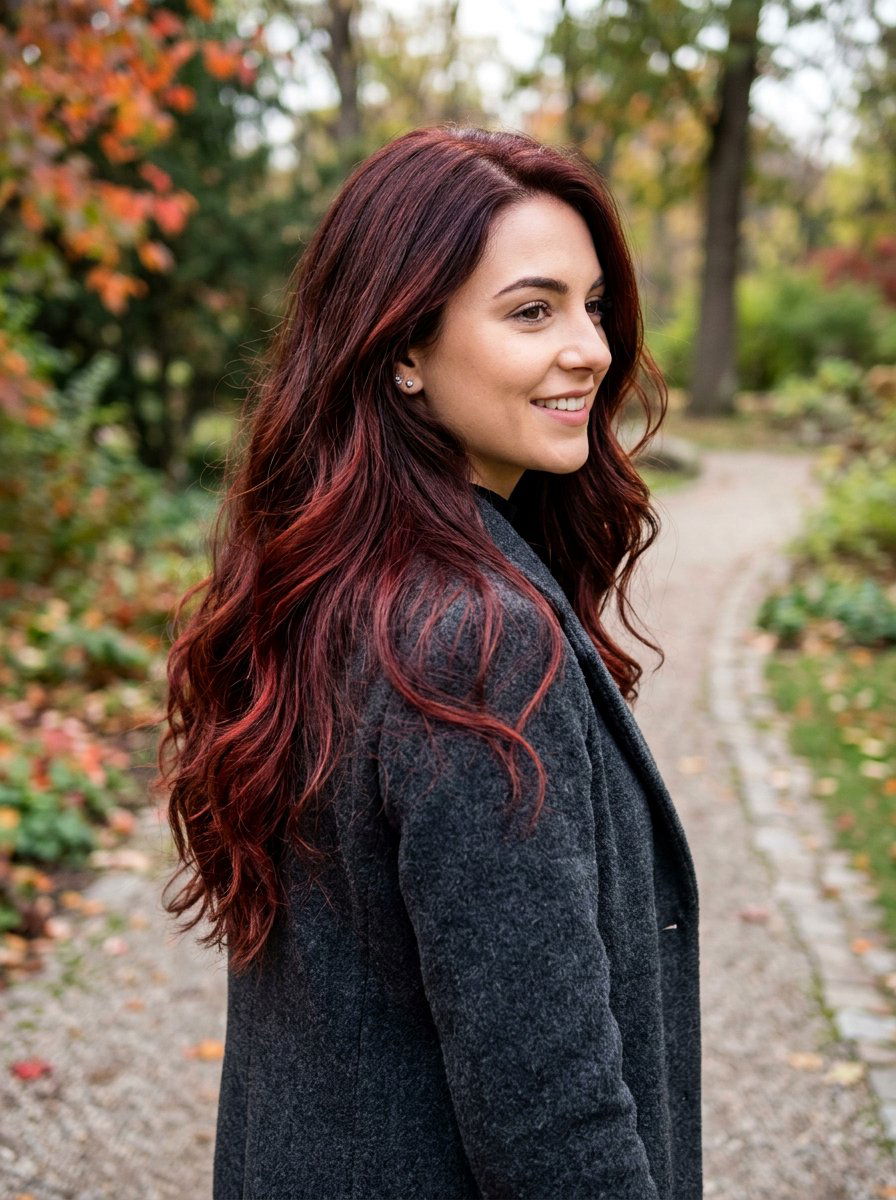
16. Violet Balayage On Cool Skin Tone
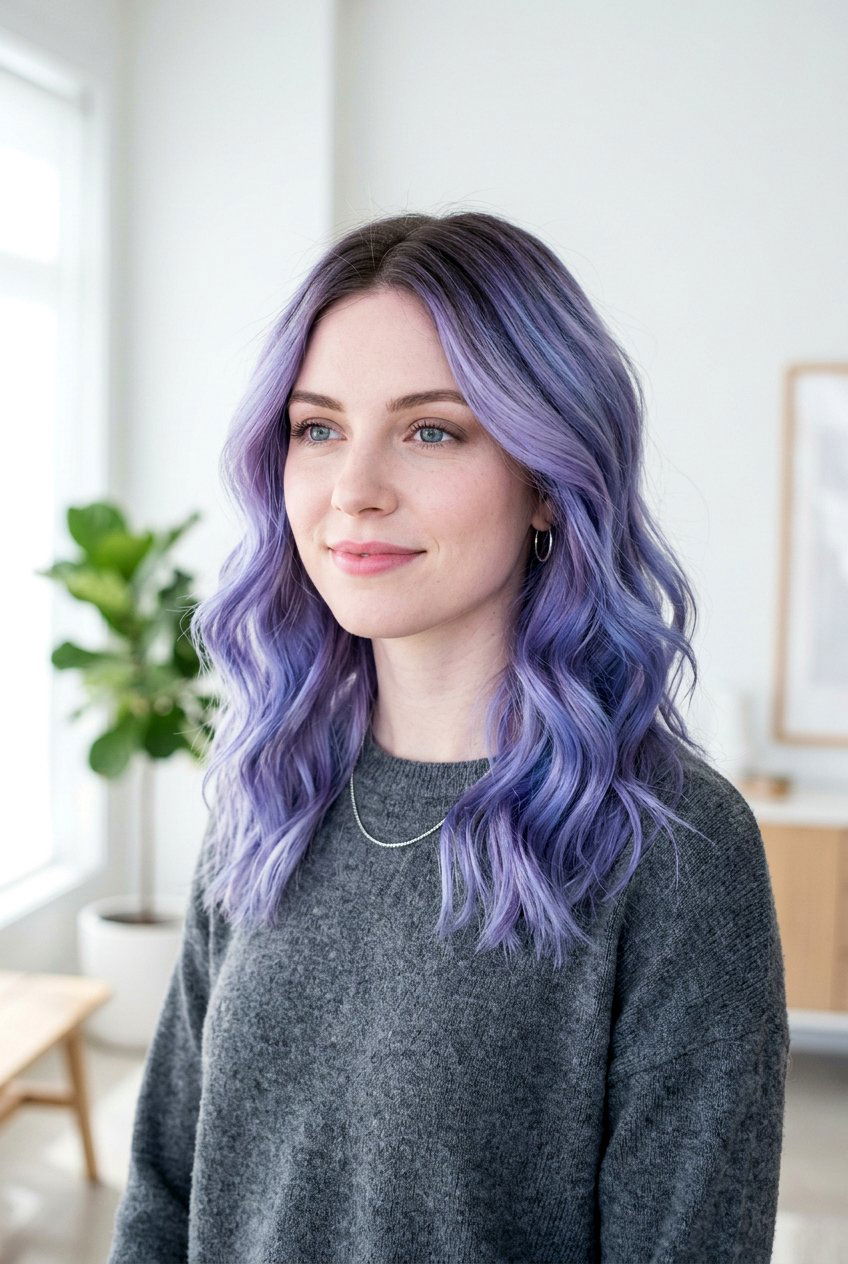
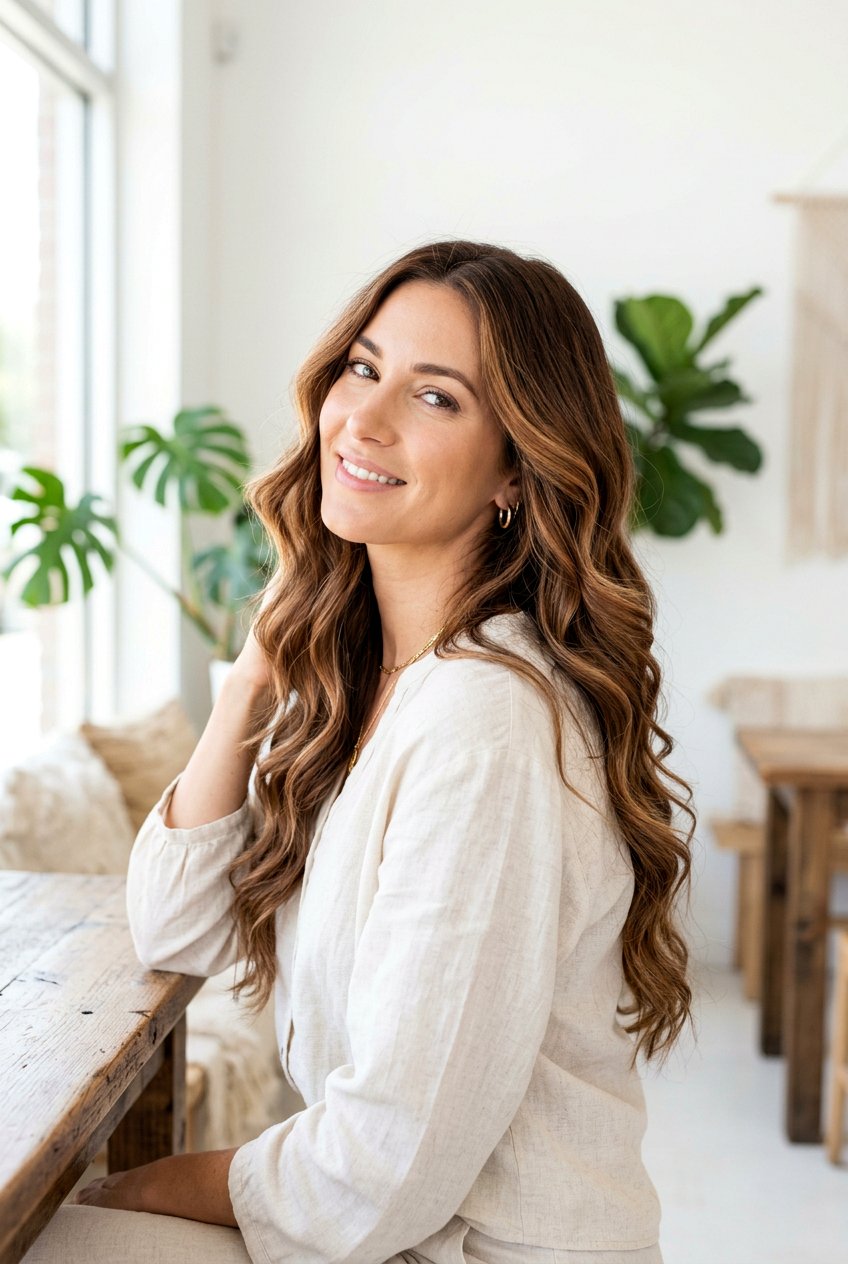
On cool skin tones, violet balayage looks most flattering when the shades lean smoky, icy, or blue-based rather than red-based. Think digital lavender, ash violet, and deep blue-violet hues that echo the naturally cool undertones in your complexion. A neutral or cool brown base pairs especially well, helping the brighter mid-lengths and ends stand out without clashing. Your stylist may tone the lightened sections with ash and violet mixtures to cancel warmth and achieve that crisp, cool finish. Maintenance usually involves purple shampoos and cool-toned masks to keep brassiness away and preserve the icy effect. Since cool shades can turn dull if the hair is dry, focus on hydrating masks, leave-in conditioners, and gentle styling practices that keep the cuticle smooth and reflective.
17. Violet Balayage With Rose Gold Tones
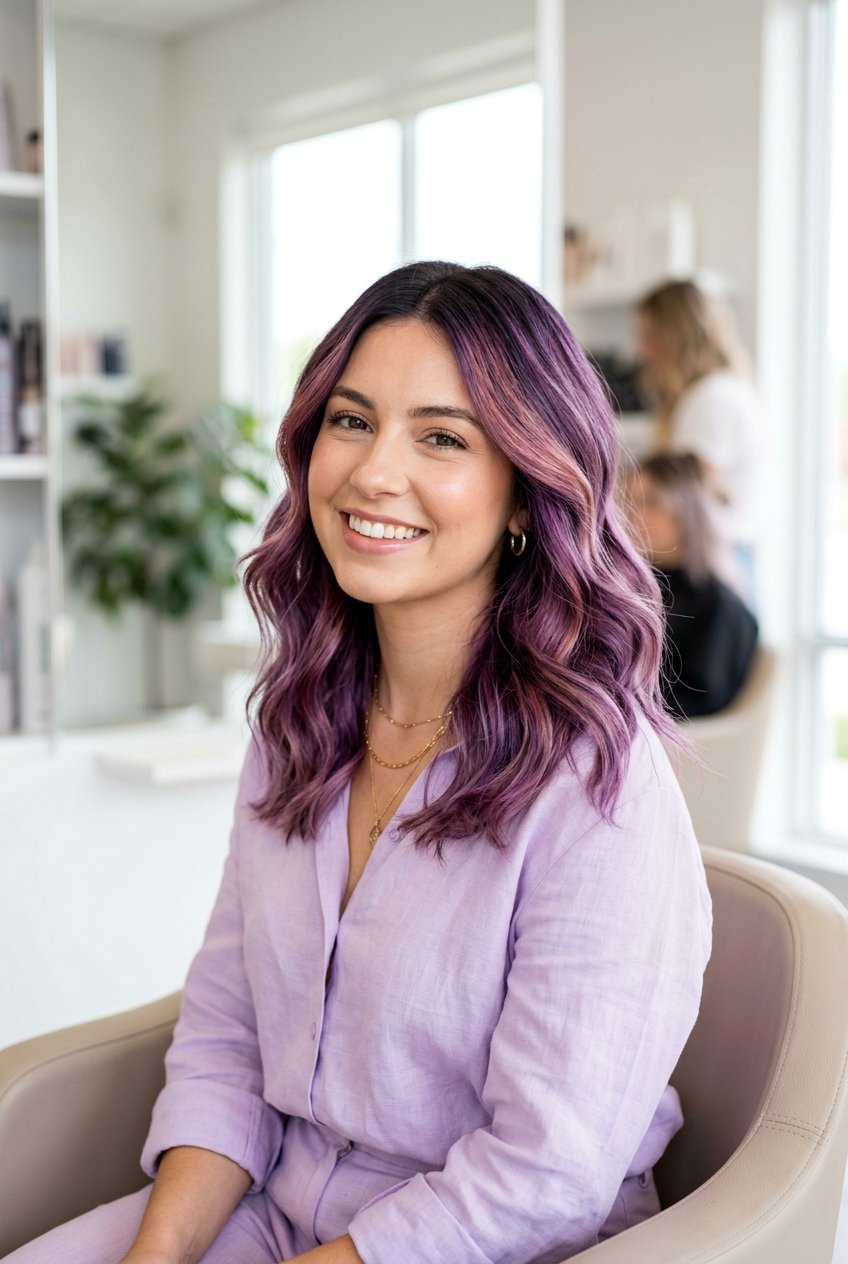
Combining violet balayage with rose gold tones creates a unique multi-dimensional look that blends cool and warm color families. Rose gold offers soft pink and peachy notes, while violet brings in a cooler purple edge, so together they feel modern and artistic. This combo often works best on a medium blonde or light brown base, where both shades can show clearly. Your stylist might place rose gold closer to the face and violet slightly lower or in the interior layers for a subtle peekaboo effect. Because there are several pigments involved, fading can be more noticeable, so regular glosses and color-refreshing treatments are helpful. Use very gentle, sulfate-free cleansers and occasionally alternate between pink-toning and purple-toning products to keep both aspects of the color looking balanced.
18. Violet Balayage With Silver Highlights
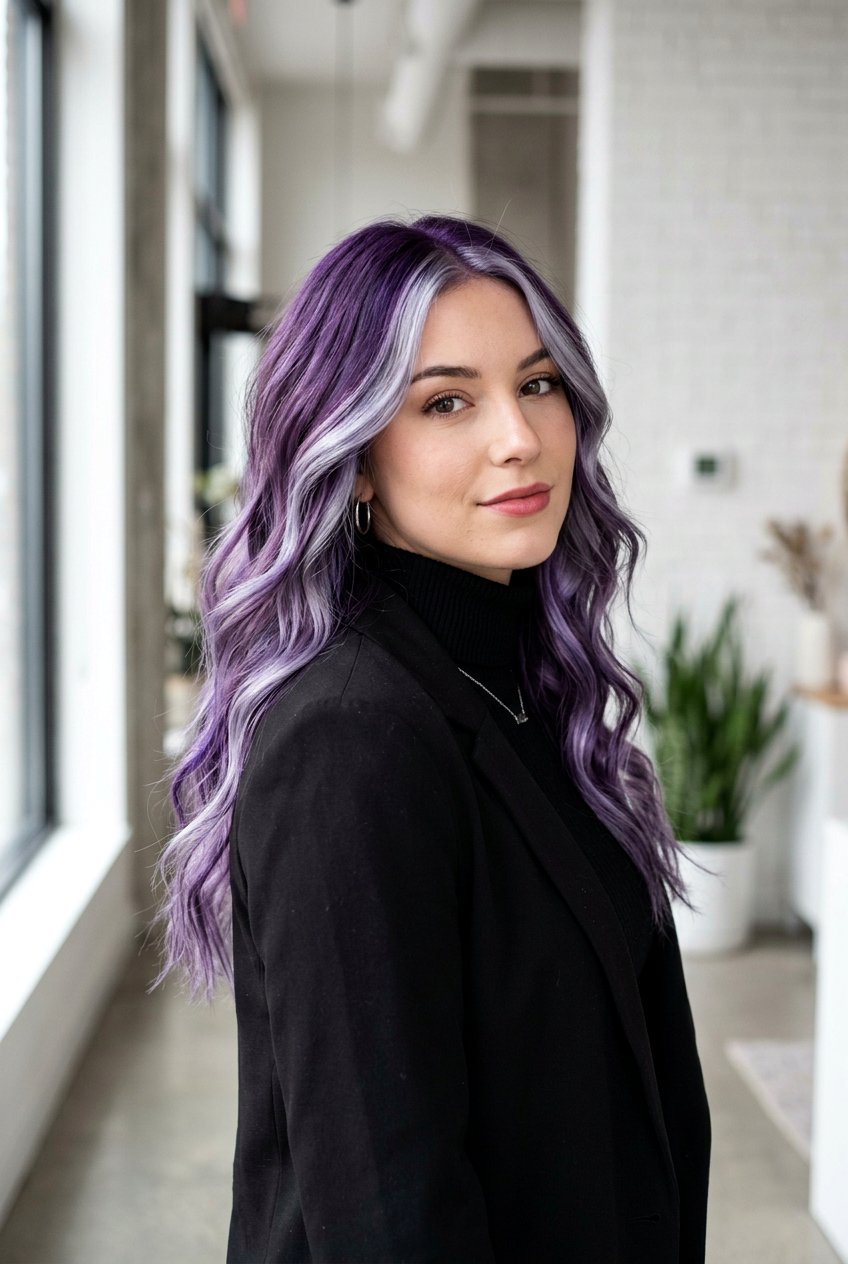
Violet balayage with silver highlights leans into a futuristic, high-contrast aesthetic that still feels wearable when balanced correctly. Achieving clean silver requires lifting hair to a very pale level and toning out almost all warmth, so this look is best for hair in good condition and clients committed to aftercare. The violet sections add depth and prevent the silver from looking flat or washed out. Strategically, many stylists paint silver pieces on the top layers and violet slightly underneath or vice versa for dimension. Because both silver and violet are prone to fading, maintenance includes frequent toning masks, low-heat styling, and strict UV and chlorine protection. Sleeping on silk or satin and minimizing friction helps preserve the delicate lightened ends that hold the brightest pigments.
19. Violet Balayage On Fine Hair
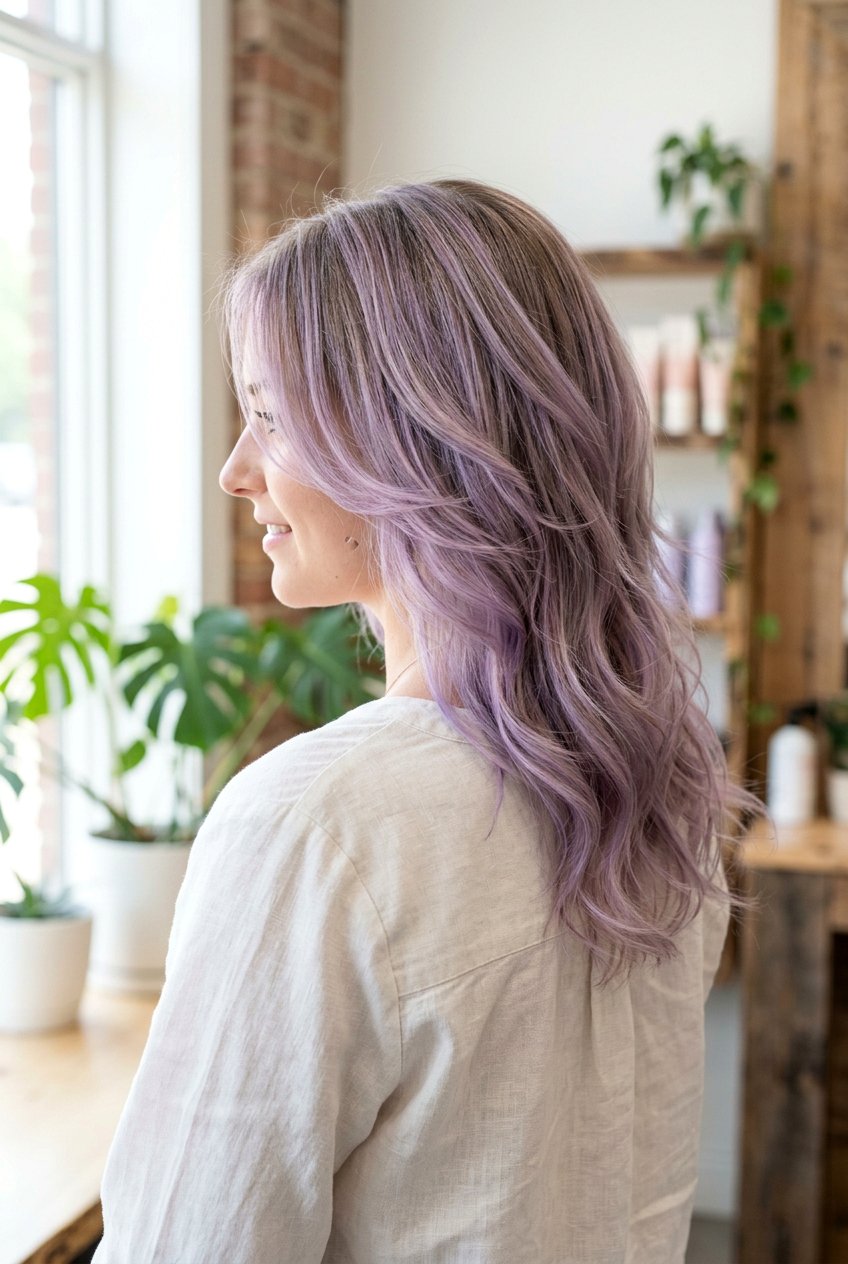
Fine hair can absolutely pull off violet balayage when the technique is tailored to add visual fullness rather than stripey contrast. Instead of thick, chunky sections, colorists usually opt for many small, blended ribbons that start a little lower from the root. This avoids obvious lines that could make fine hair appear even thinner. Placing slightly brighter violet on the outer layers and softer tones underneath creates the illusion of density. Lightweight volumizing products pair well with this color, as heavy creams can flatten both the shape and the dimension. Use gentle shampoos, focus conditioner mainly on mid-lengths and ends, and avoid daily hot-tool styling to keep your fine strands strong enough to hold onto the pigment.
20. Violet Balayage Maintenance Tips
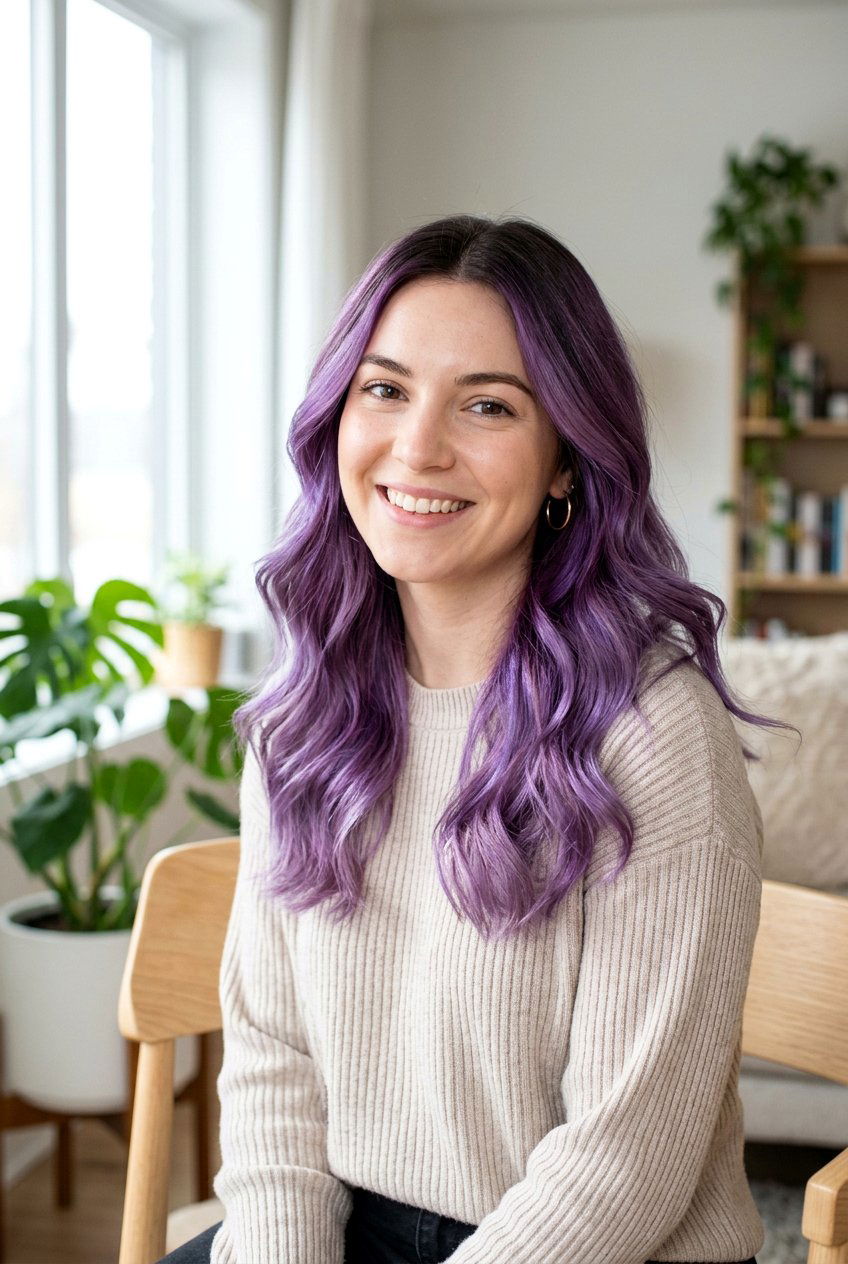
Keeping violet balayage looking fresh comes down to smart at-home care and realistic salon schedules. Wash your hair two to three times a week with sulfate-free shampoo and conditioner formulated for color-treated hair to slow fading. Rinse with cool or lukewarm water instead of hot, which can open the cuticle and let pigment escape faster. Add a weekly deep-conditioning mask and, if needed, a purple or violet-toning product to combat brassiness and revive vibrancy. Always apply heat protectant before using blow-dryers, curling irons, or flat irons and keep temperatures moderate. Limit sun exposure, chlorine, and saltwater by using UV-protective sprays and rinsing hair before and after swimming. Plan salon touch-ups or gloss appointments roughly every eight to twelve weeks to maintain shine and refine your tone as it softens over time.
Conclusion:
Violet balayage hair color offers a versatile way to explore purple tones while still enjoying soft grow-out and customizable placement. Whether your hair is dark, light, curly, straight, fine, or thick, there is a violet variation that can be tailored to your base shade, skin tone, and lifestyle. The balayage technique keeps the look modern and dimensional rather than flat or streaky, which is a big reason it continues to trend into 2025 and beyond. Because violet and fashion colors can fade faster than natural shades, thoughtful maintenance—like sulfate-free products, toning treatments, and protective styling—makes a big difference in how long your color stays beautiful. Partnering with an experienced colorist and following a consistent at-home care routine helps you enjoy vibrant, glossy violet balayage while keeping your hair healthy and strong.
You'll Like These Styles:


Leave a Reply