
Vintage aesthetics are making a massive comeback in the modern beauty world. Many women are looking back at the glamorous decades of the 1920s through the 1960s for timeless inspiration. Whether you want the sleek sophistication of the jazz age or the playful volume of the mid-century, retro looks offer a unique personality that modern trends sometimes lack. These classic choices provide a sense of elegance and structure that can elevate any outfit or occasion. Learning how to master these techniques allows you to channel iconic stars and historical charm effortlessly. From intricate rolls to soft, romantic waves, these looks are surprisingly versatile and can be adapted for contemporary life quite easily.
1. Finger Waves
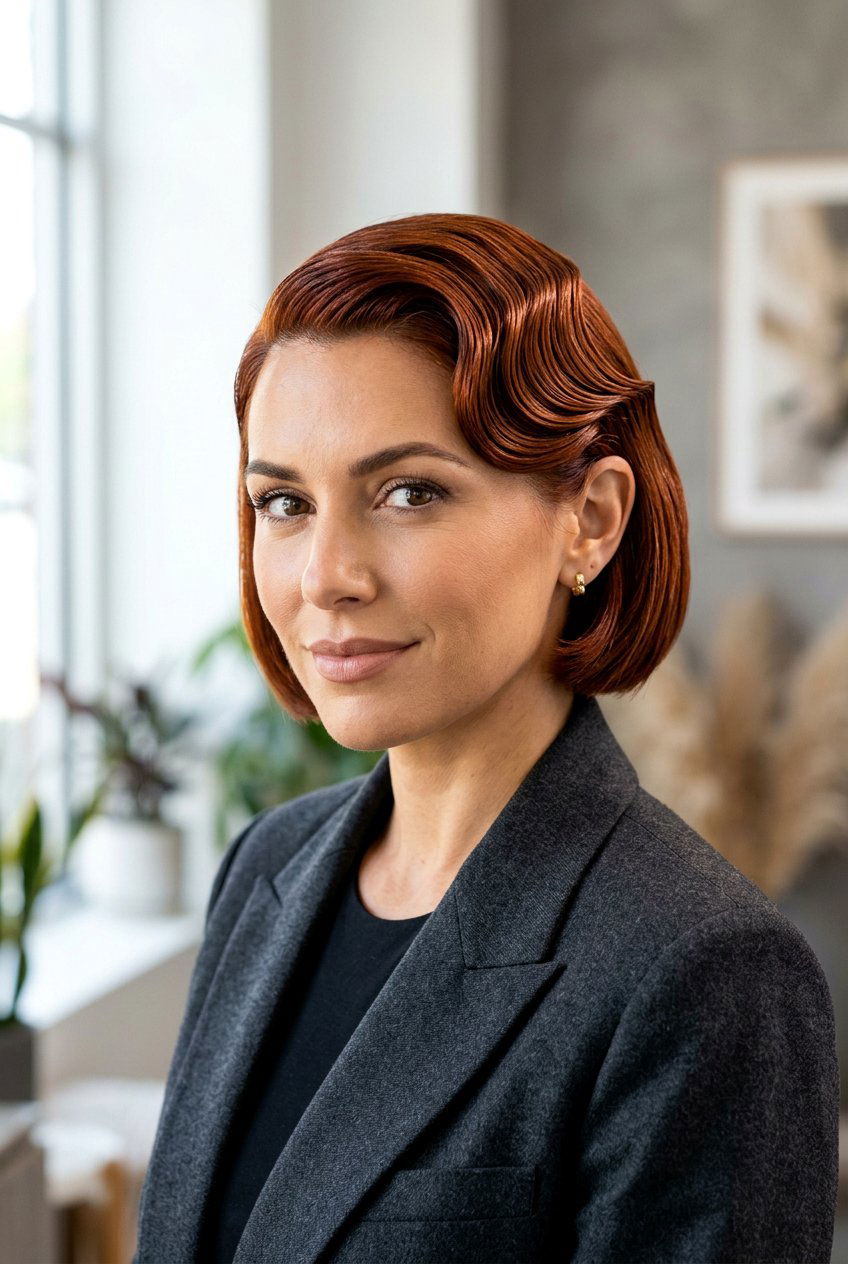
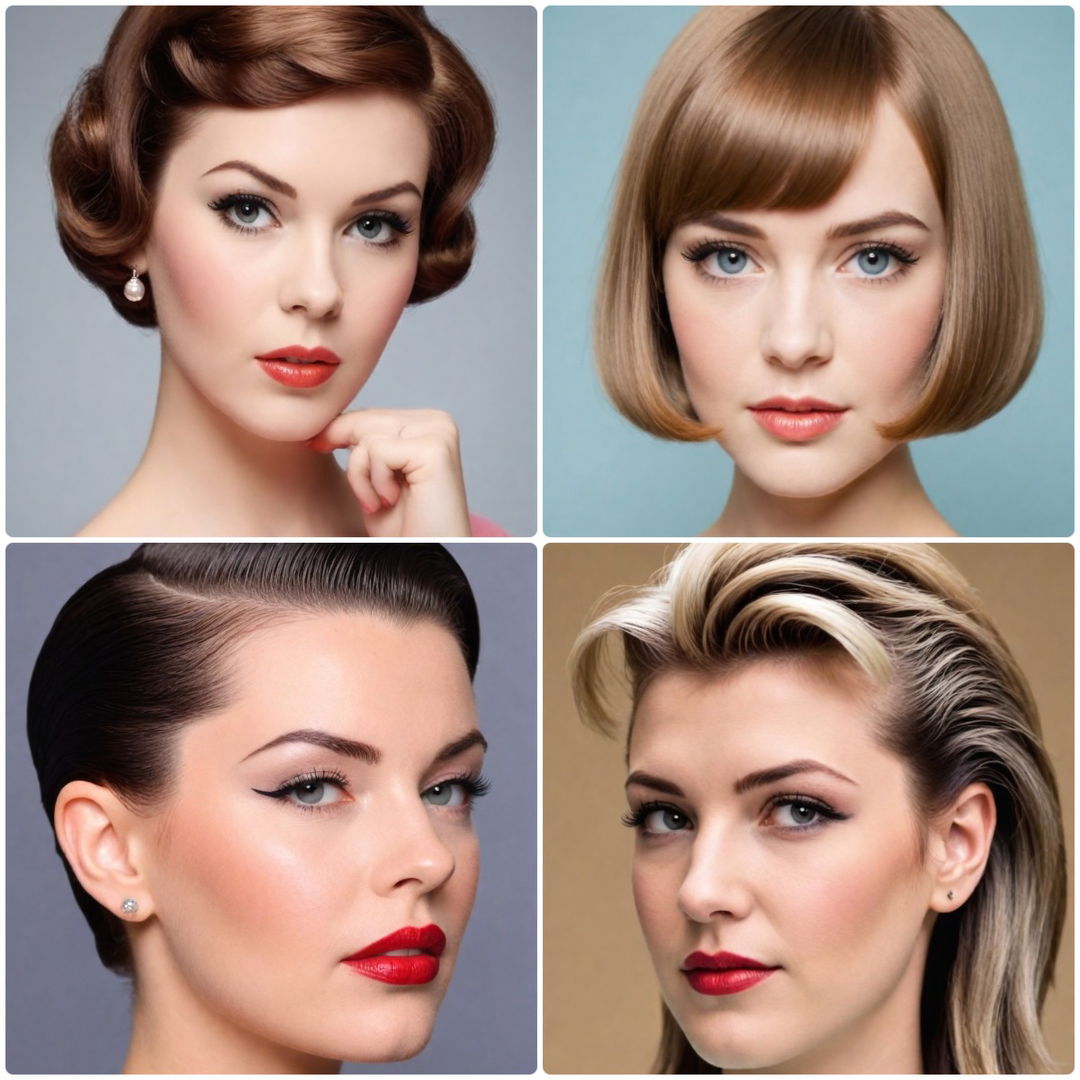
Have you ever wondered how to achieve that perfectly sculpted, S-shaped texture seen in old Hollywood films? Finger waves were the height of fashion during the 1920s and 1930s. This look requires a heavy amount of hair gel and a fine-tooth comb to create those distinct ridges against the scalp. While it takes some practice to master the “pinch and push” method, the result is an incredibly sleek and sophisticated aesthetic. It works exceptionally well on short hair or even as a decorative accent for longer updos. Modern versions often use a more relaxed approach, but the classic, damp-set version remains a staple for gala events and red carpets. It truly defines the elegance of the Art Deco era.
2. Victory Rolls
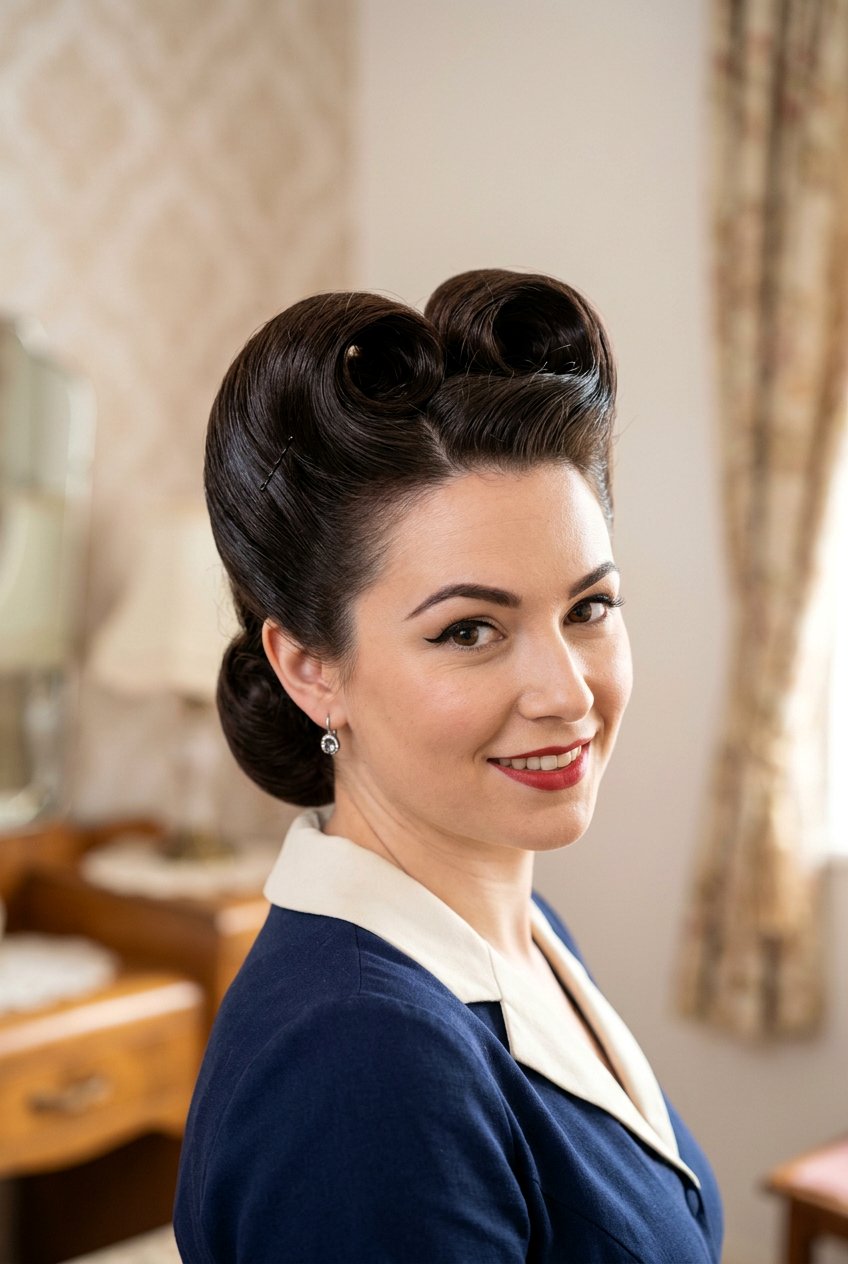
Are you looking for a bold way to frame your face while embracing 1940s fashion? Victory rolls are perhaps the most iconic element of the wartime era. These large, sculpted loops sit on the top or sides of the head and signify strength and glamour. To create them, you typically section off the front portions of your hair and backcomb them for volume. Then, you wrap the hair around your hand and pin it into a hollow, circular shape. This look is perfect for pairing with a bright red lip and a structured dress. It creates a stunning silhouette that works for various hair lengths. Using a high-hold hairspray is essential to keep the rolls crisp and secure.
3. Gibson Tuck
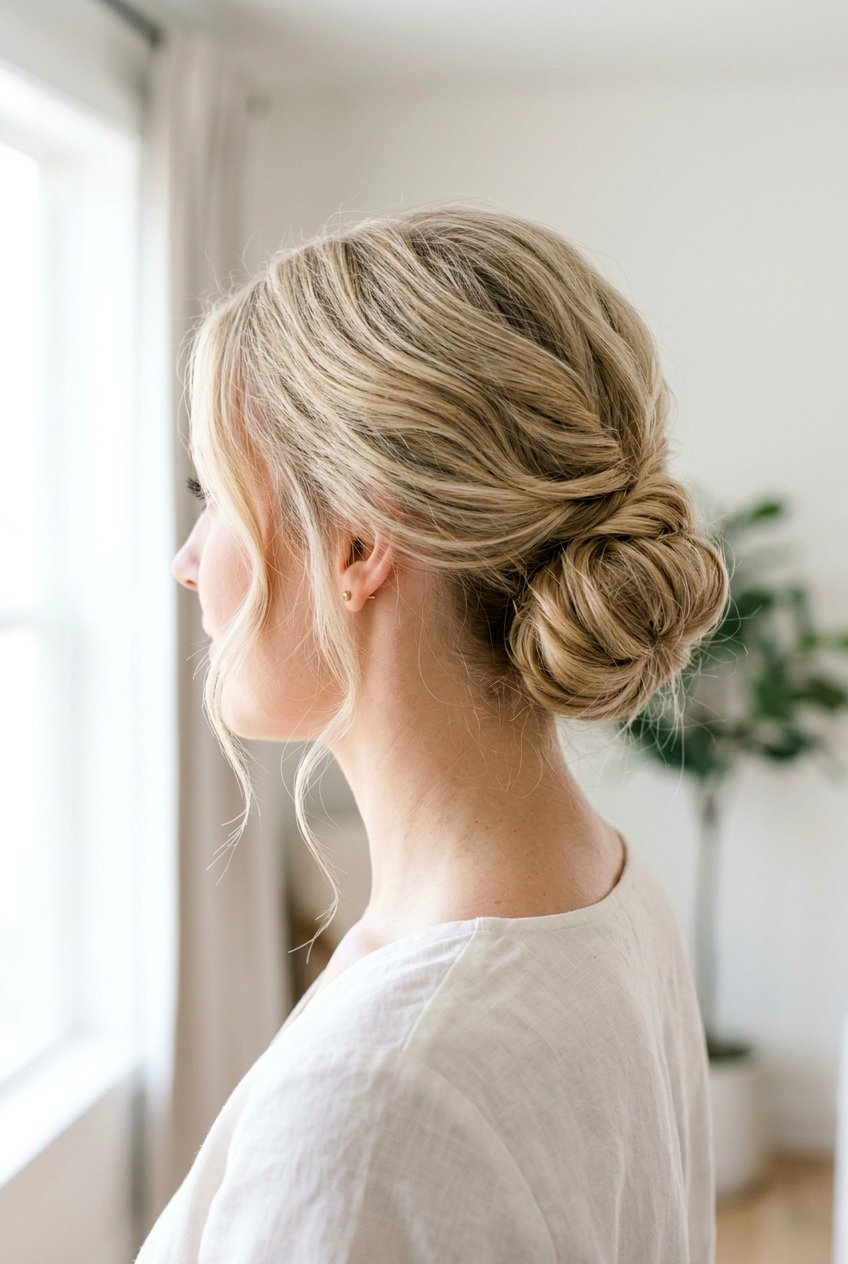
What if you could create a sophisticated updo in just a few minutes without using complicated tools? The Gibson tuck is a Victorian-inspired look that regained popularity in the early 20th century. It involves rolling the hair into a low, horizontal pouch at the nape of the neck. You can use a hair donut or simply tuck the hair into a ponytail loop for a softer appearance. This style is incredibly practical because it keeps hair out of the way while looking polished. It is often decorated with small flowers or jeweled pins for more formal events. The beauty of the tuck lies in its simplicity and the soft, feminine halo it creates. It remains a favorite for vintage-themed parties.
4. Pin Curls
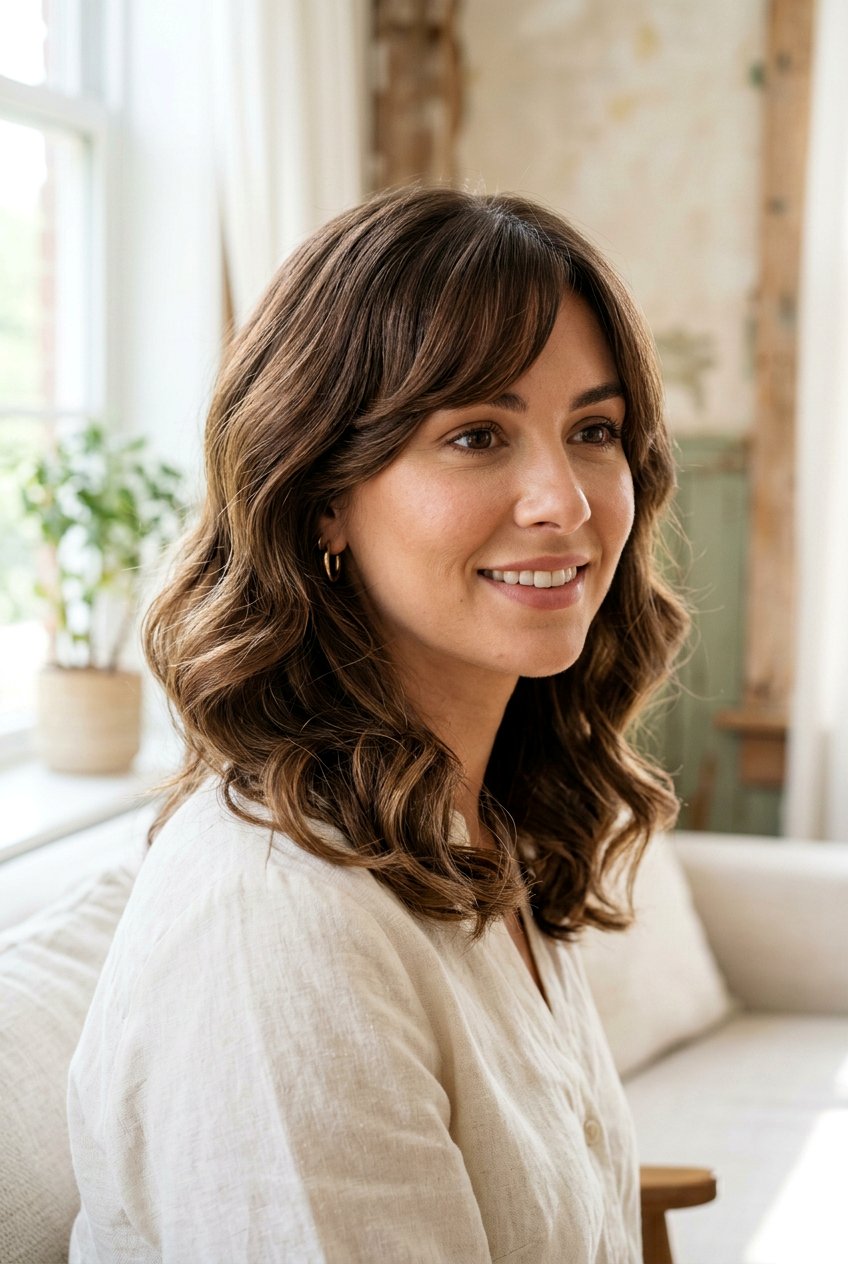
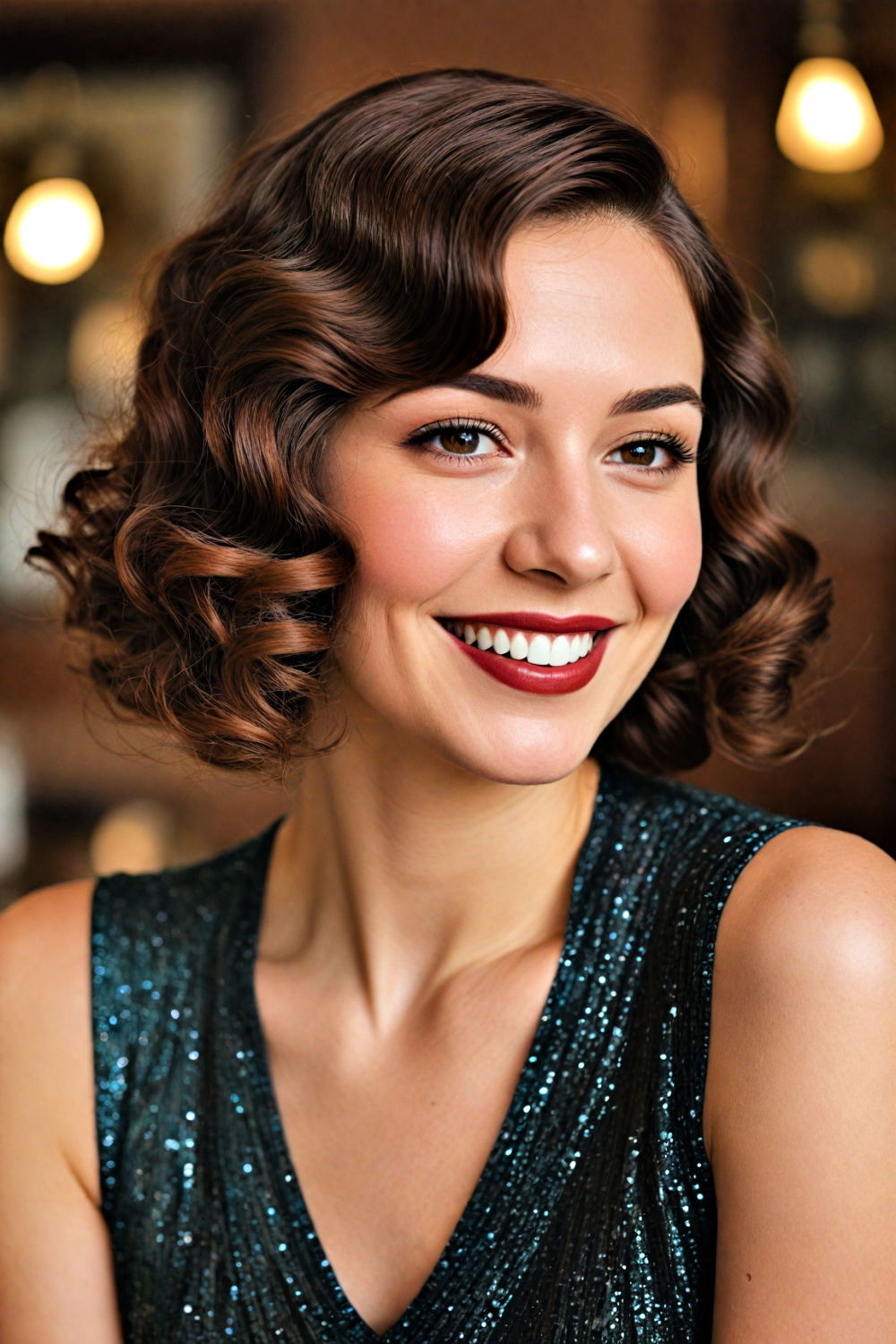
Can you imagine waking up with perfectly formed, bouncy curls every single morning without using any heat? Pin curls are the foundation of almost every classic mid-century look you see in vintage photographs. This technique involves taking damp sections of hair, winding them into small circles, and securing them flat against the scalp with bobby pins. Once the hair is completely dry, you brush it out to reveal smooth, uniform waves. It takes a bit of patience to set the entire head, but the durability of the curls is unmatched by modern curling irons. This method is much gentler on your strands since it avoids high temperatures. It offers a soft, romantic texture that defines the classic 1950s aesthetic.
5. Beehive
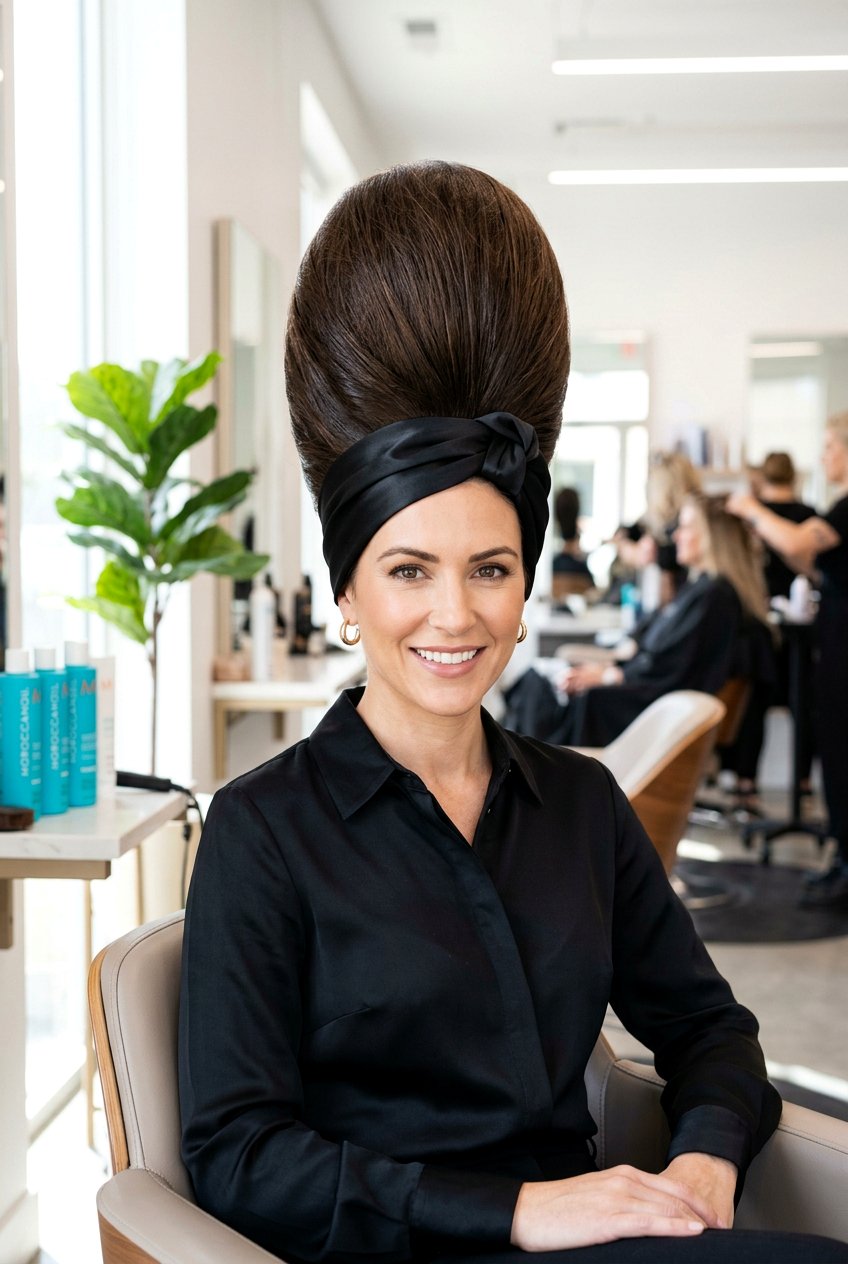
Do you love the idea of sky-high volume and a dramatic silhouette that commands attention? The beehive became a massive sensation in the 1960s, characterized by its conical shape and significant height. Achieving this look requires a lot of backcombing or teasing to create a sturdy base for the hair to sit on. The outer layer is then smoothed over the top to hide the messy texture underneath. It is often paired with a sleek headband or a decorative ribbon to finish the look. While it might seem intimidating, the beehive is surprisingly sturdy and can last for several days with the right amount of hairspray. It remains a symbol of retro rebellion and bold, high-fashion styling today.
6. Marilyn Monroe Hair
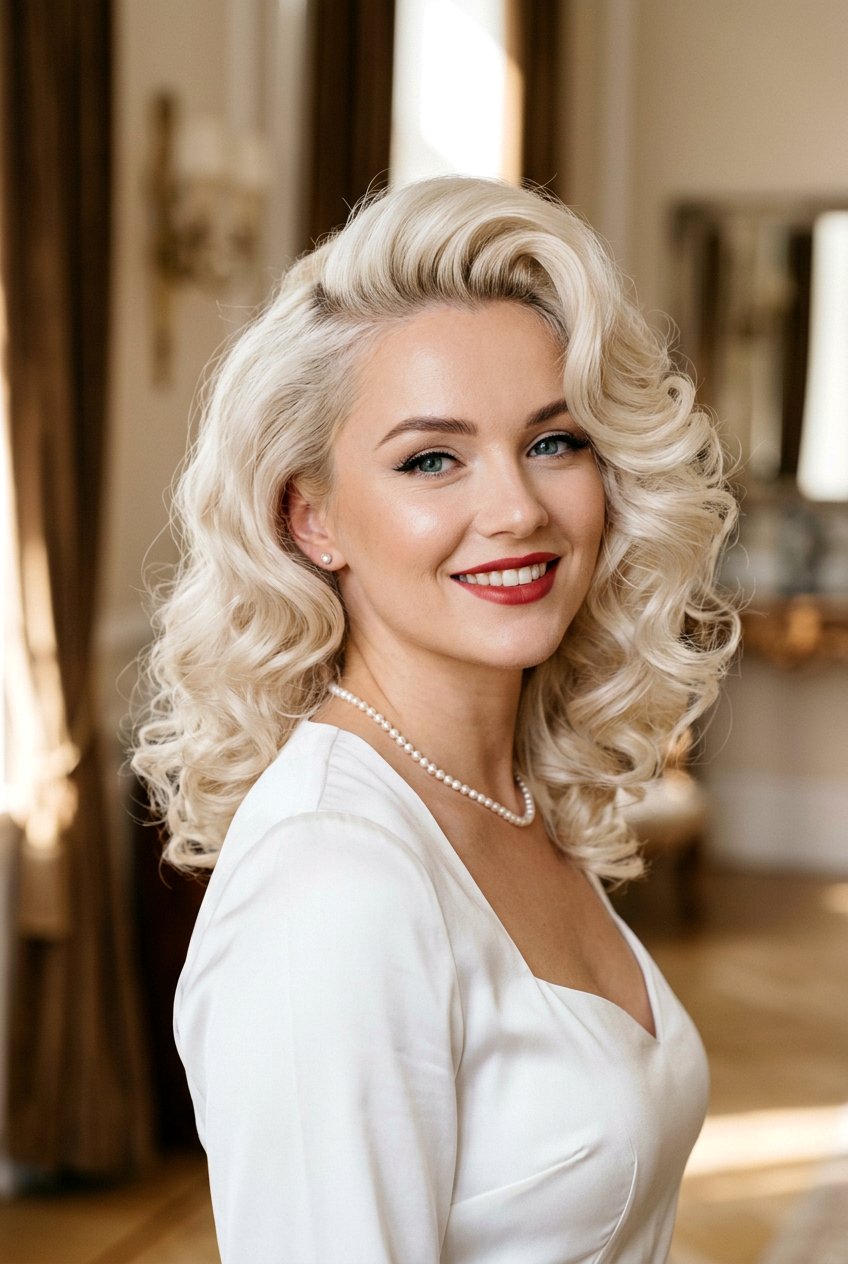
Who hasn’t been inspired by the soft, platinum blonde curls of the world’s most famous blonde bombshell? Marilyn Monroe’s signature hair is the epitome of 1950s glamour and sex appeal. This look usually features a chin-length bob with voluminous, sculpted curls that frame the face softly. To get this effect, you should use large rollers on damp hair to create maximum lift at the roots. The curls are then brushed out gently to create a fluffy, airy texture rather than stiff coils. A deep side part adds to the dramatic, alluring feel of the hairstyle. It is a timeless choice for anyone wanting to channel a classic, feminine energy. Maintaining the bright color and texture is key.
7. Pageboy Haircut
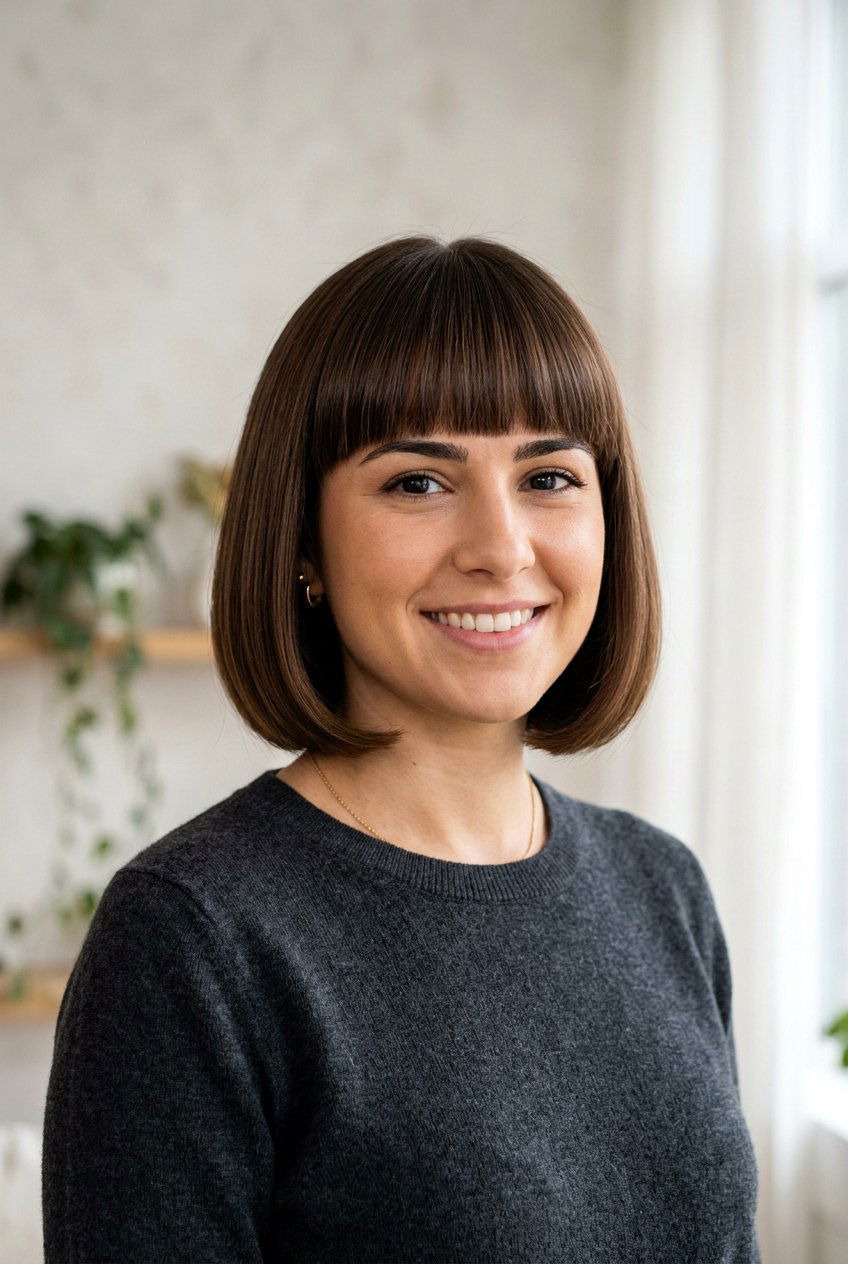
Are you looking for a short, manageable haircut that offers a clean and symmetrical appearance? The pageboy was a staple of the late 1950s and early 1960s, known for its smooth, rounded edges. The hair is typically cut to the jawline and the ends are curled inward toward the face. This creates a very polished, helmet-like shape that looks incredibly chic with bangs. It was a favorite among working women because it was relatively easy to maintain while still appearing professional. You can achieve this look using a round brush and a blow dryer to ensure the ends flip perfectly. The pageboy represents a shift toward more modern, geometric shapes in hair history. It remains a great choice for straight hair.
8. Hollywood Waves
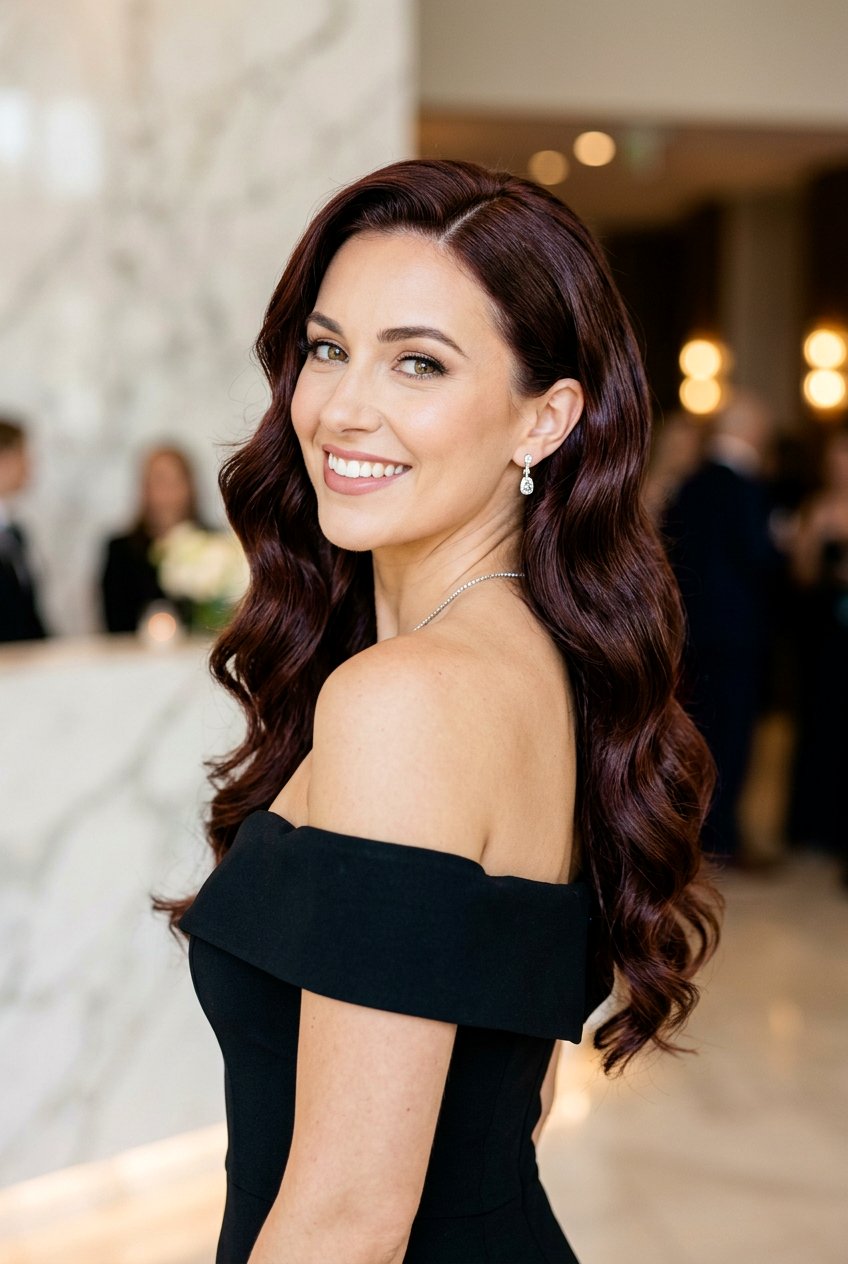
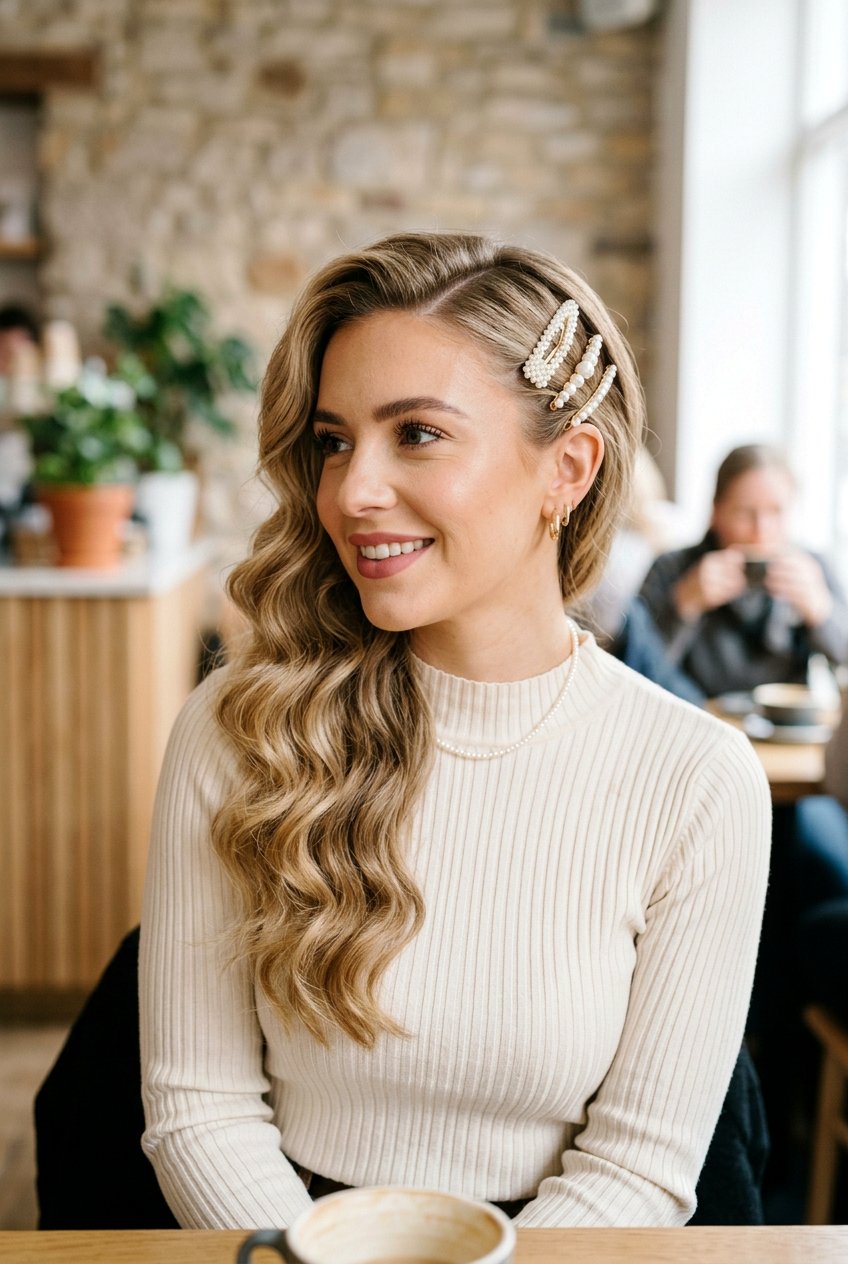
Have you ever seen a celebrity on the red carpet and wondered how they get such glossy, uniform waves? Hollywood waves are a refined version of classic vintage techniques, focusing on a deep side part and continuous, flowing ridges. Unlike messy beach waves, these are meticulously brushed out to create one cohesive, liquid-like wave pattern. You usually start by curling the hair in the same direction around the entire head. After the curls have cooled, a boar bristle brush is used to join the curls together into a smooth curtain of hair. This look exudes luxury and sophistication, making it the top choice for weddings. It works best on long hair to show off the dramatic, flowing movement.
9. Bumper Bangs
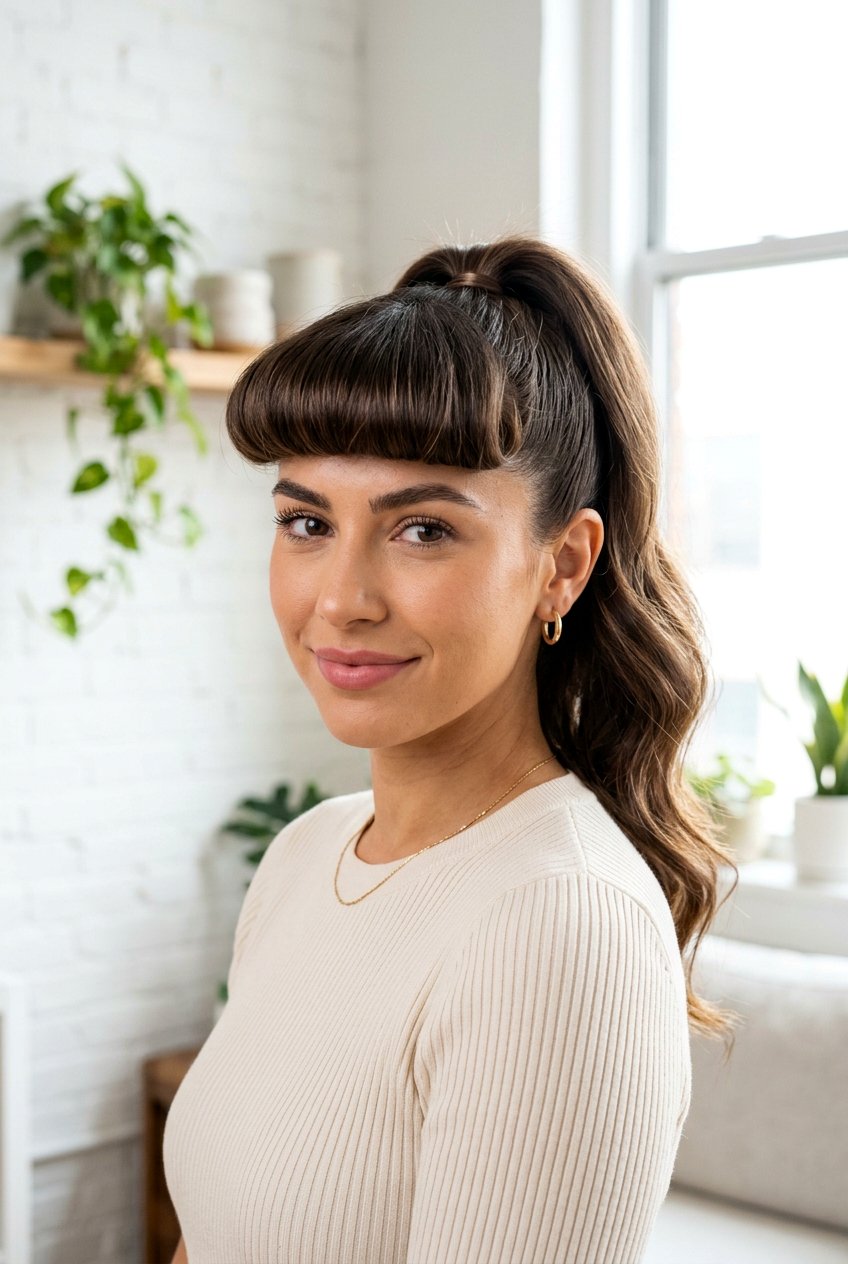
Would you like to experiment with bangs without actually cutting your hair into a permanent fringe? Bumper bangs offer a fun, retro solution that involves rolling a section of hair into a large, horizontal tube across the forehead. This look was popularized by pin-up models and remains a staple of the rockabilly subculture today. You can use a foam hair roller or even a small hair donut to provide the structure for the roll. Once the hair is wrapped around the tool, you secure it with pins hidden underneath. It creates a bold, graphic look that highlights your eyes perfectly. Bumper bangs are often paired with a high ponytail or victory rolls for a complete vintage transformation.
10. Pixie Cut

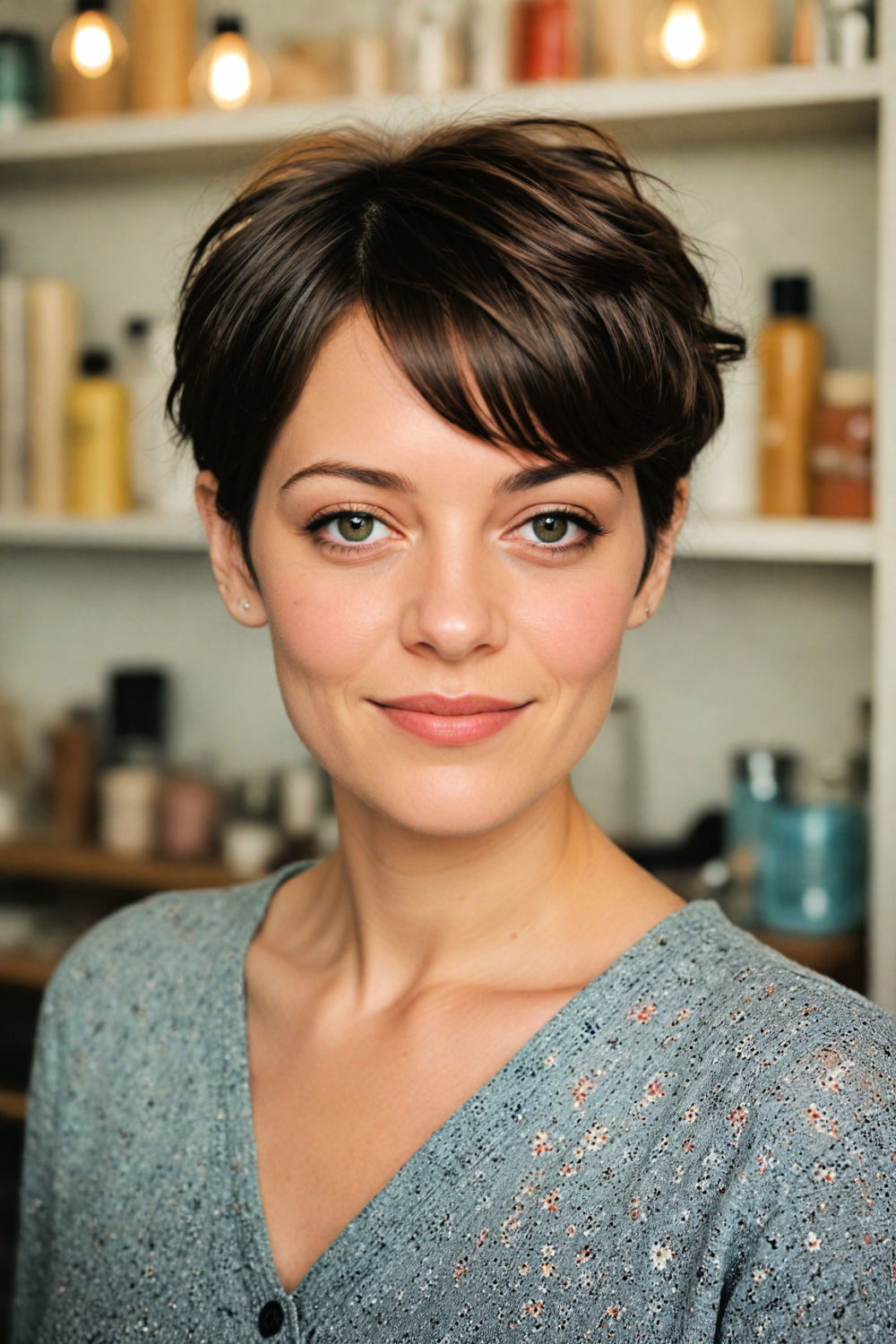
Did you know that the pixie cut actually has deep roots in the vintage fashion world of the 1950s and 1960s? While many think of it as a modern trend, stars like Audrey Hepburn and Twiggy made this short look legendary. It is characterized by very short hair on the back and sides with slightly longer layers on top. This cut is perfect for highlighting delicate facial features and high cheekbones. It represents a sense of freedom and gamine charm that broke away from traditional long hairstyles of the past. To style a vintage pixie, you might use a bit of pomade to create a wispy, textured finish. It is a low-maintenance choice that still packs style.
11. Bouffant
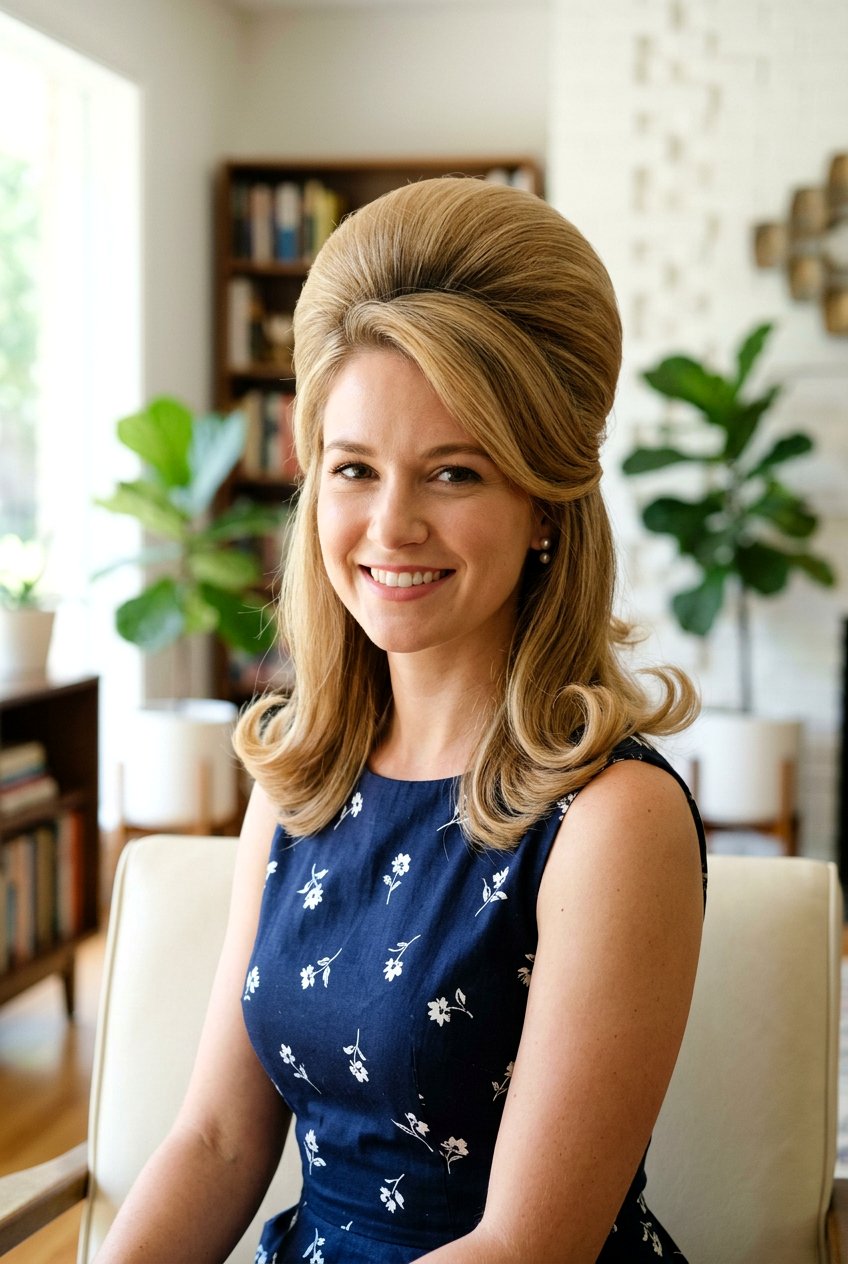
Have you ever wanted hair that looks like a soft, pillowy cloud perched perfectly on your head? The bouffant is a high-volume hairstyle that was incredibly popular throughout the 1960s. It involves lifting the hair off the scalp and creating a rounded, puffy shape that sits high on the crown. Unlike the beehive, which is more pointed, the bouffant is generally softer and can be worn with the rest of the hair down or in a flip. Teasing the roots is essential to provide the necessary support for this airy silhouette. It was often worn by icons like Jackie Kennedy, representing a very refined aesthetic. Using a smoothing brush ensures the surface looks perfectly polished and elegant for any outing.
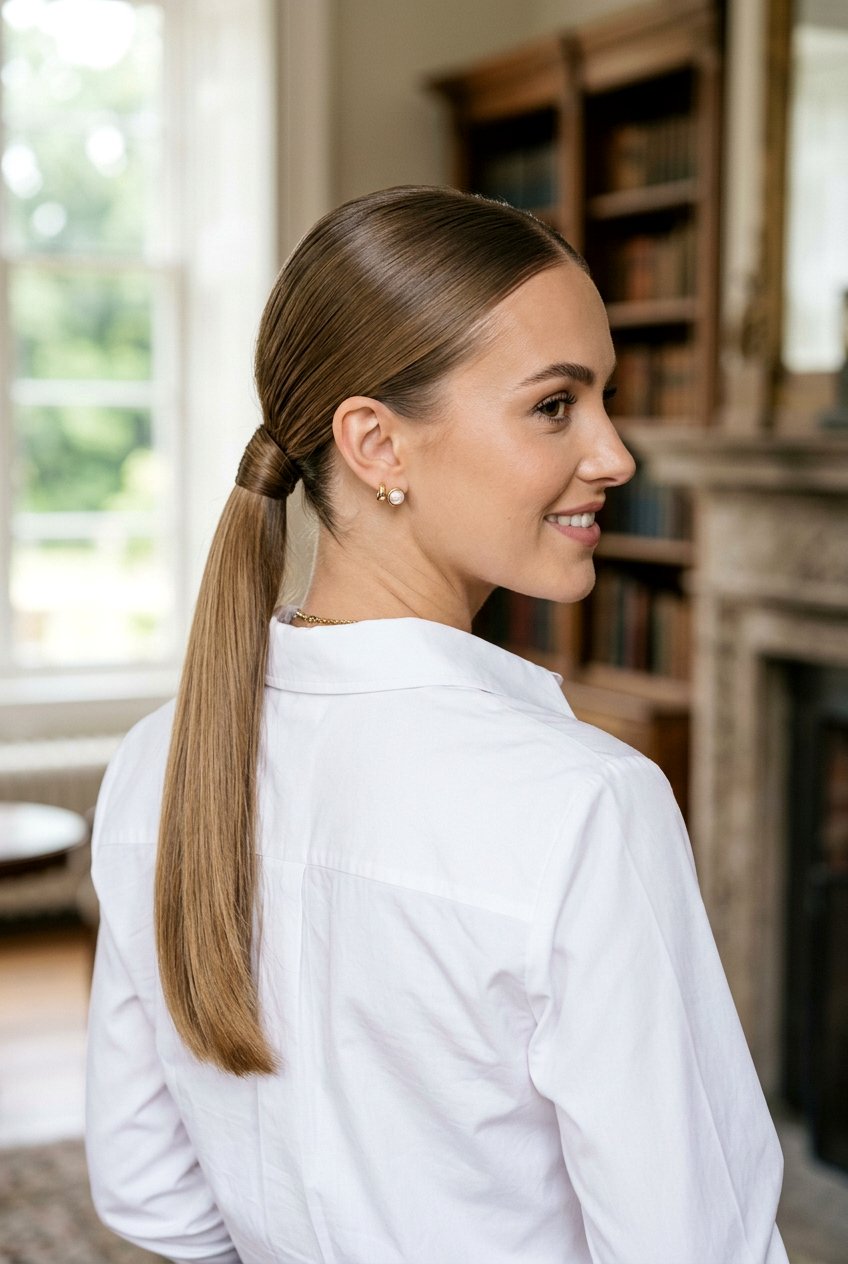
12. Poodle Cut
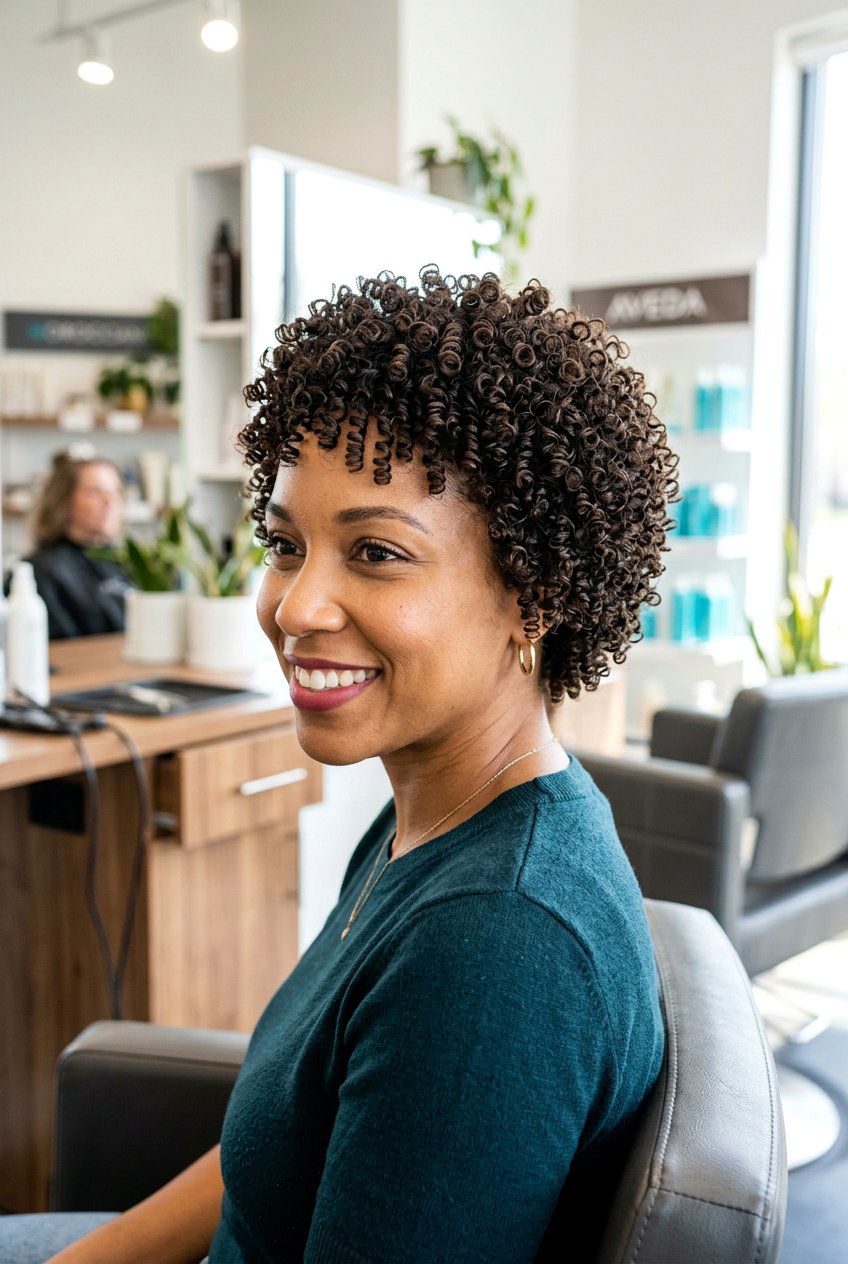
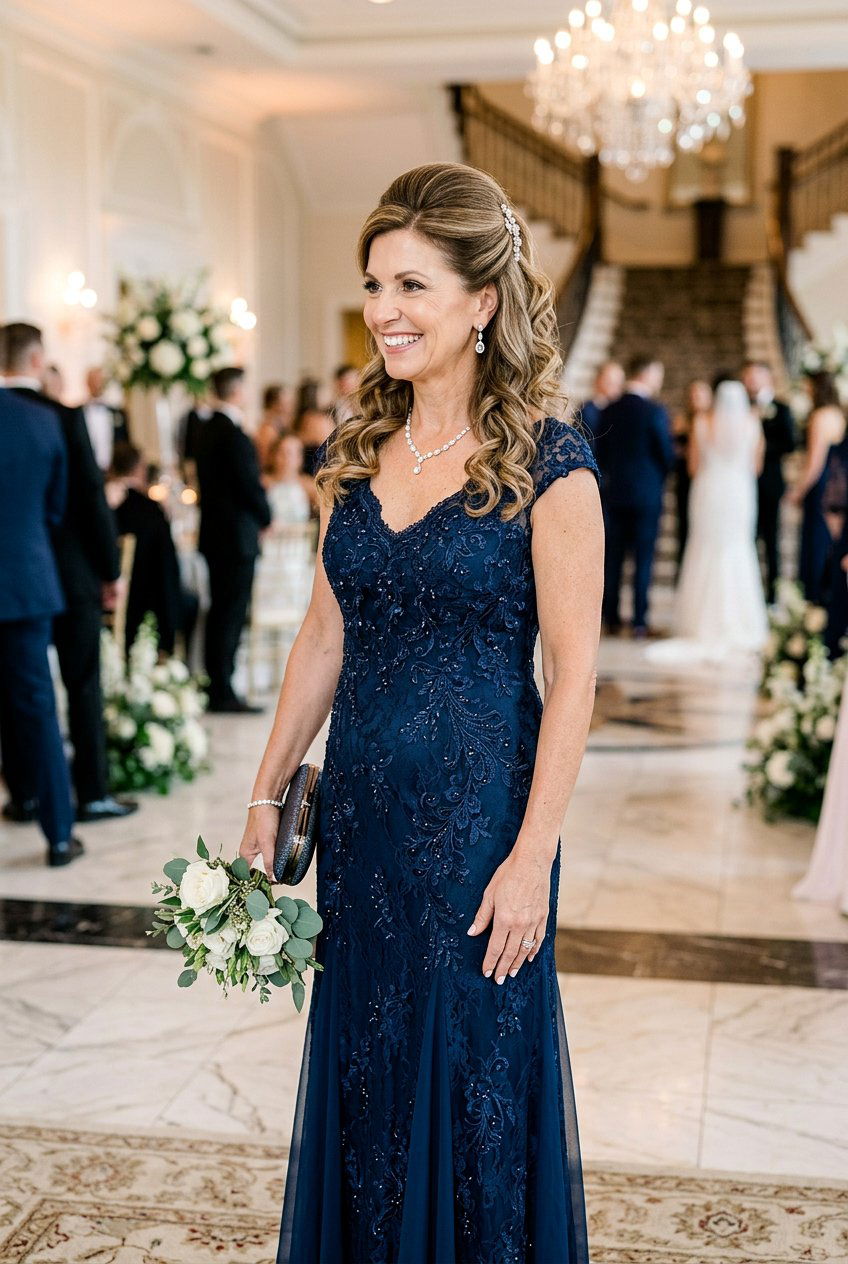
Are you a fan of tight, bouncy curls that create a halo of texture around your head? The poodle cut was a trendy choice in the early 1950s, especially for women with naturally curly or permed hair. This style features short, uniform curls that are concentrated on the top and sides, mimicking the appearance of a poodle’s groomed coat. It was often worn quite short, making it a practical yet stylish option for the modern woman of the era. To achieve this today, you can use small rollers or a narrow curling wand to create defined ringlets. Lucile Ball was a famous proponent of this look, showing how it can be both playful and sophisticated. It is a fantastic choice.
13. Flapper Bob
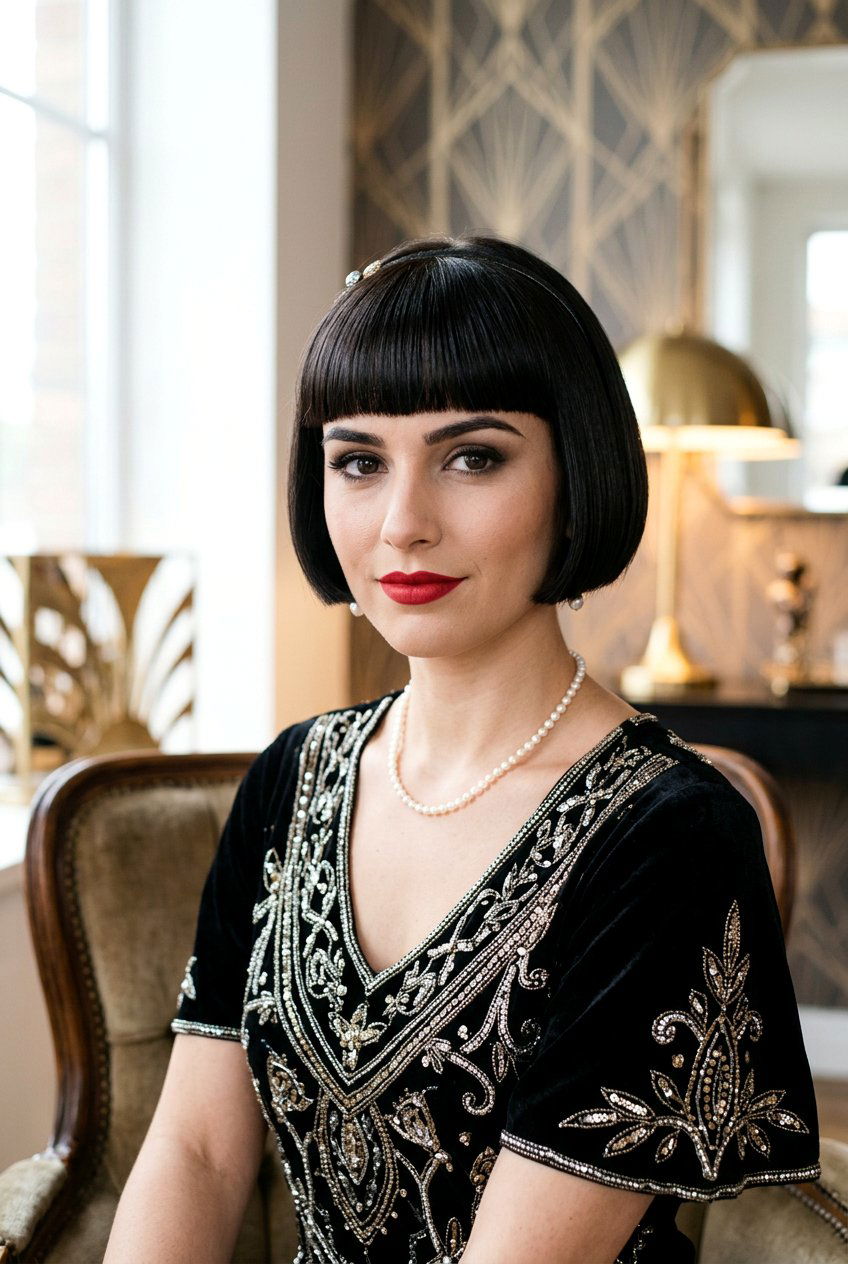
What better way to channel the rebellious spirit of the 1920s than with a sleek, short flapper bob? This haircut defined a generation of women who were breaking free from traditional Victorian beauty standards. The bob is usually cut quite short, often ending right at the earlobes or jawline, and is frequently paired with straight-across bangs. It was designed to look great under the popular cloche hats of the decade. For a truly vintage feel, the hair should be kept very straight and shiny, or styled with subtle finger waves. This look is all about sharp lines and a sense of modern independence. It remains a powerful fashion statement for anyone who loves a minimalist yet historically significant hairstyle.
14. Italian Cut

Have you ever seen those short, shaggy vintage hairstyles that look effortlessly chic and full of movement? The Italian cut was a massive trend in the mid-1950s, offering a more textured and “lived-in” alternative to the stiff, polished looks of the time. It is characterized by short, choppy layers that create a tousled, voluminous effect around the face. This cut was designed to look a bit messy, giving it a very natural and approachable vibe. It is perfect for women who want a vintage look that doesn’t require hours of setting and pinning. A bit of light styling cream can help define the layers and keep the volume from falling flat. It is a sophisticated, European-inspired aesthetic.
15. Pompadour
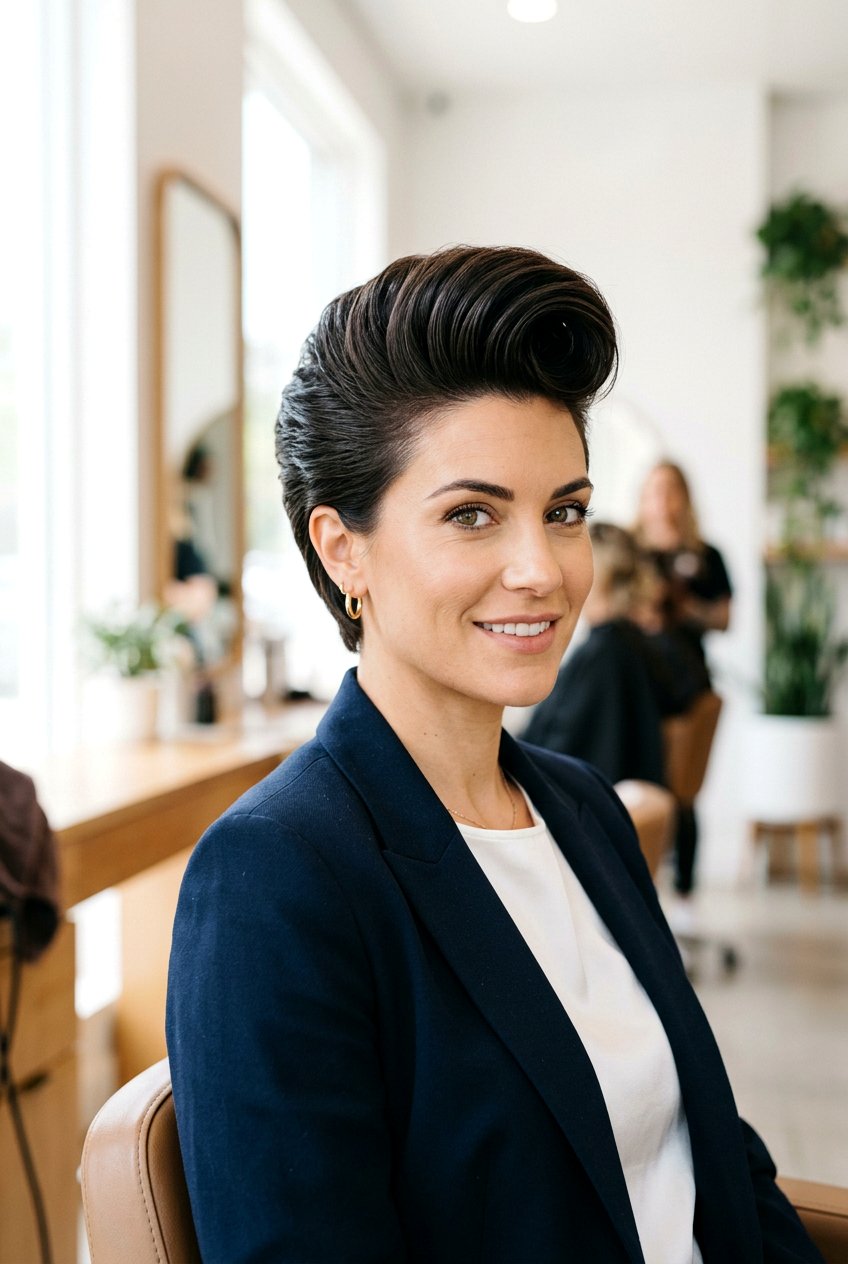
Are you looking for a hairstyle that adds height and a bit of rock-and-roll edge to your look? The pompadour is a classic choice that involves sweeping the hair upward and back from the forehead. While it originated centuries ago, it became a staple of vintage women’s fashion in the 1940s and again in the late 1950s. The front section of the hair is backcombed to create a large, rounded mound that sits high above the brow. The sides are usually slicked back or pinned tightly to emphasize the height on top. This style is incredibly flattering because it elongates the face and creates a strong, confident profile. It works well with both long and short hair.


16. Faux Bob
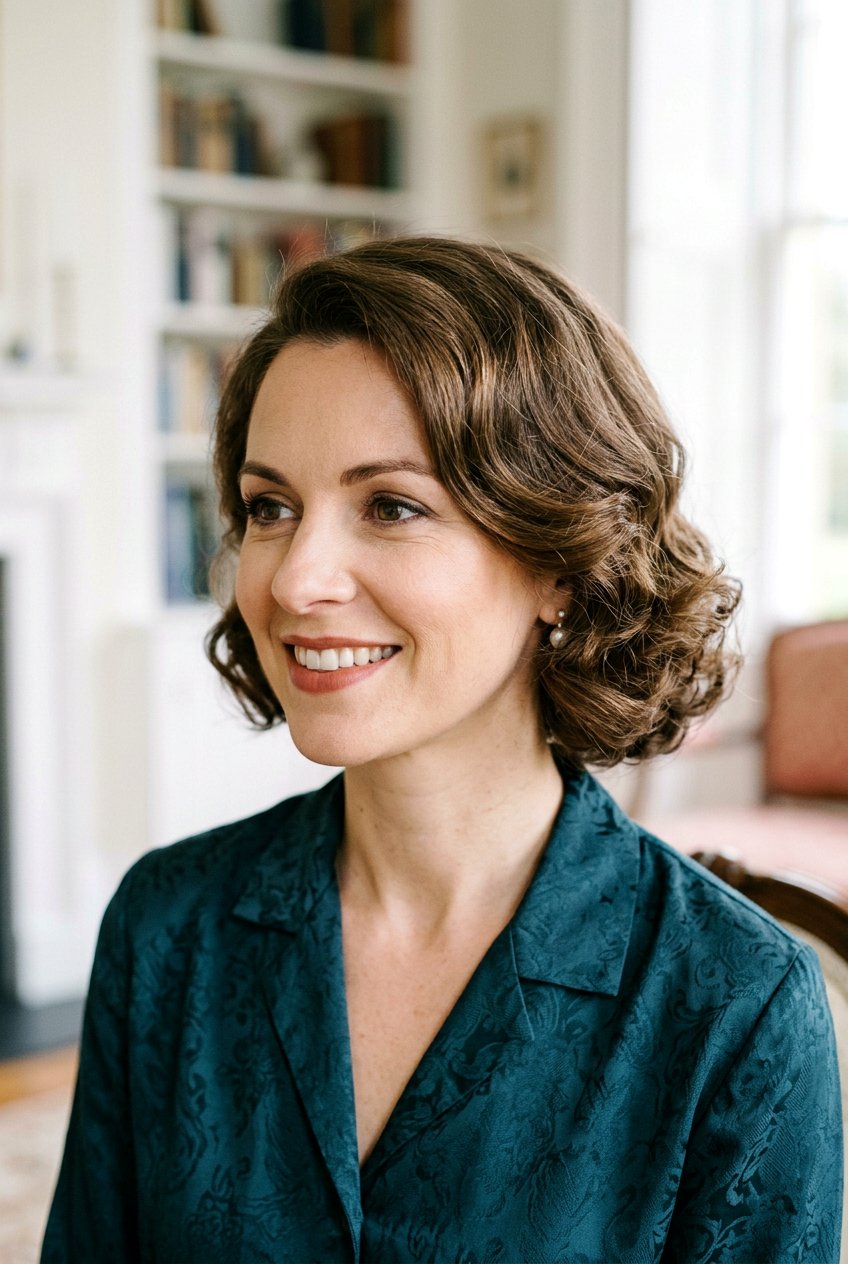
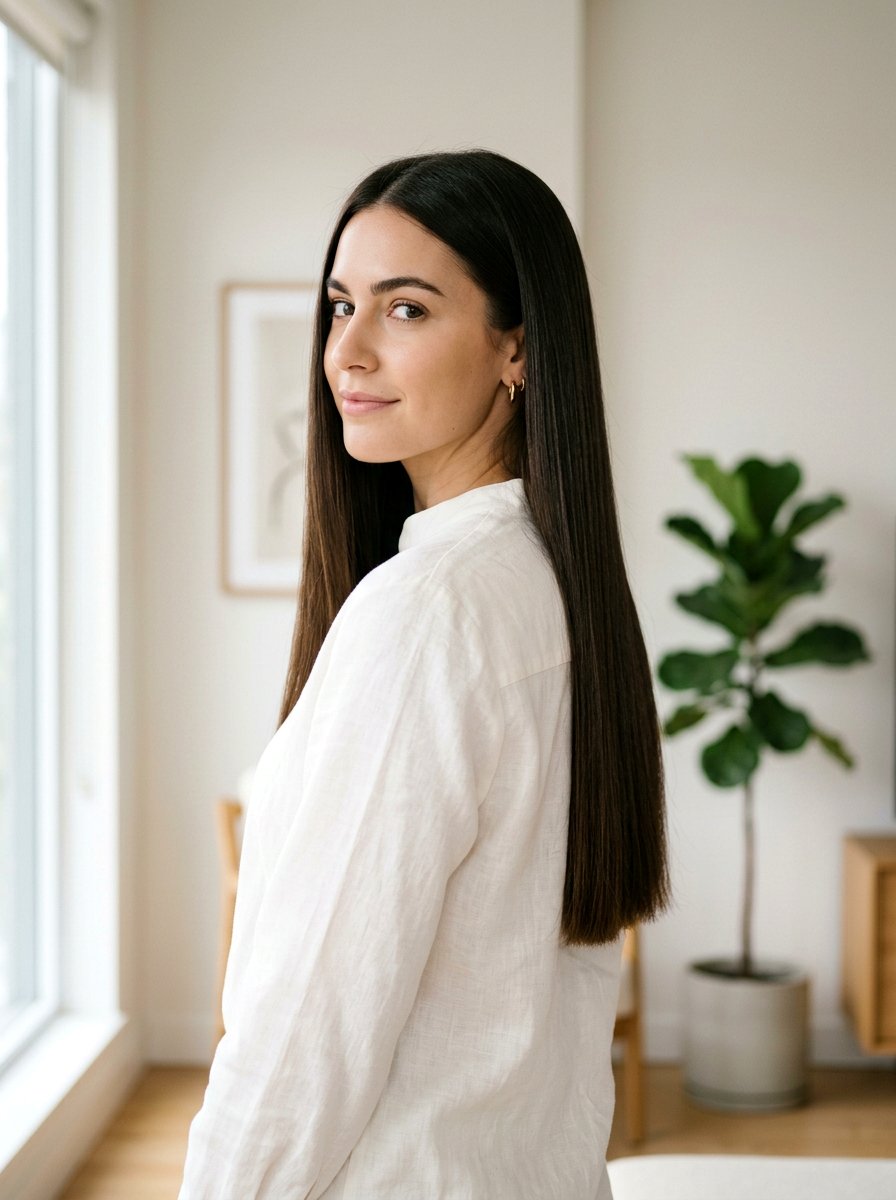
Do you love the look of a vintage bob but feel hesitant about cutting off your long locks? The faux bob is the perfect secret hairstyle that allows you to mimic a shorter length without using any scissors. To create this, you simply braid or tuck the lower lengths of your hair and pin them up at the nape of the neck. The top layers are then draped over the tucked hair to create the illusion of a chin-length cut. This technique was very popular in the early 20th century for women transitioning between long and short trends. Adding some vintage waves to the top layers makes the transformation even more convincing. It is a brilliant way to change your look.
17. Chignon
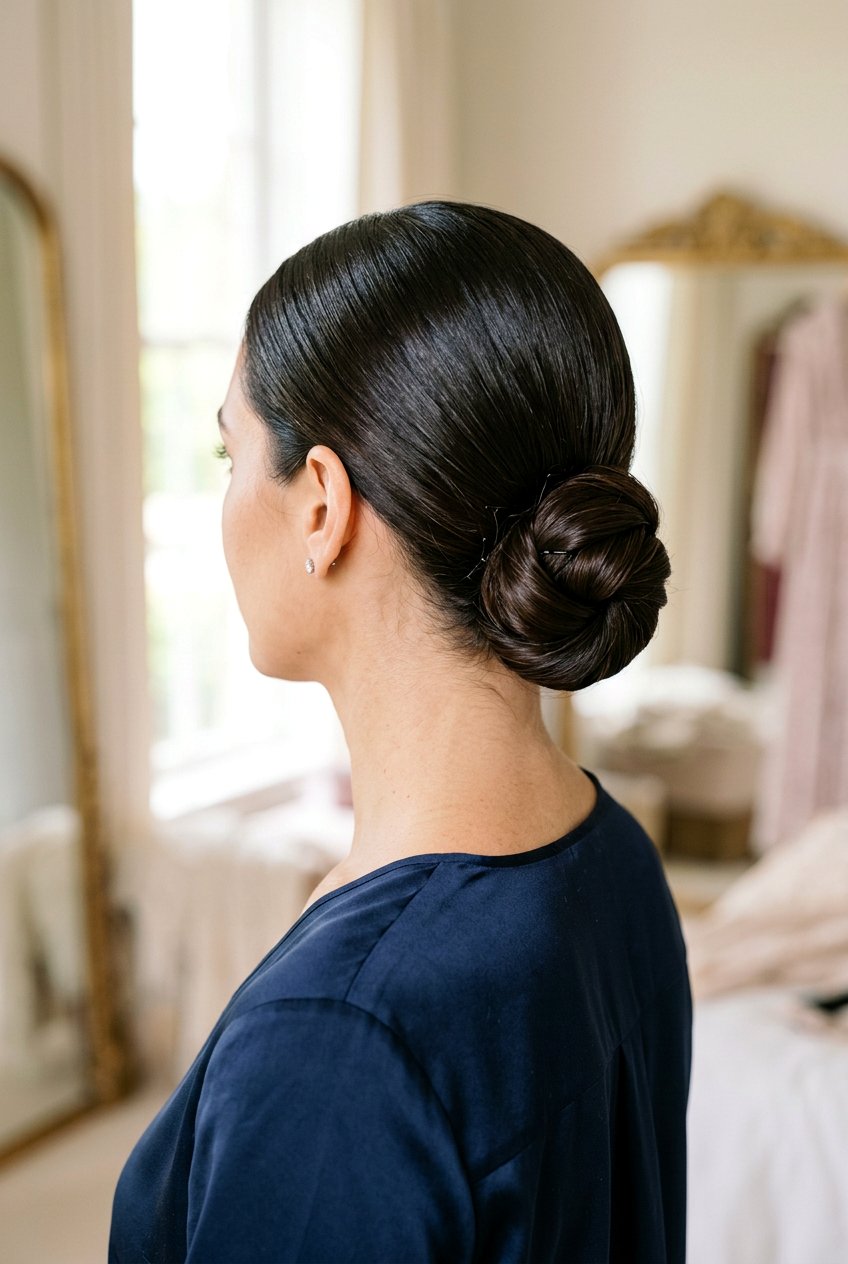
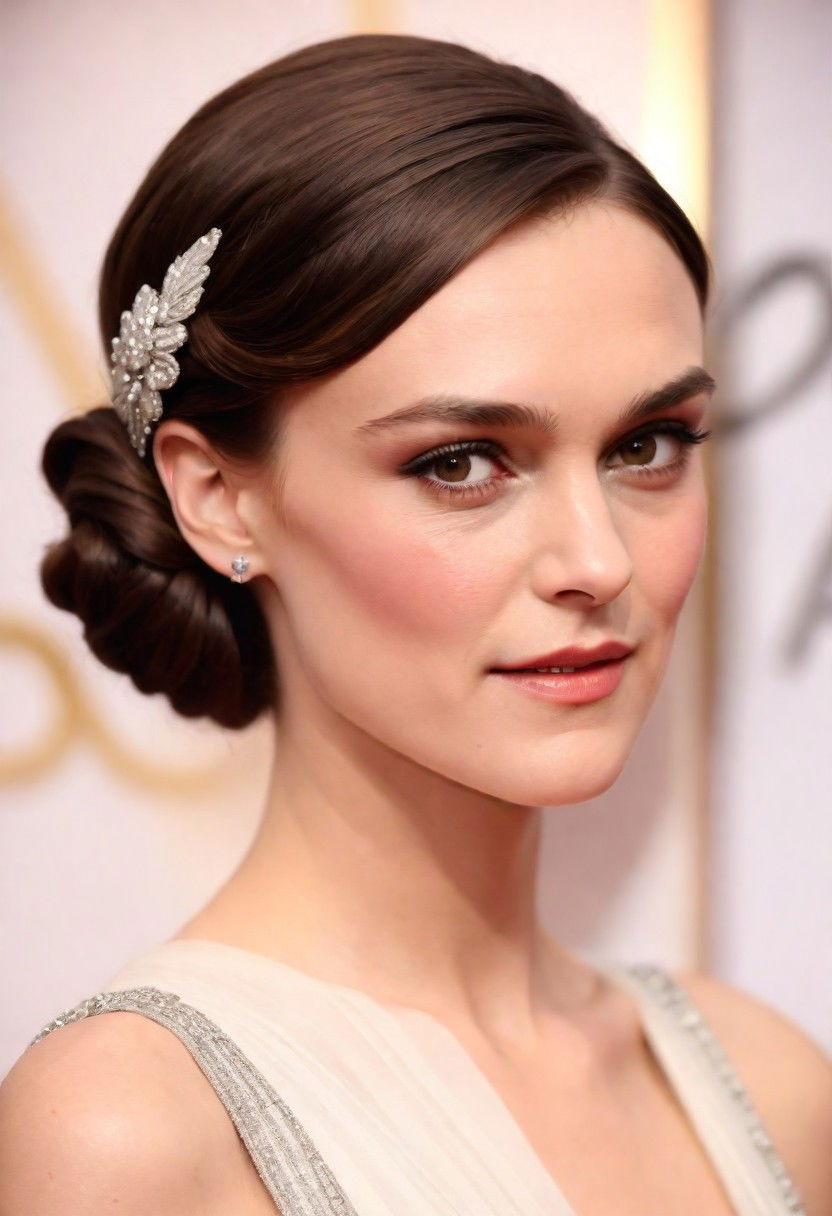
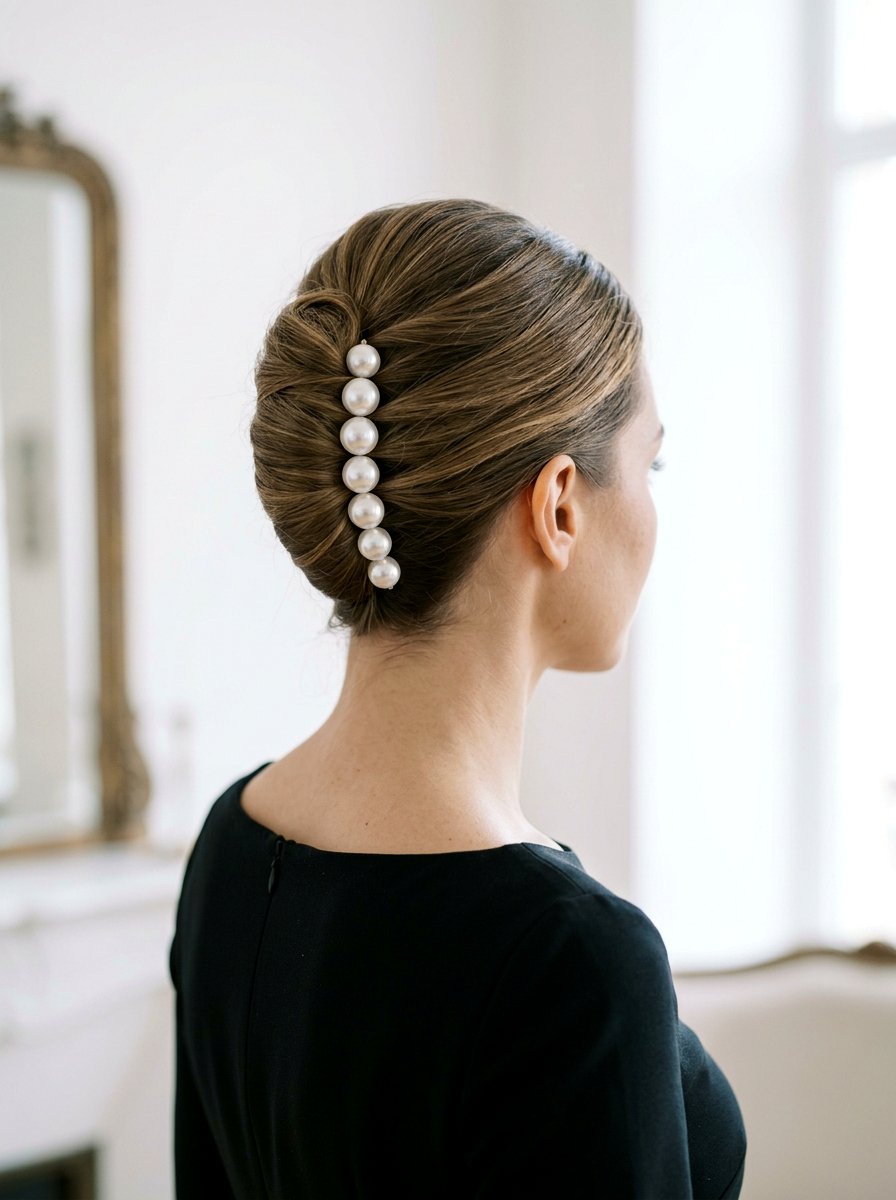
Are you searching for a graceful and understated updo that works for everything from a day at the office to a wedding? The chignon is a timeless vintage staple that involves pinning the hair into a neat knot or coil at the base of the neck. The word comes from the French phrase for the nape of the neck. This style can be worn very sleek and tight for a formal look, or slightly loosened for a softer, more romantic feel. It is a favorite because it is easy to execute and always looks professional. You can incorporate braids or twists to add more detail to the bun. A few well-placed hairpins are all you need for security.
18. Shingle Cut
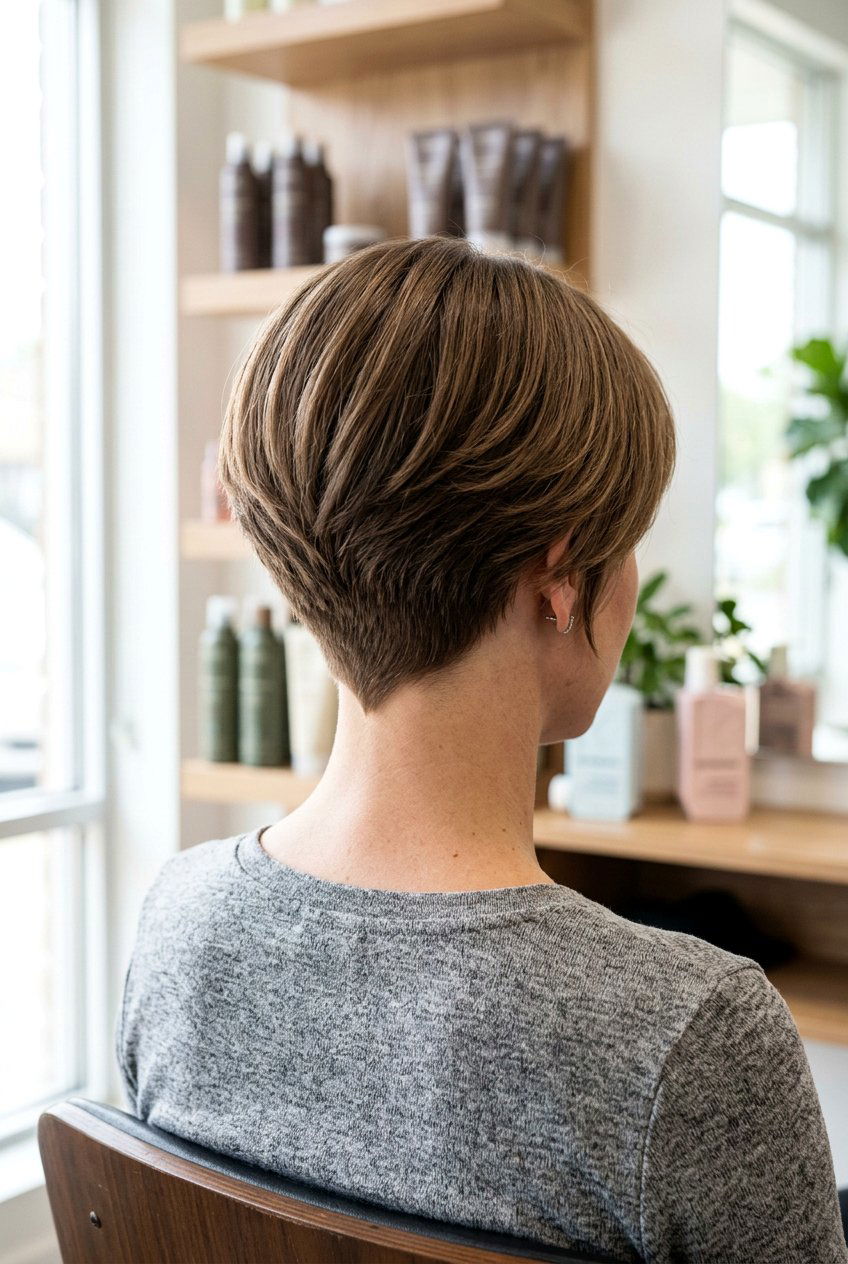
Did you know that there was once a haircut so controversial it made headlines in the 1920s? The shingle cut is a variation of the bob that features a tapered back, revealing the nape of the neck in a V-shape. The hair is cut in layers that resemble the shingles on a roof, giving it a very structured and geometric appearance. This look was considered very daring and masculine at the time, but it quickly became a symbol of the modern, liberated woman. It is best styled with a sleek finish and perhaps a single finger wave on the side for added flair. The shingle cut is perfect for those who want a truly authentic jazz-age look.
19. Gamine Crop

Have you ever admired the effortless, boyish charm of mid-century French cinema stars? The gamine crop is a very short, wispy hairstyle that emphasizes a youthful and delicate appearance. It is similar to a pixie but often features softer, more irregular layers that give it a playful, messy texture. This look became iconic in the 1950s as a way to project a sense of innocence and independence. It is an ideal haircut for women with fine hair, as the short layers help create a sense of fullness and life. Styling usually requires nothing more than a bit of wax or pomade to piece out the ends. It is a refreshing and bold choice for the modern era.
20. Ducktail
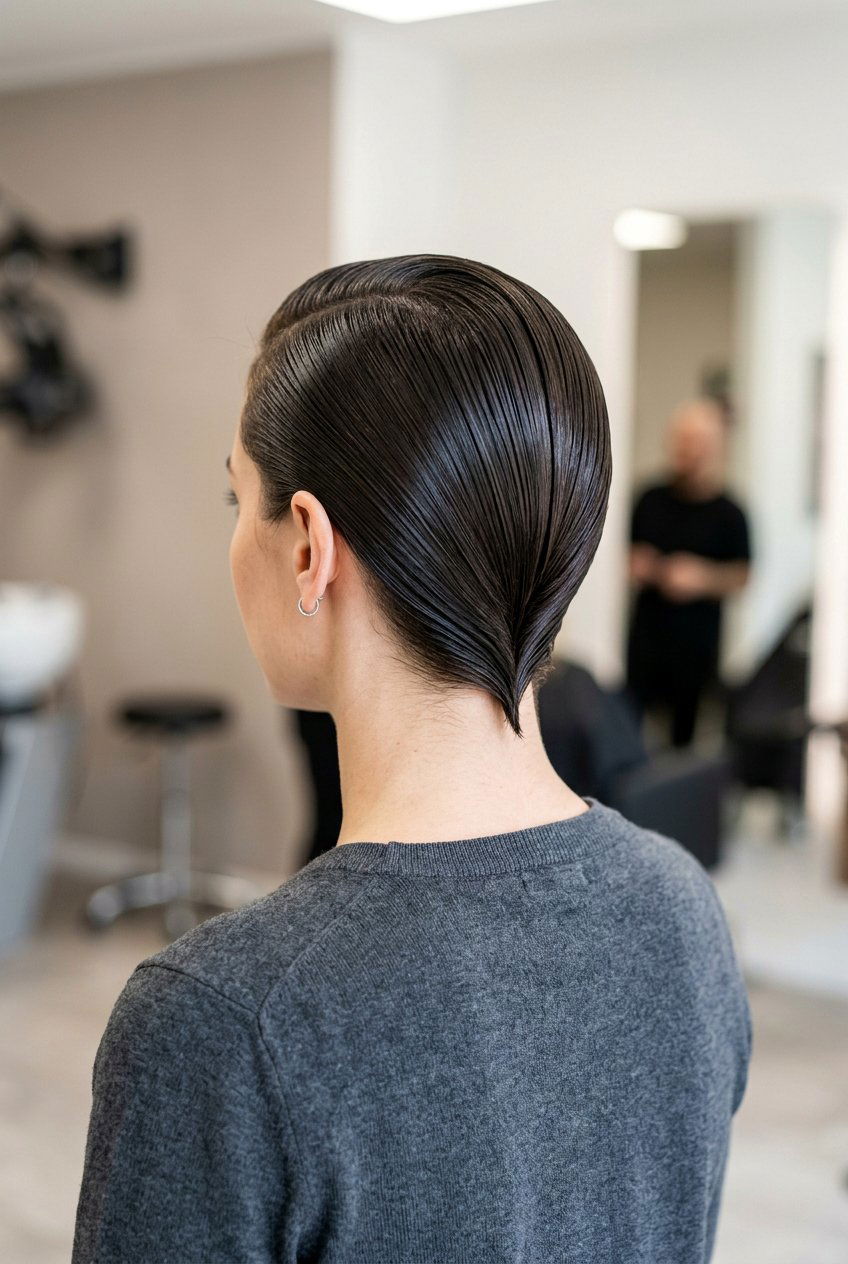
Are you interested in a vintage look that combines retro rebellion with a unique, sculpted shape? The ducktail was a popular hairstyle in the 1950s characterized by the hair being slicked back on the sides to meet in a vertical line at the back. This created a shape that resembled the tail of a duck. While often associated with men’s greaser culture, many women adopted variations of this look for a tough, edgy aesthetic. It usually involves a lot of pomade to keep the hair in place and a comb to create the signature center seam. The top can be styled into a pompadour to balance the back. It is a fantastic choice for a vintage statement.
Conclusion:
The world of vintage hairstyles offers an endless supply of inspiration for anyone looking to add a touch of timeless elegance to their routine. From the sharp, rebellious bobs of the 1920s to the high-volume glamor of the 1960s, these looks have stood the test of time for a reason. They represent more than just fashion; they are a window into the history and shifting roles of women throughout the decades. Embracing these classic techniques allows you to experiment with volume, texture, and structure in ways that modern styles often overlook. Whether you are preparing for a special event or just want to change your everyday look, there is a vintage style that fits every hair type and personality. We hope this list helps you find the perfect retro look to express your unique sense of style and historical appreciation.
You'll Like These Styles:



Leave a Reply