
Braided bridal hair has a special place in South Asian weddings because it feels regal, practical, and deeply traditional all at once. Many brides grow their hair for years for this moment, wanting a braid that works with heavy jewelry, dupattas, and long ceremonies. When planned well, a braid can hold flowers, hair jewelry, and veils without losing shape from the pheras to the reception photos. Today’s brides also look for braid looks that photograph beautifully from every angle and stay secure in heat and movement. From temple-inspired jadas to soft fishtail braids with modern accessories, there is a braid for every outfit and region. This guide walks through 20 complete bridal braid looks that blend culture, comfort, and trend-forward details for South Asian weddings in 2026.
1. Classic South Indian Bridal Jada Braid
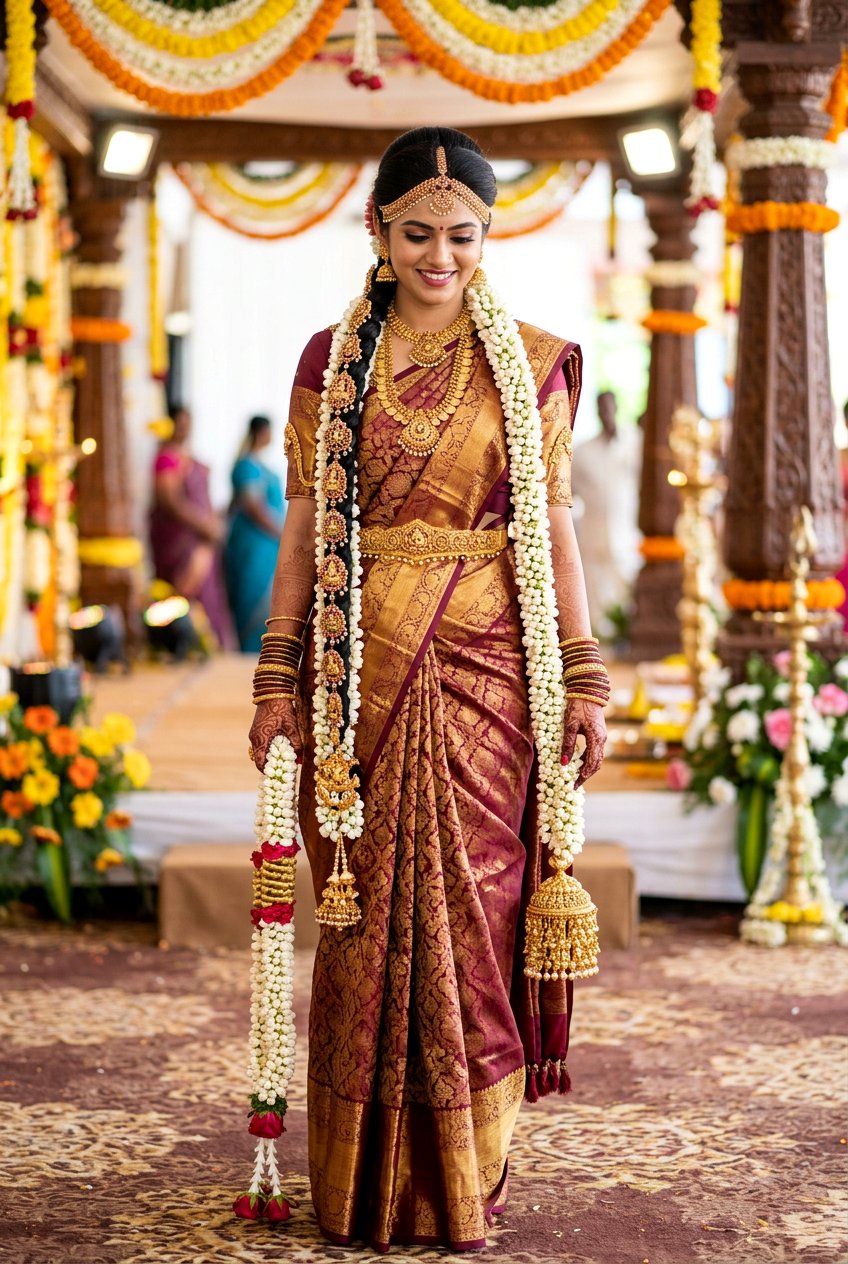
A classic South Indian bridal jada braid is perfect when the ceremony feels very traditional and the saree is richly woven. Hair is usually oiled lightly, blow-dried smooth, and braided into one long plait that becomes the base for the jada adornment. The length is then covered with a structured hairpiece or multiple jada segments decorated with gold motifs, coins, or temple symbols. Florals like jasmine or rose garlands frame the top bun and sometimes run along the sides of the braid for fullness. This look works best with kanjivaram or heavy silk sarees and layered temple jewelry.
2. Poola Jada With Fresh Jasmine Braid
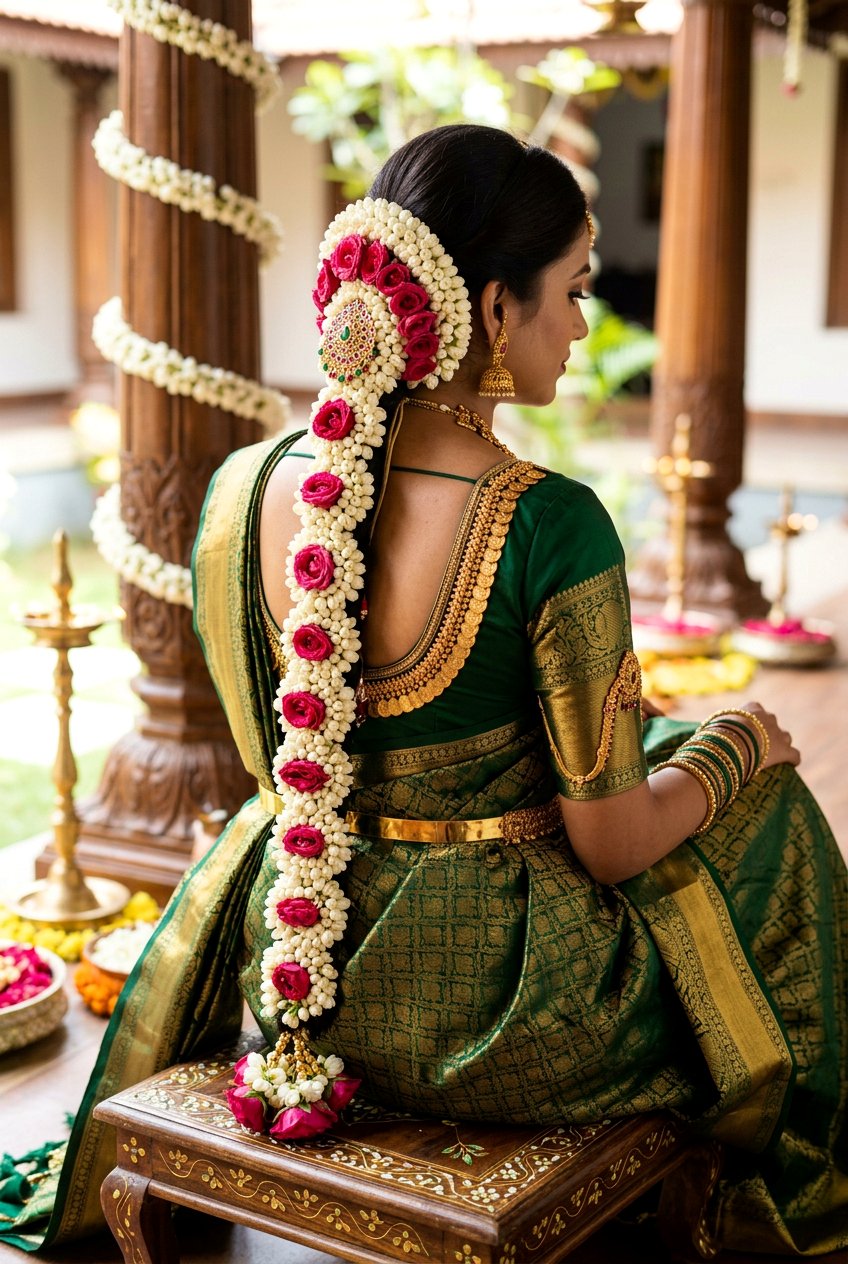
The poola jada braid centers fresh flowers as the star of the bridal hair look, giving a soft and fragrant vibe that feels very ceremonial. Hair is first secured into a sturdy long braid, often slightly teased at the crown for height. Circular floral discs or a continuous floral train of jasmine and roses are then pinned along the braid from the bun to the ends. The flowers can be tightly packed for a bold, dense effect or spaced with greenery for a lighter look that suits humid weather. This braid pairs beautifully with gold jewelry and works well for outdoor temple weddings.
3. South Indian Bridal Braid With Gold Jada Billalu
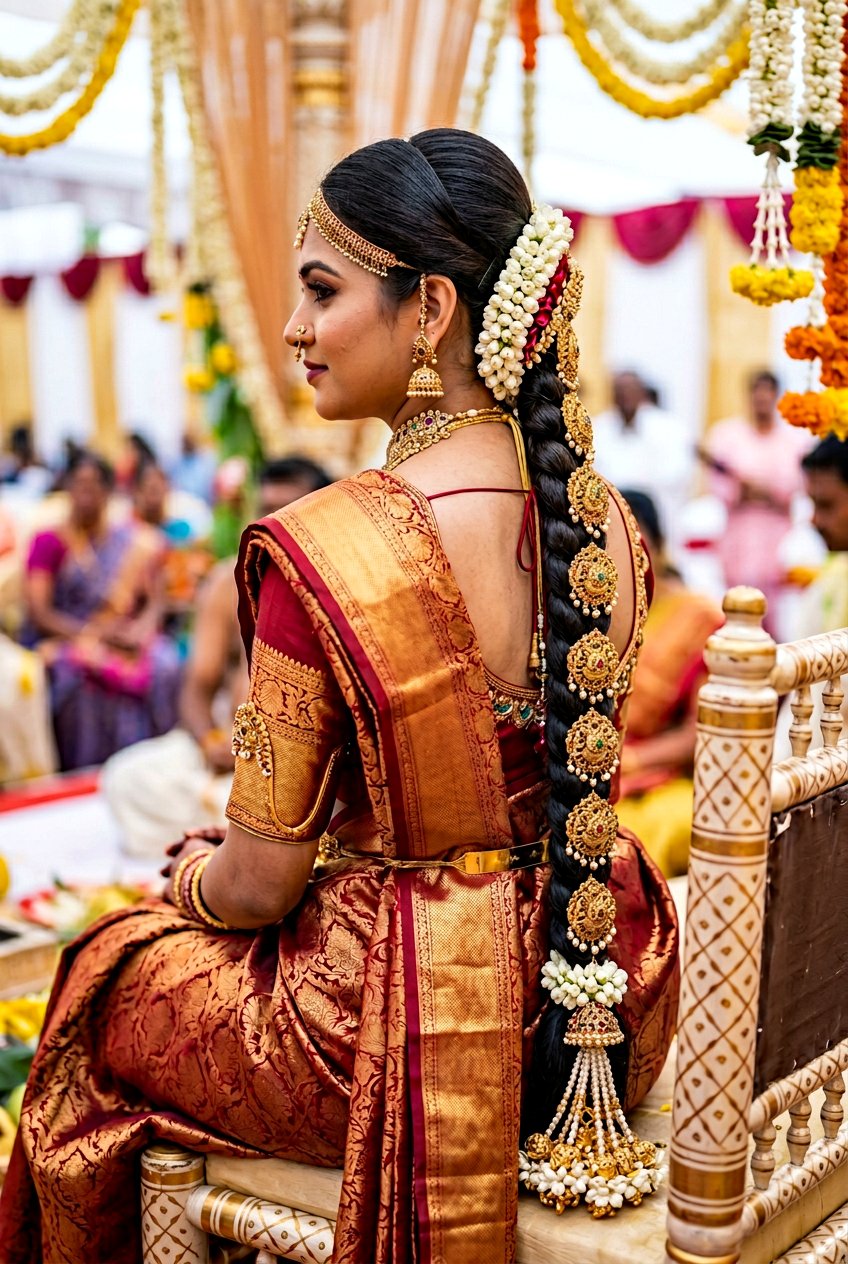
For brides who love jewelry, a South Indian braid with gold jada billalu brings a high-impact, royal finish to the wedding look. The stylist first creates a clean center part and a secure, sleek braid that will hold weight comfortably. Gold jada billalu pieces—often shaped like coins, floral discs, or goddess motifs—are then attached in a neat line down the braid. A decorative bun cover at the crown ties everything together and supports the dupatta if draped over the head. This style shines with rich silk sarees and layered necklaces, and it photographs beautifully for close-up portraits.
4. Long Bridal Braid With Gajra
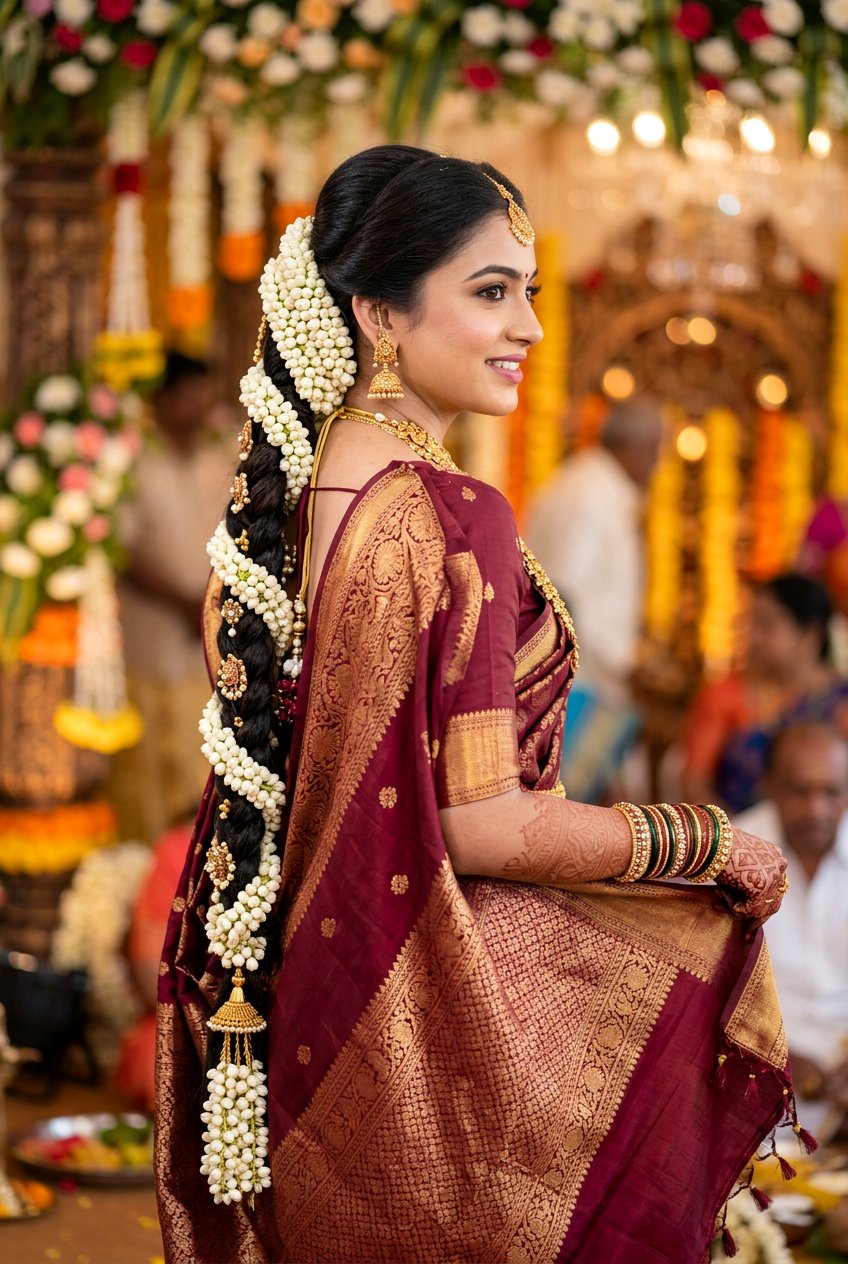
A long bridal braid wrapped with gajra is a timeless choice seen across many South Asian regions and functions. The foundation is a medium to thick braid, usually kept smooth but not overly stiff, so it moves naturally. Fresh jasmine gajra is then wound around the length of the braid or layered in sections to create a spiral effect. Brides can mix in roses or marigolds for added color that matches their outfit or décor. This look works well with sarees and lehengas and is practical for long days because the flowers help hide any minor frizz.
5. Fishtail Braid With Flowers For Bride
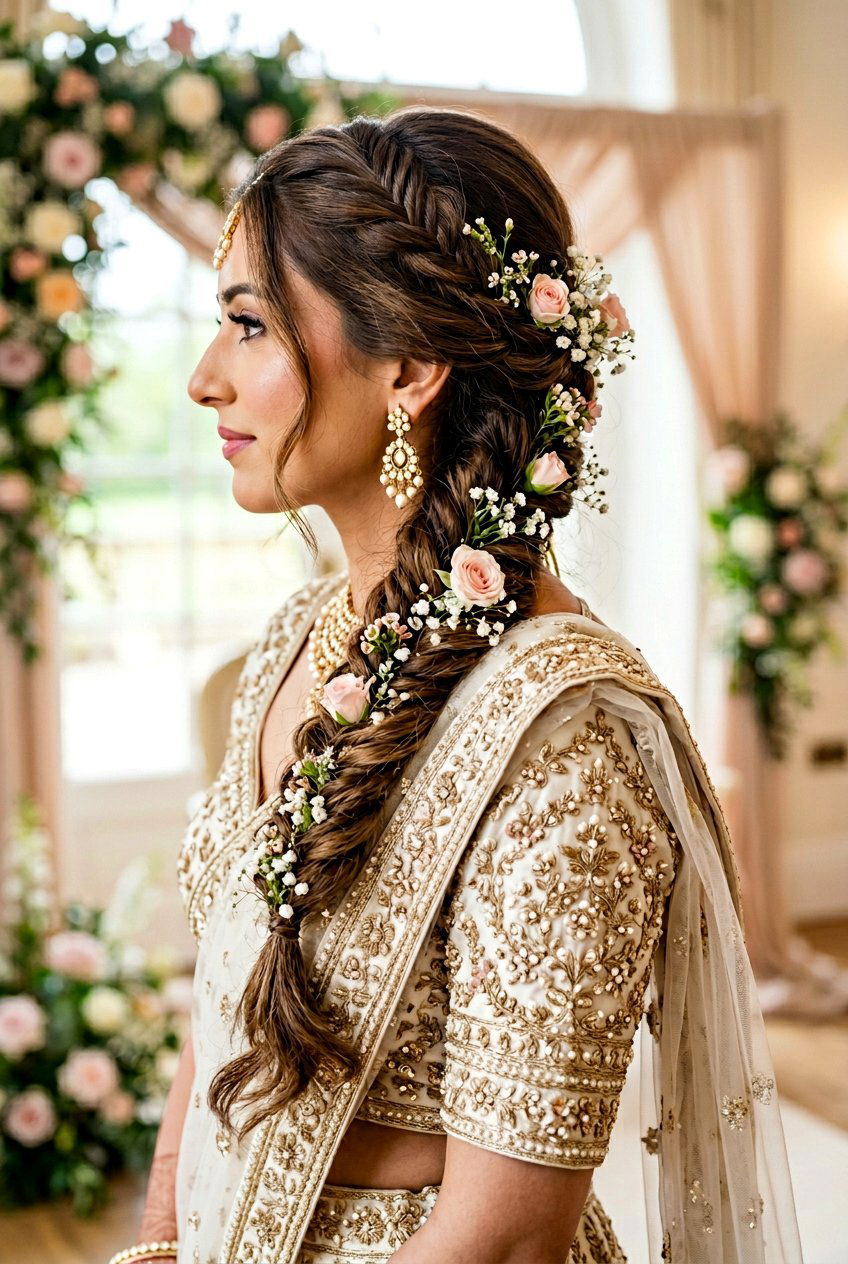
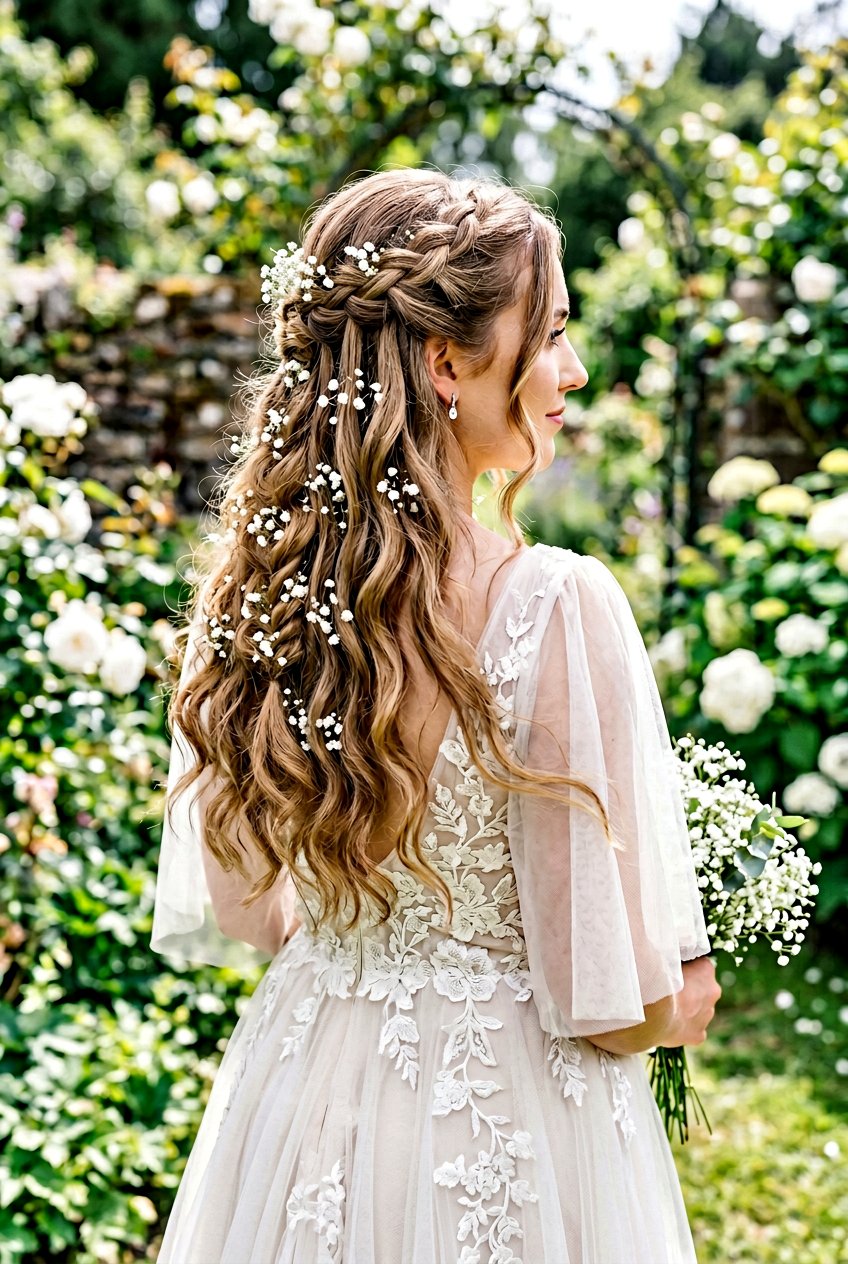
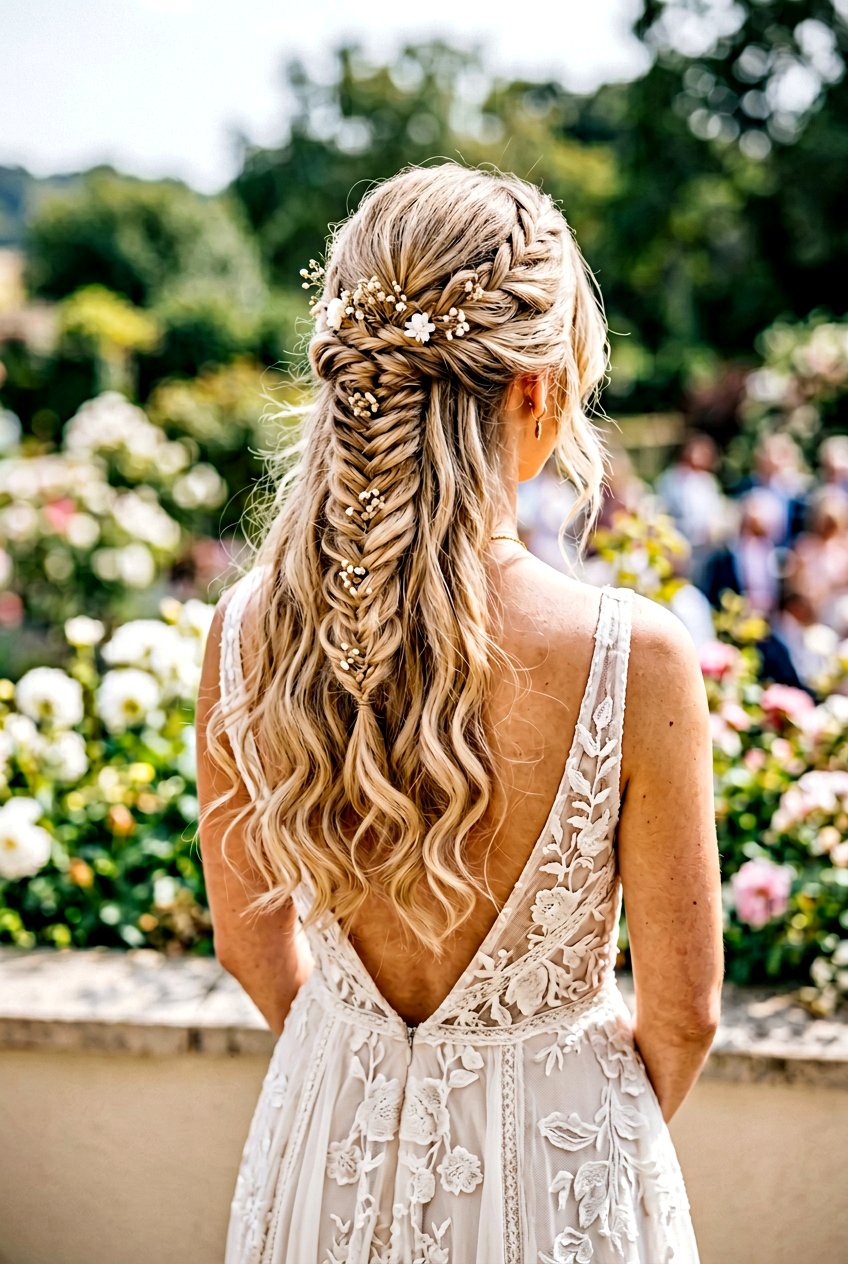
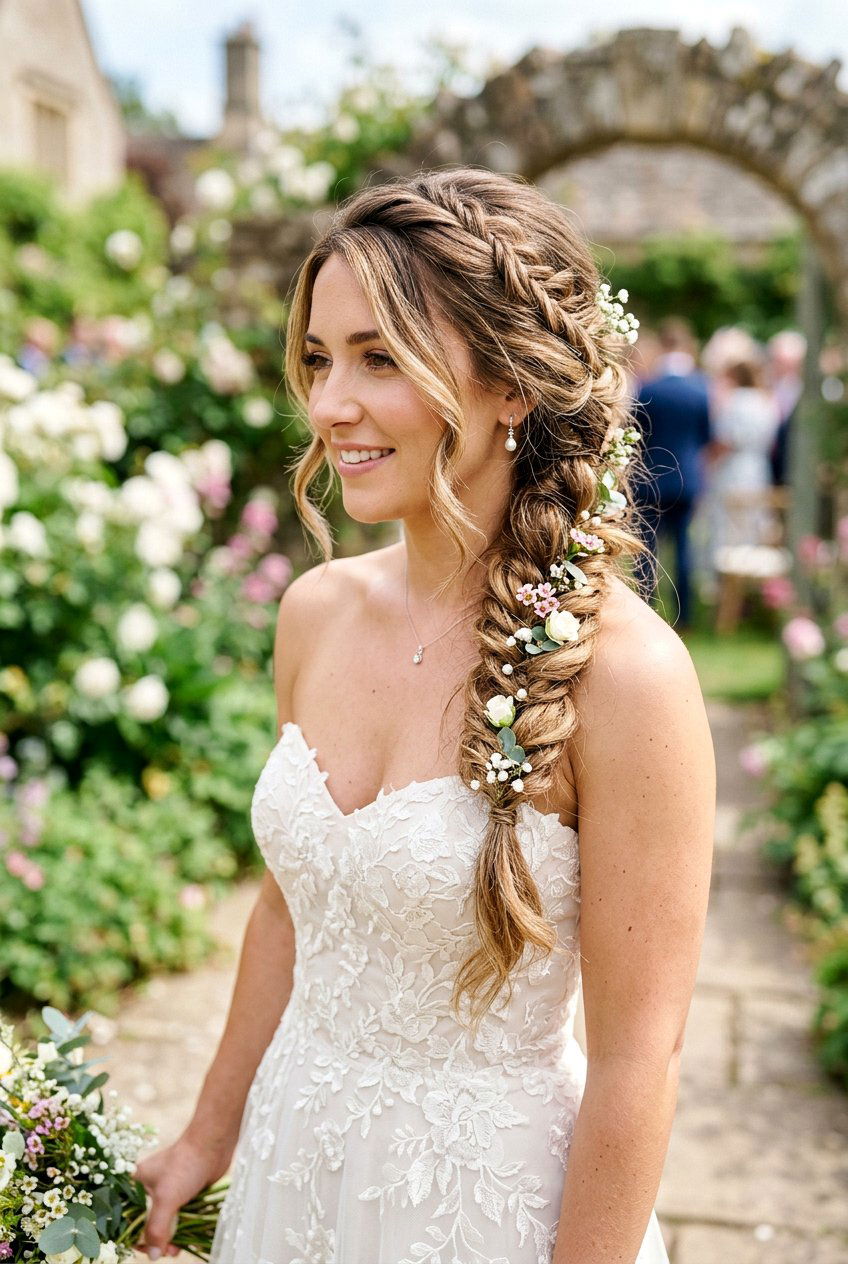
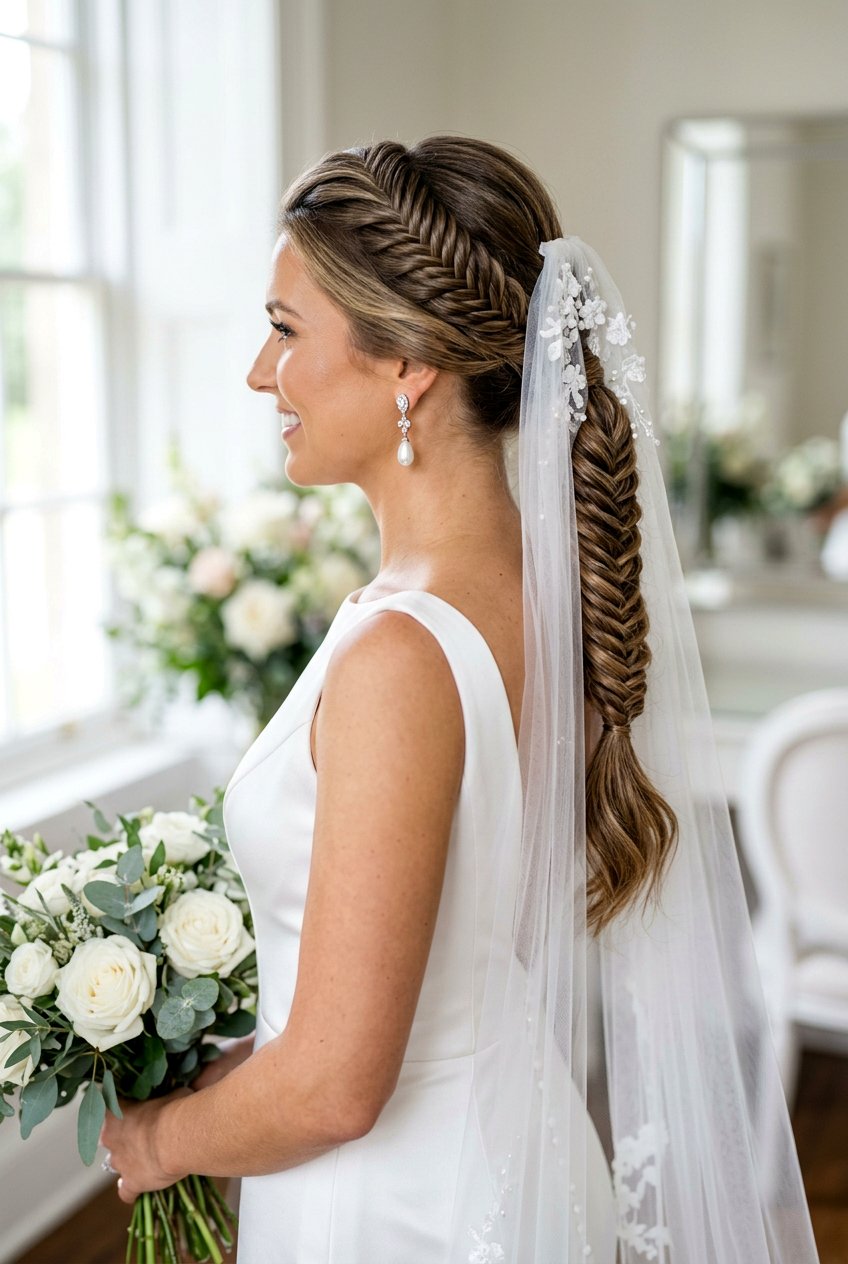
A fishtail braid with flowers gives a slightly boho feel while staying very bridal and polished. Hair is prepped with texturizing spray, then divided into two sections and woven into a fishtail so the pattern shows clearly in photos. The braid is often tugged gently to pancake the edges, making it look wider and fuller down the back. Florals like baby’s breath, mini roses, or jasmine buds are pinned along one side or scattered through the braid for softness. This braid pairs nicely with lehengas, lighter sarees, and daytime garden venues.
6. Mermaid Braid For Indian Bride
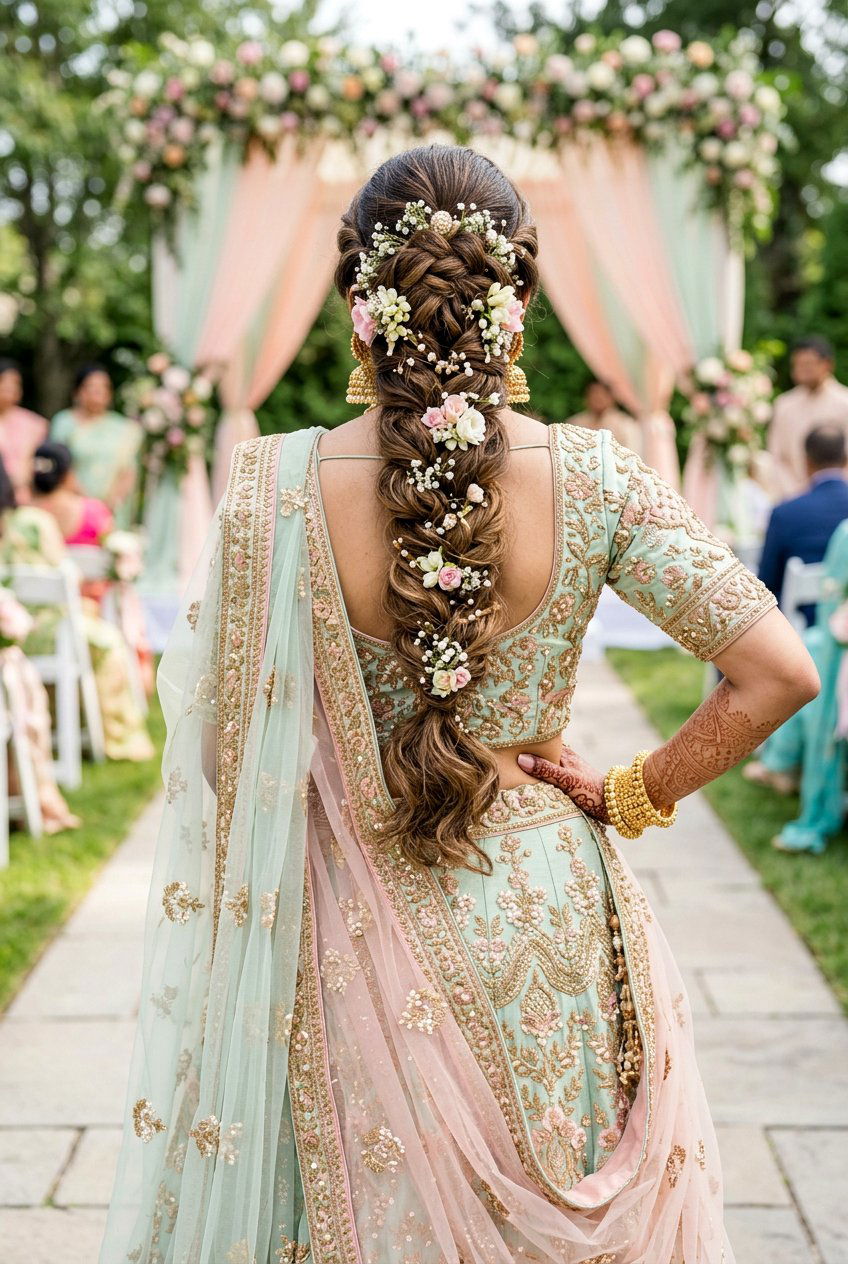
A mermaid braid for an Indian bride feels dreamy and modern, especially for sangeet or a contemporary pheras setup. The stylist usually starts with crimped or loosely waved hair to add grip and volume before braiding. Sections are then woven in a loose, cascading pattern, creating a wide, flattened braid that looks almost like overlapping scales. The crown can be slightly lifted for height, and small hair accessories like pearls, pins, or tiny florals are tucked throughout. This braid complements mixed fabrics, lighter jewelry, and cinematic photography with lots of movement.
7. Side Swept Bridal Braid For Lehenga
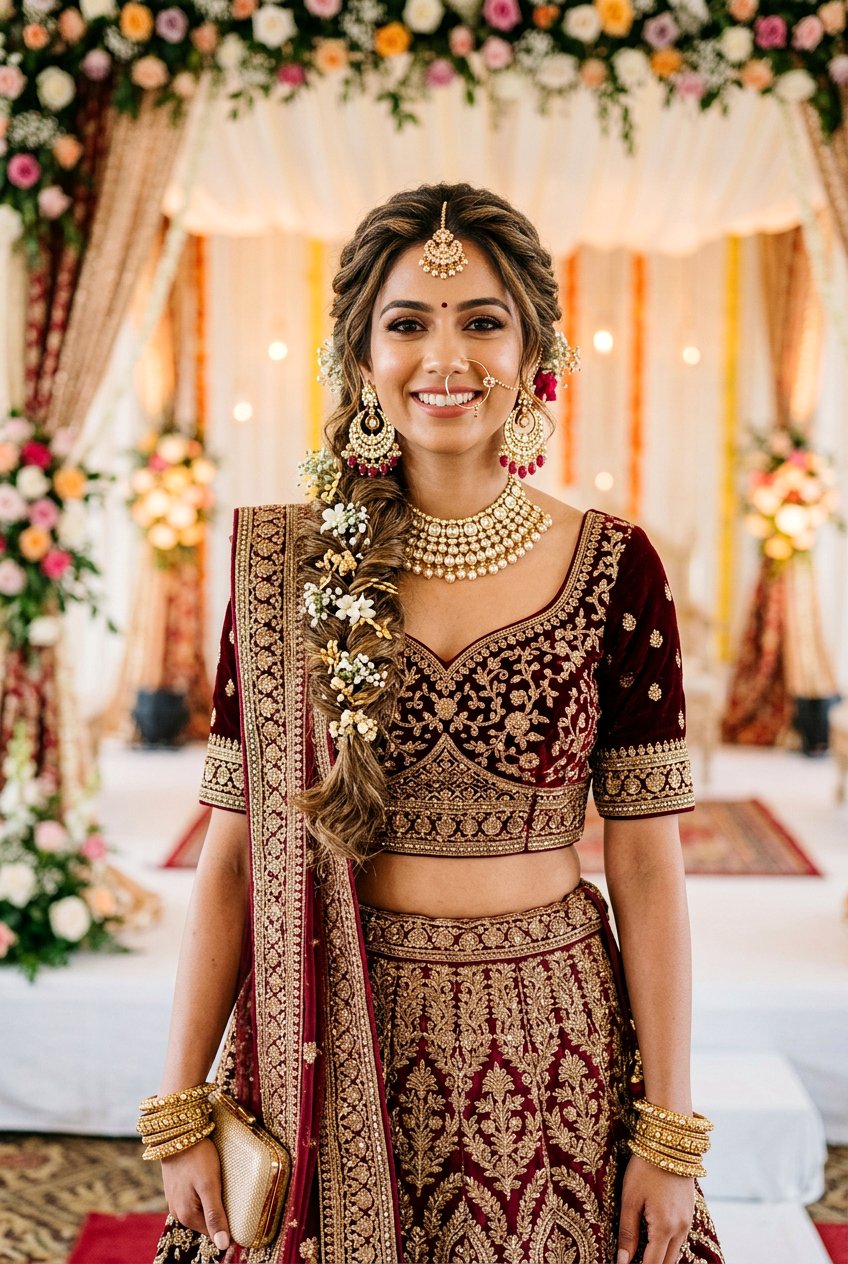
A side swept bridal braid works well when a bride wants to show off blouse detailing and jewelry while keeping hair controlled. Hair is parted to one side, then loosely braided over the shoulder so the length rests on the front of the lehenga. The braid itself can be a classic three-strand, fishtail, or Dutch style, but the key is softness around the face. Maang tikka and earrings become more visible because the opposite side is cleaner. This braid suits reception-friendly lehenga looks and works beautifully in seated photos and close-up shots.
8. Braided Half Up Bridal Hairstyle
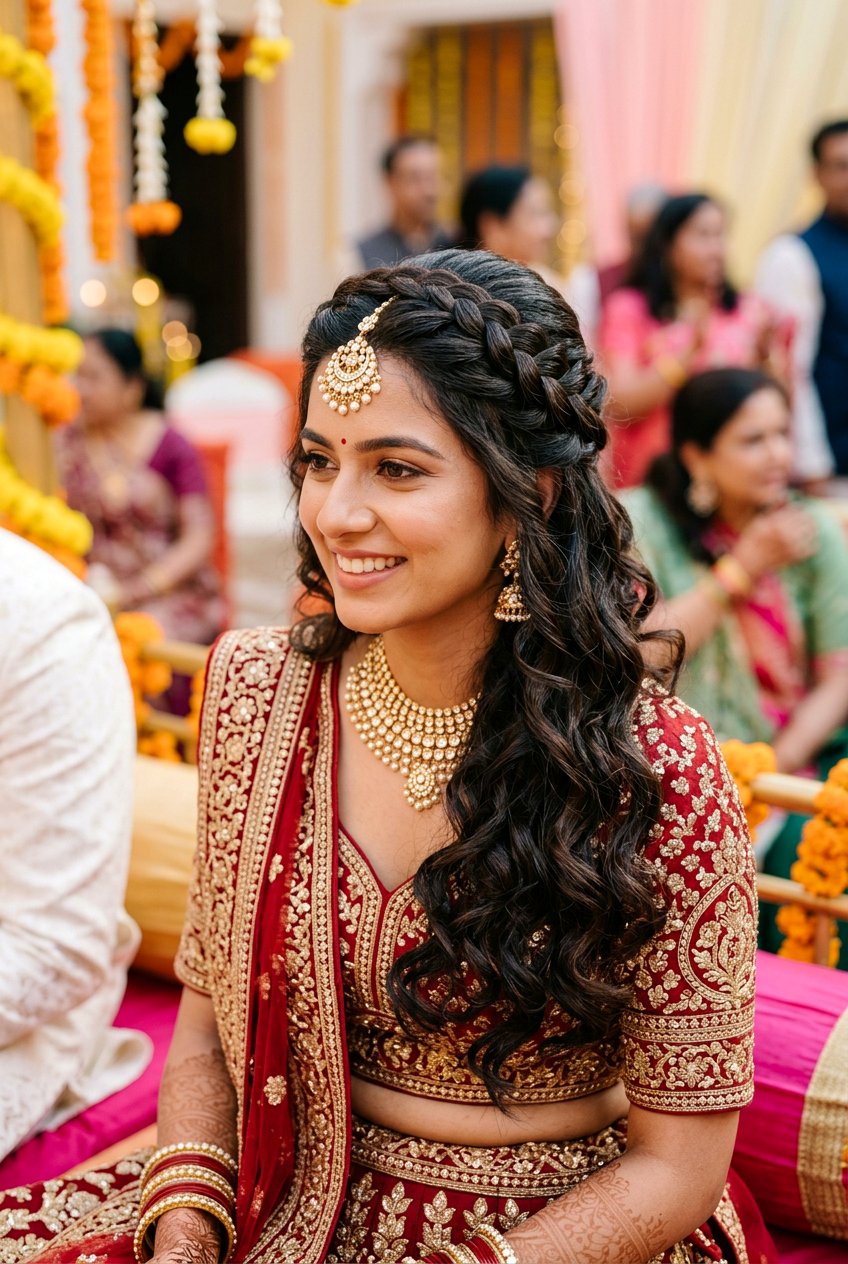
For brides who like some hair left open, a braided half up bridal hairstyle gives a balanced, romantic look. The top section of hair is divided and braided—often into two small Dutch or rope braids—then joined at the back into a mini ponytail or small braid. The remaining hair is curled or softly waved so it falls over the back and shoulders. A maang tikka or passa sits at the parting, while the braids help anchor any veil or dupatta. This look is ideal for engagement ceremonies, mehendi, or intimate weddings with lighter outfits.
9. Braided Bun Updo For South Asian Bride
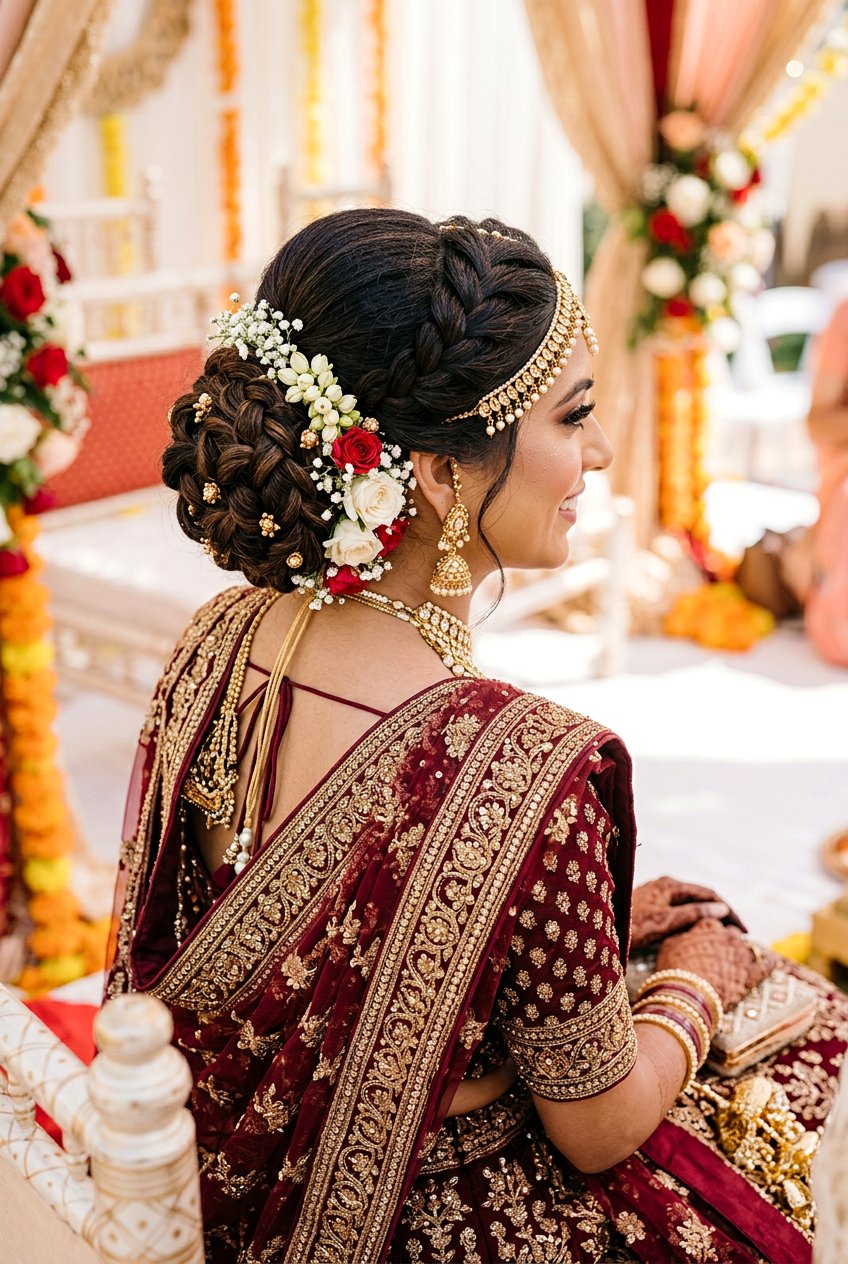
A braided bun updo combines the structure of an updo with the texture of braids, making it very practical for long, hot wedding days. The stylist creates one or more braids—often starting from the sides or crown—and wraps them into a bun at the nape or mid-back of the head. This design keeps hair off the neck while still giving visual interest from every angle. Fresh flowers, hair jewelry, or a bun cage can be added around the bun’s perimeter. It works for bridal sarees and lehengas and holds dupatta weight well during rituals.
10. Braided Crown Bridal Hairstyle With Maang Tikka
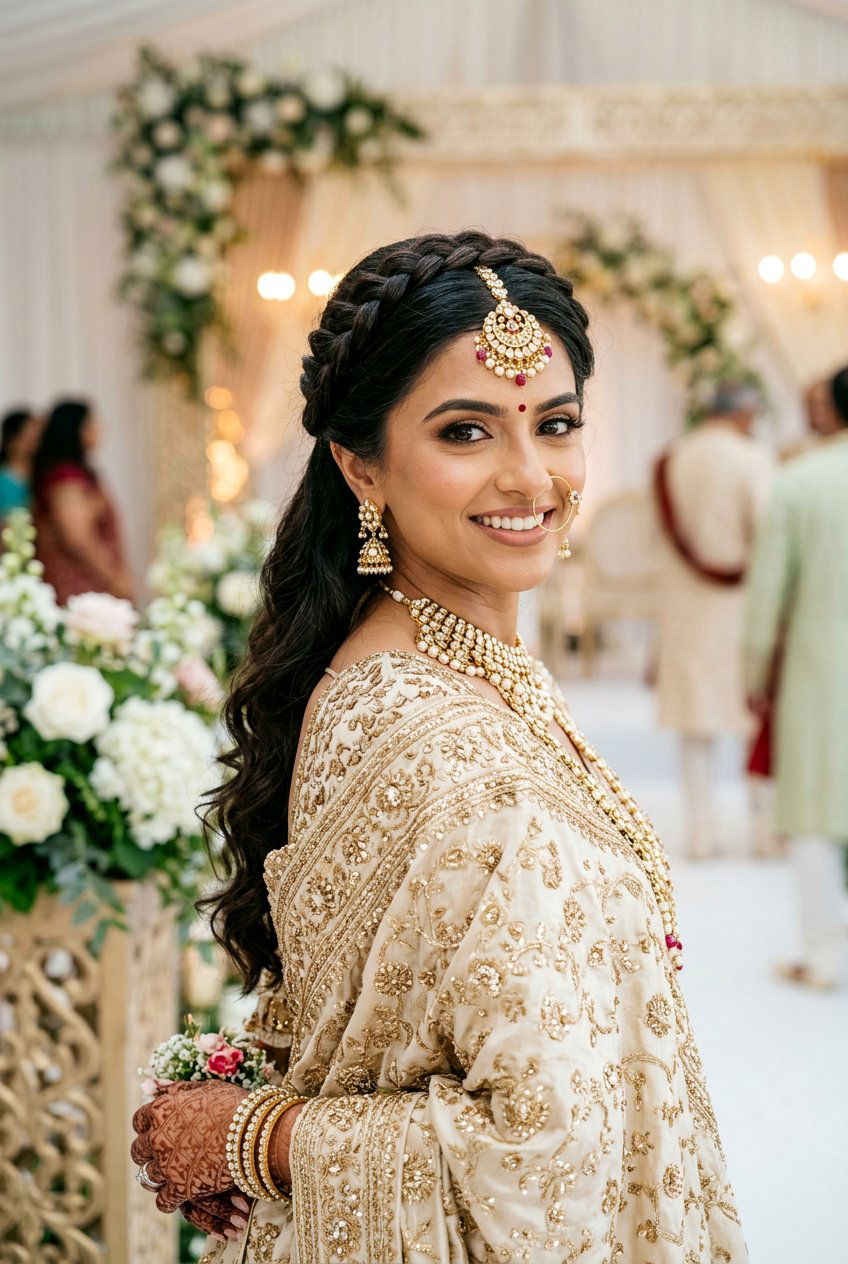
A braided crown bridal hairstyle frames the face beautifully and showcases a maang tikka as the centerpiece. Hair near the front is braided and wrapped around the head like a halo, while the rest is either braided down the back or left in soft waves. The maang tikka sits at the center part, drawing attention to the forehead and eyes. This look works especially well for brides with delicate or statement tikka designs and lighter jewelry around the neck. It suits daytime ceremonies and modern venues while still feeling rooted in tradition.
11. Dutch Braid Bridal Hairstyle For Long Hair
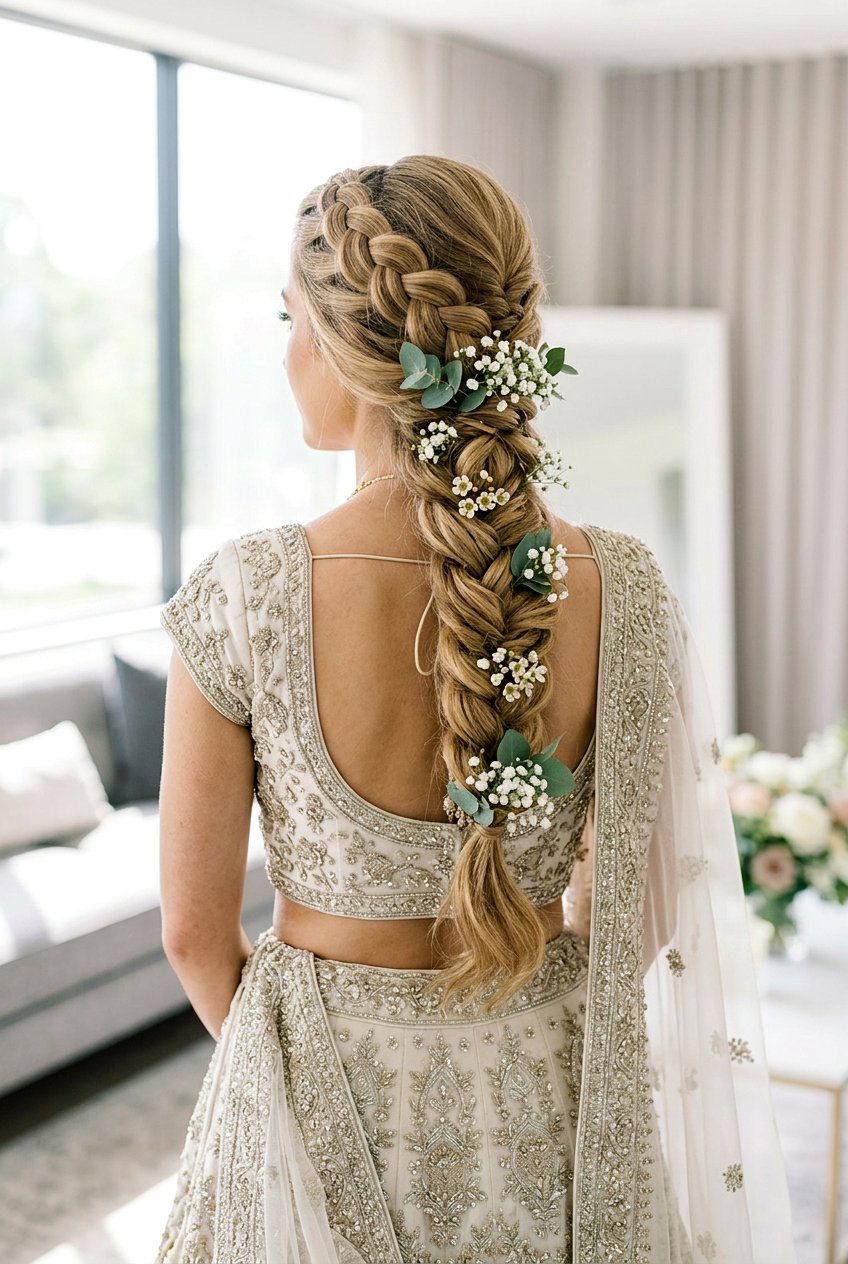
A Dutch braid bridal hairstyle for long hair adds dimension and structure that stands out under heavy dupattas or veils. The braid is created by crossing strands under instead of over, so it sits raised on the head and looks more defined. Many brides opt for one thick Dutch braid down the back, sometimes expanded by gently pulling out sections for volume. Florals or small pins are then added along the braid edges rather than fully covering it. This style pairs well with modern lehengas, fusion outfits, and outdoor ceremonies where texture shows clearly in natural light.


12. Double Braided Bridal Hairstyle For Dupatta
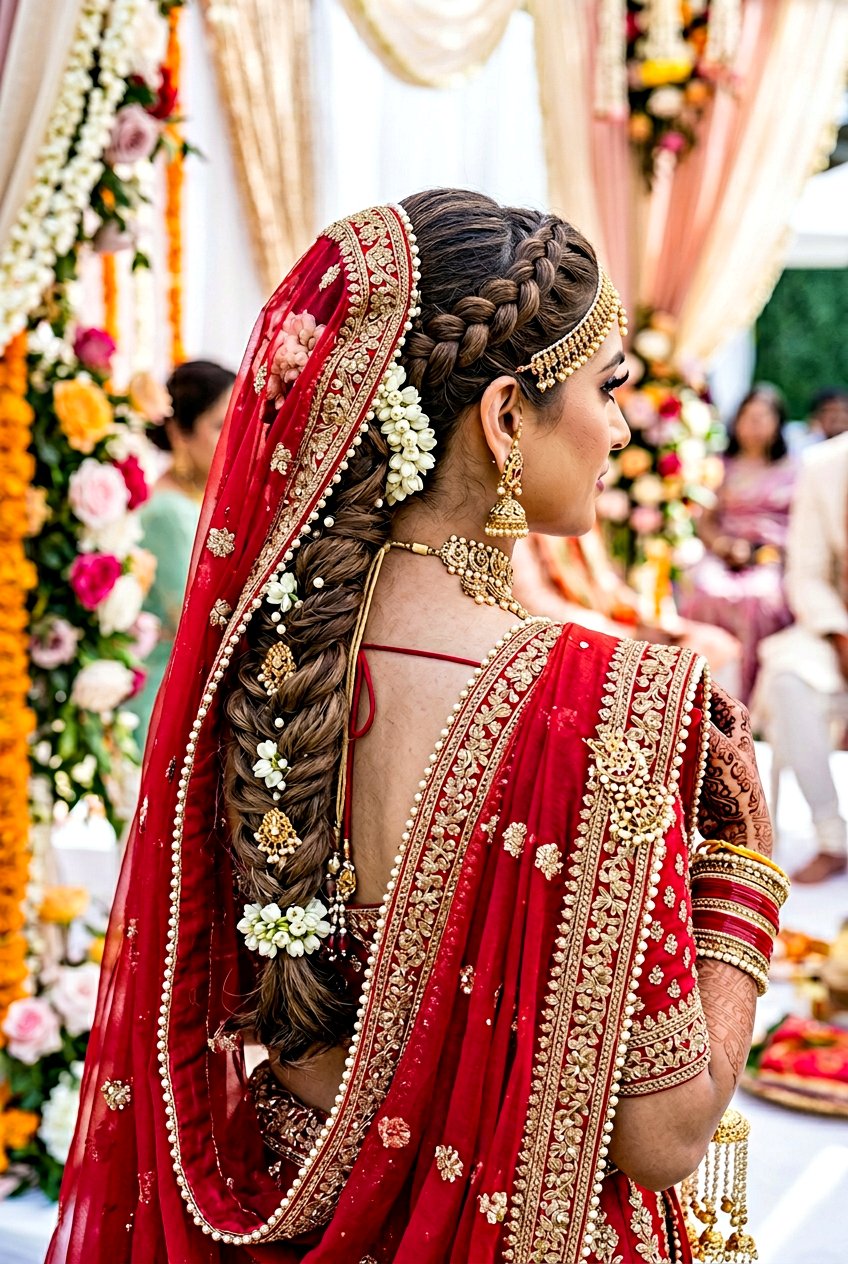
When dupatta security is a concern, a double braided bridal hairstyle offers extra hold and support for pins. Two braids are created—either one on each side that meet into a single braid, or two parallel braids running down the back. The structure helps anchor dupatta clips without pulling on one section of hair. Brides often decorate the junction where the braids meet with a floral cluster or decorative clip. This look suits heavy dupattas, layered veils, and temple or mosque weddings where coverage and comfort matter.
13. Loose Textured Braid For Mehndi Bride
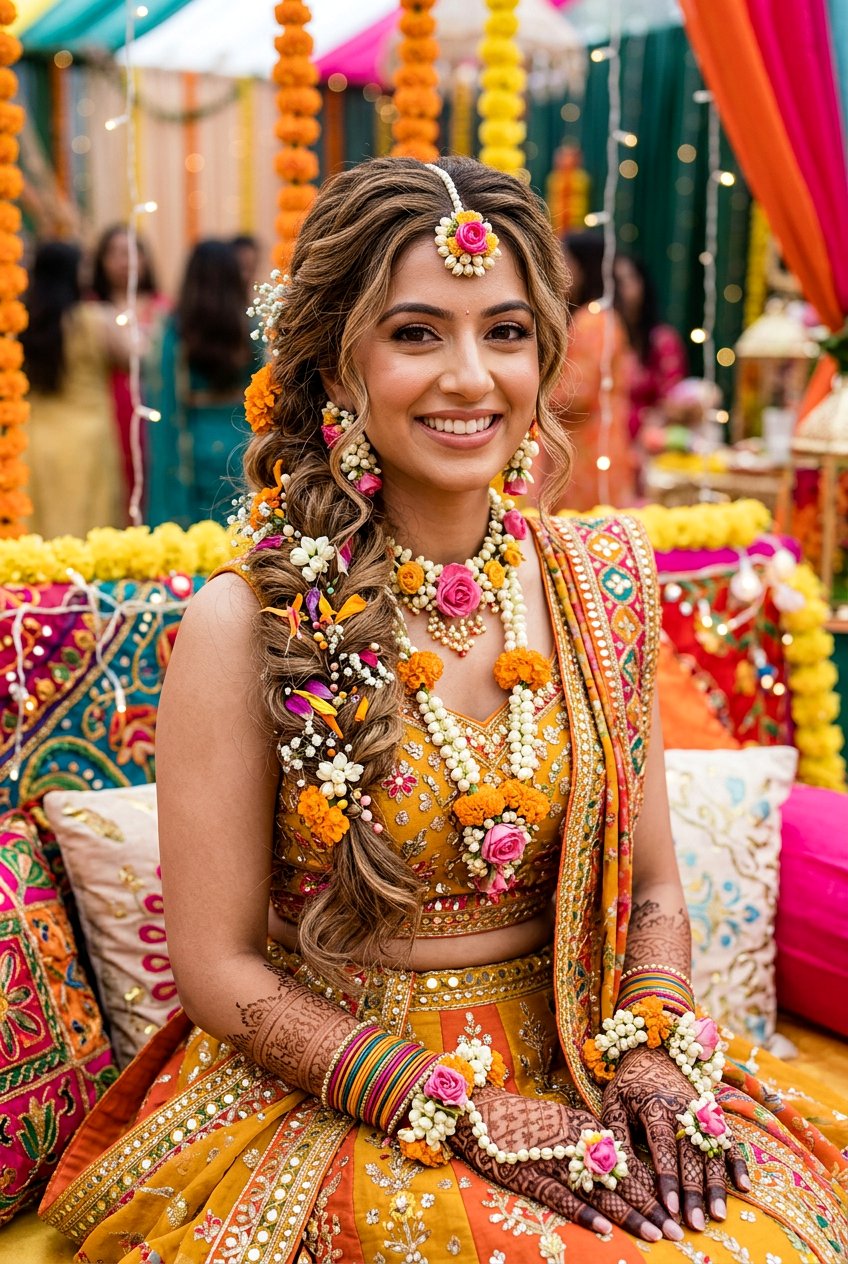
A loose textured braid is perfect for mehndi functions, where the vibe is relaxed but photos still matter. Hair is prepped with waves or curls, then pulled into a soft braid that starts lower on the head instead of at the crown. Pieces near the face are left out or gently pulled for a lived-in, romantic effect. Small flowers, tassels, or colorful ribbons that match the mehndi outfit can be added to the braid. This style feels lighter than a wedding-day jada and pairs nicely with floral jewelry and bright outfits.
14. Side Braided Ponytail For Modern South Asian Bride
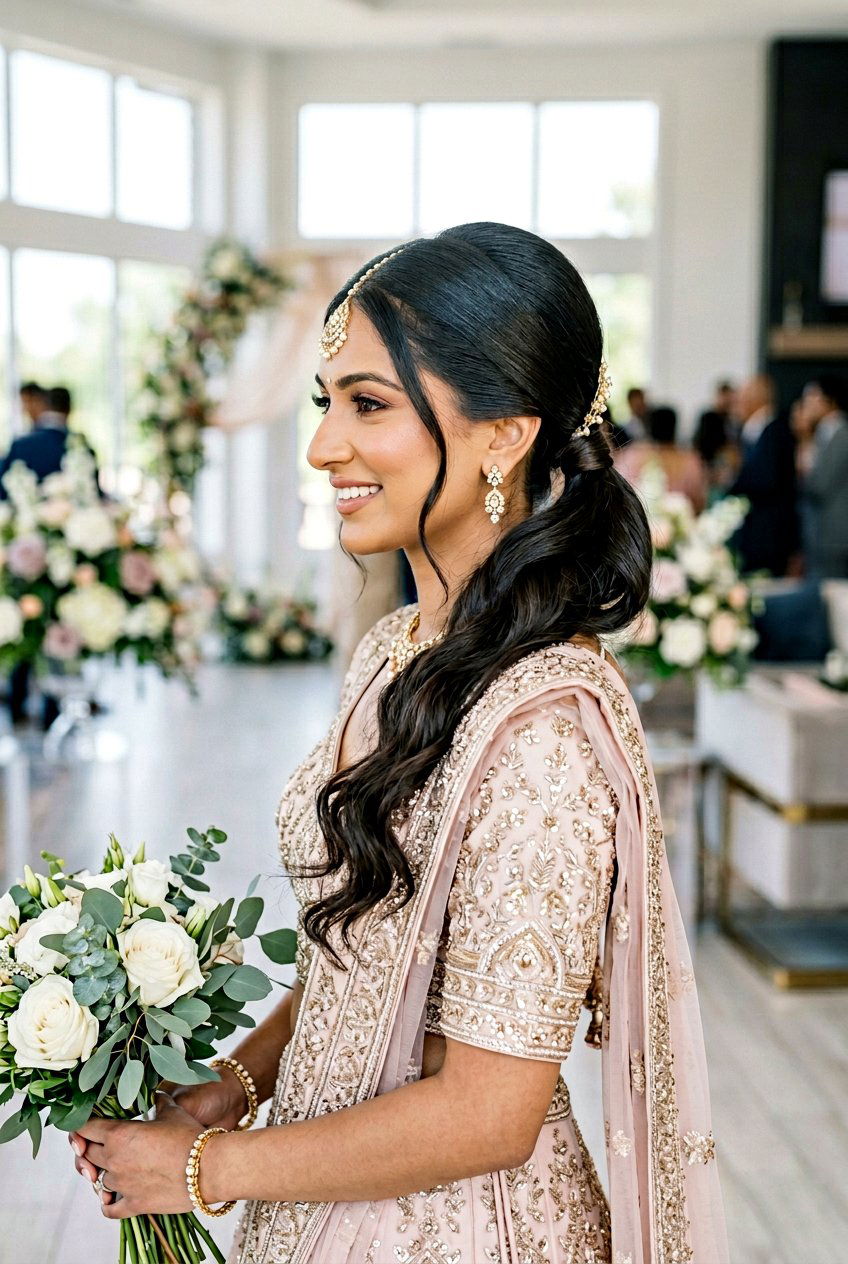
A side braided ponytail gives a chic, modern twist that works especially well for reception or cocktail events. Hair on one side is braided—often in a Dutch or rope pattern—and then gathered into a low ponytail toward the opposite side. The ponytail length is curled or lightly waved for movement. Brides can wrap a hair strand or jeweled accessory around the elastic for a polished finish. This style pairs beautifully with contemporary lehengas, gowns, and lighter jewelry, offering comfort for dancing and long evenings.
15. Rope Braid Bridal Hairstyle With Floral Accents
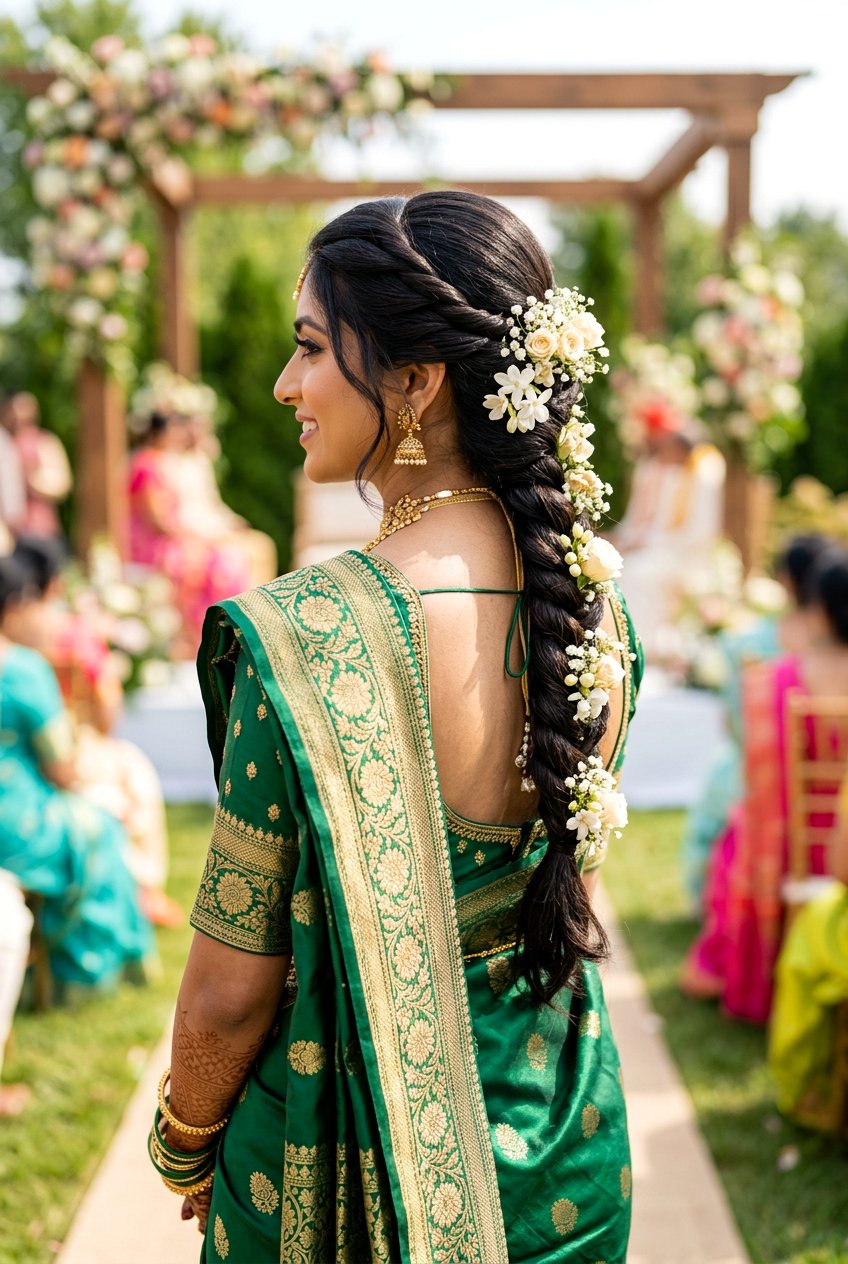
A rope braid bridal hairstyle looks sleek and modern but becomes very bridal once floral accents are added. Hair is smoothed and divided into two sections, twisted individually, then twisted together to create a rope-like pattern. The result is a neat, cylindrical braid that resists frizz and holds shape well. Florals or baby’s breath can be placed at the crown, mid-length, and ends to soften the structured look. This braid is ideal for humid climates and outdoor ceremonies where simplicity and longevity are a priority.

16. Bridal Braid With Pearl Hair Accessories
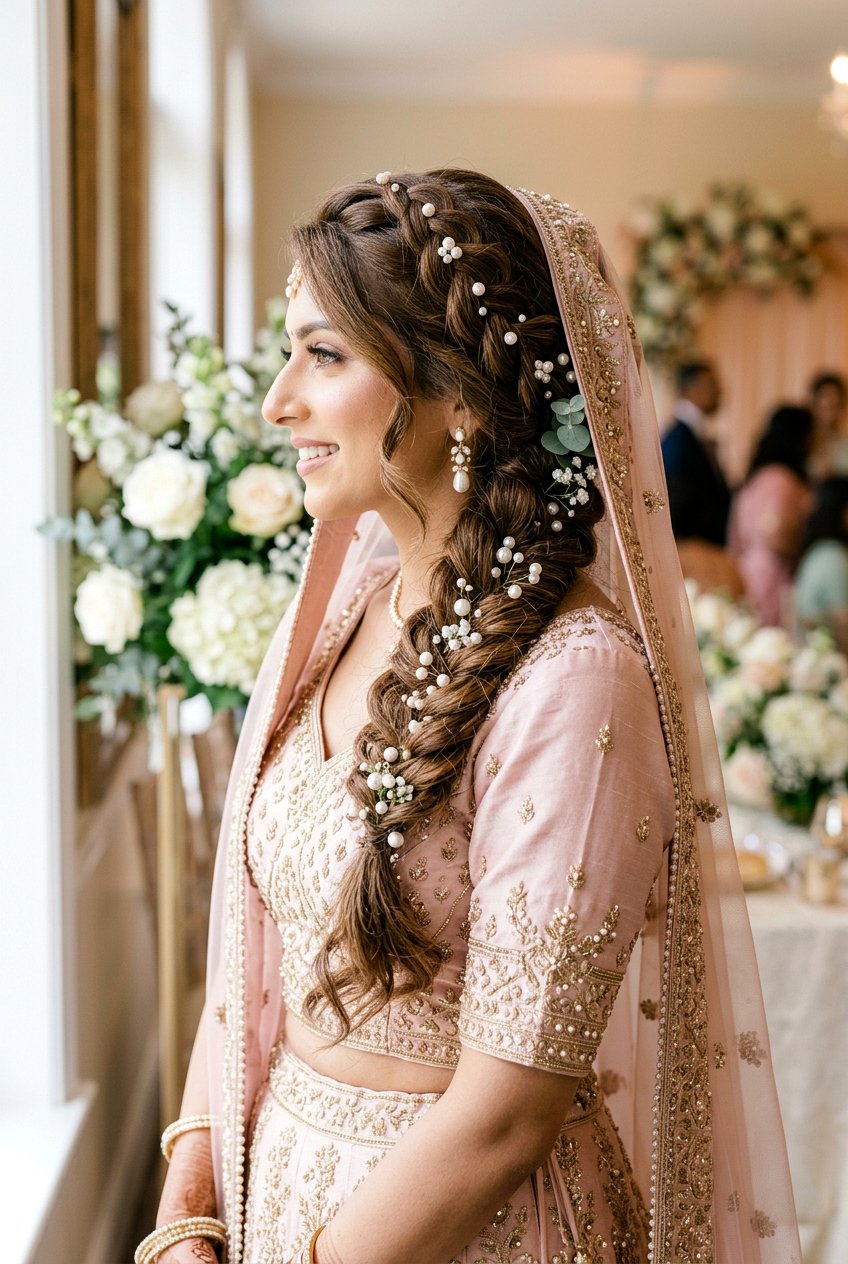
A bridal braid decorated with pearl hair accessories is subtle, elegant, and works with almost every color palette. The braid itself can be classic, fishtail, or Dutch, but it is usually kept fairly smooth so the pearls stand out. Small pearl pins or chains are then placed along the braid, often in a scattered pattern that catches light. This look is perfect for pastel lehengas, ivory sarees, and minimal jewelry sets. It also photographs beautifully in close-ups, adding texture without overpowering the bride’s face or outfit.
17. South Asian Bridal Braid With Maang Tikka And Passa
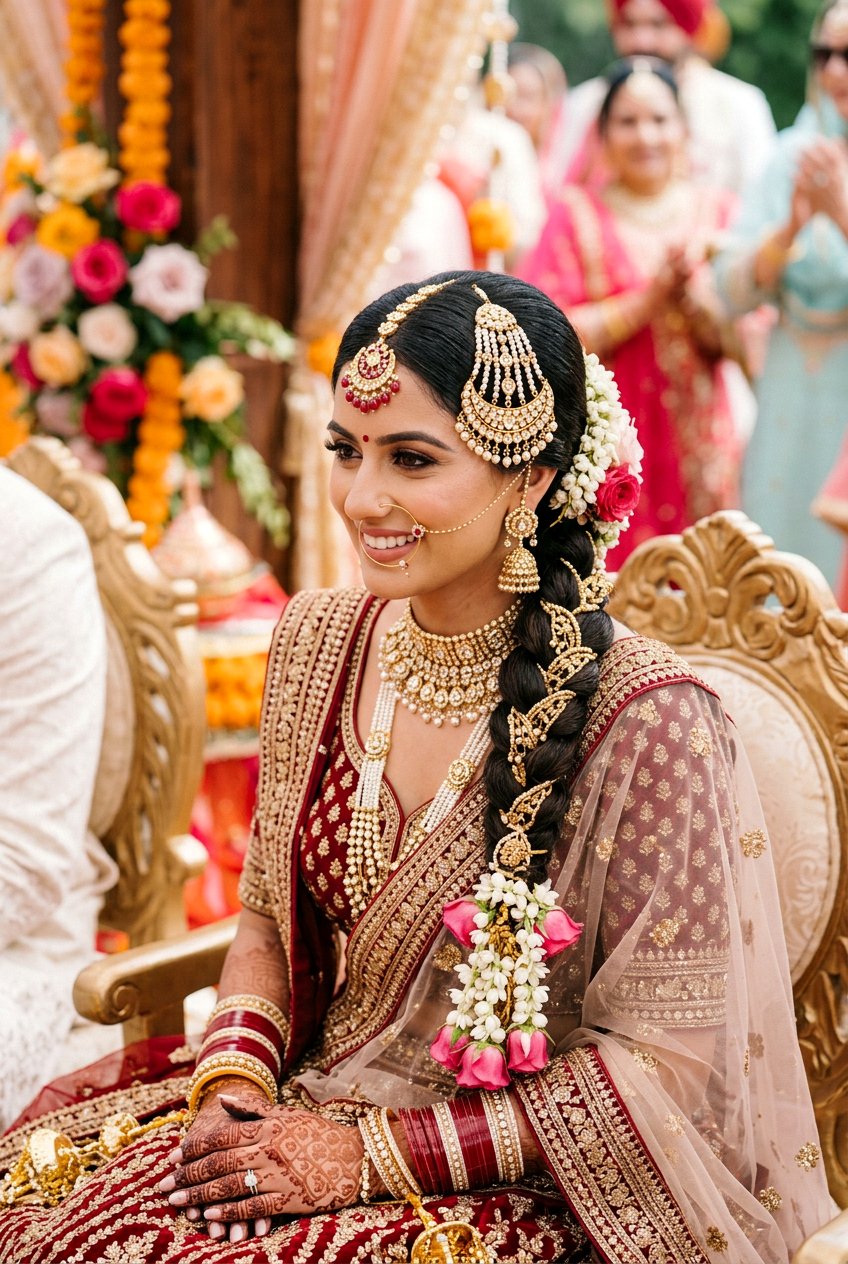
For brides wearing both a maang tikka and passa, a carefully planned bridal braid keeps everything balanced. Hair is usually center-parted to anchor the tikka, while the passa sits on one side, framing the face. The rest of the hair is braided down the back, often in a thick three-strand or Dutch braid. Light volume at the crown prevents the jewelry from looking too heavy. This look pairs well with shararas, Anarkali suits, or lehengas for Nikkah and walima events.
18. South Asian Bridal Braid With Dual Tone Flowers
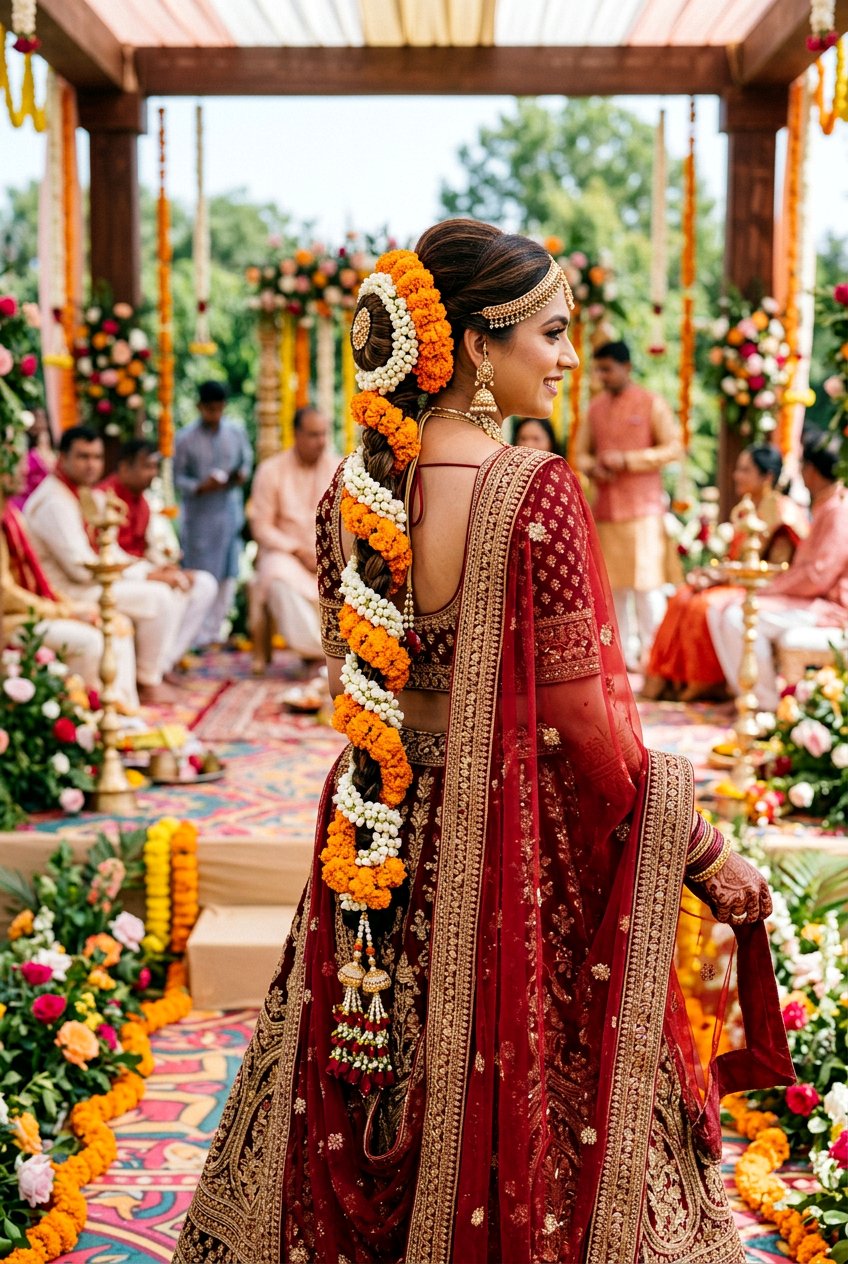
A South Asian bridal braid with dual tone flowers taps into a big recent trend of mixed-color floral gajras. The stylist first creates a secure braid—classic or fishtail—then adds flowers in two complementary shades, such as white jasmine with orange marigold or pink roses with cream buds. The colors can be alternated in bands or blended randomly for a softer effect. This design ties the hair look directly to the wedding palette and décor. It is ideal for daytime weddings and outdoor mandaps where colors really stand out.
19. Simple Traditional Indian Bridal Braid
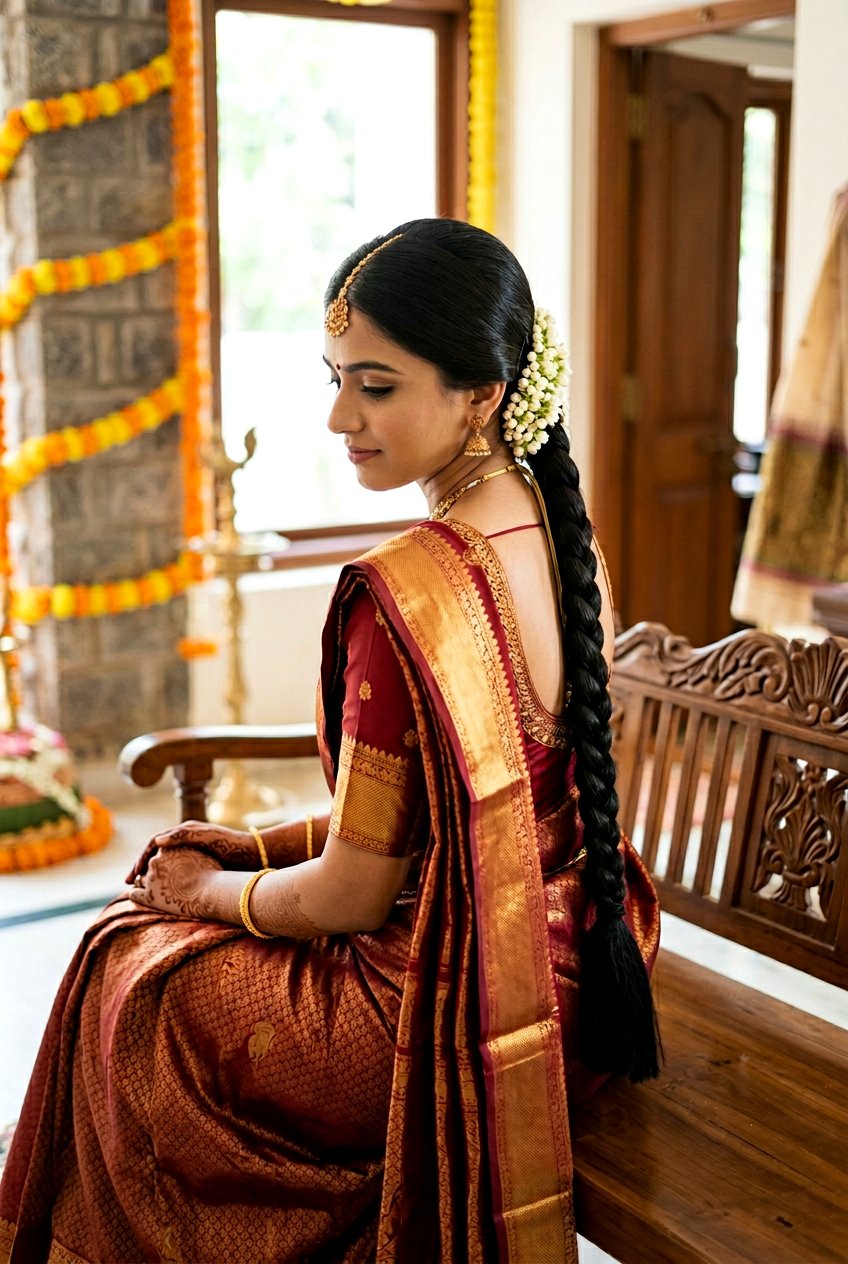
Sometimes a simple traditional Indian bridal braid is the most timeless option, especially for very classic ceremonies. Hair is neatly oiled or smoothed, parted in the center, and braided into one long three-strand plait down the back. Minimal accessories like a small gajra cluster, basic hairpins, and a maang tikka complete the look. This style feels light on the head and is easy to maintain through long rituals and travel. It suits modest jewelry, traditional sarees, and temple or home weddings where simplicity is valued.
20. Textured Bridal Braid With Soft Curls
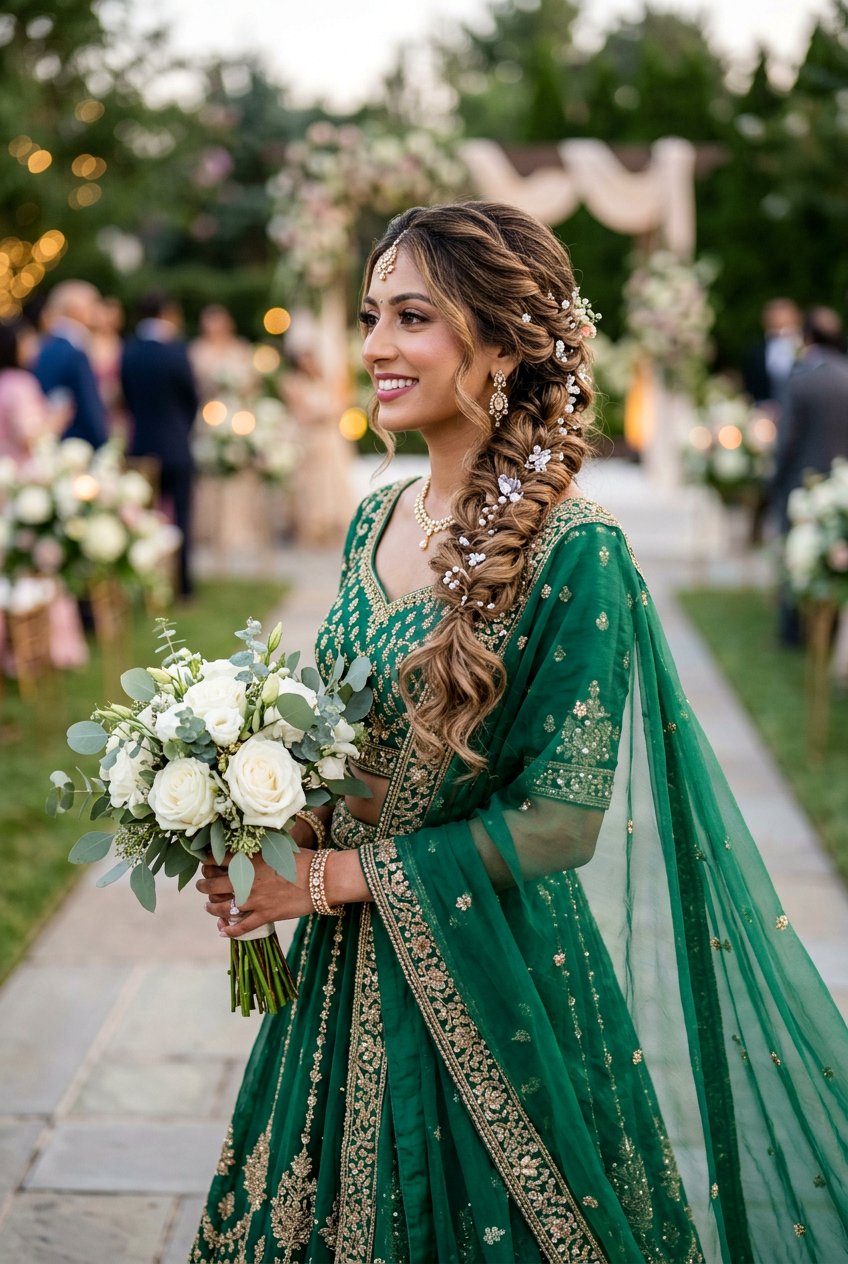
A textured bridal braid with soft curls gives a romantic, editorial feel that many modern South Asian brides love. Hair is curled first, then loosely braided so that curls peek out along the length rather than being tightly bound. Some sections may be pinned instead of fully woven to create a more organic shape. Light accessories such as crystal pins or tiny flowers are scattered through the braid for sparkle. This look works beautifully for evening pheras, receptions, or destination weddings with lighter, flowy outfits.
Conclusion:
Bridal braid hairstyles in South Asian weddings offer endless ways to honor tradition while still feeling personal and current in 2026. From temple-inspired jadas covered in gold pieces to soft, textured mermaid braids, each look can be tailored to outfit, venue, and climate. The key is choosing a braid that supports jewelry, dupatta placement, and long wear without sacrificing comfort. Fresh flowers, pearls, and subtle hair accessories help connect the hairstyle to the color story of your décor and clothing. Scheduling a trial with a bridal hairstylist, sharing reference photos, and testing how the braid holds over a few hours will help avoid surprises on the wedding day. With thoughtful planning, your bridal braid becomes a lasting part of your wedding memories and photographs.
You'll Like These Styles:



Leave a Reply