
The scene haircut for teenage girls is making a massive comeback in 2026, blending nostalgic 2000s energy with modern, high-tech hair care and sophisticated color techniques. Unlike the flatter silhouettes of the past, today’s scene aesthetic focuses on extreme volume at the crown and razor-sharp, ultra-thin ends that create a striking contrast. It is a bold form of self-expression that prioritizes individuality through vibrant neon shades, choppy layers, and the iconic deep side-swept fringe. Whether you are looking for a short, edgy bob or waist-skimming lengths with extensions, the modern scene look is all about “more is more.” By incorporating current trends like “scenecore” and “alt” aesthetics, teenage girls can customize this look to be either a literal retro throwback or a fresh, futuristic statement.
1. Long Layered Scene Hair
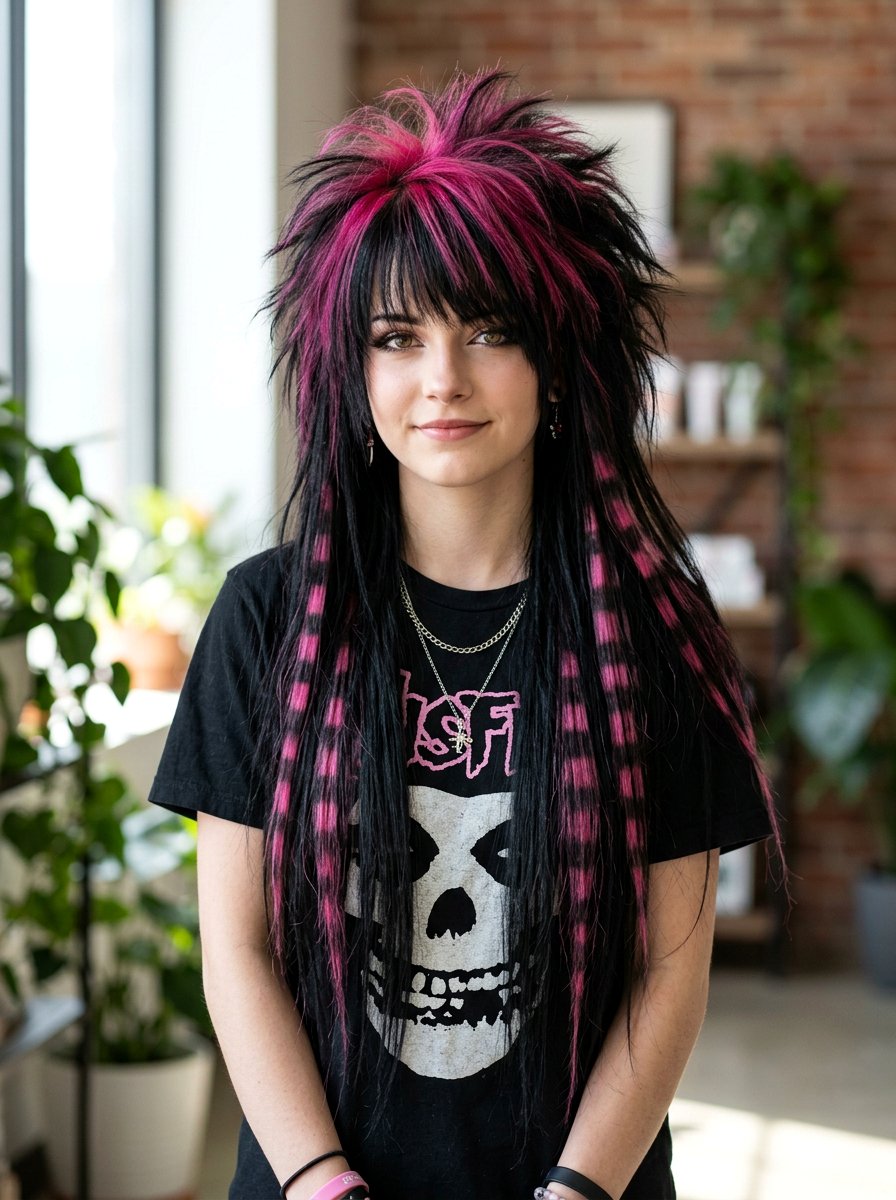
The quintessential long scene look relies on a dramatic difference between the top and bottom layers to create a “jellyfish” or “mullet” inspired silhouette. To achieve this, the top section of the hair is cut into short, choppy layers that stop around the chin or shoulders, while the remaining hair remains very long and thin. This creates a mushroom-like volume at the top that tapers down into sleek, straight lengths. For teenage girls, this style is often enhanced with high-contrast “coon tails” or horizontal striped highlights in the lower sections. Styling requires a flat iron to keep the bottom pin-straight while using a texturizing spray at the roots to maintain the signature height and fullness throughout the day.
2. Choppy Scene Bob
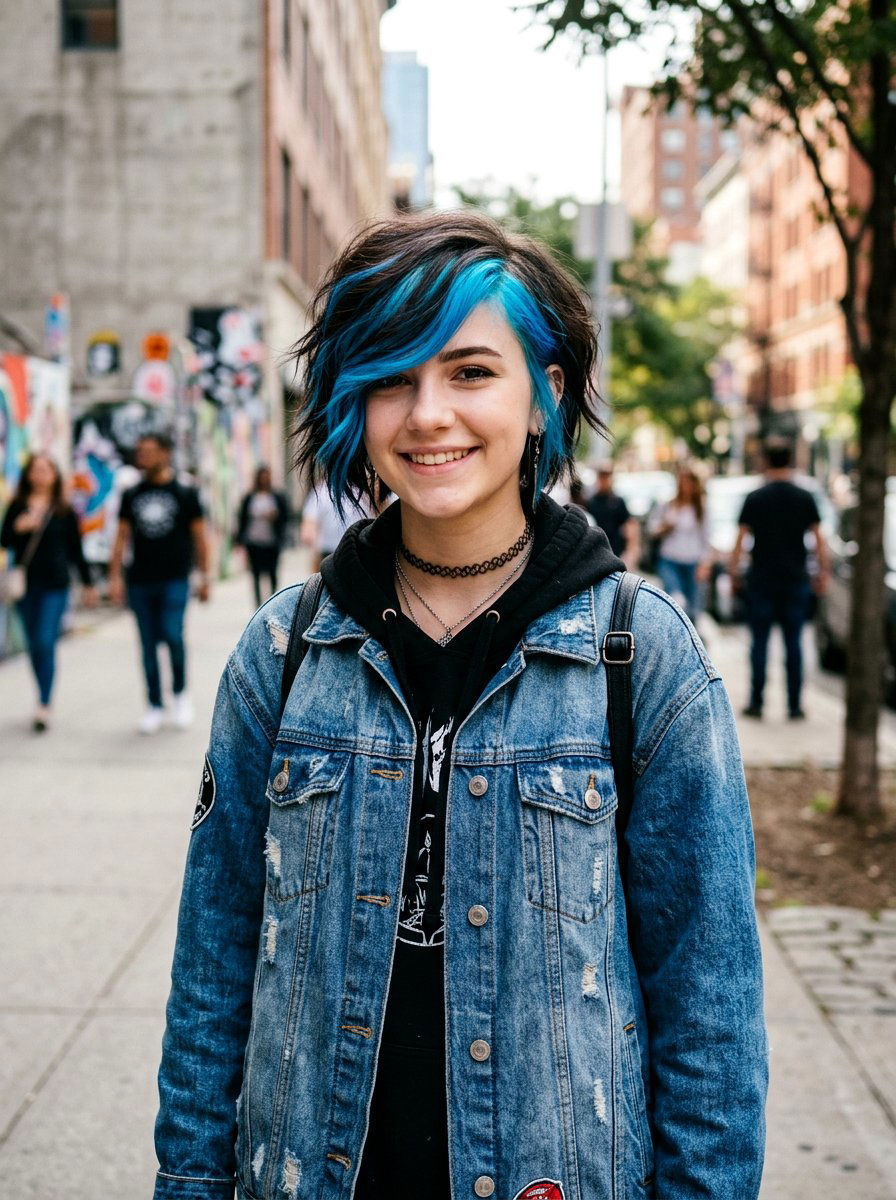
A choppy scene bob is the perfect alternative for girls who want the edgy aesthetic without the maintenance of long extensions. This haircut typically hits between the jawline and the shoulders and features a heavy amount of internal texturizing to remove bulk from the ends. The focal point of this look is the asymmetrical, deep-parted fringe that covers one eye, blending seamlessly into the side layers. To keep it modern in 2026, many teens are opting for a “shag-bob” hybrid that incorporates messy, air-dried texture instead of the traditional stiff, hairsprayed finish. Adding vibrant peek-a-boo highlights in shades like electric blue or neon pink can give this short cut a punchy, rebellious personality.
3. Scene Hair With Coon Tails
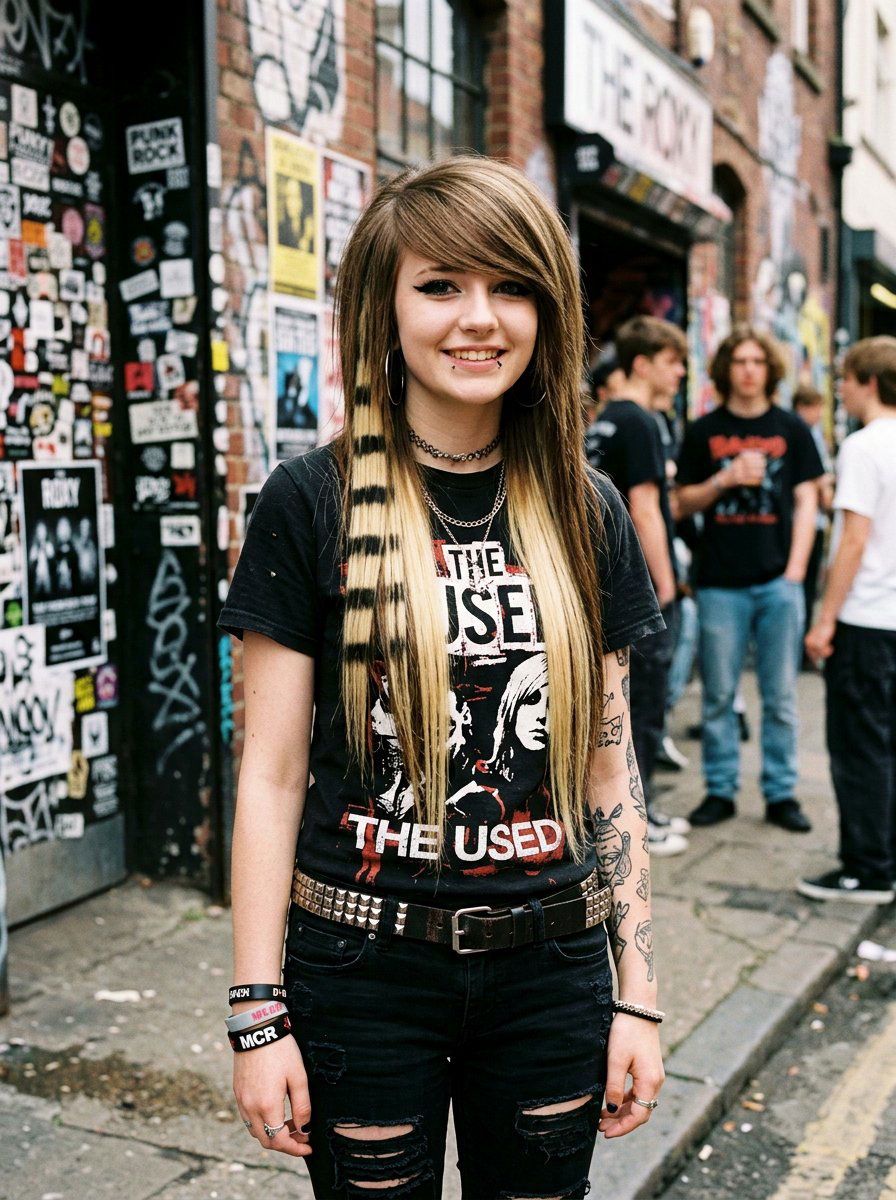
Incorporating coon tails is a classic way to identify a true scene haircut, involving horizontal striped patterns usually applied to specific sections of the hair. While the base haircut is typically a long, layered style with a heavy fringe, the addition of these patterns—often in black and platinum or neon colors—adds a graphic, DIY feel. In the current 2026 trend cycle, these stripes are often created using temporary hair chalk or clip-on extensions to avoid permanent damage. This styling element works best when the hair is straightened to a mirror-like finish, allowing the precision of the stripes to stand out. It remains one of the most recognizable and sought-after subculture hair details for alternative teenagers.
4. Neon Rainbow Scene Hair
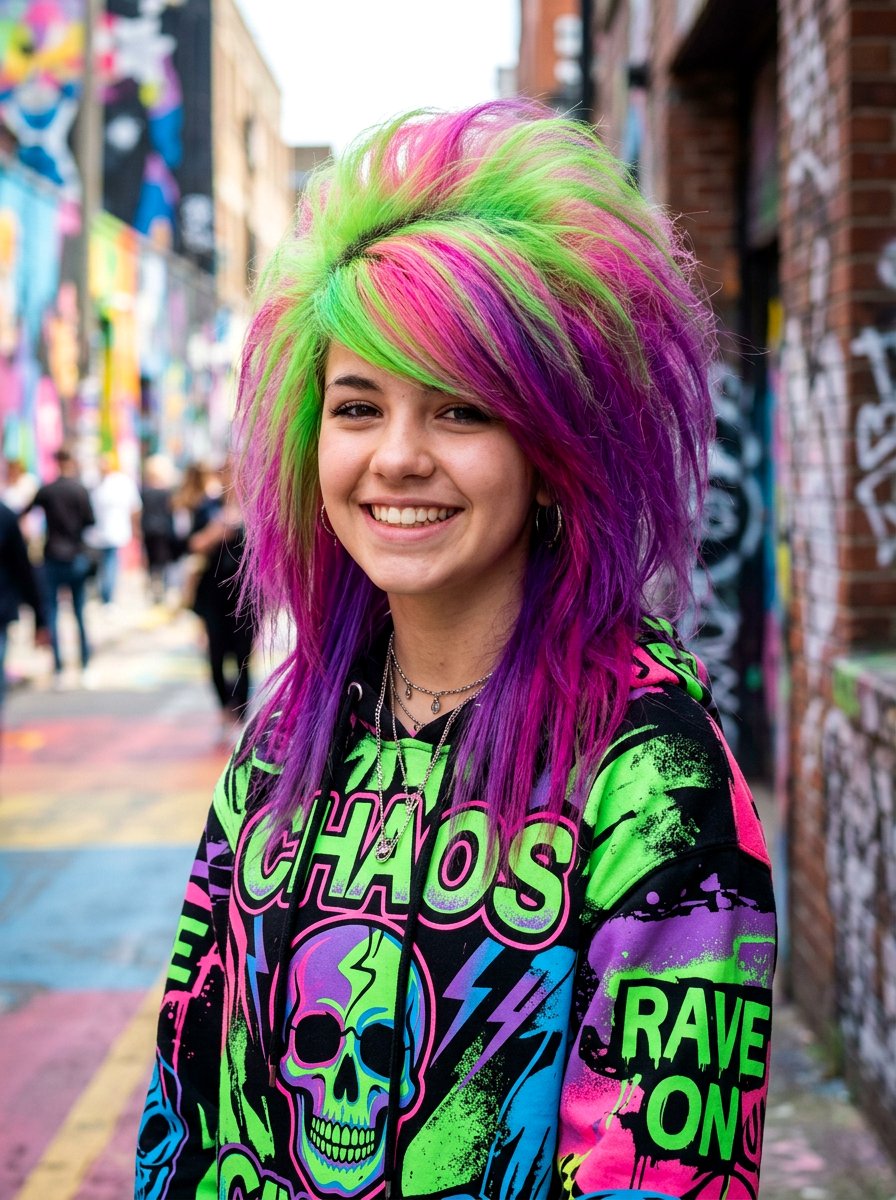
Scene culture has always been defined by its “raver” influences, and nothing says scene quite like a full-head neon rainbow transformation. This look involves a heavily layered, teased haircut that serves as a canvas for multiple vivid colors like lime green, hot pink, and bright turquoise. The colors are often applied in a “color melting” technique or in distinct chunky blocks to emphasize the different lengths of the layers. Because the scene haircut relies so much on texture and volume, the play of light on the different neon hues creates a multidimensional, holographic effect. To maintain this look, using sulfate-free, color-safe shampoos is essential to prevent the bright dyes from bleeding or fading prematurely.
5. Teased Scene Queen Hair
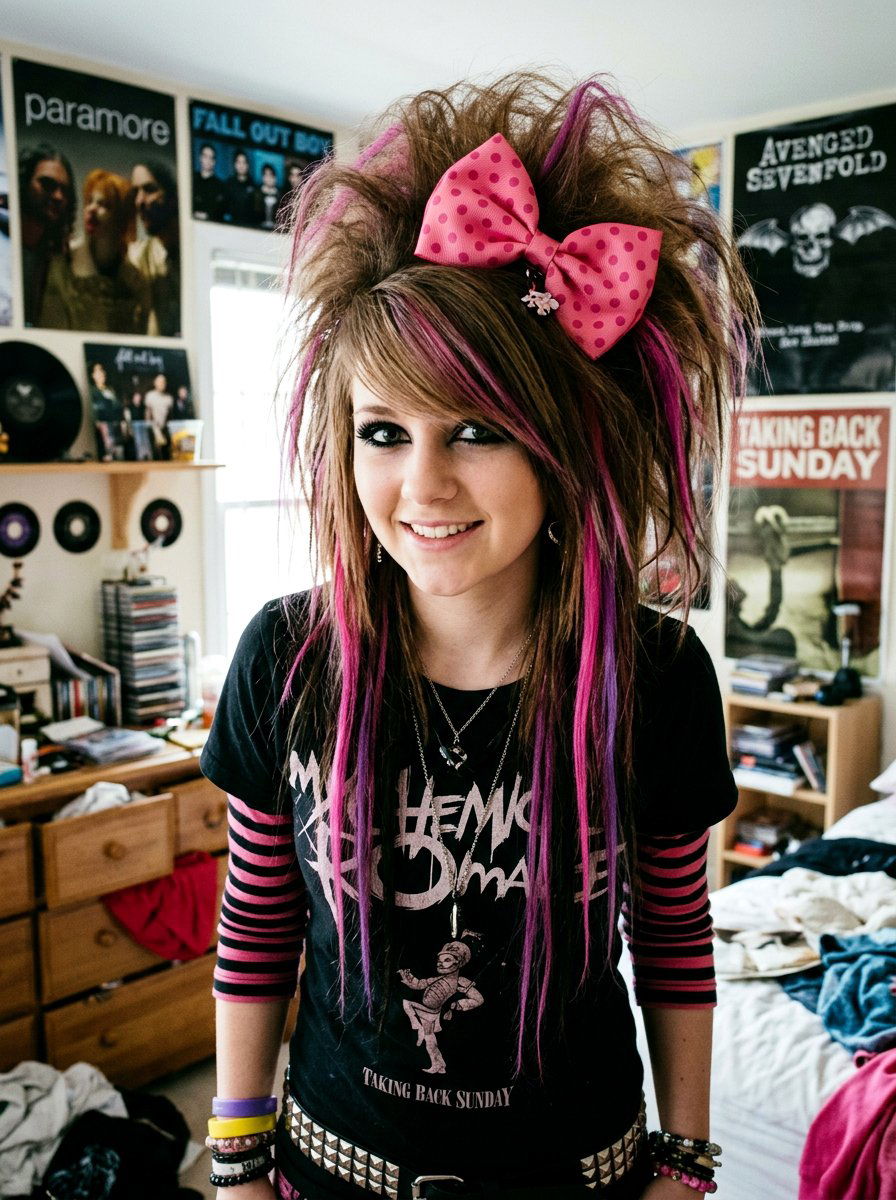
The “Scene Queen” look is all about maximum volume at the crown, achieved through heavy backcombing and teasing. This style usually features medium to long hair with short, face-framing layers that are flicked outward or upward. The “poof” at the back of the head is the signature characteristic, often secured with strong-hold hairspray to ensure the height lasts through school or concerts. While the ends are kept razor-thin and straight, the top is a cloud of messy, purposeful texture. Many girls pair this with large hair accessories, such as oversized bows or colorful clips, to further emphasize the “more is more” philosophy of the 2000s-inspired alternative fashion scene.
6. Short Scene Pixie
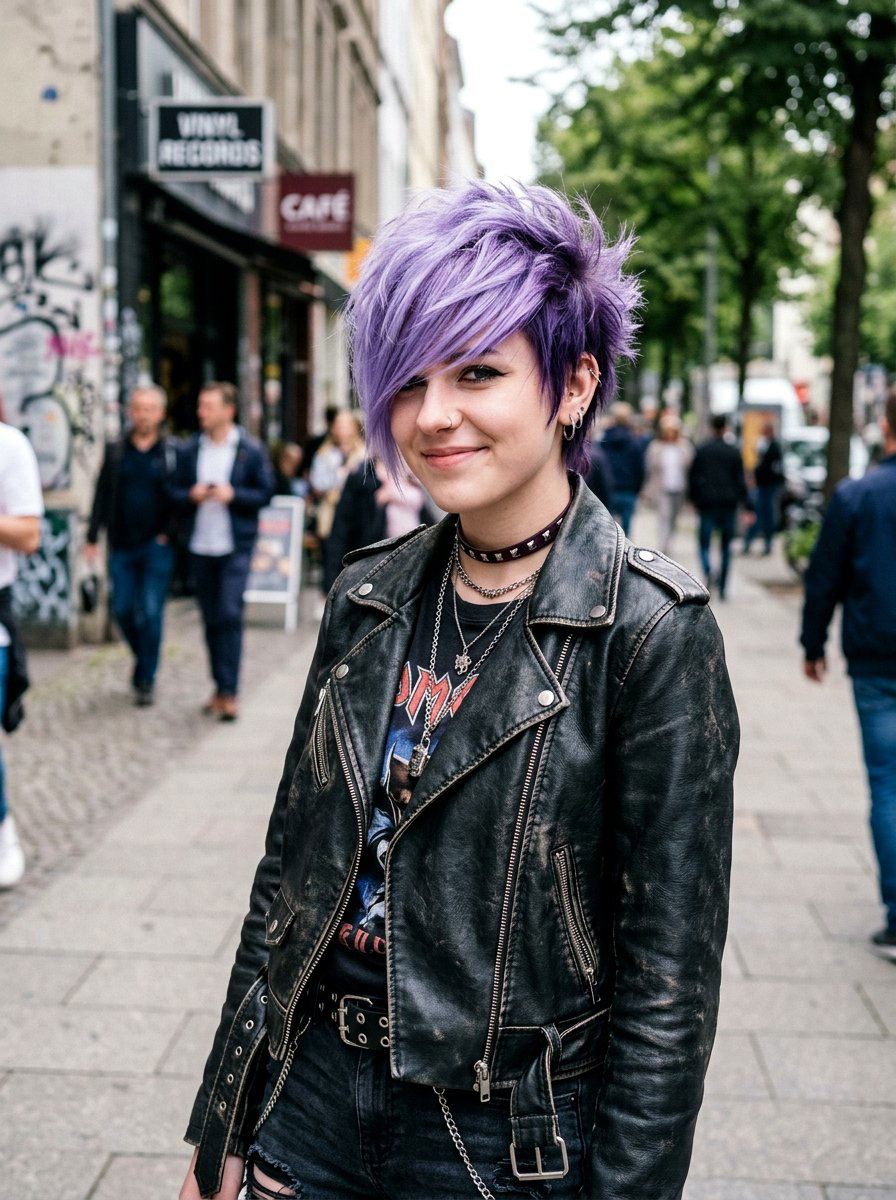
For a bold and low-maintenance option, the short scene pixie offers a sharp, masculine-meets-feminine edge that is highly popular in 2026. This cut features very short, buzzed or tapered sides and back, while the top remains long enough to style into a dramatic, sweeping fringe. The top layers are heavily razored to create a spiky, “tufted” look that can be styled forward or to the side. This version of the scene look is often paired with a single, high-impact color like icy white or deep violet. It is an excellent choice for girls with fine hair, as the short layers and texturizing techniques naturally create the appearance of more volume and movement.
7. Scene Hair With Side Shave
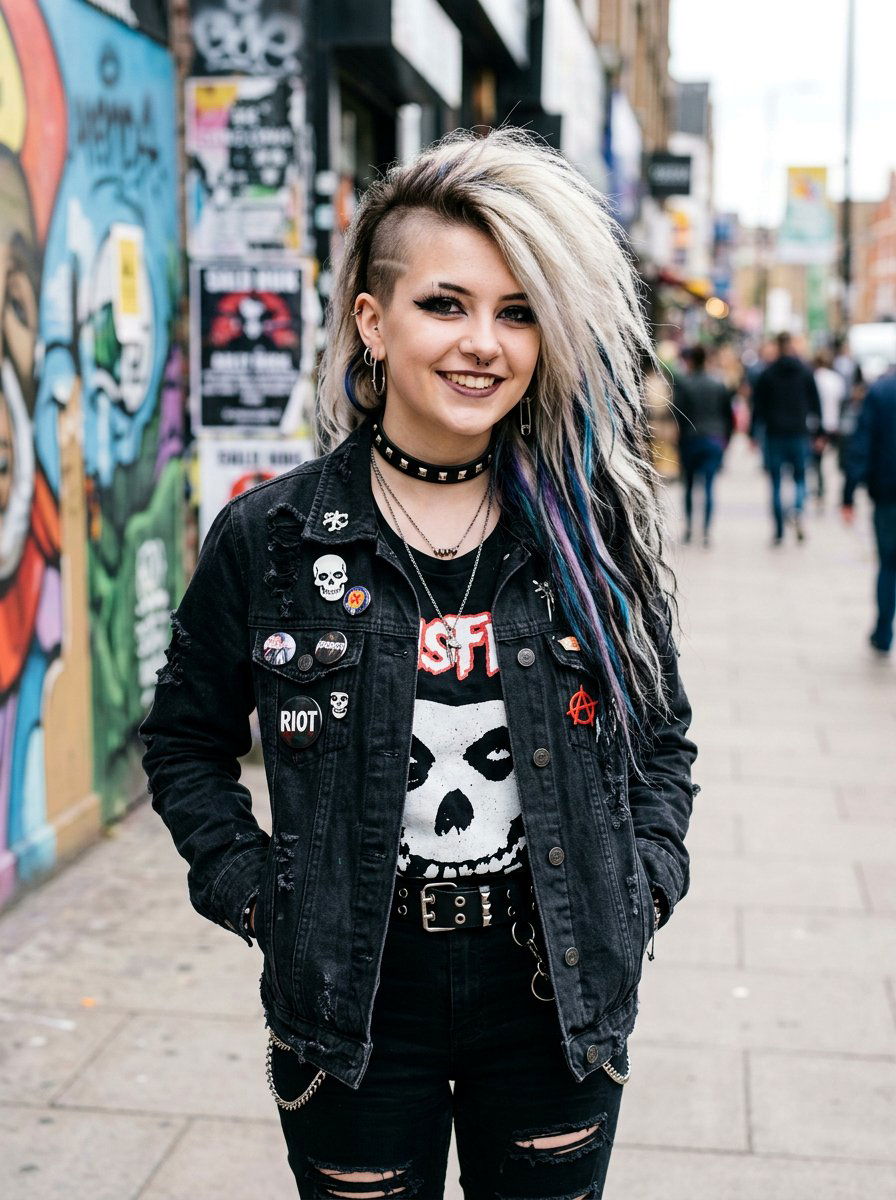
Adding an undercut or a side shave to a scene haircut provides an extra layer of “alt” edge that is perfect for 2026’s rebellious fashion trends. This involves shaving one side of the head, usually near the temple, while the rest of the hair is kept in a traditional long, layered scene style. The contrast between the bare scalp and the voluminous, colorful hair on the other side creates a striking asymmetrical silhouette. This style is particularly versatile because the long layers on top can be parted differently to hide the shaved section for more formal occasions or displayed proudly for a punk-rock vibe. It reduces weight for girls with thick hair, making styling easier.
8. Pastel Scene Shag
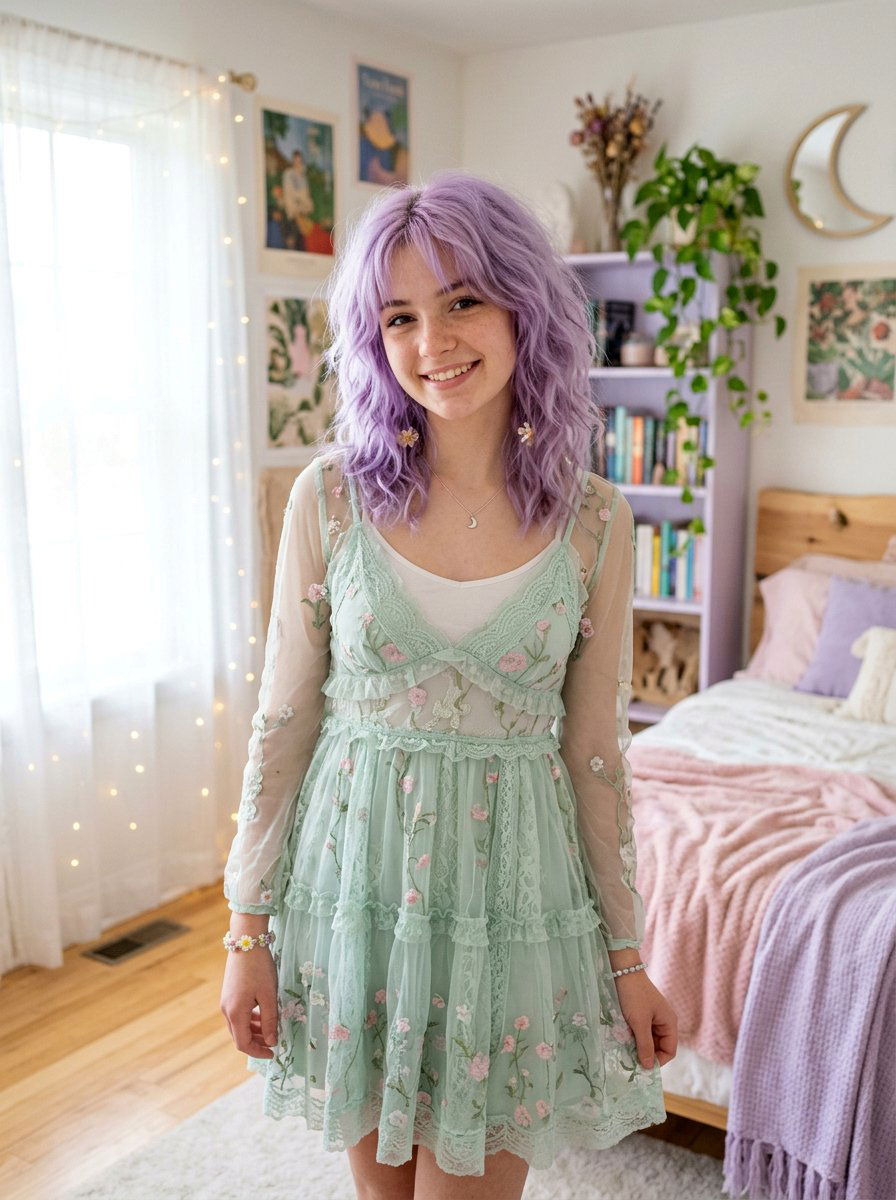
The pastel scene shag is a softer, more “fairy-core” take on the traditional scene aesthetic, utilizing muted tones like lavender, mint, and baby pink. This haircut focuses on a shaggy, 1970s-inspired shape with plenty of crown volume and wispy, face-framing bangs. Unlike the harsh, straight lines of classic emo-scene hair, the pastel shag embraces natural waves and a softer, more “lived-in” texture. This makes it a popular choice for teenage girls who want the alternative look but prefer a more ethereal or whimsical color palette. Using a sea salt spray or a light mousse helps to define the choppy layers without making the hair feel stiff or crunchy.
9. Scene Mullet Hybrid
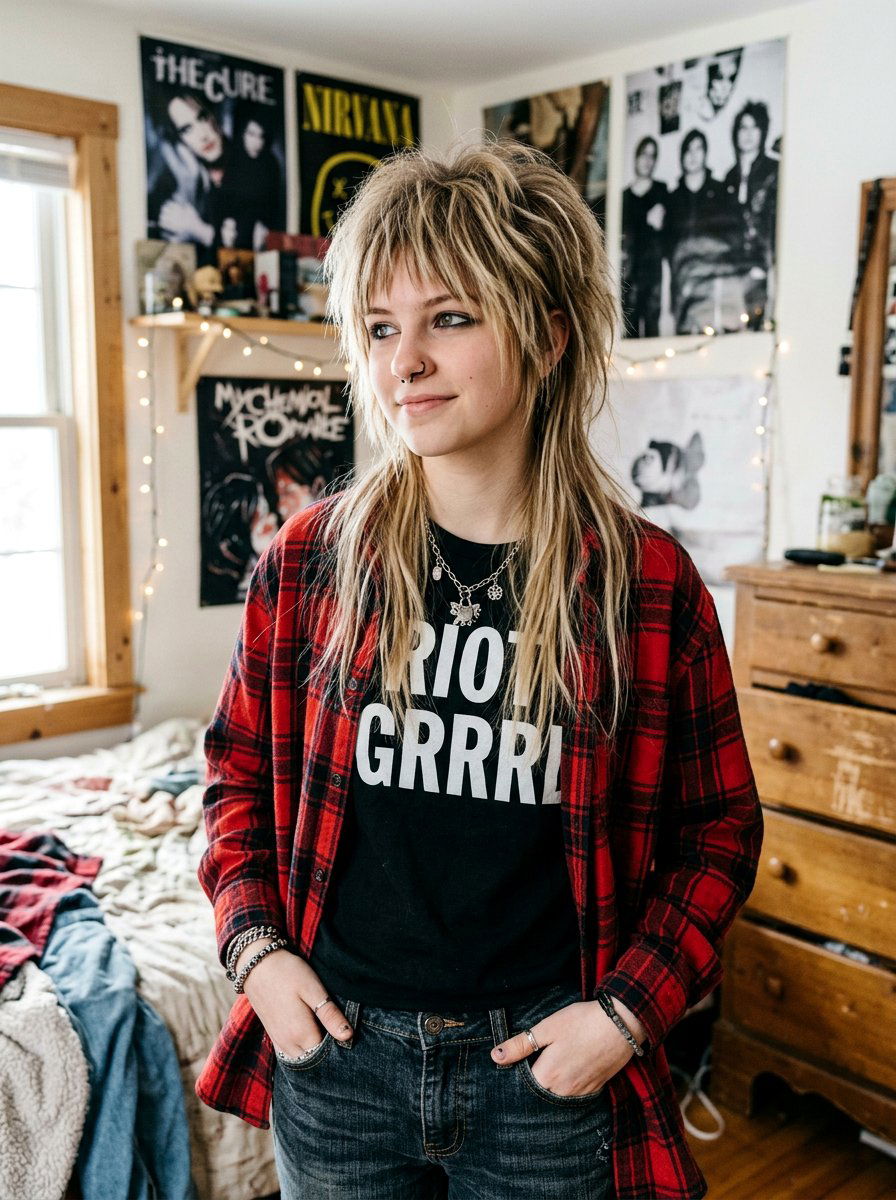
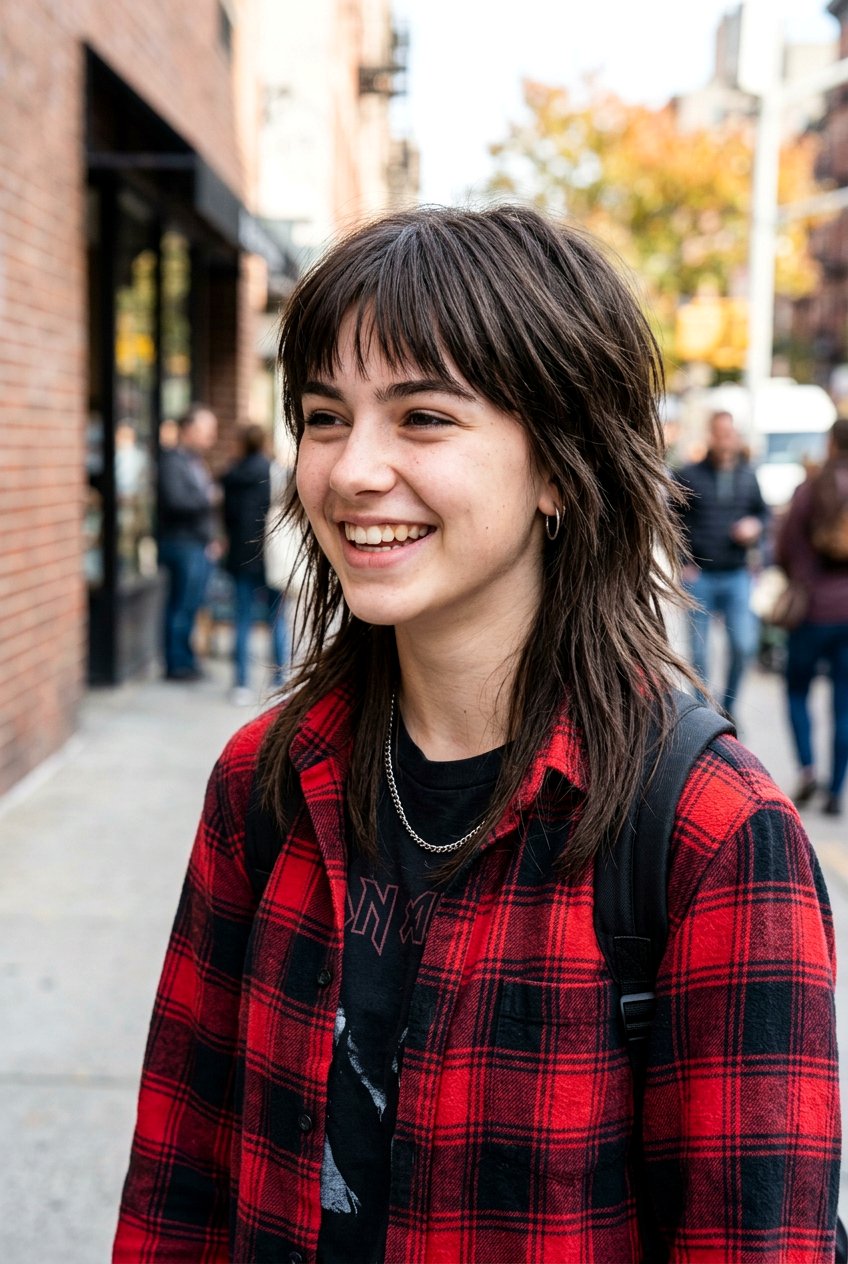
The modern scene mullet, often referred to as a “wolf cut” or “octopus cut,” is a major trend for 2026 that perfectly captures the scene spirit. This cut is characterized by extreme layering, with the hair being significantly shorter at the temples and top, flowing into longer, thinner lengths at the back. It creates a wild, predatory silhouette that frames the face with sharp, “bitey” layers. This style is often worn with a blunt, straight-across fringe or the classic side-swept bangs. Because the layers are so aggressive, this haircut provides instant style with minimal effort, as the “messy” look is built directly into the shape of the cut itself.
10. Platinum Blonde Scene Hair
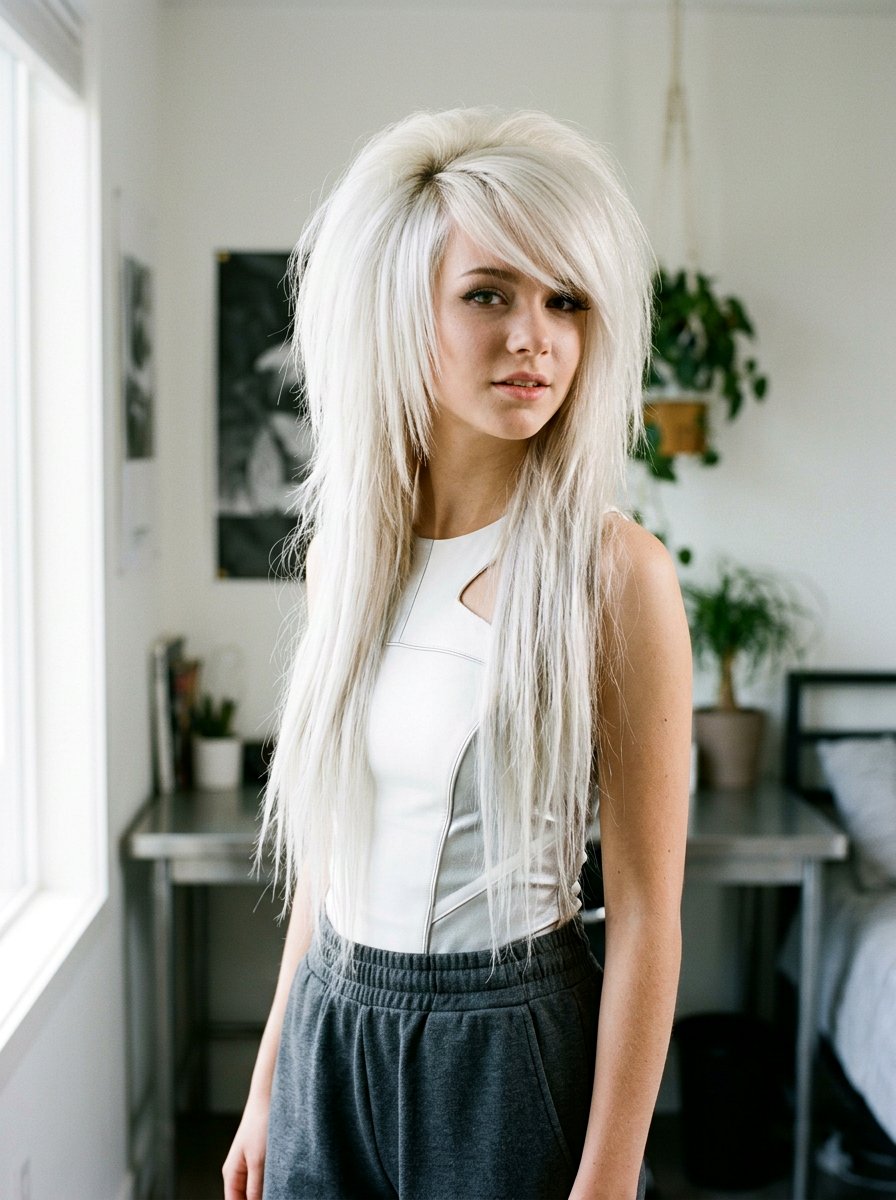
A stark platinum blonde base is a high-fashion way to wear a scene haircut, providing a clean and bright backdrop for dramatic styling. This look usually features waist-length hair with the signature short top layers, all bleached to a uniform, icy white shade. The monochromatic look is often broken up with a few “peek-a-boo” streaks of black or neon color underneath the top layers. Platinum hair requires significant upkeep, including regular root touch-ups and purple shampoo treatments, but the visual impact is undeniable. It creates a futuristic, almost doll-like appearance that fits perfectly within the modern “scenecore” aesthetic popular on social media platforms.
11. Scene Hair With Chunky Highlights
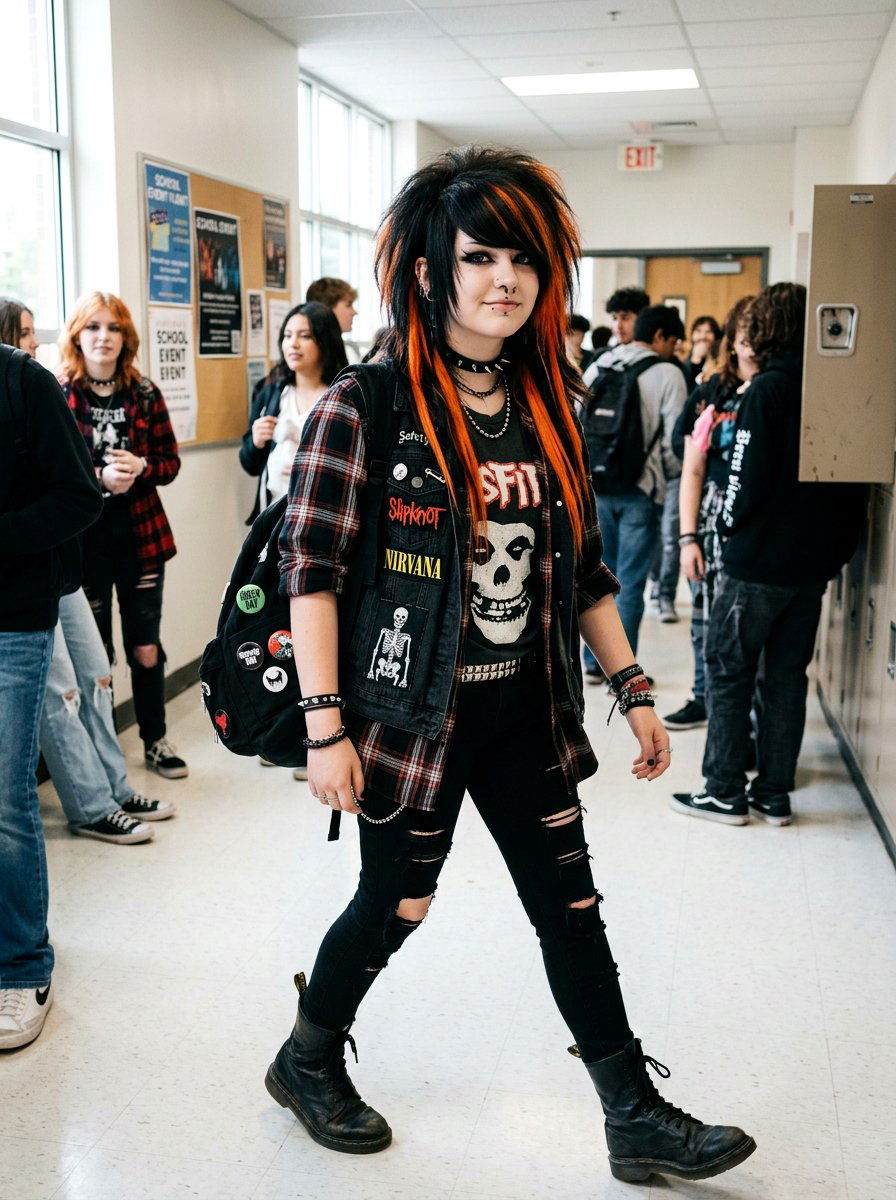
Chunky highlights are a staple of the scene look, moving away from the subtle, blended balayage of recent years and returning to the “stripey” aesthetic of the mid-2000s. In a scene haircut, these highlights are often placed in the bangs or the front face-framing layers to draw attention to the eyes. The colors are typically high-contrast, such as bright orange on black hair or pink on blonde hair. These thick sections of color emphasize the choppy, disconnected layers of the haircut, making the hair look even more textured and voluminous. This is a great way for teens to experiment with color without committing to a full-head dye job.
12. Asymmetrical Scene Cut
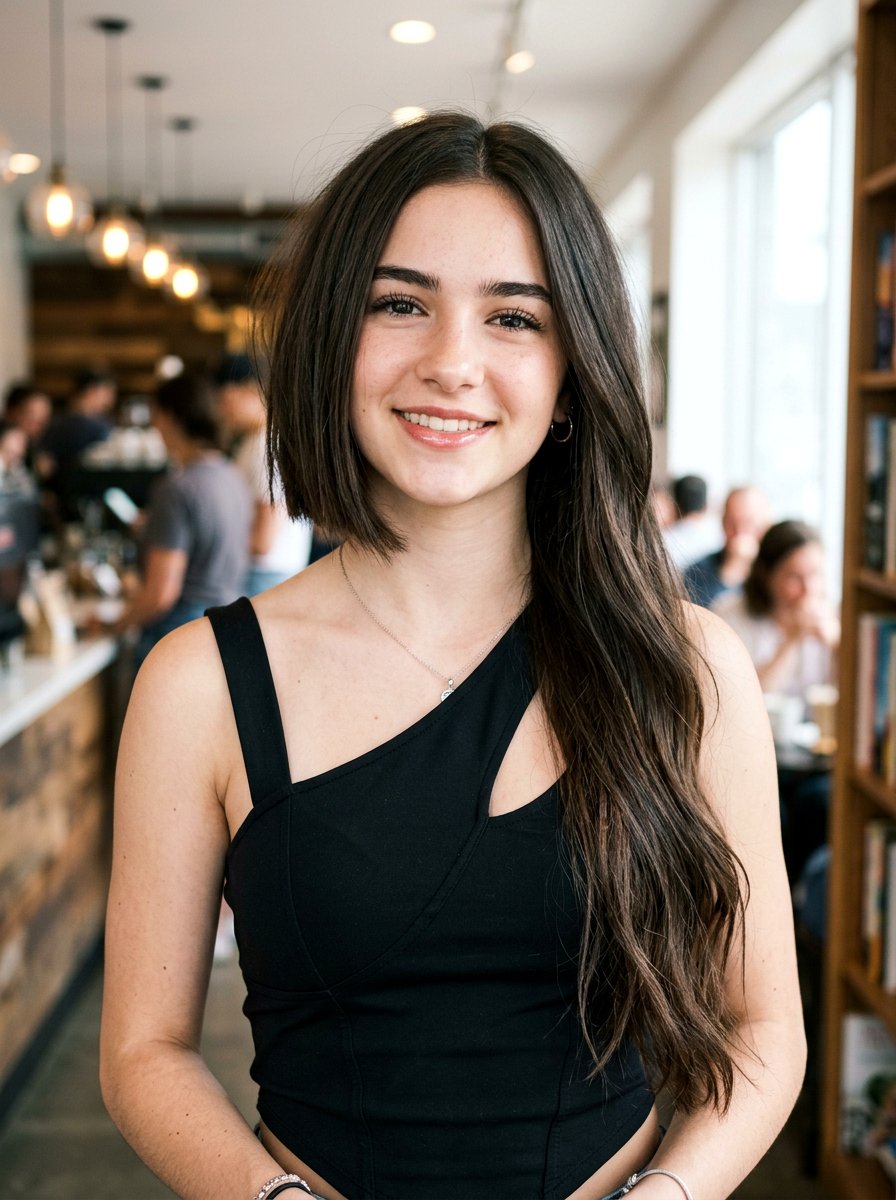
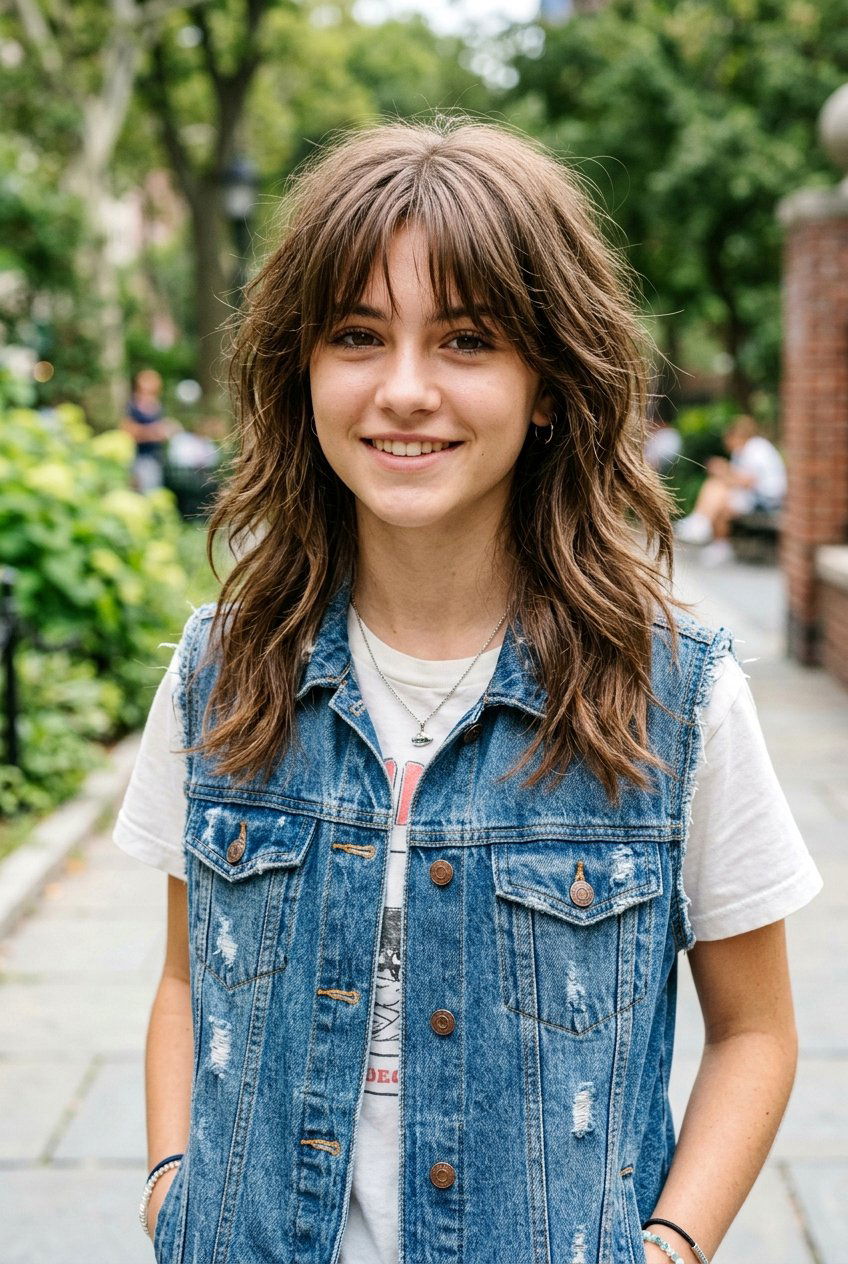
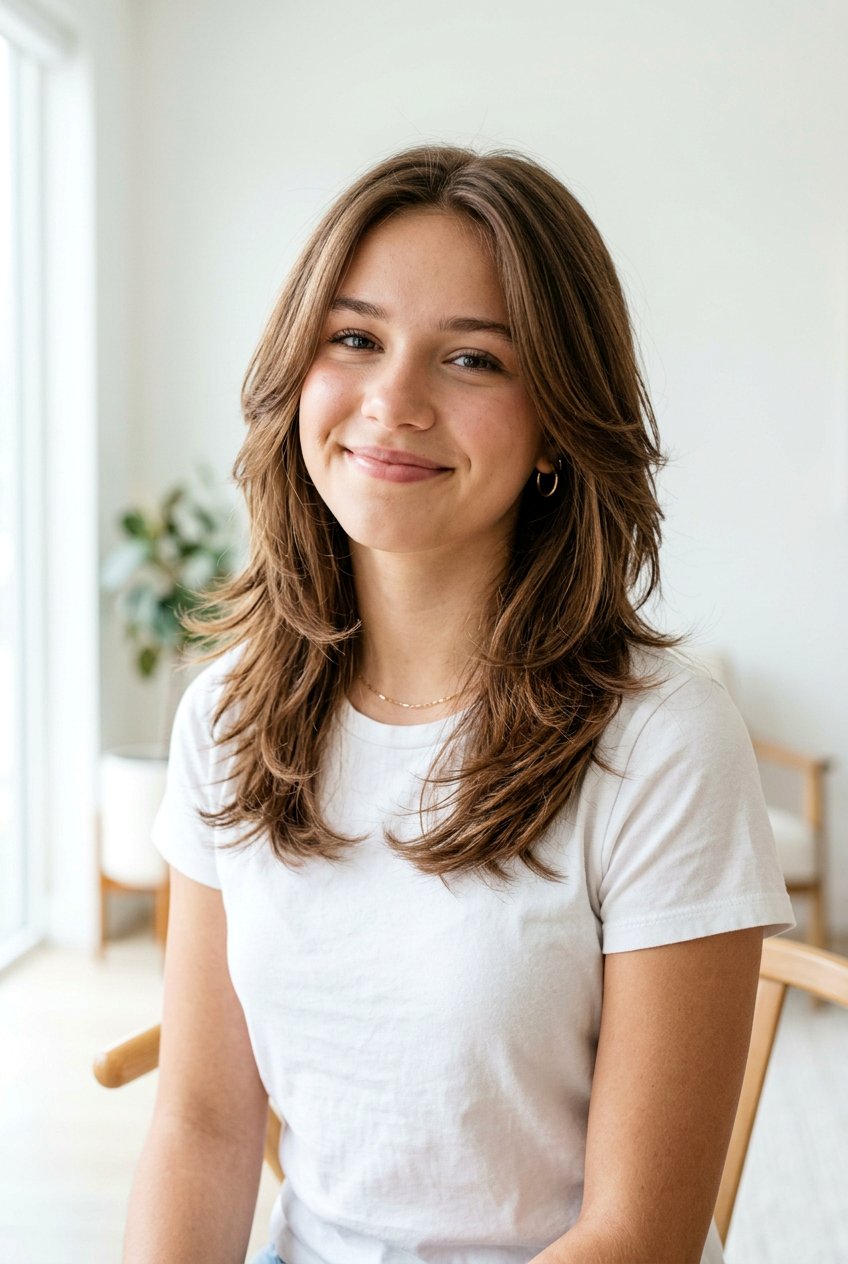
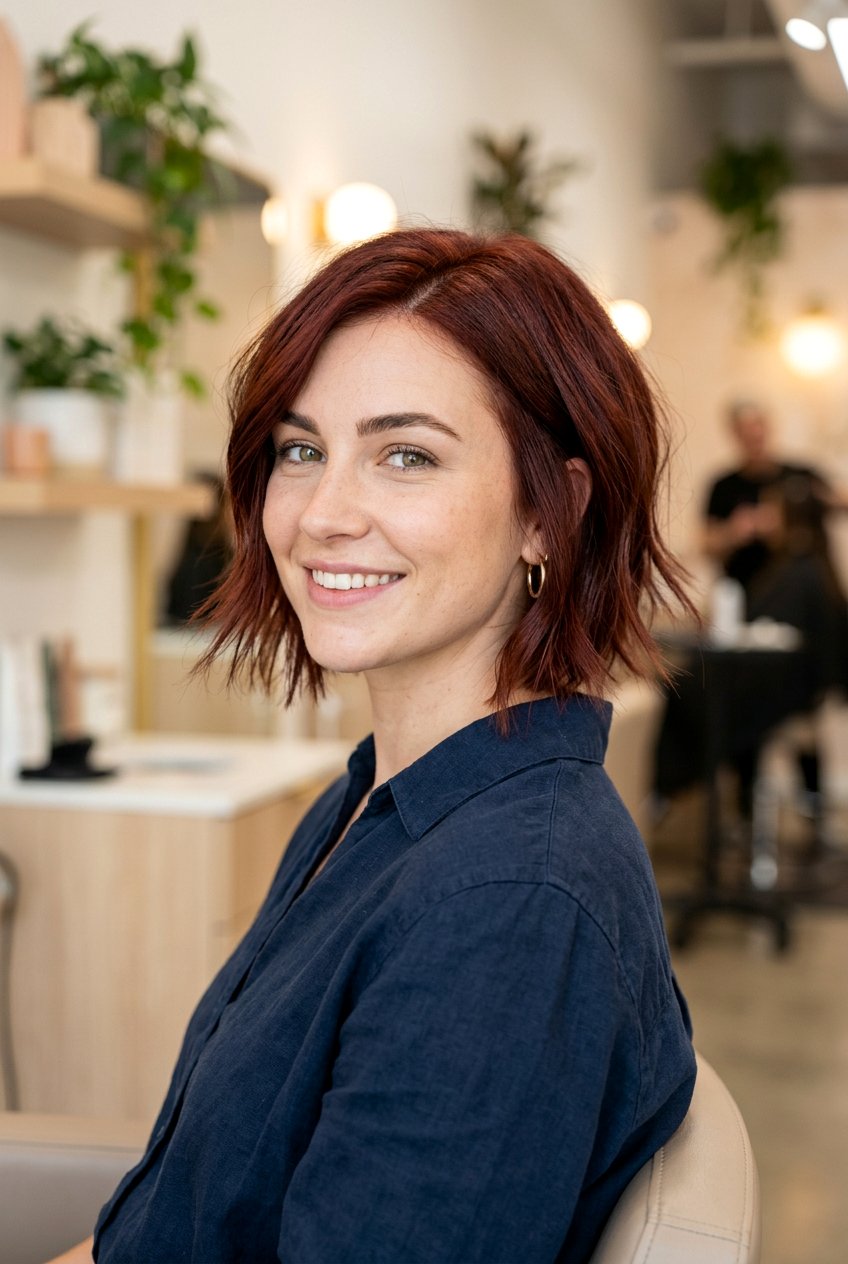
The asymmetrical scene cut plays with varying lengths on either side of the face to create a dynamic and edgy look. One side might be a chin-length bob, while the other side features long, flowing extensions or shoulder-length layers. This imbalance is highlighted by the deep side part and the heavy fringe, which usually sweeps toward the longer side. This haircut is ideal for girls who want to stand out and challenge traditional beauty standards. It works well with both straight and wavy textures, though straightening the hair typically makes the dramatic difference in length more apparent and “graphic” in its presentation.
13. Scene Hair With Bows
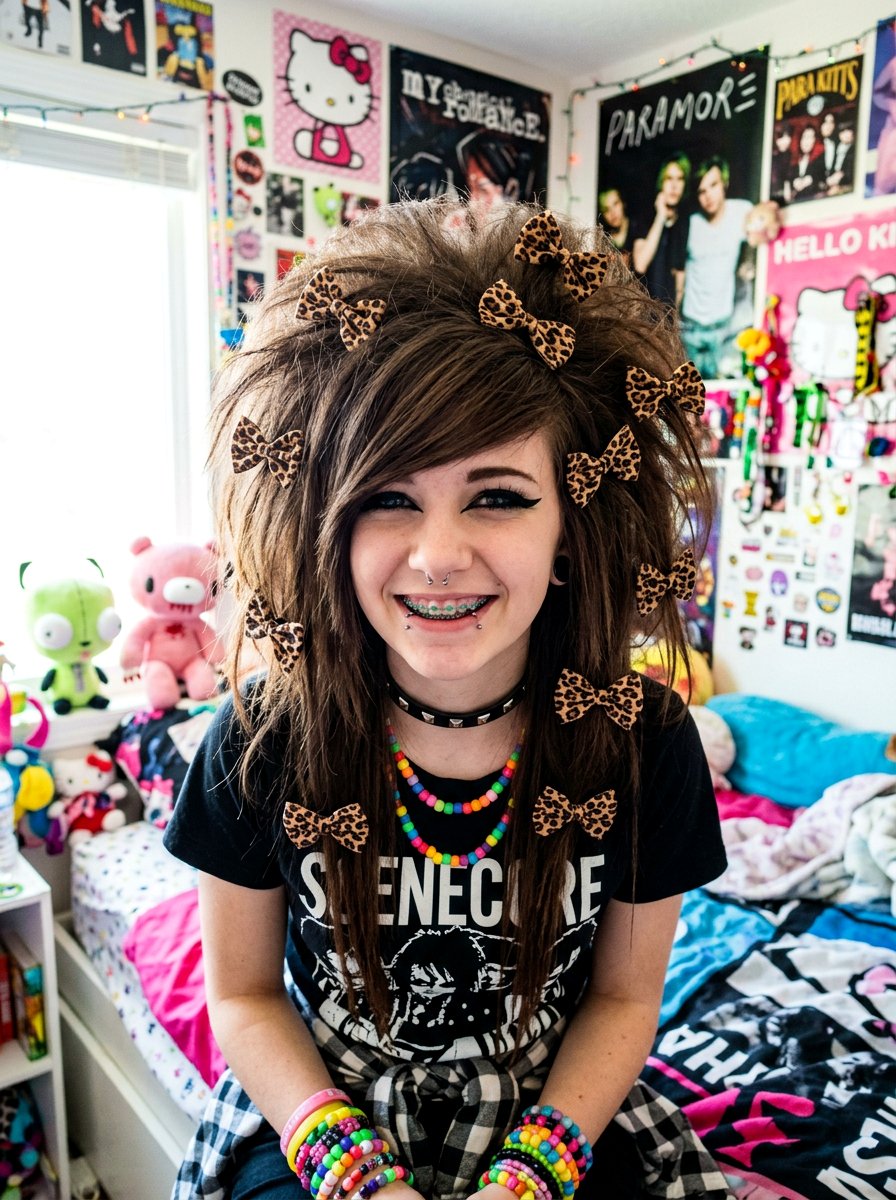
Accessorizing with oversized bows is a hallmark of the “Scene Queen” era, and it remains a popular styling choice for teenage girls in 2026. The haircut itself is usually voluminous and teased at the crown, providing a stable base for a large, colorful bow to be clipped in. These bows often feature patterns like checkers, polka dots, or leopard print, adding a playful and feminine touch to an otherwise edgy haircut. This styling choice helps to balance the sharp, razored layers of the hair with a “cute” element, creating the “creepy-cute” aesthetic that many alternative teens adore. It is a quick and easy way to dress up a basic scene cut.
14. Midnight Black Scene Hair
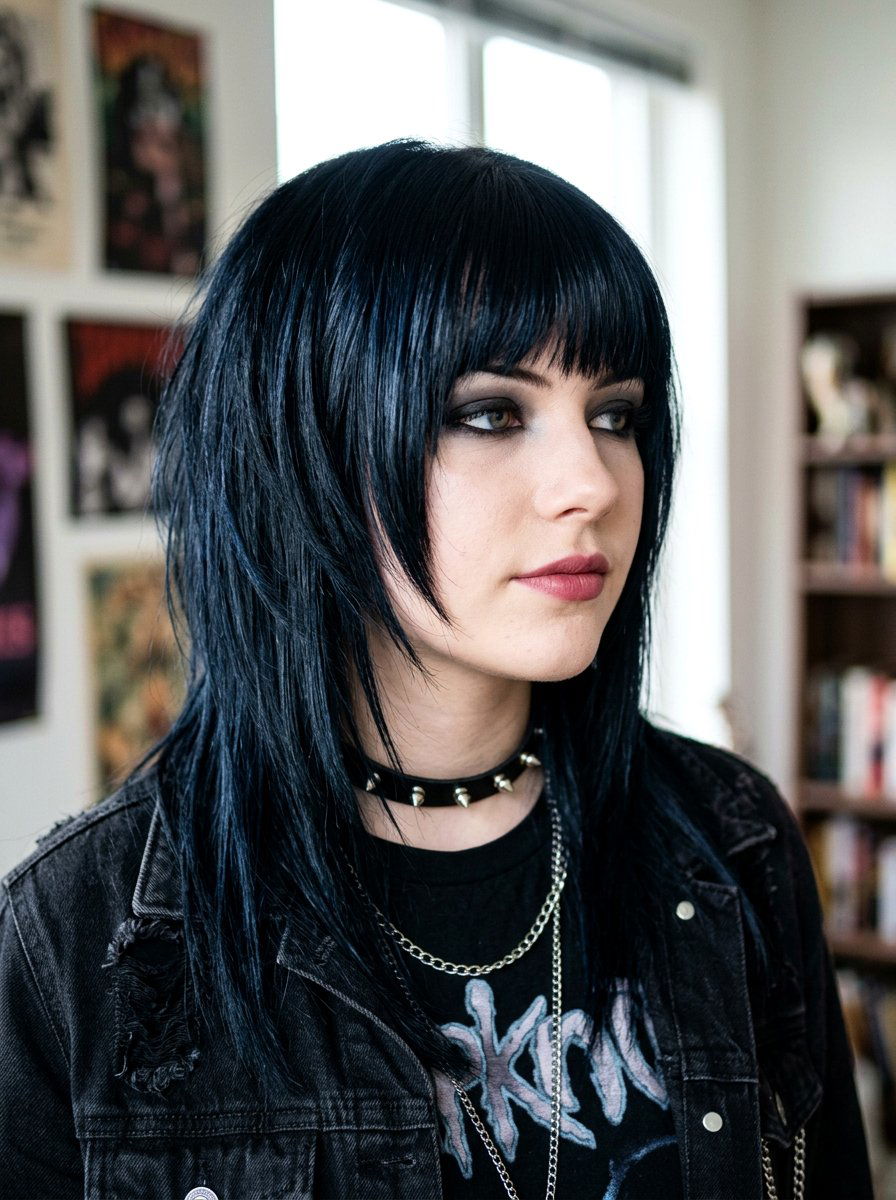
Deep, midnight black is perhaps the most classic color choice for a scene haircut, offering a moody and dramatic vibe that never goes out of style. This look relies on a high-shine, blue-black dye that makes the hair look healthy and glossy despite the heavy layering and teasing. The dark color provides a perfect contrast for skin tones and makes the eyes pop, especially when paired with the heavy, eye-skimming fringe characteristic of the scene style. To keep the black hair from looking flat, many girls add a few “hidden” layers of vibrant purple or blue that only become visible when the hair moves or is styled up.
15. Scene Hair With Face Framing
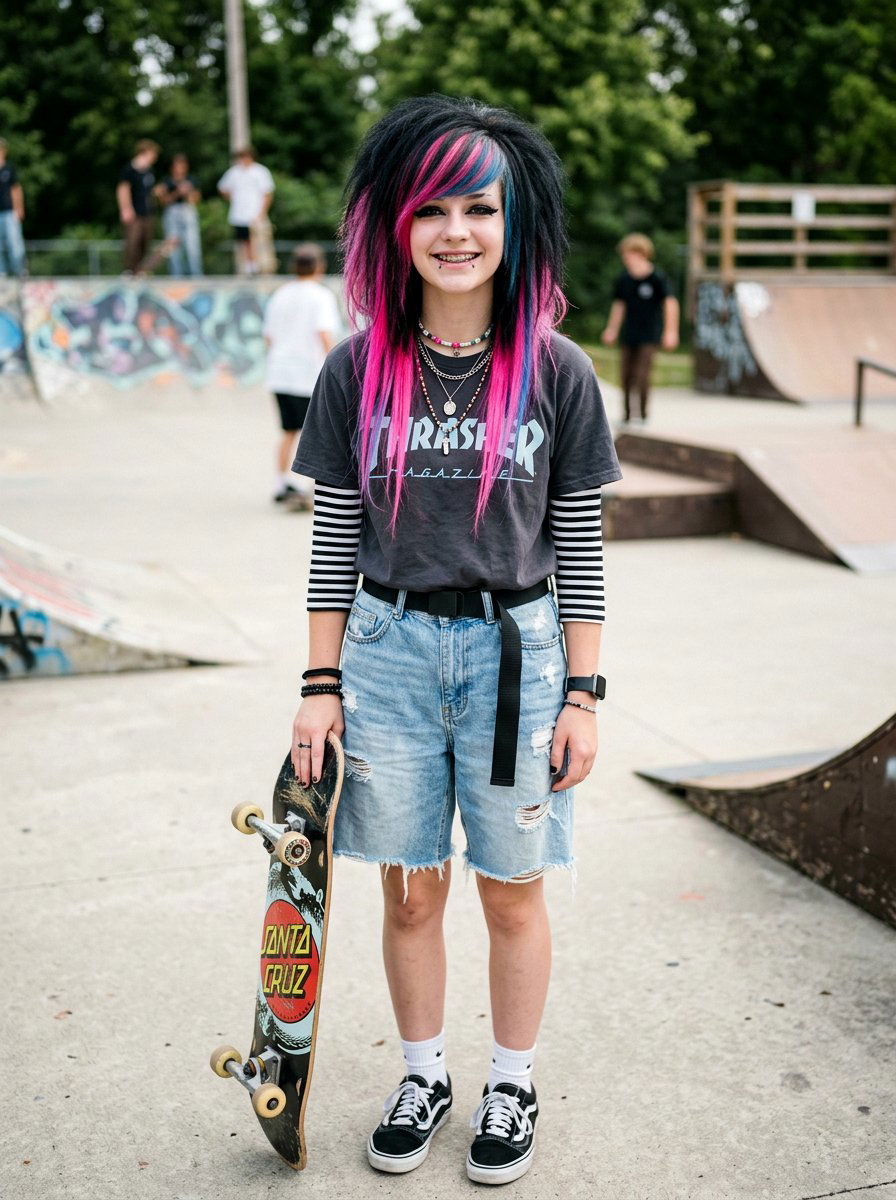
Face-framing layers are crucial for a scene haircut, as they help to shape the face and emphasize the “swoopy” bangs. These layers are usually cut with a razor to ensure they are thin and wispy at the ends, curving inward toward the jawline and cheekbones. In a scene style, these layers are often dyed a different color than the rest of the head to create a “halo” effect around the face. This technique is particularly flattering for various face shapes, as it can be customized to highlight the eyes or soften a square jawline. It adds a level of detail and “finished” look to the overall hairstyle.
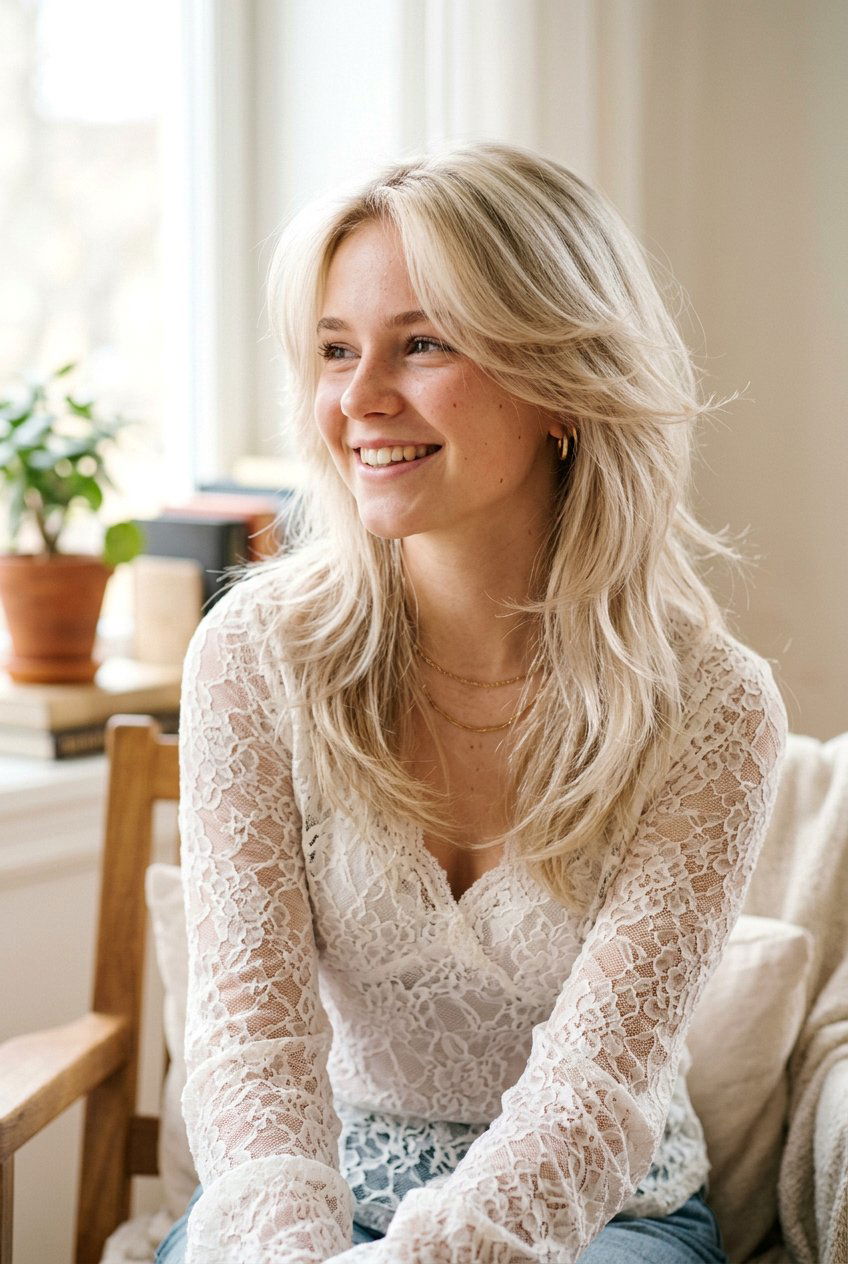
16. Wavy Scene Hair
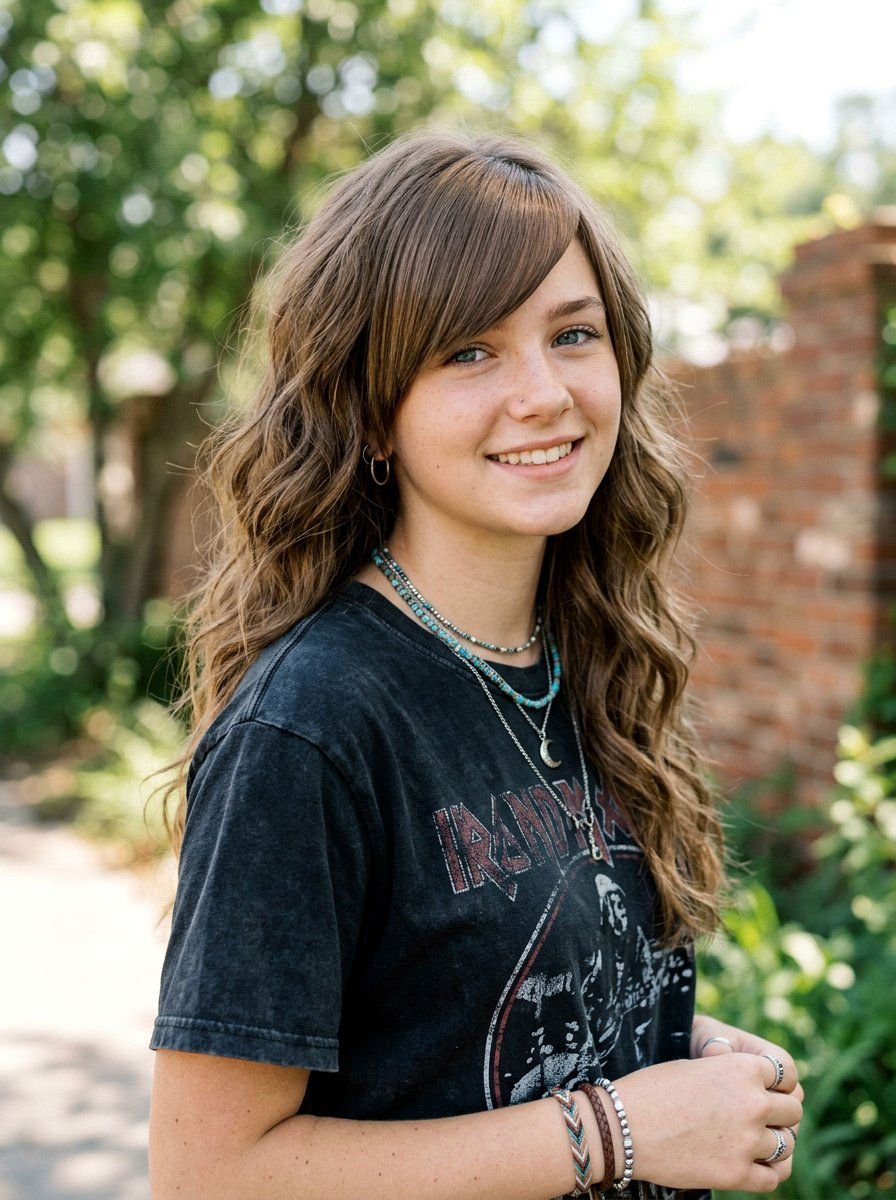
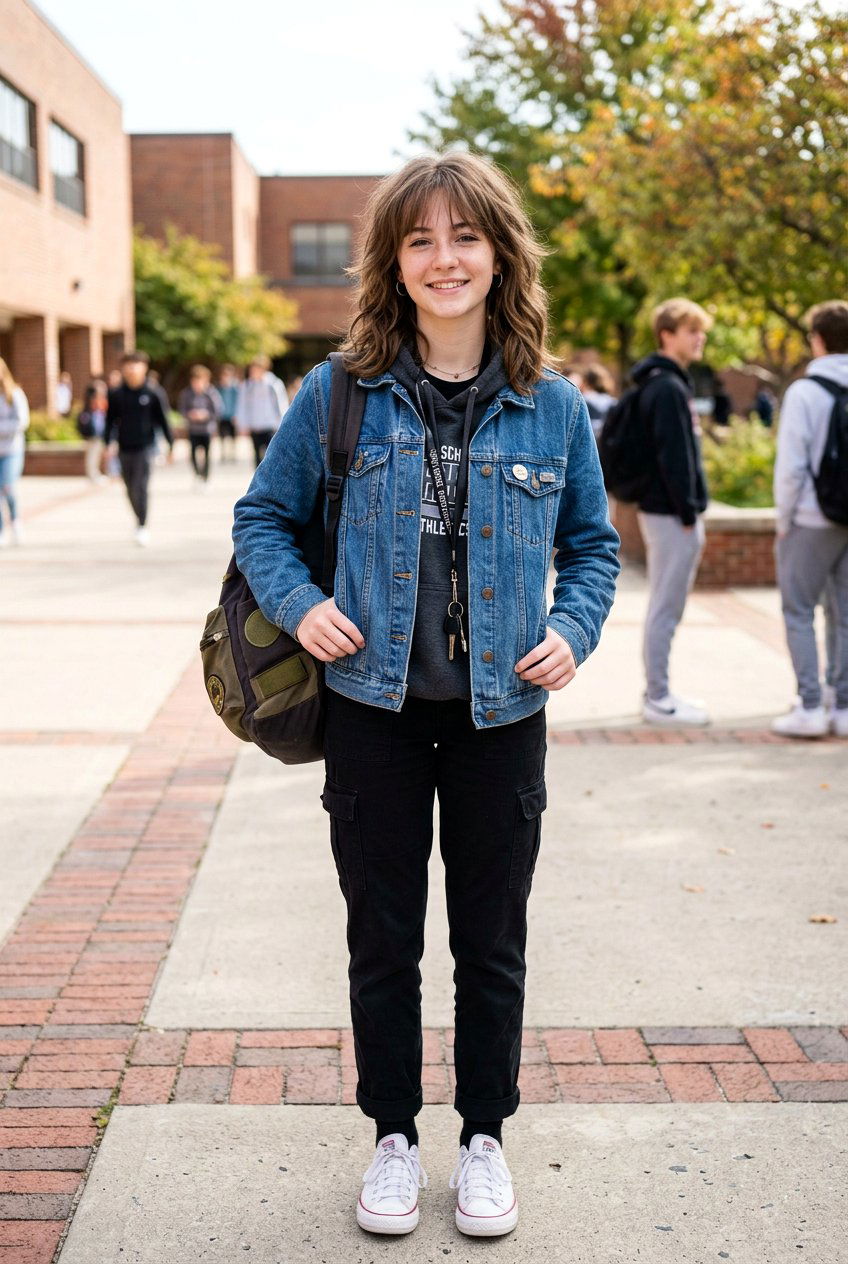
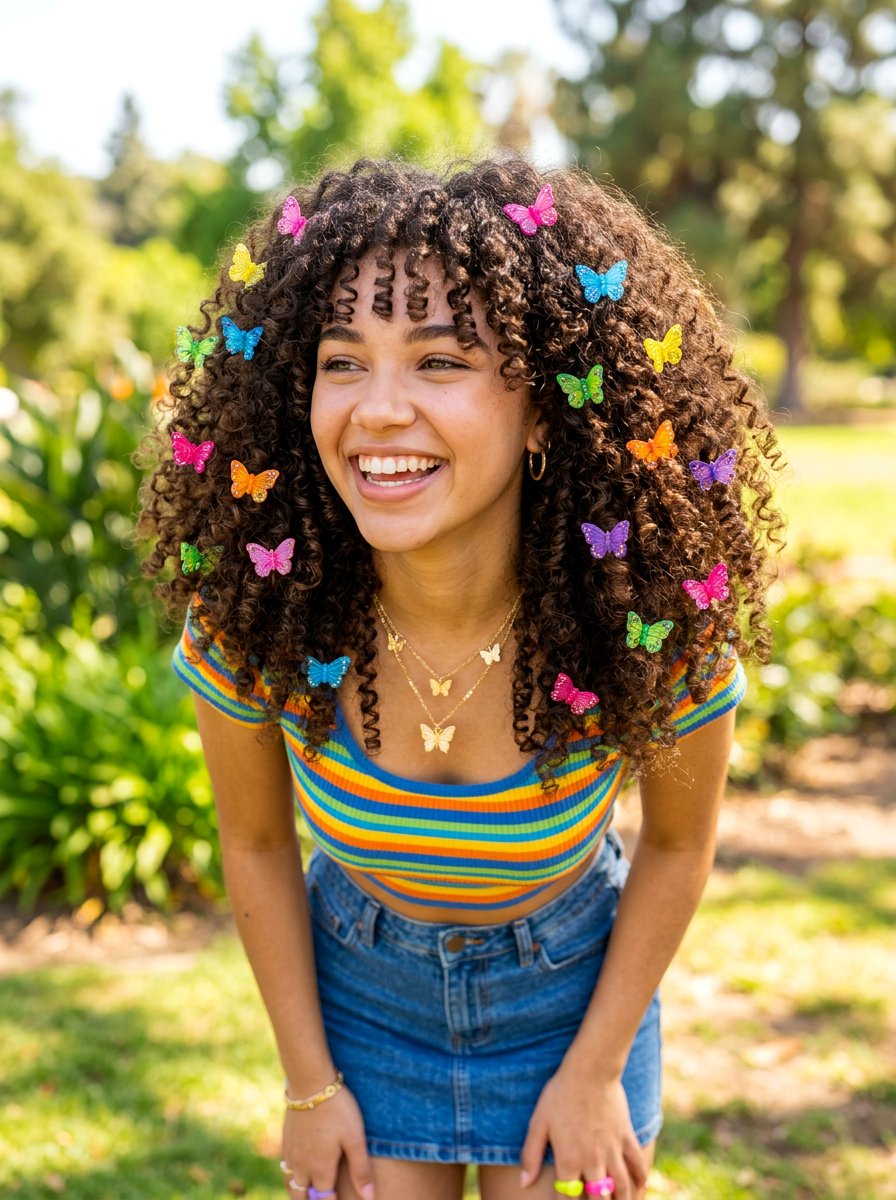
While the classic scene look is pin-straight, the 2026 version often incorporates natural waves or heat-styled curls for a more modern, textured appearance. Wavy scene hair still maintains the signature crown volume and heavy bangs, but the lower lengths are allowed to have movement and bounce. This “soft scene” look is easier on the hair’s health, as it requires less daily flat-ironing. Using a light-hold curl cream or a texturizing mousse can help to define the waves while keeping the top layers “messy” and voluminous. It is a more wearable, everyday version of the aesthetic that still feels distinctly alternative.
17. Scene Hair With Micro Bangs
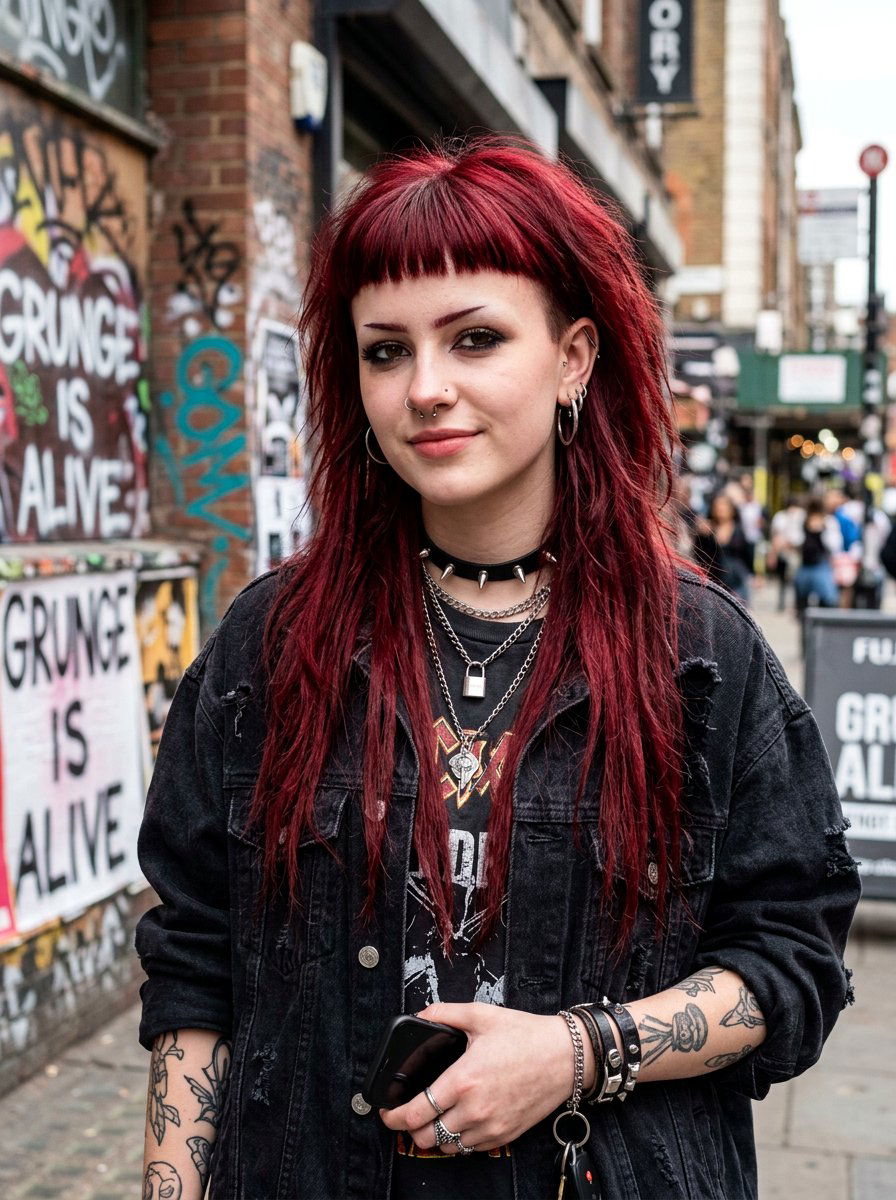
For an ultra-modern and slightly “grunge” take on the scene look, some teenage girls are opting for micro bangs instead of the traditional long fringe. These short, blunt bangs sit well above the eyebrows and are paired with the classic long, choppy layers throughout the rest of the head. This creates a high-fashion, editorial silhouette that is very popular in 2026’s “alt” circles. The micro bangs draw immediate attention to the forehead and eyes, and when dyed a contrasting color, they become the focal point of the entire hairstyle. It is a bold choice that requires frequent trims to maintain the precision of the short fringe.
18. Scene Hair With Extensions
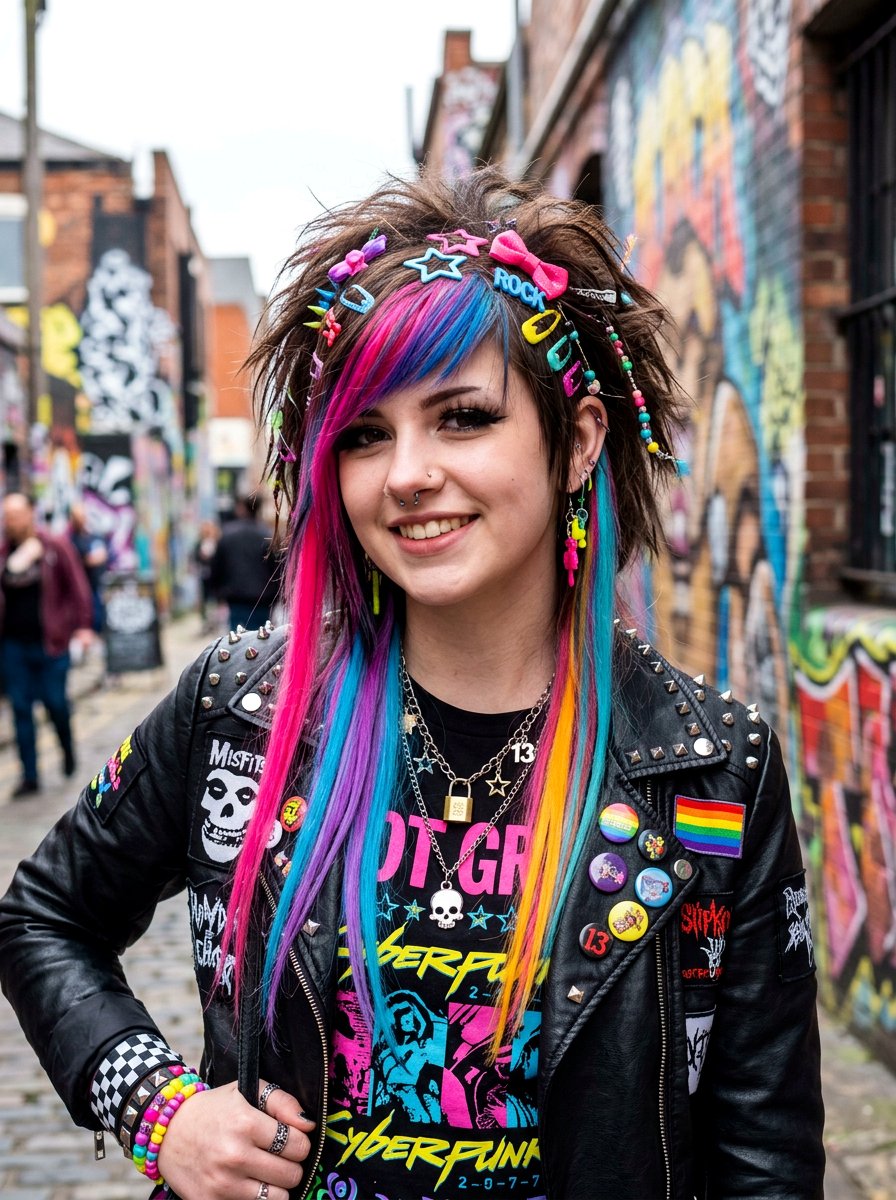
Since many scene haircuts require extreme length at the bottom and thickness at the top, hair extensions are a vital tool for achieving the look. For teenage girls, clip-in extensions are a popular and affordable way to add length and pops of color without the commitment of a salon visit. These extensions are often used to create the “tail” of the scene cut, allowing the natural hair to be cut into the voluminous top layers. In 2026, high-quality synthetic extensions that can be heat-styled are the preferred choice, allowing for the pin-straight finish that is so important to the classic scene aesthetic.
19. Two Tone Scene Hair
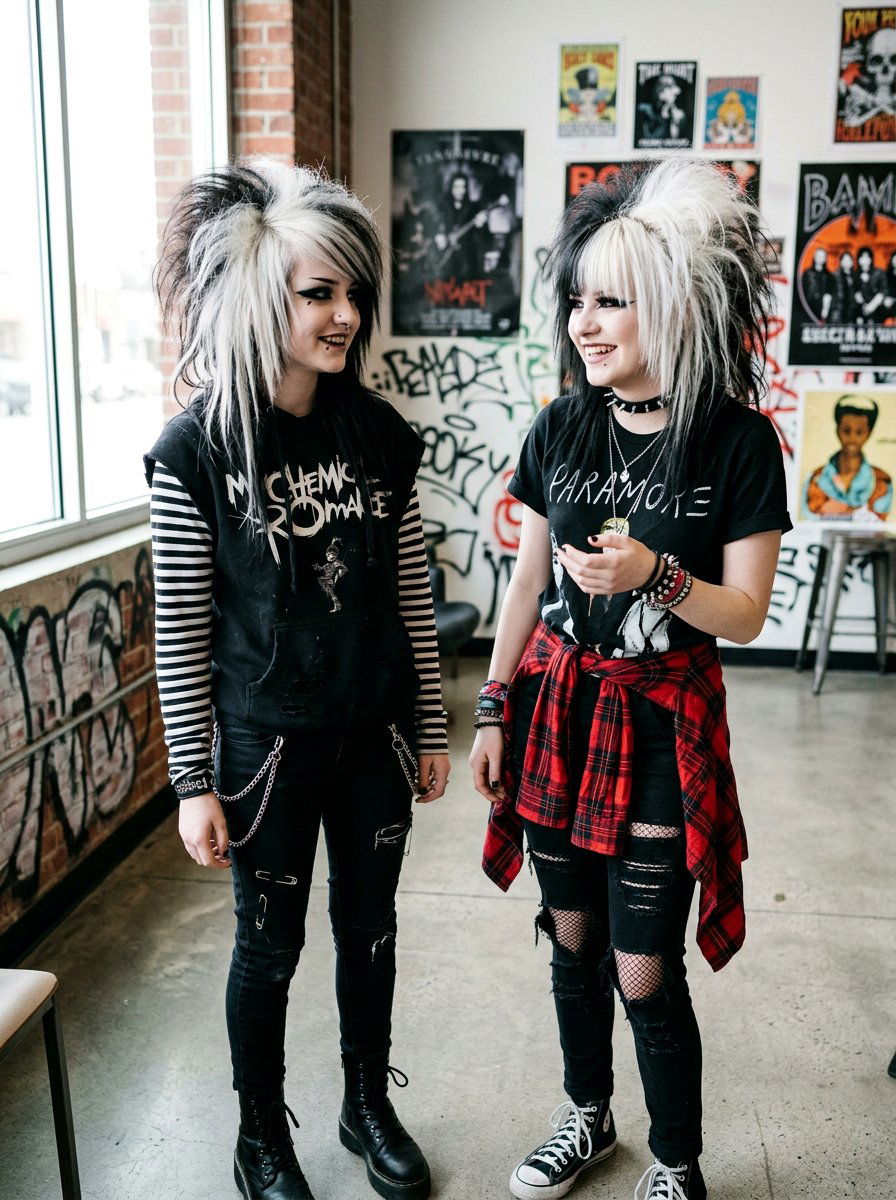
Two-tone hair, or “split-dye,” is a striking way to wear a scene haircut, where the hair is divided down the middle and dyed two different colors. Popular combinations include black and white, pink and blue, or red and black. Because scene hair is often parted deeply to one side, the two-tone effect creates an interesting overlap of colors in the fringe and top layers. This look is highly photogenic and fits perfectly with the expressive nature of scene culture. It highlights the symmetry (or intentional asymmetry) of the cut and allows the wearer to showcase two different personalities at once.
20. Gothic Scene Hair
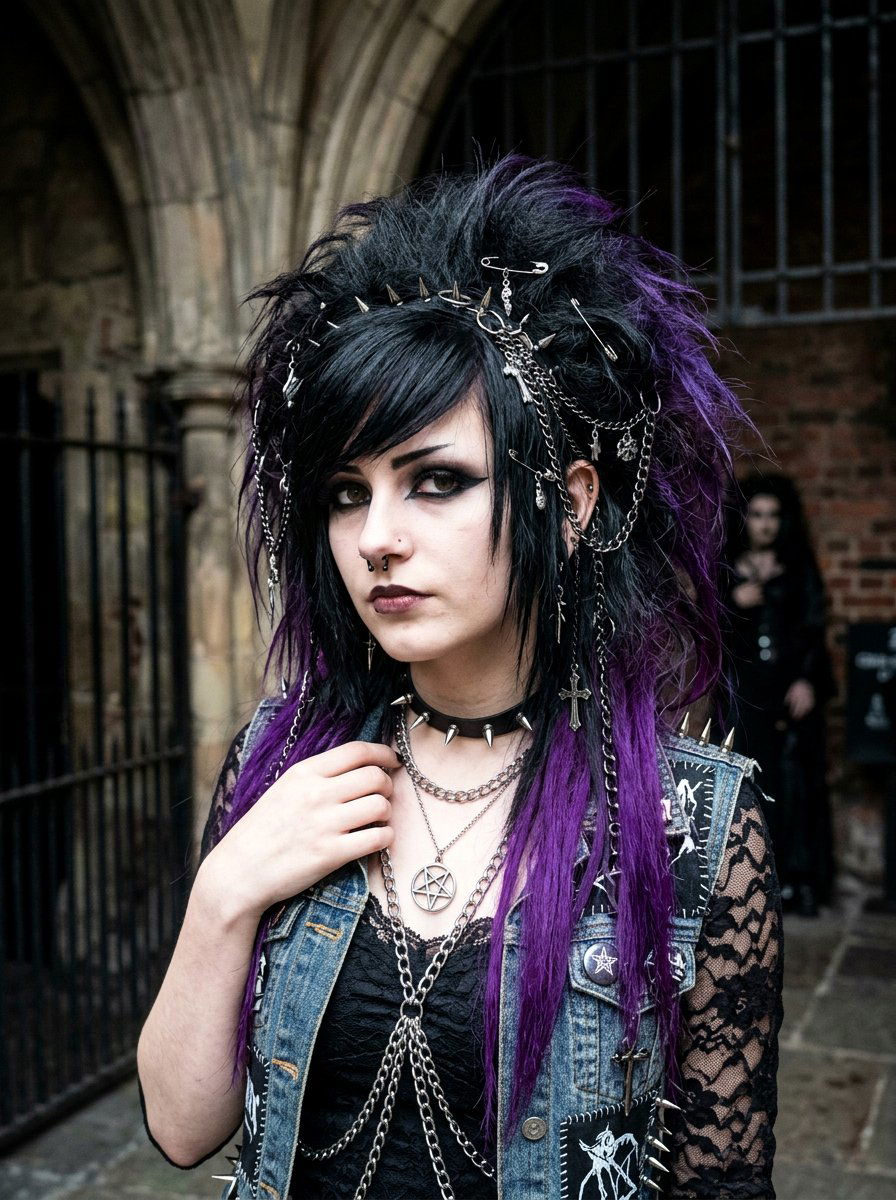
Gothic scene hair blends the “spooky” elements of goth culture with the voluminous, layered silhouette of scene hair. This usually involves a base of jet-black hair with deep red or purple accents and lots of “dark” accessories like silver chains or small skull clips. The teasing is often more aggressive, creating a taller, more “bat-nest” appearance at the crown. This style is popular among teens who listen to emo and metalcore music, providing a visual link to their musical tastes. It is a darker, more mature version of the scene aesthetic that emphasizes mystery and rebellion through its dramatic shape and color palette.
Conclusion:
The scene haircut for teenage girls remains one of the most versatile and expressive hairstyles in the alternative fashion world. From the classic long, teased “Scene Queen” look to the modern, textured scene shag, there is a variation to suit every personality and hair type. In 2026, the trend has evolved to include better hair health practices and more sophisticated color techniques, making it more accessible than ever before. Whether you are using extensions to add length or a razor to create “bitey” layers, the key to a great scene cut is confidence and creativity. By following these trends, teenage girls can successfully navigate the world of “alt” beauty while making a unique statement that is entirely their own.
You'll Like These Styles:


Leave a Reply