
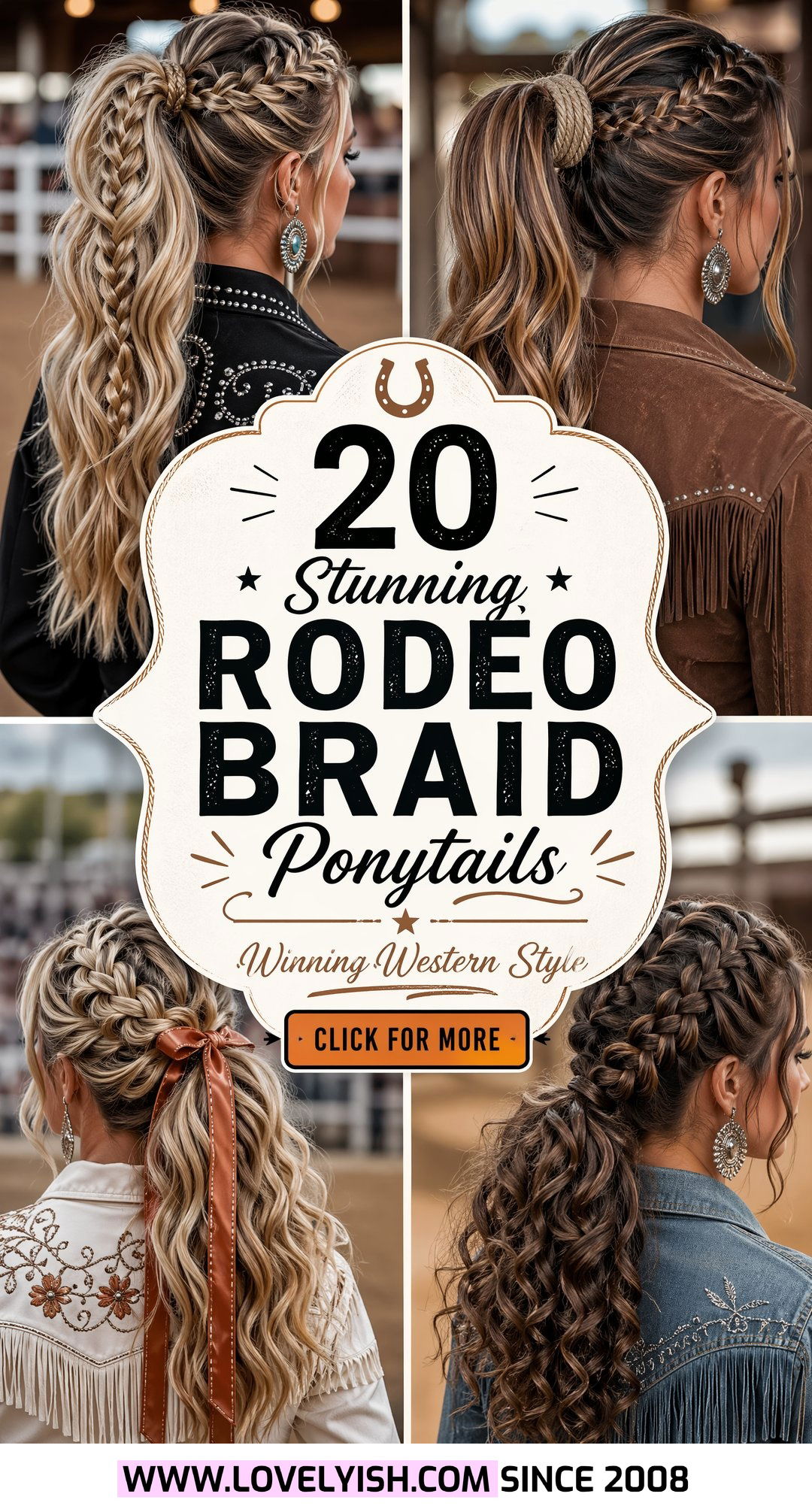
The rodeo braid ponytail is the ultimate fusion of rugged western practicality and modern feminine flair. Whether you are saddling up for a barrel racing competition or simply heading to a local country music festival, this hairstyle offers a secure yet stylish solution for managing long tresses. It effectively keeps hair out of your face during high-intensity activities while allowing for creative expression through various braiding techniques like the Dutch, French, or rope styles. By combining the sleekness of a high-tension ponytail with the intricate detail of a weave, you achieve a look that is both durable and photogenic. It is a timeless choice that continues to dominate western fashion trends in 2026.
1. High Dutch Braid Ponytail
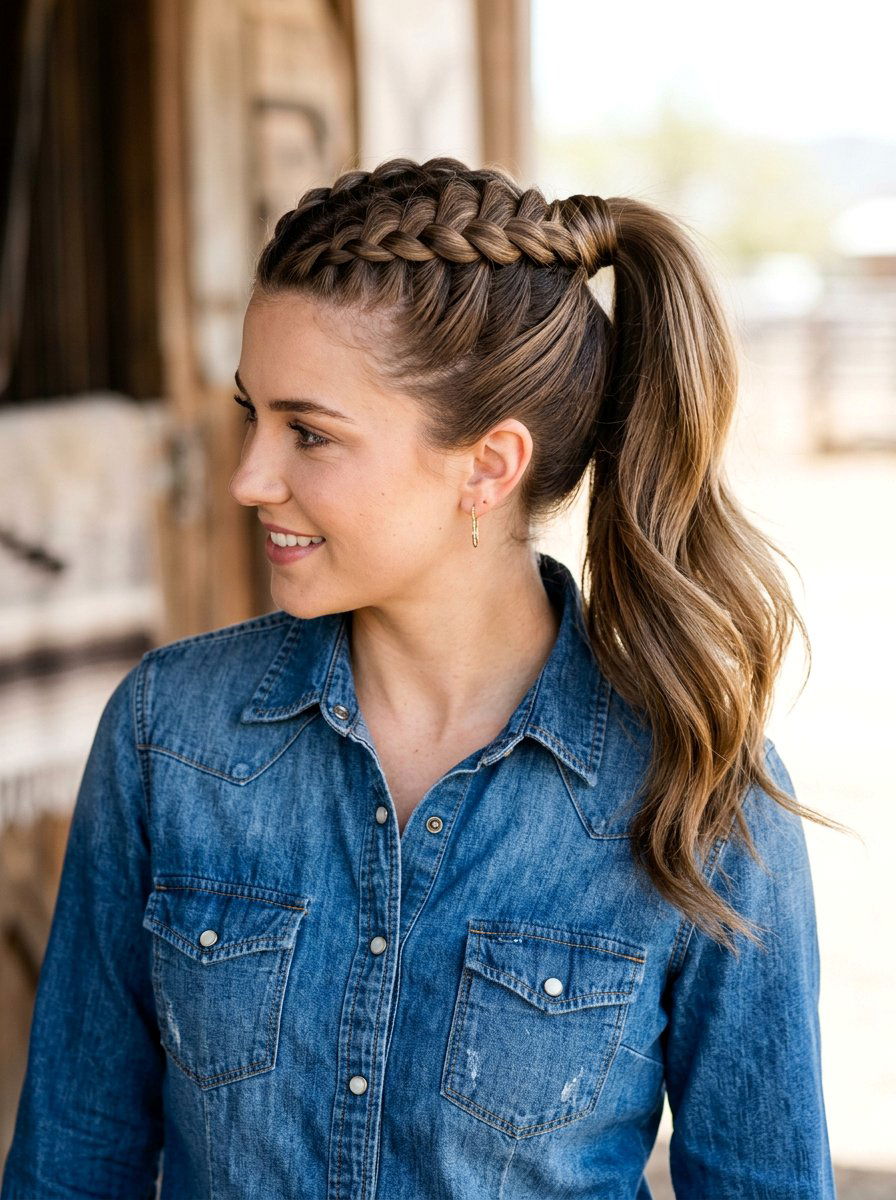
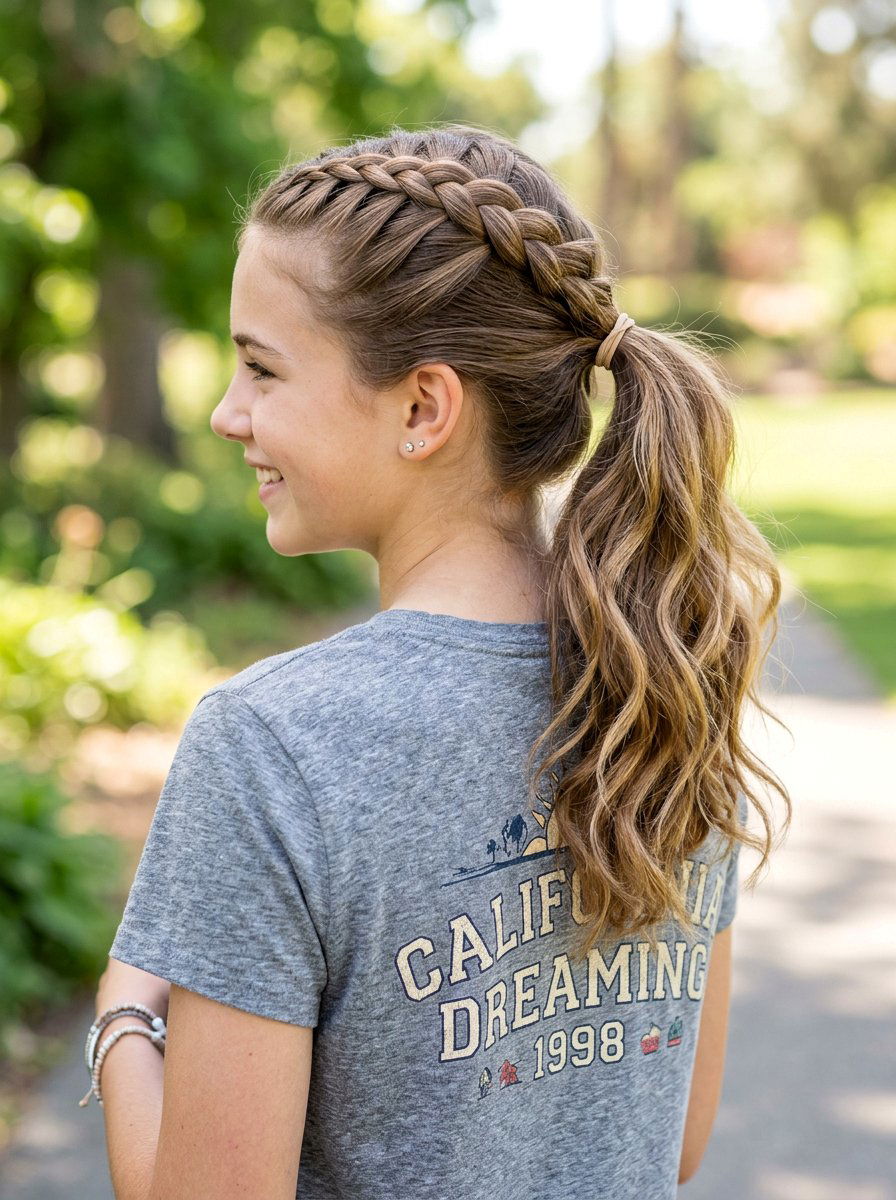
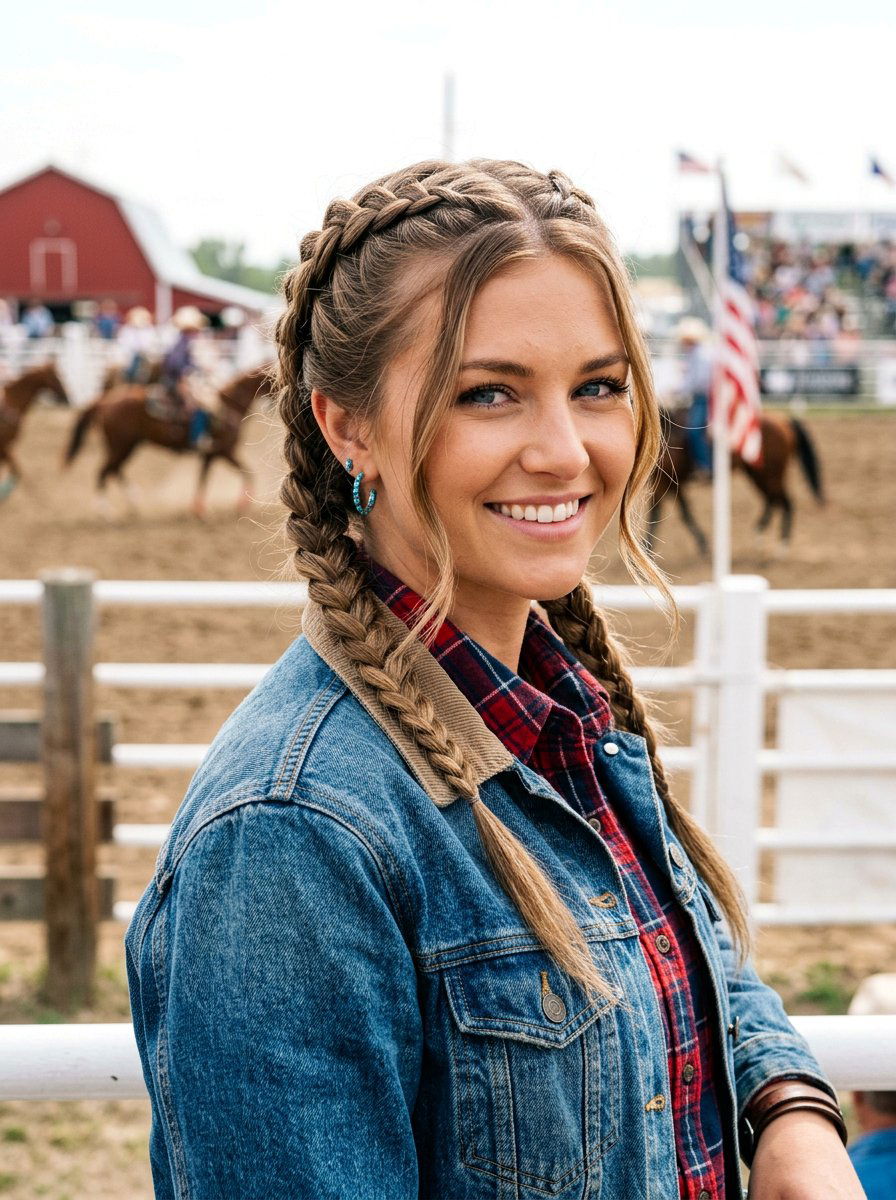
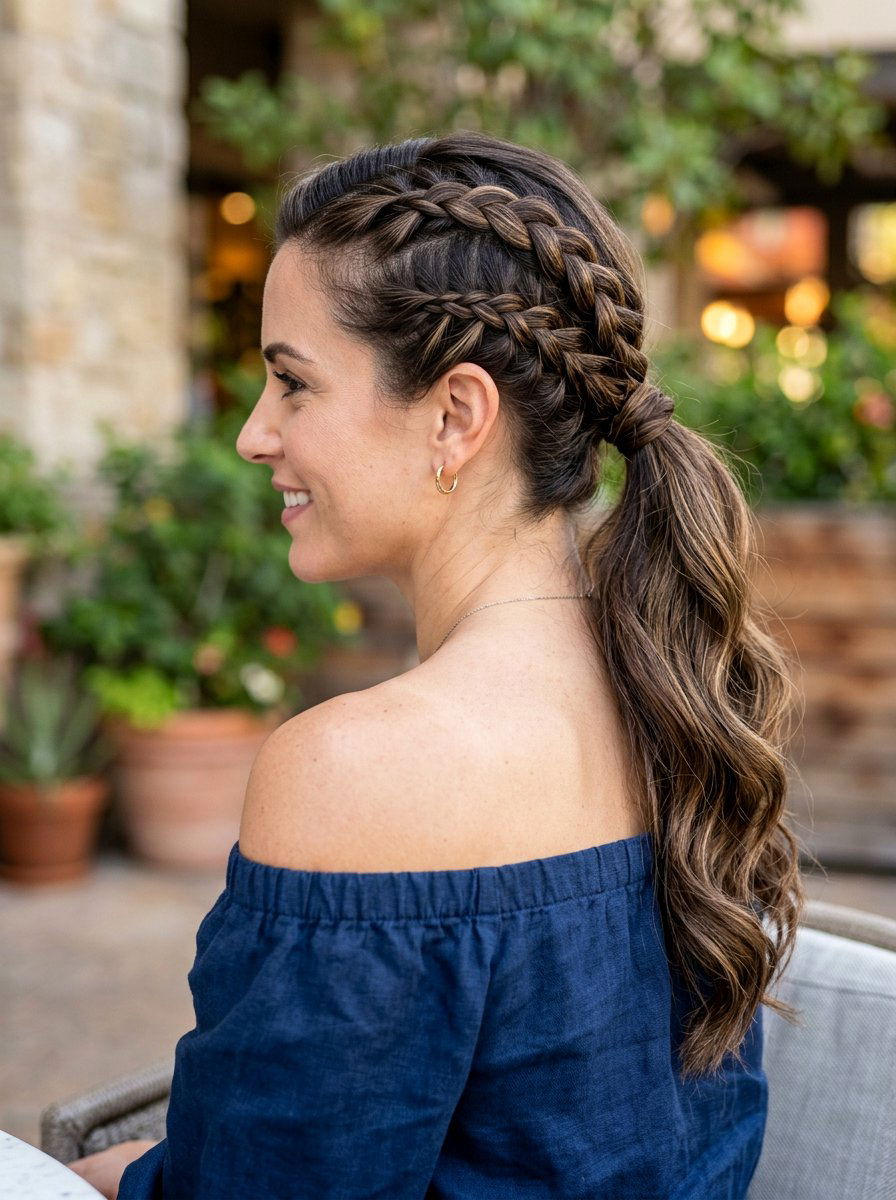
Starting a Dutch braid at the very front of the hairline creates an immediate focal point that screams western chic. Unlike a standard French braid, the Dutch technique involves crossing strands under the middle to create a 3D effect that sits prominently on top of the head. This structure is particularly useful for riders because it anchors the hair firmly against the scalp, preventing it from loosening under the weight of a cowboy hat. Once the braid reaches the crown, it is secured into a tight ponytail, leaving the lengths to swing freely. This combination provides a beautiful contrast between the structured, textured top and the smooth, flowing movement of the tail.
2. Double French Braid Ponytail
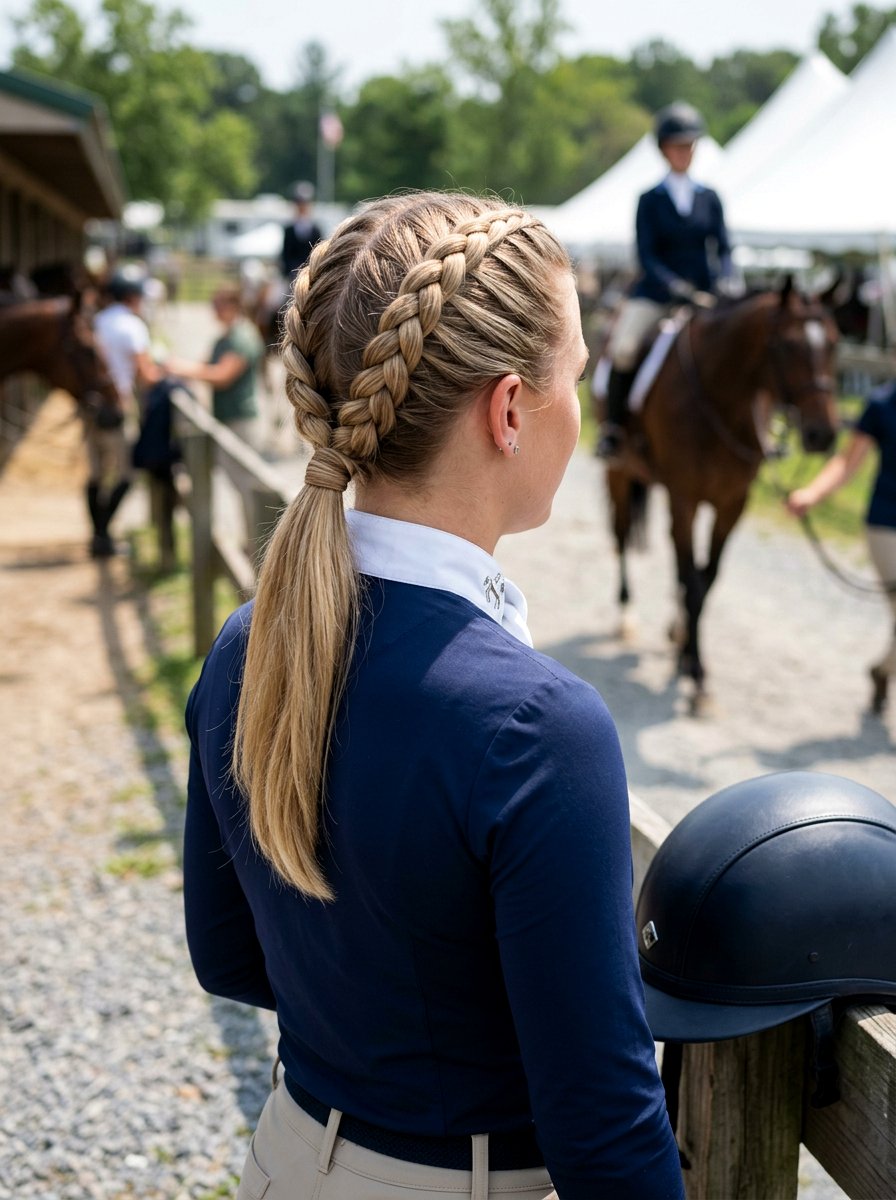
For those with thicker hair who need maximum security, the double French braid method is a classic go-to for any rodeo event. By parting the hair down the center and creating two symmetrical braids that feed into a single low or mid-height ponytail, you distribute the weight of the hair more evenly. This prevents the “sagging” effect that can happen with a single heavy braid during physical exertion. It is a sleek, polished look that fits perfectly under a riding helmet or a felt hat without creating uncomfortable pressure points. The dual-braid aesthetic also adds a sporty, youthful energy to your overall western ensemble while keeping flyaways completely tamed.
3. Rope Twist Braid Ponytail
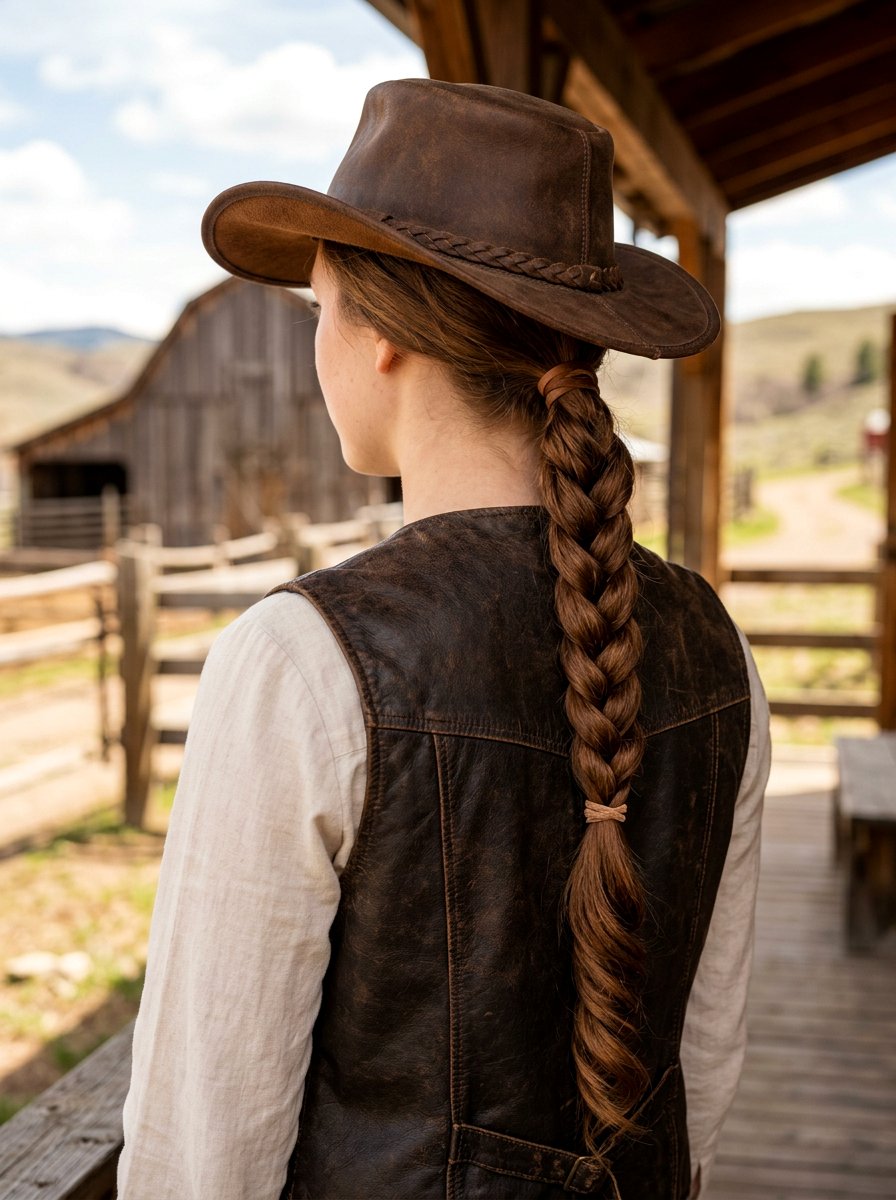
If you are looking for a style that is quick to execute but looks incredibly intricate, the rope twist is a fantastic alternative to traditional three-strand braids. You begin by securing your hair into a high, sleek ponytail and then splitting the tail into two equal sections. By twisting each section individually in one direction and then wrapping them around each other in the opposite direction, you create a sturdy, rope-like structure. This “rope” is remarkably resilient against wind and movement, making it ideal for high-speed rodeo events. It offers a unique, modern texture that stands out in the arena while remaining incredibly easy to undo after a long day.
4. Bubble Braid Western Ponytail
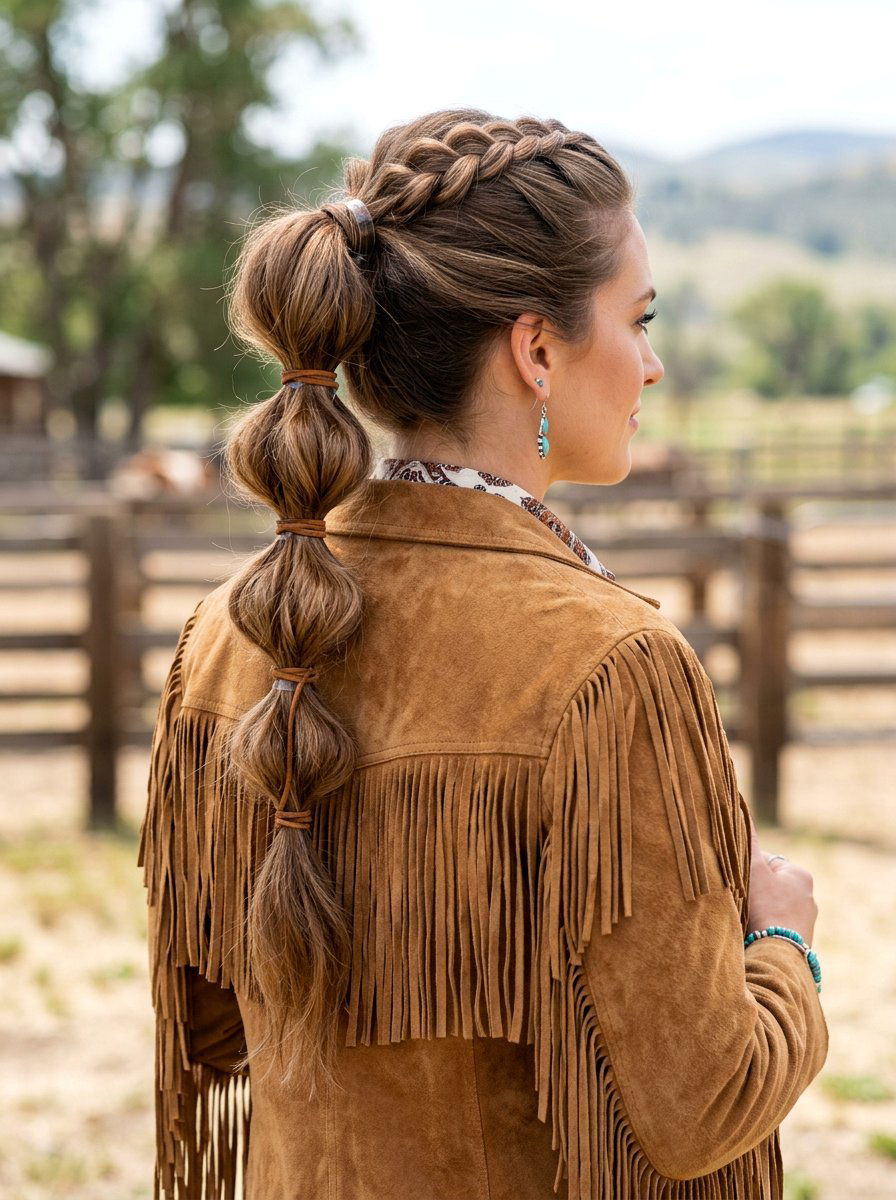
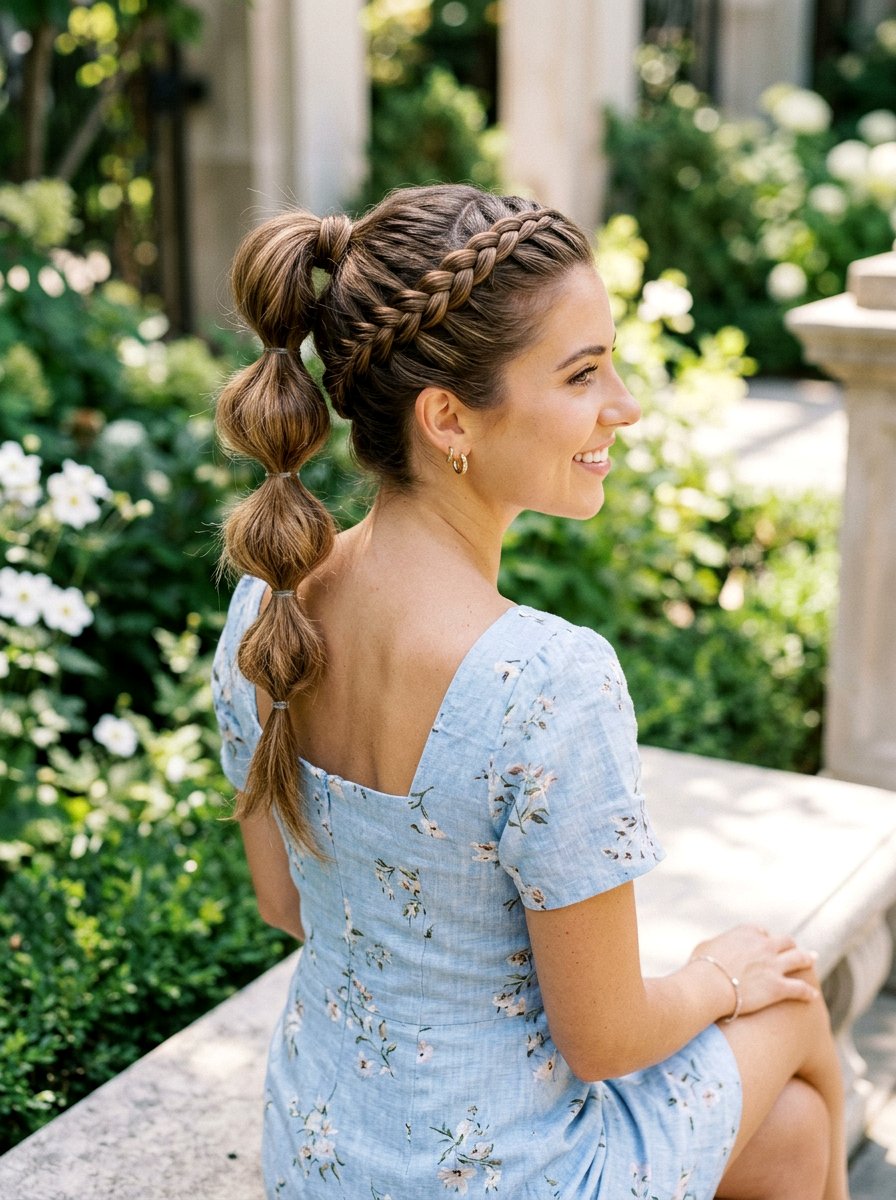
The bubble braid has transitioned from a festival favorite to a staple in the western fashion world because of its high-impact visual appeal and ease of maintenance. To achieve this, you start with a standard high ponytail and place small elastics every few inches down the length of the hair. By gently “pancaking” or pulling at the edges of each section between the bands, you create a series of voluminous bubbles. This style is excellent for adding the illusion of thickness to finer hair types. It captures the light beautifully and provides a playful, contemporary twist on the traditional cowgirl aesthetic, ensuring your hair looks great from every camera angle.
5. Side Braid Low Ponytail
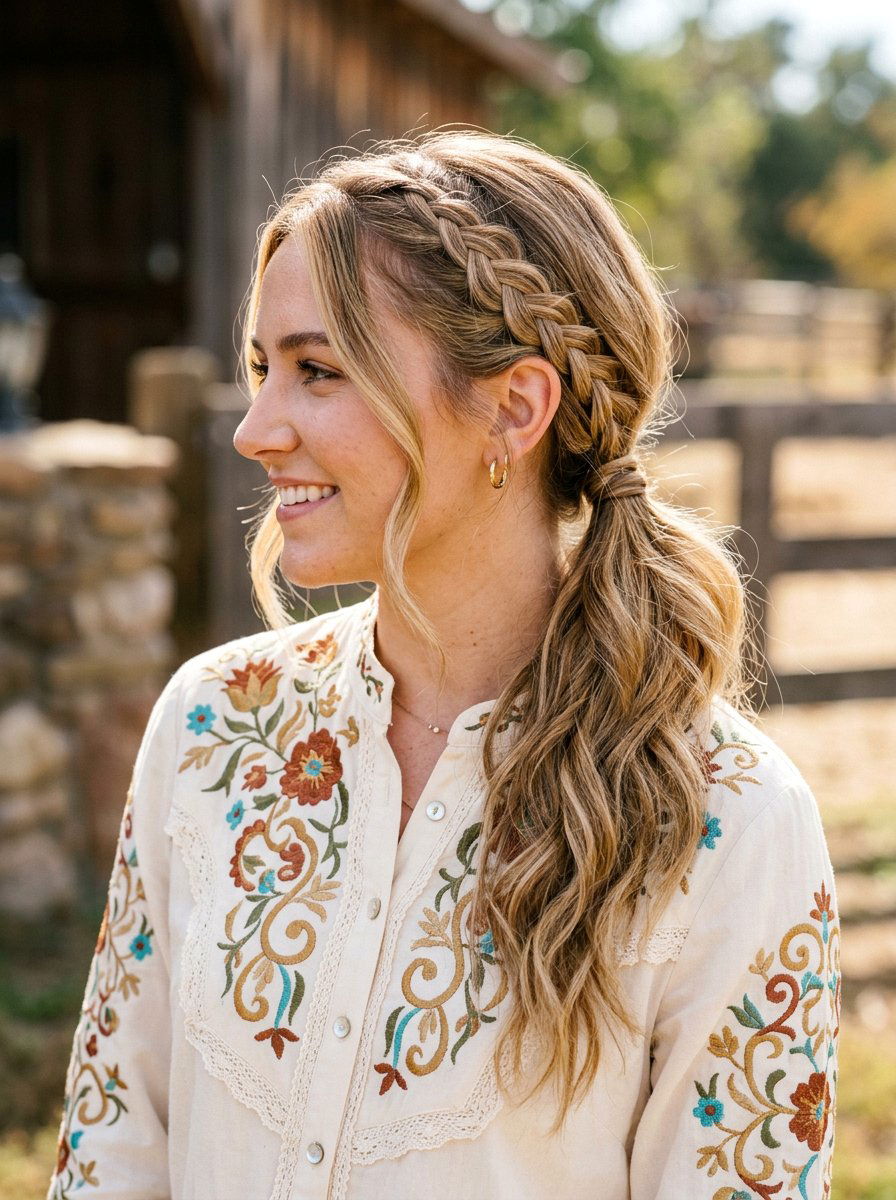
A side-swept braid that transitions into a low ponytail offers a more romantic and soft approach to the rodeo look. This style often starts with a loose French or lace braid along one side of the head, following the curve of the ear down to the nape of the neck. By gathering the rest of the hair into a low side-pony, you create an asymmetrical silhouette that frames the face elegantly. This is a popular choice for rodeo queens or those attending evening gala events where a full “work” braid might feel too utilitarian. It maintains that essential western heritage while leaning into a softer, more sophisticated vibe.
6. Fishtail Braid High Ponytail
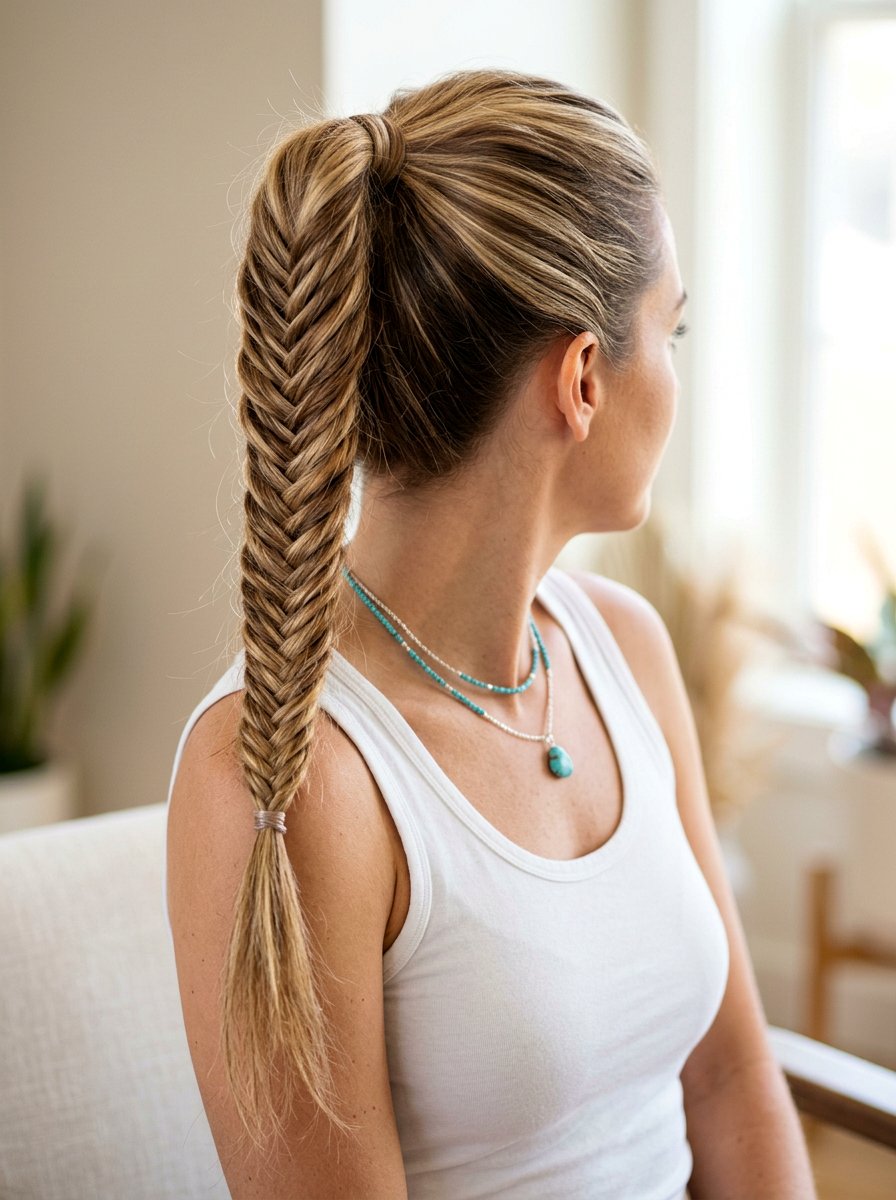
The fishtail braid is renowned for its intricate, woven appearance that resembles the scales of a fish, offering a high level of detail for any hairstyle. When integrated into a high ponytail, the fishtail adds a layer of texture that looks much more complex than it actually is to create. While it takes a bit more time than a standard braid, the result is a tight, secure weave that holds up exceptionally well against the elements. It is a favorite for those who want to showcase their hair’s length and color dimensions, as the small sections used in the fishtail highlight highlights and lowlights with stunning clarity.
7. Pull Through Braid Ponytail
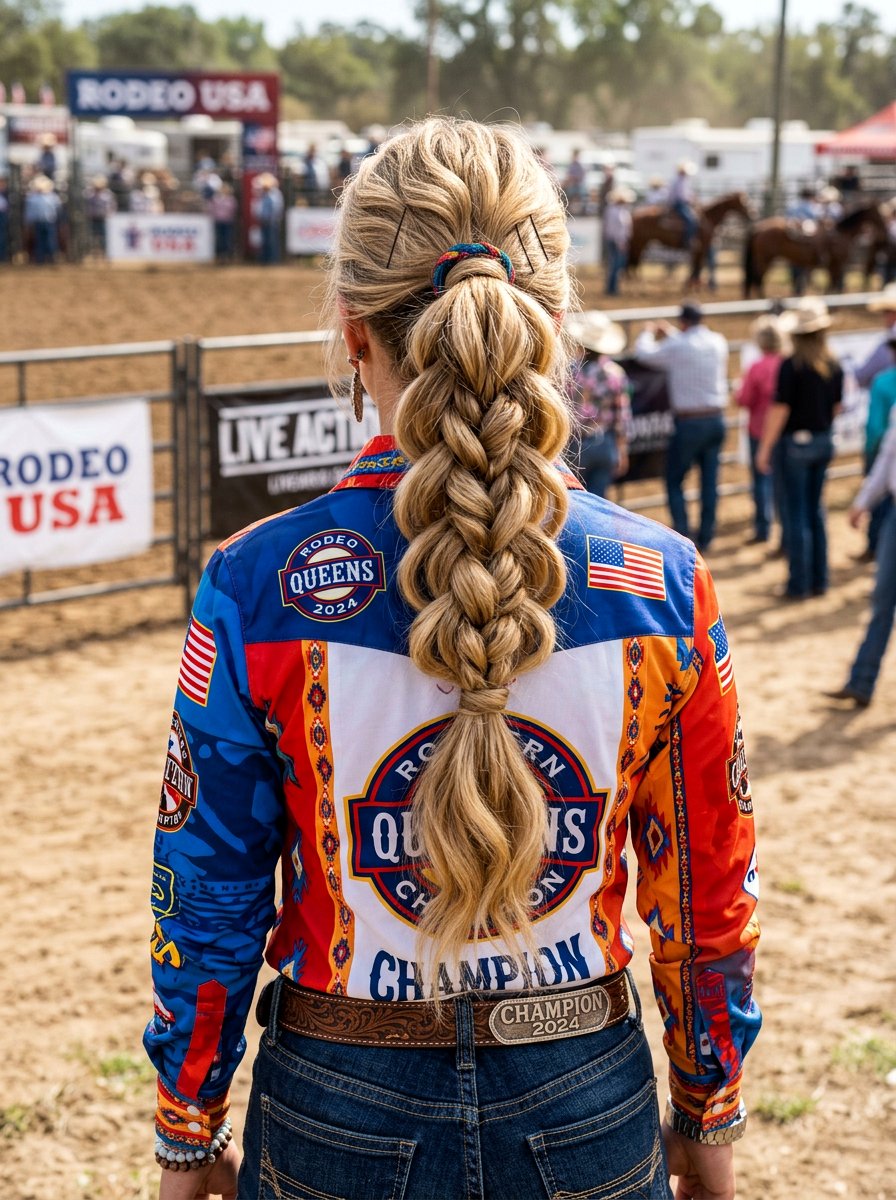
For a voluminous look that won’t budge even during a wild ride, the pull-through braid is a modern engineering marvel in hairstyling. This technique uses a series of small ponytails looped through one another to create a massive, 3D braid that looks like a thick chain. Because each section is secured with its own elastic, it is virtually impossible for this style to fall out or become messy. It is the ultimate “insurance policy” for long-haired athletes who need their style to look just as good at the end of the day as it did at the start. The sheer volume makes it a standout choice for performance.
8. Wrapped Base Braid Ponytail
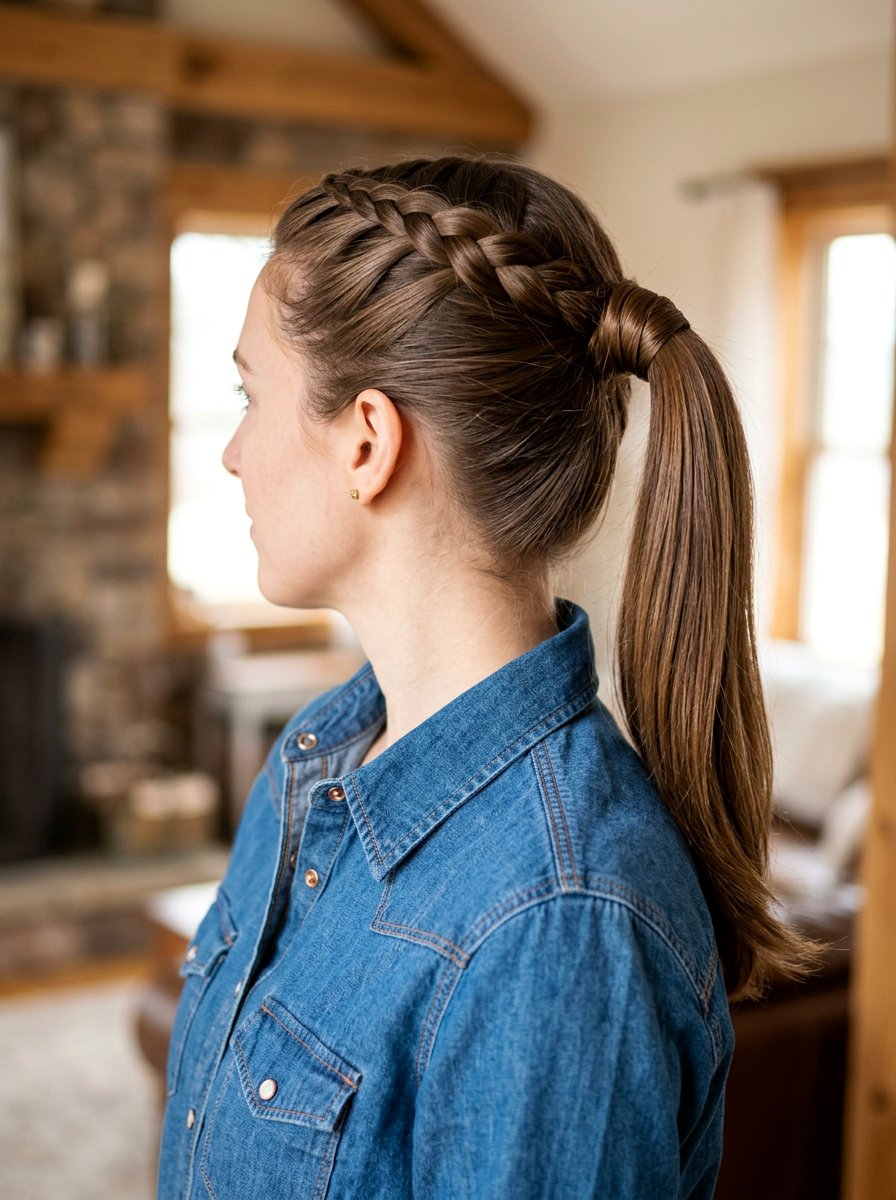
Hiding the hair elastic is a small detail that elevates a simple rodeo braid into a professional, high-fashion hairstyle. After securing your ponytail, you take a small sliver of hair from the underside and wrap it tightly around the band until the elastic is completely obscured. Pinning this strand underneath with a bobby pin creates a seamless transition from the scalp to the tail. This technique is often used in conjunction with a sleek, flat-ironed ponytail or a tightly woven braid to give the overall look a more “expensive” and finished appearance, perfect for judged competitions where presentation is key.
9. Four Strand Braid Ponytail
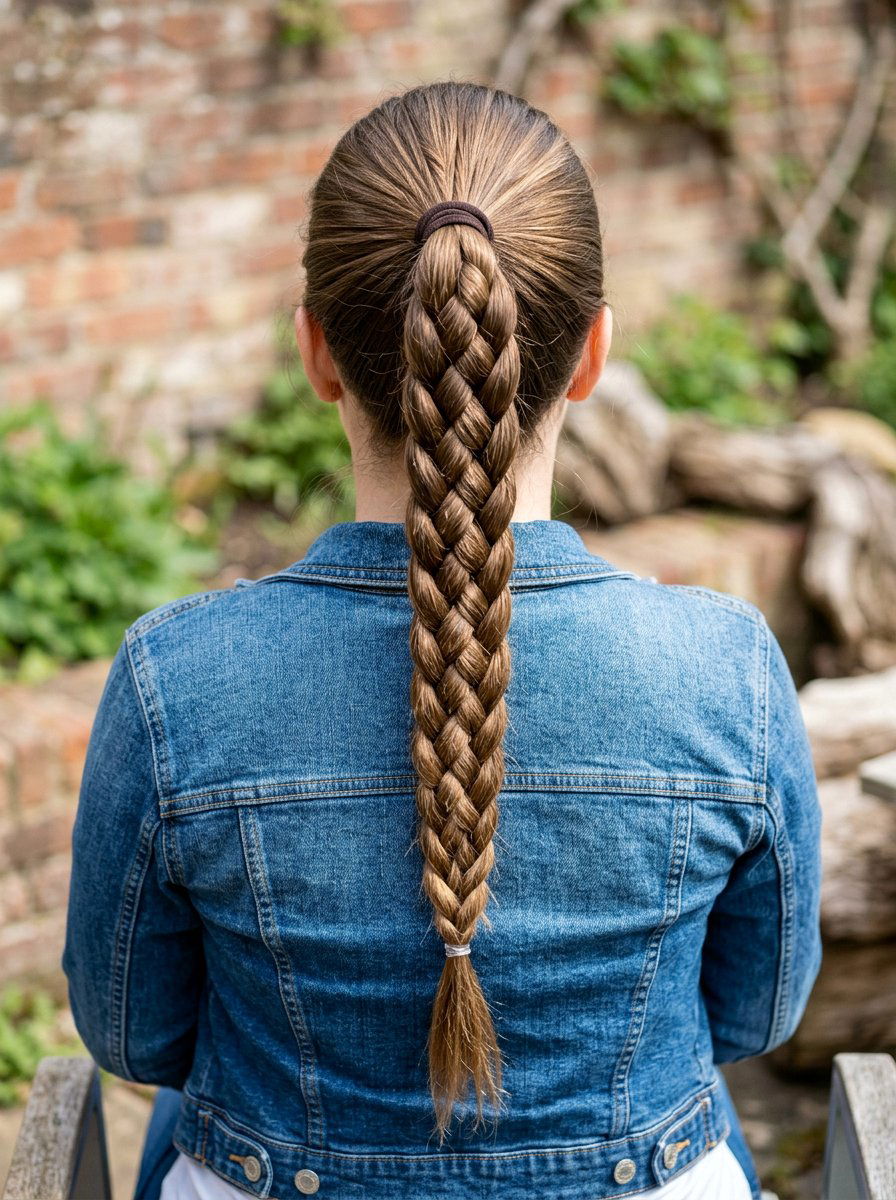
Moving beyond the standard three-strand technique, the four-strand braid offers a unique, rounded shape that adds significant bulk to the ponytail. This style creates a woven pattern that looks almost like a piece of high-end saddlery or leatherwork, tying perfectly into the equestrian theme. It is a great way to show off technical styling skills while ensuring the hair remains compact and out of the way. The rounded nature of the braid means it looks good from 360 degrees, making it a favorite for photographers capturing action shots in the dirt and dust of the rodeo arena.
10. Mohawk Braid Ponytail
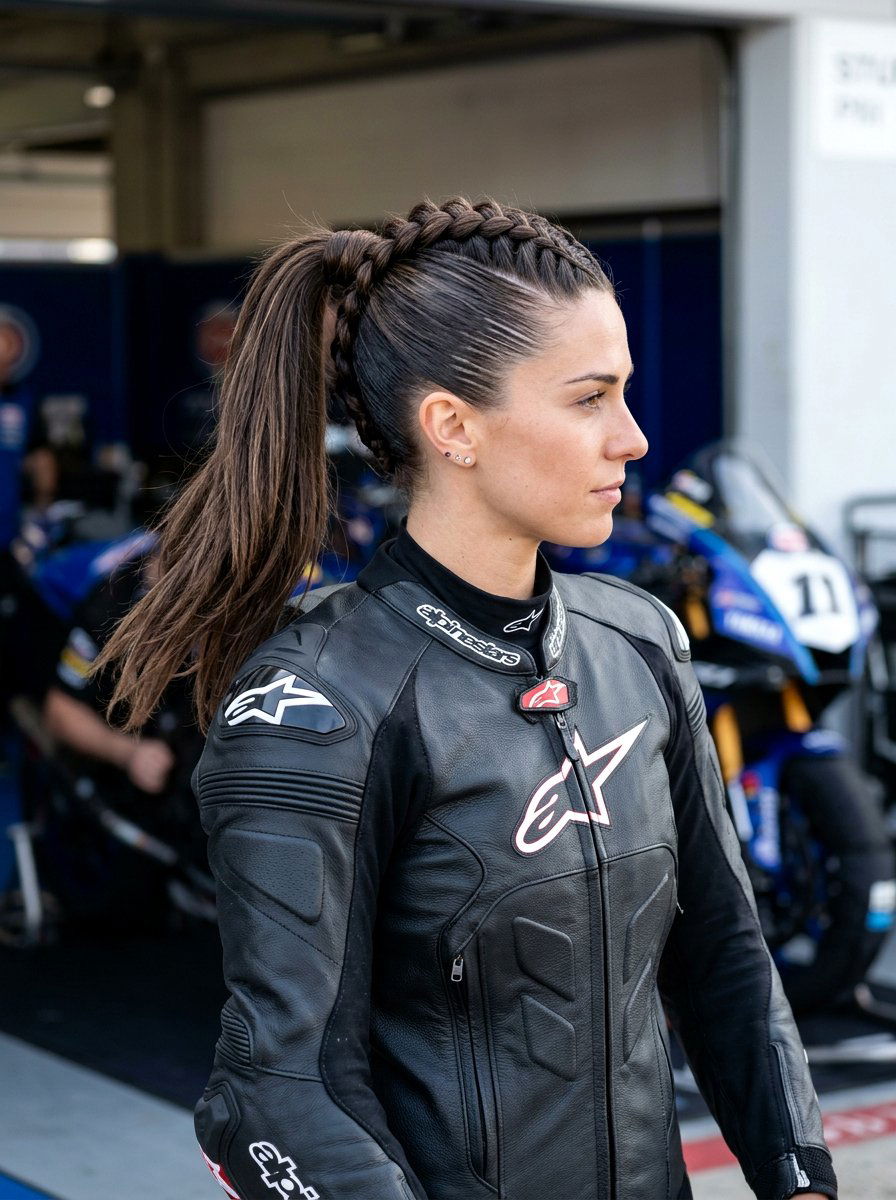
For the bold rider who wants an edgy, high-fashion look, the mohawk braid involves creating a thick, voluminous Dutch braid right down the center of the head. The sides are kept extremely sleek and tight, often brushed back with gel to create a sharp contrast with the textured “ridge” in the middle. This braid then feeds into a high ponytail that can be left straight or curled. It provides a fierce, powerful silhouette that commands attention. Beyond the aesthetics, keeping the hair tight on the sides is practical for maintaining peripheral vision and keeping hair away from the eyes during intense activity.
11. Scarf Integrated Braid Ponytail
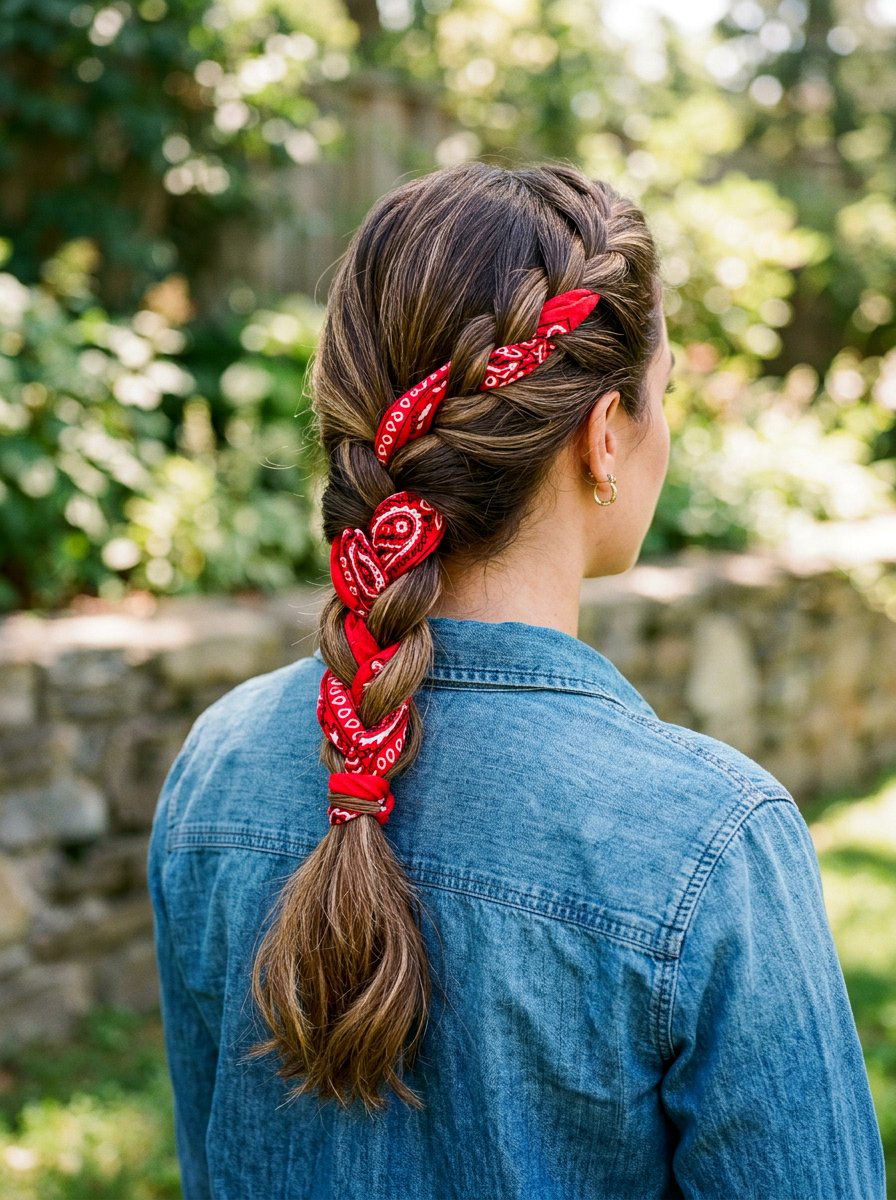
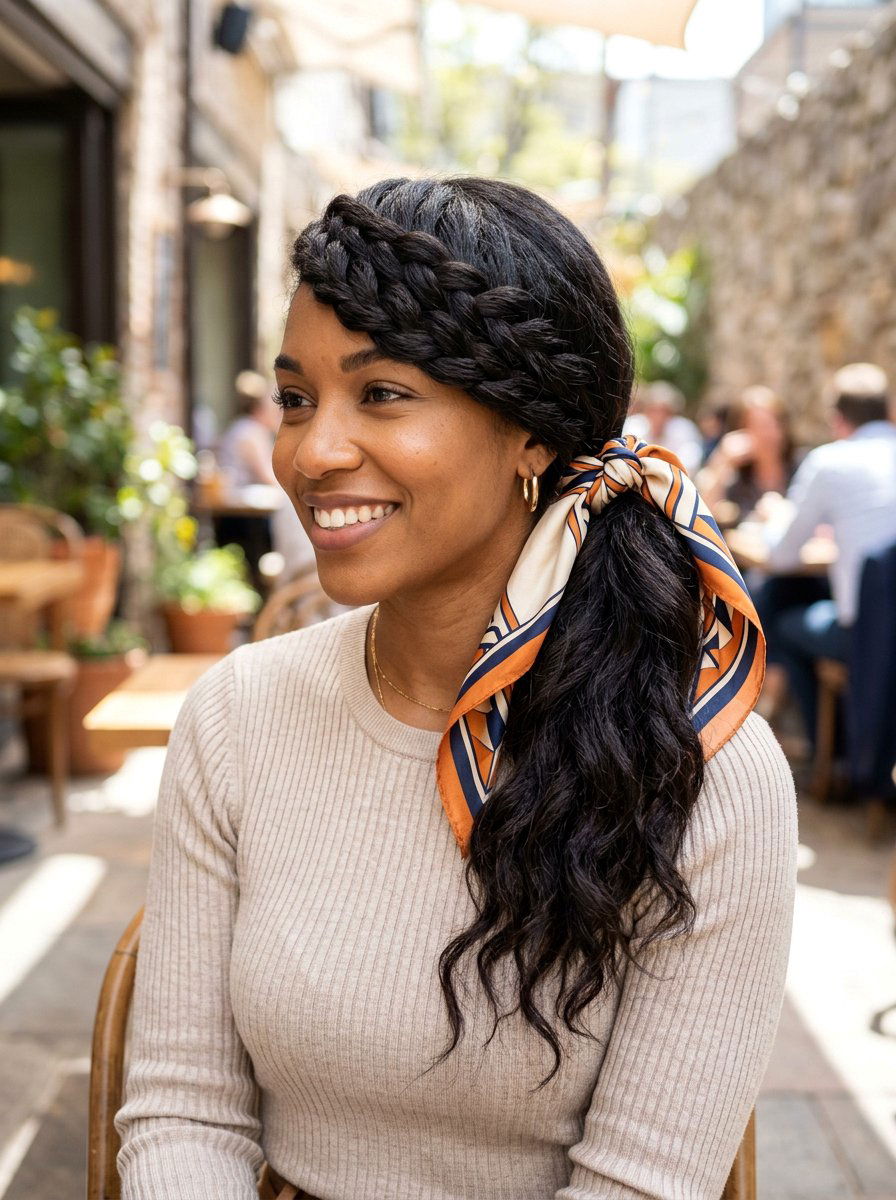
Adding a silk scarf or a colorful bandana into your rodeo braid is a fantastic way to coordinate your hairstyle with your riding gear or outfit. By treating the scarf as one of the three strands in your braid, you weave a pop of color and pattern directly into the hair. This not only adds visual interest but also provides extra grip and thickness to the braid. It is a quintessential western look that feels both vintage and fresh. The scarf also helps protect the hair from dust and sun damage, which is a major bonus for those spending all day outdoors.
12. Snake Braid Side Ponytail
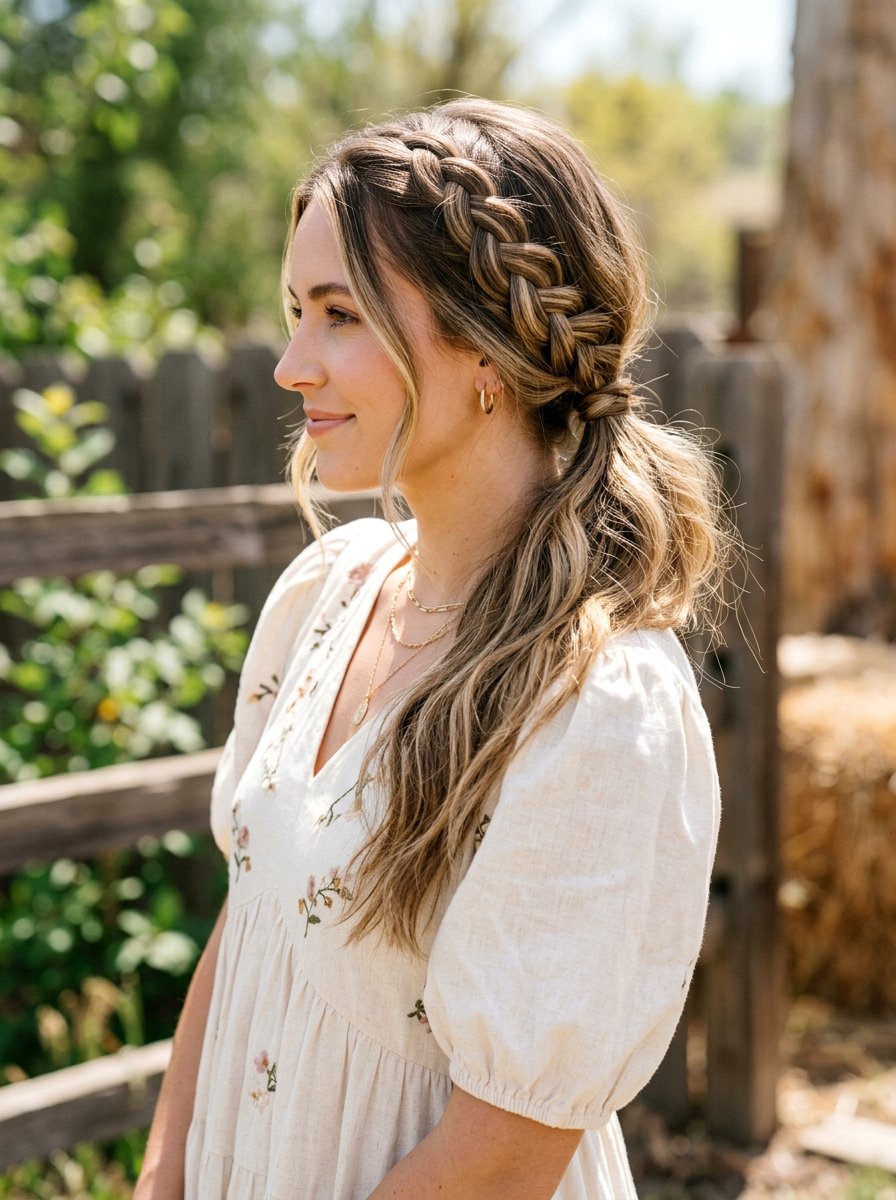
A snake braid is a clever modification of a three-strand braid where, after braiding a section, you hold one strand and push the other two back up towards the start. This creates a wavy, “S” shaped pattern that looks incredibly delicate and artistic. Incorporating this into a ponytail, perhaps as a small accent piece along the side, adds a touch of whimsical detail to an otherwise practical style. It is an excellent conversation starter and works well for more casual rodeo events or country fairs where you want a unique look that doesn’t require hours of preparation.
13. Cornrow Accents Ponytail
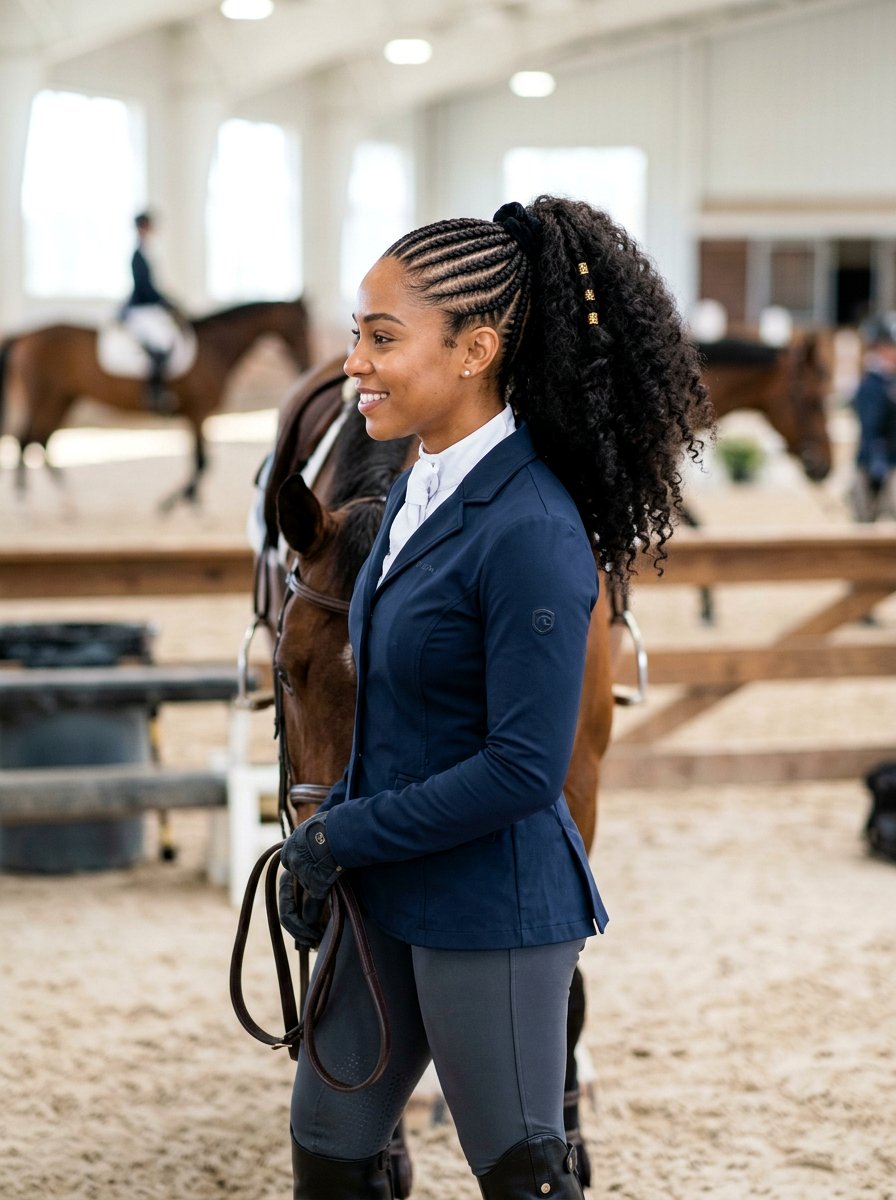
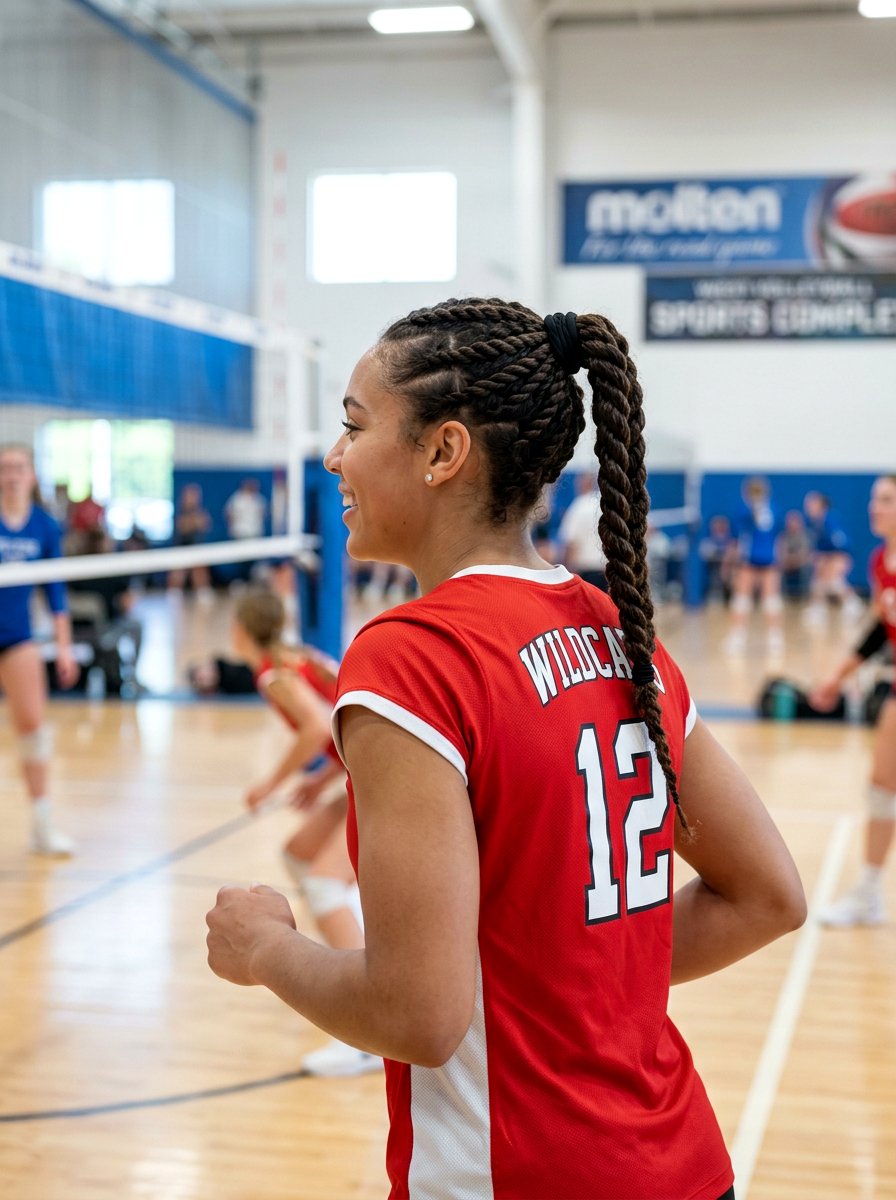
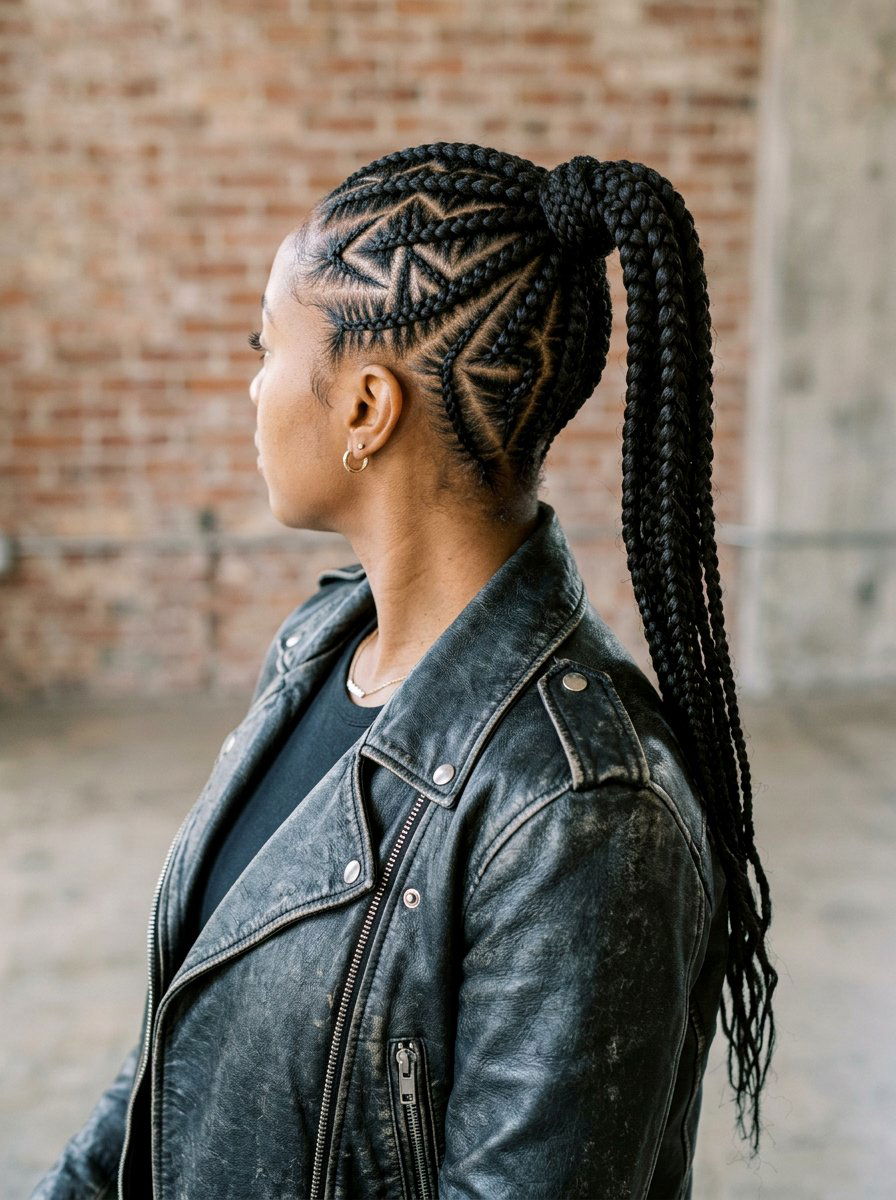
Small, tight cornrows braided into the sides of the head before gathering everything into a high ponytail offer a high-fashion, athletic look. These tiny braids provide an incredible amount of stay-power, ensuring that even the shortest baby hairs are tucked away securely. You can experiment with different patterns, such as diagonal lines or geometric shapes, to personalize the style. This look is particularly popular because it remains sleek even after a helmet is removed, making the transition from the “warm-up” to the “show” completely seamless and stress-free for the rider.
14. Messy Boho Braid Ponytail
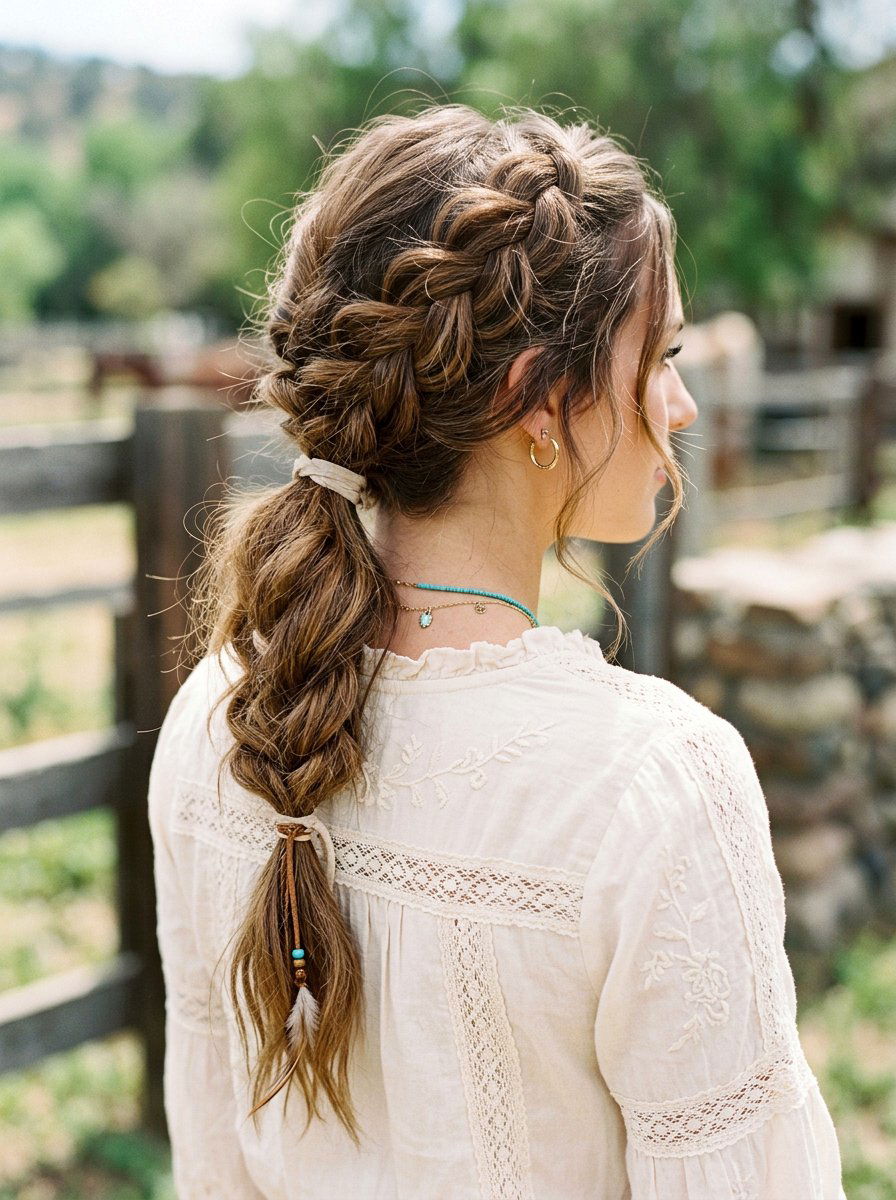
Sometimes a perfectly sleek look isn’t the goal, and that is where the messy boho braid comes in. This style embraces flyaways and soft texture, starting with a very loose braid that is heavily “pancaked” for maximum width. It is often paired with a low, textured ponytail and a few face-framing strands left out to soften the jawline. This look is perfect for the spectator or for a post-event celebration where comfort is the priority. It captures the free-spirited essence of the modern western lifestyle while still keeping the hair managed and stylishly contained.
15. Five Strand Braid Ponytail
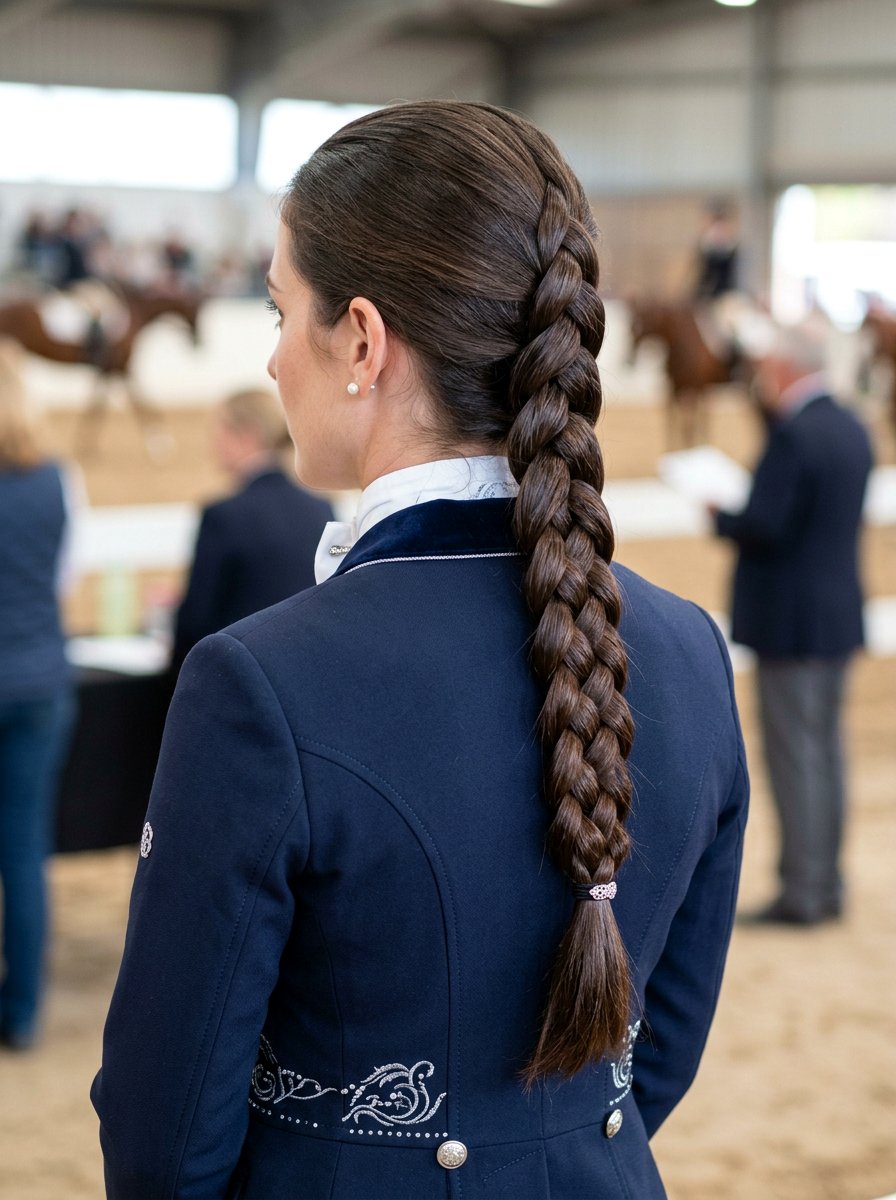
The five-strand braid is the pinnacle of braiding complexity, resulting in a wide, flat, ribbon-like appearance. It looks remarkably like a woven belt or a piece of intricate macramé. When used in a rodeo ponytail, it provides a massive amount of surface area to display the hair’s shine and color. While it requires a steady hand and some practice, the payoff is a show-stopping hairstyle that looks incredibly professional. This braid is sturdy and stays flat against the back, making it a comfortable option for long hours in the saddle where a bulky braid might bounce uncomfortably.
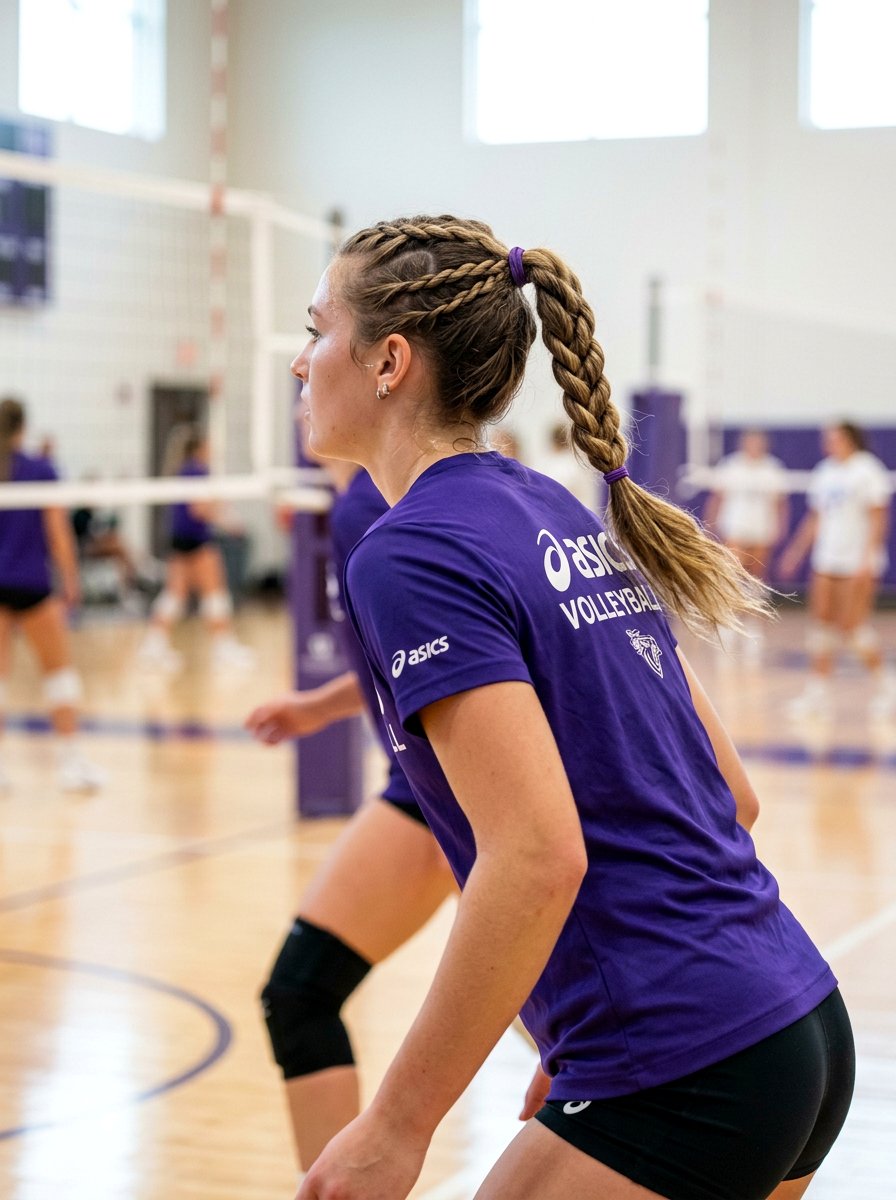
16. Reverse French Braid Ponytail
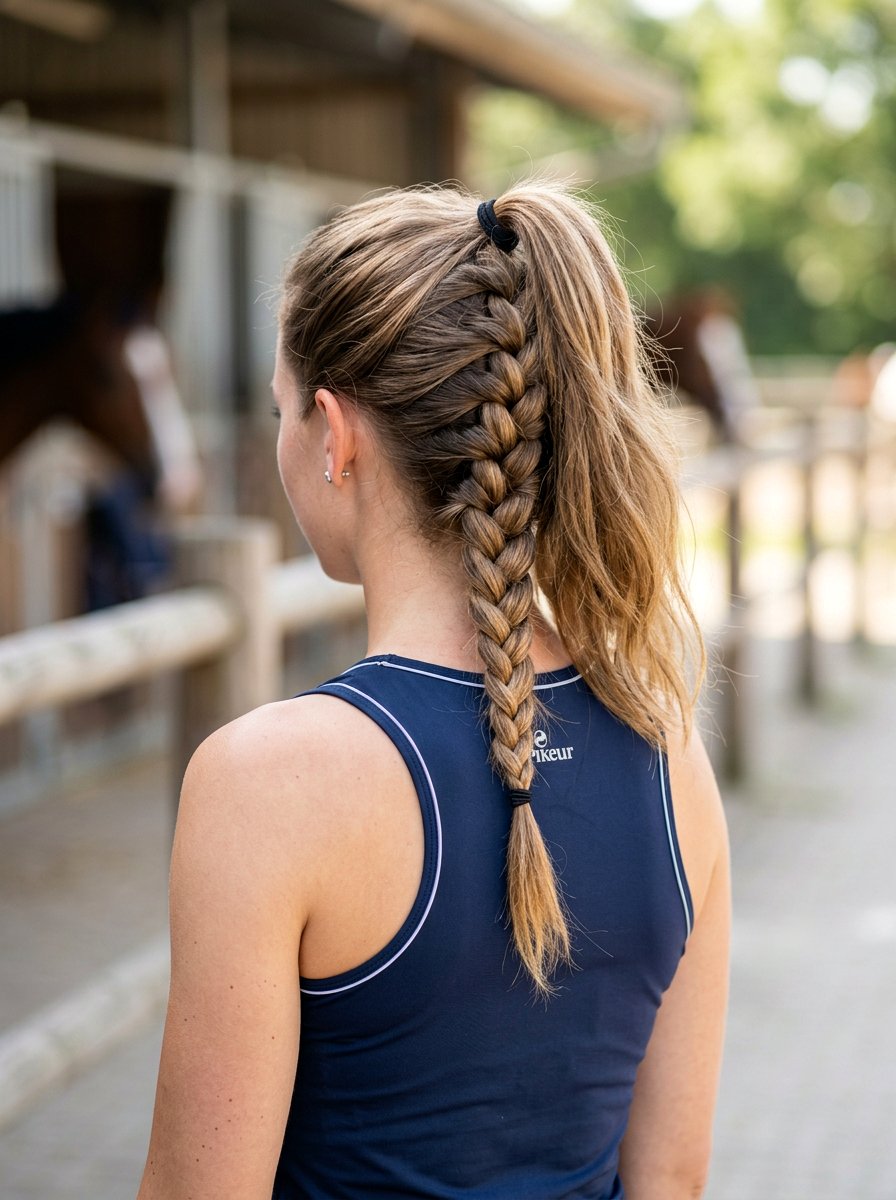
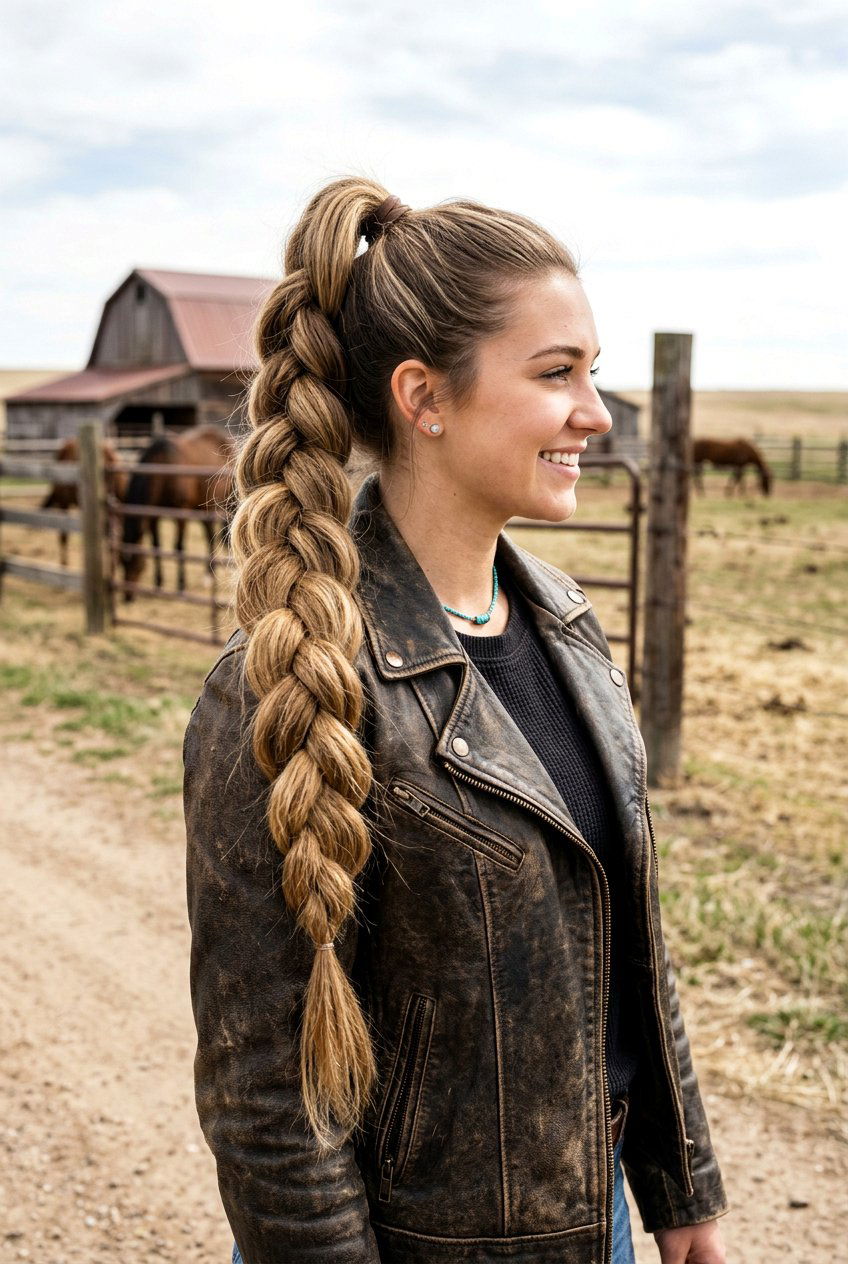
A reverse braid, also known as an “up-braid,” starts at the nape of the neck and works its way up toward the crown. This is a brilliant way to manage the shorter hairs at the back of the neck that often fall out of high ponytails. Once the braid reaches the top of the head, it is joined with the rest of the hair into a high, bouncy pony. This look is fun, unexpected, and keeps the back of your neck cool during hot summer rodeo days. It offers a clean, streamlined look from behind that is as practical as it is stylish.
17. Infinity Braid Ponytail
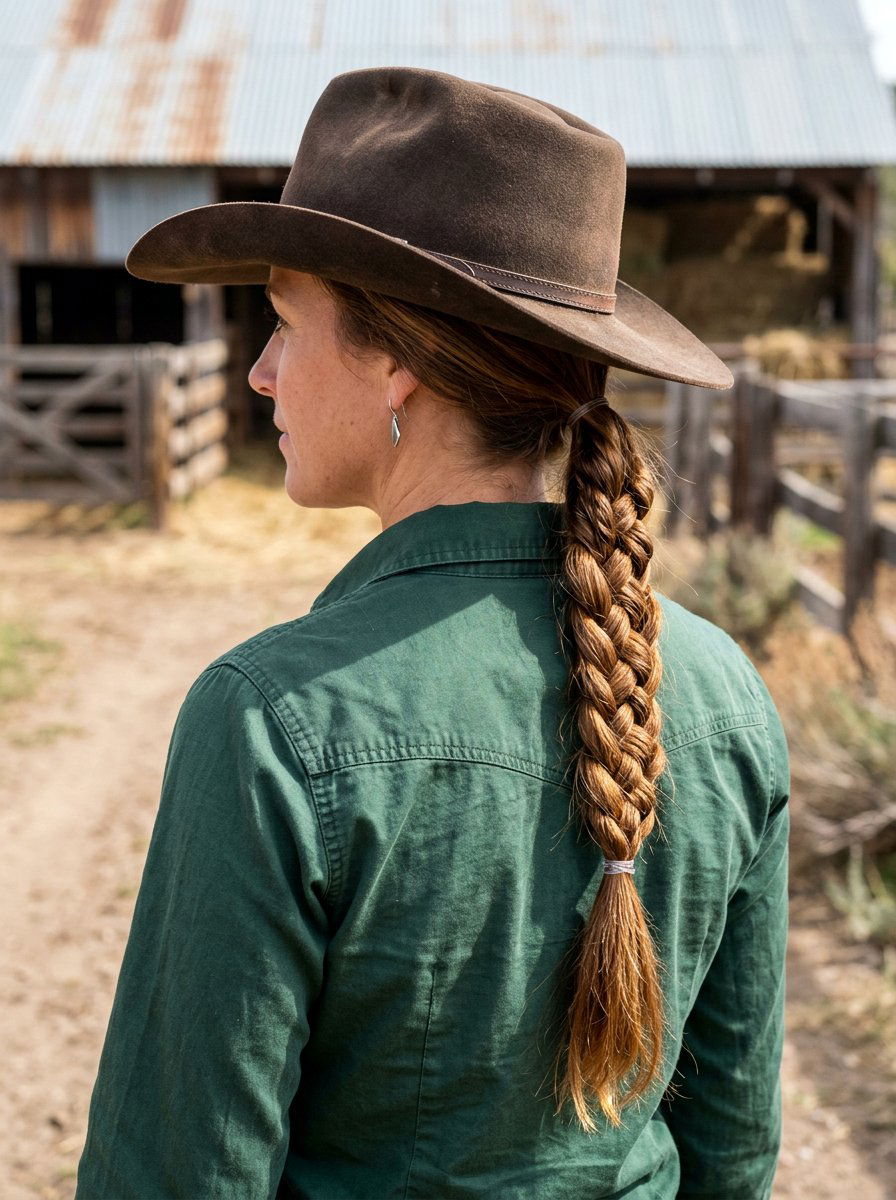
The infinity braid uses a figure-eight weaving pattern to create a dense, highly textured look that resembles a continuous loop. It is an excellent choice for those with very long hair, as it compacts the length into a very secure and manageable form. In a ponytail setting, an infinity braid can be used for the entire tail or just as a decorative accent. Its unique structure is very resistant to “frizzing” out, which is a major advantage when dealing with the wind and humidity often found at outdoor western events and competitions.
18. Multi Braid Ponytail
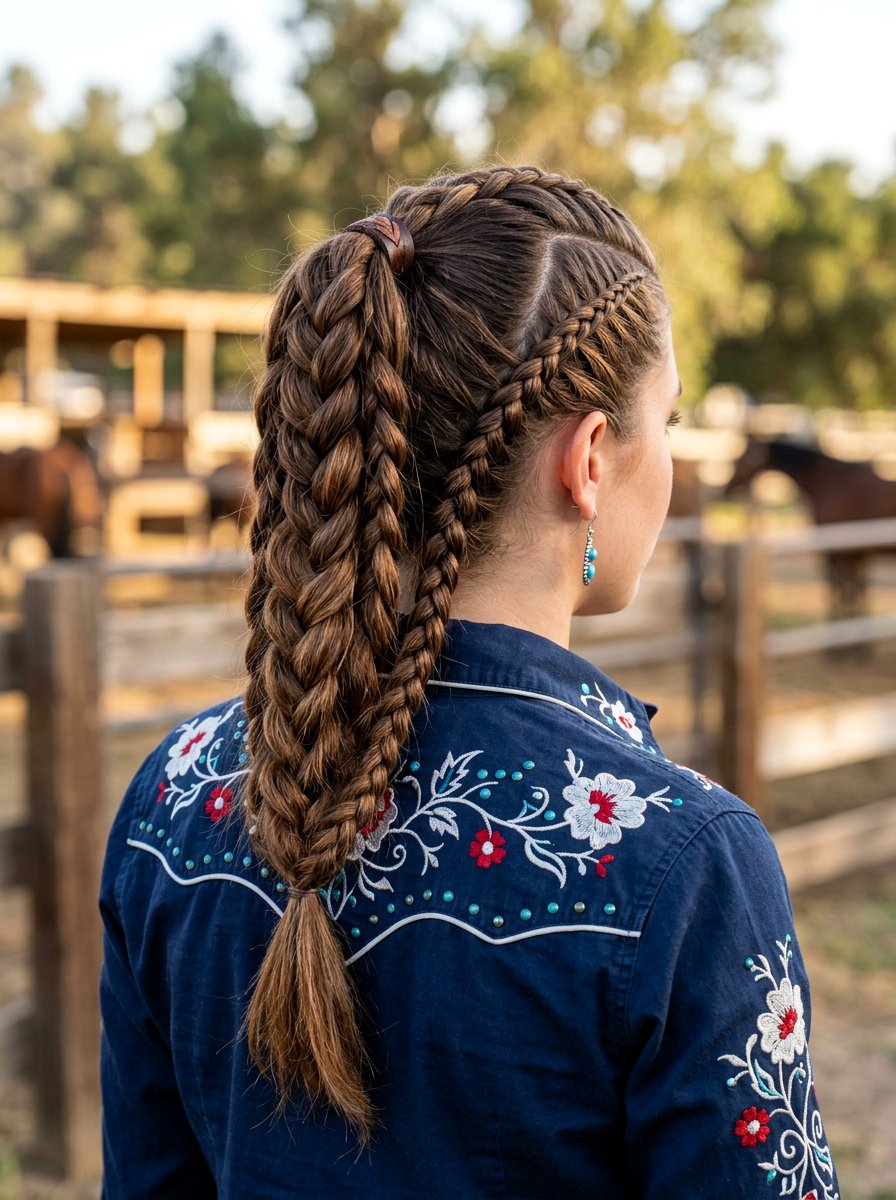
Combining several different types of braids into one ponytail is a great way to create a custom, high-texture look. For example, you might have two small cornrows on the sides and one large Dutch braid down the center, all meeting in a textured bubble ponytail. This “maximalist” approach to hairstyling is very trendy in 2026, as it allows for total personalization. It is a fantastic way to ensure that no one else in the arena has the same look as you, while still adhering to the practical requirements of a secure rodeo hairstyle.
19. Micro Braid Ponytail
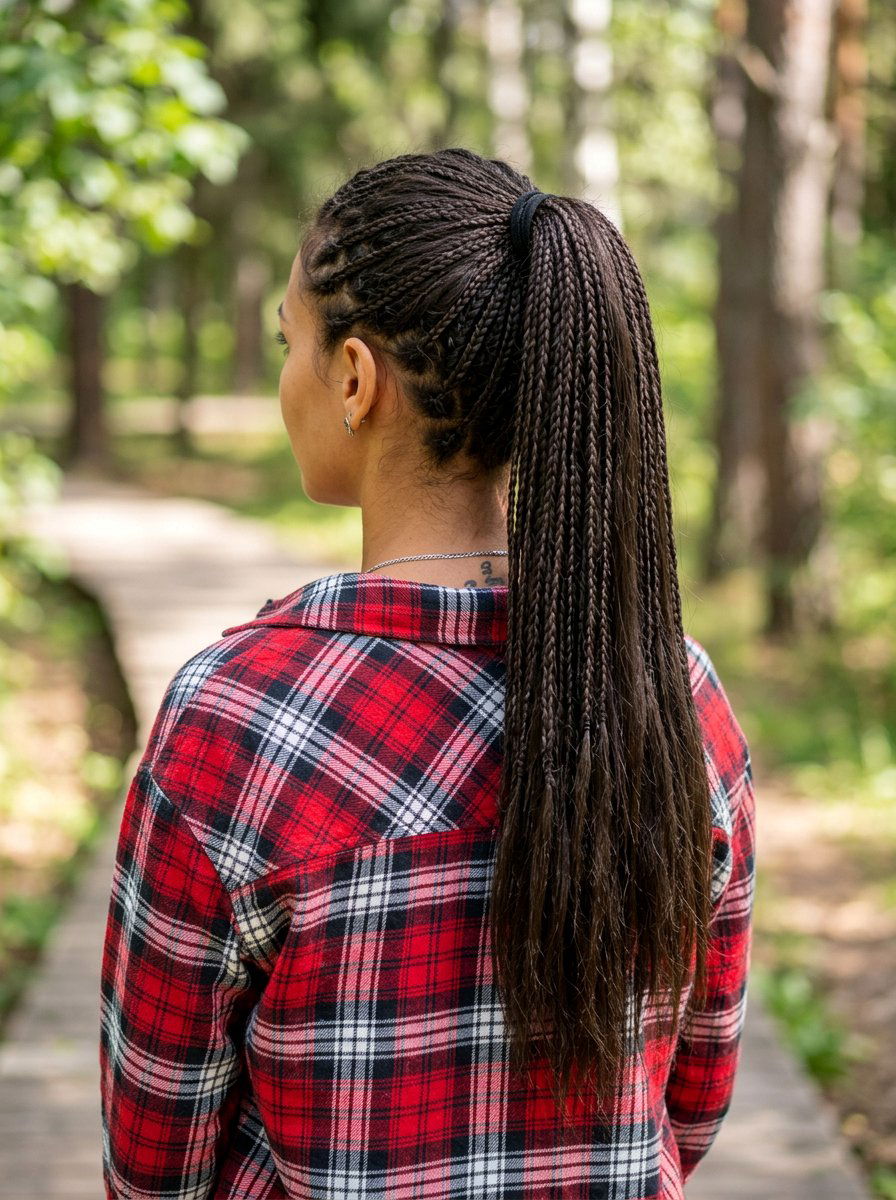
Micro braids are tiny, delicate braids that can be used to add subtle texture to a larger ponytail. You can create three or four micro braids scattered throughout your hair before pulling everything back into a high pony. This adds a “hidden” detail that becomes more apparent as the ponytail moves. It is a great way to add a bit of grit and texture to very straight or fine hair that usually struggles to hold a style. These tiny braids also help to anchor the hair tie, providing a bit more friction to keep the ponytail from sliding down.
20. Criss Cross Braid Ponytail
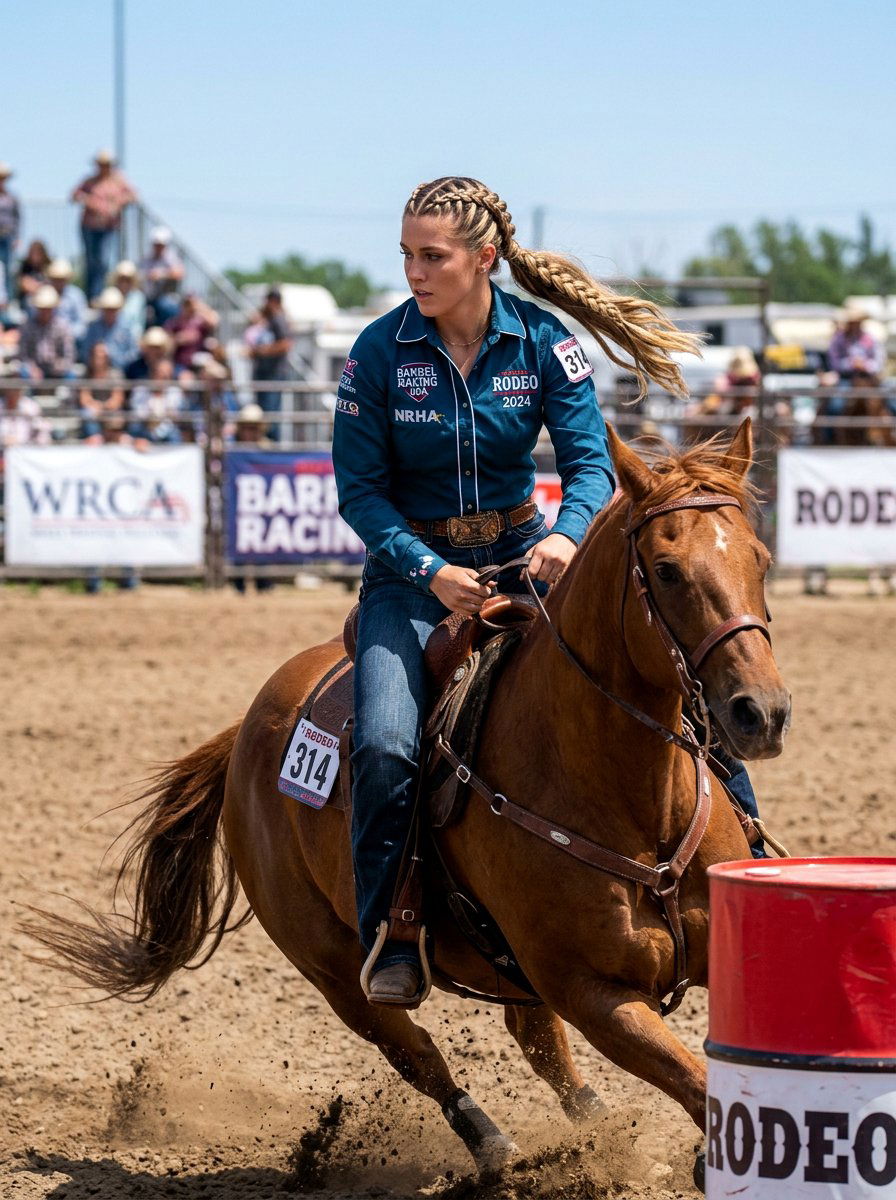
A criss-cross pattern involves taking sections of hair from the front and crossing them over each other in a X-shape before they are integrated into a side braid or ponytail. This creates a visually interesting “lattice” effect on the scalp. It is a very secure method because the overlapping sections hold each other in place. This style is often seen on professional barrel racers who need their hair to stay perfectly still while they are moving at high speeds. It is a sophisticated, technical look that signifies a rider who is serious about both their sport and their style.
Conclusion:
Selecting the right rodeo braid ponytail is about more than just looking good; it is about finding a balance between your personal style and the physical demands of the western lifestyle. From the high-security Dutch braid to the artistic flare of a scarf-integrated weave, these twenty variations offer something for every hair type and occasion. In 2026, the trend has shifted toward styles that are not only durable but also emphasize the natural health and texture of the hair. By mastering these braiding techniques, you can ensure that your hair remains a stunning part of your western identity, whether you are in the dirt of the arena or under the lights of a stage.
You'll Like These Styles:


Leave a Reply