
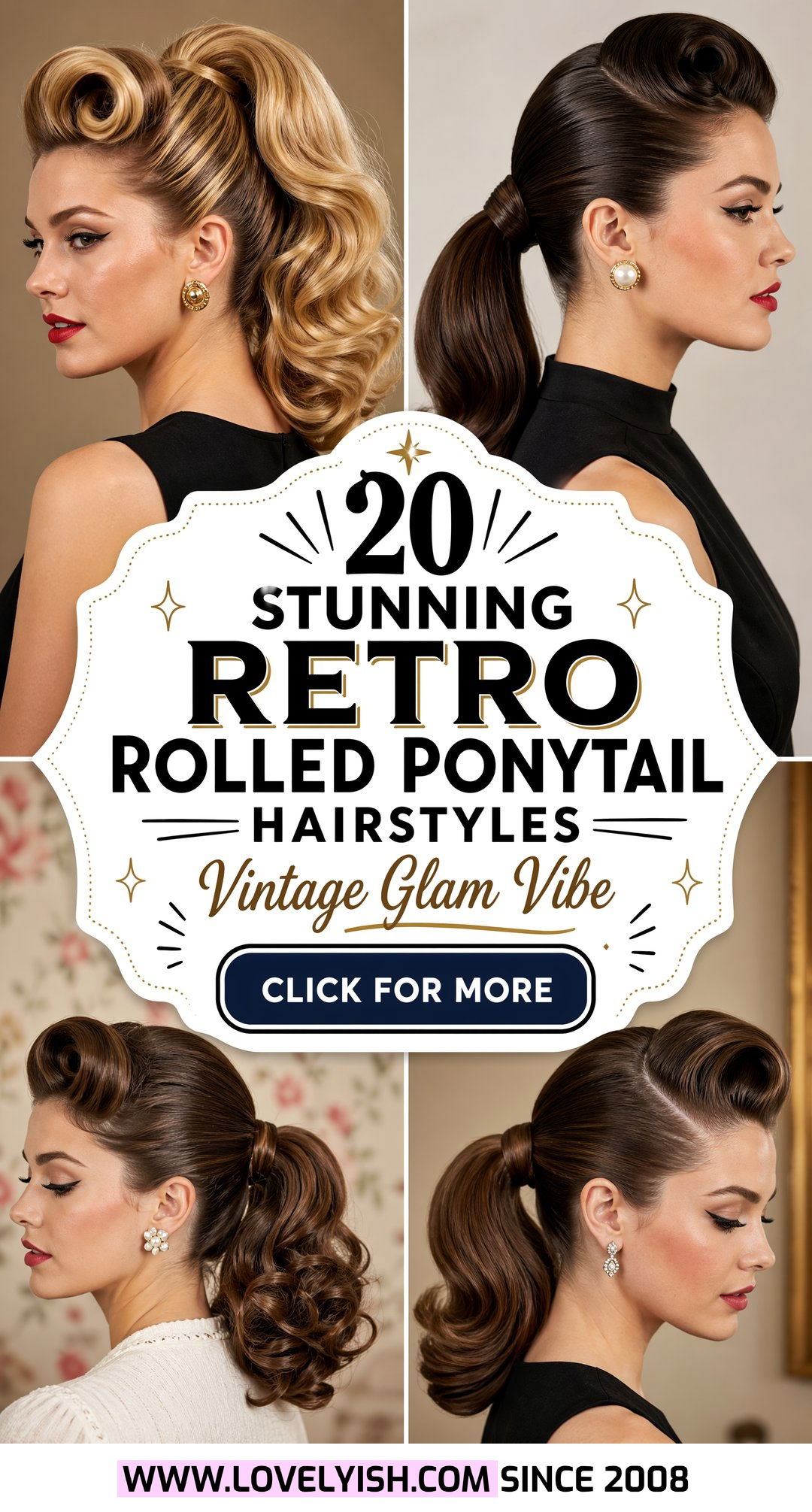
Vintage aesthetics are sweeping through the modern beauty landscape, bringing the sophisticated charm of the mid-century into the present day. Among these timeless looks, the retro rolled ponytail hairstyle stands out as a versatile masterpiece that combines structural elegance with the playful bounce of a classic pony. This style draws heavy inspiration from the 1940s Victory rolls and the polished 1950s “Barbie” aesthetic, offering a structured silhouette that frames the face beautifully while keeping the hair securely gathered. Whether you are aiming for a rockabilly vibe or a refined red-carpet appearance, mastering the art of the hair roll transforms a basic updos into a high-fashion statement. This guide explores the most iconic variations of this nostalgic trend, providing inspiration for every hair texture and occasion.
1. 1950s High Ponytail With Front Roll
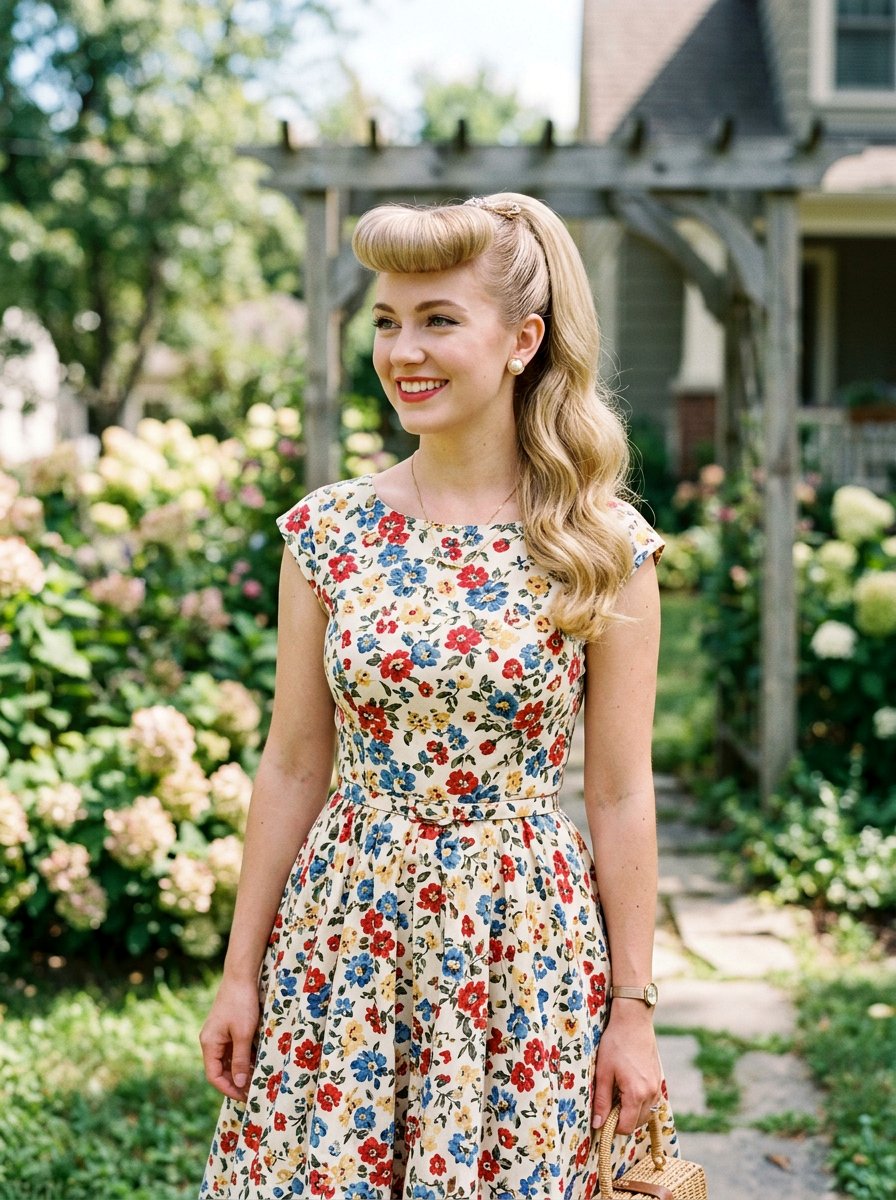
The 1950s high ponytail with a front roll is the quintessential “Barbie” look that defined an era of polished glamour. To achieve this, the hair is typically divided into two main sections: a large front portion for the roll and the remainder for a high, bouncy ponytail situated at the crown. The front section is back-combed or teased extensively to create the necessary internal structure before being smoothed over and pinned into a soft, voluminous bumper roll. This elevation adds height to the profile and creates a flattering frame for the forehead. The ponytail itself is often curled into one large, cohesive barrel curl or several smaller ringlets to maintain that signature mid-century bounce and “swing” when moving.
2. Victory Roll Ponytail
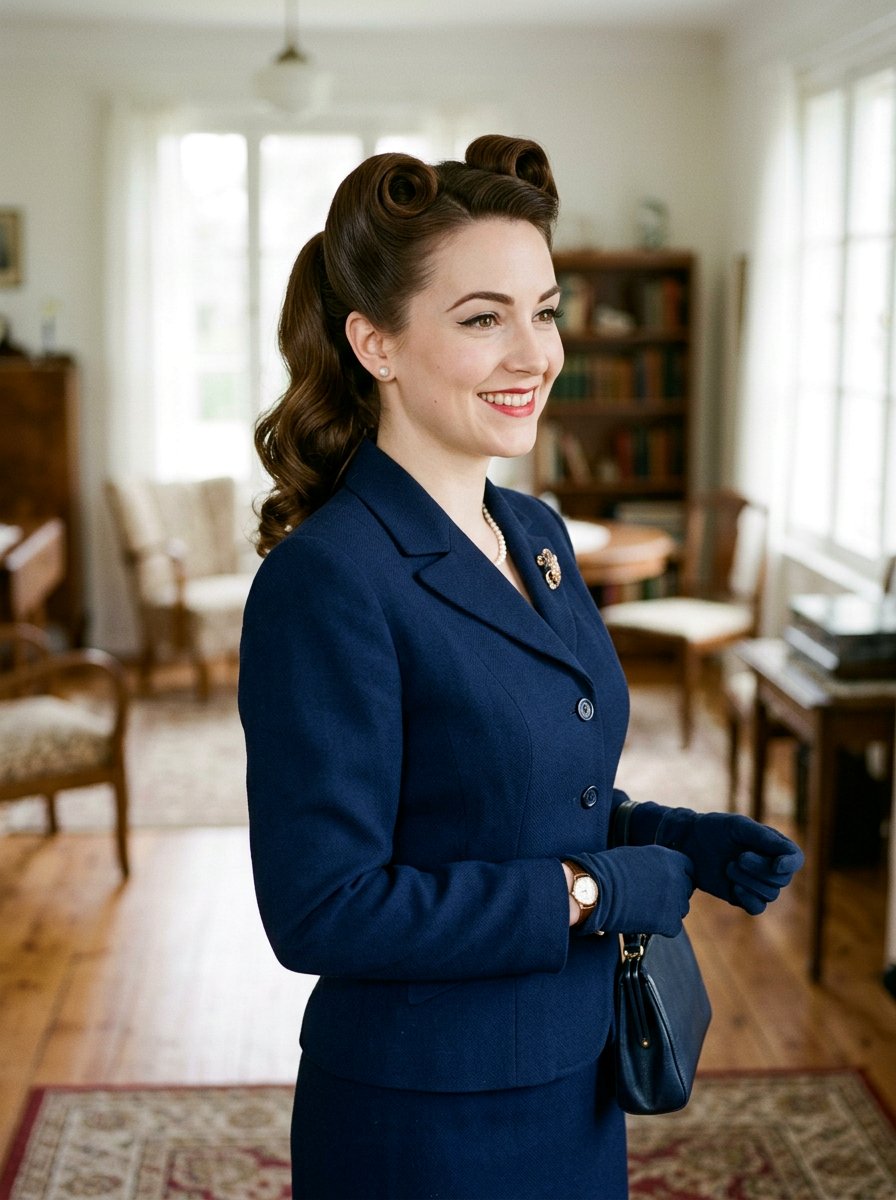
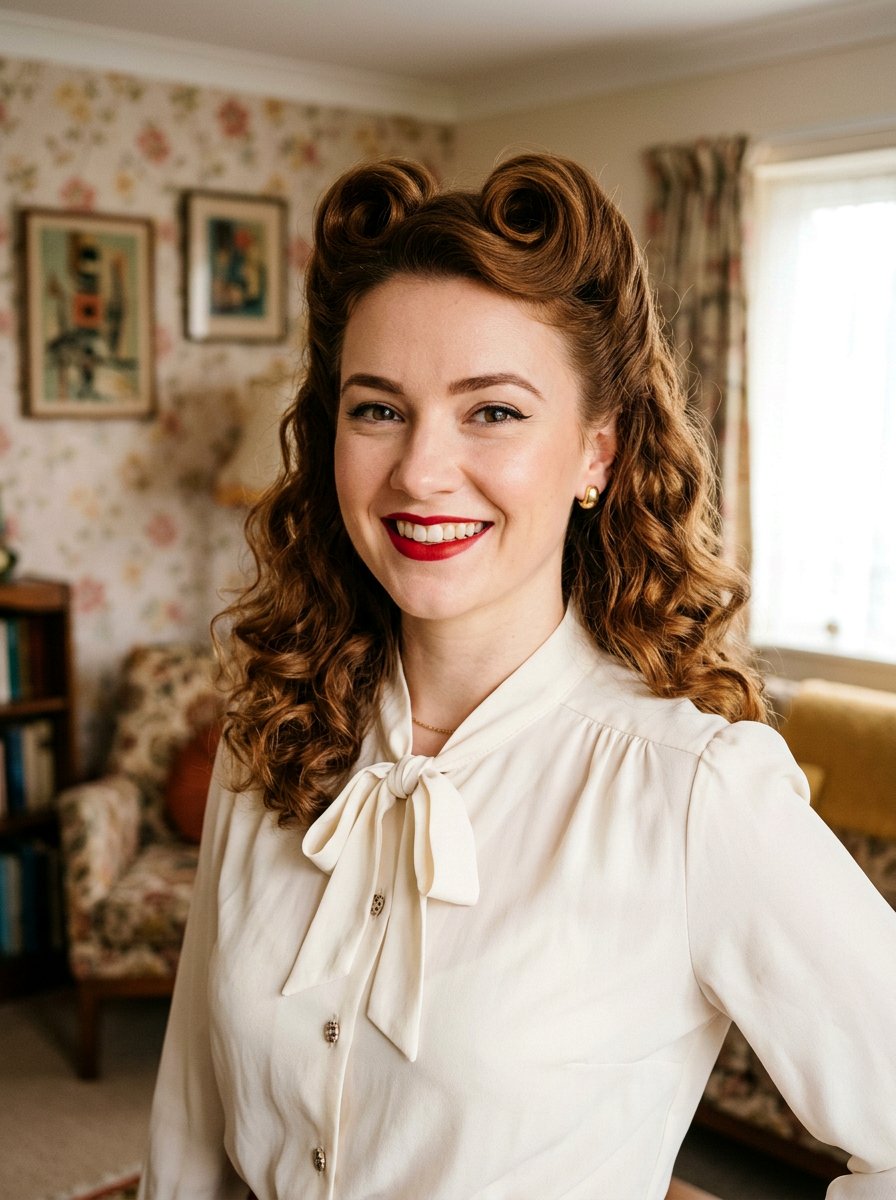
Victory roll ponytails pay homage to the iconic 1940s wartime era where sculptural hair designs were both a fashion choice and a practical necessity. In this specific variation, the classic twin rolls are positioned at the top or sides of the head, leading seamlessly into a mid-height ponytail at the back. These rolls are created by wrapping sections of hair around two fingers to form a hollow tube, which is then pinned flat against the scalp. The contrast between the rigid, architectural rolls and the flowing lengths of the ponytail creates a striking visual balance. This style is particularly effective for thick hair, as the density helps the rolls maintain their circular shape without collapsing throughout the day.
3. Side Swept Rolled Ponytail
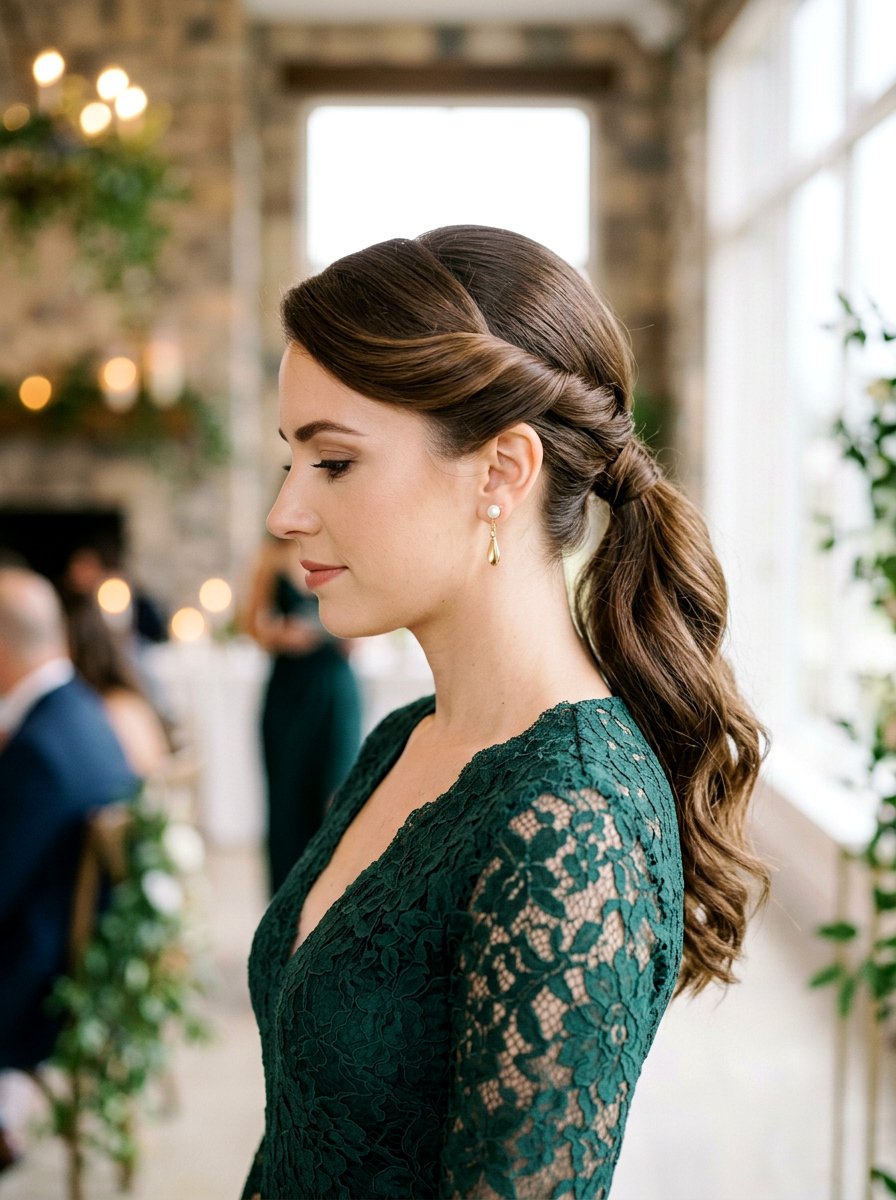
A side swept rolled ponytail offers a softer, more asymmetrical take on vintage styling that works exceptionally well for formal events or weddings. This look focuses on a deep side part where the hair on the heavier side is manipulated into a long, continuous roll that travels along the hairline toward the ear. The hair is then gathered into a low ponytail that rests over one shoulder, creating a romantic and elongating effect on the neck. By integrating the roll into the side sweep, you eliminate the need for harsh elastics to be visible, as a small strand of hair can be wrapped around the base of the pony to finish the polished aesthetic.
4. Rockabilly Pompadour Ponytail
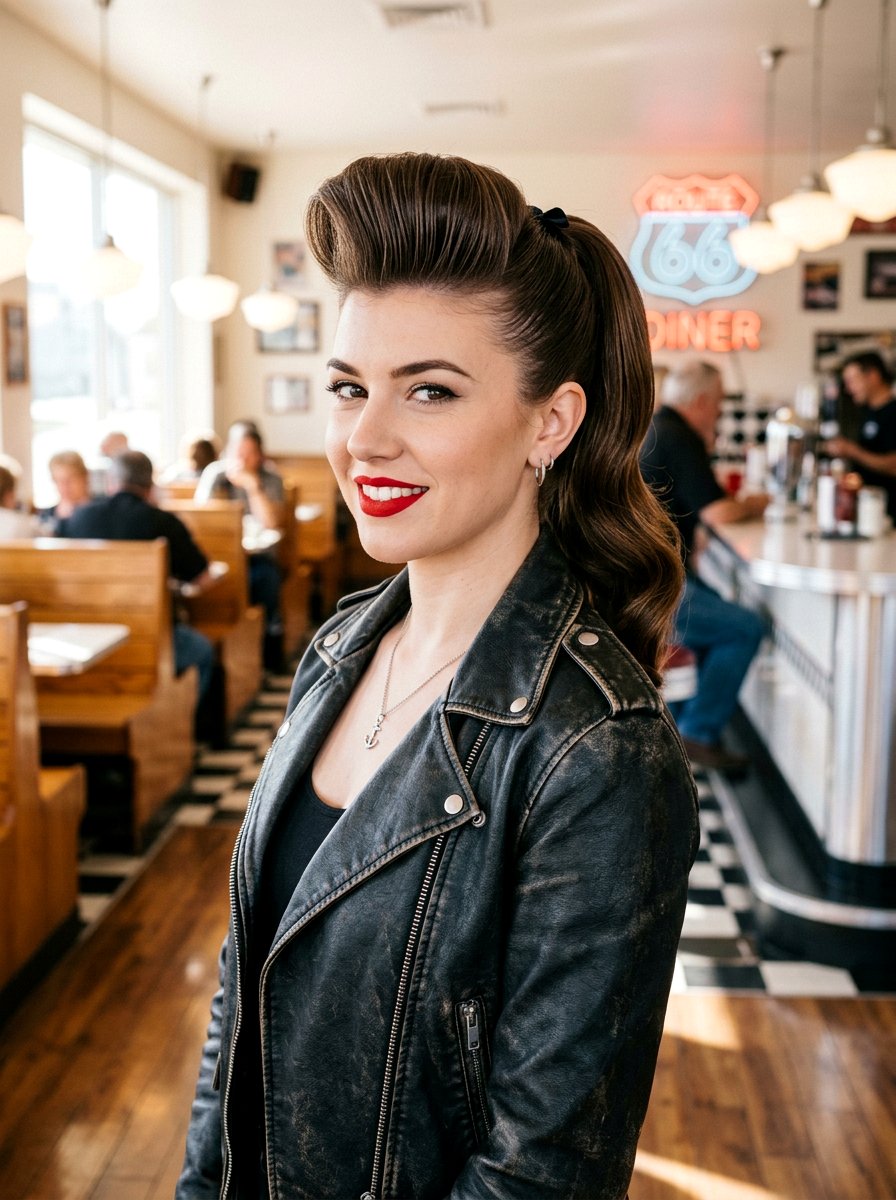
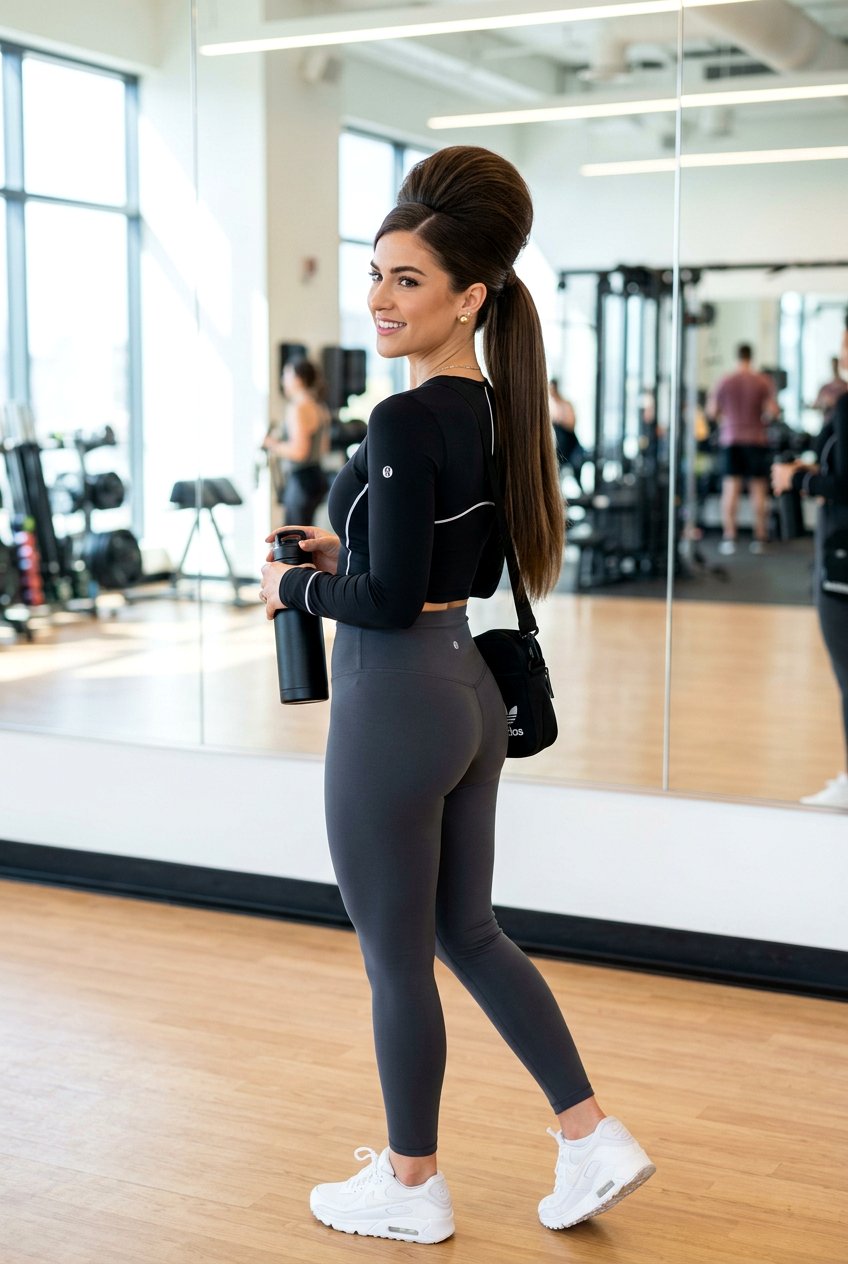
The rockabilly pompadour ponytail is a bold, edgy interpretation of retro rolls that infuses 1950s greaser culture with modern feminine flair. The centerpiece of this style is a massive, gravity-defying roll at the very front of the hairline, known as a pompadour or “quiff.” This section requires significant teasing and a strong-hold hairspray to stay upright and rounded. Once the pompadour is secured with bobby pins, the rest of the hair is pulled back into a sleek, tight ponytail. For an authentic rockabilly finish, the ponytail should be straight and glossy or feature a slight “flick” at the ends, emphasizing the sharp contrast between the voluminous top and the streamlined back.
5. Gibson Roll Low Ponytail
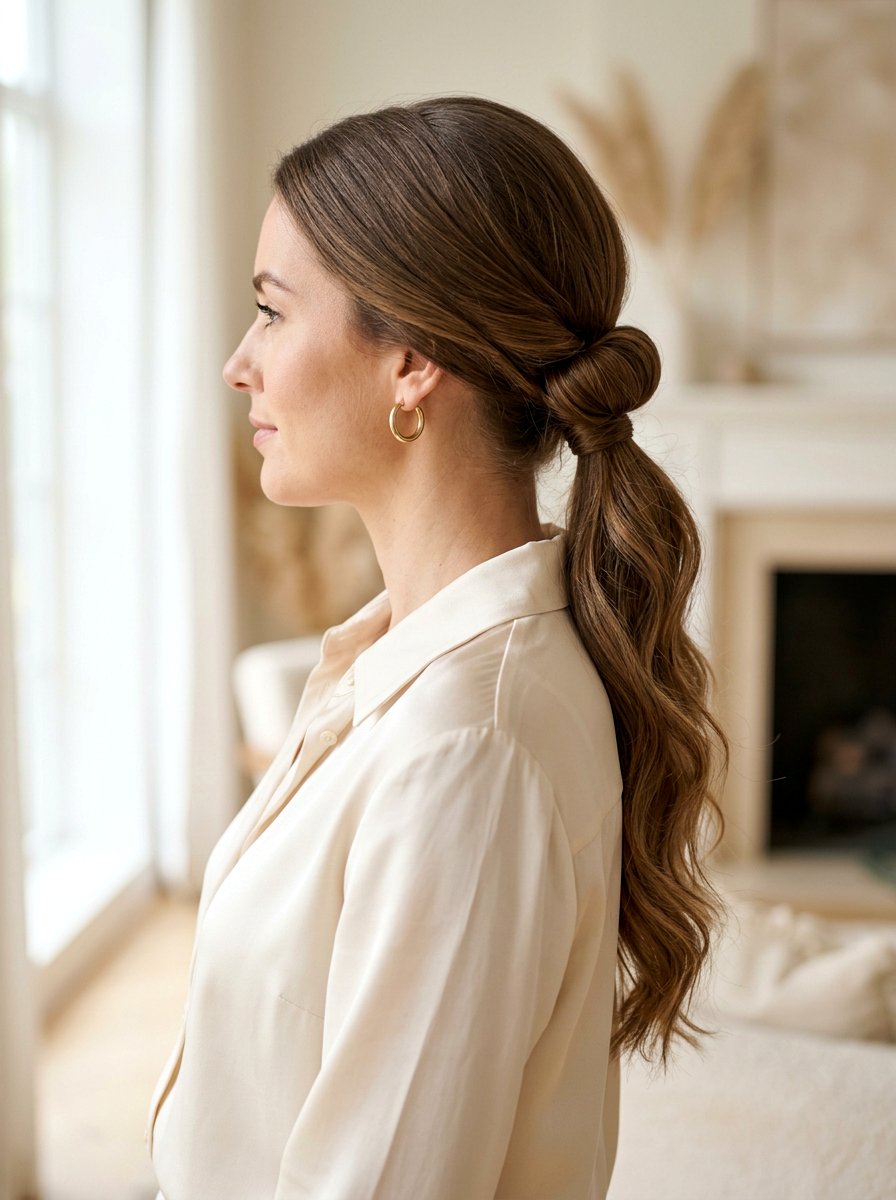
The Gibson roll low ponytail is a refined hybrid style that takes cues from the late Edwardian period and the 1940s Gibson girl revival. Unlike high-volume rolls that sit on top of the head, this version features a horizontal roll that rests at the nape of the neck. The hair is lightly tucked and rolled inward over a hair donut or a hidden elastic, but rather than tucking all the ends away into a bun, the remaining lengths are allowed to cascade down into a soft ponytail. This creates a beautiful “cradle” effect for the base of the pony, making it look more intricate than a standard tie-back while remaining effortless and wearable for the office.
6. Retro Bangs With Rolled Ponytail
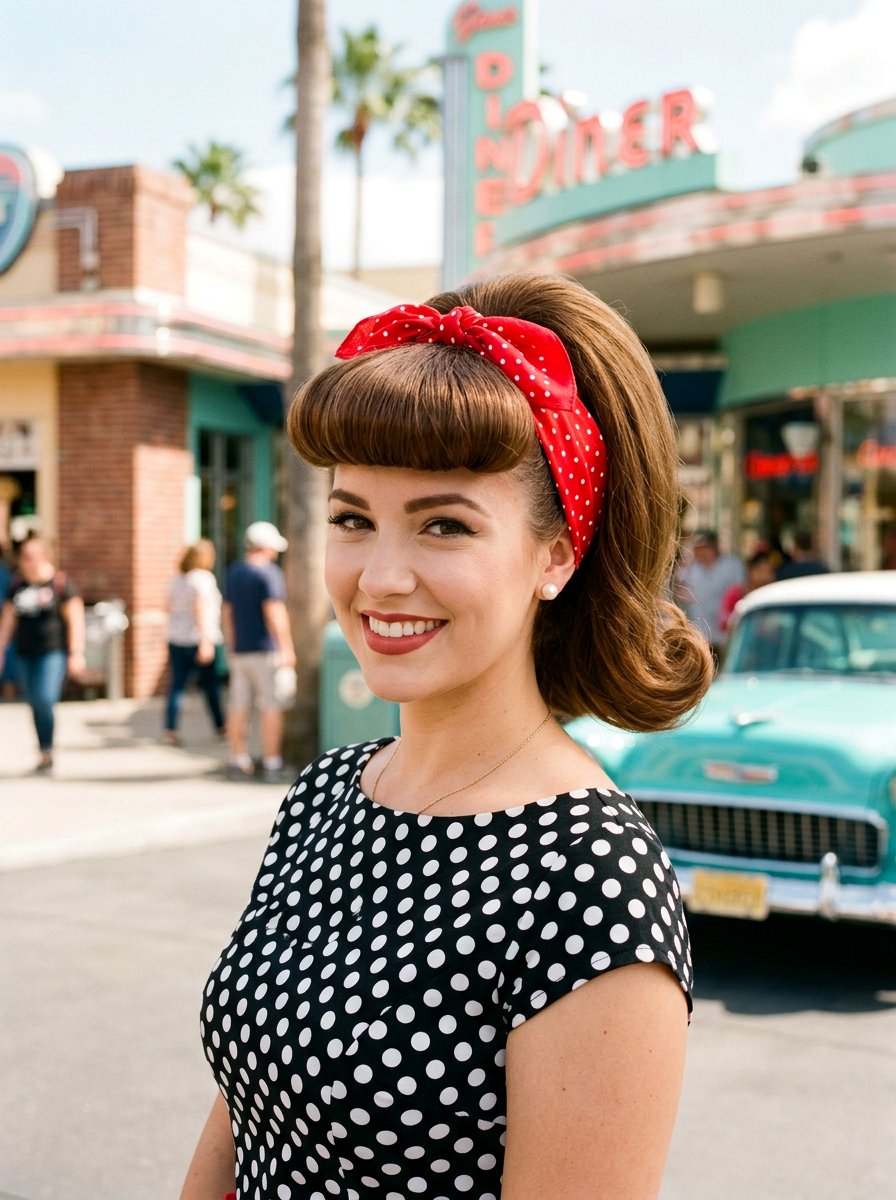
Retro bangs with a rolled ponytail are the perfect solution for individuals who want the vintage look without having to manipulate their longest layers into complex rolls. This style utilizes a “bumper bang,” which is a faux-fringe created by rolling a section of front hair under and pinning it to look like thick, rounded bangs. This eliminates the commitment of a permanent haircut while providing that distinct Bettie Page or 1950s housewife silhouette. The back of the hair is then swept into a high, sleek ponytail, often adorned with a silk scarf or a large bow to hide the pins and complete the nostalgic ensemble with a pop of color.
7. Double Side Roll Ponytail
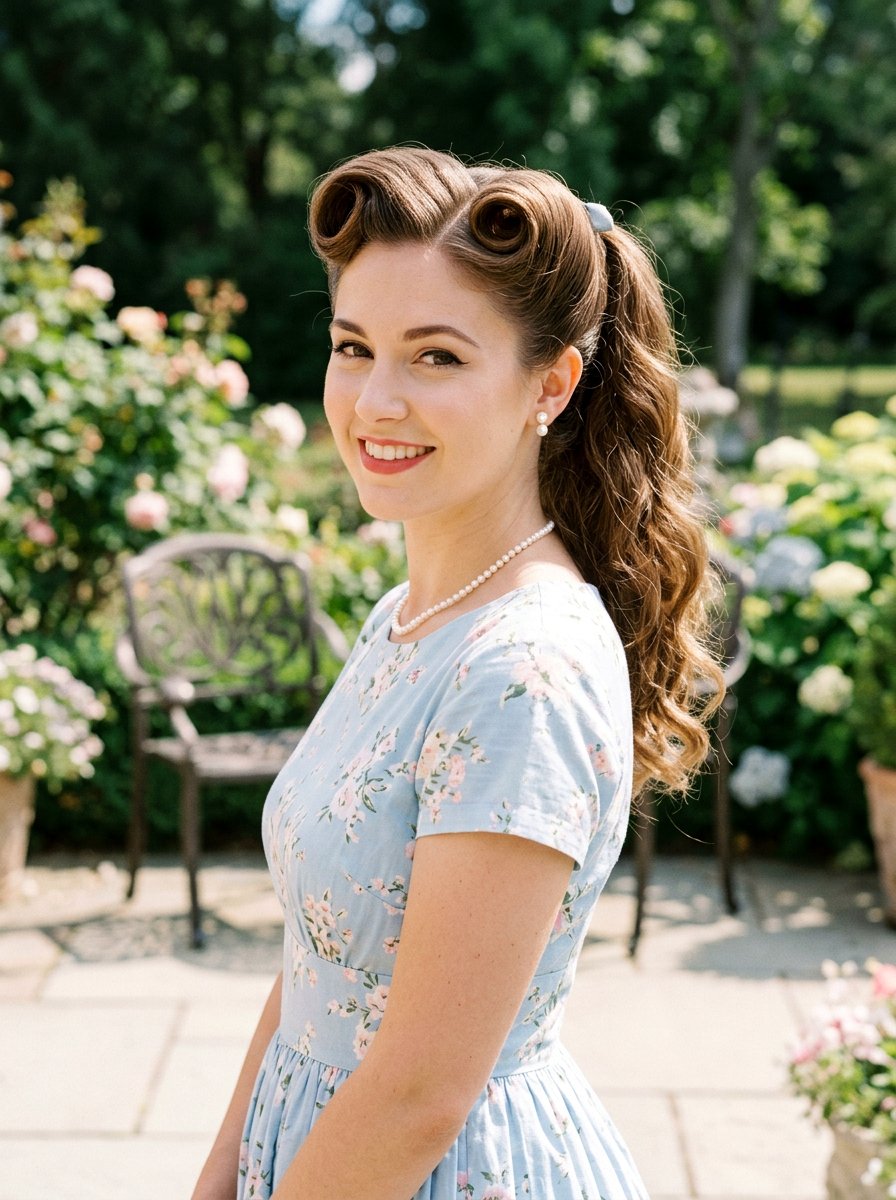
The double side roll ponytail features two symmetrical rolls that frame the face on either side of a center or slight off-center part. This look is heavily reminiscent of the “poodle” styles of the 1940s, where volume was distributed evenly across the temples. Each roll is carefully sculpted to curve toward the back of the head, meeting at the crown where they transition into a unified ponytail. This specific arrangement is excellent for round face shapes as the height and width of the side rolls help to elongate the facial features. Finishing the ponytail with brushed-out waves creates a soft, cloud-like texture that enhances the vintage femininity of the overall structure.
8. Braided Edge Rolled Ponytail
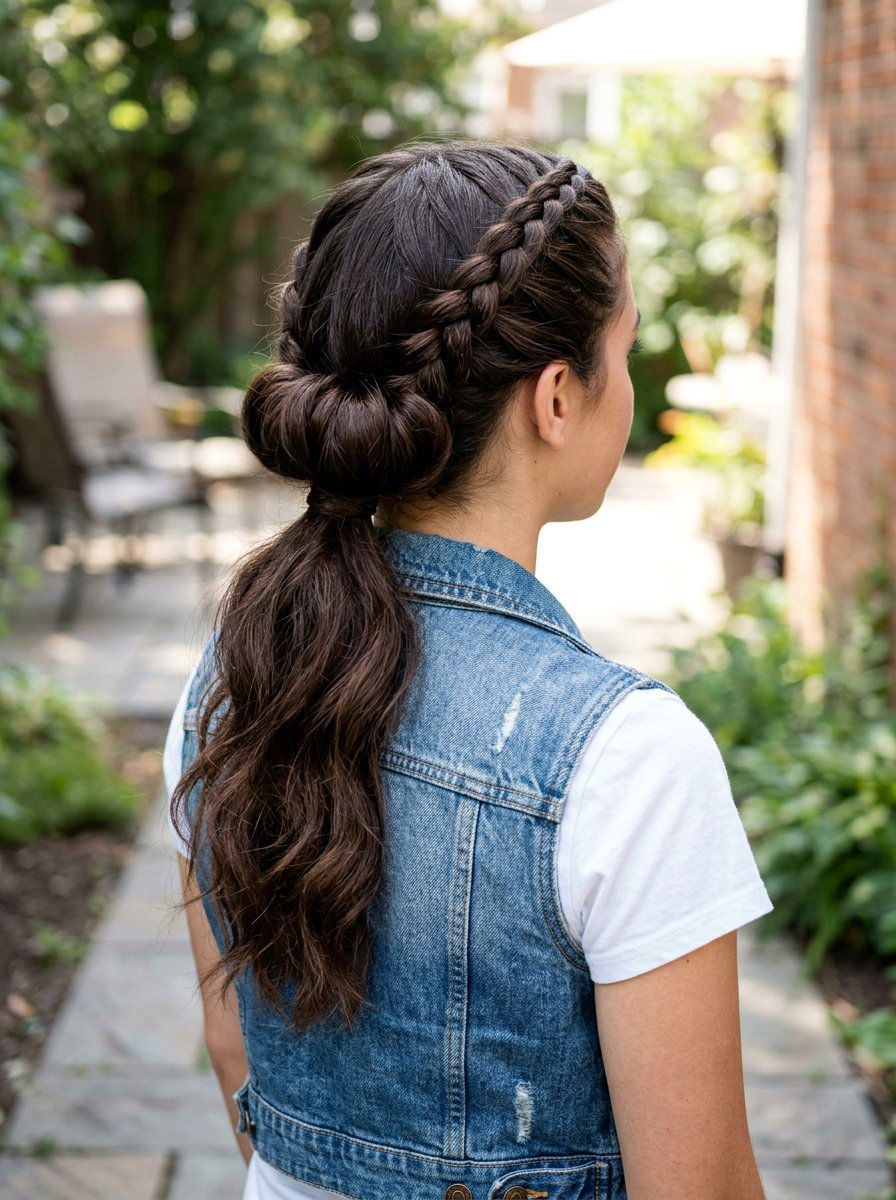
A braided edge rolled ponytail introduces a contemporary texture to the classic vintage roll by incorporating small accent braids. Typically, a thin French or Dutch braid is crafted along the side of the head, leading directly into the base of a structural roll or acting as the “anchor” for a side-rolled section. This adds a layer of visual interest and helps secure shorter layers or flyaways that might otherwise escape a traditional roll. When the braid merges into the ponytail, it creates a modern-meets-vintage fusion that is popular in 2026 fashion circles. This style is highly durable, making it an ideal choice for outdoor events where wind might disturb a standard roll.
9. Scarf Wrapped Rolled Ponytail
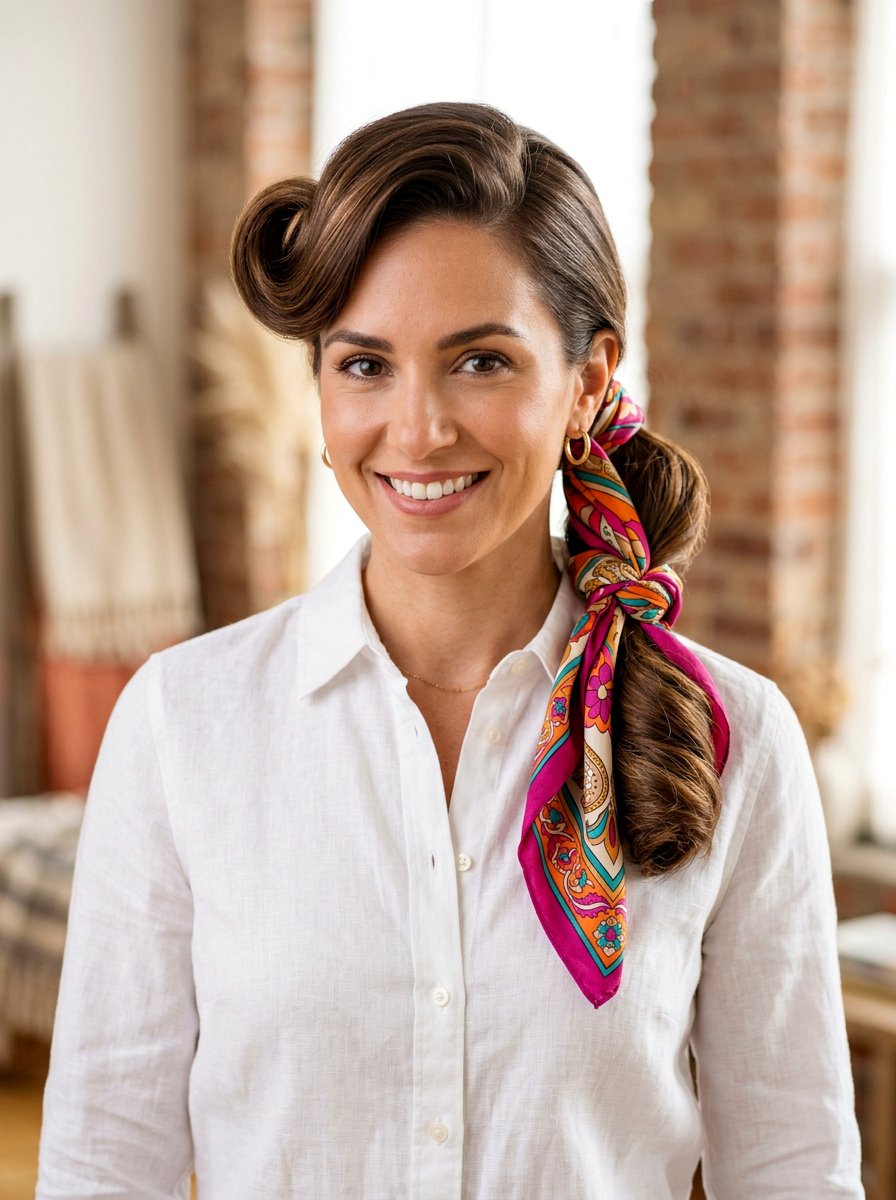
The scarf wrapped rolled ponytail is a functional and stylish variation that utilizes accessories to emphasize the retro theme. After creating a front roll or a side-swept bumper, a colorful silk or chiffon scarf is folded into a narrow band and tied around the base of the ponytail. The knot can be positioned at the top for a “bunny ear” look or at the bottom for a more understated finish. Not only does the scarf hide any visible bobby pins used to secure the rolls, but it also adds a 1940s “Rosie the Riveter” vibe that is both empowering and chic. It is a fantastic way to coordinate your hairstyle with your outfit.
10. Glamour Wave Rolled Ponytail
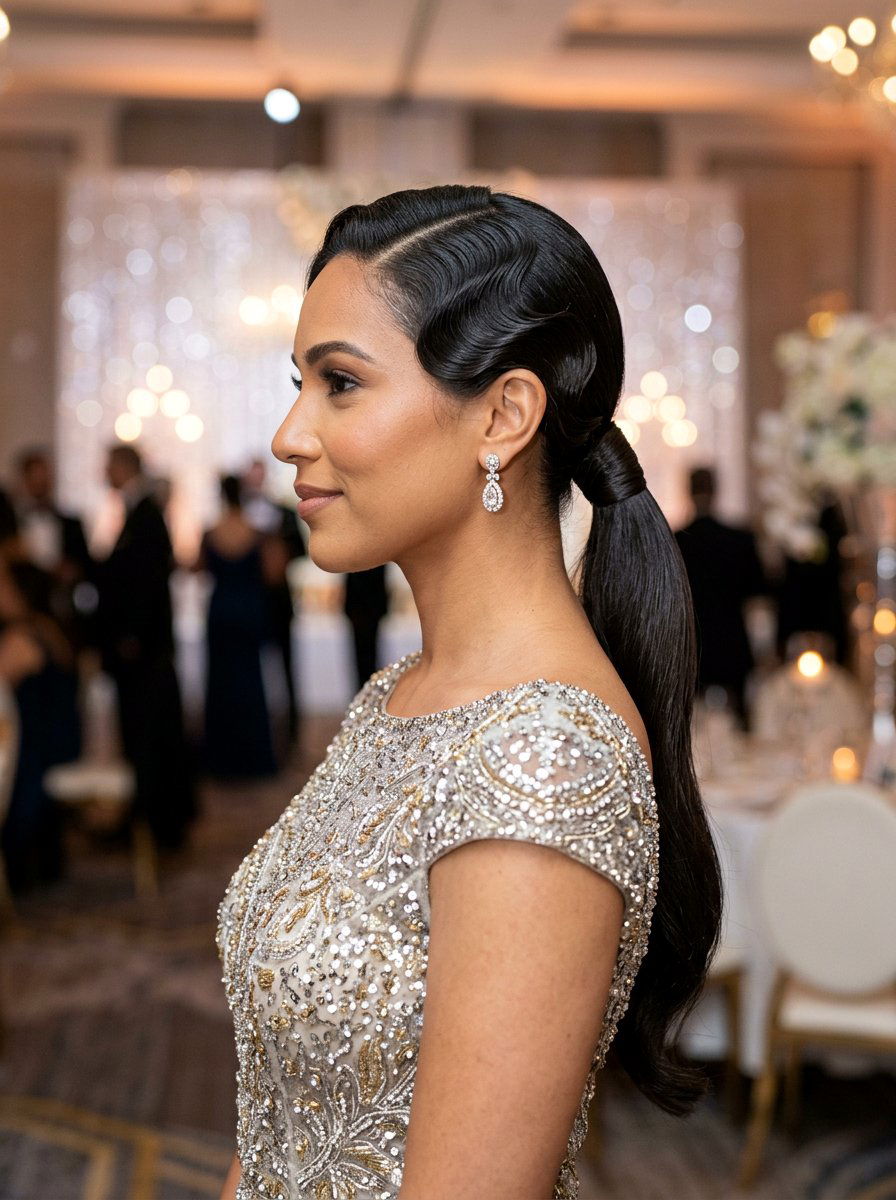
A glamour wave rolled ponytail focuses on integrating the “S-wave” pattern of Old Hollywood into a rolled updo. Instead of a tight, circular roll, the hair at the front is molded into a soft, undulating wave that eventually rolls back into the ponytail. This requires the use of setting clips and a fine-tooth comb to “sculpt” the hair while it is damp or pre-heated. The resulting look is incredibly sophisticated and less “costume-like” than traditional Victory rolls, making it a favorite for red carpet appearances. The ponytail is usually kept low and sleek to ensure the focus remains on the intricate finger-waved roll at the temple or forehead.
11. Teased Crown Rolled Ponytail
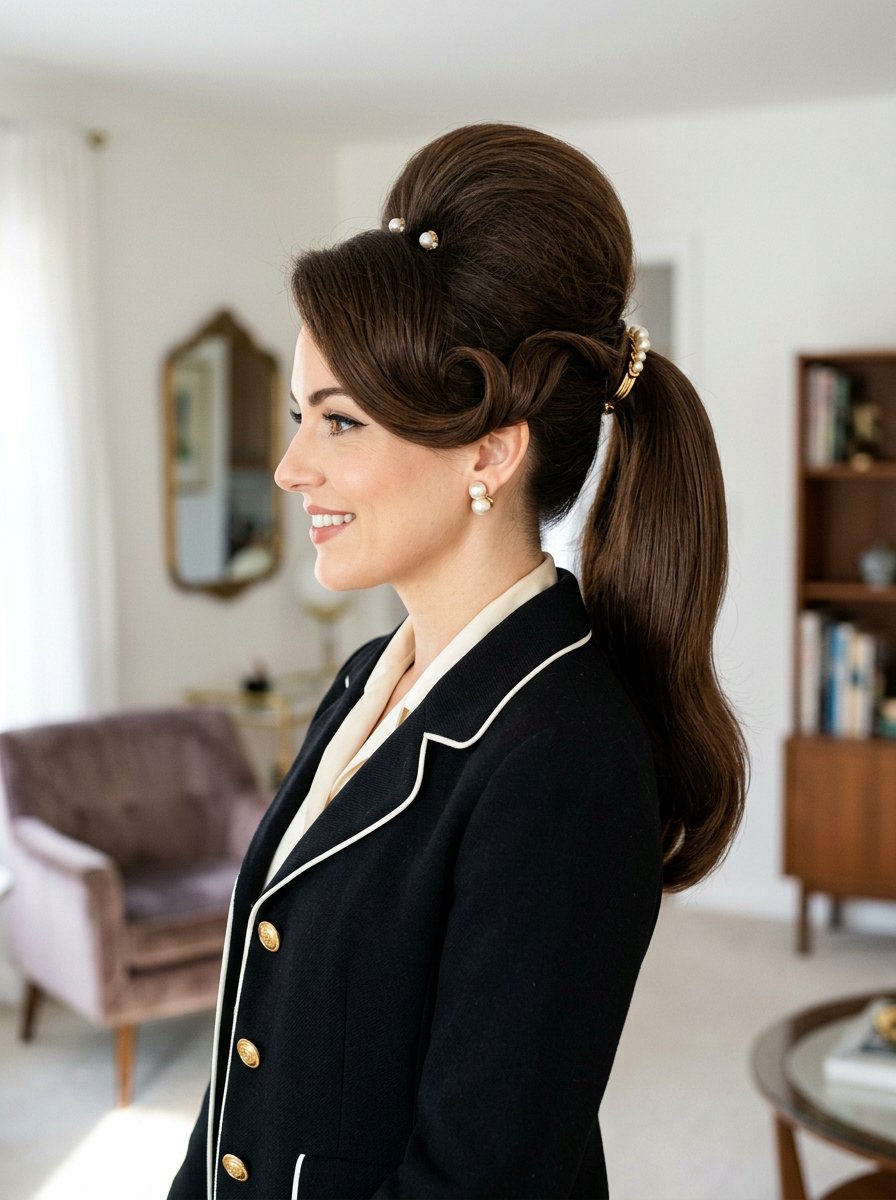
The teased crown rolled ponytail maximizes volume at the back of the head, creating a dramatic “beehive” effect that transitions into a rolled accent. By back-combing the hair at the crown, you create a sturdy base for a high-set ponytail, while the front sections are rolled outward to add width and vintage character. This style is synonymous with the early 1960s transition from strict rolls to larger-than-life bouffants. It provides a powerful, commanding silhouette that works well with formal evening wear or structured blazers. Using a high-shine serum on the outer surface of the teased area ensures the hair looks polished and healthy rather than frizzy or unkempt.

12. Pin Curl Rolled Ponytail
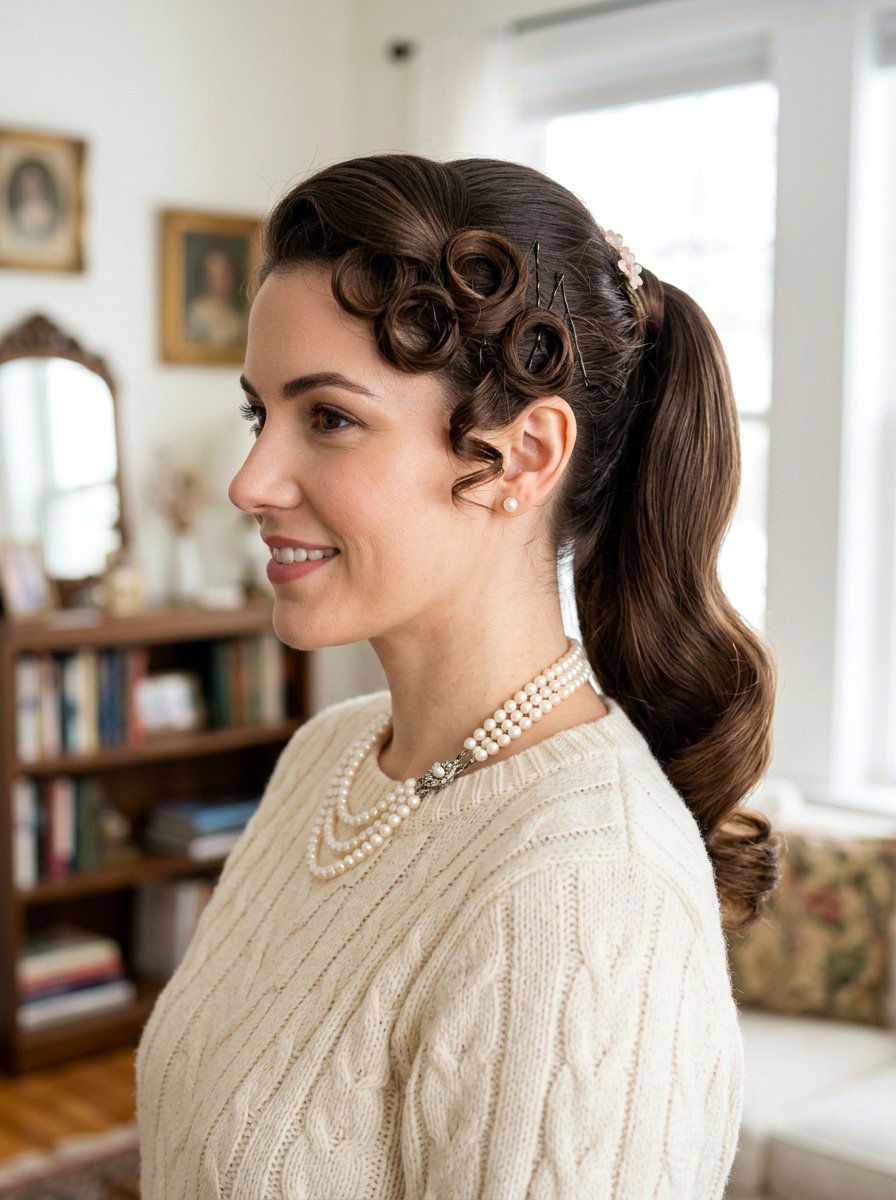
The pin curl rolled ponytail incorporates small, delicate spirals into the transition point where the hair meets the ponytail elastic. While the main body of the hair might be rolled into a large bumper at the front, the area around the ears or the base of the pony features small, flat pin curls pinned in place. This adds a level of detail that was common in 1940s salon styling, where no part of the head was left unadorned. These tiny rolls serve a dual purpose: they act as decorative elements and help to manage shorter “baby hairs” near the nape of the neck, ensuring the entire updo remains exceptionally clean.
13. Horizontal Back Roll Ponytail
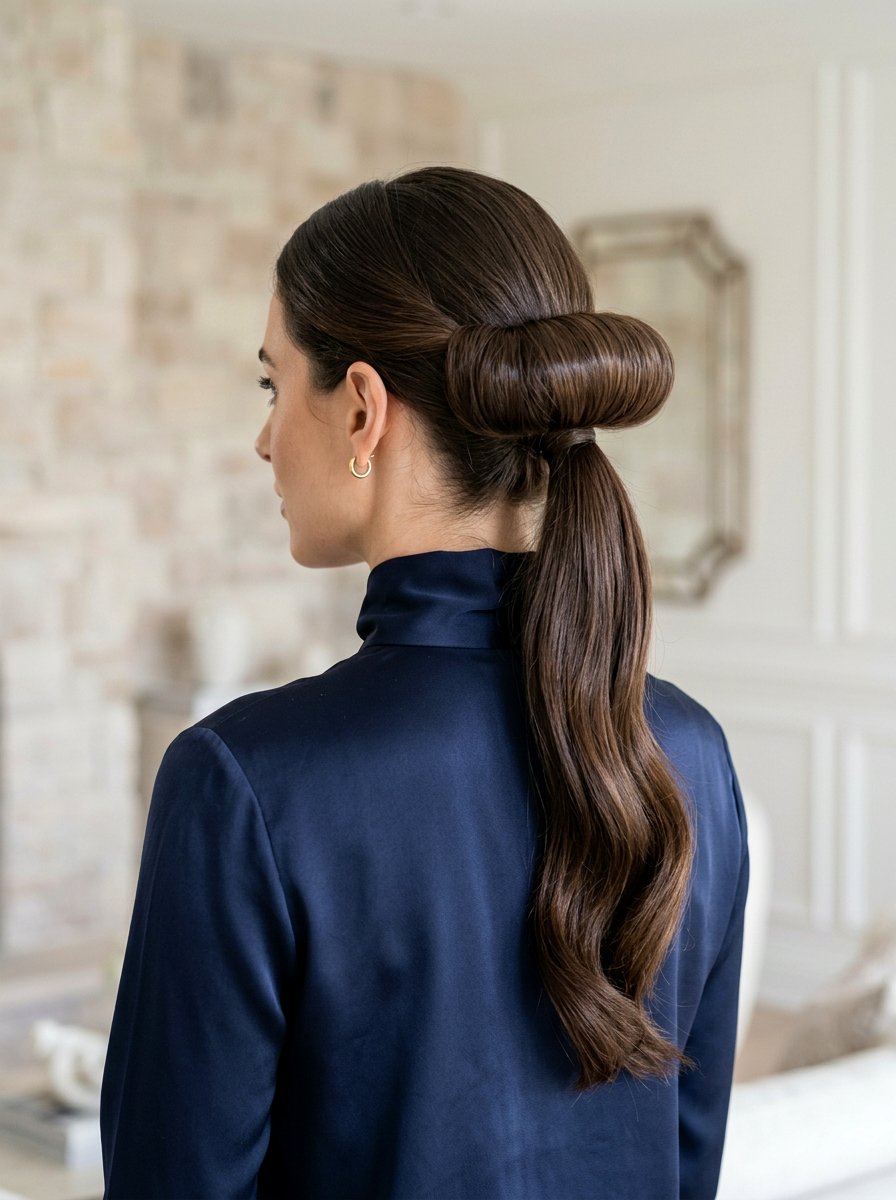
A horizontal back roll ponytail involves creating a wide, “sausage-style” roll that spans the back of the head from ear to ear. This roll acts as a decorative “bolster” sitting just above the ponytail tie. The hair is essentially rolled upward and pinned, with the ponytail then threaded through the center or allowed to fall over the top of the roll. This technique adds significant bulk and interest to the back view of the hairstyle, which is often neglected in simpler designs. It is a brilliant choice for those with fine hair, as the hollow nature of the roll creates the illusion of much thicker, more abundant tresses.
14. Twisted Side Roll Ponytail
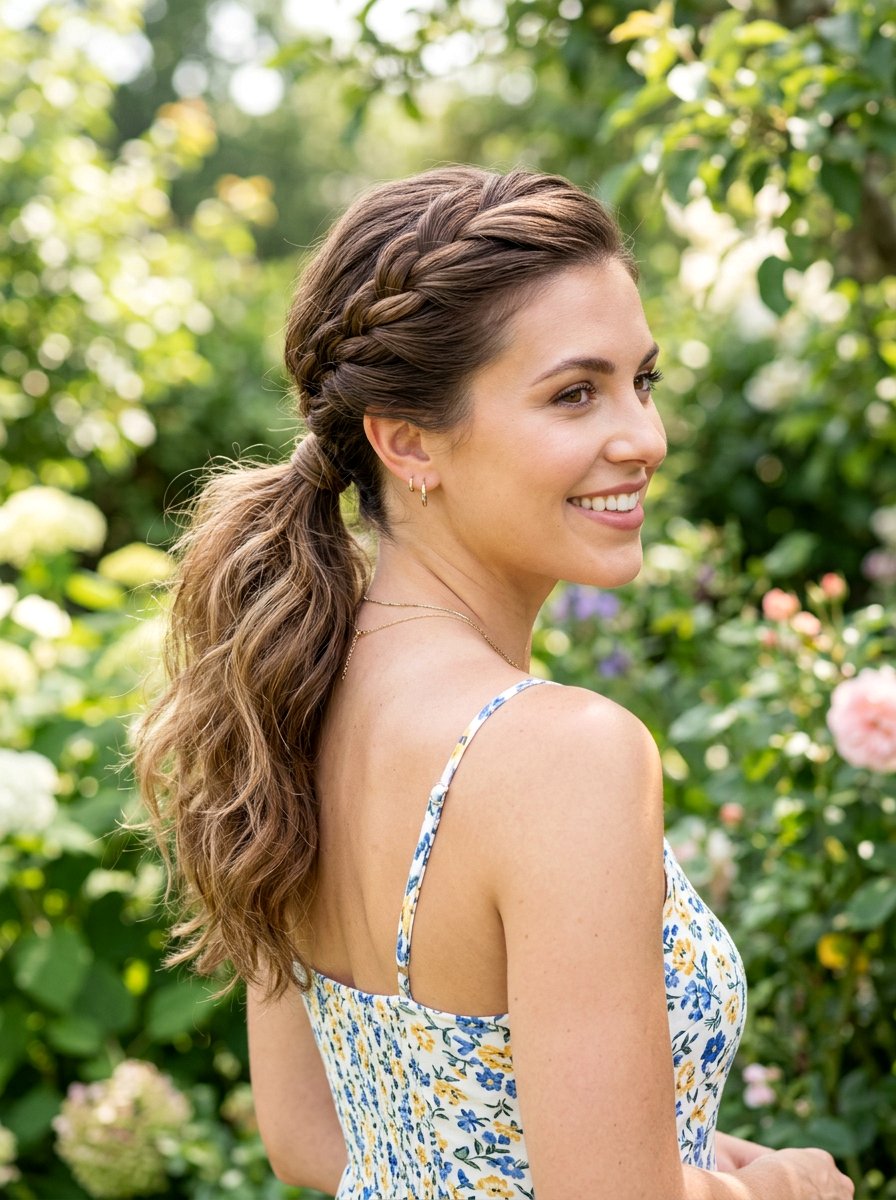
The twisted side roll ponytail is an easier alternative to the traditional Victory roll, utilizing a twisting motion rather than a circular wrapping technique. To achieve this, a section of hair is taken from the temple and twisted tightly toward the back, with extra hair added in as you go—similar to a French twist but focused on one side. This twist is then pinned securely at the base of a mid-height ponytail. Because the twist is denser than a hollow roll, it provides a more modern, textured look that feels grounded and secure. It is a great “entry-level” retro style for those who find traditional rolls difficult to pin.
15. Half Up Rolled Ponytail
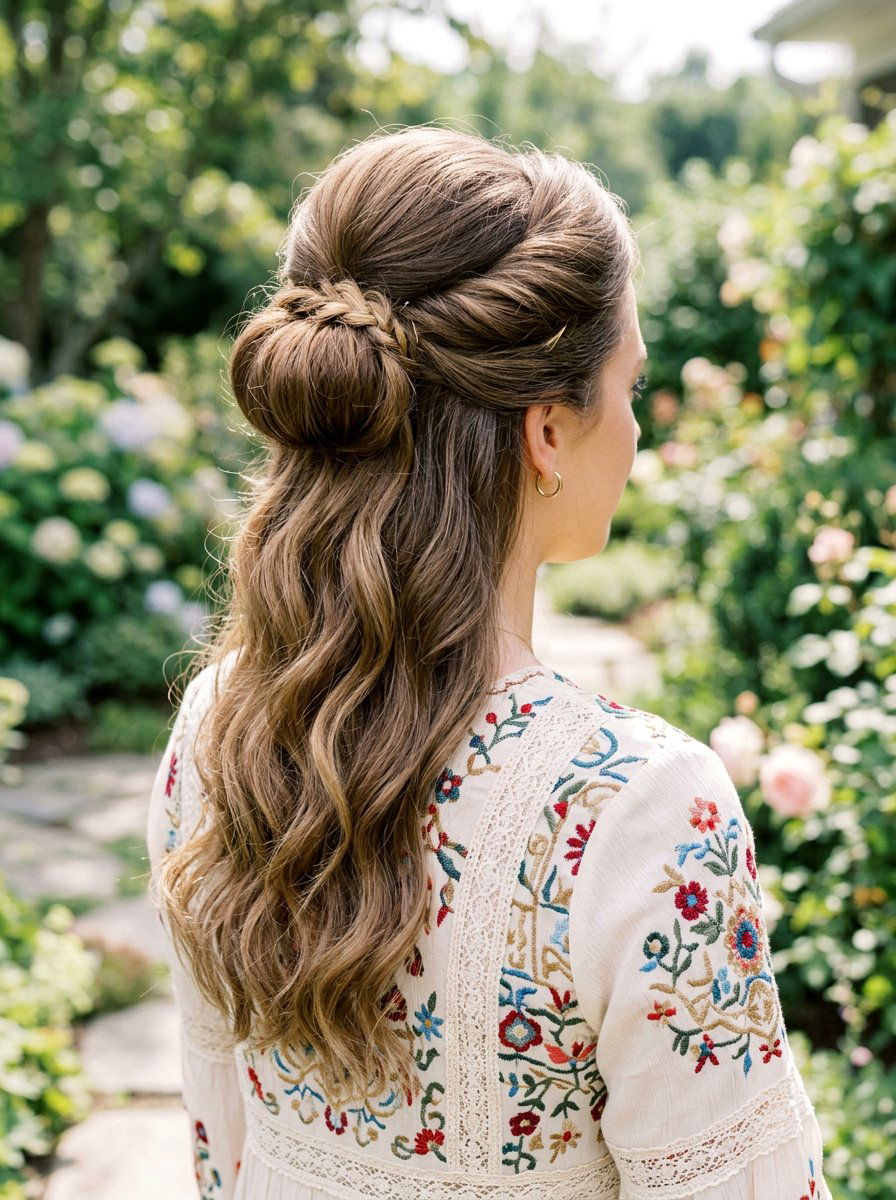
The half up rolled ponytail is a leading trend for 2026, offering a youthful and airy take on vintage aesthetics. In this version, only the top half of the hair is gathered into a ponytail, while the bottom half hangs loose in soft waves. The “half-pony” section is preceded by a voluminous roll at the crown or front hairline, providing that necessary retro lift. This style is particularly flattering for fine hair as it preserves the length and movement of the hair while still providing the structural “wow” factor of a vintage roll. It strikes the perfect balance between a casual day look and a sophisticated evening style.
16. Barrel Roll High Ponytail
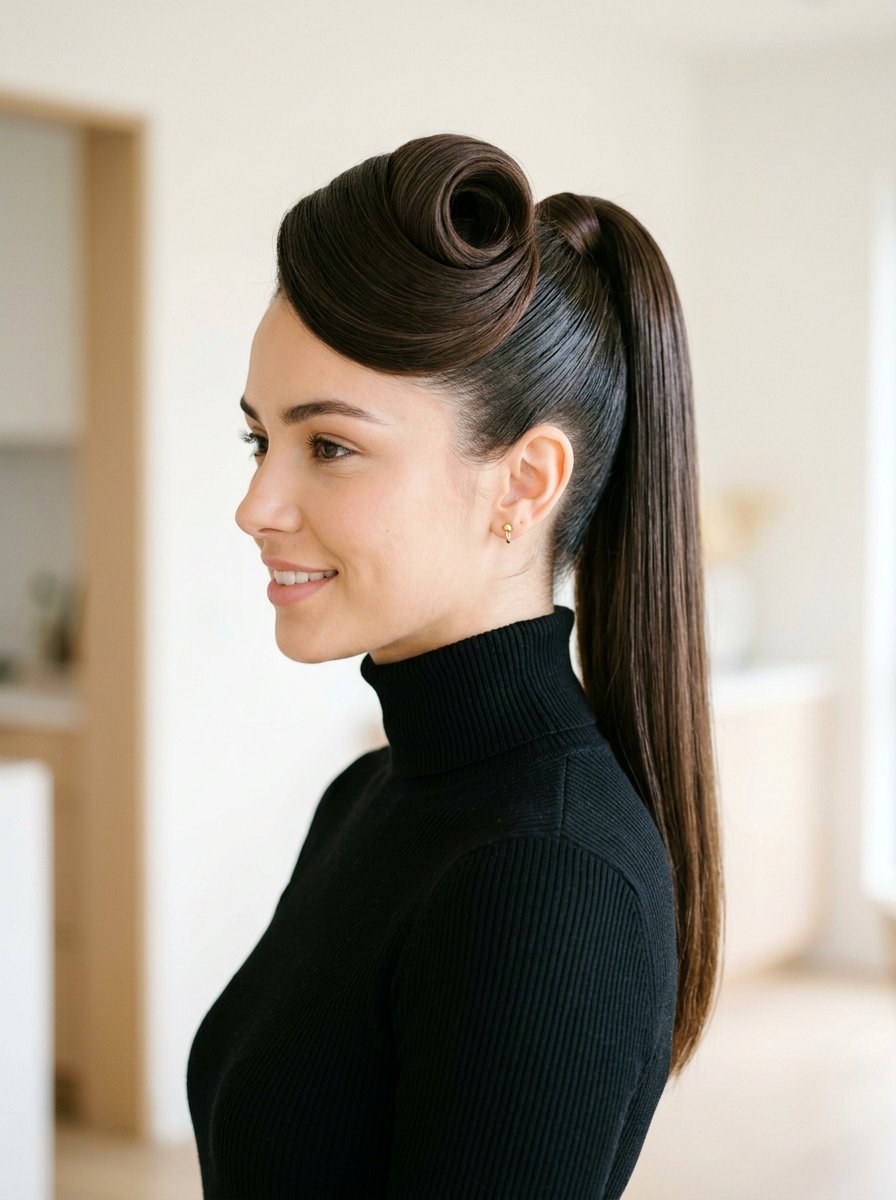
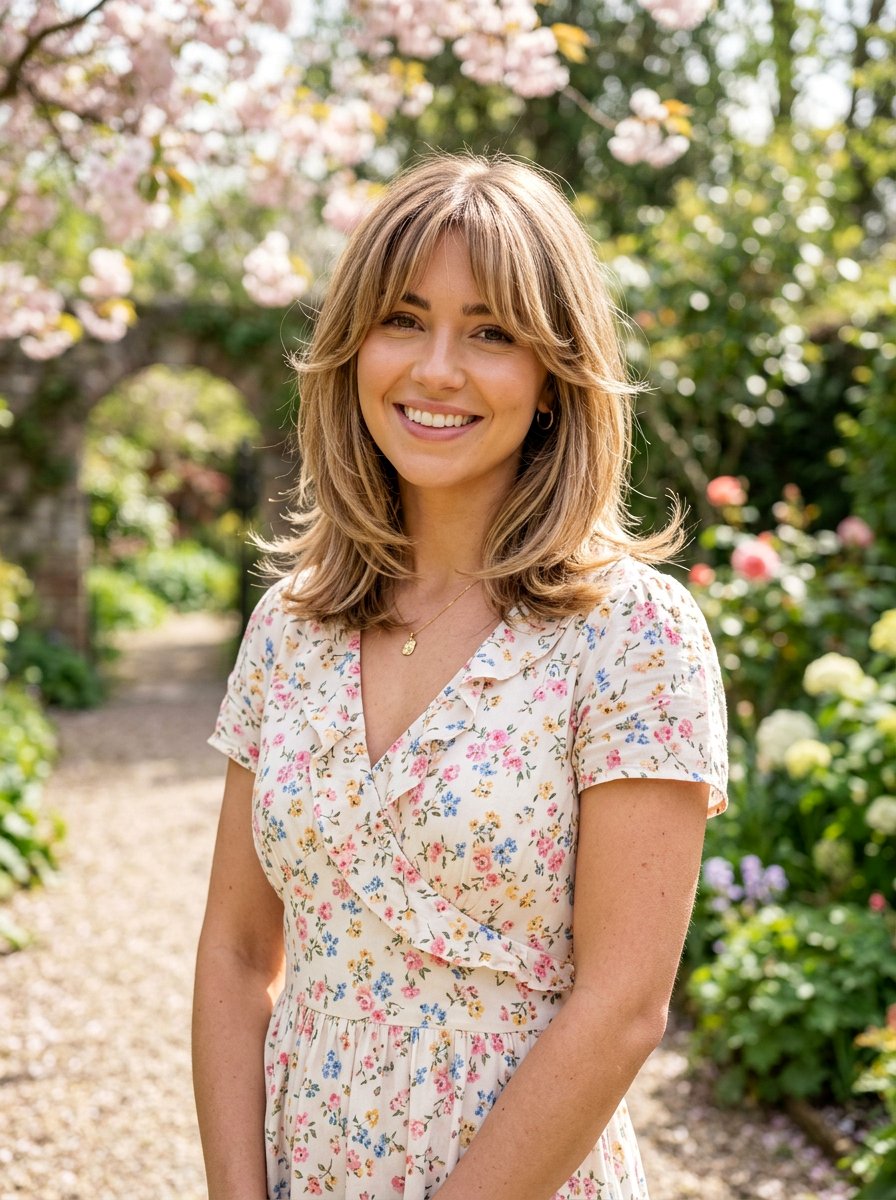
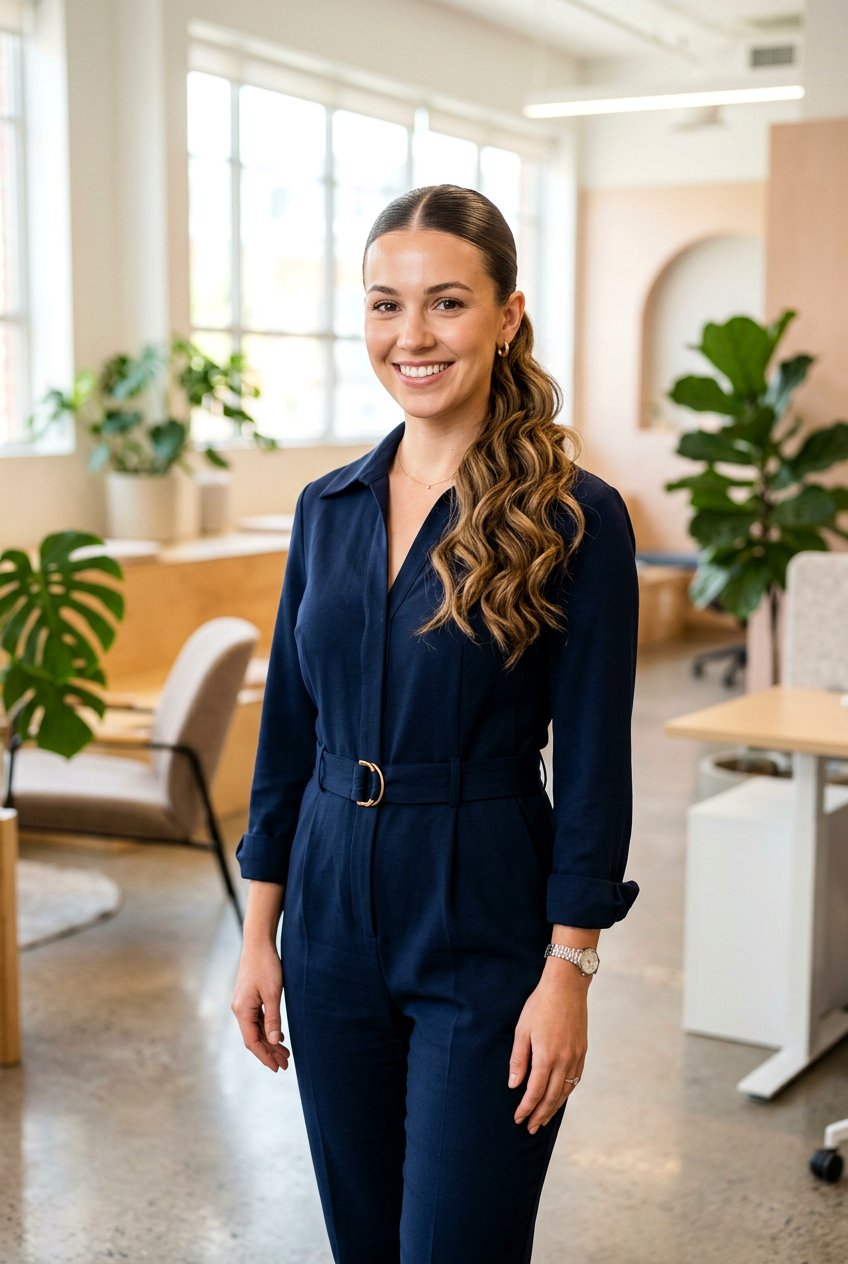
The barrel roll high ponytail features a large, singular roll that sits directly on top of the head, leading into a sky-high ponytail. Unlike the bumper bang which sits low on the forehead, the barrel roll is positioned further back, acting almost like a crest. This requires the hair to be rolled backward toward the ponytail, creating a seamless flow of volume from the face to the crown. This look is incredibly sleek and is often seen in high-fashion photography because of its clean lines and bold geometry. It works best on long, straight hair that has been pre-treated with a smoothing balm to ensure a glass-like finish.
17. Ribbon Intertwined Rolled Ponytail
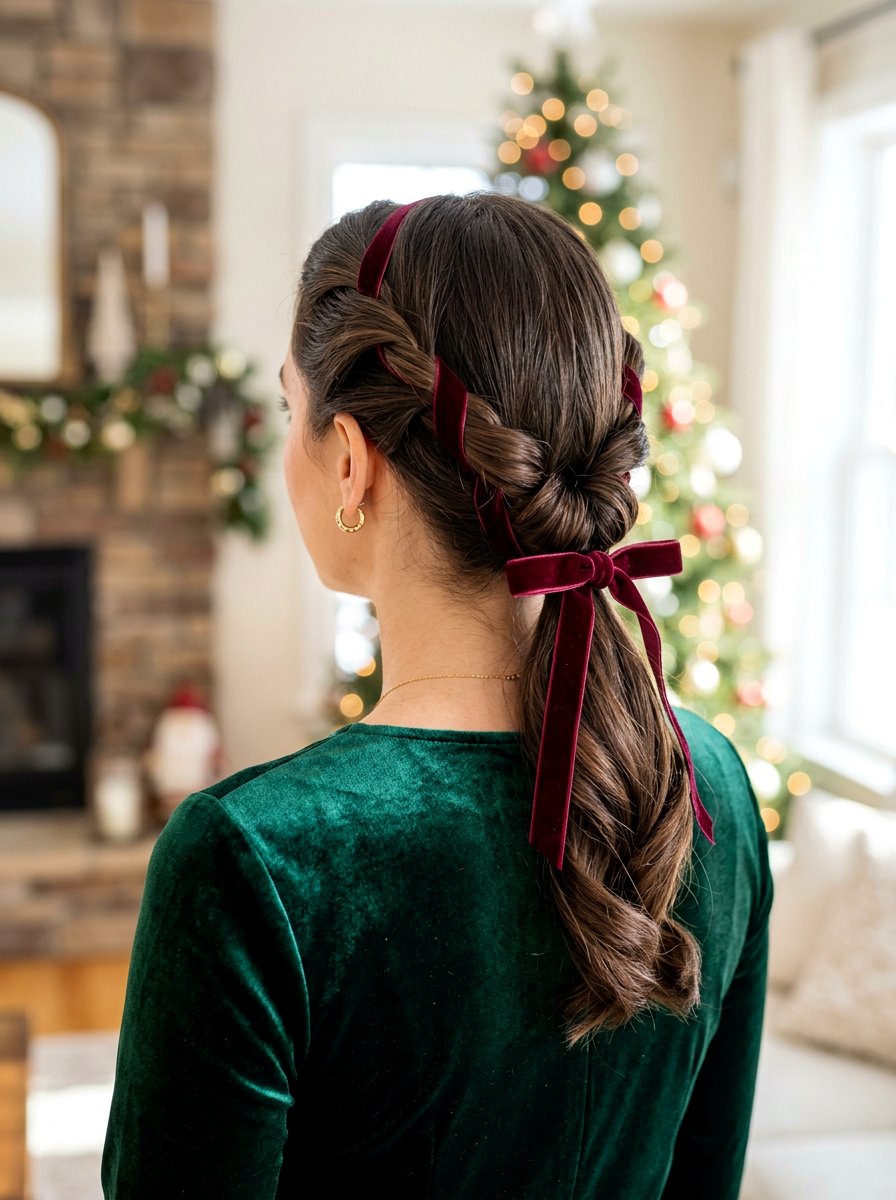
A ribbon intertwined rolled ponytail adds a touch of whimsical femininity by weaving a narrow velvet or satin ribbon through the rolls. The ribbon can be pinned at the start of the roll and wrapped along with the hair, creating a spiral of color that peeks through the dark or light strands. This technique was a popular way to dress up simple hairstyles during the mid-century when elaborate accessories were less accessible. The ribbon eventually ties off at the base of the ponytail, often ending in a delicate bow. This is a beautiful option for holiday parties or themed events where a touch of “extra” is required.
18. Triple Roll Stacked Ponytail
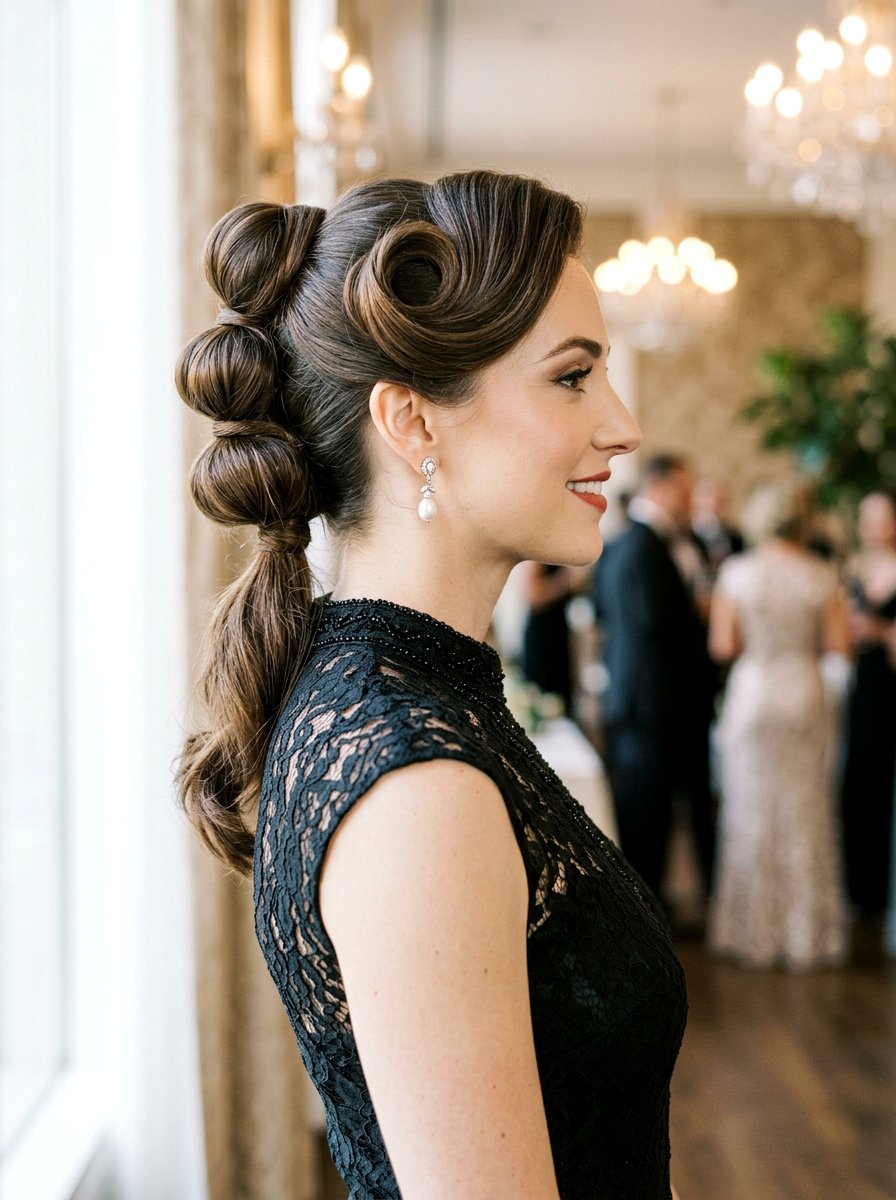
The triple roll stacked ponytail is an advanced vintage style that involves stacking three small rolls on top of one another along the side of the head. This “step” effect creates a highly architectural look that resembles the intricate hairstyles of the early 1940s. Each roll is carefully measured to be the same size, leading the eye back toward a simple, polished ponytail. Because this style is quite busy near the face, the ponytail is usually kept understated—either perfectly straight or with a single, large curl at the very end. It is a true showstopper that demonstrates high-level styling skills and an appreciation for vintage complexity.
19. Tuck And Roll Ponytail
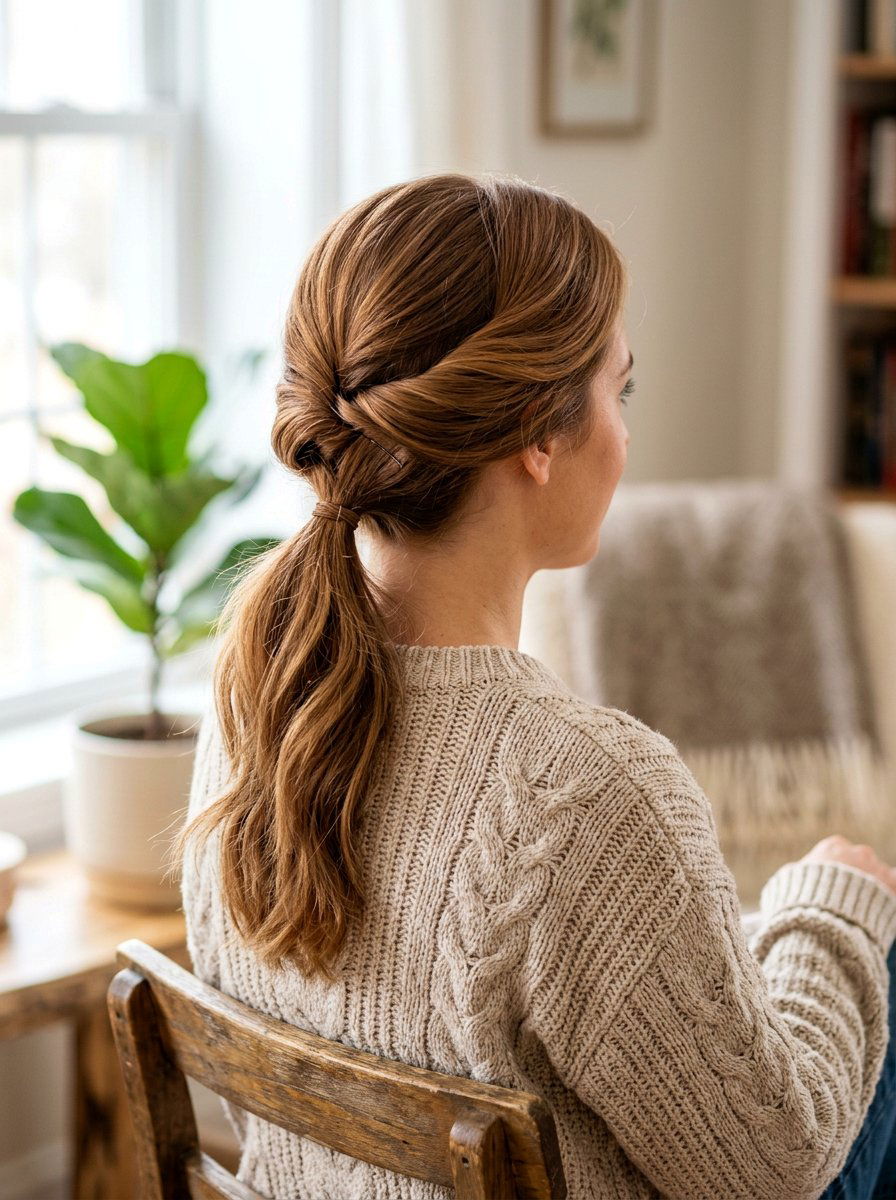
The tuck and roll ponytail uses a specific “tucking” method where the hair is looped back on itself to create a soft, cushiony roll. This is often done at the sides, where the hair is pulled back loosely and then “tucked” into the space between the scalp and the hair elastic. The result is a roll that looks less “set” and more natural, providing a vintage vibe that feels relaxed and modern. It is an excellent choice for second-day hair, as the natural oils provide the grip needed to keep the tucks in place without excessive hairspray. This style is the epitome of “effortless retro” for 2026.
20. Floral Adorned Rolled Ponytail
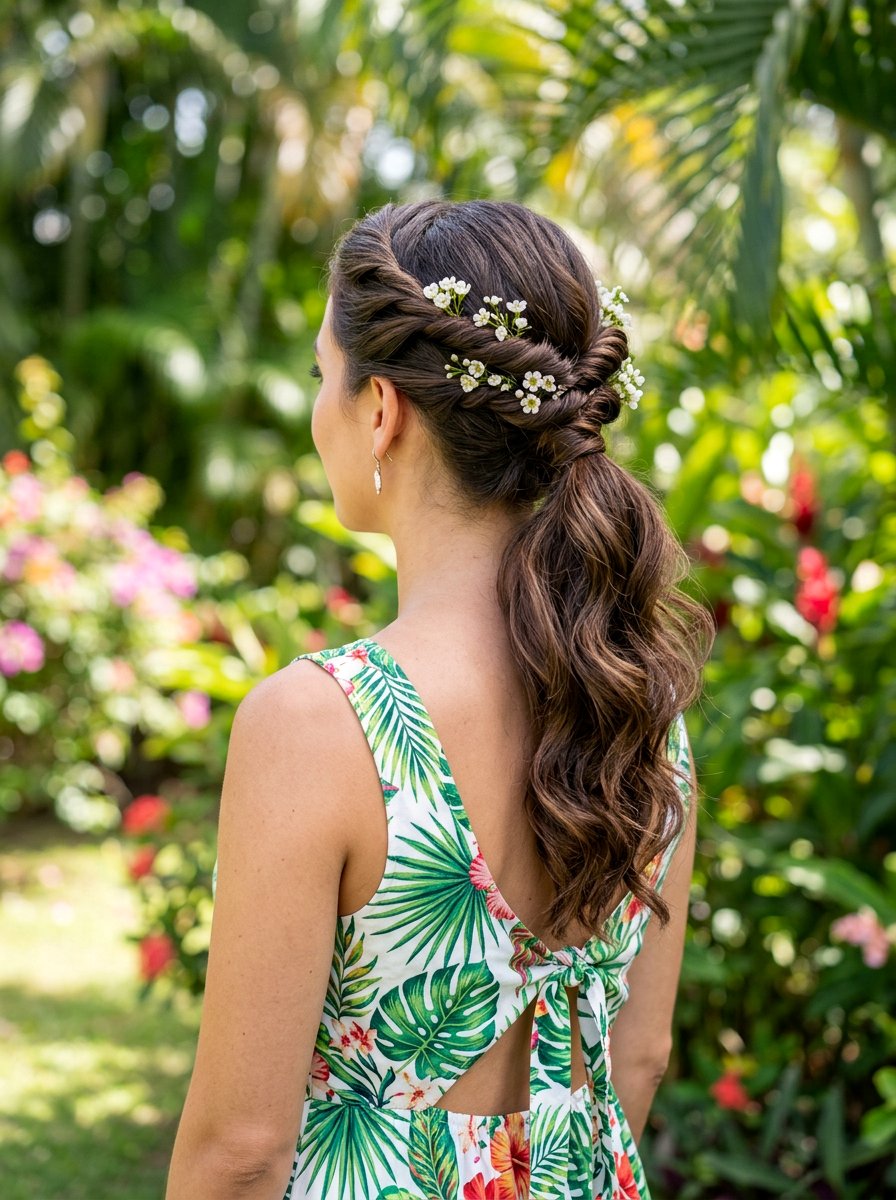
A floral adorned rolled ponytail is the ultimate spring and summer vintage look, incorporating fresh or silk blossoms into the “valleys” of the rolls. Small flowers like daisies or baby’s breath are tucked into the pins holding the rolls in place, or a larger statement flower like a rose or hibiscus is pinned at the base of the ponytail. This style draws inspiration from the tropical “Tiki” and rockabilly subcultures of the 1950s. The flowers add a vibrant, organic element to the structured rolls, making the hairstyle feel fresh, approachable, and perfect for outdoor garden parties or tropical vacations.
Conclusion:
The retro rolled ponytail hairstyle remains a cornerstone of glamour because it successfully bridges the gap between historical artistry and modern functionality. Throughout this exploration of twenty distinct variations, we have seen how a simple roll can add height, frame the face, and elevate a standard ponytail into a sophisticated work of art. From the bold rockabilly pompadour to the delicate ribbon-intertwined low pony, these styles offer something for every hair type and personality. Embracing these vintage techniques allows you to express a unique “main character” energy that stands out in a world of repetitive trends. By mastering the balance of teasing, rolling, and pinning, you can carry a piece of timeless elegance into any modern setting.
You'll Like These Styles:



Leave a Reply