
The quiff haircut for thick hair men remains a dominant force in grooming because it utilizes natural density to create unparalleled volume and architectural shape. Unlike finer hair types that struggle to maintain height, thick strands provide the structural integrity needed to support the gravity-defying lift that defines this iconic look. Whether you are aiming for a razor-sharp modern fade or a more relaxed, textured finish, the quiff is incredibly adaptable to different face shapes and lifestyle needs. This guide explores the most searched and trending variations specifically tailored for men with thick hair, ensuring you find a look that balances manageable maintenance with high-impact style for any professional or social setting.
1. Textured Quiff
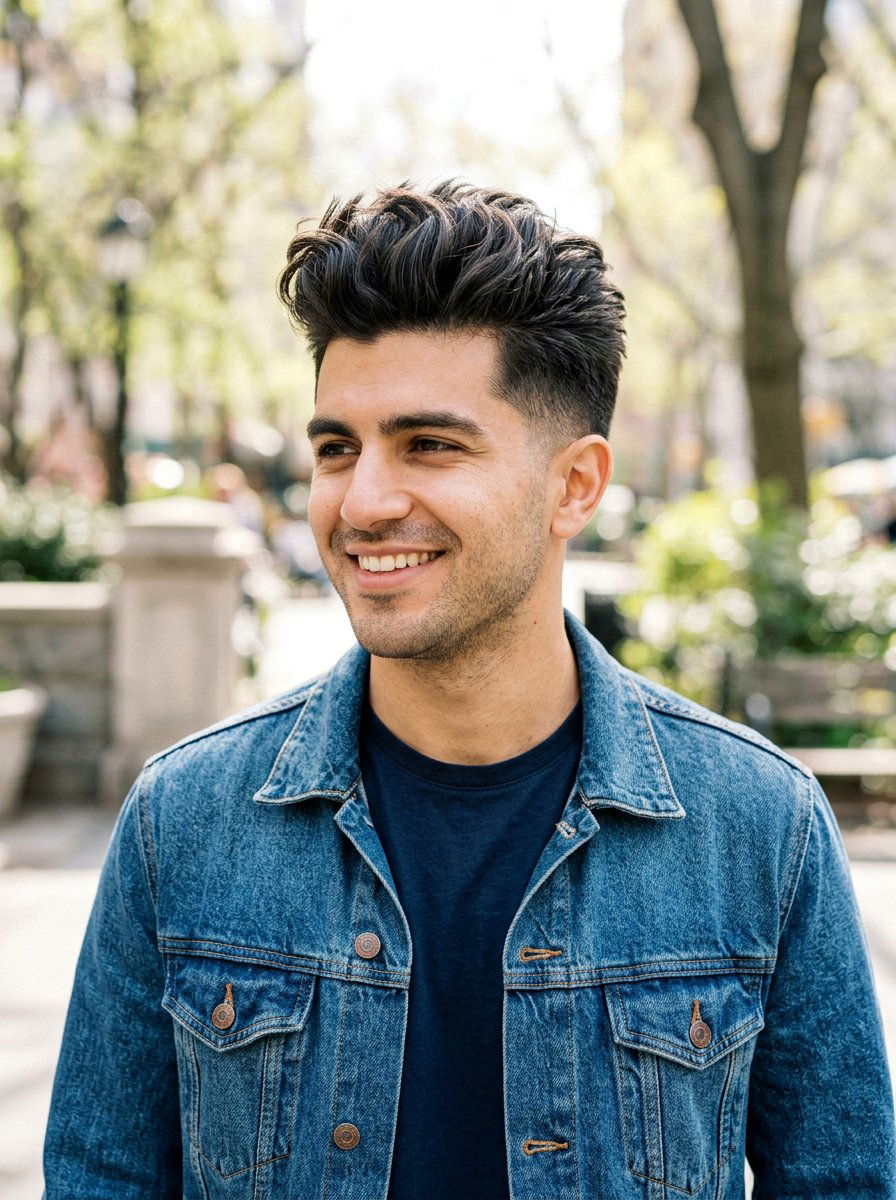
The textured quiff is a top choice for men with thick hair who want to avoid a look that feels too heavy or blocky. By incorporating internal layers and point-cutting techniques, a barber can remove excess bulk while enhancing the hair’s natural movement and “piecey” appearance. This style relies on the hair’s density to provide a solid foundation, while the textured tips create a lighter, more modern aesthetic. It is a versatile option that works well for both casual and professional environments. To style this, a matte clay or sea salt spray is ideal, as these products provide a strong hold without the greasy shine that can sometimes make thick hair look overly saturated or flat.
2. Classic Quiff
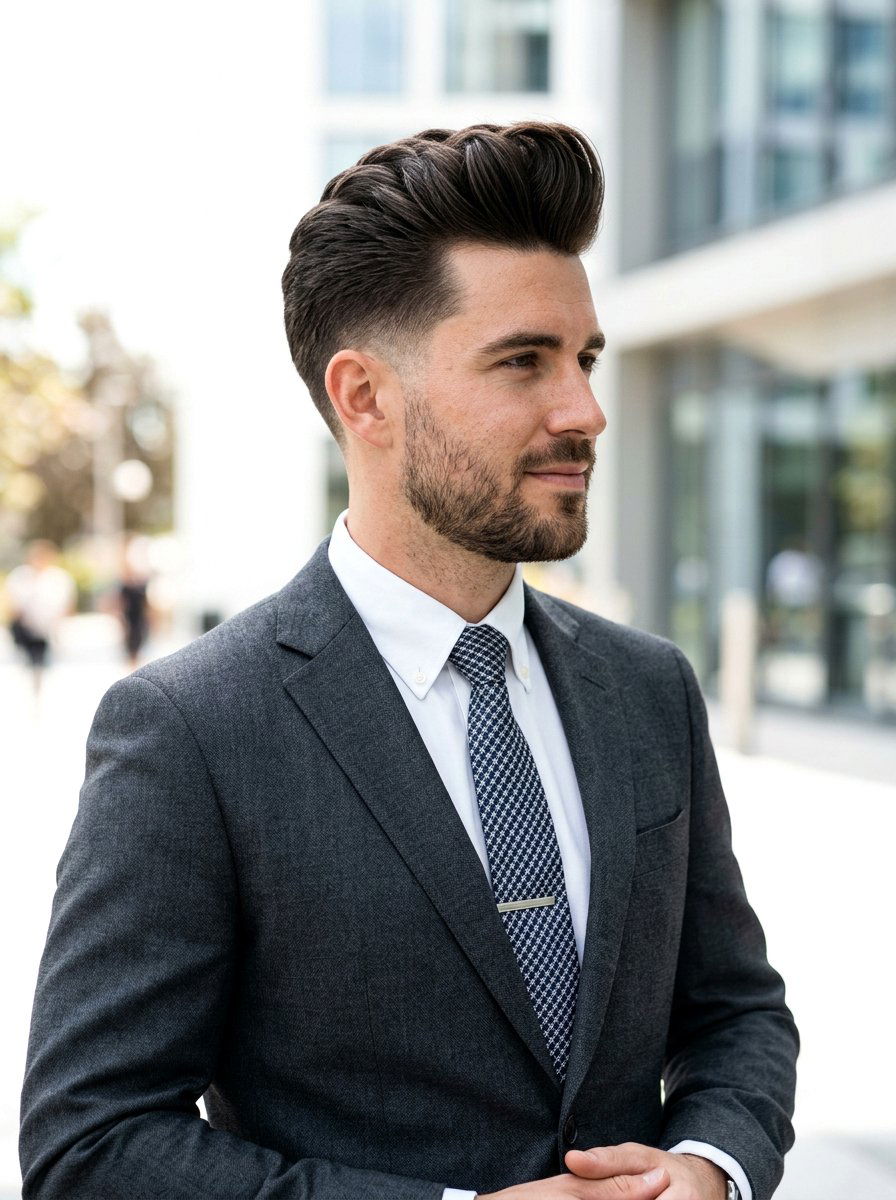
For a timeless and sophisticated appearance, the classic quiff remains the gold standard in men’s grooming. This variation features a more balanced transition between the top and the sides, typically using a scissor-cut taper rather than a high-skin fade. The focus here is on a polished, swept-back front that showcases the sheer volume of thick hair without being overly aggressive. It is particularly well-suited for men with oval or square face shapes who want to emphasize their features with a clean, heritage-inspired silhouette. Maintaining the classic quiff requires a high-quality pomade and a blow-dryer to direct the hair upward and backward, ensuring the thick strands stay locked in place throughout the day.
3. Messy Quiff
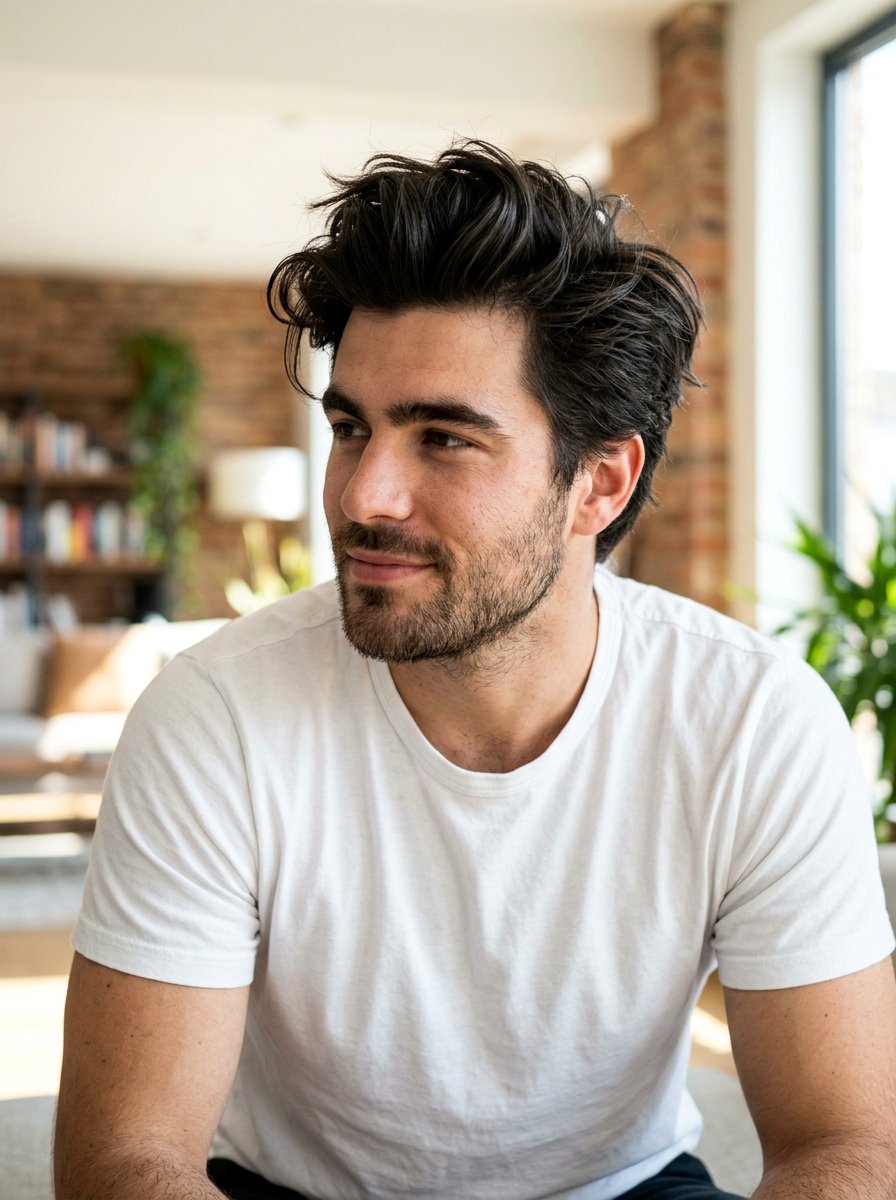
The messy quiff is the ultimate “I woke up like this” style that actually takes advantage of thick hair’s natural stubbornness. Instead of fighting against every cowlick or wave, this cut embraces a relaxed, tousled finish that looks effortlessly cool. It is characterized by plenty of length on top and shorter, though not necessarily faded, sides. The thickness of the hair prevents the style from looking limp or messy in an unkempt way, providing the “oomph” needed to keep the hair standing up even with minimal product. A lightweight styling cream or a bit of texture powder is usually enough to define the strands and provide a flexible hold that can be reworked by hand.
4. Taper Fade Quiff
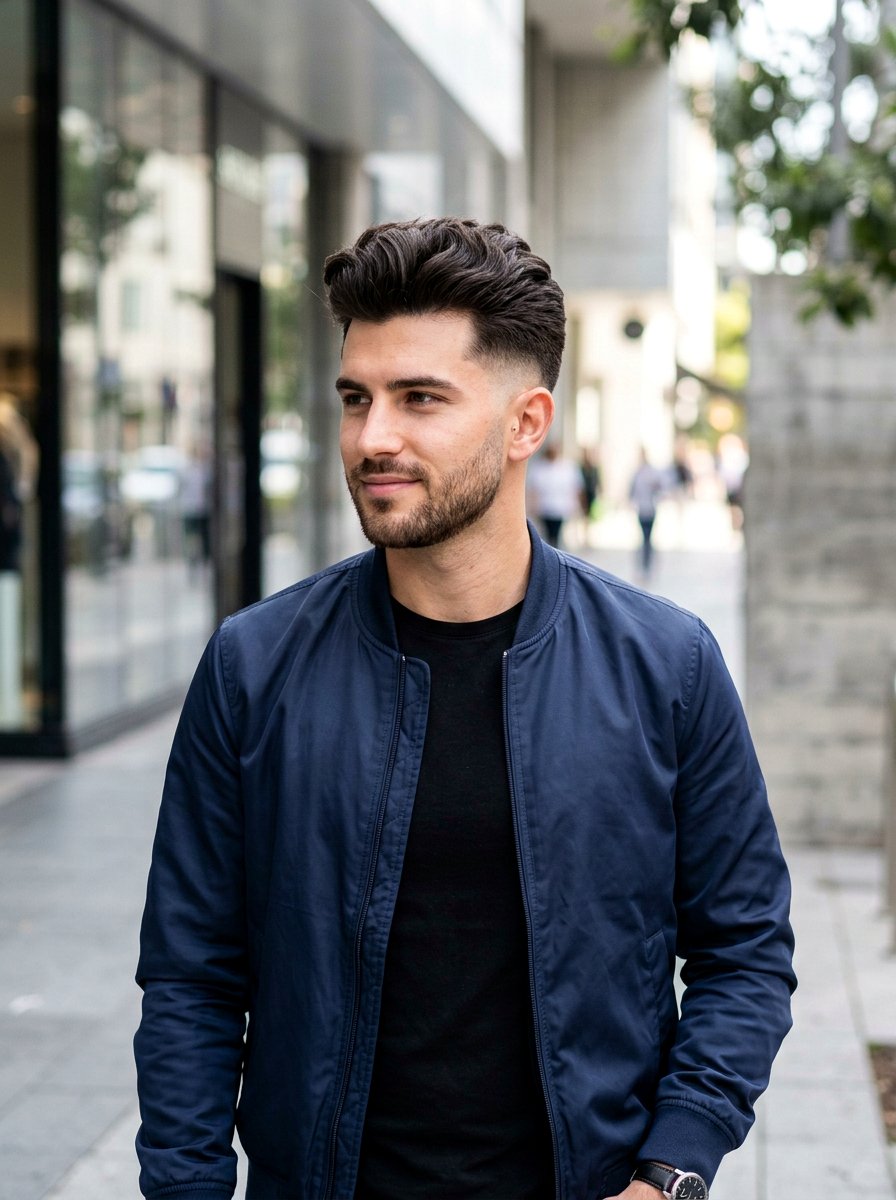
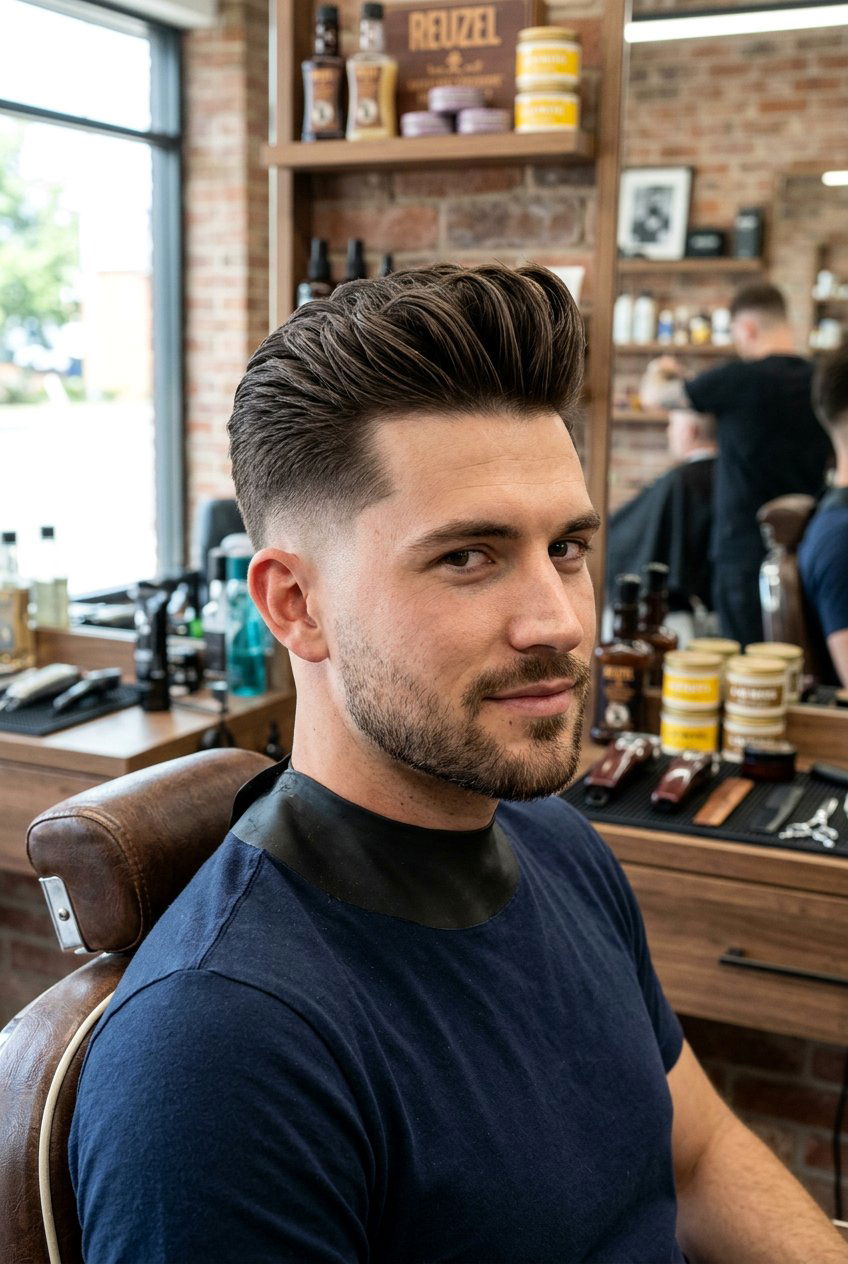
A taper fade quiff is a modern favorite because it provides a sharp, clean-cut contrast to the voluminous top. By gradually shortening the hair around the ears and nape while leaving the top thick and long, you create a streamlined look that draws all visual attention to the quiff itself. This is an excellent solution for men whose thick hair tends to puff out at the sides, as the fade keeps the silhouette slim and masculine. It works beautifully with a variety of top lengths, from short and sporty to long and dramatic. Frequent trips to the barber every three to four weeks are recommended to keep the fade looking crisp and intentional.
5. Undercut Quiff
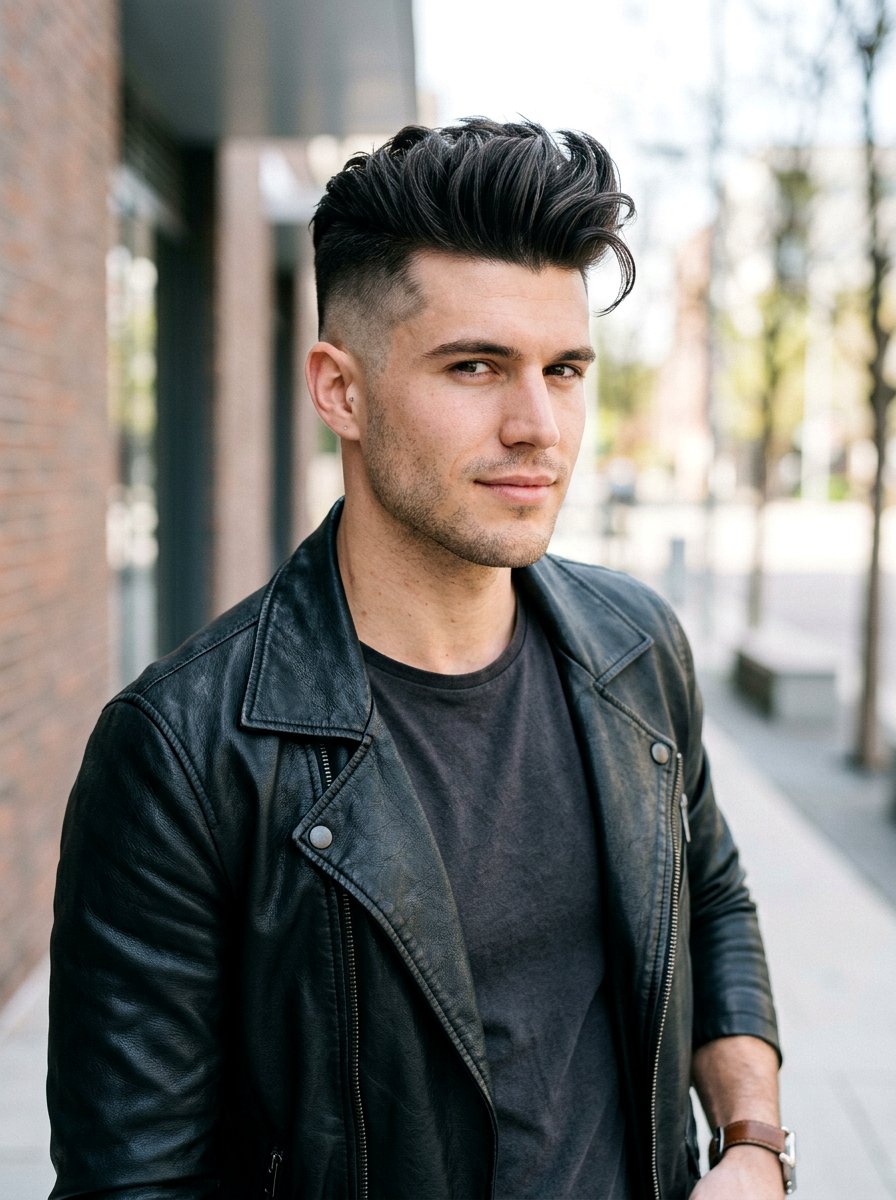
If you want to make a bold statement, the undercut quiff offers the most dramatic contrast available. In this style, the sides and back are disconnected from the top, often shaved down to a uniform short length or a very high skin fade. This isolation allows the thick hair on top to truly shine as a standalone feature, making it easier to manage since there is less hair to style overall. The undercut quiff is particularly effective for men with very dense hair that feels unmanageable when left long on the sides. Styling usually involves lifting the hair straight up from the root to emphasize the sharp line between the long top and the buzzed sides.
6. Short Quiff

The short quiff is a practical, low-maintenance alternative for men who want the height of a quiff without the effort of managing long strands. By keeping the top relatively short—around two to three inches—you can still achieve a significant lift due to the natural stiffness of thick hair. This version is highly professional and requires very little time in front of the mirror; a quick rub of wax through the front is often all it takes to get out the door. It is a great transitional cut for those moving away from a crew cut but not yet ready for the commitment of a full-length quiff or pompadour.
7. Long Top Quiff
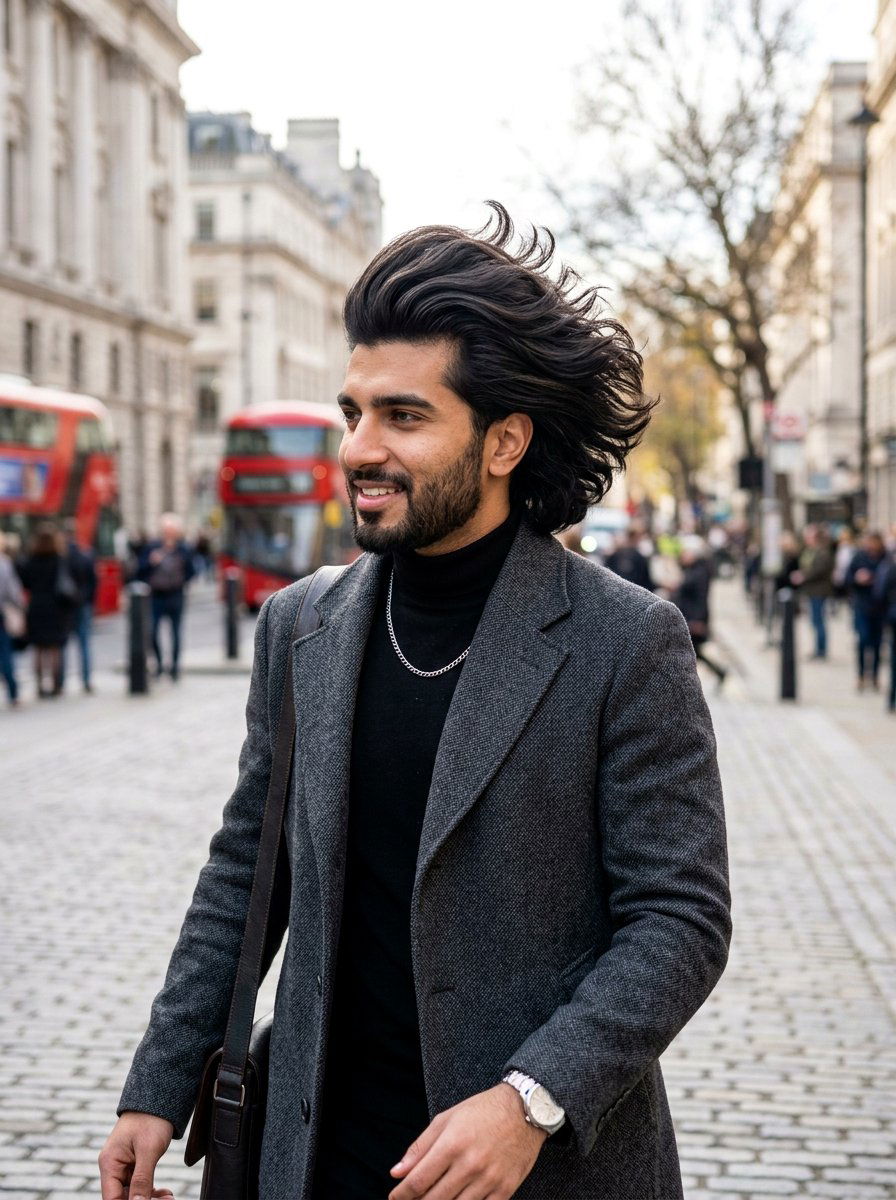
For those who want to maximize their hair’s potential, the long top quiff provides a high-fashion, voluminous look that is hard to ignore. This style requires at least four to five inches of hair at the fringe, which is then styled into a sweeping, dramatic wave. Thick hair is essential for this look to prevent the “forelock” from falling flat under its own weight. Because of the length, using a pre-styling volumizing mousse and a round brush during blow-drying is non-negotiable. This style offers incredible versatility, as the length can be slicked back for a formal event or left loose and wavy for a more artistic, creative vibe.
8. Side Swept Quiff

The side swept quiff offers a slightly asymmetrical take on the traditional upward-facing style. Instead of brushing the hair directly back, it is directed diagonally across the forehead before being lifted. This variation is excellent for balancing out facial features or softening a very angular jawline. Thick hair provides the necessary body to ensure the side-swept portion doesn’t look thin or sparse. It is a slightly more relaxed version of the quiff that pairs perfectly with a smart-casual wardrobe. To achieve the best results, find your natural parting and work with the direction your hair already wants to fall to minimize daily styling struggle.
9. Curly Quiff
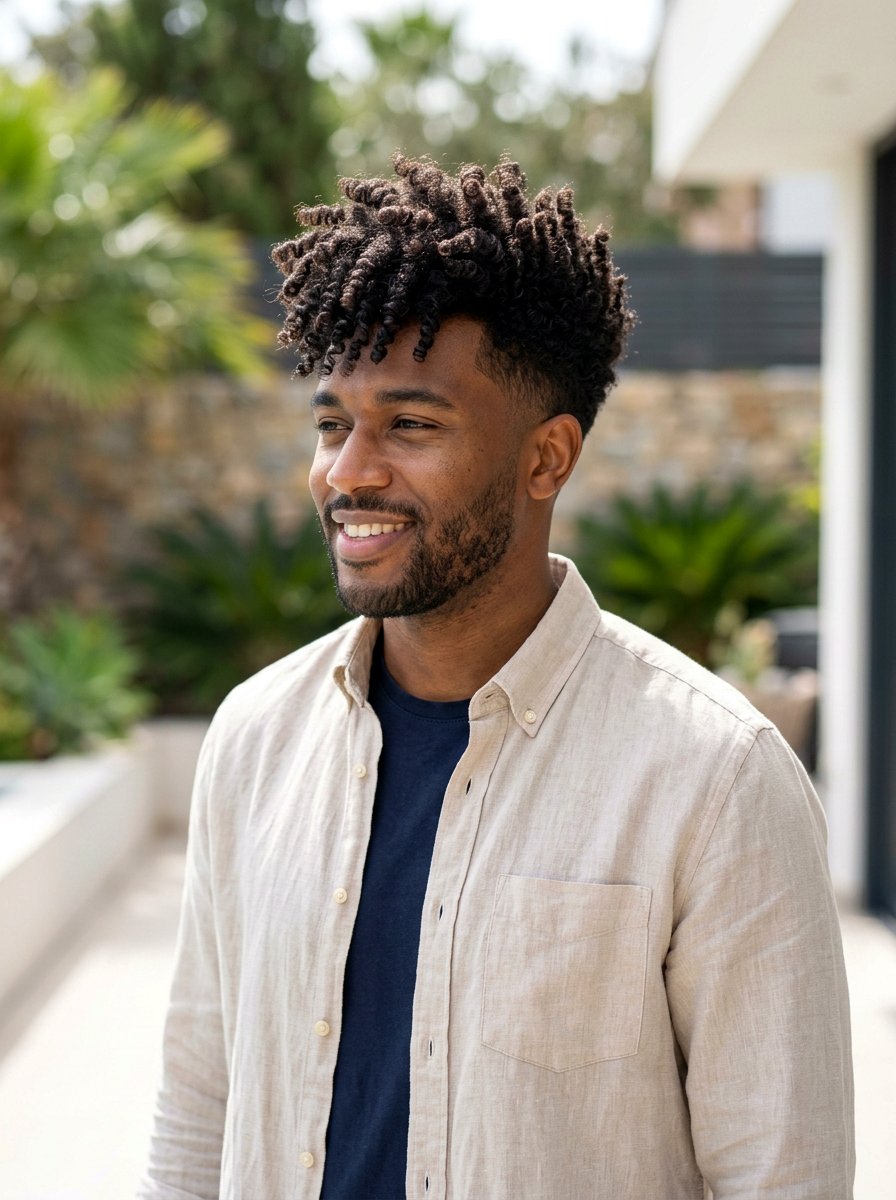
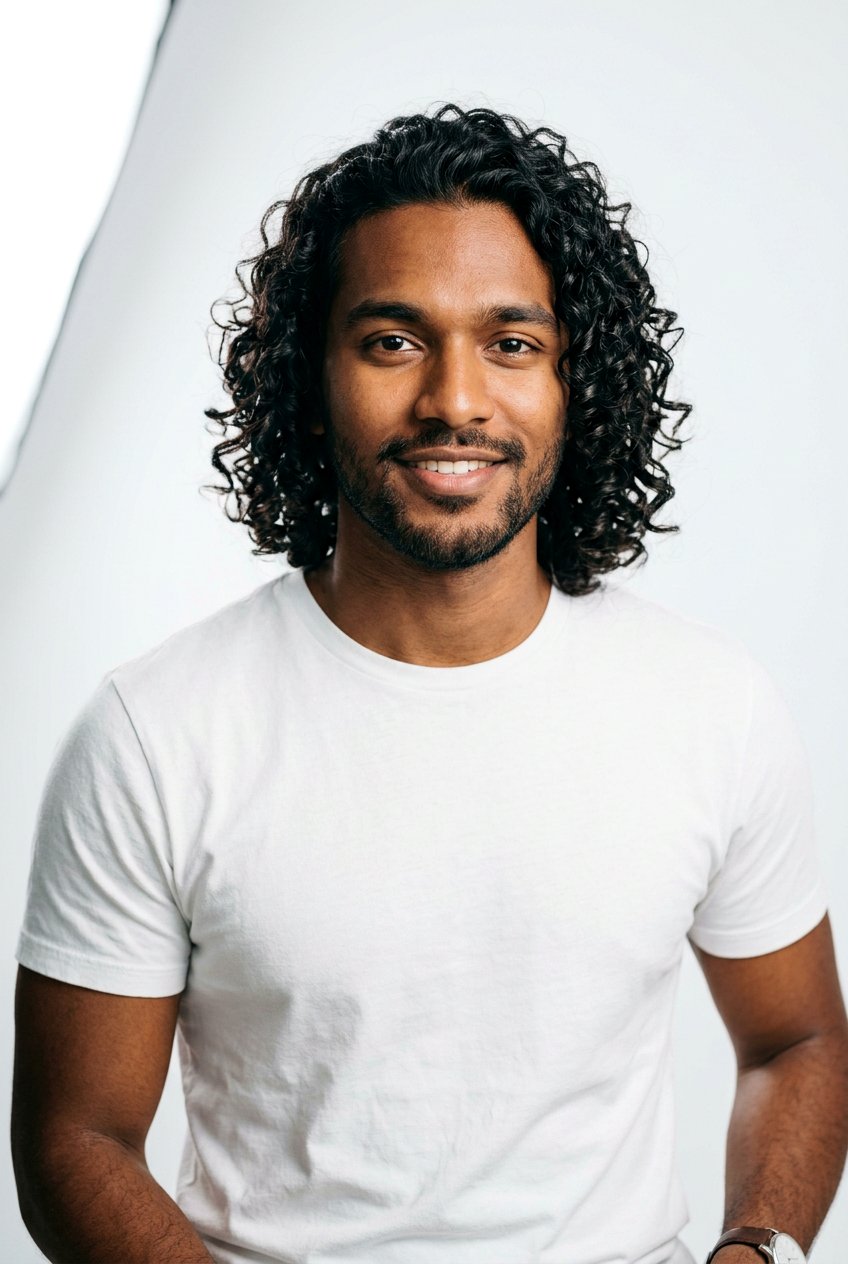
Men with thick, curly hair often think a quiff is out of reach, but the curly quiff is actually one of the most textured and visually interesting variations. The natural coils provide built-in volume and a unique silhouette that straight hair simply cannot replicate. The key is to keep the sides short to maintain a structured shape and prevent the “mushroom” effect. Using a curl-defining cream instead of a standard wax will help keep the curls hydrated and bouncy rather than crunchy. The result is a dynamic, high-volume look that celebrates natural texture while maintaining the iconic upward-sloping profile of a traditional quiff haircut.
10. Pompadour Quiff
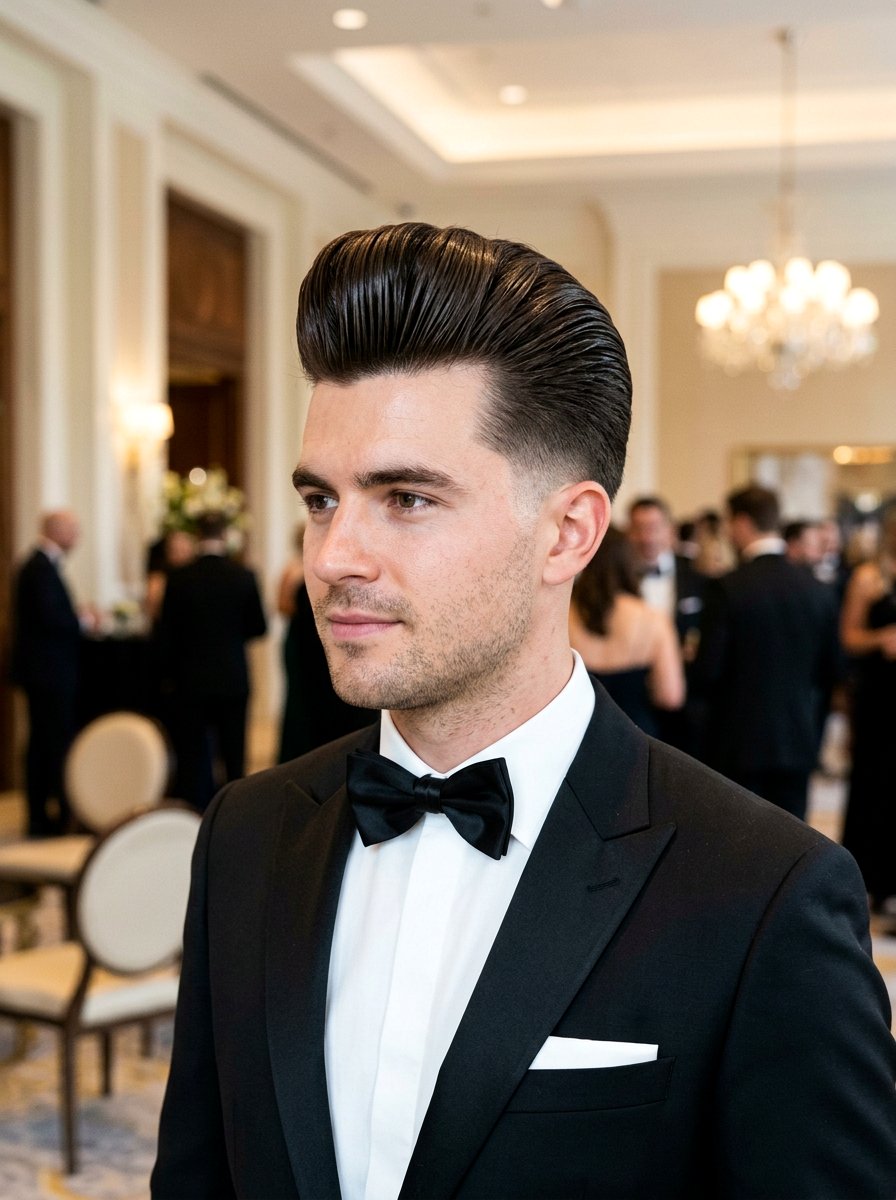
The pompadour quiff is a hybrid style that blends the height of a quiff with the rounded, slicked-back structure of a pompadour. While a standard quiff is often matte and textured, this version is usually more polished and neat. Thick hair is the ideal canvas for this style because it provides the “fill” needed to make the pomp look solid and continuous from front to back. It requires a bit more product—typically a medium-shine pomade—and careful combing to ensure every hair is in place. This is a high-impact look that works exceptionally well for formal occasions where you want to project confidence and a sense of classic style.
11. Disconnected Quiff
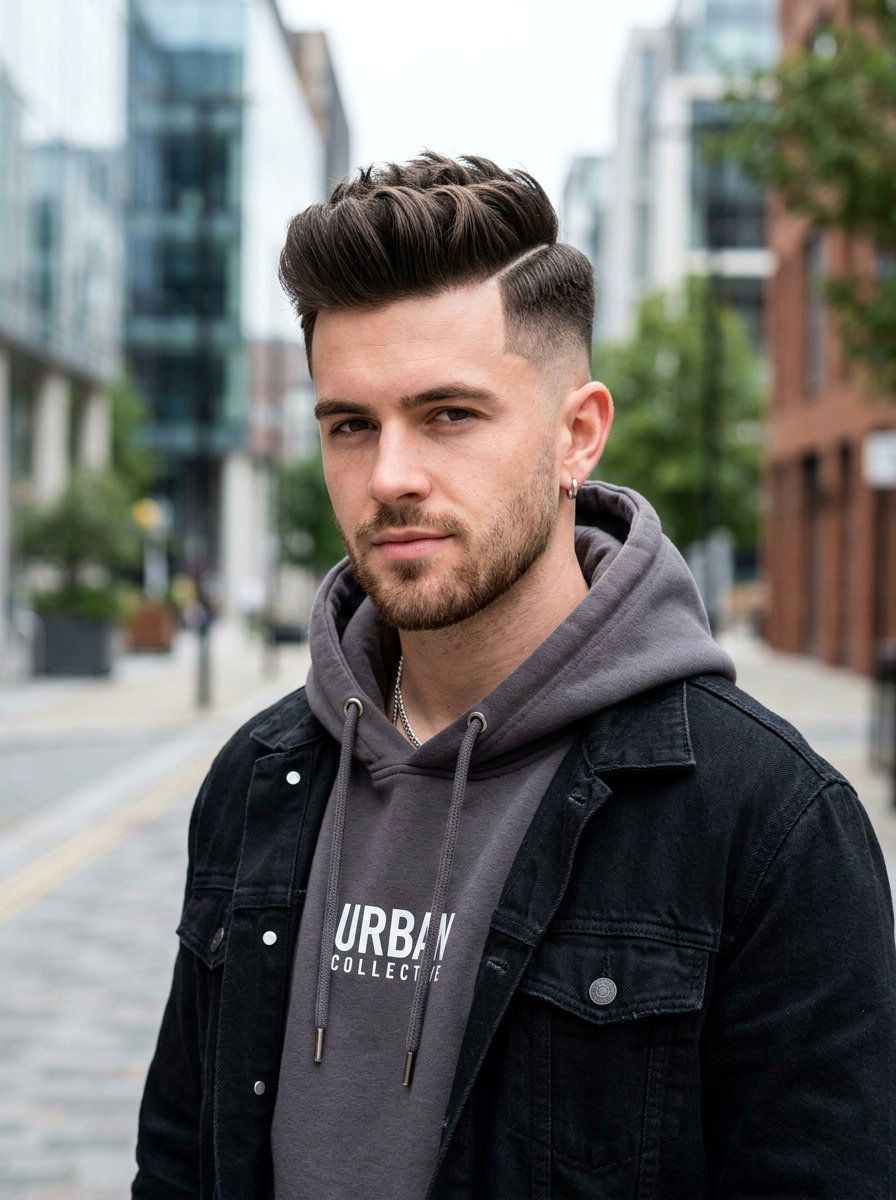
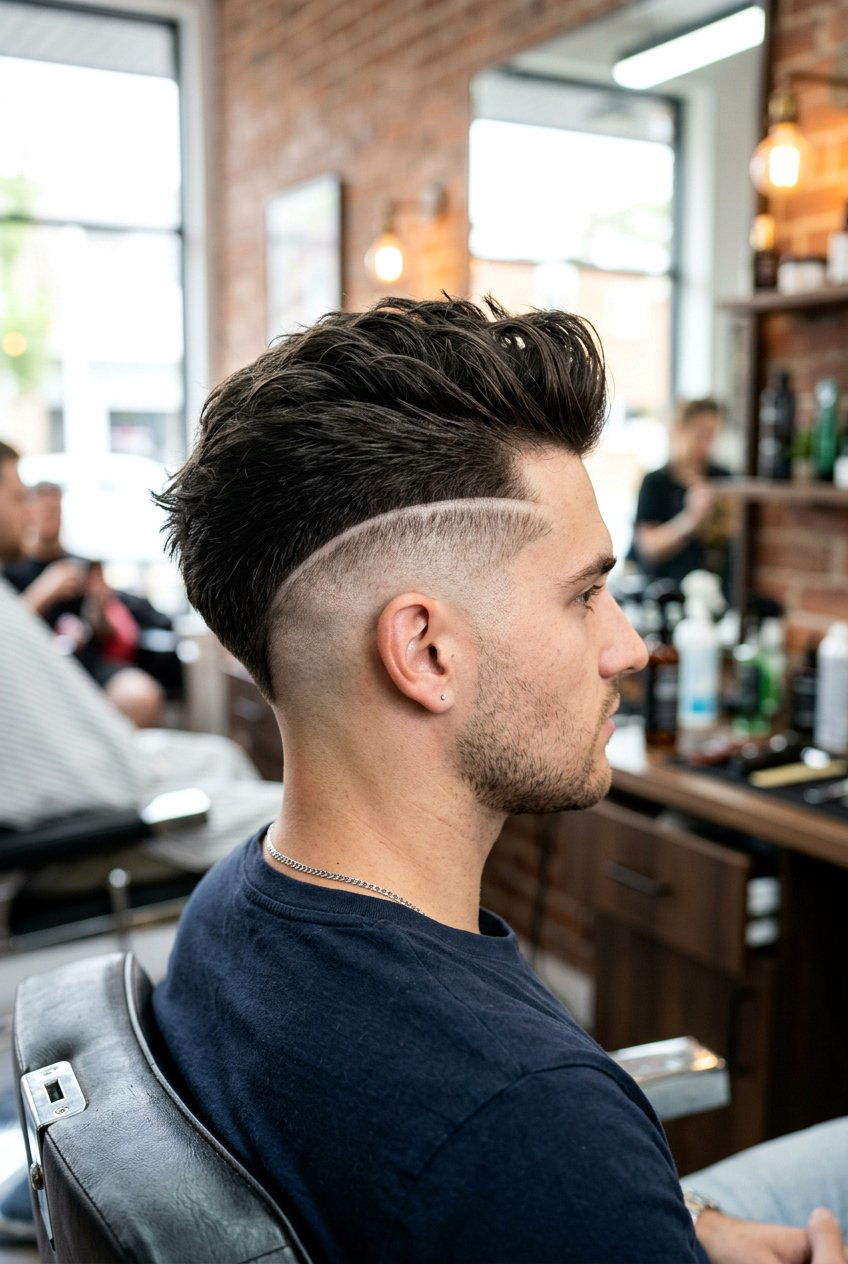
A disconnected quiff is defined by a sharp, visible break between the long hair on top and the much shorter hair on the sides, often marked by a shaved hard part. This “disconnection” creates a very intentional, edgy look that highlights the density of the thick hair on the crown. It is a favorite among younger men and those in creative industries who want a haircut that feels architectural and modern. Because the transition isn’t blended, the thick hair on top can be styled with extreme volume without the sides interfering with the shape. It is a high-contrast style that demands regular maintenance to keep the shaved part looking clean.
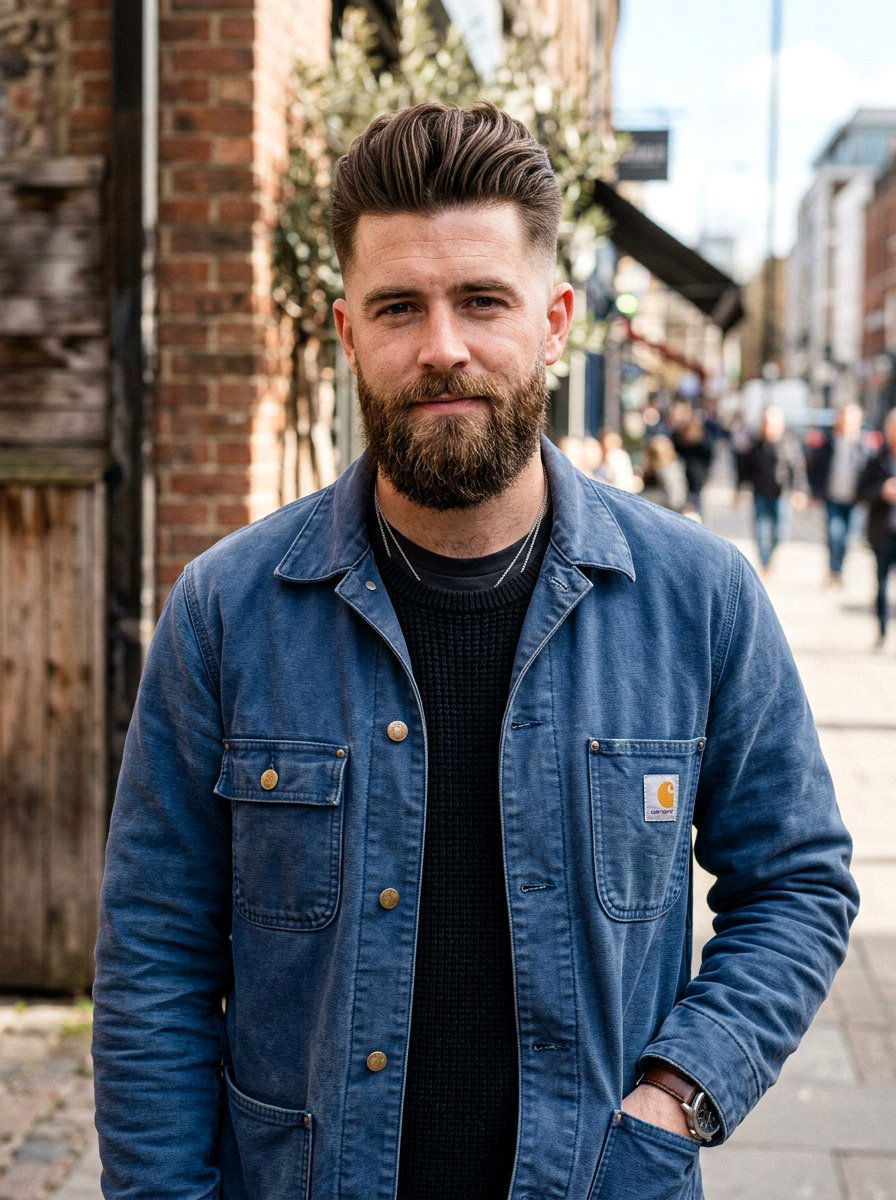

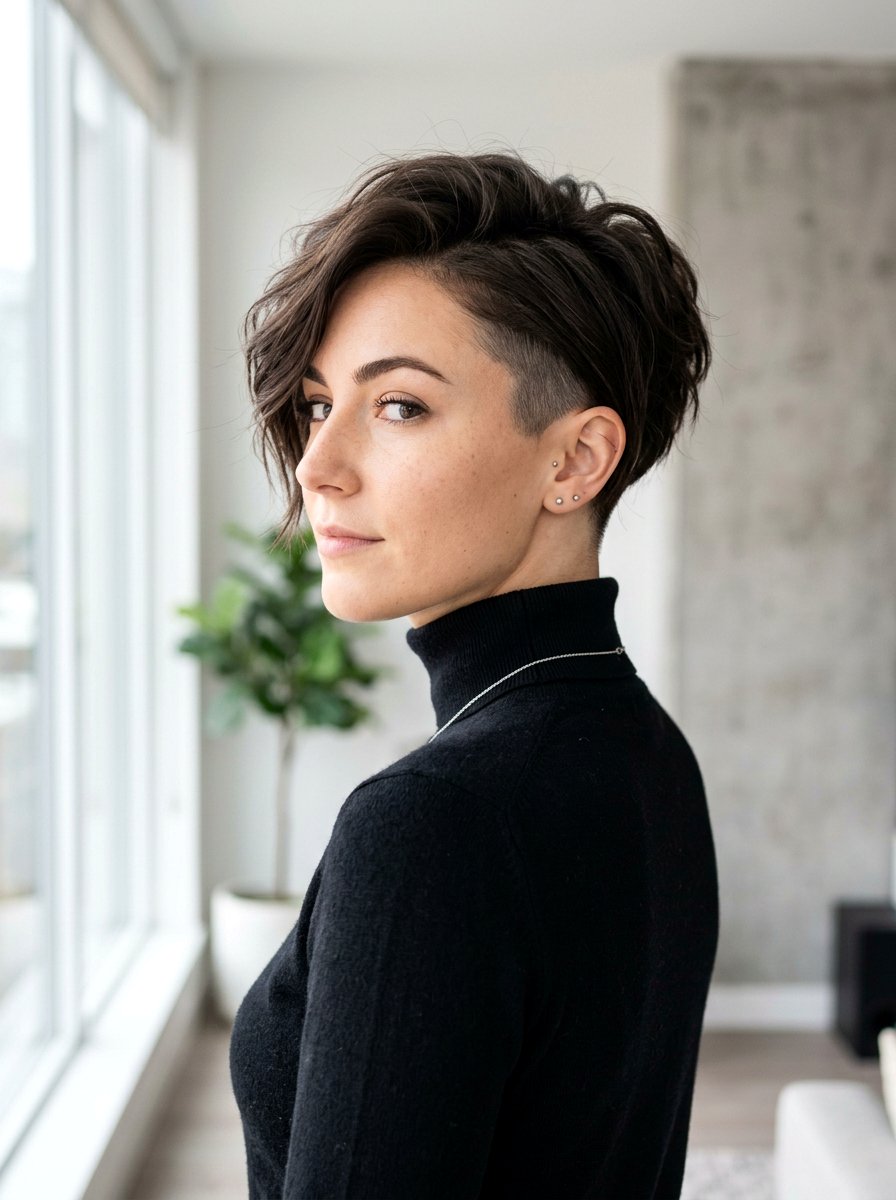
12. Mid Fade Quiff

The mid fade quiff strikes a perfect balance between the subtlety of a taper and the boldness of a high fade. The fade starts roughly at the temple or midway down the side of the head, providing a clean look that still leaves some hair on the sides to blend into the top. This is an excellent middle-ground option for thick-haired men who want a contemporary look that isn’t too extreme for a corporate office. The mid fade helps to slim down the face while the quiff adds height, making it a very flattering choice for men with rounder or wider face shapes.
13. High Volume Quiff
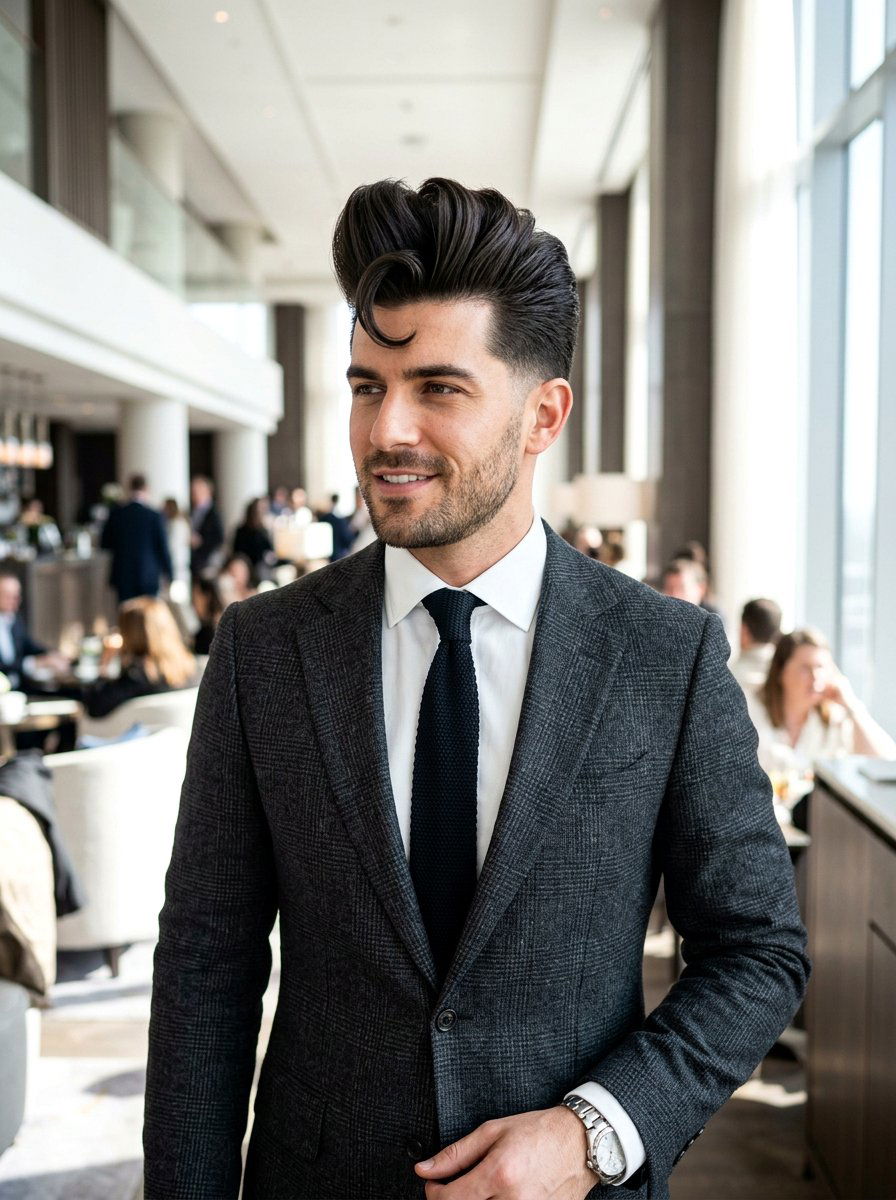
The high volume quiff is all about making a statement through sheer scale. This variation pushes the boundaries of how high thick hair can go, often standing several inches off the forehead. It requires the most styling effort, involving pre-stylers, heat, and strong-hold finishing sprays to ensure the structure doesn’t collapse. However, for men with the right hair density, the result is a powerful and commanding look. This style is often paired with a low fade to keep the focus entirely on the massive “wave” of hair at the front. It is a daring choice that showcases the full potential of thick hair.
14. Spiky Quiff
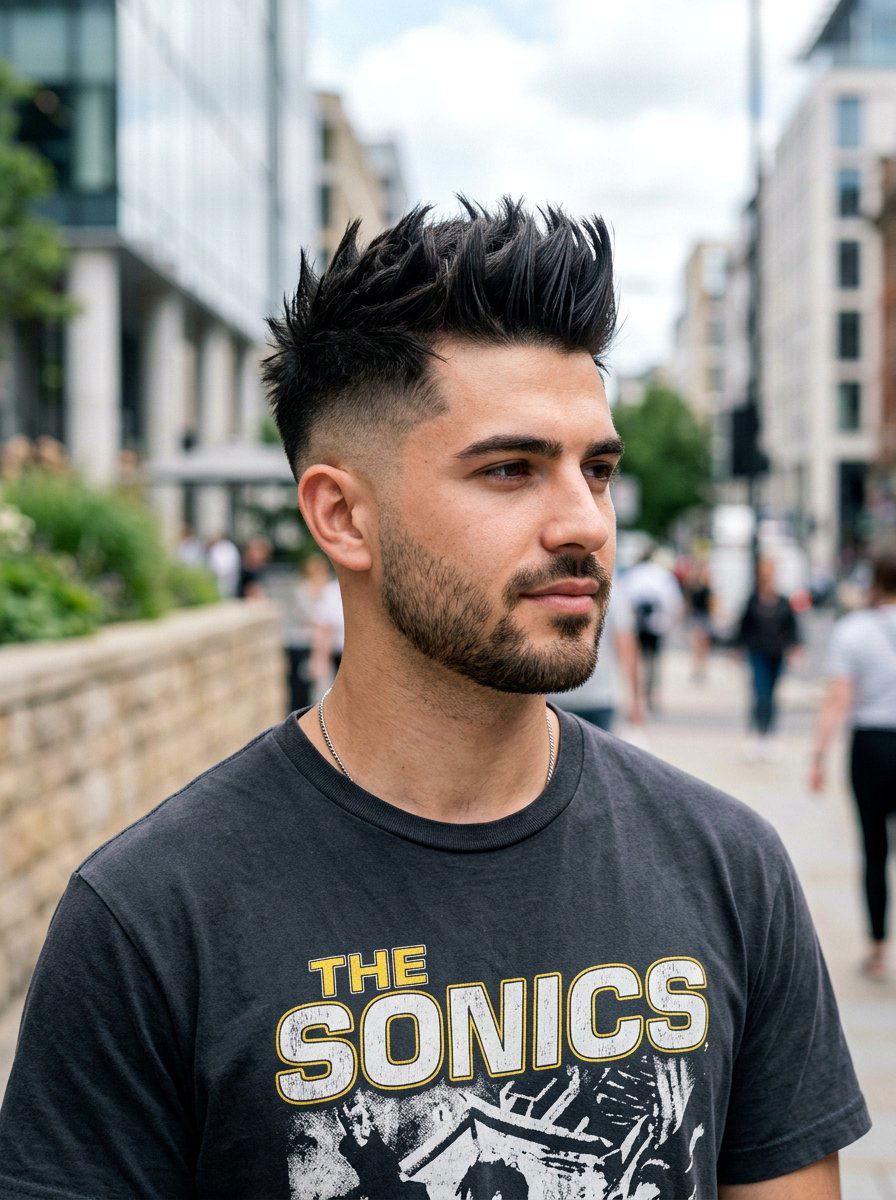
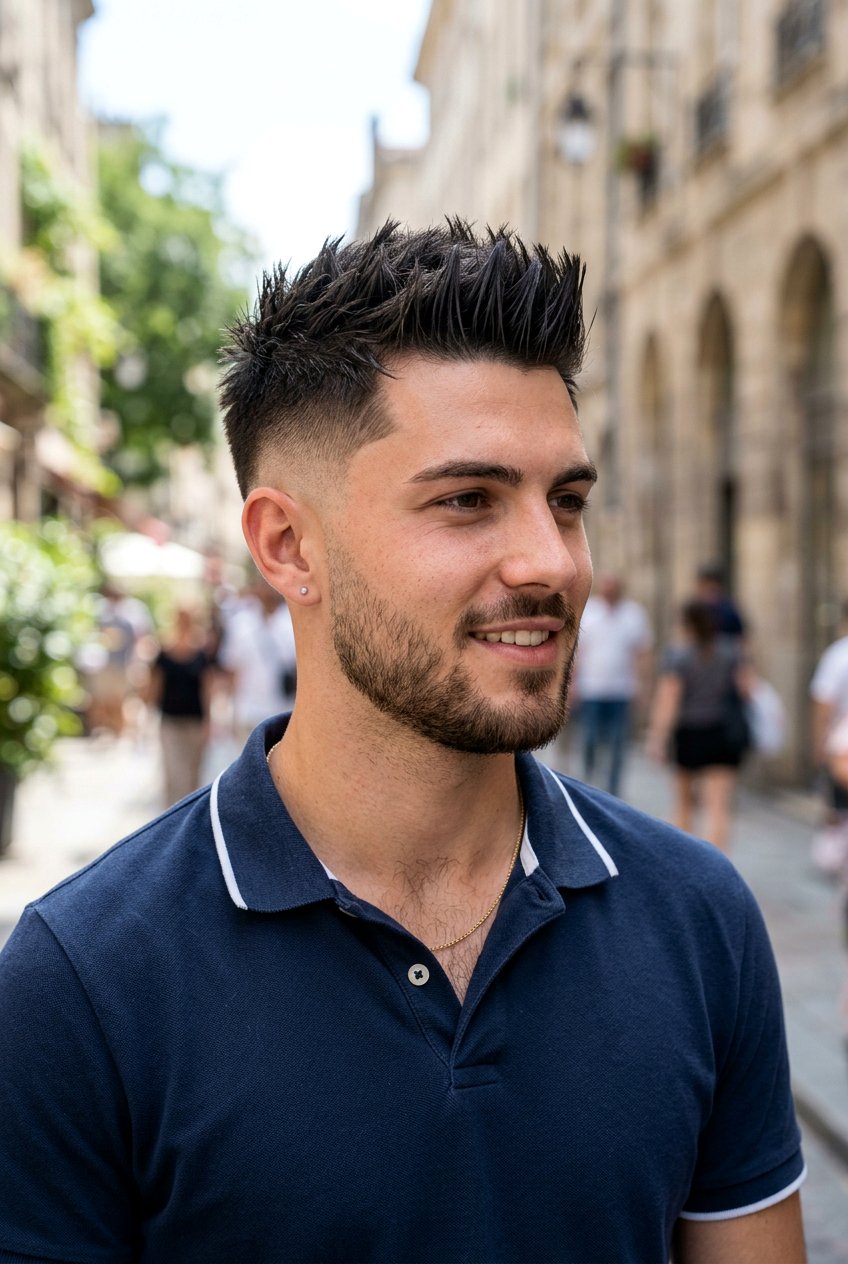
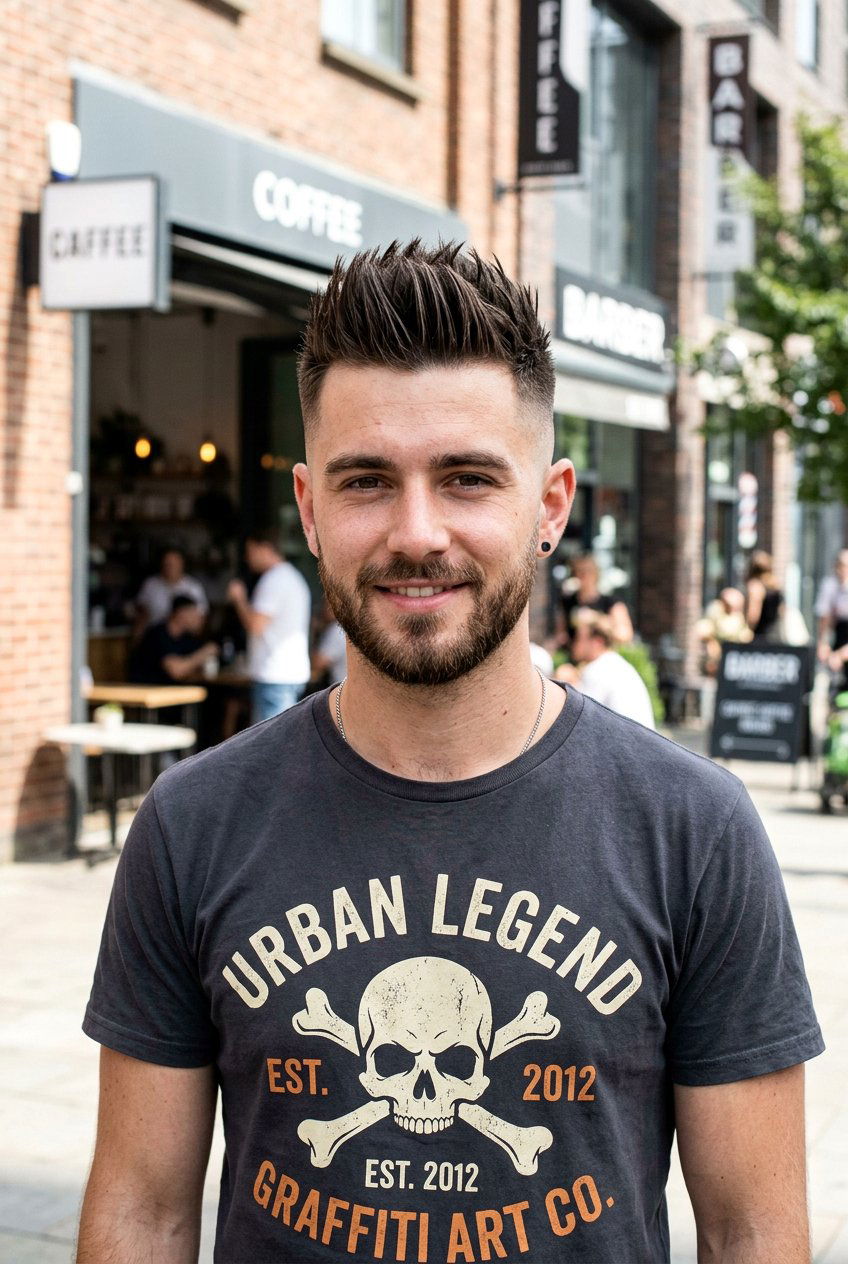
For a more aggressive and youthful aesthetic, the spiky quiff combines the upward lift of a quiff with the defined points of a spiked hairstyle. Instead of a smooth wave, the thick hair is worked into individual peaks using a strong-hold wax or gel. The thickness of the hair is a major advantage here, as it allows the spikes to look dense and purposeful rather than thin and “see-through.” This look is great for active men as it can handle a bit of movement and still look great. It is often paired with a high fade or an undercut to emphasize the sharp texture on top.
15. Wavy Quiff

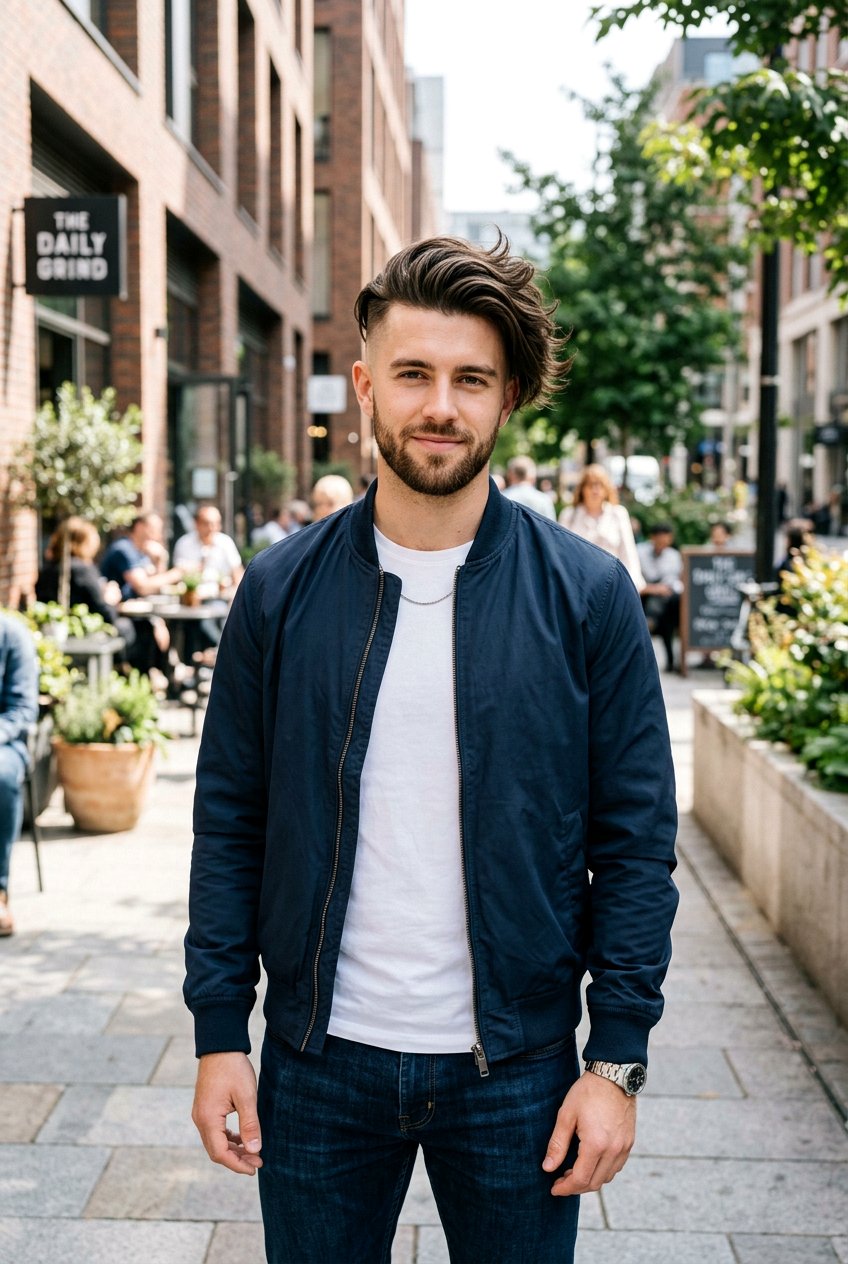
The wavy quiff is the perfect solution for men whose thick hair has a natural S-bend or wave to it. Rather than fighting to straighten the hair, this cut uses the waves to create organic volume and a sense of flow. The waves add a layer of natural “texture” that straight-haired men often have to use salt sprays to achieve. Keeping the sides tapered or faded ensures the look remains a quiff and doesn’t turn into a standard medium-length haircut. A light-hold paste is usually all that is needed to keep the waves in place while allowing them to retain their natural, soft appearance.
16. Low Fade Quiff

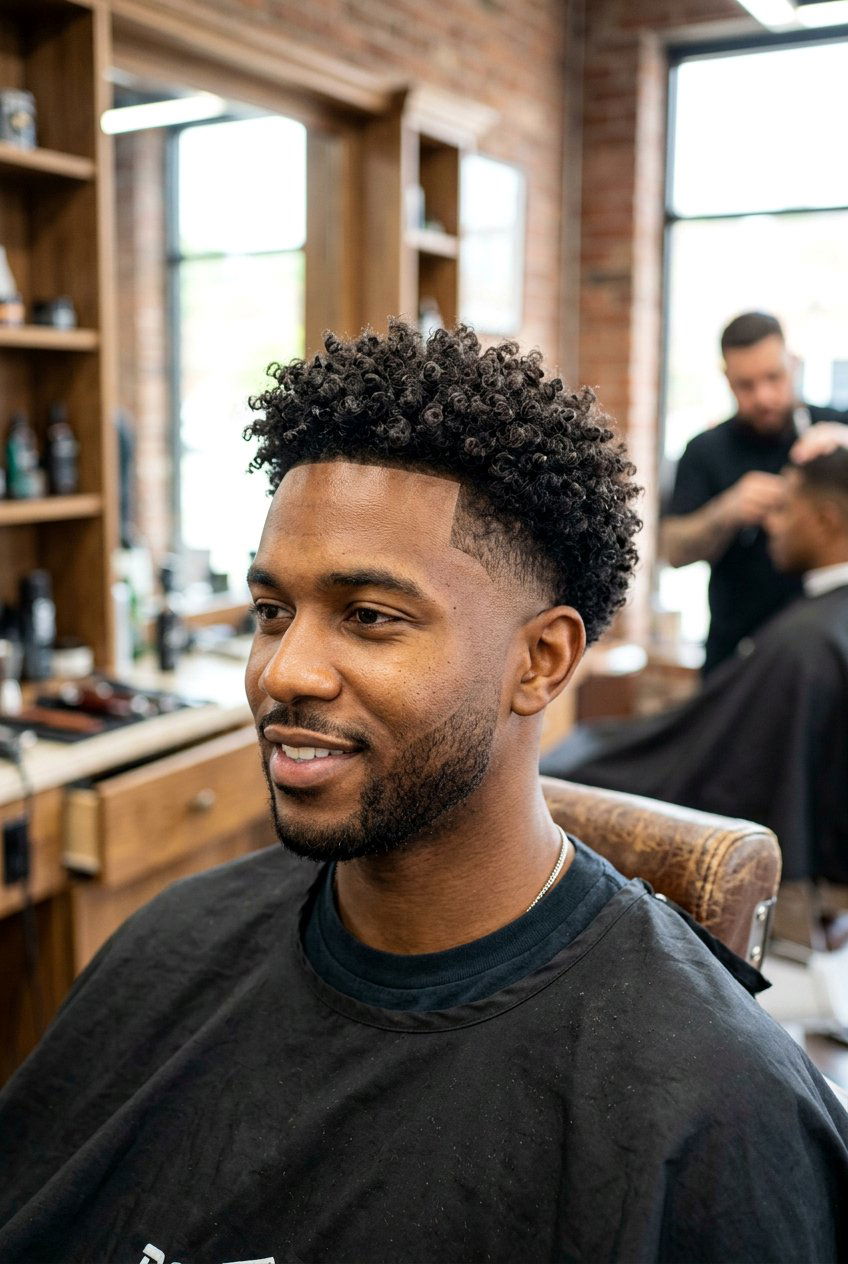
A low fade quiff is the most conservative of the faded variations, with the shortest hair staying very close to the ears and the neckline. This creates a soft, clean border that doesn’t feel as “shaved” as a high or mid fade. For men with thick hair, a low fade is often the best way to clean up the edges while keeping the overall look full and voluminous. It is a highly professional choice that works for almost any occasion. The transition from the low fade into the thick top provides a subtle but effective graduation of length that looks great from every angle.
17. Brushed Back Quiff
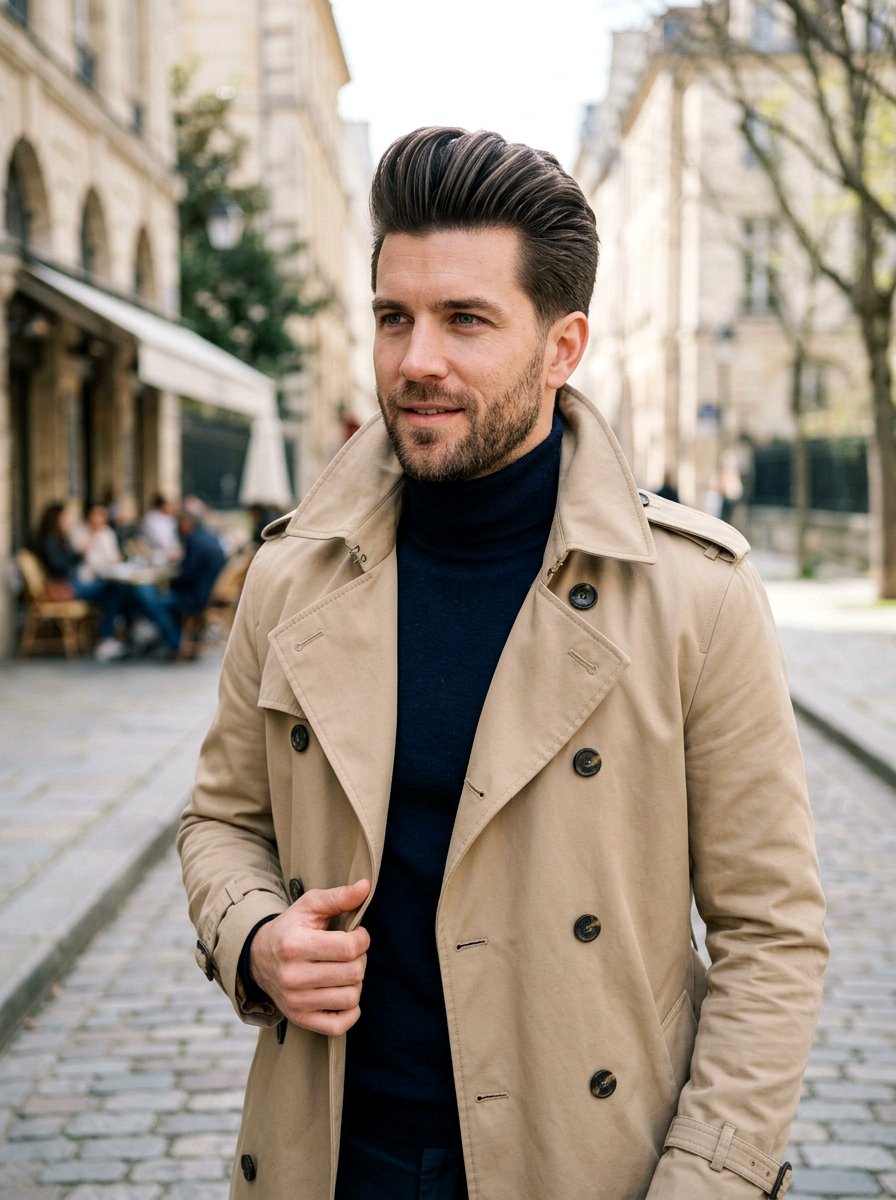
The brushed back quiff is a more relaxed, elongated version of the style that leans toward a slicked-back look but maintains the signature height at the front. Instead of being styled straight up, the hair is directed mostly backward with a slight lift. This is a great “day two” hairstyle or a look for those who prefer a softer silhouette. Thick hair is necessary to ensure the hair doesn’t lie flat against the scalp, which would turn the quiff into a standard slick-back. A grooming cream or light pomade provides enough control to keep the hair back while allowing for a bit of natural bounce.
18. Blowout Quiff
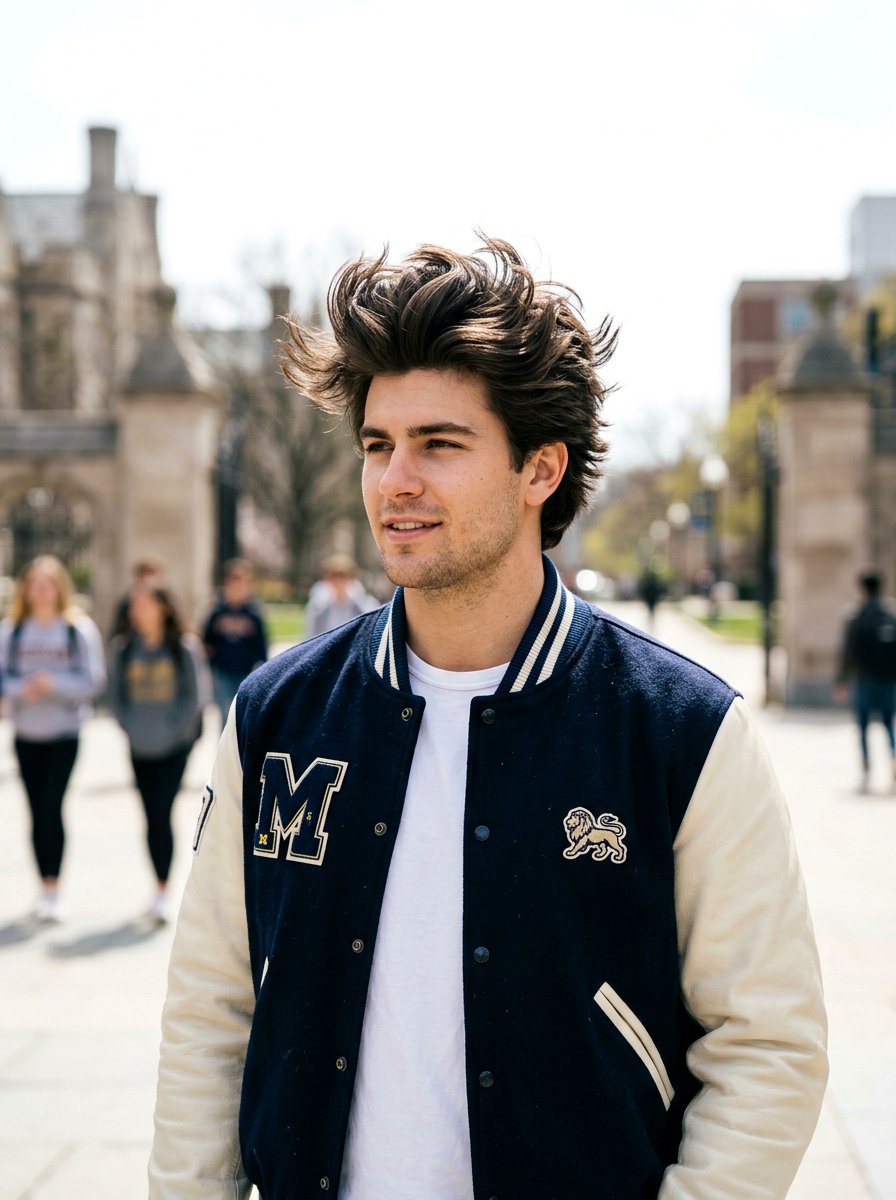
The blowout quiff is a high-energy style that looks as though it is being caught in a gust of wind. It is characterized by extreme texture and a “scattered” upward direction, creating a very dynamic and lively appearance. Thick hair is the only hair type that can really pull this off effectively, as the density is required to fill out the chaotic shape. To style this, you’ll need to use a blow-dryer on a high-heat setting while using your fingers to pull the hair in various upward directions. A matte powder is the best finishing product to lock in the “blown out” texture without adding weight.
19. Skin Fade Quiff
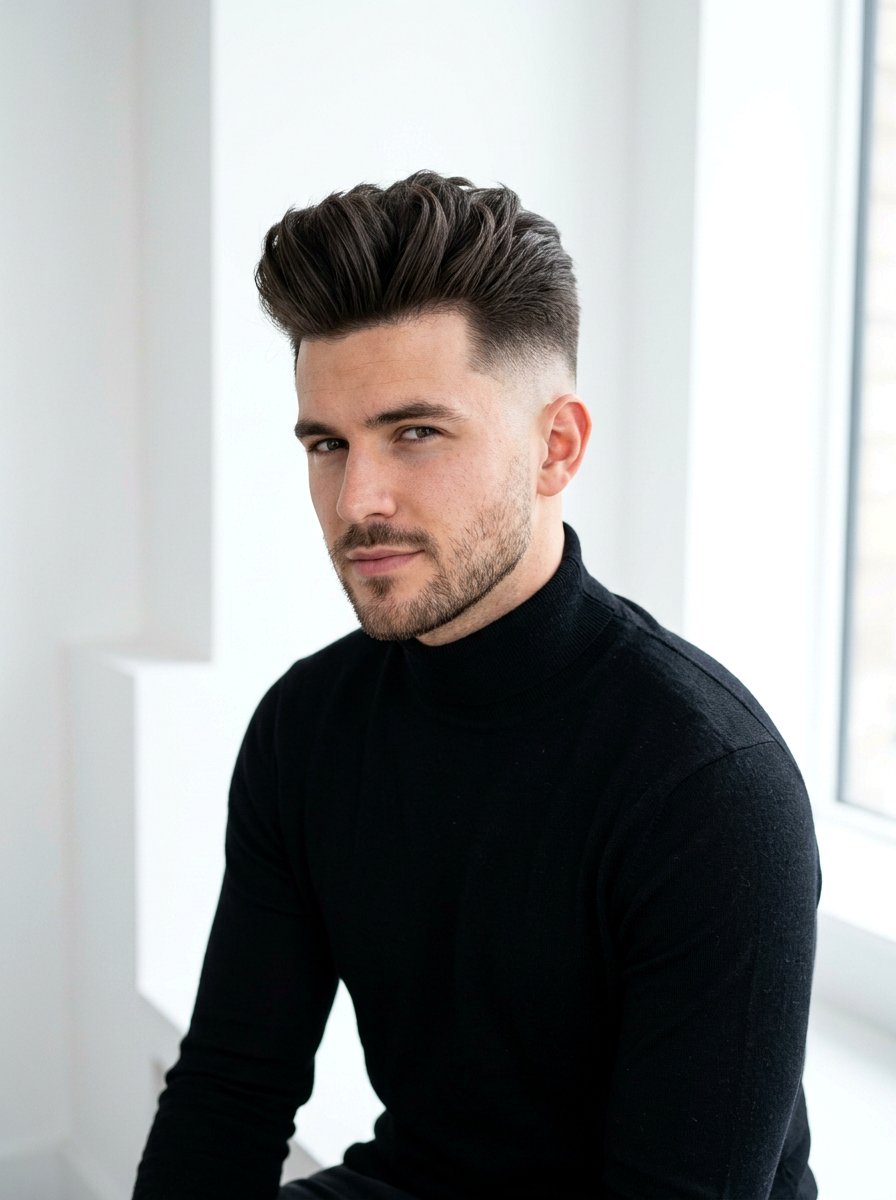
For the ultimate sharp finish, the skin fade quiff takes the sides down to the actual scalp. This creates a high-contrast, high-impact look that frames the thick hair on top with absolute precision. It is a very clean, hygienic-looking style that is popular in modern barbering. The skin fade makes the quiff on top appear even thicker and more voluminous by comparison. Because the skin fade grows out quickly, this style requires the most frequent maintenance, but the payoff is a look that is always at the cutting edge of men’s hair trends.
20. Modern Quiff
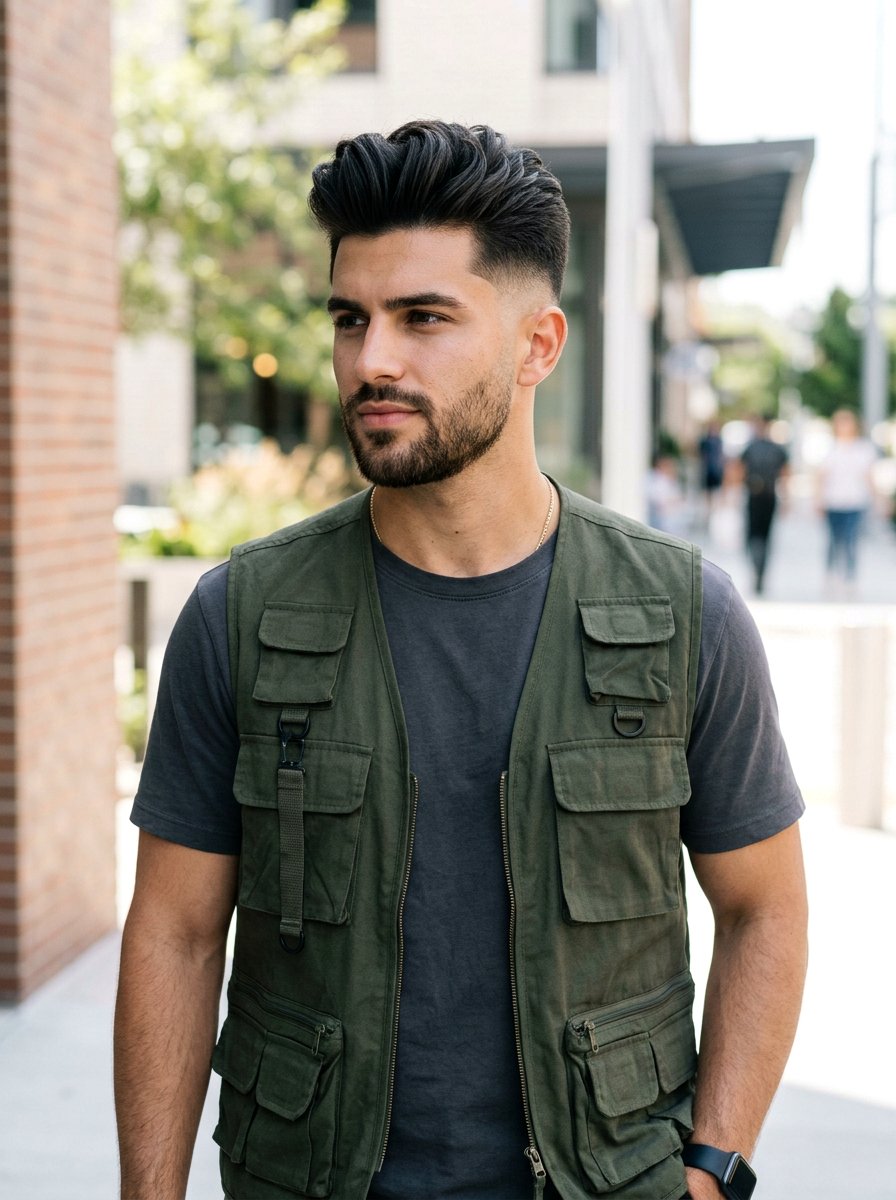
The modern quiff is a broad category that prioritizes a matte finish, heavy texture, and a more “natural” look than the greasy styles of the past. It often incorporates elements from various other cuts, such as a drop fade or a textured crop, to create something unique to the individual. For men with thick hair, the modern quiff is about using the latest styling products—like clays and pastes—to create a look that is functional, durable, and stylish. It is the culmination of decades of evolution, offering a style that is as practical for a workout as it is for a high-level business meeting.
Conclusion:
The quiff haircut for thick hair men is more than just a passing trend; it is a versatile grooming staple that celebrates natural hair density. By selecting the right variation—whether it is a sharp skin fade for a modern edge or a classic scissor-cut for timeless elegance—you can transform thick, often unmanageable hair into a structured and stylish asset. The key to a successful quiff lies in the combination of a professional cut that removes unnecessary bulk and the use of the right styling tools, particularly a blow-dryer and high-quality matte products. With so many variations available, there is a quiff style to suit every face shape, profession, and personal aesthetic in the modern era.
You'll Like These Styles:





Leave a Reply