
Thin, fine hair can be tough to work with, especially when you want a fuller, thicker-looking style without spending hours on styling every morning. A pixie cut is one of the most reliable ways to make delicate strands appear denser, because removing length instantly takes off weight and lets the hair lift at the roots more easily. When the cut is done with smart layering, a bit of texture, and the right fringe, it can visually double your volume and sharpen your features in the best way. Below, you’ll find twenty different pixie haircuts tailored to thin, fine hair, with each look focusing on how to boost fullness, frame your face, and keep daily maintenance simple and realistic.
1. Classic Pixie Cut For Thin Fine Hair
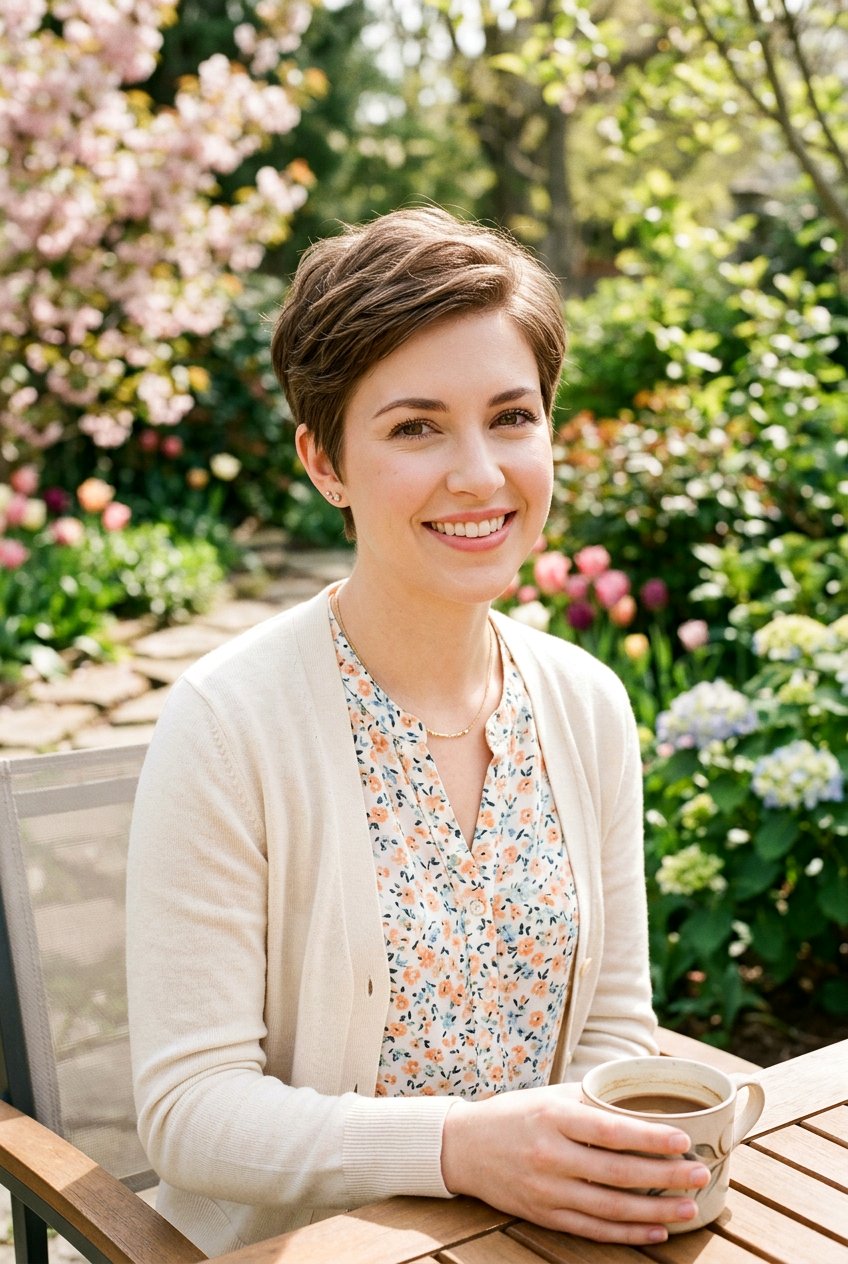
A classic pixie cut for thin fine hair keeps things simple while still giving you a big boost in volume and shape. The hair is cropped short on the back and sides, with a little extra length on top to create soft lift and movement that makes fine strands look fuller. Light layering throughout helps prevent your hair from lying too flat, so it doesn’t cling to the scalp or show gaps. This cut works especially well if your hair is straight or slightly wavy and you want something low-maintenance that still looks polished. You can style it in minutes with a lightweight volumizing mousse, a quick blow-dry, and a bit of finger tousling. It’s a great starting point if you are trying a pixie for the first time and want a timeless look.
2. Long Pixie Cut For Thin Fine Hair

A long pixie cut for thin fine hair is ideal when you want more styling options but still need the fullness that a shorter cut provides. The length is left slightly longer around the crown and fringe area, usually grazing somewhere between your cheekbones and jawline, which helps create the illusion of thicker hair. Soft, blended layers keep the shape airy, not choppy, so the style remains feminine and easy to wear. This longer length lets you tuck pieces behind your ears, sweep the top to one side, or add a little bend with a flat iron for texture. Because the hair isn’t too short, it can also grow out beautifully into a pixie bob without looking awkward. It suits many face shapes and is perfect if you want a softer transition from a bob or shoulder-length cut into a pixie.
3. Choppy Pixie Cut For Thin Fine Hair
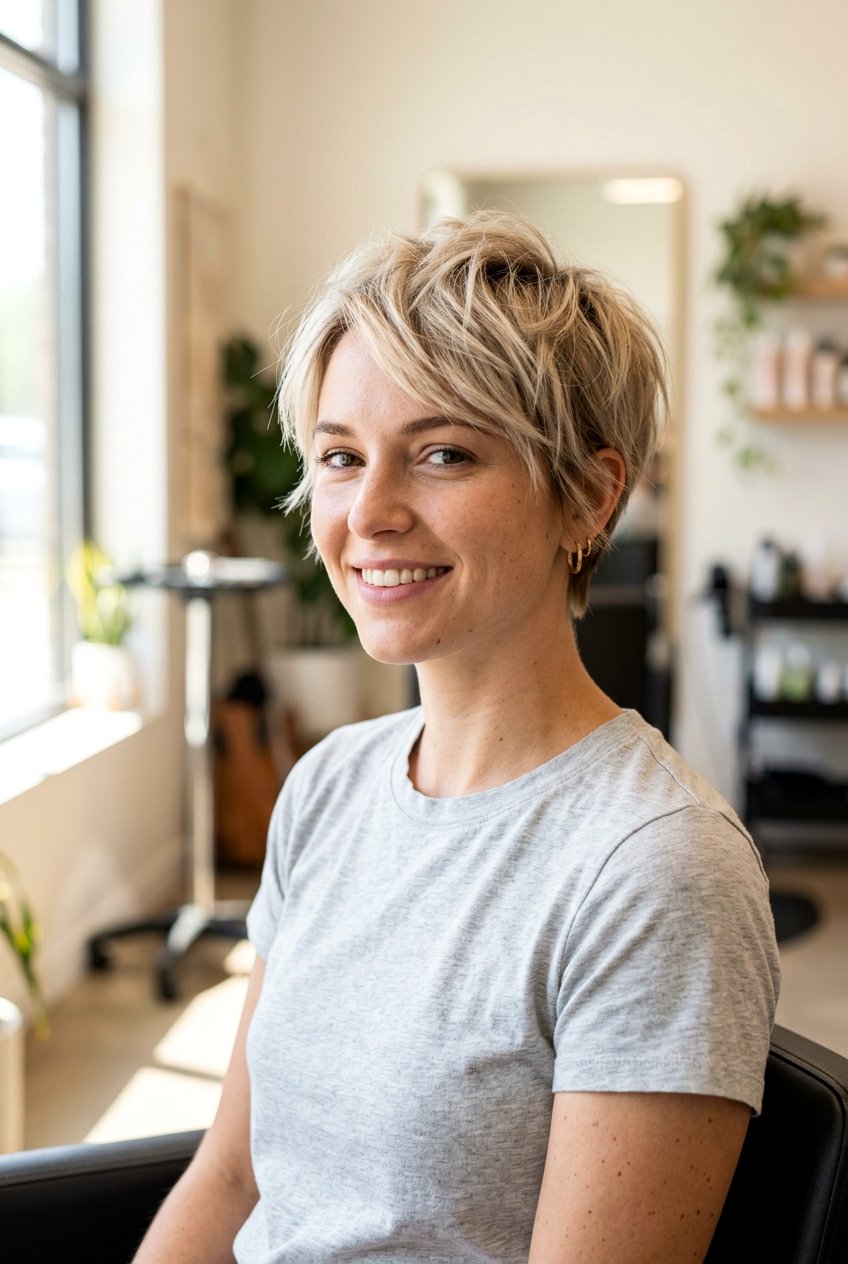
A choppy pixie cut for thin fine hair is all about texture and movement that instantly makes your hair appear thicker. Instead of smooth, perfectly blended layers, this cut uses deliberately uneven, piecey sections to create a tousled, lived-in effect. Those choppy ends catch the light and add dimension, which helps camouflage any sparse areas and makes flat hair look more dynamic. The top is usually kept a bit longer so you can play with different partings and push the hair forward or upward depending on your mood. Styling is easy with a small amount of texturizing paste or clay worked through the ends to define the pieces without weighing them down. This is a great choice if you like an edgier, slightly messy look that still feels flattering and intentional for everyday wear.
4. Layered Pixie Cut For Thin Fine Hair
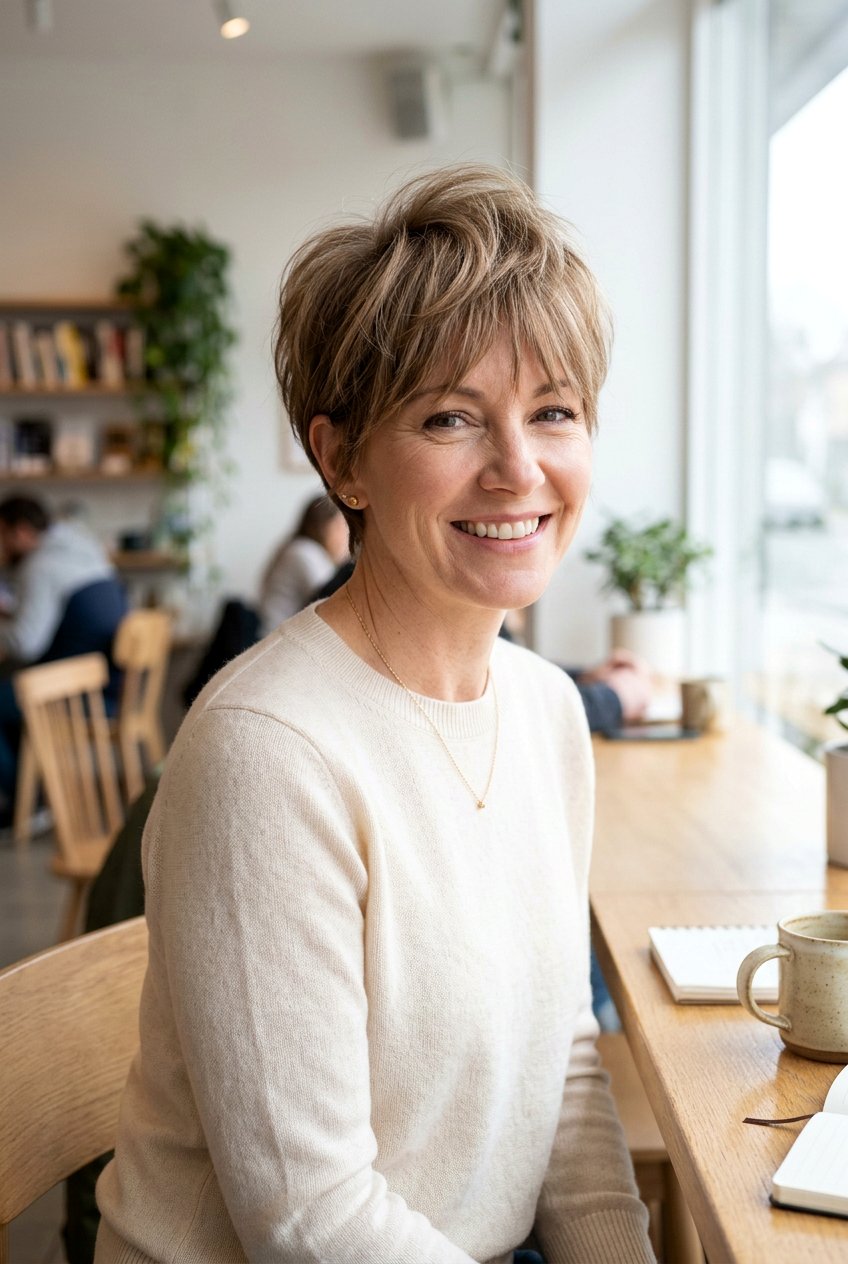
A layered pixie cut for thin fine hair focuses on building subtle height and fullness through strategic layering. The stylist removes weight in the right places while leaving enough length to keep your hair from collapsing against the head. Shorter layers underneath support slightly longer layers on top, which creates a natural cushion of volume without needing intensive styling. This structure makes it easier to get lift at the crown with just a round brush and blow-dryer. The overall shape is soft and versatile, so you can wear it smooth, slightly tousled, or even with a little flip at the ends. It’s especially flattering if your thin hair tends to fall flat around the crown and you want a cut that automatically gives you more body every day.
5. Textured Pixie Cut For Thin Fine Hair

A textured pixie cut for thin fine hair takes advantage of light, feathery layering to give your hair a fuller, more modern look. Instead of blunt ends, the stylist uses point cutting or razor techniques to create soft micro-layers that add airiness and movement. This helps break up any harsh lines and keeps fine hair from clumping together, which can make it look even thinner. The result is a pixie that looks effortless and slightly undone, with pieces you can easily push forward, to the side, or straight up. Styling only requires a light texturizing spray or mousse to emphasize the layers and prevent the hair from falling limp. This cut is a great match if you like low-key styling but want your hair to appear more dimensional and youthful.
6. Pixie Cut With Bangs For Thin Fine Hair

A pixie cut with bangs for thin fine hair puts the focus on framing your face and creating volume at the front where it’s most noticeable. The bangs can be cut straight across, slightly rounded, or softly feathered, depending on your face shape and personal taste. Adding fringe helps conceal a sparse hairline or high forehead and draws attention to your eyes. The rest of the pixie is usually layered to support the bangs, with a bit of extra fullness at the crown so the style doesn’t look front-heavy. For styling, you can use a light mousse on damp hair, blow-dry the bangs with a small round brush, and finish by tousling the top with your fingers. This look is perfect if you want to refresh your appearance without losing too much length around the front.
7. Side Swept Pixie Cut For Thin Fine Hair

A side swept pixie cut for thin fine hair uses a deep part and longer top layers to create the illusion of thicker, more luxurious hair. By directing most of the hair to one side, you instantly add height at the roots and a bit of drama across the forehead. The sides and back remain relatively short and neat, which keeps the style sleek and easy to maintain. This strong side sweep can soften angular features and works especially well if you prefer asymmetry over a perfectly balanced style. To keep the side sweep in place, you only need a lightweight mousse or a touch of soft-hold styling cream, avoiding heavy products that might weigh your fine hair down. It’s a confident, modern pixie variation that still feels wearable for everyday life.
8. Short Pixie Cut For Thin Fine Hair
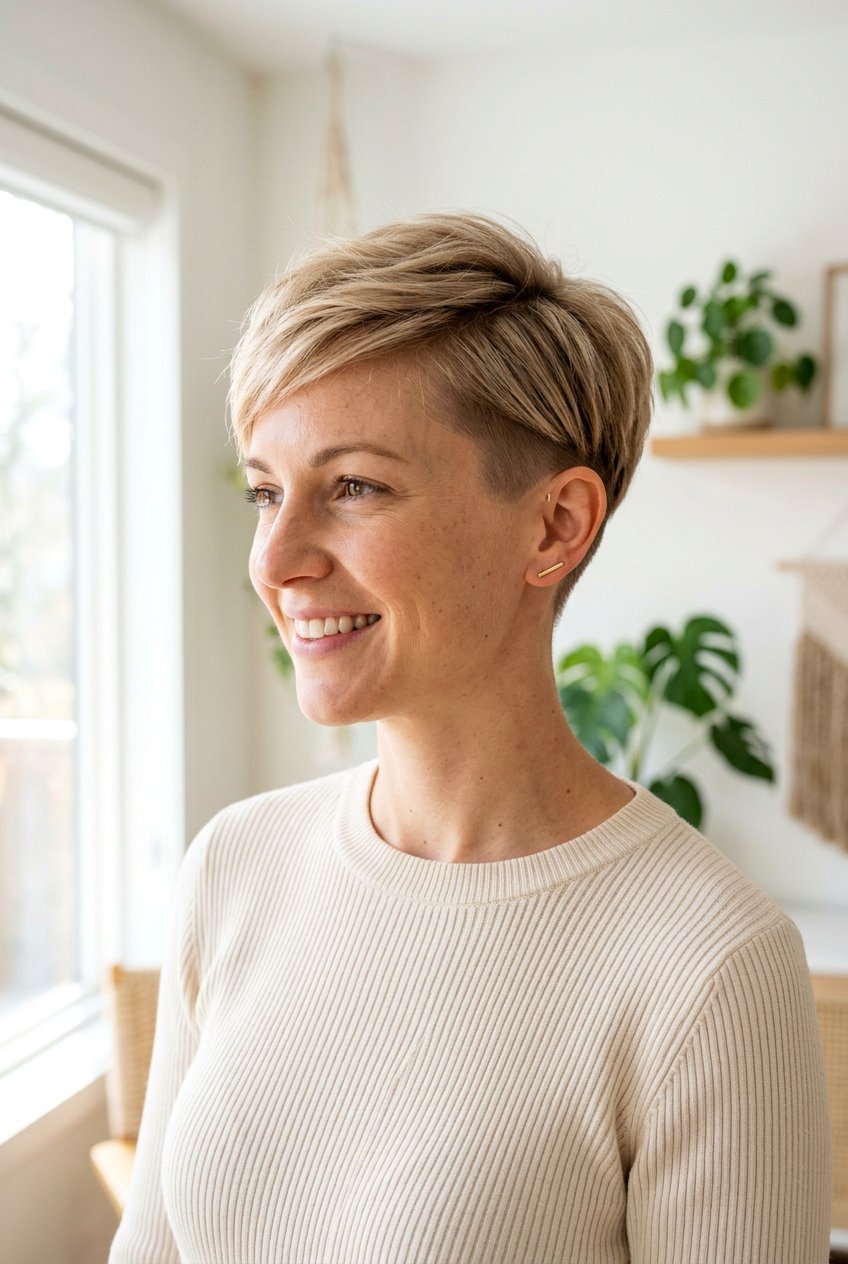
A short pixie cut for thin fine hair is a bold yet practical choice that focuses on clean lines and instant volume. The hair is cut very close at the back and sides, sometimes almost cropped, while the top remains just long enough to create a soft, rounded shape. Removing so much length eliminates weight that drags fine hair down, so it stands up more easily and looks denser. This minimal cut draws attention to your facial features, especially your eyes and cheekbones, which can be very flattering. Styling time is refreshingly quick; a small amount of lightweight styling cream or mousse and a quick finger-dry is often enough. It’s a great option if you want a no-fuss hairstyle that still looks intentional and chic every single day.
9. Pixie Bob Cut For Thin Fine Hair

A pixie bob cut for thin fine hair offers the best of both worlds by blending pixie lightness with bob-like length. The back and sides are shorter and tapered, while the top and front are left longer, often brushing the jawline or just slightly above it. This extra length adds softness around the face and gives you a bit more coverage, which can help if you feel self-conscious about having very short hair. The cut typically includes layered sections that boost volume through the crown and mid-lengths, giving thin hair a more rounded, full silhouette. You can wear it straight and sleek, slightly wavy, or tousled, and it still looks stylish as it grows. This is an excellent stepping-stone if you’re moving from a bob into shorter hair but don’t want a super cropped pixie yet.
10. Asymmetrical Pixie Cut For Thin Fine Hair

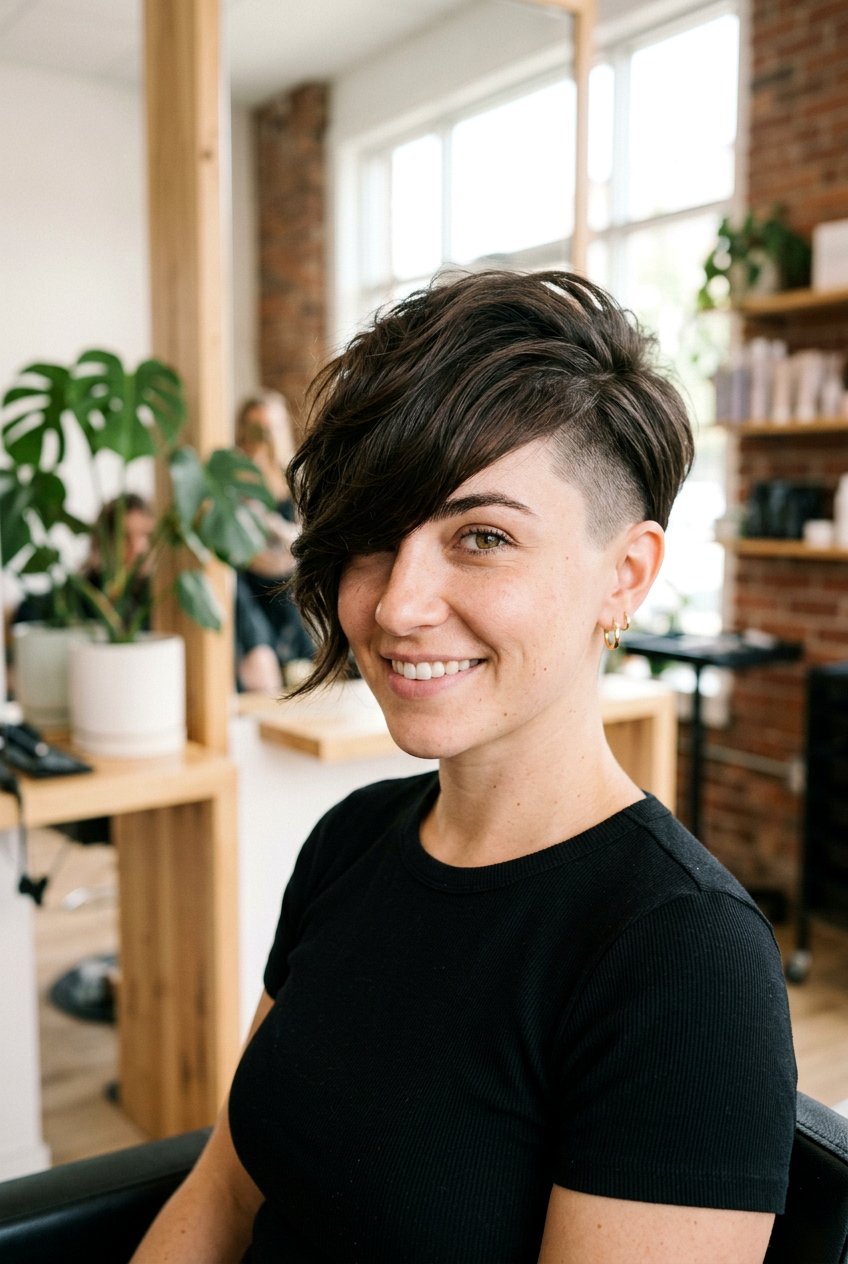
An asymmetrical pixie cut for thin fine hair uses uneven lengths to create visual interest and the illusion of more thickness. One side is cut shorter, sometimes very close to the head, while the other side is left noticeably longer and often swept across the forehead or cheek. This contrast trick draws the eye away from any sparse spots and makes the overall shape appear fuller. Layering through the longer side adds movement and prevents the style from looking too heavy or blocky. With fine hair, this cut is surprisingly easy to style, since you mostly need to direct the longer pieces and smooth or tousle them depending on your preference. It’s a great choice if you like modern, fashion-forward looks that still stay practical and manageable.
11. Undercut Pixie Cut For Thin Fine Hair
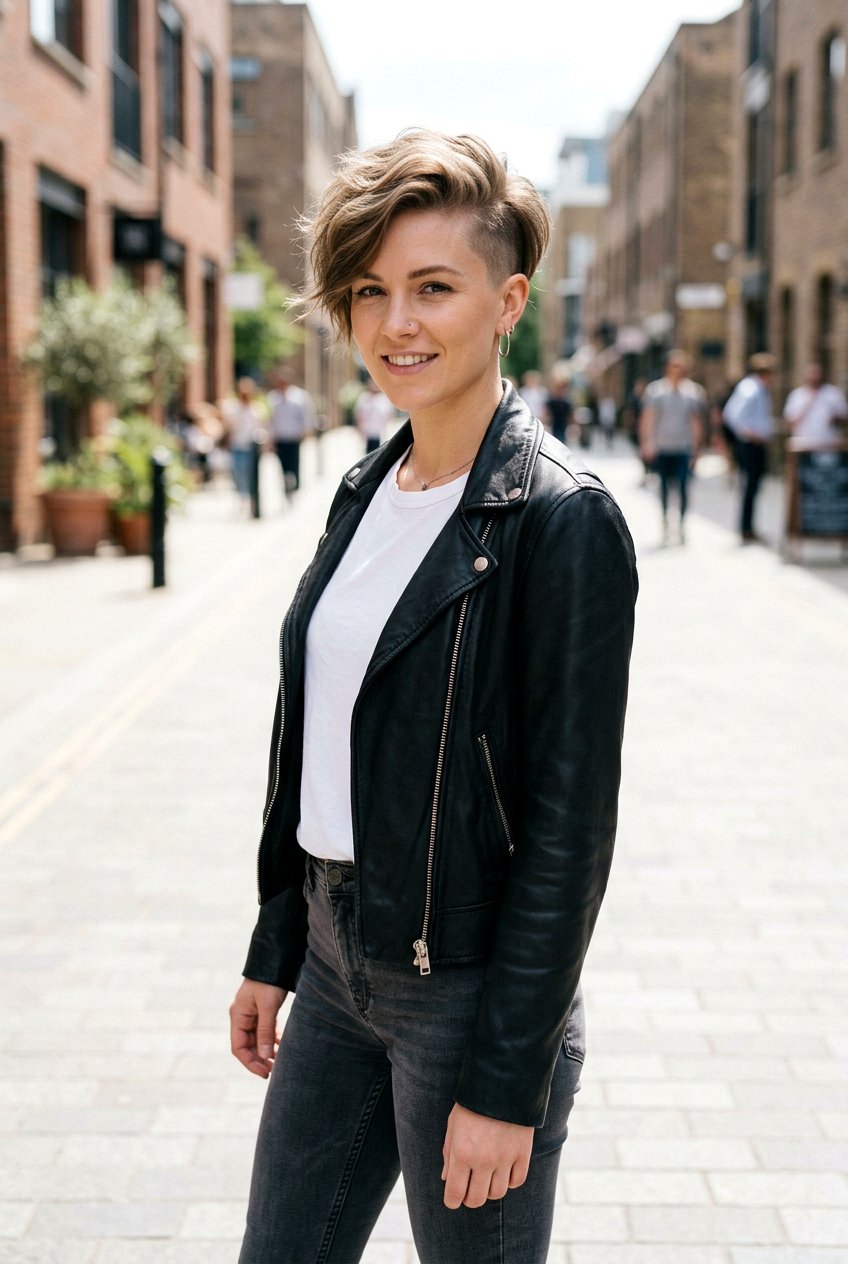
An undercut pixie cut for thin fine hair pairs a closely cropped or shaved section with a fuller top to create strong contrast and volume. The undercut is usually placed around the sides and back, keeping those areas ultra short so the hair there doesn’t lie flat or compete with the top. This allows the longer hair on top to stand out and appear thicker, almost like you have more density than you actually do. You can wear the top straight, tousled, or swept to one side for added drama. Because some of the hair is removed, styling becomes quicker, and you use less product overall, which is helpful for fine textures that are easily weighed down. This bold look works well if you want something edgy that still cleverly enhances your natural hair.
12. Pixie Cut With Long Bangs For Thin Fine Hair

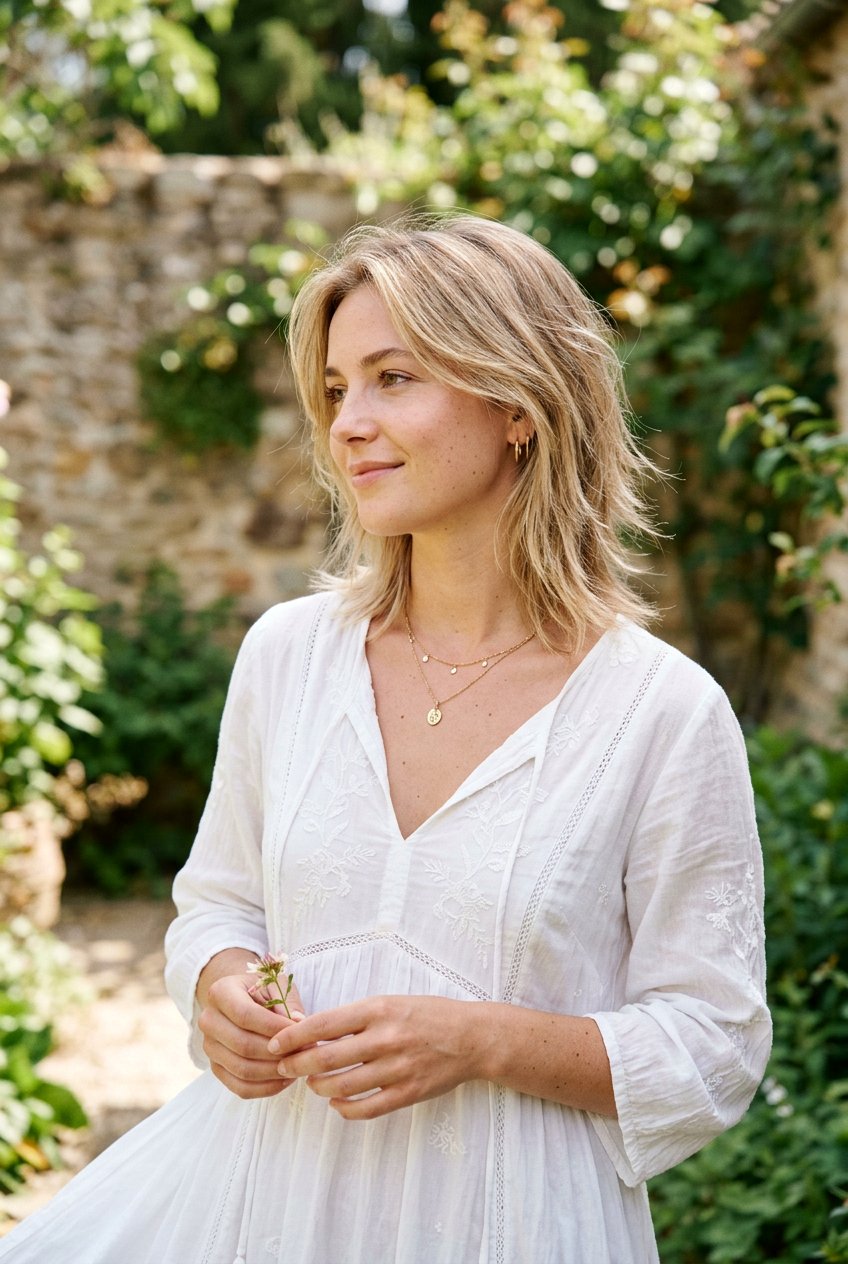
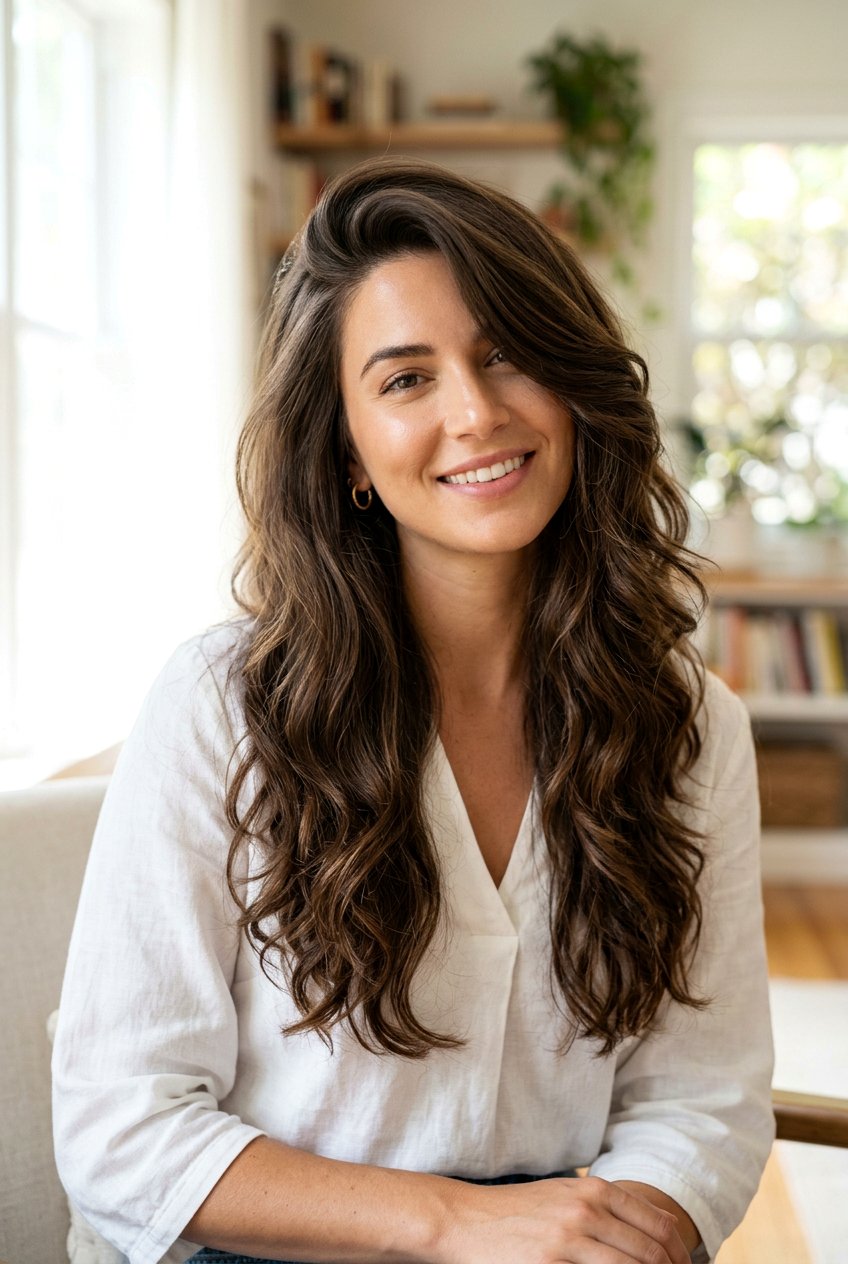
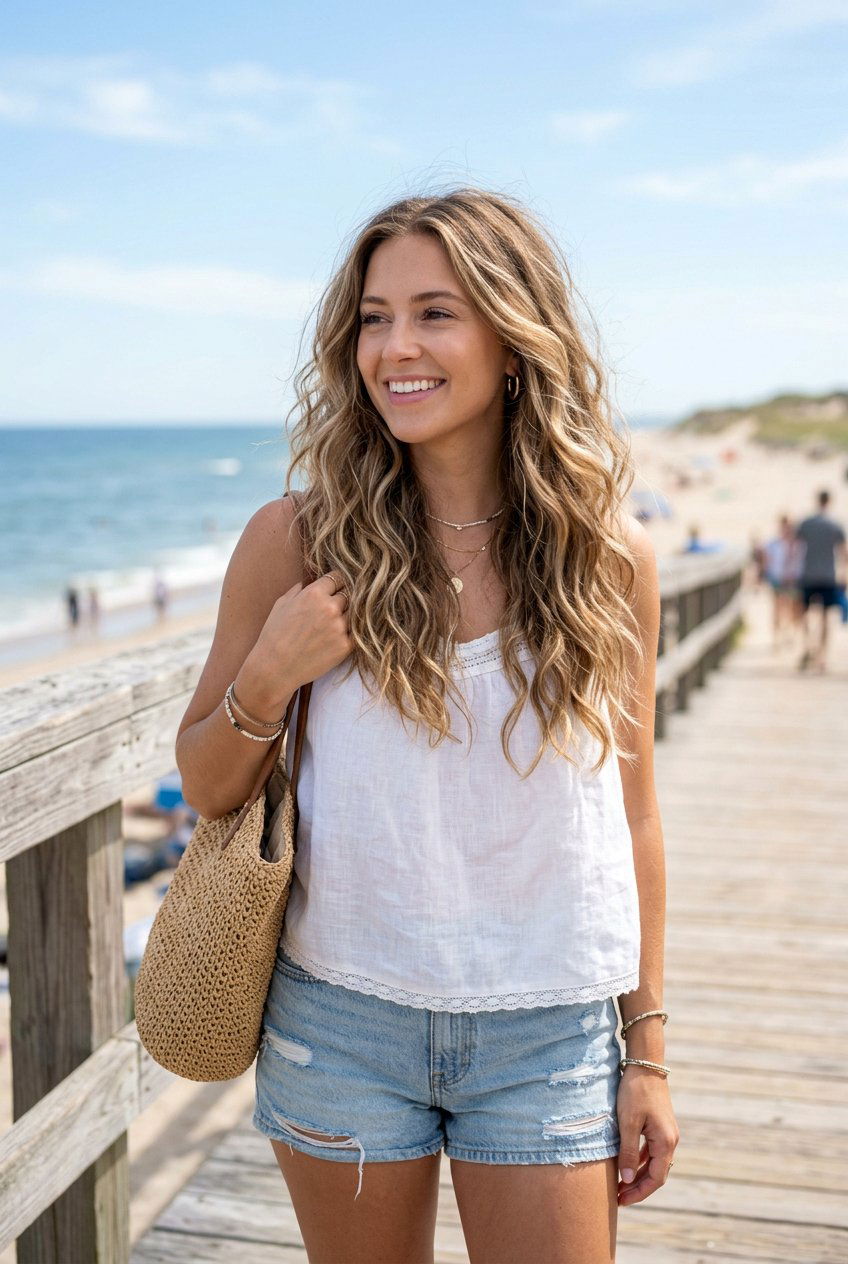
A pixie cut with long bangs for thin fine hair softens the overall shape and adds a romantic, face-framing touch. The bangs are left long enough to skim the eyebrows or even brush the cheekbones, while the rest of the hair is cut into a neat, short pixie. This length in front can be styled straight, slightly waved, or side swept, allowing you to change your look without altering the cut itself. Long bangs also help disguise a fine or sparse hairline by drawing attention downward instead of to the scalp. The short back and sides keep maintenance easy and prevent the hair from looking thin around the nape. A light, flexible-hold product is all you need to keep the fringe in place and add a bit of definition.
13. Shaggy Pixie Cut For Thin Fine Hair

A shaggy pixie cut for thin fine hair adds playful movement through lots of soft, uneven layers. Unlike a very structured pixie, this look embraces a more relaxed, mussed-up finish that works with your natural texture. The layers are scattered throughout the top and sides, creating a feathery effect that makes the hair look thicker than it is. This cut is particularly helpful if your fine hair tends to separate into stringy sections when it’s too long, because the shorter, shaggy pieces hold shape better. Styling is simple: apply a light texturizing spray on damp or dry hair and scrunch to bring out the layers. The overall result feels modern, casual, and easygoing, perfect if you like hair that doesn’t look too “done” but still feels intentional.
14. Tapered Pixie Cut For Thin Fine Hair
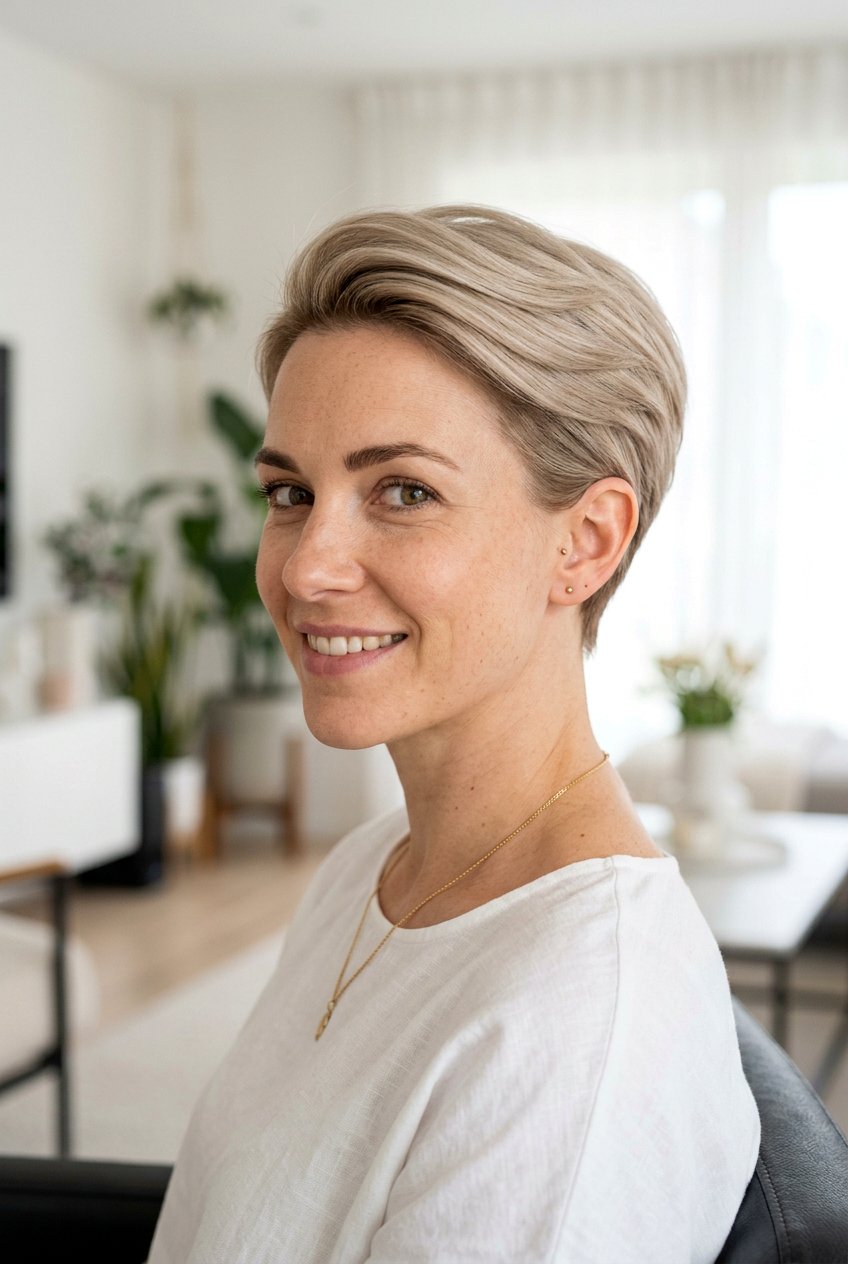
A tapered pixie cut for thin fine hair gradually shortens the hair from the top down to the nape for a clean, elongated shape. The crown and upper areas are kept longer and layered to build height, while the hair narrows toward the neckline and around the ears. This creates a sleek silhouette that makes the head shape look balanced and prevents the style from appearing boxy or heavy. For fine hair, this tapering is helpful because it avoids having too much length at the bottom, which can pull the whole look down. The top can be styled smooth or lightly tousled, and a root-lifting spray can easily enhance the built-in height. If you like a neat, polished haircut that still boosts volume where you need it most, a tapered pixie is a great option.
15. Curly Pixie Cut For Thin Fine Hair
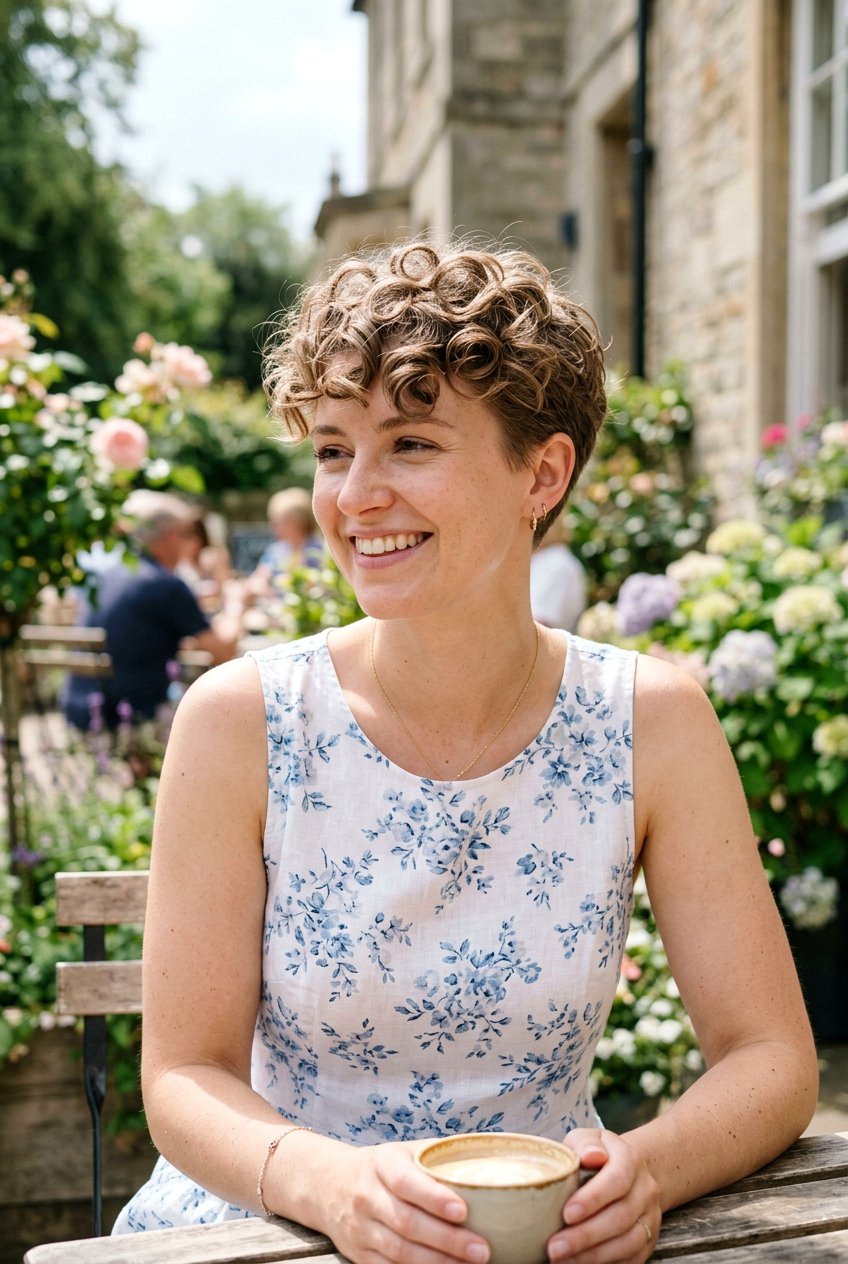
A curly pixie cut for thin fine hair uses your natural texture to create instant volume and body. When hair is cut short, curls and waves tend to spring up more, which can make fine strands look far fuller than they do at longer lengths. The sides and back are usually kept tidy, while the top is left a bit longer to showcase the curls. Light layering helps distribute the curls evenly so they don’t clump in just one area. For styling, a lightweight curl cream or foam works well to define your curls without flattening them. This cut is great if you have naturally wavy or curly hair and want a low-maintenance shape that still feels bouncy and dimensional.

16. Wispy Pixie Cut For Thin Fine Hair

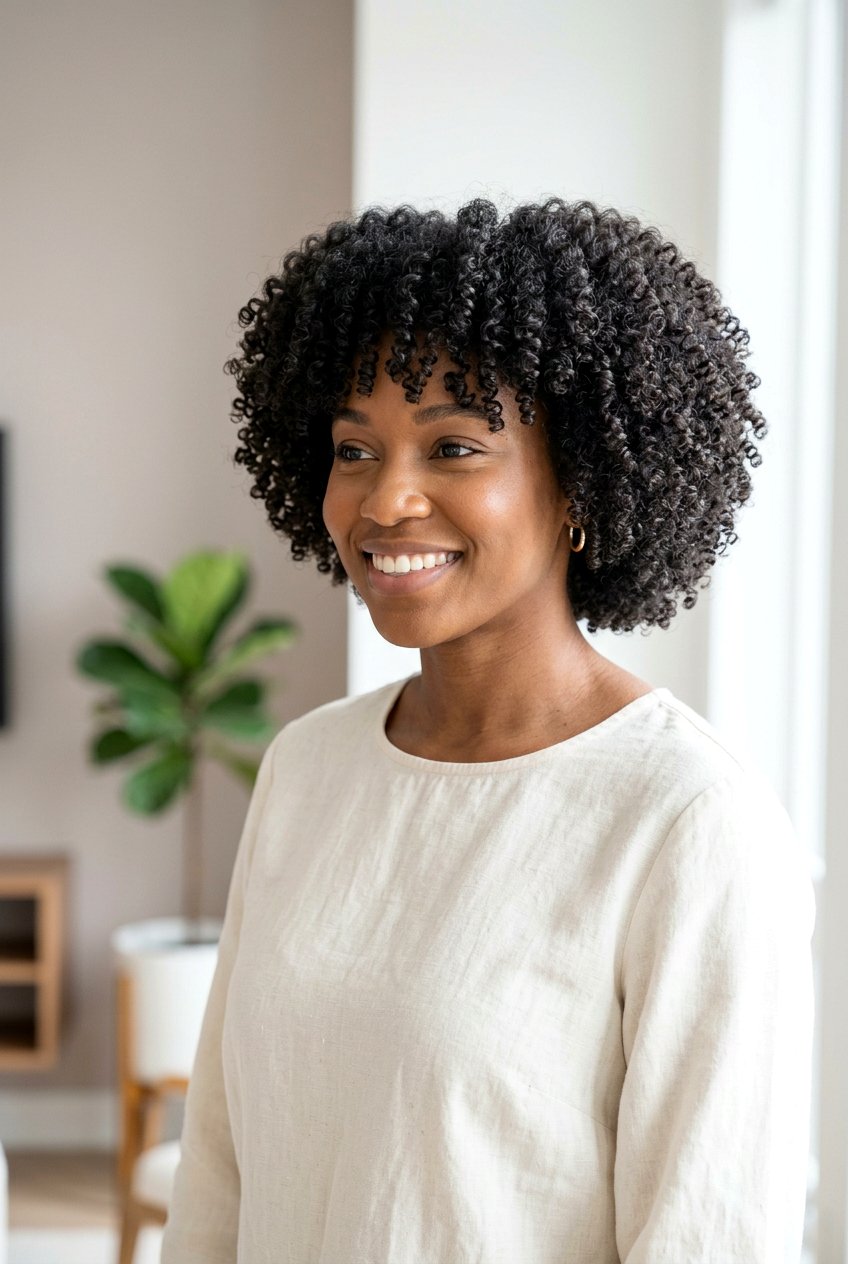
A wispy pixie cut for thin fine hair focuses on ultra-light, feathered ends that soften your features and keep the style airy. The hair is layered delicately, with pieces that taper into thin, floating strands rather than blunt edges. This wispy effect stops fine hair from looking heavy or harsh and instead gives it a romantic, soft-focus look. It can be especially flattering around the fringe and temples, where the hair skims the skin and blurs strong facial angles. Because everything is so light, you only need a tiny amount of mousse or styling cream to prevent flyaways and support the shape. It’s a lovely choice if you like a gentle, feminine pixie that still helps your hair look fuller.
17. Messy Pixie Cut For Thin Fine Hair

A messy pixie cut for thin fine hair leans into a carefree, tousled finish that makes your hair look fuller by design. Instead of aiming for sleek perfection, this cut emphasizes movement and piecey texture through layered, slightly uneven lengths. The top is typically kept longer so you can push it forward, spike it slightly, or direct it to one side. This intentional messiness disguises any thin spots and makes the overall shape look more voluminous. Styling is quick: work a small amount of matte paste or light wax through dry hair, then scrunch or pinch sections to create separation. It’s a perfect everyday look if you want your hair to feel relaxed, modern, and easy to refresh with just your fingers.
18. Pixie Cut With Fringe For Thin Fine Hair
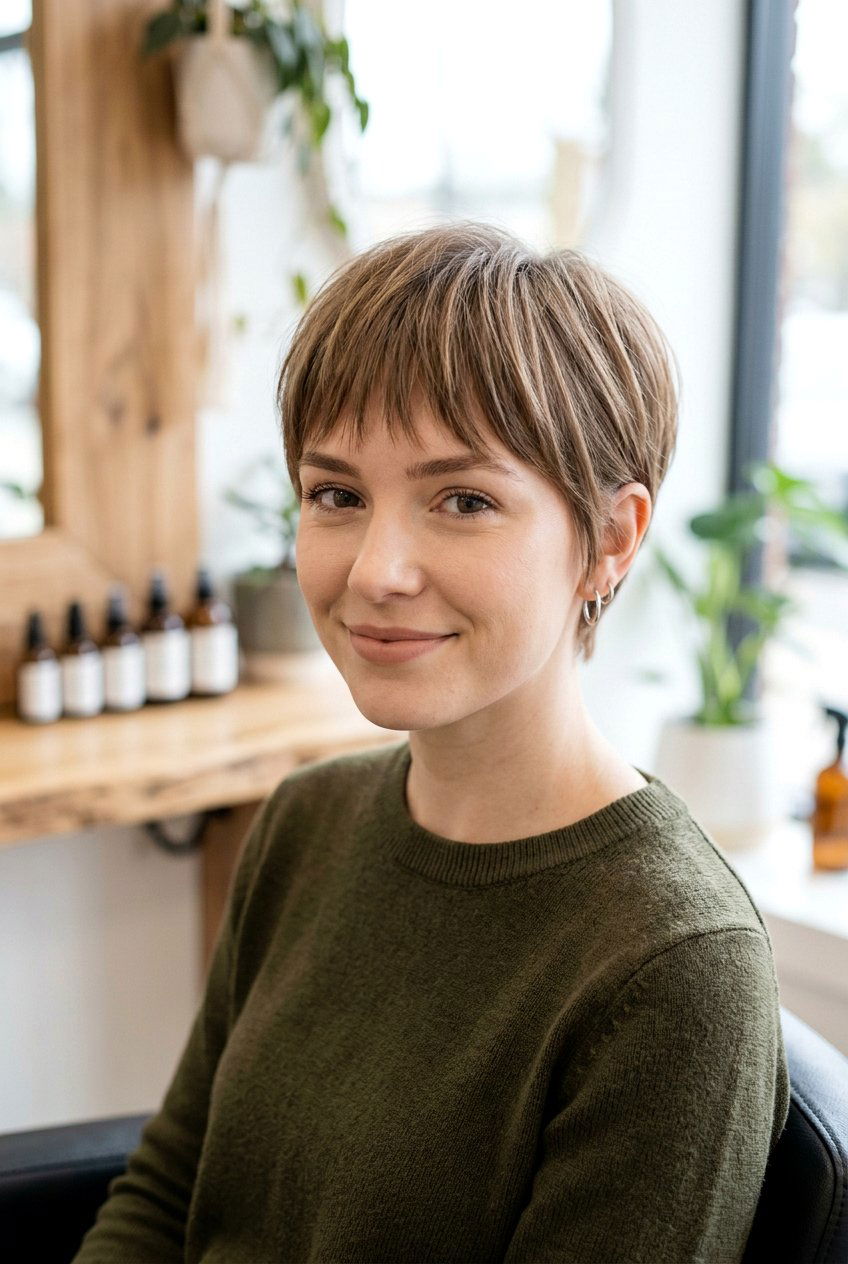
A pixie cut with fringe for thin fine hair gives you a structured yet soft frame around the eyes and cheekbones. The fringe can be full, side-swept, or lightly feathered, but it always serves to draw attention to your facial features and away from any sparse areas. The rest of the pixie supports the fringe with light layering through the crown for added lift. This balance keeps the cut from feeling too top-heavy or too short in the front. With fine hair, keeping the fringe not too thick but gently layered helps it sit well without gaps. A lightweight styling spray or foam is usually enough to control the fringe and keep it looking smooth or gently tousled throughout the day.
19. Low Maintenance Pixie Cut For Thin Fine Hair

A low maintenance pixie cut for thin fine hair is designed to look good with almost no effort each day. The shape is kept simple and balanced, with clean edges and soft layers that naturally fall into place as your hair dries. The back and sides are short enough to avoid awkward flips or sticking out, while the top has just enough length for a bit of movement. This makes it easier to air-dry or do a very quick blow-dry without needing to fight your hair’s natural direction. Because the cut works with your texture rather than against it, you need only minimal product, like a dab of mousse or cream for control. It’s ideal if you want a flattering, volume-boosting pixie but are not interested in daily detailed styling.
20. Mature Pixie Cut For Thin Fine Hair
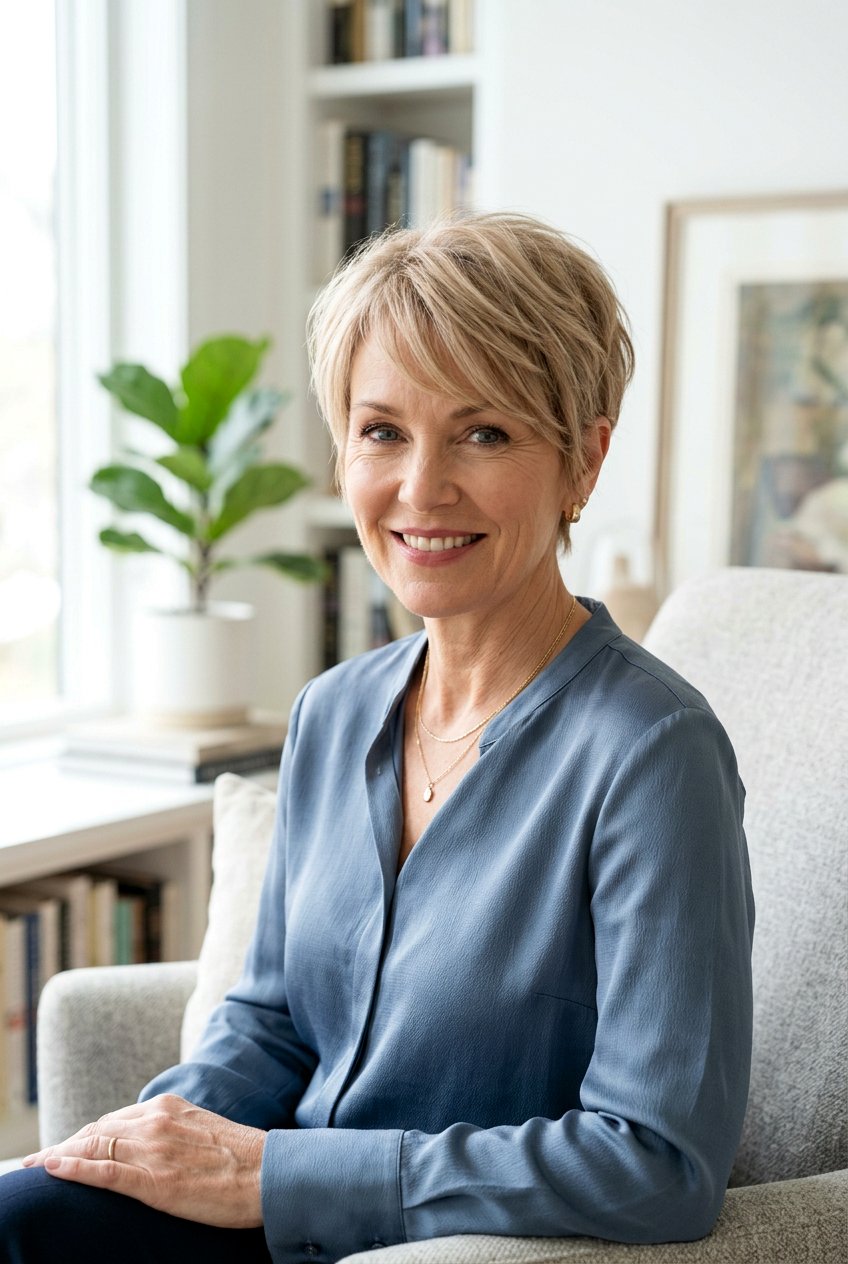
A mature pixie cut for thin fine hair focuses on elegance, ease, and a flattering shape that works well with natural texture and potential graying. The hair is typically cut with soft, blended layers around the crown and sides, which gently lift the hair away from the scalp and create fullness without harsh angles. This kind of pixie can be slightly longer on top to allow for a bit of styling variety, like sweeping the hair back or to the side. The shorter length makes fine, aging hair appear thicker and livelier, while also reducing the look of breakage or split ends. With regular trims and light, non-drying styling products, this cut is effortless to maintain and keeps your overall look fresh and polished.
Conclusion:
Choosing the right pixie cut for thin fine hair comes down to balancing shape, layering, and length so your hair naturally looks fuller without a lot of styling work. Shorter sides and backs combined with thoughtful layers on top are key to creating lift and avoiding a flat, collapsed appearance. Whether you prefer something edgy like an undercut pixie, soft like a wispy or mature pixie, or versatile like a pixie bob, each of these cuts is designed to support delicate strands. Using lightweight products, regular trims, and gentle styling will help maintain the structure of your pixie and protect your fine hair’s health. With the right cut, your thin hair can look thicker, more youthful, and surprisingly easy to manage every day.
You'll Like These Styles:







Leave a Reply