
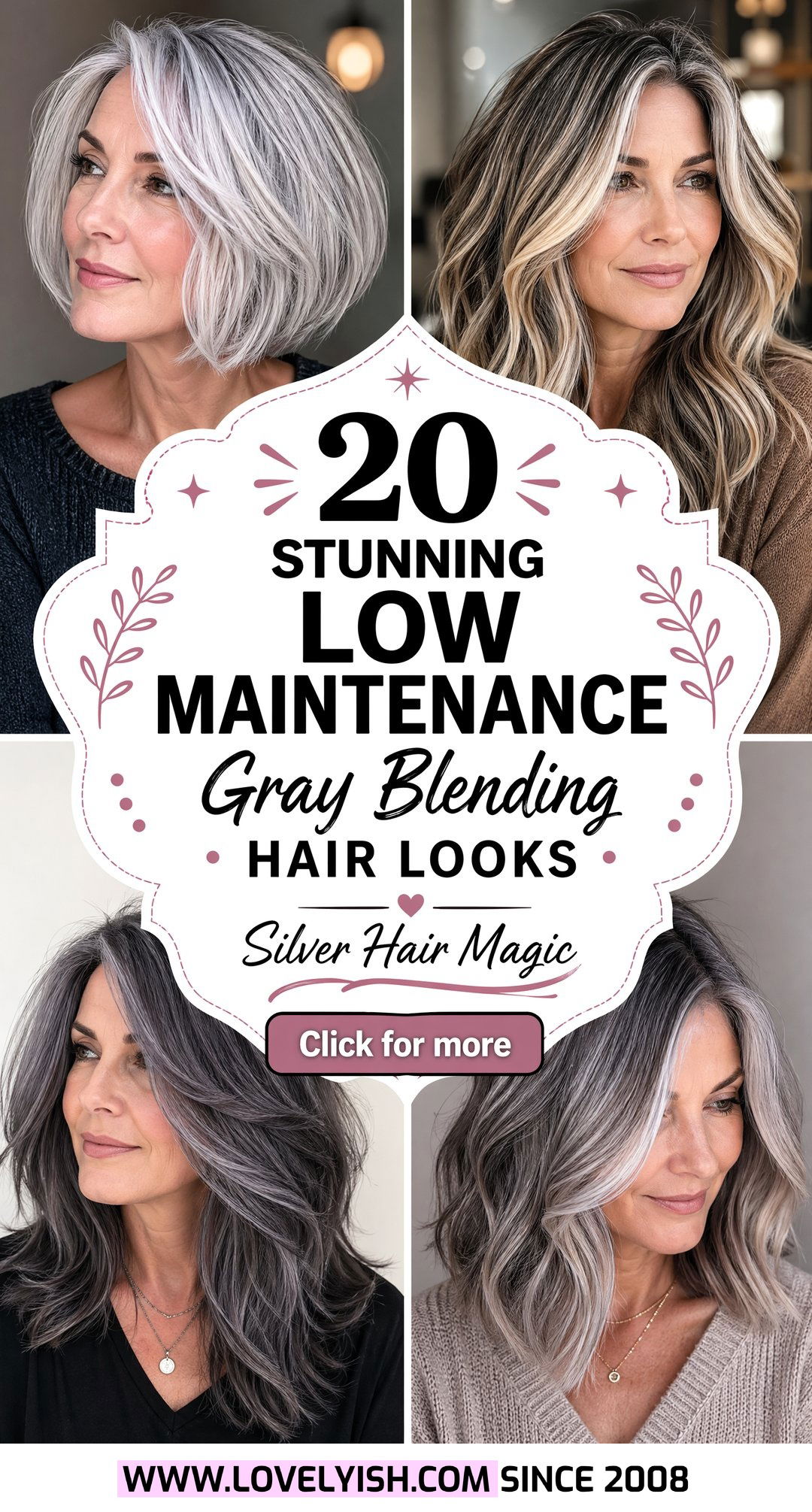
Going gray no longer means committing to one flat shade or constant root touch-ups; gray blending gives you soft dimension with way less work. This approach mixes your natural silvers with highlights, lowlights, or balayage so grow-out looks intentional, not harsh or stripey. The secret to keeping it low maintenance is choosing the right haircut and placement, so your color still looks good at 10–12 weeks instead of four. Below you’ll find twenty complete hair looks that pair gray blending with cuts that are easy to style, whether you like polished sleek finishes or quick air-dried texture. Each one focuses on healthy hair, graceful transition, and realistic upkeep so you can spend less time in the salon chair and more time actually enjoying your color every day.
1. Gray Blended Long Layers
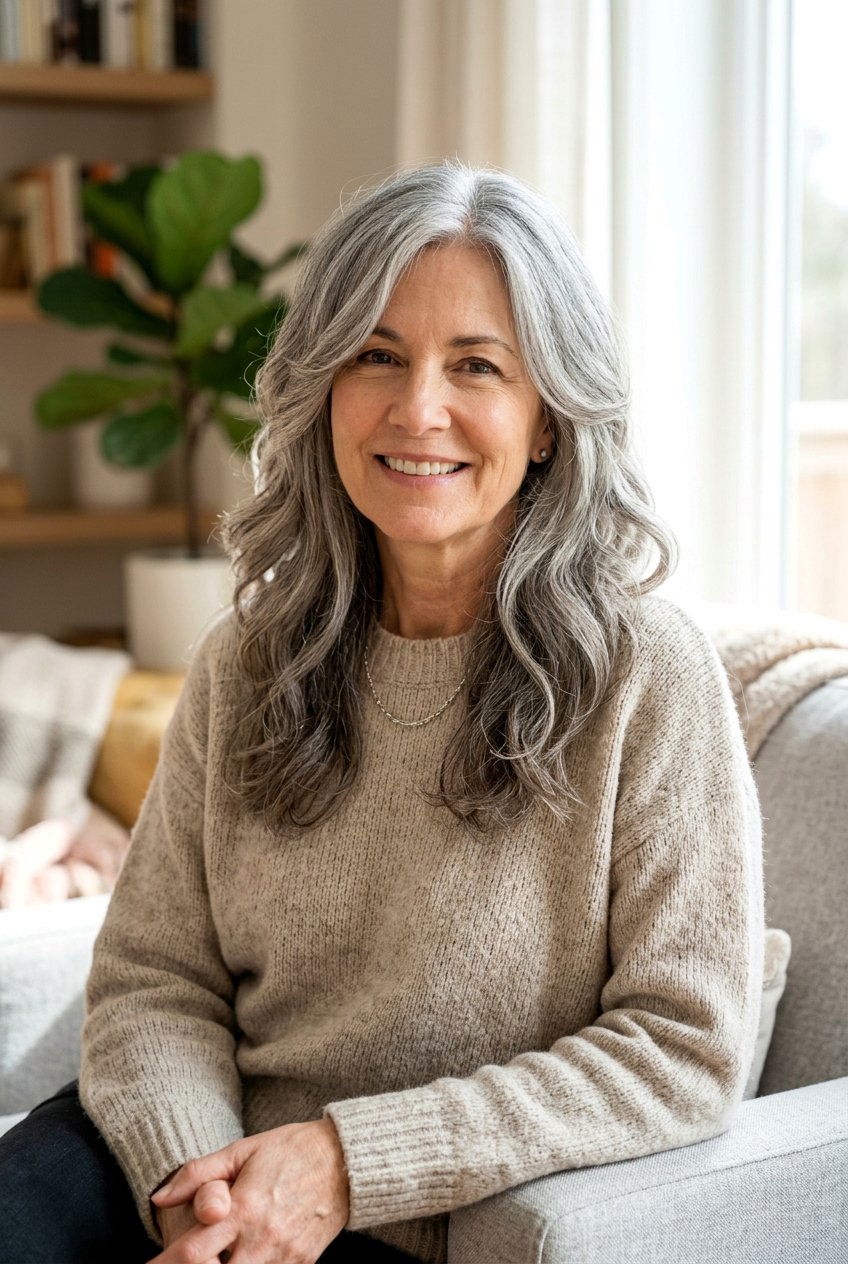
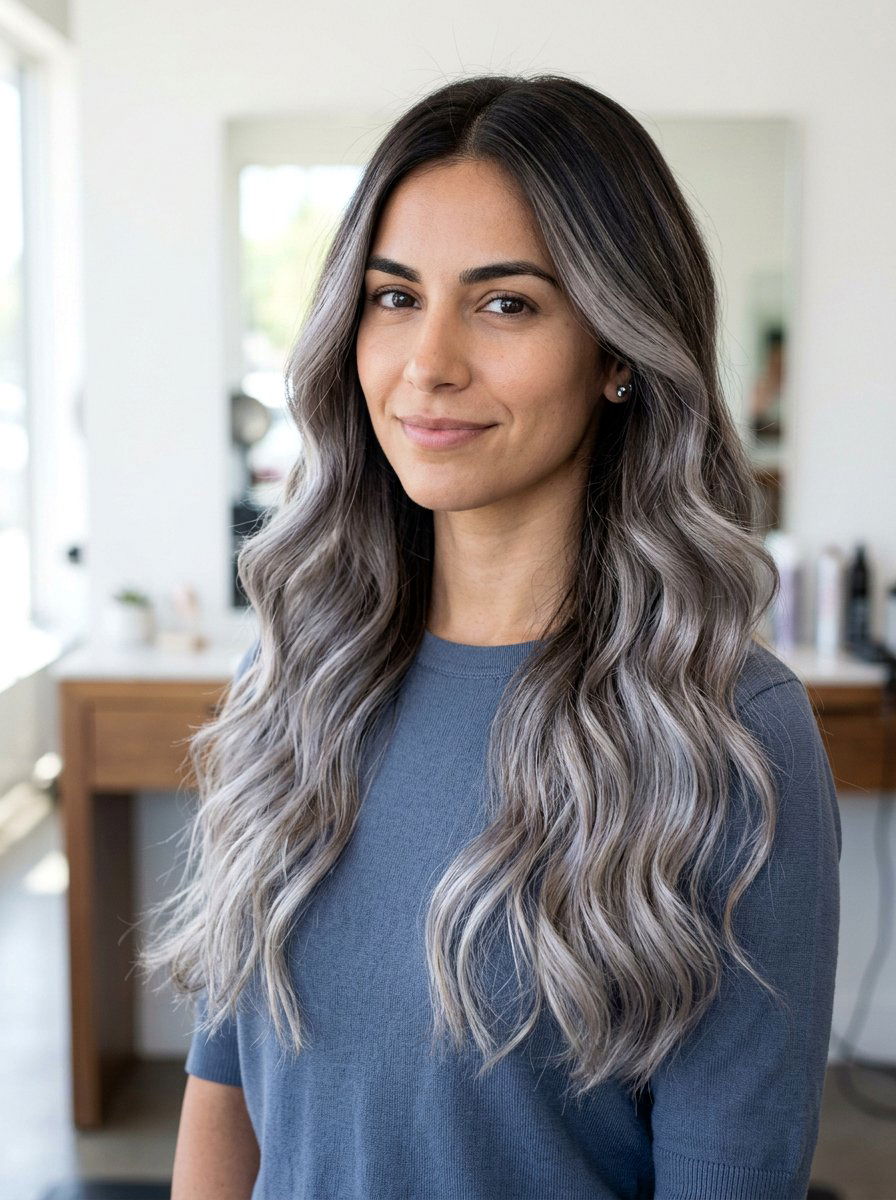
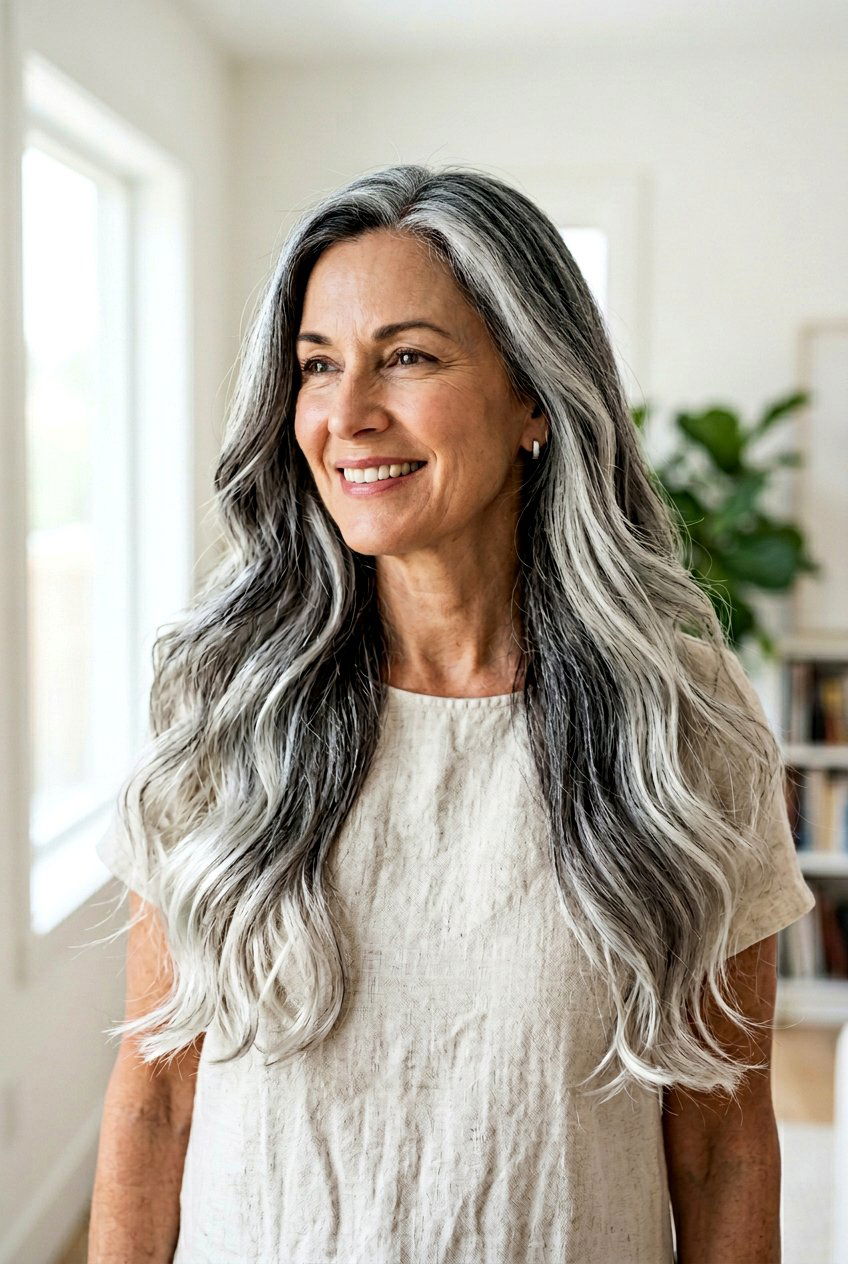
Soft, gray blended long layers are perfect if you love your length but want your regrowth to feel effortless and gentle instead of stark and banded. Your colorist weaves cool-toned highlights and lowlights through mid-lengths and ends, echoing the shades in your natural silvers so everything melts together as it grows. The cut itself keeps most of the weight, with face-framing layers that open up your features and add lightness without daily styling stress. You can rough dry or air dry with a curl cream or light mousse, and the natural texture will show off the dimension in your gray blend with almost no work. Because the tones are close to your base, you can often stretch salon visits to every three or even four months, focusing on glosses and trims rather than full-color overhauls.
2. Low Maintenance Gray Balayage
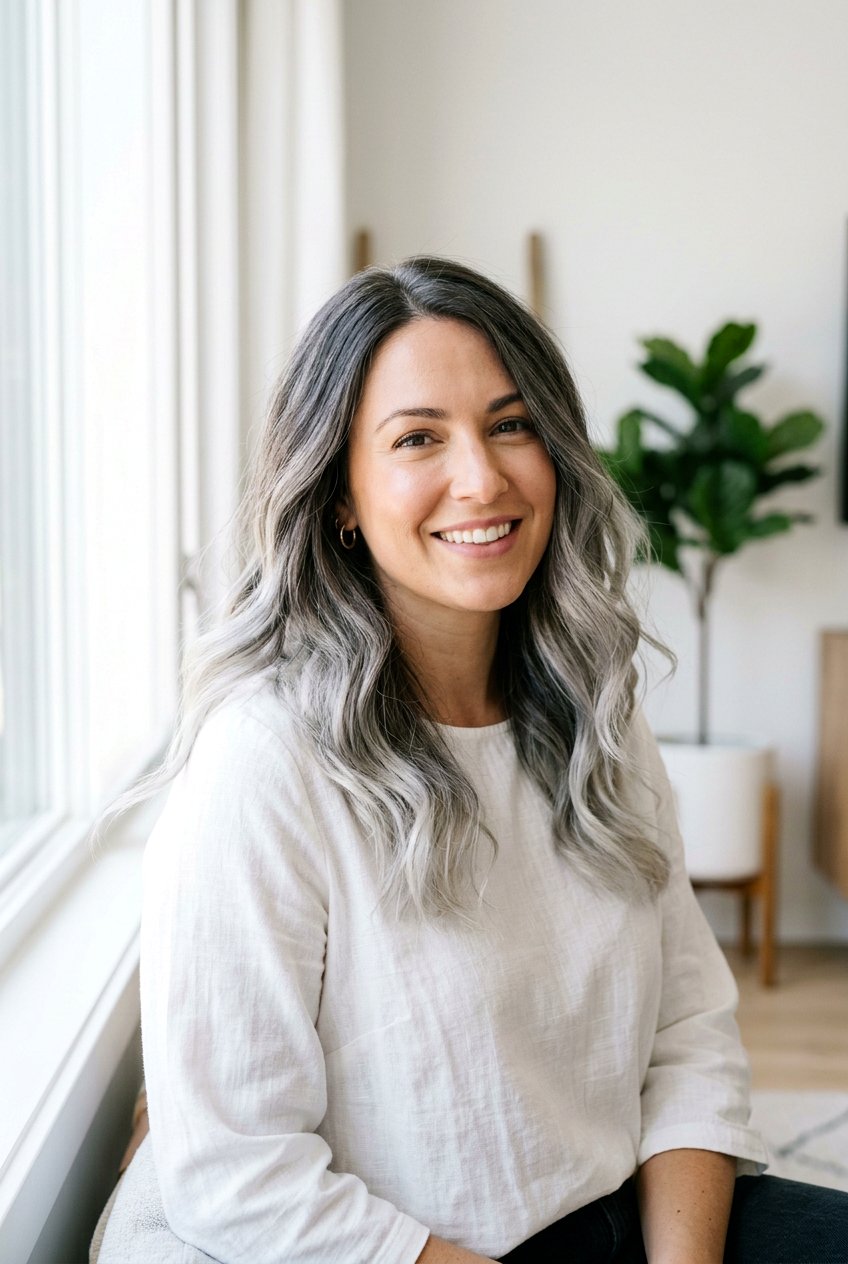
Low maintenance gray balayage is ideal when you want brightness and interest but do not want to live by the calendar of six-week touch-ups. Your stylist hand-paints lighter ribbons, usually in silver, pearl, or ash beige tones, starting a few inches below the root so your natural gray and darker base stay soft near the scalp. As the hair grows, there is no hard line, just a gradual fade from deeper roots to lighter, shimmery ends that still look intentional months later. A simple, blunt or softly layered cut at shoulder to mid-back length lets the gradient really shine and keeps styling straightforward with a blow-dry or heatless waves. You mainly maintain the look with occasional toning glosses and purple shampoo when needed, plus trims every 10–12 weeks to keep the ends healthy and prevent the balayage from looking frayed.
3. Gray Blending Lob Haircut
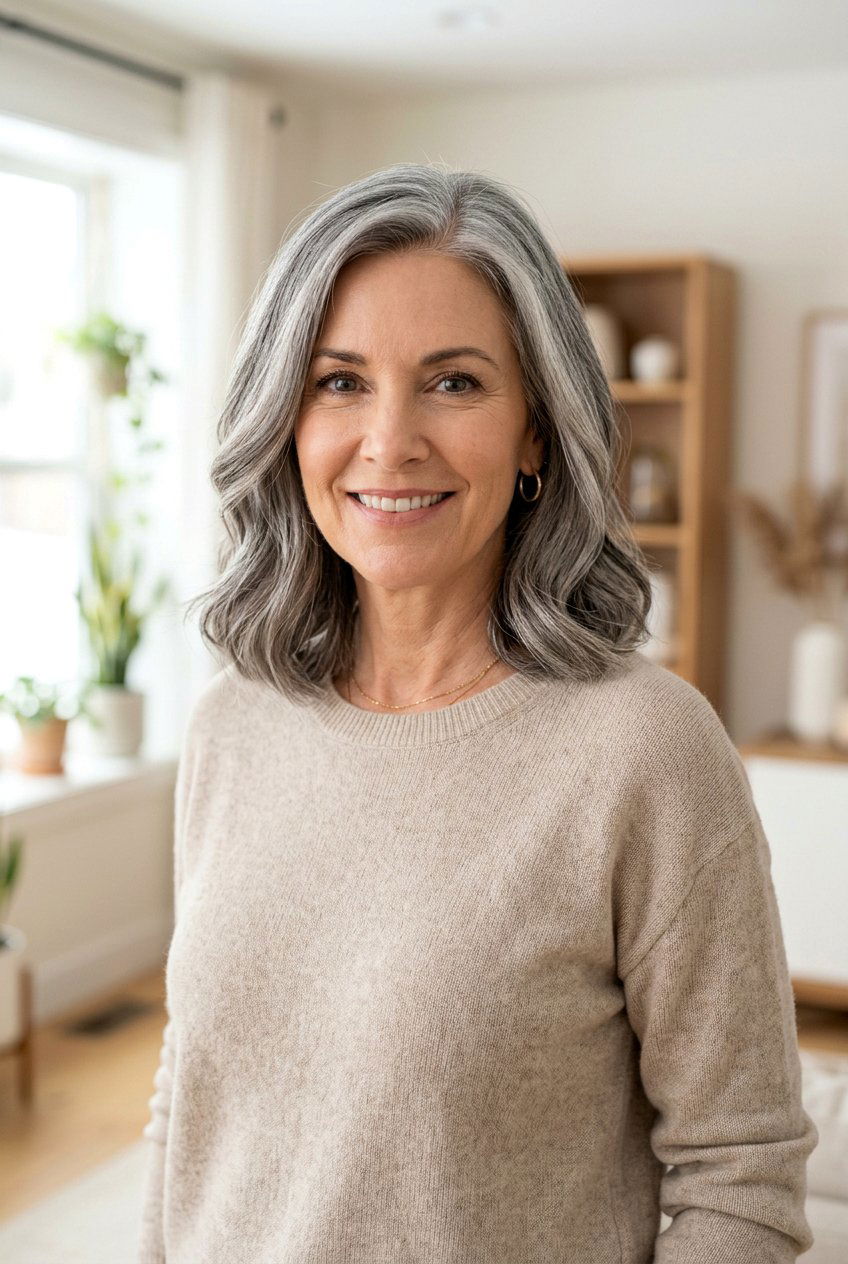
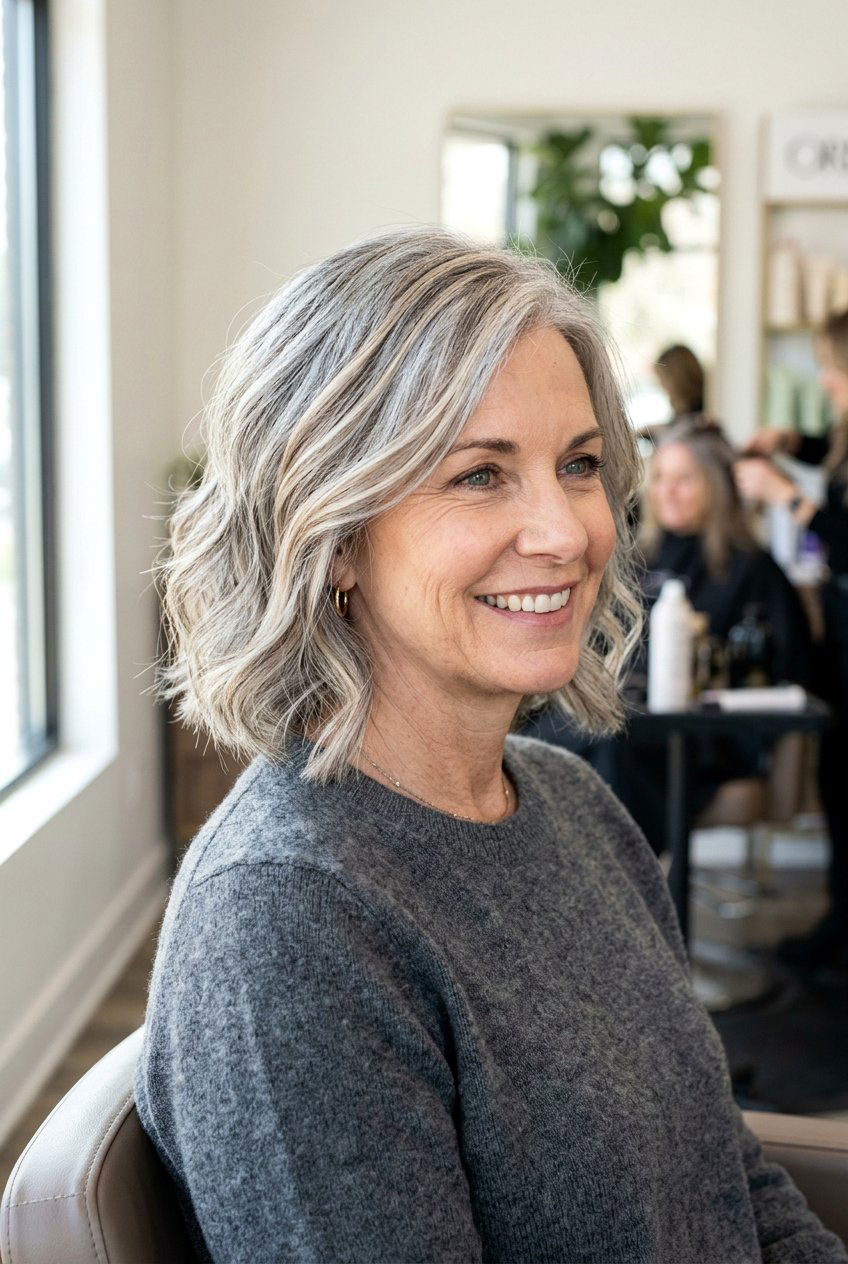
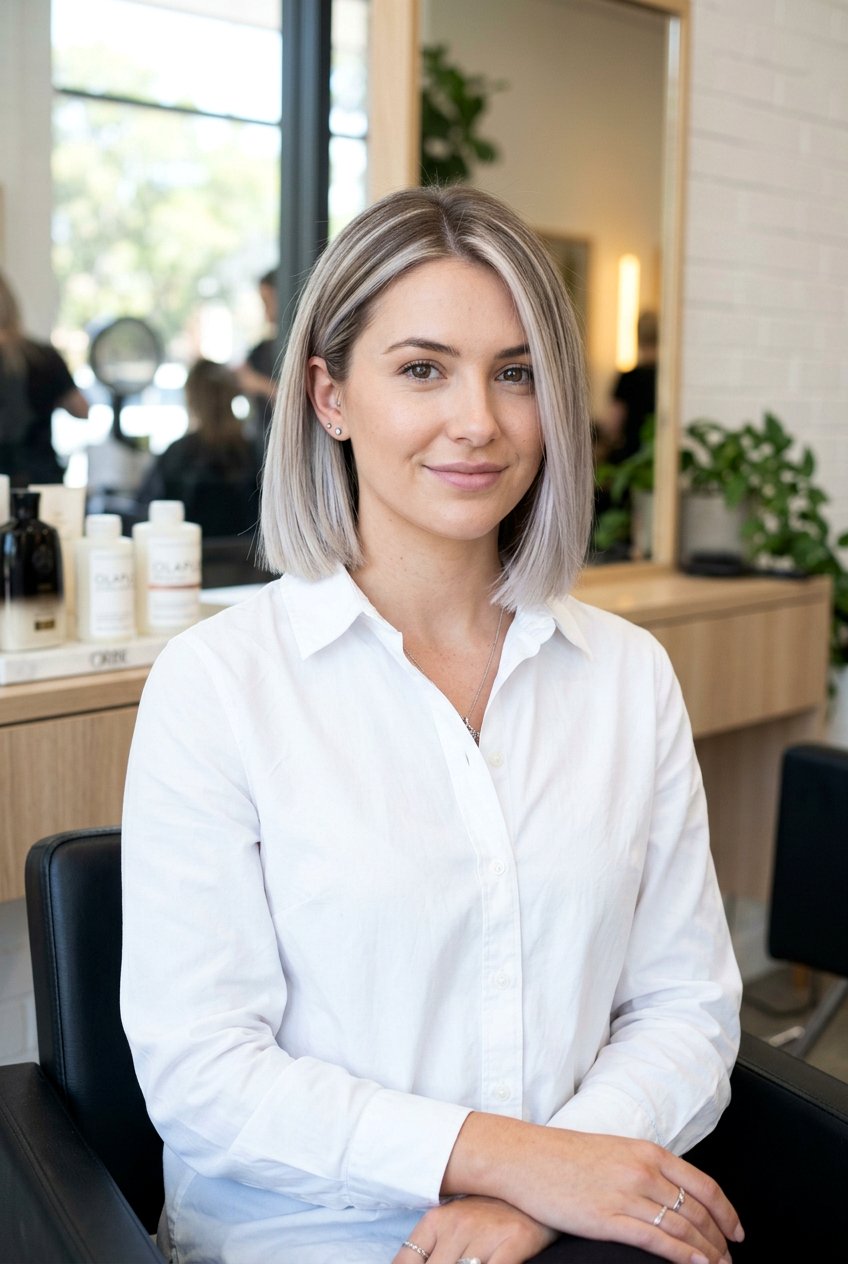
A gray blending lob haircut gives you that modern, polished feel without high-maintenance effort or complicated styling routines every morning. The lob, which usually hits between the collarbone and just above the shoulders, offers enough length for waves or sleek looks while remaining light and quick to dry. Your colorist can scatter gray blending highlights through the top layers and around the face, softening contrast between your natural silver roots and any darker or warmer mid-lengths. When cut with a slightly blunt perimeter and minimal layers, this length holds shape for months and looks good whether you smooth it straight or scrunch in a bit of texture spray. Because the blend focuses on mimicking your grays instead of hiding them, you can comfortably extend touch-ups, using gloss and a nourishing mask in between to keep the tone clear and the strand condition strong.
4. Gray Blended Pixie Cut
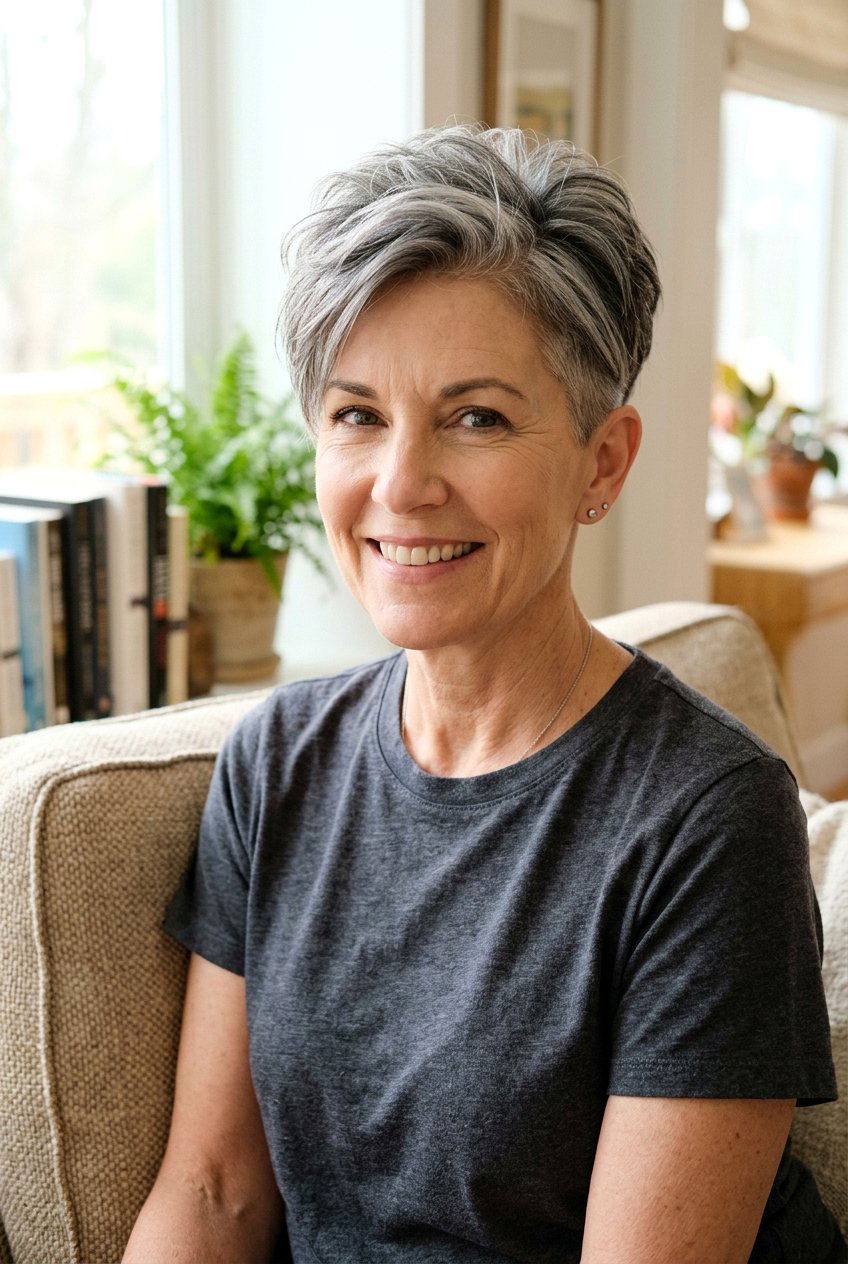
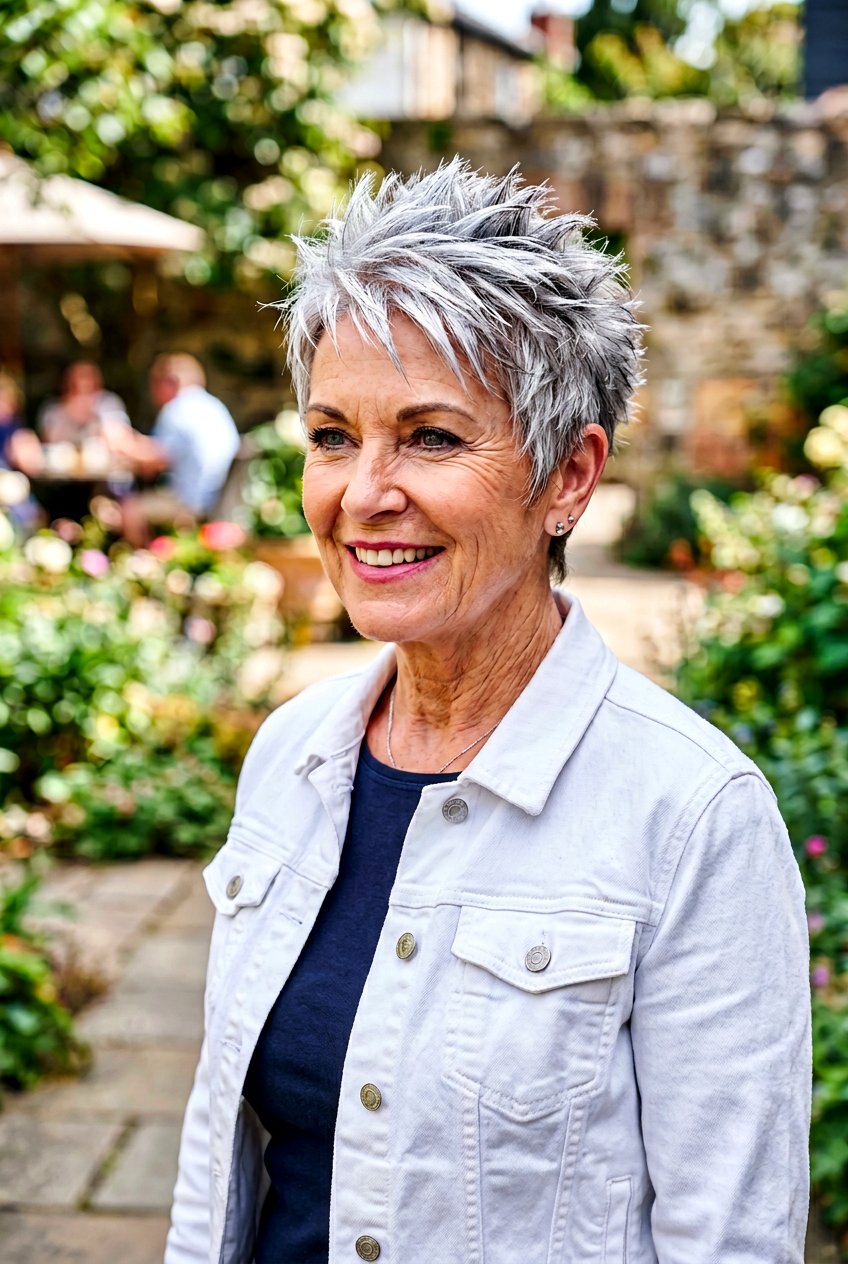
A gray blended pixie cut is one of the most low-fuss ways to lean into your natural silver while still feeling edgy, intentional, and very current. The hair is clipped or cut short on the sides and back, with a bit of extra length on top that can be styled messy, smooth, or softly spiked using a pea-sized amount of matte paste. Gray blending here usually involves subtly lightening or darkening specific sections so your natural grays flow into the rest of your hair instead of forming obvious patches. Strategically placed highlights near the front can brighten your face, while deeper lowlights at the crown add depth and help disguise any thinning. Maintenance mostly comes down to shape: quick trims every four to six weeks, plus occasional toners if you want to keep the silver crisp rather than letting it veer brassy over time.
5. Shoulder Length Gray Blending Hair

Shoulder length gray blending hair strikes a comfortable middle ground between long and short, making it practical, flattering, and manageable for a lot of different lifestyles. The cut usually falls right at or just below the shoulders with soft, long layers that keep the silhouette easy to style, whether you like smooth blowouts or loose, lived-in waves. Gray blending at this length might use fine highlights and lowlights to mirror your salt and pepper pattern, helping your natural regrowth dissolve into the colored lengths. Because the shoulder length cut has enough weight, the grow-out of layers and color feels gradual instead of abrupt, so you can comfortably space appointments a bit farther apart. Daily care is mostly about hydration and tone, using a gentle, color-safe shampoo, a weekly mask, and occasional purple or blue shampoo if your lighter pieces start to look dull or yellow.
6. Gray Blending With Babylights
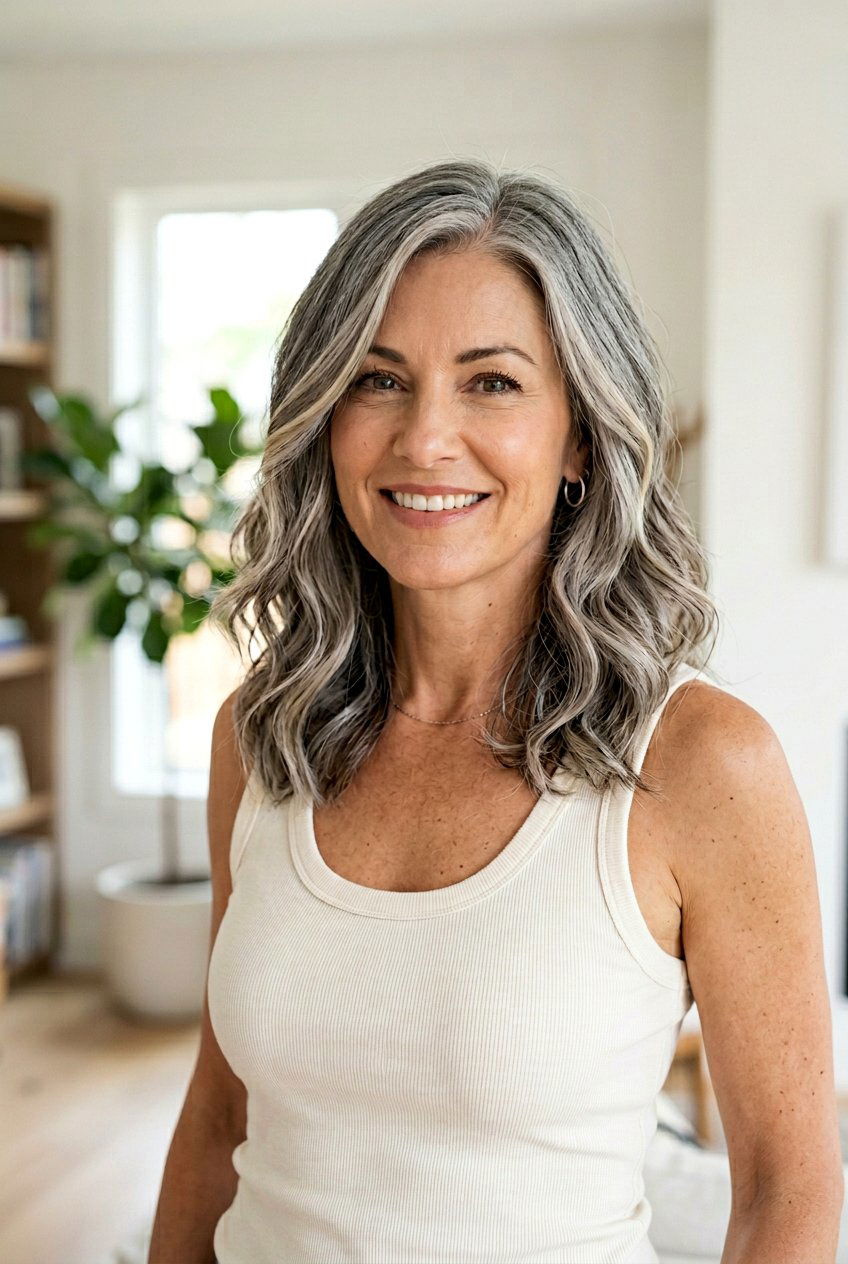
Gray blending with babylights is great when you want a very soft, almost undetectable transition that simply looks like naturally dimensional hair. Babylights are super fine, delicate highlights placed throughout your hair, especially around the face and part line, mimicking the way sun lightens strands over time. In a gray blending context, your stylist chooses shades that echo your existing silvers and base, so there is no sharp contrast as your roots grow in. On a medium or long cut with a simple layered shape, these tiny ribbons of color create shimmer and movement without ever shouting “freshly colored”. Because the pieces are so fine and close in tone, you can sometimes go several months between sessions, freshening everything up with a gloss or partial babylight service instead of a full head of foils.
7. Gray Blending For Dark Hair
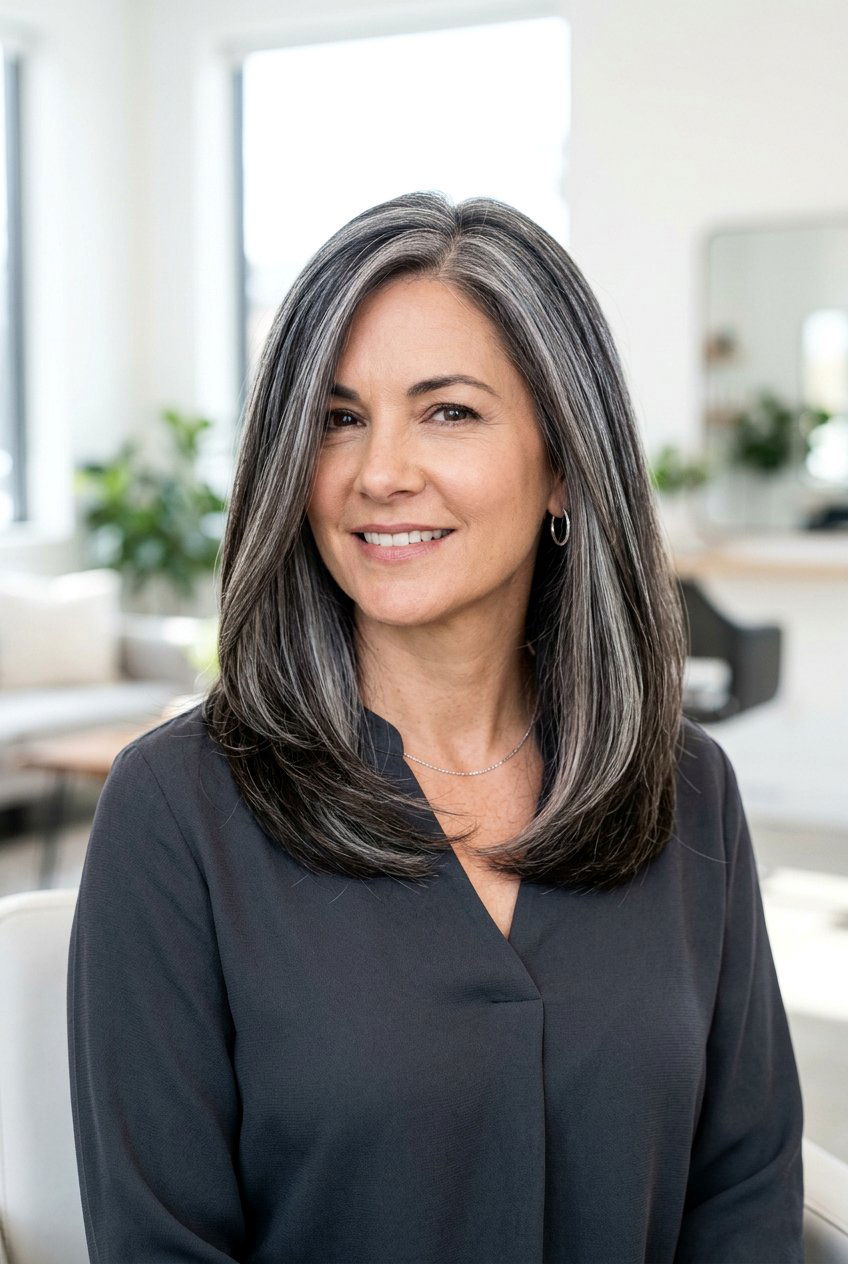
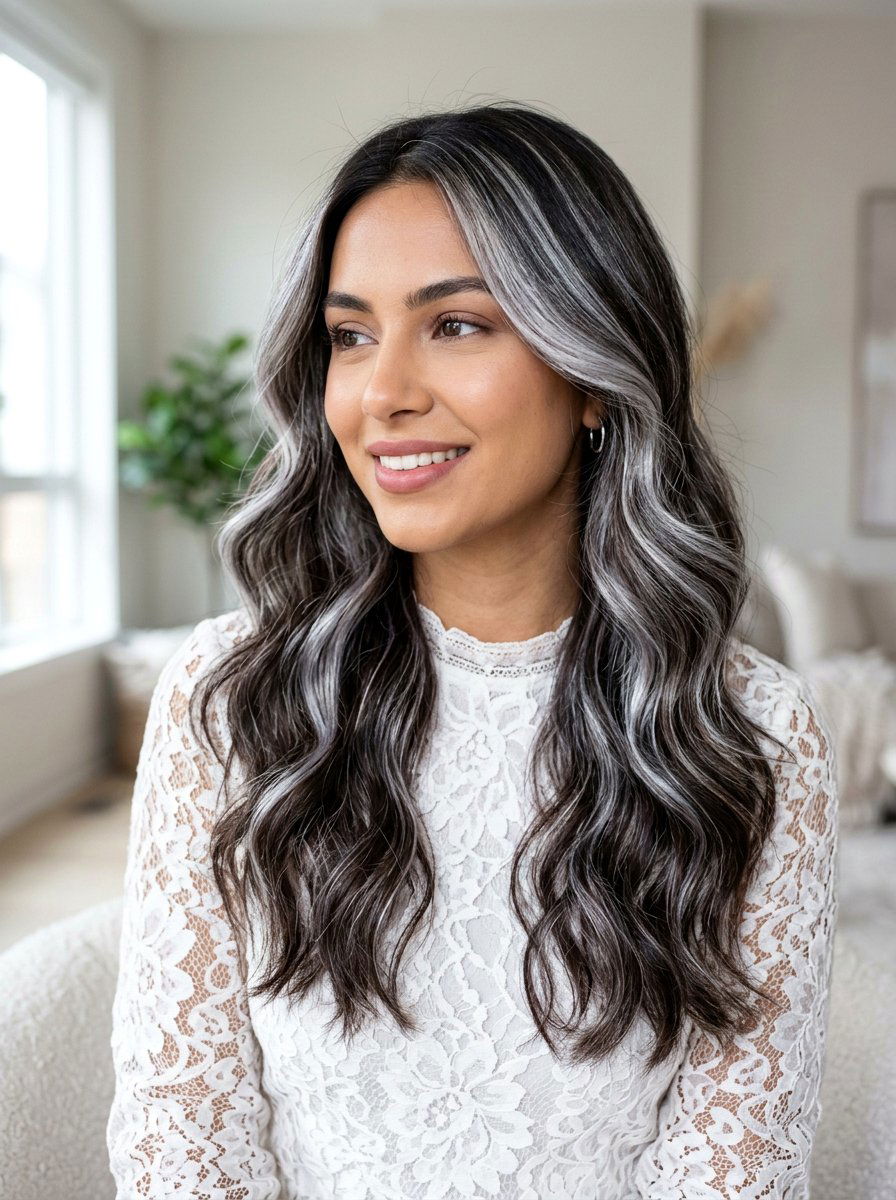
Gray blending for dark hair focuses on softening the contrast between deep natural roots and cooler silvers so the grow-out looks smooth, not stripey or patchy. Your stylist might use a mix of cool brown lowlights and smoky, ashy highlights to bridge the gap between dark base and light gray strands. This creates a multi-tone effect that still reads brunette overall but allows your natural grays to shimmer through as part of the overall pattern. A medium-length cut with layers, a bob, or even a pixie can all work, as long as the shape enhances the color placement by adding movement and light-catching angles. To keep things low maintenance, appointments usually focus on refreshing the blend around your face and part line every few months, with daily care centered on moisturizing products and limited heat so your dark hair and grays both stay shiny.
8. Salt And Pepper Gray Blending

Salt and pepper gray blending works with your natural mix of light and dark strands instead of trying to erase it, which is what makes it so easy to live with long term. Your colorist may add a few lowlights where the hair feels too light and scattered, or a few highlights where it feels overly dark, balancing everything out into a cohesive pattern. On a layered bob, lob, or shoulder length cut, that pattern looks intentional, giving you a textured, dimensional look that reads chic rather than “in-between”. Because the enhancement follows your natural distribution, regrowth simply adds more salt and pepper dimension instead of forming a noticeable line. A gentle purple shampoo once every week or two, plus plenty of conditioner, is usually enough to keep the lighter pieces bright and prevent the darker hair from looking flat or dull between salon visits.
9. Root Shadow Gray Blending
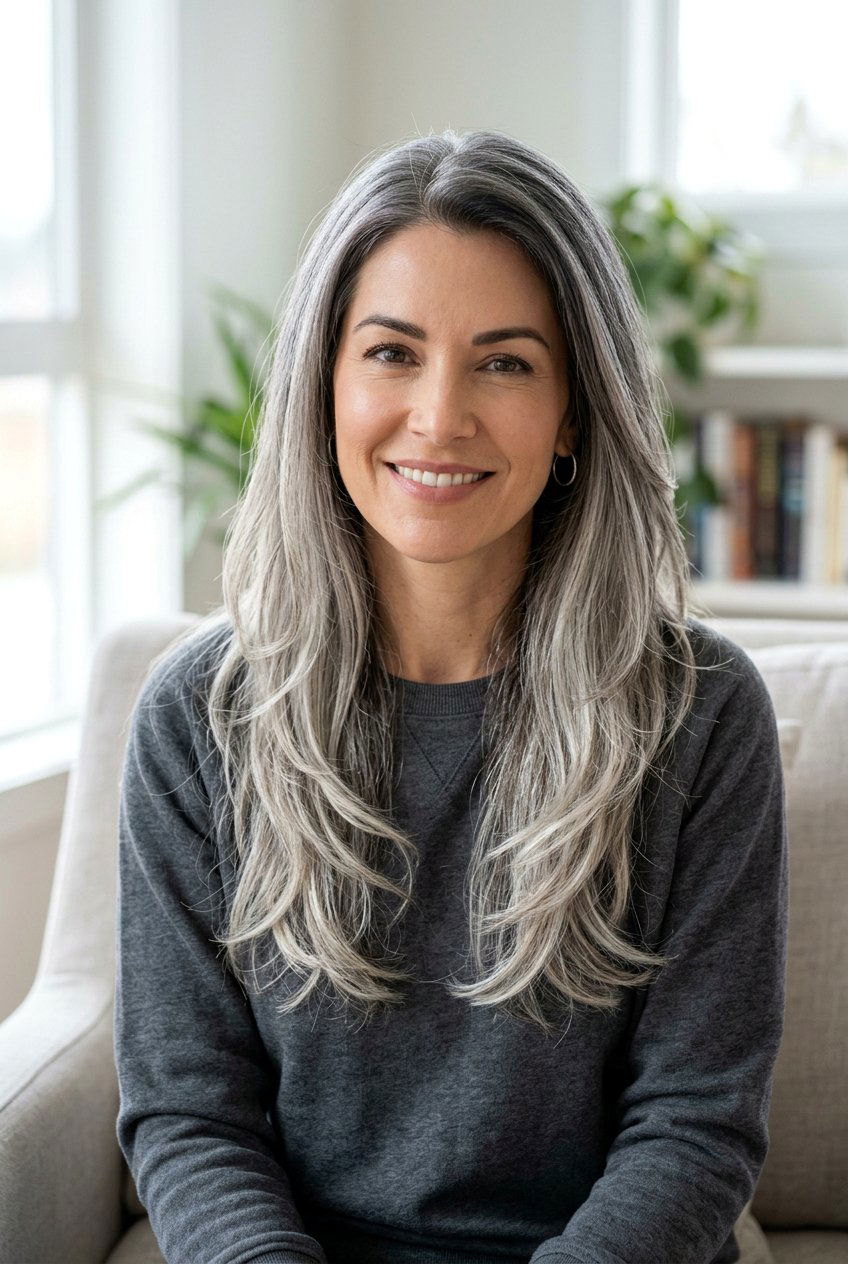
Root shadow gray blending gives you a soft, diffused root area that lets your grays grow in without visible demarcation while still keeping dimension through the lengths. Your stylist deepens or cools the color right at the root, usually one or two shades darker than your mid-lengths, then blends into lighter silver or smoky tones further down. This creates depth at the scalp, which is flattering for volume, and makes any new gray or natural root growth slip into the shadow seamlessly. A long layered cut or shoulder length shape works beautifully here, giving the gradient room to show without a lot of daily styling fuss. With this technique, you typically only need to refresh the root shadow and toner every few months, relying on nourishing masks, bond builders, and light oil at home to keep your blend glossy and soft.
10. Smoky Gray Root Melt Bob
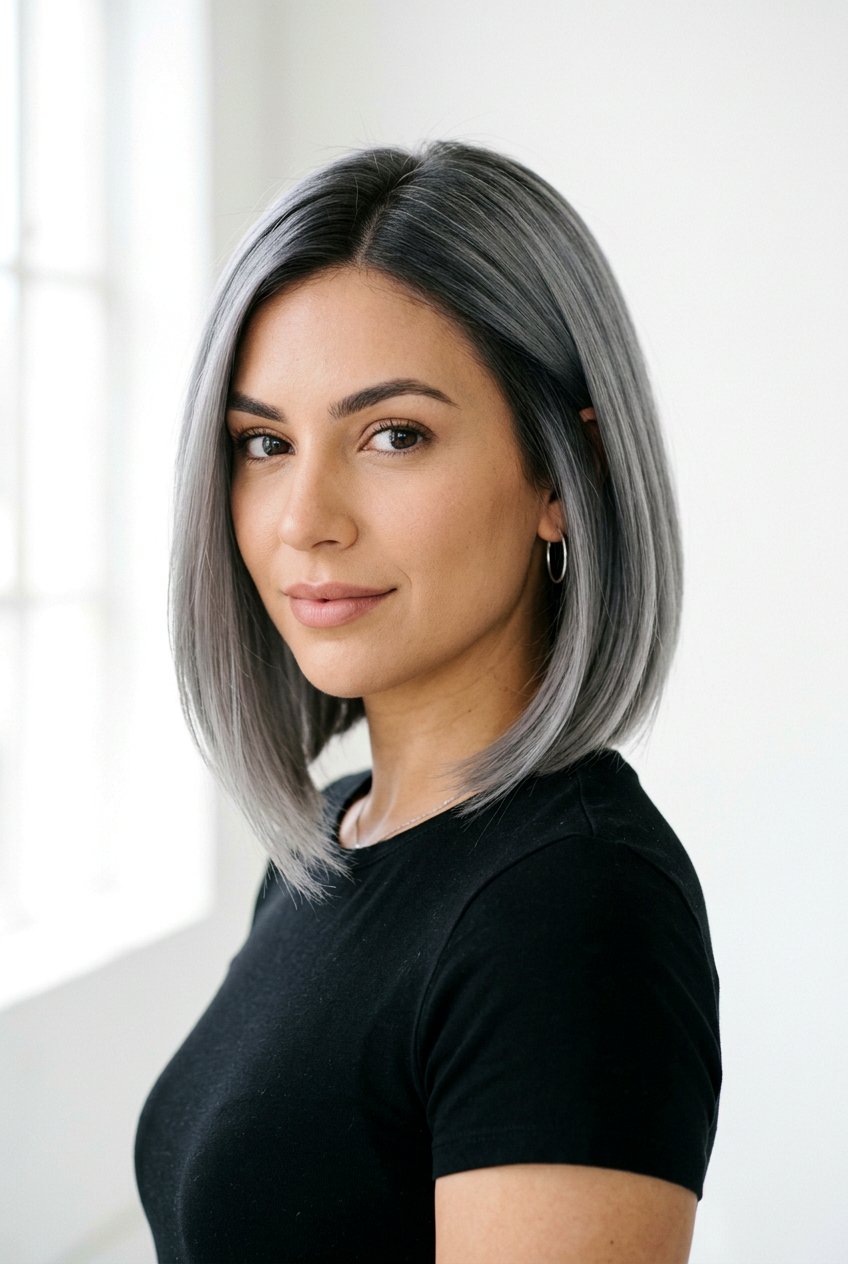
A smoky gray root melt bob is an excellent choice if you like a sharper, chic silhouette but still want forgiving grow-out and minimal upkeep. The bob, often cut at chin to jaw length, is slightly angled or beveled at the ends to make the hair curve under and appear fuller, especially on fine or medium textures. For the color, a root melt transitions from a deeper, smoky shade at the scalp into a mix of cool gray and silver through the rest of the bob, creating a blurred, seamless effect. This technique hides regrowth while showing off a glossy gradient that shines even when you just do a quick blow-dry or let it air dry smooth. Because the root area is intentionally darker and blended, you can get away with fewer color appointments, focusing instead on trims for shape and gentle, sulfate-free products to maintain tone and condition.
11. Medium Length Gray Blended Hair

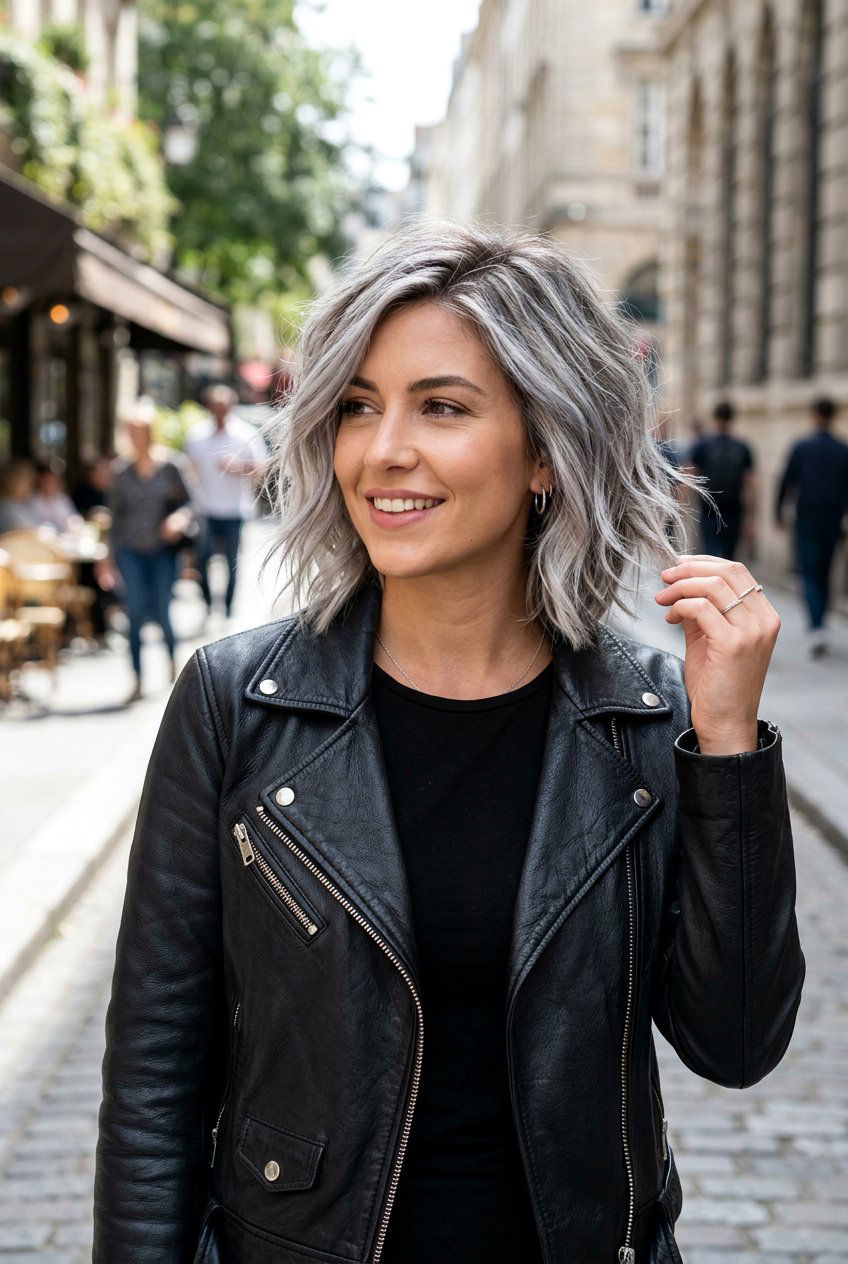
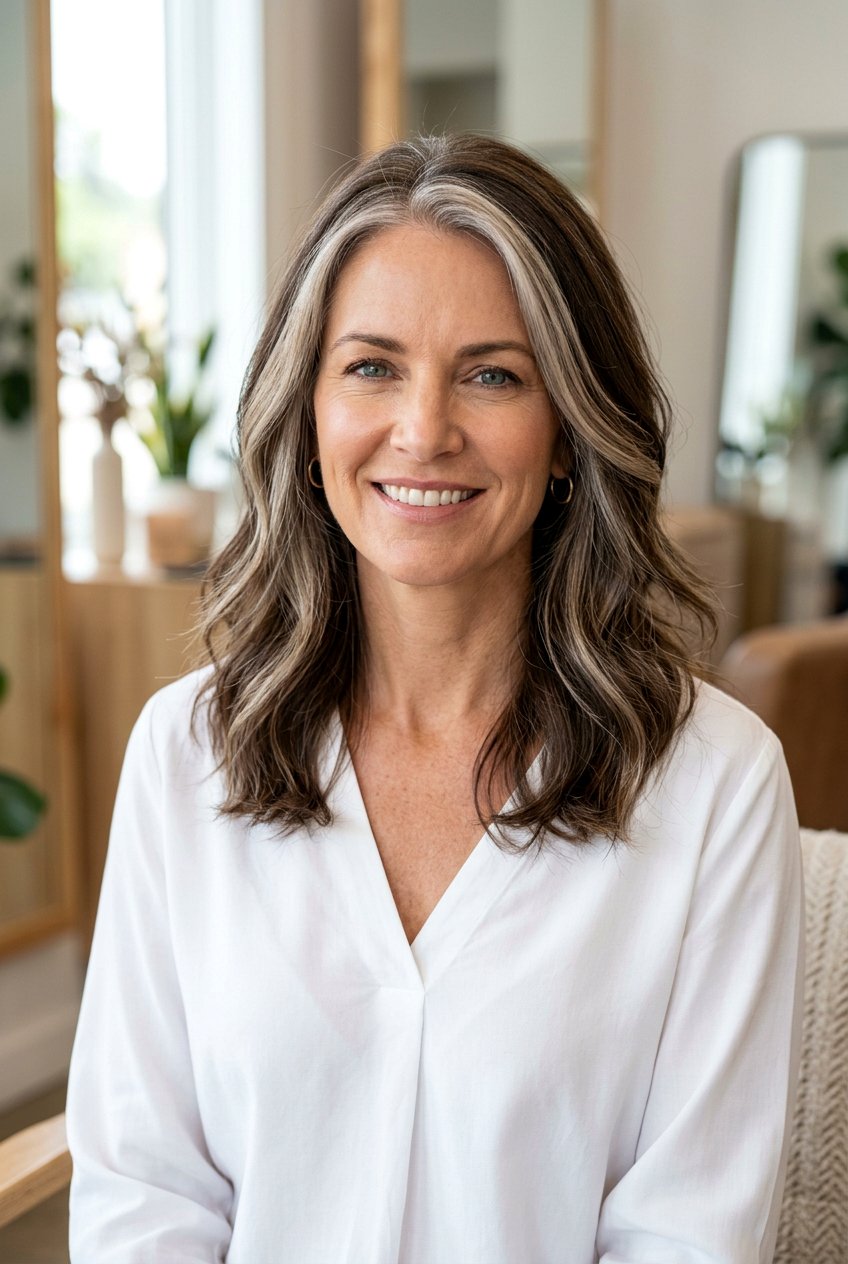
Medium length gray blended hair offers enough versatility for updos and waves while still feeling easy to manage and quick to style day to day. Falling somewhere between the collarbone and upper chest, this cut can be worn blunt for a modern edge or softly layered for movement and bounce. Gray blending at this length often combines subtle highlights and lowlights that mirror your natural grays, creating a soft, lived-in look that flatters almost every skin tone. Whether you smooth it straight, add loose waves, or pull it back in a low ponytail, the color dimension keeps it from ever looking flat or harsh. Maintenance usually means refresh appointments every three or so months, plus regular trims and a routine built around hydration, heat protection, and occasional toning products to keep the silver tones cool and bright.

12. Curly Gray Blending Hair
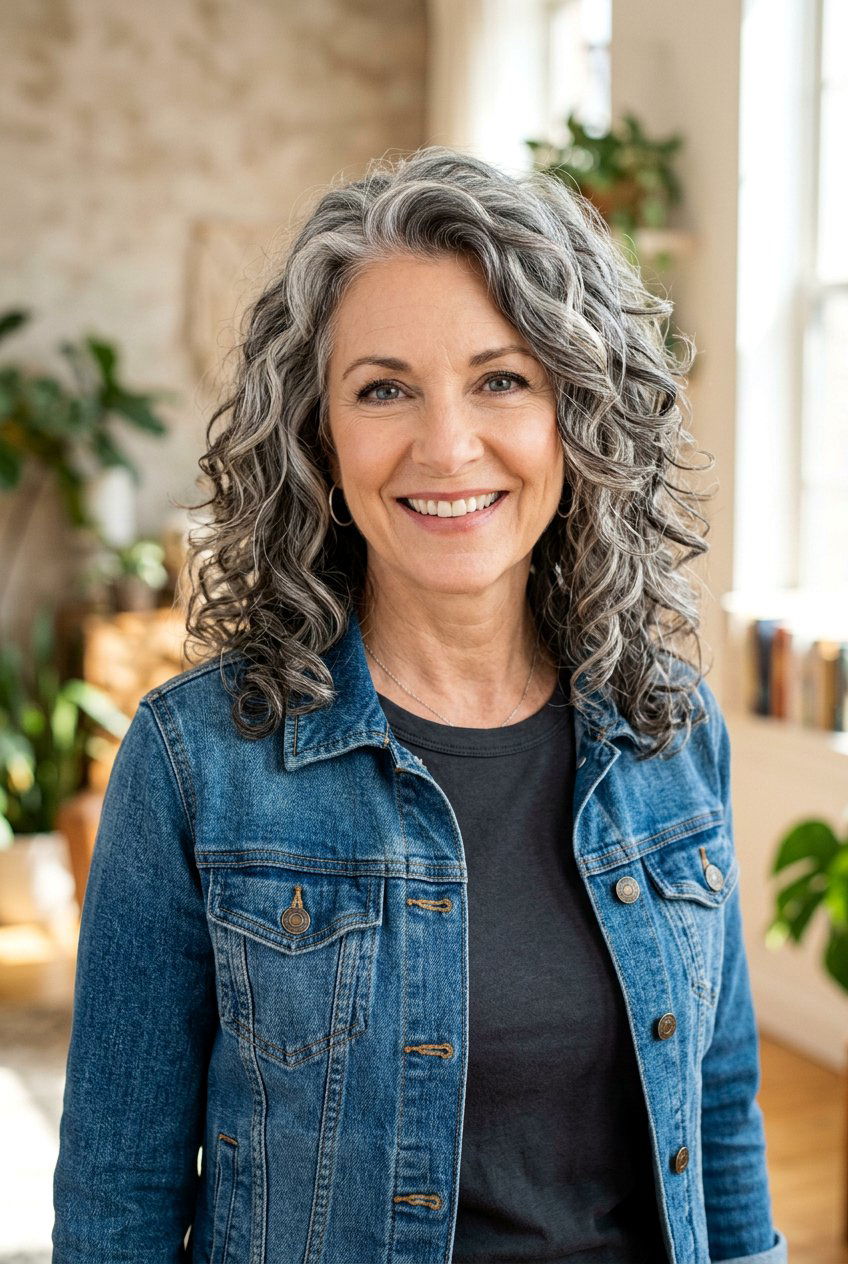
Curly gray blending hair embraces your texture while using color placement to highlight each spiral and coil instead of fighting against them. Your stylist may paint lighter pieces on the outer curls and around the face, leaving some natural lowlights underneath so your curls look multi-dimensional and full. Because curls reflect light differently than straight hair, the gray blend tends to look very soft and natural, with the lighter strands catching the light and the darker ones adding depth. A layered curly cut that removes bulk in the right areas and shapes the silhouette is important here so the color and texture work together instead of creating a triangle shape. Daily care focuses on moisture: hydrating shampoos, rich conditioners, leave-in products, and minimal heat, which keeps your grays shiny and the curl pattern defined between salon visits.
13. Wavy Gray Blending Hair
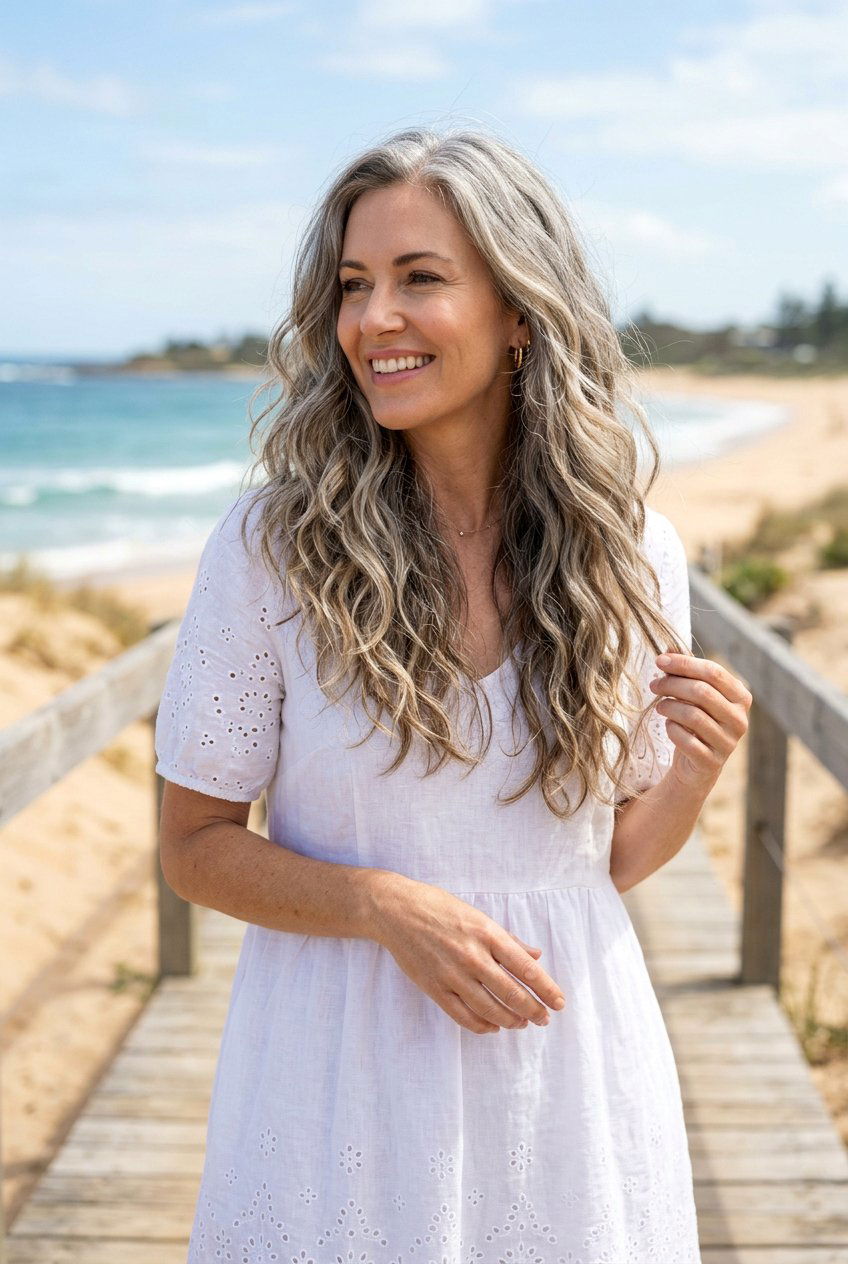
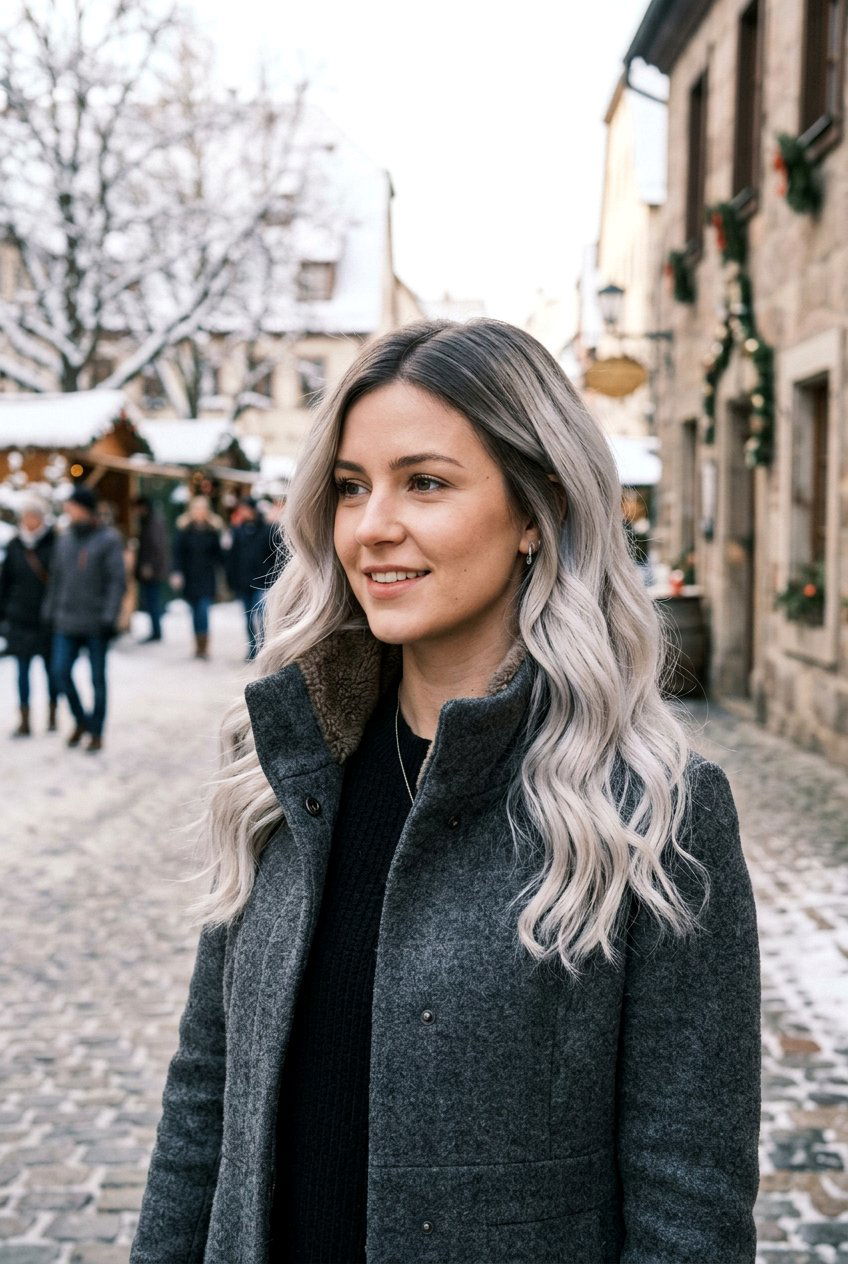
Wavy gray blending hair combines gentle texture with soft color transitions to create a beachy, effortless effect that does not demand hours with a curling iron. The cut usually features long layers or a lob length that encourages your natural wave to fall into loose bends rather than tight curls or poker-straight strands. Your colorist adds gray blending highlights in places where the light would naturally hit, like mid-lengths and ends, while keeping the root and some interior sections slightly deeper. When you scrunch in a lightweight mousse or sea salt spray and let your hair air dry, the waves reveal ribbons of light and dark gray that look sun-kissed and modern. Because everything is blended and lived-in, you can usually go a few months between color sessions, focusing on toning glosses, hydrating masks, and gentle styling to protect your wave pattern.
14. Short Gray Blending Bob
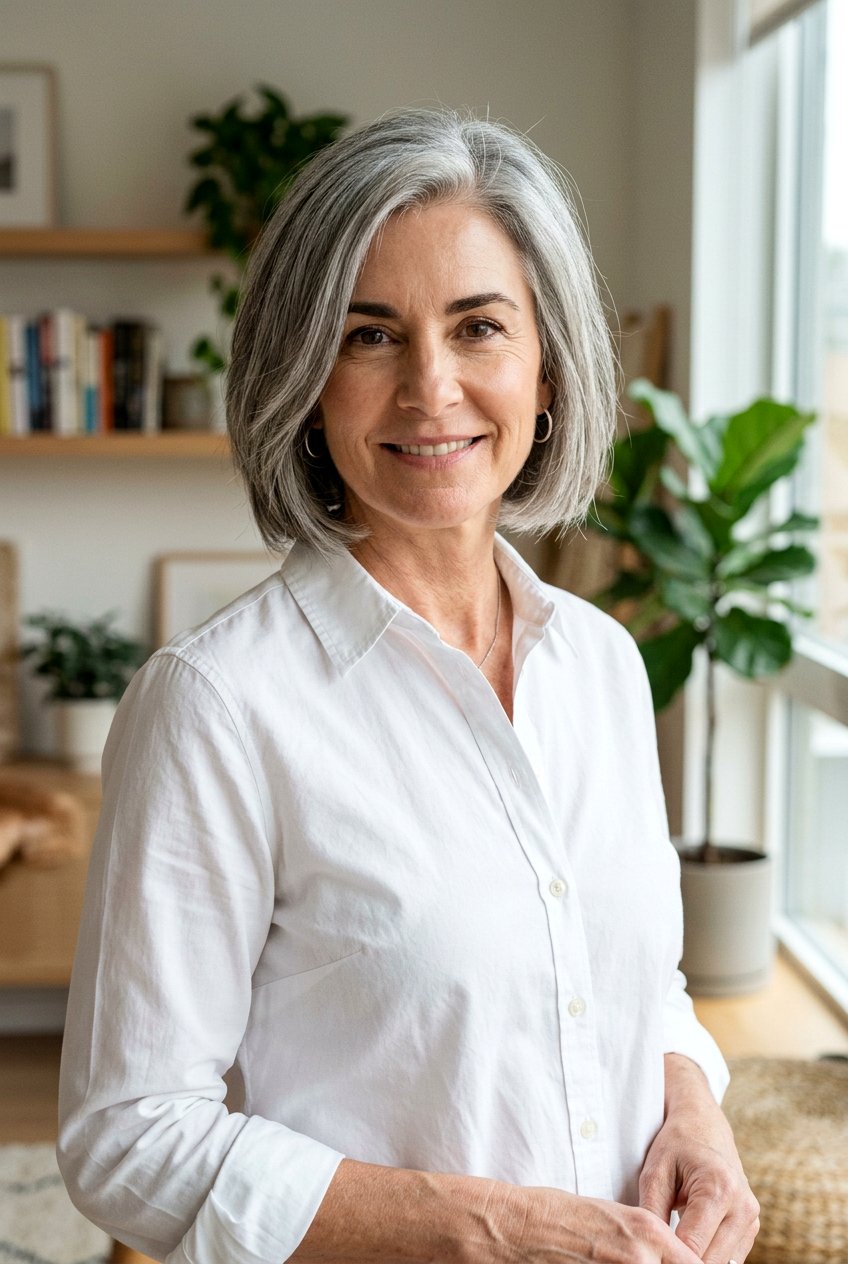
A short gray blending bob delivers a crisp shape that is surprisingly low maintenance, especially when the color is designed to work with your natural regrowth. Typically cut at or just below the chin, this bob can be worn straight and sleek or slightly tousled, with minimal layers that keep the ends looking thick and healthy. For color, your stylist threads in gray blending highlights around the face and throughout the top, echoing your natural silver pattern while toning down any harsh, leftover dye. The result is a refined, face-framing look that still feels soft and forgiving as it grows out between appointments. Maintenance involves trims every eight to ten weeks to keep the line clean, plus occasional toners, purple shampoo as needed, and a leave-in conditioner to maintain shine and smoothness.
15. Long Gray Blending With Face Framing
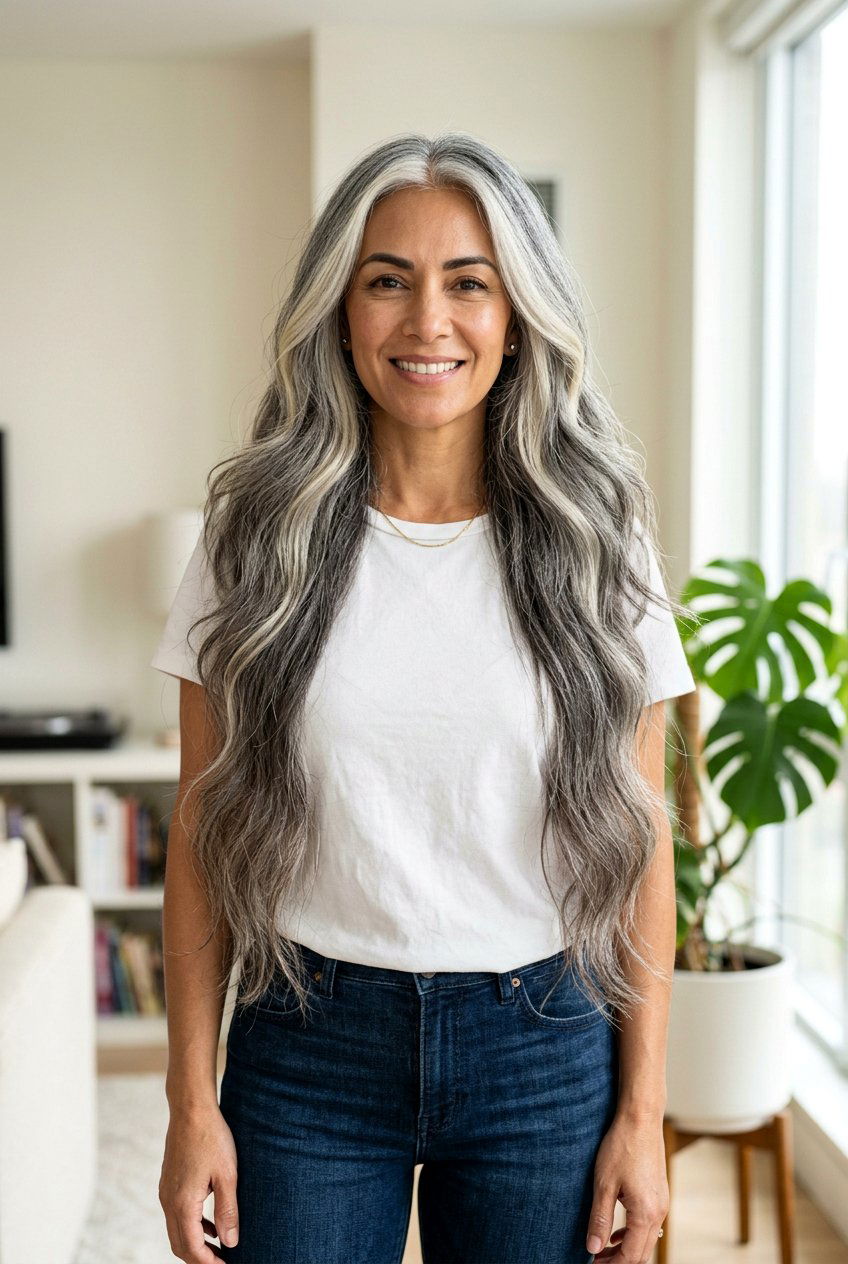
Long gray blending with face framing lets you keep your length while brightening around your features in a way that feels flattering and very wearable. The cut usually includes soft face-framing layers that start around the cheekbones or jawline, creating a gentle curtain that can be worn parted in the middle or slightly to the side. Your colorist adds gray blended highlights around the front hairline and through the lengths, using shades that mirror your existing silvers so the effect is cohesive and low maintenance. Those lighter pieces near your face catch the light, lift your complexion, and make ponytails or buns look polished without much effort at all. Because the brightest areas are focused at the front and the rest is more diffused, you can extend salon visits, relying on gloss treatments and good at-home care to keep everything looking fresh.
16. Ash Blonde Gray Blending Hair
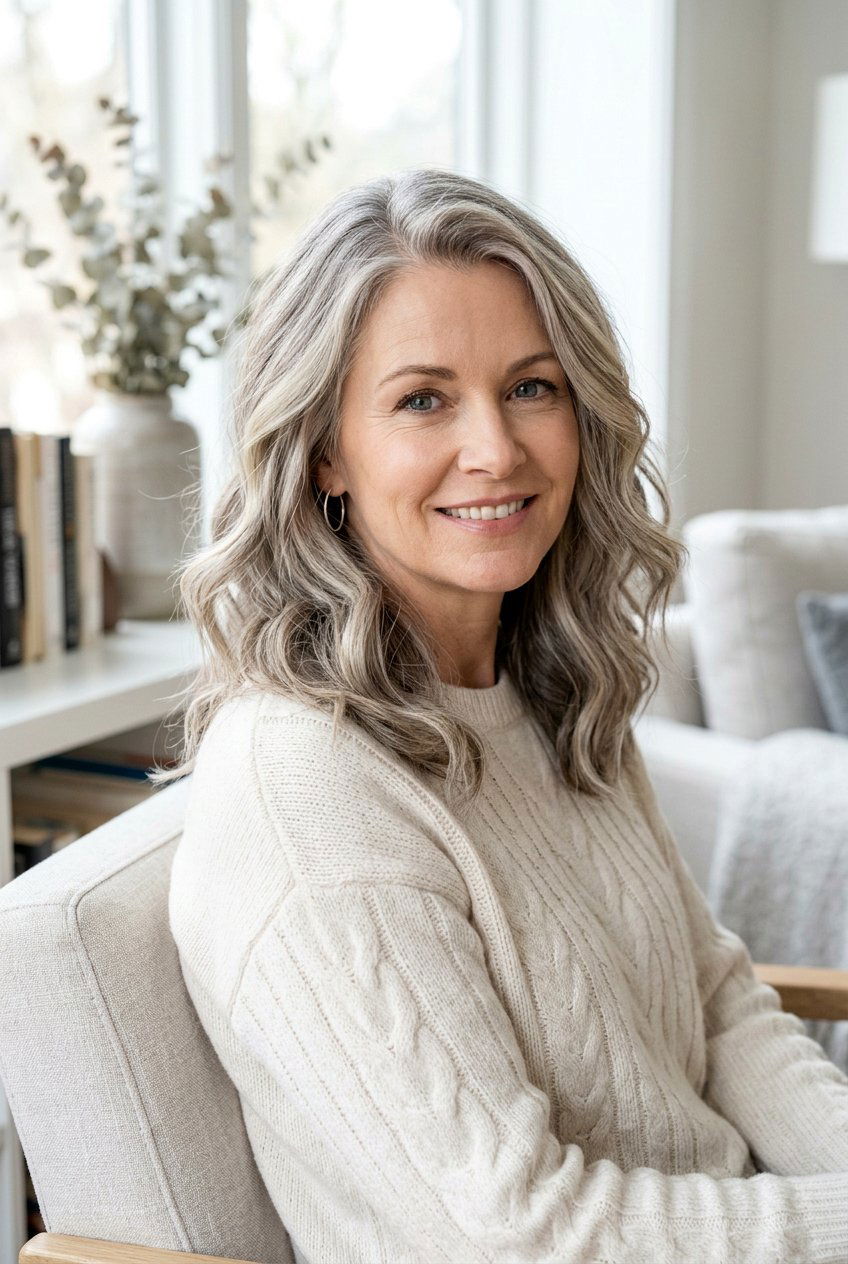
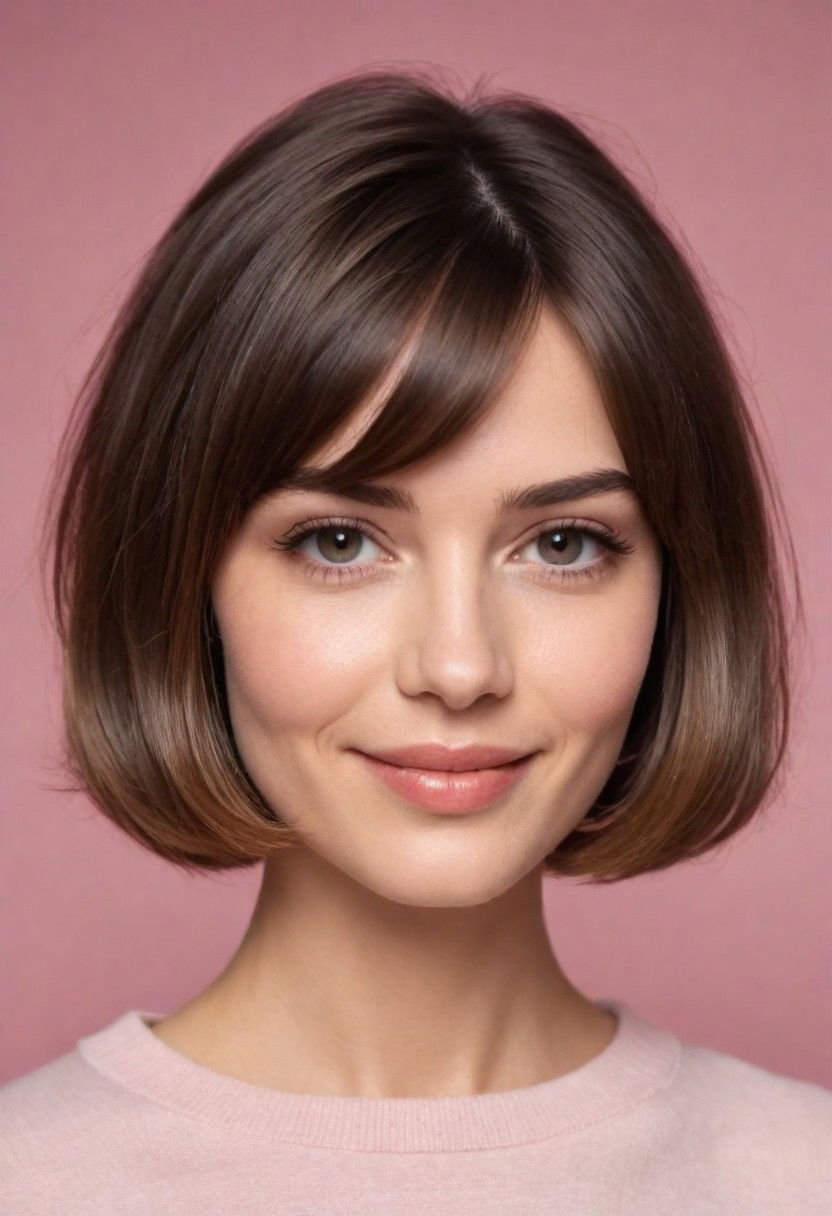
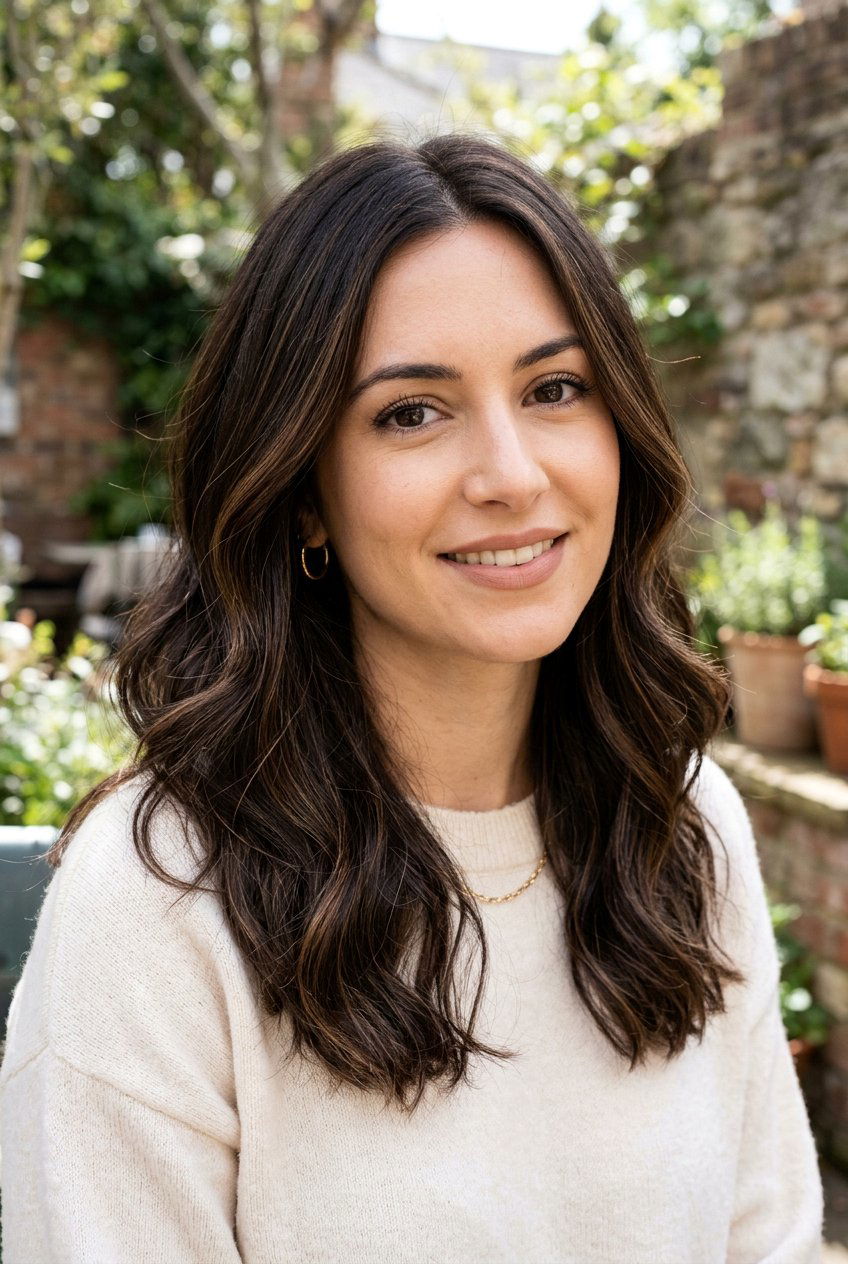
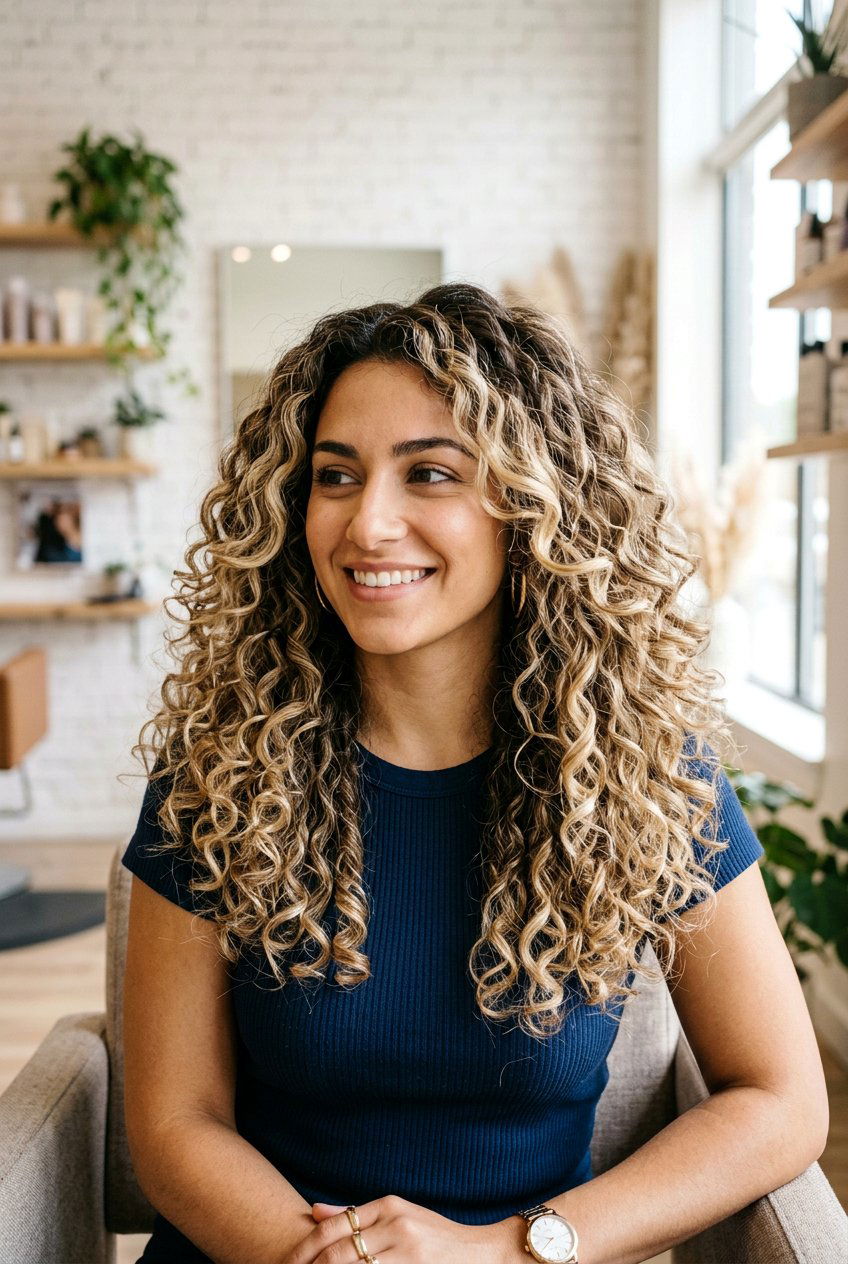
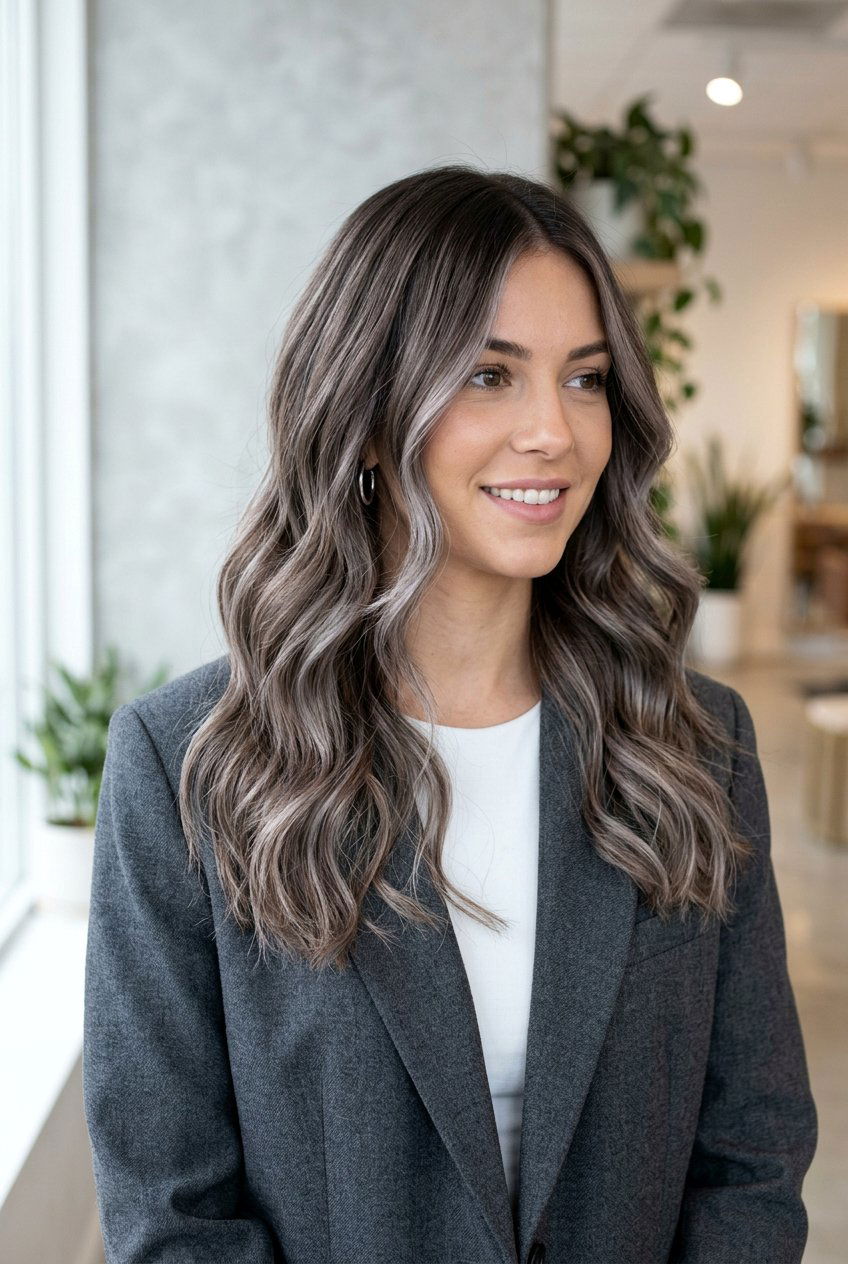
Ash blonde gray blending hair is ideal if you want an overall lighter look that still respects your natural gray pattern and keeps upkeep realistic. Your stylist works with cool, ashy blondes that sit close in tone to your silvers, weaving them through the mid-lengths and ends to create an airy, luminous finish. The root area can stay slightly darker and more natural, which allows regrowth to appear soft rather than creating a harsh band line. On a medium or long layered cut, this ash blend gives your hair a light, feathery look that feels modern and youthful without trying too hard. You will want to lean on purple shampoo occasionally and schedule toning glosses every couple of months to keep brass away, but the actual foil work can often be spaced farther apart than traditional blonde.
17. Silver Gray Blending Highlights

Silver gray blending highlights add shimmer and brightness to your hair while allowing your natural grays to play the starring role rather than fighting them. Your colorist places slim, cool-toned highlights through areas that need more lightness, then tones everything to a soft silver that harmonizes with your existing white strands. This approach works beautifully on bobs, lobs, and longer layered cuts, helping the hair look reflective and dimensional from every angle. Because the highlights are close in level and tone to your natural grays, they age gracefully as your hair grows, so you never have a drastic line of demarcation. Most of the upkeep revolves around maintaining tone and health with moisturizing products, reparative masks, and anti-yellowing shampoos rather than frequent, full-head highlighting appointments.
18. Gray Blending With Lowlights
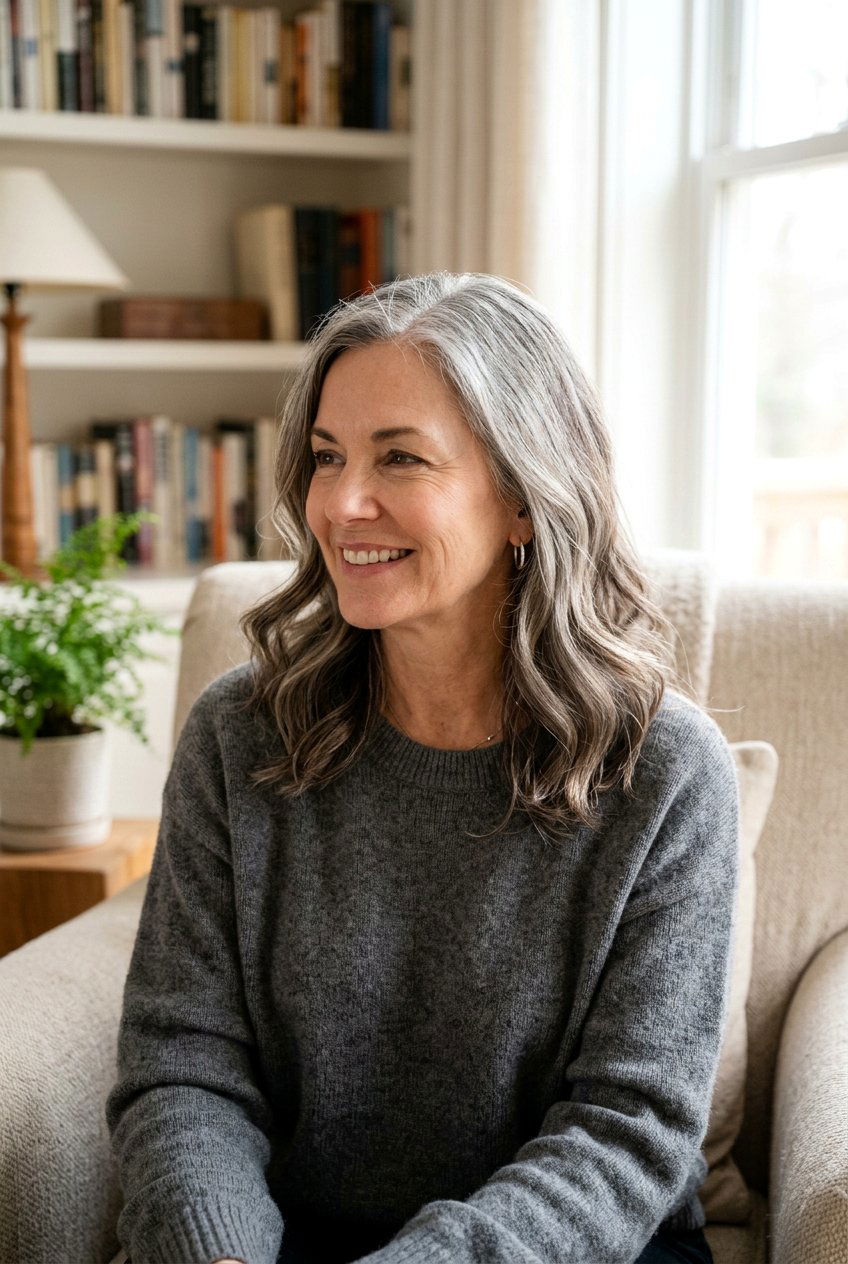
Gray blending with lowlights is perfect when your hair has gone mostly light or flat and you want some depth back without covering up your grays completely. Your stylist adds darker pieces, usually in cool beige, mushroom brown, or smoky taupe shades, to areas that look washed out, especially underneath and around the nape. These lowlights make the lighter gray and silver strands pop, giving your hair a thicker, more dimensional appearance without heavy maintenance. On a medium or long layered cut, the interplay of light and dark adds movement and makes even simple blowouts or air-dried texture look more styled. The darker pieces are typically close to your natural base color, so as new grays grow in, they simply add more contrast instead of revealing obvious root lines that need constant salon visits.
19. Gray Blending Shag Haircut
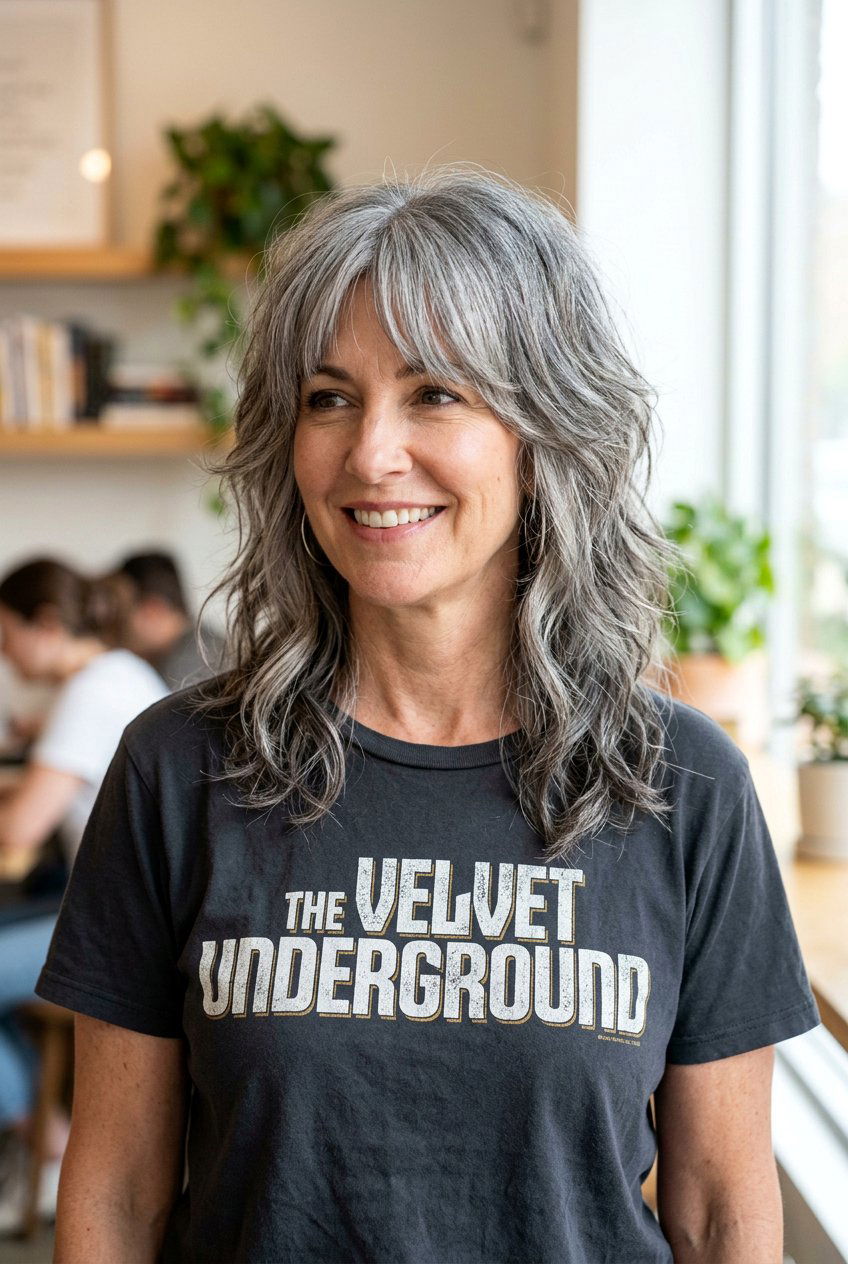
A gray blending shag haircut pairs a relaxed, rock-inspired shape with a forgiving color pattern that grows out with almost zero fuss. The cut is full of choppy layers, curtain bangs, and lots of internal texture, which gives natural body and movement even when you only rough dry or let it air dry. Gray blending here can involve scattered highlights and lowlights that mirror your natural silver placement, so the overall effect is piecey and dimensional instead of uniform. Because the shag is meant to look tousled and lived-in, a little root regrowth actually enhances the vibe rather than ruining it. All you really need is an occasional trim to keep the shape balanced, plus lightweight styling creams and toning products to keep your silvers bright and your ends soft.
20. Long Layered Gray Blending With Bangs
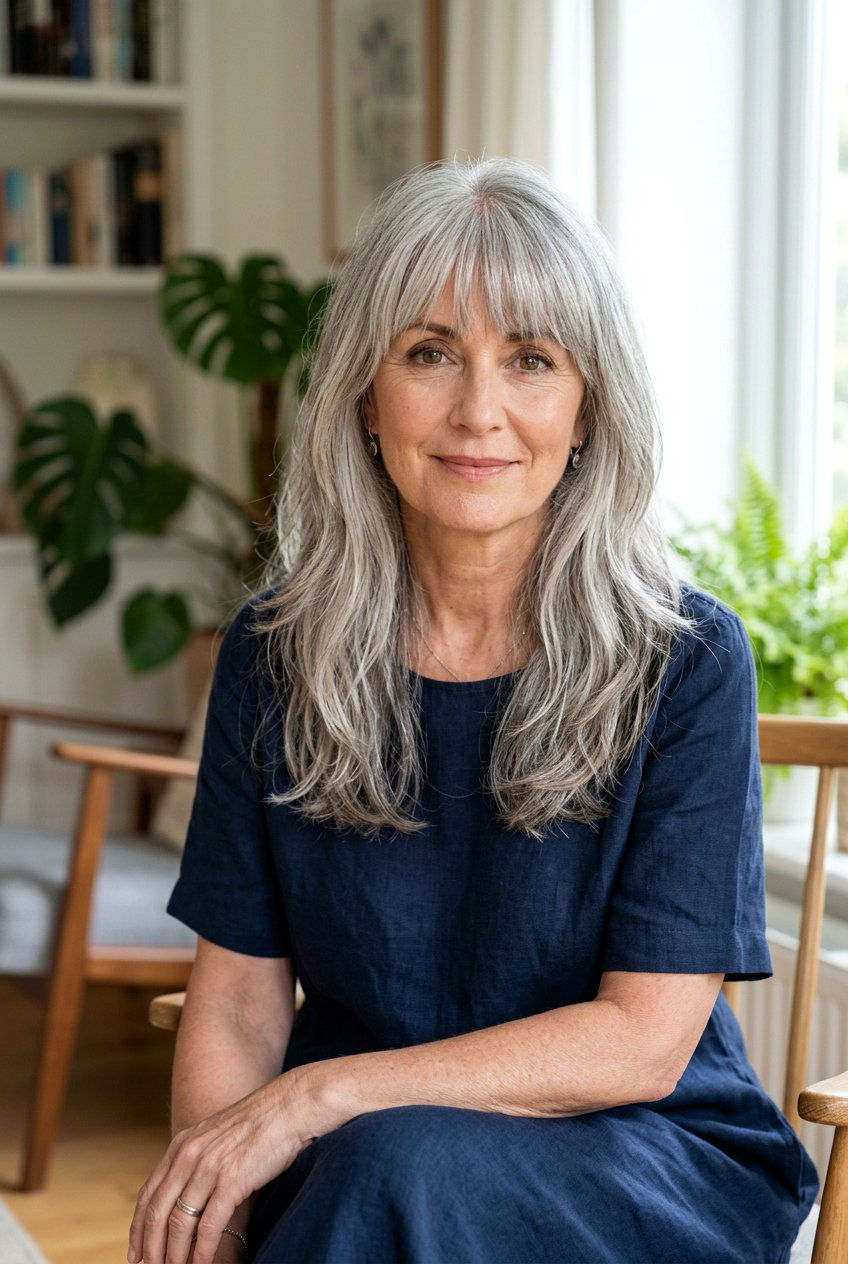
Long layered gray blending with bangs offers a fun way to change your look without sacrificing length or committing to intense upkeep schedules. The cut features long layers through the back for movement, plus bangs that can be straight across, wispy, or curtain style depending on what suits your face shape best. Your colorist blends gray-friendly tones through the lengths and softens the color at the fringe so your natural grays can appear as part of the pattern rather than standing out against a solid shade. This makes it easier to grow out bangs if you change your mind later, because there is no harsh line where old color meets new growth. With a little round-brush work or a quick pass of a flat iron at the front, the rest of your hair can stay relatively low effort, relying on your natural texture and the dimension of the blend to do most of the styling work.
Conclusion:
Transitioning to gray does not have to mean a long, awkward grow-out or endless root touch-ups that drain your time and budget every month. By choosing cuts and color techniques designed for gray blending, you let your natural shade be part of the look instead of something you constantly hide. Options like balayage, babylights, root melts, and lowlights create soft, diffused transitions that grow out gracefully and give your hair natural-looking dimension. Pairing these techniques with practical shapes like bobs, lobs, shags, and layered cuts keeps daily styling simple while still feeling polished and current at any age. With the right routine—hydrating products, occasional toners, and regular trims—you can enjoy shiny, healthy, blended gray hair that fits your lifestyle, not the other way around.
You'll Like These Styles:






Leave a Reply