
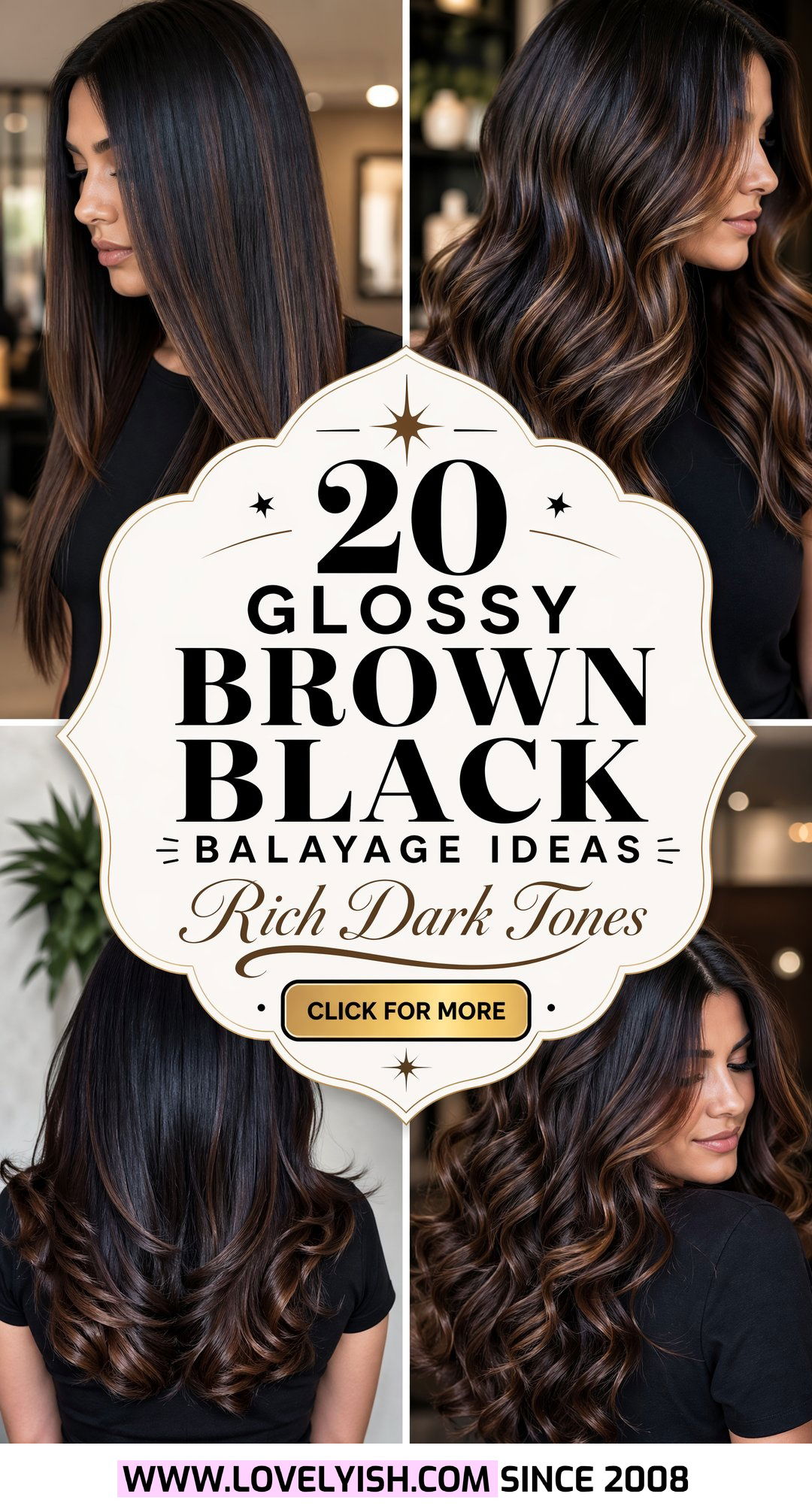
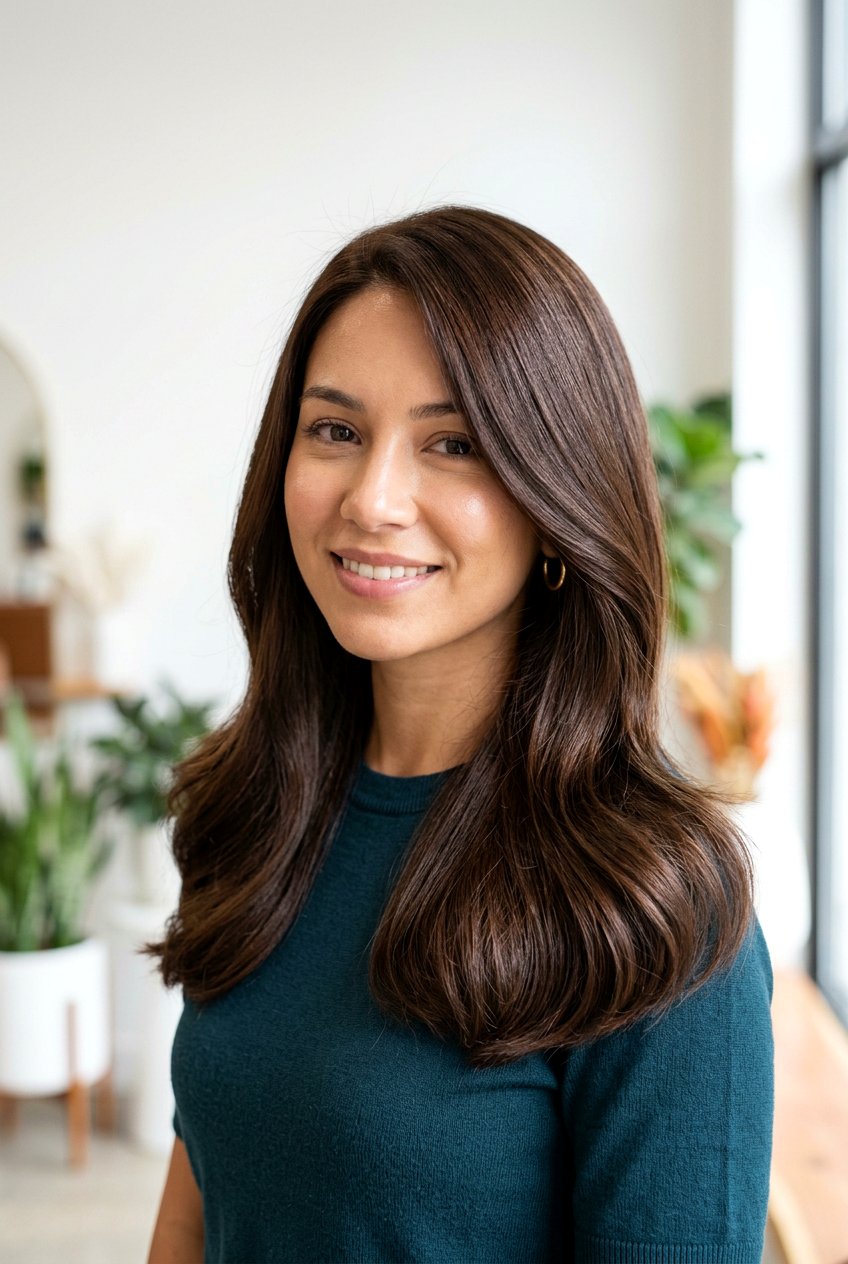
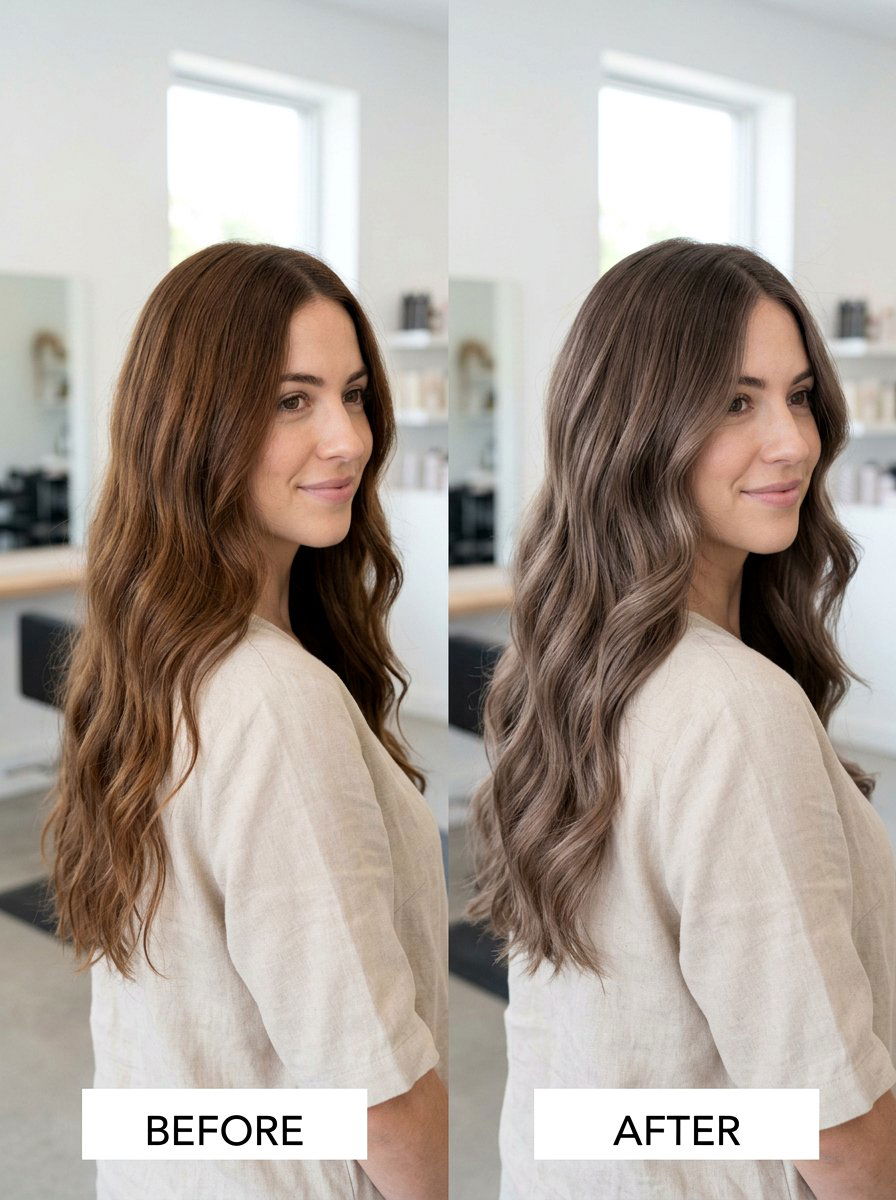
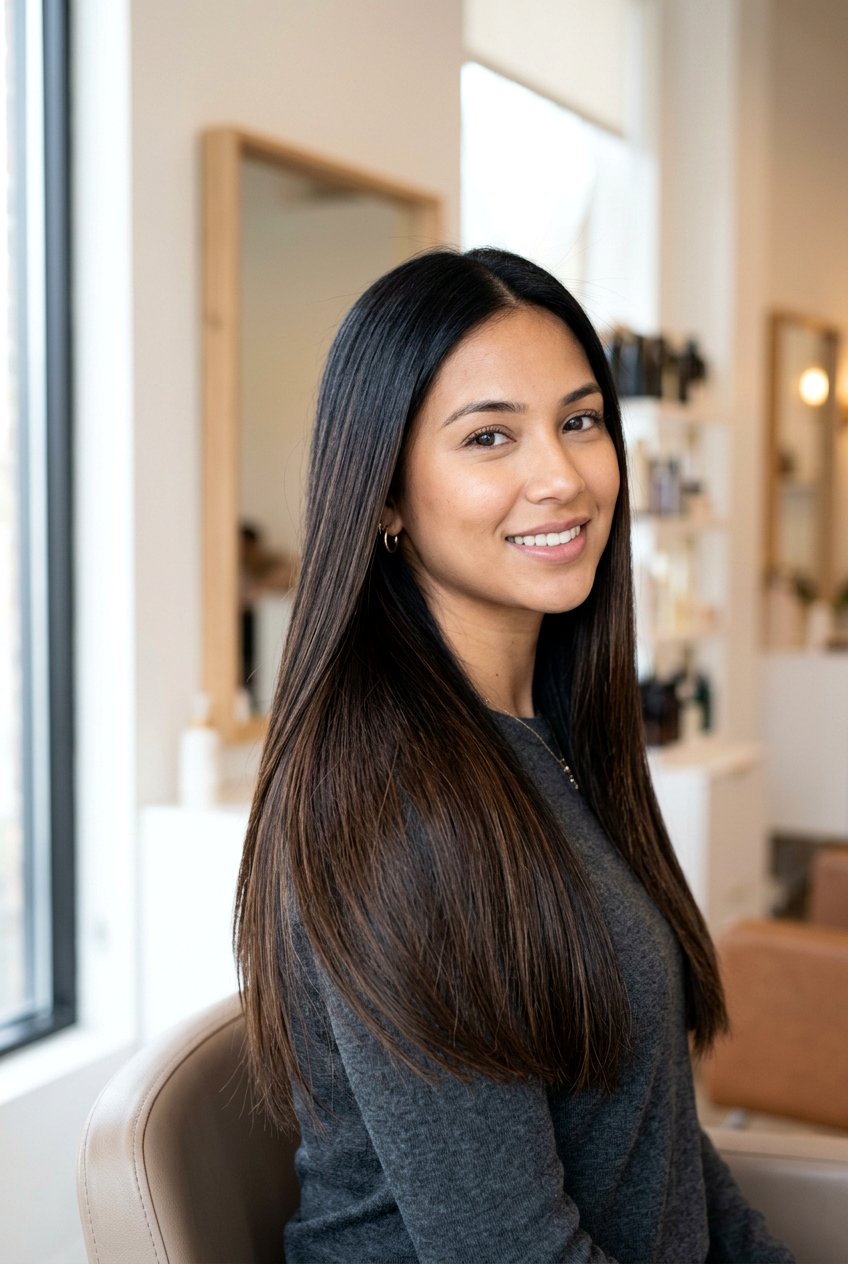
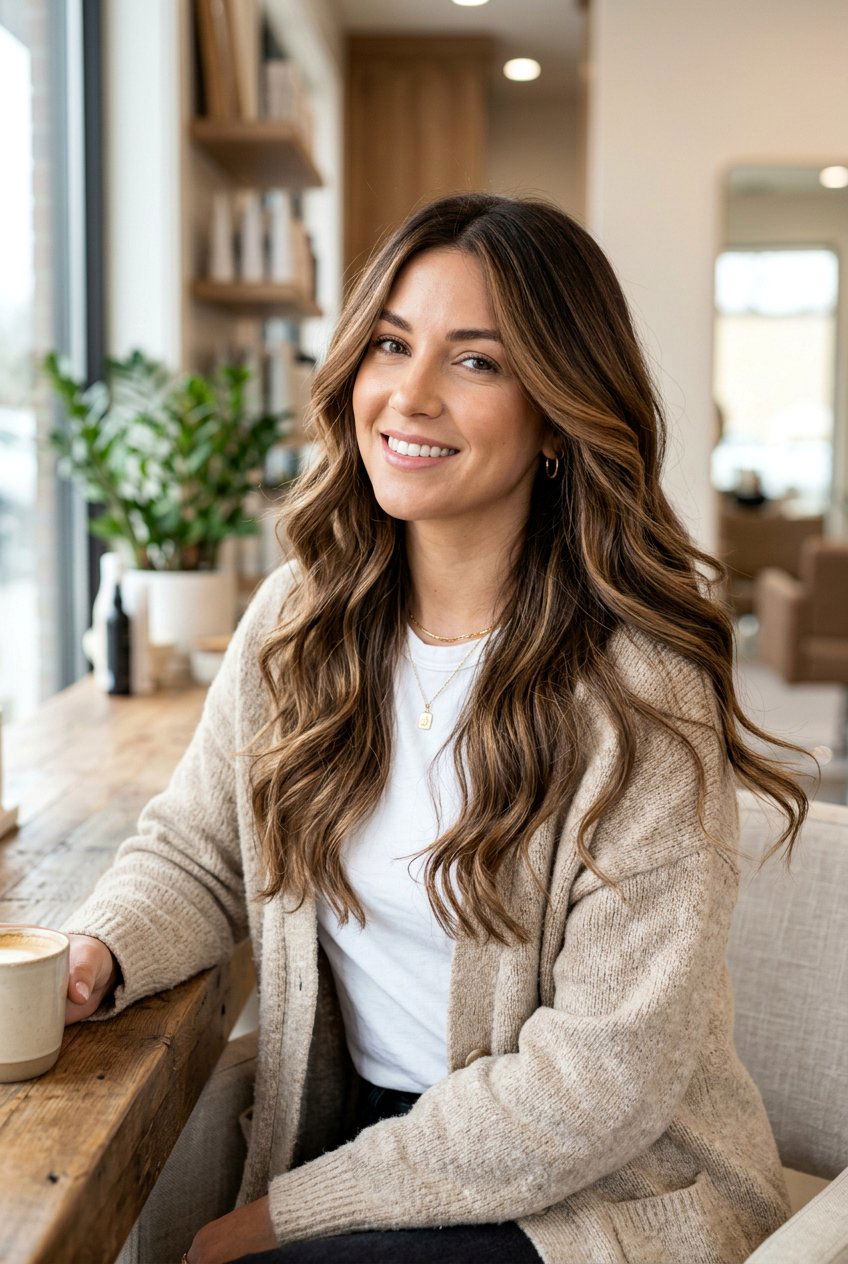
Shiny, reflective color that shifts subtly between brown and black can make dark hair look richer, thicker, and more dimensional, and glossy brown black balayage is one of the easiest ways to get that effect without losing your natural depth. This technique paints lighter brown tones over a deep brunette or black base, so the result looks seamless and sun‑touched instead of streaky or striped. Modern versions focus on high shine, soft transitions, and placement that brightens the mid‑lengths and ends while keeping the roots dark for easy grow‑out and low maintenance. Whether your hair is straight, wavy, or curly, glossy balayage can be customized with espresso, mocha, caramel, or ash brown ribbons that suit your skin tone and hair texture. Below are 20 wearable, salon‑friendly glossy brown black balayage looks to consider for your next color appointment, plus practical tips to help you talk clearly with your colorist and keep that reflective finish at home.
1. Glossy Brown Balayage On Black Hair
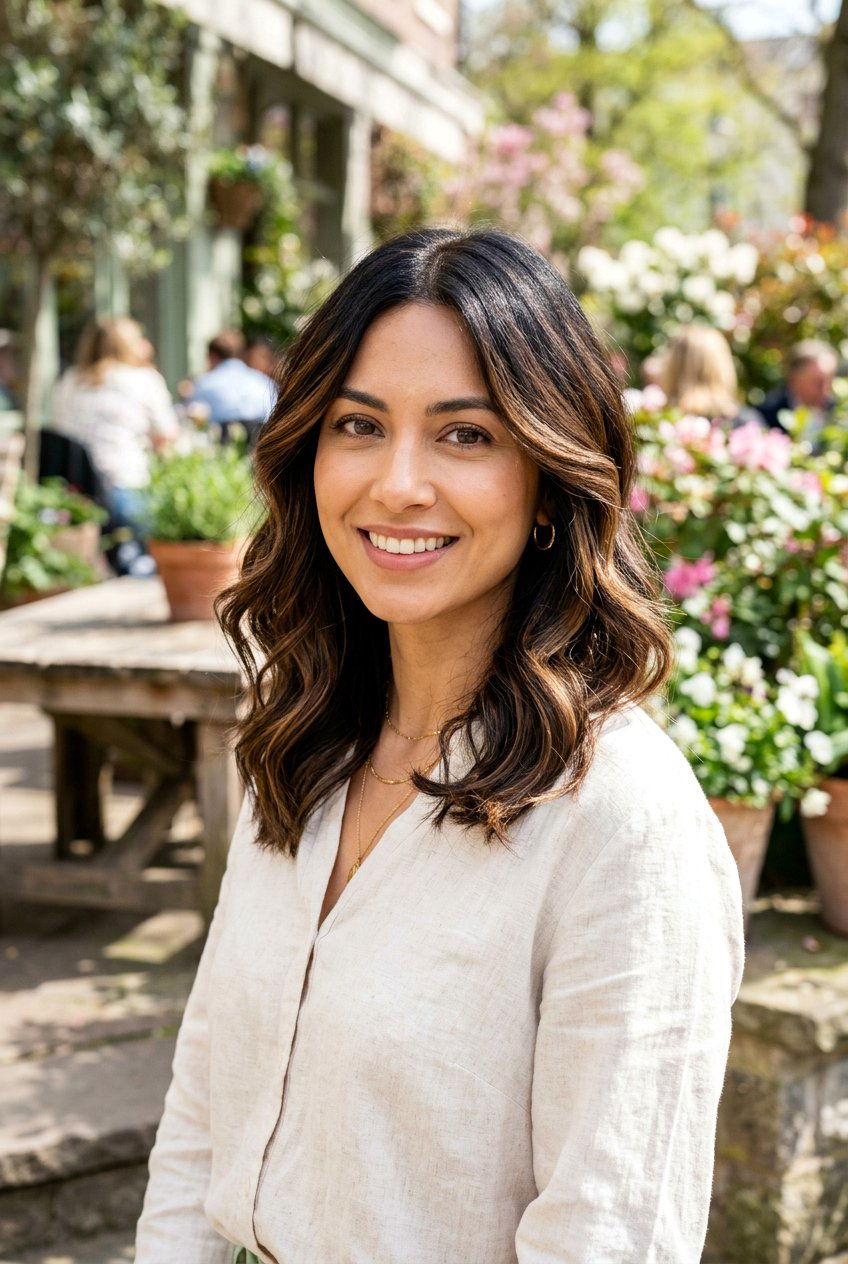
Soft face‑framing pieces and reflective mid‑length ribbons define this glossy brown balayage on black hair, which is perfect if you want a noticeable change that still feels natural at first glance. Your colorist keeps the roots and upper lengths in a cool or neutral black, then hand‑paints medium brown highlights from just below the cheekbones through the ends so the color melts instead of forming a harsh line. This placement adds movement and contrast that shows up beautifully in loose waves or curls and can even break up the heaviness of very thick dark hair. Ask for subtle, low‑lift brown tones one to three levels lighter than your base to reduce damage and keep the blend believable, especially if you are starting from naturally dark or previously colored hair. At home, use sulfate‑free, color‑safe shampoo, follow with a gloss‑boosting conditioner, and limit hot tools to a few times a week, always with heat protectant so your new dimension stays reflective instead of dull.
2. Espresso Brown Balayage On Black Hair
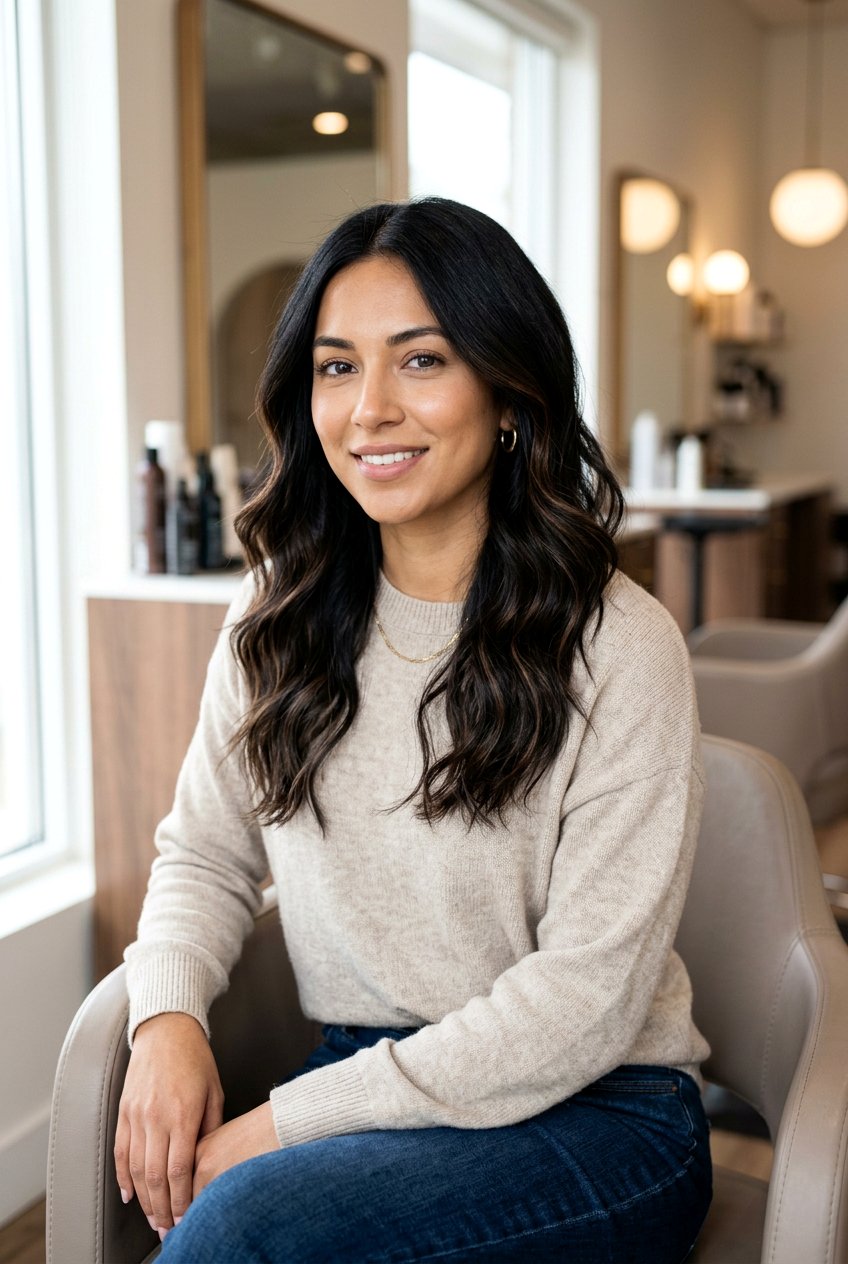
Deep espresso brown balayage on black hair is a great choice if you love very dark hair but want just enough dimension to catch the light when you move, especially in photos or under indoor lighting. Colorists usually work with a black or near‑black base and paint soft espresso strokes that are only one or two shades lighter, concentrating on the mid‑lengths and ends while leaving the crown area predominantly dark. This narrow contrast range keeps the overall look sophisticated and low maintenance, because regrowth at the roots is almost invisible and tones fade gracefully between gloss appointments. Espresso balayage tends to flatter cool, neutral, and olive undertones thanks to its slightly smoky, chocolatey depth, and it can make fine or medium hair appear fuller by creating the illusion of shadow and light in the lengths. To keep the brunette tones rich rather than brassy, use a blue or brunette‑targeted toning shampoo occasionally, avoid over‑washing, and schedule shine‑enhancing gloss services every six to eight weeks instead of frequent full lightening.
3. Rich Mocha Balayage On Dark Brown Hair
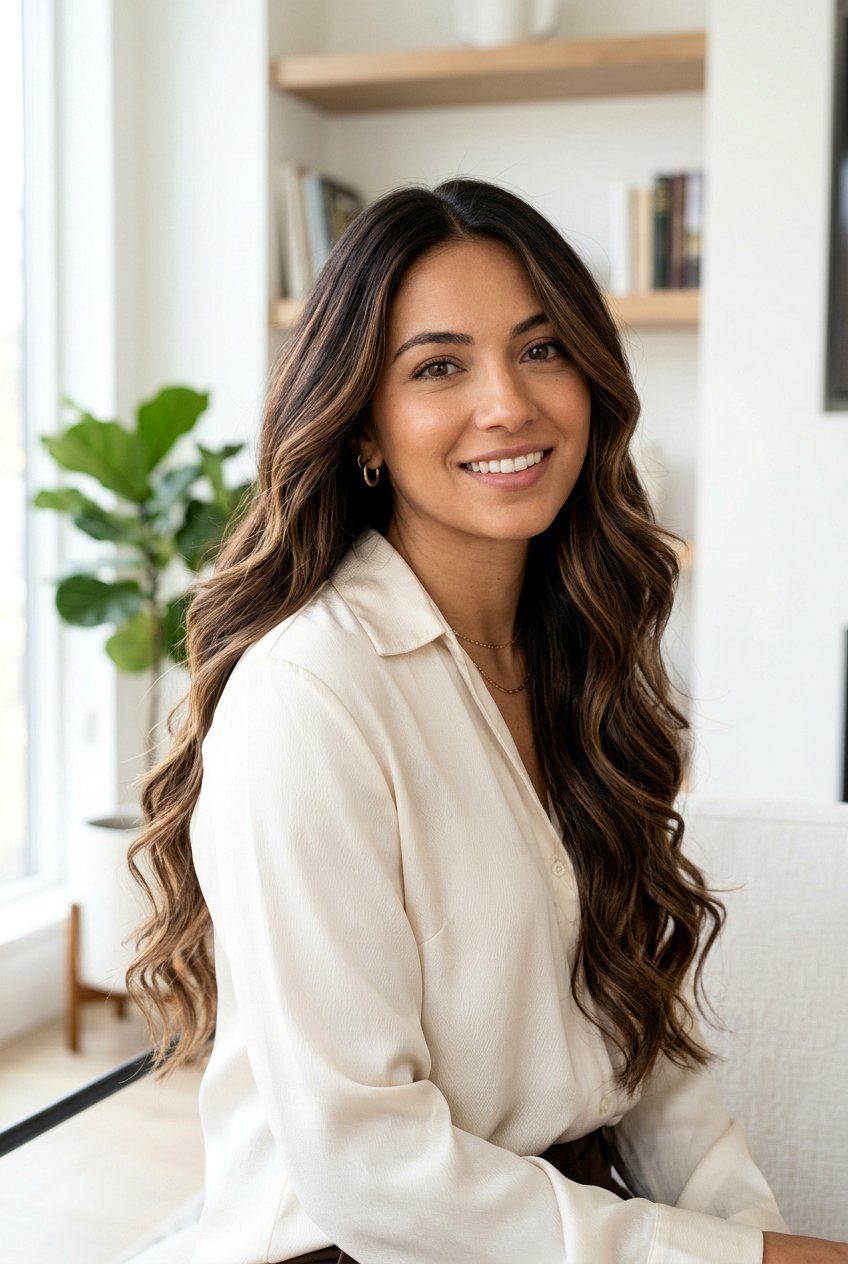
If you want warmth without going orange or overly golden, rich mocha balayage on dark brown hair offers a creamy, cafe‑inspired balance of cool and warm tones that feels luxurious and polished. Your stylist keeps a deep brunette base at the roots and carefully blends mocha highlights through the mid‑lengths, concentrating brightness around the face, the outer layers, and the very ends for a halo of shine when light hits your hair. This kind of multi‑tonal brown works especially well on straight or softly waved hair, because the different shades show up clearly along each strand without sharp lines. Mocha balayage is also forgiving on a wide range of skin tones, from fair to deep, since the mix of cool and warm notes keeps the color from skewing too red or too ashy. Maintain the glossy effect with weekly deep conditioning masks, minimizing chlorine and sun exposure, and ask your stylist to refresh your mocha with demi‑permanent color or a shine treatment a few times a year rather than repeatedly lightening the same pieces.
4. Caramel Brown Balayage On Black Hair
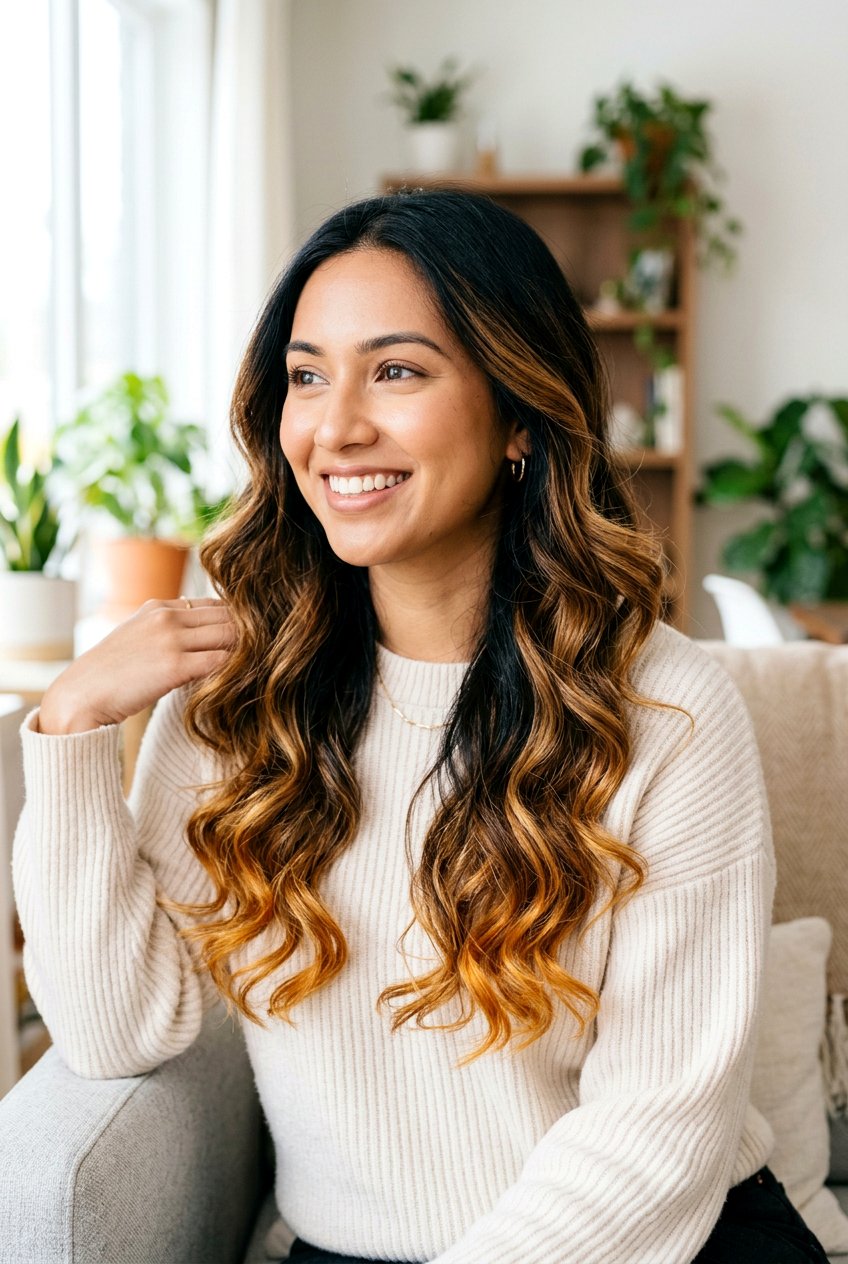
Caramel brown balayage on black hair gives a soft, sun‑kissed glow, almost like you have naturally lightened over several summers without obvious streaks or harsh ombré lines. The colorist typically starts with a dark base and paints warm caramel ribbons through the lower two‑thirds of the hair, focusing on the outer sections and money pieces so the caramel frames your face and brightens your complexion. Because caramel is several levels lighter than black, your stylist may need to lift gradually over multiple appointments if your hair is very dark or previously colored, which helps reduce breakage and maintain a glossy surface. This combination tends to flatter warm and neutral skin tones best, and it looks especially striking on long waves, curls, or layered cuts where there is enough length to show the full transition from black to caramel. At home, protect your lighter pieces with hydrating masks, limit heat styling, and consider using a color‑safe oil or serum on damp hair so the caramel sections stay smooth, shiny, and frizz‑free instead of dry or rough.
5. Cool Black With Chocolate Balayage
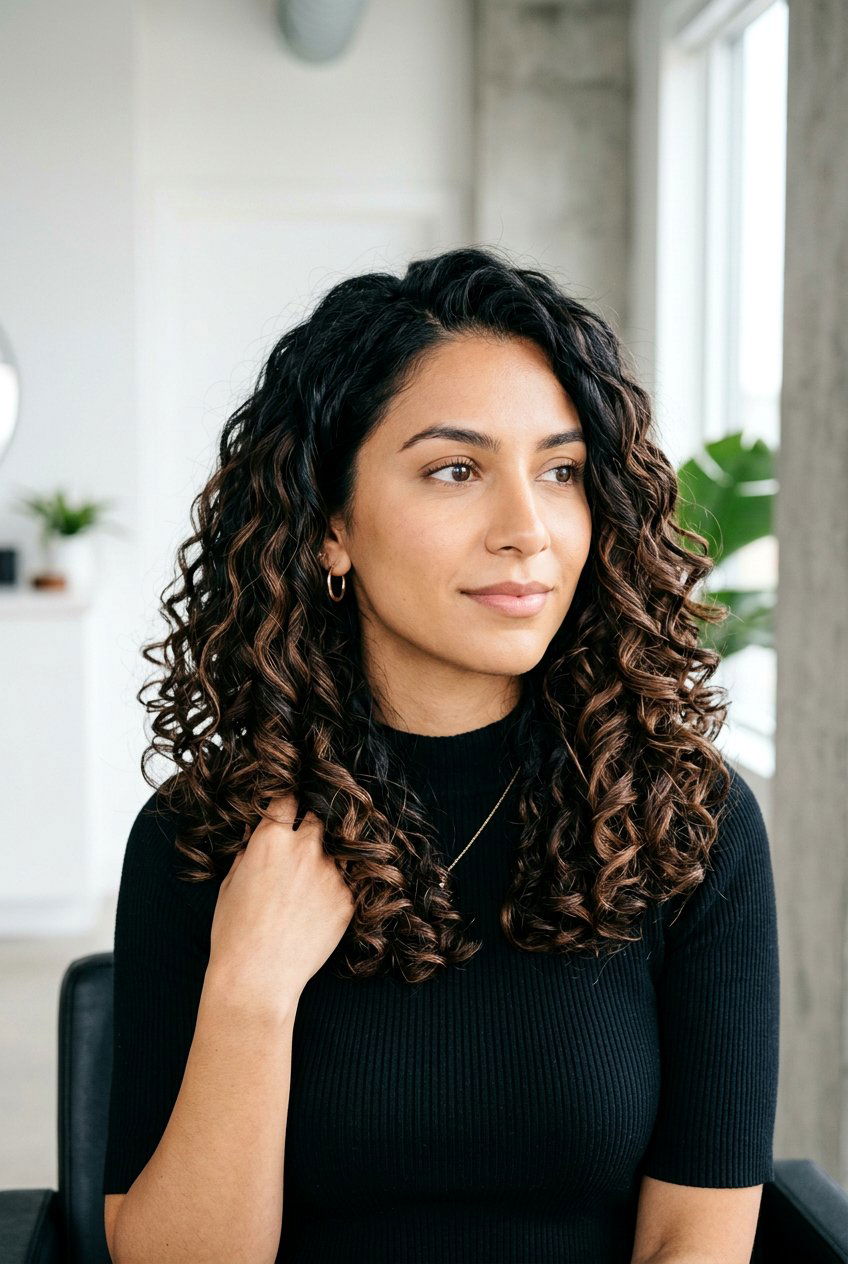
A cool black base with chocolate balayage is ideal if you prefer neutral or slightly cool browns that look modern and sleek rather than warm or golden. The stylist uses a deep, cool‑toned black at the roots and inner layers, then paints chocolate brown highlights in curved sections through the mid‑lengths and ends so the darker interior makes the chocolate pop without looking chunky. This placement makes curls, waves, and textured hair look incredibly dimensional, because every bend in the strand reveals a new mix of black and chocolate. It can also be a smart choice if you have naturally cool undertones or prefer silver jewelry, because the overall tone will harmonize with your features instead of casting a yellow or red reflection. To preserve the cool character, ask your colorist about using toner with ash or neutral bases, avoid very warm‑toned shampoos, and protect your hair from frequent high‑heat styling, which can push pigments warmer and reduce that inky, reflective finish you are aiming for.
6. Chocolate Brown Balayage On Dark Hair
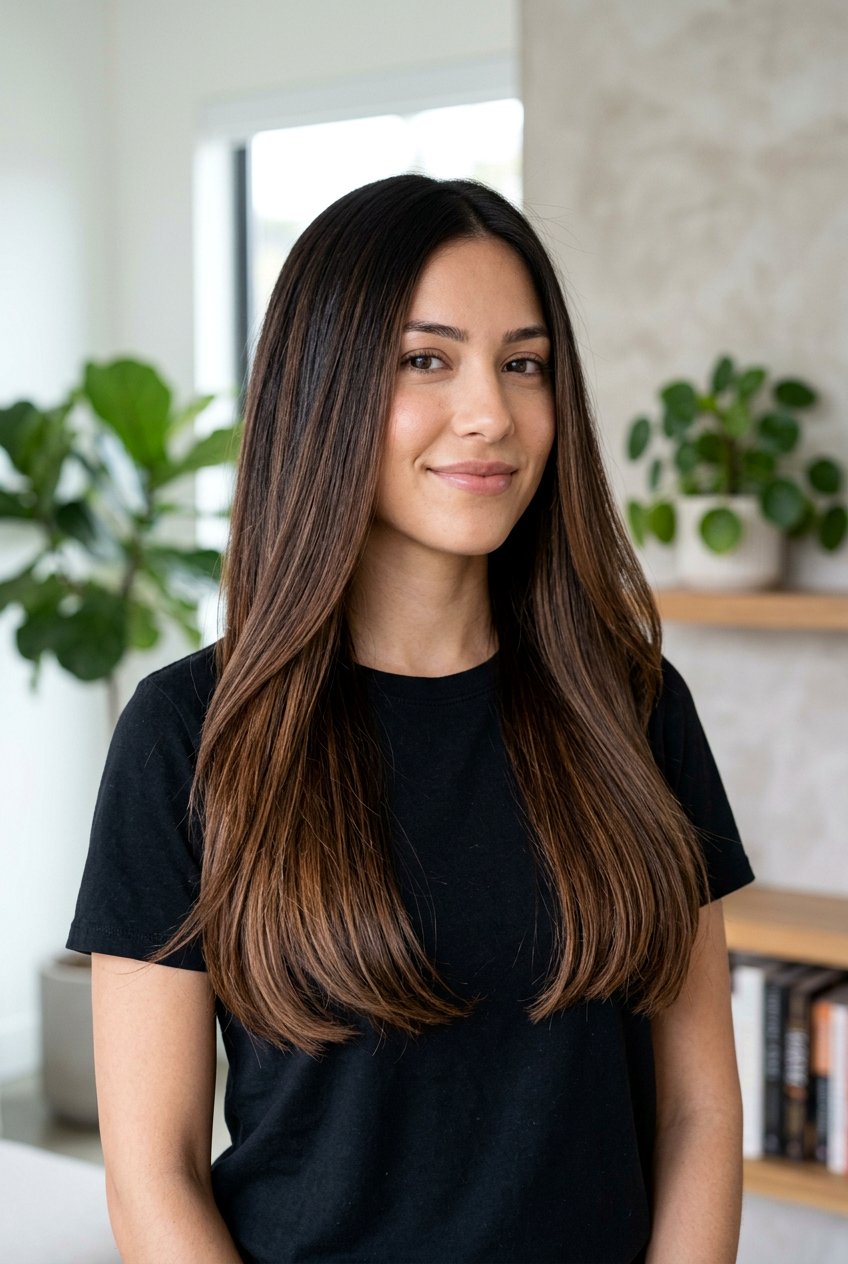
Chocolate brown balayage on dark hair sits right in the sweet spot between subtle and noticeable, giving you a rich brunette that gleams while still reading as “dark hair” overall. Most stylists keep the natural or dyed dark base at the roots, then sweep chocolate tones through the outer layers and toward the ends with a soft, feathered technique so there is no sharp line of demarcation. Chocolate balayage is especially flattering on fine or medium hair, because the slightly lighter pieces can make strands look thicker and more voluminous without needing lots of layering or heavy styling. The shade also works well across age groups, offering an easy refresh for anyone who wants to add vibrancy without committing to a high‑contrast color or frequent touch‑ups. To keep the chocolate glossy, limit washing to two or three times per week, use lukewarm water, and follow each wash with a conditioner or mask formulated for colored brunettes so your ends stay smooth and the tone does not fade flat or matte.
7. Ash Brown Balayage On Black Hair
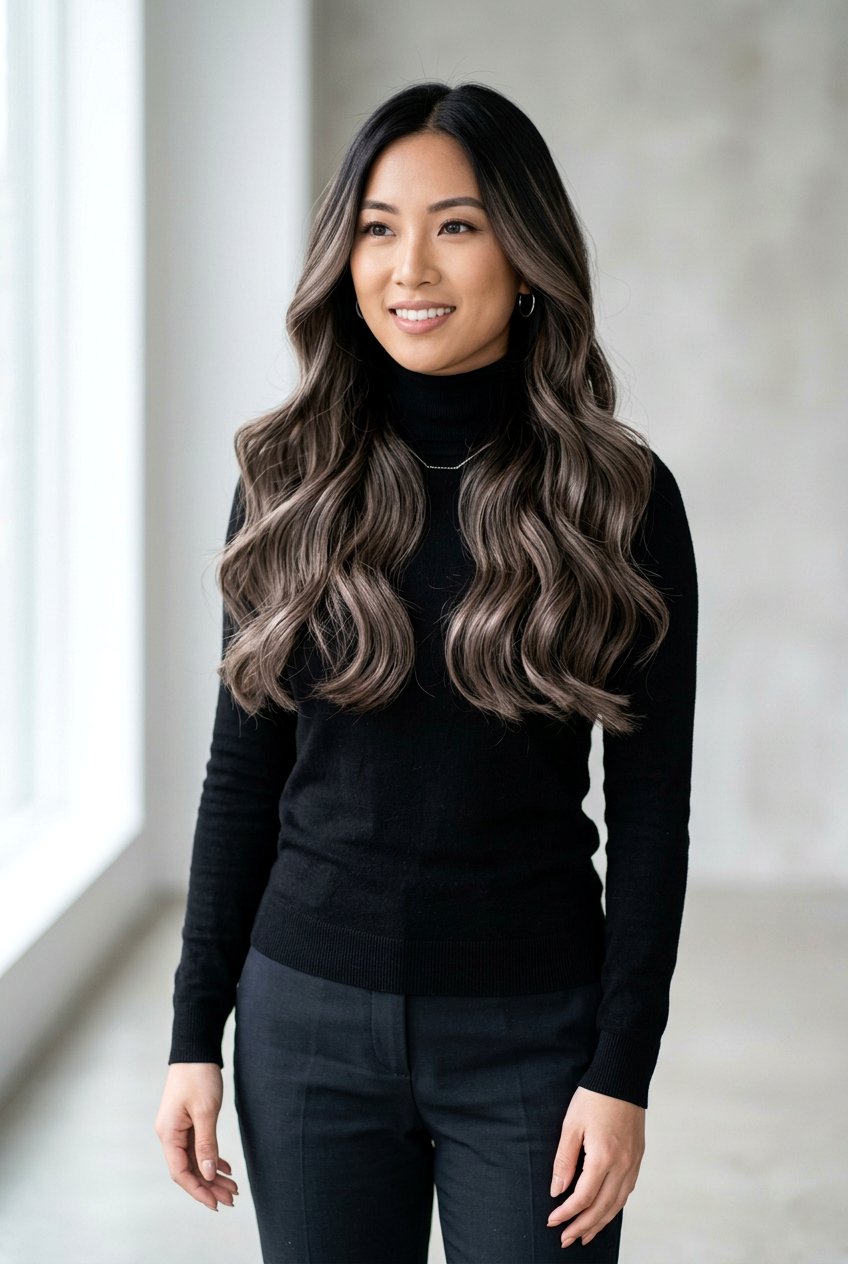
Ash brown balayage on black hair is a chic choice if you love cool, smoky tones and want to avoid warm or golden highlights completely. The technique blends black roots into ash brown mid‑lengths with soft, diffused strokes, often focusing on the outer layers and ends while keeping some interior darkness for depth and contrast. Because ash shades sit in the cooler spectrum, they can counteract natural warmth in dark hair when properly toned, leaving a sophisticated, slate‑like finish that pairs especially well with straight or loosely waved styles. This look tends to flatter cool and neutral skin tones, though your colorist can add slightly beige notes to make the ash more wearable if your complexion leans warmer. Maintain the color by incorporating a blue‑based toning shampoo into your routine, spacing out heat styling, and booking refresh toners as needed, since ash pigments can fade faster and reveal underlying warmth if not cared for properly.
8. Cinnamon Brown Balayage On Dark Hair
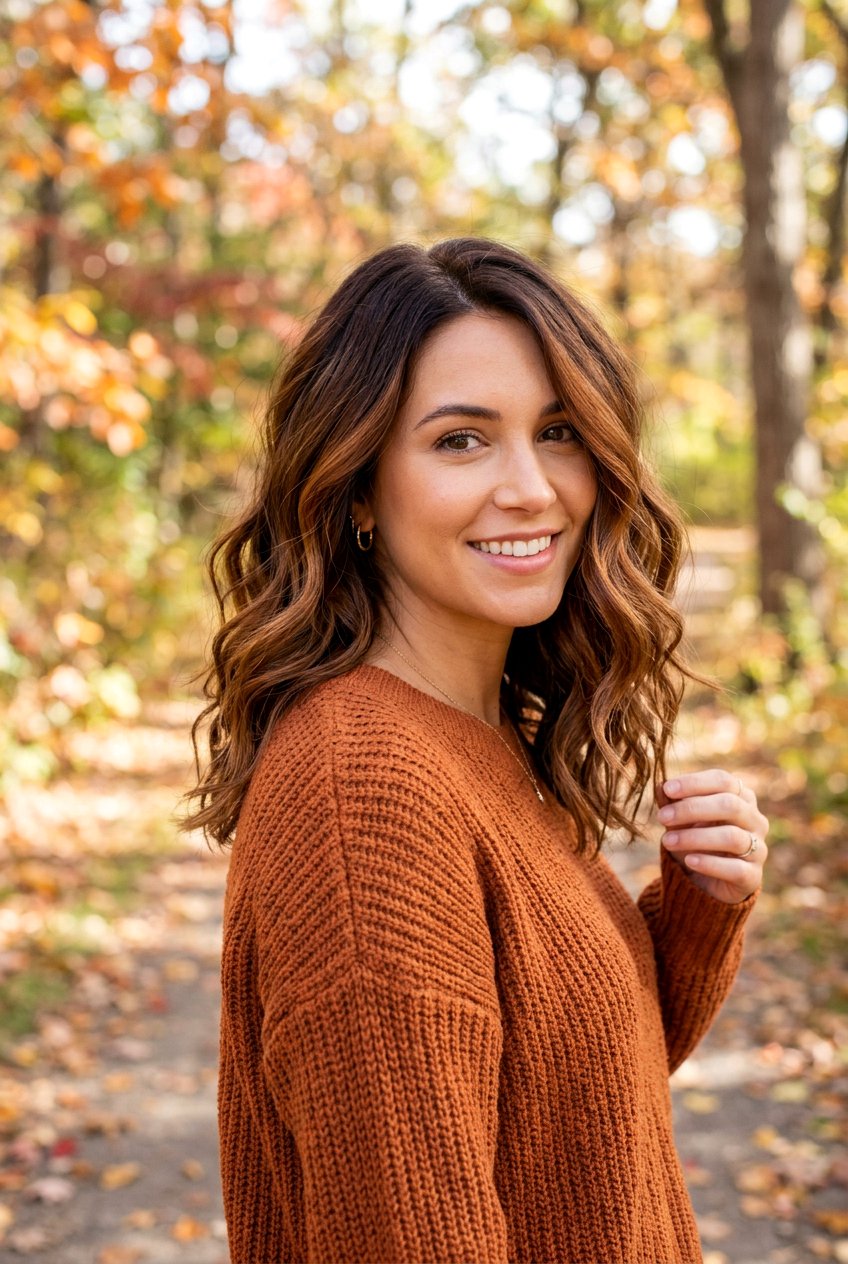
Cinnamon brown balayage on dark hair brings subtle spice and warmth, creating a lively, multi‑dimensional brunette that still feels grounded and wearable for everyday life. Stylists often start with a medium to dark brown base and blend cinnamon‑toned highlights through the mid‑lengths, focusing on pieces around the face and outer layers to mimic where the sun would naturally lighten your hair. The mix of brown and subtle red notes can make curls and waves look particularly vibrant, because each bend shows a new flash of warm color. This shade is especially flattering on warm and neutral undertones and can be a great option if you are transitioning from a solid dark color and want something livelier without going all the way to caramel or copper. Keep your cinnamon balayage fresh with color‑safe products, UV protection when you are outdoors, and occasional gloss treatments that enhance both shine and warmth so the tone stays spicy rather than flat or overly red.
9. Chestnut Brown Balayage On Black Hair
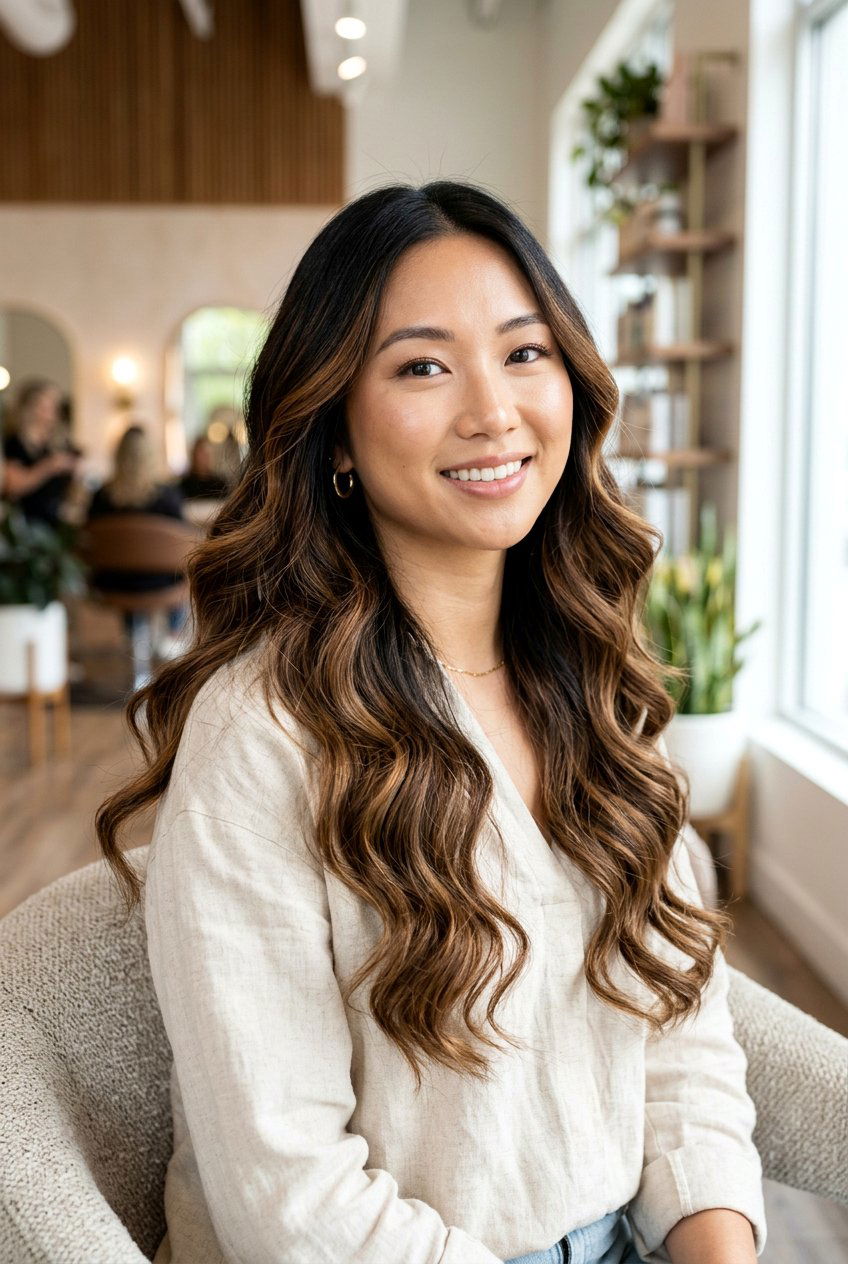
Chestnut brown balayage on black hair offers a balanced, medium‑warm finish that sits between golden caramel and cool chocolate, making it a versatile choice if you like a bit of warmth but still want your hair to read as brunette. The stylist usually paints chestnut highlights through the lengths and ends, sometimes concentrating around the face for a soft brightening effect while leaving enough black at the roots and interior layers to keep the look grounded. Chestnut tones pair well with many skin tones, often flattering both warm and neutral complexions, and they shine on medium to long hair where the gradient from dark to chestnut has room to breathe. This kind of balayage is also relatively low maintenance because the root color remains dark and the chestnut pieces are blended, so you will not see a stark line as your hair grows. To preserve the shine, choose gentle, sulfate‑free hair care, avoid very hot water, and consider a lightweight serum or oil on the mid‑lengths and ends to keep the chestnut pieces smooth and reflective.
10. Brown Balayage On Natural Black Curls
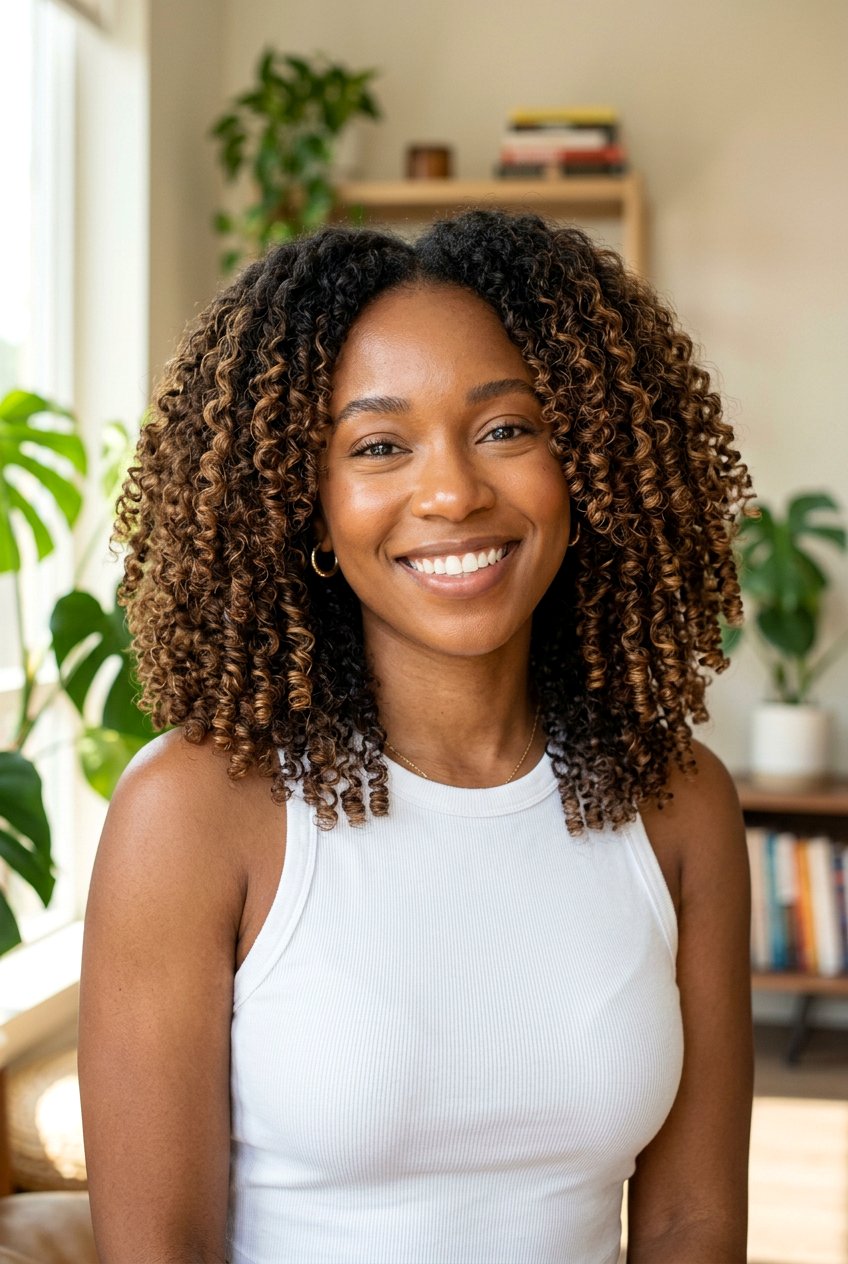
Brown balayage on natural black curls can instantly enhance your curl pattern, making every coil and wave look more defined thanks to the contrast between dark roots and lighter lengths. Colorists typically start by painting brown highlights on select curl clumps rather than straight sections, which helps preserve the integrity of the curl pattern and creates a more organic, three‑dimensional effect. Keeping the roots dark and focusing lighter tones on the mid‑lengths and tips means grow‑out is forgiving and your scalp remains protected from repeated chemical processing. This look can be tailored with warmer or cooler browns depending on your skin tone and personal taste, and it works on a variety of curl types from loose waves to tight coils. After coloring, prioritize moisture and protein balance with curl‑friendly, color‑safe products, deep conditioning masks, and low‑heat drying methods so your curls stay bouncy, hydrated, and glossy instead of frizzy or brittle.
11. Warm Brown Balayage On Dark Brown Hair
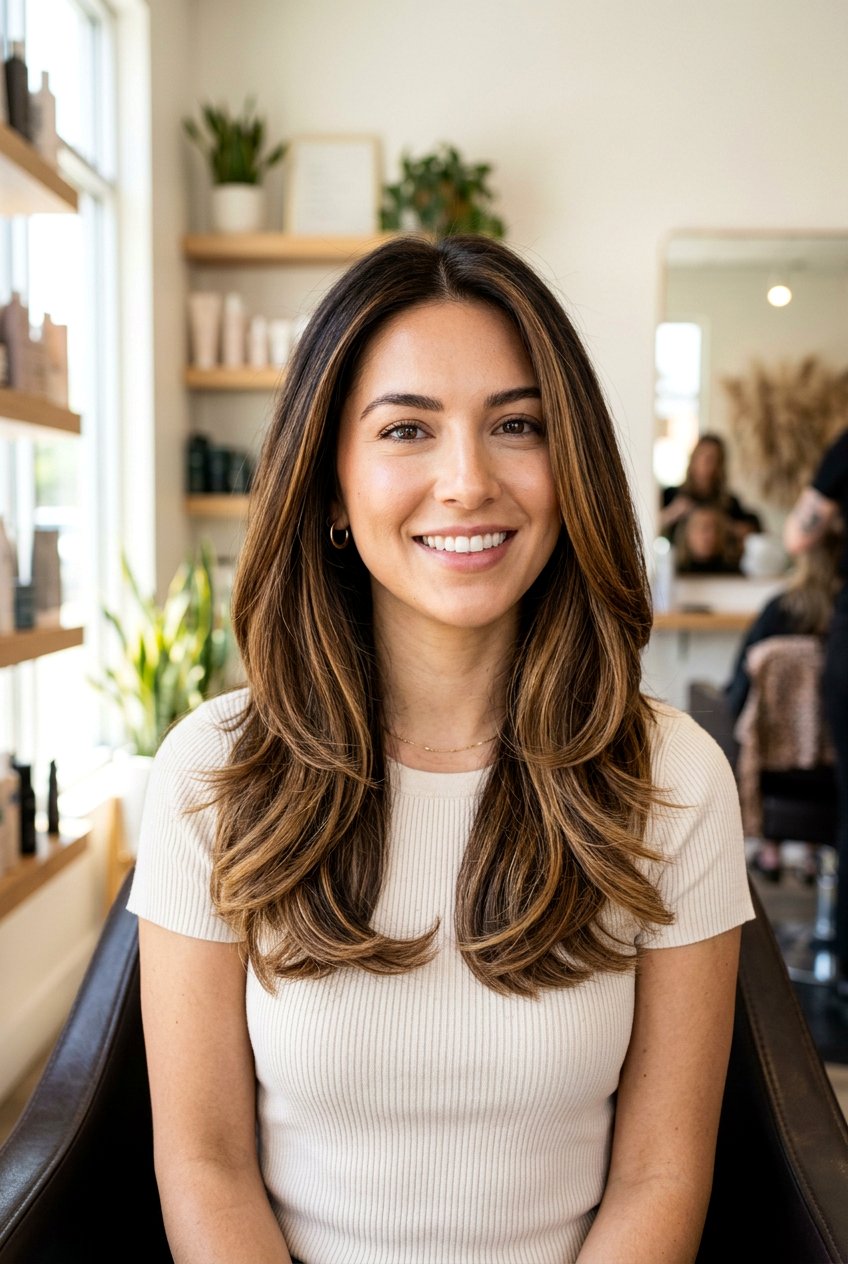
Warm brown balayage on dark brown hair gives a soft, radiant glow that can gently brighten your overall appearance without pushing into very light or high‑contrast territory. Your stylist keeps your natural dark brown or dyed base near the roots and adds warm medium‑brown ribbons that run through the mid‑lengths and ends, usually concentrating more lightness through the front for face‑framing impact. This style looks particularly pretty on softly layered cuts, because the movement in the layers lets warm strands catch the light and create the impression of thickness and body. Warm brown balayage flatters many skin tones, especially those with golden or peachy undertones, and it is a great entry point for anyone nervous about lightening but curious about more dimension. To maintain the glow, limit sun exposure without protection, incorporate hydrating and color‑protective products, and consider gloss treatments between major appointments so the warm tones stay luminous instead of fading brassy or dull.
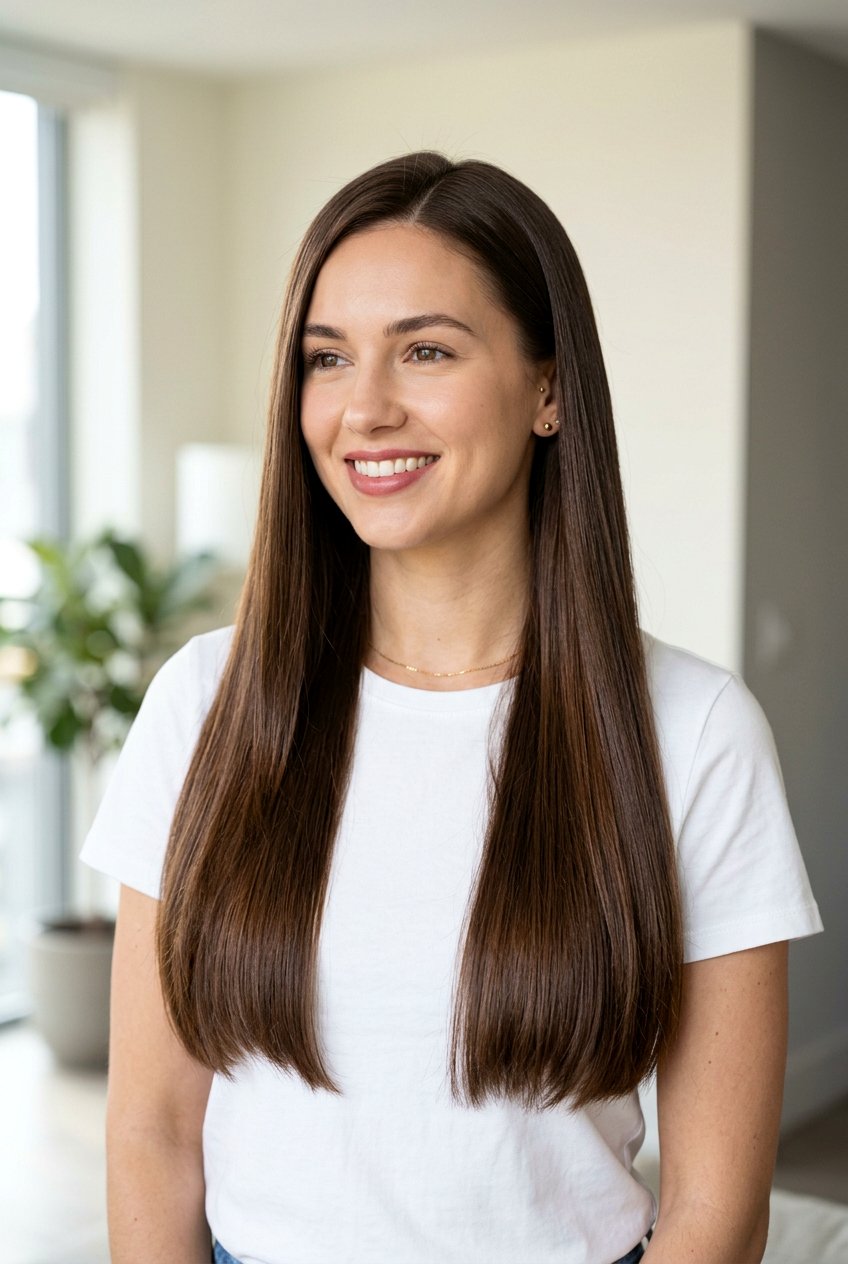
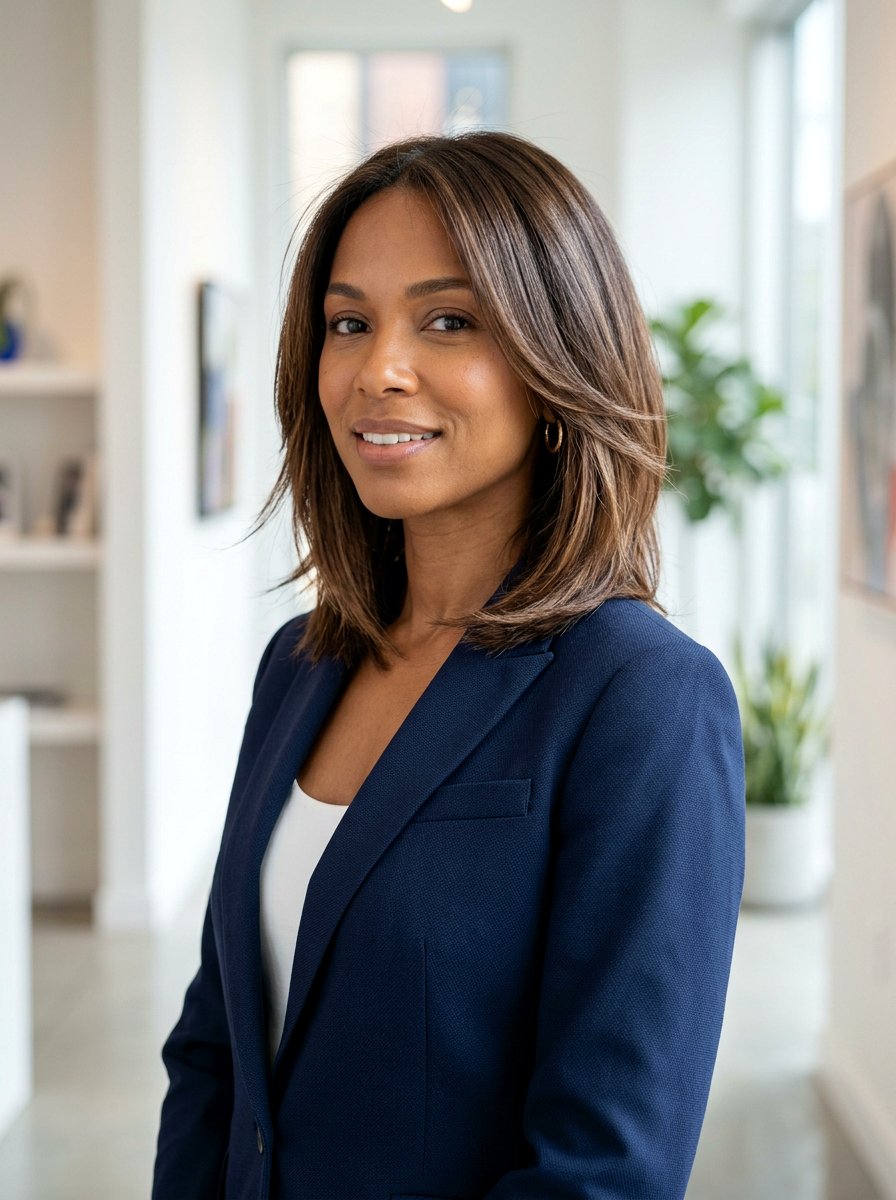
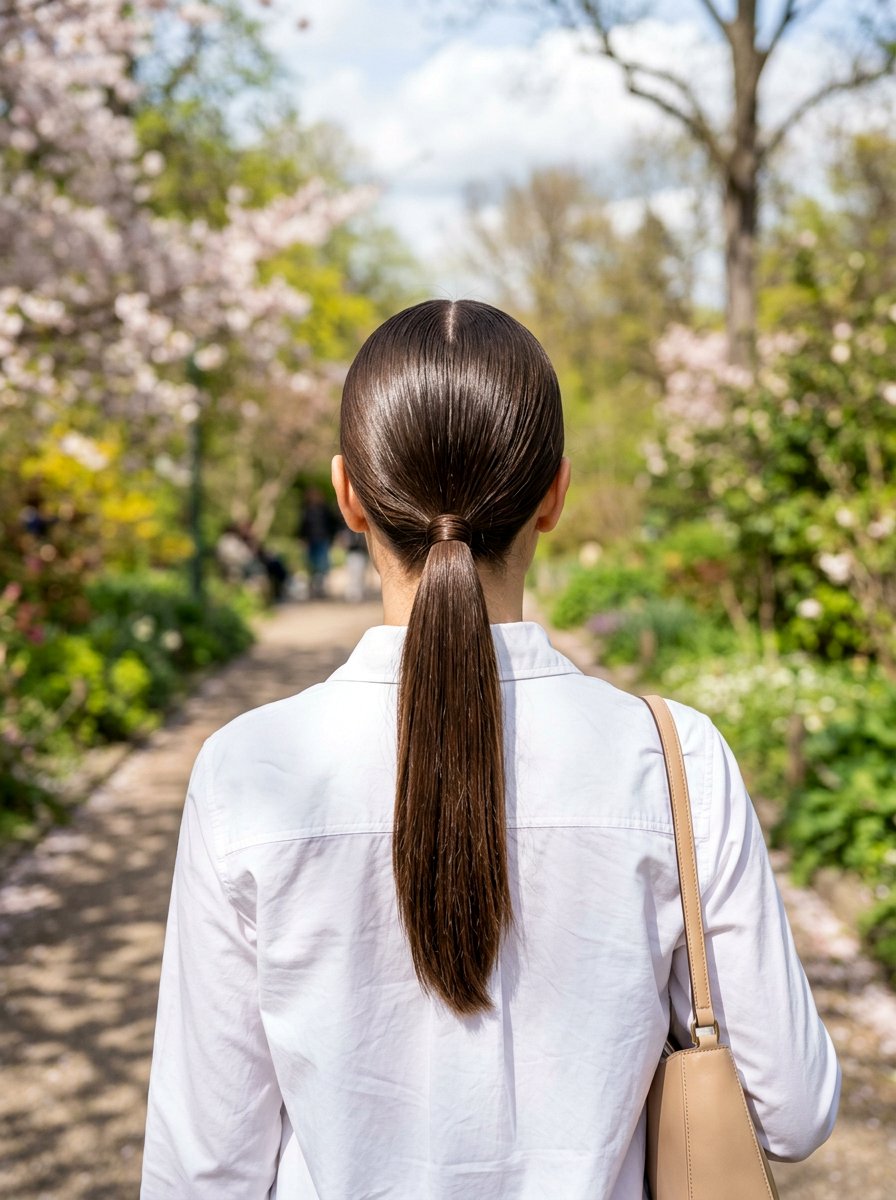
12. Honey Brown Balayage On Black Hair
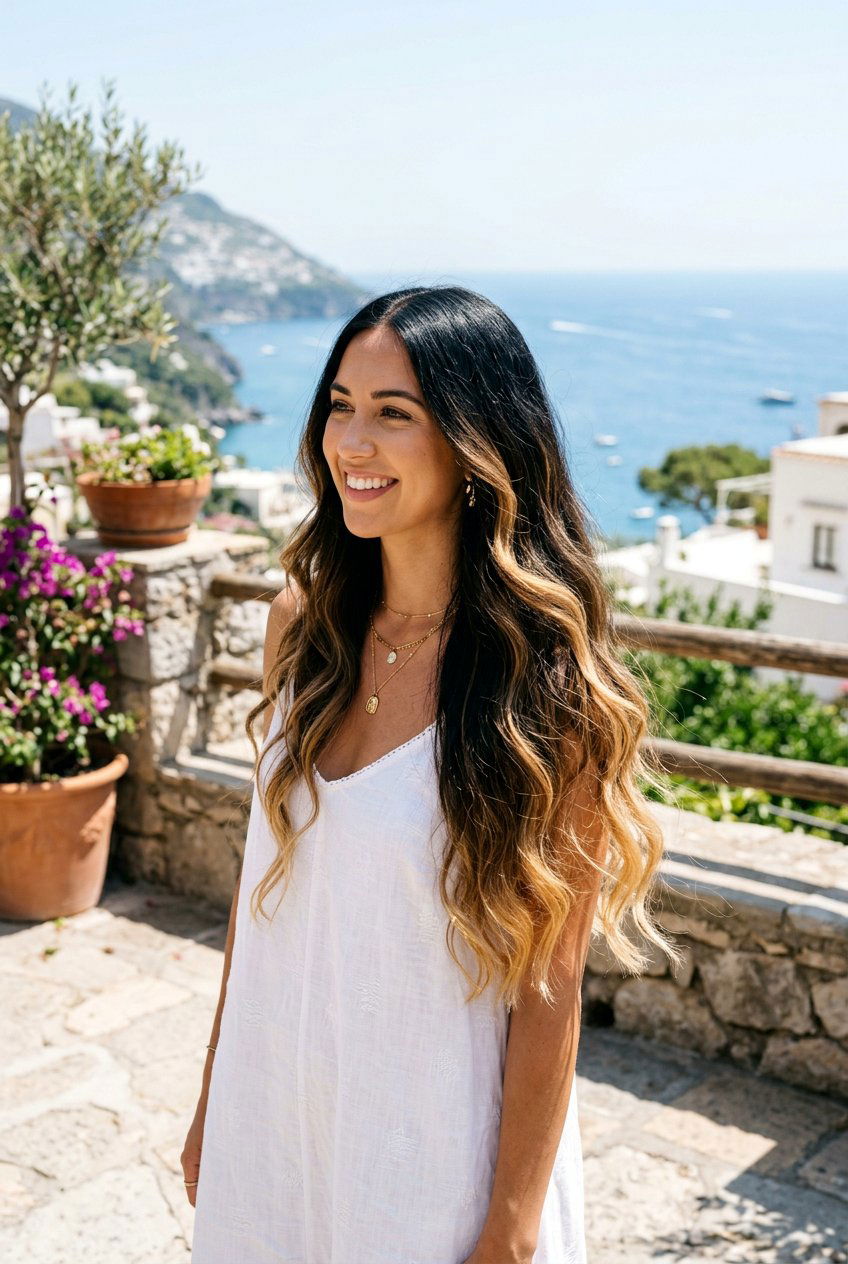
Honey brown balayage on black hair offers a noticeable, luminous contrast that can instantly brighten your face and give your length a beachy, light‑catching quality while still preserving dark roots. Colorists usually paint honey‑toned highlights starting around cheekbone level and intensifying through the ends, carefully diffusing the transition so there is no blunt line where black meets honey. Because honey is several levels lighter than black, you may need multiple sessions if your hair is very dark or heavily dyed, and your stylist will likely prioritize hair health and elasticity at each step. Honey balayage tends to flatter warmer and deeper skin tones especially well, and it looks striking on long, wavy hair, where the mix of black roots and honey lengths creates a strong yet elegant gradient. To keep your honey pieces glossy, rely on color‑safe shampoo, deep conditioning, heat protection, and occasional toners or glosses that neutralize brass and restore shine between full color appointments.
13. Subtle Brown Balayage For Dark Hair
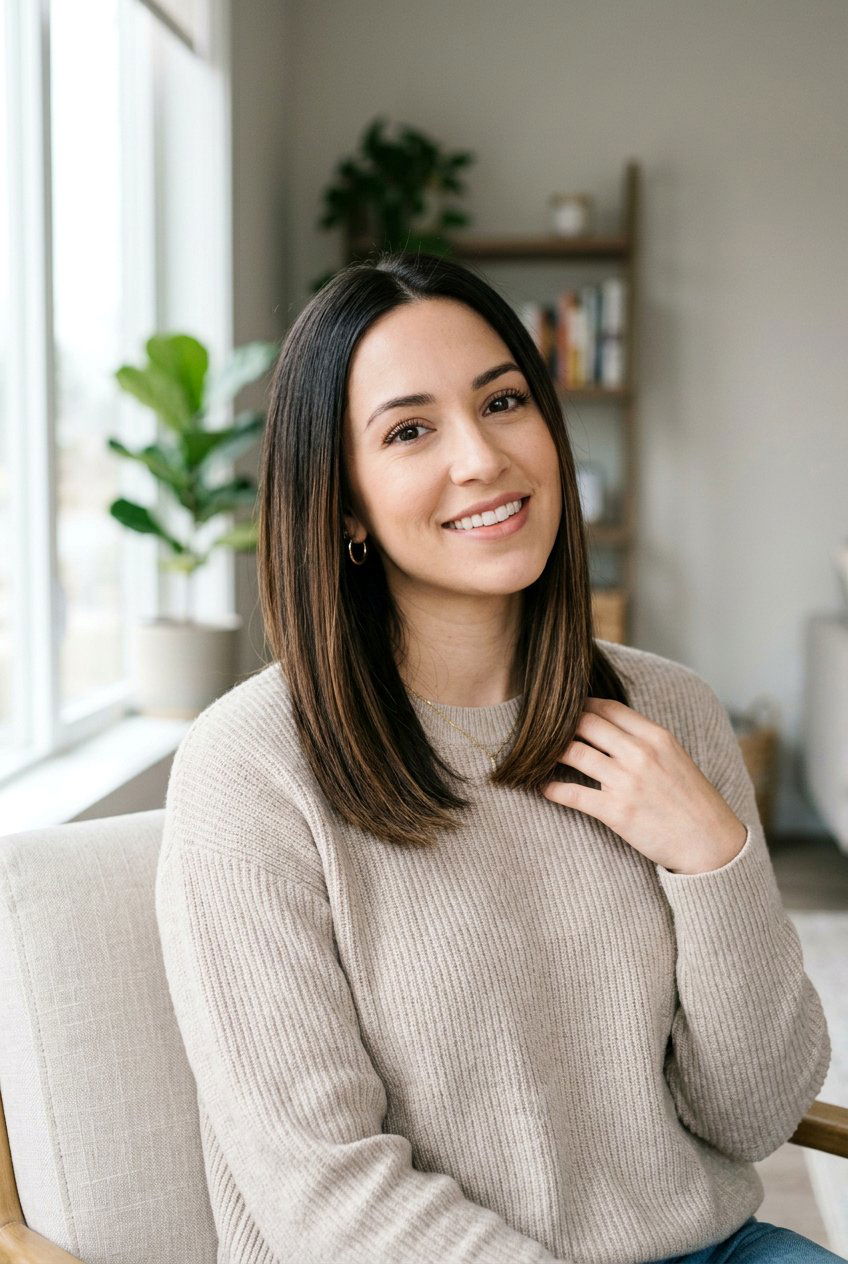
Subtle brown balayage for dark hair focuses on barely‑there lightening that enhances texture and movement rather than dramatically changing your overall color. Stylists often select shades only one to two levels lighter than your base and place them strategically around the face, crown, and outer layers, leaving the majority of the hair dark and relying on the light pieces to add a soft halo effect. This approach is ideal if you work in a conservative environment, prefer low‑key looks, or are trying balayage for the first time and want to see how your hair responds before going bolder. Because the shift in level is minimal, subtle balayage is typically less damaging and easier to maintain, with regrowth lines essentially invisible and toners required less often. Maintain the glossy finish with gentle cleansing, conditioning, and occasional shine treatments, and communicate with your stylist about gradually increasing brightness in future sessions if you decide you want more contrast over time.
14. Brown Balayage On Long Black Hair
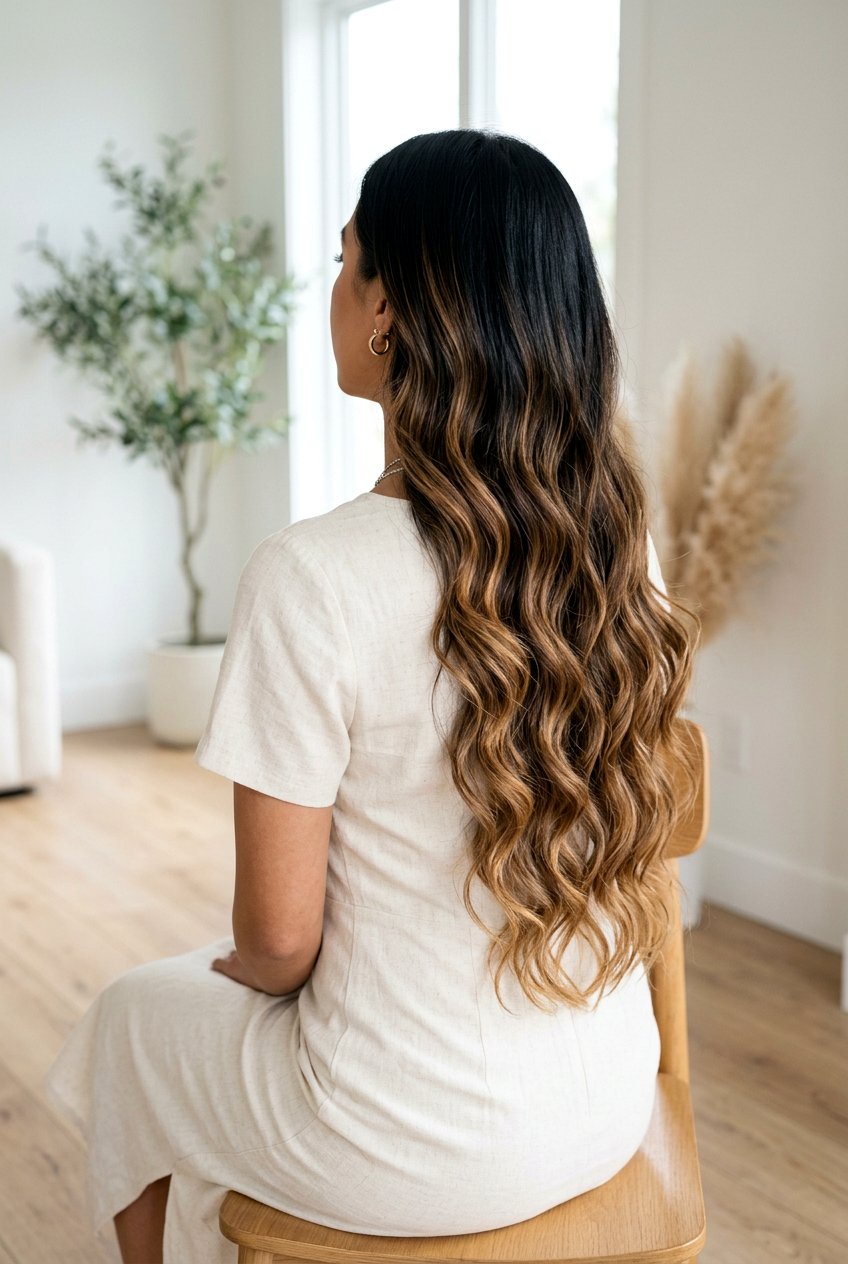
Brown balayage on long black hair showcases the balayage gradient beautifully, because there is enough length to transition slowly from dark roots to lighter ends without crowding the color. Colorists often start the lightening just below the chin or shoulders, then intensify the brown tones toward the ends for a soft, cascading effect that looks especially pretty in loose curls or beachy waves. The long canvas allows for multiple shades of brown, from deeper near the mid‑lengths to slightly lighter at the tips, giving a luxurious, multi‑dimensional appearance that photographs very well. This look is ideal if you want to keep your roots low maintenance and your length dramatic, since the darkest color remains at the top and the rest can be refreshed periodically without touching the scalp. To protect long hair, focus on bond‑building treatments, regular trims to prevent split ends, and consistent use of hydrating, color‑protective products so the ends stay glossy rather than dry.
15. Brown Balayage Lob On Dark Hair
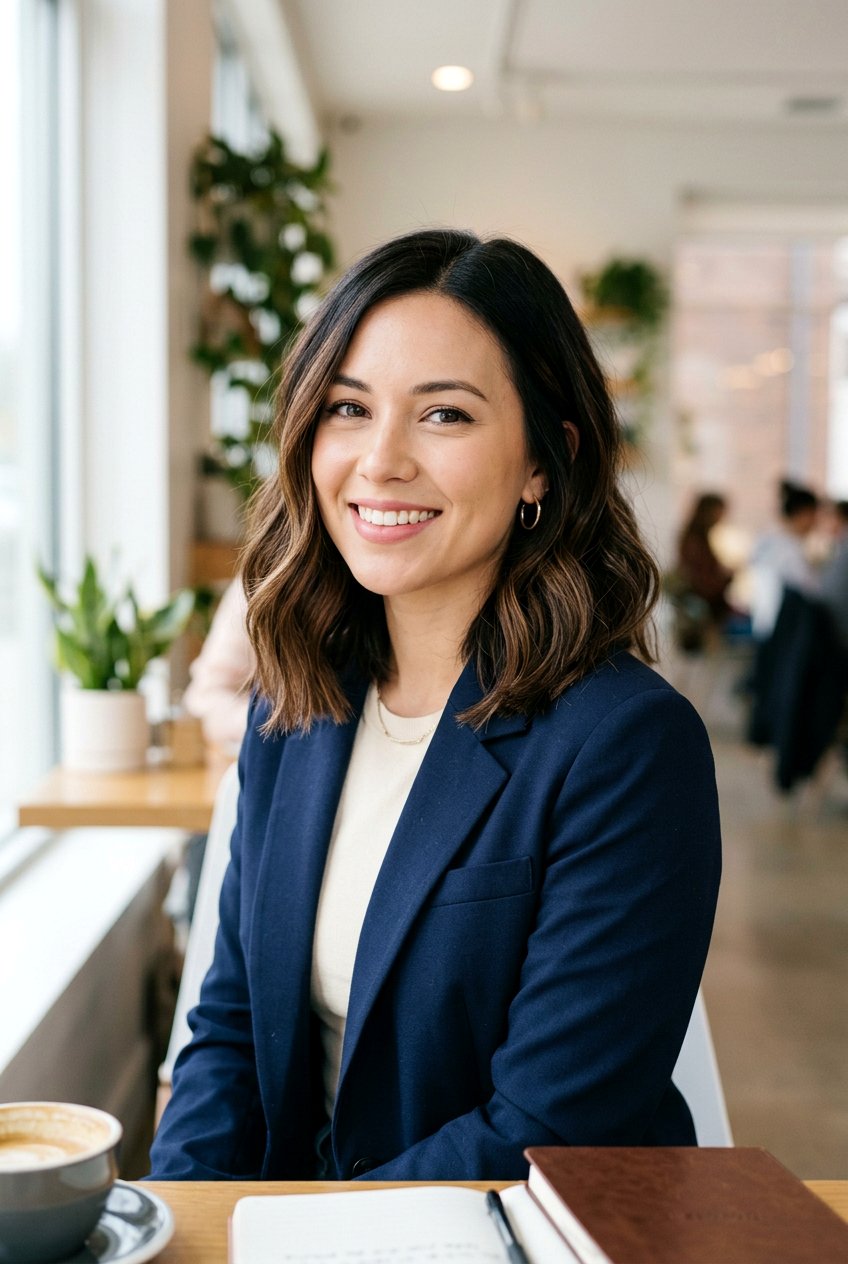
A brown balayage lob on dark hair combines a trendy, shoulder‑grazing cut with soft, blended color that keeps the style from feeling too blunt or heavy. Stylists typically keep the roots and top layer dark, then brush lighter brown tones through the lower half of the hair, with special attention to the front pieces that frame the jaw and collarbone. The lob length lets the balayage sit in a sweet spot where there is enough space for gradient but still a clean, modern outline that looks chic whether worn straight or slightly wavy. This look can make hair appear thicker, because the mix of dark roots and lighter lengths creates an illusion of volume and density along the perimeter of the cut. Maintain the sharpness and shine with regular trims every six to eight weeks, minimal heat styling, and lightweight smoothing products that keep the silhouette polished without weighing down the ends.
16. Brown Balayage On Layered Dark Hair
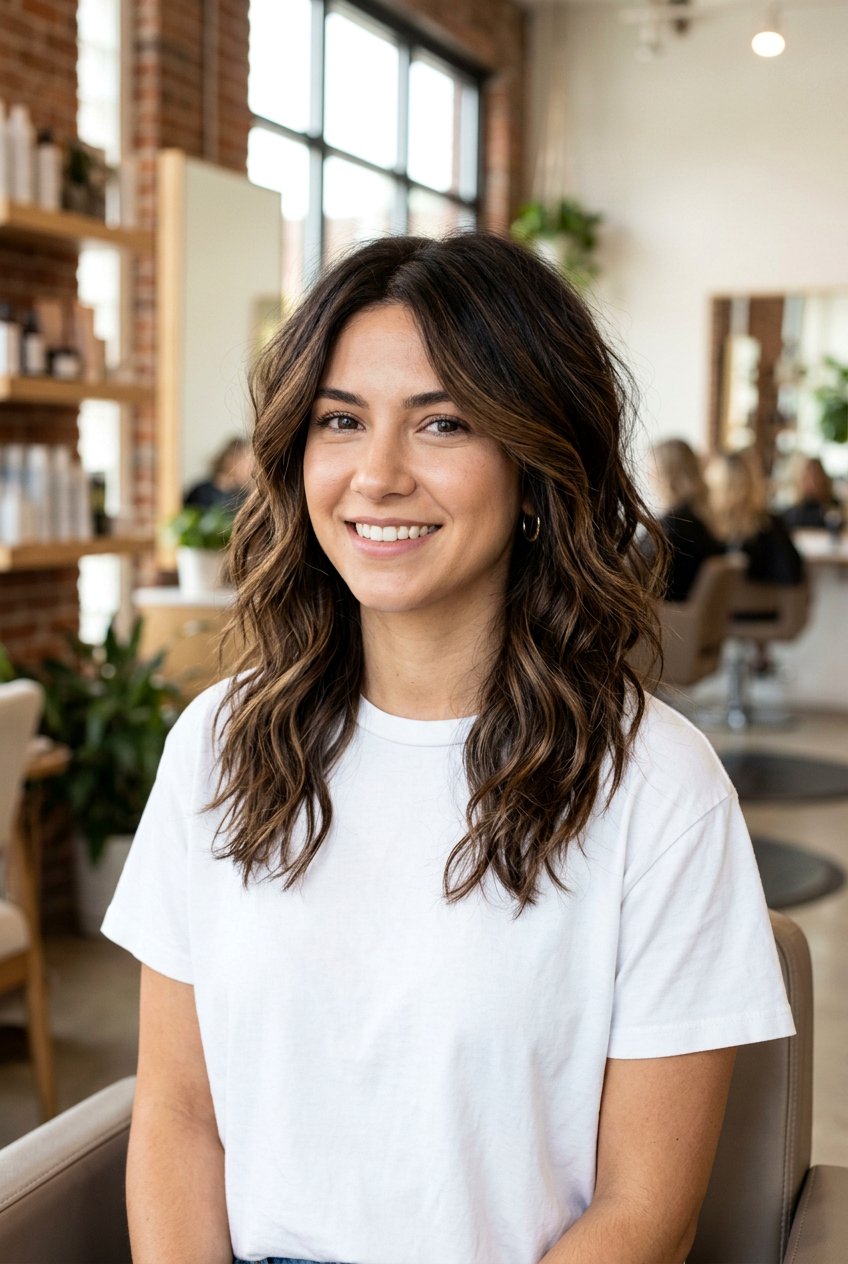
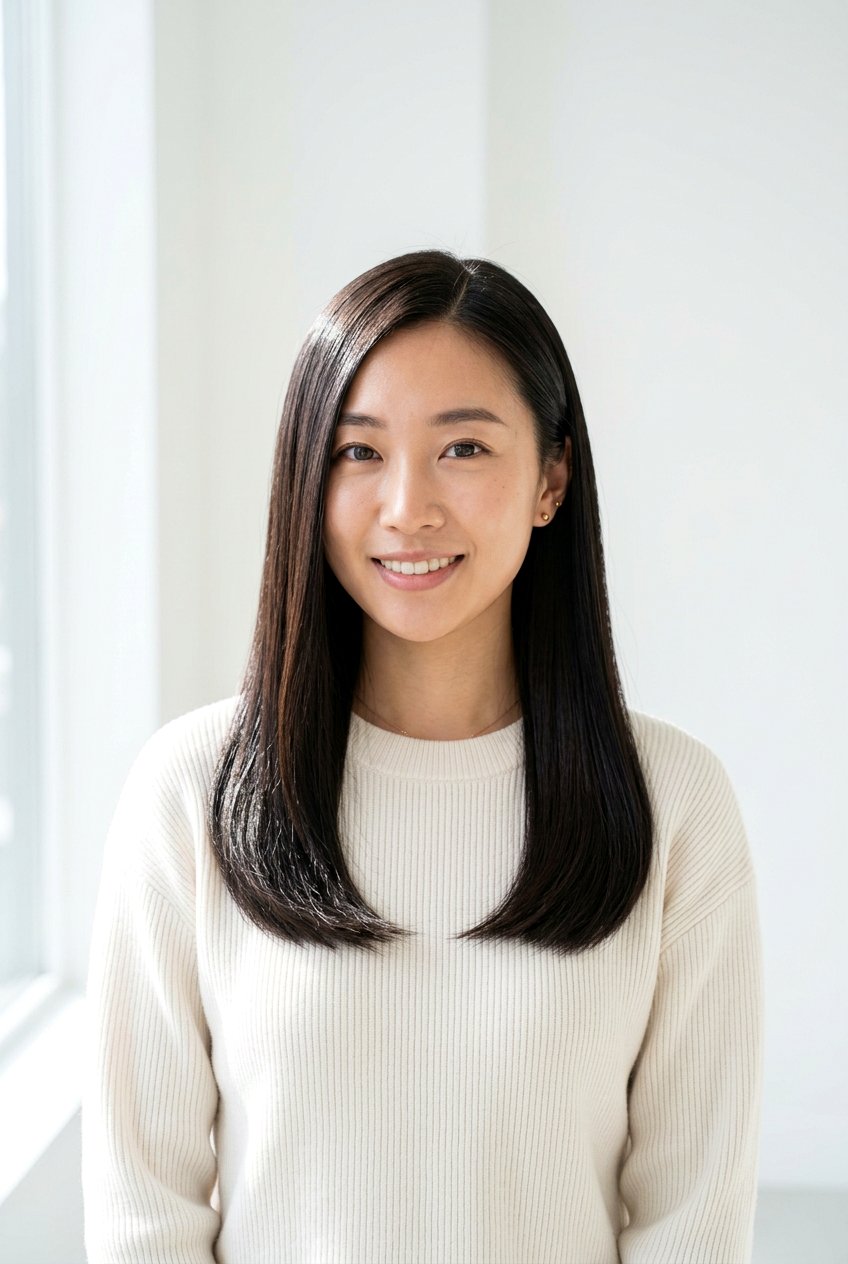
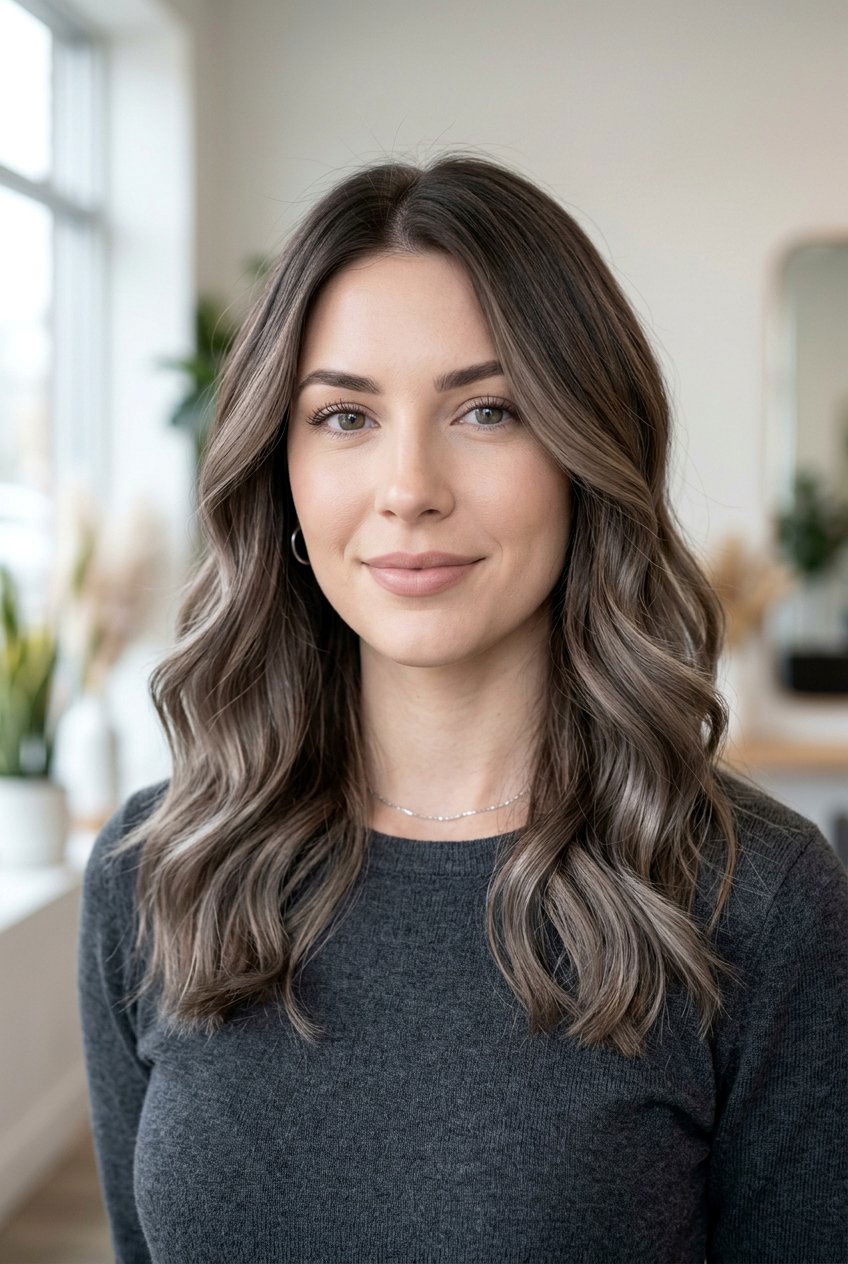
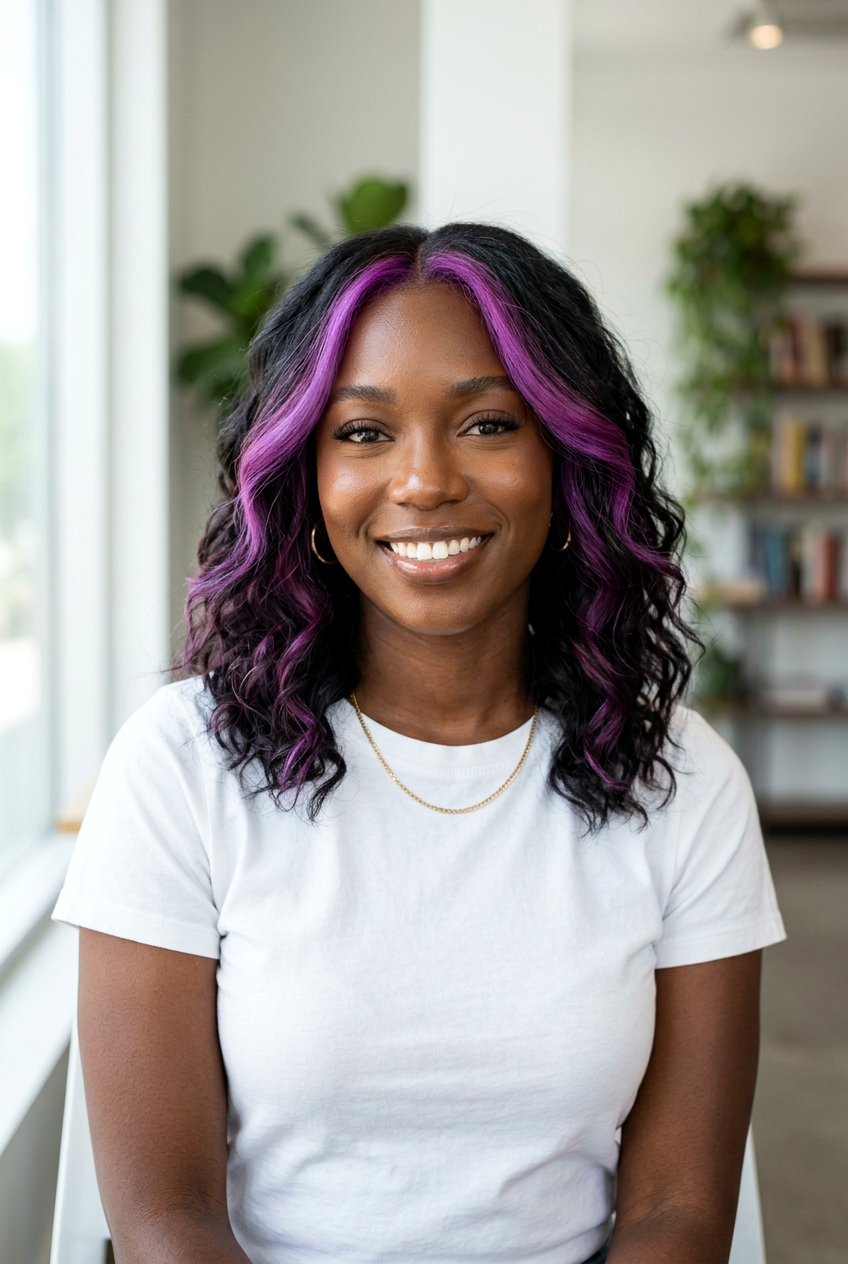
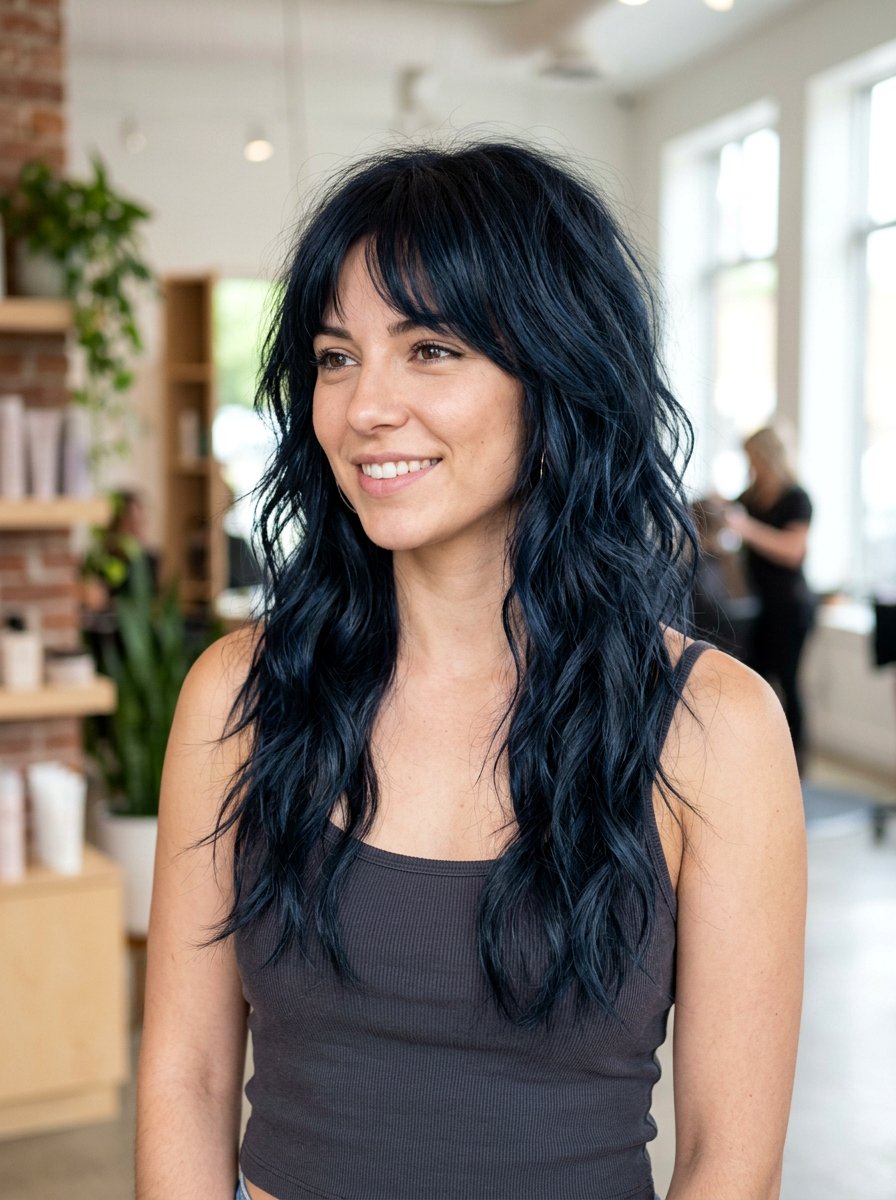
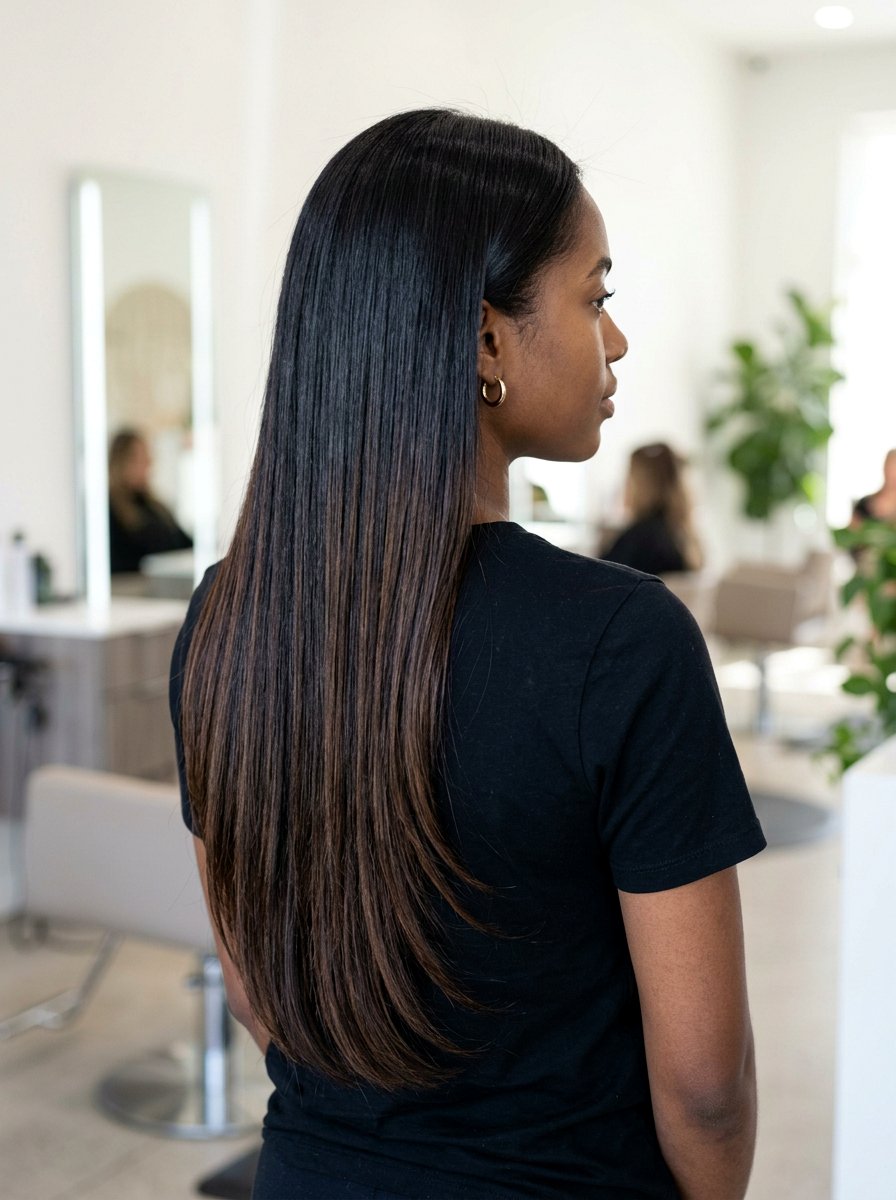
Brown balayage on layered dark hair emphasizes each layer, so your haircut and color work together to create airy movement and depth instead of looking flat. Colorists often highlight the ends of the layers and select pieces around the face, crown, and outer sections, leaving interior layers darker to provide contrast and the illusion of fullness. As your hair moves, lighter ends on the top layers sit over darker ones underneath, giving a multidimensional effect that shows up nicely in both straight and wavy styles. This combination is especially flattering if you have thicker hair and want to break up the density while keeping an overall dark appearance. To keep layered balayage looking intentional instead of straggly, stay on top of trims, use a lightweight leave‑in conditioner for detangling, and style with a round brush or curling iron to showcase the contrast between the dark roots and brown ends.
17. Face Framing Brown Balayage On Dark Hair
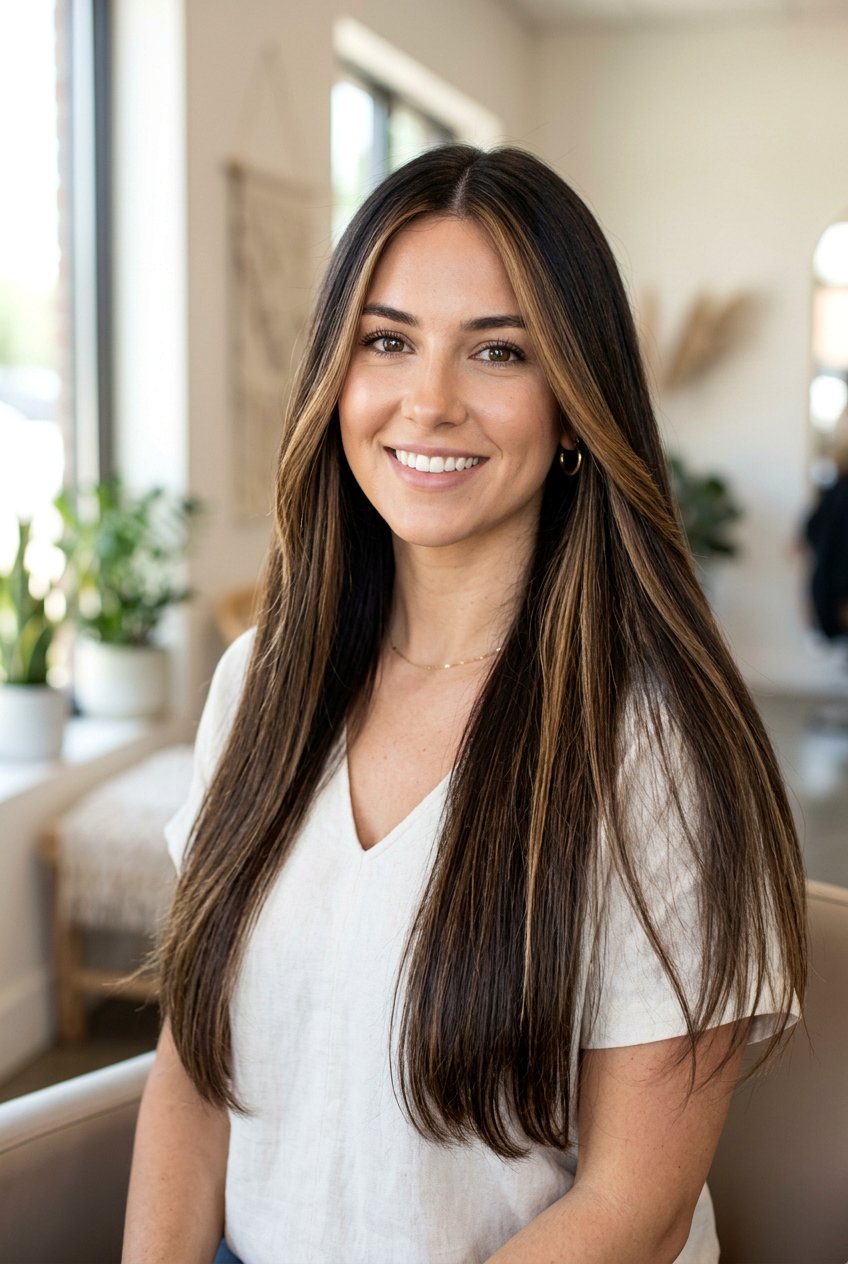
Face framing brown balayage on dark hair focuses color around the front sections to brighten your features while leaving most of the length and interior layers dark for easy upkeep. Your stylist paints medium or light brown highlights along the strands that fall closest to your face, often starting near the eye or cheekbone and blending into the rest of the hair with a soft, angled motion. This placement can visually lift your features, draw attention to your eyes, and add a subtle contour effect without a full head of highlights. It is also budget‑friendly and low commitment, because you can refresh just the front pieces as needed without redoing the entire balayage each time. Maintain the glossy framing pieces by using gentle shampoo, protective styling products, and a satin or silk pillowcase to reduce friction that can rough up the delicate, lightened hair around your face.
18. Brown Balayage On Wavy Dark Hair
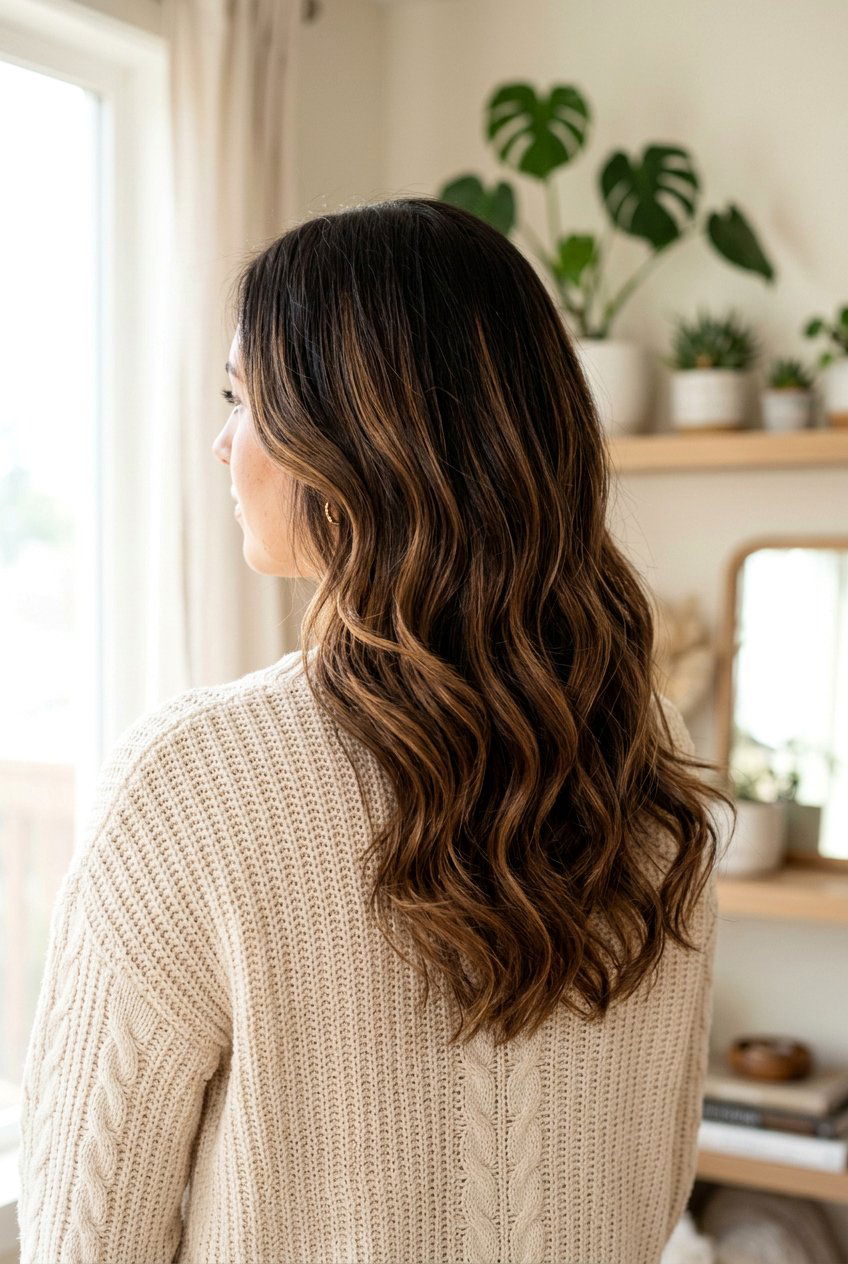
Brown balayage on wavy dark hair enhances every bend in your waves, making them look more defined and lived‑in while keeping your natural depth intact at the roots. Colorists often paint balayage in a way that follows your wave pattern, placing lighter brown tones on the outer sections and toward the mid‑lengths and ends so each wave ridge catches the light. This approach creates a beachy yet polished effect that looks effortless when air‑dried or styled with a large‑barrel curling iron for loose, modern waves. Because the root area usually stays dark and the lightest bits sit on the tips, grow‑out is soft and easy to maintain, requiring only occasional toners and conditioning treatments. To keep your waves and color glossy, use lightweight, curl‑friendly products, avoid heavy silicones that can build up, and protect your hair from heat and UV exposure, which can dull both the texture and tone over time.
19. Brown Balayage On Straight Dark Hair
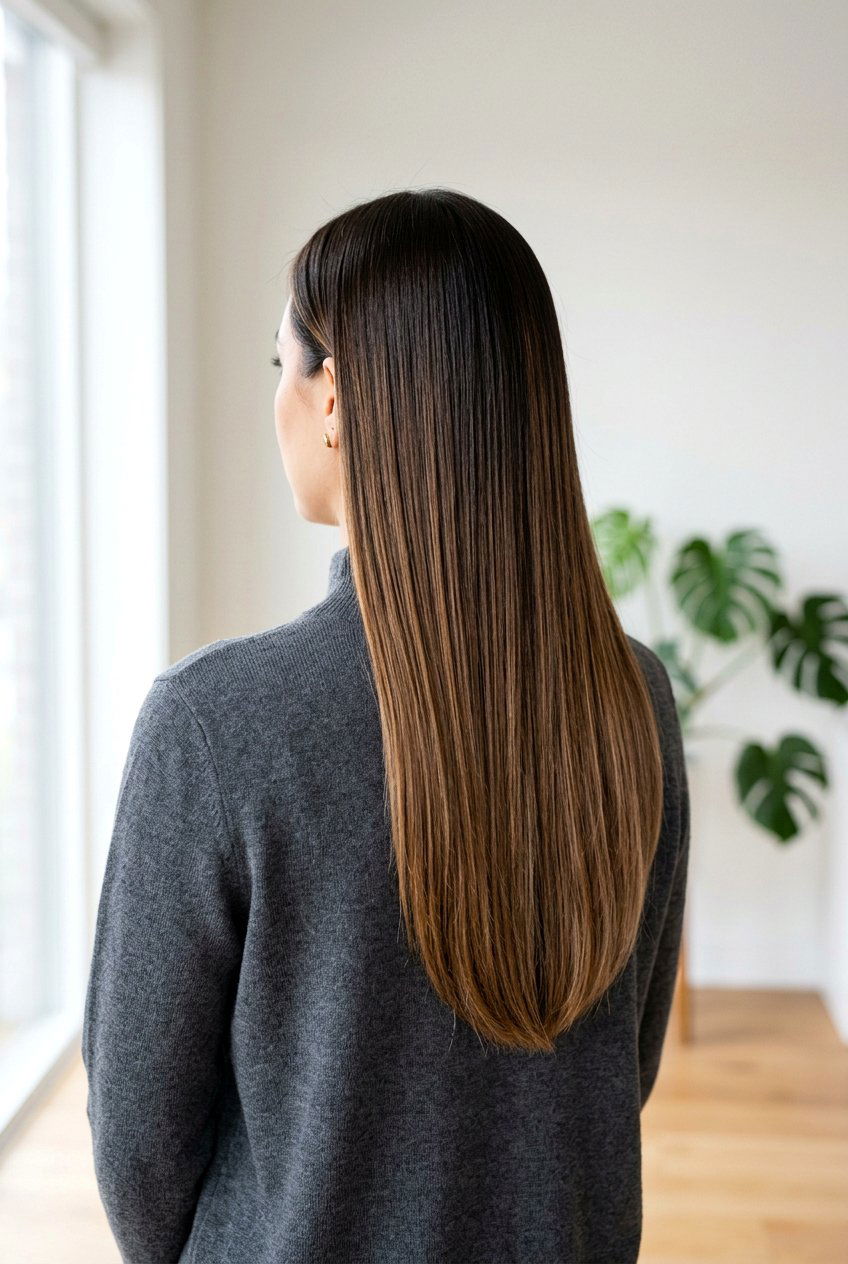
Brown balayage on straight dark hair showcases clean, smooth transitions and glossy shine, because straight strands act like a sheet that reflects light along the gradient from root to tip. Stylists usually place lighter browns on the mid‑lengths and ends, using very soft, feathered strokes near the top so there is no obvious starting line, which is crucial on straight hair where every edge is visible. The result is a sleek, expensive‑looking finish that suits blunt cuts, lobs, or long layers and works well for both professional and casual settings. Since any dryness or damage shows more clearly on straight hair, maintaining a smooth cuticle with regular trims, bond‑building treatments, and heat protection is essential for keeping the balayage reflective. Limit flat‑iron passes, keep your tools at moderate temperatures, and use shine serums or light oils sparingly so they enhance the gloss without weighing down your style.
20. High Gloss Brown Black Balayage Maintenance Tips
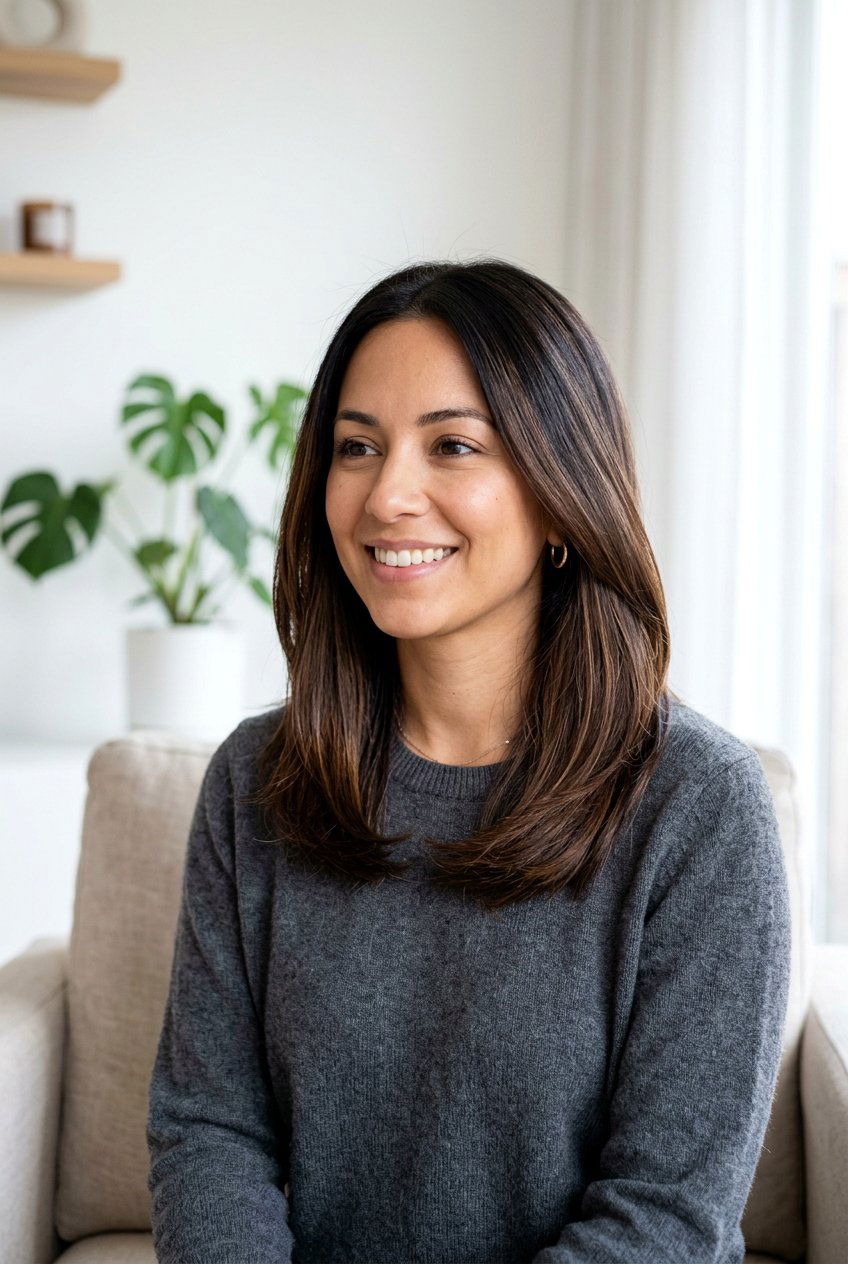
High gloss brown black balayage maintenance focuses on protecting your color investment so the tones stay rich and the surface of your hair remains smooth and reflective week after week. Switch to sulfate‑free, color‑safe shampoo and limit washing to a few times per week, using lukewarm water and following each cleanse with a hydrating conditioner or mask to guard against dryness. Incorporate a weekly deep treatment or bond‑repair product, especially if your hair has been lightened more than a couple of levels, and always apply heat protectant before blow‑drying or using hot tools. Schedule gloss or toner appointments every six to eight weeks to refresh shine, neutralize brass, and keep the balance between brown and black just right, instead of repeatedly lifting already lightened sections. Finally, protect your hair from UV exposure with hats or UV‑shielding sprays when you are outdoors, and sleep on a smooth pillowcase to reduce friction so your balayage looks salon‑fresh for longer stretches between full color sessions.
Conclusion:
Choosing a glossy brown black balayage gives you a versatile, low‑maintenance way to elevate dark hair with depth, movement, and shine while still feeling like yourself. Whether you gravitate toward soft espresso, creamy mocha, warm caramel, or cool ash, the key is customizing the shade, placement, and contrast level to your natural base, haircut, and skin tone so the end result looks tailored instead of generic. Talking through photos, maintenance expectations, and your heat‑styling habits with your colorist makes it easier to land on the right mix of brown and black that fits your lifestyle. After your appointment, consistent at‑home care with gentle products, heat protection, and periodic gloss treatments will keep your balayage reflective, dimensional, and salon‑fresh. If you are unsure where to start, think about whether you prefer subtle shifts or bold contrast, then use that as your guide when choosing among the many brown balayage variations that work beautifully on a dark base.
You'll Like These Styles:


Leave a Reply