
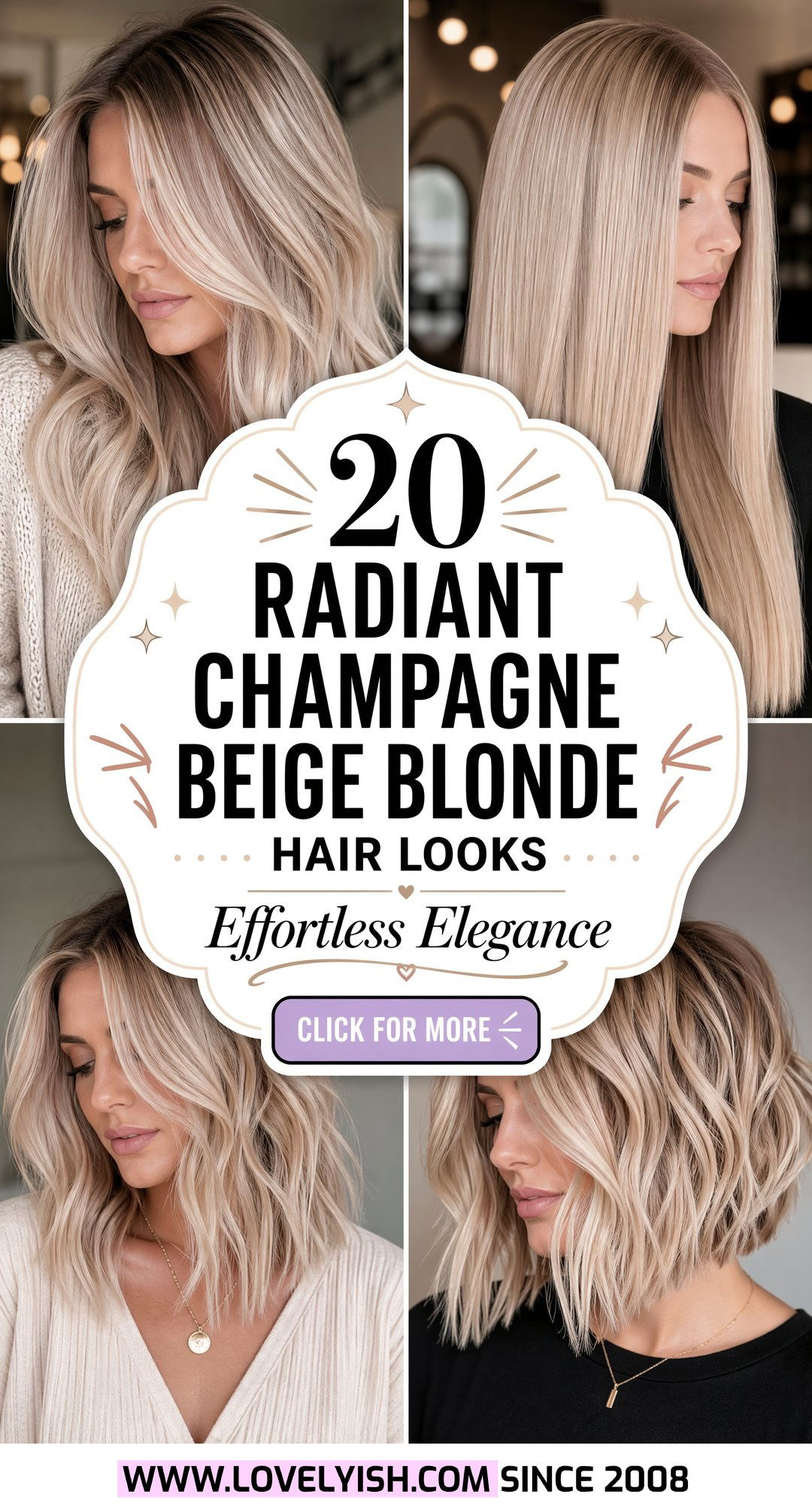
Champagne beige blonde hair feels like that perfect in‑between blonde that never looks brassy or too icy, which is why it is trending hard for 2026. This shade mixes soft beige, pale gold, and pearly tones to create a neutral, light‑reflective finish that flatters many skin tones without looking flat. Colorists love it because it sits right between cool and warm, so it can brighten fair and medium complexions and still look luxe on deeper skin when paired with a slightly deeper root. Whether you are starting from dark blonde or brunette, you will usually need to be lifted to a level 8–10 blonde so those champagne pigments show clean and glossy. Regular toning, glosses, and moisturizing masks are key to keeping the beige blonde tone from turning too yellow or dull over time. If you want a soft, expensive‑looking blonde that grows out gracefully, champagne beige blonde is one of the most wearable choices right now.
1. Champagne Beige Blonde Bob
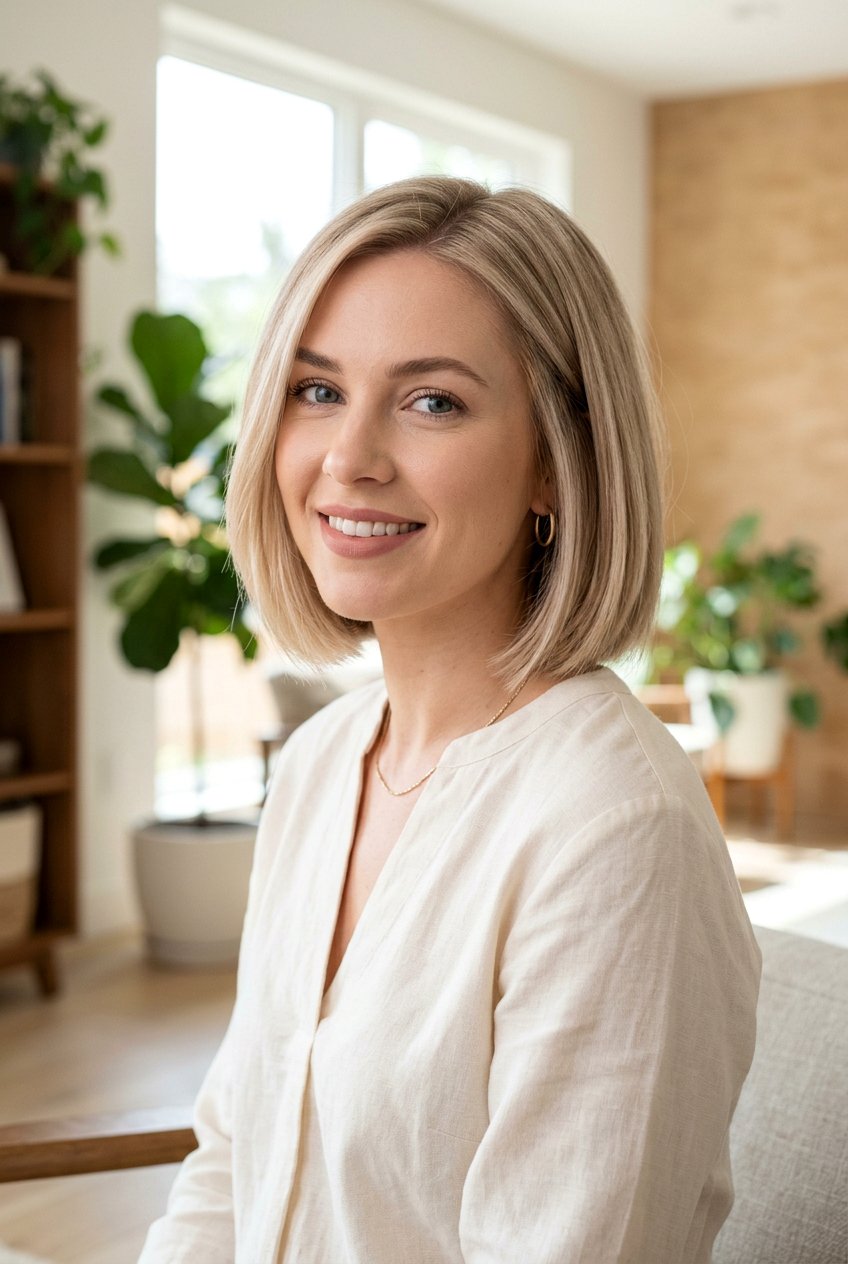
A champagne beige blonde bob is a great place to start if you want this color to look modern but low‑maintenance. This look works best on a one‑length or slightly blunt bob that hits between the chin and collarbone, with soft internal layers so the beige and pearly highlights can catch the light. The champagne tone blends neutral beige and pale gold, which keeps the bob from looking too ashy while still avoiding that harsh, brassy yellow that many people dislike. For most people, stylists will pre‑lighten hair to a level 9 or 10, then tone with a neutral‑to‑slightly‑cool champagne formula so the finish looks creamy and reflective. A bob also makes upkeep a little easier, because damaged ends are trimmed often and toners can be refreshed every 6 to 10 weeks to keep the shade on point. At home, you will want a sulfate‑free shampoo, an occasional violet or beige‑correcting toner mask, and a weekly deep conditioner so your bob stays shiny instead of dry.
2. Long Champagne Beige Blonde With Face Framing
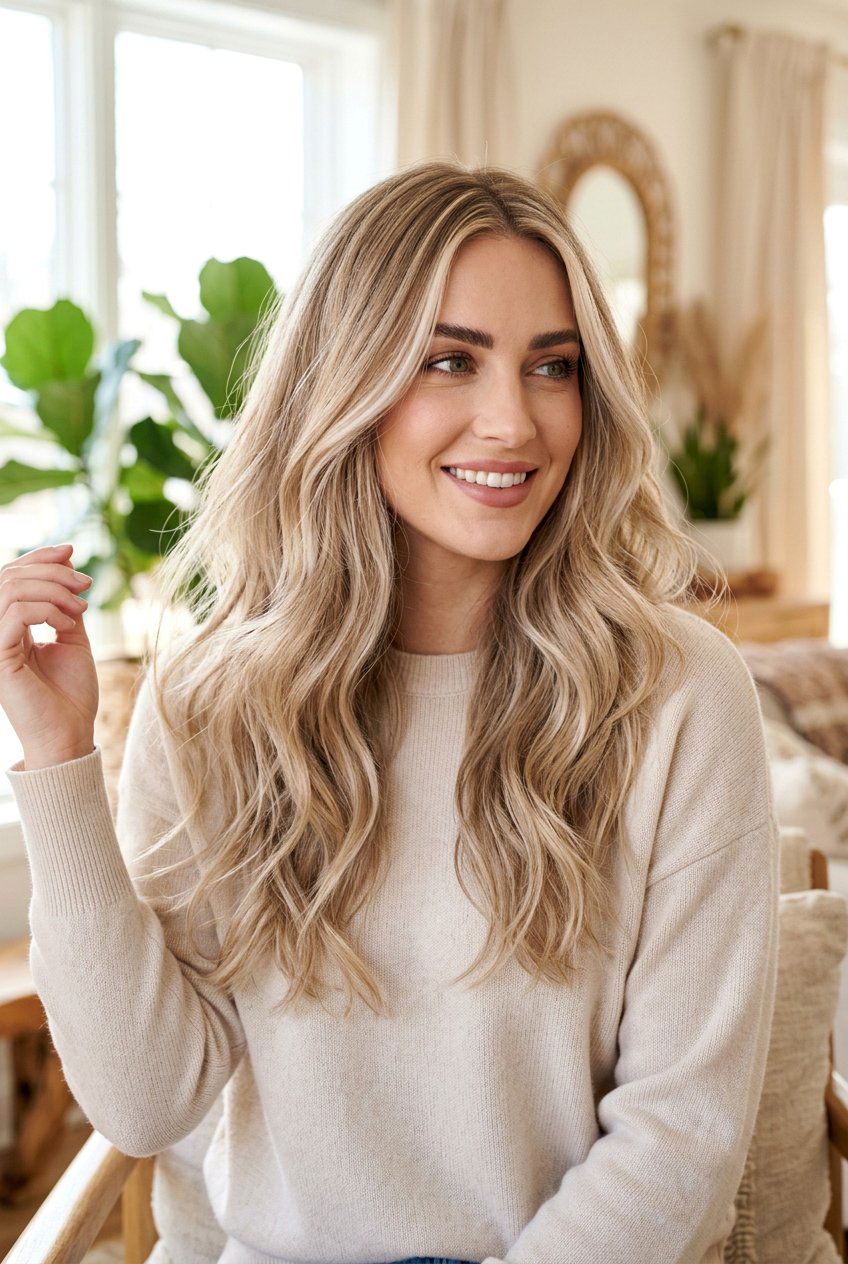
If you love length, long champagne beige blonde hair with face‑framing pieces adds a soft, bright focus around your features without looking streaky. The overall color usually sits in a creamy champagne blonde, while the front pieces are lifted a touch lighter to level 10 so they really pop yet still blend seamlessly into the rest of your hair. Colorists often use balayage or foilyage for the mid‑lengths and ends, then add finer highlights around the hairline so everything grows out with a soft, lived‑in effect rather than a harsh line. This combination is especially flattering on neutral or cool fair to medium skin tones, where the beige champagne tone brings a subtle glow without washing you out. Because long hair can get dry fast after lightening, plan on weekly masks and heat protectant every time you blow‑dry or curl. Gloss appointments every couple of months will keep the champagne tone glossy, correct any fading, and help your long layers stay smooth.
3. Champagne Beige Blonde Balayage On Brown Hair
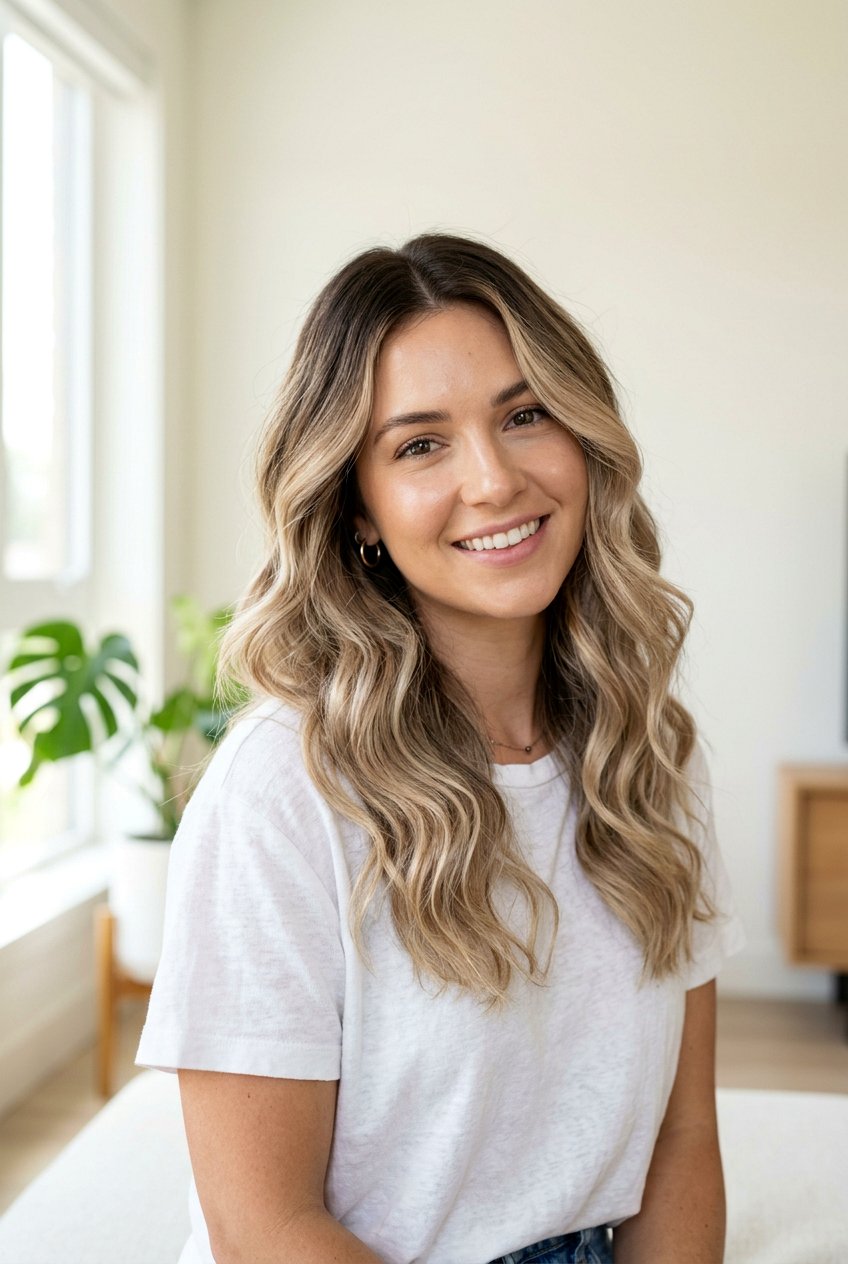
Champagne beige blonde balayage on brown hair gives you that expensive contrast without needing to bleach your whole head. In this look, your natural brunette or dark blonde base is kept at the roots and upper lengths, while hand‑painted champagne beige panels are focused on the mid‑lengths and ends. The balayage technique lets your colorist place lighter pieces where the sun would naturally hit, which makes the champagne tone and soft beige shine look dimensional instead of stripey. This approach is ideal for deeper or warmer skin tones because the darker root and mid‑lengths keep depth at the scalp, while the champagne ends add brightness without clashing. Maintenance is pretty forgiving since your natural root is part of the look, so you can stretch salon visits to every three or four months, with toner refreshes in between as needed. At home, a color‑safe shampoo, occasional purple or beige‑balancing treatment, and nourishing oils on the ends will help your balayage stay glossy.
4. Rooted Champagne Beige Blonde
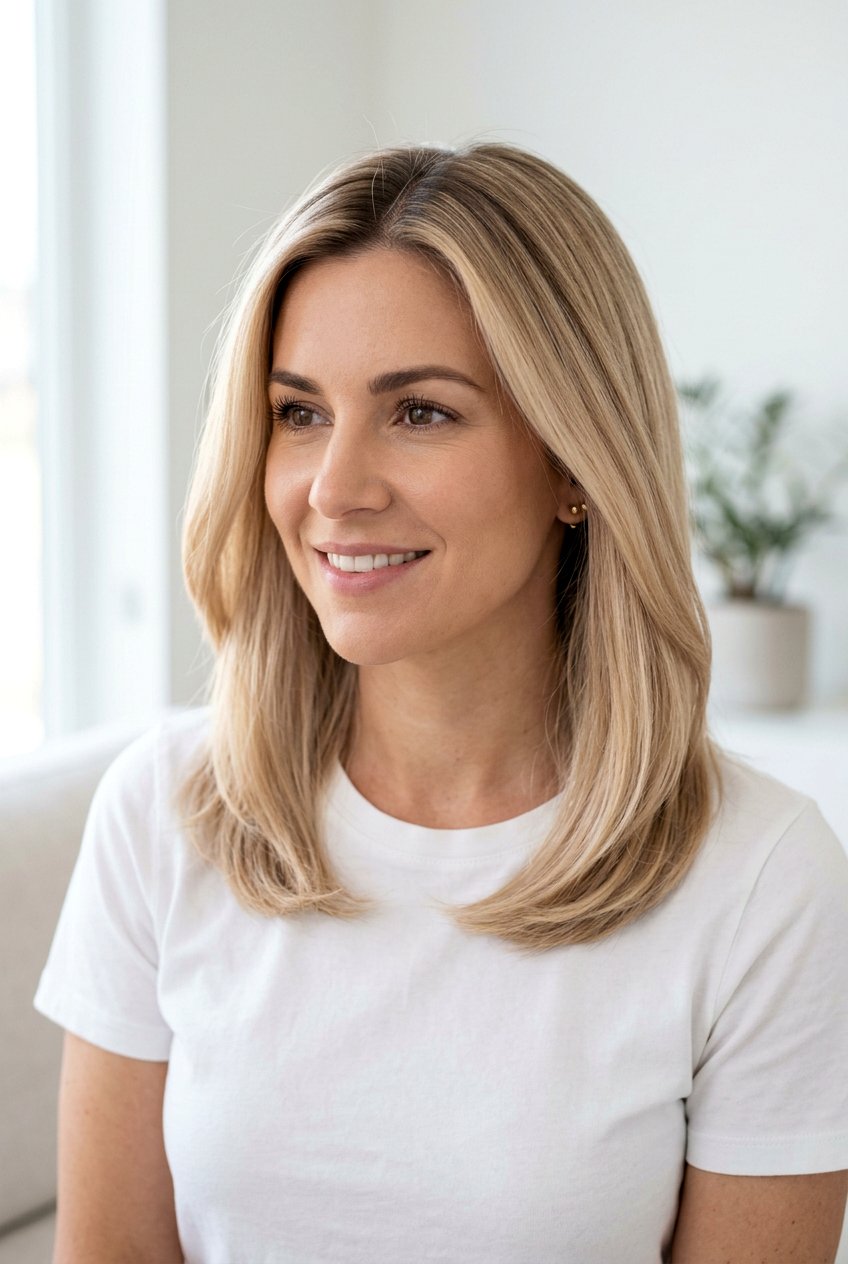
Rooted champagne beige blonde is perfect if you like low‑maintenance hair that still looks polished and bright. With this look, your colorist keeps a slightly deeper root—either your natural shade or a soft shadow root—and then melts it into a champagne beige blonde through the mids and ends. The root area can sit one to two levels darker than the lengths, which creates depth at the scalp and makes regrowth much less obvious as your hair grows. The lengths are toned in that trademark champagne mix of beige, pale gold, and pearly hues, giving a soft shimmer rather than a flat, single‑process blonde. This balance of warm and cool undertones works on many complexions, and it can be customized by shifting slightly cooler or warmer depending on your skin tone. Because the root is darker, you can usually schedule full color appointments less often and just book glosses and toners every six to twelve weeks to keep the champagne part fresh.
5. Champagne Beige Blonde With Curtain Bangs
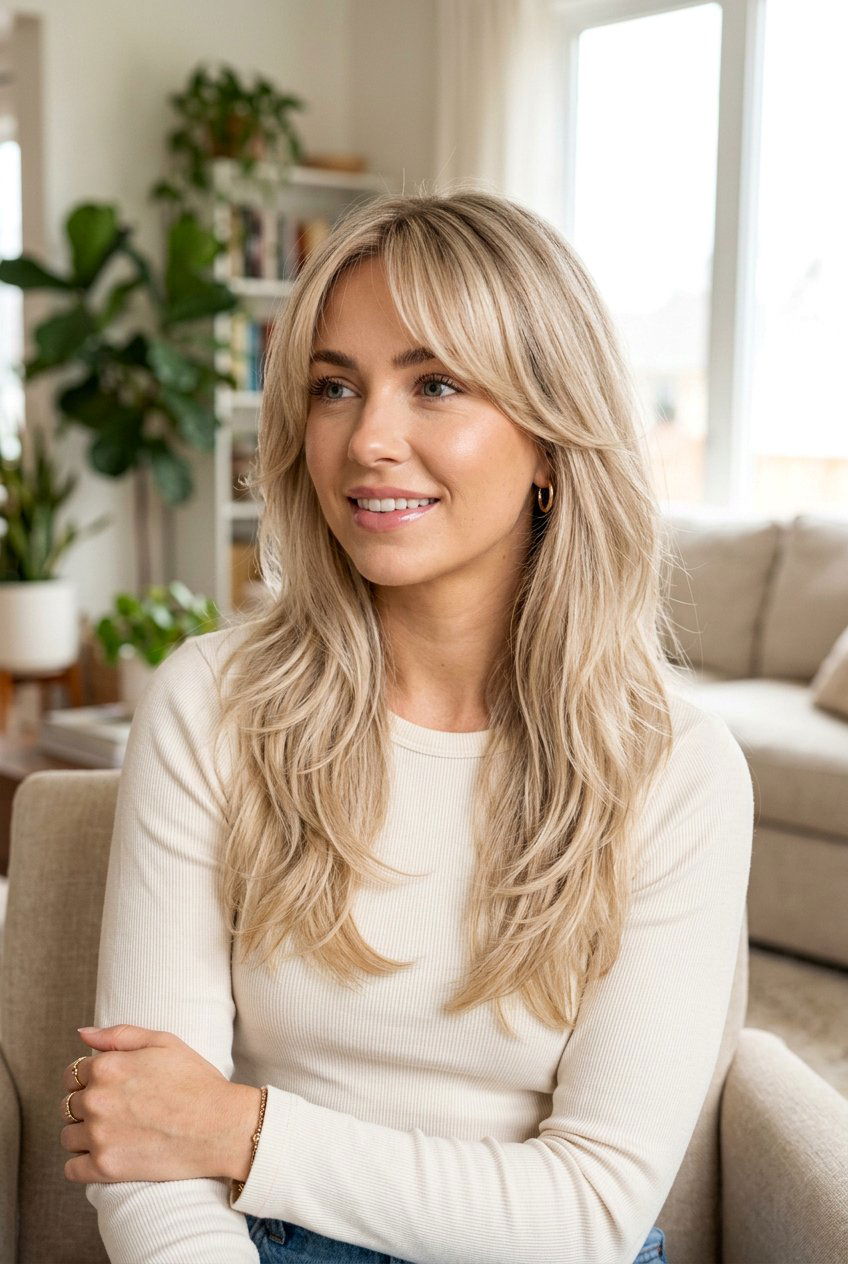
Champagne beige blonde with curtain bangs brings a soft, retro‑inspired vibe that still feels very current. In this haircut, long layered bangs are parted down the middle and swept to each side, blending into face‑framing layers while the rest of the hair flows in a champagne beige blonde tone. The bangs themselves are usually highlighted a bit brighter so they frame your eyes and cheekbones, while the base color stays in that neutral champagne family so everything looks cohesive. This kind of fringe works well on straight, wavy, or slightly curly hair, because the curtain shape can be styled to open around the face rather than sit heavy on the forehead. The beige champagne shade flatters many fair to medium skin tones and can be adjusted for warmer or cooler undertones, giving you a softer, more blended alternative to platinum. You will need regular trims to keep the bangs sitting right, plus a round brush and light styling cream or spray to style them without stiffness.
6. Champagne Beige Blonde Lob
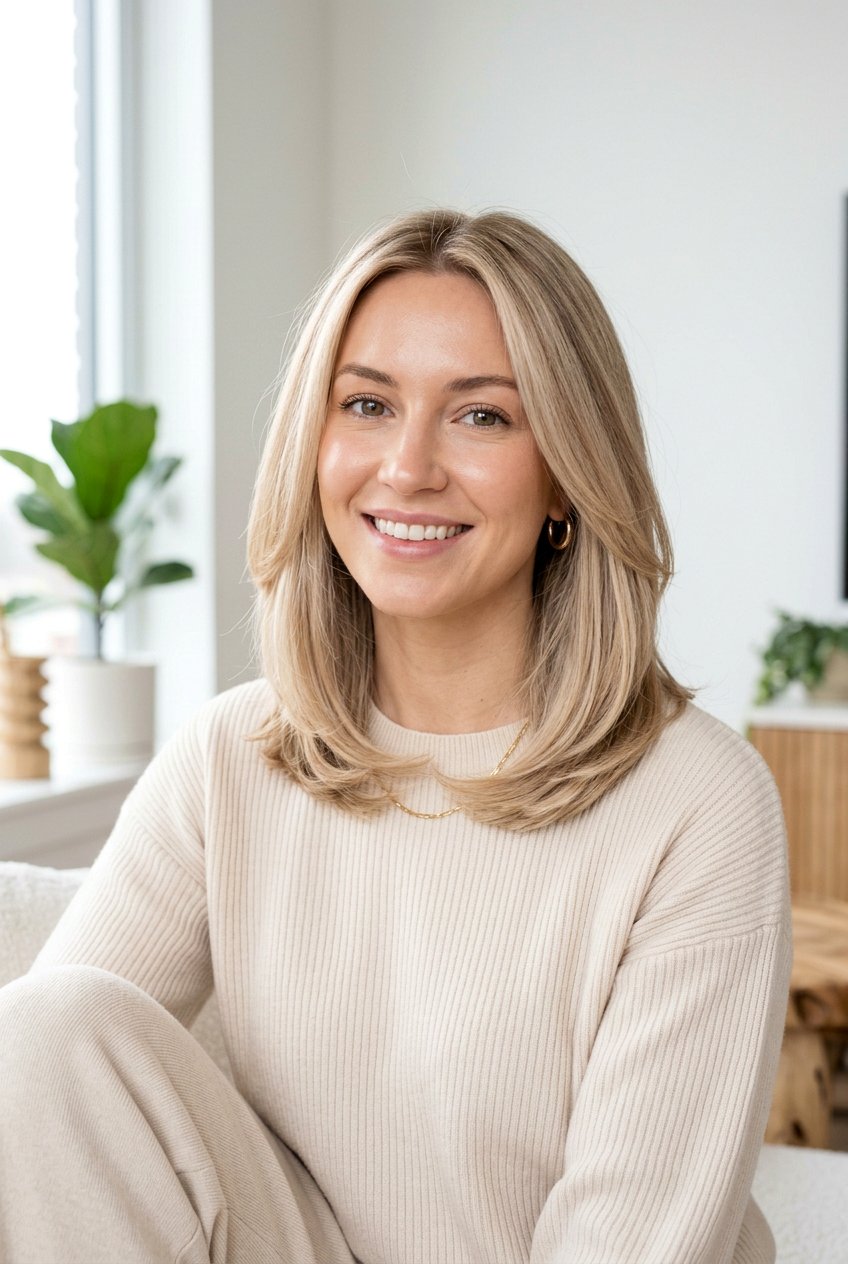
A champagne beige blonde lob is a chic middle ground if you are not ready to go super short or maintain very long hair. This cut usually sits between the collarbones and the top of the shoulders, sometimes with slight layering on the ends so the champagne beige color can show dimension when you move. The color itself mixes neutral beige and pale gold for that signature champagne effect, giving a bright yet soft result that does not lean too silver or too yellow. A lob is long enough to curl, wave, or wear straight, so the shade works for many textures, from fine hair that benefits from the light‑reflecting tone to thicker hair that looks glossy with the right toning. Because the overall length is moderate, you will likely see less damage at the ends than on very long hair, which helps the blonde stay healthy between glosses. Plan on trims every eight to ten weeks and regular conditioner or masks so the tone does not look dull.
7. Champagne Beige Blonde With Soft Waves
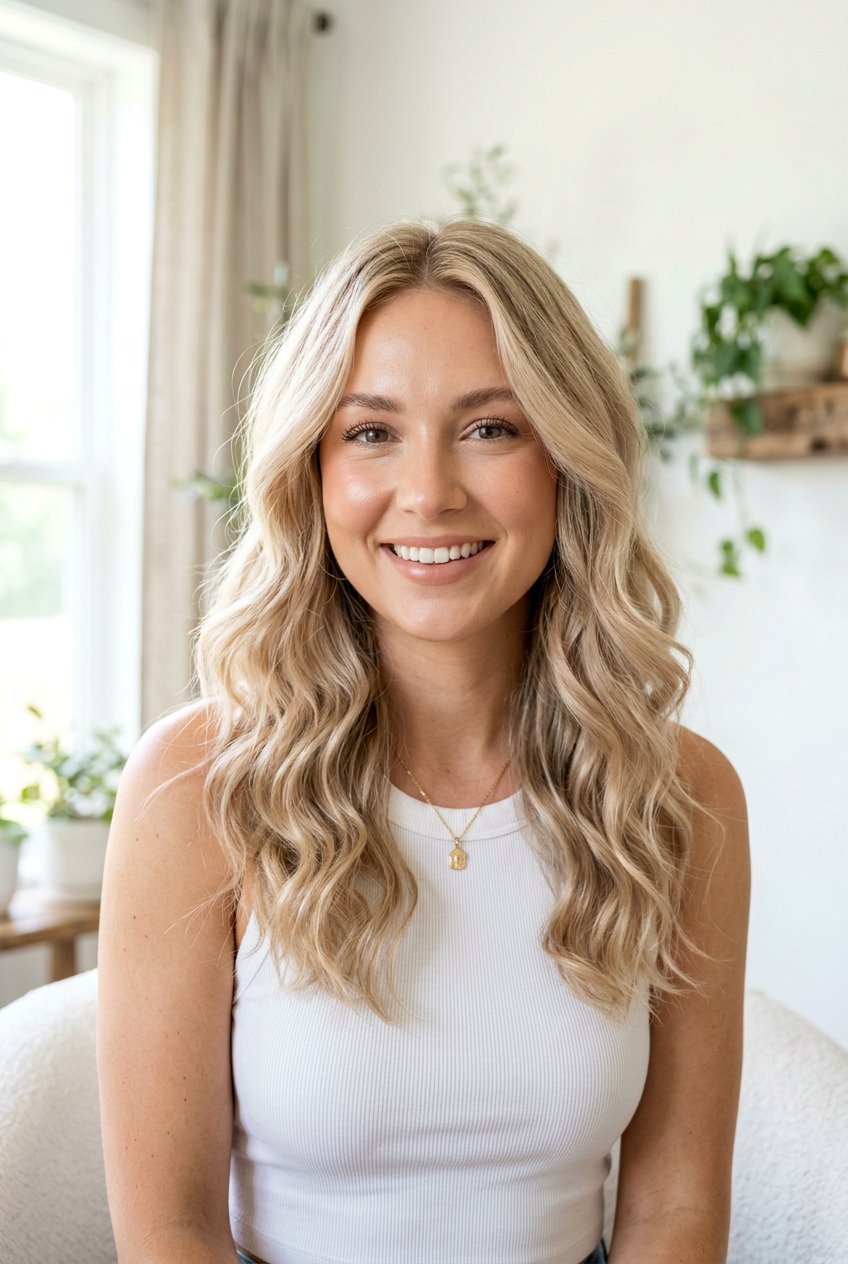
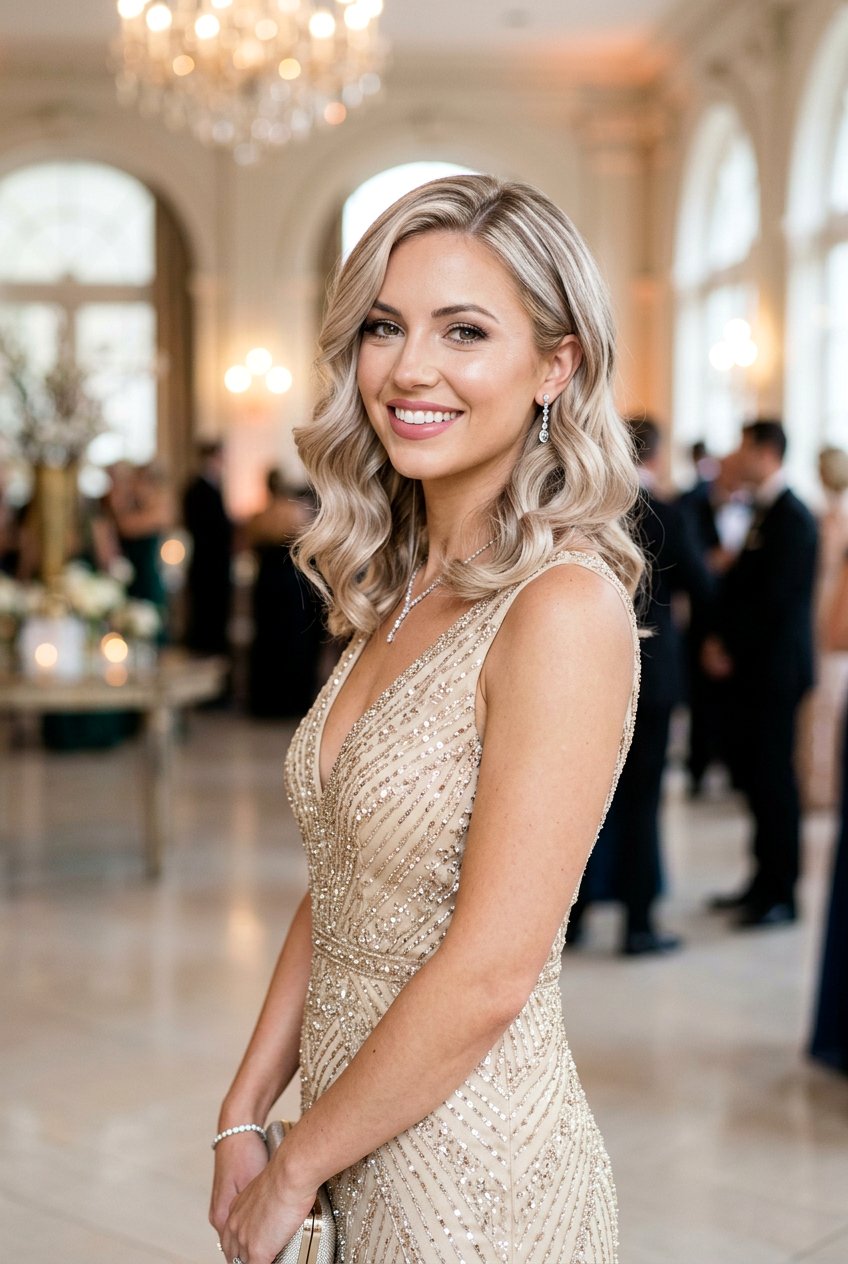
Champagne beige blonde with soft waves is the go‑to look if you want hair that appears effortless but still polished. The base color is a creamy champagne beige, combining cool and warm undertones so the waves catch light without looking brassy or gray. To make the color look multi‑dimensional, stylists often add very fine, diffused highlights and lowlights within the champagne range, which creates a subtle shimmer when you style loose waves with a curling iron or wand. This kind of finish is flattering for many skin tones and especially suits those who feel too washed out in icy blondes but do not like strong warmth. For styling, use a heat protectant, wrap sections away from the face, then brush them out for a soft, airy wave that shows off the color. To maintain the champagne tone, a gentle purple or beige‑correcting shampoo once a week plus regular salon glosses will keep everything glossy and balanced.
8. Champagne Beige Blonde Pixie Cut
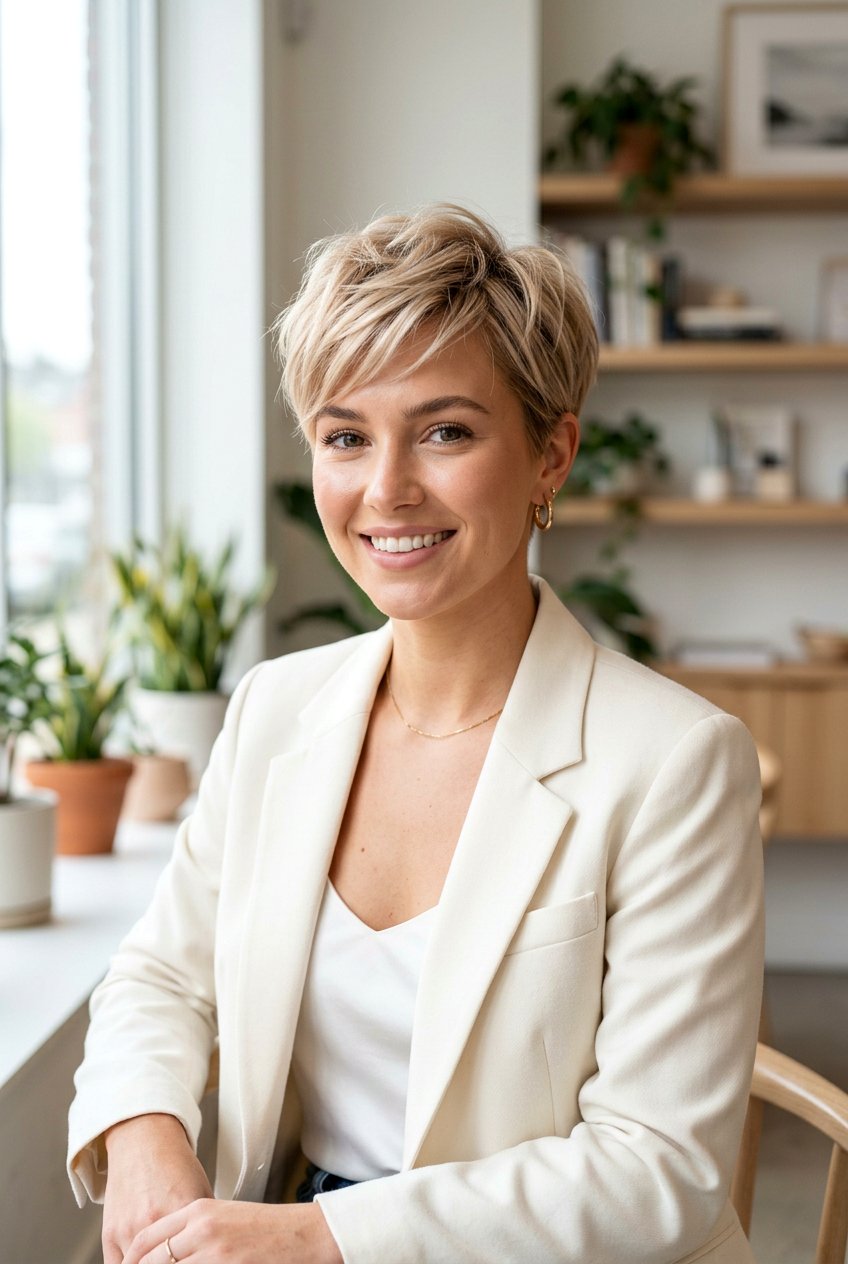
A champagne beige blonde pixie cut is bold but surprisingly wearable because the tone is soft and neutral rather than stark. This haircut is cropped close at the nape and sides, with slightly longer layers on top that can be styled smooth, tousled, or textured to highlight the multi‑dimensional champagne color. The beige blonde tone uses a blend of pale gold and pearly highlights to avoid harsh yellow, and because pixie cuts expose so much of your face, the neutral warmth can really brighten your features. This look works particularly well for light to medium cool or neutral skin tones, where champagne blonde brings an elegant contrast without washing you out like some icy blondes might. Since the hair is so short, you will likely need trims every four to six weeks, but the upside is that damage is cut off quickly and color corrections are easier. Stick with nourishing products and occasional toners to keep the shade looking fresh rather than flat.
9. Champagne Beige Blonde On Naturally Dark Hair
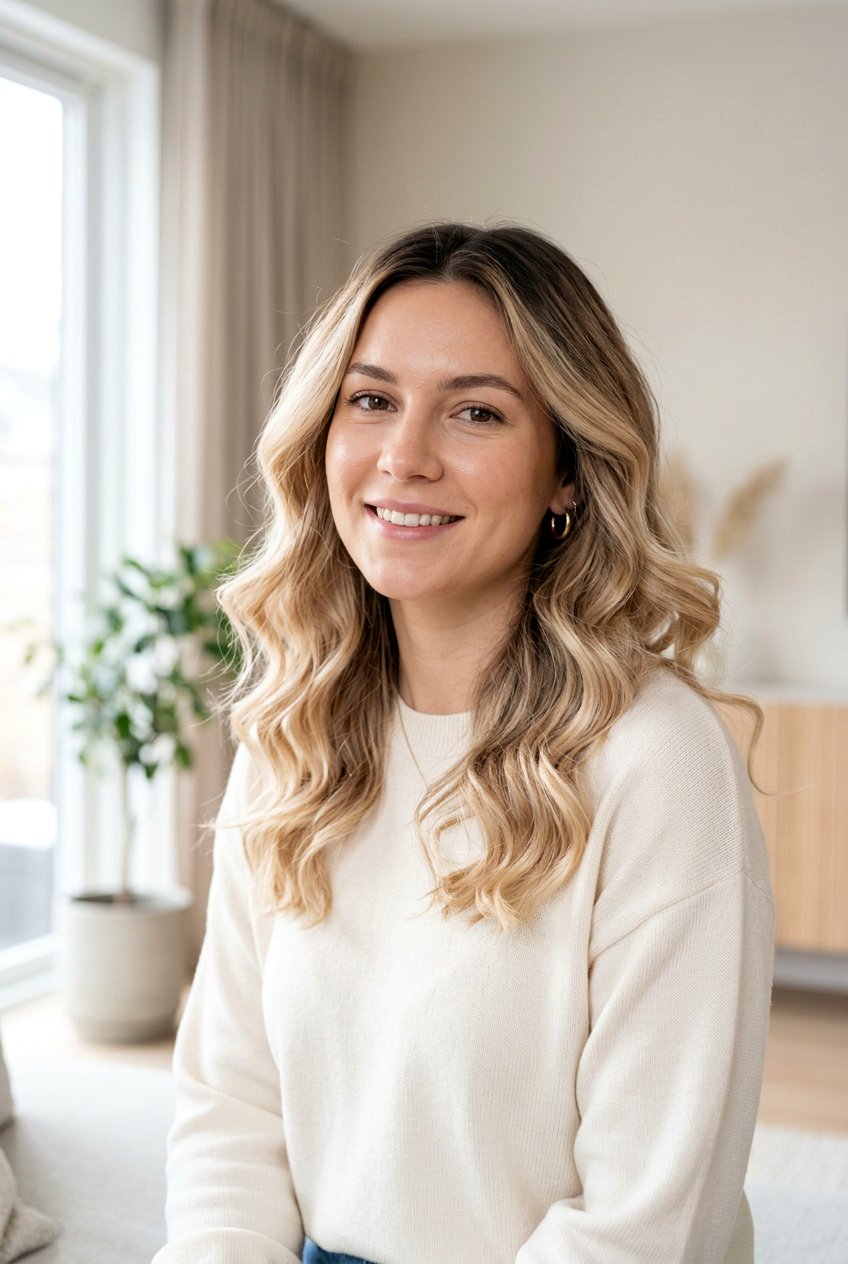
Champagne beige blonde on naturally dark hair requires a more thoughtful approach, but the payoff can be stunning. Because darker hair needs more lifting, colorists usually lighten in stages, often using balayage or foils to bring selected sections up to a level 8–10 before applying champagne beige toner. To keep things flattering, a slightly deeper root shadow or smudge is often left at the scalp so there is a smooth transition from your natural dark base to the lighter champagne lengths. This technique works well for medium to deep skin tones, where the contrast between the root and champagne ends adds dimension without looking too high‑contrast or artificial. Because dark hair can be more prone to damage when bleaching, bond‑building treatments in the salon and restorative masks at home are essential. Expect more frequent gloss appointments at first to refine the tone, then you can move to maintenance every few months once the color is established.
10. Champagne Beige Blonde Money Piece
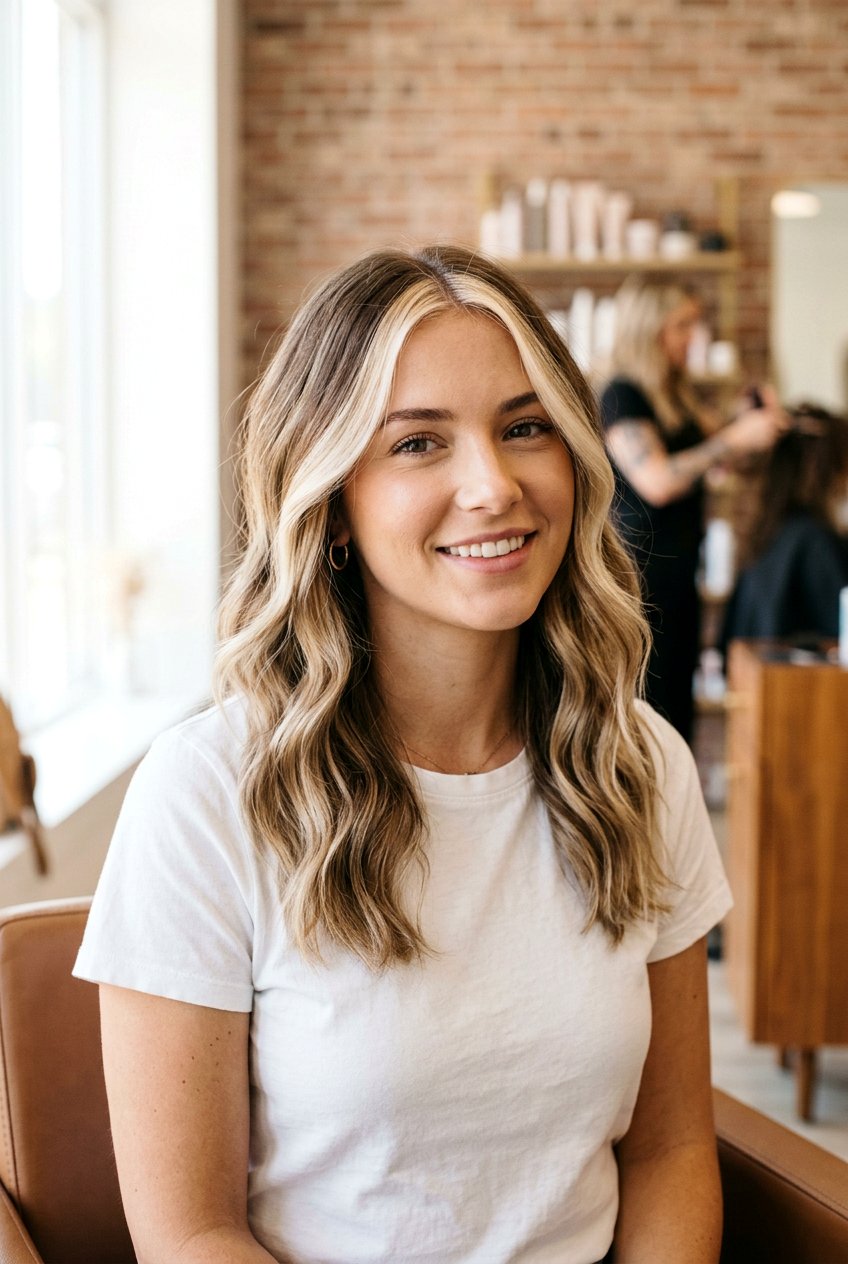
A champagne beige blonde money piece is perfect if you want impact with minimal color commitment. In this look, only the face‑framing sections at the front are lifted and toned to champagne beige blonde, while the rest of your hair stays closer to your natural shade or a slightly lighter blonde. The front pieces are usually pre‑lightened very carefully to keep the integrity of the hair, then toned with a blend of beige and pearly hues so they appear bright but still soft around the face. Because the champagne undertone is neutral, it flatters many skin tones and pairs well with both cool and warm makeup looks. As the money piece grows out, it blends into the rest of your hair more naturally than a full head of highlights would, which makes it easier to extend time between appointments. Use color‑safe shampoo, occasional toning treatments, and extra conditioner on the front pieces so they stay glossy and do not appear over‑processed.
11. Champagne Beige Blonde With Shadow Root
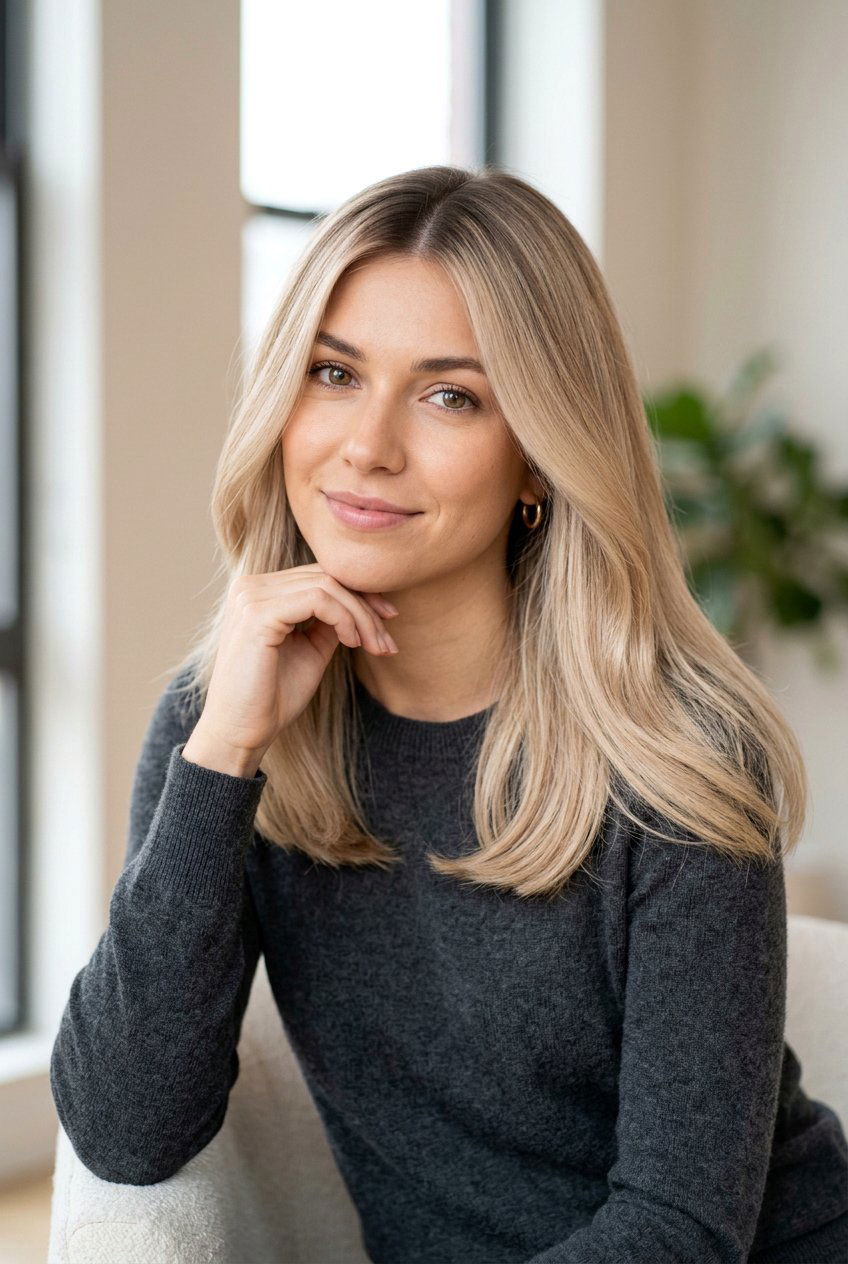
Champagne beige blonde with a shadow root gives you that salon‑fresh look with softer grow‑out. Here, the colorist creates a slightly darker root area—either your natural color or a custom mix a couple of levels deeper—then blends it into champagne beige blonde lengths. The shadow root not only adds depth but also helps the lighter champagne tone appear more dimensional, especially on fine or straight hair that can look flat with solid color. This look is customizable for different skin tones by choosing a root shade that harmonizes with your complexion and adjusting the champagne portion slightly warmer or cooler. Because the root is intentionally deeper, you can usually go longer between full color sessions and just refresh the mid‑lengths and ends with glosses or toners as they fade. At home, focus on gentle cleansing, weekly masks, and heat protection so the contrast between the soft shadow and bright champagne stays clean and healthy‑looking.
12. Champagne Beige Blonde With Subtle Lowlights
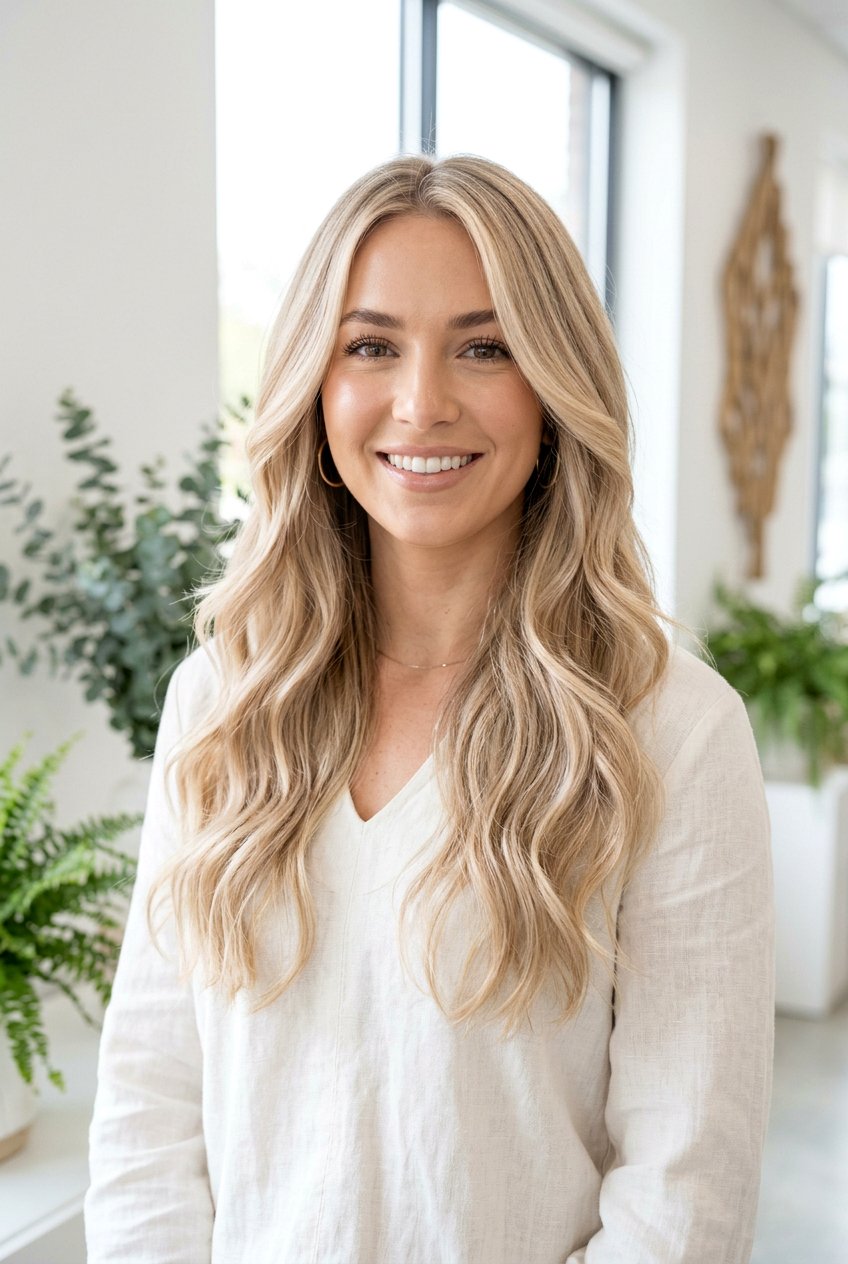
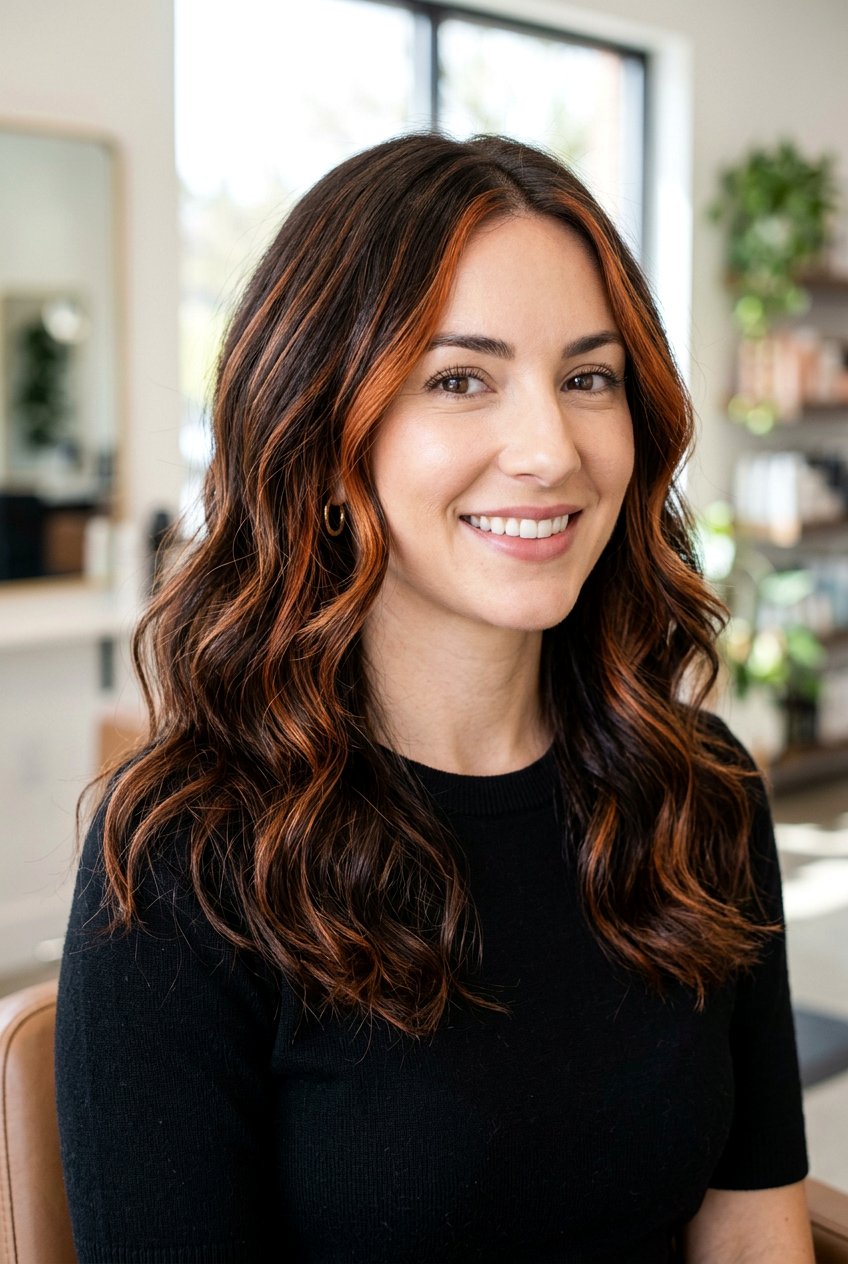
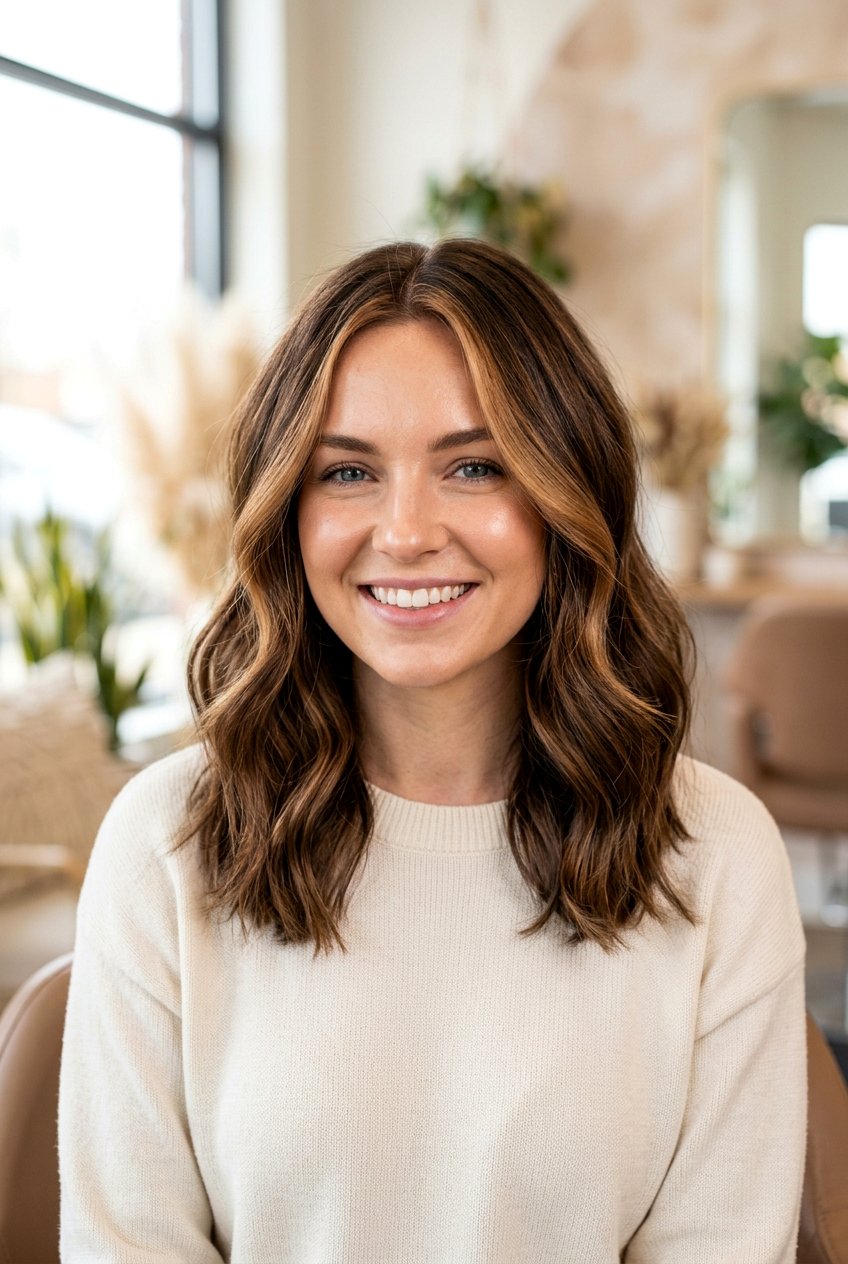
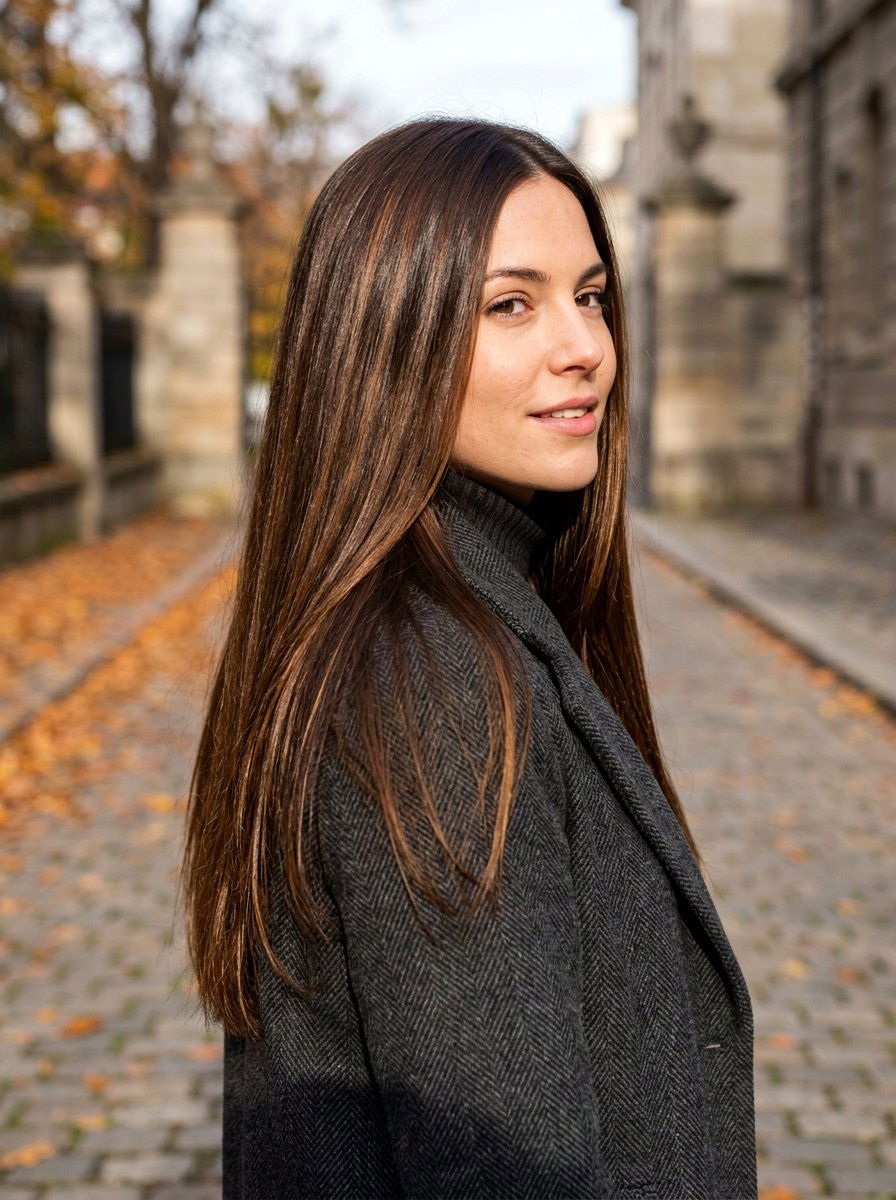
Champagne beige blonde with subtle lowlights is a smart choice if you want your blonde to look thicker and more natural. In this color, the main tone is a creamy champagne beige, while slightly deeper sandy or honey‑beige lowlights are woven through the mid‑lengths and ends. Those lowlights add depth and shadow, which makes fine hair appear fuller and prevents the overall blonde from looking too flat or monotone. The champagne base remains neutral and light‑reflecting, so you still get that bright, expensive look, but with a softer, sun‑kissed feel. This combination works across many skin tones because the colorist can shift the lowlights warmer or cooler depending on whether your skin has golden, neutral, or cooler undertones. Maintenance typically involves gloss appointments every couple of months to refresh both the champagne base and the lowlights, plus at‑home care with color‑safe shampoo and weekly deep conditioning to preserve shine.
13. Champagne Beige Blonde For Cool Skin Tones
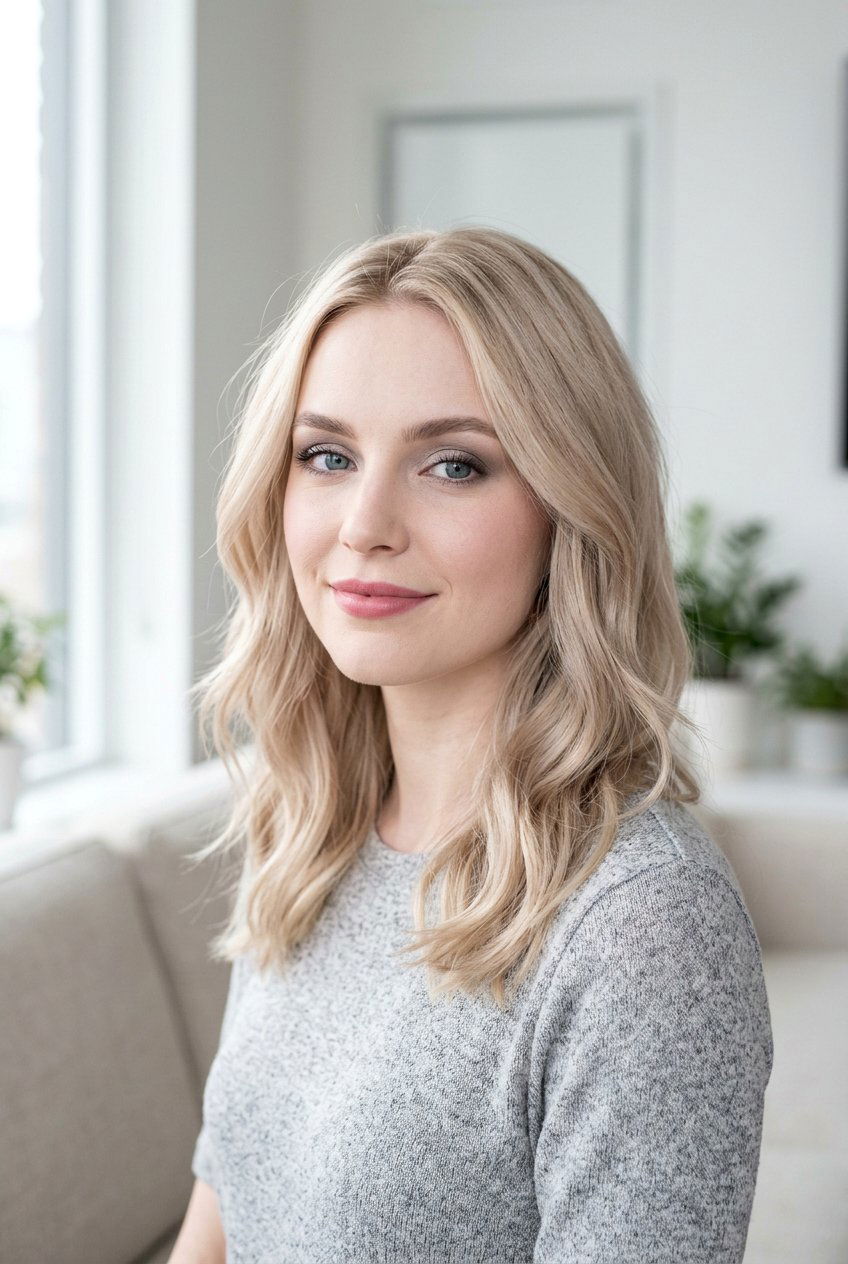
Champagne beige blonde for cool skin tones is all about letting your natural undertones shine without making you look washed out. For cool or neutral cool complexions, colorists often lean into a slightly cooler champagne blend with more pearly and soft beige tones and less strong gold. This keeps the color bright and refined while avoiding the kind of warmth that can read as orange or brassy against pink or rosy skin. Because champagne sits between icy and golden, it flatters light and medium cool skin better than very ashy or silver blondes, which can sometimes look stark. Your stylist may suggest adding a few lighter, almost platinum‑leaning highlights for extra brightness around the face while keeping the rest of the hair in that creamy champagne range. Using purple‑based toning shampoos sparingly, plus regular salon glosses, will help maintain the cool balance without over‑correcting and turning the color grayish.
14. Champagne Beige Blonde For Warm Skin Tones
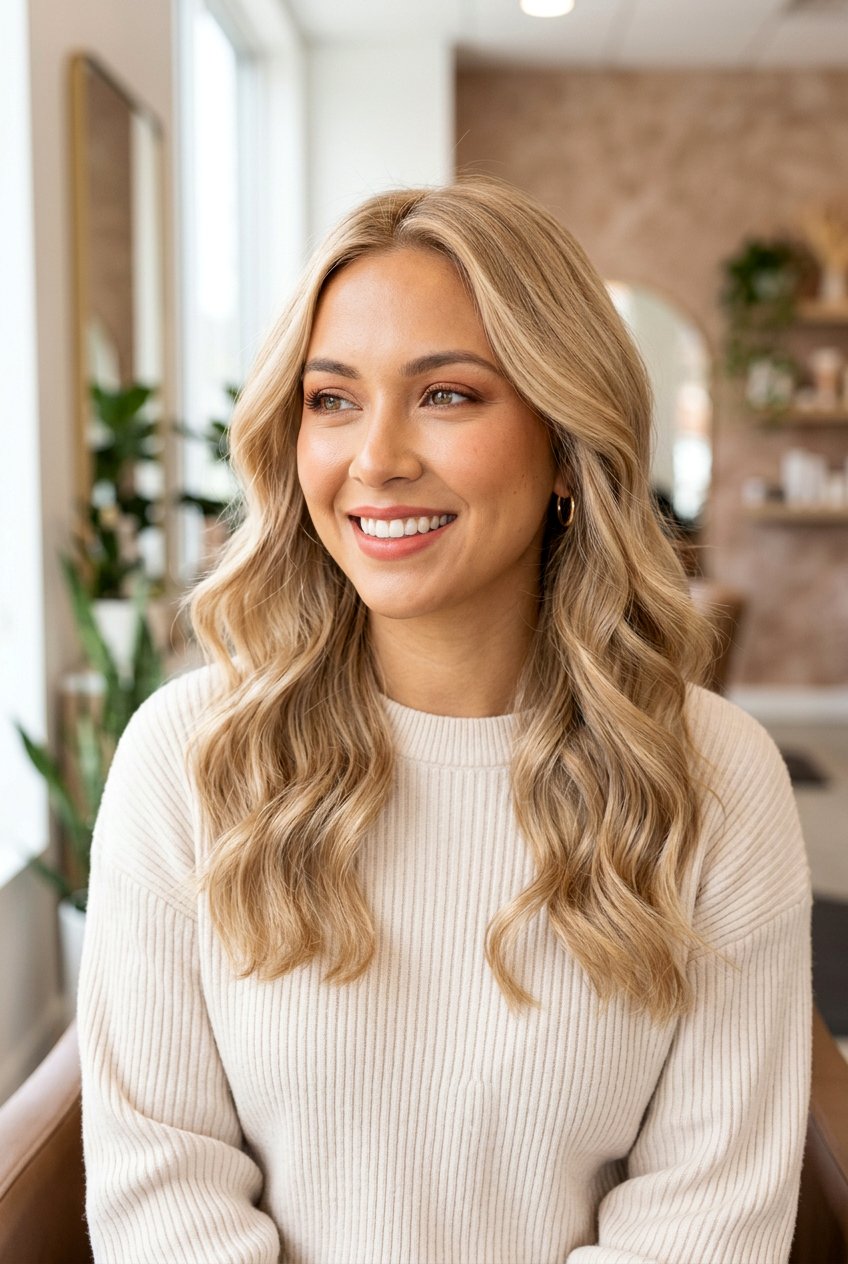
Champagne beige blonde for warm skin tones focuses on enhancing your natural golden or peachy warmth instead of fighting it. In this case, stylists usually build a champagne formula that leans slightly warmer, with more soft gold and beige and just enough coolness to avoid brassiness. This creates a bright yet soft blonde that harmonizes with warm or olive skin, giving you a glow rather than a stark contrast. For medium to deeper warm complexions, keeping a slightly deeper root or adding dimensional lowlights helps the champagne blonde lengths look rich instead of overly light. Your colorist might also add subtle peachy or rosy champagne touches for more radiance, similar to trendy champagne blondes with rosy undertones seen in recent seasons. At home, opt for gentle, moisturizing products and occasional beige‑correcting toners rather than very strong purple shampoos so you do not strip away the flattering warmth you need.
15. Champagne Beige Blonde With Beach Waves
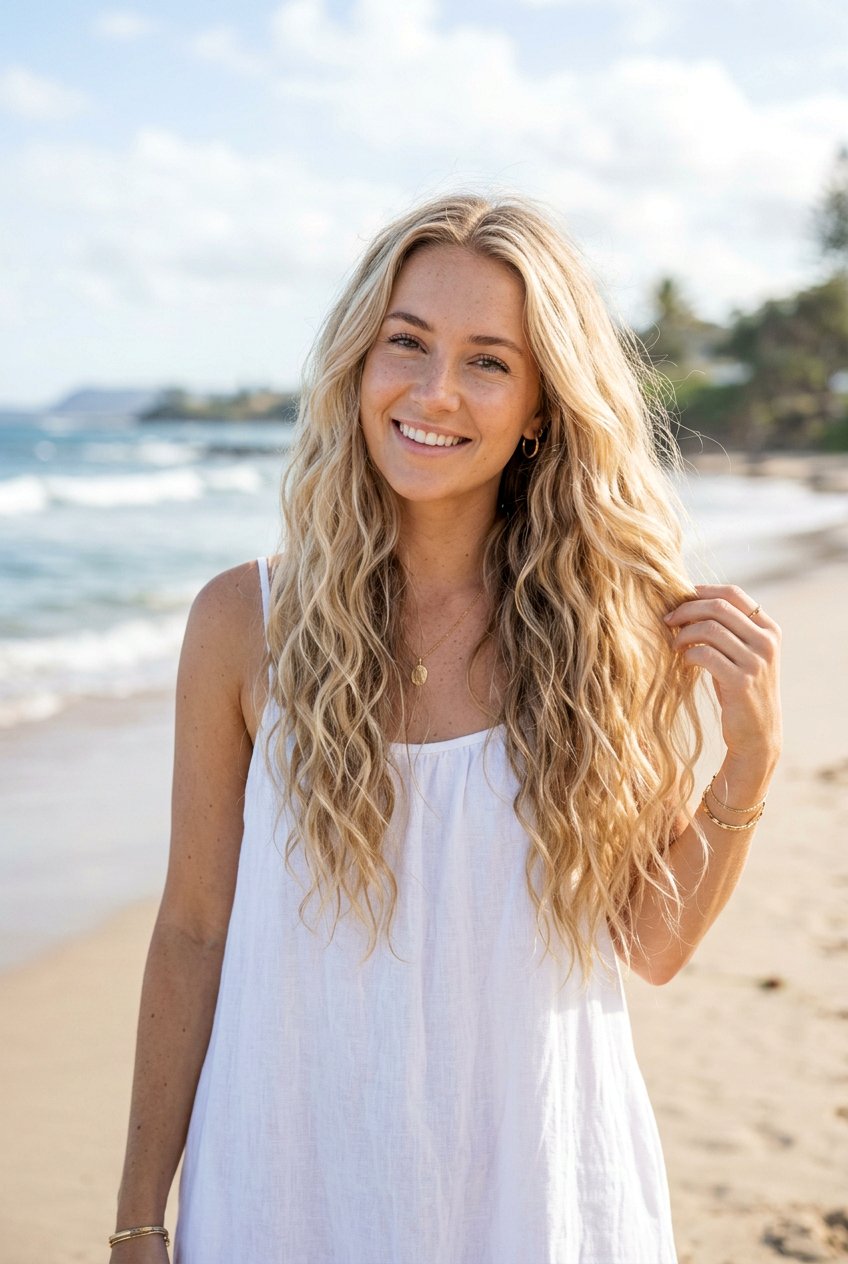
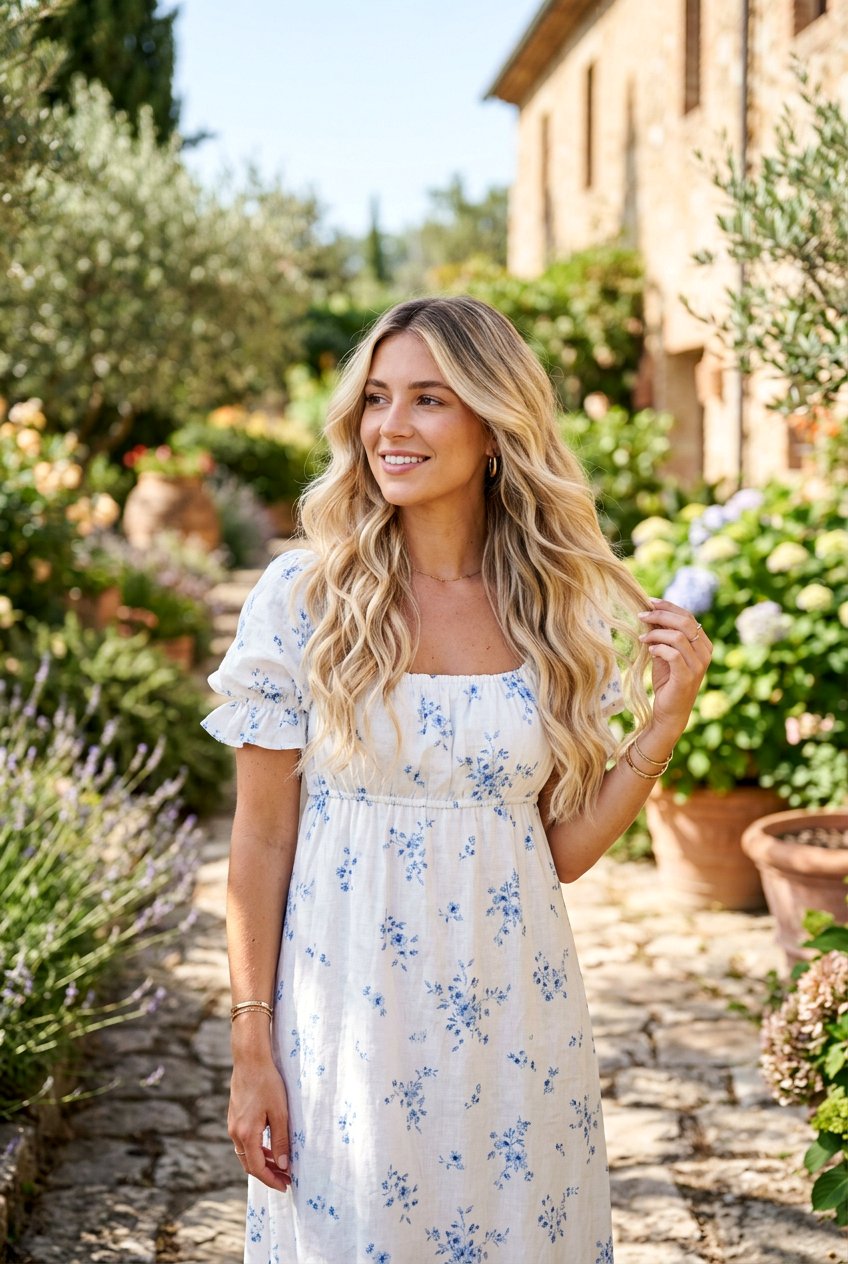
Champagne beige blonde with beach waves gives you that vacation‑ready look year‑round without feeling overdone. The color stays in the creamy champagne beige family, which means you get a mix of neutral and soft warm undertones that light up when hair is styled in loose, tousled waves. To achieve this, stylists typically add fine highlights and balayage pieces through the mids and ends, allowing the waves to show off subtle ribbons of lighter and slightly deeper champagne shades. Beach waves are usually created with a curling iron or wand, alternating directions and leaving the ends a bit straighter for a modern finish that shows off shine. A light salt‑free texturizing spray or cream can enhance the wave without drying out your blonde. Because UV exposure can fade color, especially on lighter blondes, consider using products with UV filters and scheduling glosses to revive the champagne tone.
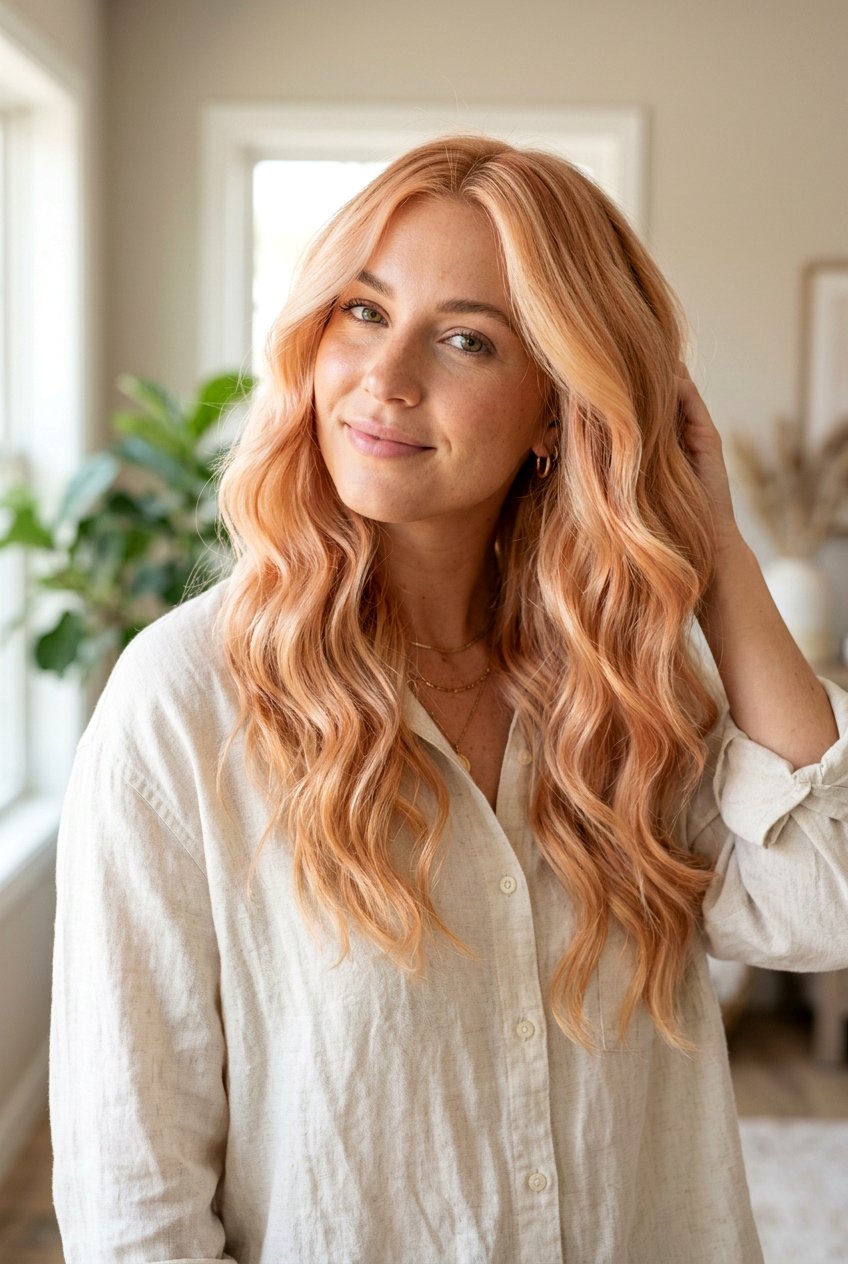
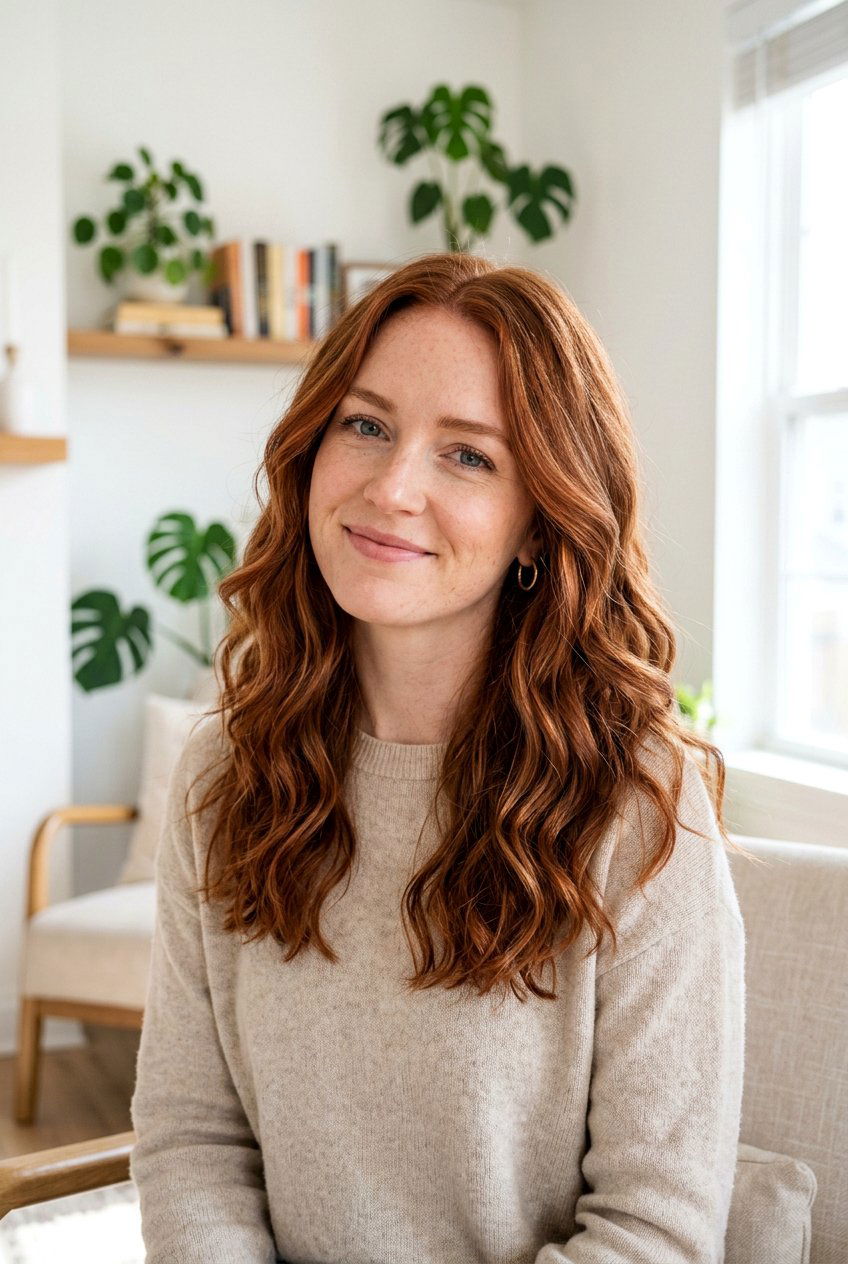
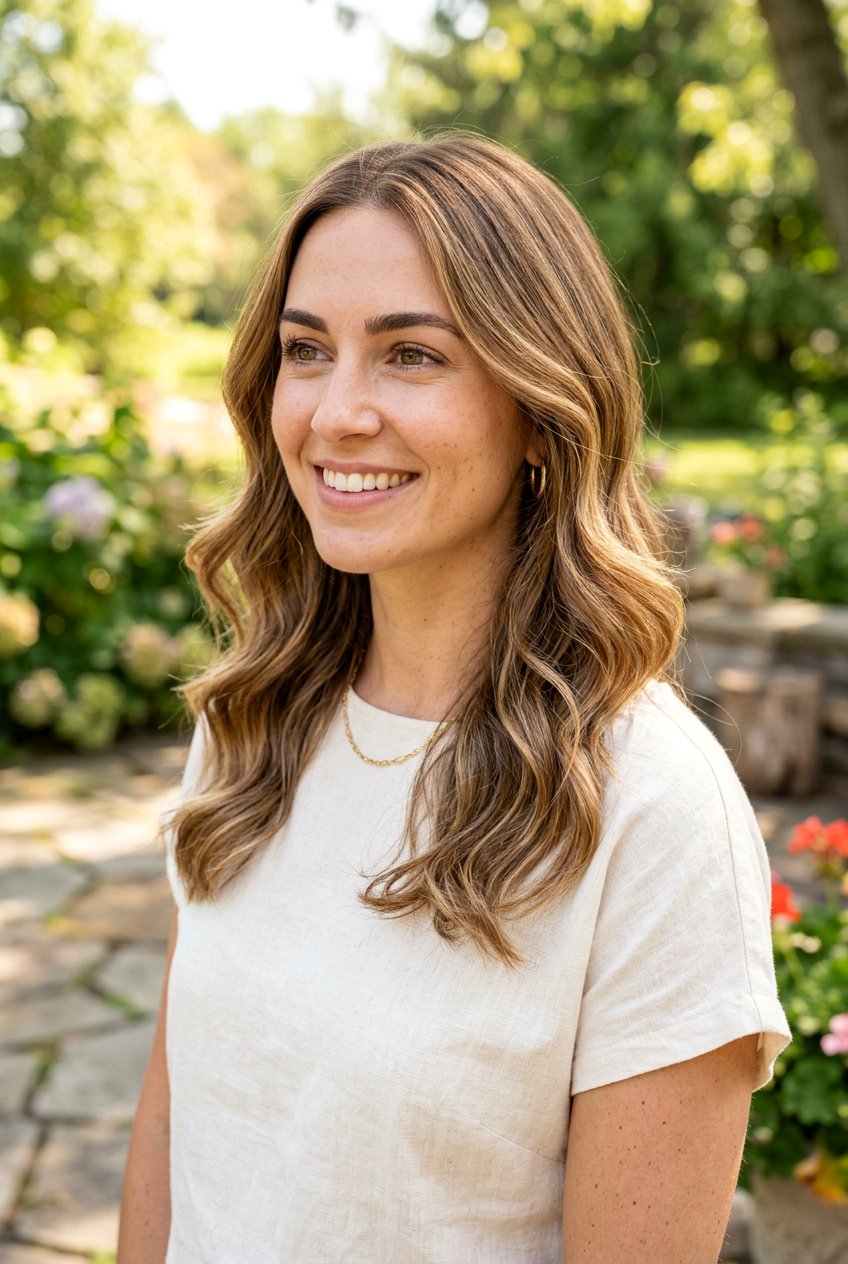
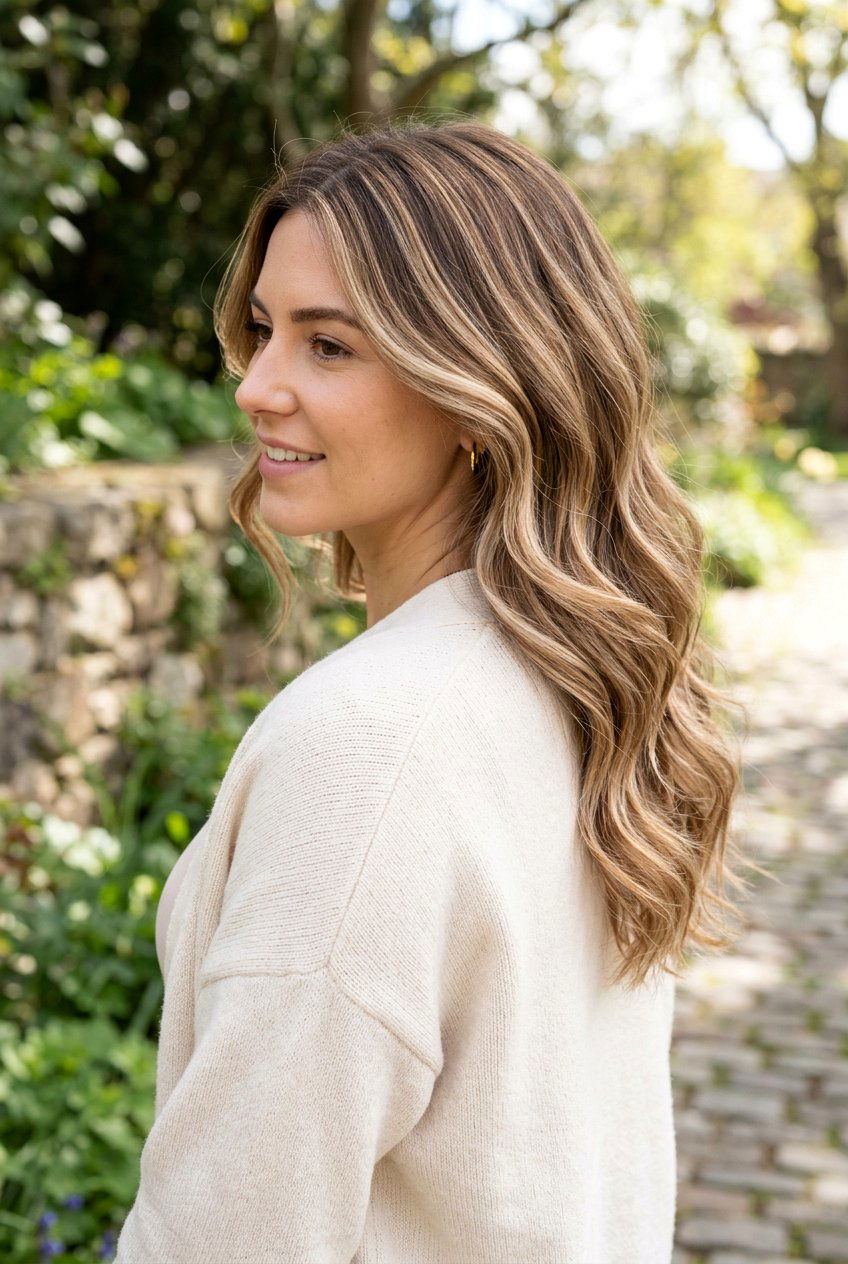
16. Champagne Beige Blonde With Straight Sleek Finish
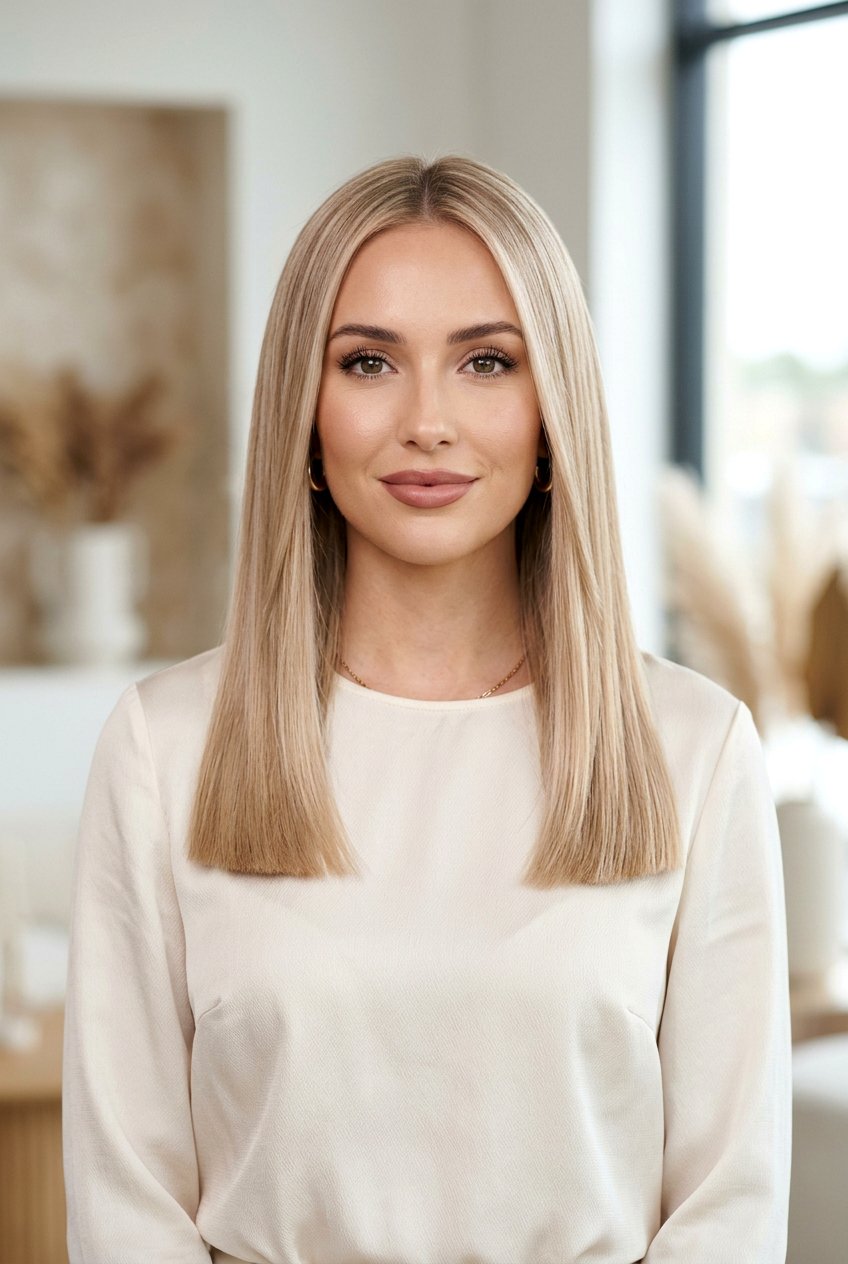
Champagne beige blonde with a straight sleek finish looks very polished and “expensive,” especially on blunt or slightly layered cuts. The key is a super smooth surface that allows the champagne tone’s mix of beige and pearly hues to reflect light evenly from root to tip. This kind of finish works best when hair is healthy, so stylists often use bond‑building treatments and glosses to keep the blonde shiny instead of frizzy or dull. The neutral champagne shade flatters a wide range of complexions and can be paired with a soft root shadow for depth, which keeps the look from appearing too solid. Styling usually involves a smoothing cream or serum, blow‑drying with tension, and then flat‑ironing in small sections while always using heat protection. To maintain the integrity of your hair, limit heat styling to a few times per week and use weekly masks to replenish moisture lost from lightening and straightening.
17. Champagne Beige Blonde With Layers
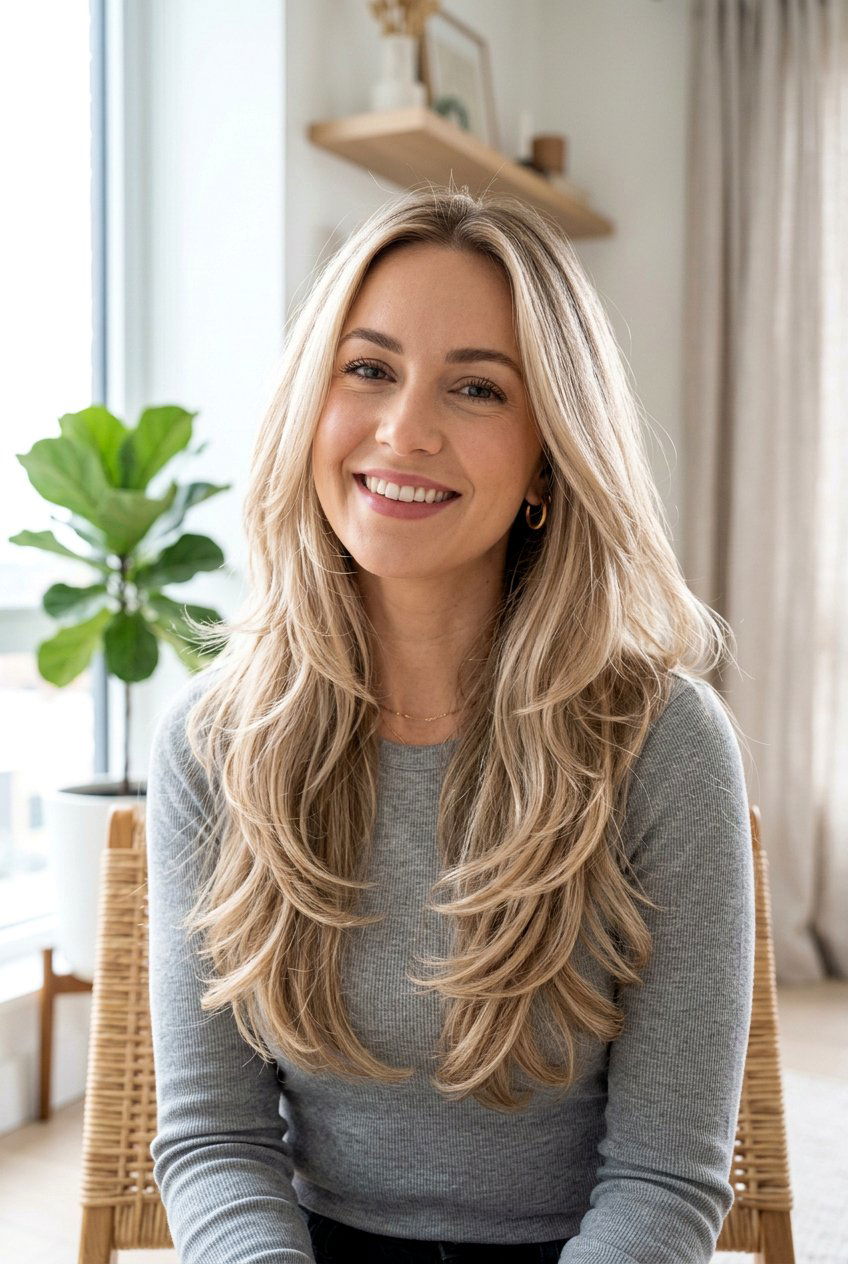
Champagne beige blonde with layers brings movement and dimension to your hair, making the color look more complex. Layering allows the champagne mix of beige, pale gold, and pearly tones to fall at different lengths, so light hits various pieces and creates natural‑looking highlights and shadows. This is especially helpful for thick or medium‑density hair, where long layers can remove weight and give the blonde a lighter, airier feel without sacrificing length. The champagne tone is very forgiving, so your colorist can customize it slightly cooler or warmer to complement your skin while keeping that signature soft glow. Styling layered champagne hair with a round brush, loose curls, or a wave iron helps the ends flip and move, which shows off all the shades within the color. To keep layers healthy, plan on regular trims and use leave‑in conditioners or lightweight oils on the mid‑lengths and ends so they do not look dry.
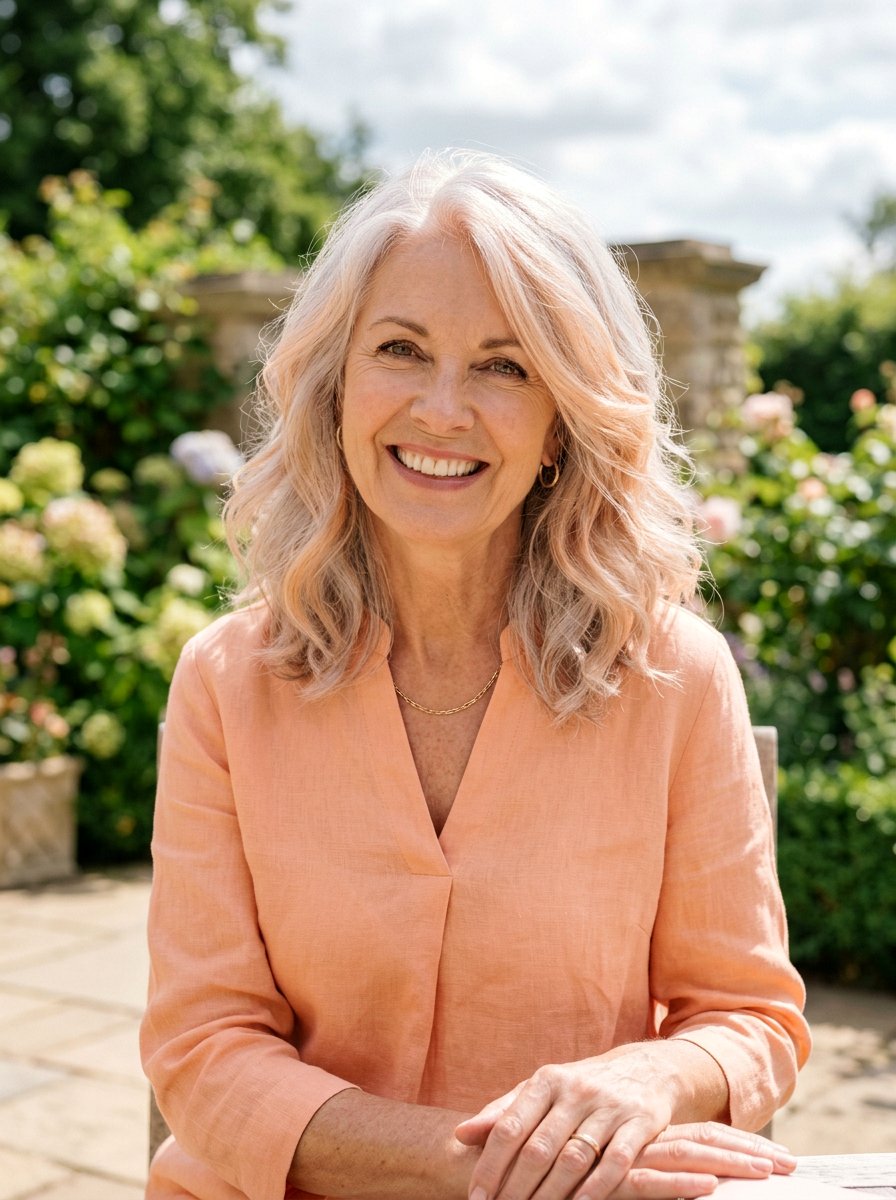
18. Champagne Beige Blonde For Mature Women
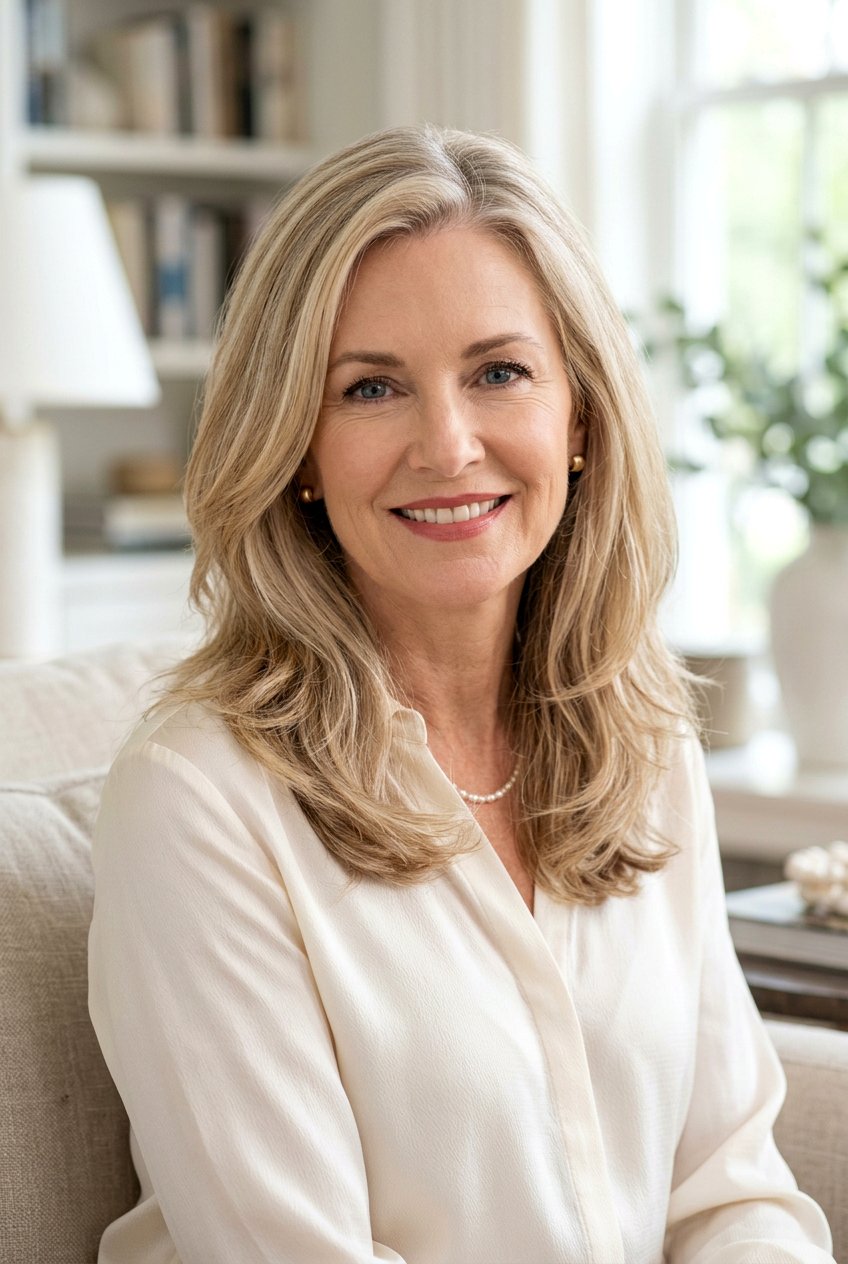
Champagne beige blonde for mature women is popular because it softens features and blends gracefully with gray. The neutral champagne tone sits between cool and warm, which means it can harmonize with natural silver strands instead of fighting them, especially when applied as a blend of highlights and lowlights. This creates a soft, luminous effect that brightens the complexion without the harshness of very white or platinum hair. A slightly deeper root or shadow around the temples can also help camouflage regrowth and make maintenance easier between appointments. Because hair often becomes drier and more fragile with age, gentle lightening, bond‑building treatments, and regular hydrating masks are essential to keep champagne beige blonde looking healthy. Using color‑safe shampoos, avoiding very high heat, and scheduling glosses every couple of months will help maintain shine and keep the tone flattering rather than overly cool or yellow.
19. Champagne Beige Blonde Highlights On Natural Blonde
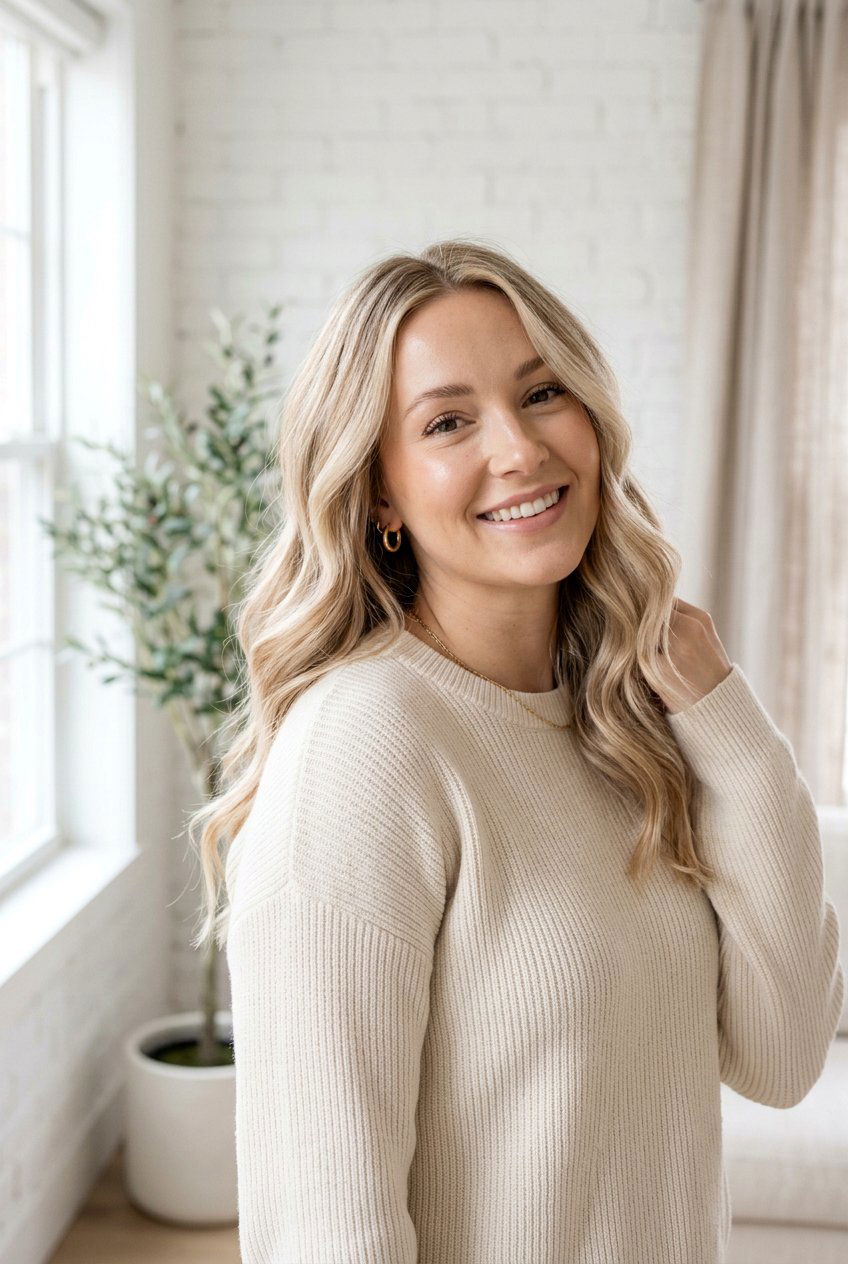
Champagne beige blonde highlights on natural blonde hair are a subtle way to update your color without a big transformation. If your starting shade is already light, your stylist can add slightly lighter champagne highlights and maybe a few lowlights to create dimension, rather than lifting your whole head. The champagne beige tone keeps everything soft and luminous, giving your natural blonde a more polished, salon‑grade finish without looking like a completely different color. Because you are working with a naturally light base, there is usually less damage involved, and maintenance focuses more on toning and glossing than heavy bleaching. This look is very wearable for fair and medium skin tones, while the adaptable champagne undertone helps prevent the hair from skewing too golden or too ashy. At home, a gentle shampoo, occasional toning mask, and regular conditioning will keep your upgraded blonde bright and smooth between salon visits.
20. Champagne Beige Blonde With Rosy Undertones
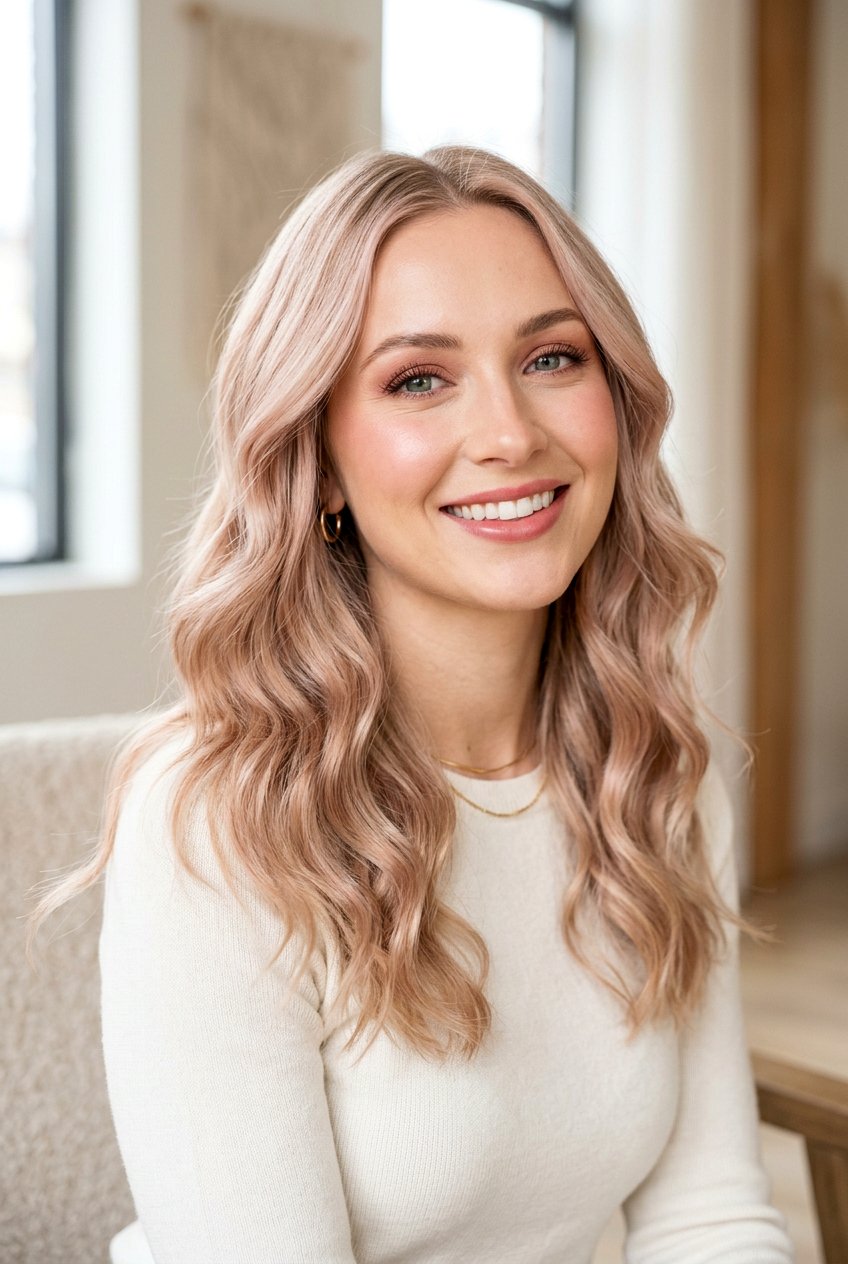
Champagne beige blonde with rosy undertones is a fresh twist that adds a hint of blush warmth to the classic champagne mix. This color usually combines soft beige blonde with very muted pink or peachy tones, creating a gentle, glowing effect that looks especially pretty on fair to tan warm or neutral skin tones. The rosy undertone is subtle rather than vivid, so the overall impression is still blonde, just with an extra touch of warmth that can make your complexion look more youthful. Colorists often place the rosier tones through the mid‑lengths and around the face, while keeping the root and deeper sections more neutral for dimension. As with other champagne blondes, you will need to maintain the shade with regular glosses and color‑safe products so the pinky warmth does not fade too quickly or turn brassy. Using gentle shampoos, masks, and UV protection will help preserve the rosy champagne effect between touch‑ups.
Conclusion:
Champagne beige blonde hair has become one of the most requested blondes because it balances warmth and coolness in a way that looks effortless and refined. The shade blends beige, pale gold, and pearly tones, which makes it softer and more wearable than stark icy blondes or very golden hues while still delivering plenty of brightness. Whether you prefer a bob, lob, long layered cut, pixie, or low‑maintenance balayage, champagne beige blonde can be customized to suit different hair lengths, textures, and levels of commitment. It also works across a wide range of skin tones when your colorist adjusts the formula slightly warmer or cooler and possibly adds a root shadow, lowlights, or rosy undertones for balance. To keep this shade looking luxe, consistent care is key: use color‑safe shampoo, schedule gloss or toner refreshes, and treat your hair to regular masks and bond‑building treatments. With the right approach, champagne beige blonde can look polished, healthy, and flattering long after you leave the salon chair.
You'll Like These Styles:


Leave a Reply